Contemporary flat roof houses deliver clean horizontal lines, usable rooftop space and efficient construction for owners who want modern form without wasted volume. A typical single-story example like the 255 m² Plano House shows how a low-slope membrane and open plan can serve a beach lot while keeping maintenance straightforward.
Installed costs for residential flat roofs run $4–$14 per square foot depending on membrane, with most systems lasting 20–30 years when drainage is correct. That combination of price range and service life makes the style competitive against pitched alternatives for new builds and additions.
The design works best where zoning favors lower profiles or where owners plan solar arrays and outdoor rooms on the roof itself. Drainage details and membrane choice decide long-term performance more than the flat silhouette alone.
- Residential flat-roof membranes install for $4–$14 per sq ft and typically last 20–30 years.
- TPO and EPDM remain the most common residential choices; PVC pushes durability toward 25–35 years.
- A 1,500 sq ft roof replacement often falls between $6,000 and $18,000 installed.
- White reflective membranes can lower roof-surface temperatures by 50–70 °F versus black surfaces.
- Plano House demonstrates a 255 m² single-story plan that maximizes lot coverage with one continuous concrete slab.
- Flat roofs accept solar racks and decks more easily than steep pitches, turning dead space into usable area.
- Annual drain inspections cost far less than full membrane replacement every 15–25 years on poorly detailed jobs.


Design Approach Behind Contemporary Flat Roof Houses
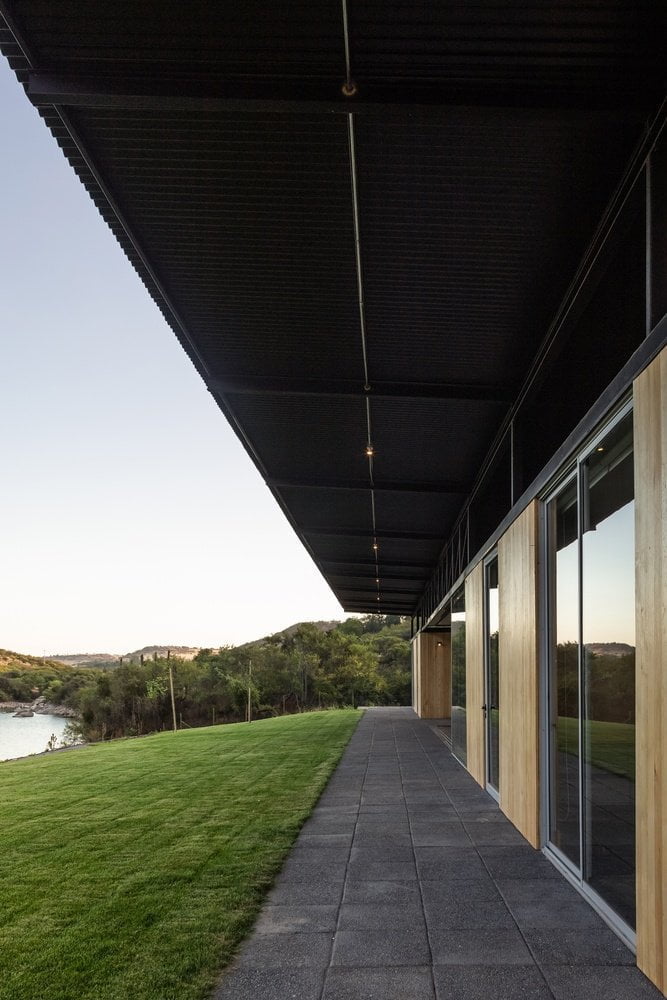
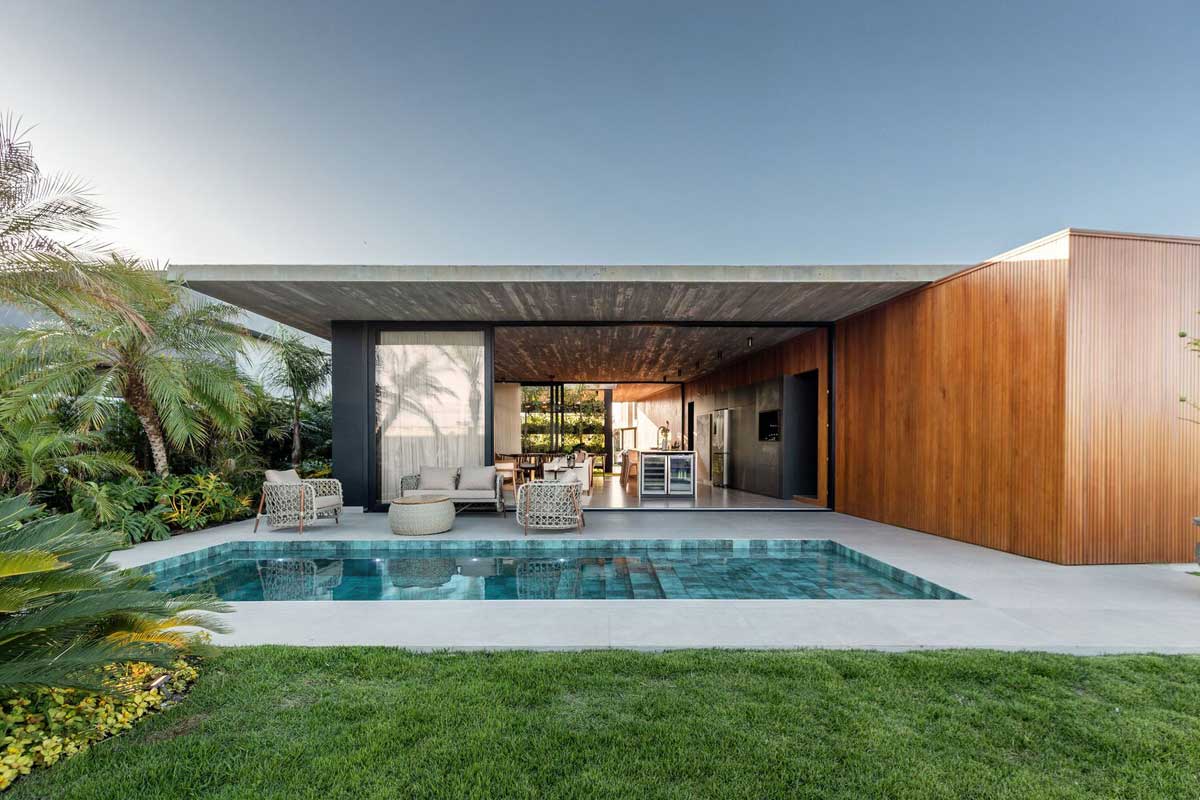
Contemporary flat roof houses start from a simple premise: remove unnecessary roof mass so the plan can stretch across the site and the social zones can open to the landscape. The Plano House by Studio Bloco places private suites inside an elongated wooden volume while a prestressed concrete slab forms the entire living area above and beside it.
That 255 m² single-story arrangement keeps circulation short and lets every suite face vegetation. How does the slab stay light yet strong? Prestressed concrete carries the social floor with fewer intermediate supports, creating the continuous canopy that defines the style.
Owners who chase the same effect should avoid overloading the roof with heavy planters before checking structural capacity. A light membrane and minimal parapet produce the crisp edge that photographs well and sheds water when the slope is correct.


Practical Layout Strengths of Flat Roof Homes
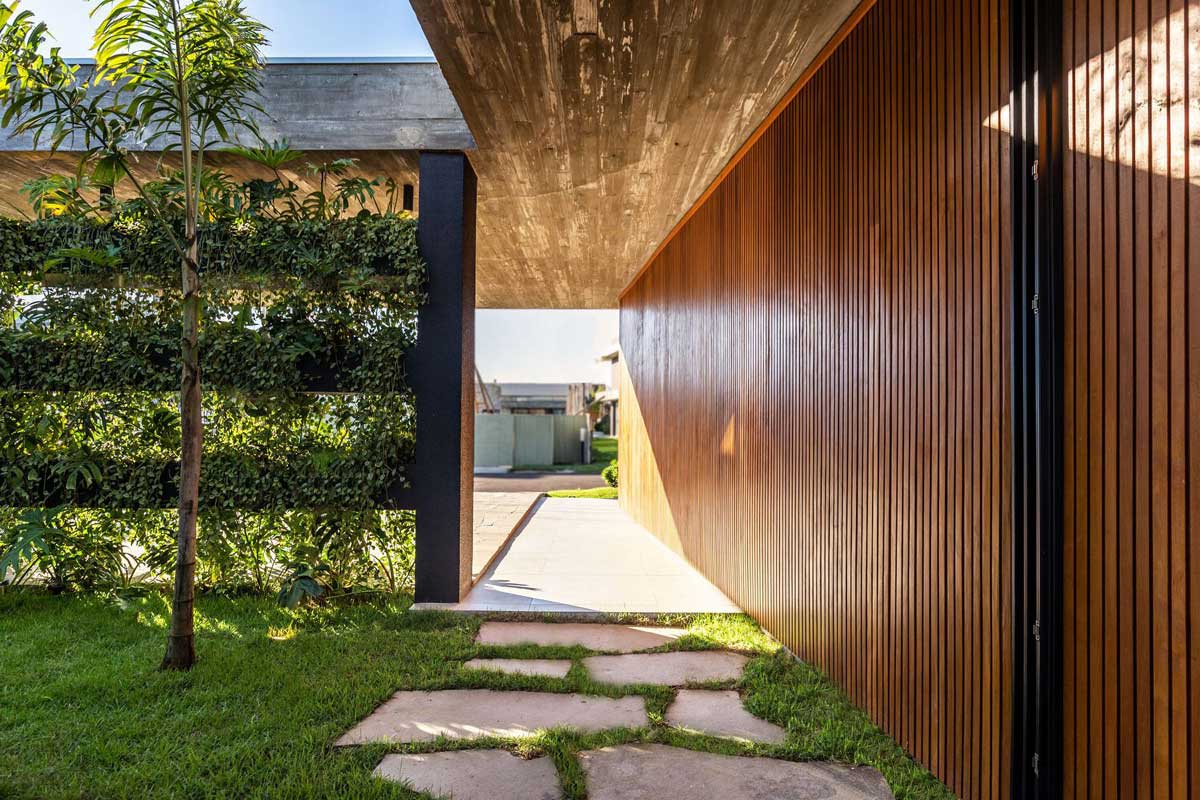
Practicality drives many contemporary flat roof houses because the low profile frees interior height for open living while the roof itself becomes a platform for cars, equipment or outdoor rooms. At Plano House the concrete plane extends forward to shelter vehicles without adding a separate garage structure.
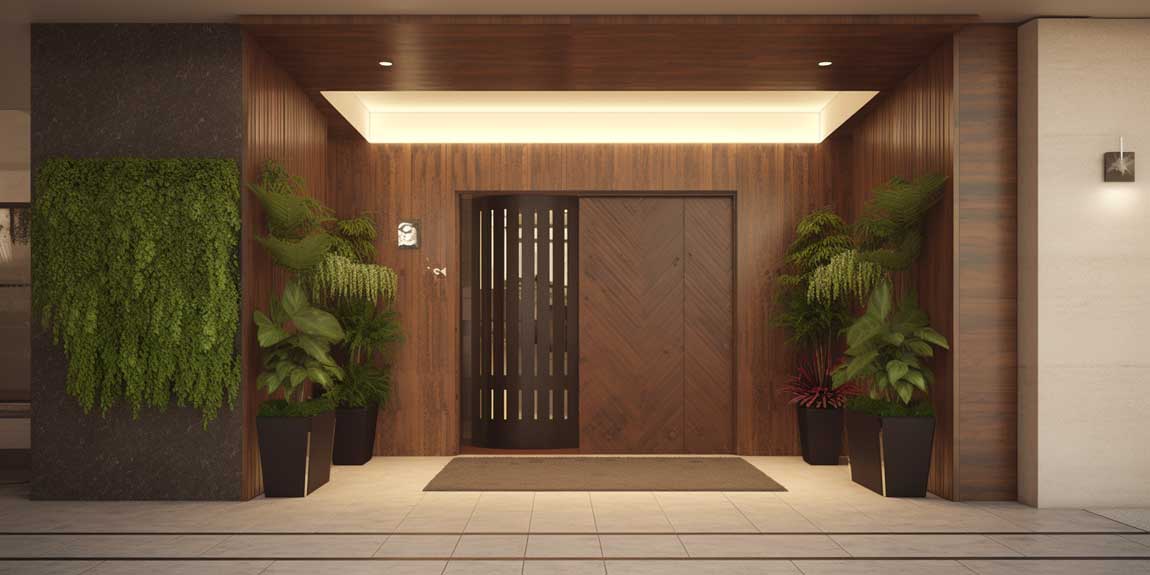
Suspended planters create a green filter before the entrance, giving privacy from the shared path yet admitting light. Compared with a steep roof that forces attic waste, the flat system converts nearly every square meter into usable floor or outdoor area.
Do not skip tapered insulation when the deck is truly level; ponding water shortens membrane life by years. Regular drain clearing twice a year keeps the system performing closer to its 20–30 year rating than to the lower end of published ranges.
For more single-level examples that pair flat roofs with courtyards, see the simple modern flat roof house design collection that explores privacy-focused plans.


Aesthetic Choices That Define the Style
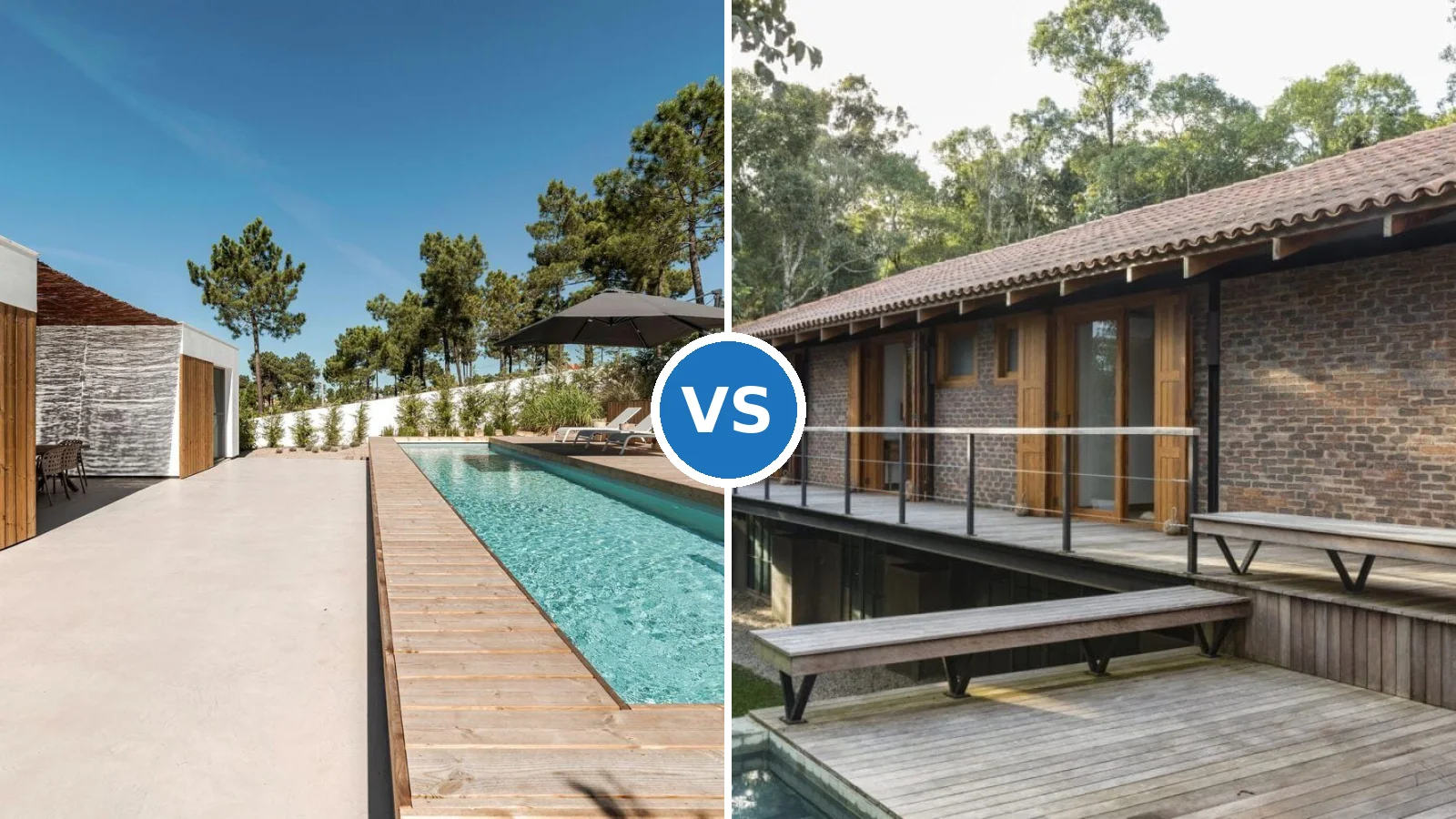
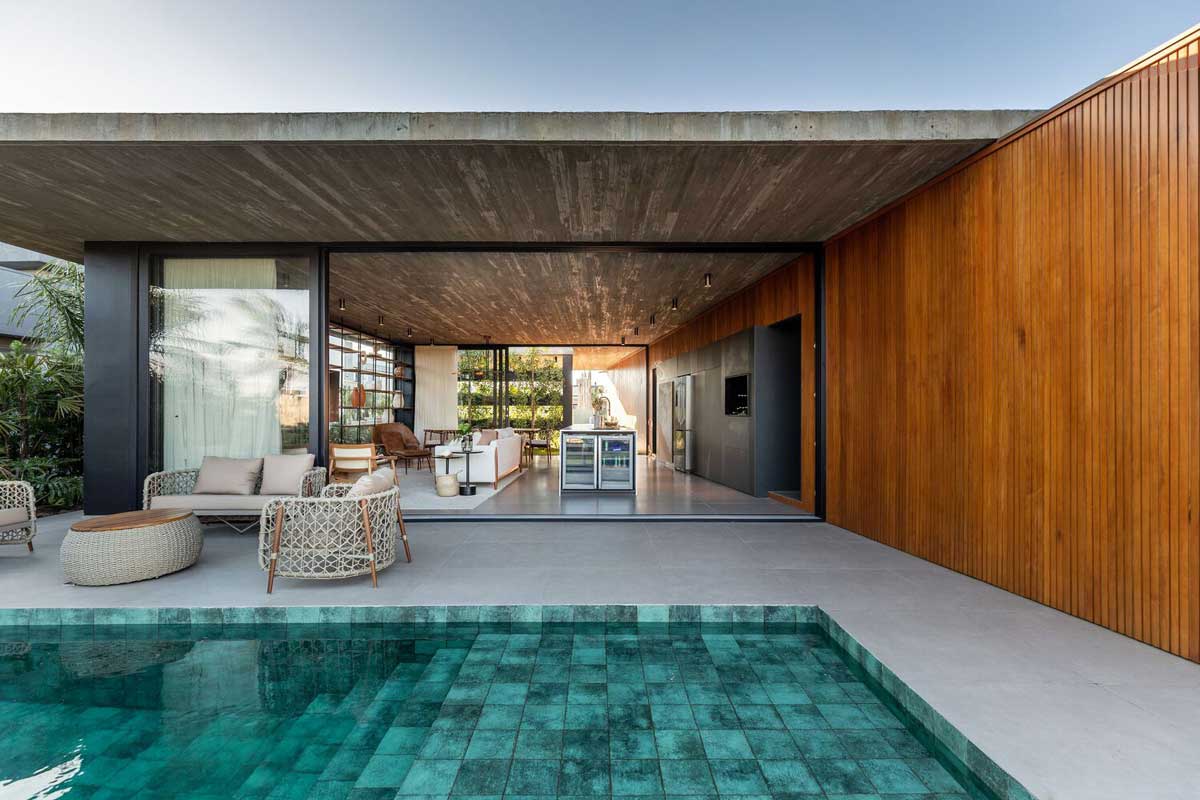
Aesthetics in contemporary flat roof houses rely on continuous surfaces, large glass and material honesty rather than ornament. Plano House glazes three sides of the social zone so vegetation becomes the fourth wall and the boundary between inside and outside almost disappears.
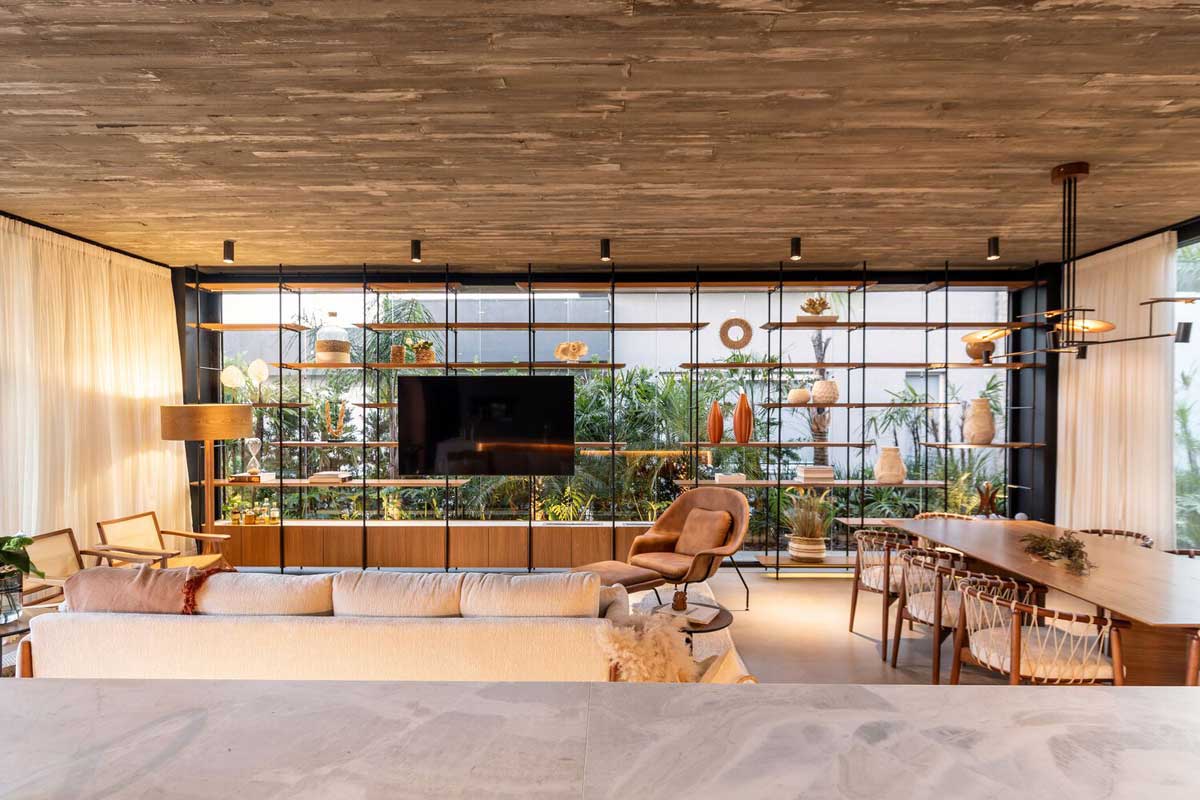
Floor-to-ceiling openings and matching floor finishes let the rear porch read as an extension of the living room. Slim metal shelves and a single bookshelf structure keep the connection open while meeting storage needs.
Dark frames against light concrete and wood create the crisp contrast that reads as modern without relying on bright colors. Avoid heavy drapery or solid walls that cancel the indoor-outdoor continuity the flat roof enables.

Material Options and Real Cost Ranges
Material selection decides both the look and the service life of contemporary flat roof houses. TPO membranes dominate residential work at roughly $5–$10 per square foot installed and deliver 20–30 years when seams are heat-welded correctly.
EPDM sits at the budget end ($4–$9) with similar longevity, while PVC commands $7–$14 and often reaches 25–35 years. Modified bitumen remains useful for smaller or retrofit jobs at $4–$8 yet typically needs earlier attention after 15–25 years.
White TPO can cut roof-surface temperatures by 50–70 °F compared with black rubber, lowering cooling loads in warm climates. Choose the membrane that matches climate and intended foot traffic rather than the lowest bid alone.
| Membrane | Installed Cost / sq ft | Typical Lifespan | Best Use Case | Maintenance Level |
|---|---|---|---|---|
| TPO | $5–$10 | 20–30 years | Most residential | Low |
| EPDM | $4–$9 | 20–35 years | Budget or cold climates | Low |
| PVC | $7–$14 | 25–35 years | Maximum durability | Very low |
| Modified Bitumen | $4–$8 | 15–25 years | Retrofits, smaller roofs | Moderate |
| BUR | $5–$10 | 20–30 years | Traditional multi-ply | Moderate |
Data drawn from current manufacturer and installer ranges; actual quotes vary with insulation thickness, access and local labor.

How Contemporary Flat Roof Houses Compare to Pitched Alternatives
Flat systems trade some longevity for usable surface and modern silhouette. A 1,500 sq ft TPO roof may cost $7,500–$14,250 installed, while comparable asphalt shingles often land lower yet leave the roof unusable for decks or solar without additional structure.
Published service lives put most membranes at 15–30 years versus 40–80 years for metal or 60-plus years for tile on steep pitches. The gap narrows when owners value the extra outdoor square footage and the lower profile that satisfies height limits.
Insurance premiums can run 10–25 % higher on flat roofs in some markets because of ponding risk, yet a new reflective membrane and documented maintenance plan often reduces that surcharge. For two-story flat-roof precedents that expand living space upward, review flat roof double storey houses that keep the same horizontal language.
Long-Term Performance Factors
Performance of contemporary flat roof houses hinges on drainage and detailing more than membrane brand. A correctly tapered deck moves water to internal drains or scuppers within hours; standing water accelerates aging and can cut years off the expected 20–30 year span.
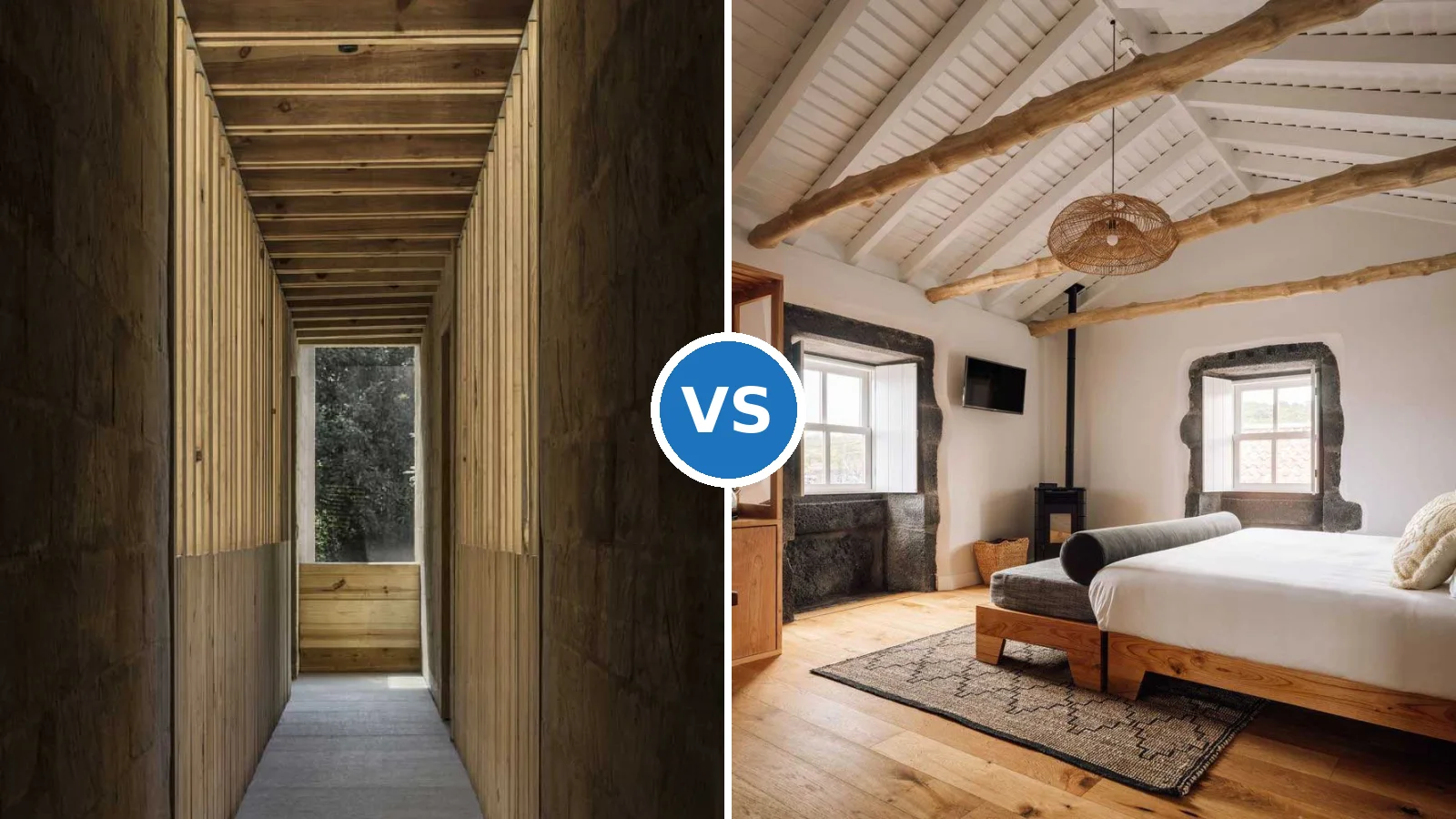
Twice-yearly inspections that clear debris and check seams cost far less than premature replacement. When the original Plano House slab shows the formwork pattern, the same honesty appears in the wood cladding and linen upholstery, keeping the palette consistent for decades.
Do not treat the roof as permanent storage for heavy objects; point loads puncture membranes. Light equipment and walkway pads keep the surface intact while still allowing solar or terrace use.
For technical project details on the featured house, the original documentation remains available at ArchDaily’s Plano House entry.
Solid Choice for Modern Living
Contemporary flat roof houses succeed when the membrane matches climate, the slope works and the plan exploits the open volume. A 255 m² single-story layout like Plano House proves the type can feel generous on a constrained beach lot.
Budget $4–$14 per square foot installed and plan for 20–30 years of service with routine drain care. Reflective membranes deliver measurable cooling savings in warm regions.
Prioritize drainage detailing over cosmetic features. The clean silhouette is only as durable as the water management beneath it.
Owners who need usable roof space or lower overall height find the style hard to beat. Match material to expected traffic and local weather for the best result.