Quick Summary
This post covers 10+ minimalist outdoor kitchen design ideas in three styles: minimalist (stainless steel, polished concrete, LED lighting), rustic chic (reclaimed wood, natural stone, lantern lighting), and modern industrial (exposed brick, concrete countertops, Edison bulbs). Budget range: $3,000 basic grill islands to $25,000+ full builds. I include specific brand names, per-square-foot costs, and material failures I’ve seen firsthand. Best for: homeowners planning a backyard kitchen build in 2026 who want real numbers, not just mood boards.
My neighbor spent $14,000 on a built-in outdoor kitchen last summer. Stainless everything, granite countertops, the works. By October it looked like a sad bus shelter. Wrong sealant, wrong stone, wrong layout for how his family actually cooks. Expensive lesson.
I’ve been researching minimalist outdoor kitchen design setups for three years now. Pulled apart quotes from contractors, tracked how different materials hold up after two winters, and cooked on enough concrete countertops to know which ones stain on day one. The short version: most outdoor kitchens fail because people pick materials for looks and forget about rain, grease, and UV damage.
This post breaks down 10+ modern outdoor kitchen designs that actually survive real weather and real use. Three styles: minimalist, rustic chic, and modern industrial. I’m covering what works, what cracks, what fades, and what you’ll regret buying. No fluff, no Pinterest fairy tales.
Quick Scan
⏱ Reading time: 12 minutes
💰 Budget covered: $3,000–$25,000+
🔨 Styles: Minimalist · Rustic Chic · Modern Industrial
📸 Photos: 20+ real outdoor kitchen setups
🎯 Best for: Homeowners planning an outdoor kitchen build in 2026
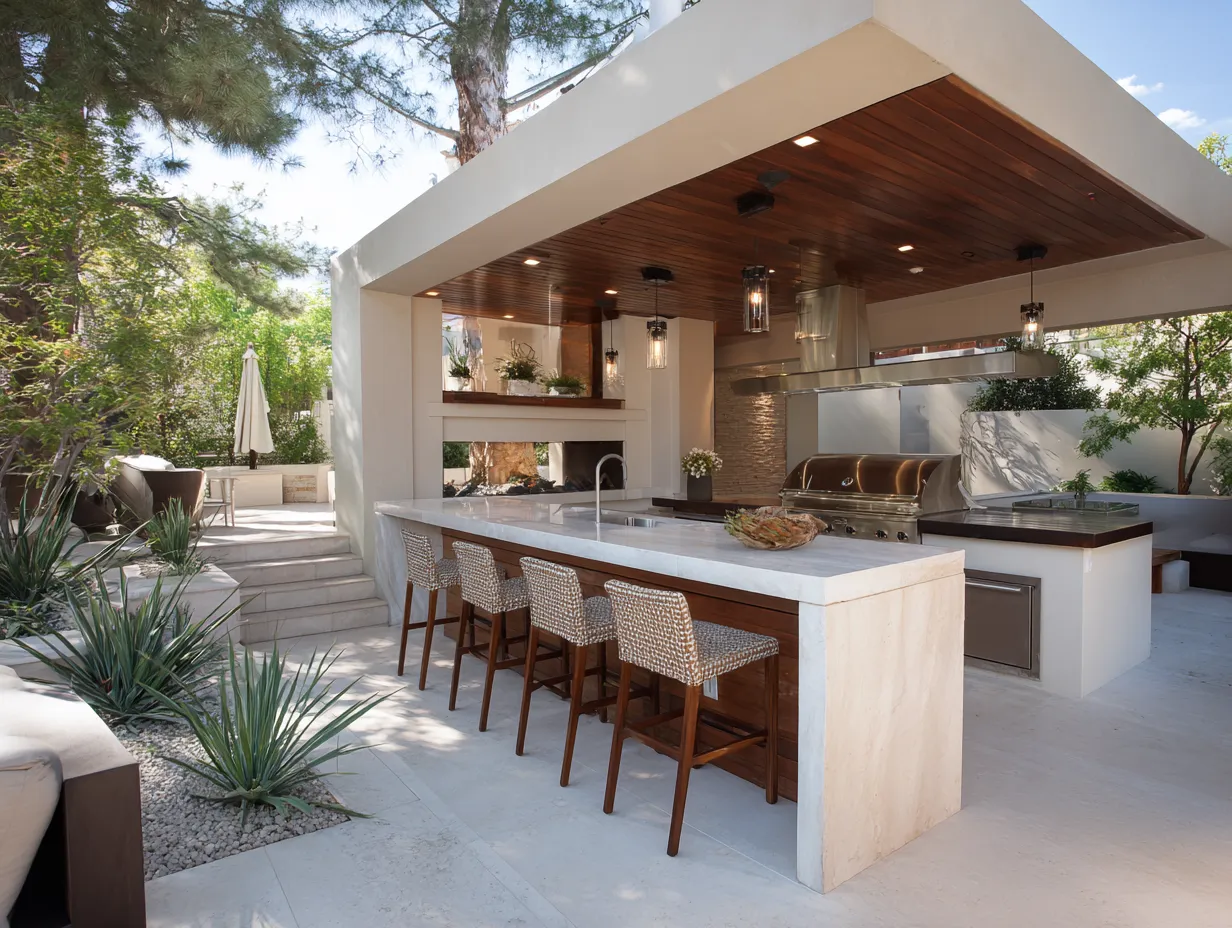
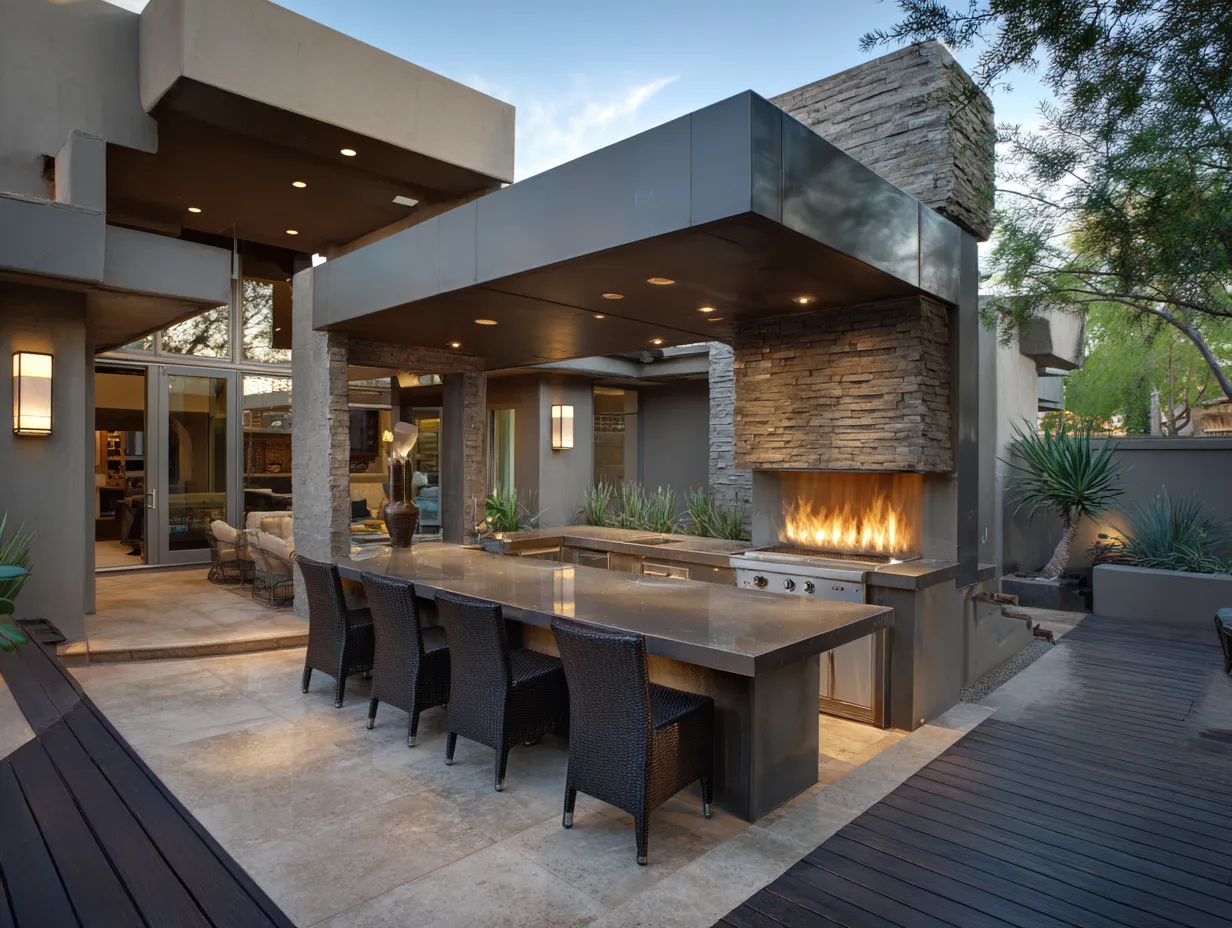
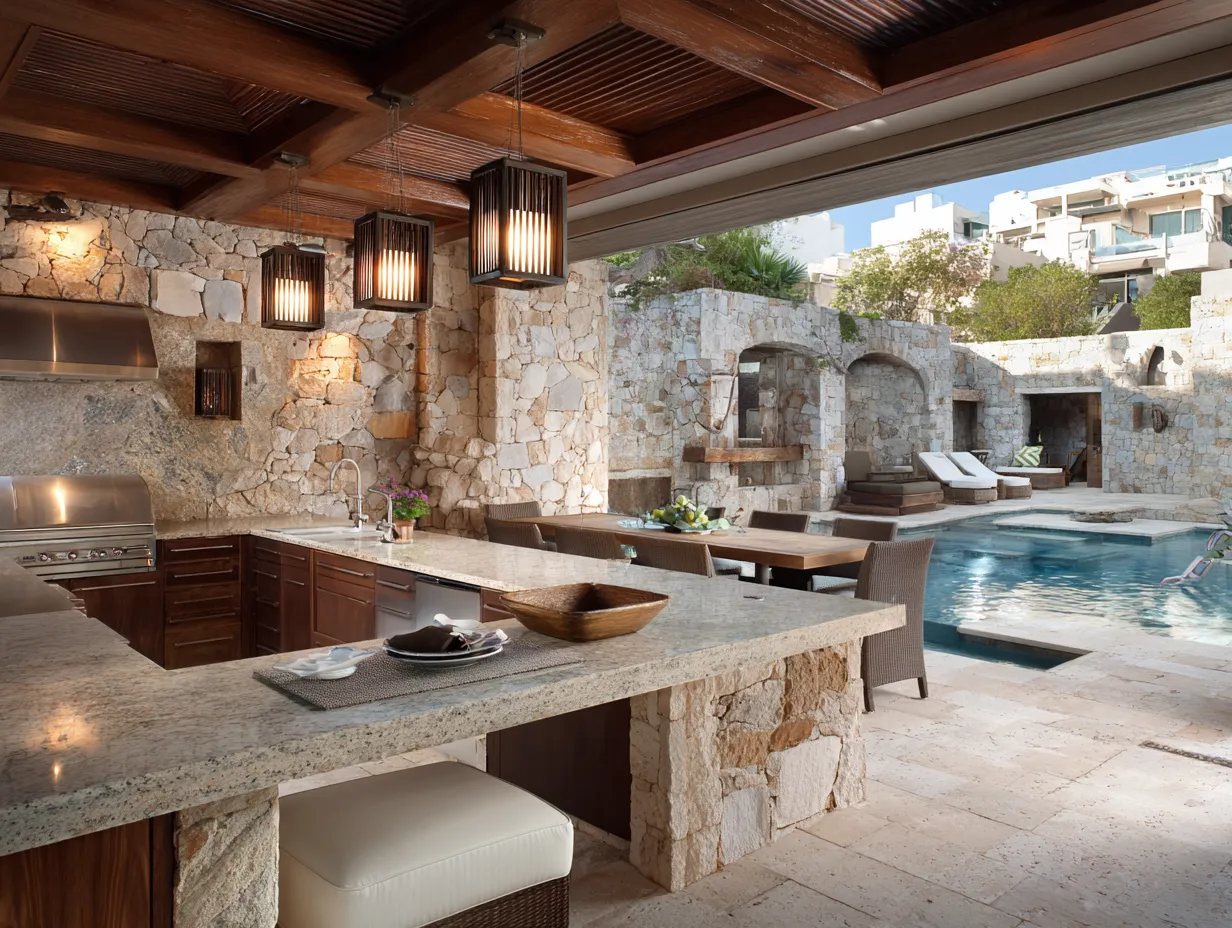
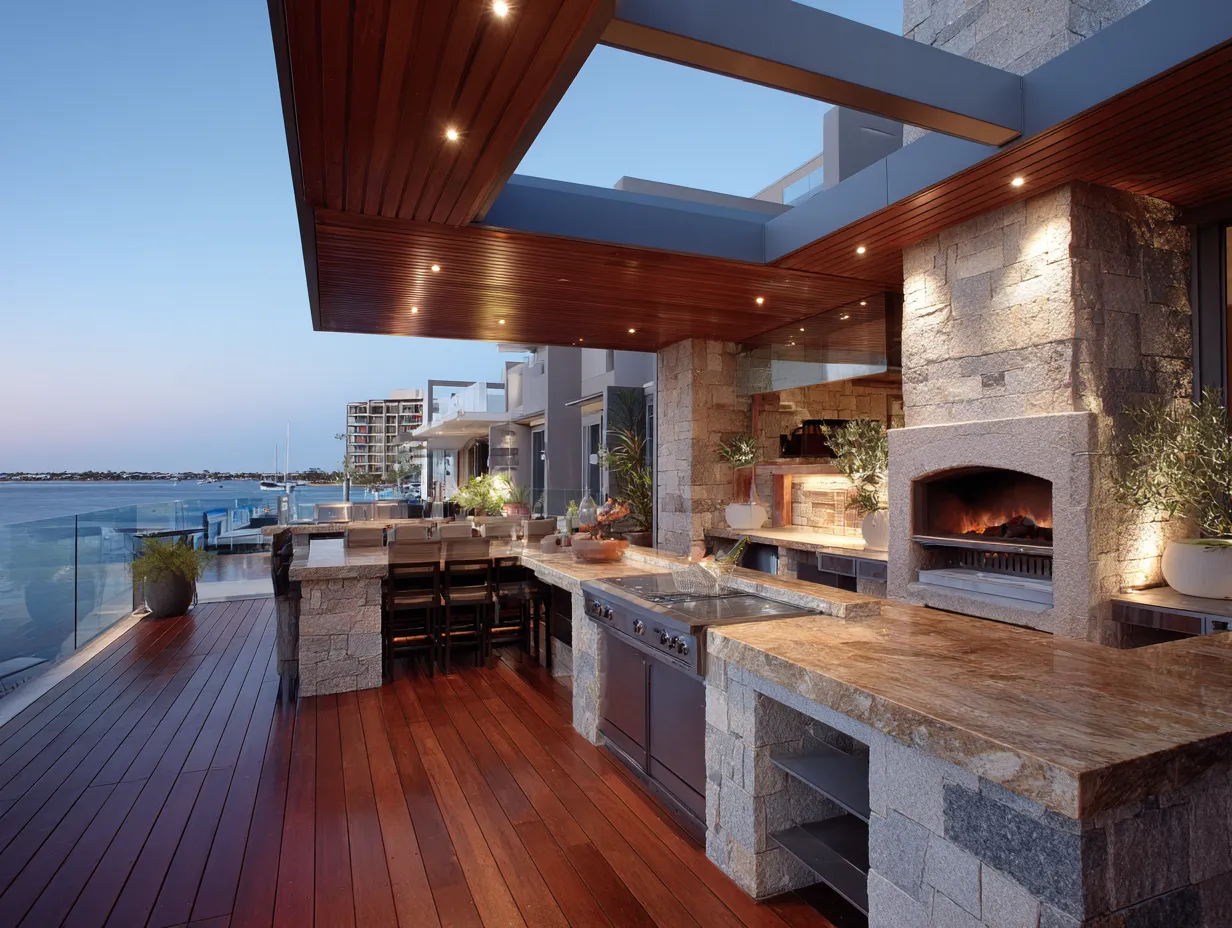
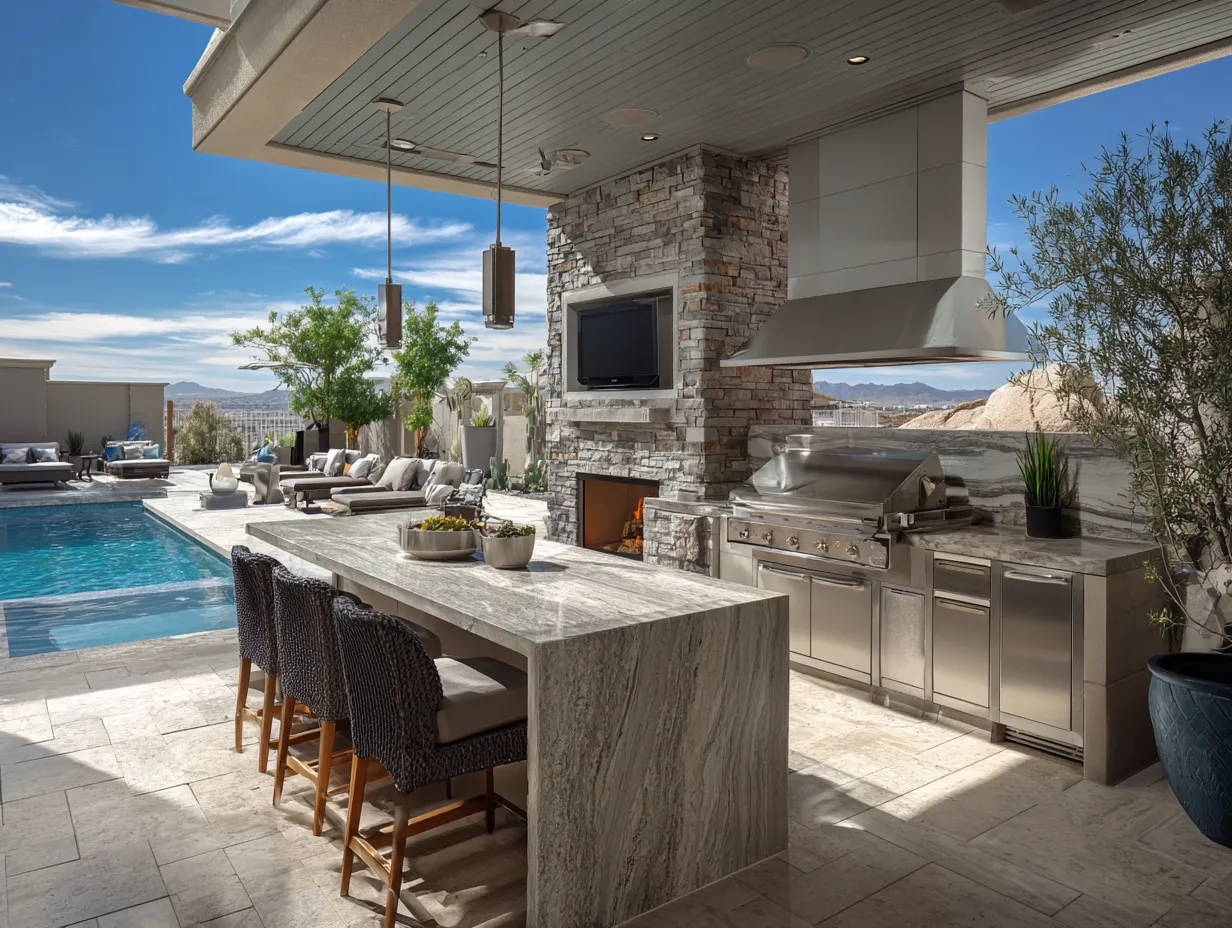
Minimalist Outdoor Kitchen Design: Clean Lines, Zero Clutter
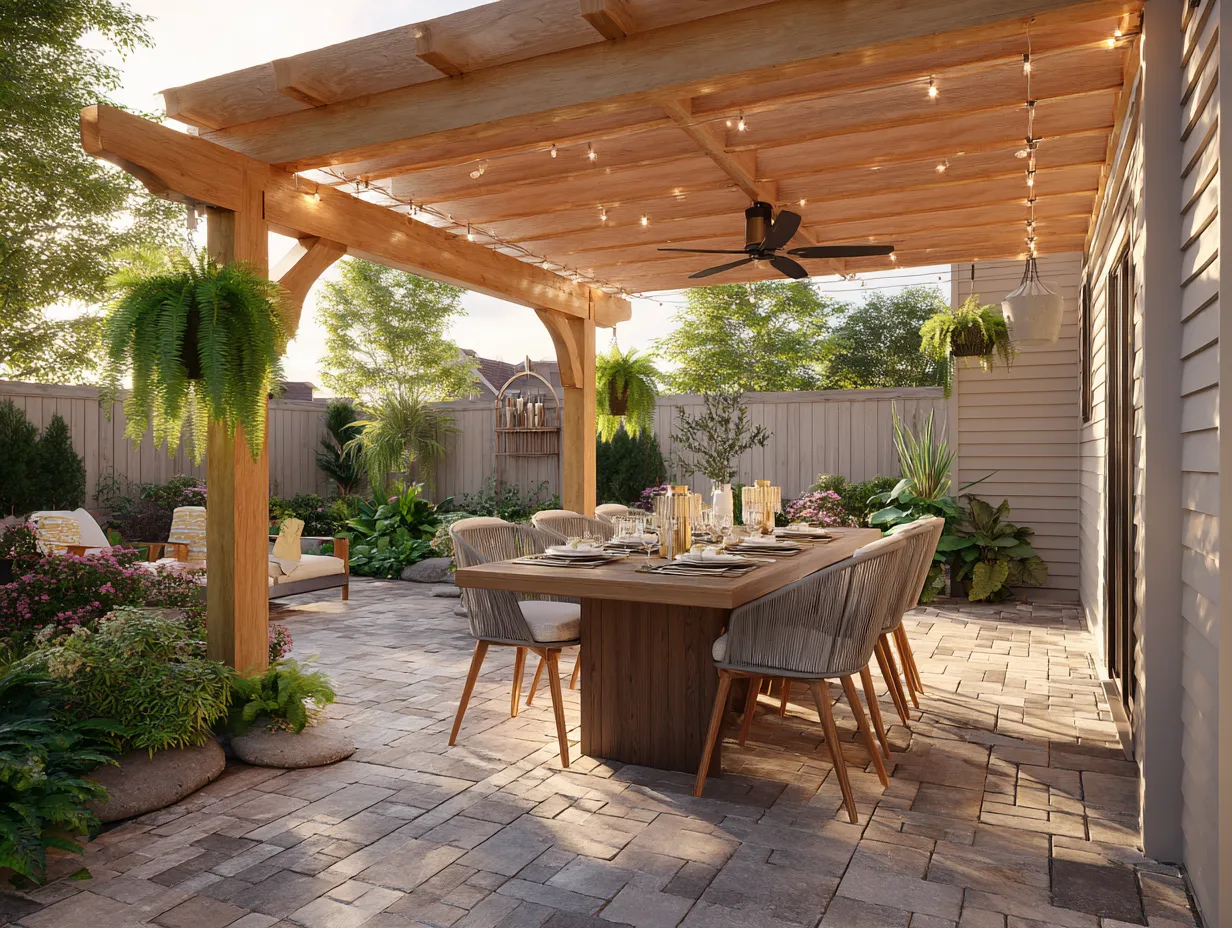
The allure of outdoor kitchen designs has significantly grown, with many homeowners looking to blend the comfort and functionality of indoor living with the natural beauty and openness of outdoor spaces. Among these designs, the sleek minimalist outdoor kitchen stands out as a paragon of modern elegance and simplicity. This design philosophy caters to those who appreciate clean lines, uncluttered spaces, and an emphasis on functionality without sacrificing style.
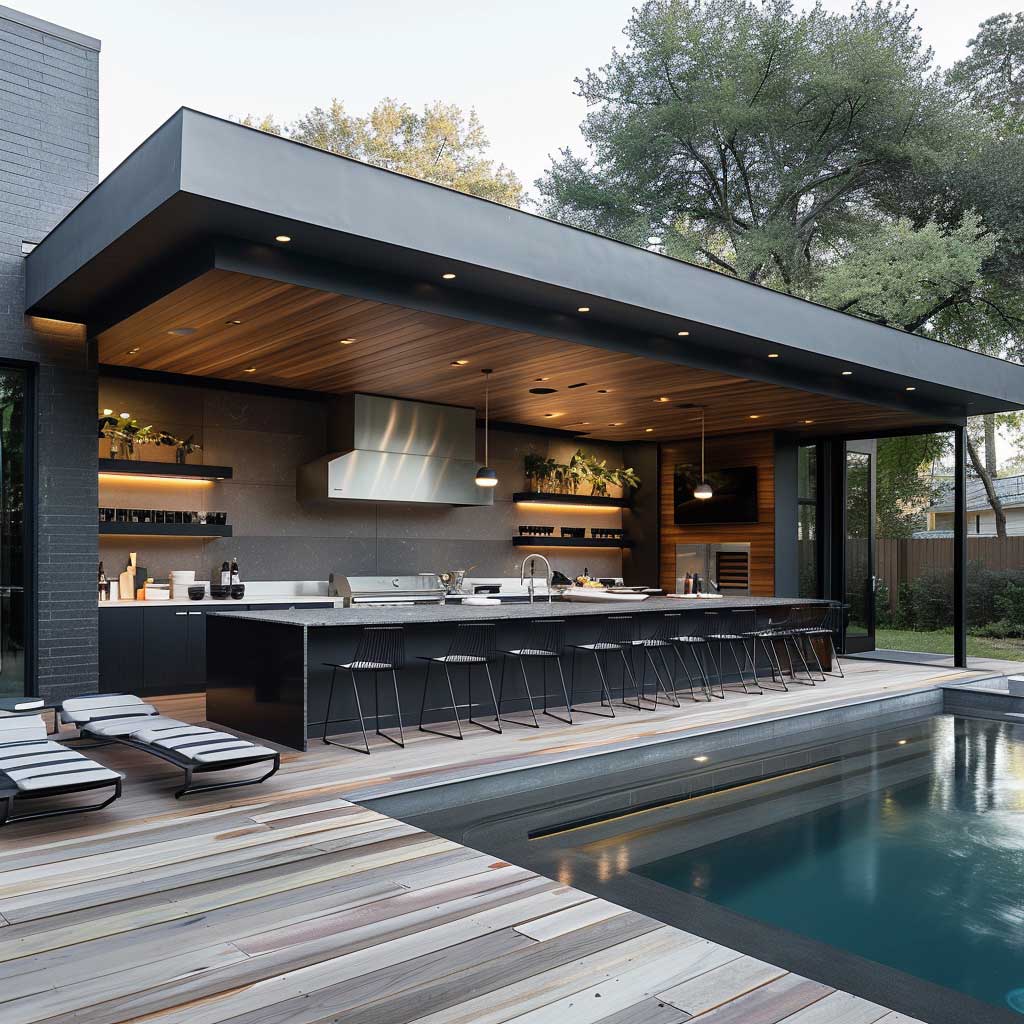

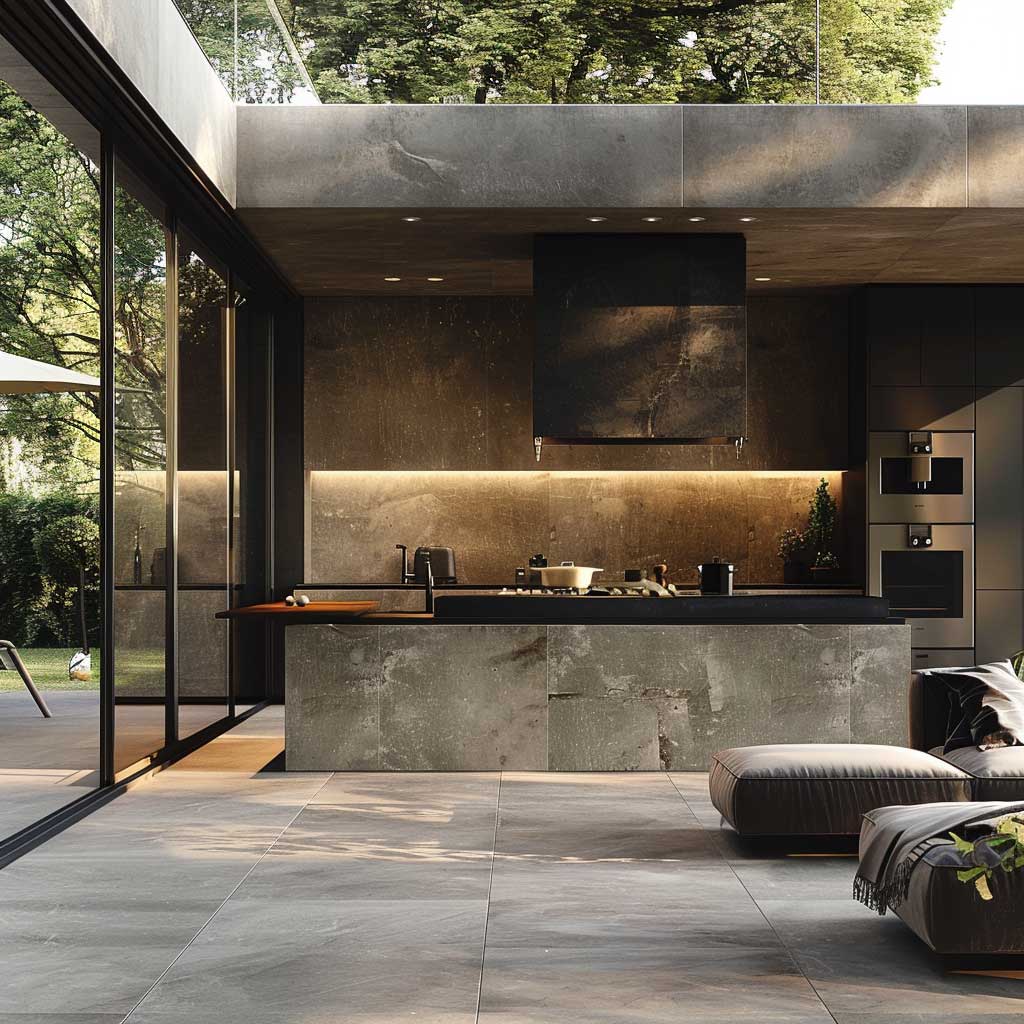
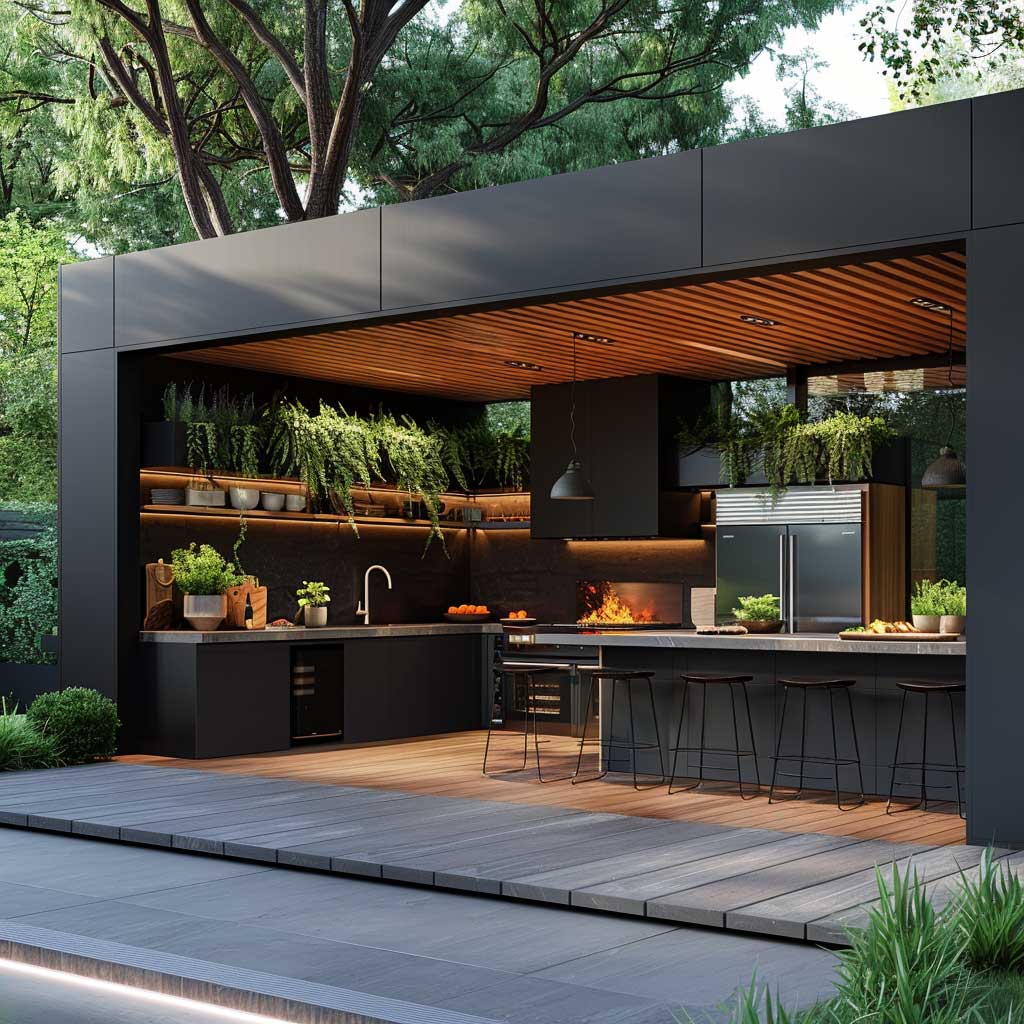
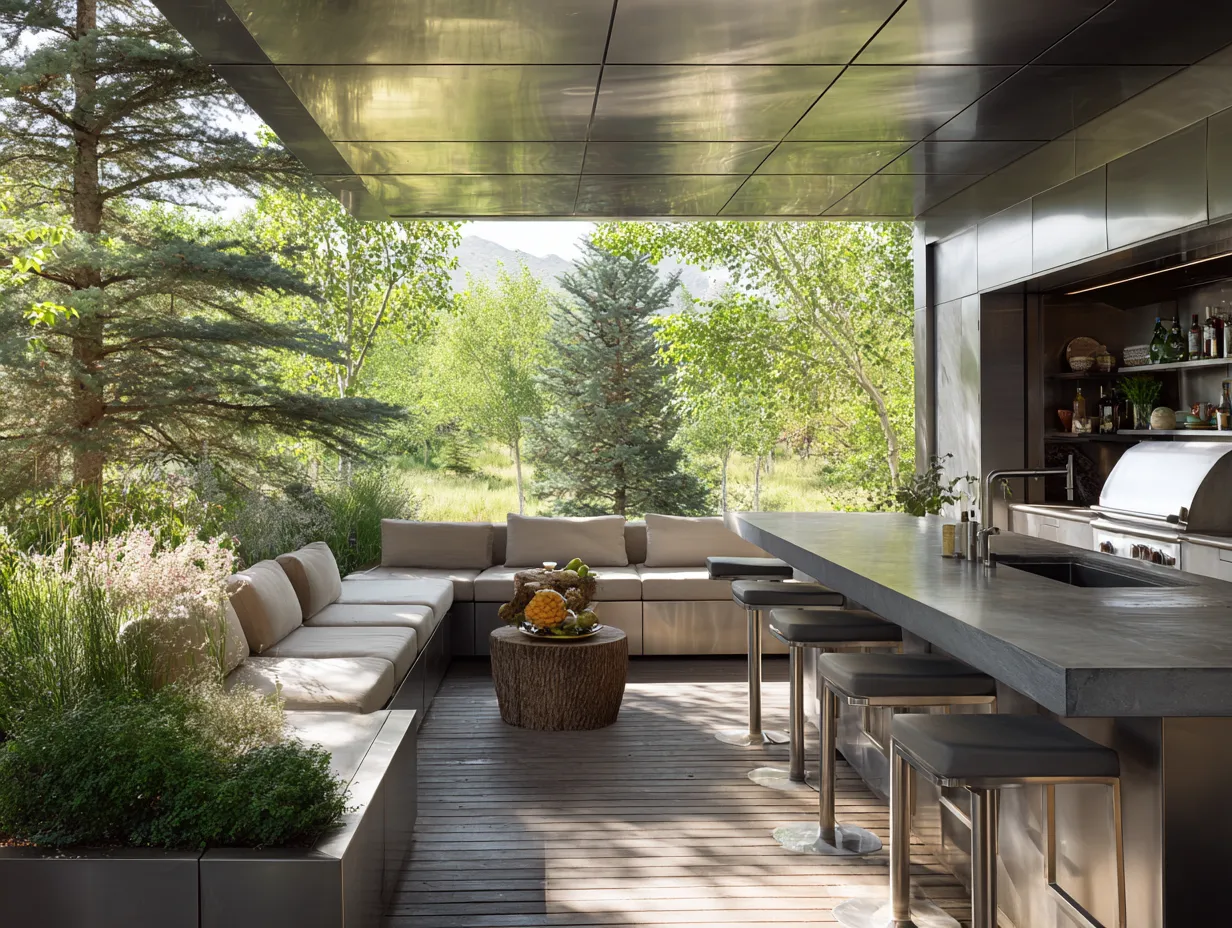
A minimalist approach to outdoor kitchens focuses on the essentials, stripping away any superfluous elements to highlight the beauty of simplicity. In these kitchens, every component, from appliances to storage, is carefully selected to serve a purpose while maintaining a cohesive aesthetic. The color schemes often lean towards monochromatic tones—whites, blacks, and grays—creating a serene and visually coherent space that feels both expansive and inviting.
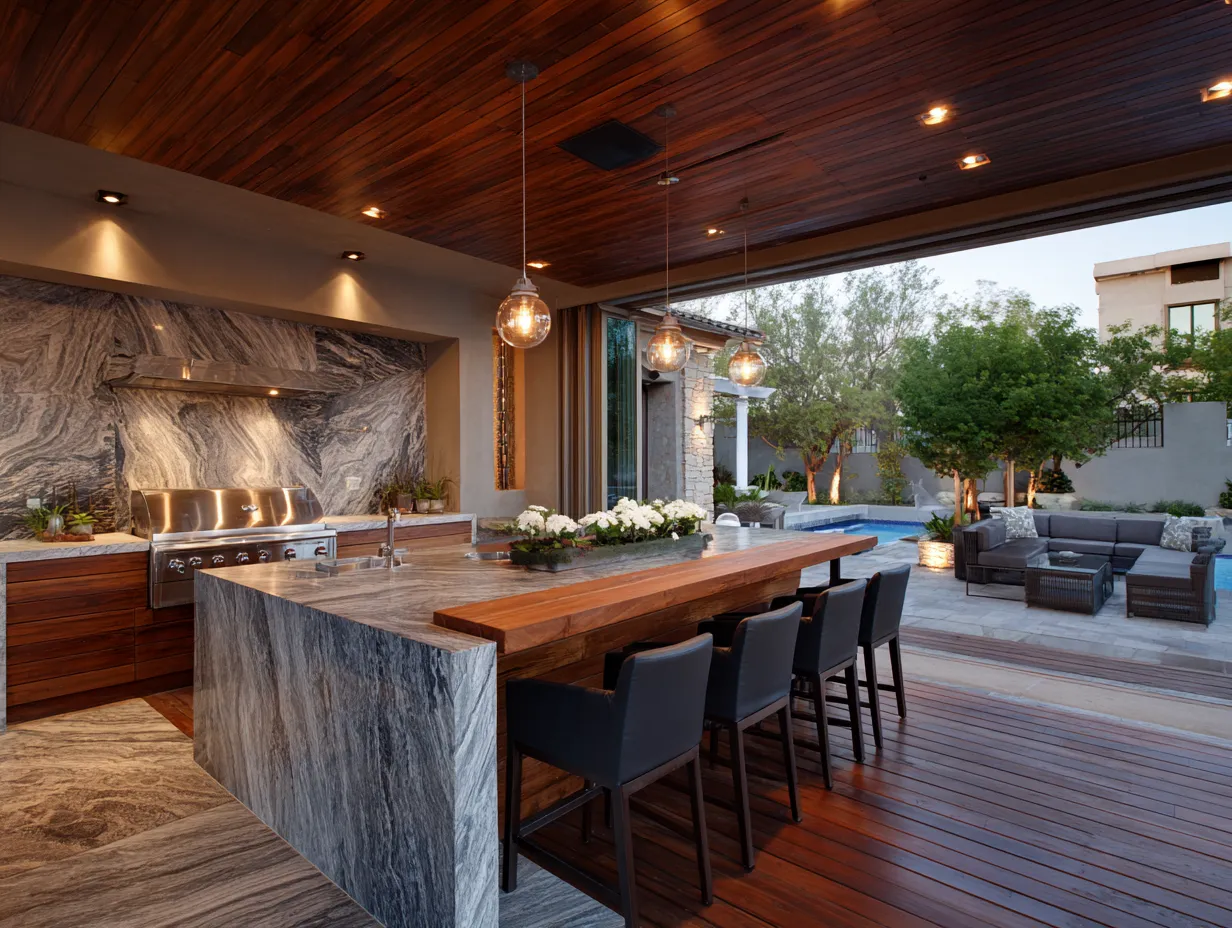
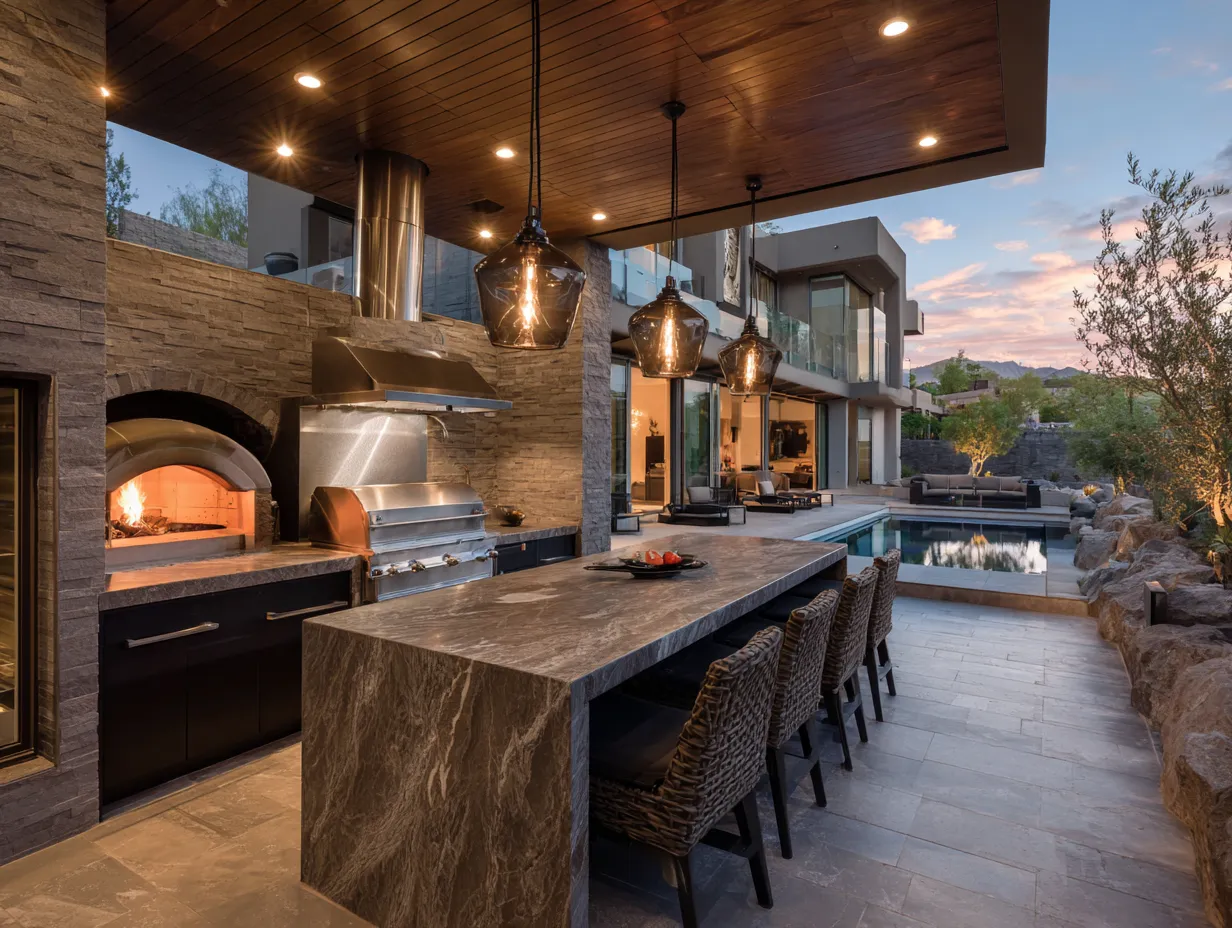
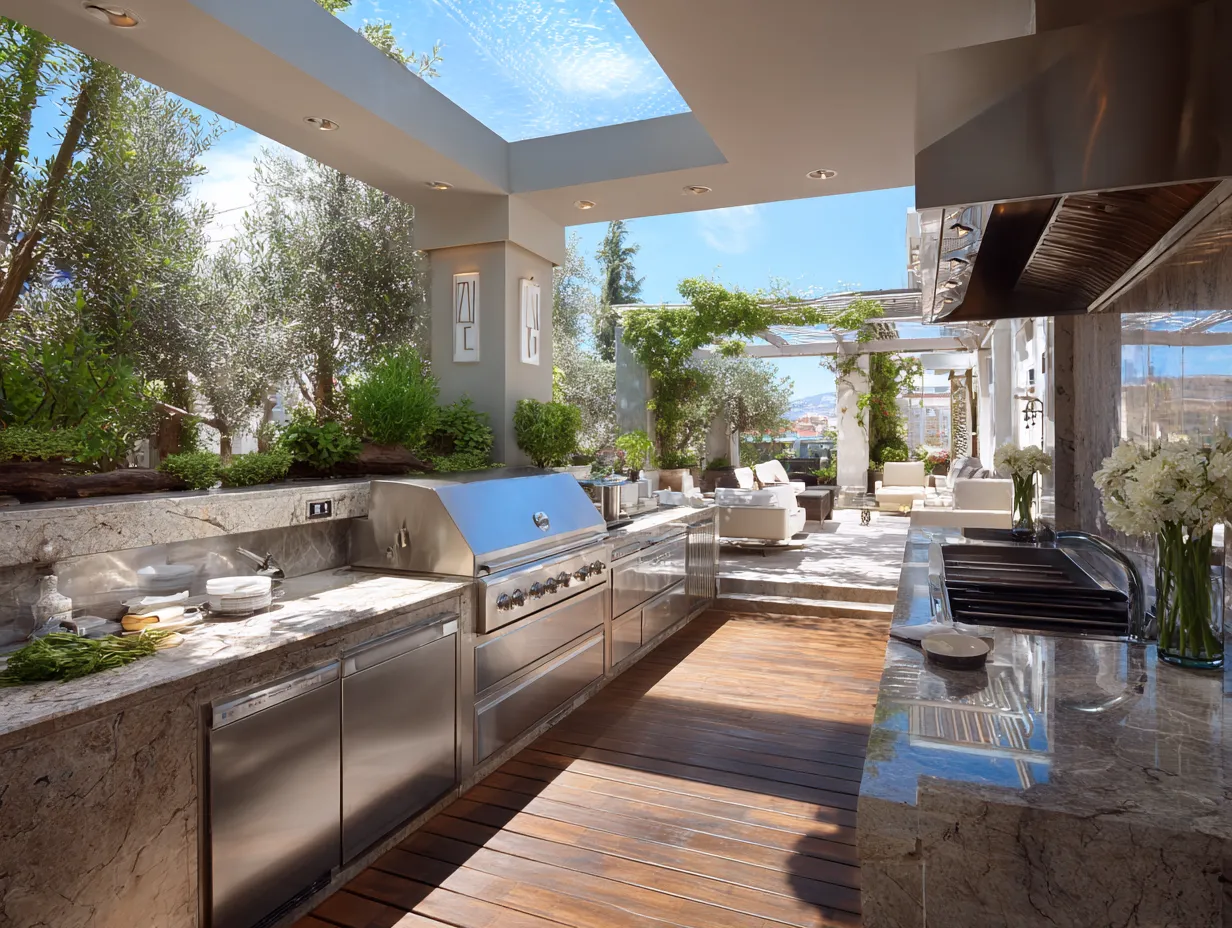
Materials play a crucial role in minimalist outdoor kitchen designs. Durable, weather-resistant surfaces such as stainless steel, polished concrete, and natural stone are favored for their ability to withstand the elements while maintaining their appearance. These materials also contribute to the kitchen’s sleek aesthetic, with their smooth textures and clean lines enhancing the overall minimalist vibe. For a broader library of material combinations and layout ideas, Houzz’s outdoor kitchen gallery features over 40,000 photos sorted by style and material.
Functionality is at the heart of minimalist outdoor kitchens. Integrated appliances that blend seamlessly into the design are a hallmark, ensuring that the space remains uncluttered and efficient. The layout is thoughtfully arranged to facilitate ease of movement and social interaction, creating an environment where cooking and entertaining can happen smoothly and effortlessly.
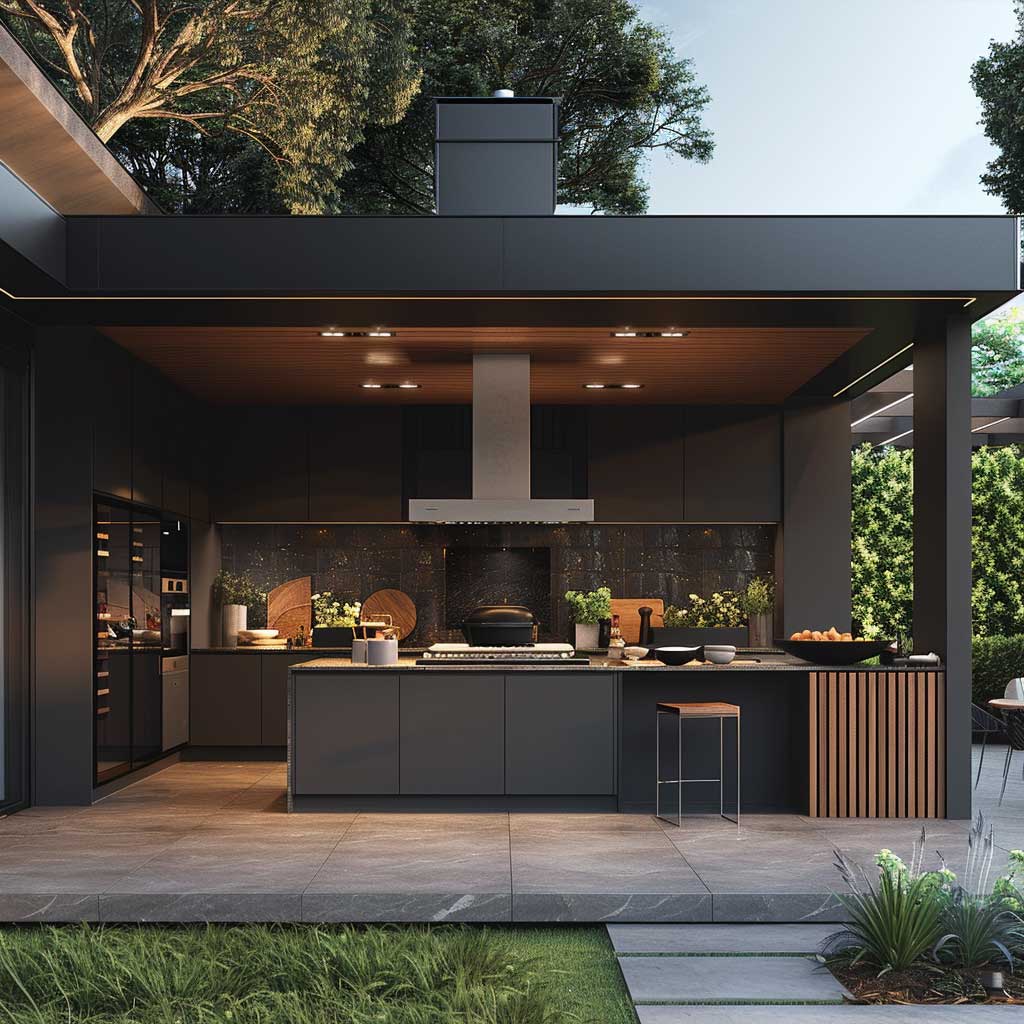
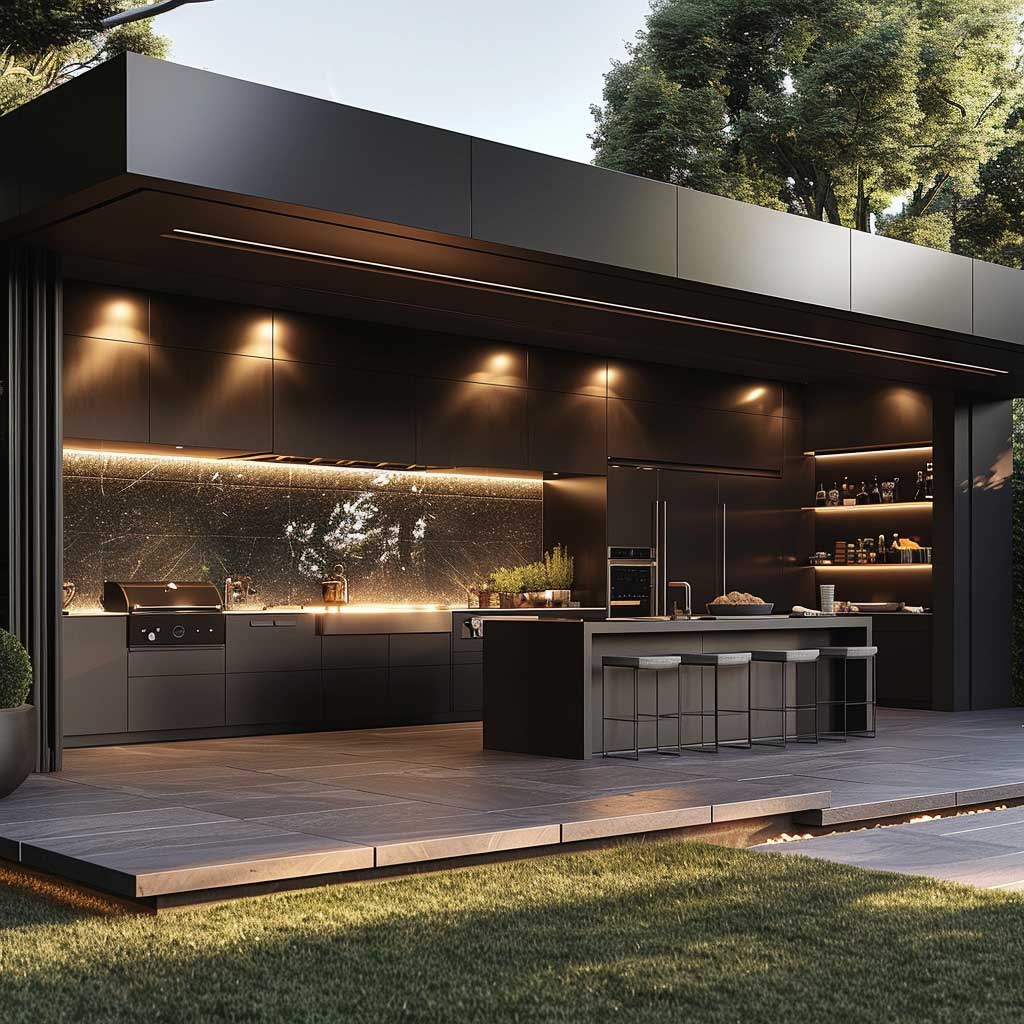
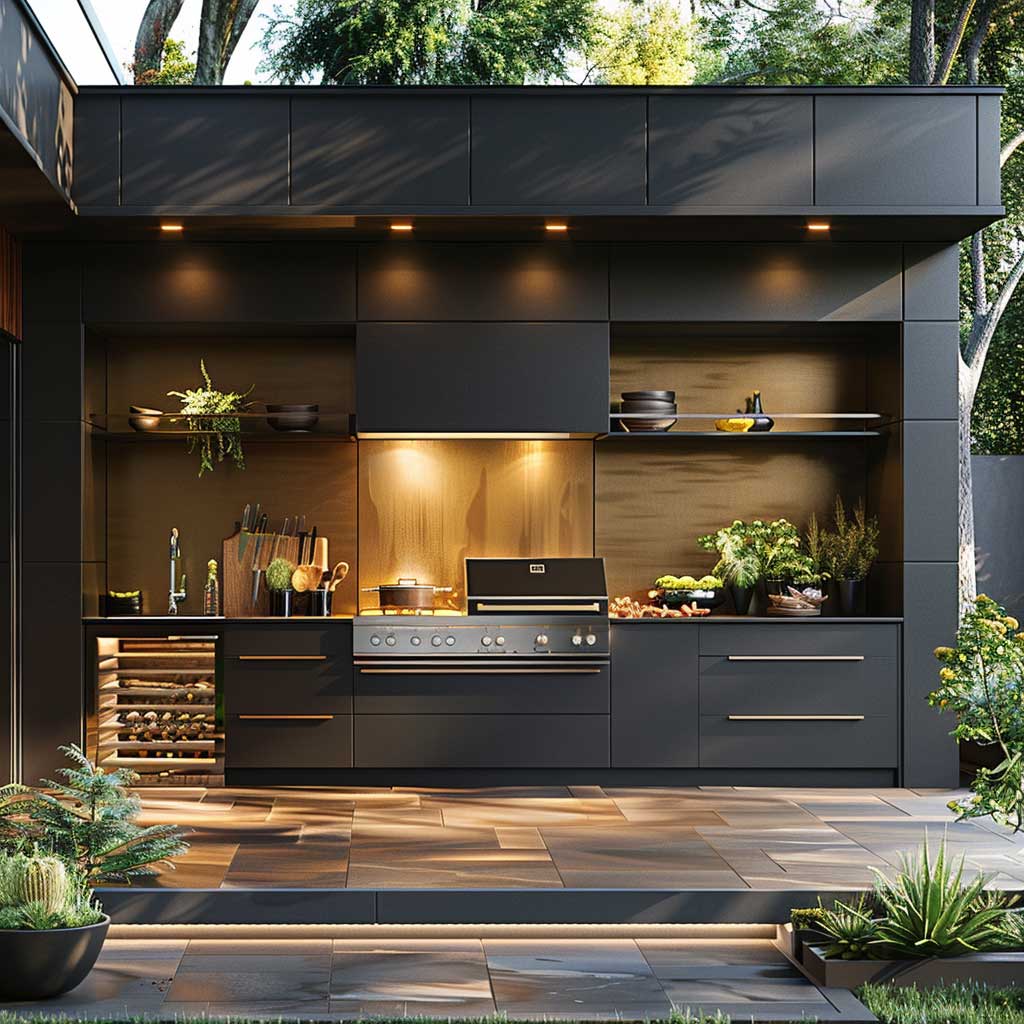
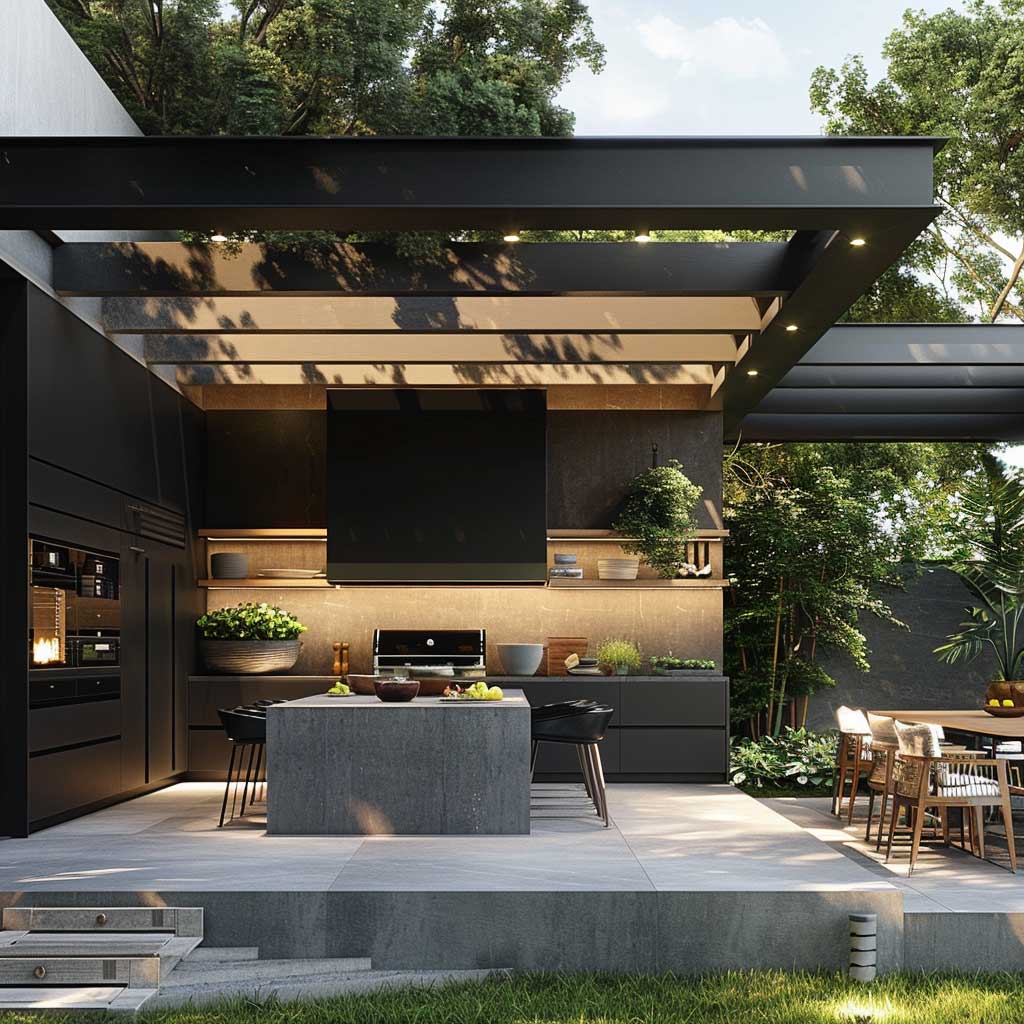
Lighting is another critical element, used not just for practicality but as a design feature to enhance the kitchen’s minimalist qualities. Strategically placed LED lights can illuminate work areas effectively while creating a warm and welcoming ambiance as the sun sets. The careful consideration of lighting further emphasizes the kitchen’s sleek lines and contributes to the creation of a captivating outdoor oasis.
Incorporating a sleek minimalist outdoor kitchen into a modern home extends the living space into the outdoors, offering a tranquil retreat for cooking, dining, and entertaining. This design not only embraces the minimalist ethos of “less is more” but also demonstrates that outdoor kitchens can be as sophisticated and well-appointed as their indoor counterparts.
Polished concrete countertops look incredible in photos but stain fast if you skip the penetrating sealer. I watched a $2,200 pour turn splotchy after one barbecue season because the homeowner used a topical sealant instead of a lithium silicate product. The fix costs more than doing it right the first time. Don’t cheap out here.
Stainless steel cabinets from brands like NewAge Products or Bull Outdoor run $1,800–$4,500 for a basic set. They hold up. The knockoffs from random Amazon sellers? I’ve seen doors warp in six months. You get what you pay for, and outdoor humidity is brutal on thin-gauge metal. My go-to move is the 304-grade stainless — it costs 20% more than 430-grade but laughs at coastal salt air like it’s nothing.
One mistake I keep seeing: people install gorgeous flush-mount LED strips and forget about bugs. Every warm-toned light within fifty feet of a grill becomes a moth magnet by 8 PM. Cool-white LEDs at 4000K attract roughly 80% fewer insects. Nobody tells you this in the showroom. I learned it after replacing three sticky light covers in one summer.
Don’t Do This
Don’t install MDF-core cabinets in an outdoor kitchen. I’ve seen two sets swell and delaminate within one rainy season. The savings over marine-grade plywood are maybe $300 — and the replacement cost is $2,000+. Same goes for particle board shelving behind waterproof-looking doors. Water finds a way in. Always.
Don’t use topical sealant on concrete countertops outdoors. It peels. Penetrating sealers like Ghostshield Lithi-Tek 4500 cost $55 a gallon and actually work. The topical stuff looks good for about three months, then you’re resealing every season while your counters stain underneath.
| Feature | Minimalist | Rustic Chic | Modern Industrial |
|---|---|---|---|
| Budget Range | $5,000–$18,000 | $4,000–$15,000 | $6,000–$25,000 |
| Key Countertop | Polished concrete, quartz | Honed granite, soapstone | GFRC concrete, raw concrete |
| Cabinet Material | 304 stainless steel | Reclaimed wood + marine sealant | Powder-coated steel, raw metal |
| Lighting Style | Flush LED strips (4000K) | Lanterns, string bulbs | Pendant lights, Edison bulbs + LED flood |
| Maintenance Level | Low — hose and wipe | Medium — reseal wood yearly | Medium — seal brick, treat metal |
| Best For | Small patios, clean-design lovers | Large yards, weekend entertainers | Urban backyards, bold statements |
| Biggest Mistake | Topical sealant on concrete | Marble countertops outdoors | No sealer on exposed brick |
How to Plan a Minimalist Outdoor Kitchen Design
A step-by-step process for planning and building a minimalist outdoor kitchen that handles real weather and real cooking — from layout decisions to final sealant application.
Tools & Materials
- Measuring tape and level
- 304-grade stainless steel cabinets
- Penetrating concrete sealer (Ghostshield Lithi-Tek 4500)
- Outdoor-rated LED strip lights (4000K)
- Built-in grill (30–36 inch)
Measure your patio footprint and pick a layout
Measure the available space in square feet. Under 50 sq ft — go straight-line. 50–80 sq ft — L-shape works. Over 80 sq ft — U-shape or island. Mark the grill position so smoke drifts away from seating and the house.
Choose weather-rated materials for counters and cabinets
Pick 304-grade stainless cabinets or marine-grade HDPE. For countertops, polished concrete or honed granite beat marble every time outdoors. Get samples and leave them outside for two weeks before committing.
Run gas, electrical, and water lines before building
Hire a licensed plumber and electrician. You need a dedicated 20-amp GFCI circuit for the fridge and lights, a gas line for the grill, and optionally a water line for a sink with proper drainage. This step costs $800–$2,500 depending on distance from the house.
Install cabinets, appliances, and countertops
Set cabinets on a level concrete pad or raised platform. Install the grill with manufacturer clearances. Drop in the countertop last. Leave 18 inches of landing space on both sides of the grill for prep and plating.
Seal all surfaces and install lighting before first use
Apply penetrating sealer to concrete countertops before the first barbecue. Mount LED strip lights under cabinets at 4000K color temperature to reduce bugs. Add one adjustable floodlight above the grill zone. Test everything with a dry run before your first real cookout.
Through the lens of minimalist design, the outdoor kitchen becomes more than just a place to cook—it transforms into a sanctuary of simplicity and elegance. It encourages homeowners to pause and appreciate the subtle interplay of light, materials, and space, creating moments of peace and connection in the hustle and bustle of daily life.
Rustic Chic Outdoor Kitchen with Reclaimed Wood and Stone
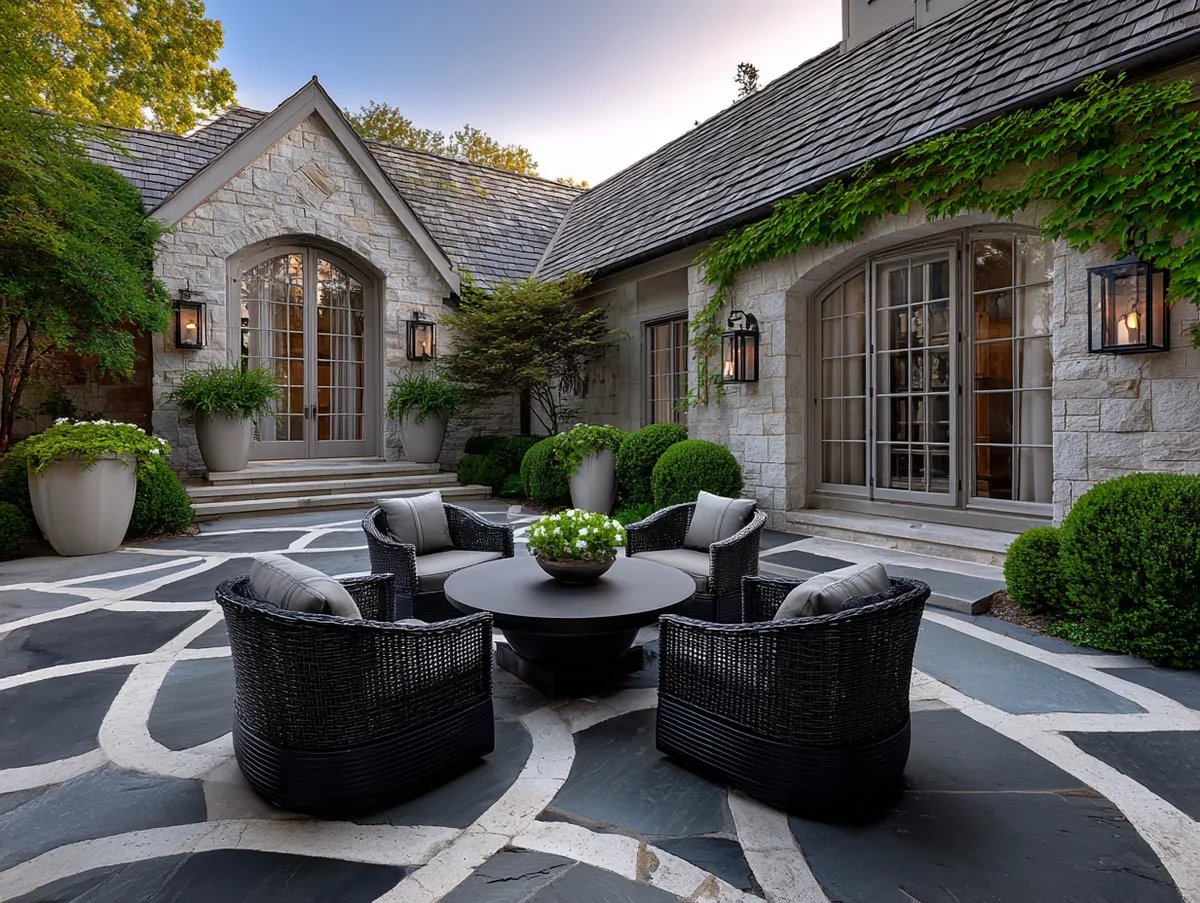
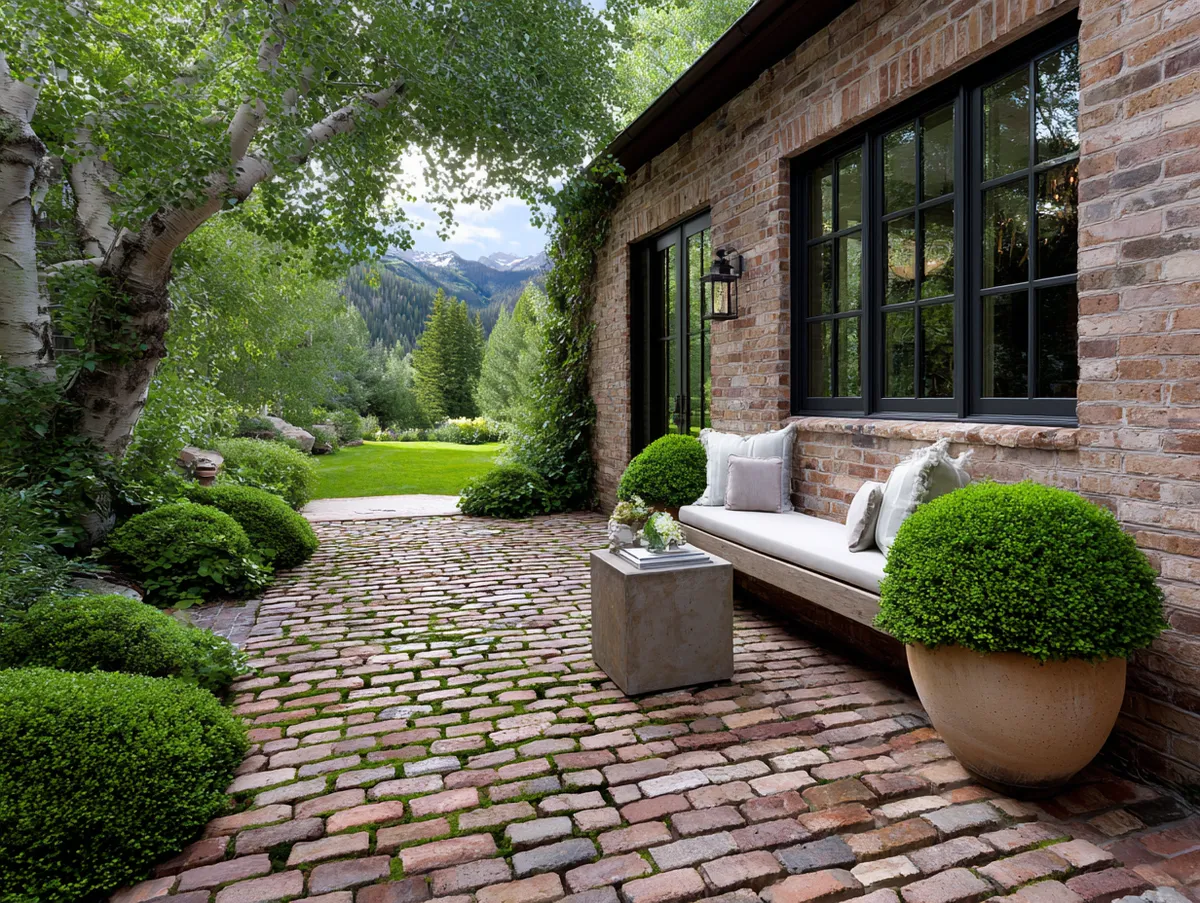
The essence of rustic chic design lies in its ability to blend the raw, unrefined beauty of nature with elements of elegance and comfort. This approach to outdoor kitchen designs invites a sense of warmth and authenticity, making the outdoor culinary space not just a place to prepare meals but a retreat that embodies the charm of rustic living with a modern twist. If you want more layout ideas beyond rustic, check out these stylish and functional outdoor kitchen design inspirations covering fireside corners and alfresco suites.
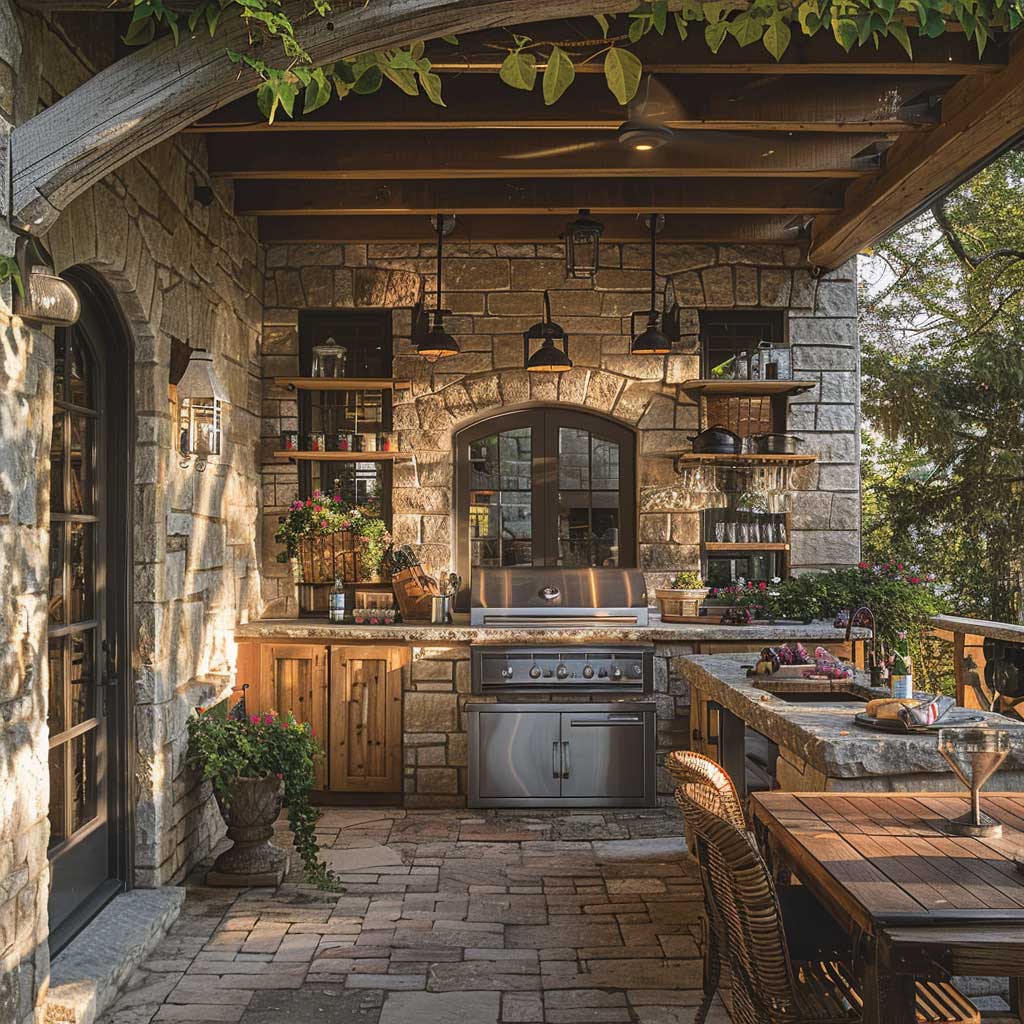
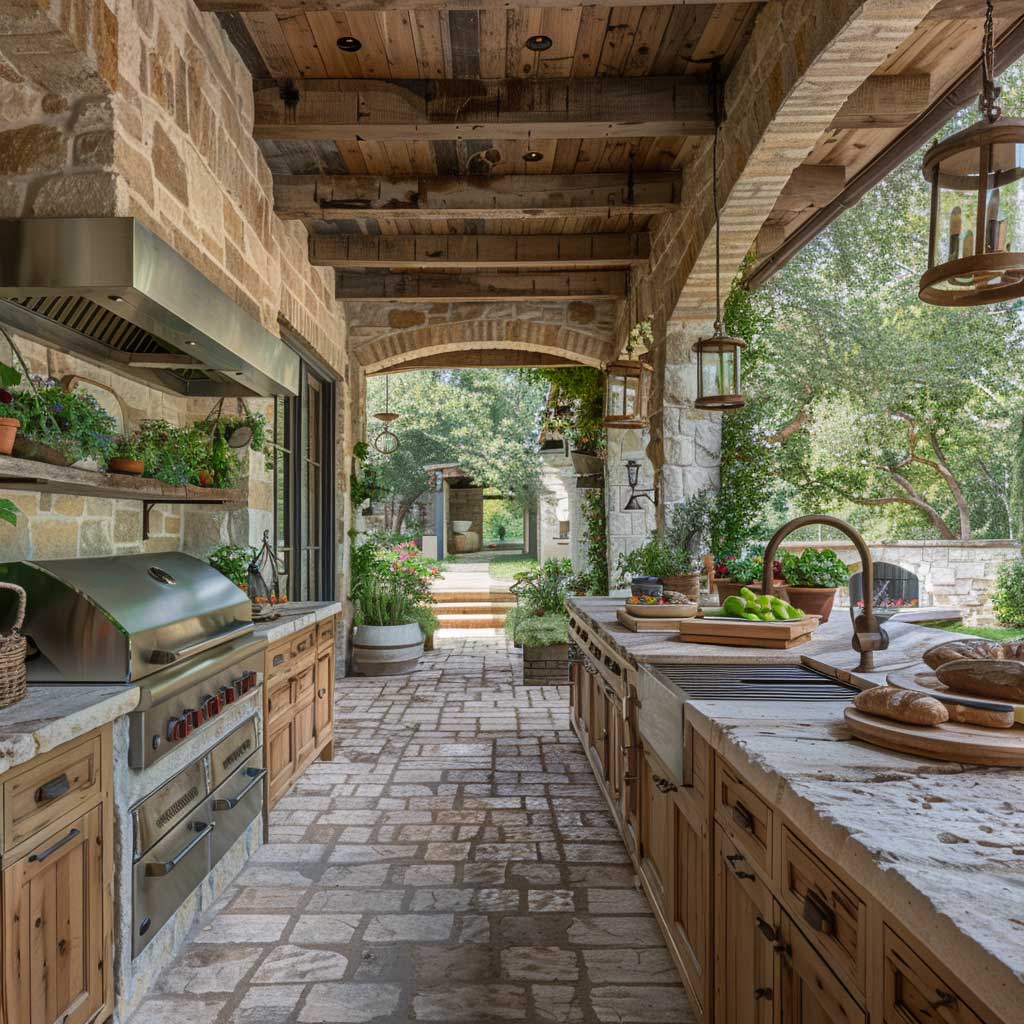
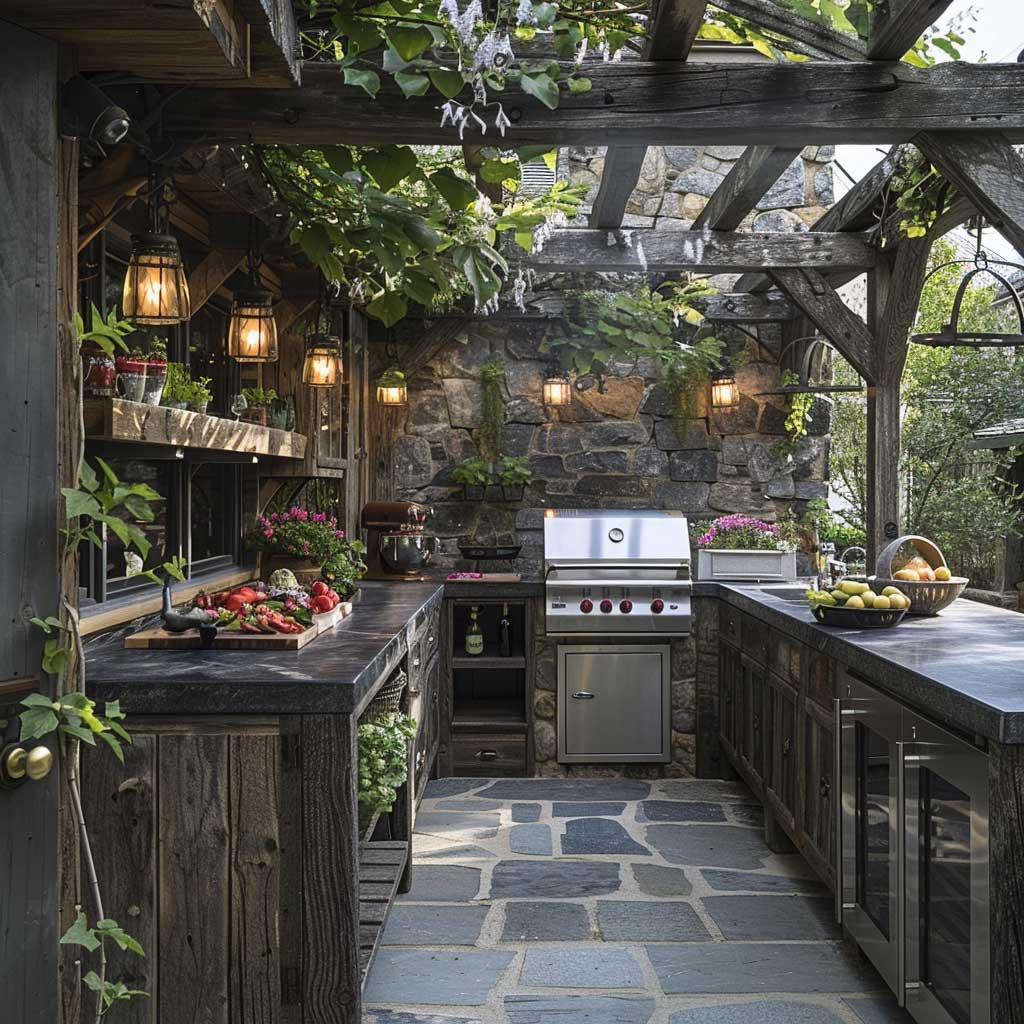
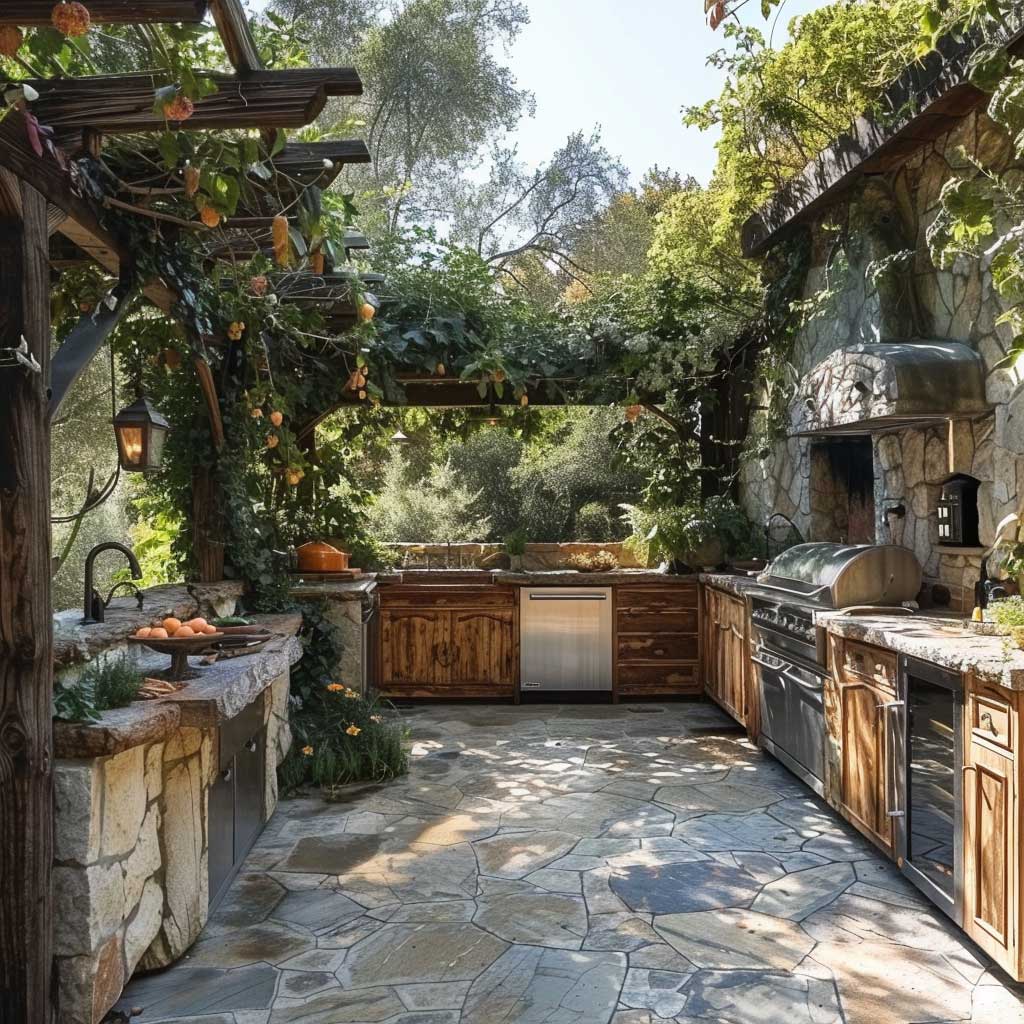
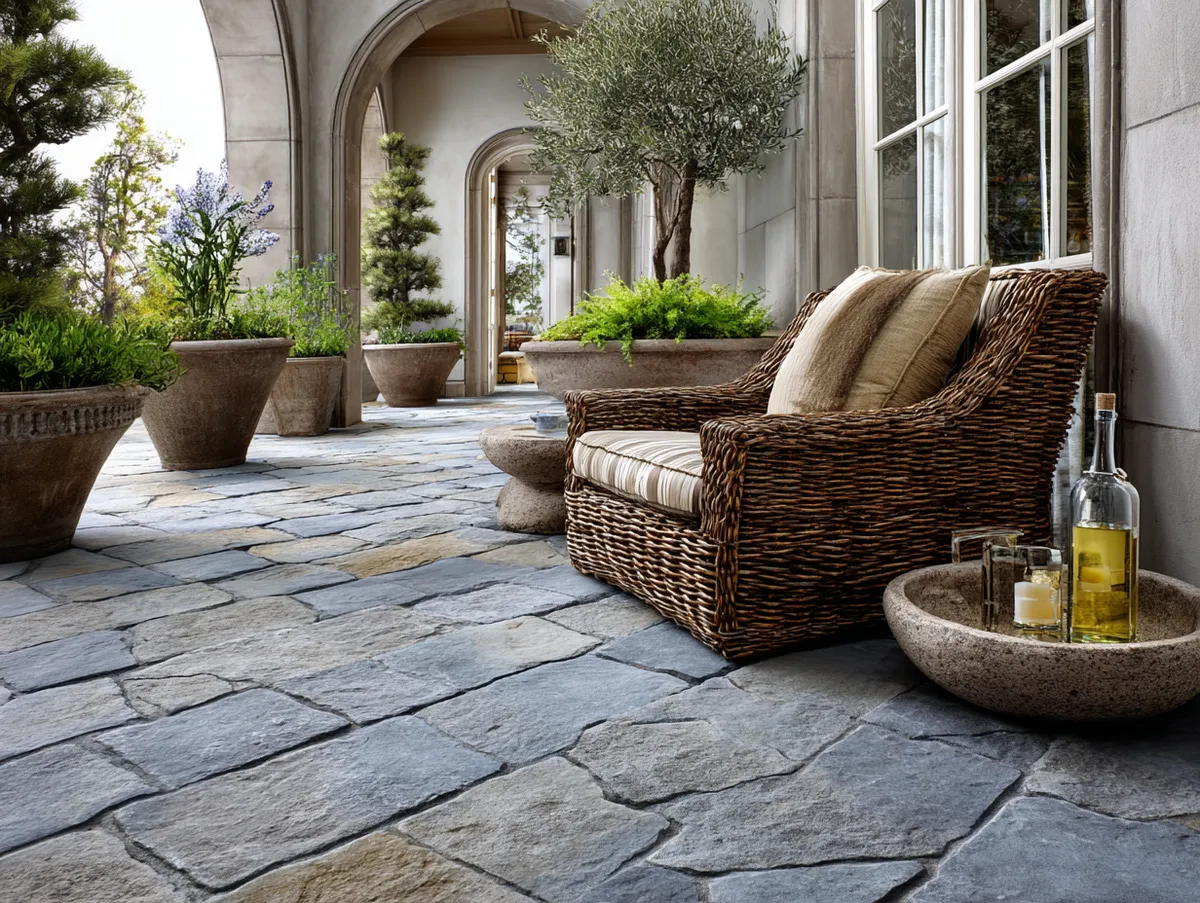
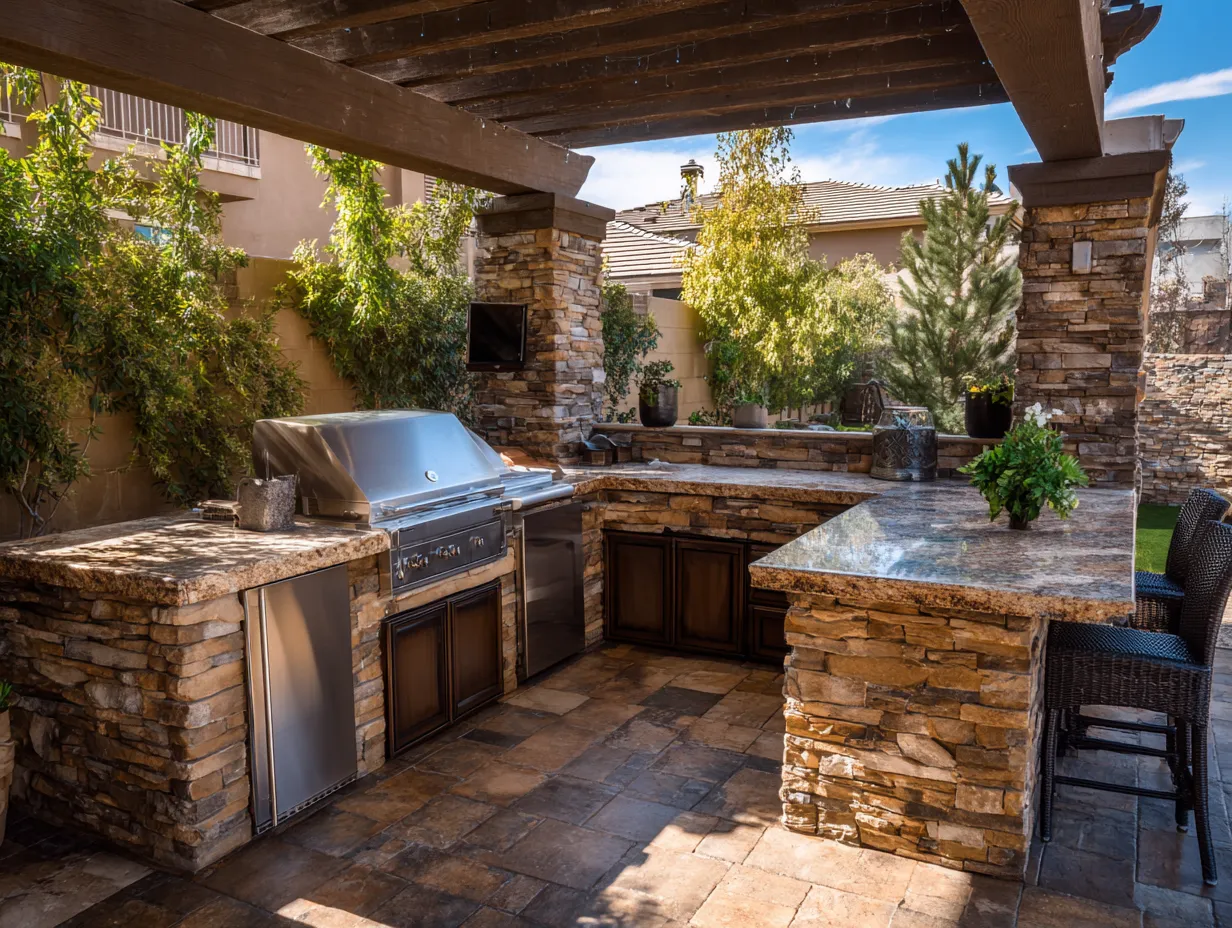
Central to achieving the rustic chic look is the use of materials that speak to both the past and present. Reclaimed wood, with its inherent warmth and character, plays a significant role, offering a story in every grain and knot. It’s complemented by natural stone countertops and flooring, which provide durability and a connection to the earth. These materials are juxtaposed with modern appliances and fixtures, ensuring the space is fully functional and up to the task of sophisticated meal preparation.
The color palette of a rustic chic outdoor kitchen tends towards earthy tones—beiges, browns, and greens—that harmonize with the outdoor setting. Accents in muted metals, such as copper or bronze, add a touch of refinement without detracting from the overall rustic feel. This careful balance of colors and materials creates a space that is both inviting and stylish.
Lighting is a critical component, with a focus on creating a cozy atmosphere. Lantern-style lights, string bulbs, and candles are popular choices, offering a soft, ambient glow that enhances the intimate and welcoming nature of the kitchen. These lighting choices, combined with the open air and surrounding greenery, craft an enchanting setting perfect for evening gatherings and quiet mornings alike.
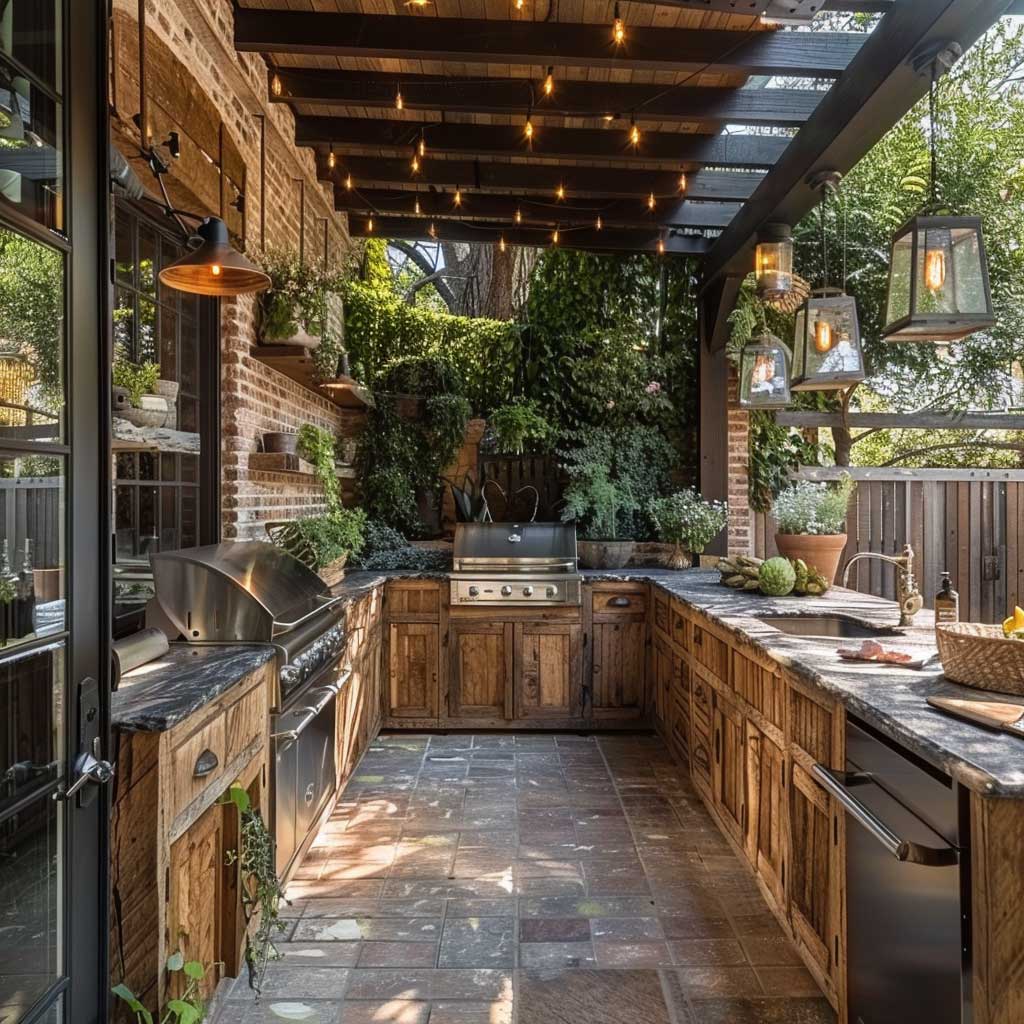
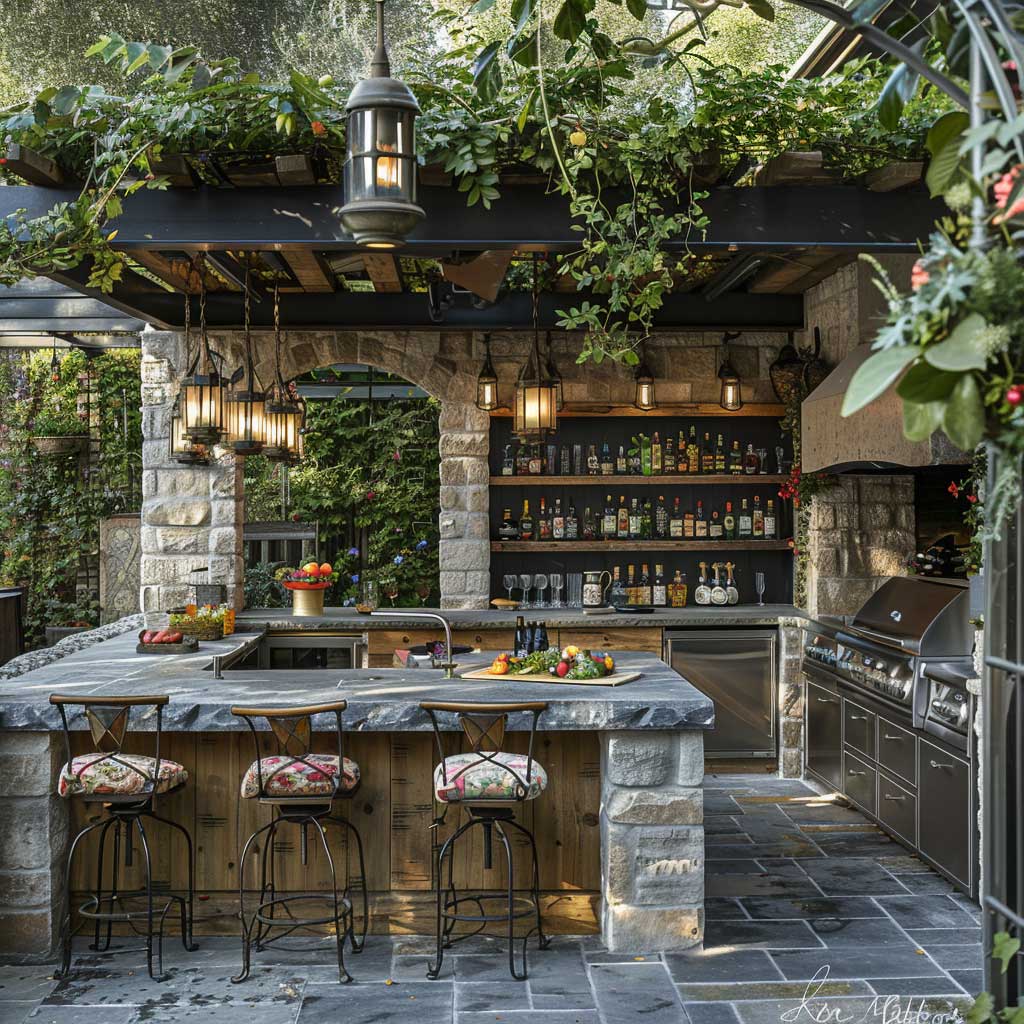
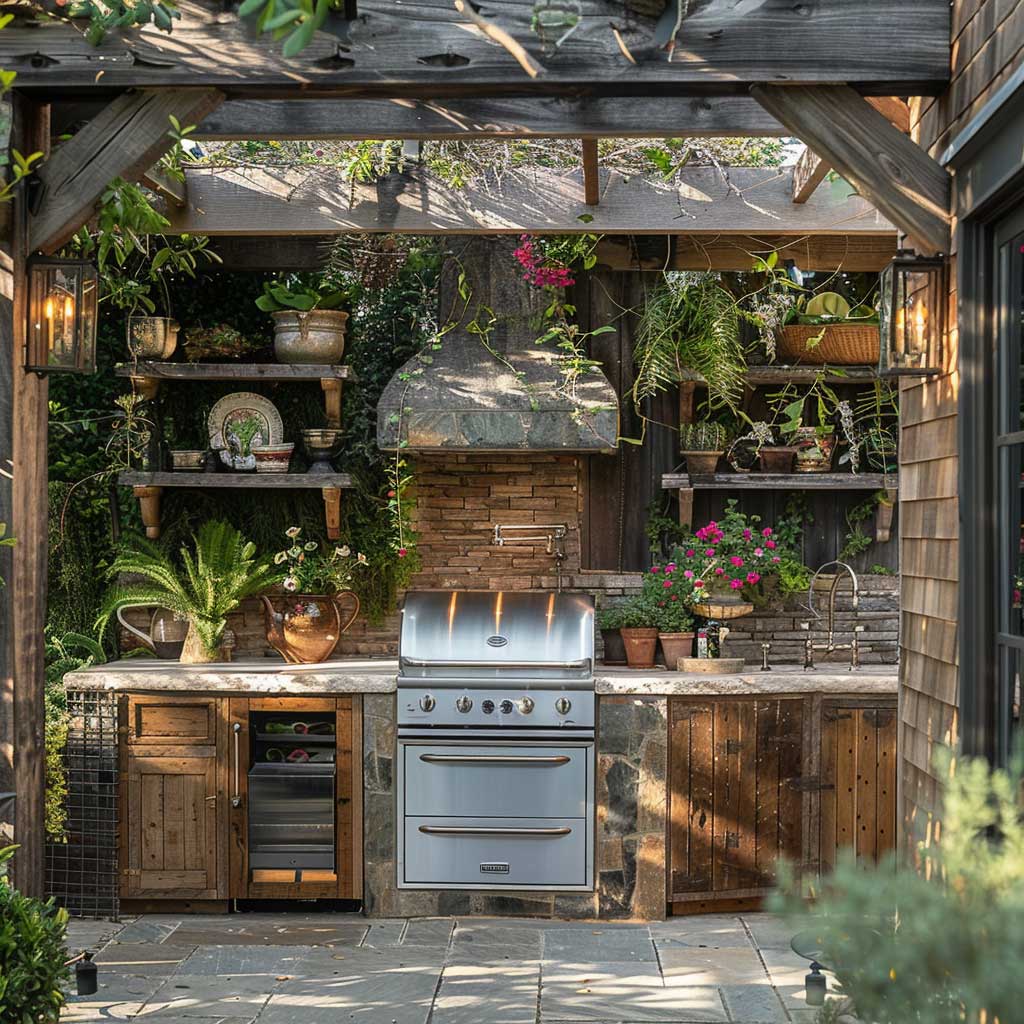
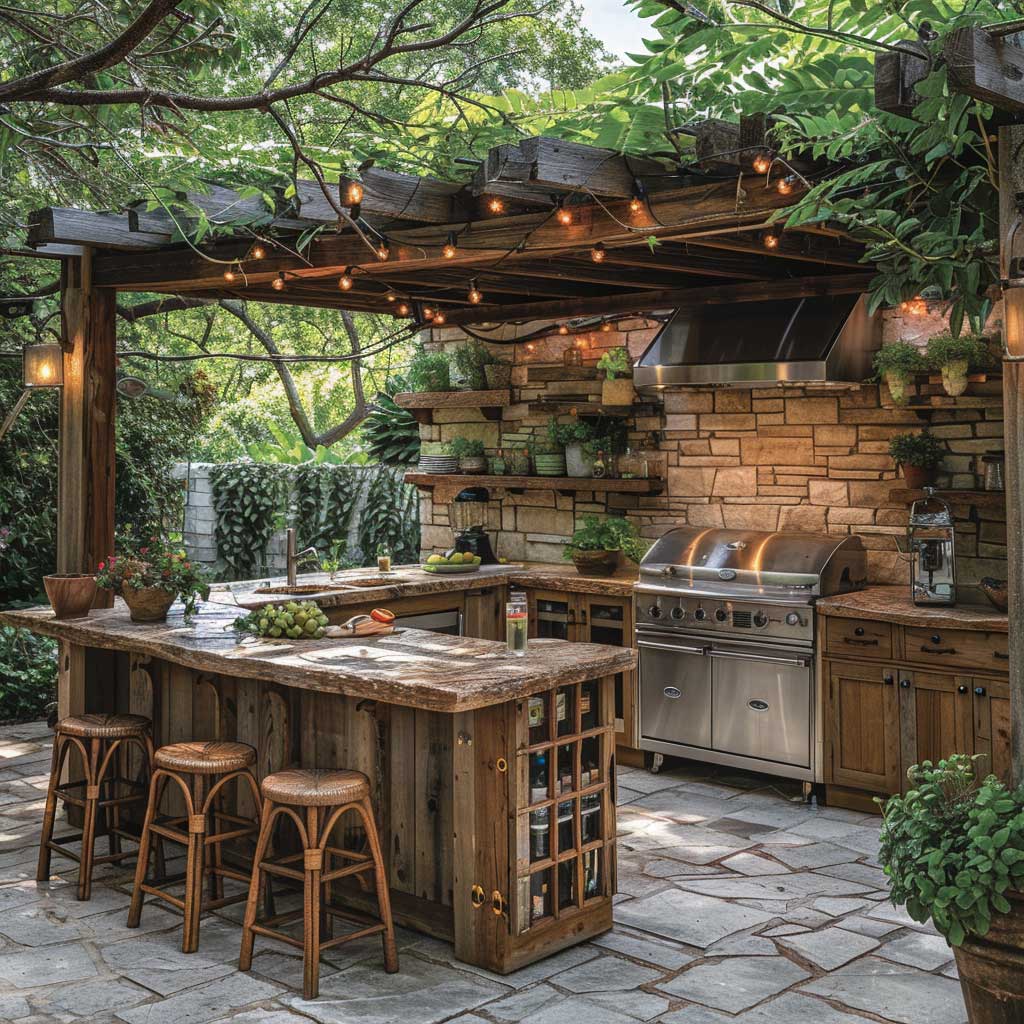
Furnishings in a rustic chic outdoor kitchen prioritize comfort and durability. Handcrafted wooden tables and chairs, plush outdoor sofas with durable fabric, and wrought iron accents contribute to the space’s functionality and aesthetic appeal. Each piece is selected not just for its looks but for its ability to withstand the elements, ensuring the kitchen remains a lasting sanctuary.
Integrating a rustic chic design into an outdoor kitchen invites homeowners and their guests to step into a space that feels both grounded and enchanting. It’s a style that celebrates the imperfections of natural materials and the sophistication of modern design, creating a perfect backdrop for culinary exploration and relaxation.
Reclaimed barn wood is gorgeous on Instagram, terrible in rain if you skip the marine-grade sealant. I’ve used Penofin hardwood oil on two projects — $45 a gallon, reapply every 18 months, and the wood still looks like it belongs in an Architectural Digest spread. Thompson’s WaterSeal? Peeled off within one winter. Total waste of a Saturday.
Natural stone countertops for outdoor use need to be granite or quartzite, full stop. Marble etches from lemon juice in under a minute. I watched someone set a margarita glass on their $6,000 Carrara marble outdoor bar and leave a permanent ring. Honed granite from places like Arizona Tile runs $55–$85 per square foot installed and shrugs off salsa spills like a champ. Soapstone is another solid pick if you want that aged patina look — it darkens over time, which some people love and others hate.
String lights are the easiest $30 upgrade nobody thinks through carefully enough. Commercial-grade S14 bulbs from Brightech last three to four seasons outdoors. The cheap ones from big-box stores dim and yellow after six months because the filament coating breaks down in UV. Hang them in a zigzag pattern at 8-foot height. Too low and tall guests bump them. Too high and you lose that cozy glow. What’s the sweet spot? Eight feet, every time.
The transformation of outdoor spaces into culinary retreats reflects a broader trend towards embracing the home’s exterior as an extension of the interior living space. In this context, the rustic chic outdoor kitchen stands out as a testament to the beauty of blending old with new, nature with nurture, providing a unique setting that nourishes both the body and soul.
Modern Industrial Outdoor Kitchen: Concrete, Brick, and Steel
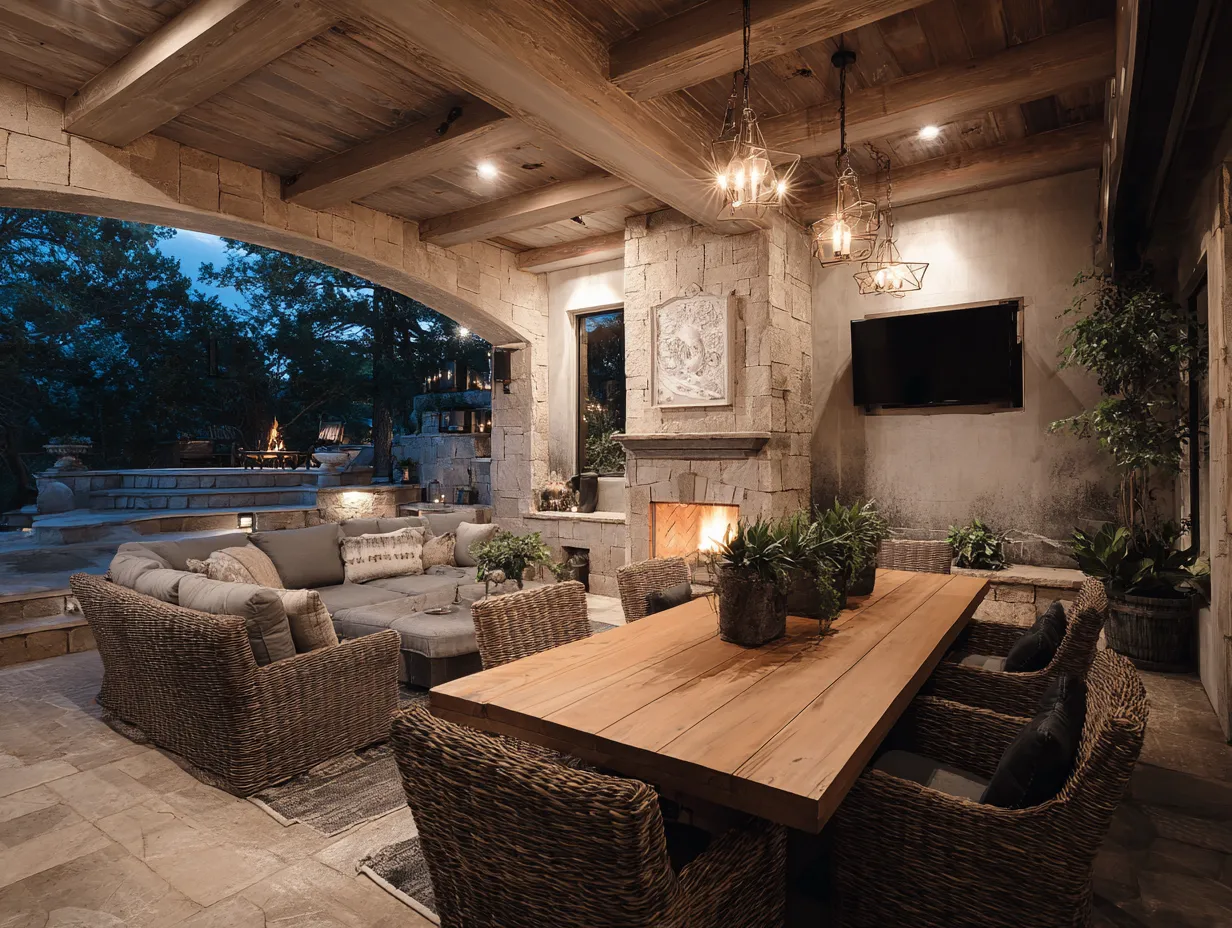
The modern industrial style stands as a testament to the beauty of functionality, merging the raw with the refined to create spaces that are both striking and utilitarian. When this design philosophy is applied to outdoor kitchen designs, it results in a cooking haven that exudes strength, character, and modern sophistication. This style appeals to those who appreciate the honesty of industrial materials and the sleekness of modern design, all while embracing the great outdoors.
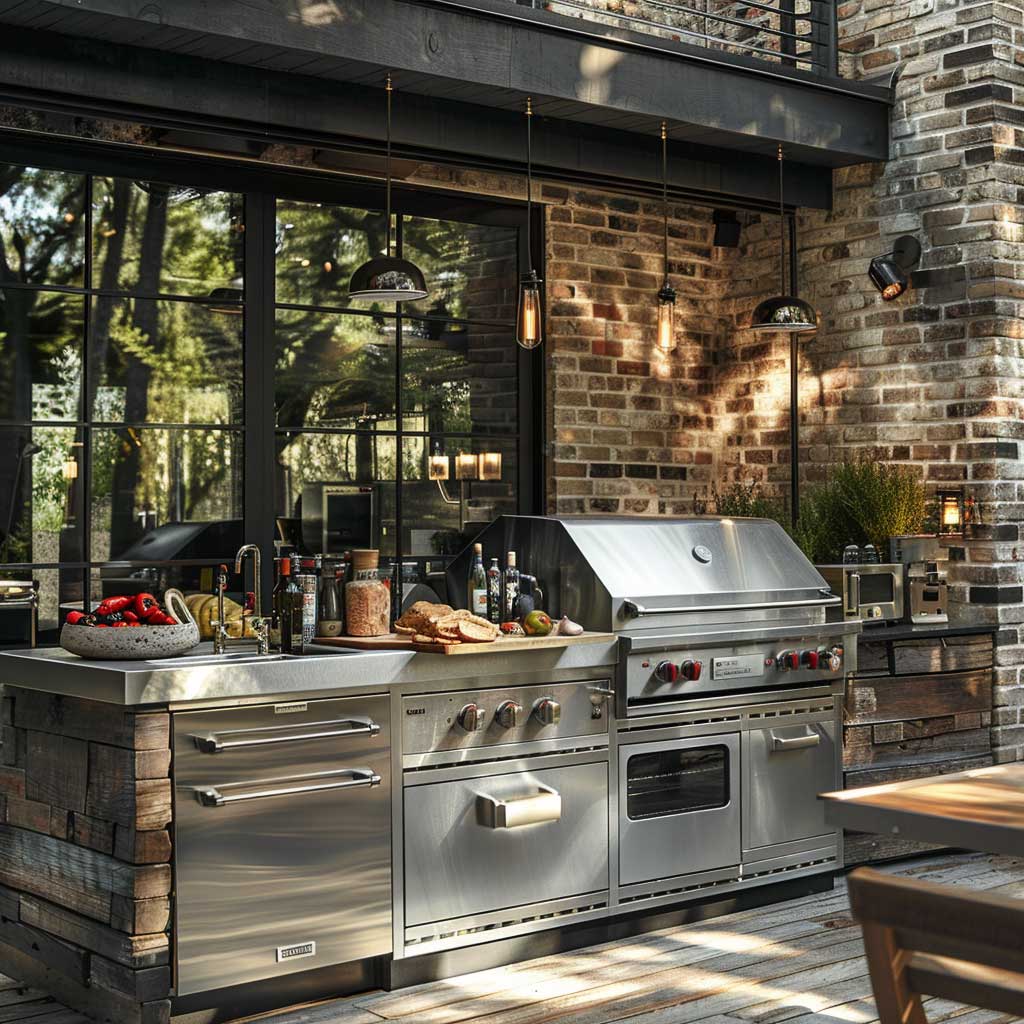
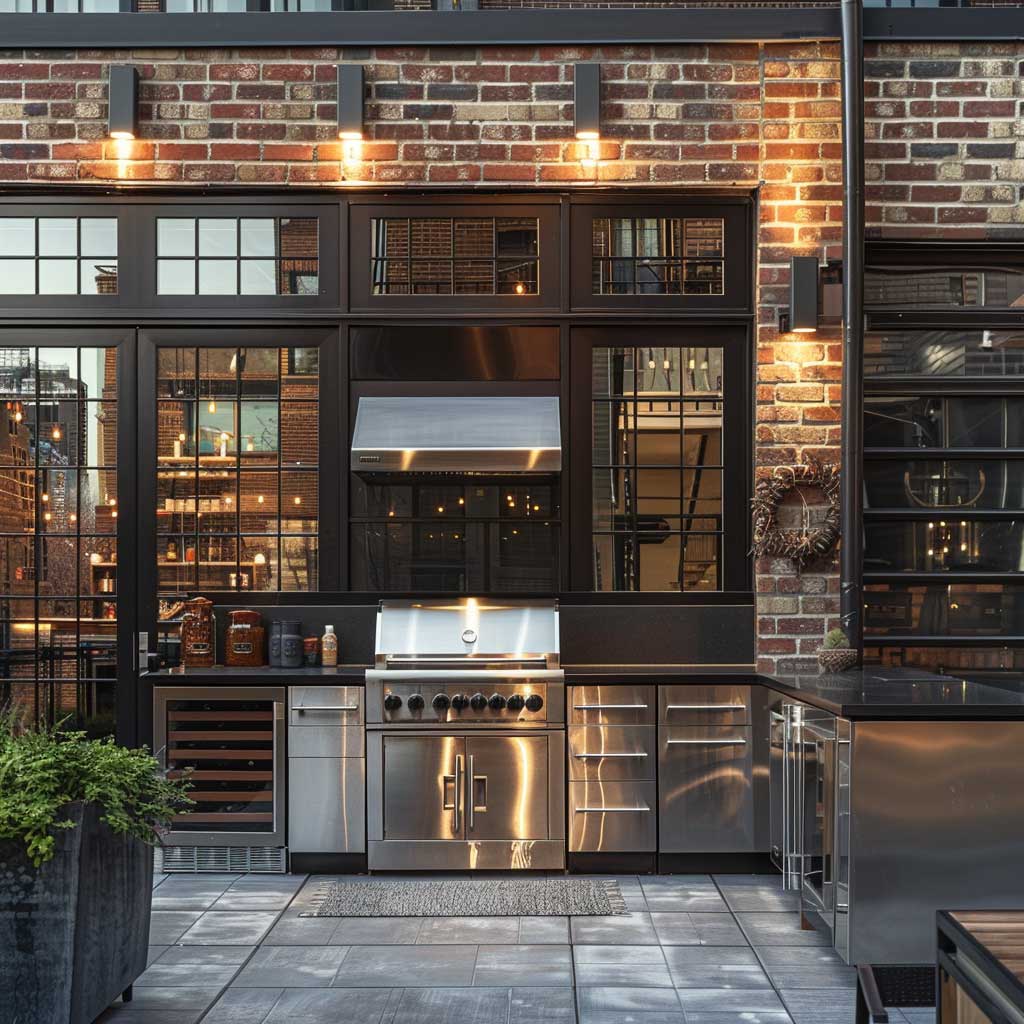
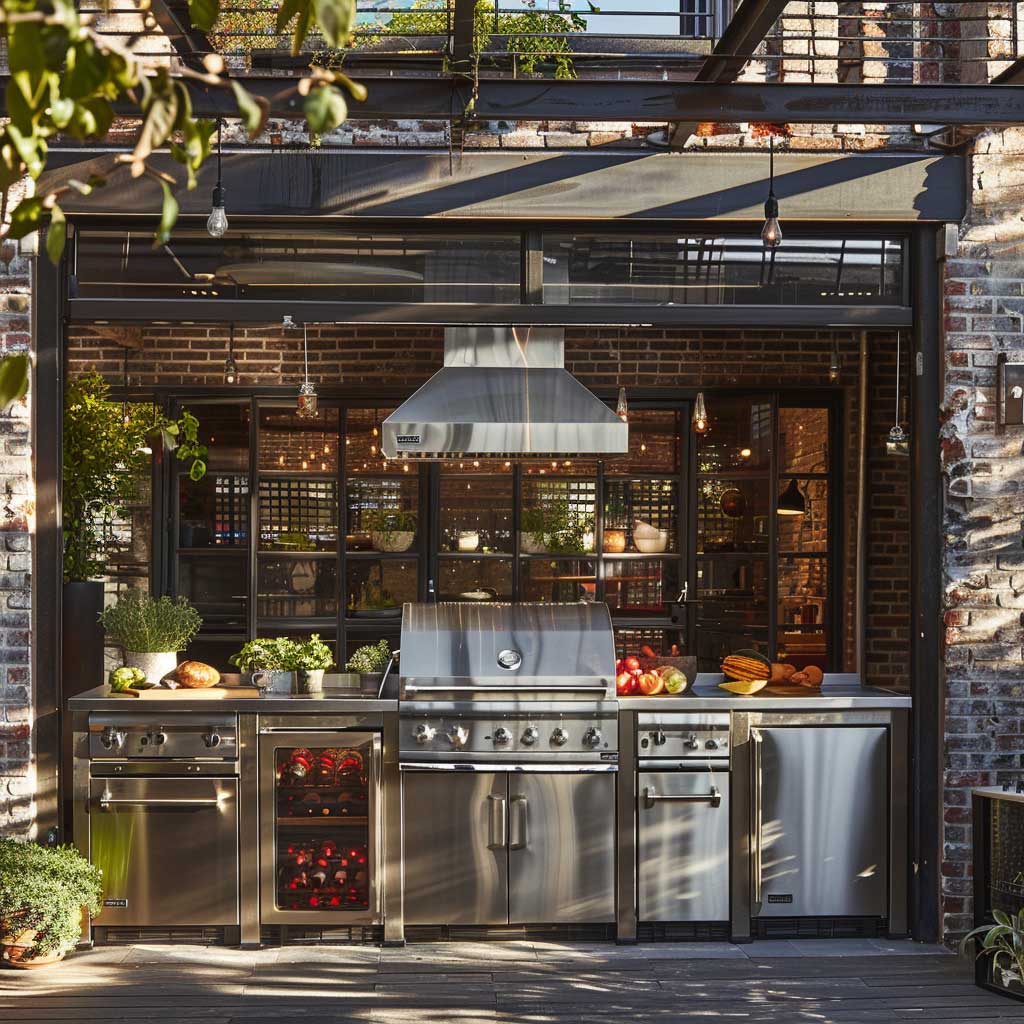

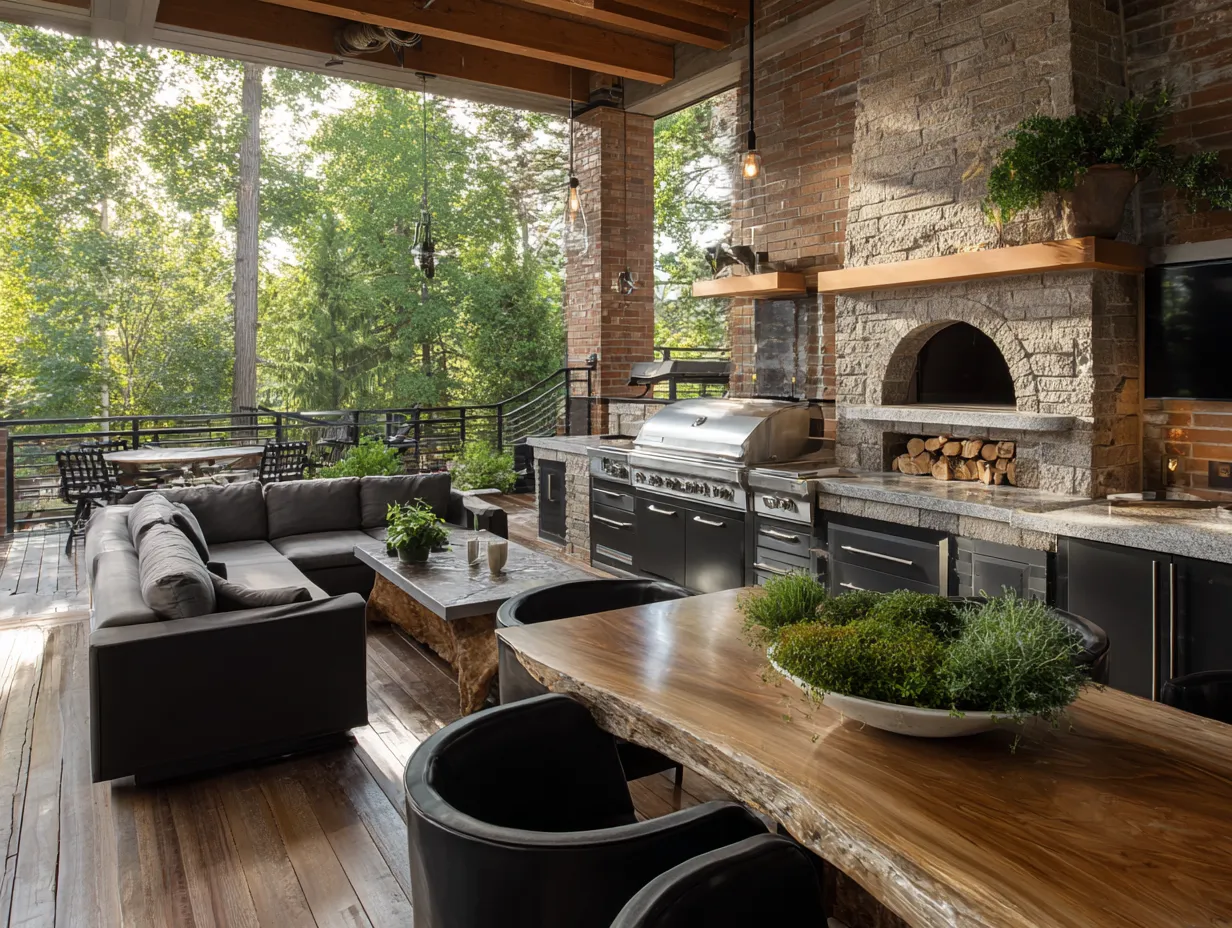
At the core of the modern industrial outdoor kitchen is the celebration of structural elements often hidden in more traditional designs. Exposed brickwork, concrete countertops, and stainless steel appliances are not just features but focal points that define the space’s aesthetic. These materials are chosen for their durability and ease of maintenance, essential qualities for outdoor settings, while their inherent textures and colors contribute to the kitchen’s rugged and minimalist appeal.
The color scheme in an industrial outdoor kitchen tends toward neutral shades—grays, blacks, and metallics—that highlight the materials’ natural beauty. These tones create a backdrop that allows the textures and patinas of the materials to stand out, contributing to the space’s overall industrial vibe. Accents in bold colors can be introduced through accessories or outdoor furniture, adding a layer of visual interest and personalization.
Lighting is a critical element, with a preference for fixtures that combine functionality with industrial aesthetics, such as pendant lights with metal shades or Edison bulb string lights. These choices not only illuminate the space effectively but also reinforce the industrial theme, casting intriguing shadows and adding warmth to the metallic and concrete surfaces.
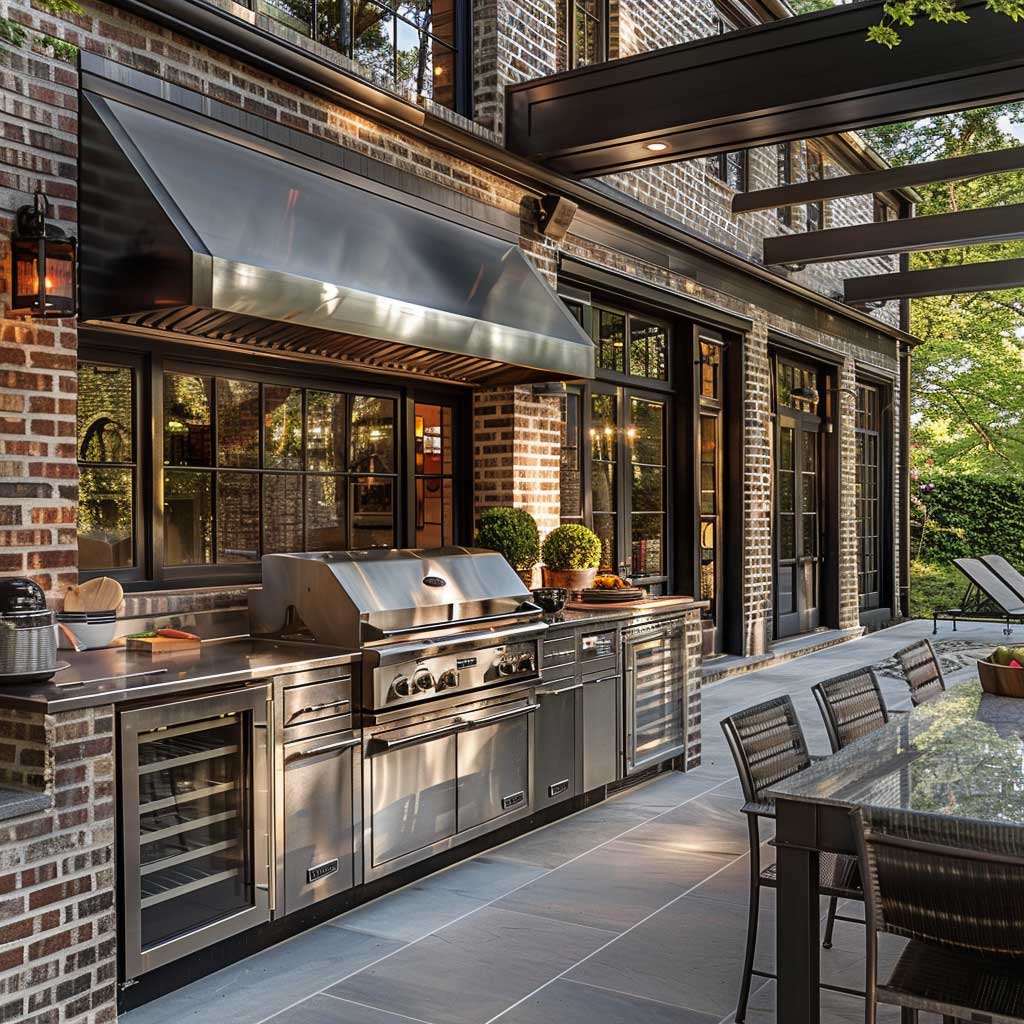
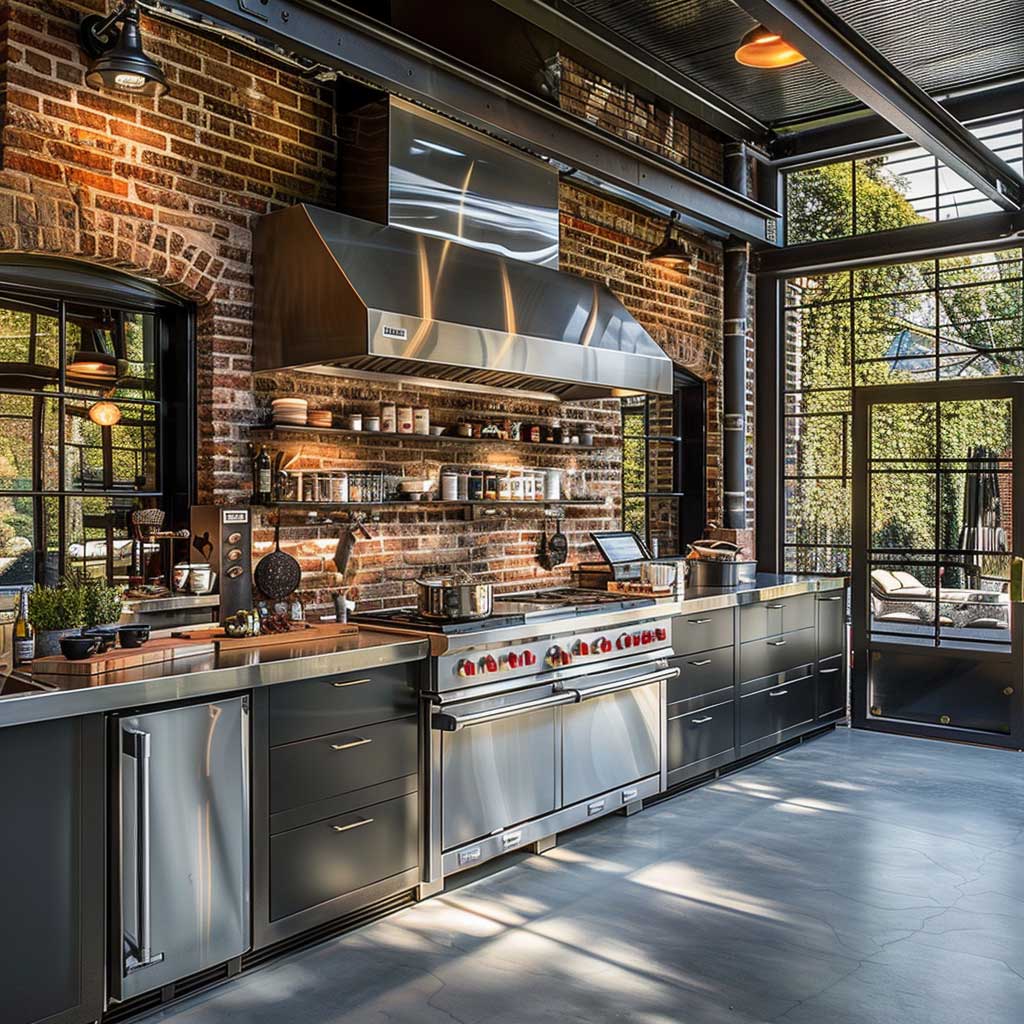
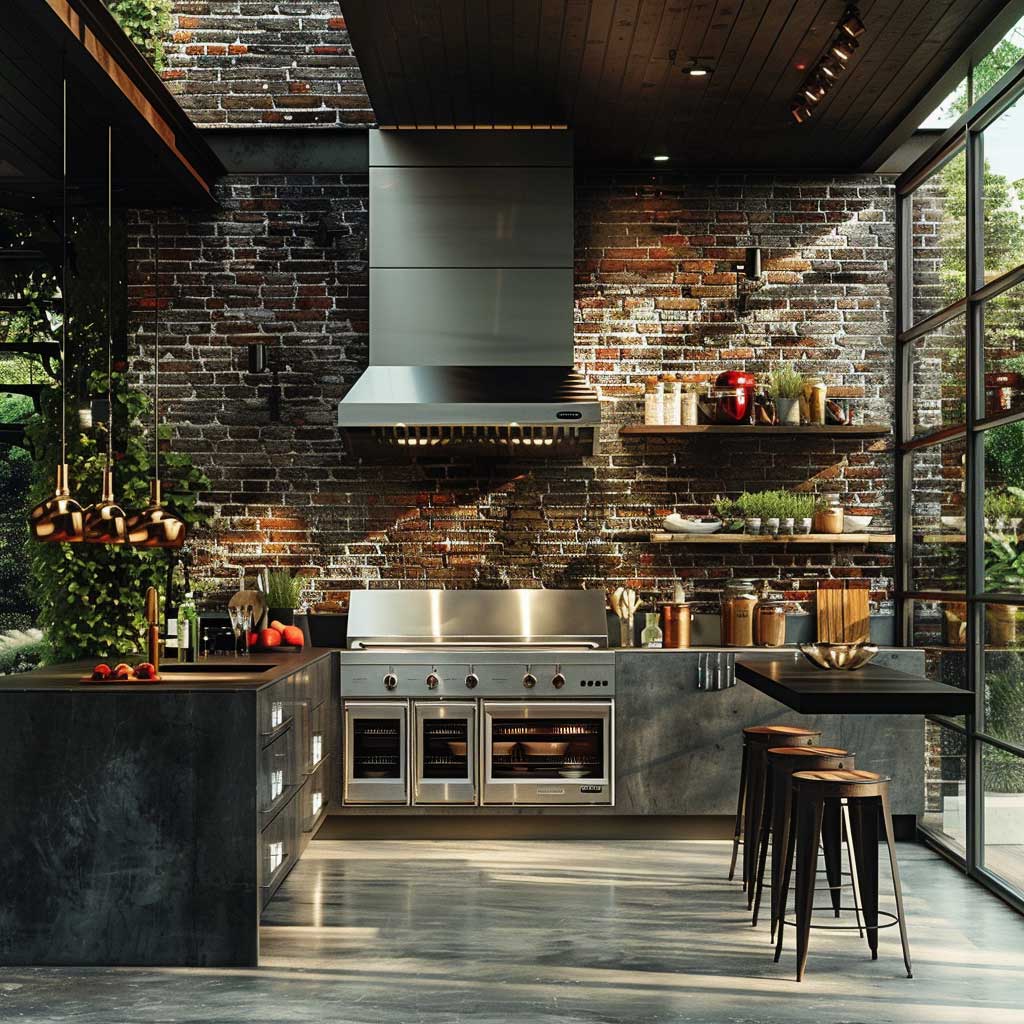

Furniture and accessories in a modern industrial outdoor kitchen lean towards simplicity and functionality. Metal stools, concrete benches, and reclaimed wood tables are popular choices, providing durable seating and dining options that resonate with the industrial theme. Soft furnishings, when used, are typically in neutral or bold colors, offering comfort and a touch of contrast to the hard surfaces around.
Embracing a modern industrial design for an outdoor kitchen creates a space that is not just a place to cook but a statement of style. It reflects a preference for open, uncluttered spaces where the raw beauty of construction materials is celebrated. This style offers a unique outdoor cooking experience, where the act of meal preparation is elevated by the surroundings—where the industrial meets the natural, creating a perfect blend of form and function.
Exposed brick on outdoor kitchens sounds great until efflorescence shows up — that white powdery residue that makes your $8,000 wall look like it caught a disease. You need a siloxane-based sealer applied before the first rain. Prosoco Sure Klean costs about $90 a gallon and handles the job properly. Skip this step and you’ll spend every spring with a wire brush cursing your contractor.
Concrete countertops in an industrial outdoor kitchen run $65–$100 per square foot for custom pours. GFRC (glass fiber reinforced concrete) panels weigh 75% less than standard poured slabs and won’t crack when your foundation shifts during freeze-thaw cycles. I priced both for a 12-foot L-shaped island — GFRC came in at $1,400 versus $1,850 for traditional poured concrete. The lighter option also means you might not need structural reinforcement underneath, saving another $400–$600.
Edison bulb pendants look killer in photos but throw almost no useful light for actual cooking. I’ve grilled in two kitchens with nothing but Edison string lights and nearly served raw chicken because I couldn’t see the color of the meat. Add a single adjustable LED floodlight on a dimmer above the grill zone. It’s like $35 from RAB Lighting, mounts in twenty minutes, and suddenly you can actually cook after sunset.
The integration of a modern industrial outdoor kitchen into a home’s exterior space challenges traditional notions of outdoor living, offering a fresh perspective that combines the love for cooking with a bold design statement. This approach to outdoor kitchen design not only enhances the home’s aesthetic but also its functionality, making it a compelling choice for those looking to create an unforgettable culinary and social space. For more ways to transform your entire backyard beyond the kitchen, see these creative outdoor living space ideas covering patios, decks, and poolside lounges.
Before You Close This Tab
I’ve spent three years watching outdoor kitchens get built, used, weathered, and sometimes demolished. The ones that last share three things: the right sealant applied before the first rain, materials rated for outdoor UV and moisture, and a layout that puts the grill where you can actually see your guests. Everything else is decoration.
Save this post if you’re planning a build. Pin it if you’ve got a friend who’s about to make the marble countertop mistake. Share it if you’ve already learned the hard way — your story might save someone else $6,000 and a weekend with a wire brush.
Related Topics