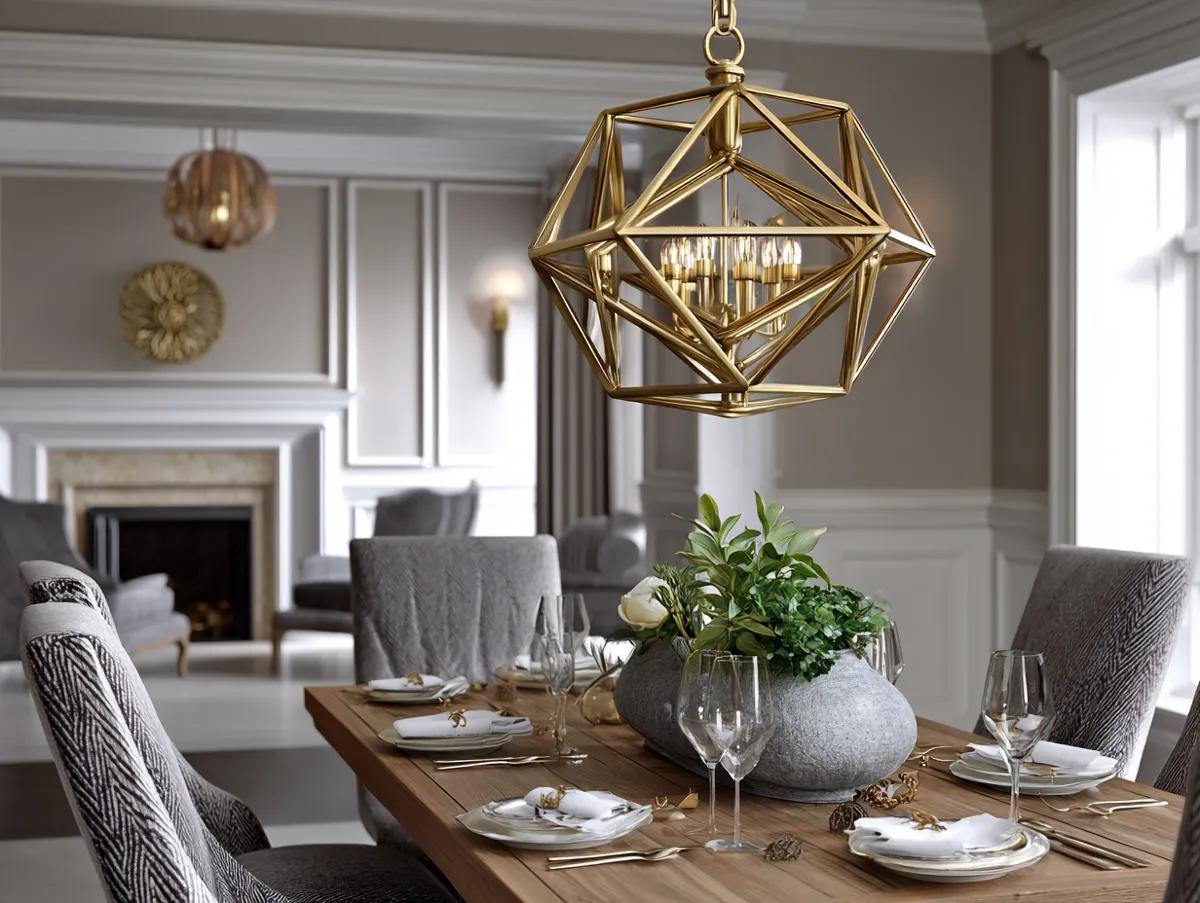
Dining room curtains are the one element most people get wrong by treating as an afterthought. You pick chairs, a table, a chandelier — and then slap up whatever rod-pocket panel was on sale at HomeGoods. The result is a room that looks assembled rather than designed. I’ve rearranged my own dining space three times, and the single move that made it click was swapping out the wrong curtains for the right ones. Fabric weight, drop length, pattern scale: each decision either anchors the room or makes it look unfinished. Below are the approaches that actually work — and the ones that quietly kill a dining room’s atmosphere.
Curtains for the dining room pull double duty in a way bedroom or living room panels don’t. They manage light during long dinners, they muffle sound when a table full of guests gets loud, and they provide a vertical plane that balances the horizontal weight of a big dining table. Get the height wrong — rod set too low, curtains hovering two inches off the floor — and no amount of styling rescues it. Get it right, and the room feels twice as tall.
Quick Scan
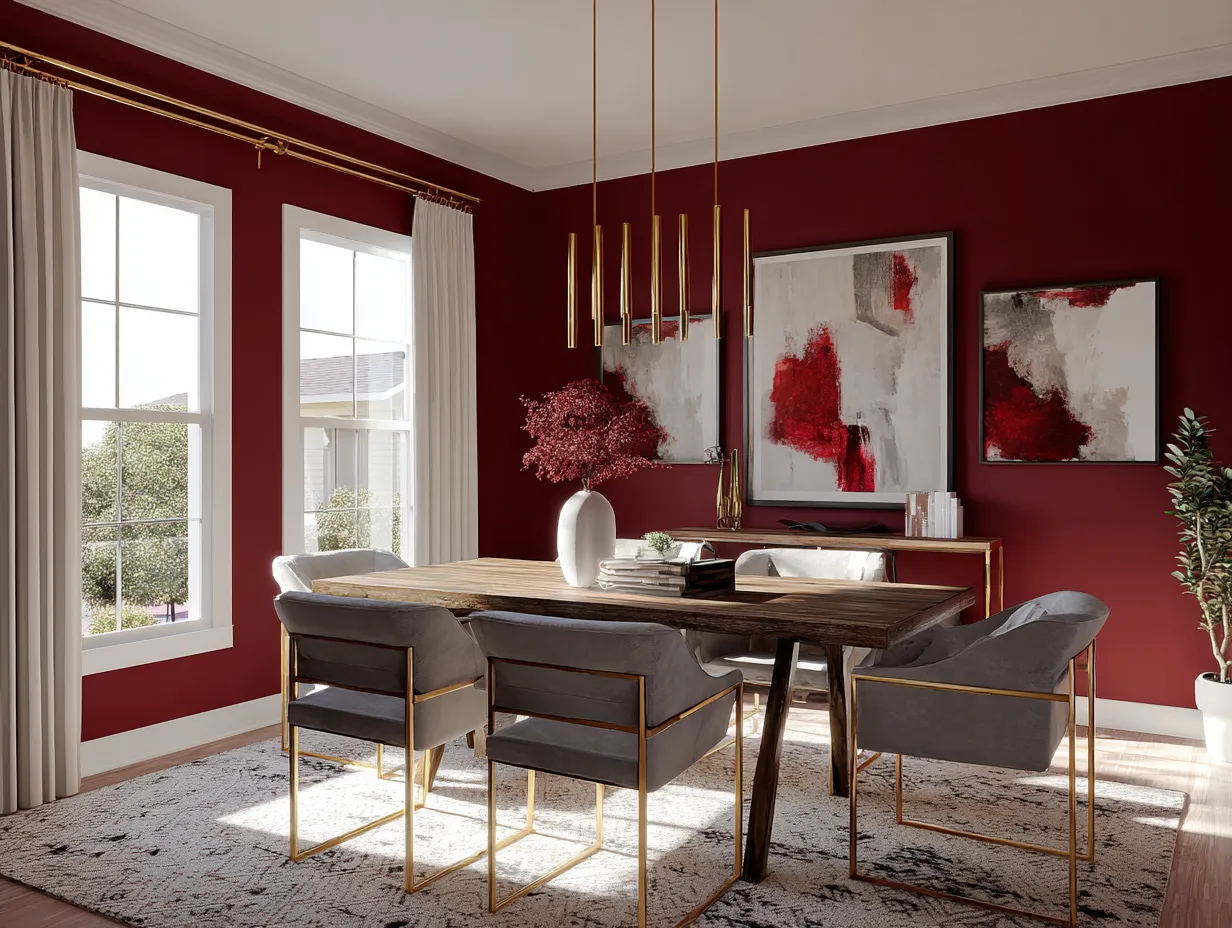
- Luxury dining room curtains: Velvet and silk in deep jewel tones — navy, forest green, burgundy — hang from ceiling-mounted rods for maximum drama.
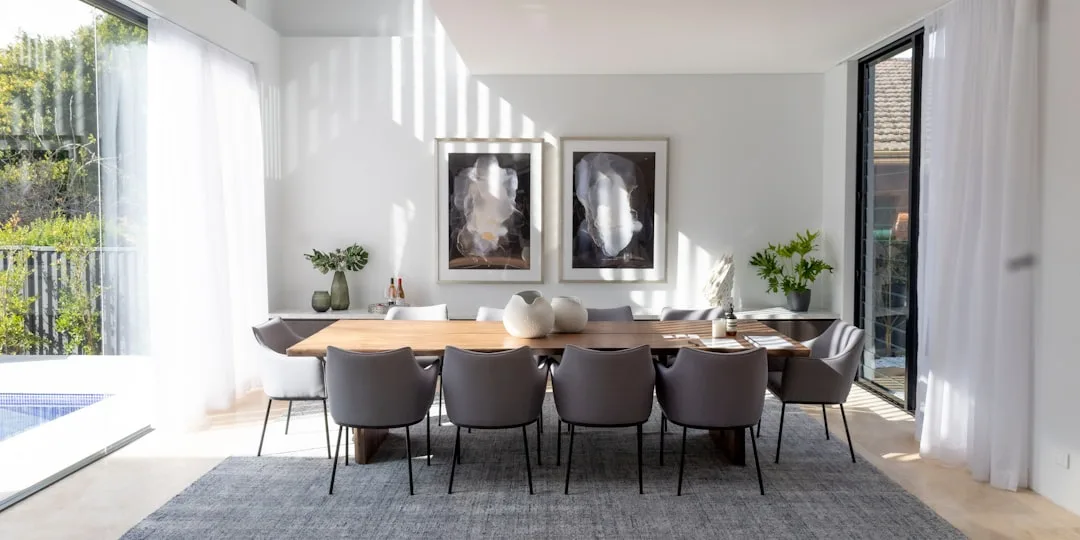
- Sheer curtains in the dining room: Belgian linen sheers or cotton voile panels filter light without blocking it; layer over blackout liners for evening privacy.
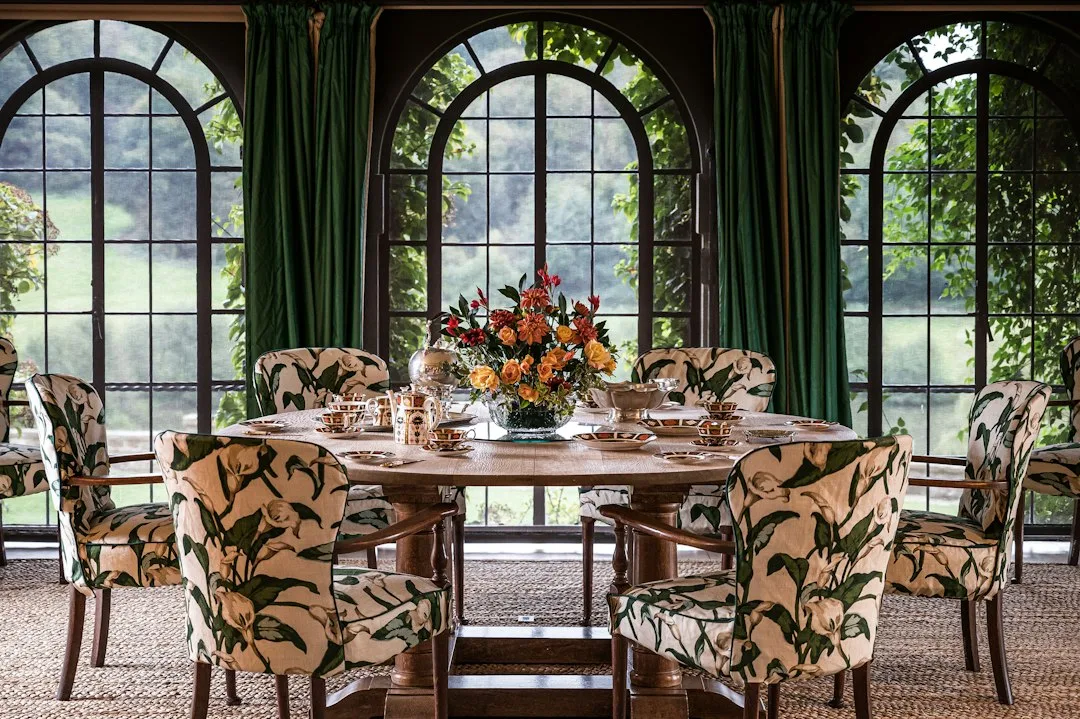
- Bold pattern curtains: Scale the pattern to the room — oversized botanicals in large dining rooms, tighter geometric prints in compact spaces.
- Rod placement rule: Mount 4–6 inches below the ceiling, extend 6–10 inches past the window frame on each side.
- Small dining room curtains: Stick to solid colours or subtle textures; loud patterns in tight rooms compete with everything on the table.
- Curtain length: Floor-length panels that just kiss the ground — never floating, never puddling more than an inch.
Velvet and Silk Drapery That Makes the Room Feel Like an Event


Velvet is the fabric I keep coming back to when a dining room needs weight. It’s not subtle — and that’s precisely the point. Half Price Drapes sells their Signature Midnight Blue Doublewide Blackout Velvet panels at around $90 per panel for a 100×108-inch drop, which is a fraction of what custom work costs and looks nearly identical once hung. I’ve seen the same look priced at $600 per panel from a workroom. The gap in quality is real but narrow; the gap in price is enormous. What velvet does for a dining table and chairs set is the same thing a good tailored jacket does for a person — it raises the stakes of everything underneath it.
Silk is a different proposition. It photographs beautifully and catches candlelight in a way no other fabric matches, but it fades faster than you’d expect near south-facing windows. My rule: silk in dining rooms with north or east exposure only. For south or west light, go with a silk-look polyester from a brand like Restoration Hardware’s Belgian Linen line, around $180 per panel, which holds colour for years. The texture reads almost identically in person once the drapes are hung. Colour choice matters more than people admit — pale blush reads warm in daylight and almost luminous at night; deep burgundy reads regal at both hours but shrinks a small room by about six visual inches.
Don’t skip the hardware. A velvet panel on a $12 tension rod from Target undermines itself completely. Brass rods with solid-cast finials — the kind that don’t wobble — run $80–$150 for a standard window width at places like Pottery Barn or West Elm, and they signal that the rest of the room is considered. Wrought iron reads slightly more casual, better for a farmhouse or Tuscan-style dining room. Polished chrome belongs in a contemporary dining room, not a traditional one — I’ve seen that mismatch in person and it looks like a design accident. Mount the rod 4–6 inches below your ceiling line, not above the window frame, and extend it at least 6 inches past the glass on each side so the panel stacks off the window when open.
What doesn’t work: short drapery panels. I bought 84-inch panels for a room with 9-foot ceilings once. They hung at mid-calf height and the room looked like it had shrunk. Return them. Buy 96- or 108-inch panels and have them hemmed if needed — alterations at a dry cleaner run $15–$25 per panel. Floating panels that don’t reach the floor are a designer no-go that no amount of beautiful fabric overcomes.


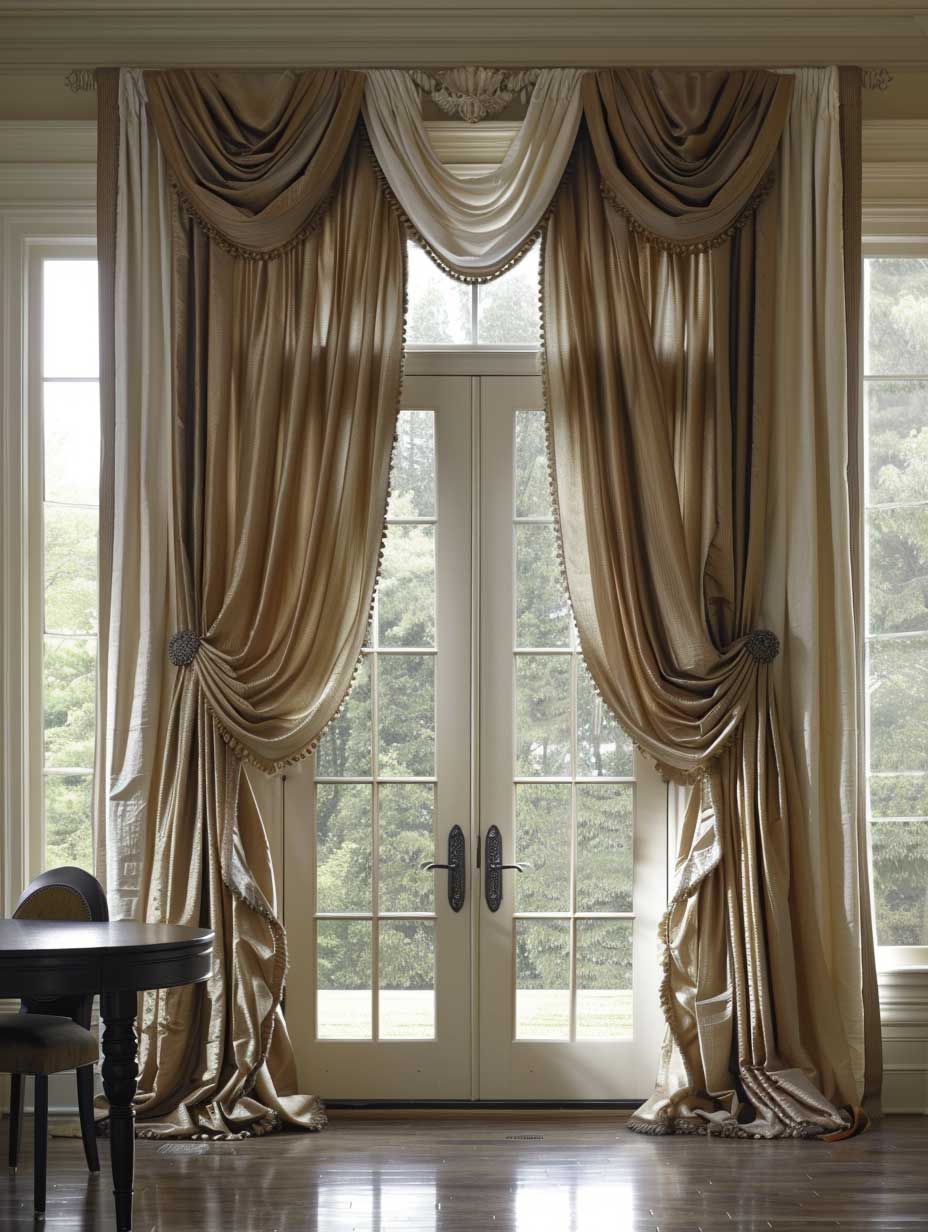

Lining is non-negotiable for velvet or silk panels. Unlined velvet looks limp; unlined silk backlit by a window goes see-through. A blackout lining runs about $2–$4 per yard of fabric to add at a workroom. It also protects the face fabric from UV damage, which means the panels last twice as long. You’ll notice the difference in how the curtain hangs — a lined panel has body; an unlined one collapses like a sheet.
Pinch pleat is the heading I’d choose for formal dining rooms. It creates even, structured folds that look like they belong in a European country house. Grommet headers are fine for casual contemporary spaces but look slightly industrial against a proper dining table with upholstered chairs. Tab top is the one heading I’d avoid entirely in a dining room — it reads bedroom, not dining room, and it doesn’t stack neatly when the panels are open.
Bold Pattern Curtains Change What the Dining Room Is About
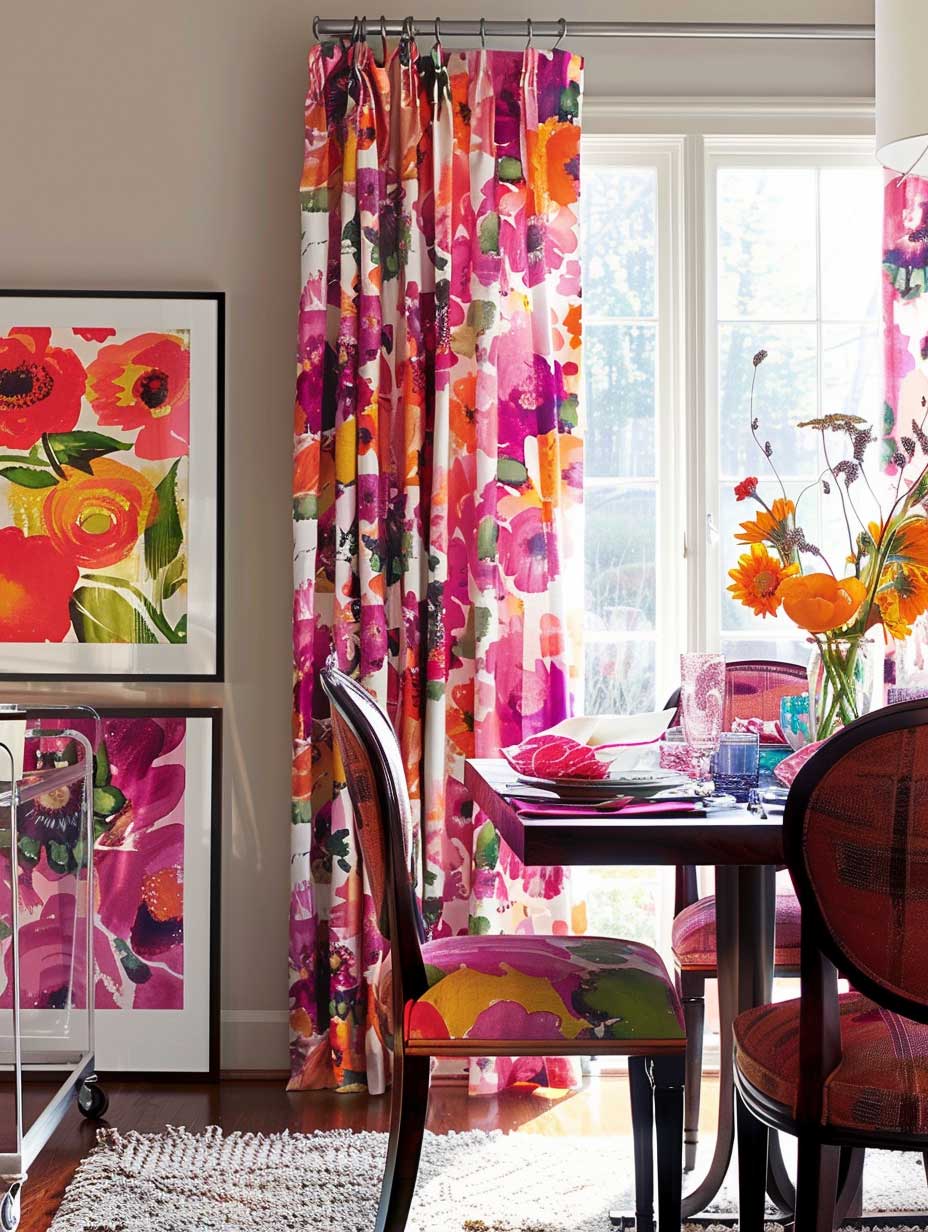
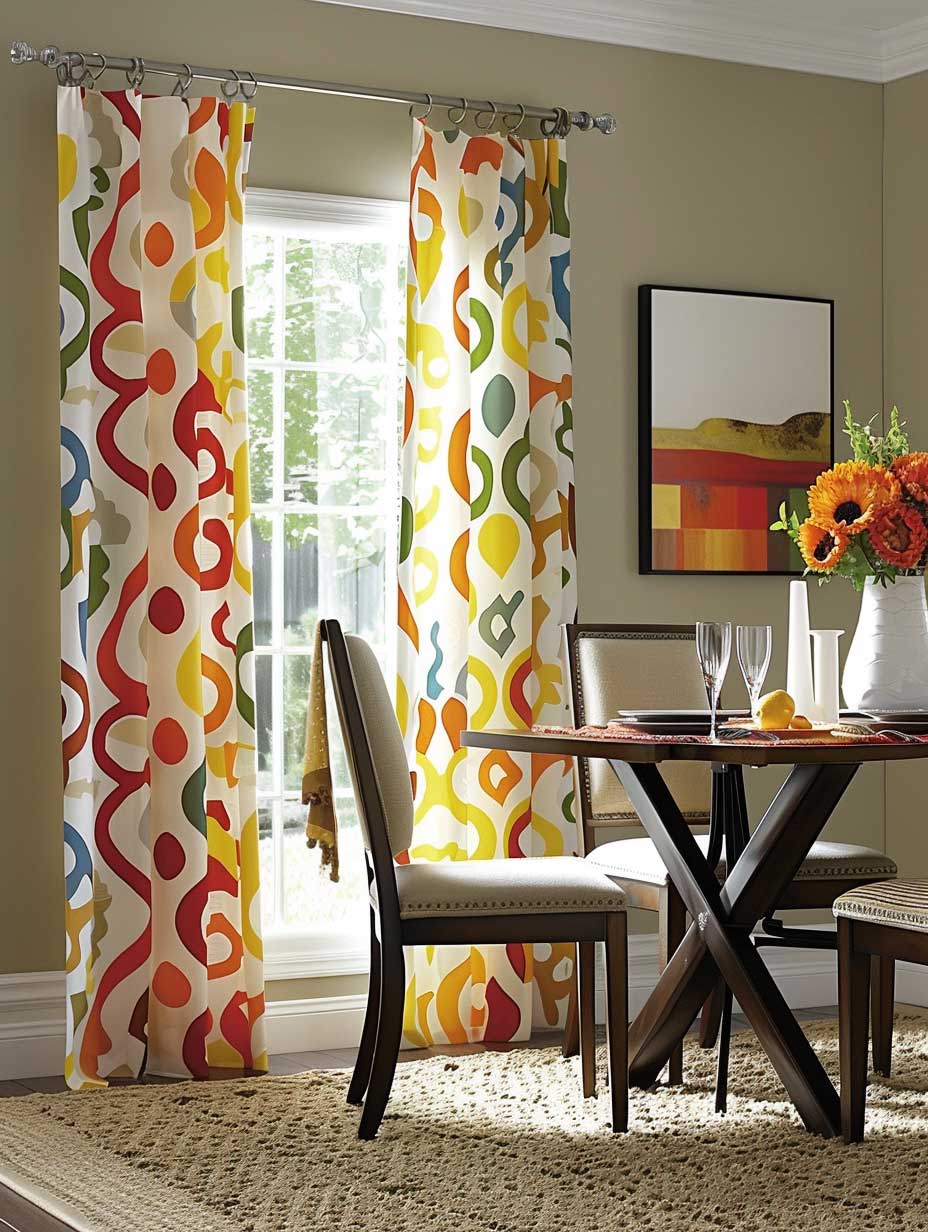


Pattern curtains in a dining room are a commitment. You’re not just choosing window coverage — you’re choosing the dominant visual in the room, because curtain panels take up more vertical square footage than any wall art you’d hang. The mistake most people make is going too small: a tiny geometric repeat on full-length panels reads as texture from across the room, not as a pattern. Scale up. A 6-inch repeat becomes invisible at 10 feet. A 14-inch botanical print reads the way it’s supposed to — bold, intentional, the visual anchor that every object in the room responds to.
Anthropologie’s Dorado curtain panels run around $178–$228 for a 50×84-inch size, and their scale is right. I own two of their Ikat-print panels in a terracotta colorway and they’ve held their shape through three years of weekly use. West Elm’s Printed Cotton Velvet Curtain is another strong option at $169 per panel — the pile softens the pattern so it reads sophisticated rather than busy. For contemporary dining rooms, CB2’s graphic black-and-white abstract panels at around $129 each create a room that looks like it belongs in a design magazine. Avoid IKEA’s printed curtains for formal spaces; the fabric weight is wrong and the hems tend to stretch.
Color coordination is simpler than it sounds. Pull one color from the pattern and echo it somewhere on the table — a runner, napkin rings, a vase. You don’t need to match everything; you just need one thread of visual repetition to make the pattern feel planned rather than accidental. A bold blue-and-white curtain paired with a natural linen runner and blue-rimmed dinner plates holds together without looking themed. The dining room becomes a room with a point of view, not a furniture showroom.
What Not to Do with Patterned Dining Room Curtains
- Don’t match the curtain pattern to the chair upholstery. I made this mistake with a floral print — same flower on both surfaces, 8 feet apart. It looked like a furniture set from a catalog, not a designed room.
- Don’t use a bold pattern in a small dining room. Anything under 120 square feet reads as chaotic with a large-repeat print. Stick to subtle textures or solid colours in tight spaces.
- Don’t hang patterned panels without checking the repeat alignment. Misaligned pattern panels at a window — one panel with the botanical motif at the top, the adjacent panel with it at mid-height — look like a mistake. Order extra fabric and have them hemmed to the same point in the repeat.
- Don’t pair a patterned curtain with a patterned rug. Two strong horizontal patterns in the same room without a large blank field between them creates visual noise that makes the dining space feel restless and hard to sit in for long meals.


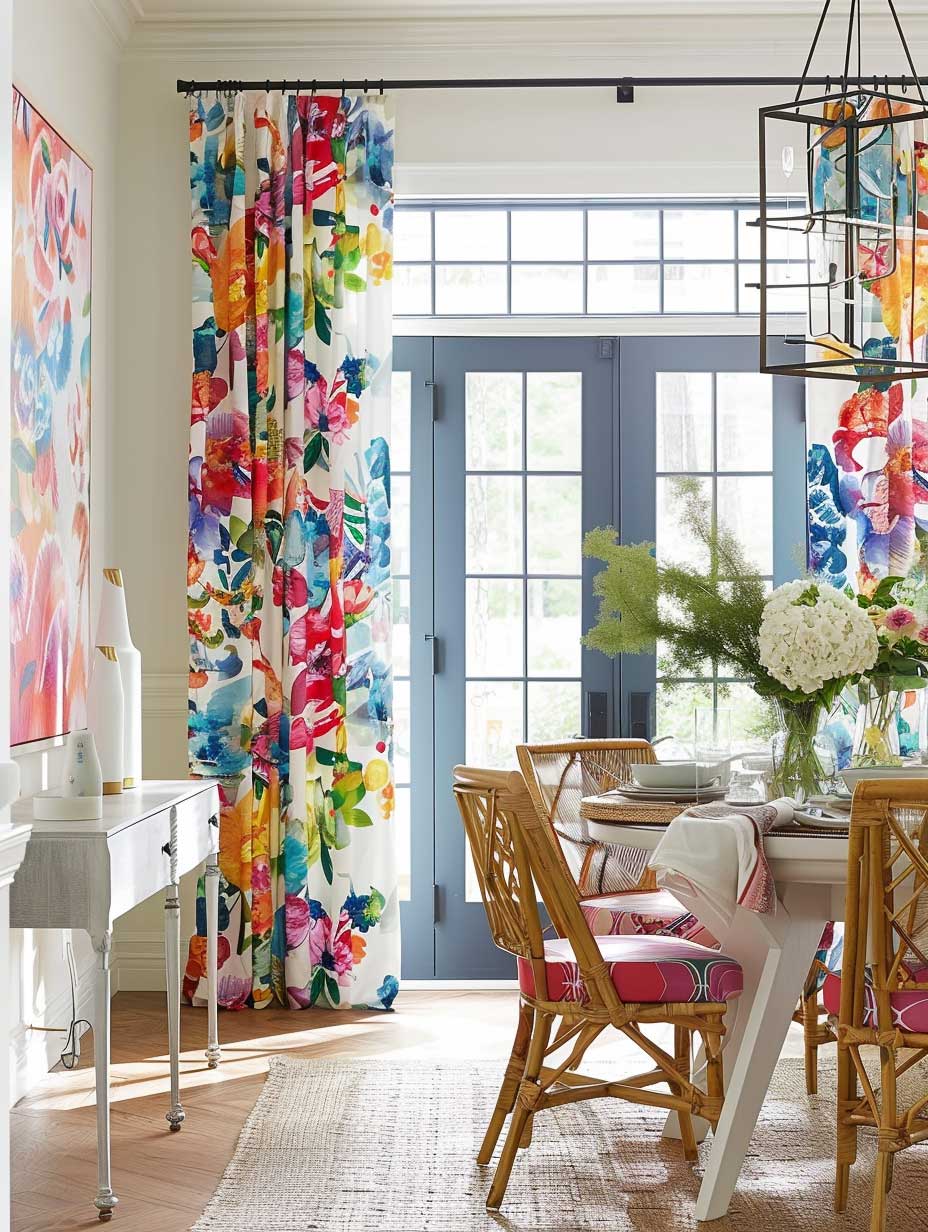

Fabric weight still matters even with a pattern. A printed linen at around 200 gsm hangs with a natural drape and washes well — critical in a dining room where fabric lives near food. A printed polyester at the same weight looks synthetic under close inspection and generates static that attracts dust. Worth paying the premium for natural fibre. If you’re buying patterned curtains in the $100–$150-per-panel range, linen-cotton blends are the sweet spot: better drape than poly, more affordable than pure linen, and machine-washable in most cases.
One final note on contemporary dining room curtains with patterns: the heading style changes what you see. Eyelet/grommet headings bunch the pattern at regular intervals and can cut across a large print awkwardly. Pinch pleat creates soft, columnar folds that reveal the pattern in a more controlled way. For a very graphic, modern print — think CB2’s black geometric panels — grommet headings work well because the pattern holds up under compression. For a large botanical or abstract, pinch pleat preserves the artwork.
Sheer Curtains in the Dining Room Actually Have a Job Beyond Decoration
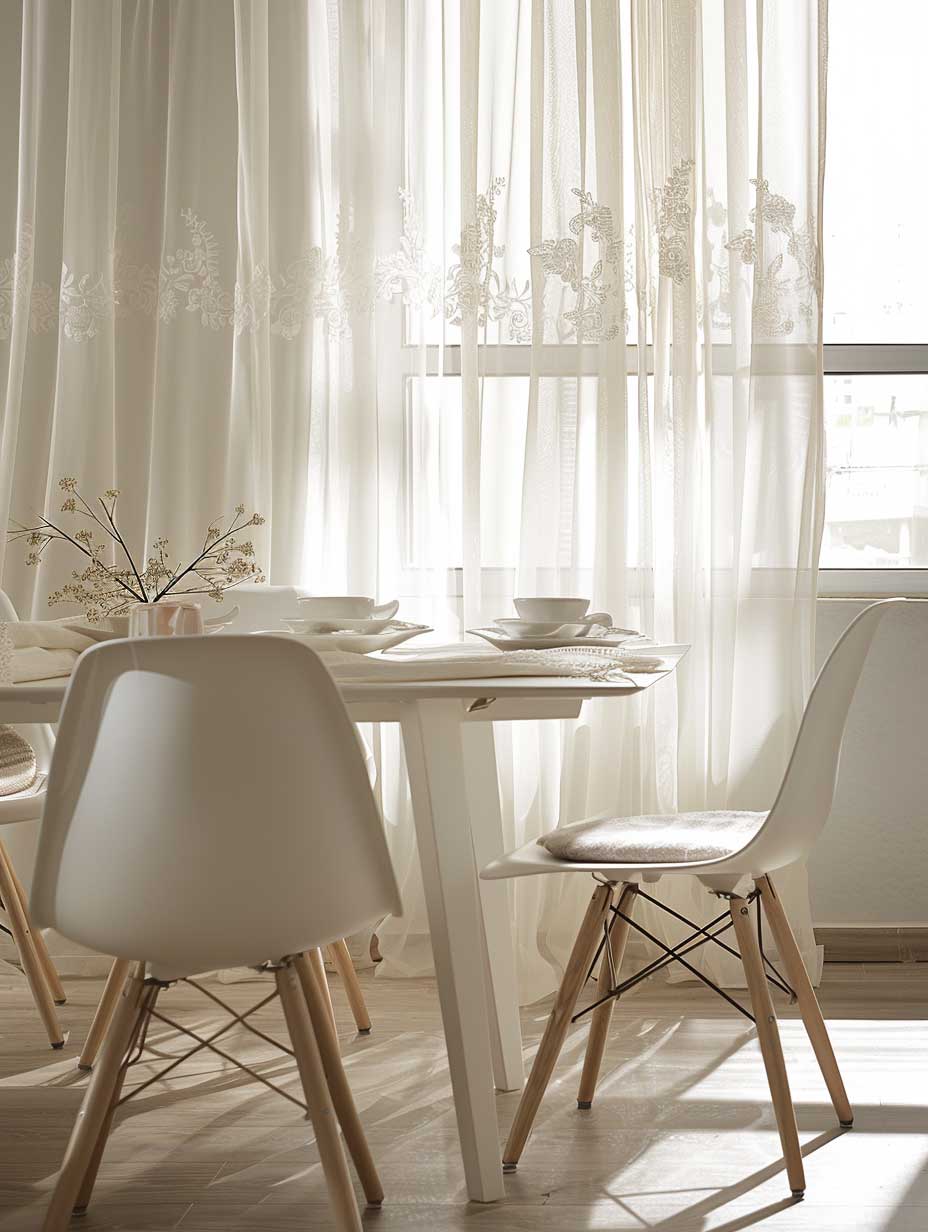


Sheer curtains in the dining room do something heavier fabrics can’t: they soften direct sunlight without cutting it off entirely. A dining table with harsh afternoon sun creates glare on the plates and squinting guests — sheer panels diffuse that light into something even and flattering. I stole this trick from a French country house photo: sheer cotton voile panels on double rods, with a heavier linen panel pulled back on the outer rod. During the day, the sheers do the work alone. At dinner, pull both closed for privacy. The effect is completely different morning to evening — and the room adjusts to both.
Belgian linen sheer panels are my go-to. The Rough Linen brand sells their Orkney sheer in several natural colourways at around $120–$160 per panel depending on width, and they get softer and more beautiful with every wash — the opposite of synthetic sheers, which pill within a year. IKEA’s LILL panels at $4.99 are the cautionary tale: they photograph fine but have the body of a tissue and go stiff after three wash cycles. For a dining room you’ll live in for years, the $120 linen panel is not extravagant. It’s a ten-year investment versus a one-year one.
White sheers are the classic choice, but natural linen undyed runs slightly warmer — a colour that photographs as cream or oatmeal — and it makes food look better under its light. That’s not a minor point in a dining room. The way curtains interact with natural light affects how the whole room feels at the table, including how appetising the food looks in its context. Stark white sheers in a room with warm wood furniture and earth-tone walls fight the palette; natural linen slides right in.
What doesn’t work: sheers hung alone in a dining room used for evening entertaining. A single sheer panel at night becomes a mirror — anyone outside can see in, and the panel itself glows an unattractive fluorescent white under artificial light. Always layer. Either a second opaque panel on the same rod, or a Roman blind mounted inside the window frame that closes for evenings. The layered look also adds the visual depth that a single sheer panel lacks.


For small dining rooms, sheers are the correct answer almost every time. A solid opaque panel in a 10×10 dining space blocks light and visually shrinks the room further. Sheers maintain the sense of space while still providing some texture and enclosure. You can find the artfasad.com coverage on minimalist dining room furniture ideas useful here — the same principles that make furniture work in a small dining room apply to curtains.
Maintenance question everyone has: are sheers practical in a dining room near food? Yes, if you buy the right fabric. Cotton voile and linen sheers are machine washable on a cold gentle cycle. Silk organza is not — dry clean only, which becomes tedious. Wash linen sheers every 3–4 months and hang them back damp directly on the rod; they dry straight and press themselves. Never iron linen sheers while dry — you’ll scorch them. That’s the one maintenance rule that matters most.
Formal Dining Room Drapes and the Rod Height Nobody Talks About
Formal dining room curtain ideas live or die on installation. You can spend $400 on panels and ruin them with a rod mounted 4 inches above the window frame instead of 4 inches below the ceiling. I’ve done this. The curtains looked like they were framing a small painting rather than a full wall, and the room felt cottage-sized rather than formal. Raise the rod to ceiling height — or as close as crown moulding allows — and the exact same panels transform the room. Designers at Decorilla recommend mounting drapery rods 4–6 inches below the ceiling or crown moulding as the baseline rule, and extending the rod 6–10 inches past the window frame on each side.
For formal dining rooms specifically, I’d go even higher — mount at the ceiling line if possible, using a recessed rod bracket. This creates a full floor-to-ceiling column of fabric that reads as architectural, not decorative. Think of it the way a column in a classical building works: it’s not ornamental, it’s structural in feel. The curtain becomes part of the room’s bones, not an accessory. Pair this with pinch pleat headings and a deep-toned fabric — forest green, ink blue, charcoal — and you have a dining room that photographs like a designed space rather than a styled one.
For open-plan kitchen-dining rooms, the curtain has additional work to do: it defines the dining zone visually. A bold curtain colour or weighty fabric signals where the dining space begins and the kitchen ends without building a wall. I’ve seen this done beautifully with a deep blue velvet panel hung at the boundary line between a white kitchen and a warm-toned dining area — the curtain acts as a room divider that can be drawn back completely or deployed as a soft partition. More on how colour does this work visually in the dining area decor piece on bold colour pairings.
Hardware is where formal dining rooms should not economize. A double rod system — one rod for sheers, one for drapery panels — runs about $150–$250 for a standard window from brands like Pottery Barn or RH. Single rod systems force you to choose between sheers and panels, not run both. The double rod gives you four states: both open, both closed, sheers only, panels only. That flexibility is worth every dollar for a room that’s used for lunch on Sundays and dinner parties on Saturdays.
Dining Room Curtain Fabric Comparison
| Fabric | Price Range (per panel) | Light Control | Best For | Maintenance |
|---|---|---|---|---|
| Velvet | $80–$300 | High (room darkening) | Formal, luxury dining rooms | Spot clean or dry clean |
| Silk / Faux Silk | $60–$200 | Medium with lining | Traditional, transitional dining rooms | Dry clean only (real silk) |
| Belgian Linen (opaque) | $80–$180 | Medium | Relaxed formal, contemporary dining rooms | Machine wash cold |
| Sheer (linen voile) | $40–$160 | Low (diffuses only) | Small or light-hungry dining rooms | Machine wash cold, hang damp |
| Printed Cotton / Linen | $100–$230 | Medium | Eclectic, contemporary, casual formal | Machine wash cold |
The Bottom Line
Dining room curtains don’t decorate the room. They finish it — or they expose every other choice you made.
Mount high, extend wide, and line everything heavier than a sheer. Pattern scale and fabric weight matter more than colour in almost every scenario. The dining table gets the credit; the curtains do the work nobody notices until they’re wrong.
If you take one thing from this: the rod placement is the cheapest, highest-impact fix in a dining room that feels unfinished. No new furniture required.
Save this post before your next curtain search — the comparison table above is worth bookmarking.