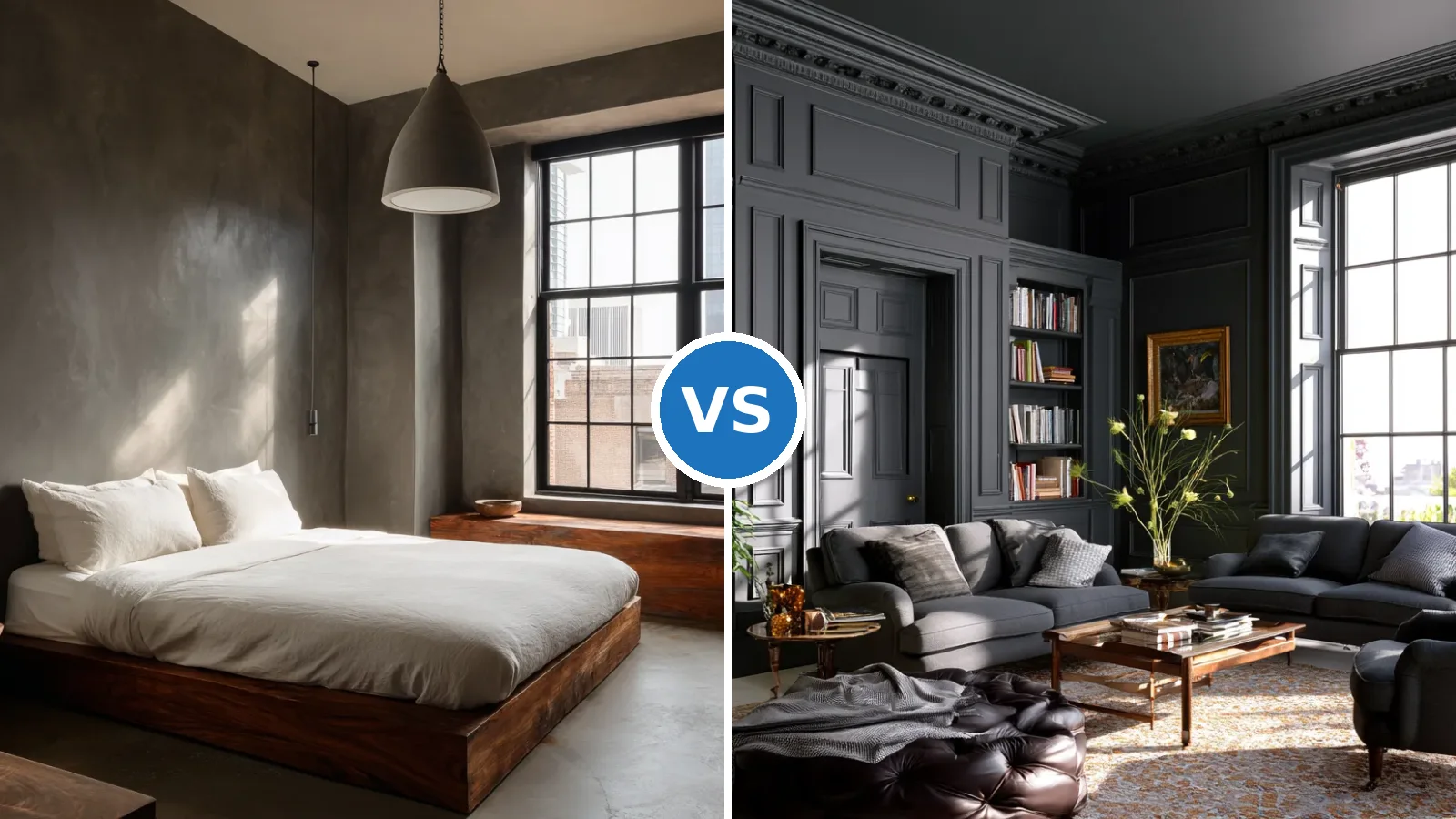
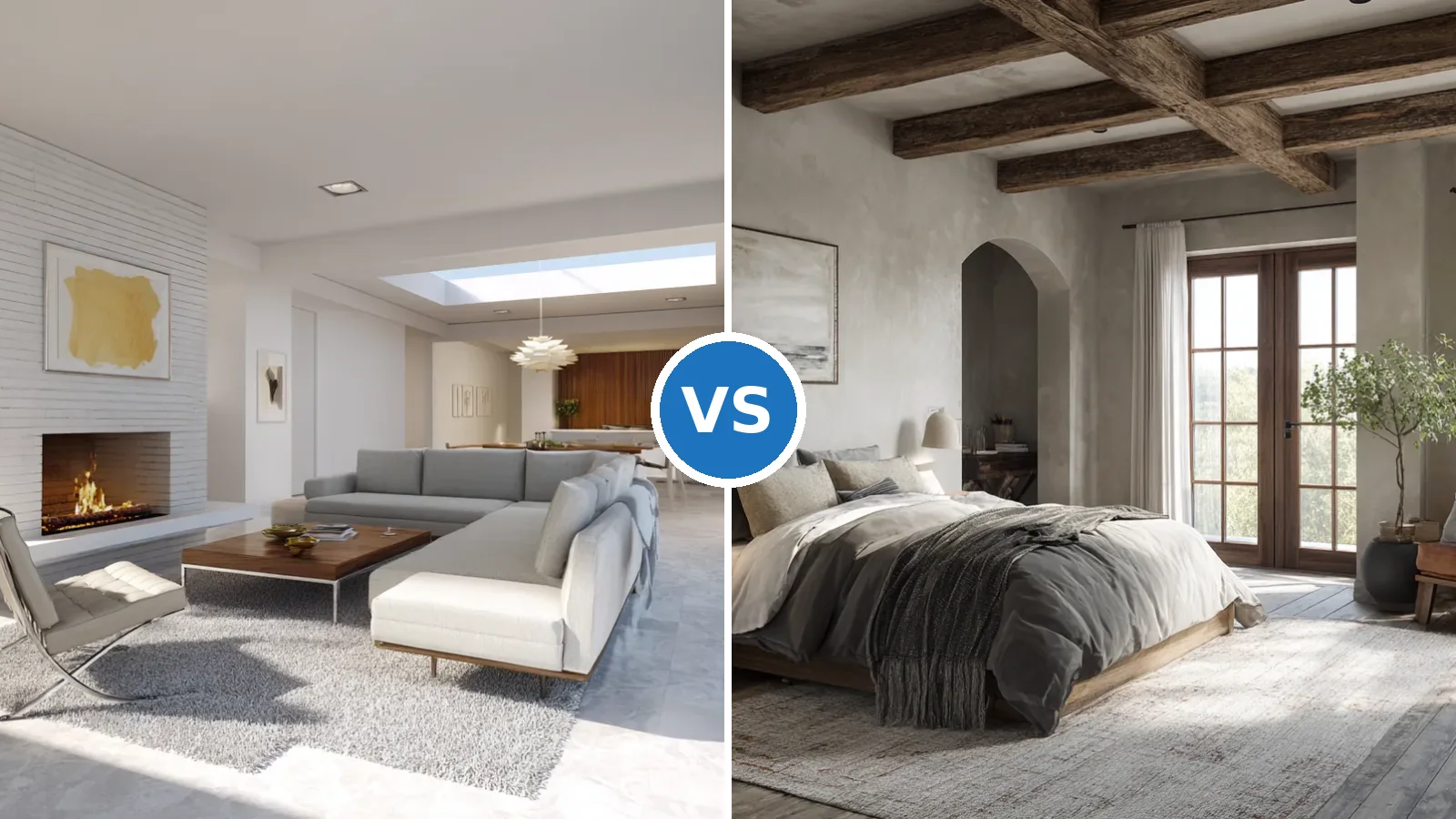
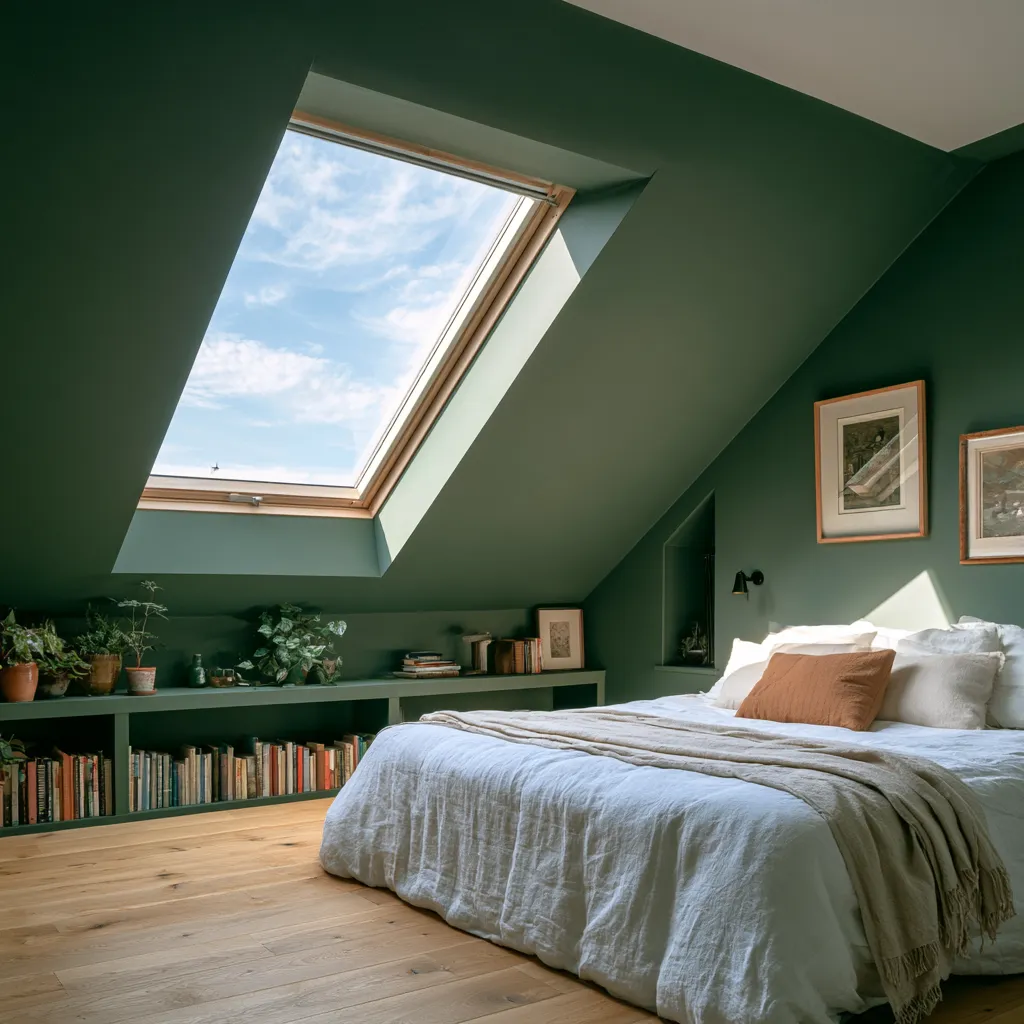
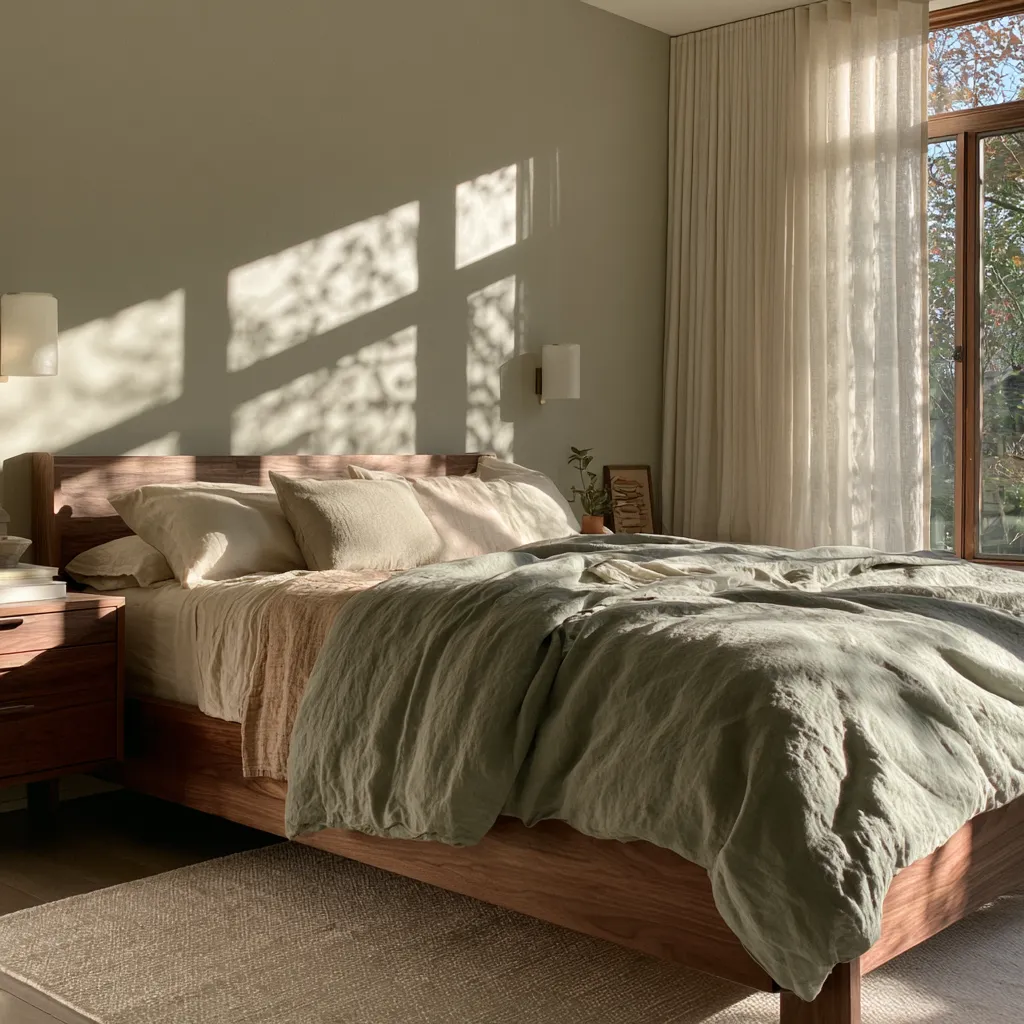
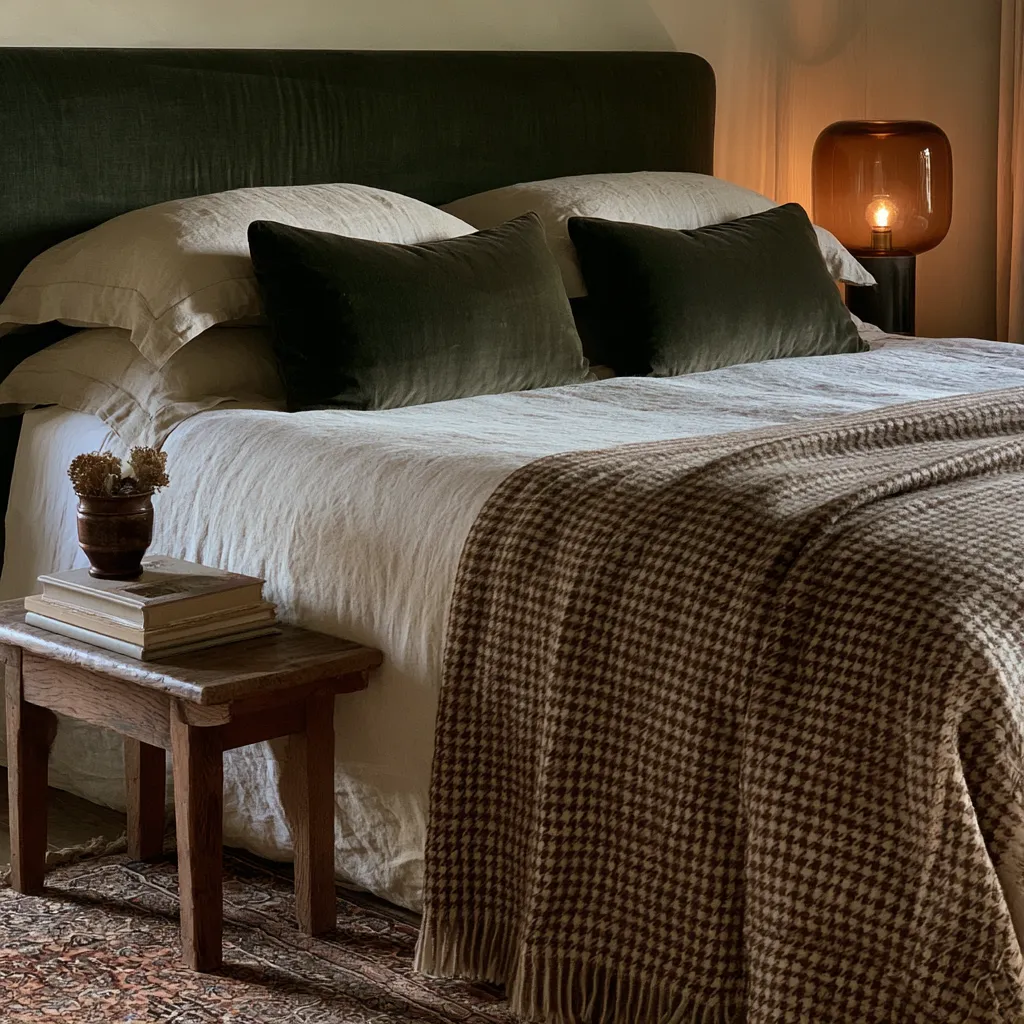
Bedroom renovation ideas work when they treat sleep as the goal, not decoration. Most people renovate the walls first and wonder why the room still feels wrong at 11pm. I’ve repainted three bedrooms in the last four years and learned the hard way that a calm blue wall means nothing if the overhead light stays on at 3000 lumens. You need the whole system — color, texture, storage, and light — to land at the same time. Do it right and your bedroom renovation becomes the single upgrade that changes how you feel every single morning.
Angi’s 2025 data puts a full bedroom remodel between $12,000 and $28,000, averaging $20,000. That range is wide because most of the cost lives in decisions you make before the contractor shows up. Nail those decisions early and the retreat bedroom you’ve been pinning for two years stops being aspirational.
Color palette: Light blue, warm grey, creamy white — keeps the nervous system down after dark.
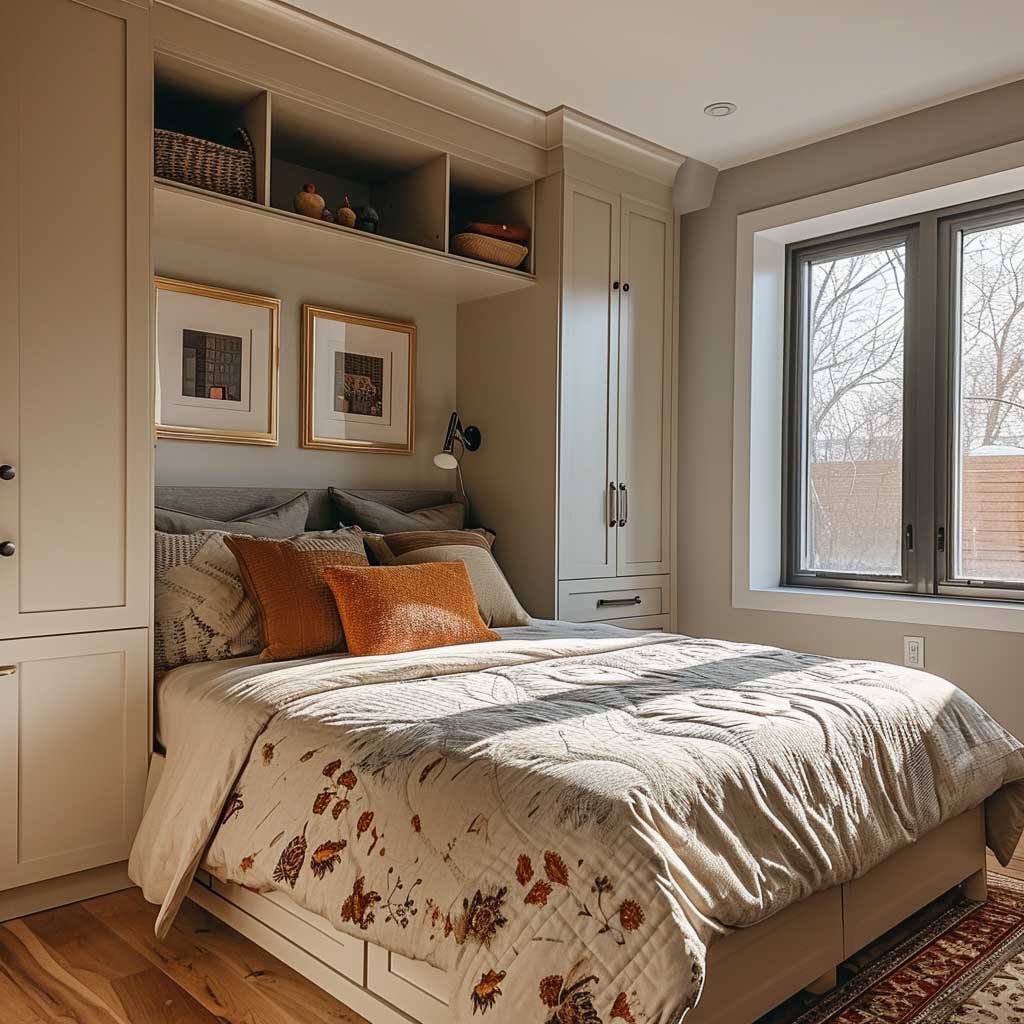
Small bedroom rule: Vertical storage first. Murphy bed or loft frame if under 120 sq ft.
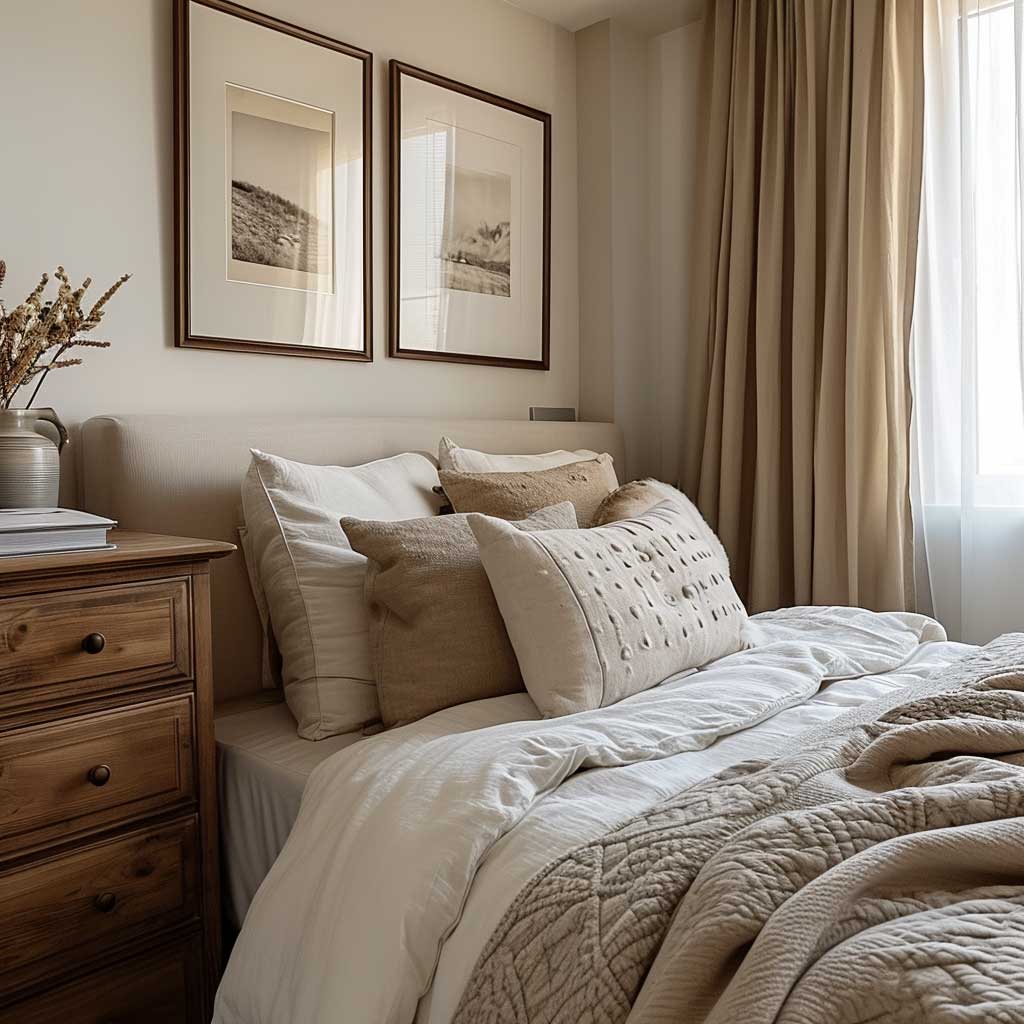
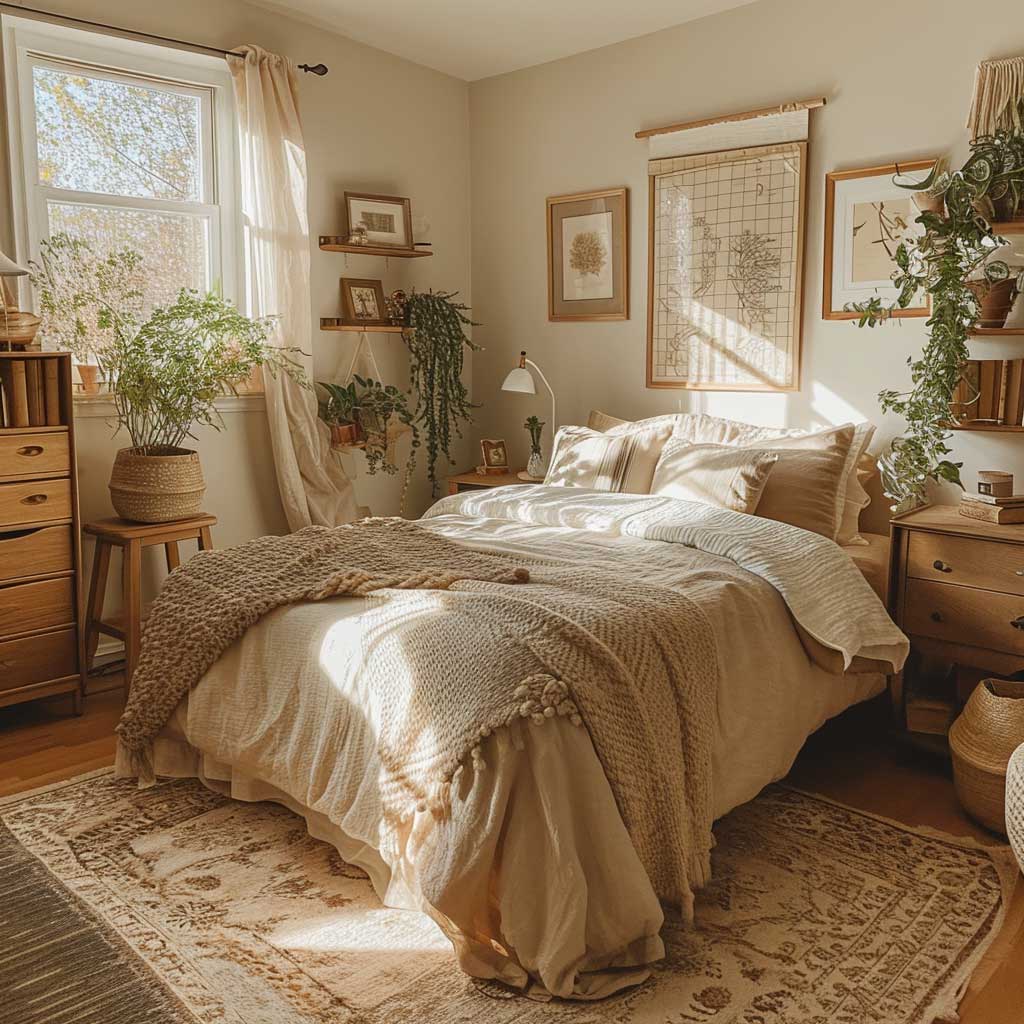
Textures that work: Velvet headboard, linen bedding, wool rug underfoot.
Lighting fix: Dimmer switch on every circuit — $25 at Home Depot, infinite return.
Budget reality: $1,500–$5,500 cosmetic refresh; $12,000–$28,000 full remodel (Angi, 2025).
Biggest waste of money: Buying furniture before you finalize your wall color.
Color Is the Cheapest Part of a Bedroom Renovation and the Most Misused
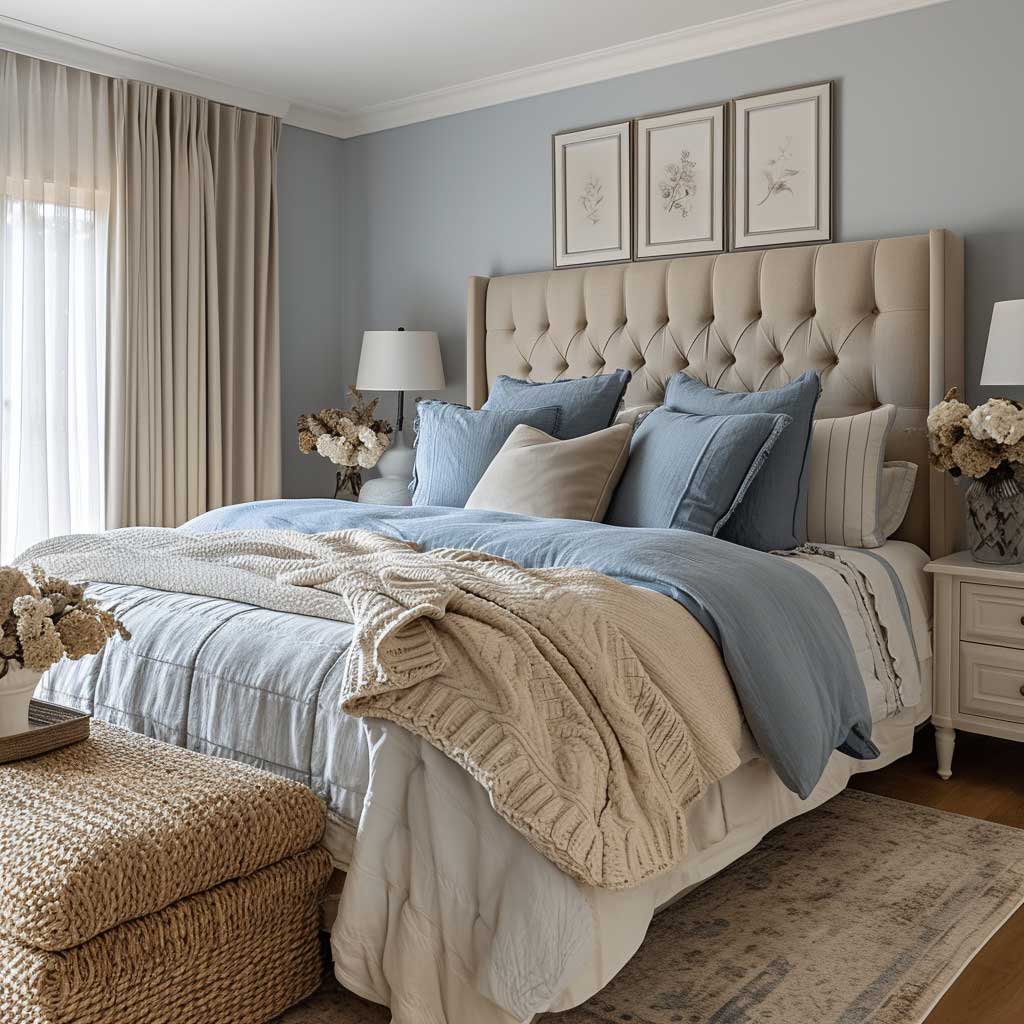
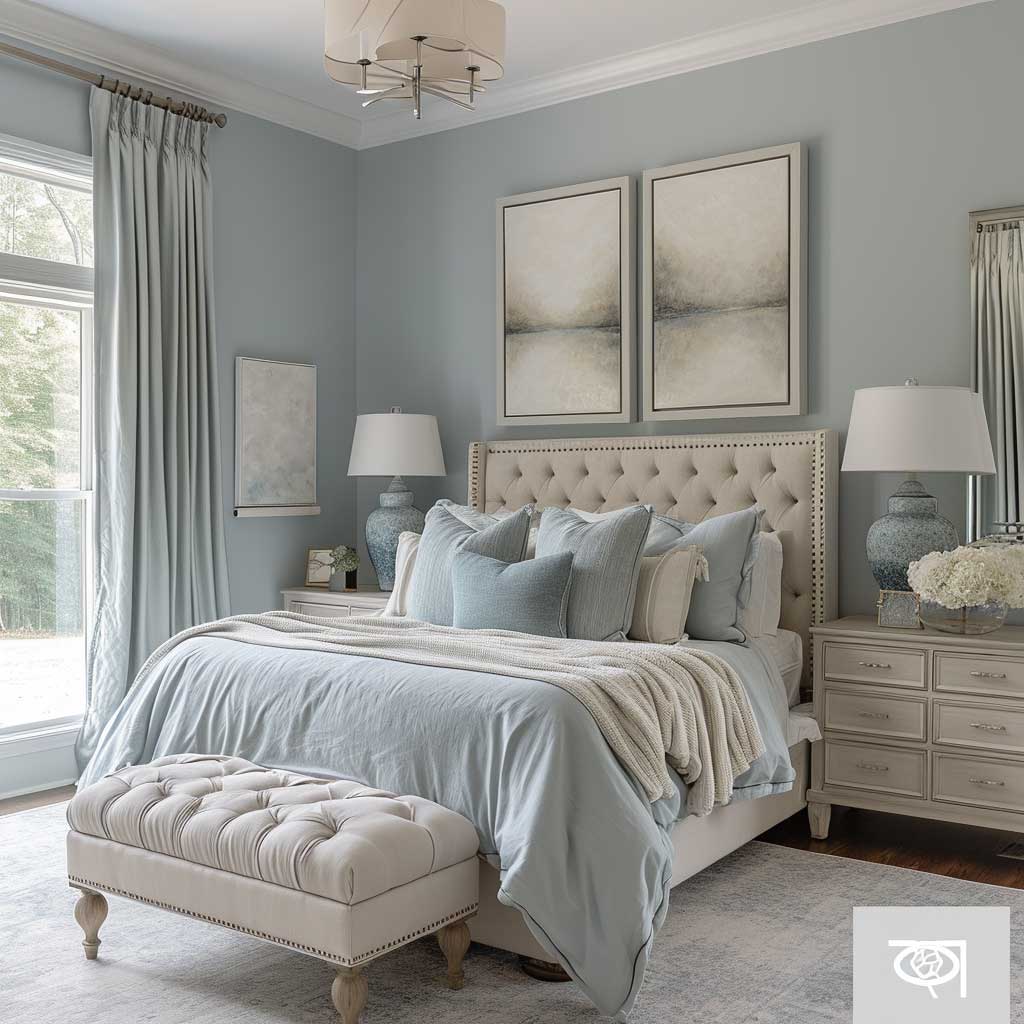
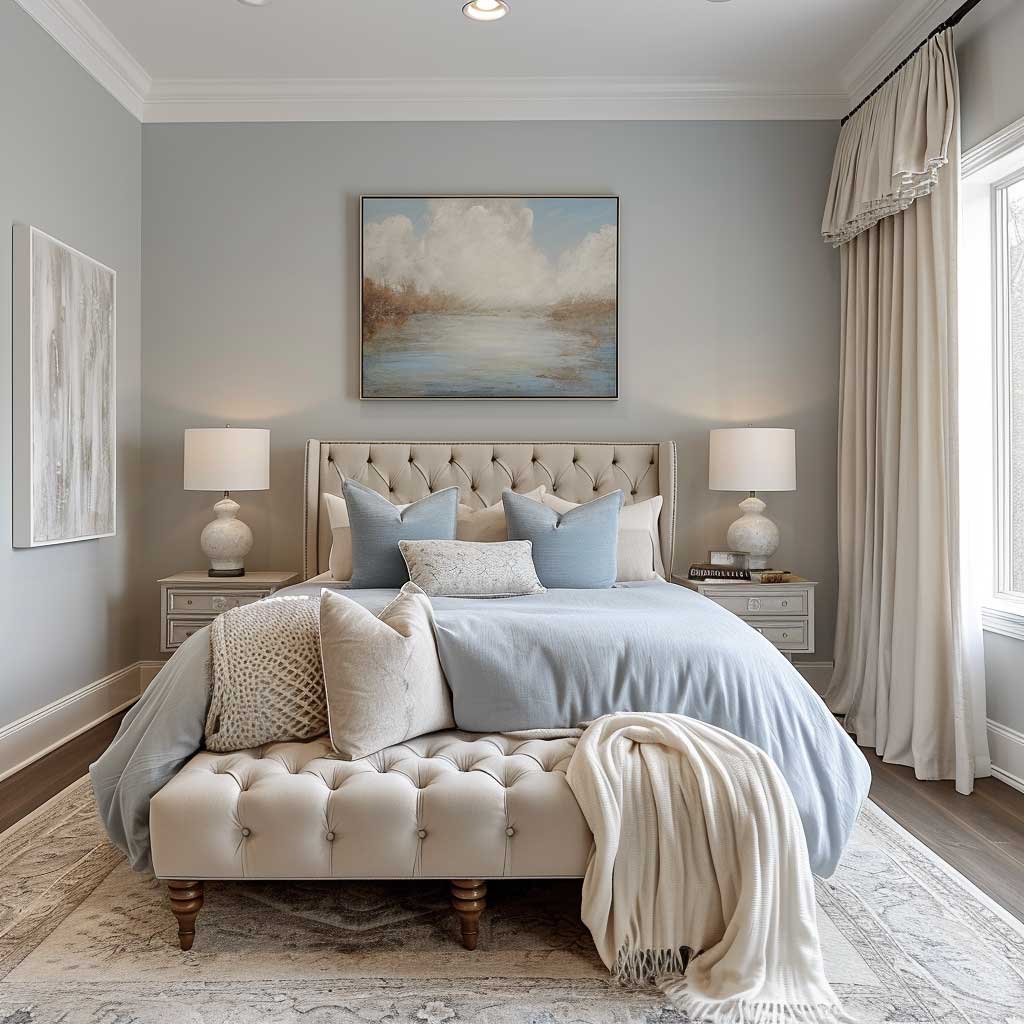
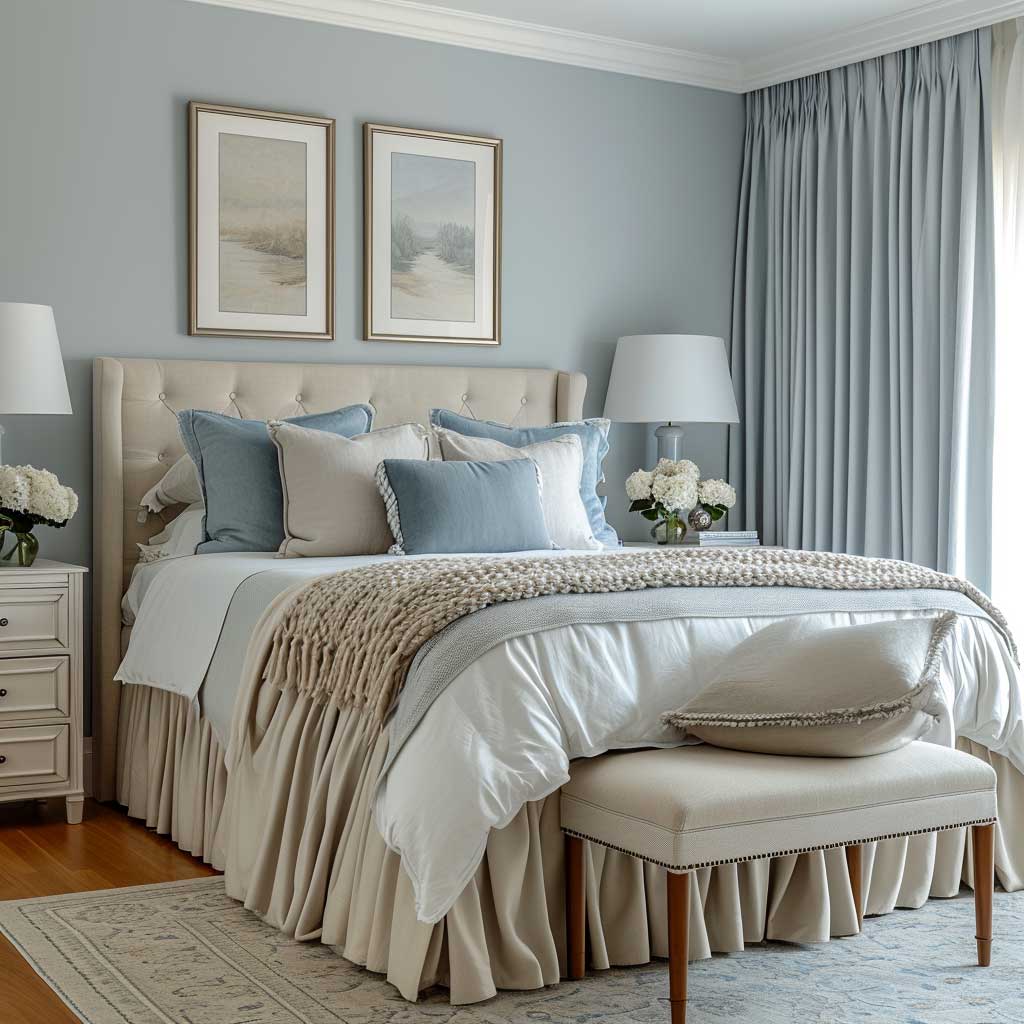
Paint is the most cost-effective bedroom renovation move and the one people ruin fastest by choosing a color they love in daylight without checking it at 9pm. Light blues, muted sage greens, and warm greys lower cortisol the way a forest does — not through magic but through visual simplicity. Benjamin Moore’s Pale Oak (OC-20) and Gray Owl (OC-52) are my go-to recommendations for walls because they read warm under incandescent light and cool under daylight, never committing to a mood before you do. A single sample pot runs $7.99 and saves you $400 in regret.
You’ll notice the mistake immediately if you go too saturated — a bright teal accent wall at midnight feels like being inside a tote bag. Keep accent walls to tones no more than three shades deeper than your main wall. The safe move is layering: pale grey walls, slightly deeper grey bedding, off-white curtains. Depth comes from texture, not hue contrast. Flat paint on all four walls is another error I stole this fix from a set designer I know: use eggshell on the three side walls and flat only on the ceiling to control where light sits in the room.
Don’t overlook the ceiling as a color surface. Painting it one shade lighter than the walls makes a low bedroom feel taller without a single structural change. That trick alone costs $40 in paint and two hours. Creamy white curtains floor-to-ceiling, hung six inches above the actual window frame, complete the illusion and run around $80–$150 per panel at IKEA’s MERETE line.
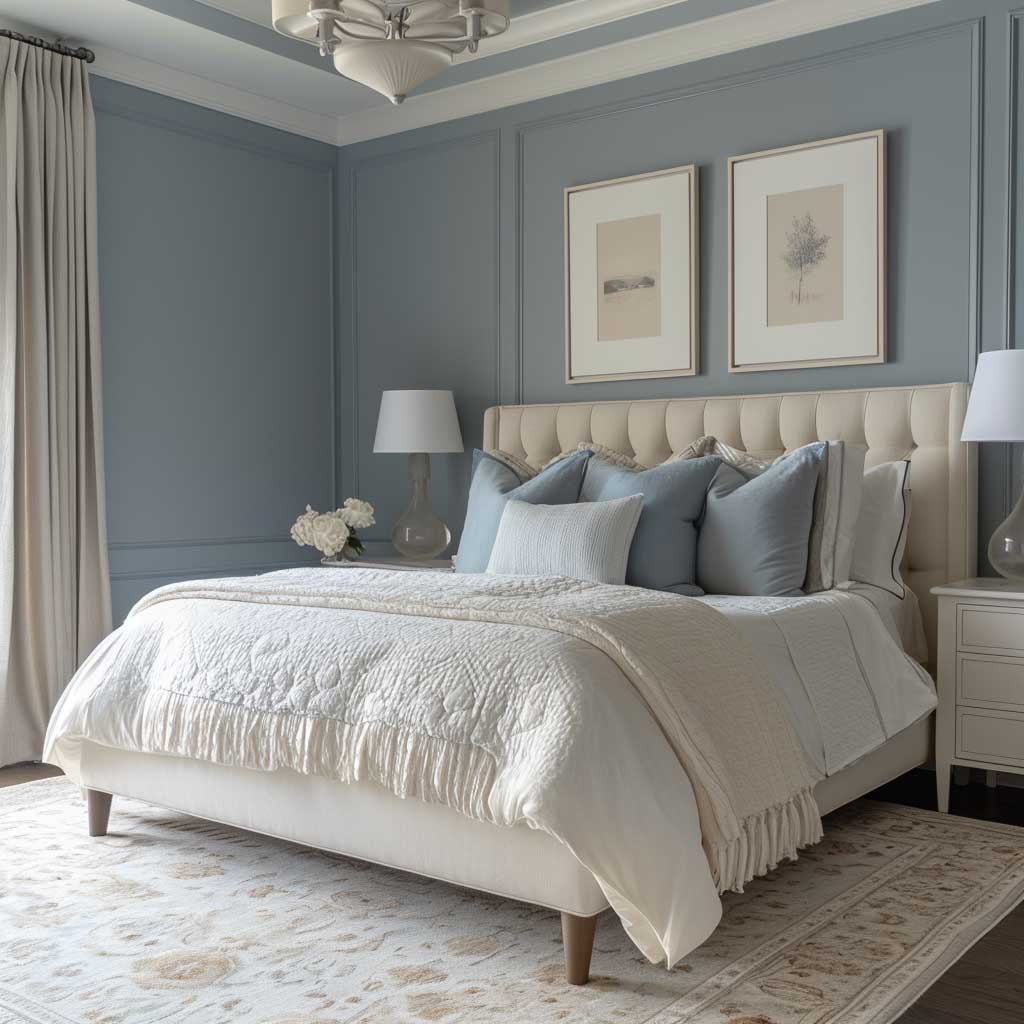
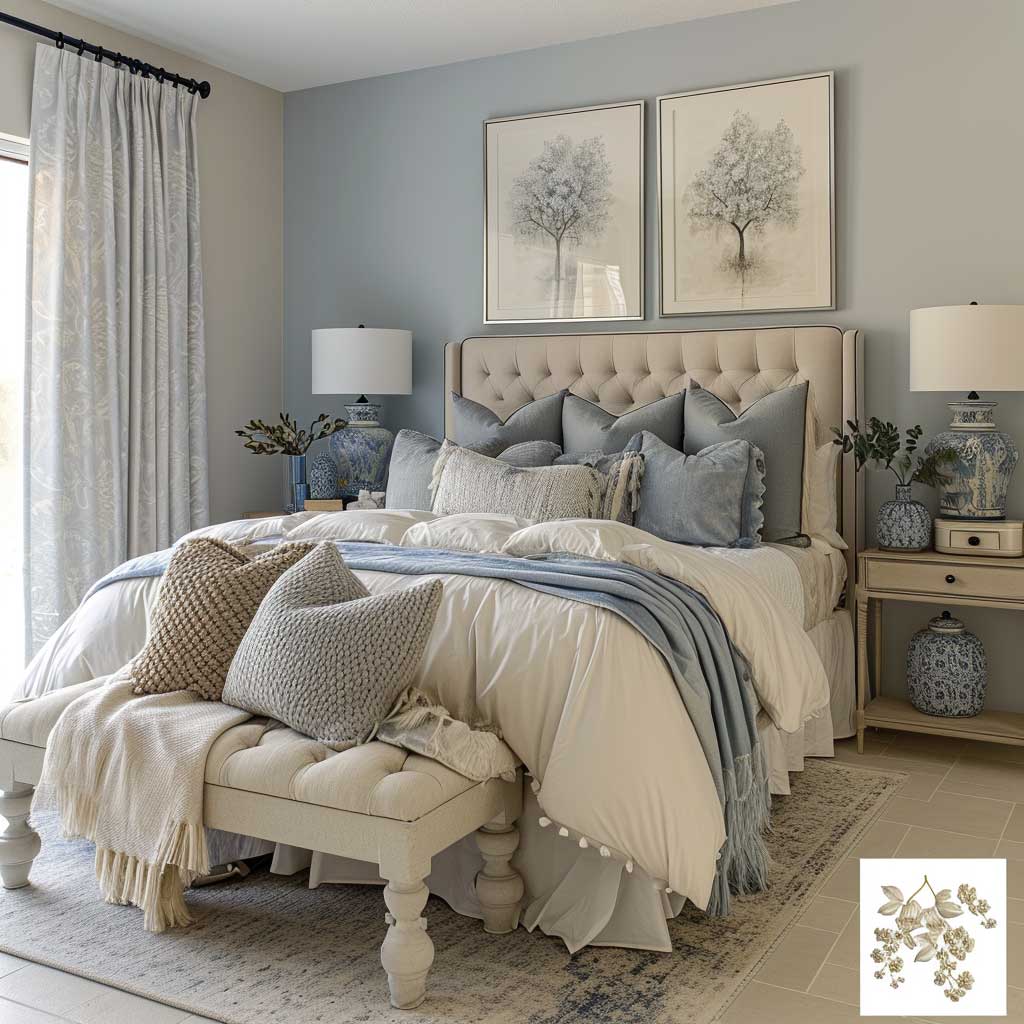

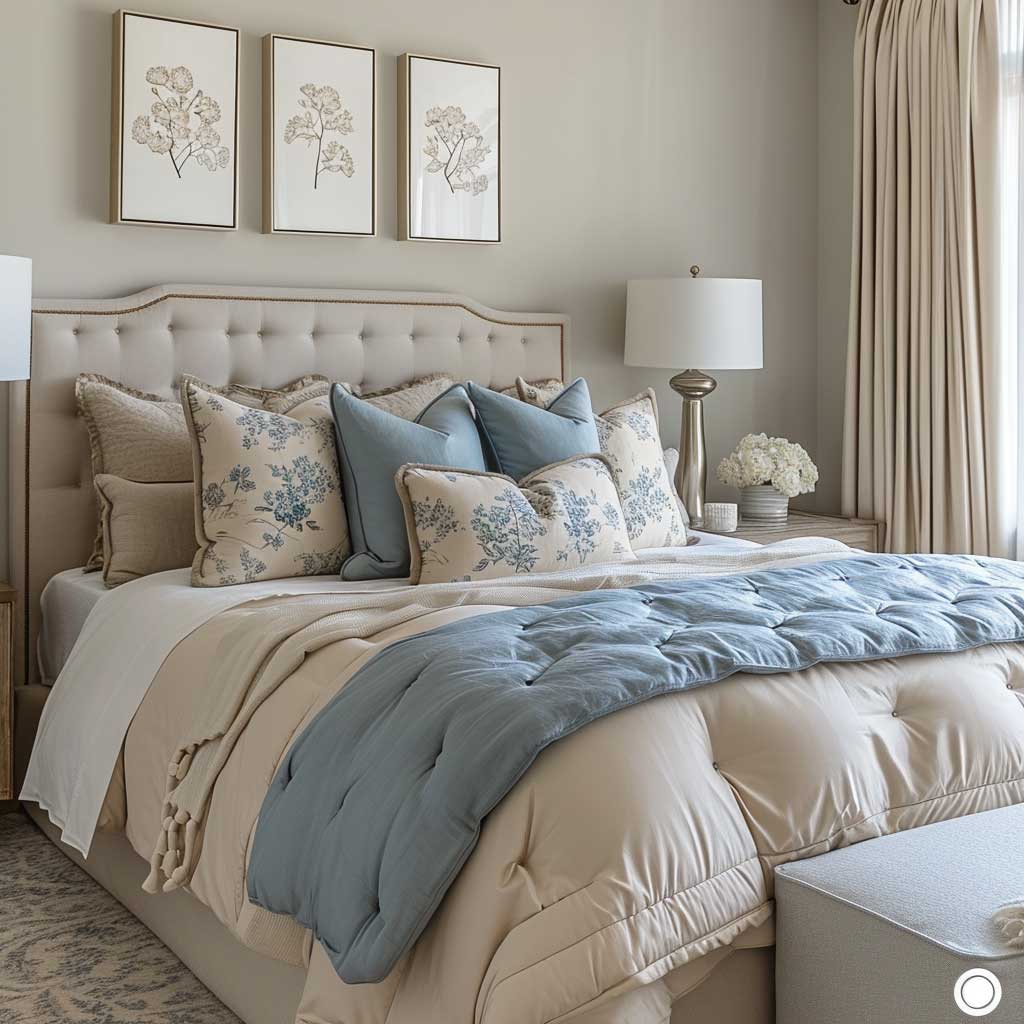
Furniture choices should reinforce the palette rather than fight it. Natural oak or walnut tones sit well inside any neutral bedroom renovation because wood reads as a fourth neutral — warmer than grey, more grounded than white. Avoid high-gloss white furniture if your walls are also white; the result looks like a dentist’s waiting room, not a retreat bedroom.
Lighting controls mood in a way color cannot. A $25 dimmer switch installed on the main circuit is the cheapest renovation upgrade that pays daily. Combine it with a 2700K bulb in every bedside lamp and the room shifts to sleep mode the moment you want it to. Skip cool-white LEDs above 3000K entirely — they signal “office” to your brain at the worst possible hour.
Small Bedroom Renovation Starts With the Layout, Not the Color Chips
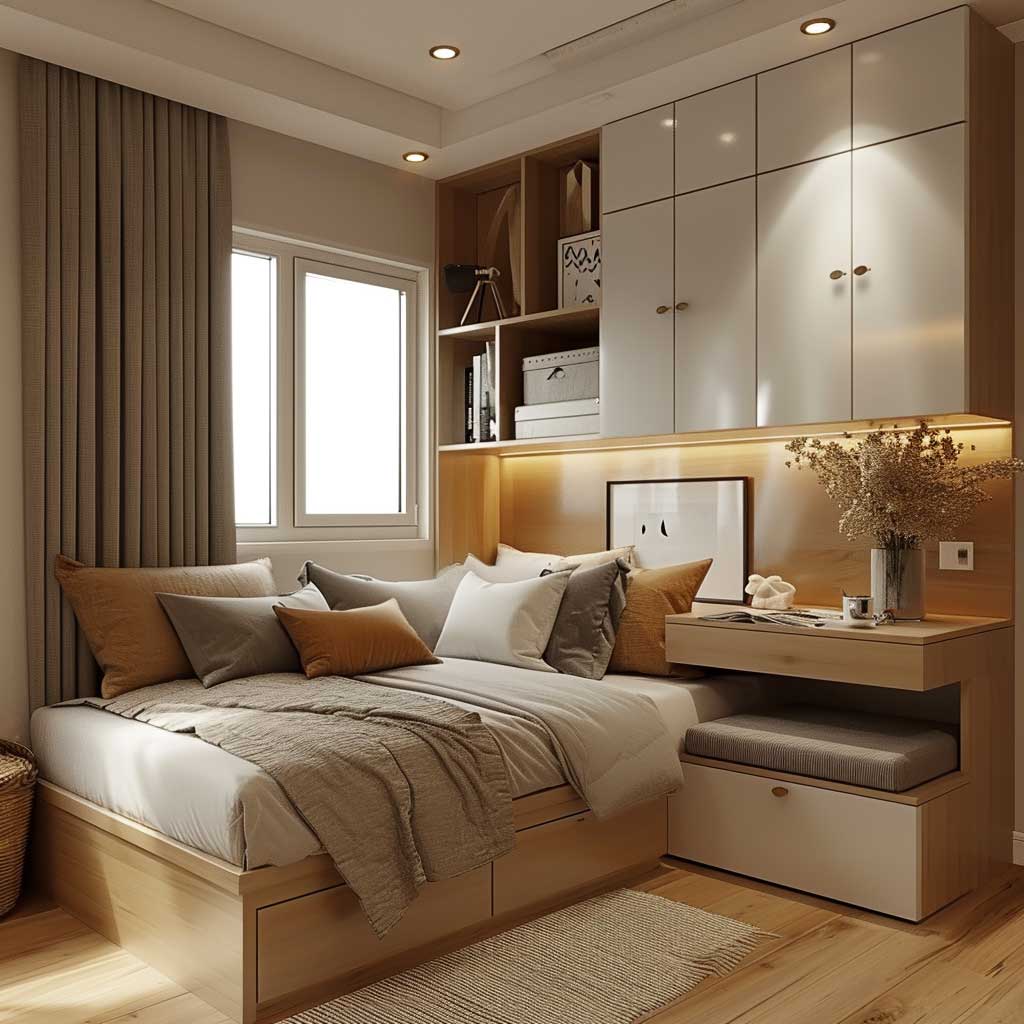
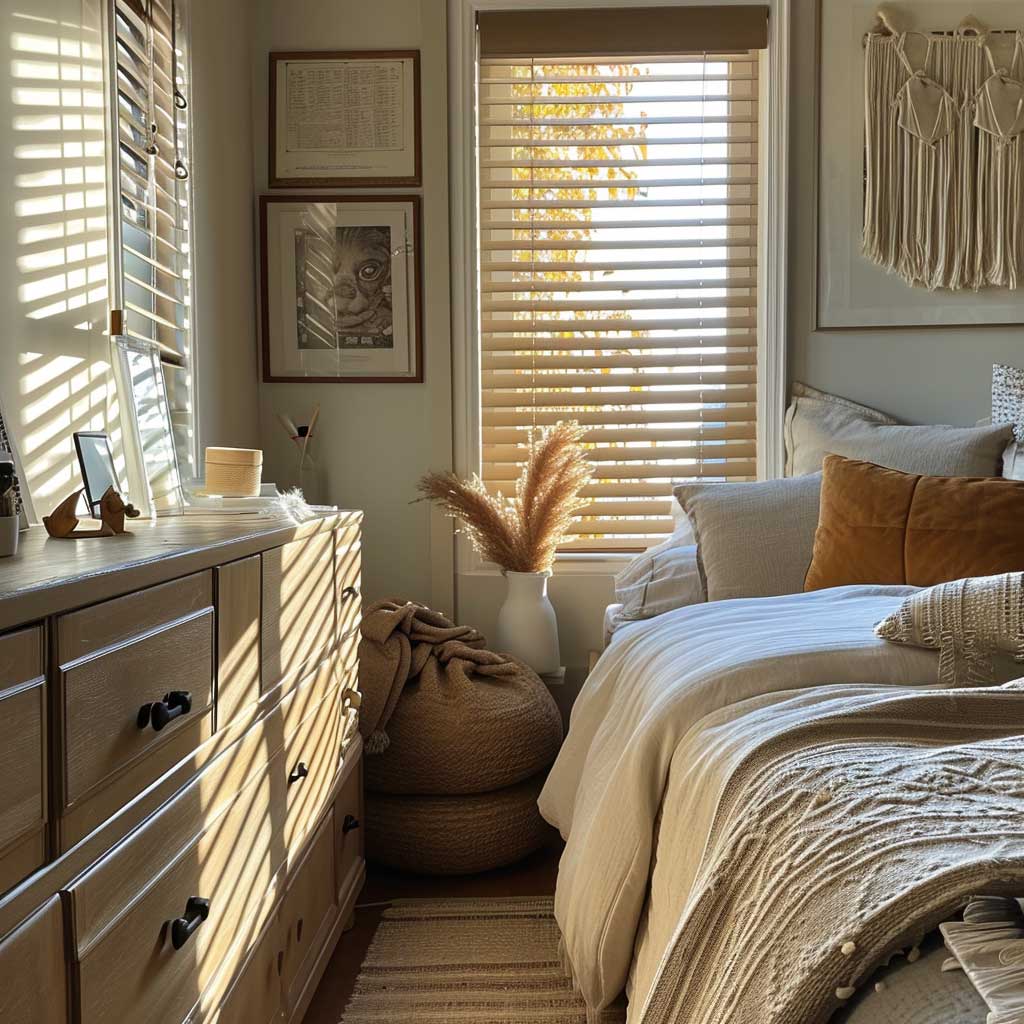
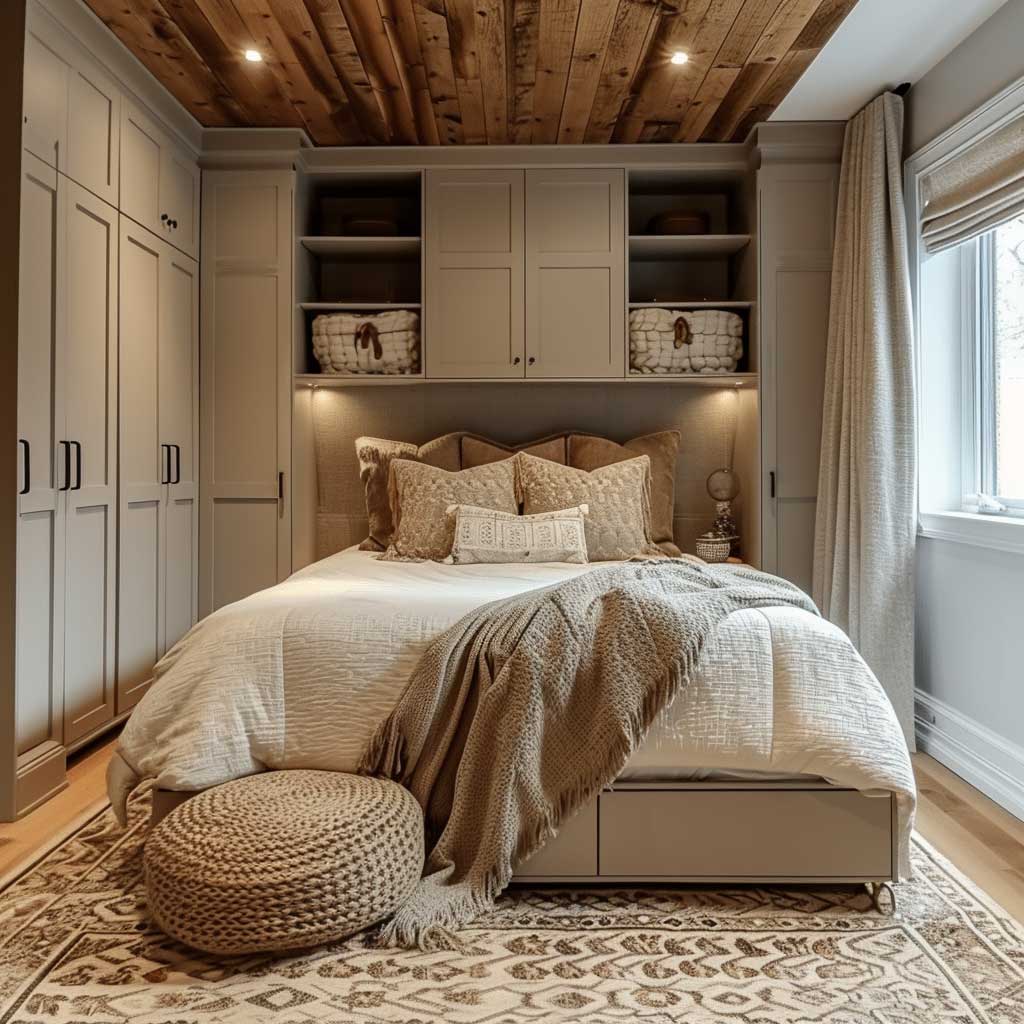
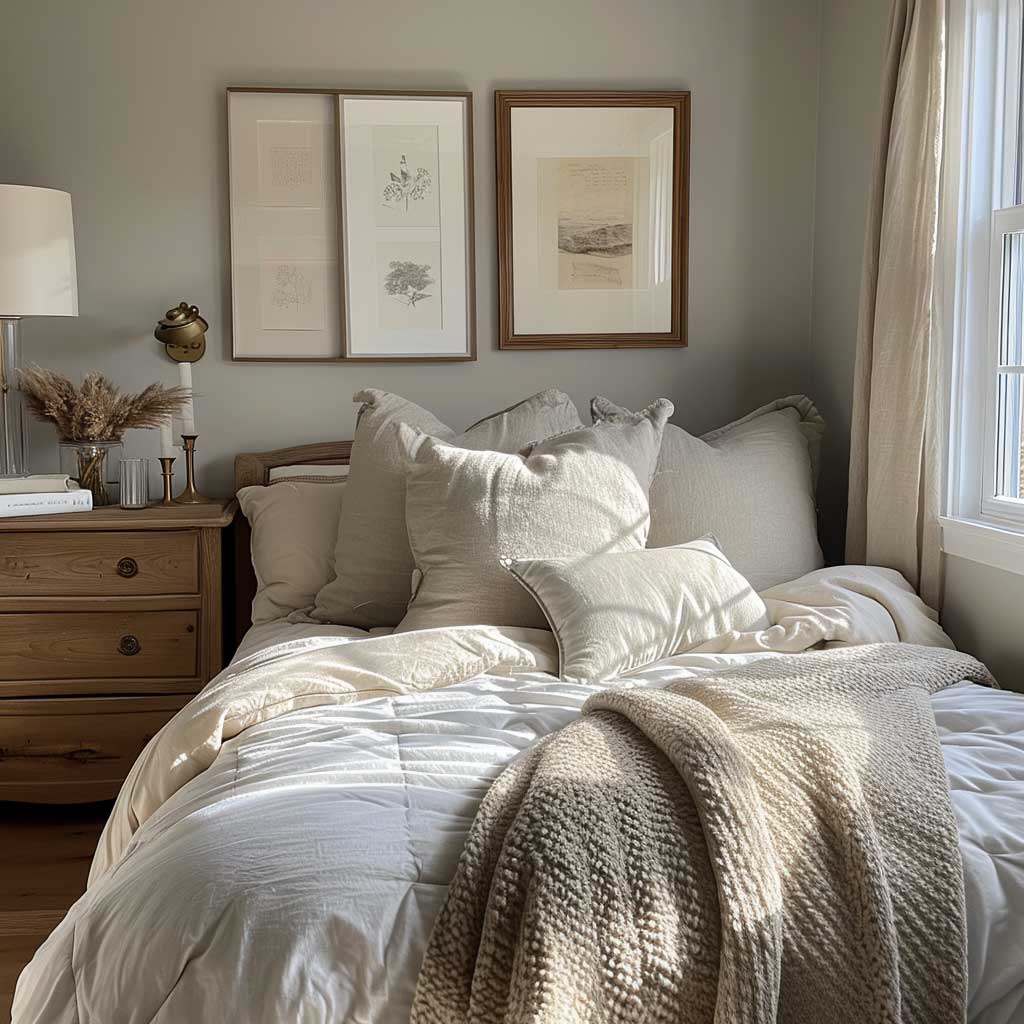
Renovating a small bedroom is an architecture problem first, not a decorating problem. I’ve watched clients spend $1,200 on a gorgeous dresser that blocked the door swing, then spend another $400 removing it six months later. Draw the layout to scale before you buy anything — a piece of graph paper and 30 minutes is enough. The bed goes against the longest solid wall. Full stop. Everything else resolves itself after that decision. If you can’t do that because of a window or radiator, look at space optimization strategies for small bedroom interior design before touching a budget line.
Vertical space is completely underused in most bedroom reno projects under 150 square feet. Installing open shelving at 72 inches or higher along one wall keeps the floor clear and doubles storage without any framing cost. IKEA’s KALLAX at $129 works fine; a built-in from a local carpenter runs $600–$1,400 and looks like it was always there. Under-bed storage is the second layer — pull-out drawers built into the frame, or simple rolling bins from The Container Store at $29 each, recover 40–60 liters of square footage you’re currently wasting.
What doesn’t work in small bedroom renovations: oversized headboards that eat 18 inches of visual length, warm dark wall colors (they cozy up large rooms but shrink small ones further), and anything with thick legs that interrupts your sightline to the floor. A clear acrylic nightstand from CB2 at around $149 takes up zero visual space. That trick sounds minor. It isn’t.
Mirrors are the oldest spatial trick and still the best one. A single full-length mirror on the back of the door or leaned against the wall opposite a window doubles perceived depth for zero structural cost. I own two of these. They’re doing real work. The mistake is putting mirrors on both sides of the room — that reads as a gym, not a bedroom retreat.
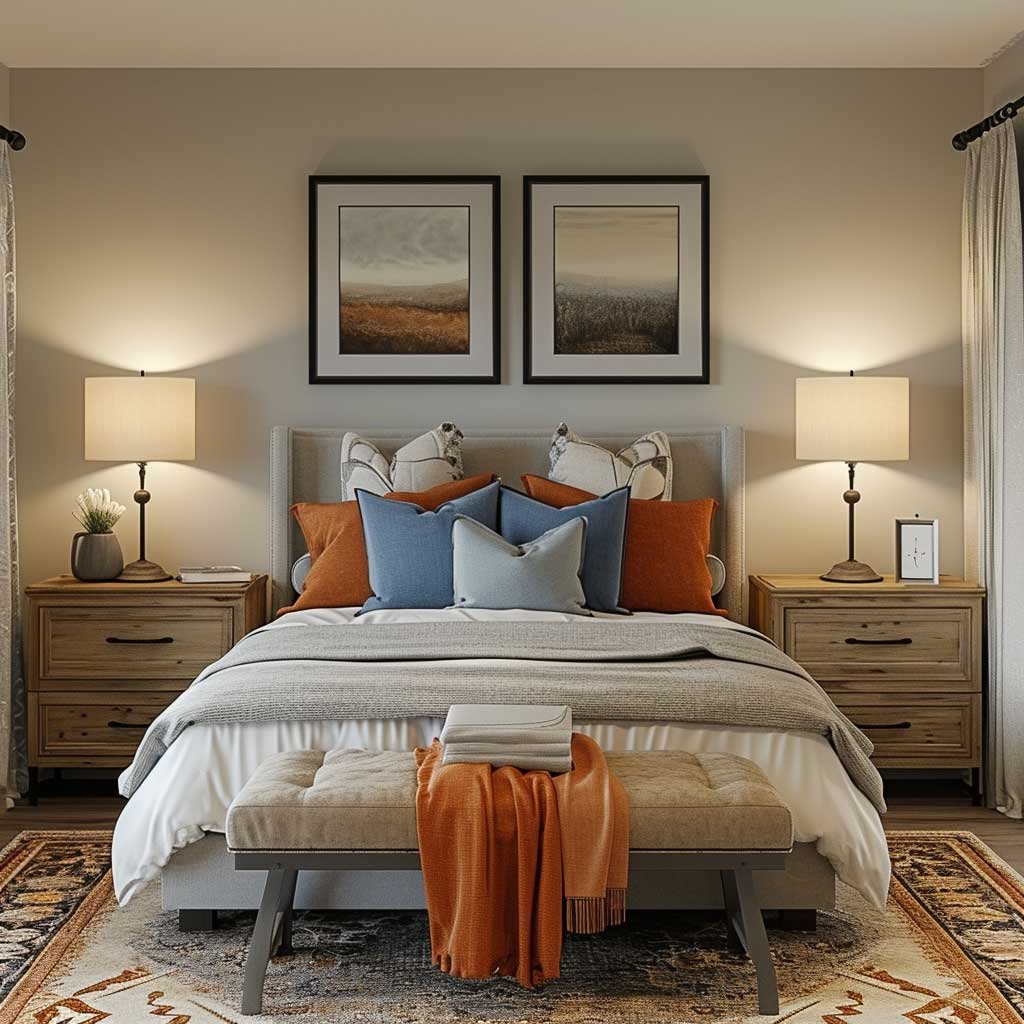
Lighting in a small bedroom needs to stay off the nightstand entirely. Wall-mounted sconces at reading height free up the only flat surface you have and keep the bedside from looking like a charging station. Ferm Living’s Punctual Sconce is around $180 per side; for budget builds, H&M Home has a near-identical version for $39. Skip the matching pair instinct — slightly asymmetric fixtures read as intentional in a small room.
Don’t buy a platform bed with a solid base panel — the visual weight kills the floor-to-ceiling illusion. A bed on legs, even simple wooden ones at 6 inches, keeps air flowing under the frame and makes the room read as taller. Don’t install a ceiling fan in a room under 120 square feet — the blade sweep eats the one spatial resource you can’t buy back. And don’t put a TV on the dresser. It forces you to buy a larger dresser for the right viewing height and you’ll spend the rest of the renovation correcting one decision made in five minutes.
Spacious Bedrooms Waste Their Square Footage on Furniture Nobody Sits In
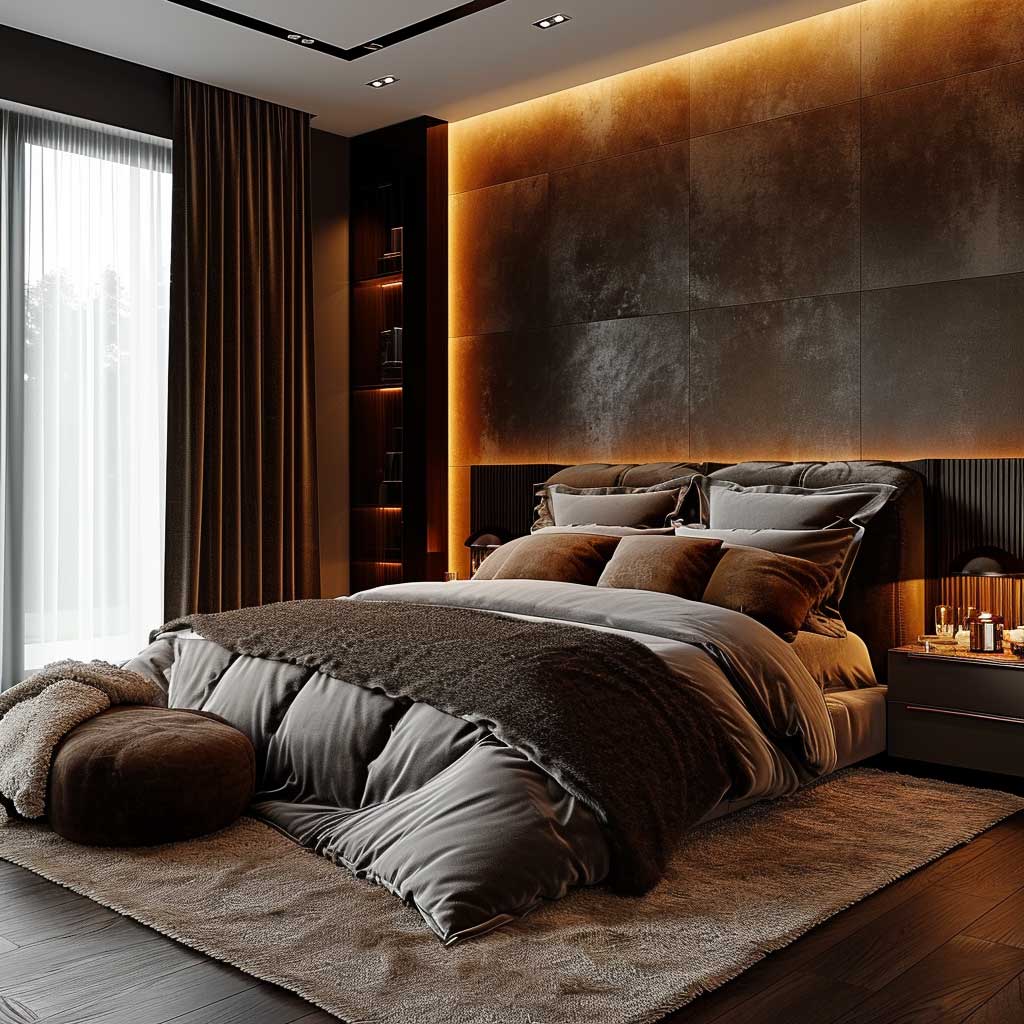

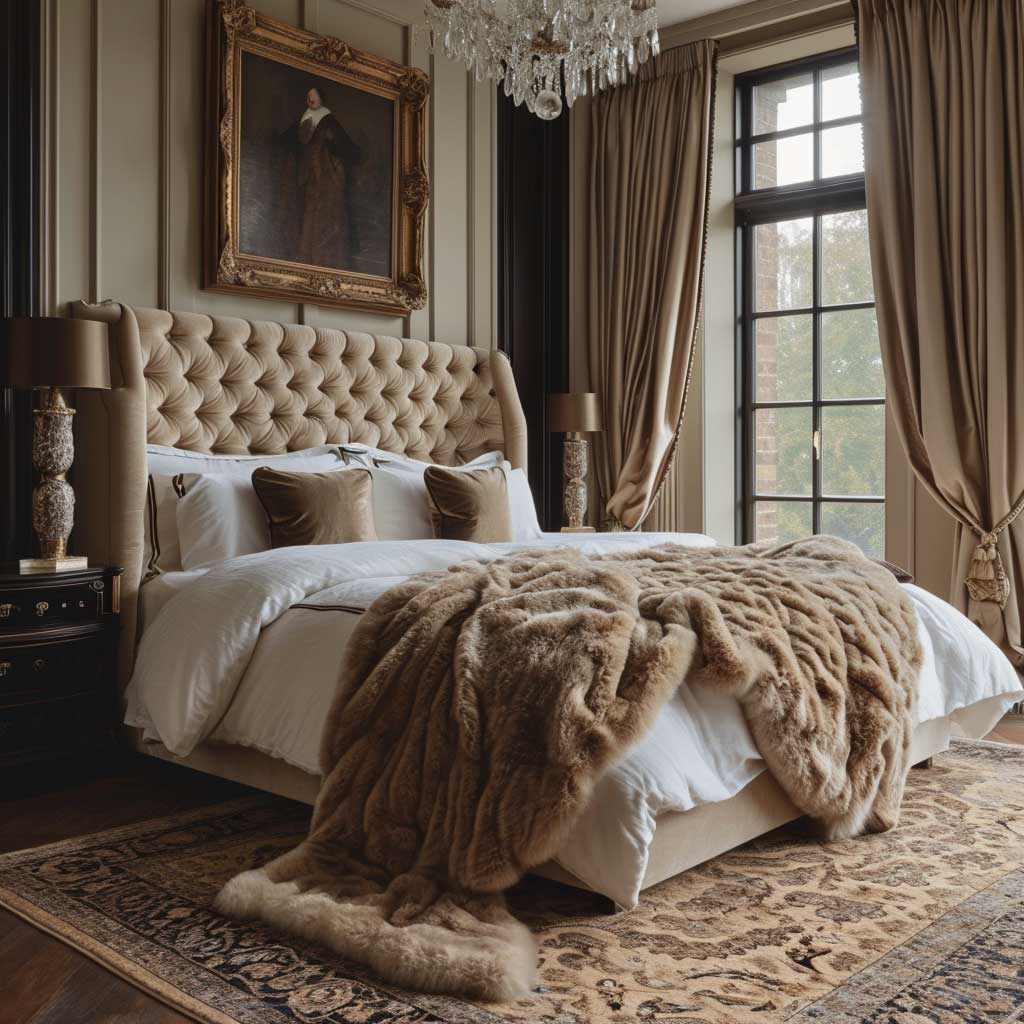

A spacious bedroom renovation is harder than a small one. Too much floor space without deliberate zoning turns into a furniture showroom — expensive but cold. The bed is a statement piece, not a placeholder: I went with a custom upholstered frame in a Romo velvet at $1,800 and it anchored the entire room in a way that $600 of art on the walls couldn’t. If that’s outside budget, West Elm’s Andes bed in performance velvet runs $1,499 and holds up well. The headboard should reach at least 52 inches — below that it reads like a day bed regardless of how big the mattress is.
Texture does what color can’t in a large bedroom renovation: it adds thermal weight. A wool rug at $400–$900 from Rugs USA or Loloi is the single item that makes a hardwood-floored bedroom feel inhabited rather than staged. Faux fur throws cost $35–$80 and land on the foot of the bed like a closing argument. Silk pillow covers at $25 each from Amazon Basics (the real-mulberry-silk ones, not polyester satin) add a reflective layer that shifts the room’s light quality after dark.
What wastes money in a spacious bedroom renovation? Two accent chairs nobody sits in. A bench at the foot of the bed that exists only in design renders. I’ve seen six renovation budgets include both, and in every case they were listed on Marketplace within eighteen months. Use the floor space for a reading corner with a single good chair — a Hay AAL92 at $620, or a secondhand Eames knock-off at $180 — plus a proper floor lamp. That corner gets used. The symmetrical bench does not.
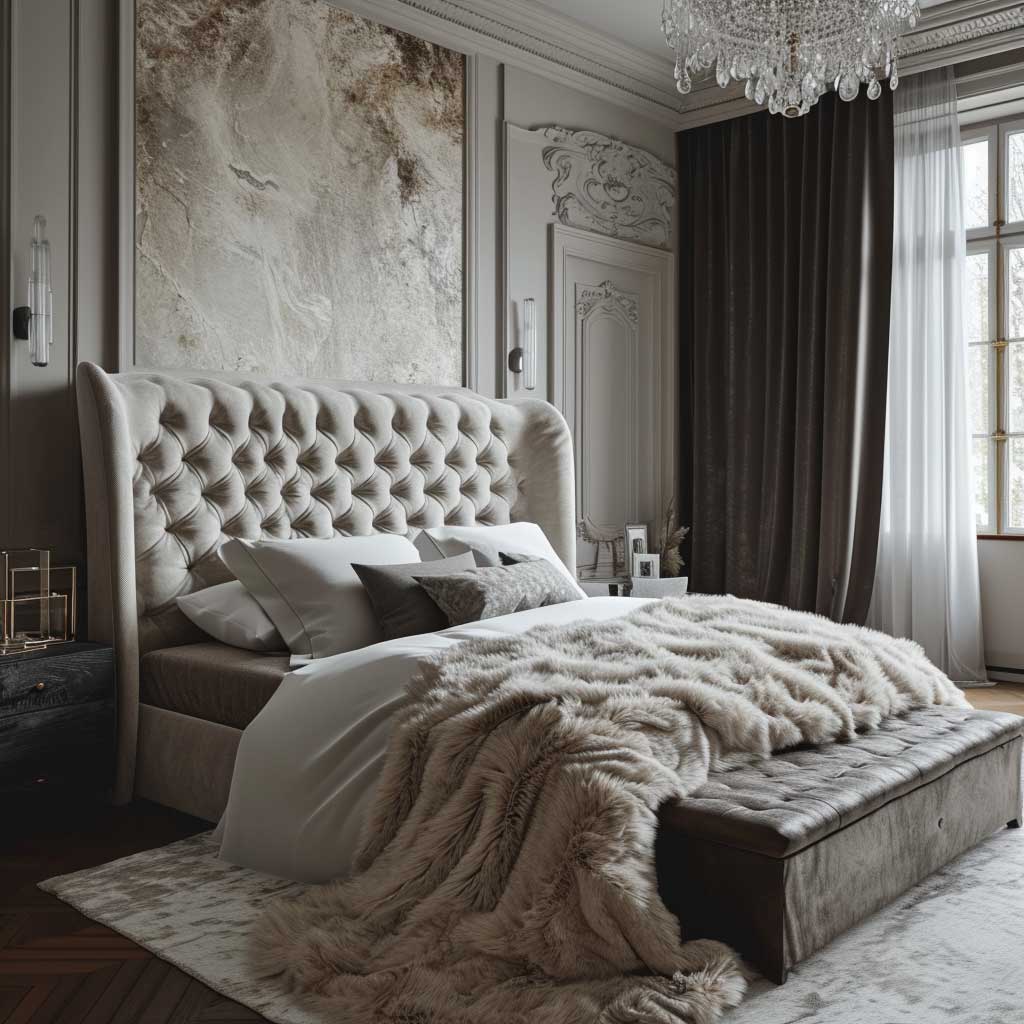
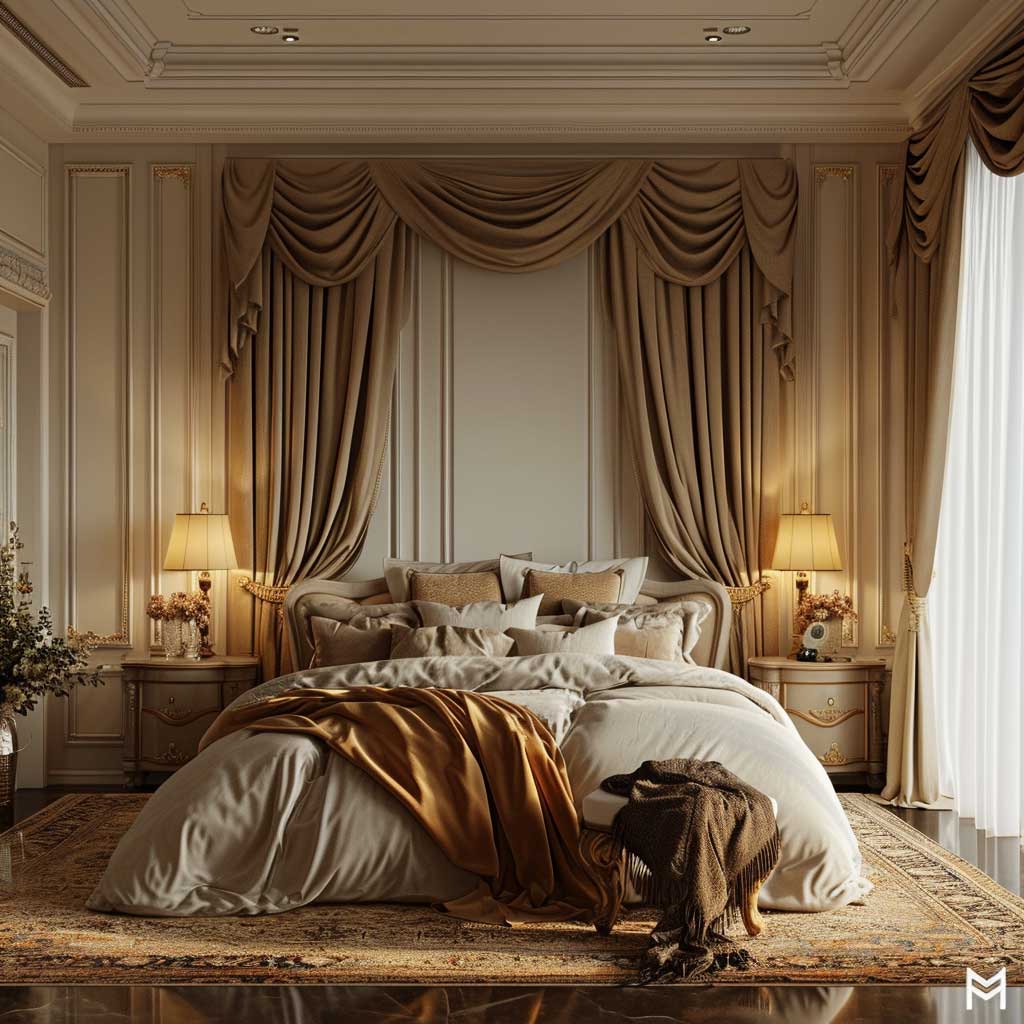
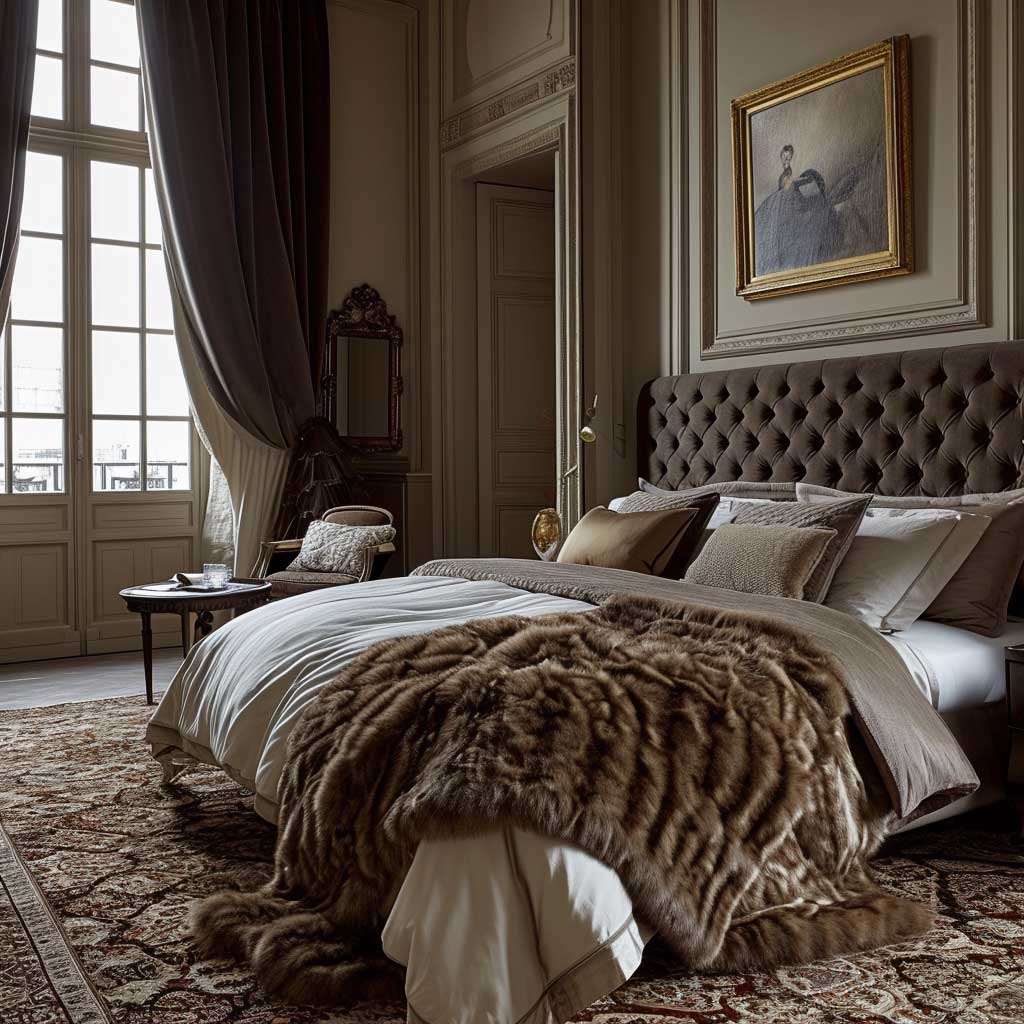

Heavy curtains in a large bedroom do three things: control morning light, add acoustic softness, and add mass to empty walls. Linen-cotton blends from Pottery Barn’s Belgian Flax line run $120–$190 per panel and hang beautifully with minimal steaming. Blackout lining added behind sheer panels is the renovation detail I stole from a hotel designer I met — it costs $4 per yard of fabric and turns any curtain into a blackout curtain without replacing what you already own.
Lighting at scale needs layers, not just a ceiling fixture. A statement chandelier — Schoolhouse Electric’s Globe Pendant at $425, or Rejuvenation’s brass version at $580 — sets the room’s personality. Bedside lamps handle task lighting and should sit at 28–30 inches from the mattress surface to avoid glare. I always add a plug-in picture light above one large artwork to give the room a focal point after dark. Total lighting budget for a spacious bedroom renovation should sit between $400 and $1,200 — more than most people budget, less than they spend fixing a flat ceiling fixture they already hate. For a more relaxed approach, white and wood interior design creates that same warmth with fewer decisions to make.
| Renovation Type | Estimated Cost | Key Moves |
|---|---|---|
| Cosmetic refresh | $1,500–$5,500 | Paint, lighting swap, new bedding, curtains |
| Mid-range bedroom reno | $6,000–$12,000 | New flooring, built-in storage, furniture update |
| Full bedroom renovation | $12,000–$28,000 | Layout change, closet build-out, full finish overhaul |
| Primary suite addition | $20,000–$45,000+ | New bath, closet expansion, structural work |
Source: Angi, HomeAdvisor 2025
The Bottom Line
A bedroom renovation works when sleep is the brief, not the afterthought
Pick your layout before your palette. Fix your lighting before your furniture. And treat texture as a structural element — a wool rug and a velvet headboard do more for a cozy bedroom retreat than a fresh coat of the right paint without them.
Bedroom renovation ideas fail at the finish line when people run out of budget after the walls and leave the floor bare, the lighting harsh, and the bed untreated. Protect $300–$600 for textiles no matter what the rest of the project costs.
Save this post before your next renovation conversation — the decisions you make in the first 48 hours determine 80% of the result.
FAQ
How much does a bedroom renovation cost on average?
What color should I paint my bedroom for a retreat feel?
What are the best renovation ideas for a small bedroom?
What bedroom renovation gives the best return on investment?
How do I renovate a three-bedroom home interior without losing coherence between rooms?
What retreats bedroom designs work for a room with no natural light?
Complete guide
Bedroom Design Ideas That Actually Change How You Sleep, Feel and Live
Styles, colors, furniture, walls, layouts — 300+ ideas in one place