Wall panelling ideas for living rooms have one job: turn a background surface into something that reads as a decision. The bare drywall version of your living room isn’t neutral — it’s just unfinished. I’ve seen it dozens of times: beautiful furniture, good lighting, then a flat painted box around it all that quietly undermines everything. Choosing the right wall panel design for your living room is the thing that makes the other choices look intentional.
What surprises most people is how many directions this can go. Streamlined MDF panels in a monochromatic palette — around $8–$14 per sq ft installed — read completely differently from reclaimed oak boards at $18–$30, which read differently again from bold geometric PVC tiles at $4–$9. None of those is wrong. All of them beat a plain wall. The one that’s wrong is the panel that doesn’t match what you’re actually trying to feel in the room.
Quick Scan — What You’ll See Here
- Streamlined flat panels: the clean-line case and where it breaks down
- Geometric and patterned panelling: when bold pays off
- Rustic wood fusion: the material that gets warmth right (and wrong)
- Material comparison table: MDF vs reclaimed wood vs PVC vs veneer
- Dont-do-this panel mistakes that cost real money to fix
- FAQ from real search queries: heights, costs, grey panels, simple installs
Streamlined Flat Panels and the Monochromatic Trap


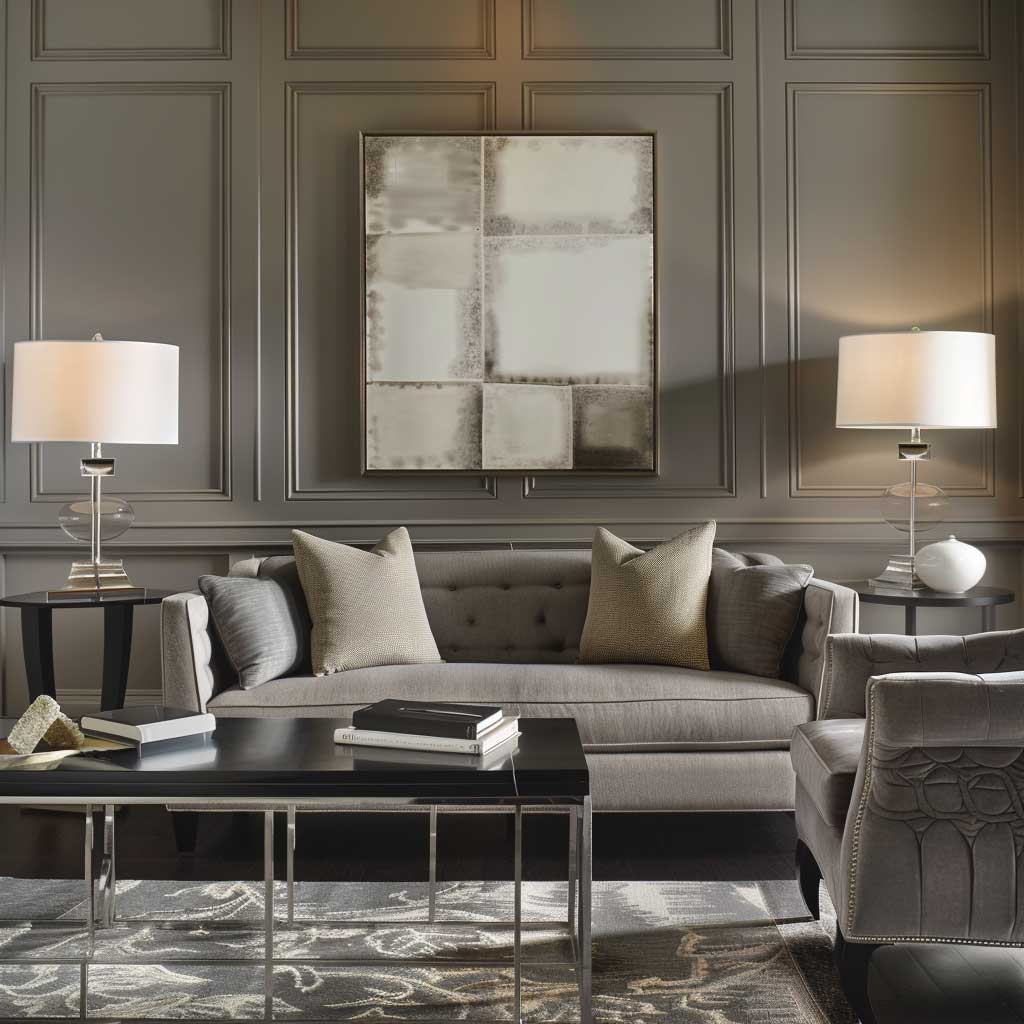

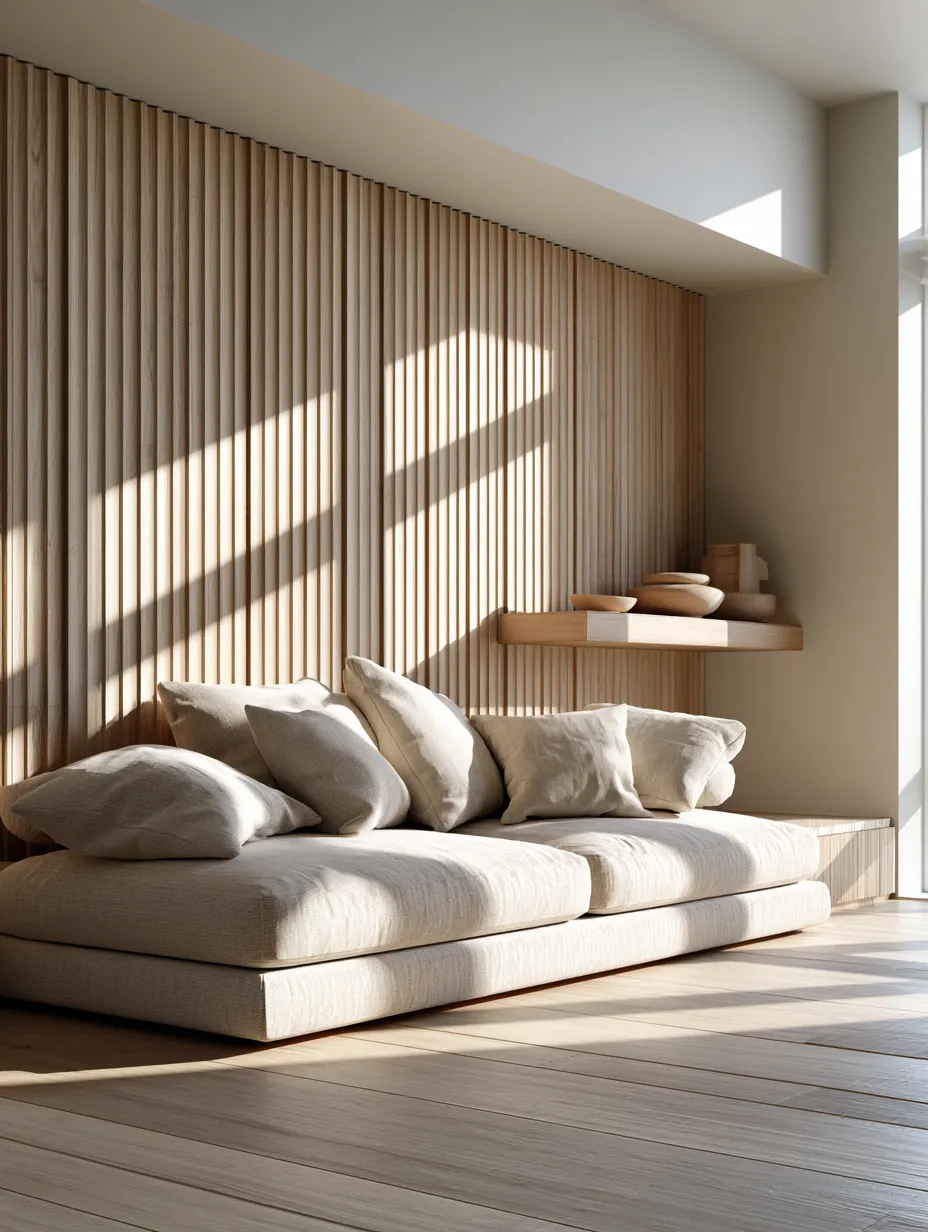
Streamlined modern wall panelling for living rooms works because restraint is harder to pull off than decoration. You’re not hiding anything behind pattern or texture. Every panel joint, every shadow gap, every paint application is visible. I bought Benjamin Moore Chantilly Lace (OC-17) for the panels in my last project and painted the grooves Pale Oak (OC-20) — one degree warmer — and you’ll notice the wall reads three-dimensional without looking busy. That two-tone within a monochromatic scheme is the trick most DIY guides skip entirely.
The mistake I see constantly with flat panel designs is going too wide on the panel module. At 600mm wide, the grid looks architectural. At 900mm wide, it looks like someone ran out of money mid-project. Smaller modules — 400–500mm — give you the rhythm that makes the wall feel designed. Angled light from a floor lamp placed close to the surface will show you exactly how well your panel proportions work. Bad proportions become very obvious at 7pm. Good proportions look like art.
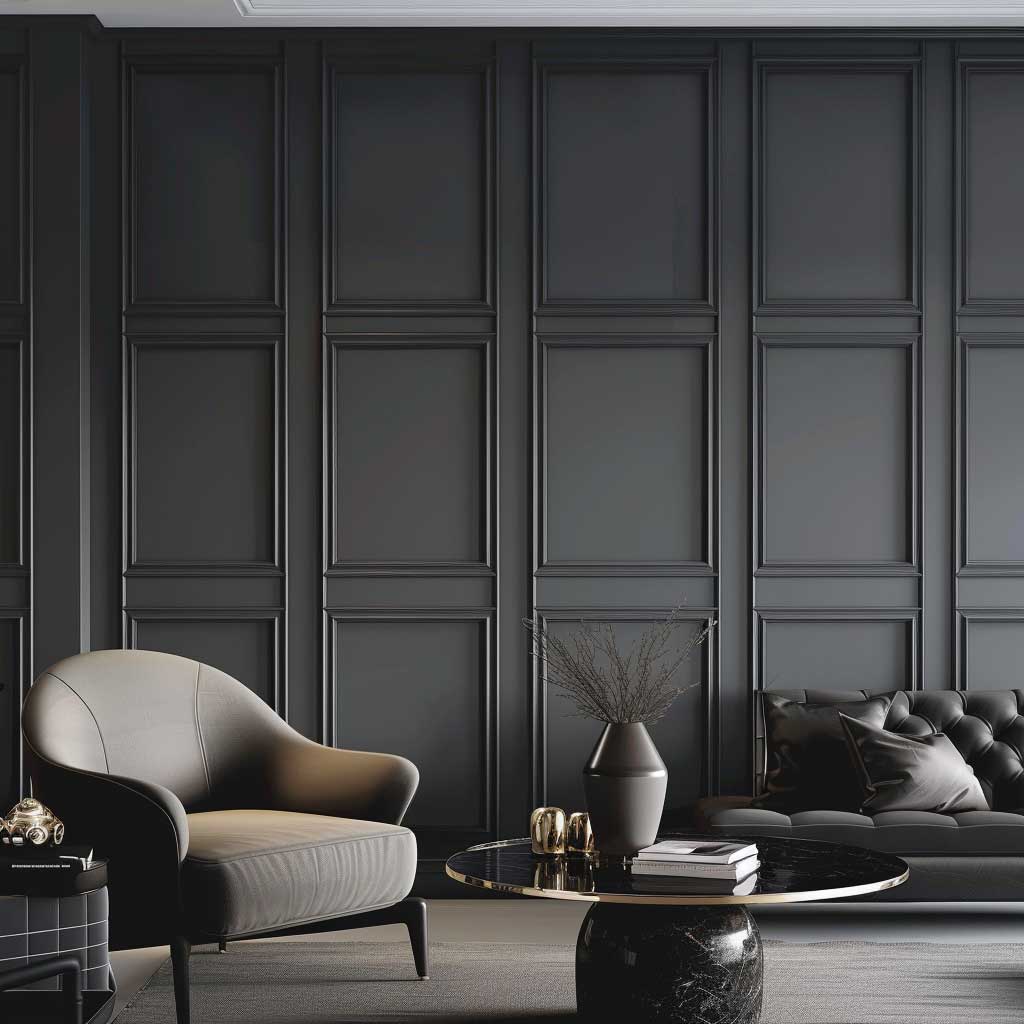


Metallic accents are the right call here — but only in one finish per room. Brushed brass and chrome in the same living room is a common error that splits the eye. Pick one. I go to brass almost every time because it reads warm against cool grey panels without fighting the palette. A Schoolhouse Electric sconce in brushed brass runs about $180–$280 and does more for a panelled wall than any piece of art at twice the price. The panel becomes the backdrop. Let it be the backdrop.
For urban apartments where the goal is to make the room feel larger, matching panel colour to ceiling colour is non-negotiable. A panelled wall that stops at a different colour ceiling looks cropped. The same colour carried all the way up makes the vertical surface feel taller than it actually is — the architectural equivalent of high-waisted trousers. You can read more about living room wall panelling ideas across different styles to see how this plays out across room types.
Patterned Panels Earn Their Keep or They Don’t


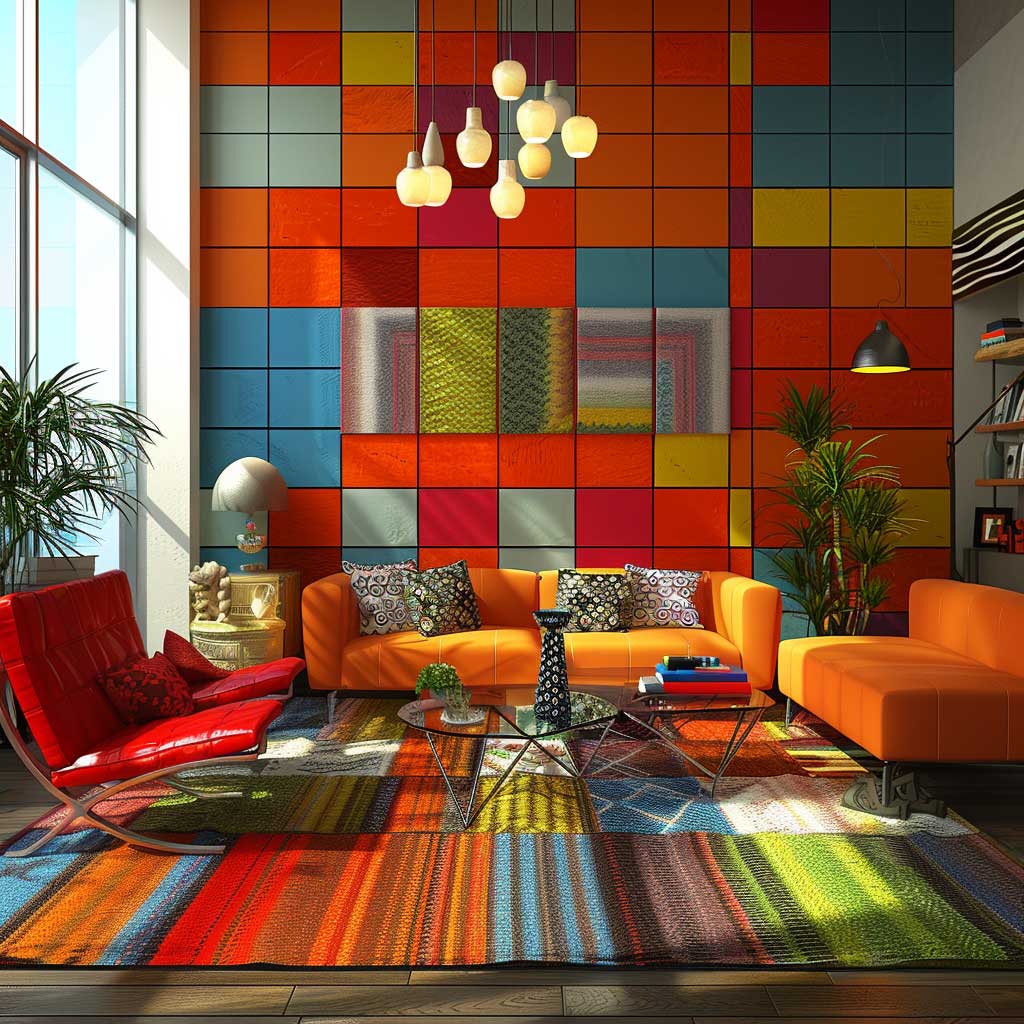
Patterned modern wall panelling for living rooms is the design move that separates people who trust their eye from people who trust paint chip fans. It’s a commitment. A herringbone MDF panel arrangement on one wall of a 4m x 5m room costs roughly $600–$900 in materials and $400–$700 to install — and it will be the first thing every guest mentions. That’s the point. The error isn’t choosing pattern. The error is choosing a pattern that competes with everything else you already own.
Geometric living room wall panel designs hit hardest when the rest of the furniture is quiet. My go-to rule: if the panelling is speaking loudly, the sofa needs to listen. A charcoal diamond pattern panel wall paired with a linen sofa in warm white or sand — something in the Muuto or Normann Copenhagen range, around $1,800–$3,200 — lands properly. Pair the same panelling with a bold print sofa and the room starts arguing with itself. Nobody wins that argument.


The colour question matters more than the shape question. I stole this logic from a textile designer: pattern on a wall reads as texture first and shape second. So a geometric panel in the same tone as the surrounding wall — a deep forest green on forest green, for instance — gives you the tactile complexity without the visual noise. Routed MDF panels painted in Farrow and Ball Calke Green (no. 80) on a Calke Green wall is one of the more quietly impressive things you can do in a living room. Costs about $12 per sq ft all-in. Looks like it cost three times that.
Avoid 3D foam panel tiles in wave or pebble shapes — the ones that run $3–$5 per sq ft on Amazon. They look impressive in the product photo because the photographer knows exactly how to angle the light. Your living room won’t have that lighting setup permanently. Under standard ambient lighting, foam wave panels look exactly like what they are: foam. PVC geometric tiles with genuine depth of at least 15mm are a different conversation entirely and worth the premium over foam.
Reclaimed Wood and the Rustic-Modern Line Nobody Draws Correctly


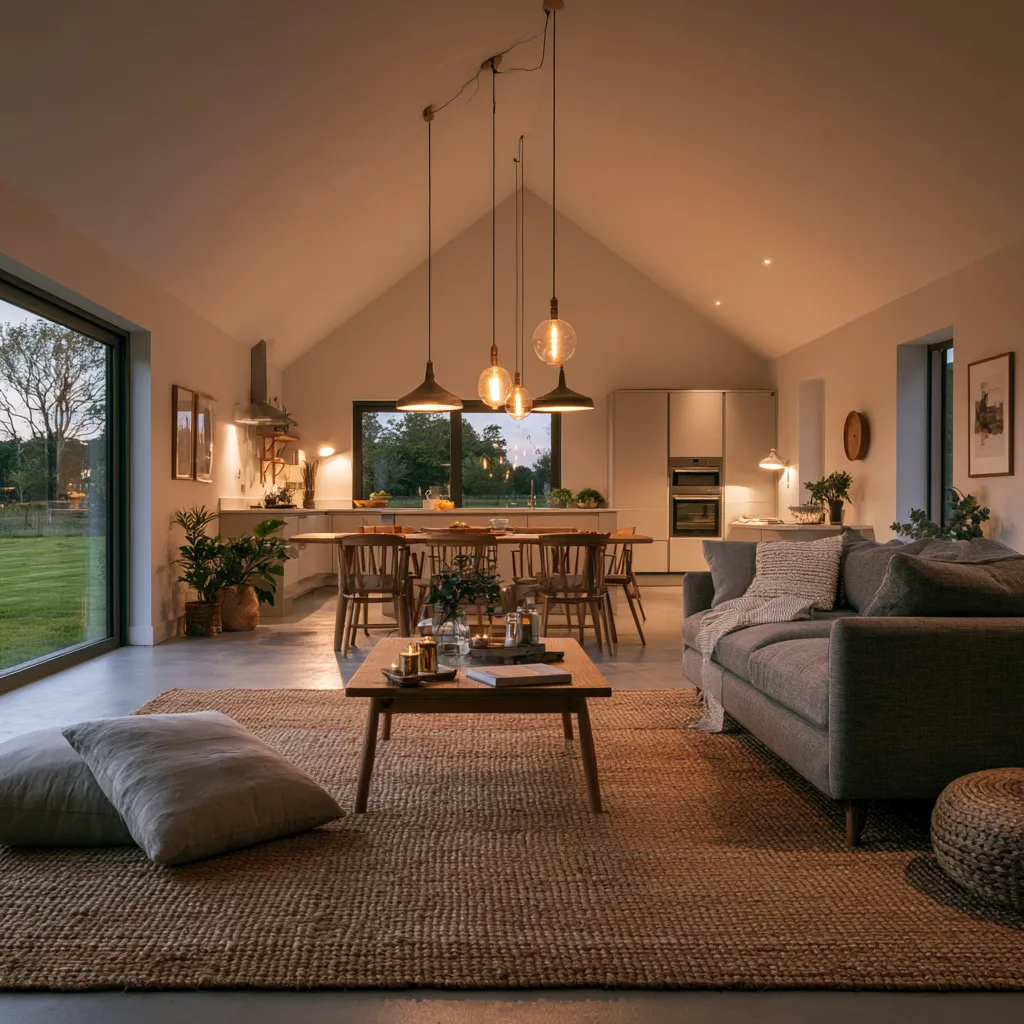
Reclaimed wood wall panelling is the most misunderstood option in this category. People see it in a design magazine — usually a loft in Brooklyn or a converted farmhouse in Provence — and they replicate the material without replicating the conditions. The reclaimed elm or oak boards that look extraordinary in those spaces are extraordinary partly because the room around them is doing very specific work. High ceilings. Concrete floors. Steel-framed windows. Take those same boards and put them in a standard 2.4m suburban living room with beige carpet and they look like a barn had an accident. The material is not the problem. The context is.
You need two things to make rustic wood panelling work in a modern living room: at least one raw or industrial counterpoint (concrete, Crittall-style window frames, exposed steel shelving bracket) and at least one deliberately contemporary piece of furniture. Without the modern counterpoint, the wood reads as renovation, not design. My go-to is a Karakter Copenhagen ribbed glass pendant — around $380–$520 — against reclaimed oak boards. That single contemporary lighting choice flips the read of the whole wall from rustic to rustic-modern. It’s a $400 calibration.


What kills the rustic-modern look faster than anything else is mixing too many wood tones. I’ve seen rooms where the wall panelling is dark walnut, the coffee table is blonde pine, the TV unit is oak, and the floating shelves are painted MDF pretending to be ash. Each piece is fine individually. Together they look like a furniture showroom that couldn’t decide on a range. Choose one dominant wood tone for the panelling. Everything else in wood in the room needs to either match it or get out of the way by being painted. Sounds harsh. Saves the room.
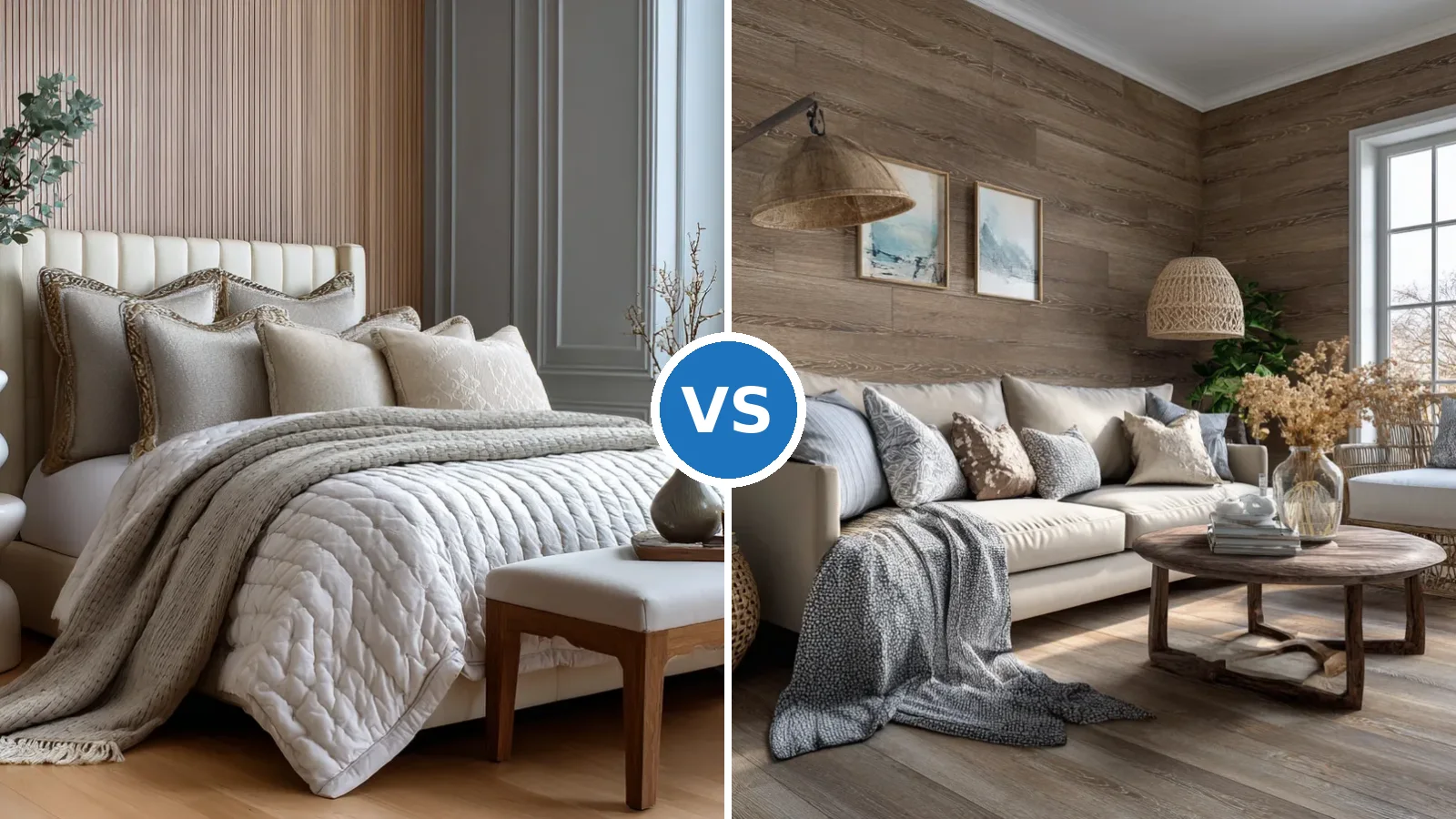
For reclaimed sourcing: Reclaimed Design Works, Elmwood Reclaimed Timber, and Longleaf Lumber all ship board-and-batten panels ready for wall application, starting around $14–$22 per sq ft. Avoid big-box vinyl wood-look panels — the ones that run $2.50 per sq ft at Home Depot. They photograph warmly in ads. In person, under real living room light, the repeat pattern in the grain is visible from 2m away and the room immediately reads as a budget renovation. Spend on the material or paint the wall. There is no middle option that holds up. You can also explore modern wood panel wall ideas for contemporary homes for more sourcing and style direction.
Don’t Do This
Half-wall panelling that ends at an arbitrary height. Panelling that stops at 90cm, 100cm, or 110cm — with no dado rail, no colour change above the line, nothing — reads as unfinished, not designed. If you’re panelling half the wall, the line where it stops needs to be a deliberate decision: a dado rail in a contrasting finish, a colour change from saturated below to white above, or an actual architectural feature. Without that deliberate termination, the eye notices the edge and can’t figure out why it’s there. In a well-panelled living room, every horizontal line has a reason.
Panelling over uneven plaster without addressing the unevenness first. Flat MDF panels telegraph every bump and hollow underneath. I’ve seen rooms where the panel installation looked worse than the bare wall it replaced because nobody took two hours to fill, sand, and prime the substrate. If your wall has significant unevenness, either batten out the panels at 400mm centres (which hides the variation) or fix the wall. Sticking flat panels directly onto a wavy surface is the most expensive way to make a wall look worse than it started.
Matching the panel colour exactly to the sofa. This turns the room into a monolith. You lose all depth. The panel wall becomes invisible as a design element and the room feels like everything is trying too hard to agree.
Wall Panel Material Comparison — Living Room
| Material | Cost (installed/sq ft) | Look | Best For | Watch Out |
|---|---|---|---|---|
| MDF Flat Panel | $8–$14 | Crisp, minimal, paintable | Streamlined, contemporary rooms | Not moisture-tolerant; shows surface prep quality |
| Reclaimed Wood | $18–$30 | Warm, textured, characterful | Rustic-modern and loft aesthetics | Context-dependent; fails in suburban beige settings |
| PVC / Composite | $6–$12 | Versatile, moisture-resistant | High-traffic rooms, geometric patterns | Cheap versions have visible grain repeat |
| Wood Veneer | $14–$24 | Real wood warmth, consistent grain | High-end contemporary panelling | Edge detail and installation require a skilled hand |
| Foam / Lightweight 3D | $4–$7 | Dramatic in photos | Temporary installs, rental spaces | Looks like foam under ambient light — because it is |
A good external reference point for understanding how panelling performs across different room proportions is this Homes & Gardens breakdown of living room panelling approaches, which covers practical height decisions and paint pairing logic in detail worth reading before you commit to a layout.
Final Word
Wall panelling ideas for living rooms don’t fix a room — they define what the room was always trying to be
The three directions covered here — streamlined flat, patterned, rustic wood — each have a specific context where they’re the obvious right call and a specific context where they’re an expensive mistake. None of them work in isolation from everything else in the room.
Pick your material based on the room you already have, not the room in the image you saved. Then get the module proportion right before you commit to a single screw.
Save this post before you go shopping — the material comparison table and the Dont Do This section will stop you making the two most common panelling errors before they happen.