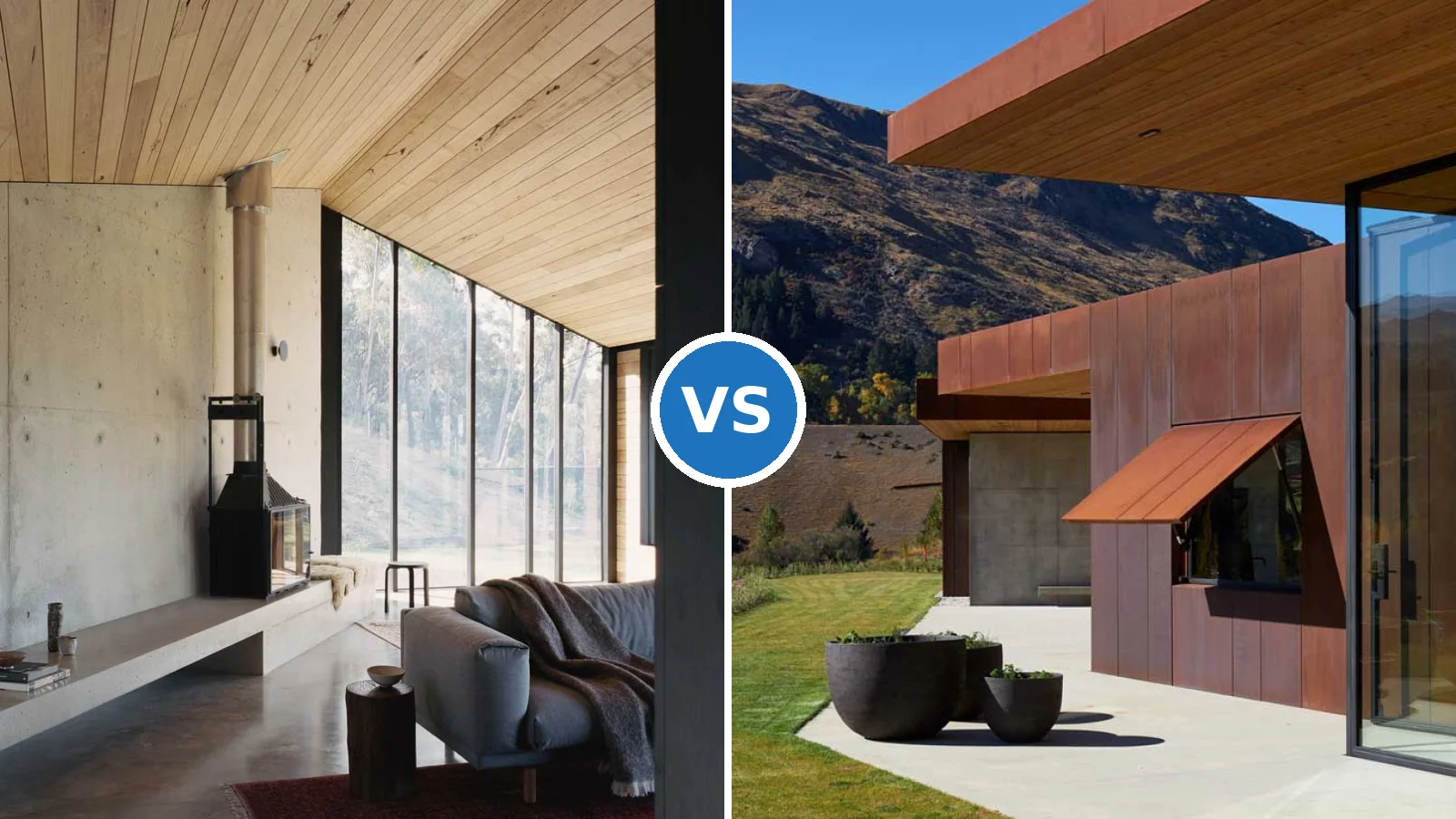
Serene pooja room wall design starts not with the decor pieces you buy but with the wall itself — its colour, texture, and how it holds light during morning prayers. I’ve watched too many renovated spaces miss the mark because the homeowner picked a dramatic accent tile but left the main wall in builder-grade off-white. The result looks like a shrine inside a waiting room. You need to treat all four walls as participants, not just the altar-facing one.
My go-to rule is simple: if the wall colour makes you feel rushed, swap it. Pooja rooms are not living rooms — the design language should slow your nervous system the moment you step inside. Pale ivory, warm terracotta, dusty sage, and muted gold are the four shades I return to. Bright white is a trap that reads as clinical by candlelight.
Quick Scan
- Best wall colours for a pooja room: warm ivory, dusty sage, muted gold, terracotta — never bright white
- Texture choice matters: matte plaster or natural stone finish keeps light from bouncing harshly
- Wooden accents: teak and sheesham complement floral botanical motifs without competing
- Lighting: warm LEDs (2700K) over the altar, ambient uplighting on side walls
- Gold on walls: accent only — one wall maximum, or it reads as a luxury hotel bathroom
- Dont-do: glossy paint on the altar wall — it creates glare during diyas and reflects flame rather than absorbing it
Pastel and Botanical Walls Pull Devotion Into the Room Without Trying
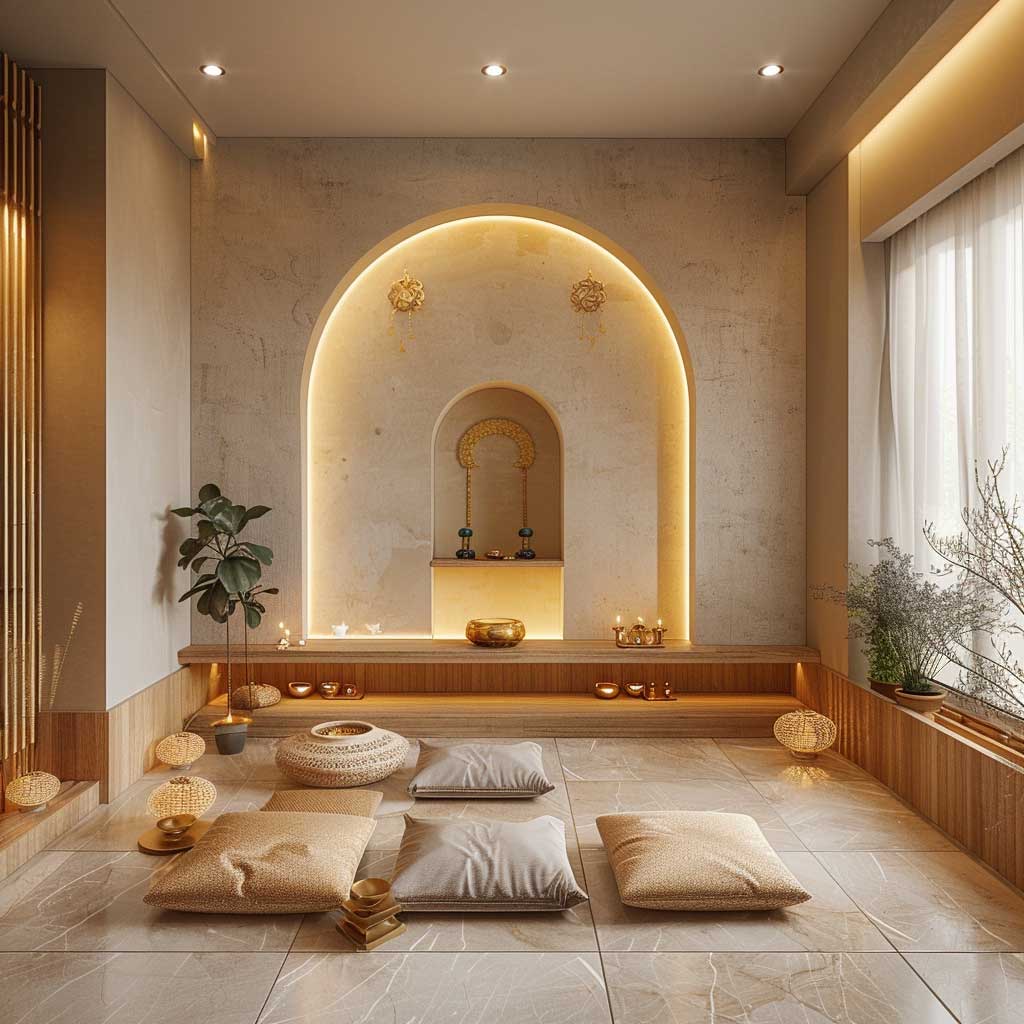
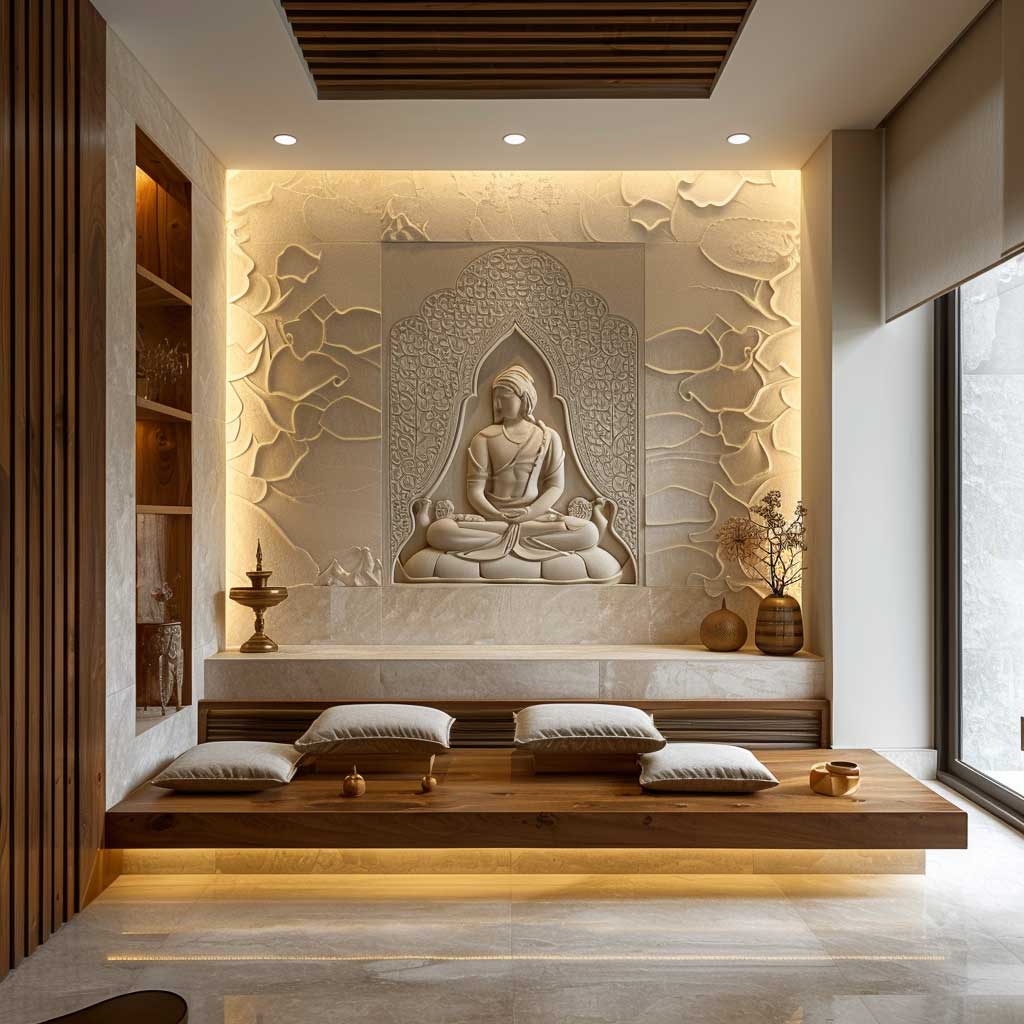
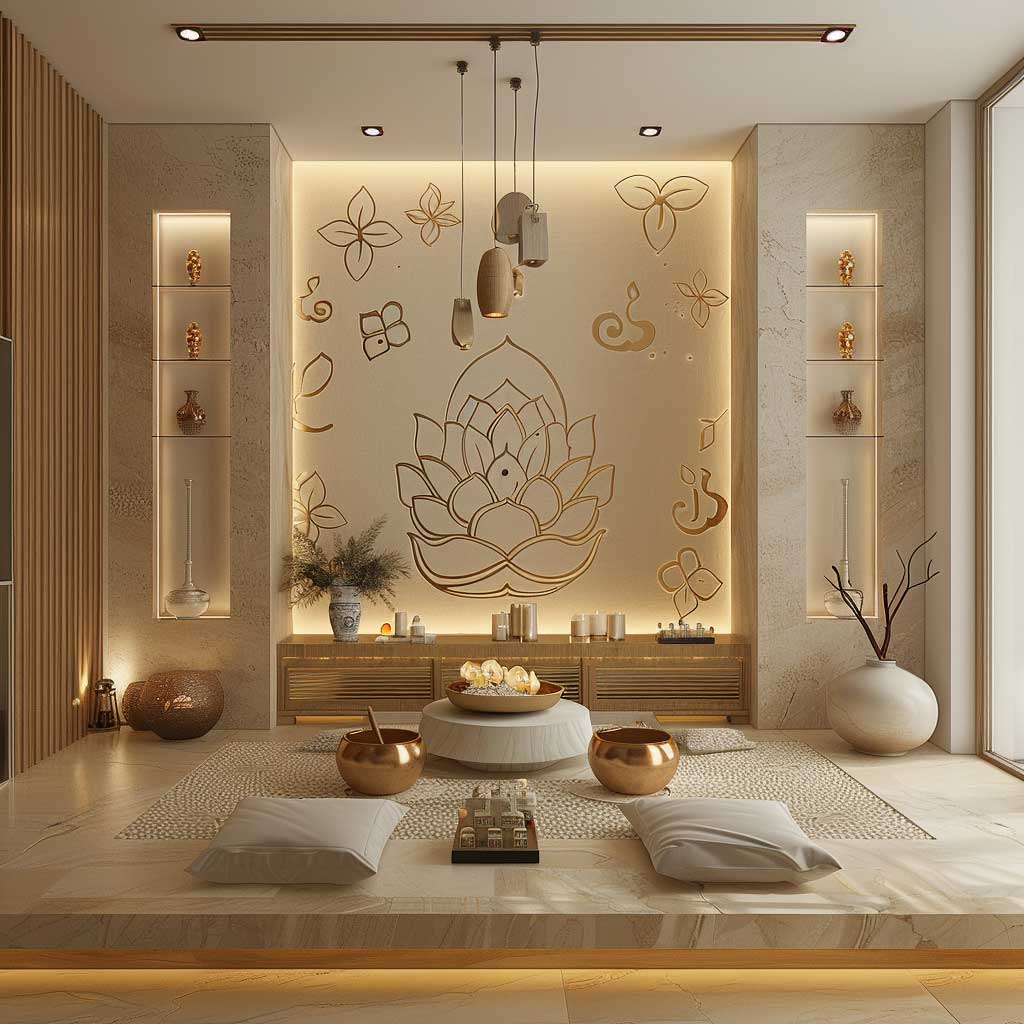
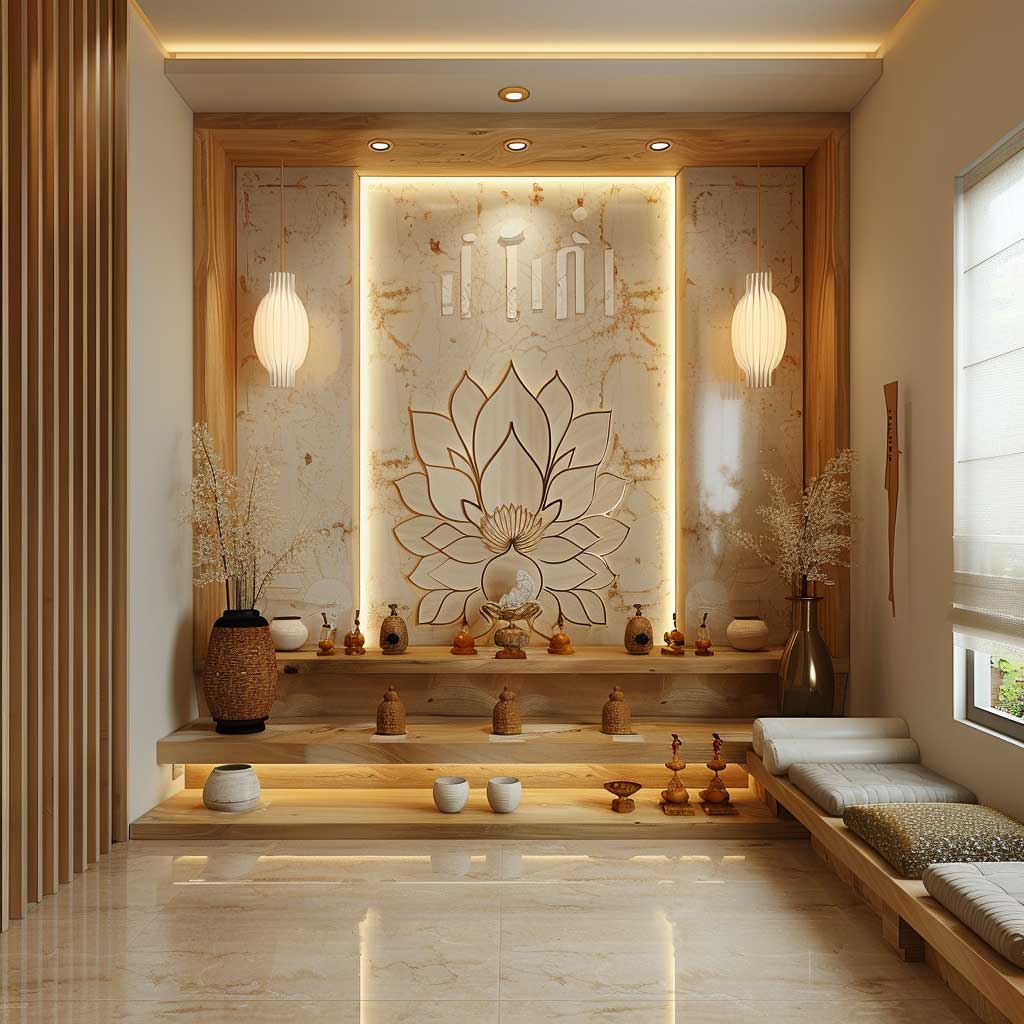
Delicate botanical motifs on a pooja room wall work the same way a garden does just outside a meditation hall — they bring something living into the room without requiring maintenance. I’ve seen this approach done beautifully with a pale sage base and hand-painted lotus or jasmine vines, and done badly with a vinyl decal peeling at the corner by month three. The medium matters. Stencil directly onto a matte plaster wall or invest in a hand-painted mural; the $12 peel-and-stick version will undermine every other effort you make.
Warm pastel colours — dusty rose, celadon, soft ochre — are not baby-room shades. They carry enormous historical weight in Hindu architecture, where temple interiors have used earth pigments for centuries. You’ll notice the light changes completely when dawn hits these walls: the room turns gold before the lamps are even lit. That is the effect you’re chasing. Stark white does the opposite — it makes the diyas look dim.
What doesn’t work is mixing too many botanical motifs across different walls. Pick one wall — ideally the altar-facing wall — and commit to a single continuous design. When I’ve seen floral patterns on all four walls, the effect is closer to a fabric shop than a sacred space. One detailed feature wall, three calm walls. The room breathes.
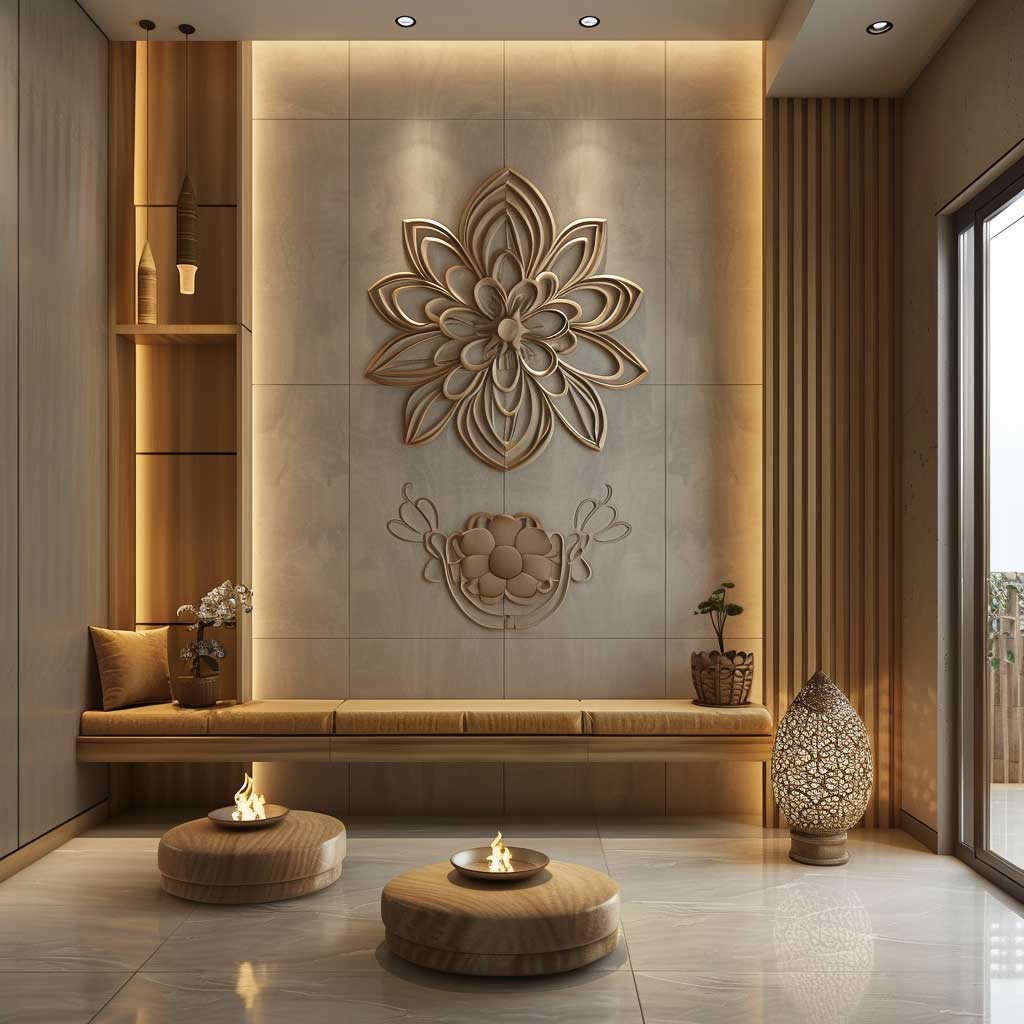
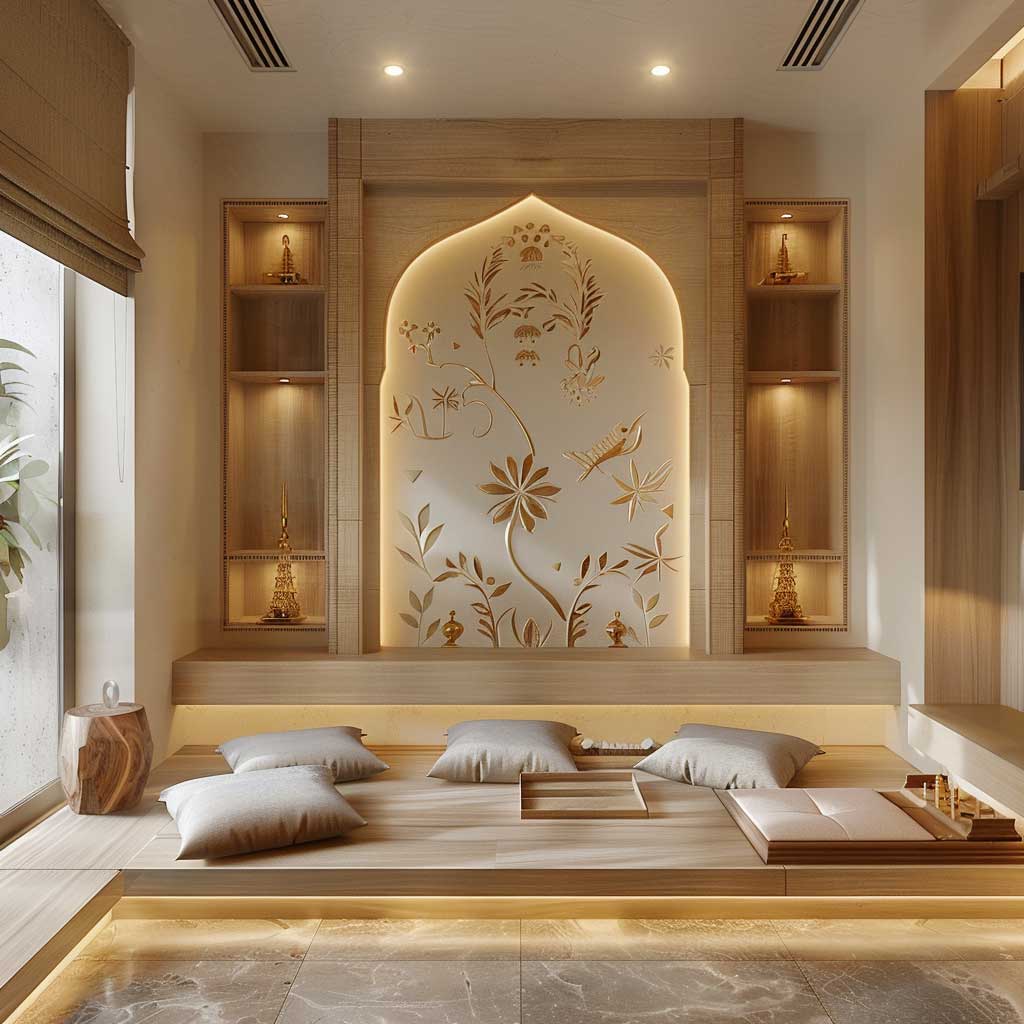
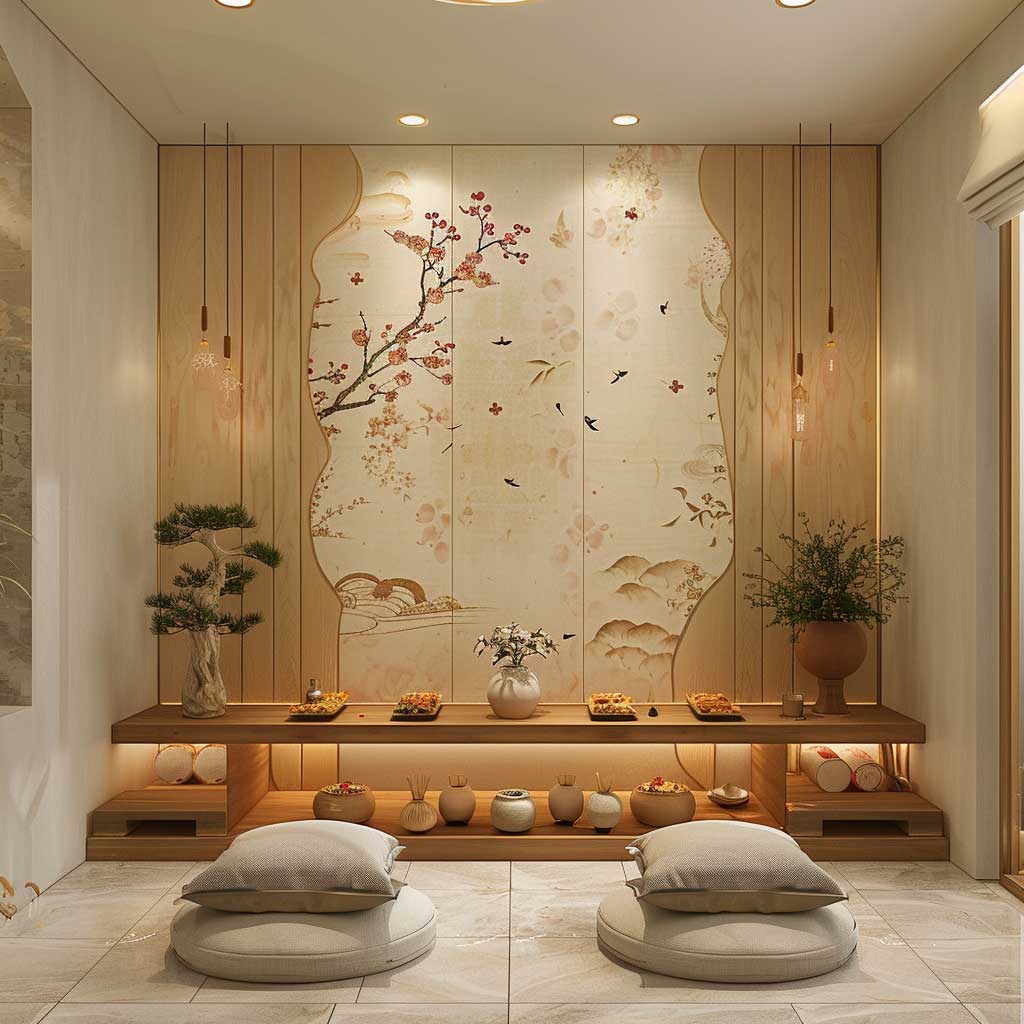
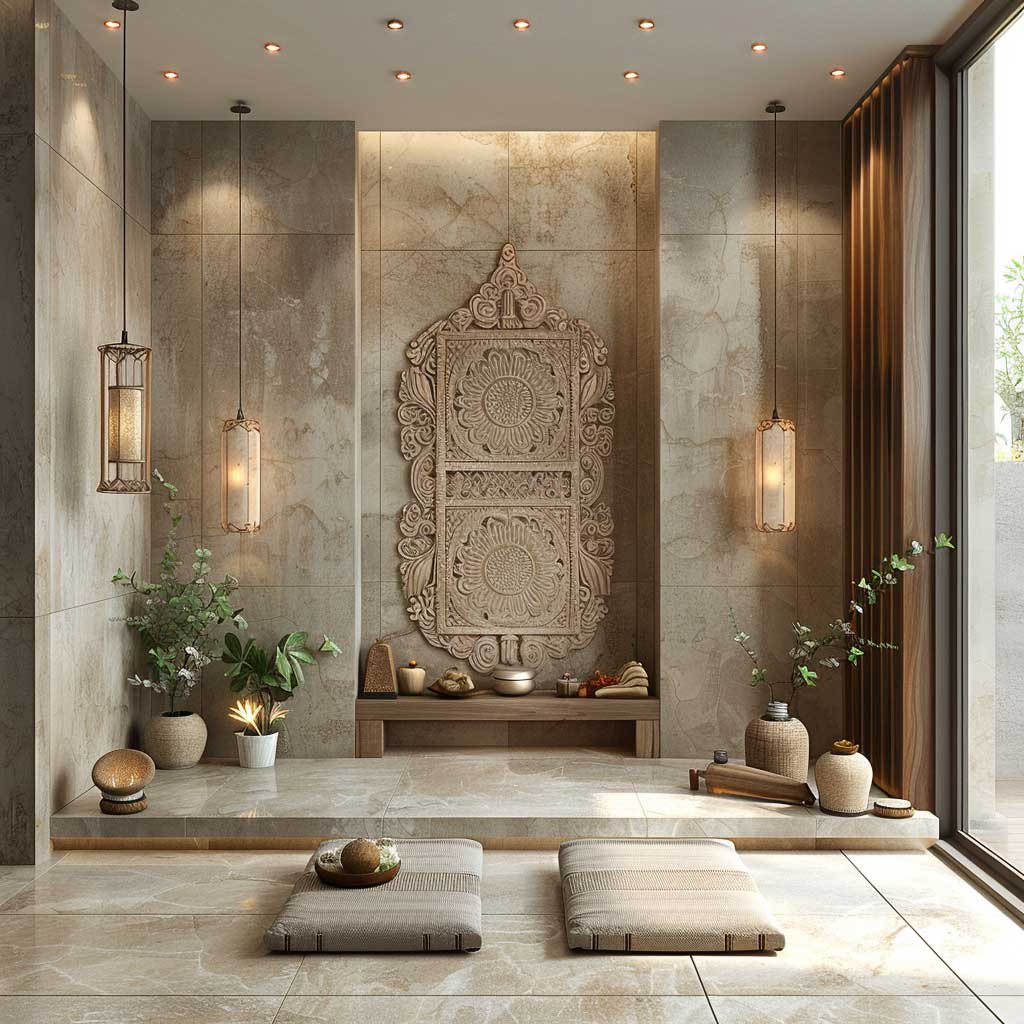
Lighting is the final layer in a botanical pooja room, and most people get it backwards. Overhead fluorescents kill the mood instantly. Your ceiling fixture should only fill the room enough to move safely — the altar deserves its own warm LED strip at around 2700K, run behind the mandir shelf so it glows rather than spotlights. I stole this trick from a temple architect who does residential projects in Chennai: he calls it “hiding the source.” The light exists; the bulb doesn’t. At around $15–20 for a metre of warm-white LED strip from Govee or LE, it’s the cheapest upgrade this room can get.
Gold Accents and Silk Textures Do Something Wood Alone Cannot
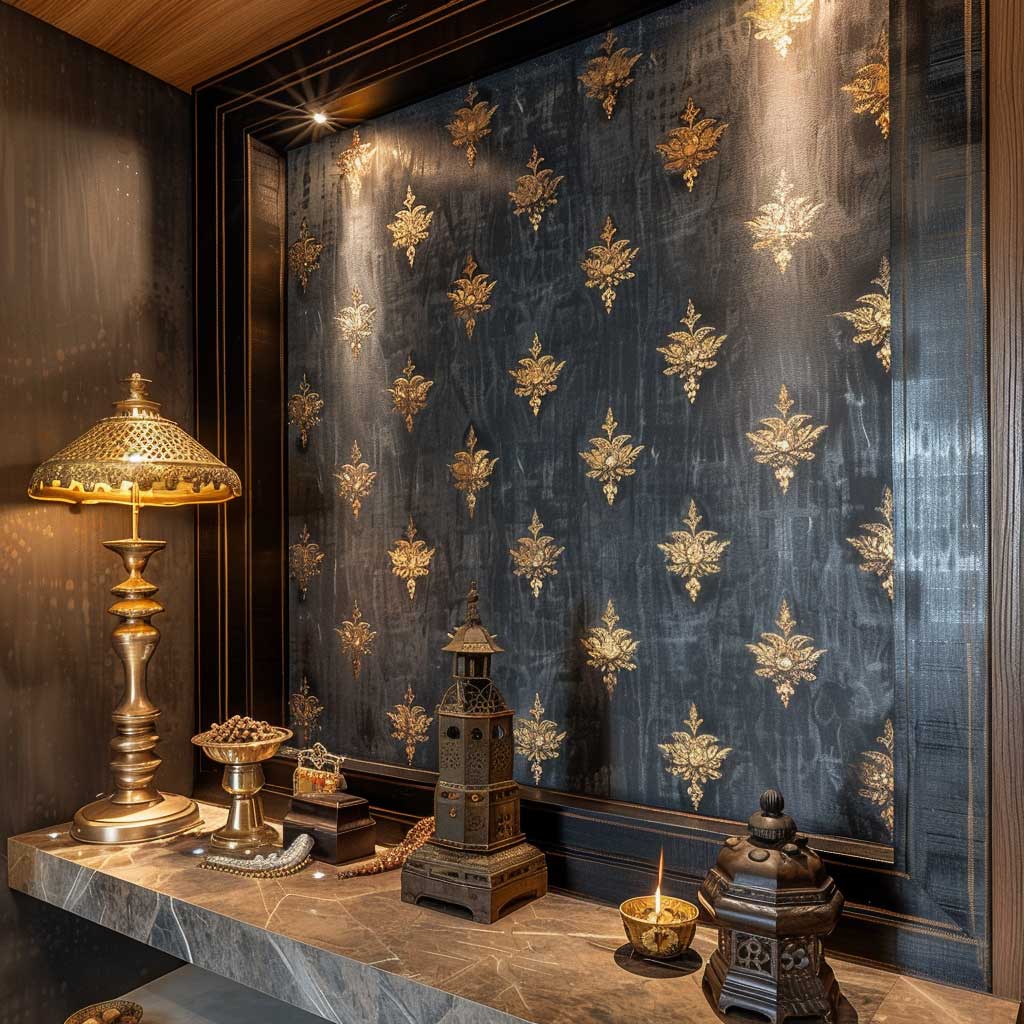
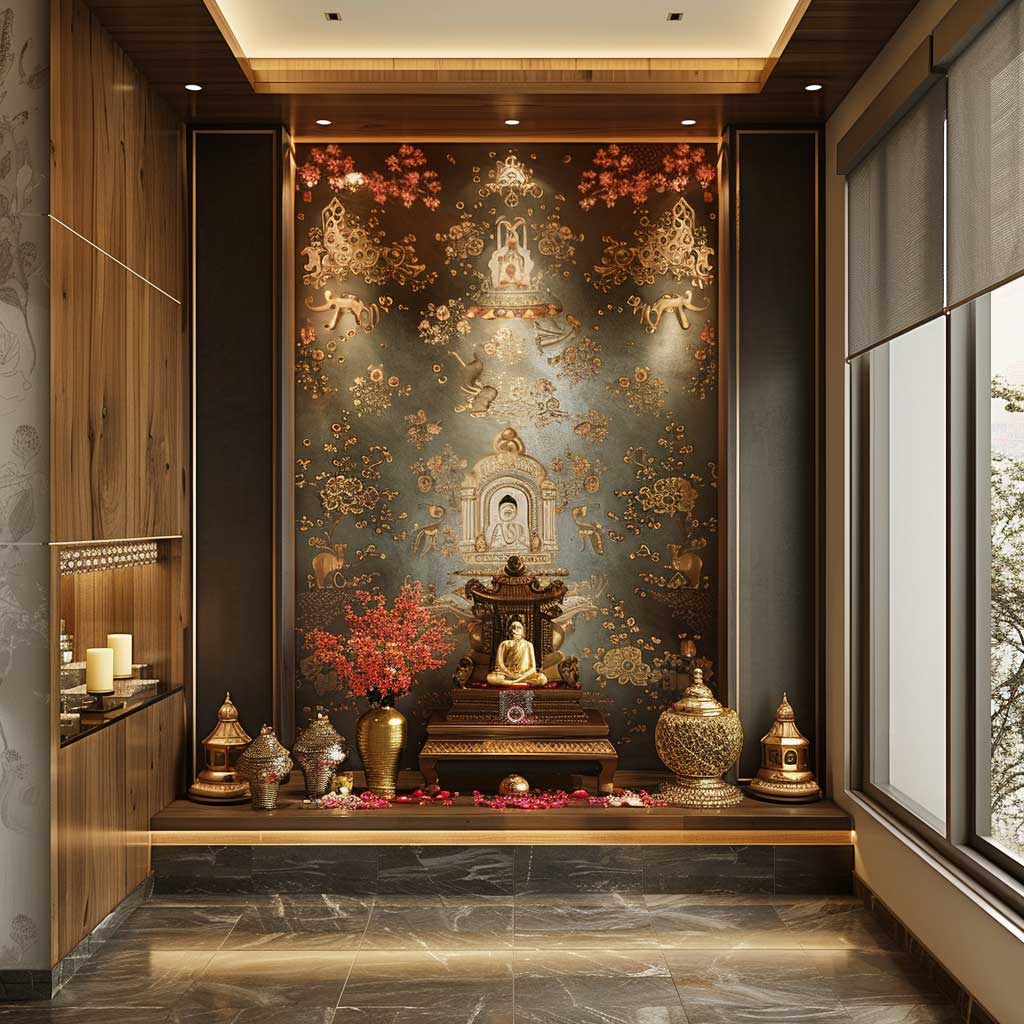
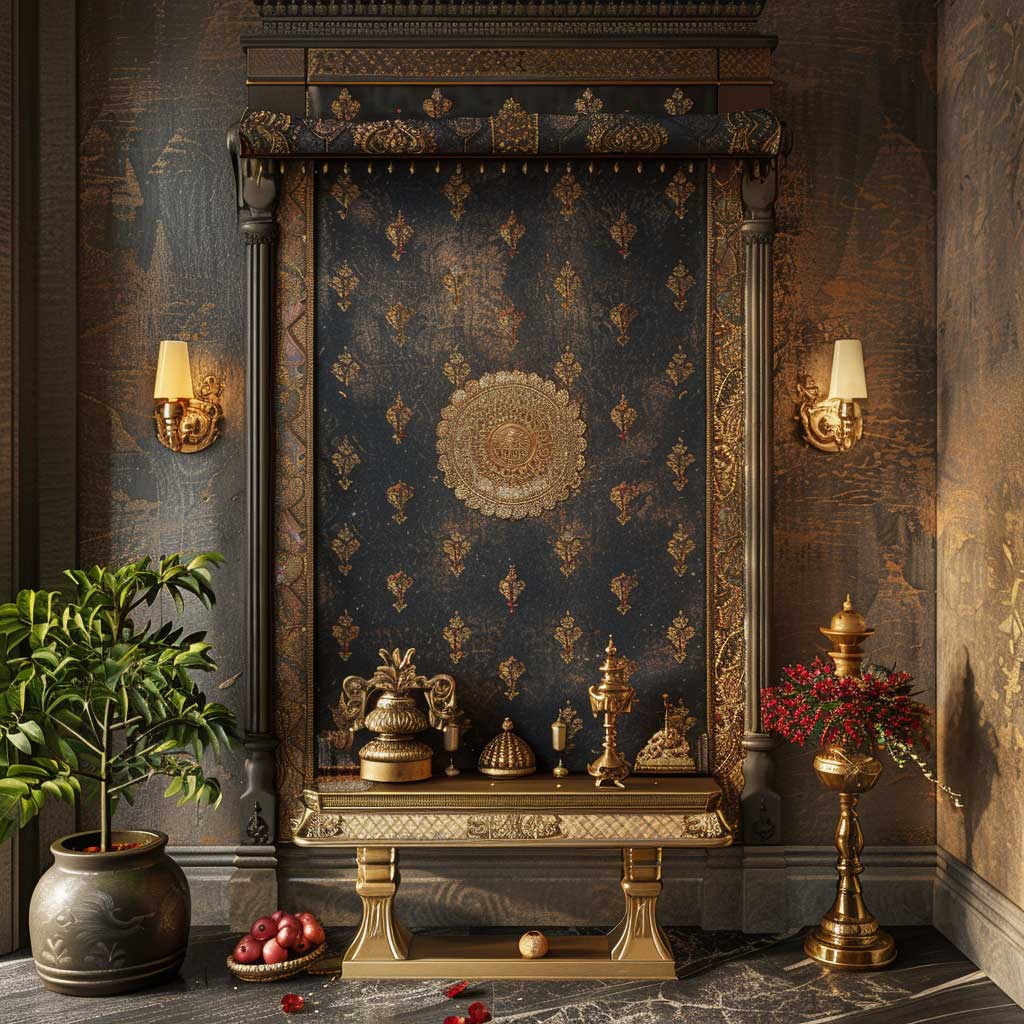
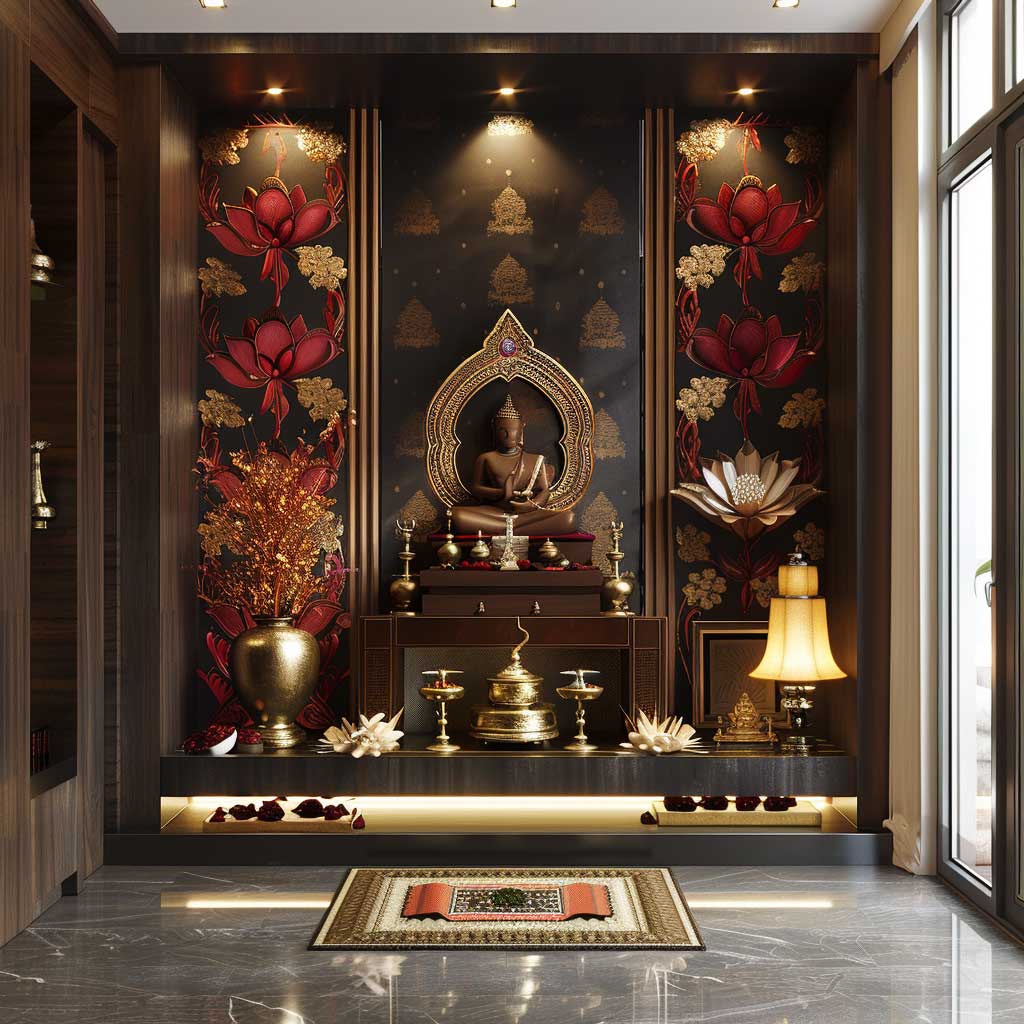
Gold in a pooja room wall design is not a trend borrowed from interior magazines — it predates those magazines by about three thousand years. What makes it work today is restraint. I own two gold-leafed wall panels from a Rajasthani artisan on Etsy (around $85 each) that I positioned on either side of the altar shelf. They catch candlelight and create a halo effect around the deity figures that no electric light replicates. The key word is “flanking.” Gold behind the idols reads as celestial backdrop; gold on all four walls reads as a wedding venue.
Silk-textured wallpaper in deep jewel tones — burgundy, forest green, midnight blue — does something paint cannot: it absorbs sound. Prayer rooms should be acoustically quiet, and a matte silk wallpaper on one wall actually dampens echo slightly while the colour adds gravitas. Nilaya by Asian Paints and Phillip Jeffries both make options in the $8–$15 per square foot range that hold up well near incense smoke.
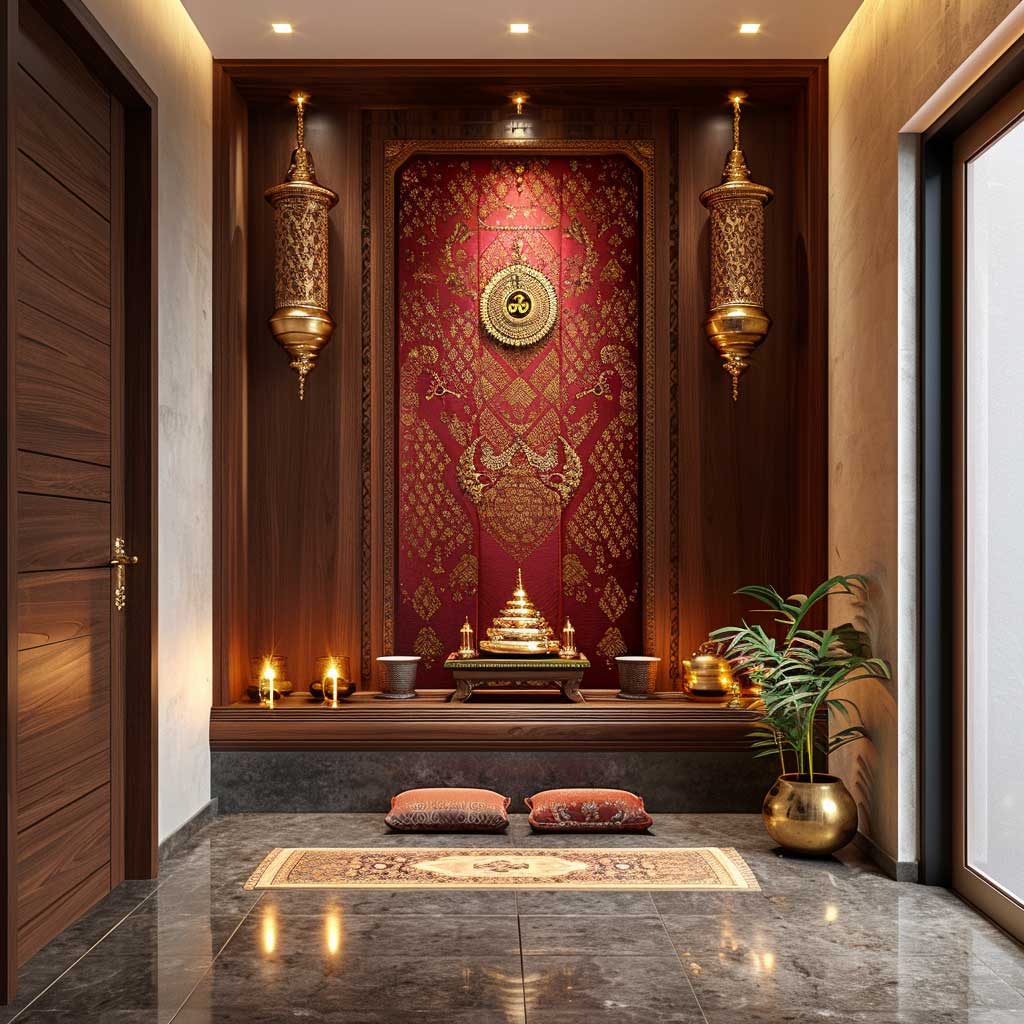
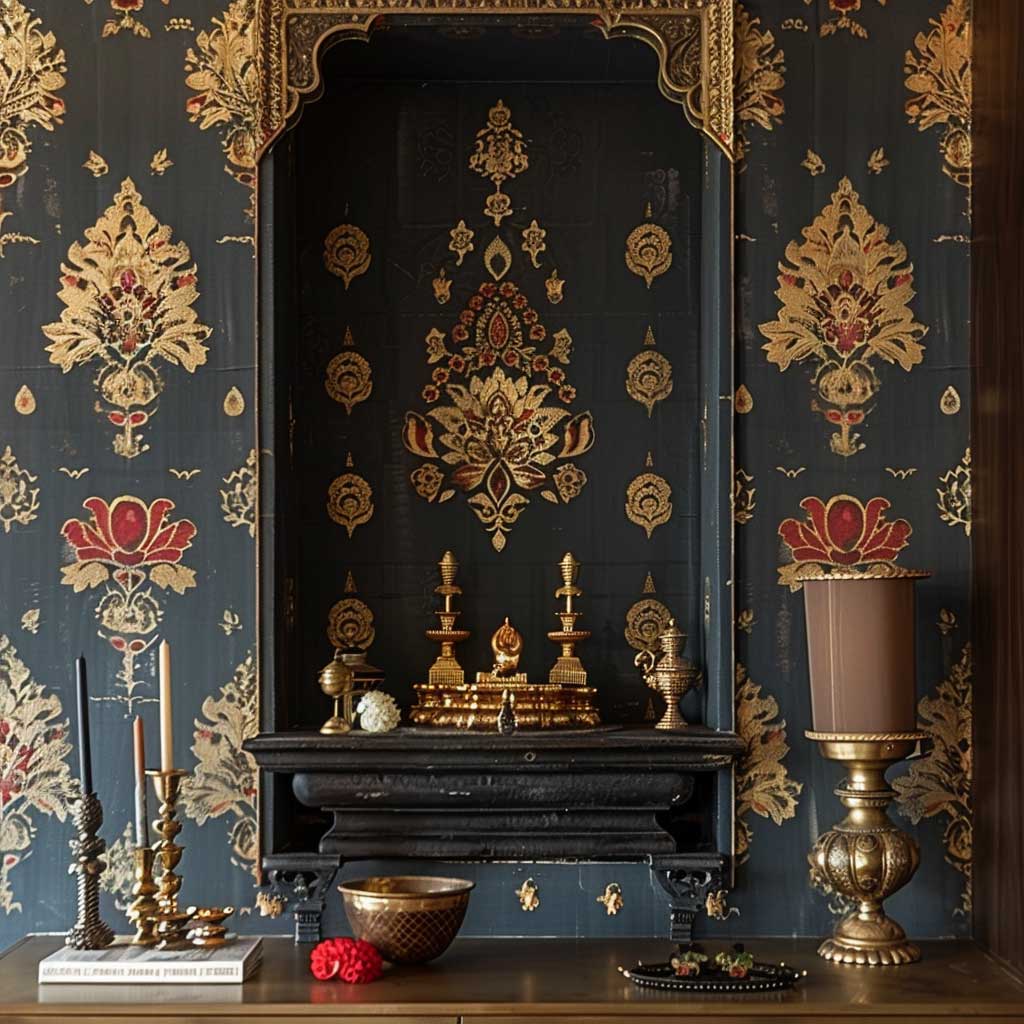
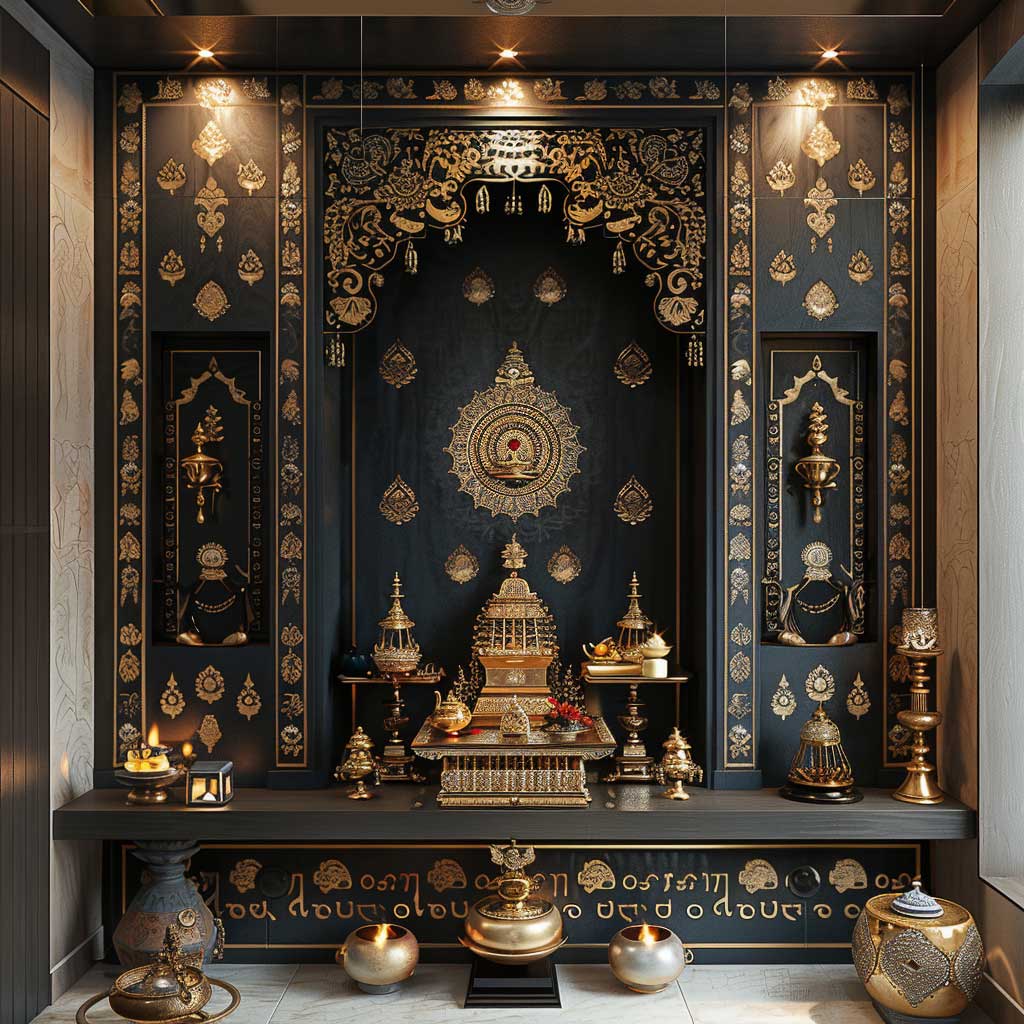
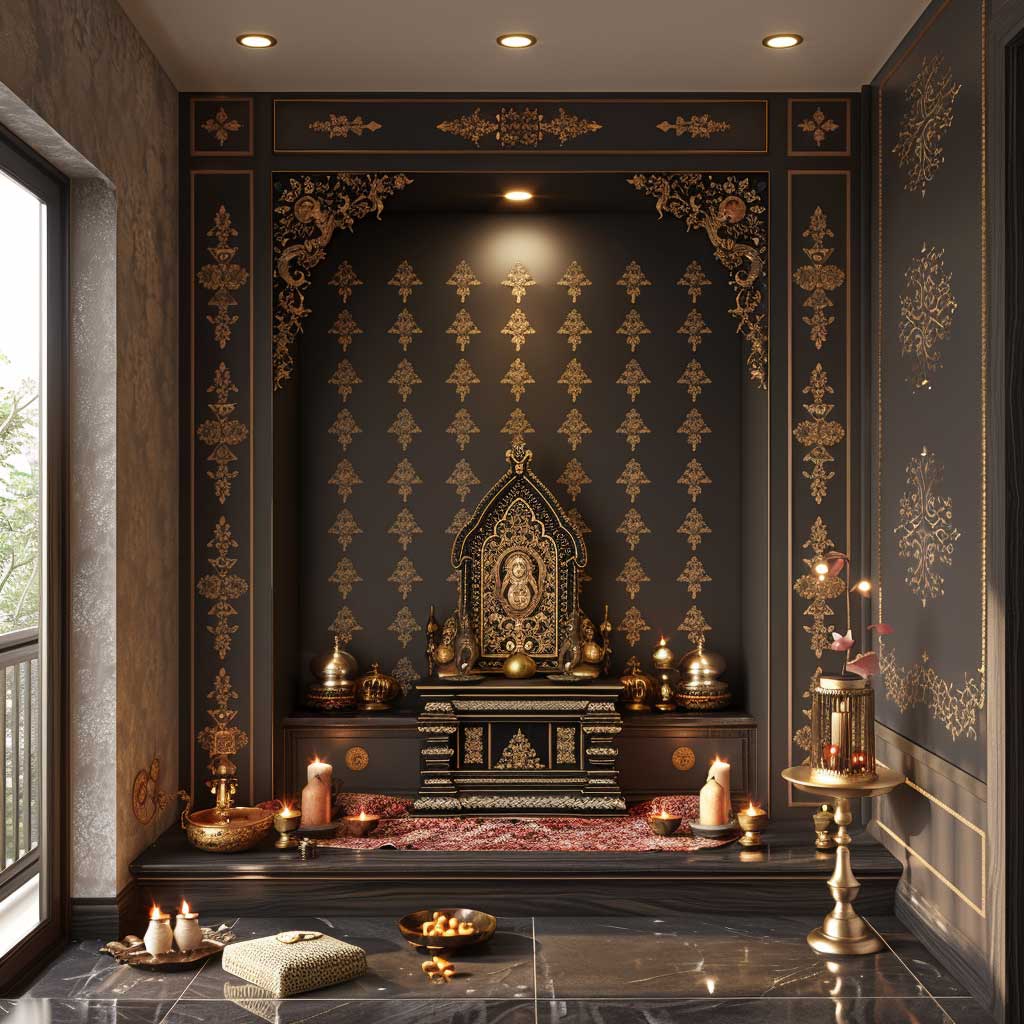
What doesn’t hold up? Mirror mosaic tiles behind the altar. They were popular around 2015 and I understand the appeal — they catch diya flame and multiply it across the room. But they also catch your own reflection mid-prayer, which is distracting in a way that’s hard to describe until you’ve experienced it. The wall behind an altar should draw the eye outward, not inward. Wall decor choices for adjacent living spaces follow different rules entirely — what works in a drawing room can actively undermine a pooja room’s purpose.
The Calming Blue Palette Borrowed From Temple Architecture
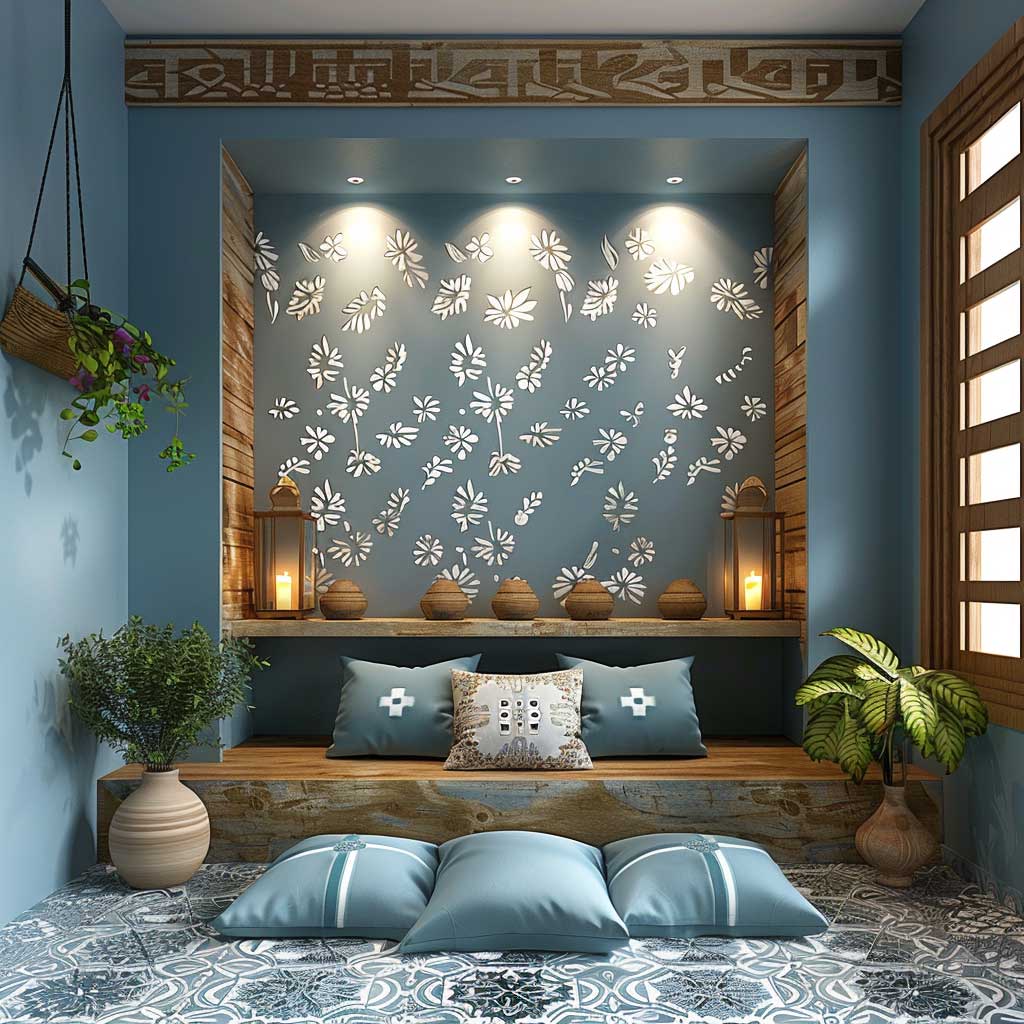
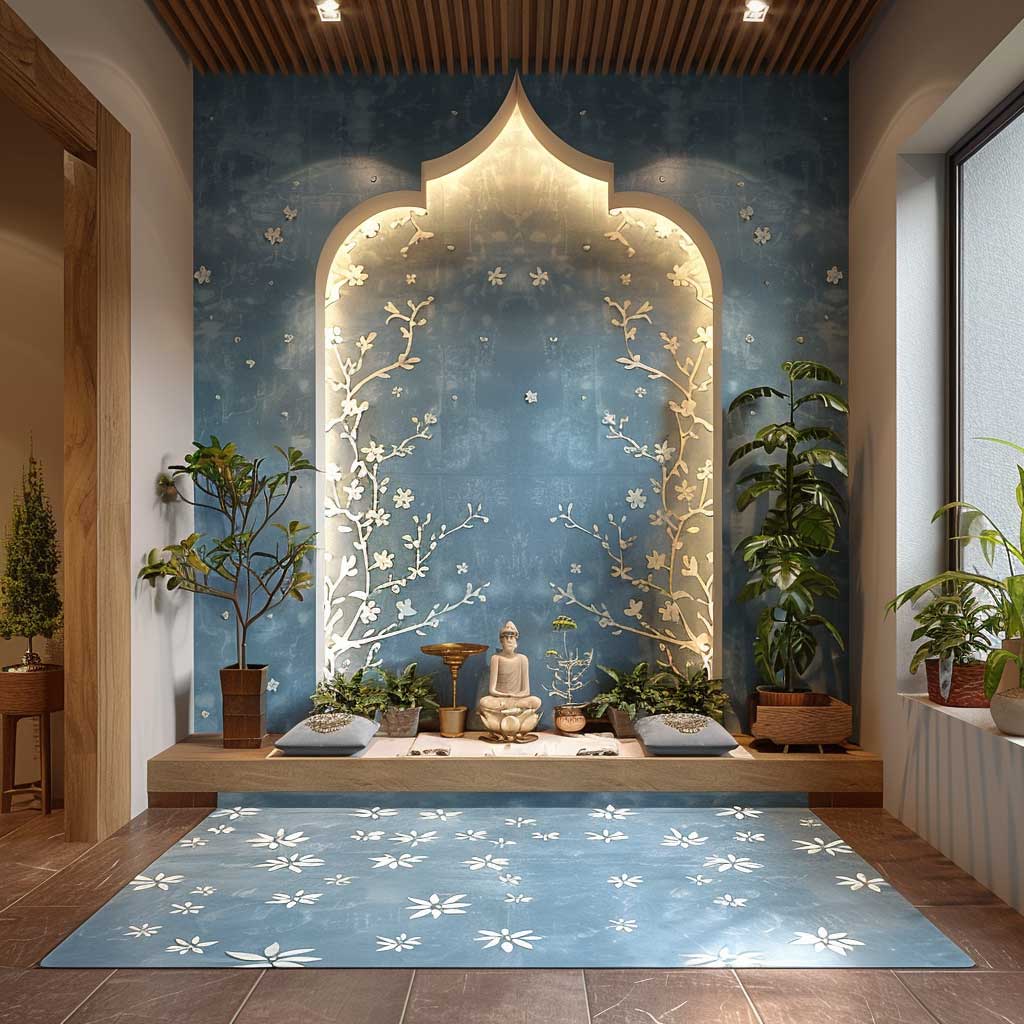
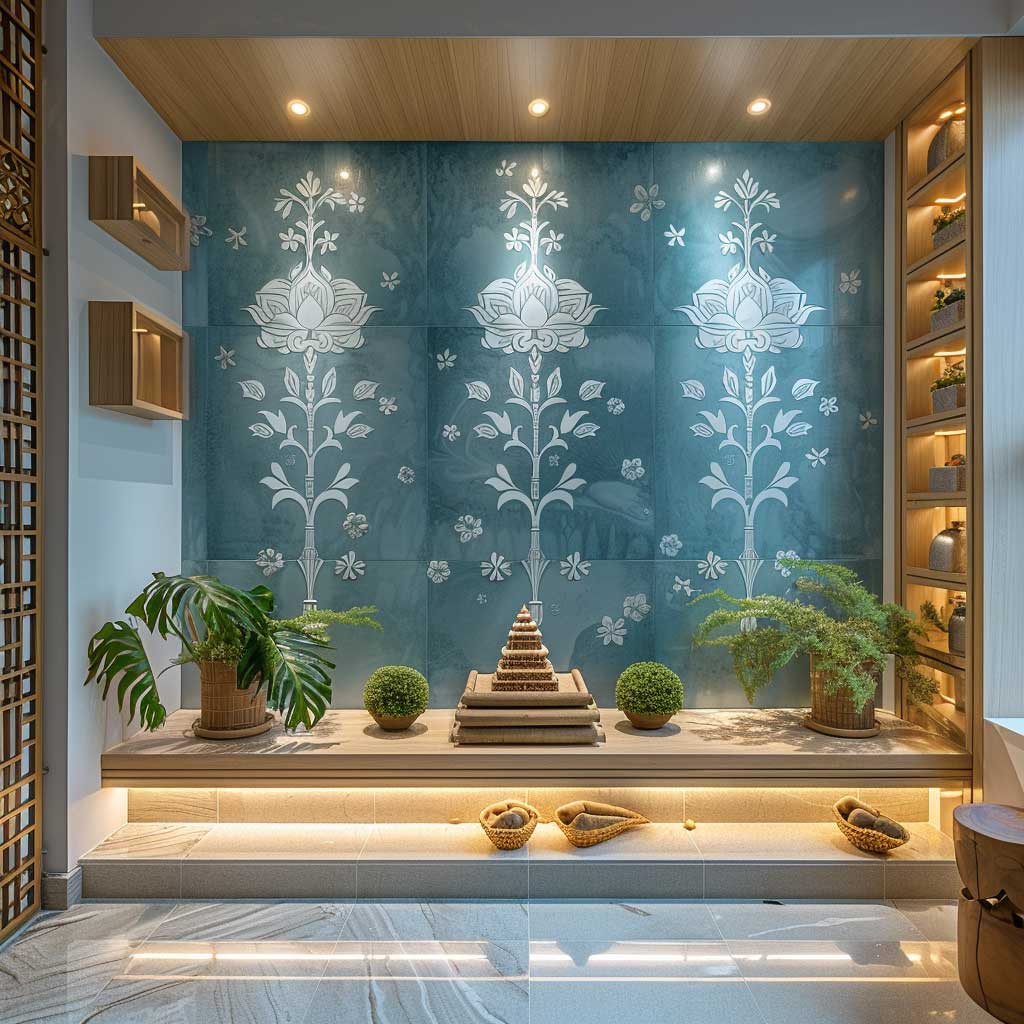
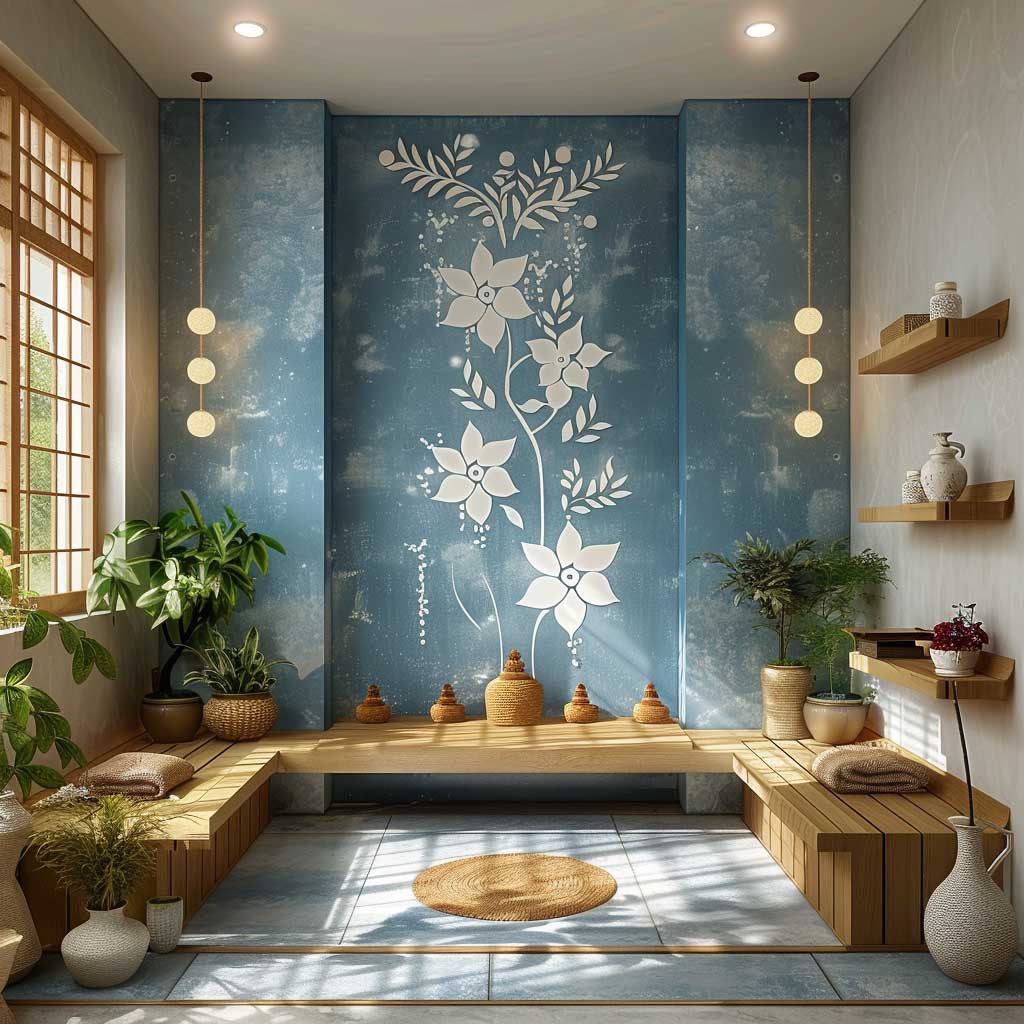
Blue is the most psychologically underused colour in pooja room design. Think of the indigo walls of Jodhpur’s old city, or the powder-blue interiors of coastal Kerala temples — both traditions understood that blue simultaneously expands space and settles the nervous system. I’ve used Benjamin Moore’s Tranquility (HC-161, around $70 per gallon) in a small 6×8 ft prayer alcove, and the room felt three times larger on first entry. White floral stencil patterns on top of the blue add the texture you need without darkening the space.
The proportion rule for blue is simple: cool blues (with grey undertones) read as clean and meditative; bright cerulean reads as a swimming pool. Avoid anything that trends toward turquoise. You need the blue to recede slightly, the way sky does — present, calming, without demanding attention. A flat or eggshell finish holds this quality better than satin.
Don’t Do This
- Glossy paint on the altar wall — it creates intense glare from diyas and candles that makes prolonged prayer uncomfortable
- Mirror mosaic tiles behind idols — your own reflection during meditation defeats the purpose of facing outward
- All-white rooms with coloured accessories — the contrast is too sharp; the accessories look staged, not sacred
- Cold-white LED strips (above 4000K) — they make the space feel like a bathroom; stick to 2700K warm white only
- Mixing three or more wall patterns — one feature wall maximum; the rest should be plain or subtly textured
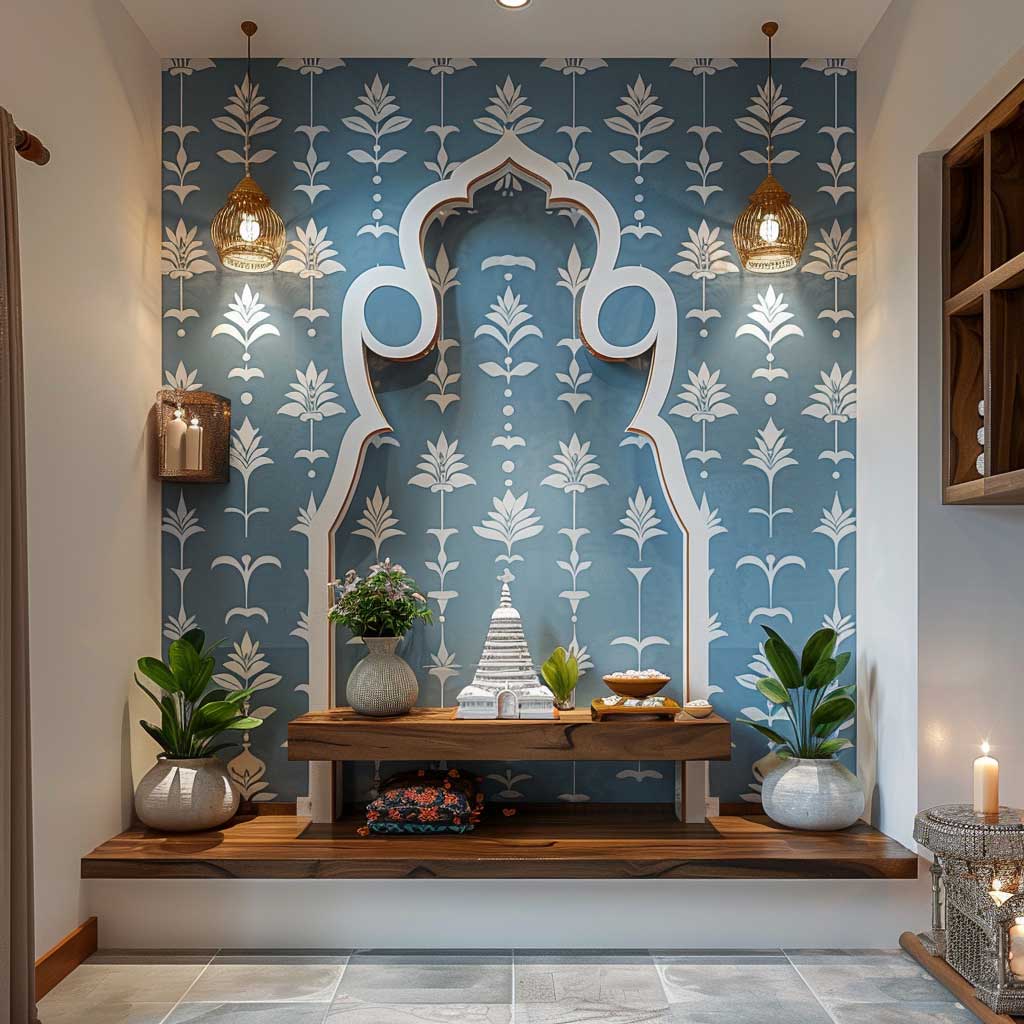
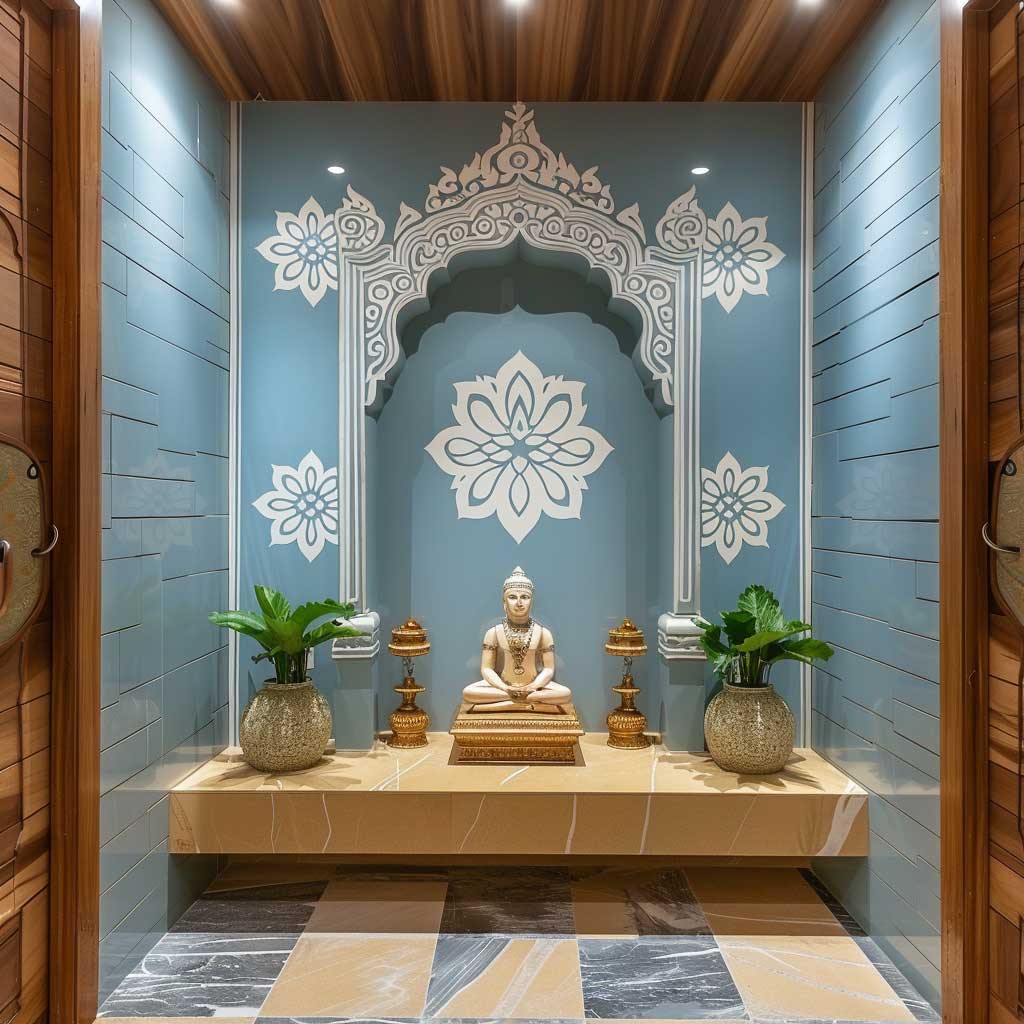
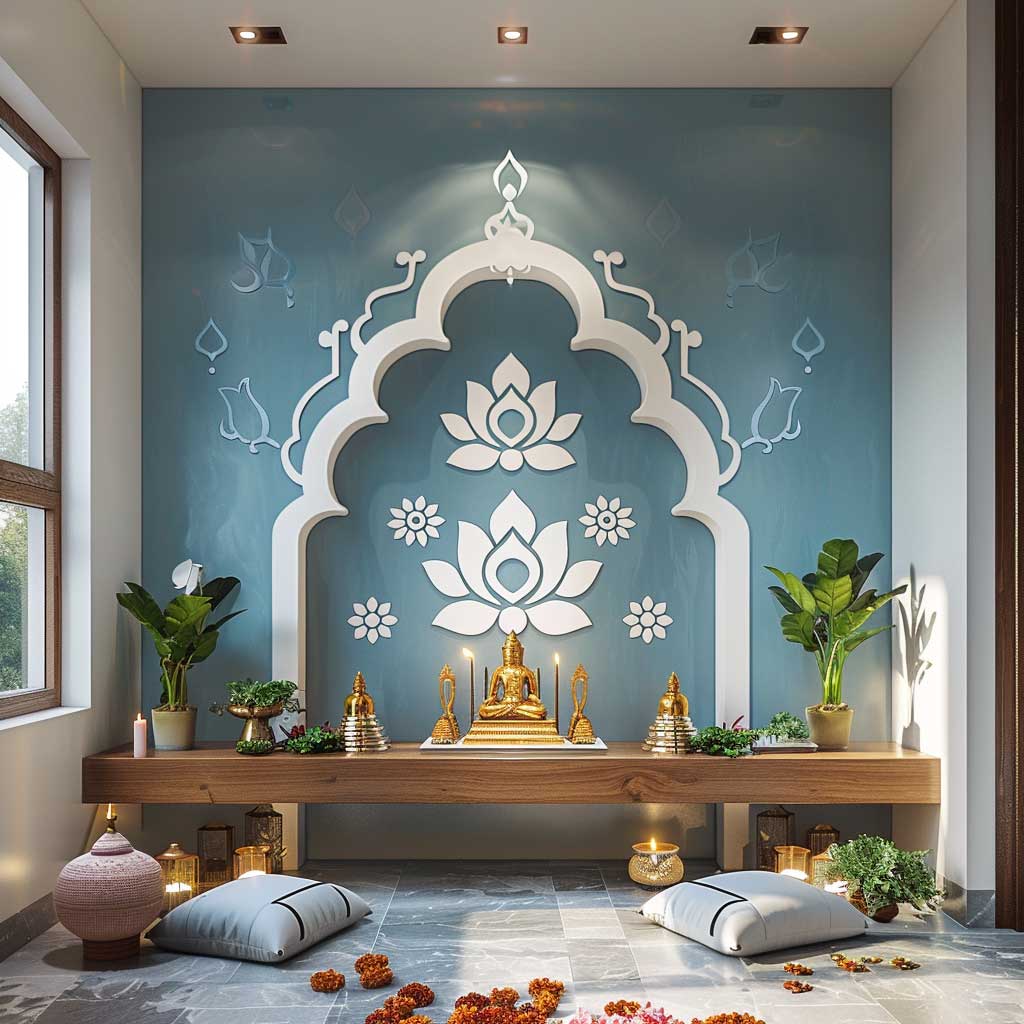
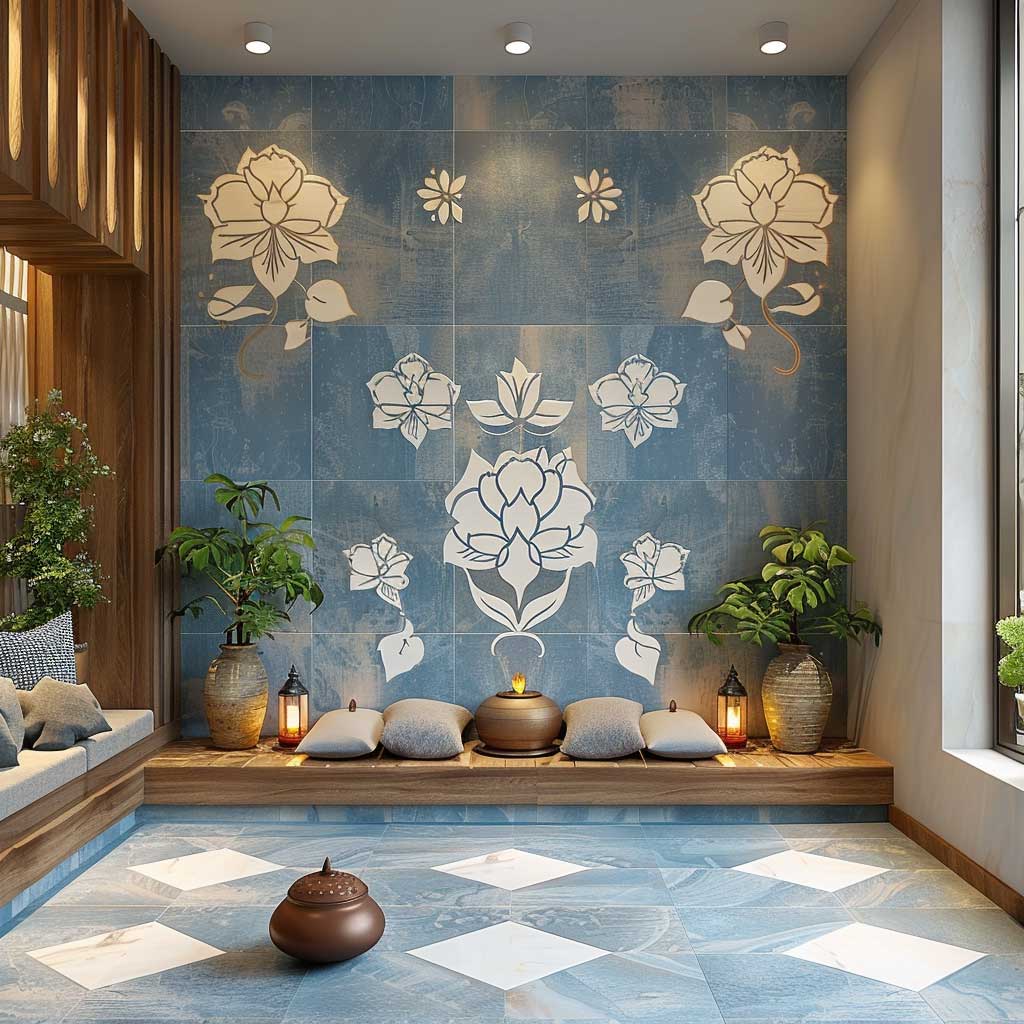
Plants are a genuine functional choice in a blue-walled pooja room, not just styling. The contrast between green and blue is one of nature’s own combinations — sea and jungle, river and canopy — and your brain recognises it as inherently safe. Peace lilies, pothos, and tulsi (holy basil, which carries its own significance in Hindu practice) all thrive in the low-to-medium light typical of interior prayer rooms. Pair them with teak or sheesham wood shelving — the warm brown tones bridge the blue wall and the green leaves without requiring any additional colour. A room designed this way, with warm wooden wall elements as the grounding note, holds its visual logic across seasons without needing seasonal restyling.
Is wood decor sufficient on its own without colour underneath? No, and I’ve learned this the hard way. Teak frames on a builder-beige wall look like furniture waiting to be arranged. The wall colour is the atmosphere; the wood is the structure. Both must exist or neither works fully.
For prayer room design that also functions as a Buddha vihar or meditation corner, the calm spaces documented by Houzz show how backlit wall panels and polished plaster walls at the right colour temperature create a restful environment that works across multiple spiritual traditions.
The bottom line
Pooja room wall design is not decoration — it is the architecture of daily ritual
The colour you put on these walls sets the physiological baseline for every prayer session you’ll ever have in this room. Get it wrong and no amount of brass lamps or hand-carved wood will fix the feeling. Get it right and the room does half the spiritual work before you’ve even sat down.
Pale warm tones, one strong feature wall, wood as the structural anchor, plants as the counterpoint, and warm LEDs at 2700K — that is the formula across every successful pooja room I’ve personally seen or designed for friends.
Save this post before you start painting — your future self will be grateful.