
Interior wood cladding is one of the few wall upgrades that adds warmth, texture and a lower carbon load in a single move. It works on feature walls, full rooms and ceilings, and it suits rustic, modern and Scandinavian interiors alike. Reclaimed boards typically run $4–$7 per square foot, while a slatted oak-veneer feature wall on a standard 10 × 8 ft wall lands around $250–$650. Start with one wall, not a whole room, and you will know within a week whether the look fits your space.
Does it actually make a home more sustainable? Yes, when the wood is reclaimed or comes from certified forests, because timber is roughly 50% carbon by dry weight and keeps that carbon locked in for as long as the boards stay on the wall. Think of every plank as a small carbon savings account that only pays out if you never throw it away. Reclaimed timber skips new harvesting entirely, which makes it the strongest sustainable wood cladding choice. Ask any supplier for the board’s origin or certification before you compare prices.
The ideas below cover three directions: reclaimed planks, modern-rustic mixes and living room feature walls, plus a cost table that puts reclaimed boards, slat panels, WPC and PVC side by side. Each option comes with typical price ranges, so you can match the look to the budget before buying a single board. Measure the wall’s square footage first, because every figure here scales with it.
Quick Scan
- Reclaimed wood boards cost about $4–$7 per sq ft; thick 3/4-inch barn planks reach $9.50–$11.50.
- A 10 × 8 ft slat feature wall needs about 6 panels and costs roughly $250–$650 in oak veneer.
- Wood is about 50% carbon by dry weight, so cladding stores carbon for the life of the wall.
- Lumber production emits about 33 kg of carbon per ton vs 265 kg for concrete and 694 kg for virgin steel.
- One accent wall beats four clad walls: 80 sq ft of reclaimed wood costs $320–$560 in material, not four times that.
- Veneered MDF slats deliver most of the solid-wood look at a fraction of the price.
- WPC panels last 20–30 years indoors and handle damp rooms better than raw timber.
Reclaimed Boards Set the Bar for Sustainable Wood Cladding
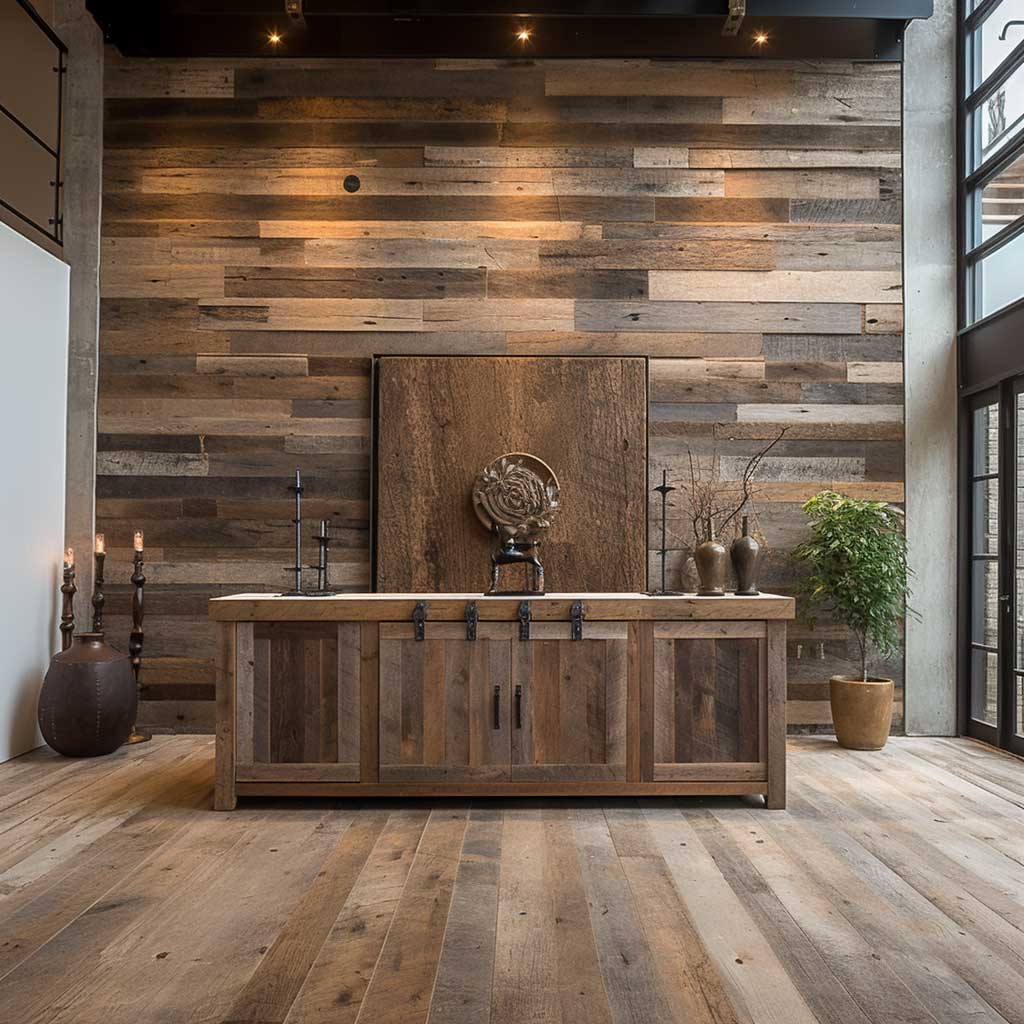
Sustainable wood cladding starts with reclaimed boards, because the greenest plank is the one that already exists. Salvaged barn siding, old flooring and factory beams skip new harvesting and arrive with grain, nail holes and weathering no mill can copy. Typical pricing sits at $4–$7 per square foot depending on quality, so an 80 sq ft accent wall costs roughly $320–$560 in material. Budget the wall by square footage first, then pick the board grade.
Reclaimed vs new boards is not a simple cheap-versus-expensive story. Reclaimed material often costs more per square foot than fresh lumber, yet it can save on finishing because the patina is already there. Thin 3/8-inch gray barn planks run about $7.50–$10.50 per sq ft, while 3/4-inch boards climb to $9.50–$11.50. Choose thin planks for walls and keep the thick stock for shelves or bar fronts where it carries weight.
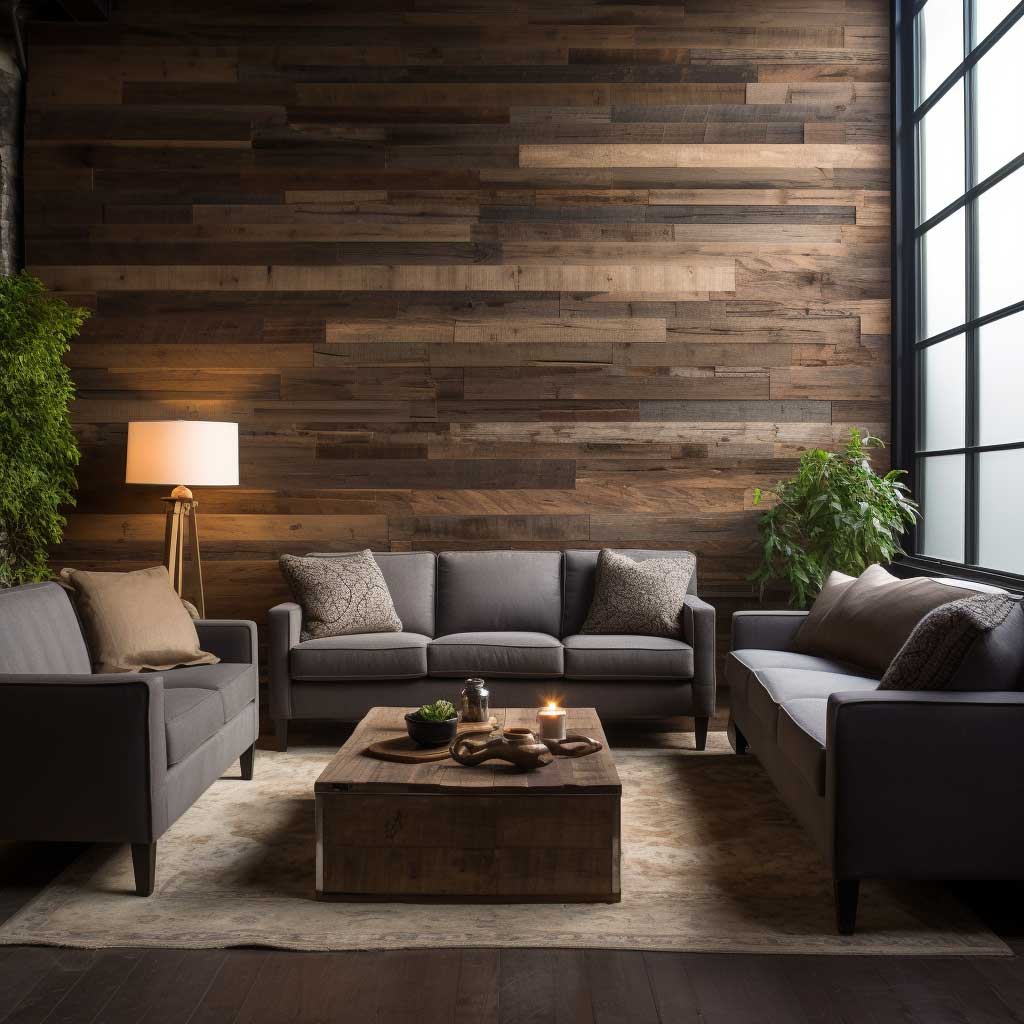
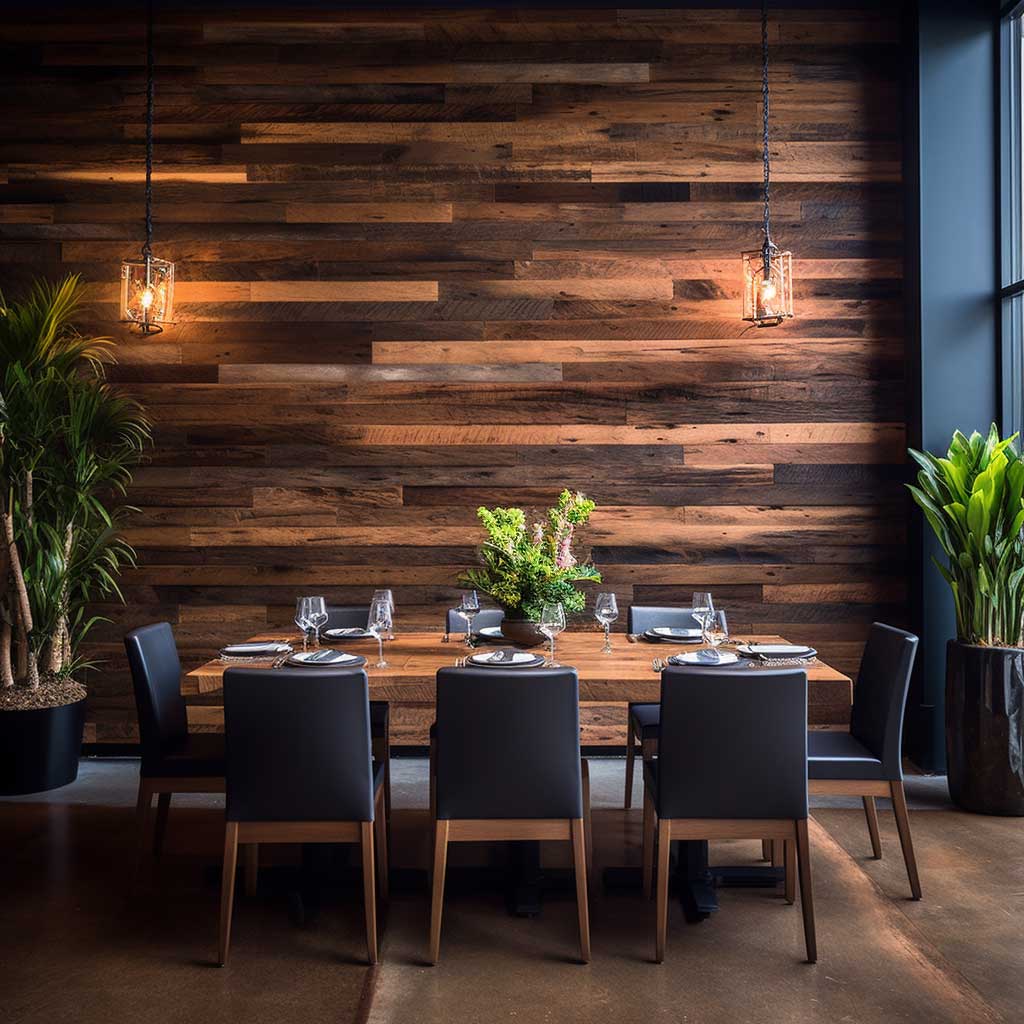
Can reclaimed wood go in a modern room without looking like a barn? It can, as long as the color palette stays tight: gray boards next to white plaster read as calm, while mixed reds and browns read as rustic. Mounting the boards over 3/4-inch batten strips lifts them off the wall and adds a crisp shadow line, a detail one builder priced at around $2,500 for a full feature wall. Treat the battens like a picture frame that makes old wood look intentional. Sort boards by tone on the floor before the first nail goes in.
Avoid gluing reclaimed planks straight onto drywall without checking moisture content, because boards stored outdoors can shrink and open gaps after the first heating season. Kiln-dried stock costs a little more but stays put. If you want the wood look with zero movement, weigh WPC versus PVC wall panels for a wood-look finish, since both shrug off humidity better than raw timber. Real reclaimed wood still wins on authenticity and carbon, so keep composites for spots where water splashes daily.
Sustainable Wood Walls Outperform Steel and Concrete on Carbon
Sustainable wood walls earn the label through two numbers: carbon storage and production energy. Wood holds roughly 50% carbon by dry weight, and manufacturing lumber releases about 33 kg of carbon per production ton compared with 265 kg for concrete and 694 kg for virgin steel. That gap is like comparing a bicycle commute with a daily long-haul flight. Pick wood for interior surfaces wherever a heavier material is not structurally required.
Is cutting trees for cladding a net loss? Not when the timber comes from managed, replanted forests, and the research collected in Think Wood’s sustainable design resources points to an average 60% cut in greenhouse emissions when wood replaces concrete and steel in commercial buildings. About 19% of U.S. timberland is certified, against a global average of 11%, so certified boards are not hard to find. Look for FSC or SFI labels on any new lumber you buy.
- Reclaimed first: zero new harvest, and the carbon is already stored in the board.
- Certified second: FSC or SFI lumber from forests that replant after cutting.
- Veneer third: a thin real-wood face on MDF uses far less solid timber per square foot.
- Low-VOC finish: water-based oil or lacquer instead of solvent-heavy varnish.
Skip exotic hardwoods shipped across oceans for a purely decorative wall, because long transport eats into the carbon advantage. Local pine, oak or ash in a light oil finish gives the same warmth with a far shorter supply chain. A thin oil coat also keeps the surface breathable, which helps indoor humidity stay steady. Ask suppliers for species grown in your region before you request quotes.
Modern Meets Rustic in Interior Wood Cladding Ideas
Interior wood cladding ideas that blend modern and rustic work because the same material can read sleek or raw depending on profile and finish. Narrow vertical slats in dark walnut look architectural, while wide pine or oak boards with a light stain feel like a cabin. Slat panels typically cost $30–$90 each, and a 10 × 8 ft wall needs about six of them. Decide on the profile first, since it sets the style more than the species does.


Walnut vs oak is the comparison most buyers face. Walnut adds depth and pushes the panel price toward the top of the $30–$90 range, while oak veneer keeps a living room feature wall near $250–$650. Veneered MDF gives roughly 90% of the solid-wood look for a fraction of the cost, which makes it the sensible pick for large surfaces. Put the savings into lighting that grazes the grain.
How do you keep the mix from looking confused? Limit the wall to one wood tone and repeat it once elsewhere, in a shelf, a stool or a frame. Three competing tones are like three radio stations playing at once: each one is fine, together they become noise. Felt-backed acoustic slats, often around $4.92 per sq ft, add sound control to the modern side of the equation. Use them in rooms with hard floors and high ceilings.


Don’t Do This
Don’t clad all four walls of a small room in dark wood. A single 10 × 8 ft reclaimed accent wall costs about $320–$560 in material, while four walls cost roughly four times as much and make the room feel smaller and darker. One clad wall against three pale walls keeps the warmth without the cave effect.
Wood Clad Internal Walls Give a Living Room Its Anchor
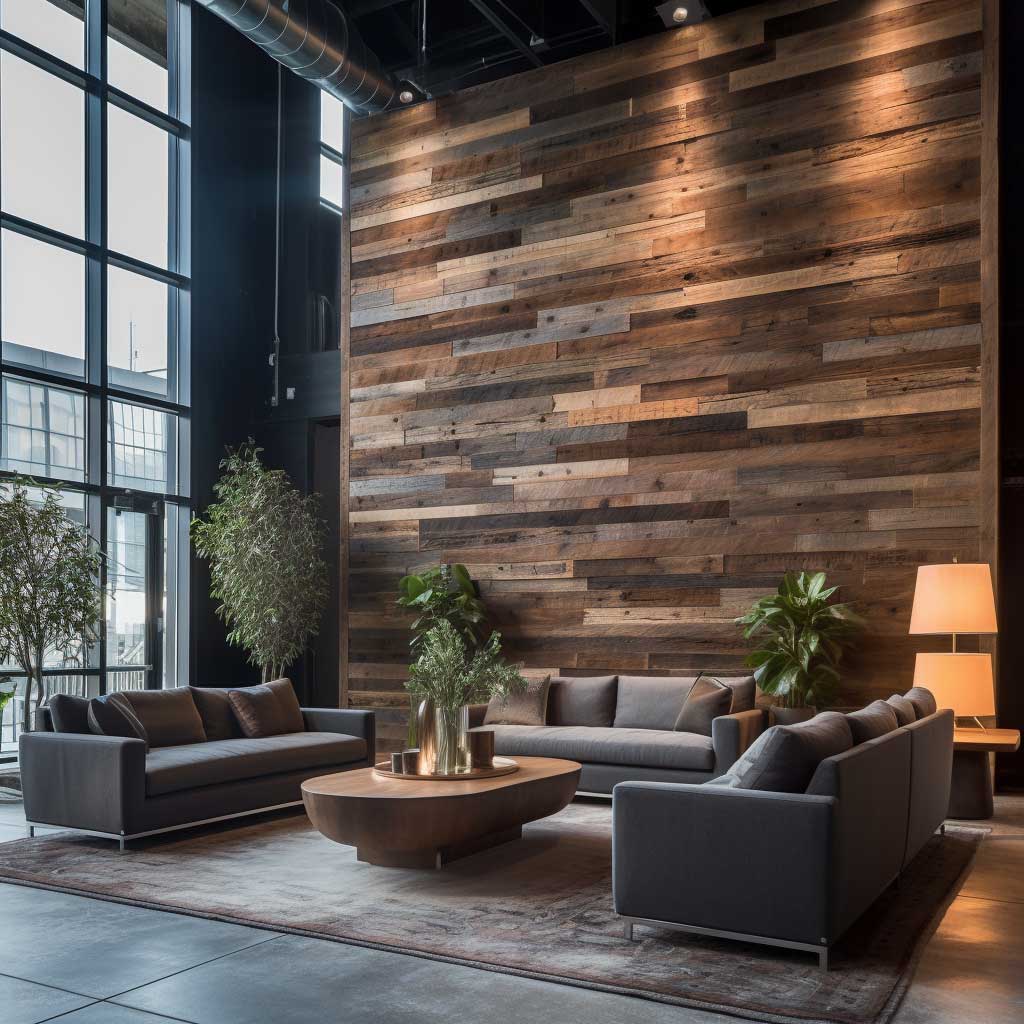
Wood clad internal walls work hardest in the living room, where one textured surface can replace art, shelf clutter and a gallery wall at once. The wall behind the sofa or around the TV is the usual pick because it faces the main seating. A plank or slat wall of about 80 sq ft is enough to anchor a typical layout. Measure floor to ceiling before ordering, since standard slat panels run about 94.5 inches tall.

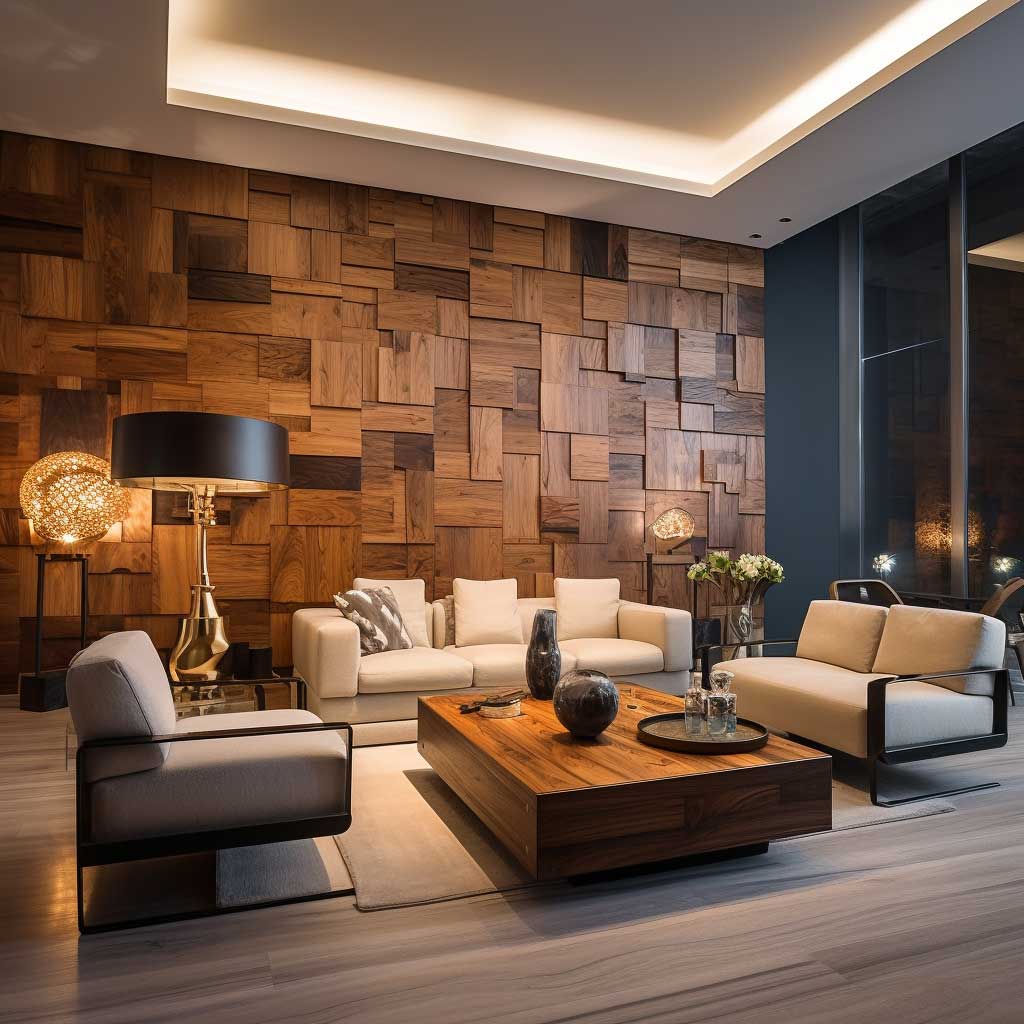
Solid wood vs WPC is the decision that shapes upkeep. Real timber needs an occasional re-oil, while WPC panels install for roughly $12–$26 per square meter, last 20–30 years indoors and absorb about 8–14 dB of mid-frequency noise. Do you need that extra toughness? Only if kids, pets or an open kitchen will test the wall daily. Otherwise real wood gives more character for the money.
Rich mahogany, reclaimed barn boards and pale ash slats all suit a living room, and the right one depends on the light. North-facing rooms need light wood to avoid a dim, heavy mood, while bright south-facing rooms can carry walnut. If you are weighing texture as well as tone, the breakdown of fluted panels compared with PVC wall panels shows how ridged profiles catch light differently from flat boards. Tape a sample board to the wall for 2–3 days and check it morning and evening.


Do not skip wall prep to save a day. Uneven drywall telegraphs through thin cladding, and panels under 8 mm thick tend to warp on walls that flex. Press a flat palm against the wall: if it moves, add plywood backing before any adhesive goes on. Premium oak on a crooked base looks like a tailored suit on a bent hanger. One extra day of leveling keeps the lines straight for decades.
Comparing Wood Cladding Interior Options by Cost and Lifespan
The table puts five common routes to a wood cladding interior side by side, priced for a typical 10 × 8 ft (80 sq ft) feature wall. Reclaimed boards lead on carbon and character, slat panels lead on speed, and composites lead in damp rooms. DIY installation removes labor, which on slat walls often matches the material cost. Read the eco column before the price column.
| Option | Typical price | 80 sq ft wall (material) | Lifespan and upkeep | Eco profile | Best room |
|---|---|---|---|---|---|
| Reclaimed wood boards | $4–$7 per sq ft; thick barn planks $9.50–$11.50 | About $320–$560 | Decades; occasional re-oil | Highest, no new harvest | Living room, bedroom |
| Oak-veneer slat panels | $30–$90 per panel | About $250–$650 (≈6 panels) | Long; dust the grooves | Good, thin real-wood face | Living room, office |
| Felt-backed acoustic slats | About $4.92 per sq ft | About $395 | Long; wipe clean | Good, veneer on recycled felt | Home office, media room |
| WPC panels | $12–$26 per m² installed | About $90–$195 installed | 20–30 years indoors | Medium, wood fiber plus plastic | Hallway, kitchen-adjacent |
| PVC panels | $1–$8 per sq ft | About $80–$640 | Warps if under 8 mm | Lowest, plastic only | Bathroom, laundry |
Where Wood Cladding Pays Off Most
One reclaimed accent wall at $4–$7 per square foot delivers more warmth and a smaller carbon footprint than a painted or plastic finish at the same budget. It stores carbon instead of adding it, and it ages better than any print-on-panel imitation. For most homes, that single wall is the highest-return cladding move available.
Choose oak-veneer slats when speed matters: about six panels and $250–$650 cover a 10 × 8 ft wall in a weekend. Upgrade to walnut only on the wall people look at first.
Pick certified or local timber over imported exotics, since lumber production emits about 33 kg of carbon per ton versus 694 kg for virgin steel. The label on the board matters more than the species name.
Keep composites for wet zones: WPC at $12–$26 per square meter and 20–30 years of life suits hallways and kitchen edges, while real wood stays the better pick for dry living spaces.
Complete guide
Wood in Every Room — Floors, Walls, Facades and Furniture
Paneling, ceilings, kitchens, facades, plywood, timber houses — all in one place
You Might Also Like


Related Topics