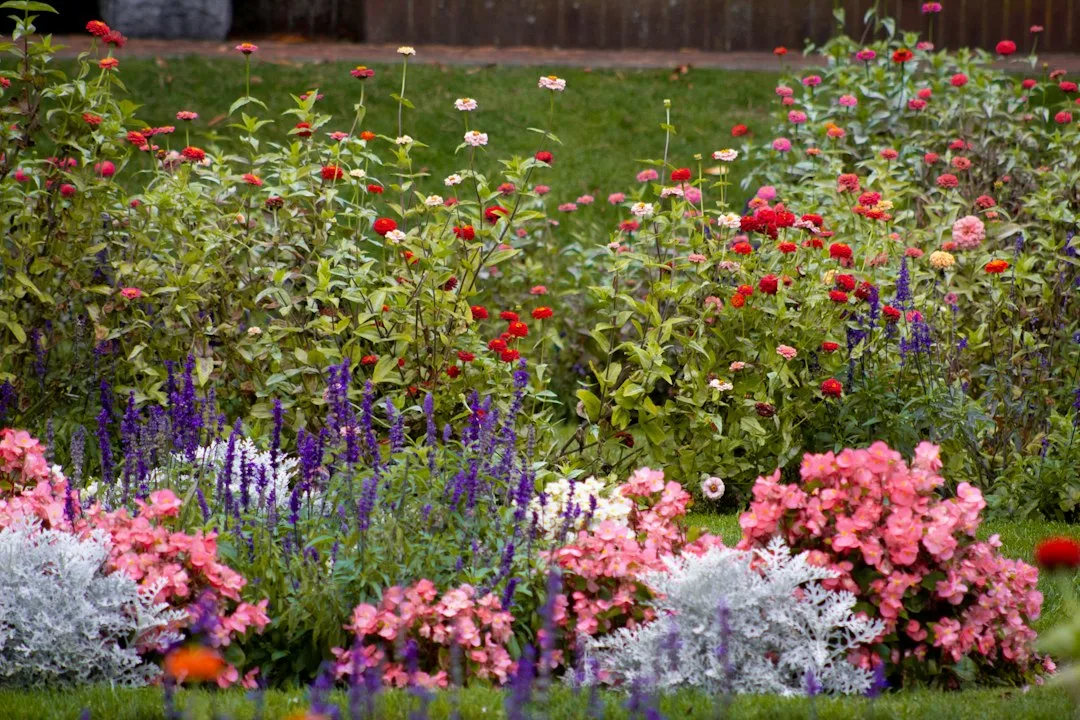
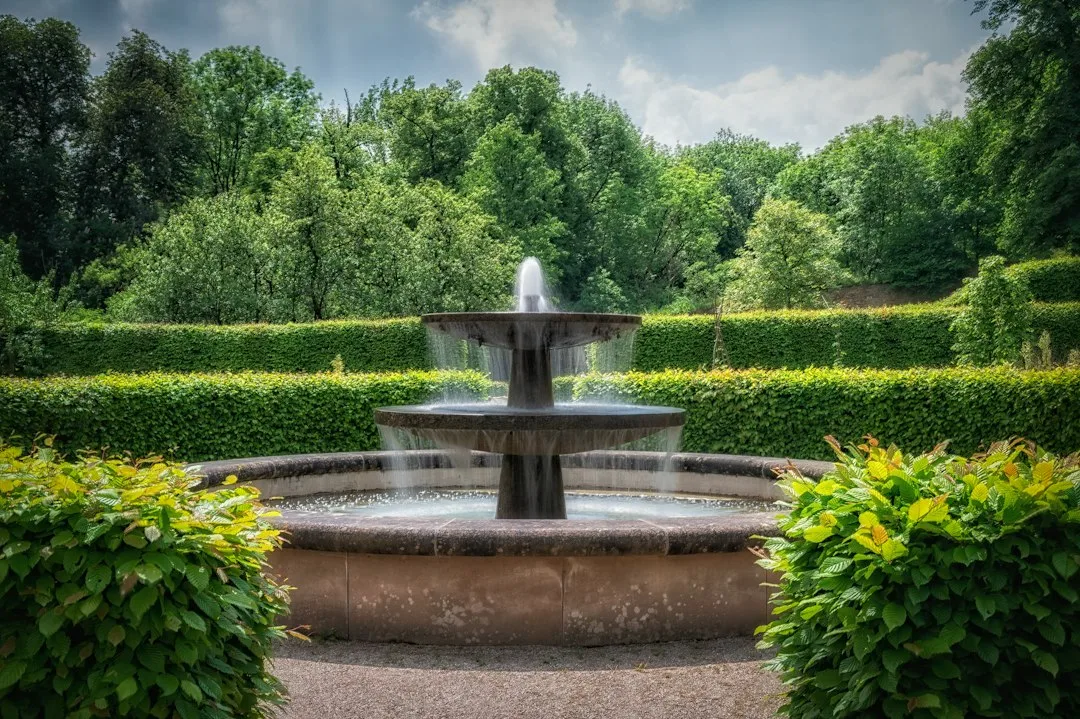
Low maintenance rock garden ideas earn their reputation the hard way: no irrigation schedule, no weekly edging, no seasonal replanting. I converted a 400-square-foot patch of Kentucky bluegrass to a small rock garden three years ago and haven’t touched it with a mower since. Rocks hold heat, suppress weeds, and look sharper in January than any lawn you’ve ever seen. The designs below cover three distinct approaches, from suburban backyards to sloped sites, so at least one of them should map directly to your space.
You’ll notice that every design here relies on the same structural logic: anchor the space with boulders, fill the gaps with gravel, then add plants as punctuation rather than wallpaper. Sedums and creeping thyme run about $4–$8 per 4-inch pot at most garden centers. Skip the ornamental grasses that come and go seasonally; they look great in October and like dead straw in March.
Quick Scan
Suburban Backyard Rock Oasis — Circular boulder arrangement, gravel paths, drought-resistant succulents. Best for flat or gently sloped lots under 600 sq ft.
Zen Rock Garden with Raked Sand — Minimalist flat-sand design with moss-covered boulders and bamboo boundary. Virtually zero plant care once established.
Rocky Hillside with Water Feature — Terraced rock formations on slopes, cascading water element, low-maintenance groundcovers. Ideal for hillside erosion control.
Plant picks at a glance: Sempervivum ($3–$6/pot), Delosperma ice plant ($5–$9/pot), creeping phlox ($6–$10/pot), ornamental allium ($8–$12/bulb pack).
Suburban Backyard Rock Oasis


A circular arrangement of boulders does something counterintuitive for small yards: it makes them read larger. Place your biggest rock — aim for something 200–300 lbs if you can source it from a local quarry for around $40–$80 — off-center toward one edge. The eye wants to travel around it, not just past it. I borrowed this trick from a Japanese landscape contractor who was working on a property two blocks from mine, and it changed how I see every flat suburban lot.
Fill the middle ground with crushed granite or pea gravel at a depth of 2–3 inches over weed barrier fabric. DuPont Pro 5 weed barrier (around $35 for 100 sq ft at Home Depot) holds up better than the cheap spun varieties that start shredding in year two. Don’t bother with the black plastic sheeting — it traps heat, degrades fast, and any self-respecting weed will punch through it by midsummer. Around the boulders, tuck in Sempervivum ‘Cobweb’ ($4–$6/pot) and Sedum spurium ‘Dragon’s Blood’ ($5–$8/pot): both spread slowly and need zero irrigation once rooted.
Gravel paths that meander rather than cut straight lines add about 40% more perceived square footage. Width matters: keep paths at least 18 inches so two people can walk side by side. Dead-end the paths at a flat stone seating area rather than a fence or wall — it creates a destination rather than just a route. You’ll use that seating. It’s surprising how often you actually sit in a garden once it stops demanding constant attention.


Plant selection is where most people get this wrong. They see a rock garden on Pinterest with 14 different species packed in tightly and replicate it. Six months later, half of those plants are dead and the other half are staging a hostile takeover. Stick to three species max: one evergreen succulent for structure, one low flowering perennial for color, one groundcover to close the gaps. Delosperma cooperi (ice plant, $5–$9) is the flowering perennial I keep coming back to — it blooms magenta from June through September and demands nothing except well-drained soil.
The late-afternoon light is not a coincidence in these photos. West-facing rock gardens catch that golden hour at its warmest, the kind of light that turns ordinary fieldstone into something sculptural. If your garden faces east or north, lean into it differently: choose lighter-colored stones like limestone or buff sandstone that hold reflected light better than dark granite. Dark granite in shade looks like a parking lot. That’s the honest review.
Don’t Do This
Mixing more than two stone types in a small rock garden is the single fastest way to make it look like leftover construction debris. River rock, lava rock, and quartzite do not belong in the same bed — they come from different geological contexts and the eye reads the clash immediately. Pick one primary stone and use it for 80% of your surface area. Accent with a second type only if it’s a different size, not a different color. Also: never edge a rock garden with plastic Victorian scallop border pieces. It undoes everything.
Minimalist Rock Garden — Raked Sand and Deliberate Stones
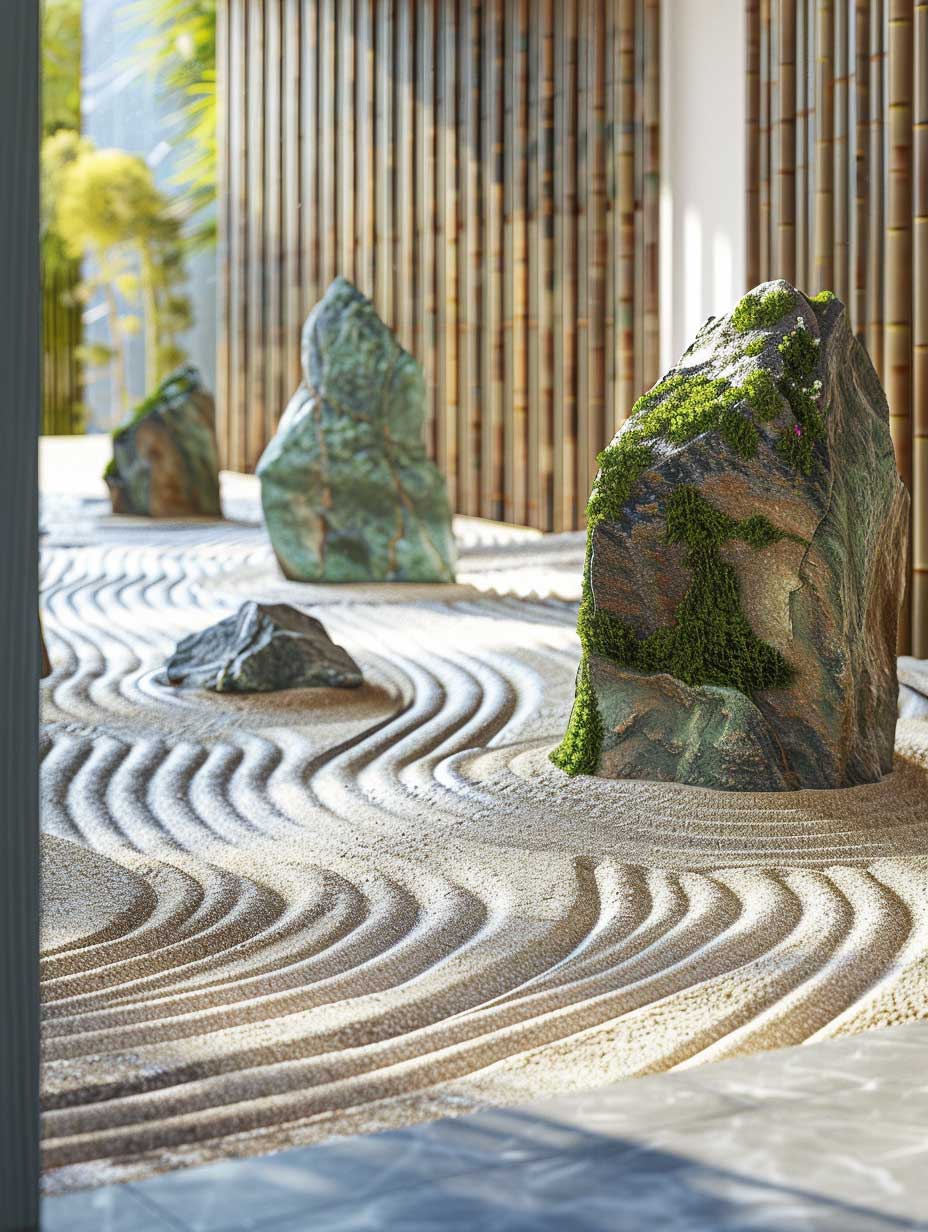


Minimalist rock garden designs get misread as expensive or fussy to maintain. They’re neither. The raked-sand karesansui style — the flat garden of raked gravel and placed stones rooted in 14th-century Zen temple design — has exactly zero plants requiring watering, pruning, or fertilizing. You rake the sand. That’s the maintenance. Raking takes about ten minutes and is, for a lot of people I know, the most meditative ten minutes of the week.
Use decomposed granite rather than beach sand for the raked surface. Beach sand clumps when wet and loses its pattern overnight. Decomposed granite (sold in 0.5-cubic-foot bags for about $8–$12 at most landscape suppliers) stays firm enough to hold rake lines for 3–5 days between raking sessions. For the stones, source three to five large moss-covered boulders — at least one should be substantial enough that a single person couldn’t lift it. Mass reads as intention. A scatter of mid-sized rocks reads as indecision. Minimalist backyard landscaping principles apply here too: restraint in materials equals power in composition.
What kills the minimalist aesthetic faster than anything else? Too many rocks. I’ve seen homeowners buy a pallet of assorted stones, place all of them, and end up with something that looks like a gravel driveway had a nervous breakdown. Three to five stones, placed asymmetrically, with deliberate negative space between them. The negative space is doing equal work to the stones. Think of it like the pause in a sentence — remove all the pauses and it becomes noise.


Bamboo fencing defines the perimeter and does two things simultaneously: it blocks wind that would disturb your sand patterns, and it signals to anyone looking at the garden that they’re entering a different sensory register. Torii Garden’s premium bamboo fencing panels run about $45–$75 for a 6-foot section. A traditional Japanese gate isn’t strictly necessary, but if you install one, keep it simple — black lacquered wood, no decoration. Ornamentation is the enemy of Zen design.
Do moss-covered rocks require any maintenance? Honestly, no. Moss colonizes naturally in humid conditions; in drier climates, you can mist rocks with a diluted buttermilk solution (I found this in a Japanese gardening text from the 1980s) to accelerate growth. Don’t scrub or pressure-wash the moss off — it took years to establish and it’s exactly what makes a boulder look like it belongs in a landscape rather than a parking lot recently vacated by a contractor.
The early morning light in these photos is doing significant compositional work. Soft, raking light at 7 AM turns sand-rake lines into a relief map. Hard midday sun flattens everything. If you’re photographing your finished zen garden for Pinterest or just want to actually experience it at its best, that first hour after sunrise is when it earns its keep.
Rock Gardens on Slopes — Using the Hillside as the Feature


Rock gardens on slopes solve two problems at once: erosion and aesthetics. A hillside covered in grass requires mowing on an angle that is both tedious and physically dangerous above about 15 degrees of incline. Replace it with terraced boulders and groundcovers, and the slope does the design work for you — gravity creates natural drainage, rocks hold soil in place, and the whole thing looks more intentional than any flat garden at ground level. I’ve worked with two landscape contractors who say sloped rock gardens are the project type where homeowners most consistently end up happier than they expected.
The terracing logic is simple: bury each boulder one-third into the slope, angled slightly back into the hillside. The RHS recommends this technique specifically to mimic how stone naturally emerges from a landscape — and it prevents the rocks from slowly rolling downhill over years of freeze-thaw cycles. Use local stone wherever possible: it weathers to match the surrounding soil color, and it’s dramatically cheaper to source. Importing non-local boulders for a slope project can add $500–$2,000 to the materials cost for no visual benefit.
For the water feature on a hillside, a recirculating pump setup is far more practical than anything requiring a municipal water connection. An OASE AquaMax Eco Classic 3500 pump (around $120–$150 at aquatic specialists) handles a 6–8 foot vertical drop cleanly and runs on about $3–$5 of electricity per month. Size the upper reservoir pool to hold at least 20 gallons — too small and you’ll be topping off constantly due to evaporation. The sound of water moving over rock does something specific to anxiety that no amount of wind chimes will replicate. Desert landscape strategies for drought-tolerant planting work perfectly on the drier, exposed terraces of a hillside garden.


Plant selection for a sloped rock garden rewards plants that root aggressively and spread laterally: creeping phlox (Phlox subulata, $6–$10/pot) blankets a 2-foot radius within two seasons and produces a carpet of pink-to-purple bloom in April that is frankly absurd given how little you did to earn it. Cotoneaster horizontalis handles shadier terraces and produces red berries that feed birds through November. What doesn’t work: ornamental grasses above about 12 inches tall. They catch wind on an exposed slope, rock constantly, and eventually heave themselves out of the ground. I planted Pennisetum on a slope in year one and spent year two pulling it all out.
Seasons change how a hillside rock garden looks more dramatically than any flat garden. Spring: creeping phlox and alliums pop color between the stones. Summer: the rocks themselves dominate, warm and dry, with groundcovers filling the gaps. Autumn: the water feature runs at full strength from rainfall, the stone holds orange and gold reflected light from nearby deciduous trees. Winter: bare rock, bare structure, and it still looks purposeful rather than abandoned. That four-season reliability is the real return on investment for a sloped design — and for gardening advice on alpine plant selection for rock gardens, the RHS resource is worth bookmarking.
Rock Gardens — The Honest Summary
Low maintenance rock garden landscaping works because it removes the variables that defeat most gardeners, not because rocks are inherently beautiful.
The three designs here span flat suburban lots, minimalist Zen-inspired spaces, and erosion-prone slopes. Each follows the same rule: let the stone do the structural work and ask plants only to punctuate, not perform.
Budget realistically: a 200-square-foot suburban rock garden runs $400–$900 in materials. A hillside terrace with a recirculating water feature runs $1,500–$3,500 depending on slope length and boulder weight. The minimalist sand garden is the cheapest of the three — $200–$500 all-in if you source stone locally.
Save this post before your spring landscaping window closes.