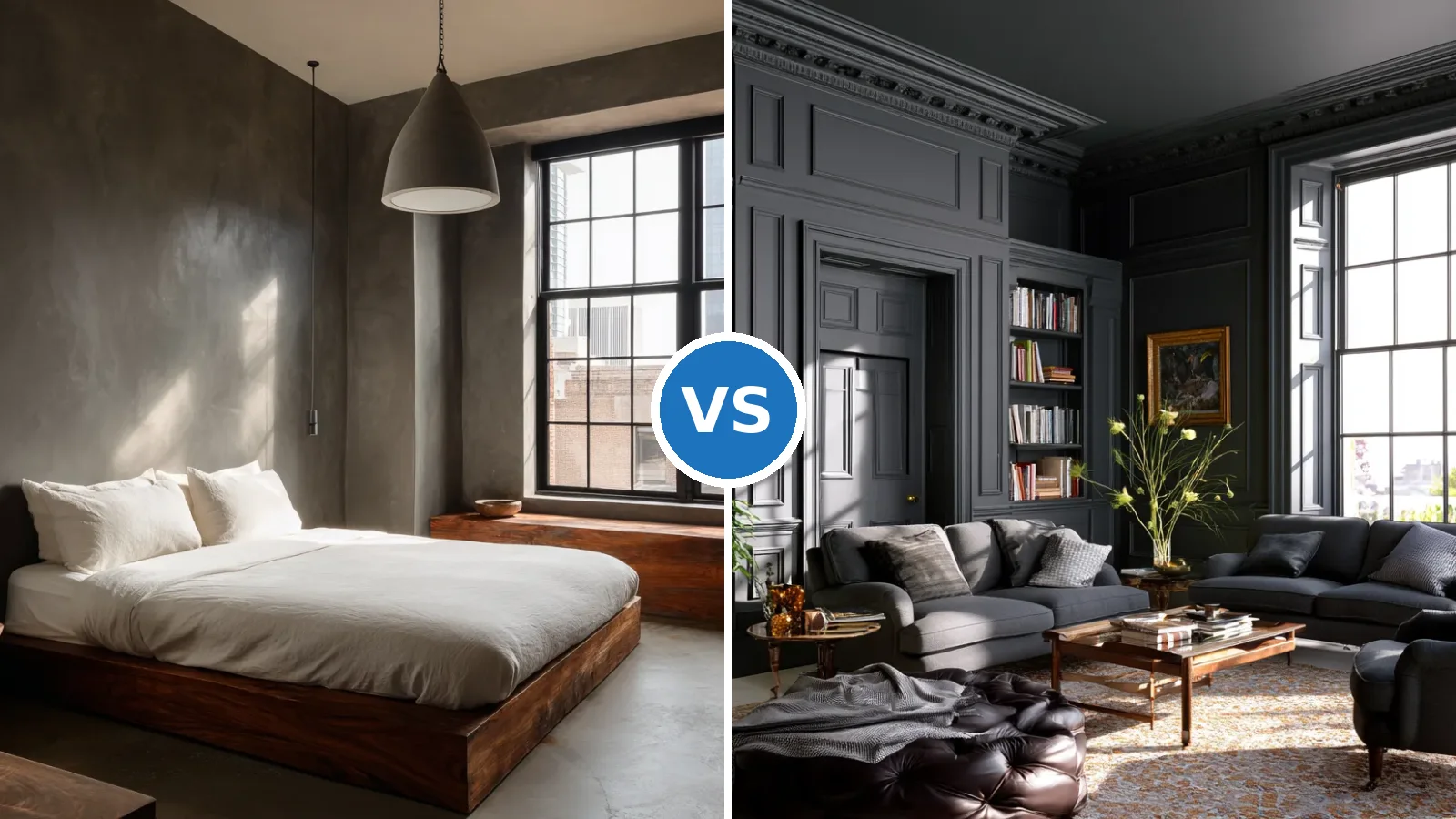
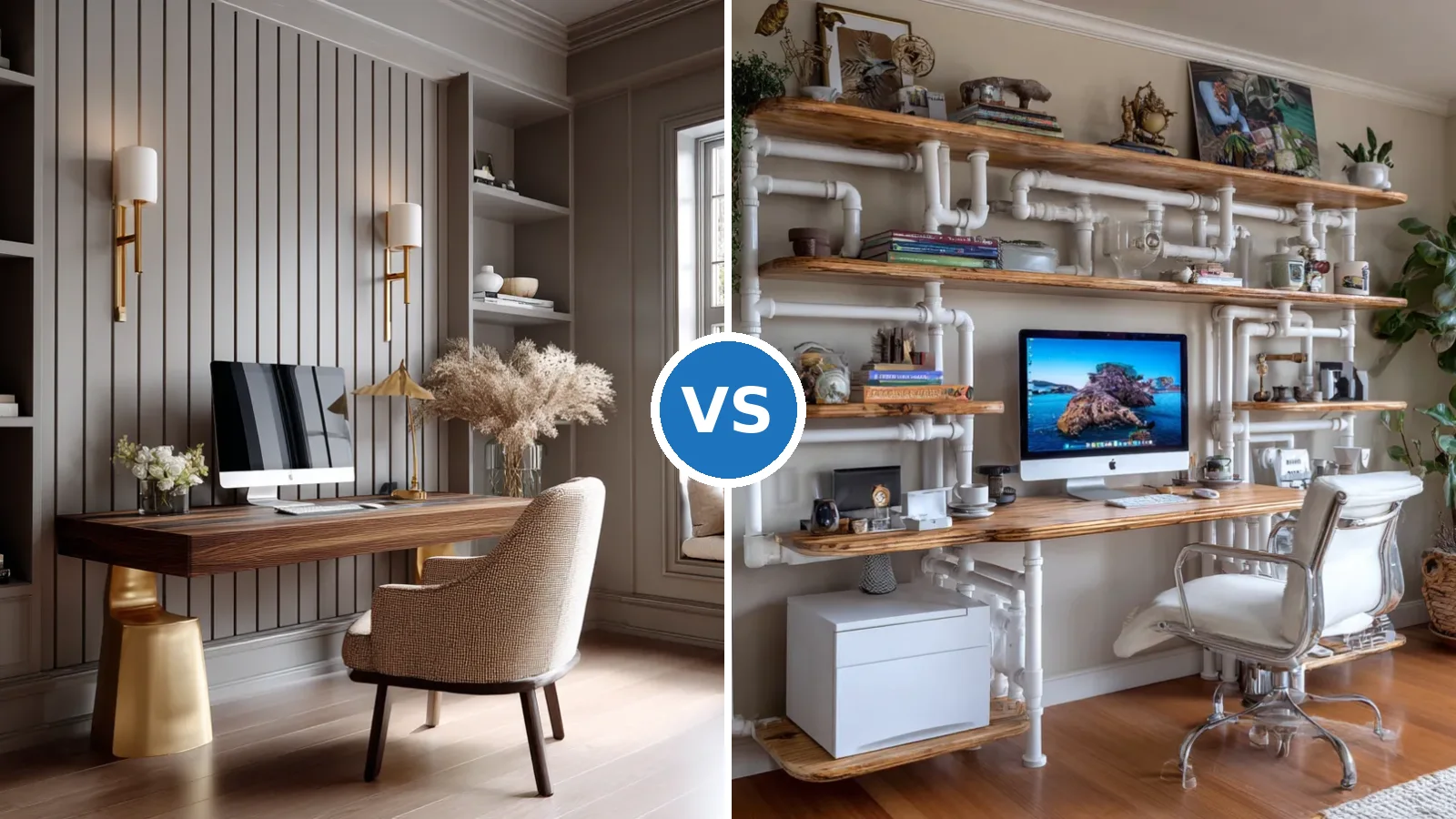
Interior colour combinations shape the emotional register of a room the moment you walk through the door — and most people choose wrong not because they picked a bad colour, but because they chose colours that fight each other at the undertone level. I repainted my living room twice in fourteen months chasing a palette that looked good on my phone screen and turned oppressive under actual lamp light. The problem wasn’t the hue. It was the pairing.
Interior colour combinations that hold up over years share one quality: they are built around a clear relationship between hues, not just an aesthetic vibe. Royal blue with mustard yellow works because the two sit across from each other on the colour wheel — warmth and coolness in genuine tension. Sage green with creamy white works because both colours carry the same warm undertone and neither competes for dominance. You’ll notice the rooms you keep seeing on Pinterest all have this quality. The colours are chosen, not collected.
My go-to test before committing to any interior colour combination is the 48-hour rule: paint a 12-inch swatch directly on the wall, check it at 7am, 2pm, and 9pm, and only commit if it holds at all three times. A colour that looks wrong at any of these moments will look wrong every day you live with it. Cheap paint test pots run $10–$15 at Benjamin Moore or Sherwin-Williams — that’s the cheapest design decision you’ll ever make.
– Sage green + creamy white: warmest, most universal pairing — works in every room, every light condition.
– Royal blue + mustard yellow: high-contrast complementary pair — best in rooms with direct light and high ceilings.
– Soft blue + gentle grey: the bedroom pairing — calms the nervous system, best with warm-toned linen and wood.
– Bold colour on 25% of surfaces, neutral on 75%: the ratio that prevents sensory overload in high-contrast schemes.
– Paint undertones matter more than the colour itself — a warm sage and a cool sage look completely different on a wall.
Sage Green and Creamy White Put Natural Light to Work


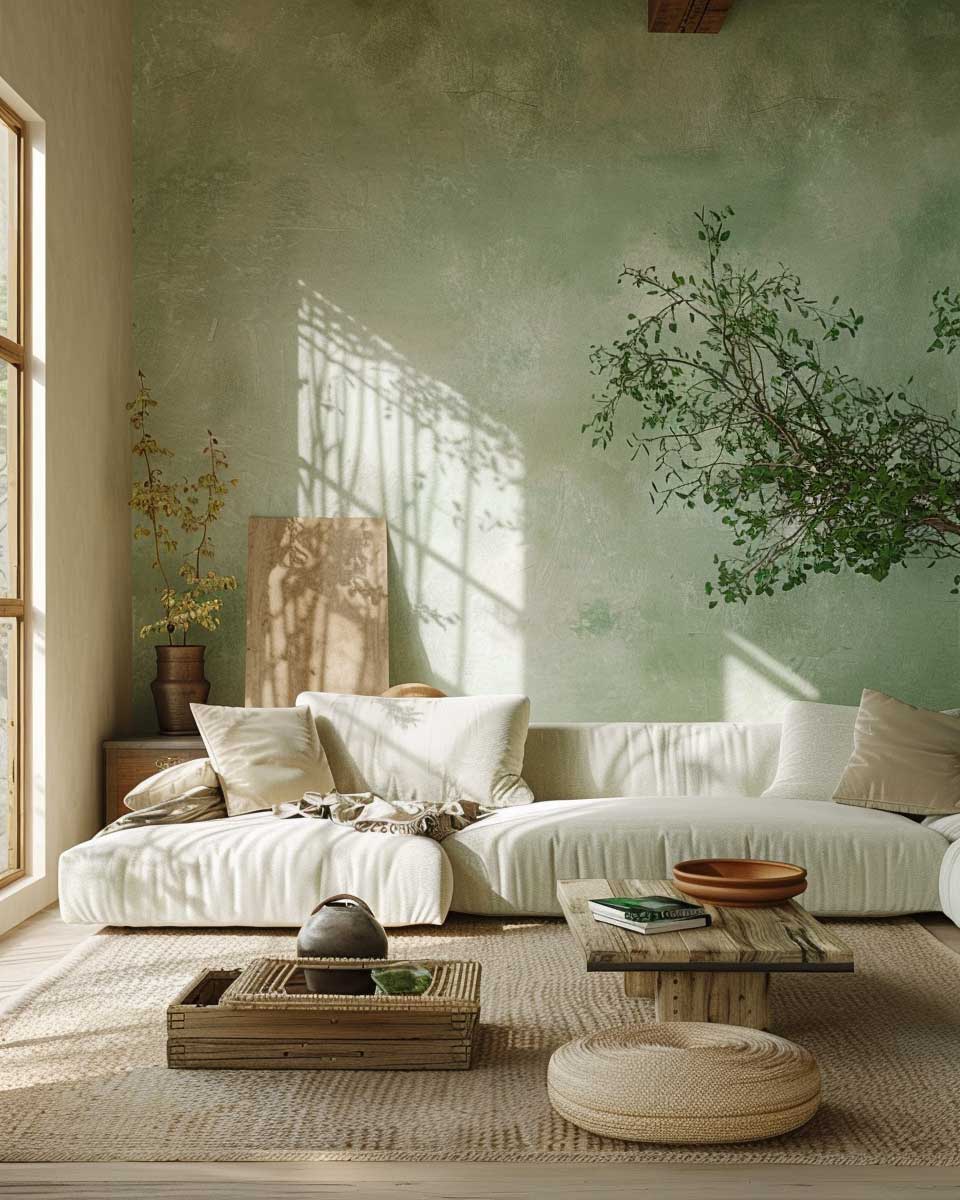

Sage green paired with creamy white is the interior colour combination that earns its reputation on merit, not trend. I’ve used Benjamin Moore’s Sage Green 2138-40 at around $55 per gallon in two different living rooms, and it behaves differently in each one — richer with southern exposure, cooler and more hushed with northern light. That adaptability is exactly why this pairing stays relevant across interior styles. It isn’t one look. It’s a relationship between colours that shifts with its environment, like a well-made piece of furniture that improves with light and use.
What makes this interior colour combination earn its place is the warm undertone match. Sage carries grey-green tones; creamy white brings yellow warmth. Neither colour is fighting a cool edge, so the room settles into a coherent, restful register. You’ll notice that rooms with this pairing never feel clinical or flat. The wall colour has enough pigment to read as a choice, while the white reflects enough light to keep the space from closing in. Farrow & Ball’s Vert De Terre at approximately $115 per gallon offers more depth if you want to push the sage slightly richer, though the Benjamin Moore version holds up better in rooms with southern exposure.
Textures do the heavy lifting in a two-colour room. Natural wood accents — an oak side table, raw walnut shelving, a cane pendant — introduce warmth without adding a third colour. Indoor plants are the other variable that elevates this pairing from pleasant to remarkable: their green leaves read as a deeper version of the wall colour and blur the line between the interior and whatever is growing outside the window. Don’t skip the plants. A sage room without greenery loses about 30% of its visual logic. What doesn’t work here: pairing sage with cool bright white trim. The contrast reads as unintentional and makes the sage look dirty. Stick to warm white trim — Benjamin Moore’s White Dove OC-17 is my go-to.
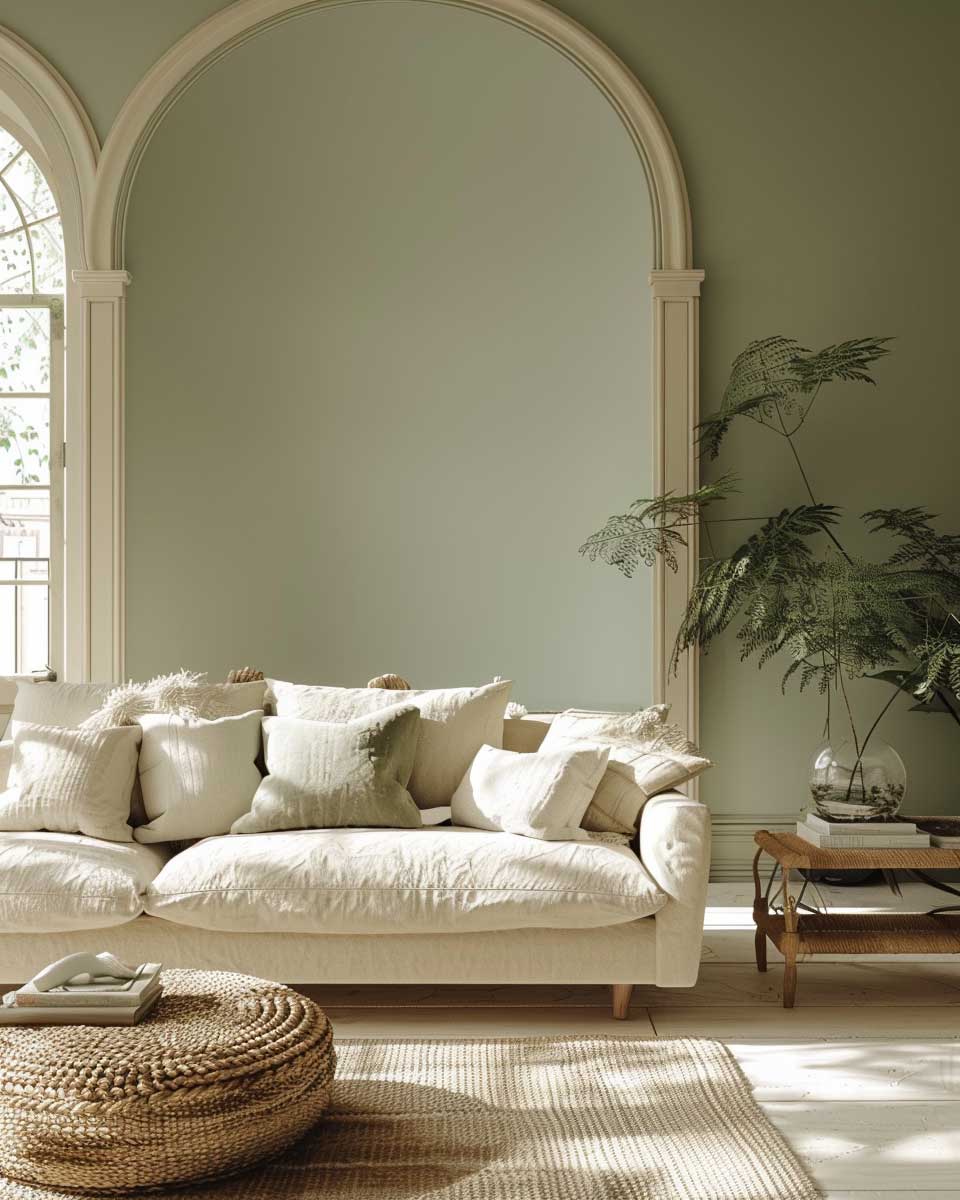

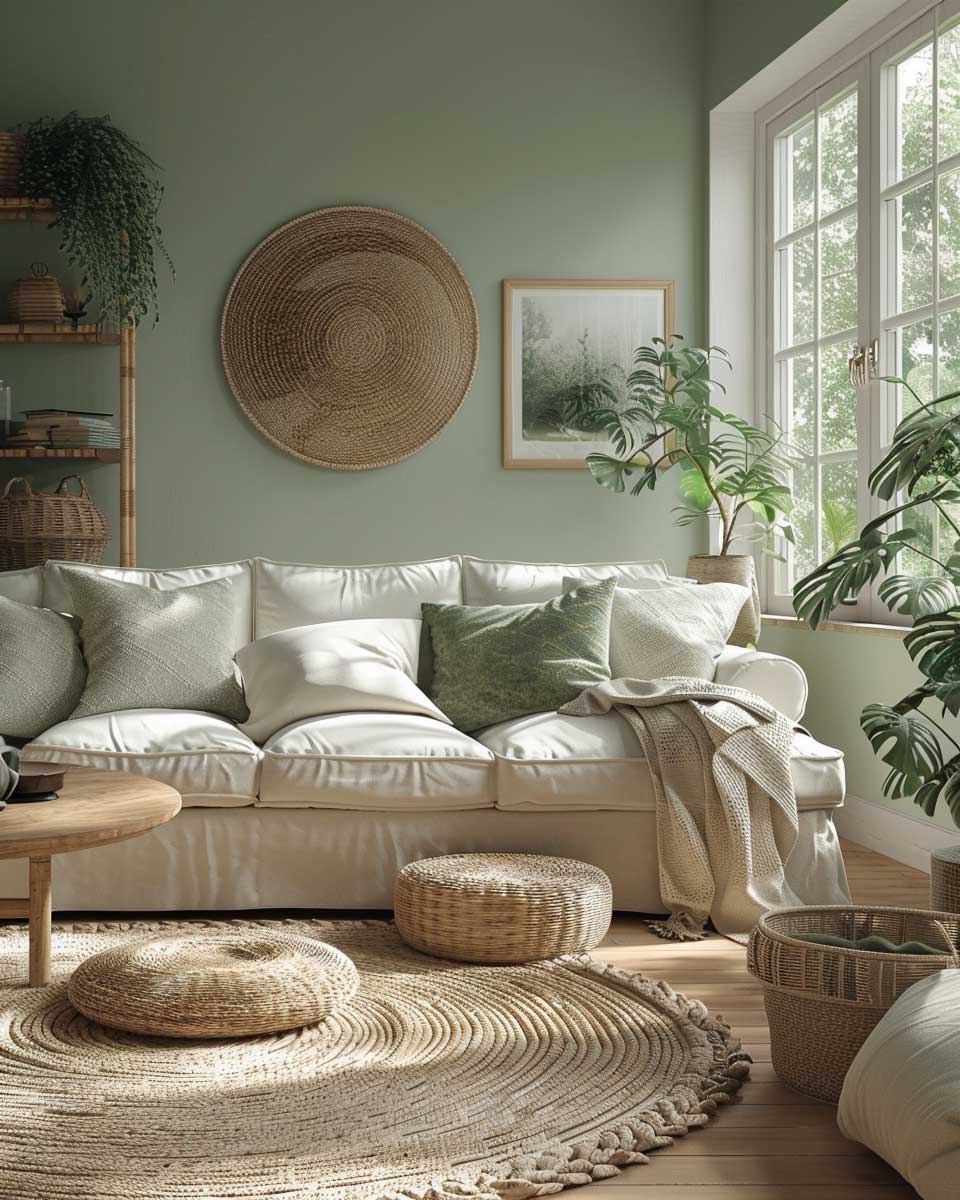

Pattern and texture in this pairing follow a simple rule: keep the pattern small and organic, keep the texture varied. A subtle linen weave on the sofa, a jute rug underfoot, a ceramic vase with a matte finish on the shelf — these are the elements that prevent a two-colour room from reading as underfurnished. I’ve seen this pairing in rooms ranging from $20,000 renovations to IKEA-furnished apartments that cost $3,000 to pull together, and the quality of the colour combination carries the room regardless of budget. The sage and cream pairing is one of the few interior colour combinations where I’d say the colour itself does most of the design work — which means the furniture has less pressure to be remarkable. That’s an unusual quality worth knowing about. For a deeper look at how modern living room paint colours interact with natural light across different room orientations, the full breakdown is worth reading before you commit to a gallon.
Royal Blue and Mustard Yellow Earn the Room’s Attention


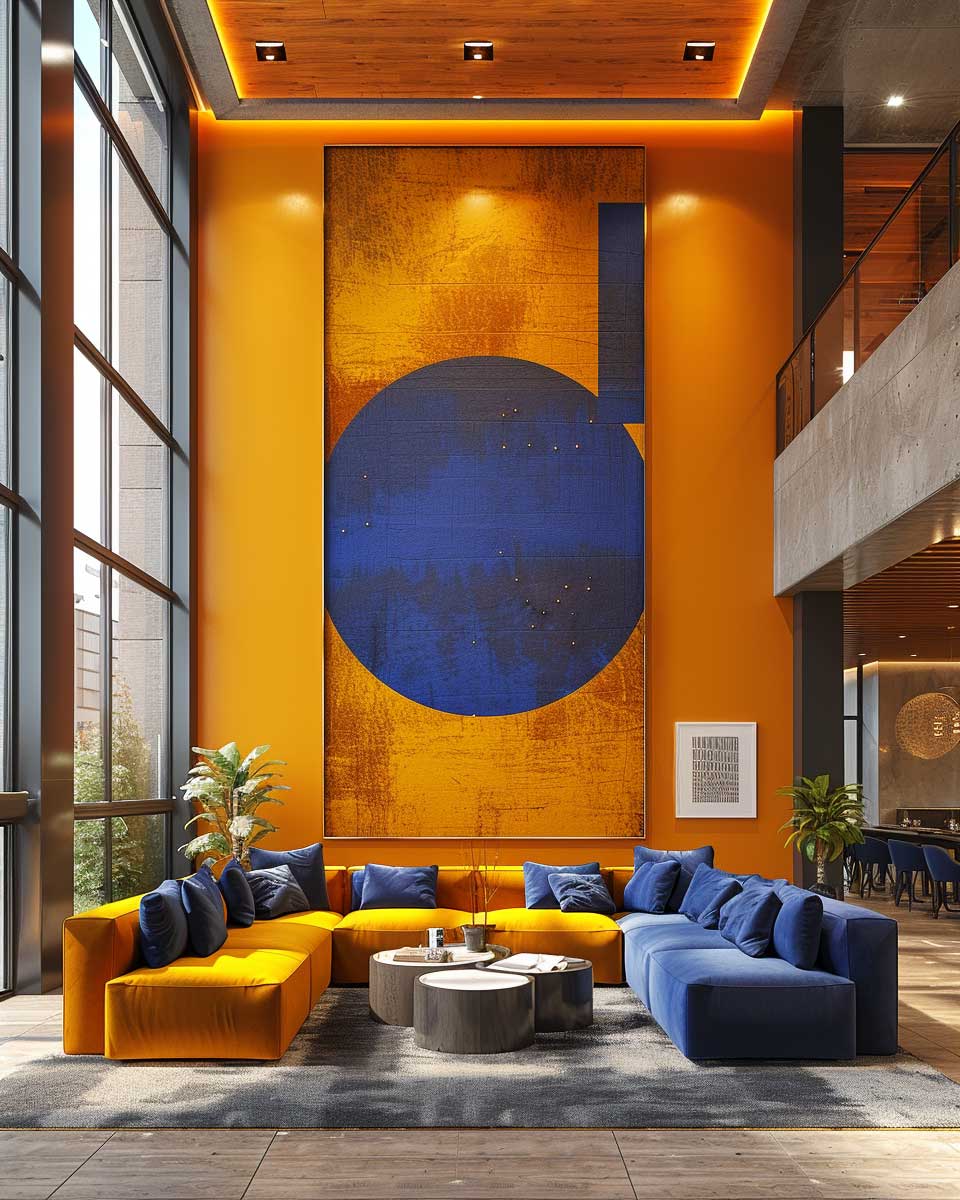

Royal blue and mustard yellow is the interior colour combination that designers reach for when they want a room to hold the eye without additional decoration. These two colours sit directly across from each other on the colour wheel — that’s not a stylistic opinion, it’s physics. The tension between them creates visual energy that reads as deliberate confidence rather than noise. Sherwin-Williams Naval SW 6244 at around $75 per gallon gives you the richest version of royal blue without tipping into purple. Against Benjamin Moore’s Hawthorne Yellow HC-4 on cushions and accent pieces at around $65 per gallon, the pairing snaps into focus immediately.
The architecture has to carry its weight in this interior colour combination. High ceilings give the blue room to breathe without closing in — I made the mistake of using a deep blue in a room with 8-foot ceilings once, and it felt like a submarine. Rooms with 10-foot ceilings or higher handle royal blue on all four walls without issue. Large windows that flood the space with natural light shift the blue through its range across the day: cooler and more commanding at noon, warmer and more intimate by evening. That light-shift quality is part of what makes this interior colour combination worth living with rather than just admiring in a photograph. What fails here: mustard used in equal proportion to the blue. The rule is 75% blue, 25% mustard. Equal measure creates visual chaos rather than tension. Keep the mustard in cushions, ceramics, and lampshades — never on the walls.
Furniture in this pairing performs best when it steps back and lets the colours do the work. Clean-lined contemporary sofas in white or off-white linen, a low-profile coffee table in pale oak or marble, abstract art pieces with swirling marks that echo both the blue and yellow tones — these are the furnishing decisions that amplify the colour combination rather than compete with it. I stole this approach from a designer I worked with on a renovation in 2022: she kept every piece of furniture within a 30-inch height and let the colour carry the vertical. The room looked twice the size of its actual 14×16 footprint. Do that. Colourful living room design directions that work alongside bold colour combinations, including how to bring warm and cool tones into the same open-plan space, are explored further if you want to take this palette beyond a single room.


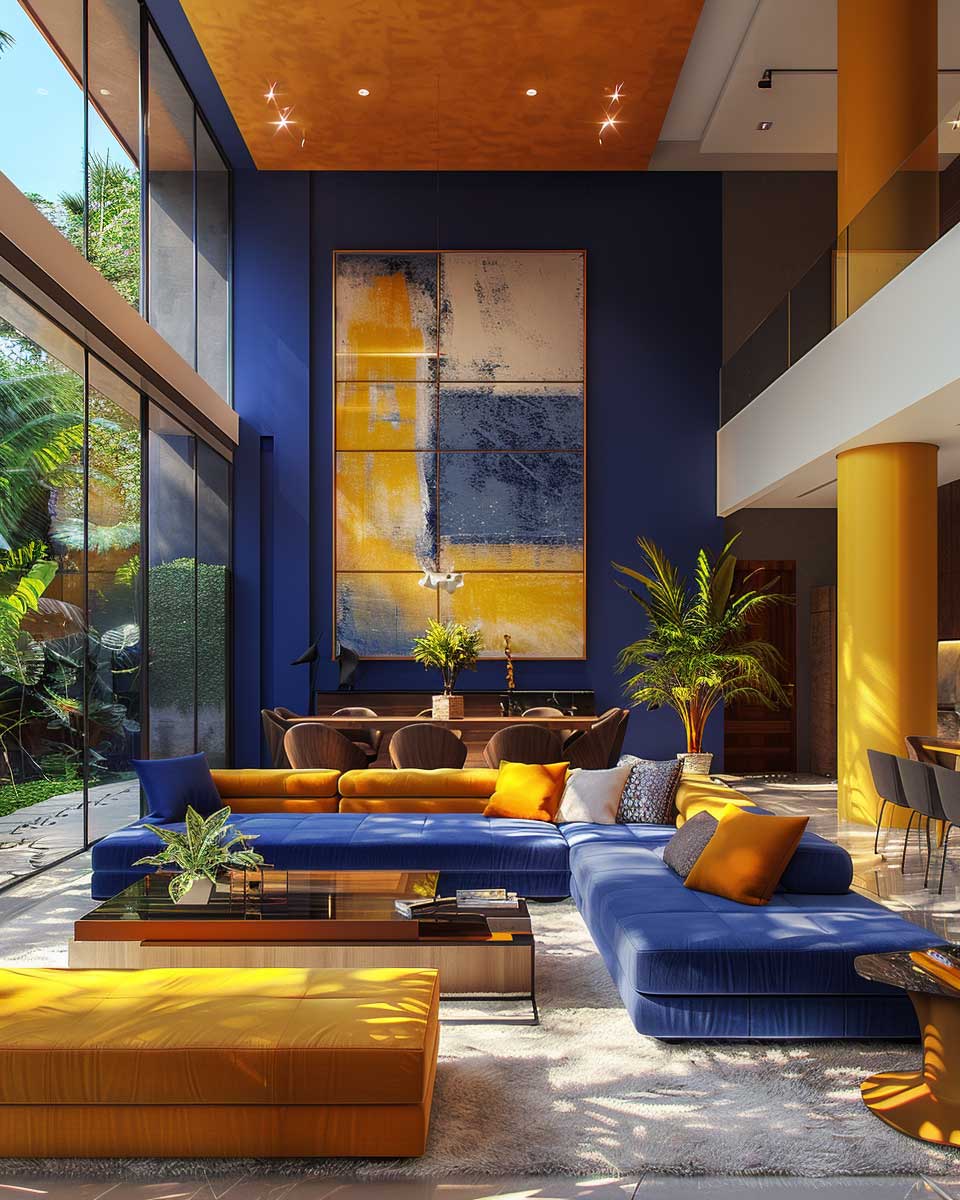

The mistake most people make with this interior colour combination is introducing a third colour before the pairing has had time to settle. Throw in grey cushions and a terracotta rug and the room loses its character — the blue and yellow tension dissolves into general decoration. Hold the third colour entirely, or if you must introduce one, use only warm wood tones that recede rather than compete. Ask yourself: does this element serve the blue-yellow relationship, or does it interrupt it? If it interrupts, remove it. The rooms that make this pairing memorable are the ones that commit fully. A space that lives by this interior colour combination unapologetically becomes a narrative about confidence, not just a design choice.
Don’t pick your wall colour from a phone screen. Phone displays oversaturate every shade. That mustard looks like burnt orange, and that royal blue looks like a navy denim. Always use physical paint swatches or test pots on the actual wall before committing.
Don’t introduce a third colour immediately into a two-colour pairing. Royal blue and mustard yellow need to breathe before anything else enters the room. Live with the pairing for at least two weeks before adding accent colours — you’ll almost always find the room doesn’t need them.
Don’t use bold interior colour combinations on all four walls in rooms under 180 sq ft. One feature wall in royal blue with the other three in off-white is the correct call for small rooms. Four walls of deep colour in a small space closes the room down rather than energising it.
Don’t apply sage green over existing cool-white paint without a proper primer coat. The cool undertone from the previous paint bleeds through and makes the sage look grey rather than green. One coat of tinted primer saves you an extra full coat of the final colour.
Soft Blue and Gentle Grey Read as Calm Without Reading as Cold
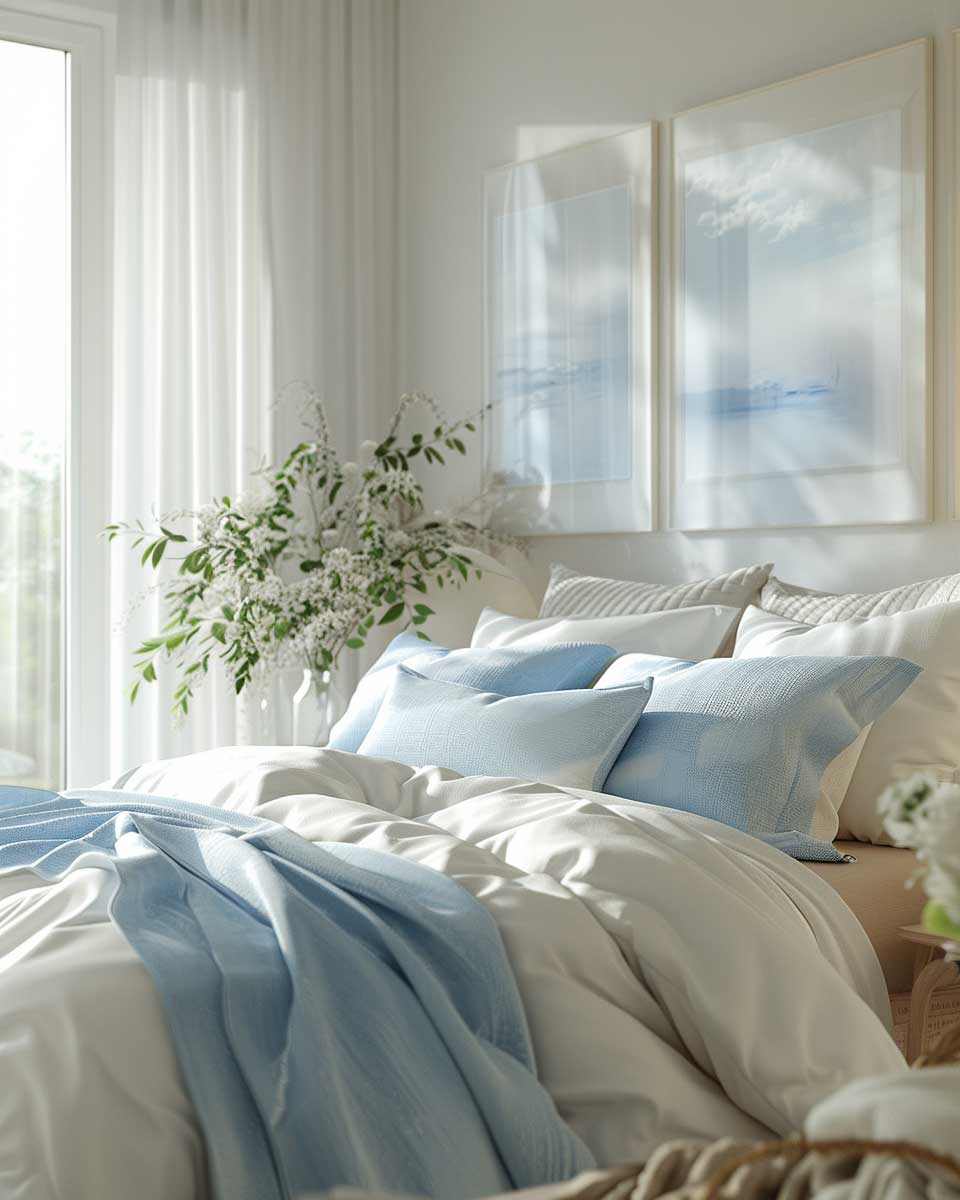
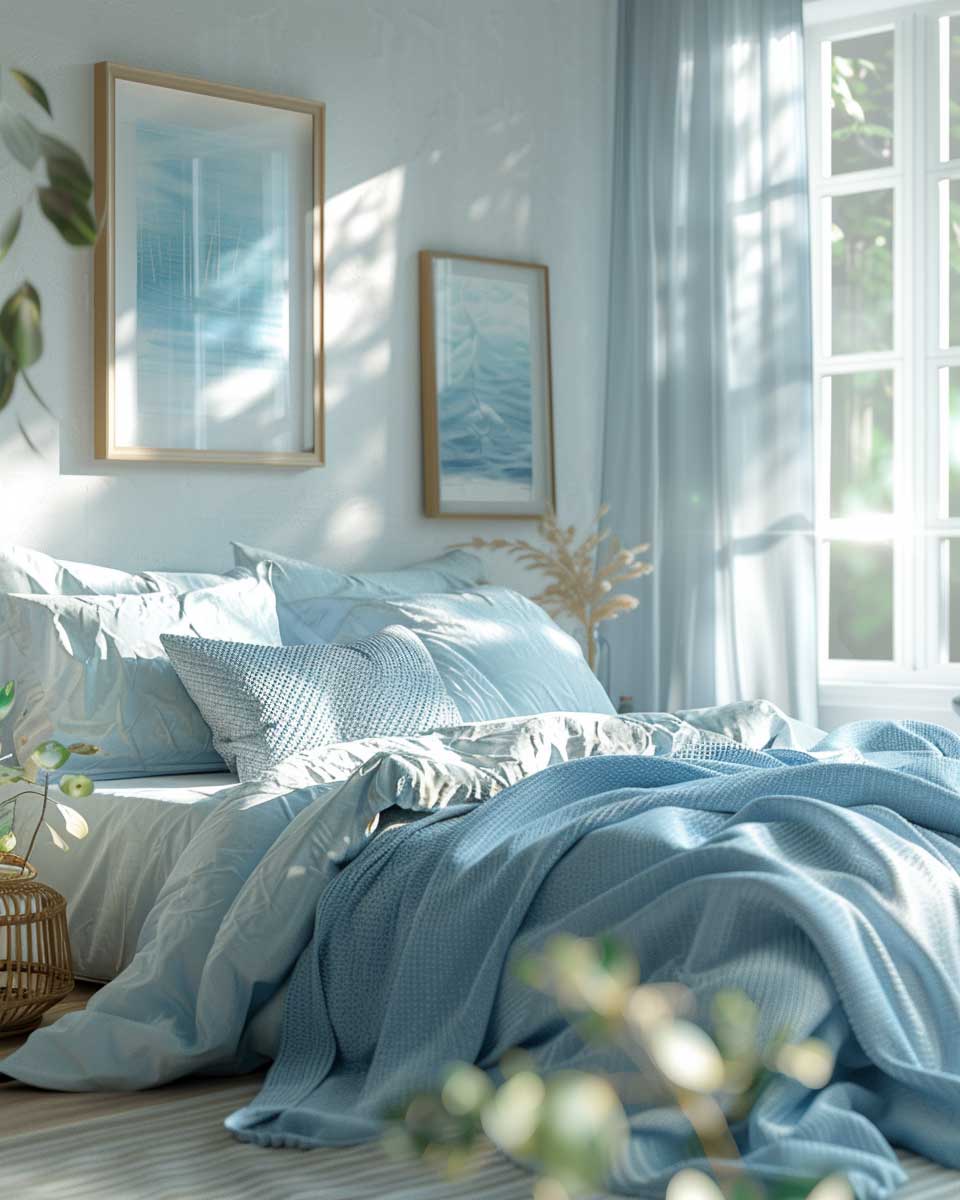

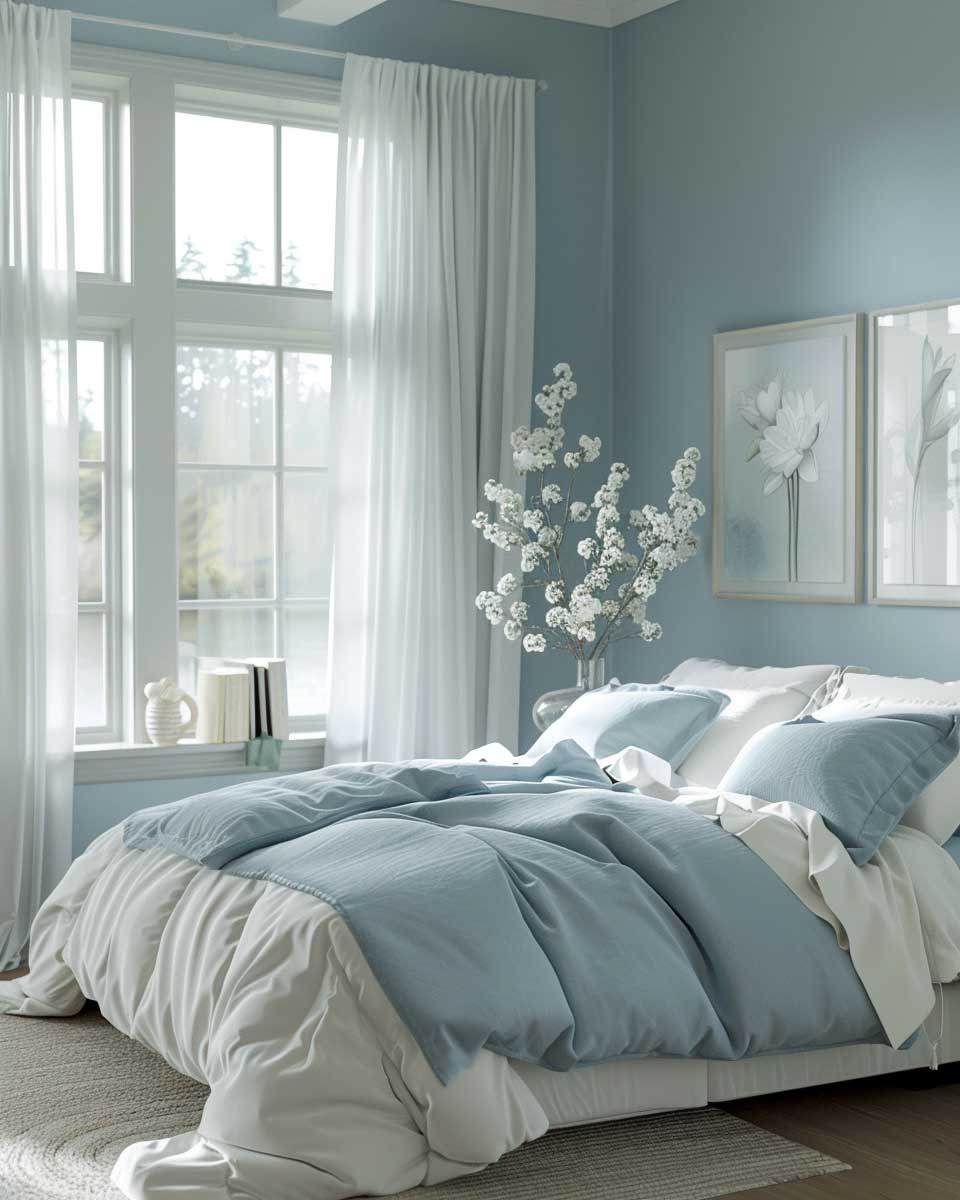
Soft blue and gentle grey is the interior colour combination that colour psychologists actually reference in sleep research: these two tones lower perceived temperature and heart rate in ways that the data supports. Benjamin Moore’s Blue Nova 825 at approximately $85 per gallon gives you a mid-tone blue with just enough violet depth to prevent it reading as sky-blue casual. Pair it with Sherwin-Williams Agreeable Gray SW 7029 — also around $75 per gallon — on adjacent walls or in the bedding and the combination lands in a register that feels neither cold nor precious, just genuinely restful. This is the interior colour combination for bedrooms, not just by aesthetic convention but by physiology.
Sheer curtains are non-negotiable in this pairing. The light they diffuse turns the blue and grey from flat tonal swatches into a living surface that shifts between morning and evening with the kind of subtlety you notice without being able to name. The colour combination in direct strong light reads airy and spa-like. Under artificial light at 2700K, it reads intimate and cocooning. What’s the risk? Using cool LED bulbs above 4000K in a blue-grey room. The walls will start reading like a hospital corridor within six months and you’ll repaint before the year is out. Spend $15 on warm-toned bulbs before you touch the paint.
Minimalism serves this interior colour combination better than abundance. Every decorative element you add should pass one test: does it warm the palette or cool it further? Warm wood nightstands, an ivory boucle throw, a pale oak floor — these are the elements that prevent the blue-grey combination from tipping into clinical territory. Art pieces in soothing subjects rather than bold graphic work keep the room in its intended register. Avoid chrome hardware in a blue-grey room. It reads as sterile next to the cool wall tones. Brushed brass at $20–$50 per handle or fixture swings the whole room into sophisticated territory for almost no cost. I made this switch in a renovation two years ago and the room went from looking like a mid-range hotel to looking like somewhere a designer actually made decisions.

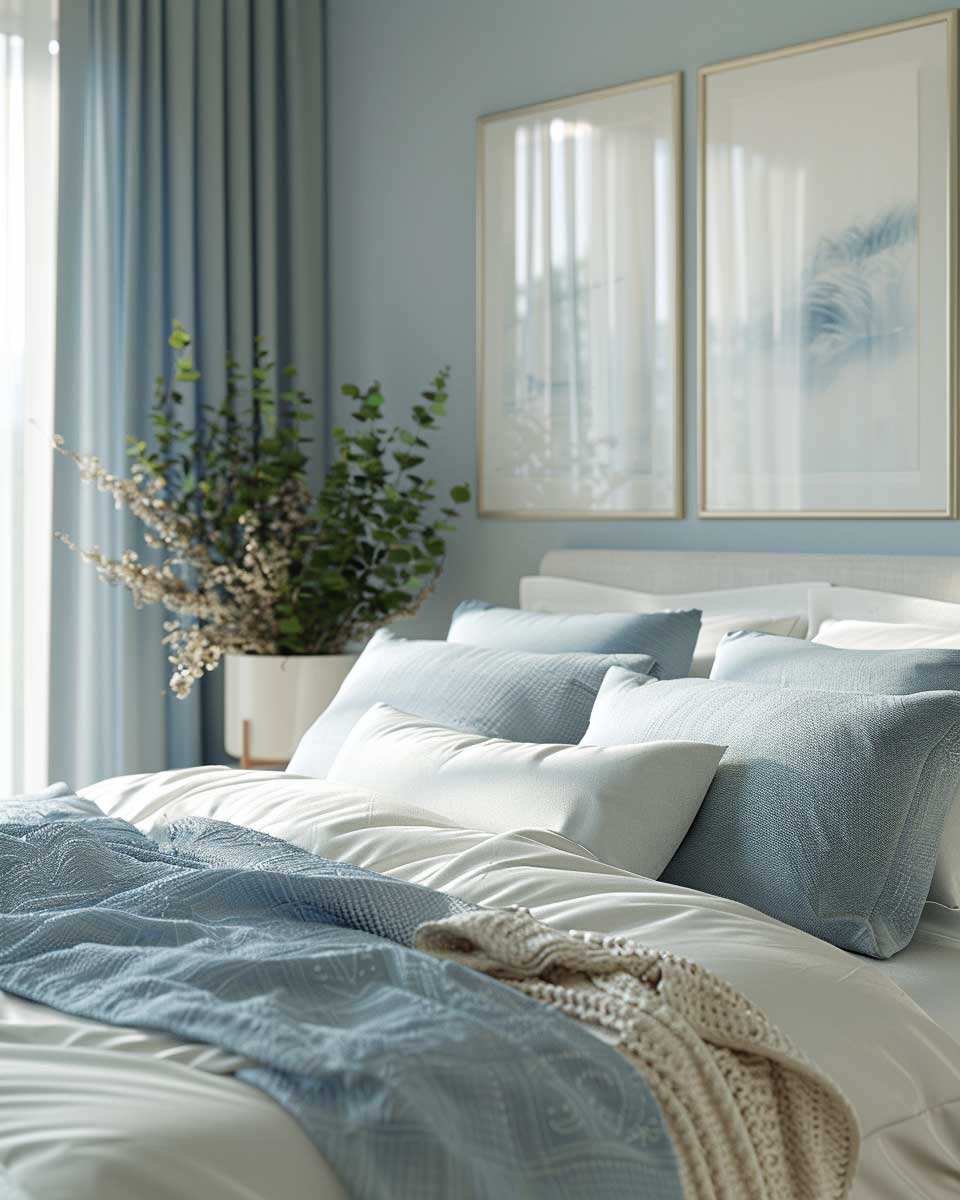

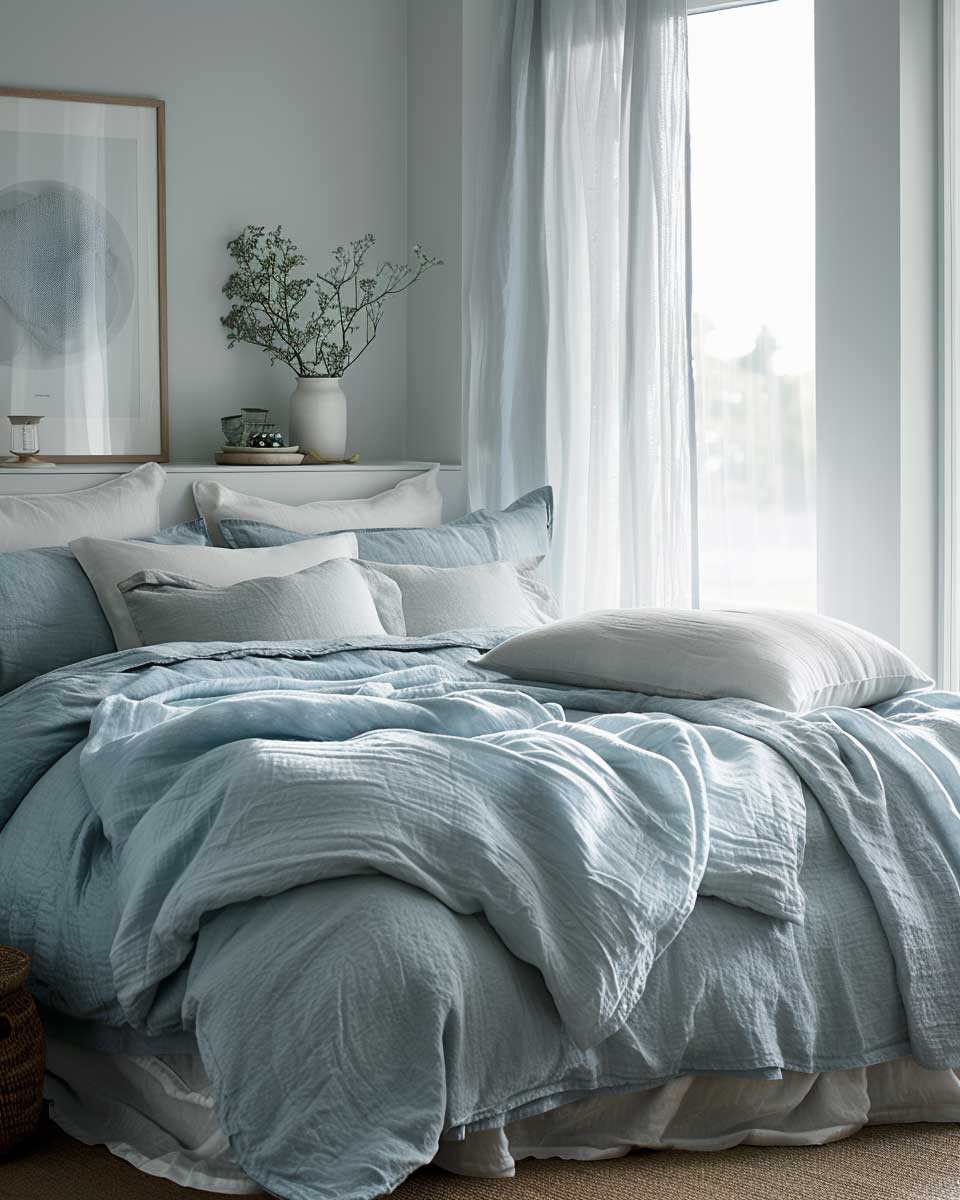
This interior colour combination fails in one specific context: warm climates without air conditioning. In a room where the actual temperature is high, the psychological cooling effect of blue and grey becomes an aesthetic problem — the room reads as uncomfortable rather than calming. If you live somewhere hot, introduce warm wood tones more aggressively than you think you need to, or shift the blue slightly warmer toward a blue-grey with violet undertones. What’s the question everyone asks about this pairing? Whether it ages well. The answer is yes — Homes & Gardens’ 2026 living room colour round-up puts pale blue firmly at the front of what’s current, with experts noting it’s replacing neutrals as the go-to backdrop for spaces that need to feel fresh without being aggressively modern. The data here confirms what the swatch already suggests: blue and grey is a durable pairing, not a trend.
Final Word
The right interior colour combination is a pairing that works at 7am and still works at 11pm.
Sage green and creamy white is the interior colour combination that earns its place in any room, any light condition — it adapts rather than dominates.
Royal blue and mustard yellow is for rooms that want to hold the eye: commit fully to the 75/25 ratio and remove every accent colour that interrupts the tension.
Soft blue and gentle grey works on physiology as much as aesthetics — warm your bulbs below 3000K and swap chrome fixtures for brass before you paint a single wall. Save this post — you’ll want it when you’re standing in the paint aisle second-guessing yourself on a Saturday morning.