Jack and jill bathroom layout ideas sound simple until two people need to be ready at 7am on a school day. Suddenly the shared sink is a battlefield and the single towel hook is a character flaw.
The layouts that actually work do one thing differently. They stop treating the bathroom as one room and start treating it as a sequence of zones. Toilet here. Vanities there. Shower separated from both. That’s it.
I’ve pulled together modern jack and jill bathroom layout ideas that address the real friction points — morning congestion, zero storage for two people, and the awkward moment when neither door locks properly. Small jack and jill bathroom layouts are in here too. You don’t need 80 square feet to make this work.
Quick Scan
Jack and Jill Bathroom Layout Ideas at a Glance
- Two Bedrooms Connected — most common, needs dual vanity to work
- Corner Layout — saves dead corner space, pairs well with corner shower
- T-Shaped — both rooms get equal hallway distance to bathroom
- Dual Entrance — one bedroom door + one hallway door, maximum flexibility
- Wet Room — best for small floor plans, full waterproofing required
- Vanity Separation — two sinks, two mirrors, solves morning congestion
- Hallway Access — bathroom belongs to no single room
- Pocket Doors — save 9–12 sq ft vs swinging doors, need quality locks
- Parallel / Long Narrow — fixtures on both walls, needs slim 18″ vanities
- Split Layout — toilet/shower zone + vanity zone, two people simultaneously
- Shared Shower, Separate Vanities — clearest division of private vs shared space

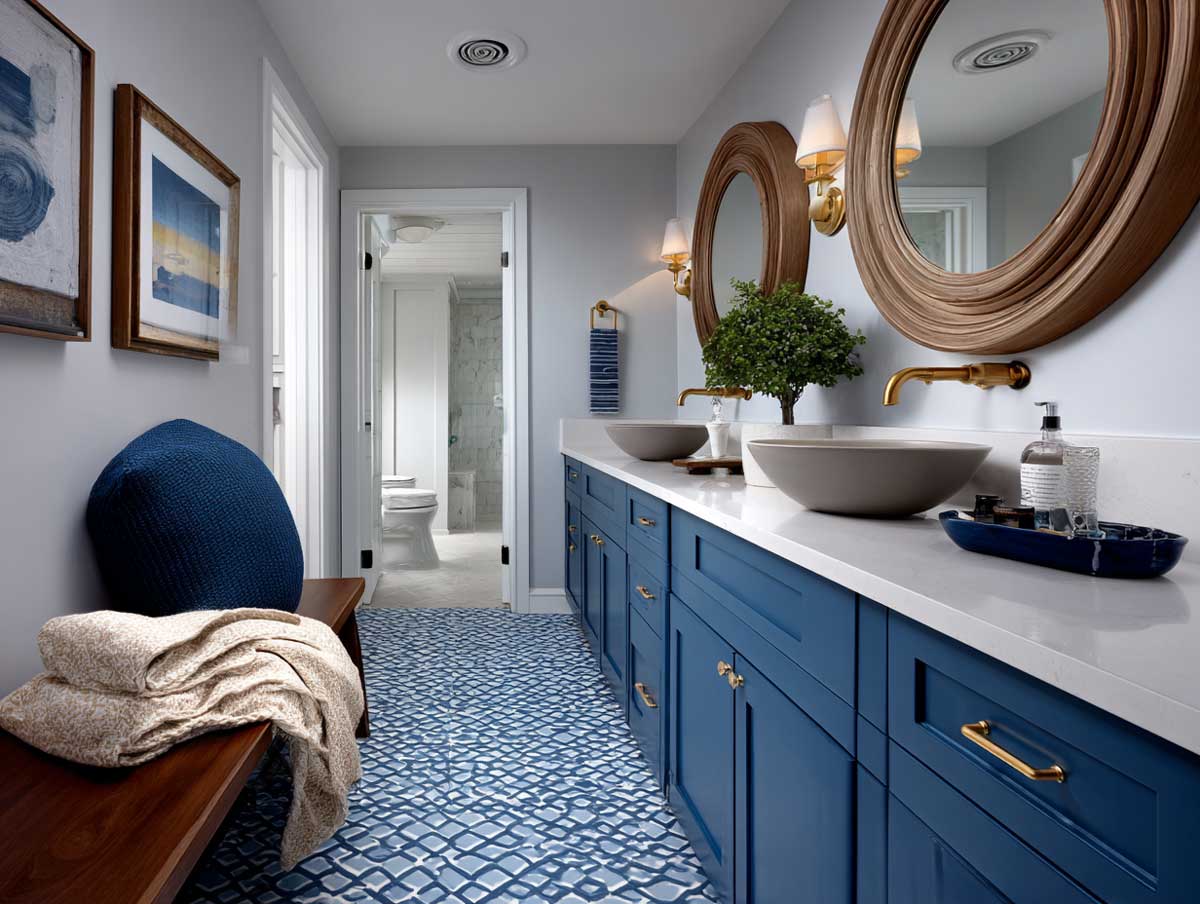
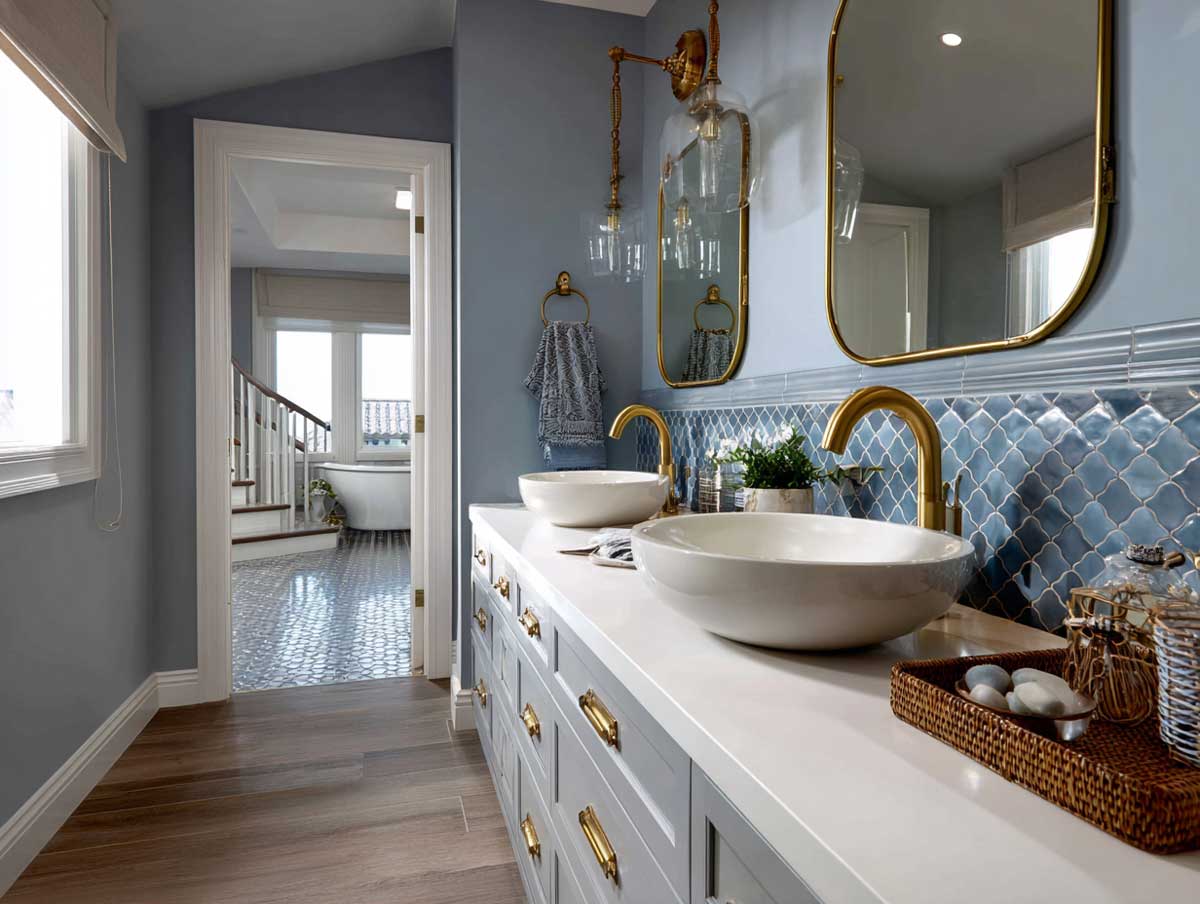
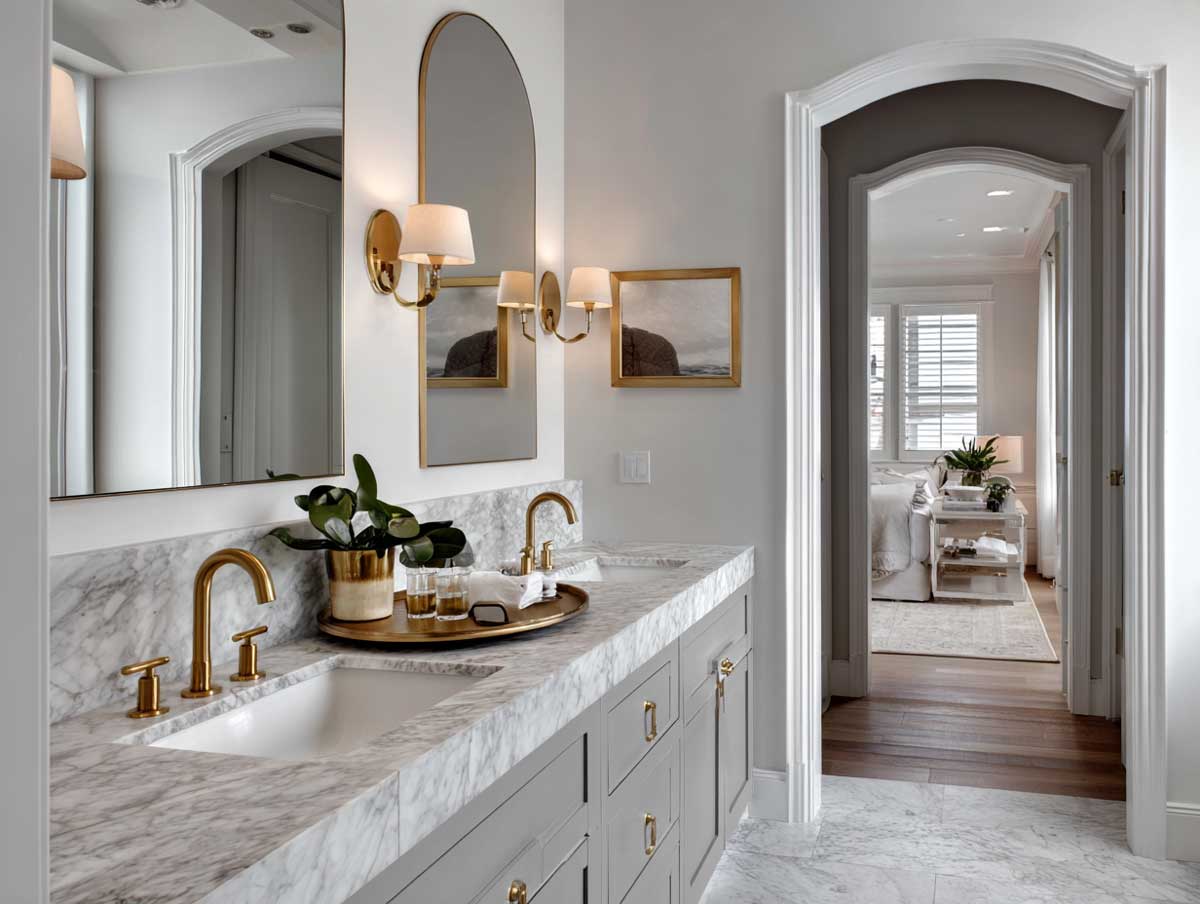

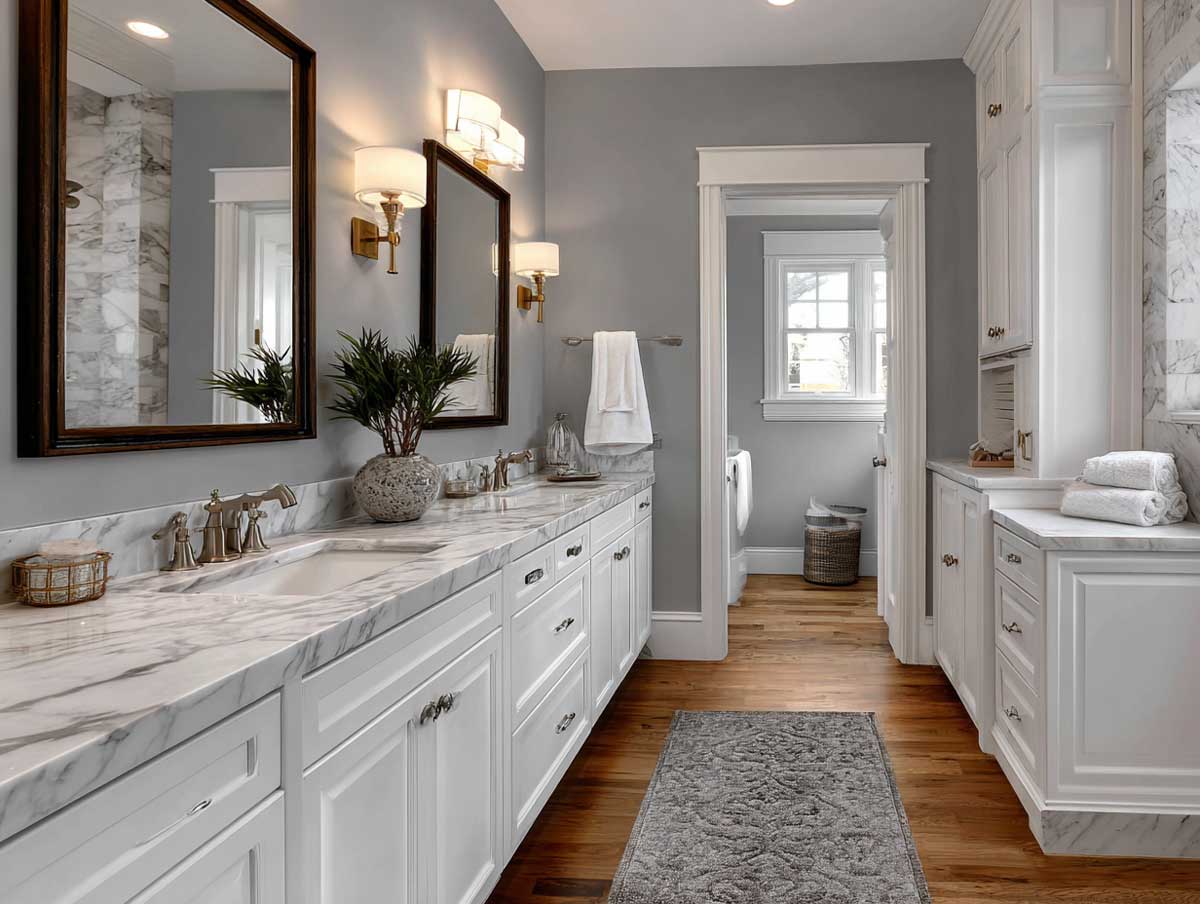
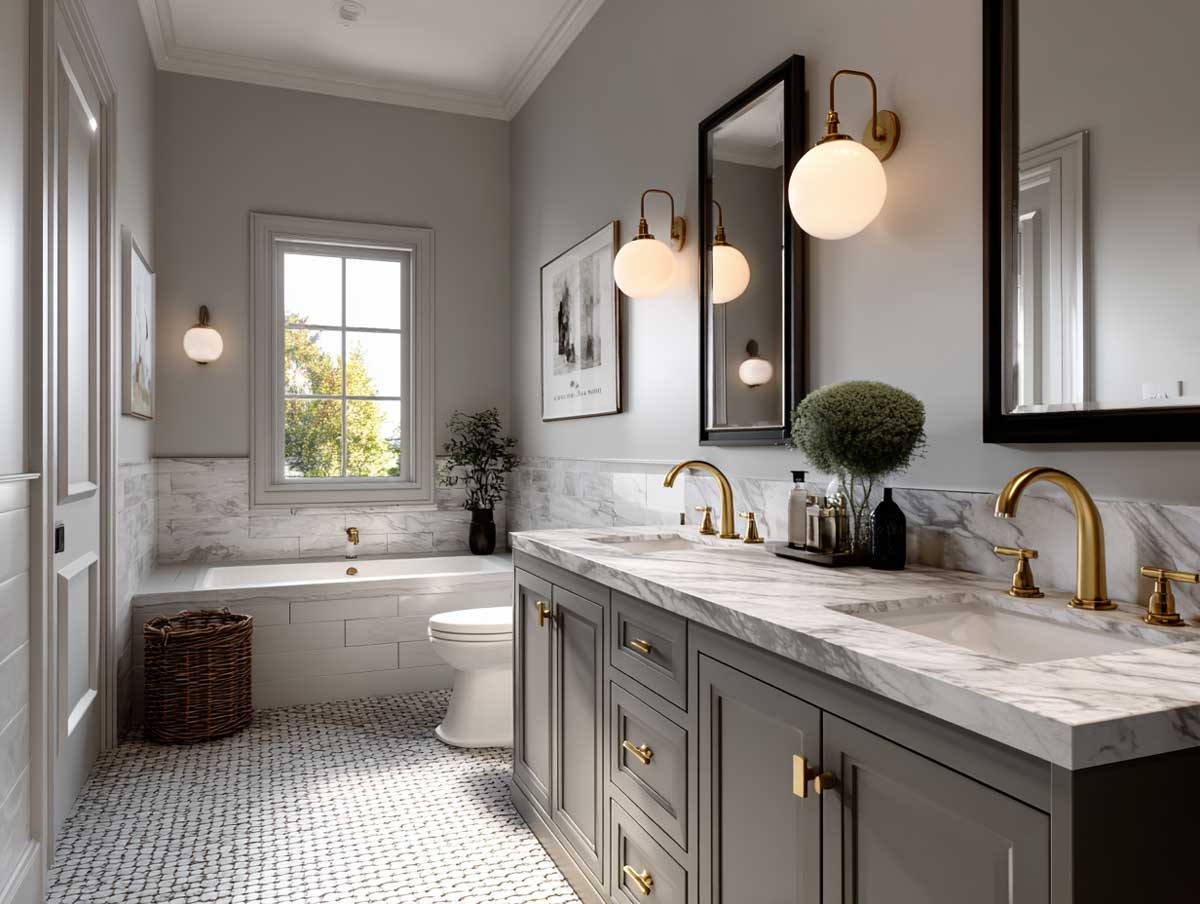
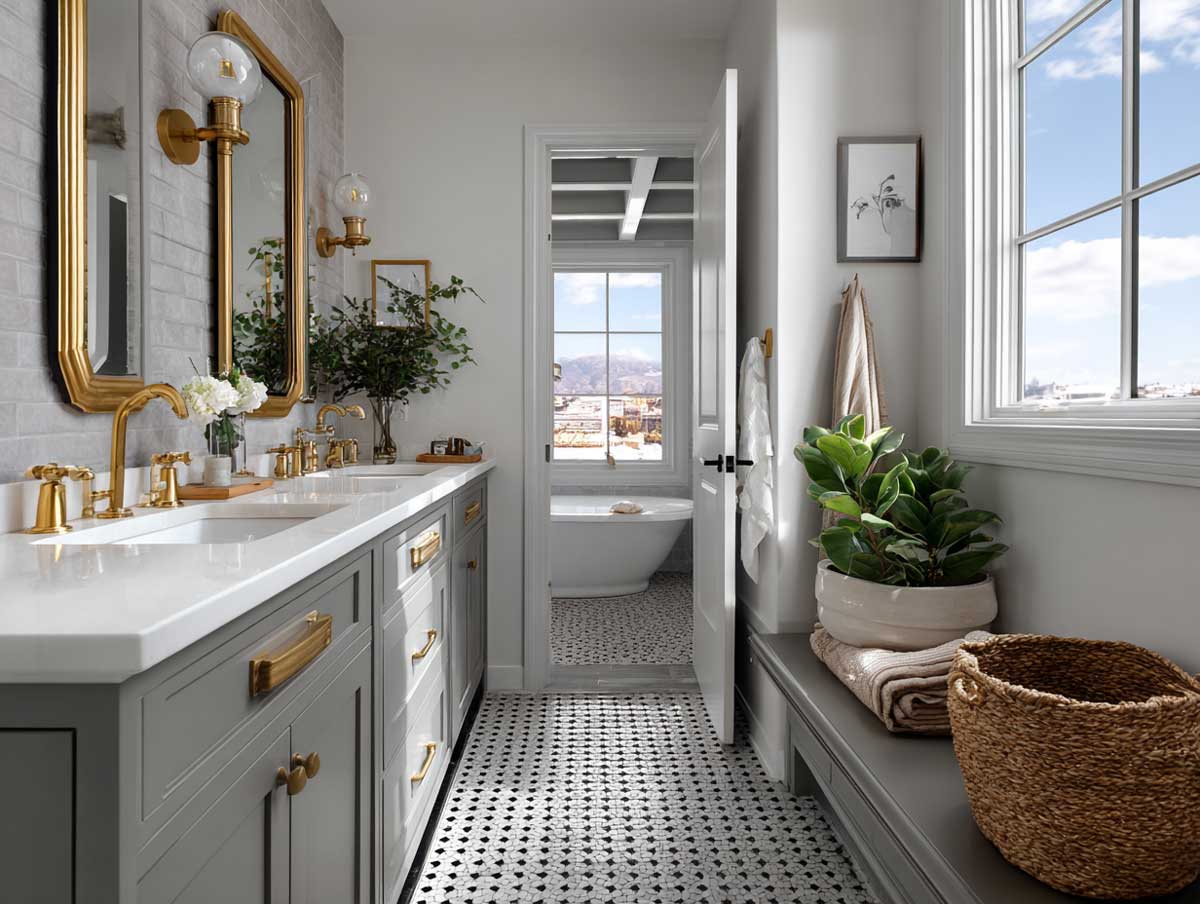
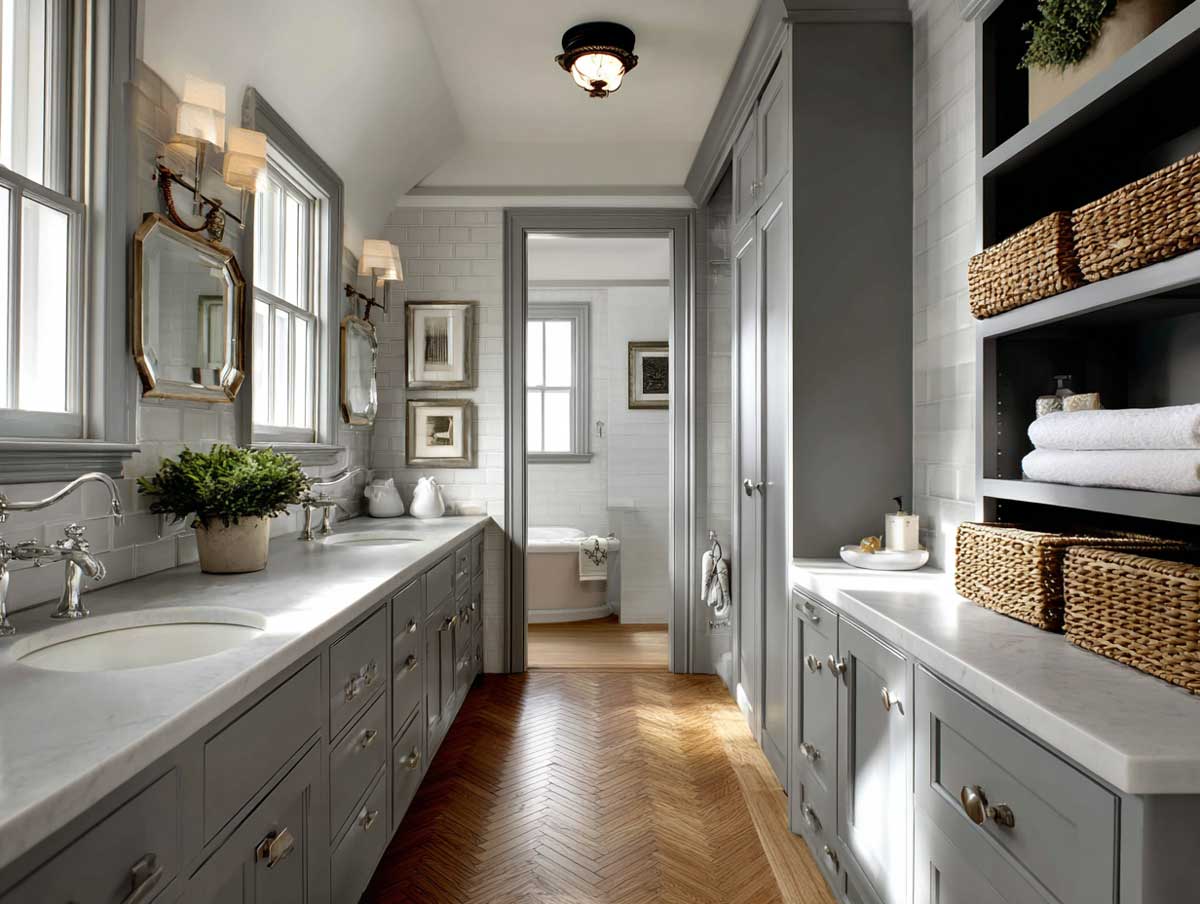
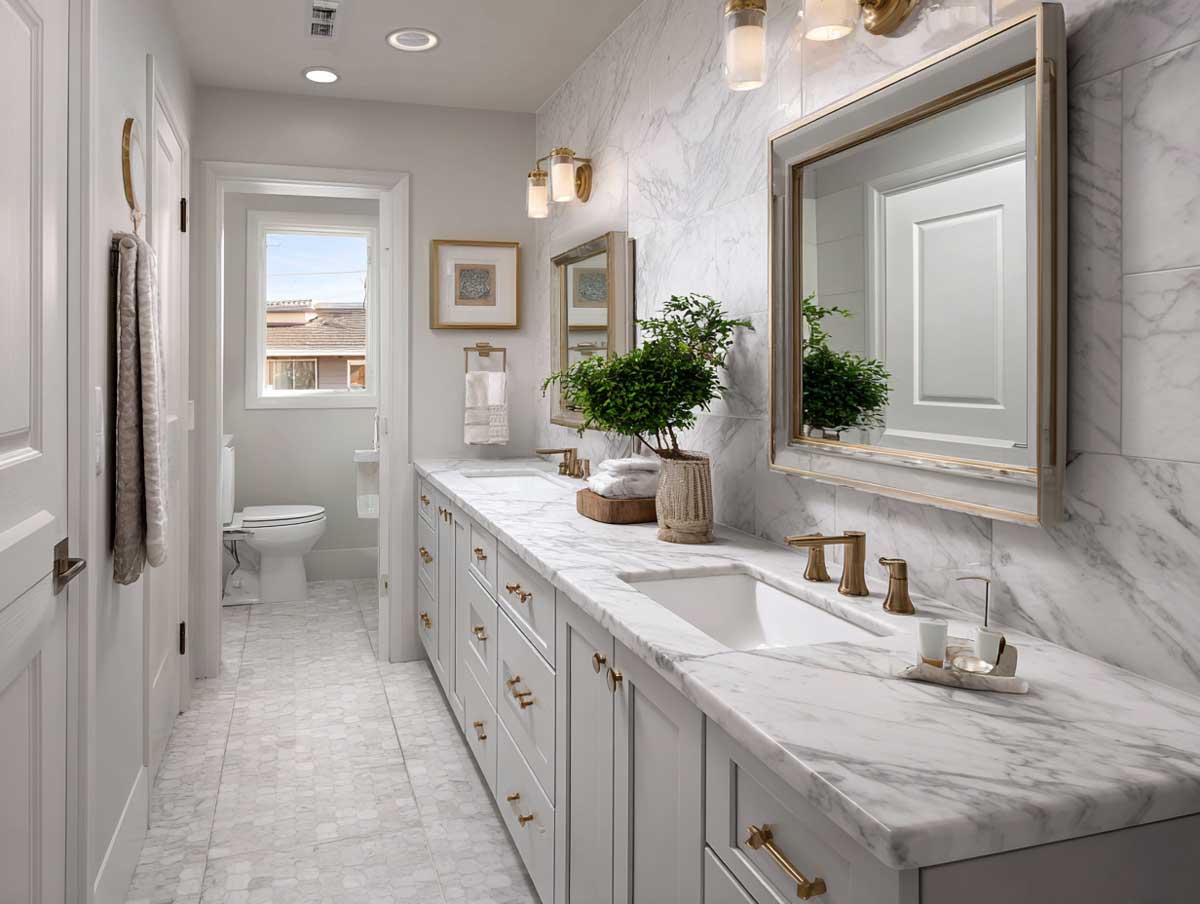

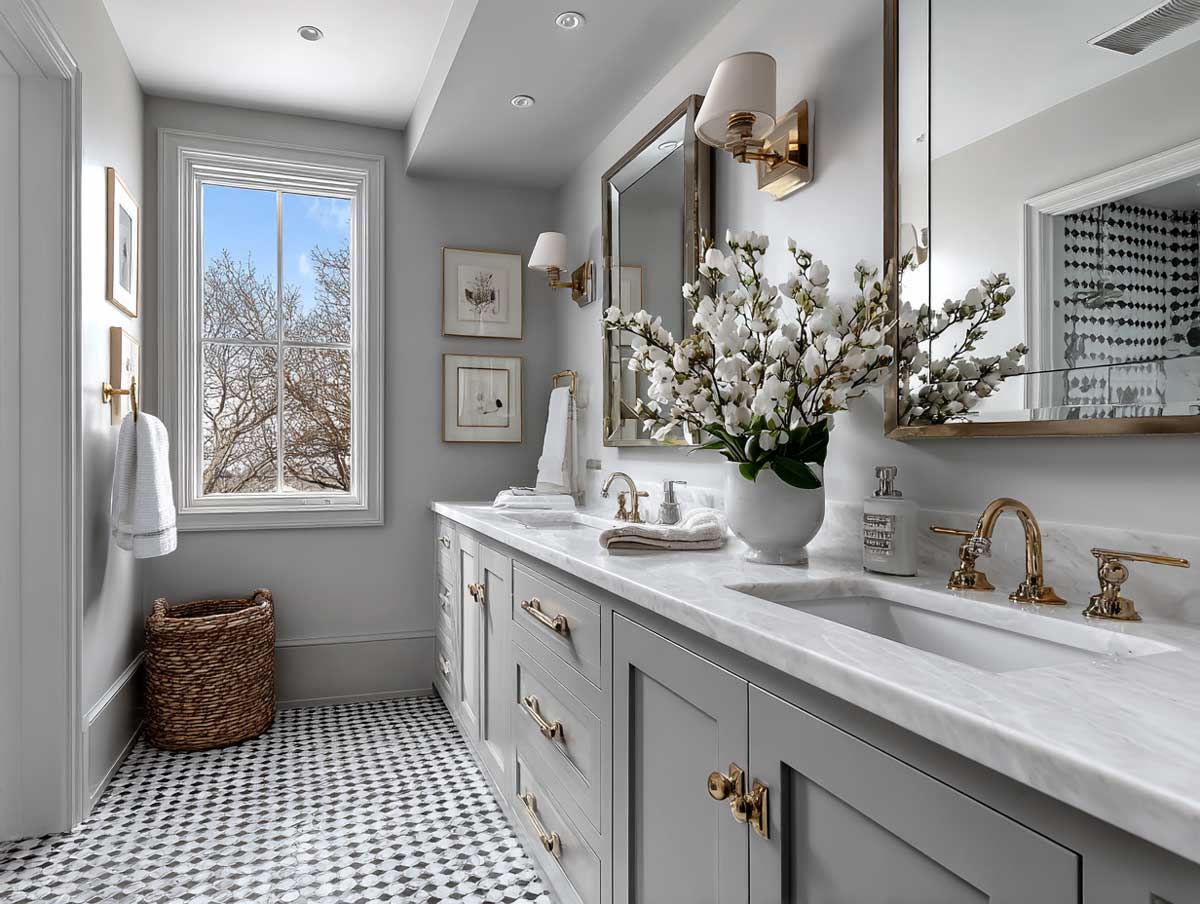

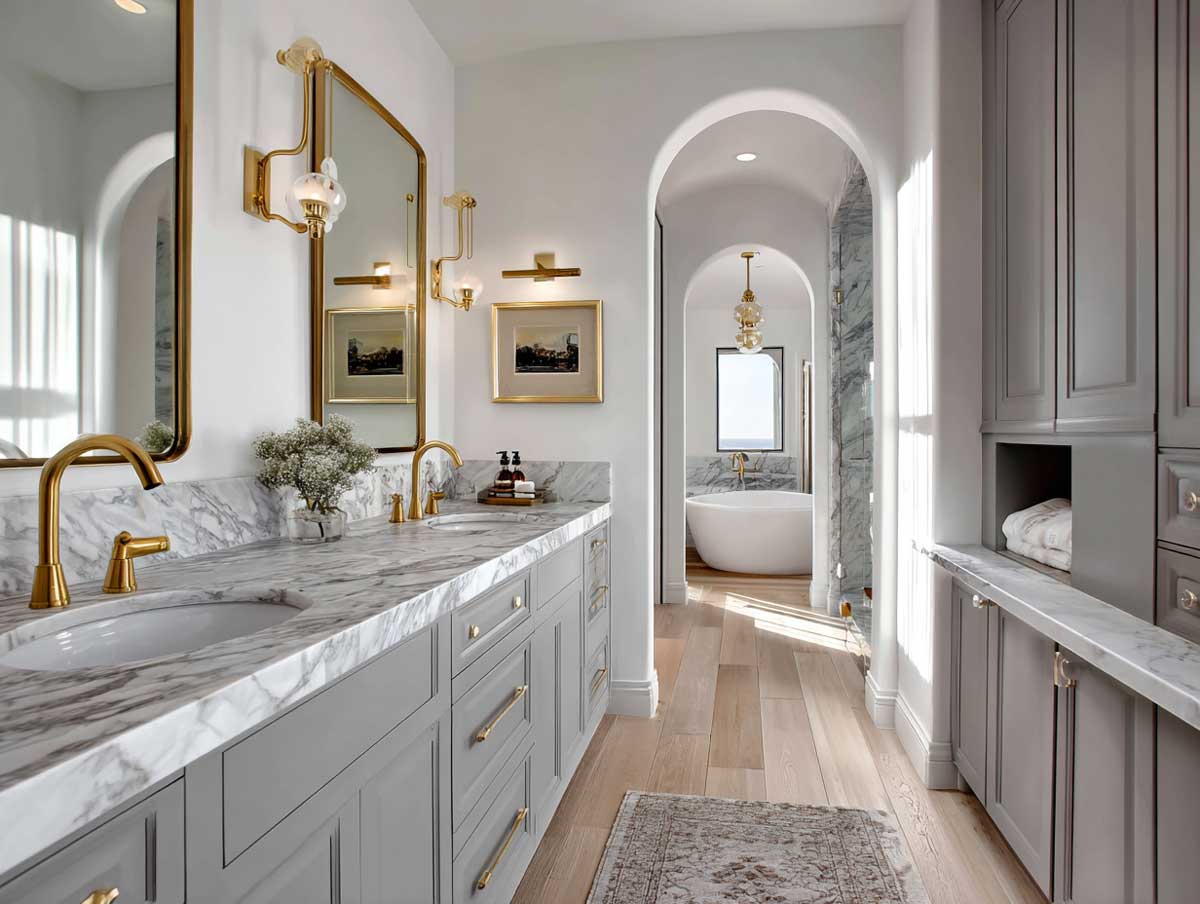
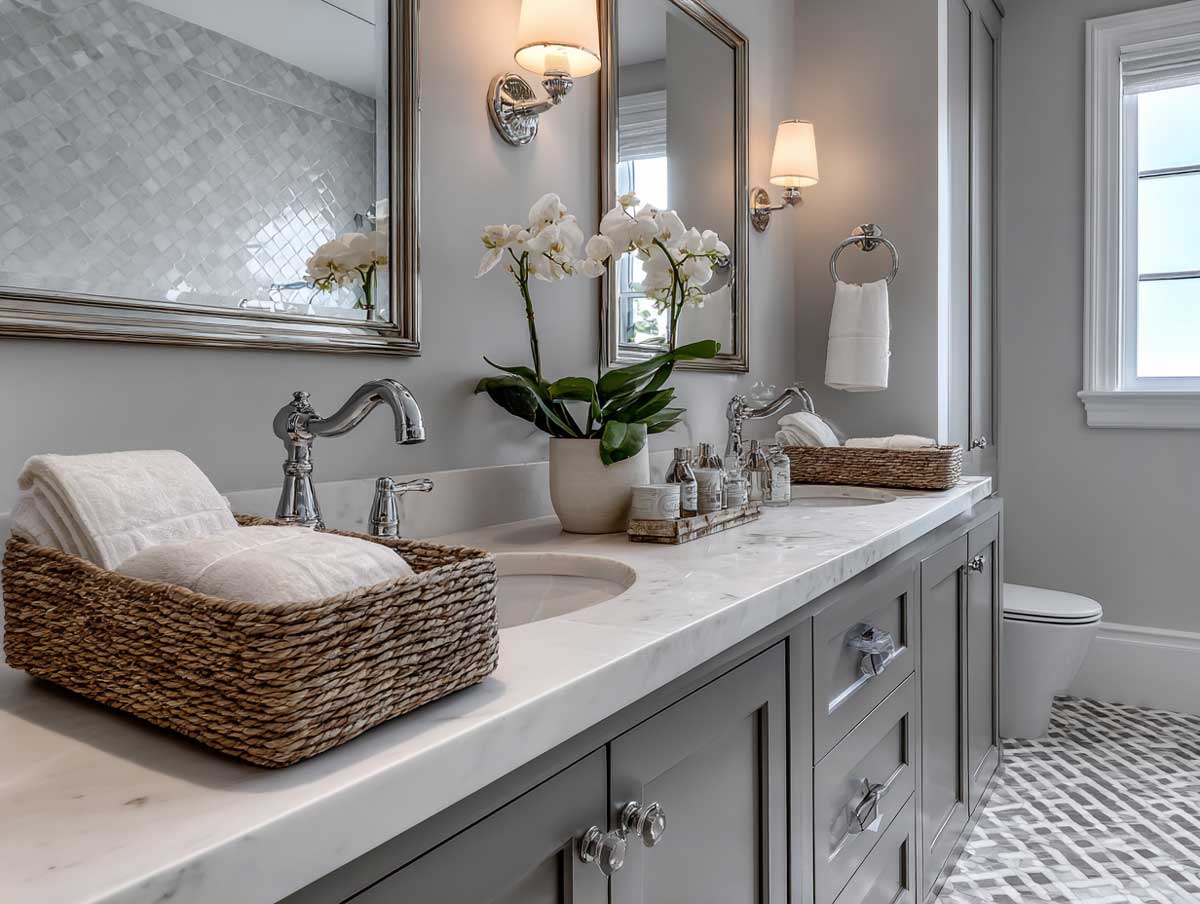


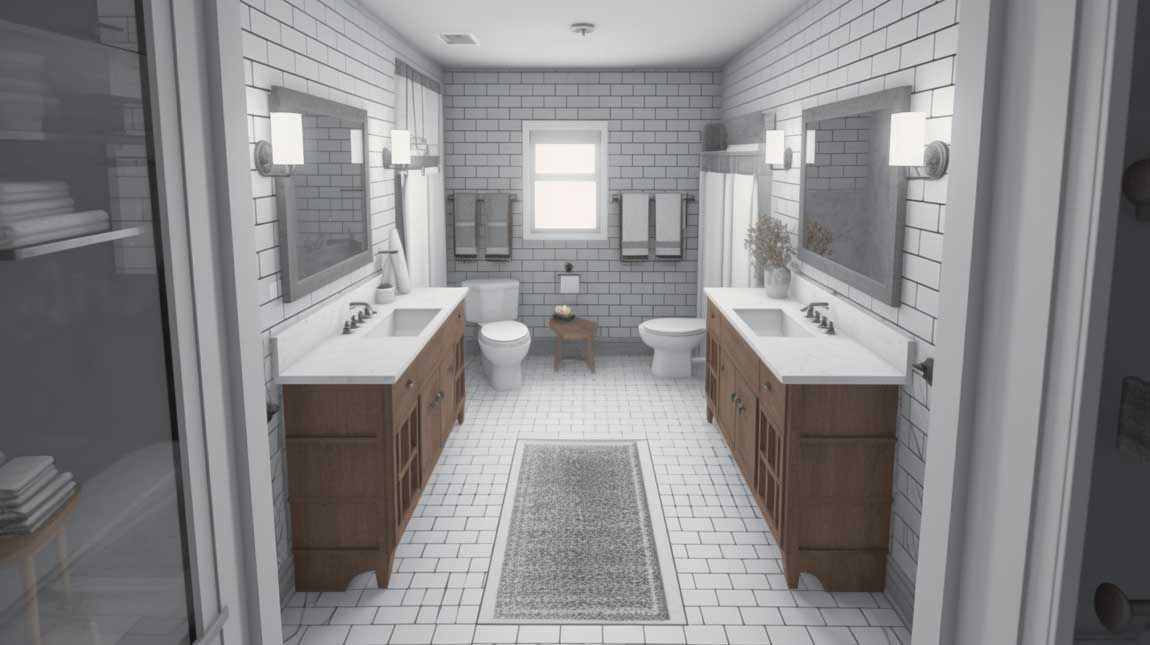
Two Bedrooms, One Bathroom, Zero Morning Arguments
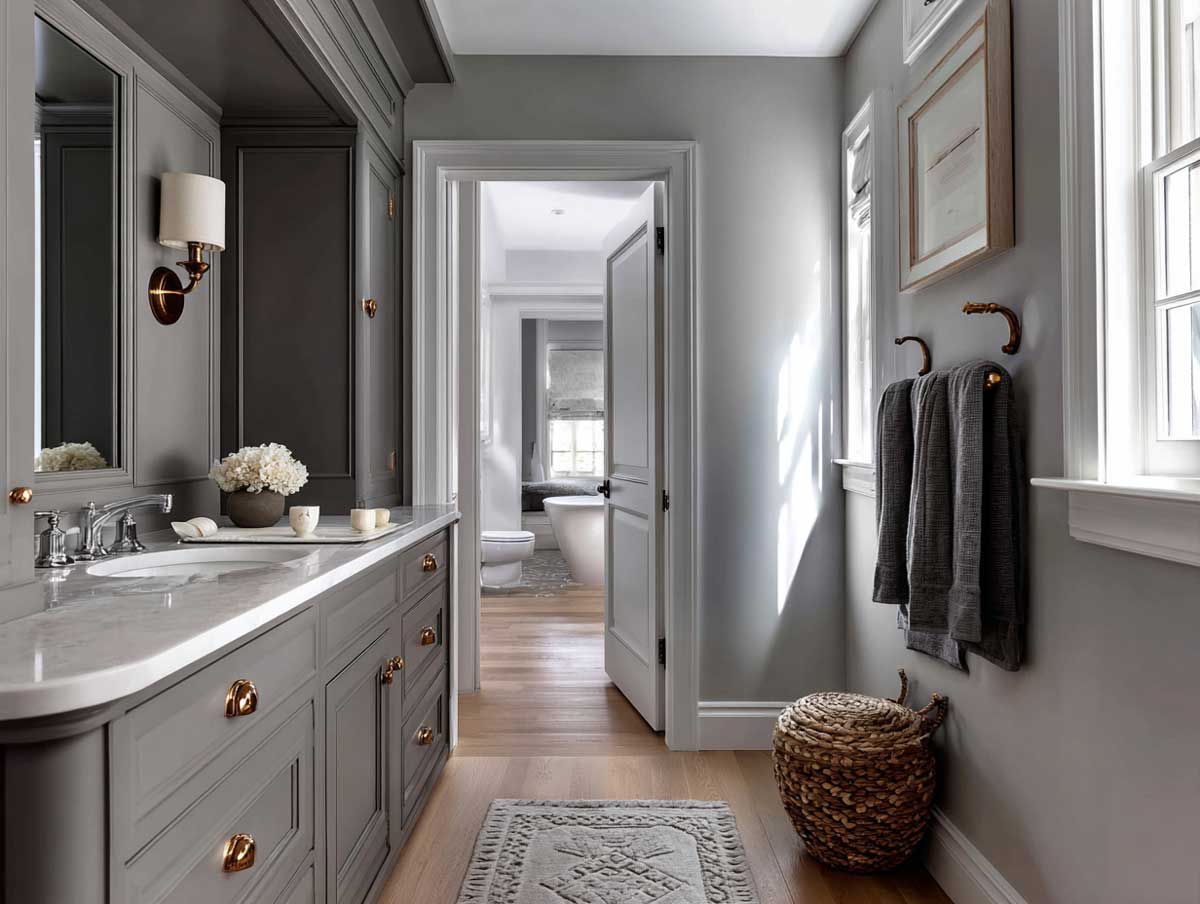
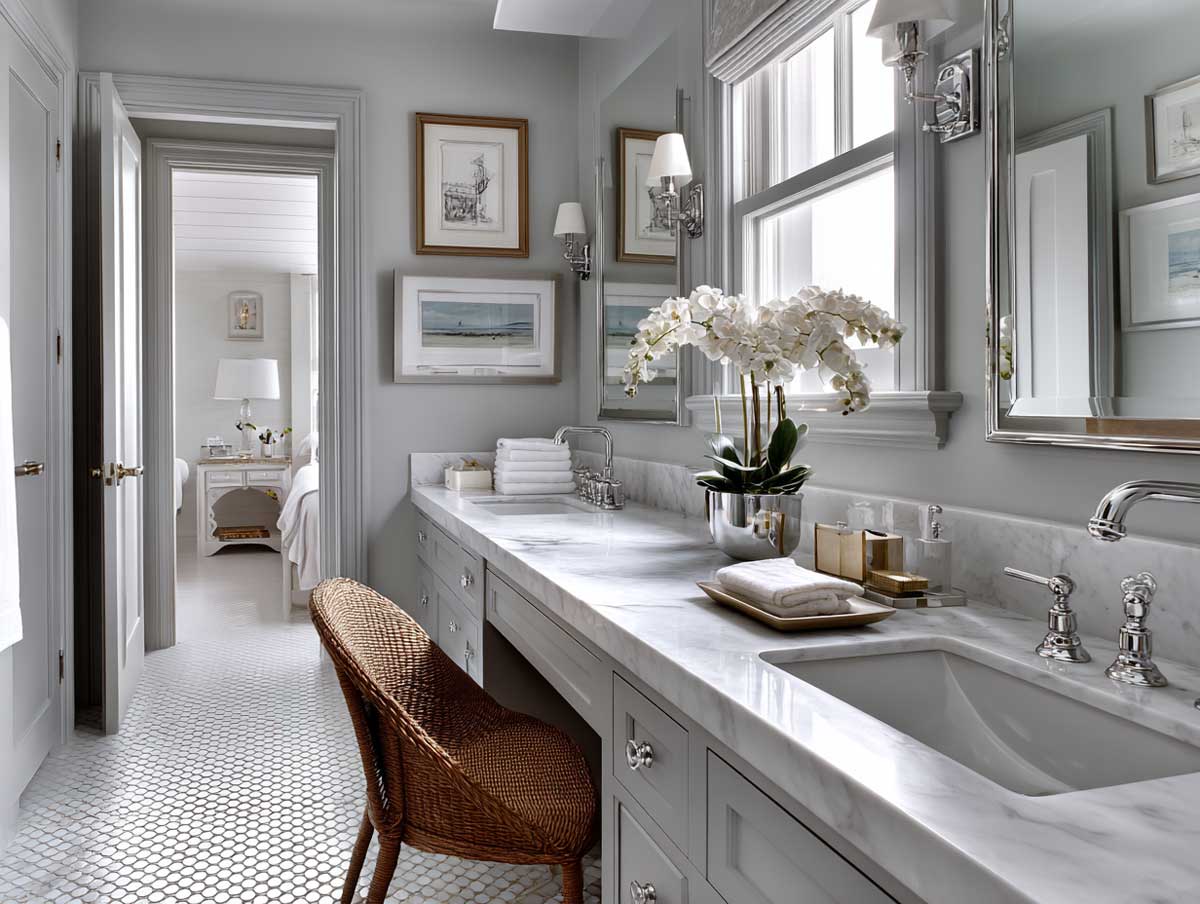
One of the most popular Jack and Jill bathroom layouts is connecting two adjacent bedrooms, allowing each room to have direct access to the shared bathroom. This design is perfect for siblings or family members who need to share a bathroom but still want a sense of privacy. By including a lockable door on each side of the bathroom, occupants can maintain their privacy while enjoying the convenience of a nearby bathroom.
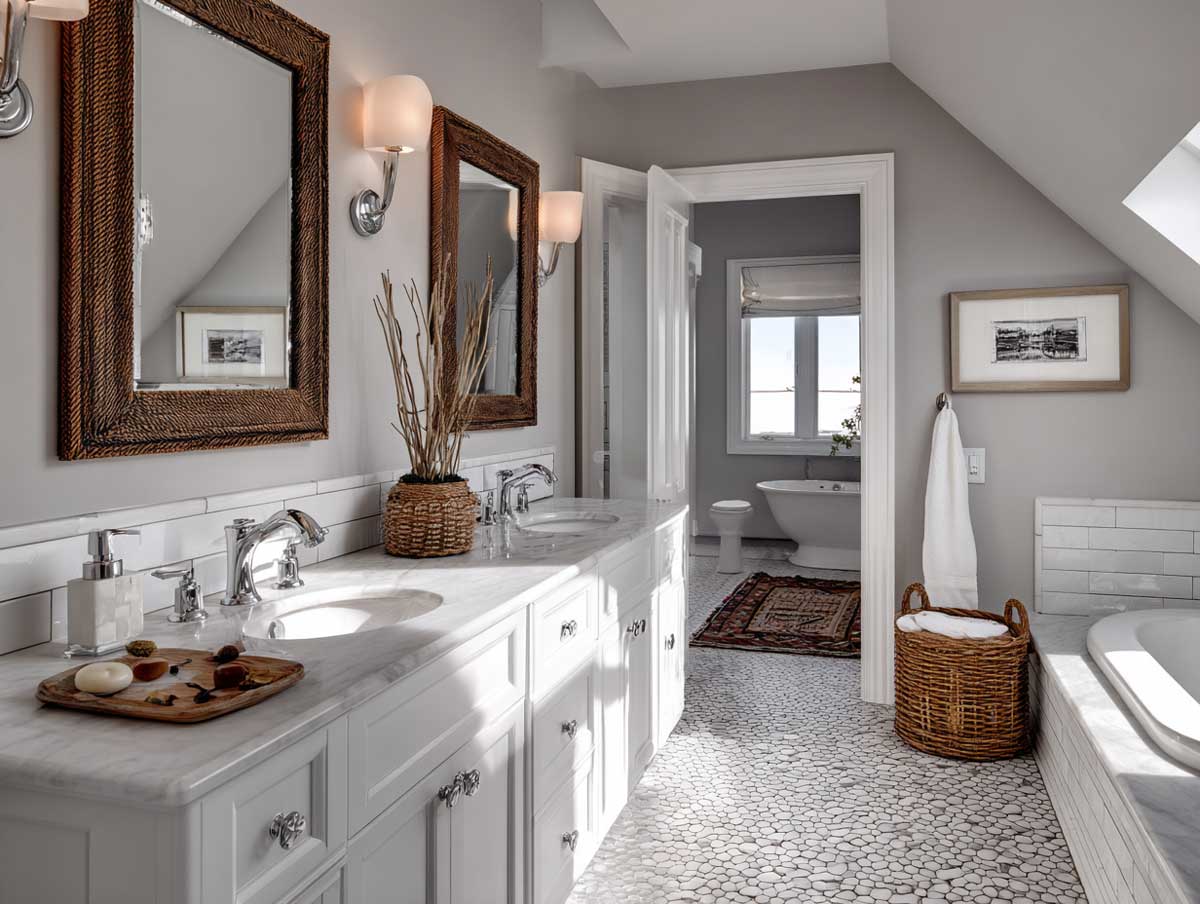
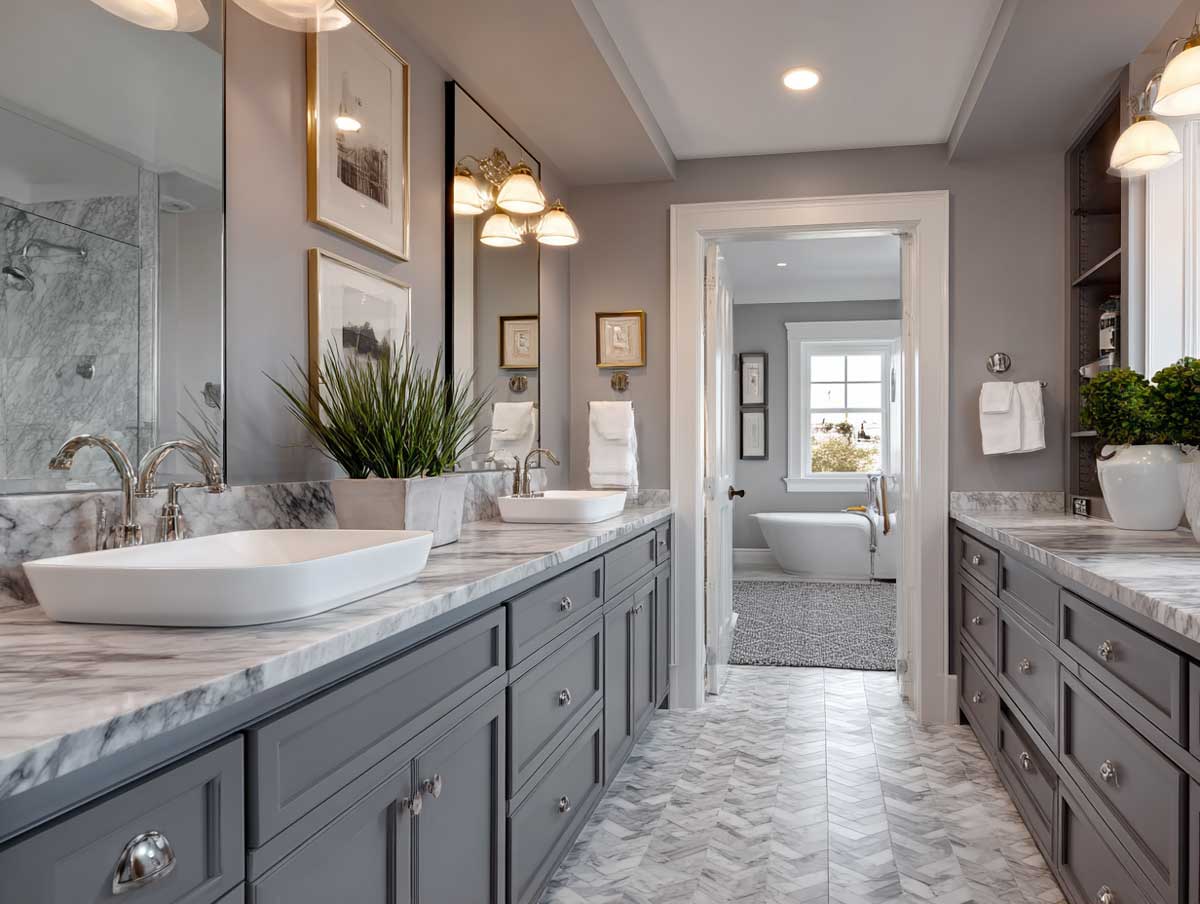
To make this layout even more efficient, consider adding separate vanity areas within the bathroom for each bedroom, allowing multiple users to get ready simultaneously. This can help reduce morning congestion and make the space feel more personalized for each occupant. Jack and jill bathroom layout dimensions for this standard configuration typically run between 60 and 110 square feet — a full breakdown of size ranges and what each tier realistically fits is covered in Badeloft’s jack and jill bathroom buying guide.


The layout connecting two adjacent bedrooms is the most common jack and jill bathroom design for a reason. Both rooms get a door. Both doors lock independently. When one person is inside, both sides are secured and the other user knows to wait. It works like a system, not a courtesy arrangement.
What fails here: skipping separate vanities and assuming one sink is enough. It’s not. A single sink with two people trying to brush teeth at 7:15am is where resentment starts. Don’t cheap out on the vanity count.
The standard jack and jill bathroom layout dimensions for this version run around 7 by 9 feet minimum. Tighter than that and you lose the double vanity, which defeats the purpose. Budget around $8,000 to $14,000 for a mid-range remodel with dual sinks, proper tile, and locking hardware on both doors.
The Corner Jack and Jill Bathroom Layout Nobody Regrets
A corner layout is a clever solution for a Jack and Jill bathroom when the connecting bedrooms are located diagonally from each other. By situating the bathroom in the corner between the two rooms, you can create a unique and functional space that provides easy access for both bedrooms. This layout is particularly effective in homes with limited space or irregular floor plans.
When designing a corner Jack and Jill bathroom, consider incorporating space-saving features such as a corner shower or a compact bathtub to maximize the available space. Additionally, including built-in storage solutions like shelves or cabinets can help keep the shared bathroom organized and clutter-free.

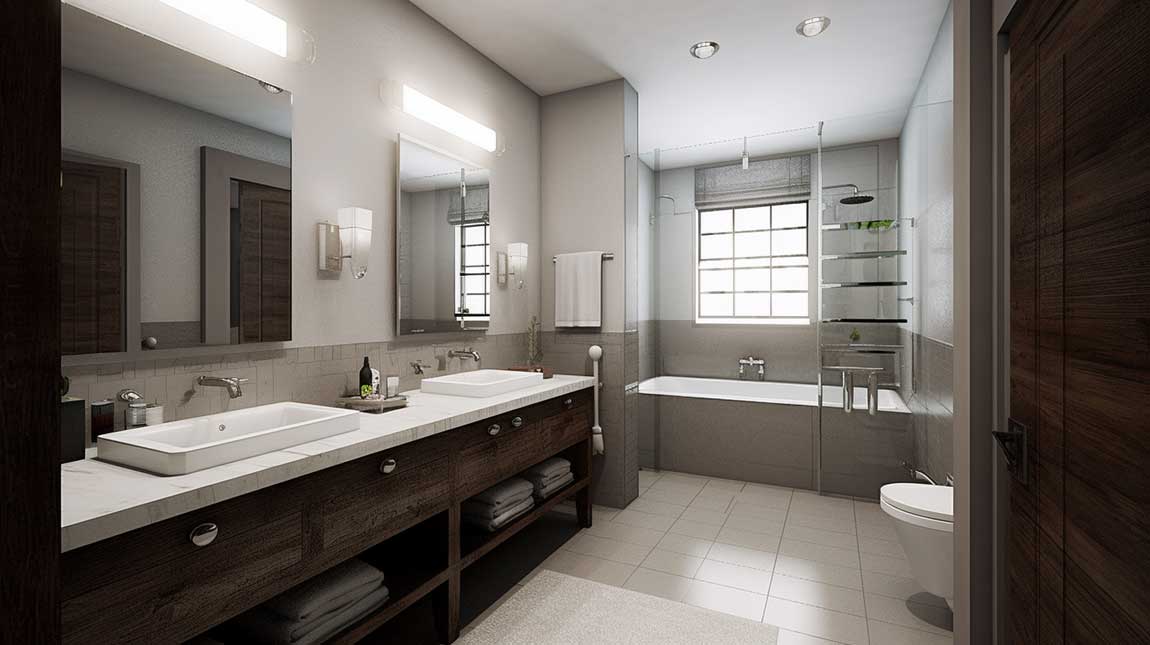
Corner jack and jill bathroom layouts work when two bedrooms sit diagonally rather than directly across from each other. The bathroom occupies dead corner space that would otherwise become a closet or awkward alcove. It’s one of the more efficient uses of a floor plan that most builders waste.
The geometry forces you to think creatively. A corner shower fits naturally here. So does an angled vanity wall. What doesn’t fit: a standard rectangular floor plan dropped into a diagonal corner — that approach wastes 20% of the square footage on unusable triangles.
Built-in shelving matters more in corner layouts because the irregular shape limits freestanding furniture. Go recessed or go without.
T-Shaped Access Gives Both Rooms Equal Distance
A T-shaped layout is an innovative option for a Jack and Jill bathroom, where the connecting bedrooms are located across a hallway from each other. In this design, the bathroom is situated at the intersection of the hallway, with doors on either side leading to the respective bedrooms. This layout provides easy access to the bathroom while maintaining a sense of separation and privacy for each occupant.
To make the most of a T-shaped Jack and Jill bathroom, consider incorporating a double vanity with ample storage space, ensuring that each user has their own designated area for personal items. Additionally, you may want to include a separate shower and bathtub to cater to the preferences of different family members.


Dual Entrance Means Neither Room Owns the Bathroom
A dual-entrance bathroom layout is perfect for a Jack and Jill bathroom that is accessible from both a hallway and a connecting bedroom. This design allows for maximum flexibility, as the bathroom can be used by multiple occupants without disturbing the privacy of the adjoining bedroom. By including a lockable door on both entrances, users can maintain their privacy while enjoying the convenience of a shared bathroom.
When designing a dual-entrance Jack and Jill bathroom, consider incorporating a separate toilet area with a sliding door, ensuring that the bathroom can be used by multiple people simultaneously. Additionally, adding a double vanity or separate grooming stations can further enhance the functionality of the space.


A dual-entrance jack and jill bathroom design is the most flexible version in the category. One door opens from the hallway. The other connects directly to a bedroom. This lets a guest or a third family member use the bathroom without walking through anyone’s private space.
The mistake people make here is treating the hallway door as secondary. It’s not. Both entrances need the same quality lock, the same door width, the same clearance. I’ve seen renovations where the hallway door gets a cheap hollow-core slab while the bedroom door gets solid wood. You notice it immediately.
A separate toilet compartment with its own sliding door is worth the square footage in this layout. It means the vanity zone stays accessible while the toilet zone is occupied — which is the whole point.
Wet Room Jack and Jill Layouts Make Small Spaces Feel Intentional
A wet room layout is an excellent choice for a contemporary Jack and Jill bathroom, providing a seamless and open space that is both stylish and functional. In this design, the shower area is not separated by a traditional shower enclosure, allowing the entire bathroom to serve as a waterproof zone. This layout is particularly beneficial in smaller bathrooms, as it creates a sense of spaciousness and airiness. If you’re weighing this against a full renovation, modern bathroom remodel ideas show what a mid-range budget can realistically achieve.
When designing a wet room Jack and Jill bathroom, consider incorporating non-slip flooring, a wall-mounted toilet, and a sleek, minimalist vanity to maximize the available space. Additionally, include ample drainage and waterproofing measures to ensure the room remains safe and functional for multiple users.


Wet room layouts remove the shower enclosure entirely. The whole floor drains. The whole room is waterproofed. For a small jack and jill bathroom layout, this is the move that makes the space feel designed rather than squeezed.
Non-slip floor tile is not optional. Neither is a wall-mounted toilet — floor-mount models trap water and create cleaning problems in a room where the floor gets fully wet every day. A wall-mounted toilet runs about $400 to $900 for the fixture alone, plus installation. Worth it.
The weak point in most wet room conversions is drainage placement. Center drain looks clean but pulls water across the entire floor. Linear drain along one wall is faster and keeps the dry side actually dry.
Separate Vanities Stop 90% of the Congestion
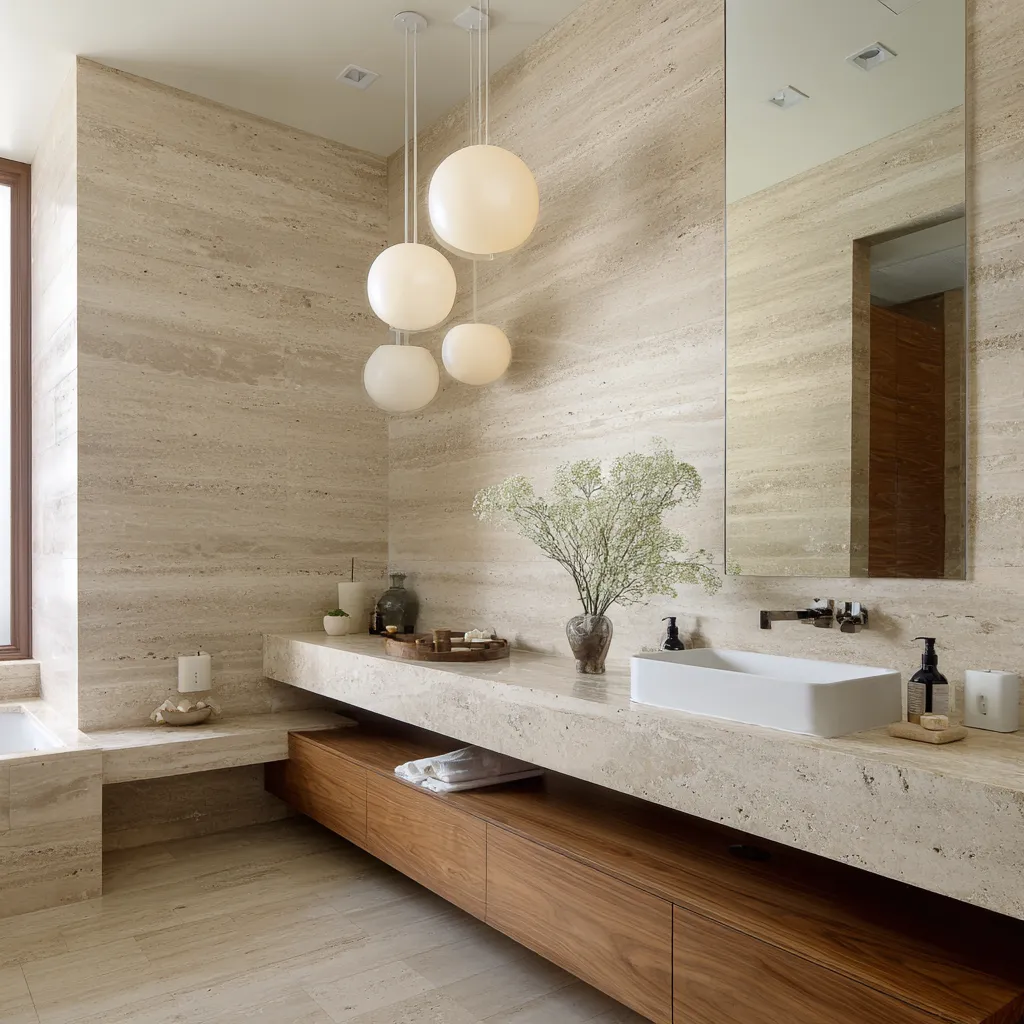
A Jack and Jill bathroom layout with vanity separation is perfect for ensuring that multiple users can get ready simultaneously without feeling cramped. In this design, the bathroom features two separate vanity areas, each with its own sink and storage, allowing occupants to have their own designated space for grooming and personal items.
When creating a vanity separation layout, consider incorporating mirrors and lighting for each vanity area to enhance the functionality and style of the space. Additionally, you may want to include a shared shower and toilet area, ensuring that the bathroom remains efficient and practical for multiple users.


Don’t Do This
Jack and Jill Bathroom Mistakes That Make Layouts Fail
- One sink for two users. It works fine until someone moves in. Then it doesn’t.
- Hollow-core doors on both entries. You hear everything. Use solid core, especially on the toilet side.
- Skip the interior lock on the toilet compartment. The whole privacy argument falls apart without it.
- Standard hinged doors in a narrow parallel layout. They eat the passage width. Use pocket or barn doors.
- One shared shower niche. Two people’s products, one shelf. It’s immediately a problem.
- Matching vanity storage. Different people have different amounts of stuff. Give one side more cabinet depth.
- Center floor drain in a wet room. Linear drain along one wall keeps the dry side usable.
Hallway Access Means the Bathroom Belongs to Nobody’s Bedroom
A centralized bathroom with hallway access is an ideal layout for a Jack and Jill bathroom in a larger home. In this design, the shared bathroom is situated at the center of the home, accessible from a common hallway. This layout allows family members to access the bathroom without needing to pass through any bedrooms, maintaining privacy for all occupants.
When designing a centralized Jack and Jill bathroom, consider including a double vanity or separate grooming stations to cater to the needs of multiple users. Additionally, incorporate a separate shower and bathtub to provide options for different family members’ preferences.
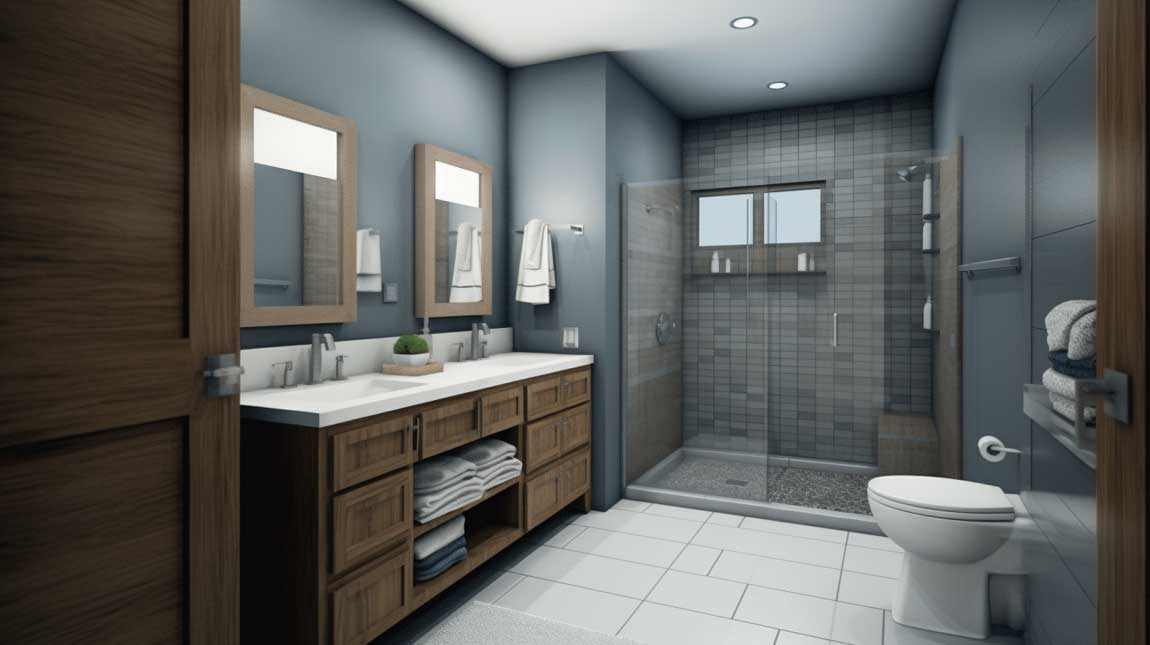
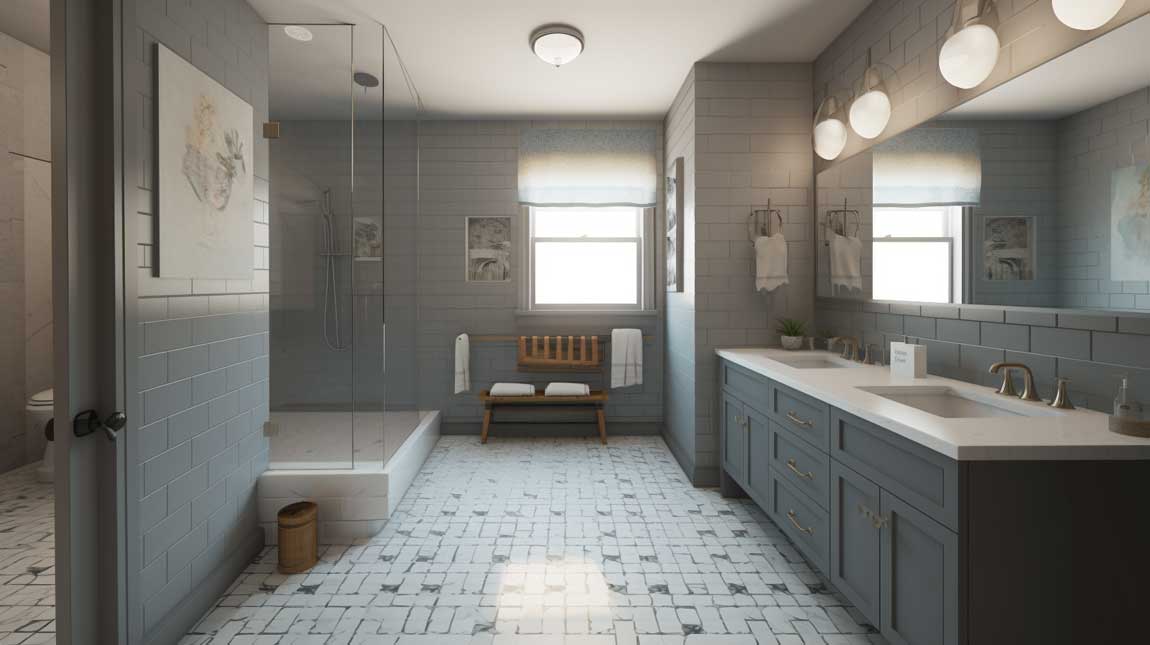
Centralized jack and jill bathroom layouts work in larger homes where the bathroom sits at the center of a bedroom wing. No single room claims ownership. The hallway becomes the neutral zone. Everyone enters on equal terms.
This design solves the social problem more than the spatial one. Kids don’t fight over whose bathroom it is because it isn’t anyone’s bathroom. That sounds minor. It isn’t.
The downside: hallway access adds foot traffic at odd hours. A pocket door or barn door on the hallway side reduces noise and keeps the corridor from feeling like a waiting room. Don’t use a standard hinged door here — it swings into traffic.
Pocket Doors Solve the Space Problem and the Privacy Problem at Once
Pocket doors are a fantastic way to maintain privacy in a Jack and Jill bathroom while maximizing the available space. These sliding doors disappear into the wall when opened, eliminating the need for a traditional swinging door that takes up valuable floor space. By including pocket doors in your Jack and Jill bathroom layout, you can create a more streamlined and functional space. For inspiration on how hardware and tile choices pull a shared bathroom together visually, the modern country bathroom trends roundup covers material combinations that hold up in high-traffic rooms.
When incorporating pocket doors into your design, consider adding lockable mechanisms to ensure privacy for each user. Additionally, choose high-quality hardware and materials for the pocket doors to ensure smooth operation and longevity.
Long Narrow Jack and Jill Bathroom Layout Done Right
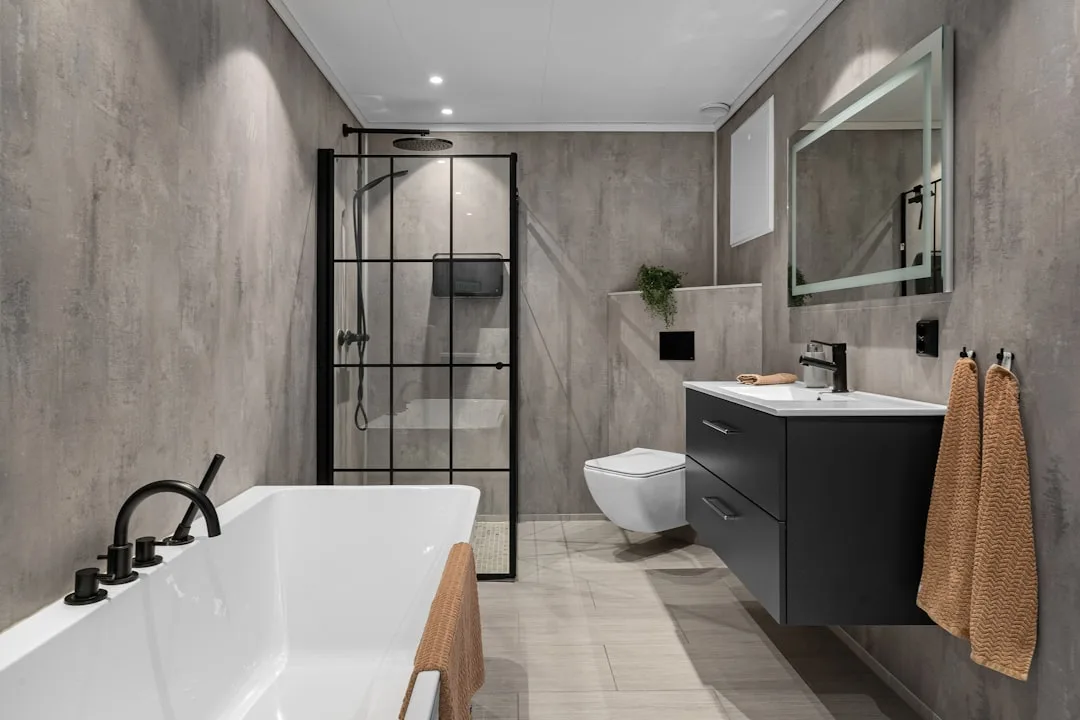
A parallel bathroom layout is an excellent choice for a Jack and Jill bathroom situated between two bedrooms, with each room having its own entrance to the shared space. In this design, the bathroom features a long and narrow configuration, with fixtures and amenities arranged along both walls. This layout is particularly suitable for homes with limited space or narrow floor plans.
When designing a parallel Jack and Jill bathroom, consider incorporating space-saving features such as a wall-mounted toilet, a slimline vanity, or a compact shower enclosure. Additionally, include clever storage solutions like built-in shelves or cabinets to keep the space organized and clutter-free.

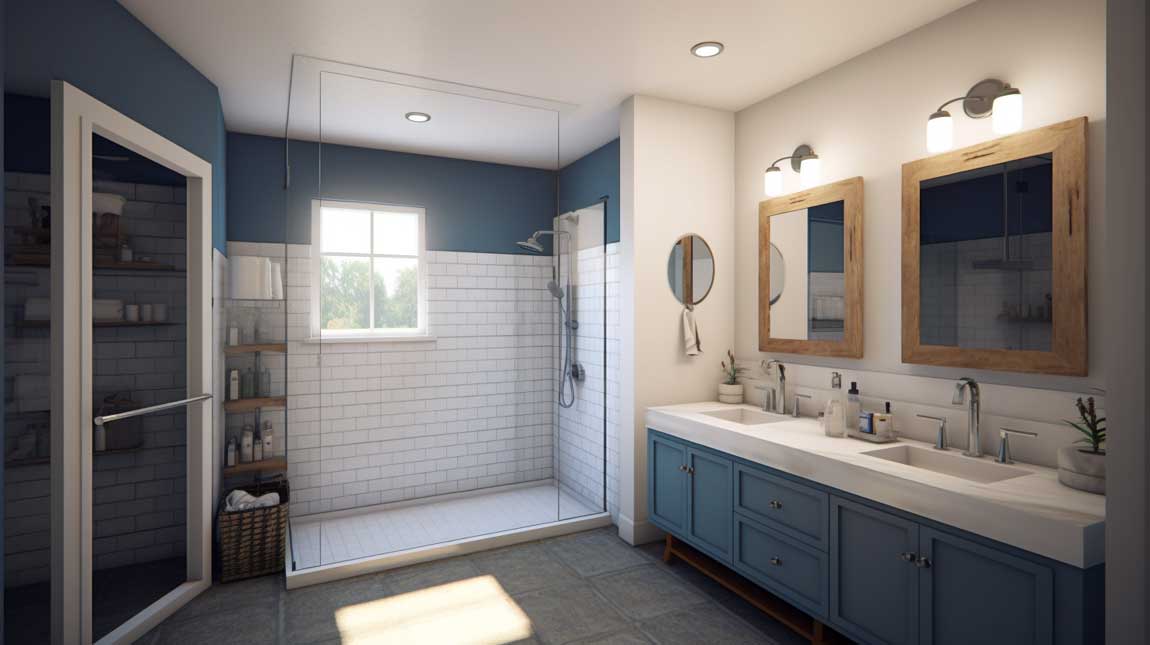
Parallel layouts suit long narrow floor plans where the bathroom runs like a corridor between two rooms. Fixtures line both walls. The entry doors sit at opposite ends. It’s efficient in a way that nothing else accommodates this particular dimension.
Wall-mounted toilets and slimline vanities are mandatory here, not optional upgrades. A standard 24-inch vanity eats the passage width in a 5-foot-wide parallel bathroom. Go 18-inch wall-mount or recessed.
The layout I’d avoid: placing both entry doors on the same wall. It looks symmetrical on a floor plan but creates dead space at the far end that becomes a dump zone for extra toilet paper and forgotten shampoo bottles within six months.
Split Layouts Let Two People Use the Bathroom Simultaneously
A split bathroom layout is a smart solution for a Jack and Jill bathroom that needs to accommodate multiple users at once. In this design, the bathroom is divided into two separate areas, each with its own fixtures and amenities. This layout allows family members to use the bathroom simultaneously without disturbing each other’s privacy.
When designing a split Jack and Jill bathroom, consider including a shared shower and bathtub area, with separate toilet and vanity spaces for each user. Additionally, incorporate ample storage and organization options to ensure that each occupant has their own designated space for personal items.

Split jack and jill bathroom layouts divide the space into two distinct zones with a partition or interior door between them. Zone one: toilet and shower. Zone two: vanity and storage. Both zones accessible from different entry points.
This is the design that prevents the “occupied” sign problem. One person showers. The other stands at the mirror. Neither needs to wait. That’s the whole value proposition and it only works if the partition actually separates the functions — not just symbolically divides the room.
A jack and jill bathroom with separate toilets takes this further. Both zones get their own toilet. The square footage requirement jumps to at least 100 square feet, but if the floor plan allows it, the result functions more like two half-baths sharing a shower than a traditional shared bathroom.
Shared Shower, Separate Everything Else
A shared shower and bathtub layout is a practical and efficient choice for a Jack and Jill bathroom. In this design, the bathroom features a large, central shower and bathtub area, with separate vanity and toilet spaces for each user. This layout ensures that family members can enjoy the shared amenities while maintaining their privacy and personal space.
When designing a shared shower and bathtub layout, consider incorporating features such as a double showerhead, a spacious bathtub, or a combination shower and tub unit to cater to the preferences of different family members. Additionally, include ample storage solutions and separate vanity areas to ensure a functional and organized space.

A large central shower or combination shower and tub serves both users. Everything else — vanity, toilet, storage — stays separate. This is the layout that makes a jack and jill bathroom with separate vanities feel like a real upgrade rather than a compromise.
Double showerheads on opposite walls are a detail worth the extra $200 to $400 in fixtures. Not because two people shower simultaneously (they don’t), but because it signals that the space was designed for two people rather than retrofitted. Visitors notice.
Where this layout collapses: shared shower storage. One caddy on the wall immediately fills with someone else’s products. Recessed niche shelving on both shower walls, clearly divided, fixes this. Two niches. Two users. No conflict.
| Layout Type | Min. Sq Ft | Simultaneous Use | Best For | Main Risk |
|---|---|---|---|---|
| Two Bedrooms Connected | 63 sq ft | Only with dual vanity | Siblings, kids | One sink = conflict |
| Corner Layout | 70 sq ft | Limited | Diagonal room placement | Wasted corner triangles |
| Dual Entrance | 64 sq ft | Yes (with water closet) | Guest access needed | Cheap hallway door |
| Wet Room | 40 sq ft | No | Small floor plans | Center drain placement |
| Split Layout | 96 sq ft | Yes | Teens, privacy priority | Needs real partition |
| Parallel / Narrow | 70 sq ft | Limited | Long narrow floor plans | Standard vanity = blocked passage |
| Vanity Separation | 80 sq ft | Yes (at vanity) | Daily shared use | Shared shower niche |
Save This
The Jack and Jill Bathroom Layout That Works Is the One Designed Around Actual Morning Chaos
No layout survives contact with a real household unless it separates the toilet, splits the vanity space, and gives both doors a proper lock. The square footage matters less than the zone logic.
Pick the layout that matches your floor plan first. Then solve for privacy second. Storage third. The order matters because most people design it backwards — they pick the look and then wonder why the morning still doesn’t run smoothly.
Save this post. Come back when you’re measuring walls.