Industrial dining room lighting over the table is the one decision that either pulls the whole room together or exposes every raw edge as unfinished. I’ve watched perfectly decent loft dining setups look like construction sites because someone hung a generic drum shade over a reclaimed oak slab — the fixture said “rental apartment” while the bones said “converted warehouse.” The right pendant, chandelier, or clustered fixture closes that gap. You’ll notice the difference within three seconds of walking into the room.
My go-to rule for industrial dining lighting: if the fixture looks too polished for a factory floor, it’s probably too polished for your table. The aesthetic lives in that specific tension between raw and refined — not fully either, never both at once without intention.
Quick Scan
- Vintage Edison pendants — warm 2200K glow, pairs with exposed brick and reclaimed wood; hang 28–34 inches above table surface
- Sleek metal chandeliers — matte black or raw iron finish, works with concrete floors and steel chairs; budget starts around $180
- Clustered bulb fixtures — best for high ceilings 10 ft and above; lets you control bulb count and arrangement yourself
- LED industrial pendants — modern take using LED filament bulbs ($8–$15 each), cuts electricity cost by 60% vs incandescent Edison
- Avoid: glass globe pendants in warm metals — they read farmhouse, not industrial, regardless of the room around them
Edison Bulb Pendants Pull the Industrial Dining Room Toward Warmth
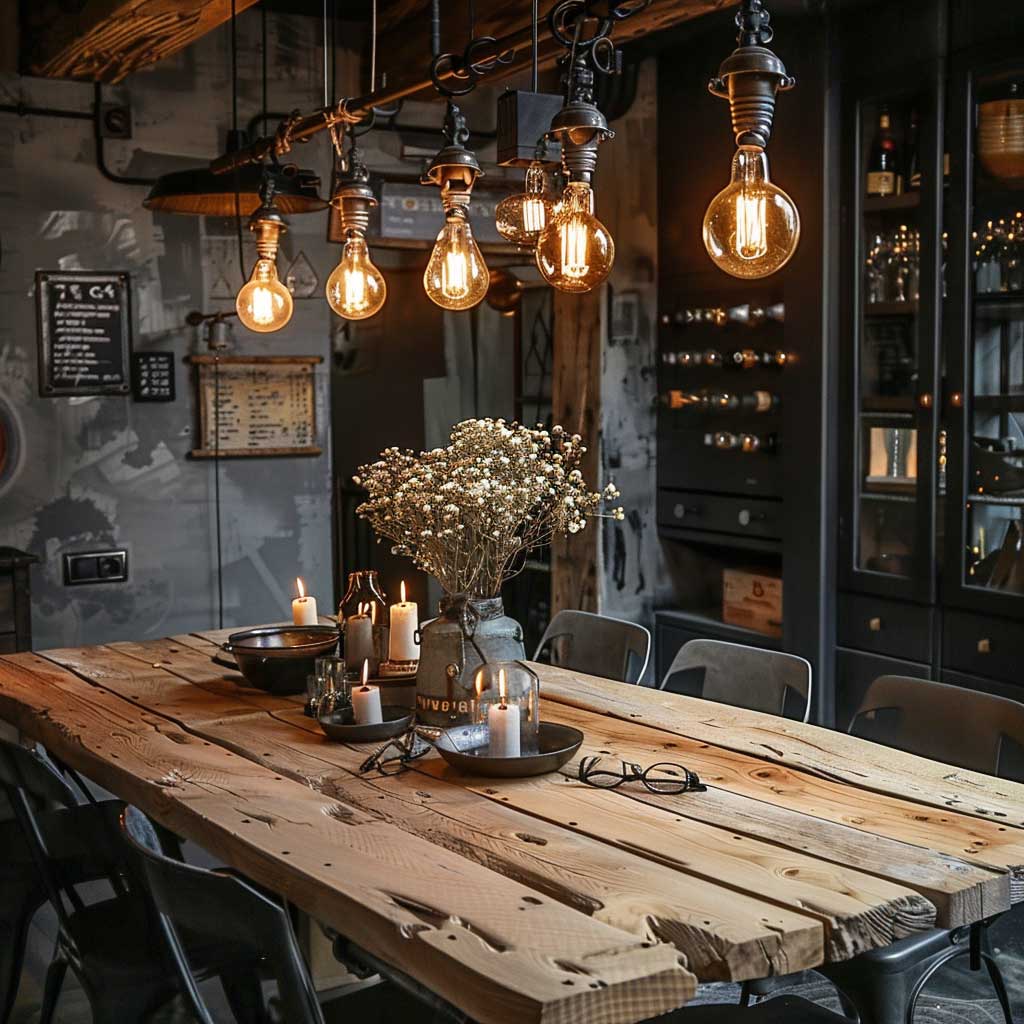
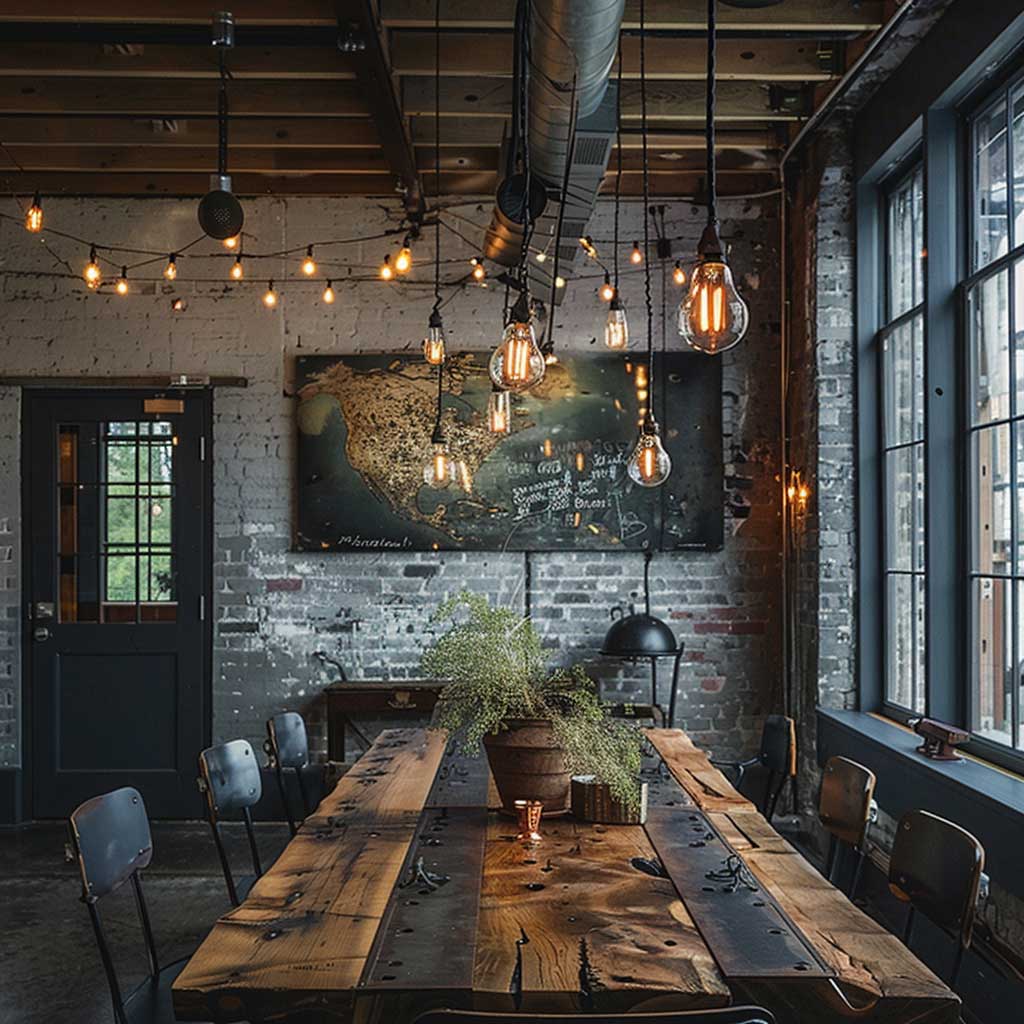
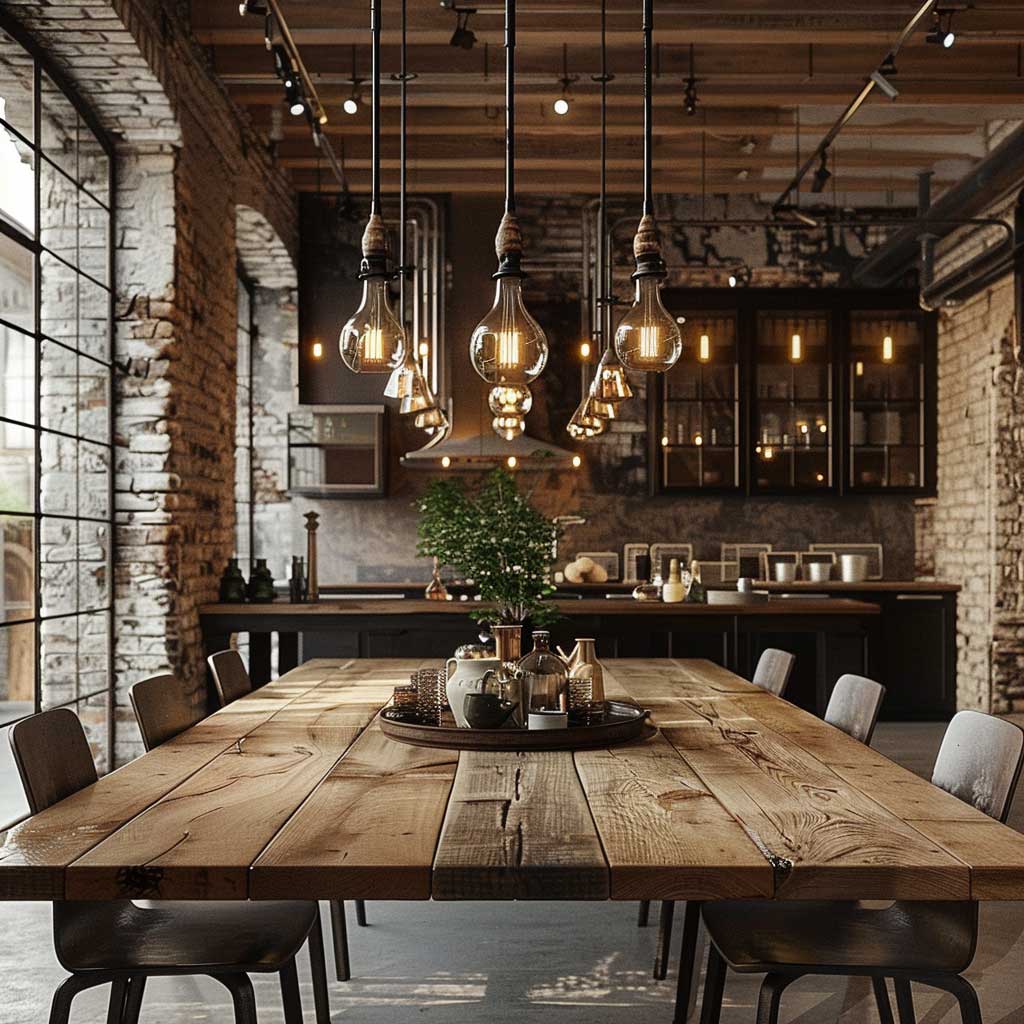

Vintage pendant lighting with Edison bulbs is the closest thing to a guaranteed win in an industrial dining room. I own two of these fixtures — a Westinghouse Adjustable Edison ($47 on Amazon) and a West Elm Sculptural Glass faceted pendant I bought before I understood the difference — and the Edison wins every single time. The color temperature matters more than people realize: true Edison bulbs run around 2200K, which is amber-warm and flatters exposed brick the same way candlelight does. The filament acts like a tiny fireplace inside the bulb.
Hang height is where most people make the mistake. Too high and the light pools uselessly above eye level. Too low and you’re staring into the filament all through dinner. The standard is 28–34 inches from the bulb to the table surface — measure it, don’t eyeball it. Three pendants over a 6-foot table should sit 24–30 inches apart, center to center. You’ll notice the spacing looks wrong on paper and right in person every time.
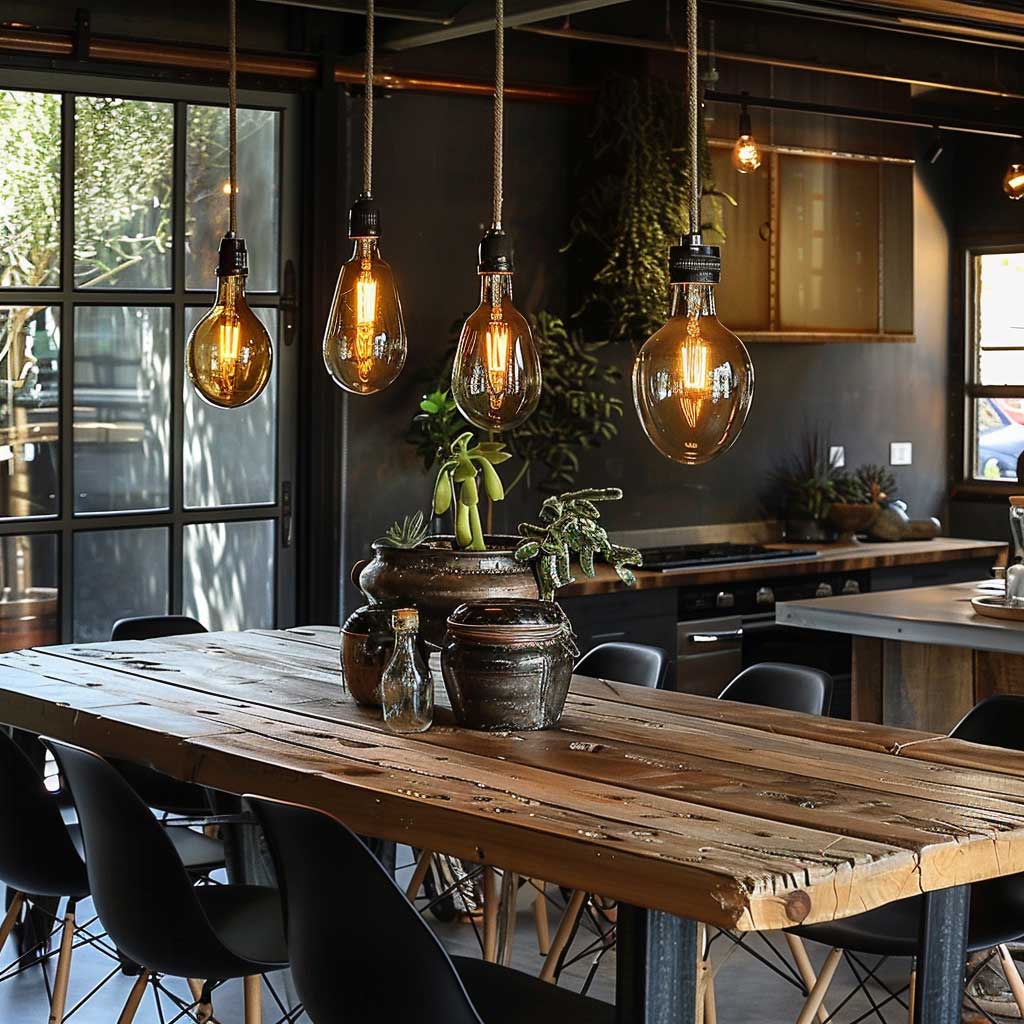
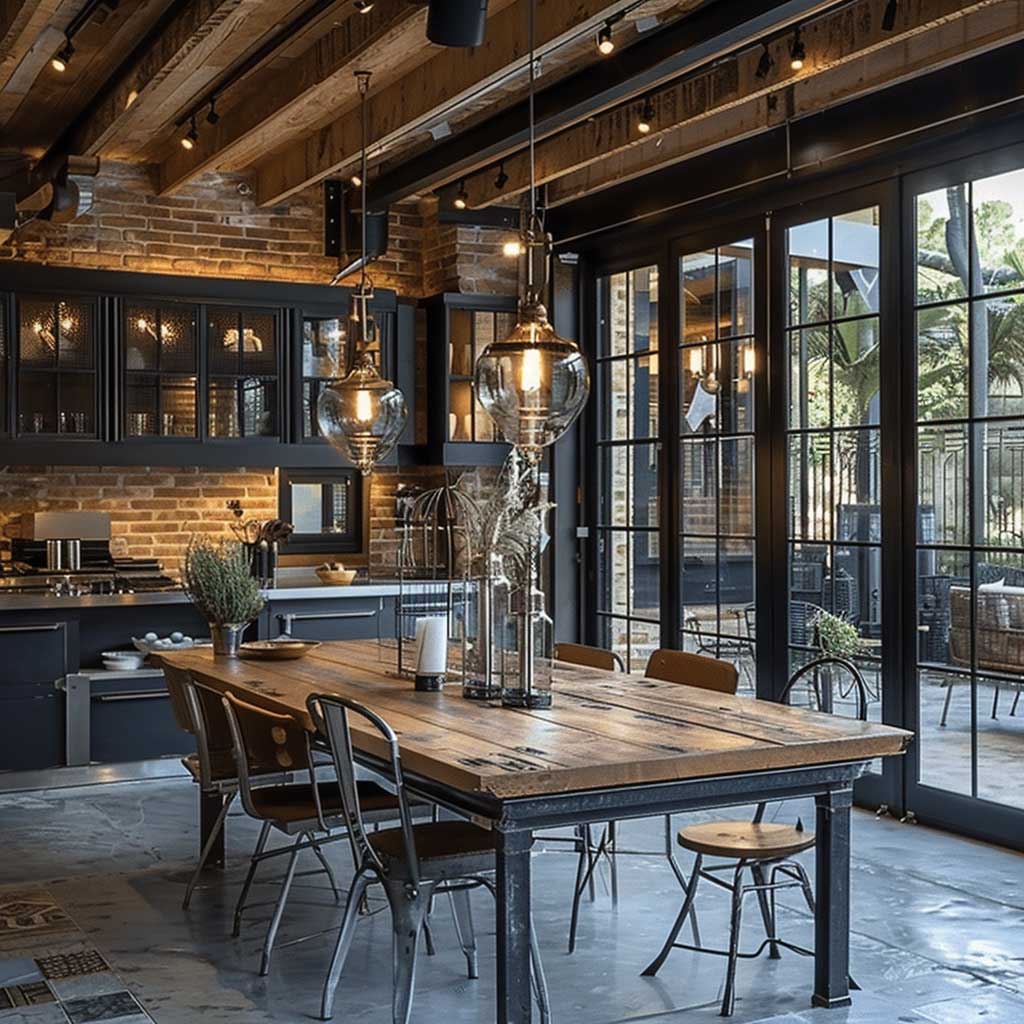
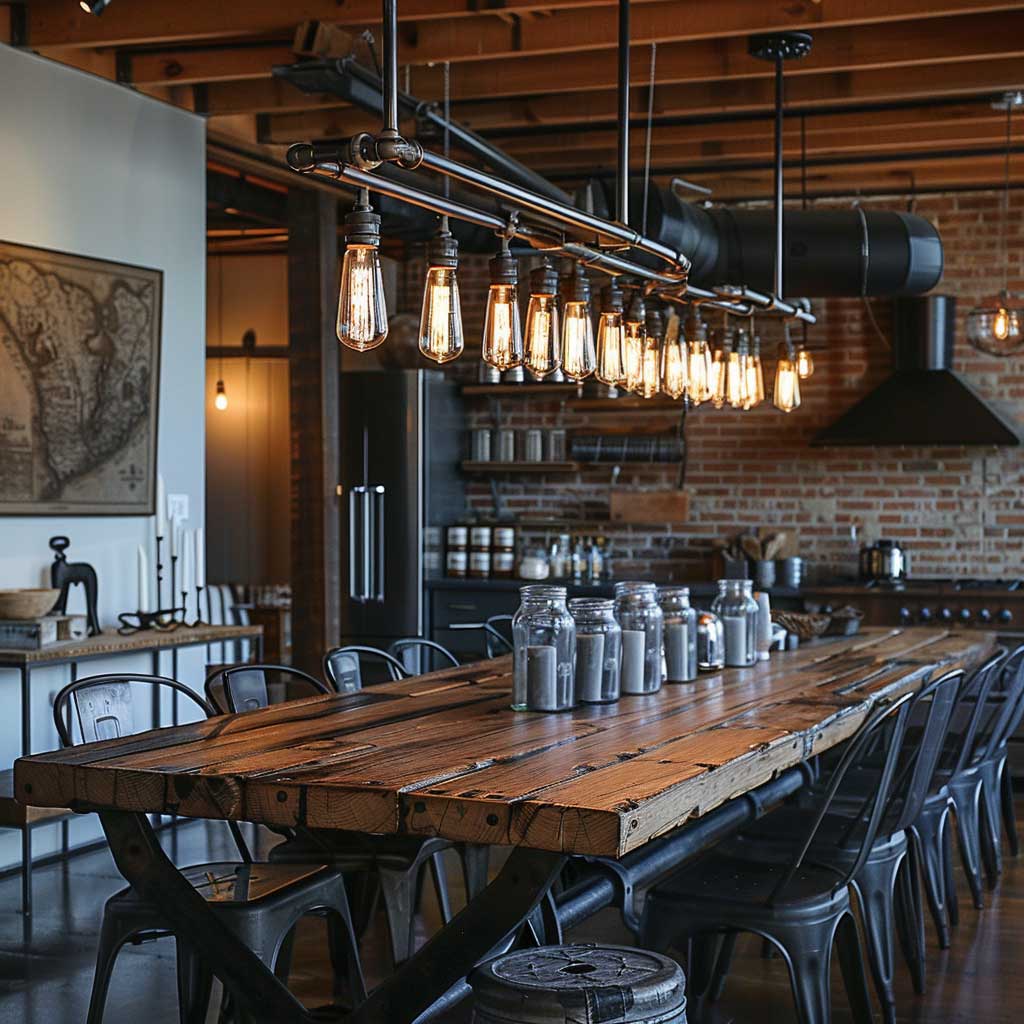

What doesn’t work: multiple pendants at wildly different heights trying to look intentionally eclectic. I’ve seen this in three separate dining rooms and it reads like a wiring job that ran out of cable. Stick to one height or go full staggered-cluster (more on that below). The middle ground is a trap.
One pendant or three — never two. Two pendants over a dining table read as a pair of bedside lamps at scale, and the symmetry kills the industrial looseness that makes the look work. If your table is long, run three. If it’s a small round table for four, one large pendant with a wide shade is the correct call, not two fighting for the same 30 inches.
Metal Chandelier Over the Dining Table Closes the Industrial-Modern Gap
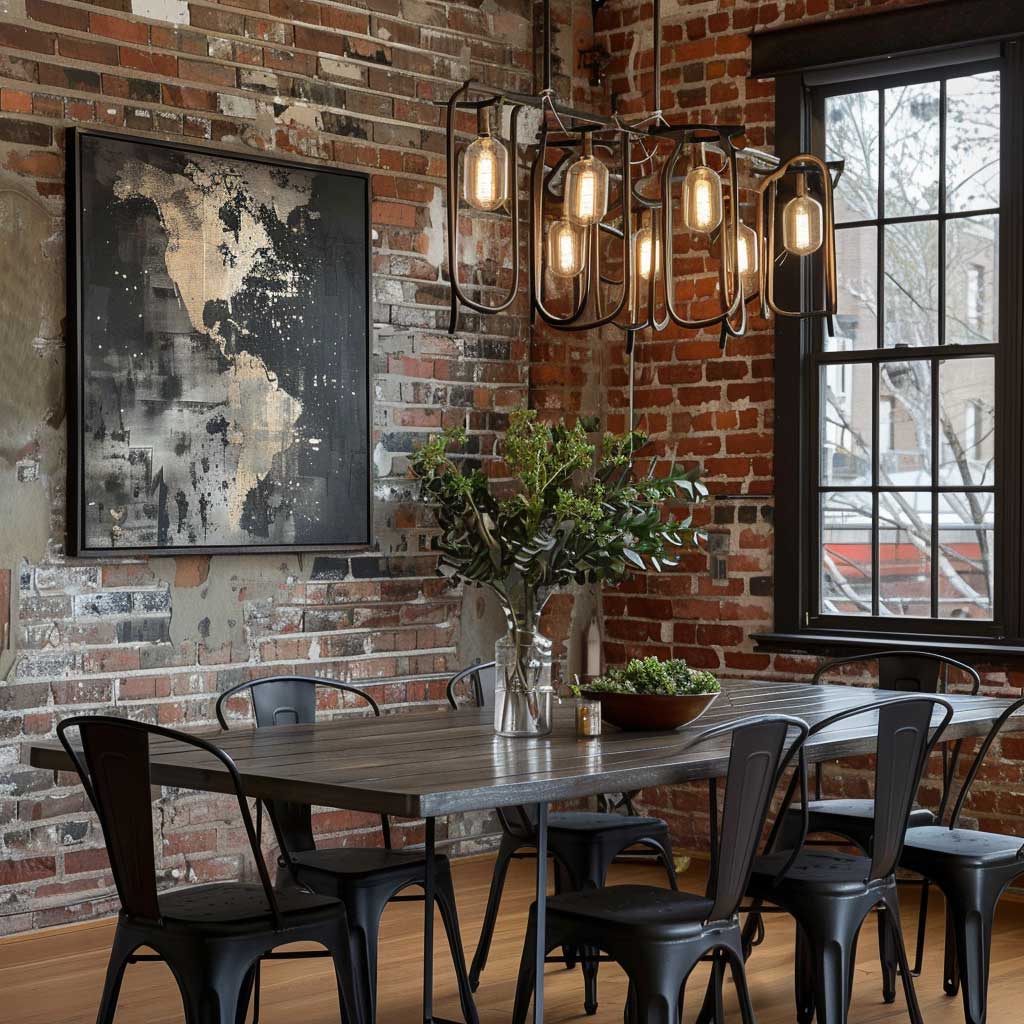
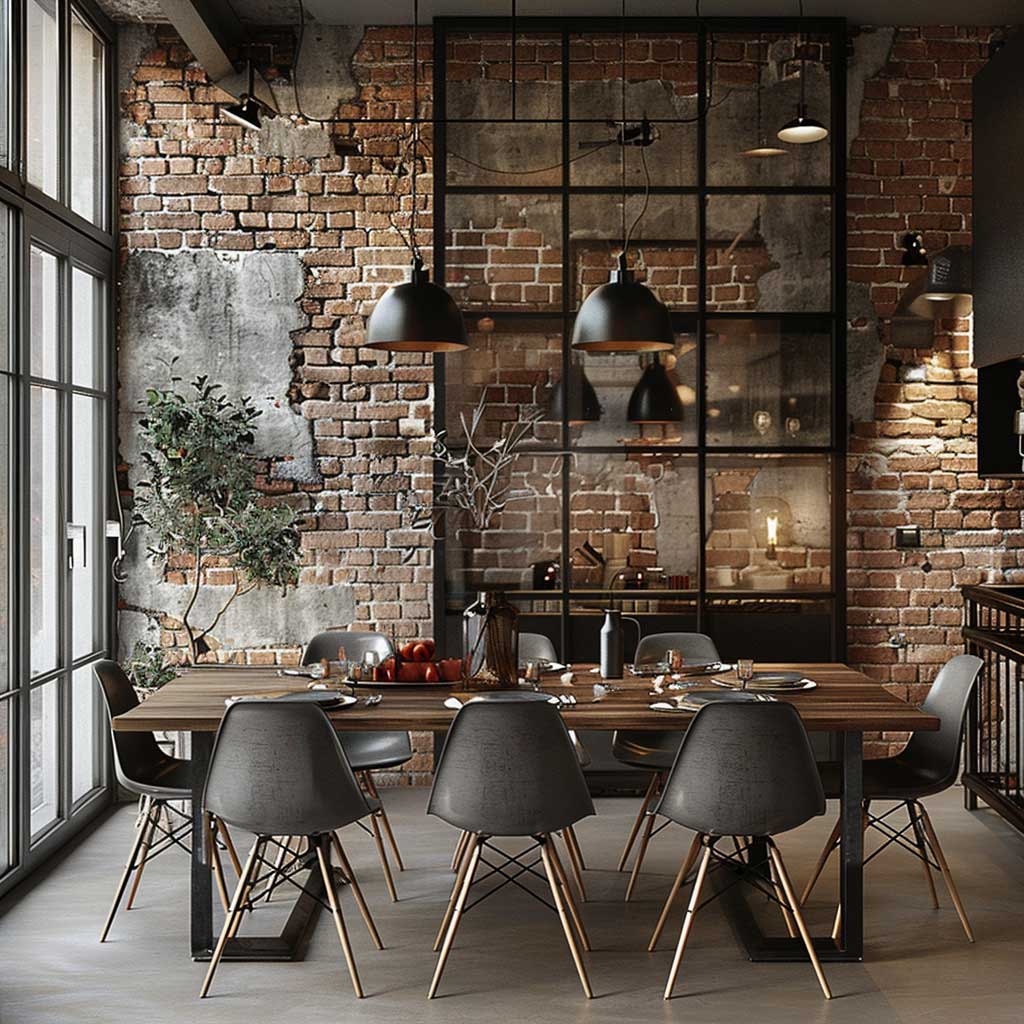
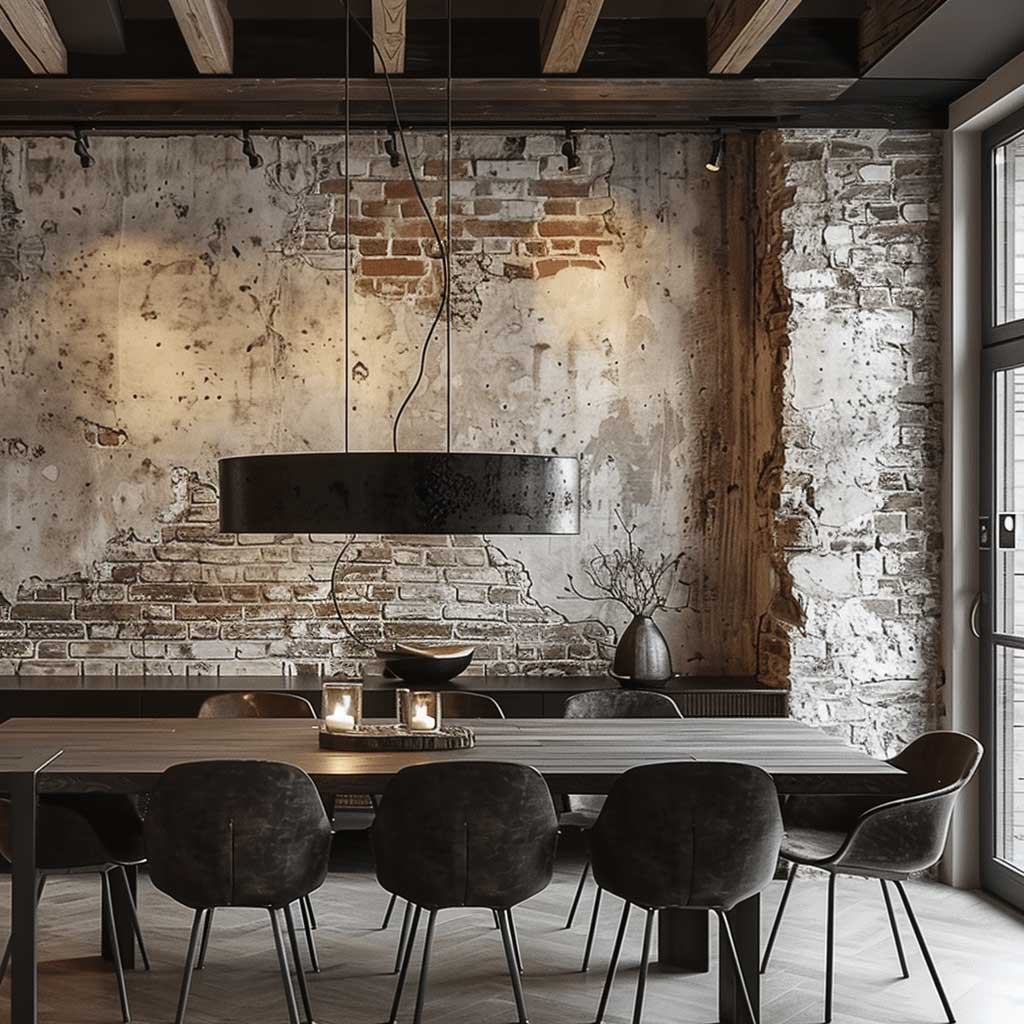

A metal chandelier is the piece that makes an industrial dining room look designed rather than assembled. The distinction matters. The best versions I’ve seen run $180–$450: the Kira Home Sputnik ($189, matte black, 12-light) and the Artcraft Lighting Parkdale ($319, oil-rubbed bronze, 6-light) both hit the industrial note without drifting into steampunk territory. Both have online reviews complaining they’re “too minimal” — that’s exactly why they work.
Finish is the variable that most people underestimate. Matte black reads industrial in almost any context. Polished chrome reads contemporary and fights with raw concrete and brick. Oil-rubbed bronze splits the difference — warm enough to feel aged, dark enough not to soften the room into farmhouse. You need to decide which direction you’re pulling before you choose a finish, because the chandelier announces it louder than any other element in the room.
The wrong call I’ve watched people make: buying a chandelier that’s too small for the table. A chandelier should span at least half the table width — for a standard 36-by-72-inch dining table, that’s a fixture 18–20 inches wide minimum. Smaller than that and it floats disconnected from the surface below it, like a light fixture from a completely different room dropped in by mistake. It’s the indoor equivalent of a porch light over a banquet table.
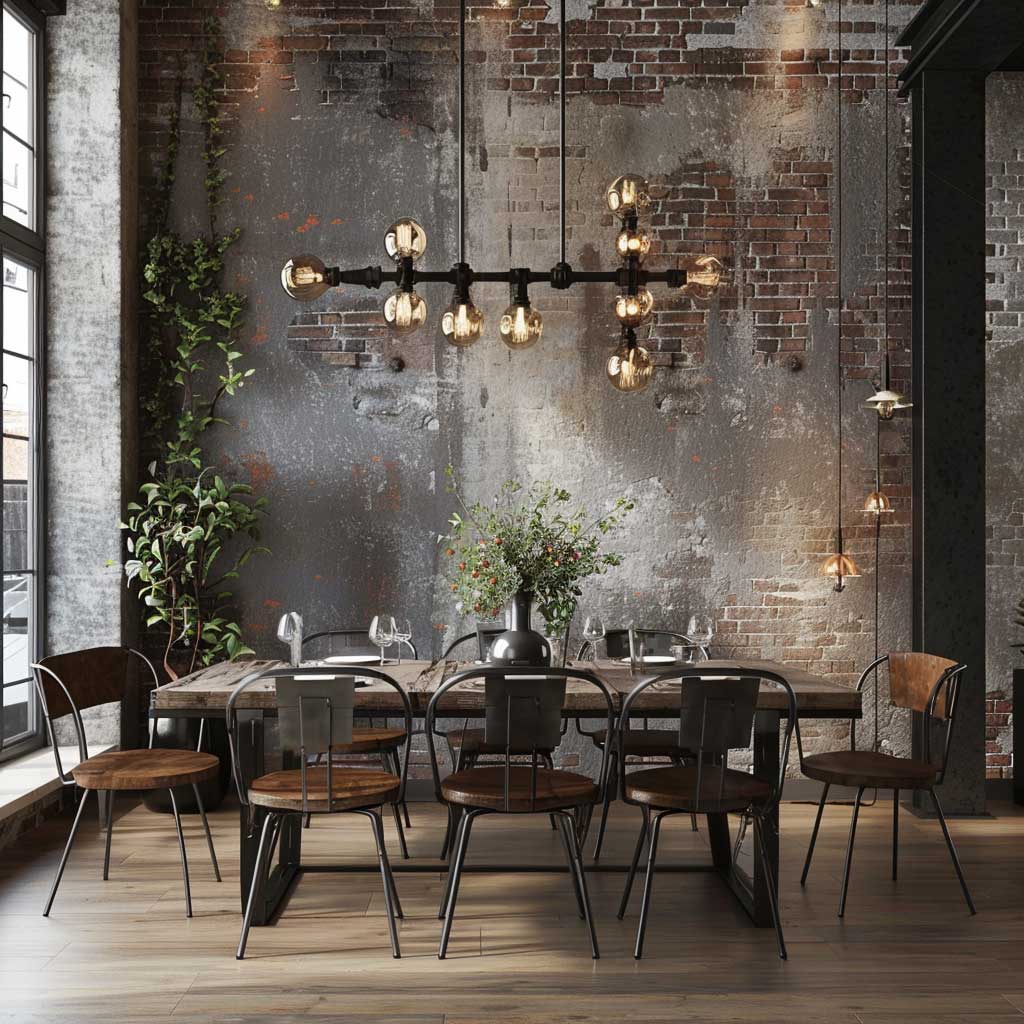

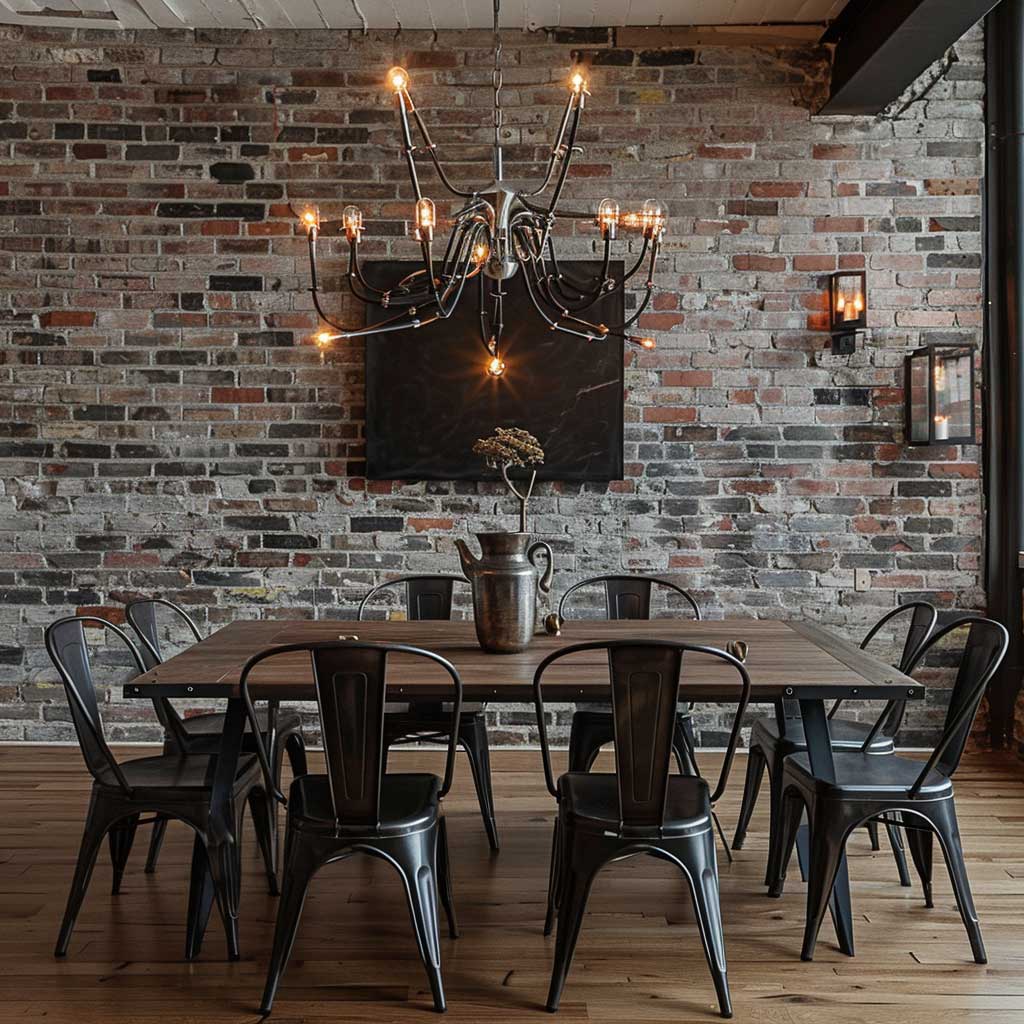

Dimmability is non-negotiable. Every industrial chandelier I’d actually buy comes with a dimmer recommendation in the instructions — follow it. Fixed-brightness chandeliers in dining rooms make every meal feel like a conference call. A $25 Lutron Credeo dimmer switch changes the entire room in about 20 minutes of installation.
If you’re reading about industrial dining room wall decor separately, know that the chandelier finish should match at least one metal tone on the walls — a matte black chandelier with brass wall sconces creates visual noise that no amount of reclaimed wood can fix.
Clustered Bulb Fixtures Work Because High Ceilings Demand Vertical Weight
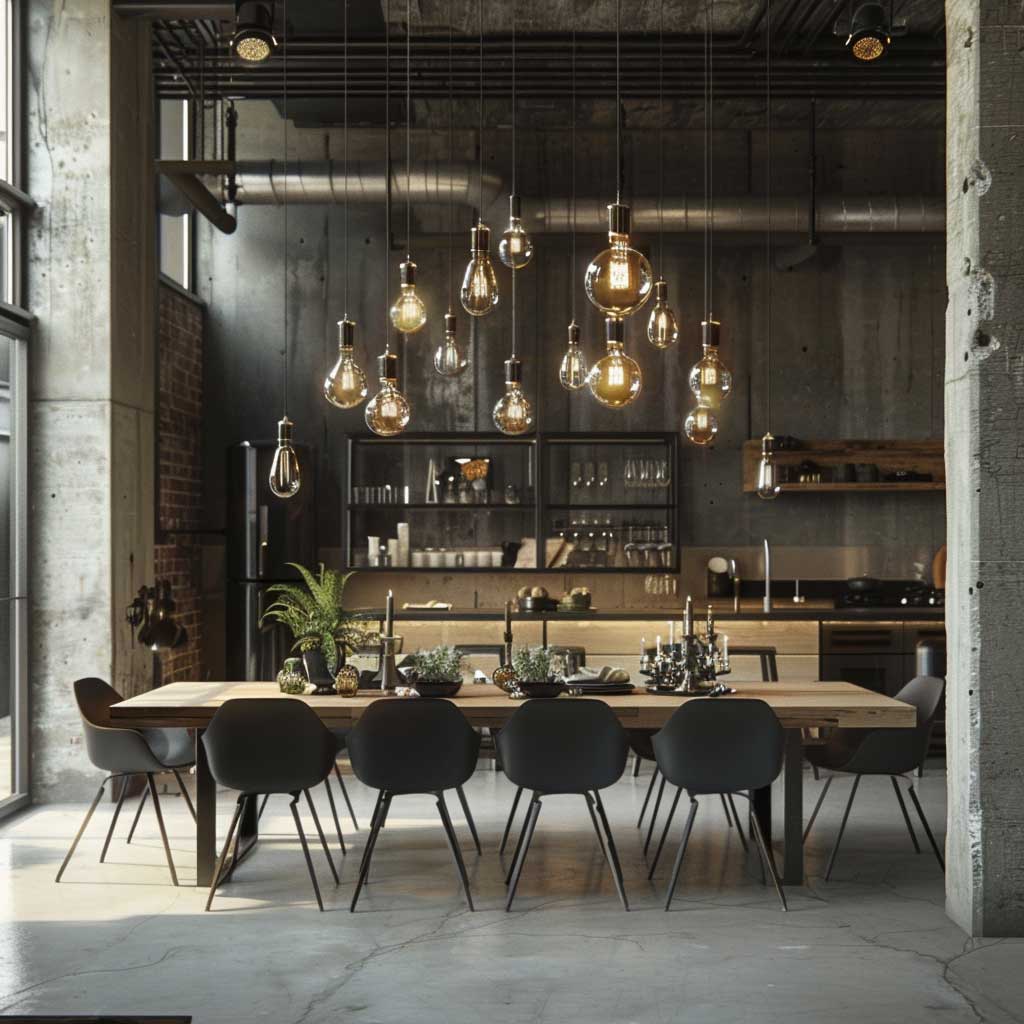


Clustered bulb fixtures are the solution to a problem that regular pendants can’t solve: a 12-foot ceiling that makes a single fixture look like a period at the top of a very tall page. I stole this trick from a restaurant in Kyiv that had 14-foot concrete ceilings and no budget for a custom chandelier — they ran 11 bare bulbs on black braided cord at three different heights and it looked better than anything in a design catalog. The key is grouping at least 7 bulbs, because fewer than that reads sparse rather than intentional.
You control the cluster. Pick your bulb count, set the drop lengths, choose your canopy size. The Gracie Oaks Huang 5-Light Cluster Pendant ($219 on Wayfair) is a solid starting point if you want a pre-built version rather than a DIY setup. For a true custom cluster, Color Cord Company sells individual socket sets starting at $12 — build your own at whatever density the ceiling height demands.
Don’t Do This
- Don’t mix Edison and LED filament bulbs in the same cluster. They emit at different color temperatures (2200K vs 2700K) and the warmth variation is visible from across the table. Buy one box of bulbs for the whole fixture.
- Don’t buy a chandelier smaller than half your table width. It will look like someone hung a bathroom fixture over a boardroom table.
- Don’t skip the dimmer switch. Fixed-brightness industrial fixtures at dinner are merciless — every flaw on the table surface shows up like a crime scene photo.
- Don’t use a glass globe shade in an industrial room. It immediately reads farmhouse regardless of how much exposed concrete is behind it.
What I’d skip: random bulb clusters with no canopy — just a ceiling plate and bare cords. It looks like a lighting installation that forgot to finish. The canopy grounds the cluster visually and tells the ceiling where the fixture starts. Without it, you get a tangle, not a chandelier.
For LED versions of clustered fixtures — which is where most industrial dining room lighting searches are heading — use LED filament bulbs at 2700K minimum. Cooler temperatures (4000K and above) drain the warmth out of wood and brick surfaces, and the room starts resembling a commercial kitchen rather than a dining space. Philips LED ST64 Vintage ($8.99 each, 4-pack on Amazon) at 800 lumens each gives the right output without the heat or electricity draw of actual Edison bulbs. For a deeper comparison on how minimalist setups handle the same challenge, minimalist dining table lighting ideas covers the math on spacing and sizing from a different angle.
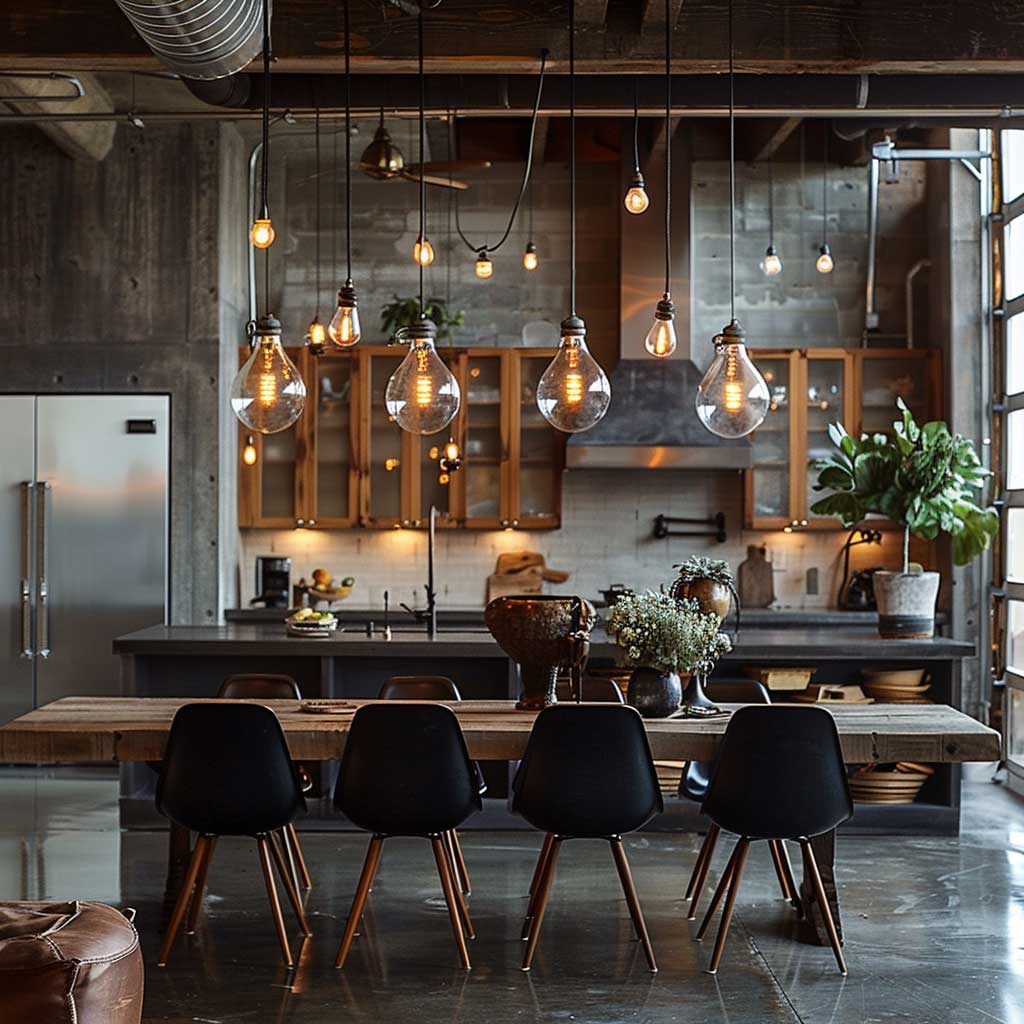
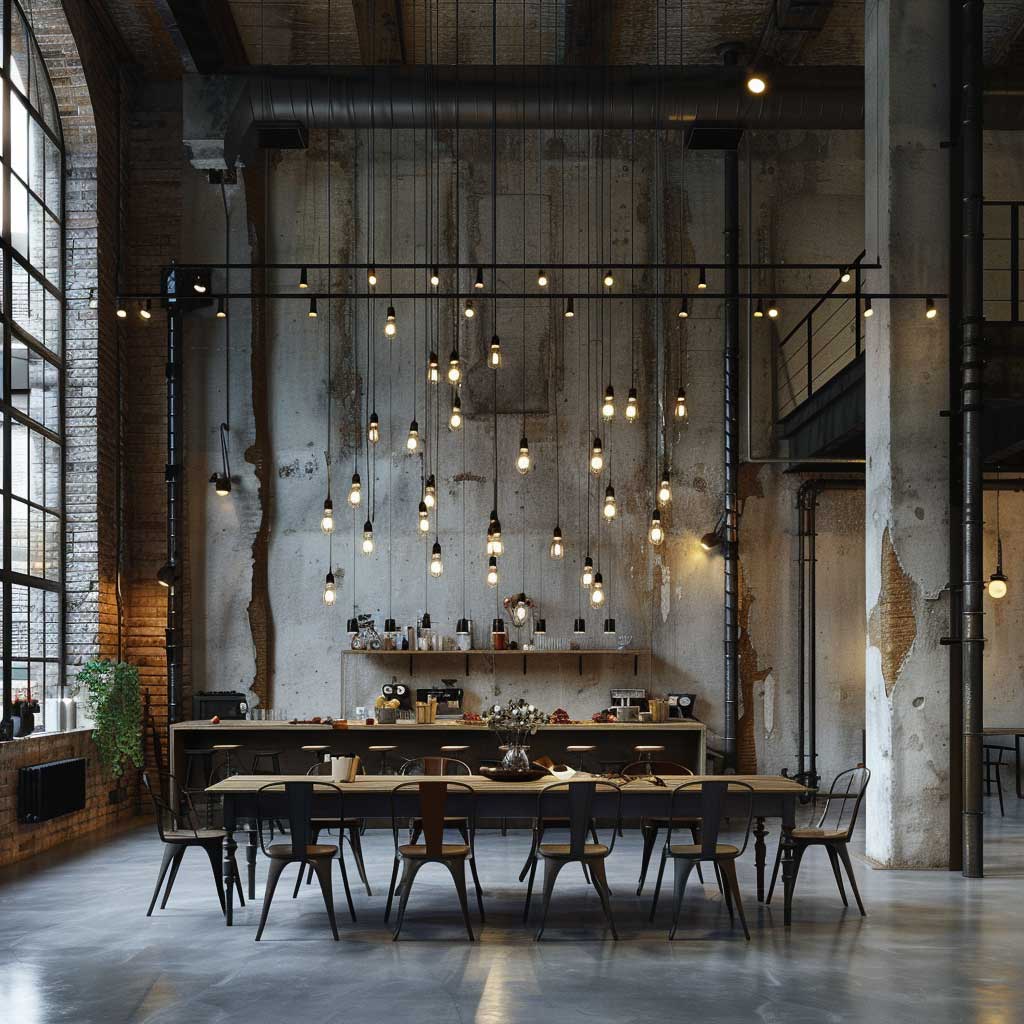


Loft ceilings reward asymmetry. A cluster with bulbs at four different drop lengths — say 24, 32, 38, and 46 inches from the canopy — creates the kind of depth and visual movement that a flush fixture at 10 feet simply cannot deliver. Symmetric clusters are fine for lower ceilings. At 12 feet and above, you need the irregular rhythm or the fixture disappears into the void. Think of it less like a light and more like a vertical sculpture that also illuminates dinner.
Industrial Dining Light Comparison
| Fixture Type | Best Ceiling Height | Price Range | LED Compatible | Best Finish |
|---|---|---|---|---|
| Edison Pendant (single) | 8–10 ft | $40–$120 | Yes (2700K filament) | Black, bronze |
| Edison Pendant (3-row) | 8–11 ft | $90–$200 | Yes | Black, raw iron |
| Metal Chandelier | 9–12 ft | $180–$450 | Yes | Matte black, oil-rubbed bronze |
| Clustered Bulb Fixture | 10–16 ft | $220–$600+ | Yes (filament LED) | Black cord, iron canopy |
One note on the external source: Hunker’s industrial dining room lighting breakdown covers unfinished fixtures and cage pendants well if you want reference photos for the fixture types discussed here.
Final Word
Industrial dining room lighting over the table is not an accessory. It’s the structural decision that determines whether the room reads intentional or abandoned.
Get the finish right before the fixture. Get the height right before the bulb. Get the bulb temperature right before you call it done — 2700K minimum, 2200K if you have warm wood and brick working together.
One fixture, three variables. Most rooms get zero of them right. Get two and you’re ahead of the room on your street.
Save this post before your next lighting shop run — the comparison table alone will save you at least one return shipping label.