Most dining rooms I’ve walked into have the wrong light hanging at the wrong height. Too high, and the table looks like a hotel lobby. Too low, and somebody’s forehead meets brass at Thanksgiving. The fix is simpler than people think.
Picking lighting for a minimalist dining room is tricky because you can’t hide behind ornament. Every curve, every finish, every cord length shows. I’ve swapped out three fixtures in my own dining space over two years before landing on the right one — a $189 Muuto Ambit pendant in dusty green, if you’re wondering.
Below are nine ideas broken into three categories: pendant lights, chandeliers, and LED strip setups. Each section covers what to buy, what height to hang it, and what to avoid so you don’t end up returning a $400 fixture after two dinners.
Quick Summary
Best for most people: Matte black pendant lights — Tom Dixon Beat ($250–$350) or Muuto Ambit ($189)
Best for drama on a budget: Linear chandelier — West Elm Mobile Chandelier ($299–$549)
Best hidden option: LED strip lighting — Philips Hue Lightstrip Plus ($80 starter kit)
Key rule: Hang 30–36 inches above the table, size fixture to ~50% of table width, use 2700K–3000K bulbs
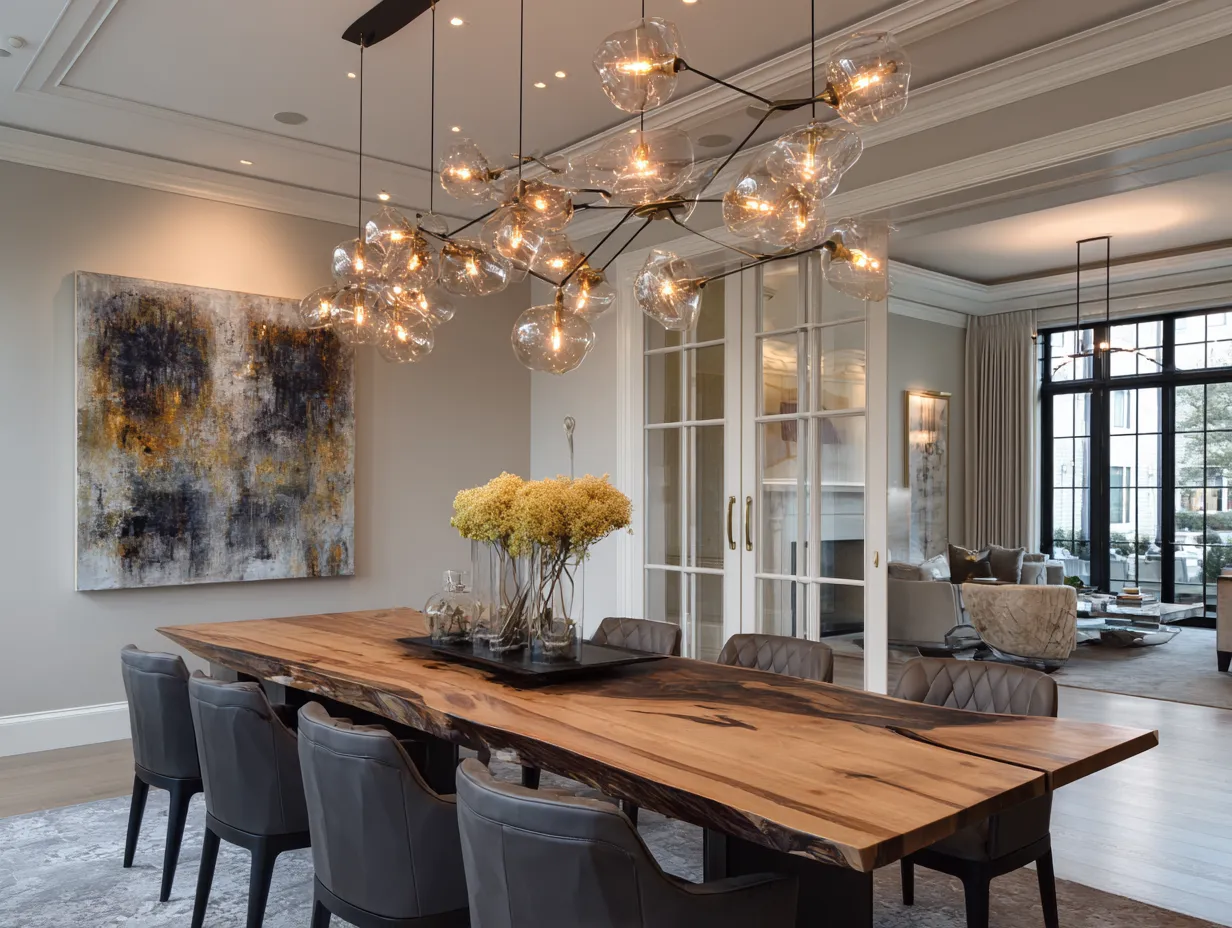
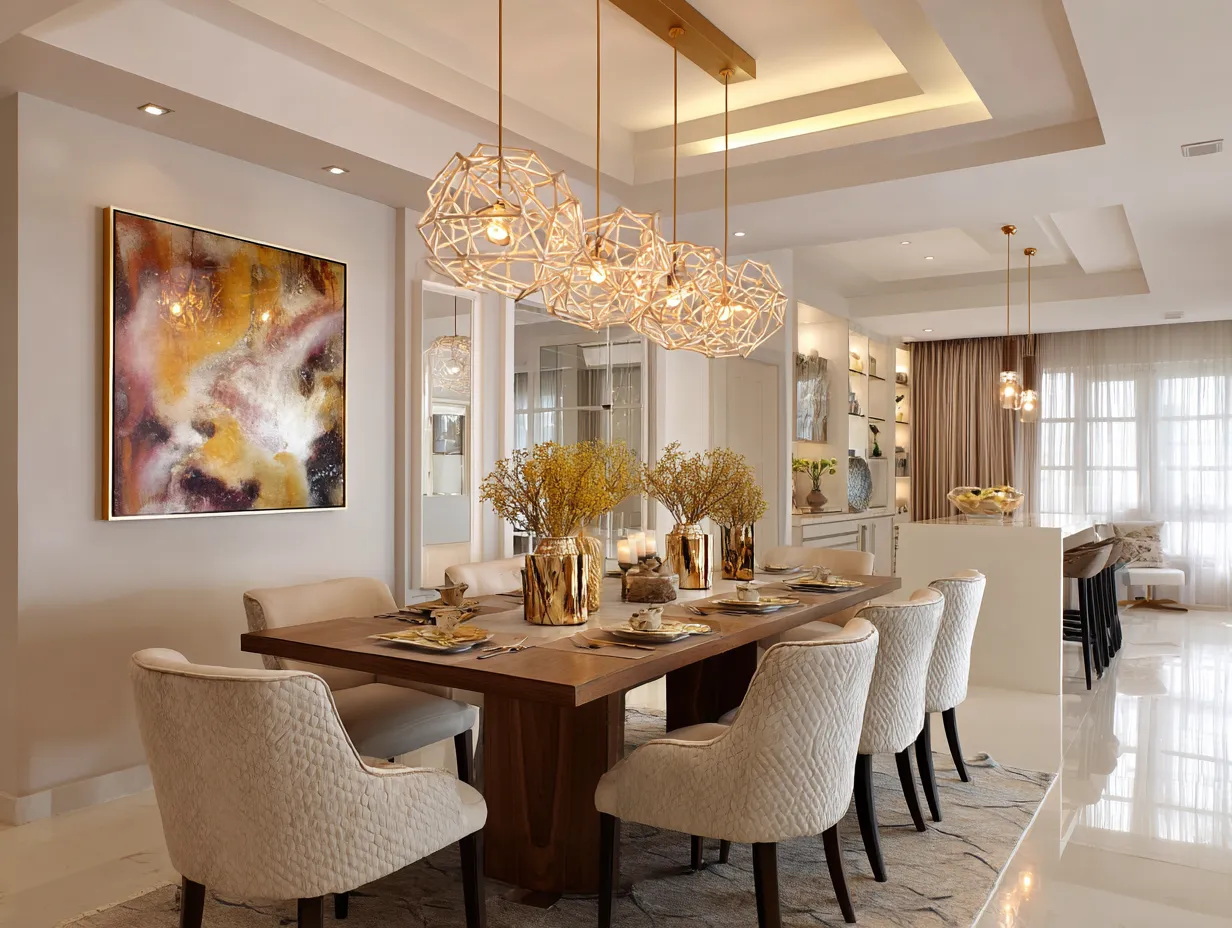
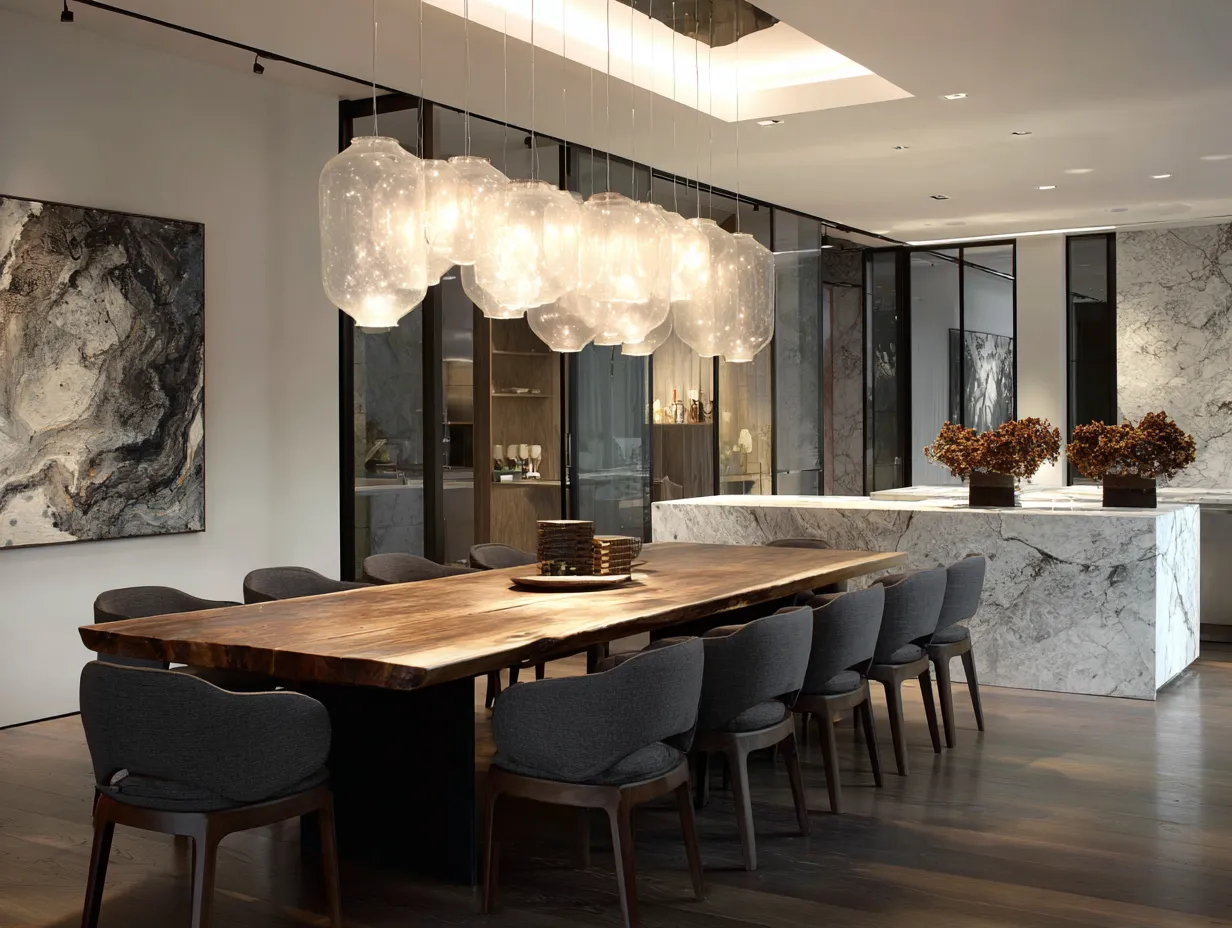
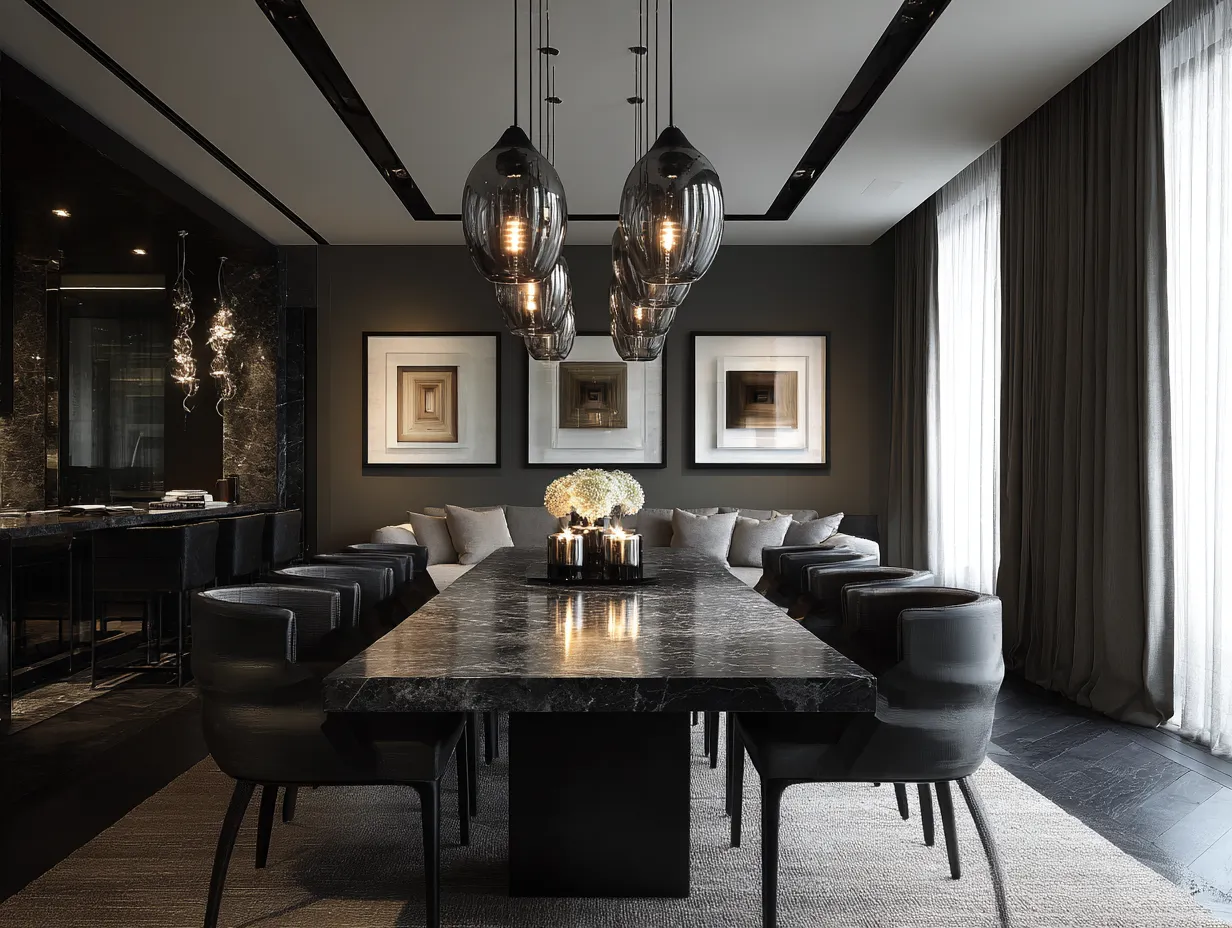
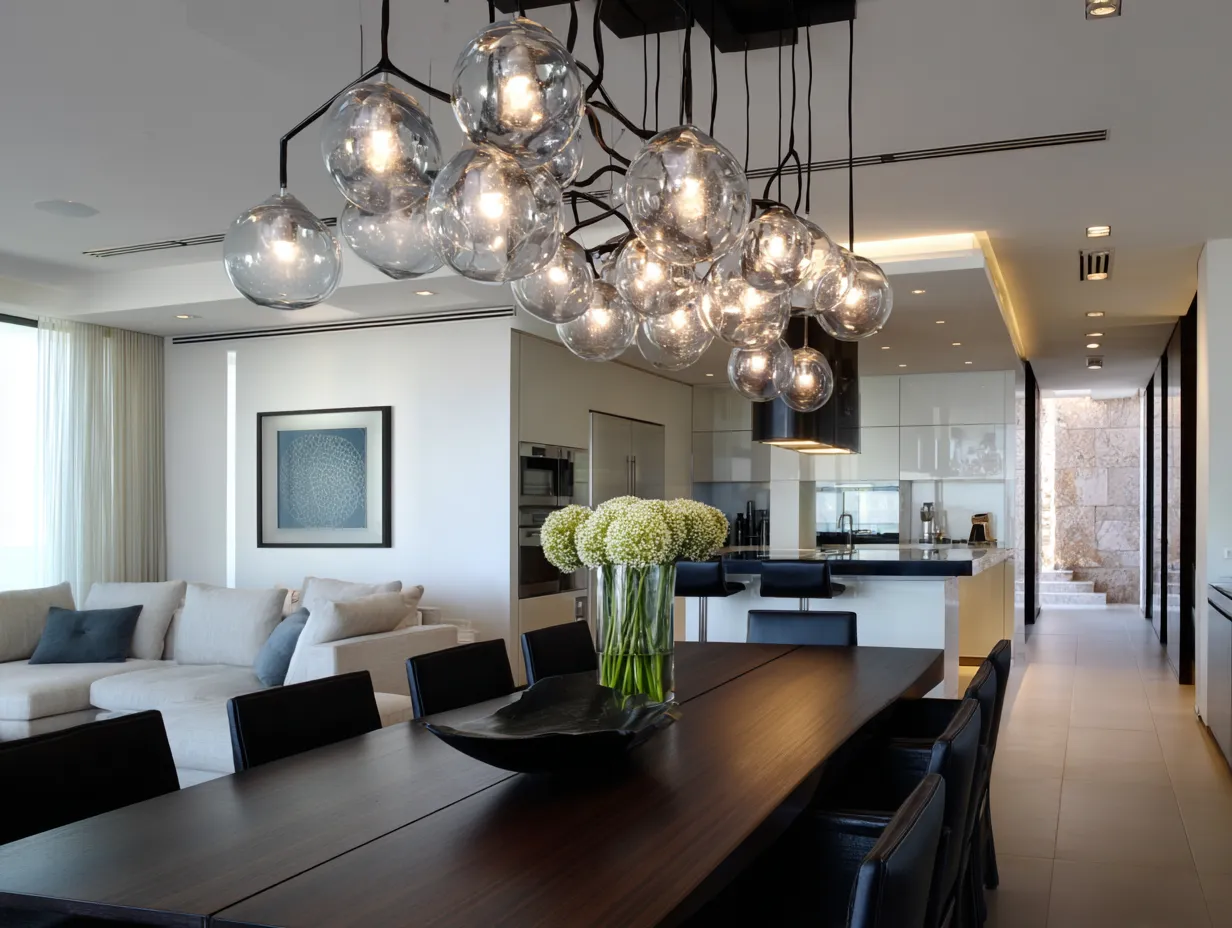
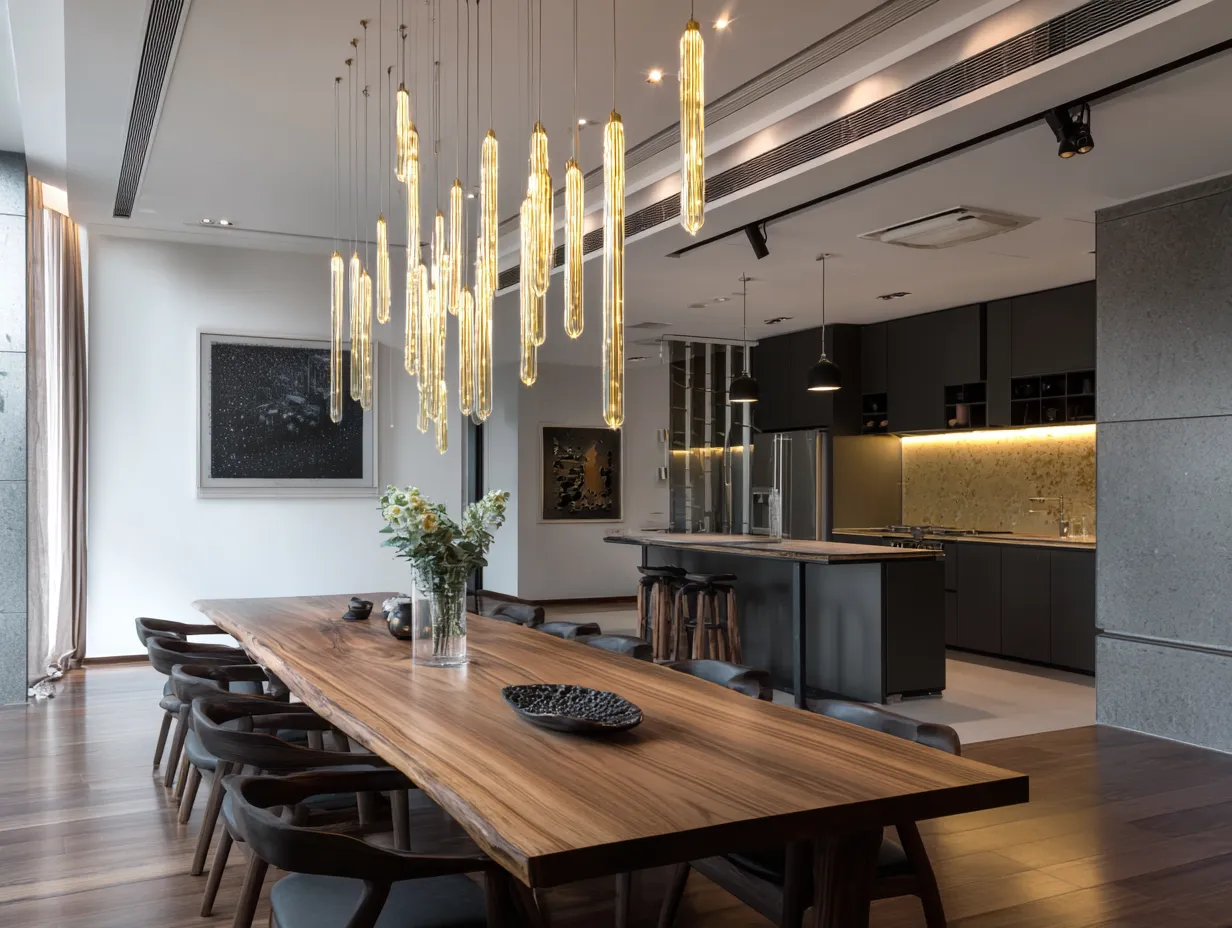
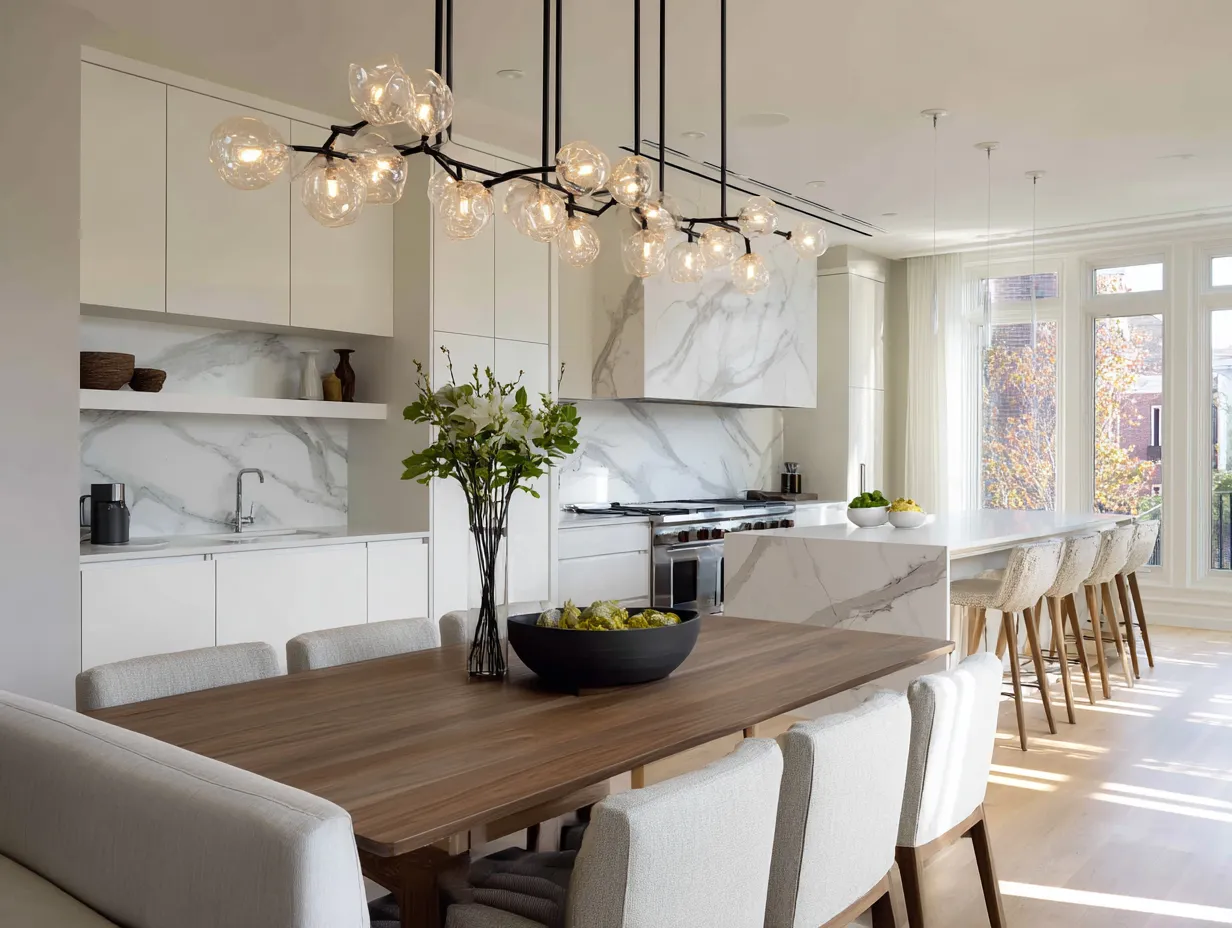
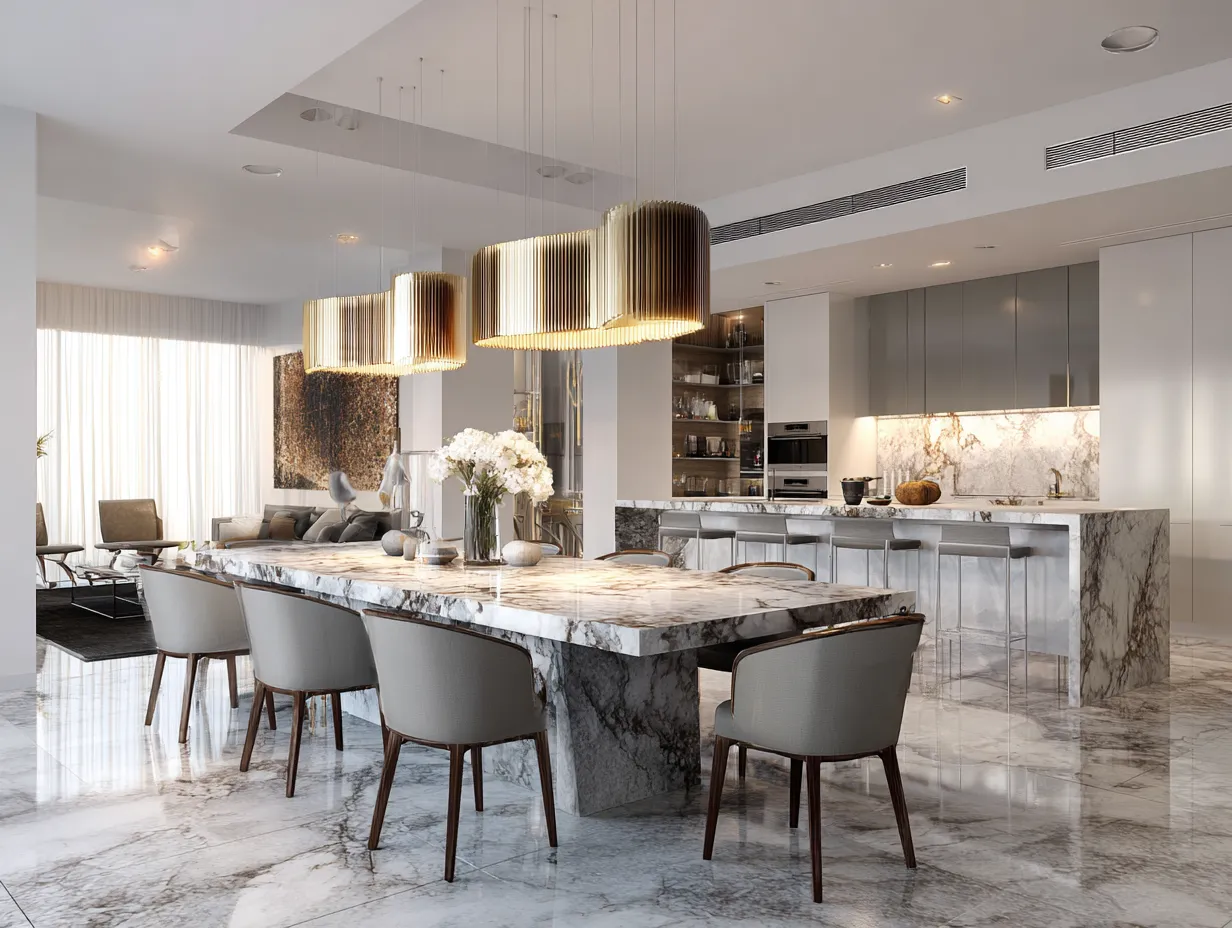
Minimalist Pendant Lights for Dining Tables
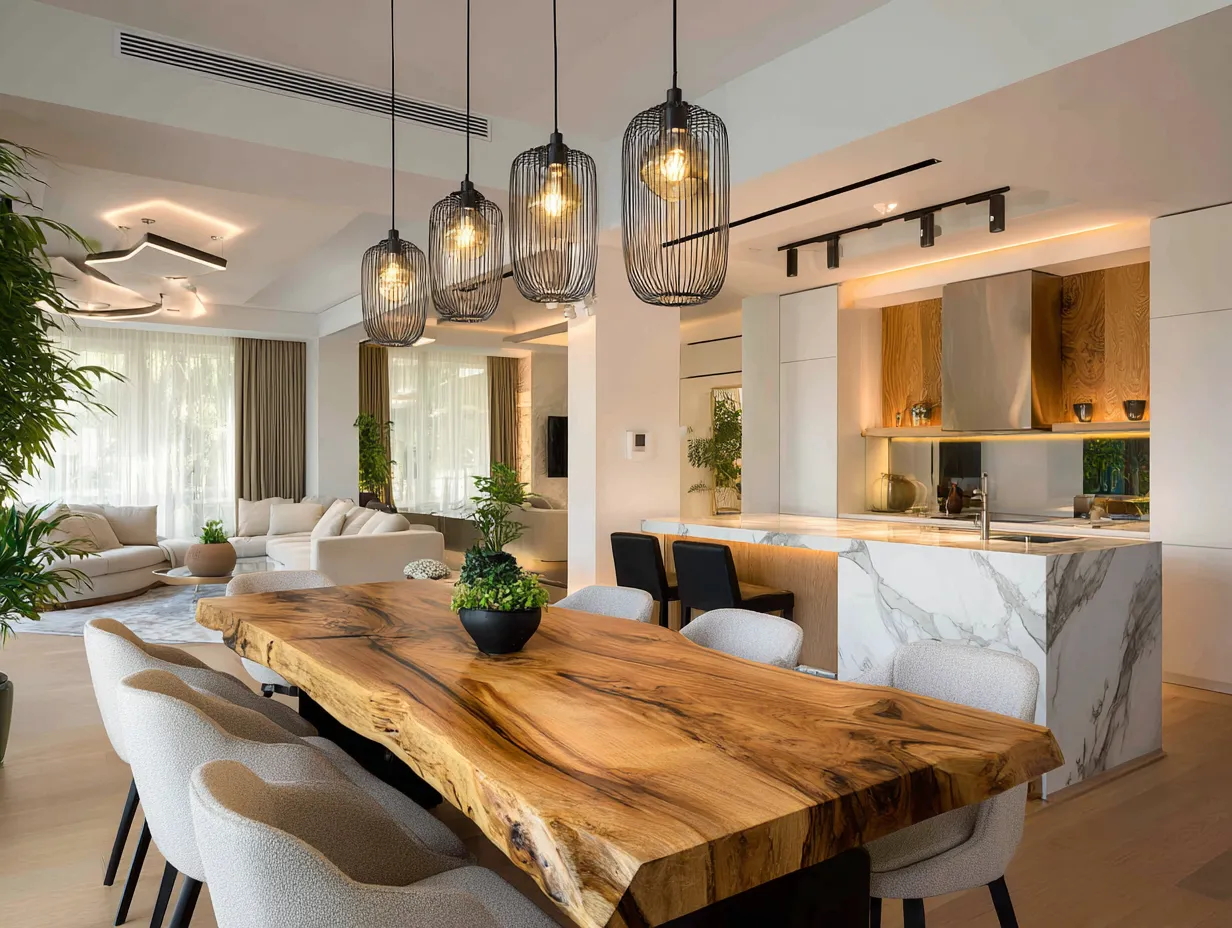
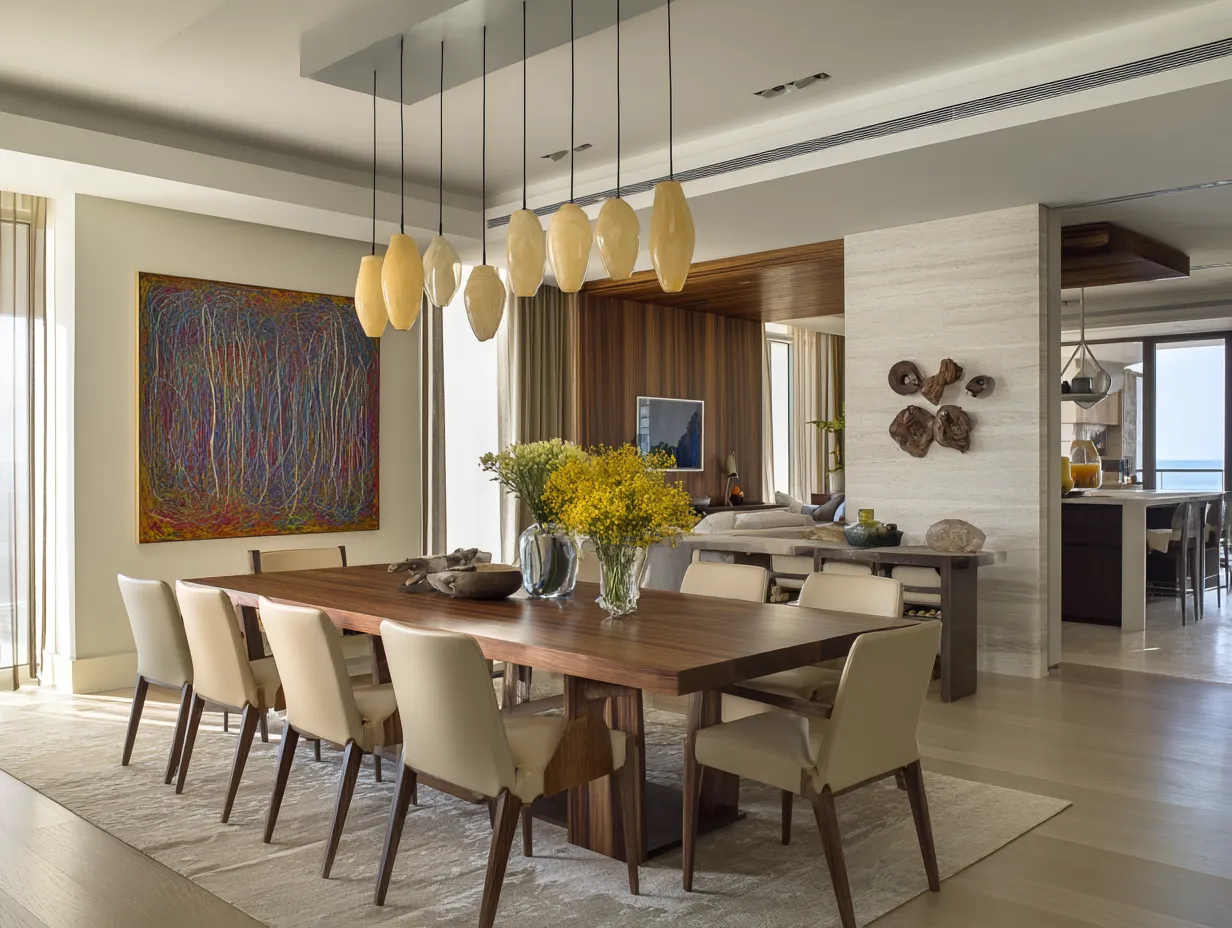
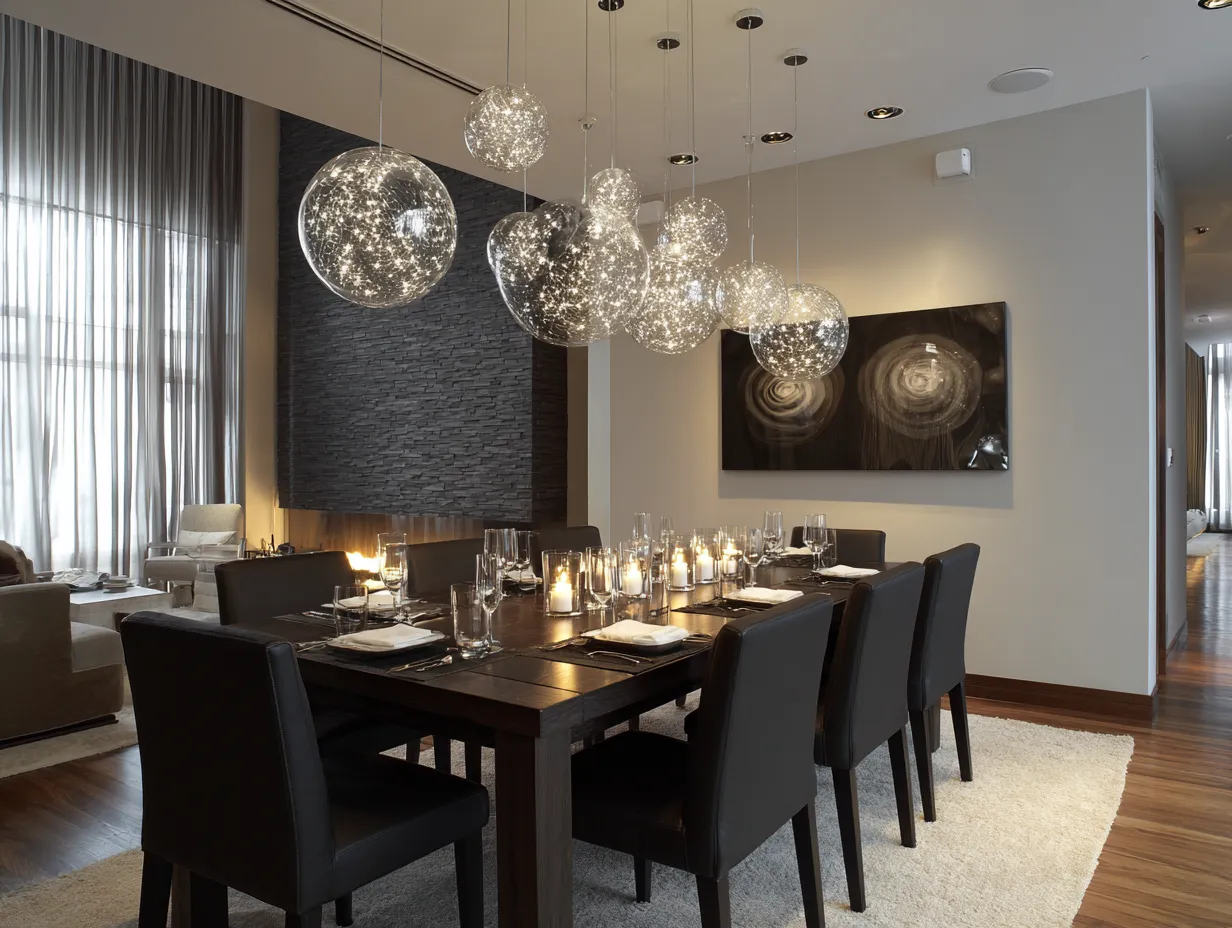
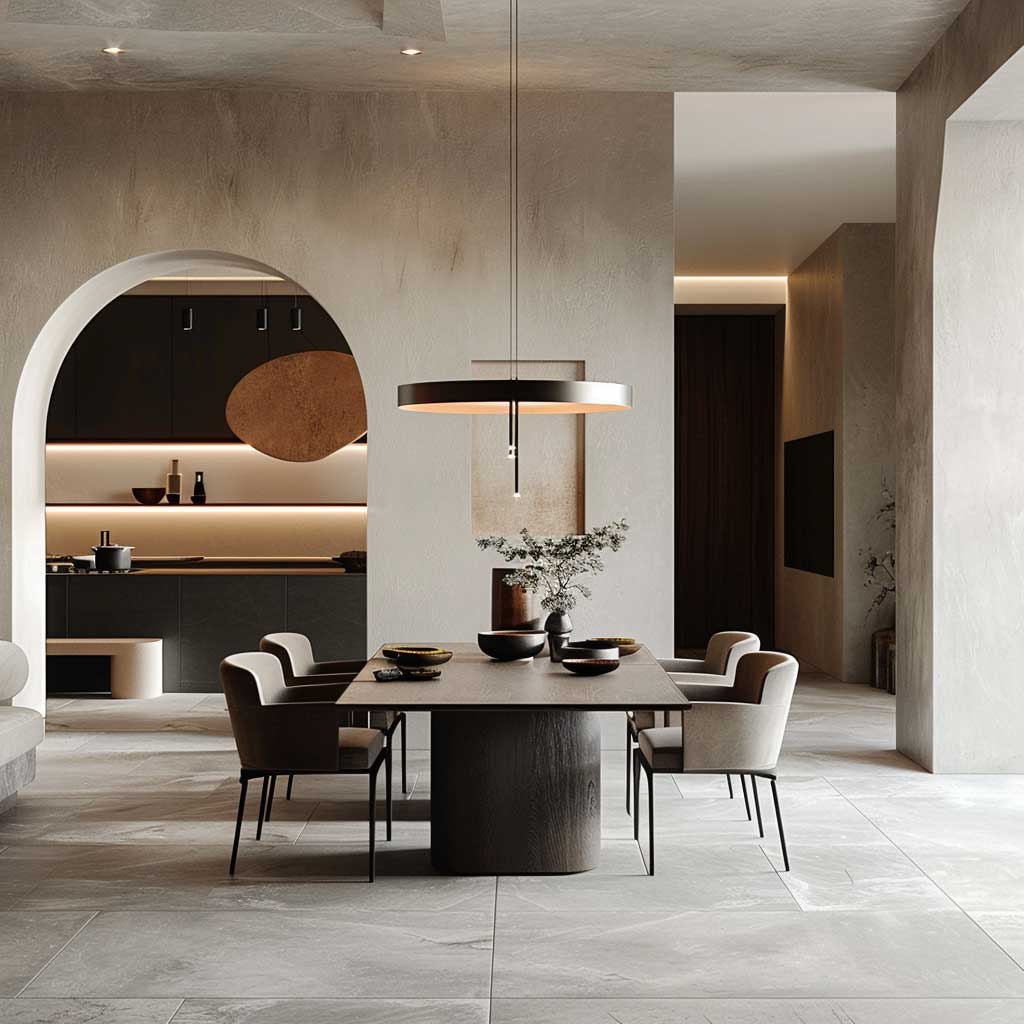
Modern pendant lights are the perfect choice for all functional or decorative aspects of the dining space. Typically, these lights exude immaculate and streamlined designs, exuding the best of a minimalist interior. Just imagine walking into a dining room where there is a set of sophisticated pendant lights that gracefully hang above the dining table, illuminating it with warm and inviting light.
The beauty of pendant lights lies in their versatility. They come in many shapes and sizes, and even multiple different material options, so you can choose a design that will tick for your decor. For a more minimalistic feel, you can choose pendant lights that are more simple in design, with the lines being immaculate as well as a more neutral color palette. Matte black and brushed nickel and even clear glass will work perfectly in a more contemporary home.
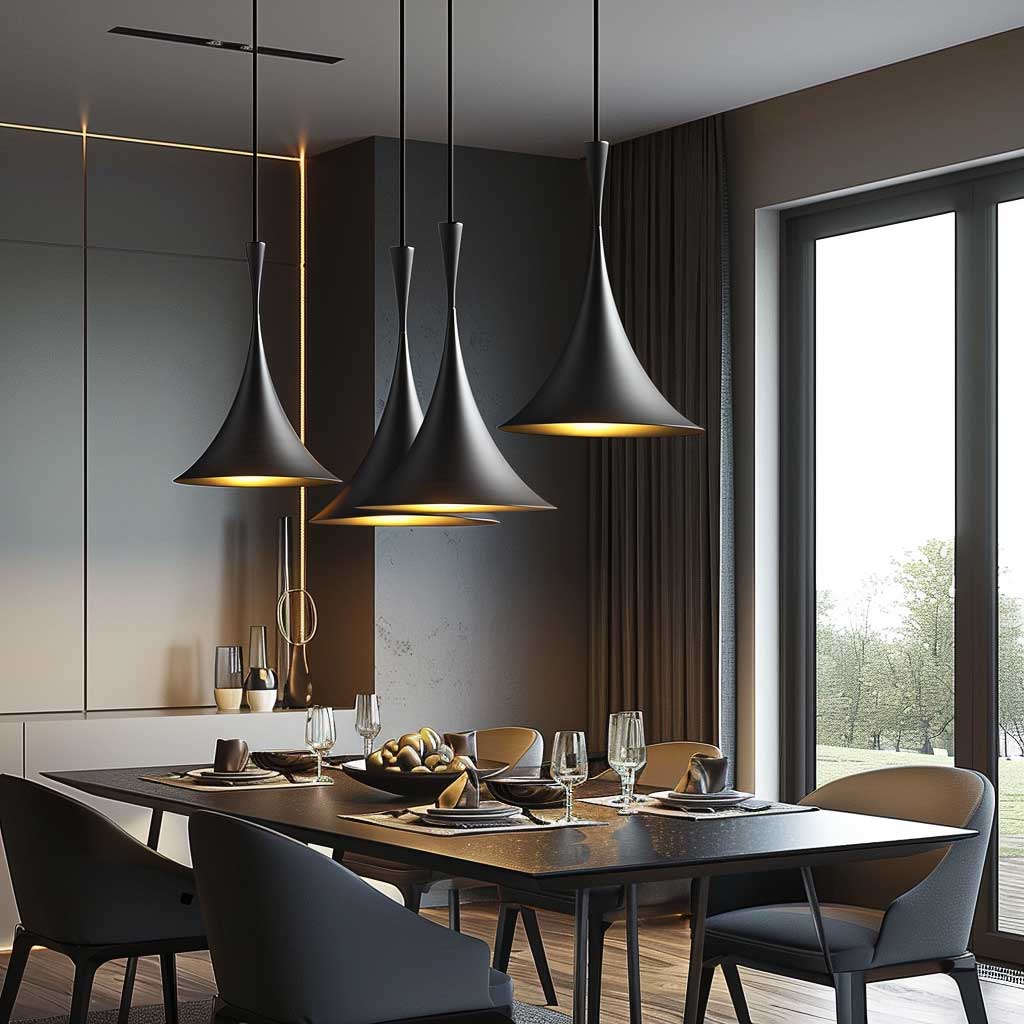

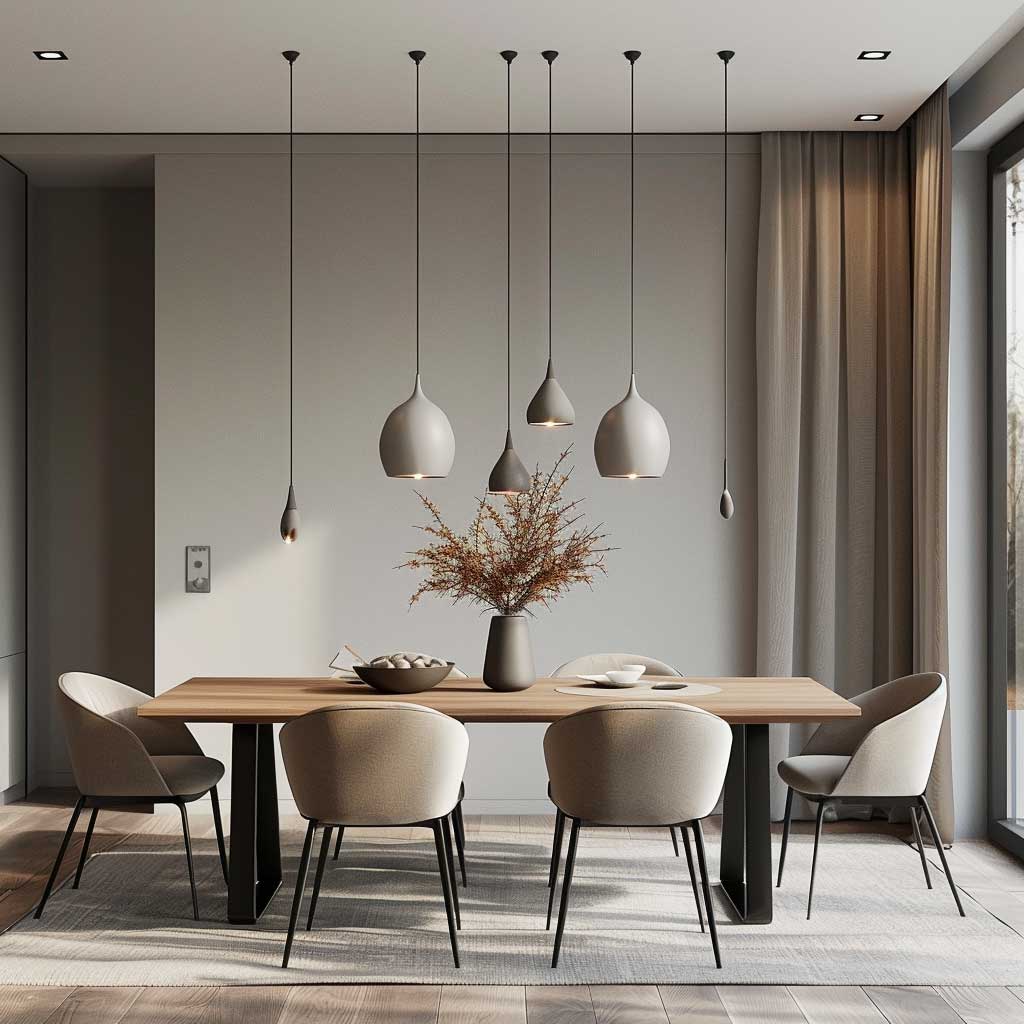
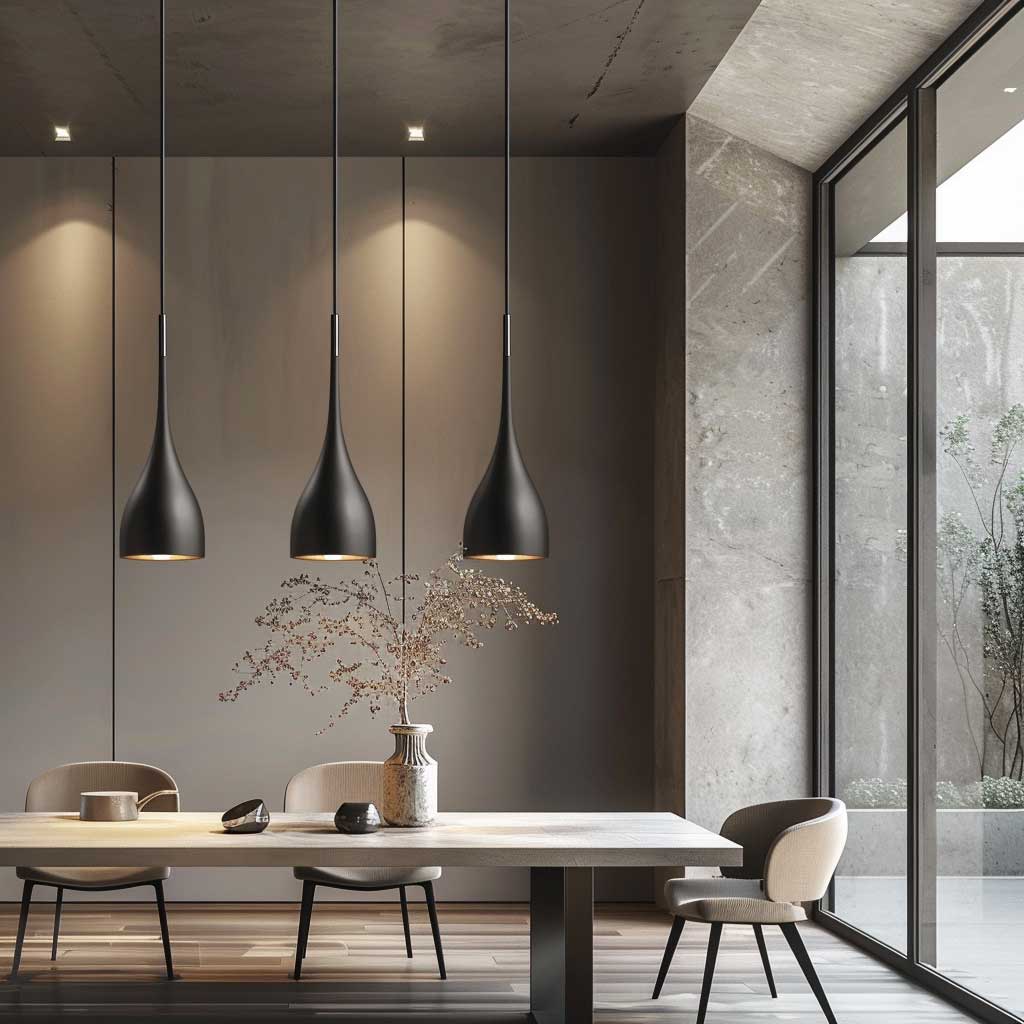
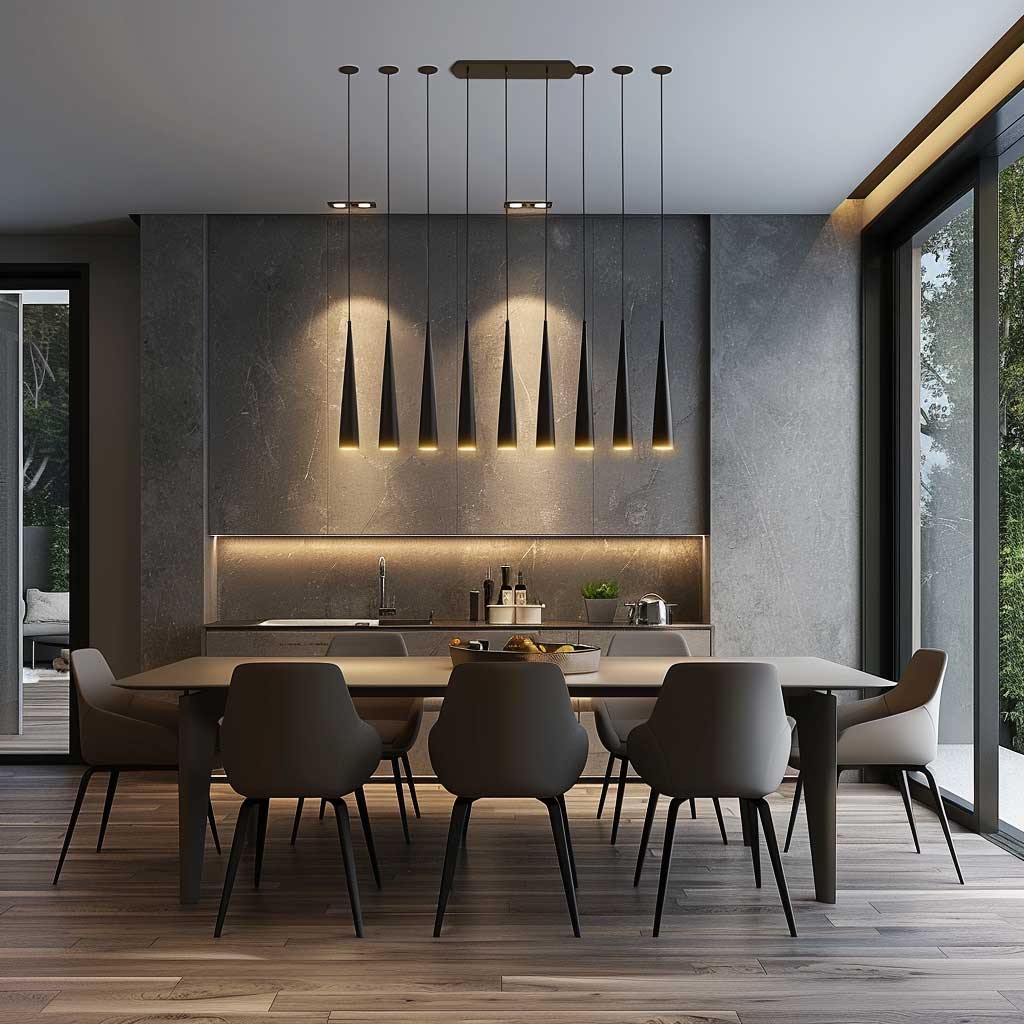
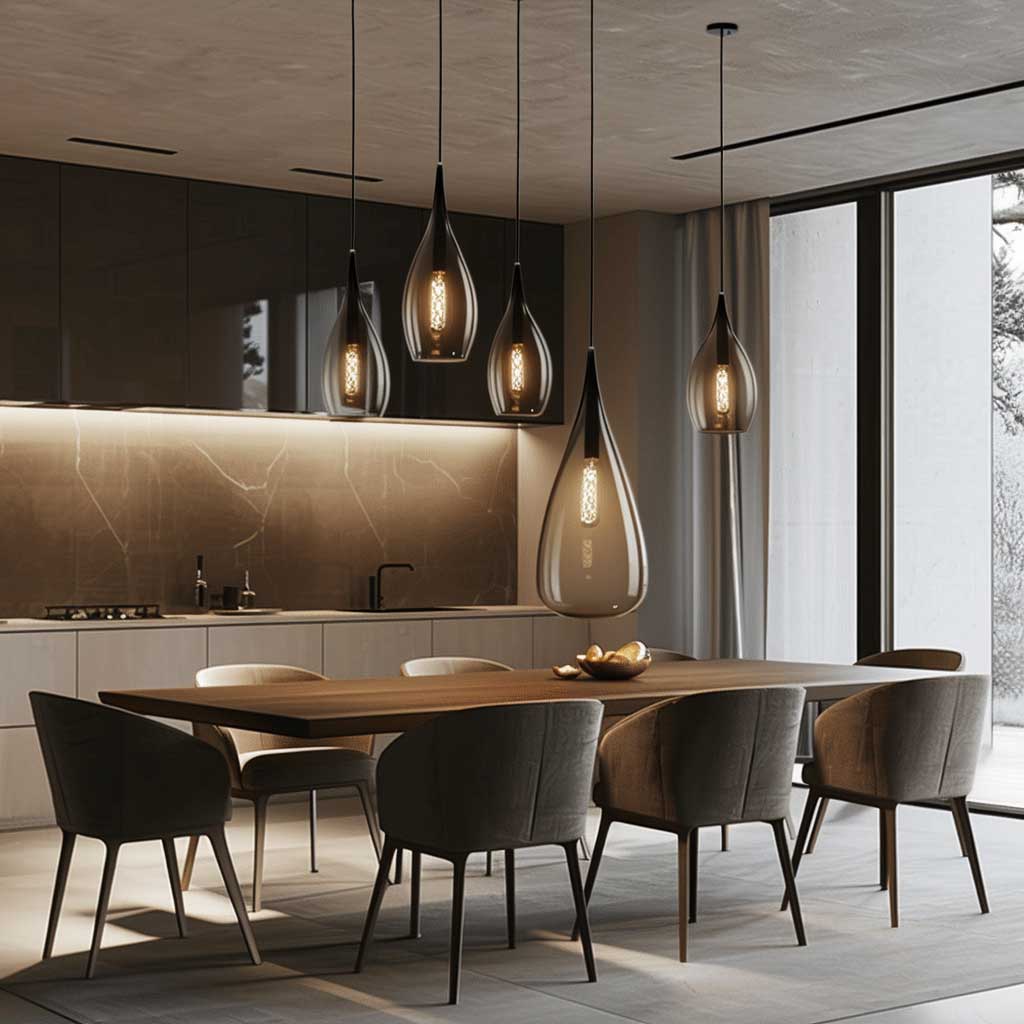
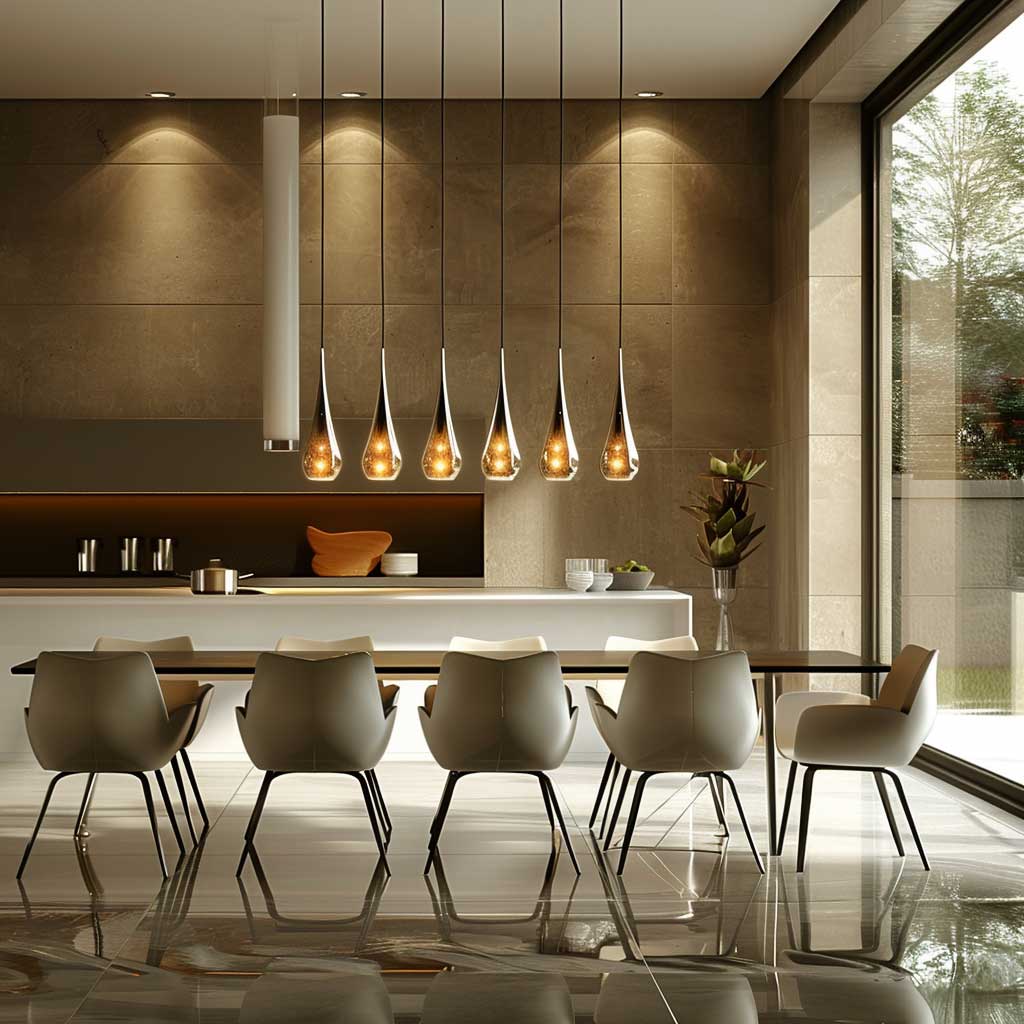
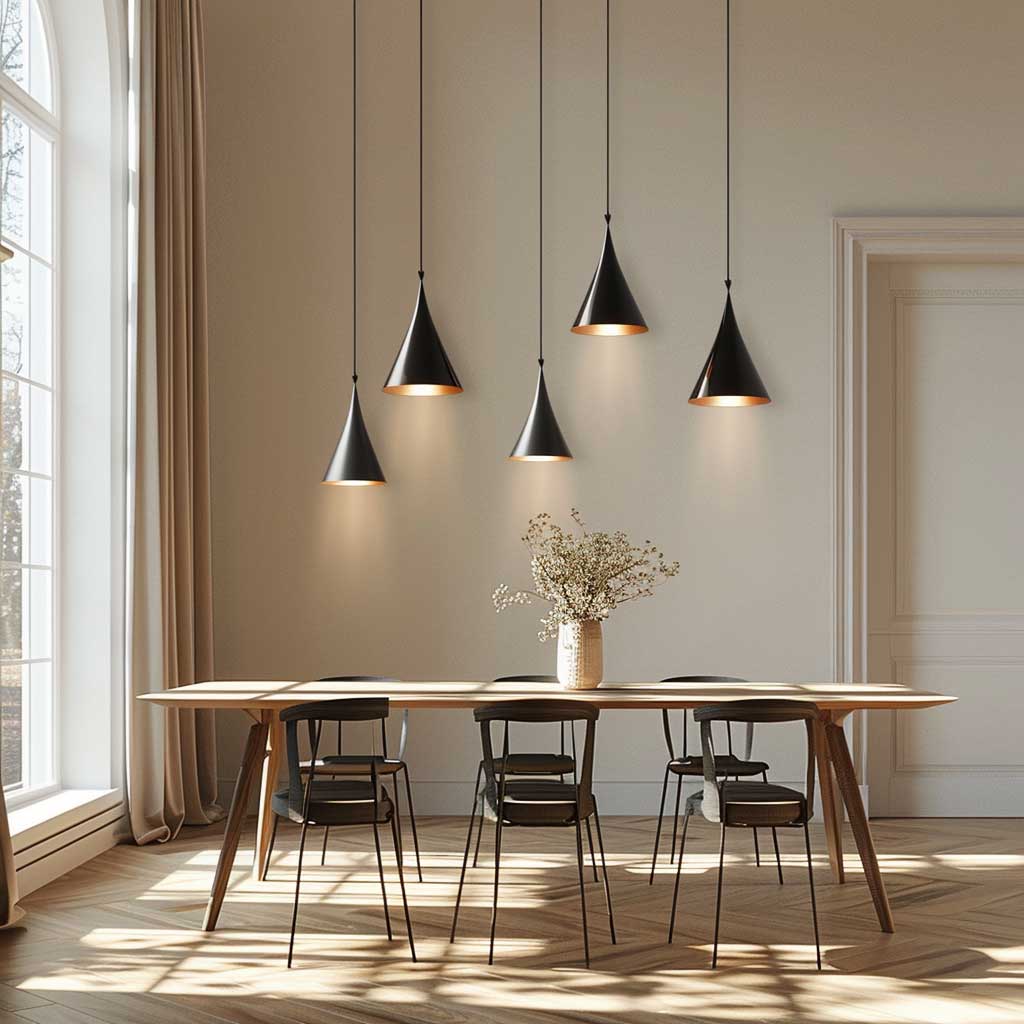
When it comes to the height at which you position these pendant lights, do consider. Ideally, the light needs to be bottomed out at about 30-36 inches from the table’s surface, allowing for ample light without obstructing the view or causing glare. For higher ceilings, add roughly 3 inches per extra foot — Studio McGee’s hanging height guide breaks this down with measurements for every ceiling type. Use dimmable bulbs to keep them active in the ambiance, whether a quiet dinner or a full-fledged party.
FLOS IC Lights run about $695, and they look like a ball balanced on a stick. Sounds ridiculous. Looks incredible over a walnut slab table. I’ve seen knockoffs on Amazon for $45 — the proportions are always wrong, and the brass coating starts peeling within three months. Don’t bother.
Matte black pendants are the safest bet if you can’t decide. The Tom Dixon Beat pendant ($250–$350 depending on size) works in almost every minimalist kitchen-dining combo I’ve seen. Brushed nickel reads colder and pairs better with marble or concrete tables. Clear glass? Only if your bulb game is strong. A cheap LED filament bulb inside a $300 glass pendant looks like a dentist’s office.
Spacing matters more than people realize. Three pendants over a six-foot table should sit about 24–30 inches apart, center to center. Cluster them tighter and the table feels like an interrogation room. Space them too wide and the ends of the table go dark. I measured mine with blue painter’s tape on the ceiling before drilling a single hole.
This kind of pendant lighting can be a feature for a minimalist dining room where less is more. They draw your eye upward and create lines of vertical space in a room, which gives the impression of a larger, more open space. A modern dining table with clean, well-defined lines and sleek finishes might help to improve the visual interest. These may include walls of neutral color, minimum decorative items, and large windows allowing natural light in, making the dining area a bright and airy space that is functional and stylized. If you’re drawn to the industrial side of pendant design, check out these over dining table lighting ideas for industrial spaces for a rougher take on the same concept.
How to Hang a Pendant Light Over a Dining Table
A step-by-step method for positioning a pendant light at the correct height and location over your dining table. No electrician needed for the measuring part.
Tools needed:
- Tape measure
- Blue painter’s tape
- Pencil
- Step ladder
Find the table center
Measure the length and width of your dining table. Mark the center point with a small piece of painter’s tape. This is where the pendant should hang directly above — not the center of the room.
Measure ceiling height
Stand on the ladder and measure from the ceiling to the table surface. Write this number down. For standard 8-foot ceilings, the total distance is roughly 60 inches from ceiling to tabletop.
Calculate the cord length
Subtract 30–36 inches from the ceiling-to-table distance. That gives you the cord or chain length needed. For a 60-inch gap and a 32-inch hanging height, the cord should be about 28 inches, minus the fixture’s own height.
Test with tape before drilling
Tape a piece of cardboard or paper plate to the ceiling at the marked spot. Hang a string from it at the calculated length. Sit in each dining chair and check the sightline. Adjust up or down in 2-inch increments until no one’s view is blocked.
Install and fine-tune
Mount the canopy at the junction box and adjust the cord to the tested length. Turn it on and check the light pool on the table — it should cover roughly 70–80% of the table surface. If you’re using a dimmer, test it across the full brightness range.
| Feature | Pendant Lights | Chandeliers | LED Strips |
|---|---|---|---|
| Price Range | $45–$700 | $150–$1,200 | $30–$120 |
| Installation | Easy (1 junction box) | Moderate (heavier mount) | DIY-friendly (adhesive) |
| Light Distribution | Focused downward | Soft and diffused | Even ambient glow |
| Best Table Shape | Any (group for long tables) | Round or square | Rectangular |
| Minimalist Score | ★★★★★ | ★★★☆☆ | ★★★★★ |
| Energy Efficiency | Depends on bulb | Depends on bulb | Best (built-in LED) |
Minimalist Chandeliers That Don’t Overpower the Room
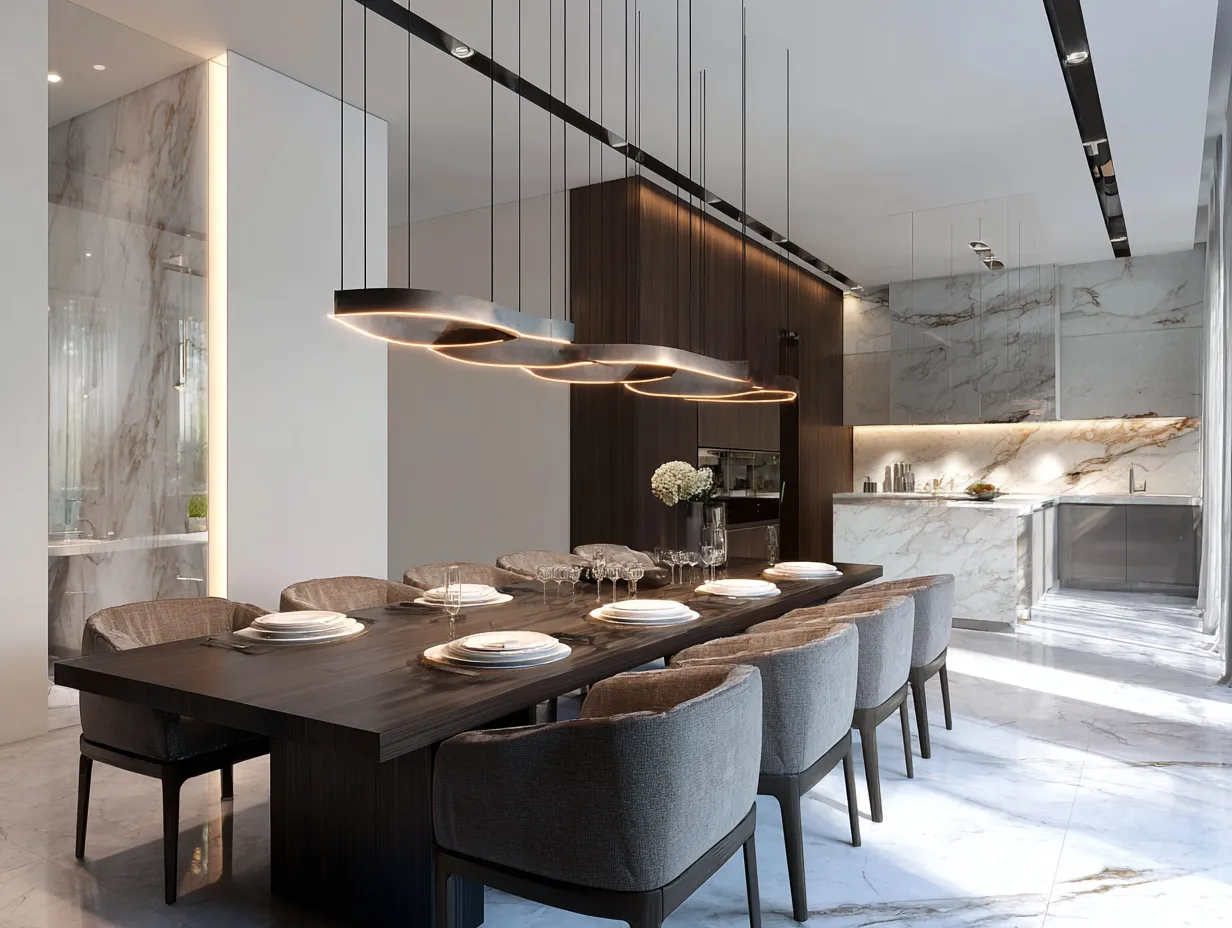
For a more minimalistic approach to a chandelier, one would want to go for the kind of sophistication that, in no way, lacks respect for simplicity. Unlike other chandeliers that highly decorate the design and make maximalist statements, such a minimalist chandelier integrates perfectly with modern spaces due to its clean geometric structure. Imagine it in a dining room with a beautiful chandelier suspended above a sleek dining table, its simple but stylish design making a statement of discreet luxury. It uses forms and elegance that can add sophistication to the room without being too heavy. This type of lighting fixture works exceptionally well in a minimalist house because the emphasis is on functionality and clean lines.
Look for designs that feature materials like metal, glass, or even wood if choosing a minimalist chandelier. This modernizes its aesthetics and bears in mind the necessary durability and ease of maintenance for apparent reasons. The size of the chandelier should fit the dining table and space. As a rule of thumb, a third of the table width is about the width a fixture should be.
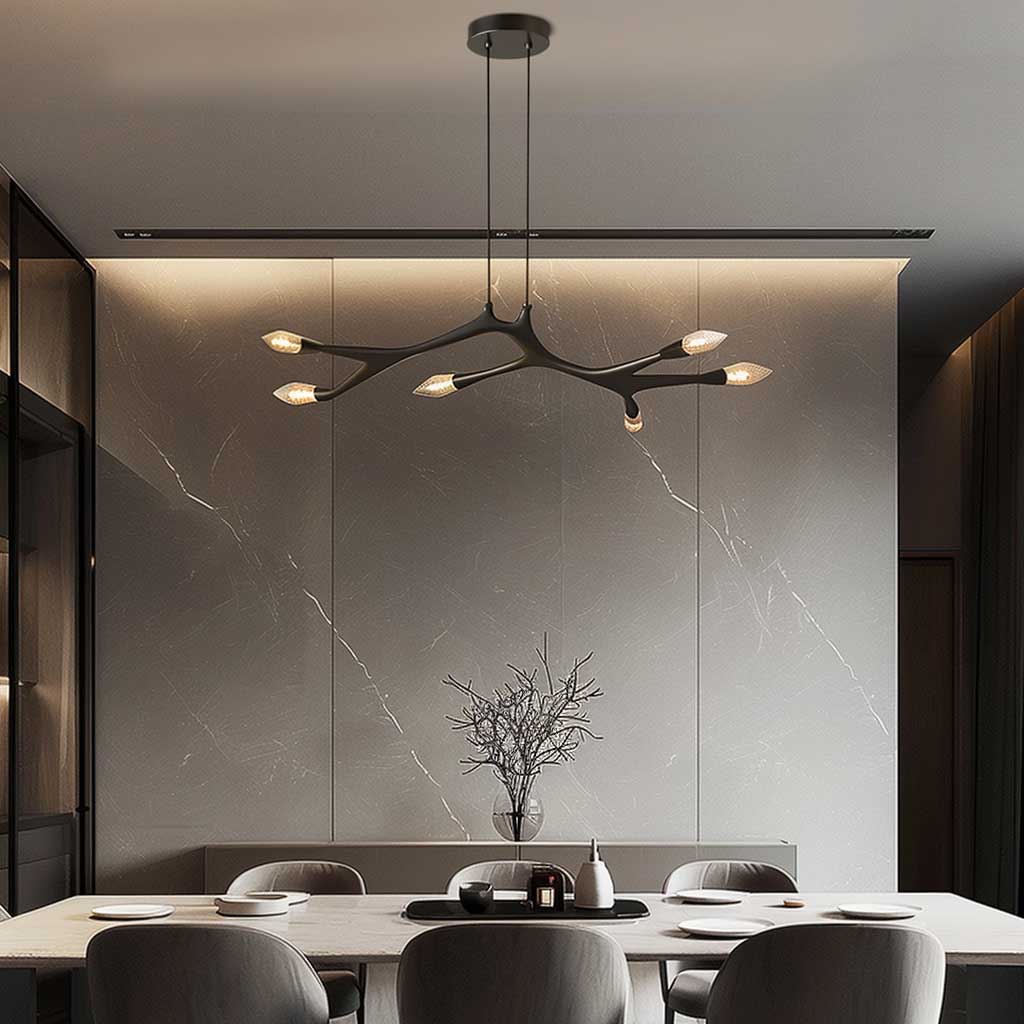
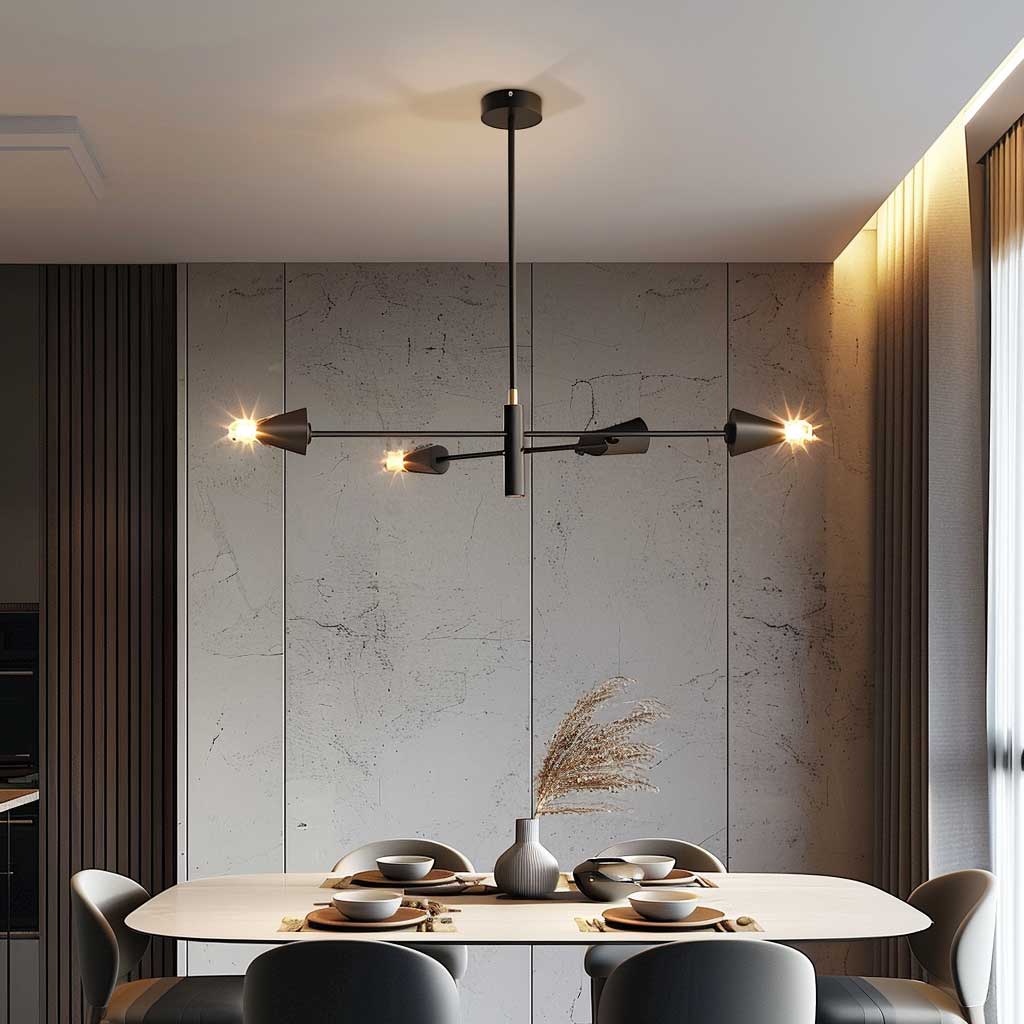
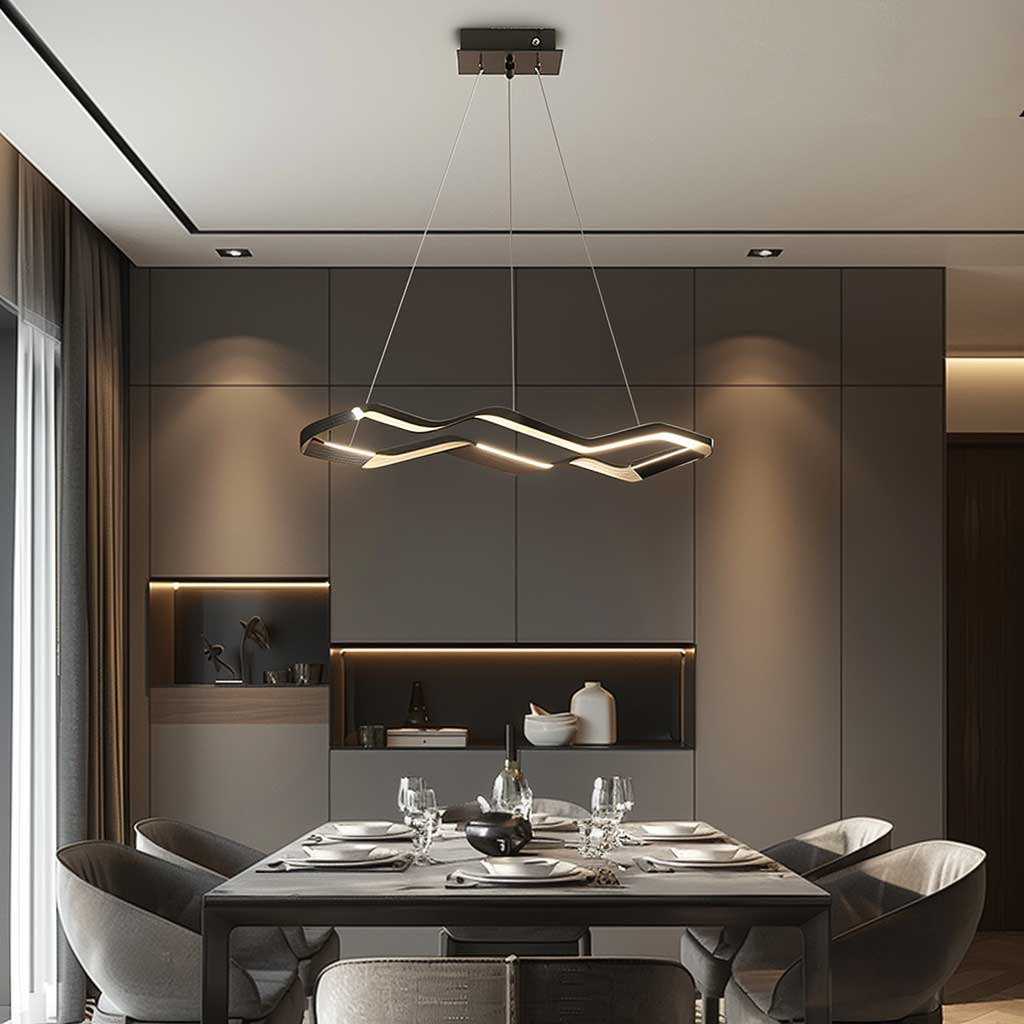
The Sputnik-style chandelier went through a massive trend cycle around 2018–2020. Most of them look dated now, especially the gold-and-globe versions that flooded Wayfair. If you want geometric, go linear instead. The West Elm Mobile Chandelier ($299–$549) keeps the math simple: rectangles and circles, no fuss.
Wood chandeliers are a weird call for minimalist rooms. They read rustic no matter how you style them. I bought a beaded wood chandelier once because a Pinterest board convinced me it would look “organic.” It looked like a craft project above a $2,000 dining table. Returned it within a week.
One rule I stole from a lighting designer in Brooklyn: if the chandelier has more than 8 arms or bulbs, it’s probably not minimalist anymore. Count the light sources. Fewer than six keeps the fixture feeling restrained. More than ten and you’re in a hotel ballroom.
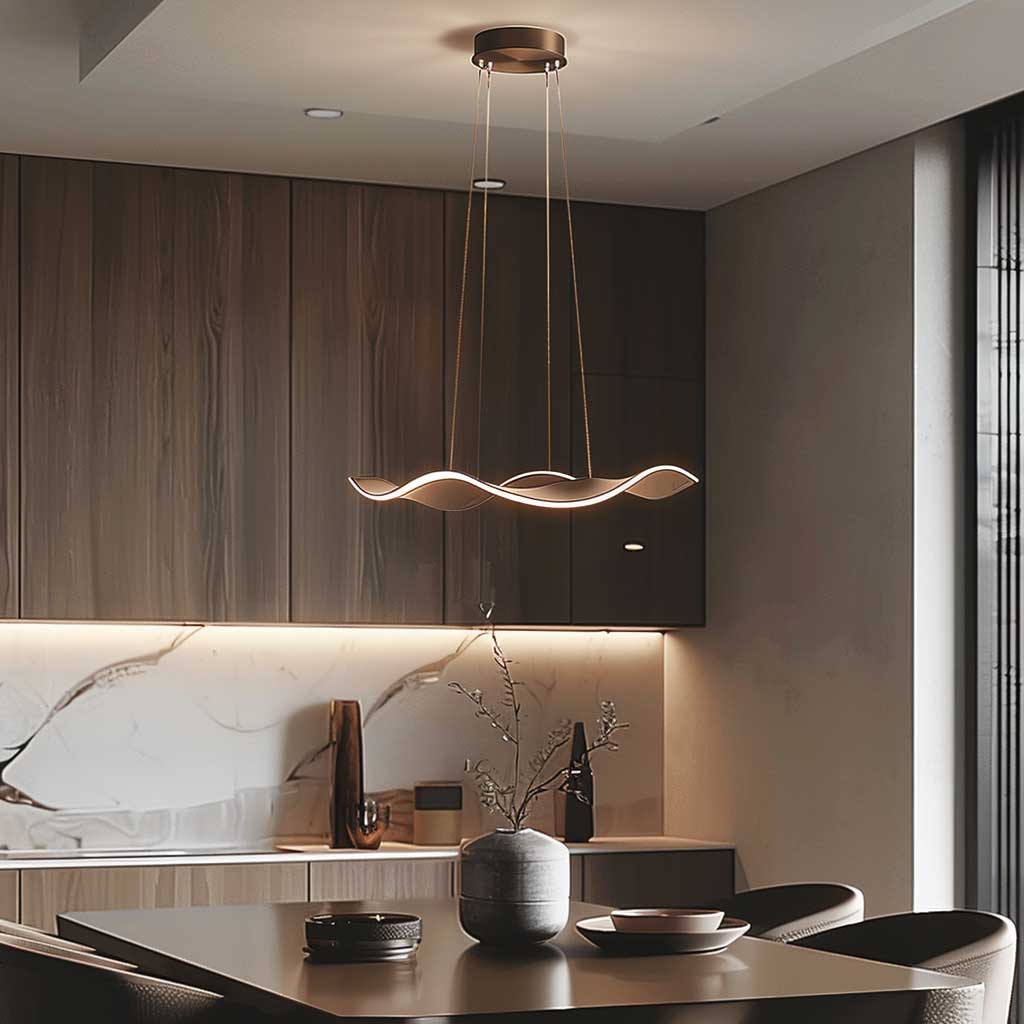
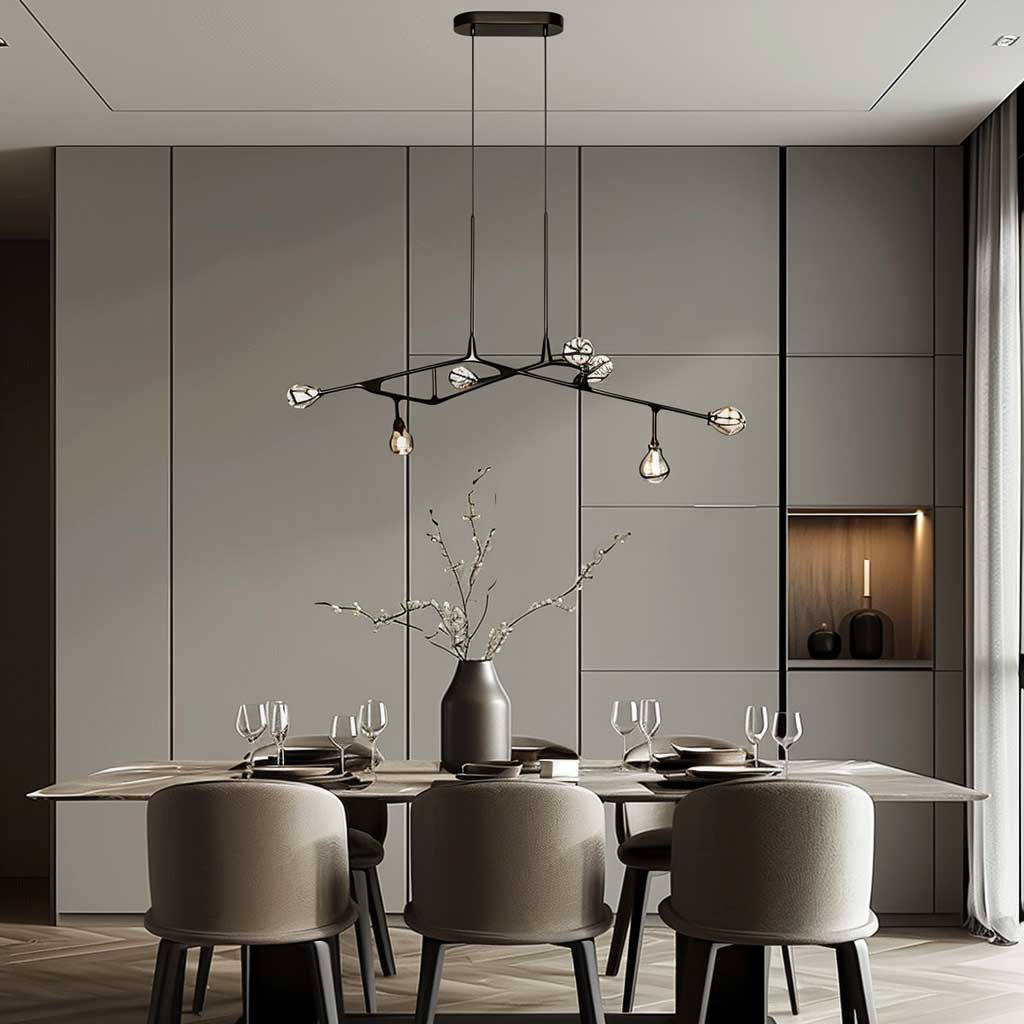
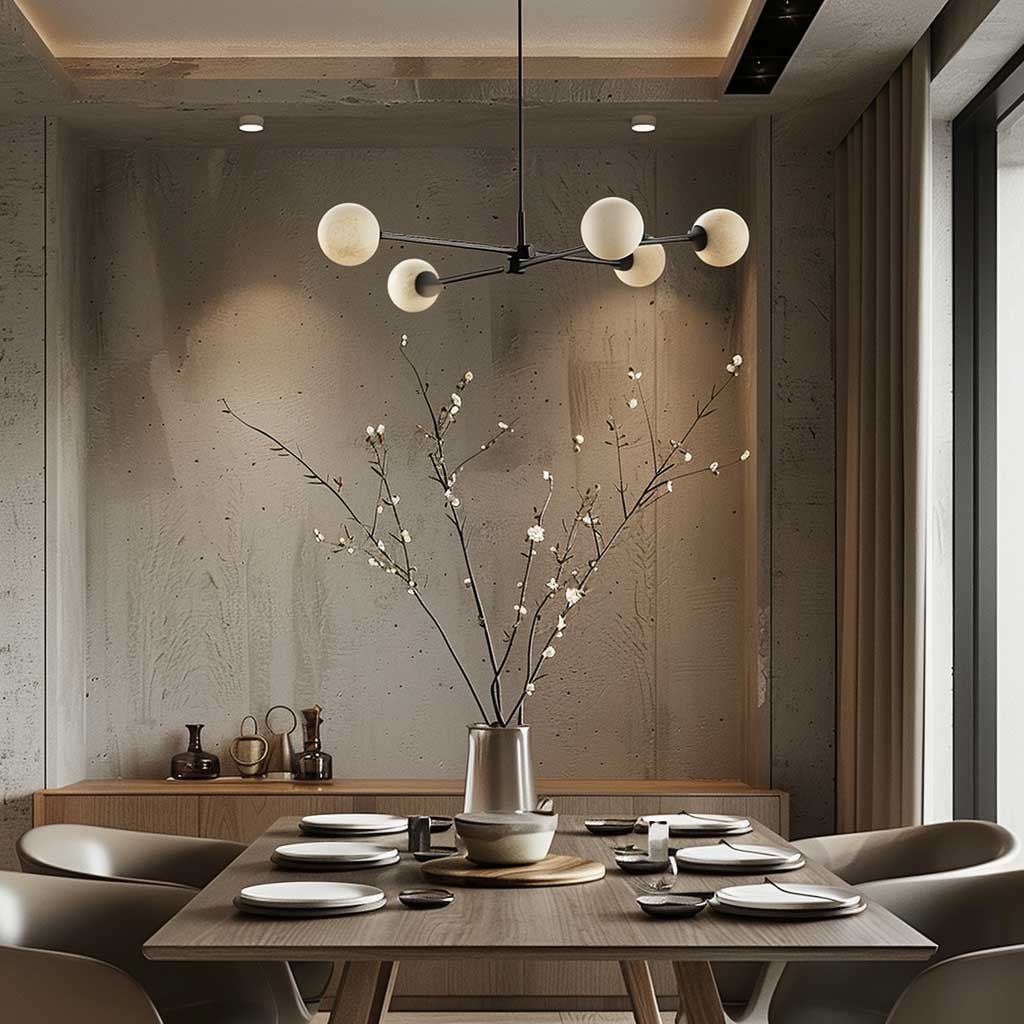

A minimalistic chandelier being installed in the room will brighten the center, making a point for passers-by. The lights projected by it will be softer and more diffused than the pendant lights, thus providing a cozy and inviting atmosphere for both intimate dinners and casual gatherings alike. Let the chandelier do the work: keep other dining room designs simple. A modern, sleek dining table with matching chairs and minimal tableware will combine nicely into one of your subtle decorative elements, a single centerpiece, or just a few wall-hung samples. All this adds up to a dining constant that feels refined, peaceful, and inherently graceful.
LED Strip Lighting Over a Dining Table: The Hidden Option
More contemporary LED strip lighting helps light up the dining area using different approaches and not the traditional ones. This is so because it can be used on peripheral sections of the dining room and even walls for a glow without showing the actual lighting equipment. This makes them an excellent way for minimalist houses featuring neat lines and simple design elements.
Think of dining space: an elegant dining table softly lit by recessed LED strip lights set within the ceiling. This lighting, created by the LED strip lights in the ceiling, gives the room a subtle ambiance, emphasizing the dining table, with no attention to the fixtures. This style of lighting is excellent for people who are into minimalism and desire to maintain the look of the dining room uncluttered and clean.
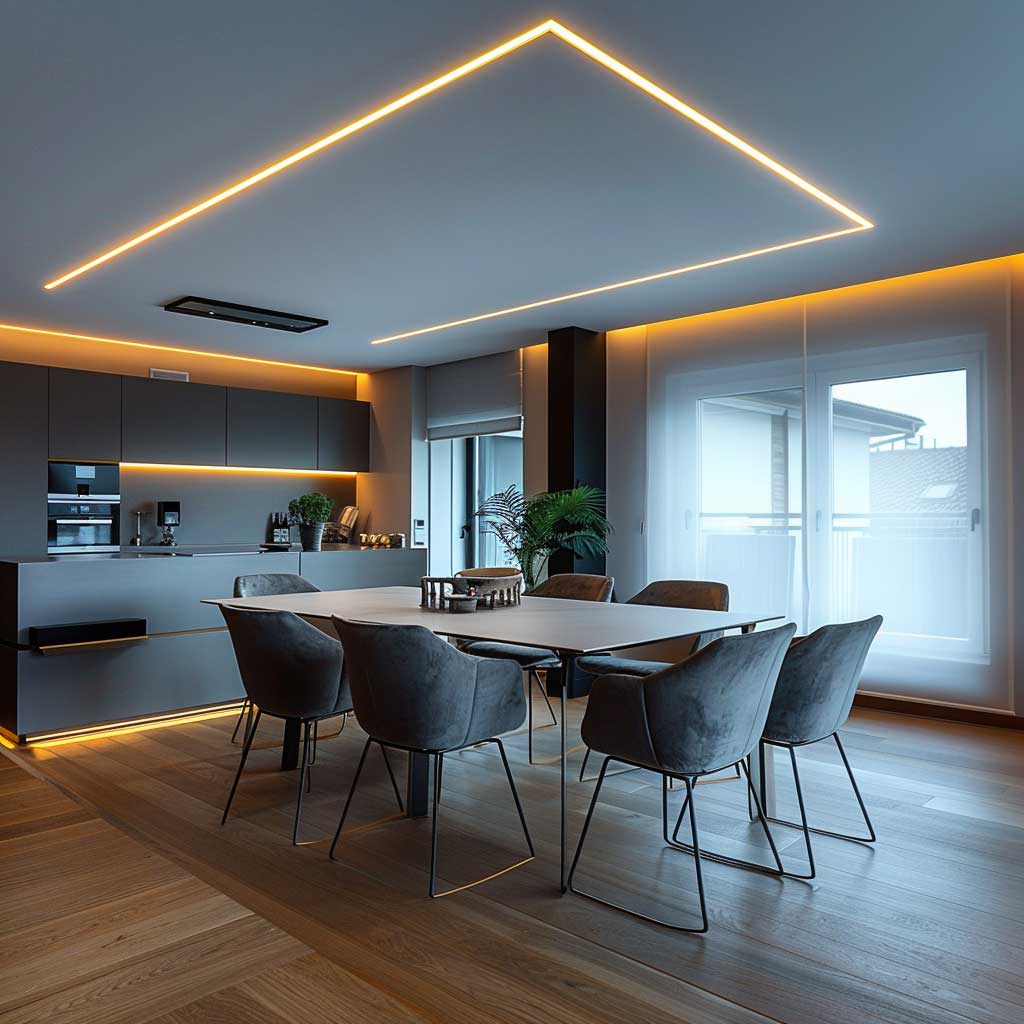
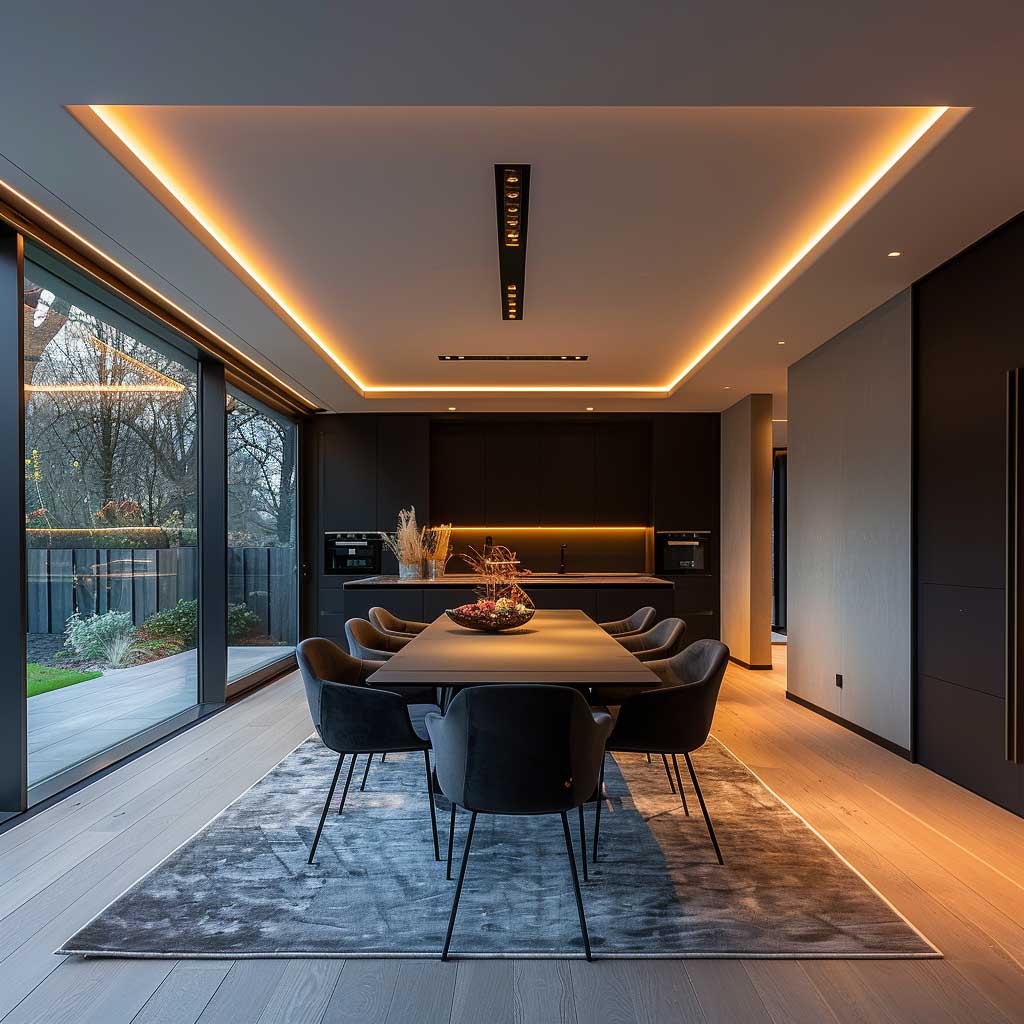
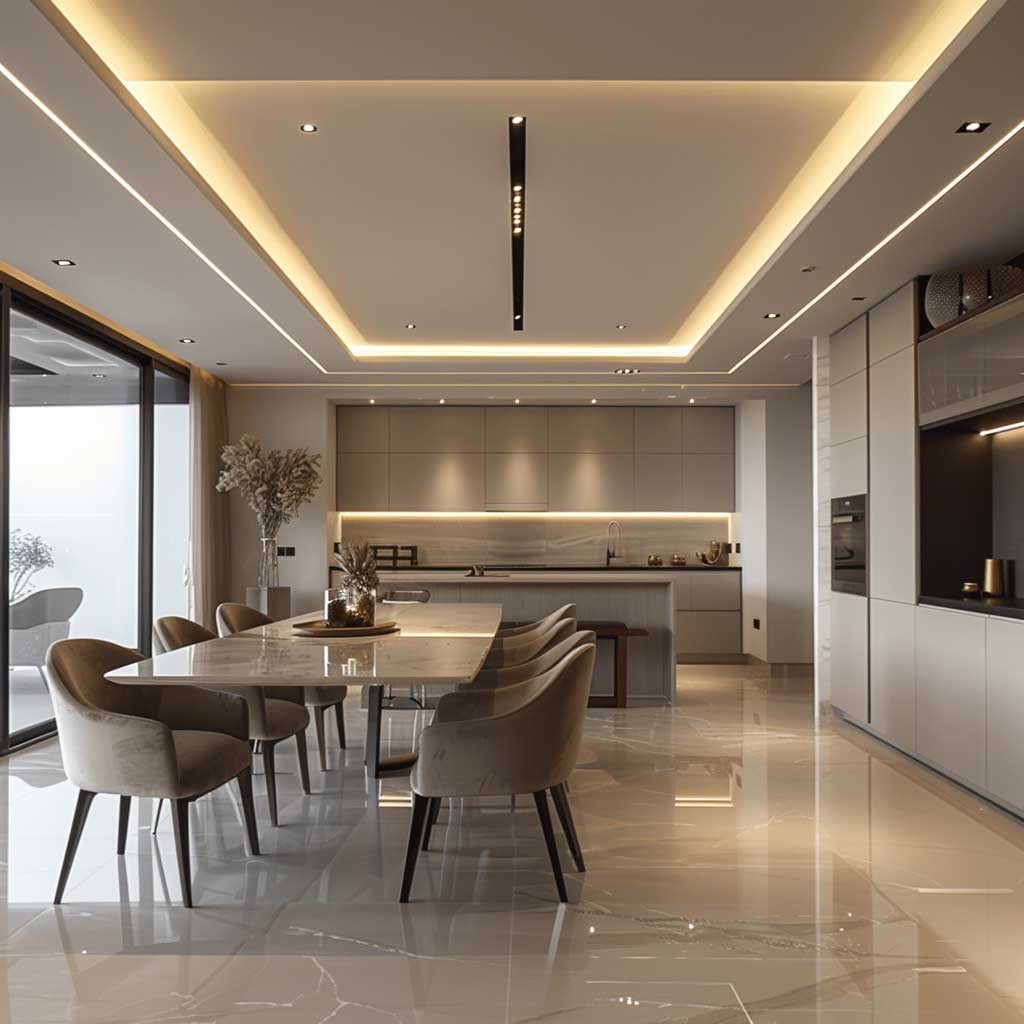

The best thing about LED strip lighting is its high versatility; it can be shaped and adapted to almost any space. It can be affixed at the edge of the ceiling, under shelves, or even at the base of the dining table to give out a very edgy aura. Just ensure that you place them discreetly and strategically within a room so that they only enhance the room rather than take over the room.
Philips Hue Lightstrip Plus ($80 for the starter, $27 per extension) is the go-to for most people, and for good reason. Color temperature control from 2000K to 6500K, app dimming, and you can cut it to size. The adhesive backing is mediocre though — after six months mine peeled off a painted ceiling channel. 3M VHB tape fixed it permanently for $9.
Cheap LED strips from no-name brands flicker. Not always visibly, but enough to cause headaches over a long dinner. Anything under $30 for a 16-foot roll is usually running a low-frequency driver. You’ll notice it on camera before you notice it in person, but once you see it, you can’t unsee it.
Warm white (2700K–3000K) makes food look appetizing. Cool white (4000K+) makes salad look like a lab specimen. Nobody’s eating steak under 5000K and enjoying it. Color temperature matters more than brightness for a dining room setup, and most people get this backwards.
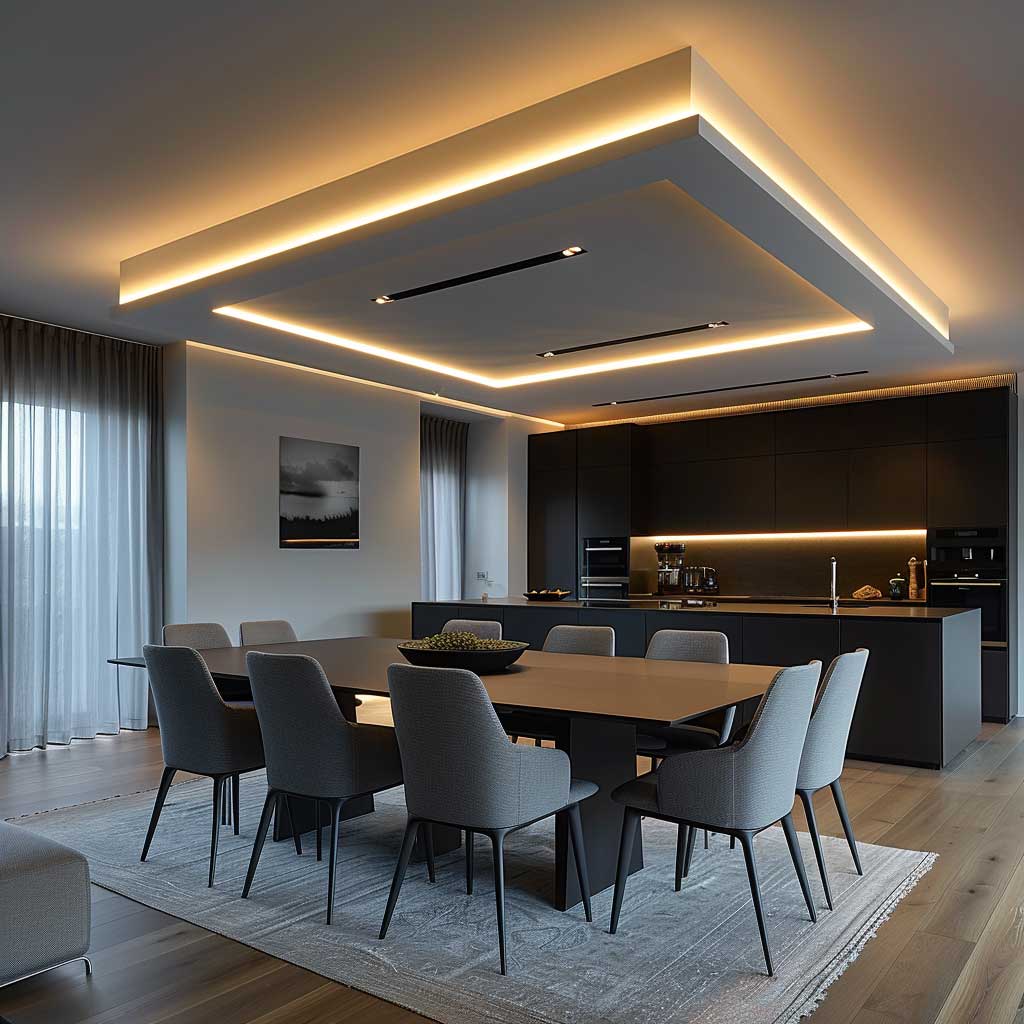
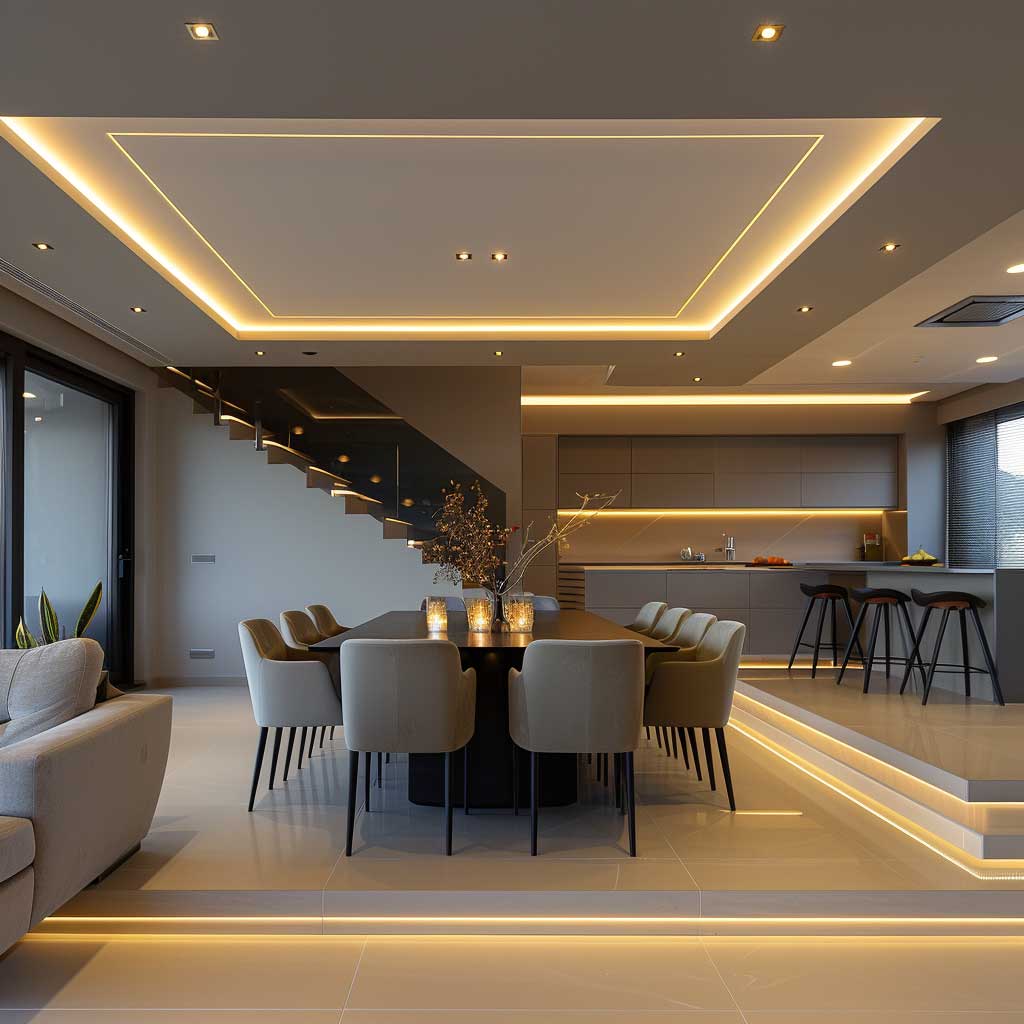

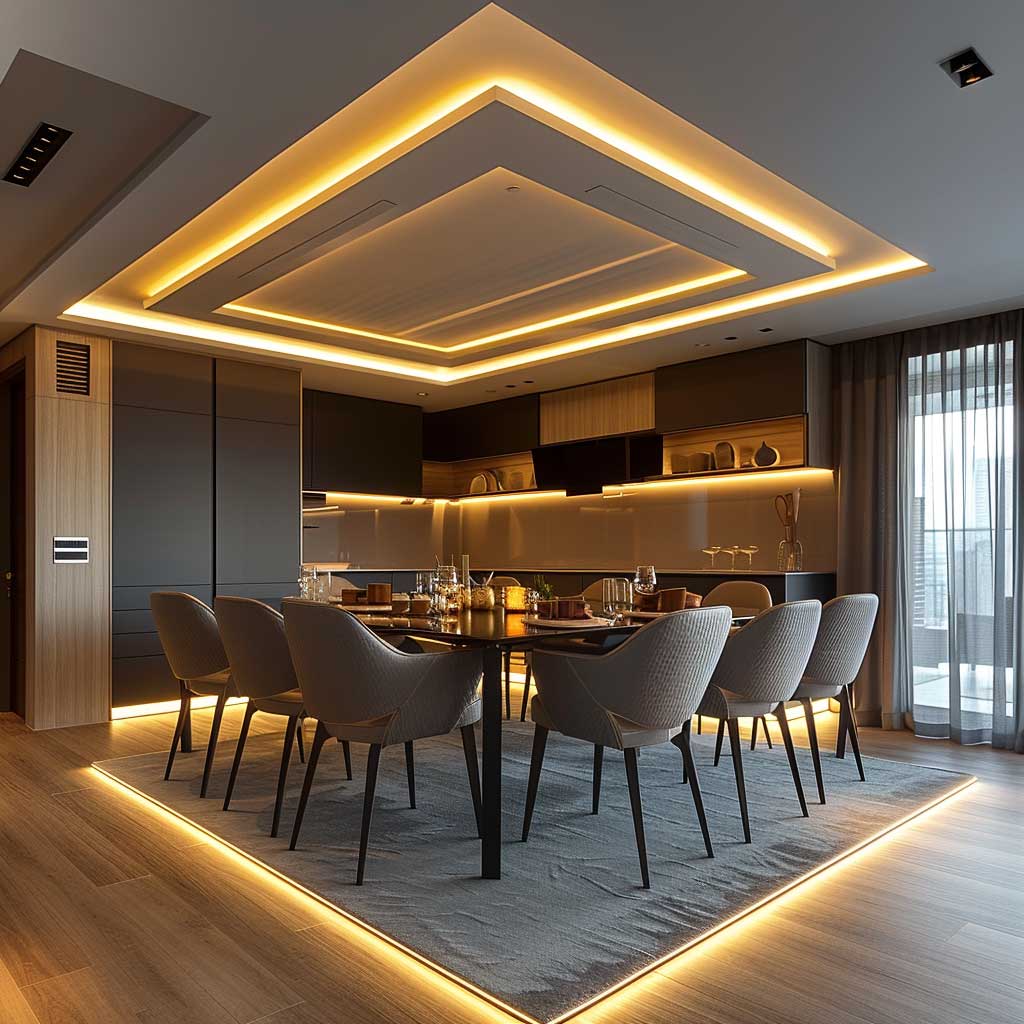
Energy Efficient: One of the main benefits of LED strip lighting is about energy efficiency. LEDs use much less power compared to ordinary bulbs, and so doing, they help in cutting down on your electricity cost and reduce your ecological footprint. Besides, they will serve you for a long without the need for frequent replacements.
These lights will help match the decor in your dining room as you incorporate modern, minimal furniture. The table should be sleek, with clean lines and a simple design to suit the discreet lighting. These neutral tones will accompany minimal decoration to advance the modern look, making a dining room that will feel open, airy, and welcome. For more LED panel ideas beyond the dining table, take a look at these modern LED panel designs for home interiors.
LED strip lighting in the dining area also gives flexibility in creating different moods. Welcome to a world where the lights are either warm in color temperature, giving you a comfortable and quiet ambiance, or cool white, giving you a bright and energetic feel. Most LED strips are also dimmable, enabling the user to adjust its light to a specific atmosphere on different occasions and at different times of the day.
Bottom Line on Dining Table Lighting
Pendant lights give you the most control per dollar. Chandeliers make a room feel finished but you’re committed to one look. LED strips disappear entirely, which is either the point or the problem depending on your taste.
Hang any fixture 30–36 inches above the table surface. Size the fixture to roughly half the table’s width. Use warm white bulbs (2700K–3000K) unless you want your dining room to feel like a coworking space.
Spend your budget on fewer, better pieces. A single $300 pendant beats three $50 ones every time — the finish quality, the light distribution, and the resale appeal aren’t even close.