Retro futurism interior design solves the problem most people don’t know they have: rooms that feel generic because they’re either too modern or too nostalgic, but never both at once. The style pulls from the Space Age optimism of the 1950s and 60s — Sputnik-era shapes, atomic motifs, bold color blocking — and layers them with contemporary materials and clean-lined furniture. I’ve been obsessed with this aesthetic for three years, and the rooms it produces don’t look like anything else on the internet.
You’ll notice the difference immediately in how a space feels. Retro futuristic rooms have energy. They’re not quiet the way Japandi is quiet, and they’re not loud the way maximalism is loud. They sit in a very specific register — confident, slightly theatrical, and deeply personal. The key is knowing which era you’re actually channeling, because the 70s version looks nothing like the 50s version.
Quick Scan
- Living room: Pair a 1960s-silhouette sofa with a sculptural chrome coffee table — Eames DSW chairs around $200 each on Modernica’s site.
- Retro futurism kitchen: Neon strip lighting under upper cabinets costs under $40 (Govee kit) and does more than any cabinet hardware swap.
- Retro futuristic bedroom: One curved, low-profile bed frame in glossy white or lacquered walnut anchors the whole room. Room & Board’s Holt starts at $1,499.
- Color rule: Lead with teal, deep orange, or acid green — then neutralize 70% of the room. Don’t let the bold color fight for attention everywhere.
- What to skip: Mixing 50s atomic shapes with 80s Memphis grid patterns. They share a lineage but clash hard in real rooms.
The Retro Futurism Living Room Pulls Its Weight in the First 10 Seconds
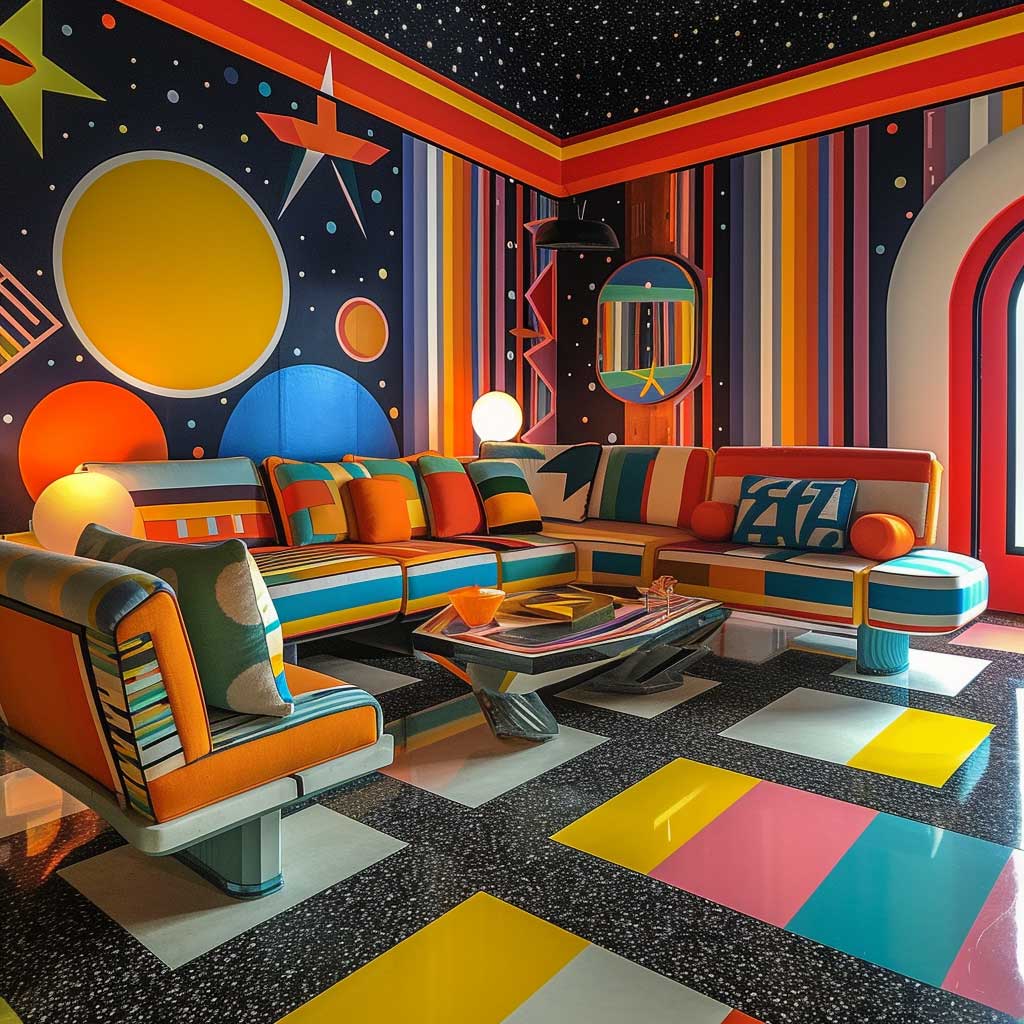
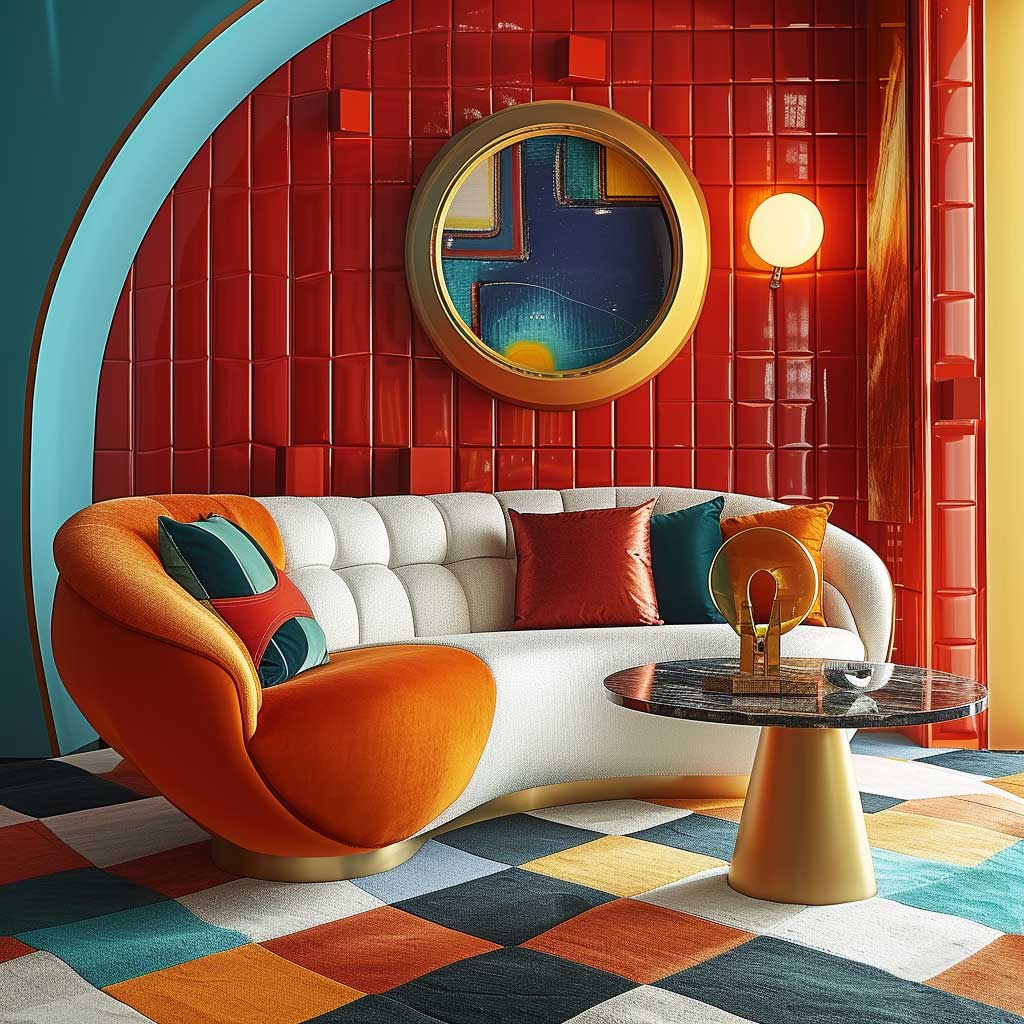
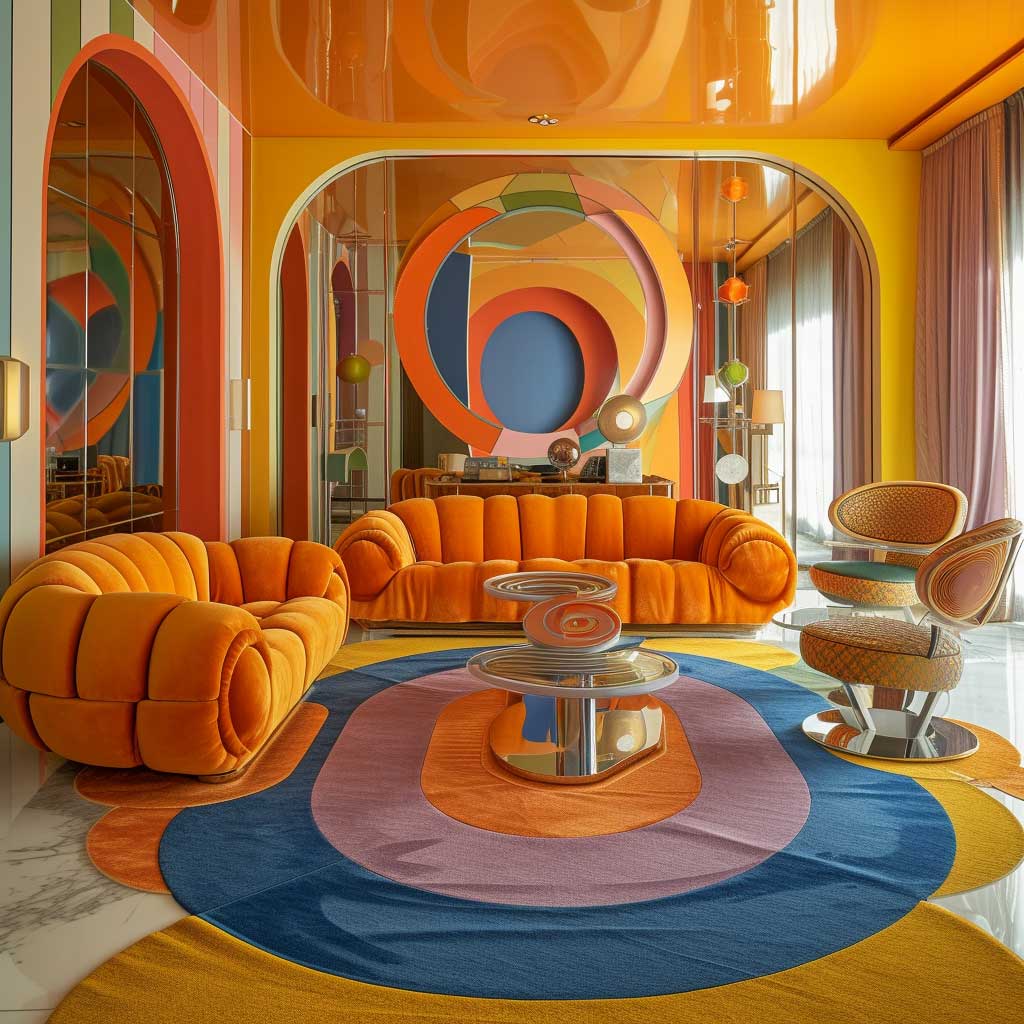
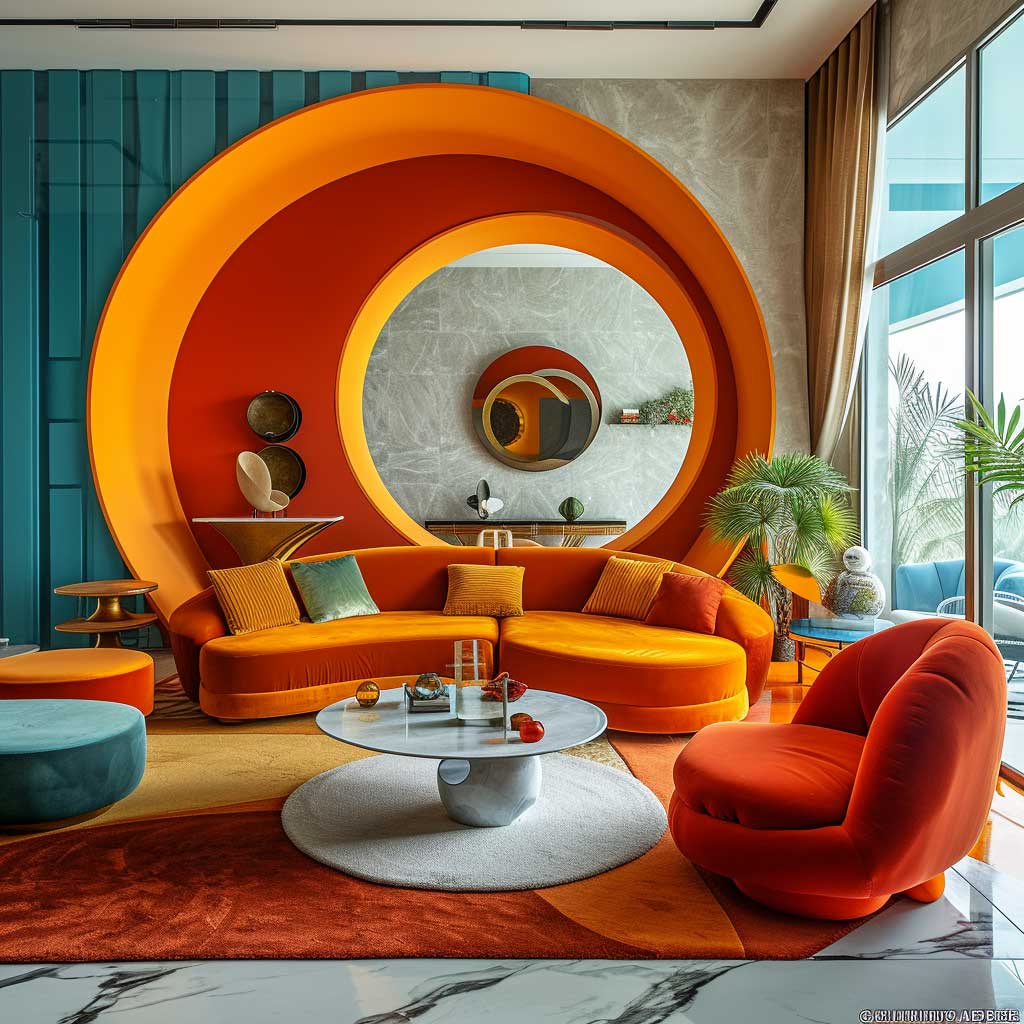
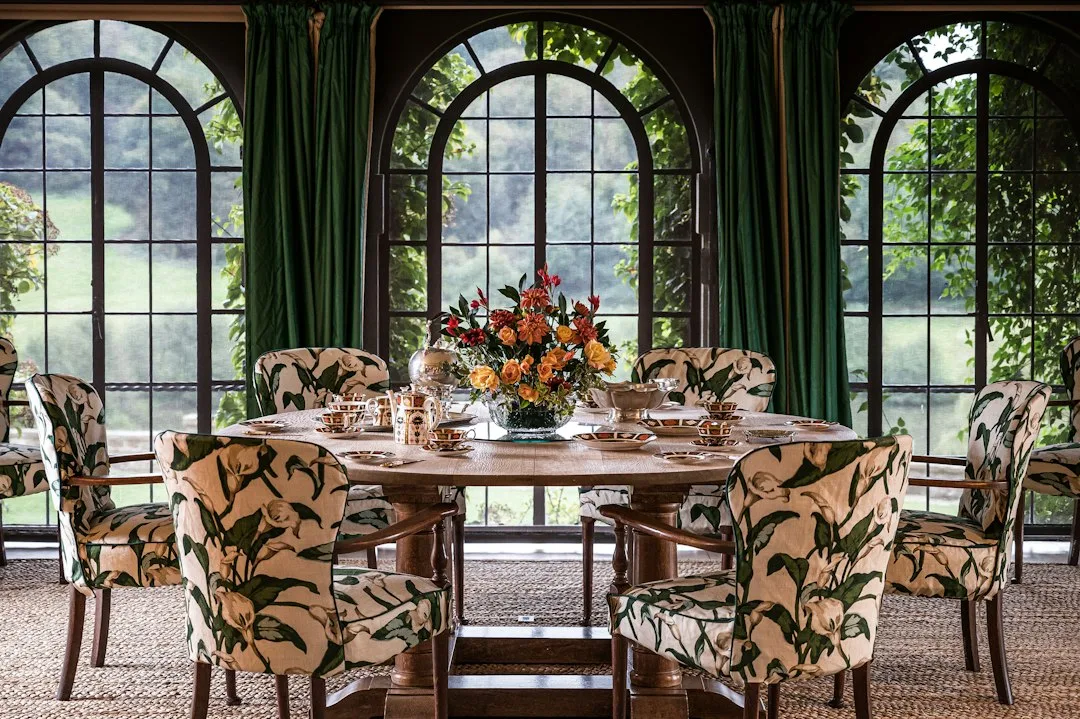
The retro futurism living room works because it treats furniture like a timeline. Mid-century silhouettes — low profiles, tapered legs, curved backs — read as retro. The materials you dress them in is where you inject the future: chrome, Lucite, brushed steel, glossy lacquer. My go-to starting point is a sofa with a Womb-chair-adjacent silhouette, around $800–$1,200 from Article or Joybird, and then I build the room’s “future” layer from there. The furniture does the heavy lifting so the walls don’t have to.
Color is where most people give up too fast. Rich teal (#1a7a6e range), deep burnt orange, or chrome-adjacent warm whites are the load-bearing walls of this palette. You need one dominant color that reads bold when photographed — this is the retro futuristic living room equivalent of having a good bone structure. Everything else should be a neutral: cream, warm white, charcoal. Avoid mixing teal and orange in equal proportions. Pick one, let it lead, and let the other appear only in accent pieces.
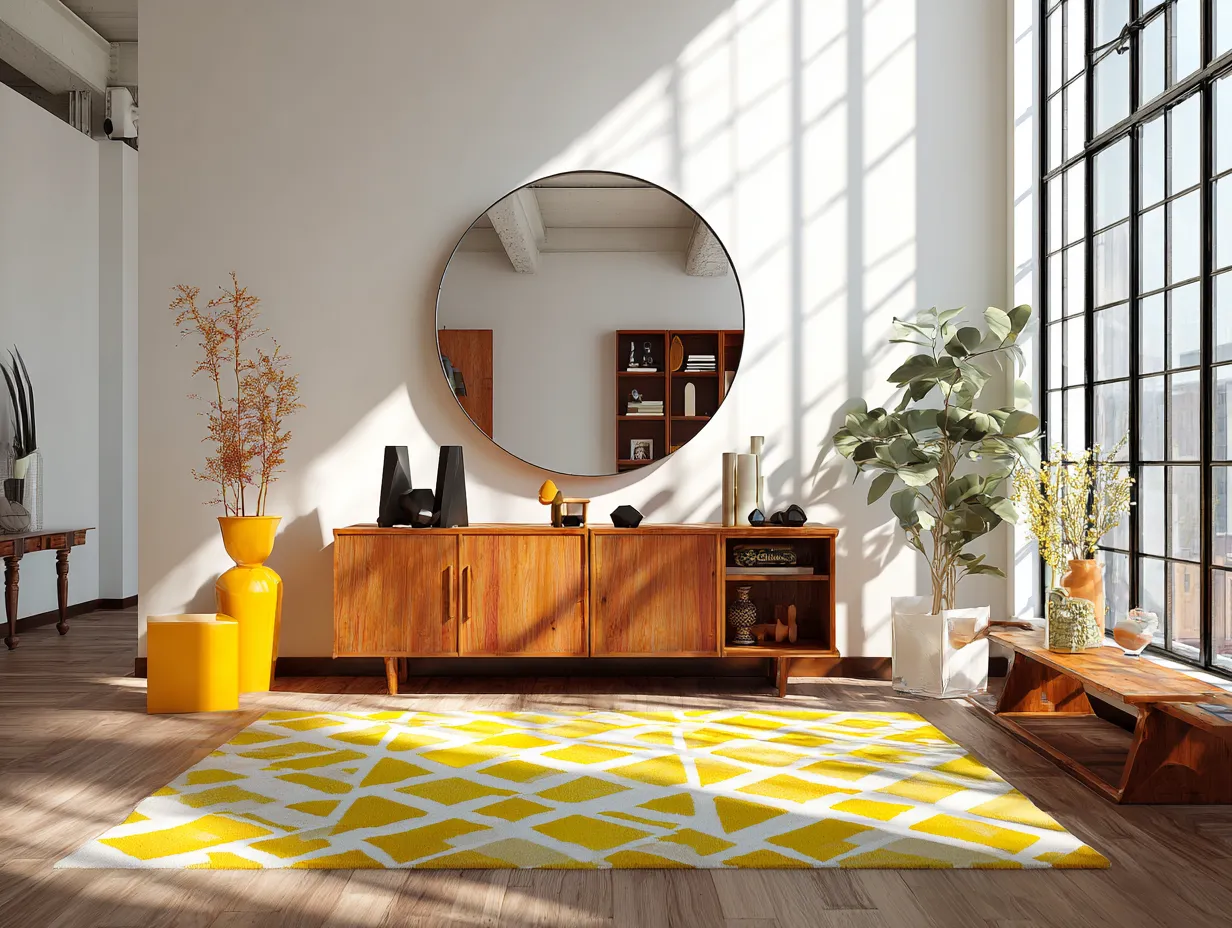
Geometric patterns are a tool, not a theme. A single geometric rug under the coffee table — Ruggable has some decent atomic-era options around $189 for a 5×8 — is enough. What doesn’t work? Geometric wallpaper plus a geometric rug plus geometric cushions. I’ve tried it. It looks like a math classroom. One geometric element per room surface, maximum.
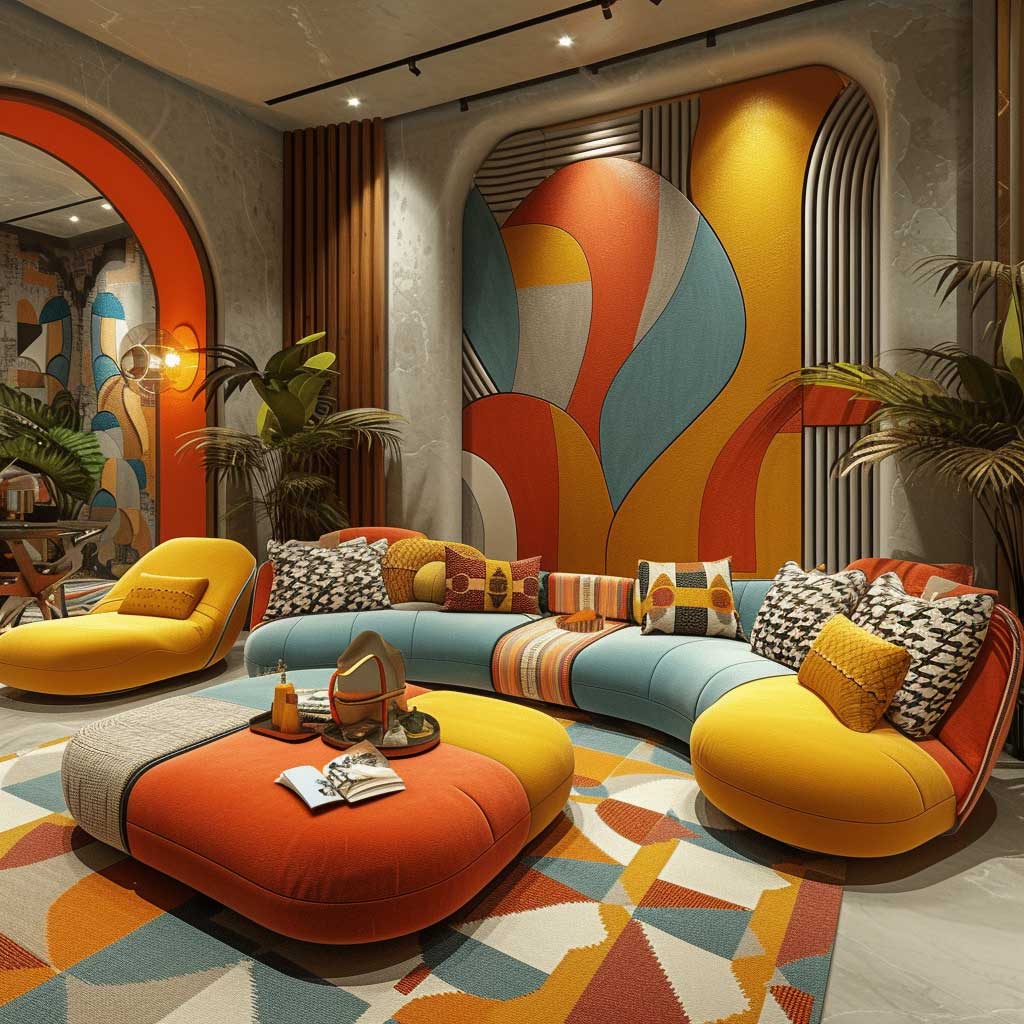
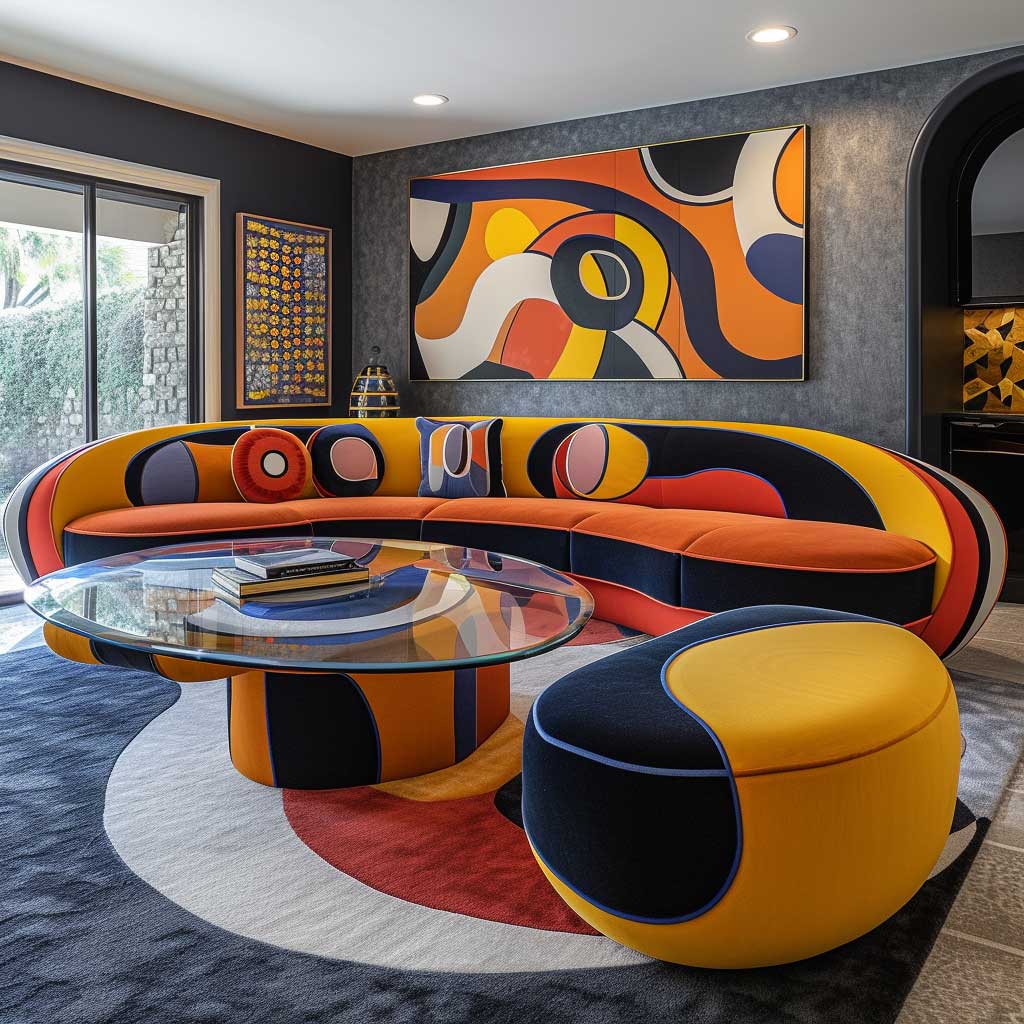
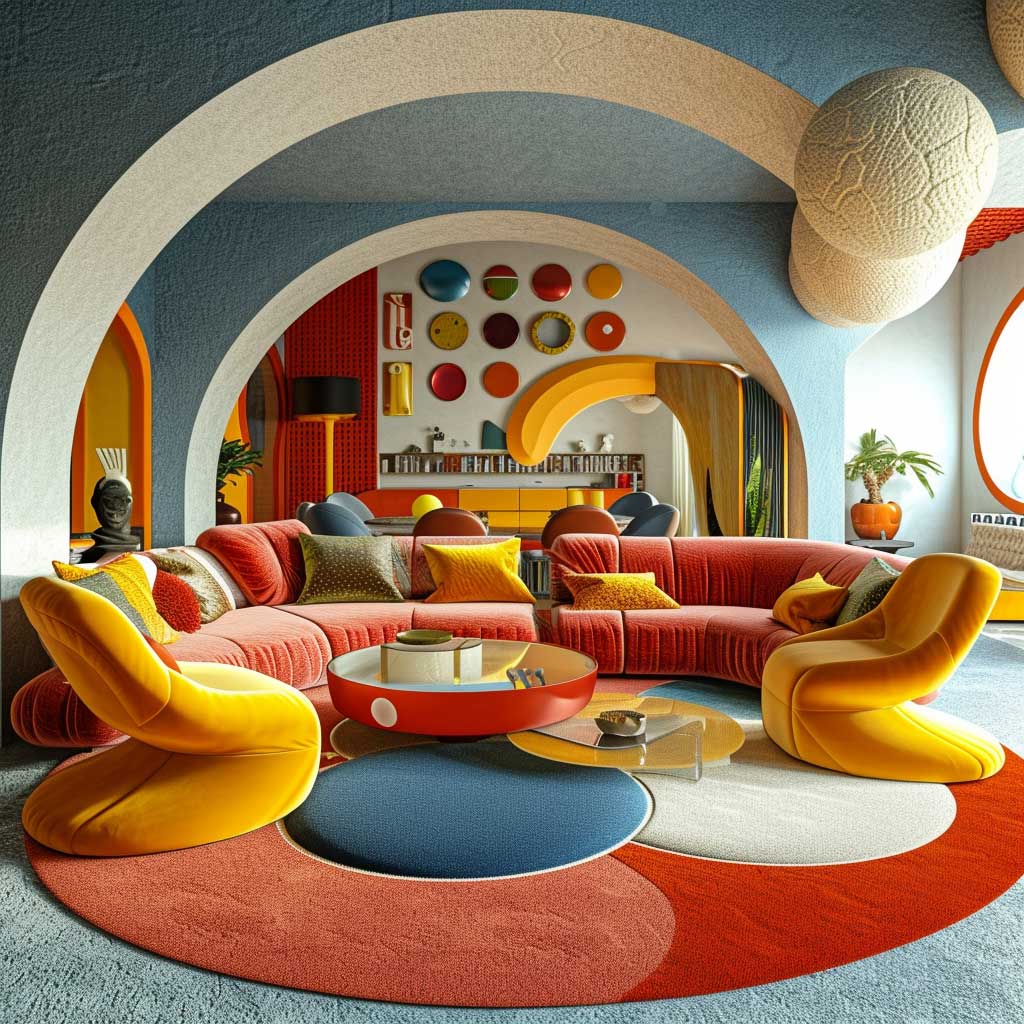
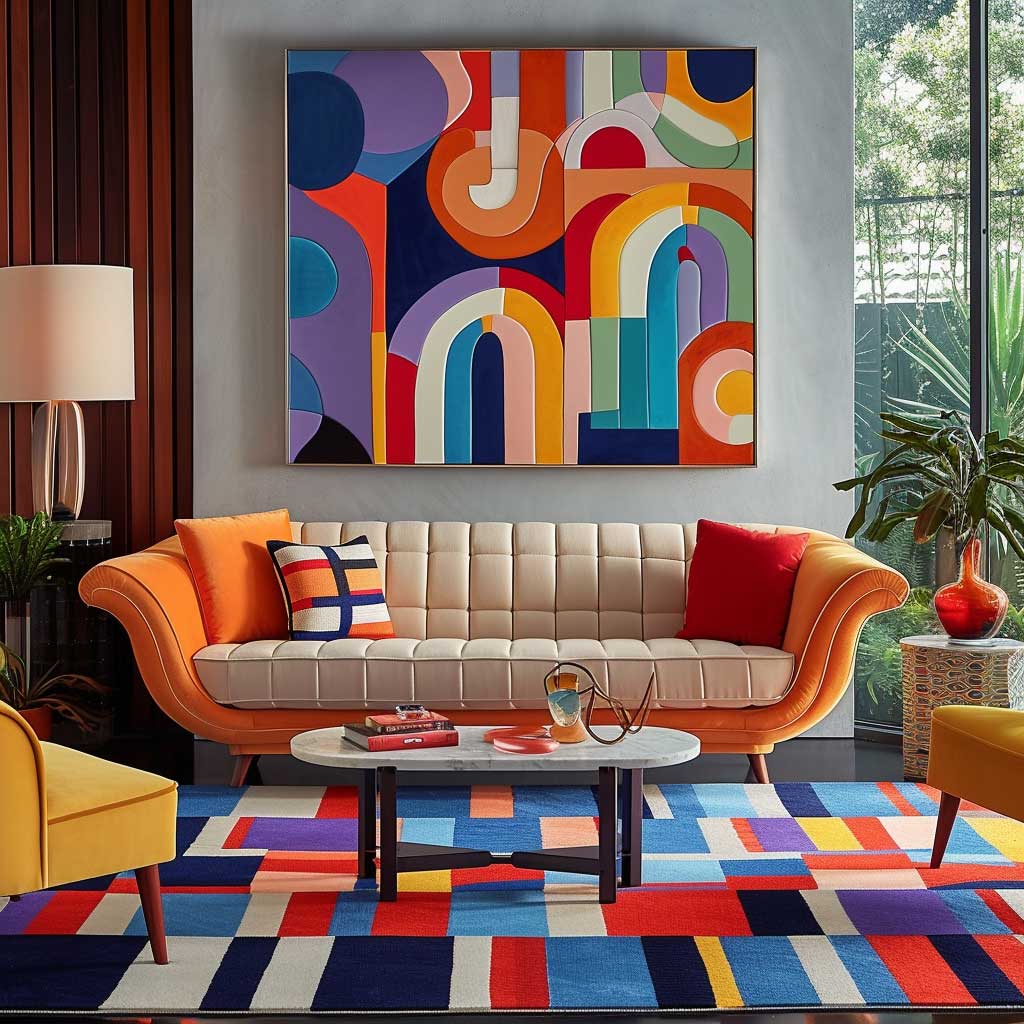
Lighting is the piece everyone under-budgets. A Sputnik chandelier — the original retro futurism light fixture — runs $300–$600 from West Elm or CB2, and it closes the visual loop between the 1960s silhouettes and the metallic surfaces. What you should not do: pair a Sputnik fixture with Edison bulb pendants elsewhere in the same room. They fight each other. Pick the Sputnik, run 2700K LED bulbs in everything else, and call it a day. I stole this trick from a set designer I followed on Instagram, and it made an embarrassing difference.
Technology integration is easier than it sounds. Slim-profile OLED TVs flush-mounted on the wall feel genuinely futuristic next to mid-century furniture without any special effort. Mixing futuristic and cozy living room elements is something I’ve covered in more depth elsewhere if you want the full breakdown on balancing technology with warmth. Lucite side tables and fiberglass shell chairs also read as “future” without looking clinical. Article’s Sven chair in fabric around $899 is the closest affordable proxy for original fiberglass shell chairs, which now sell for $600+ each on Chairish.
Retro Futurism Kitchen Needs Chrome and Exactly One Brave Color Choice

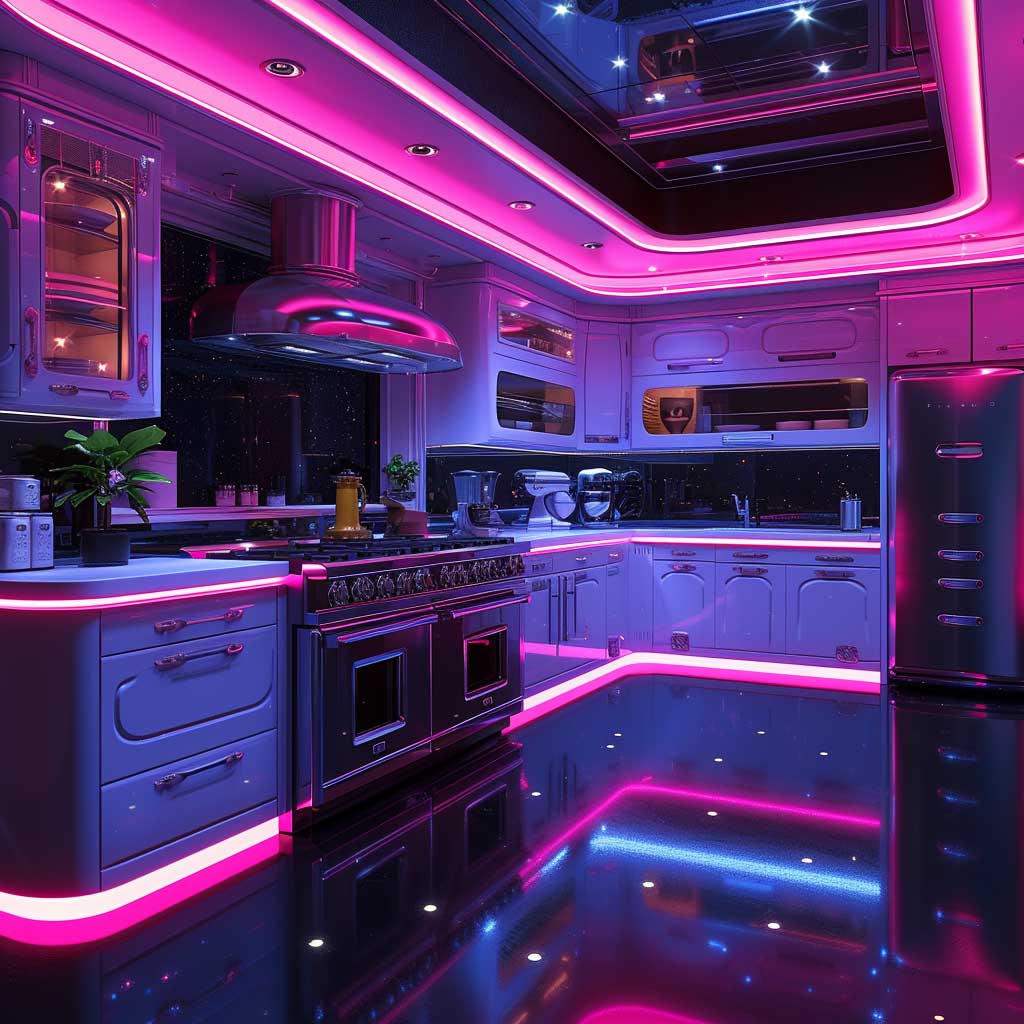
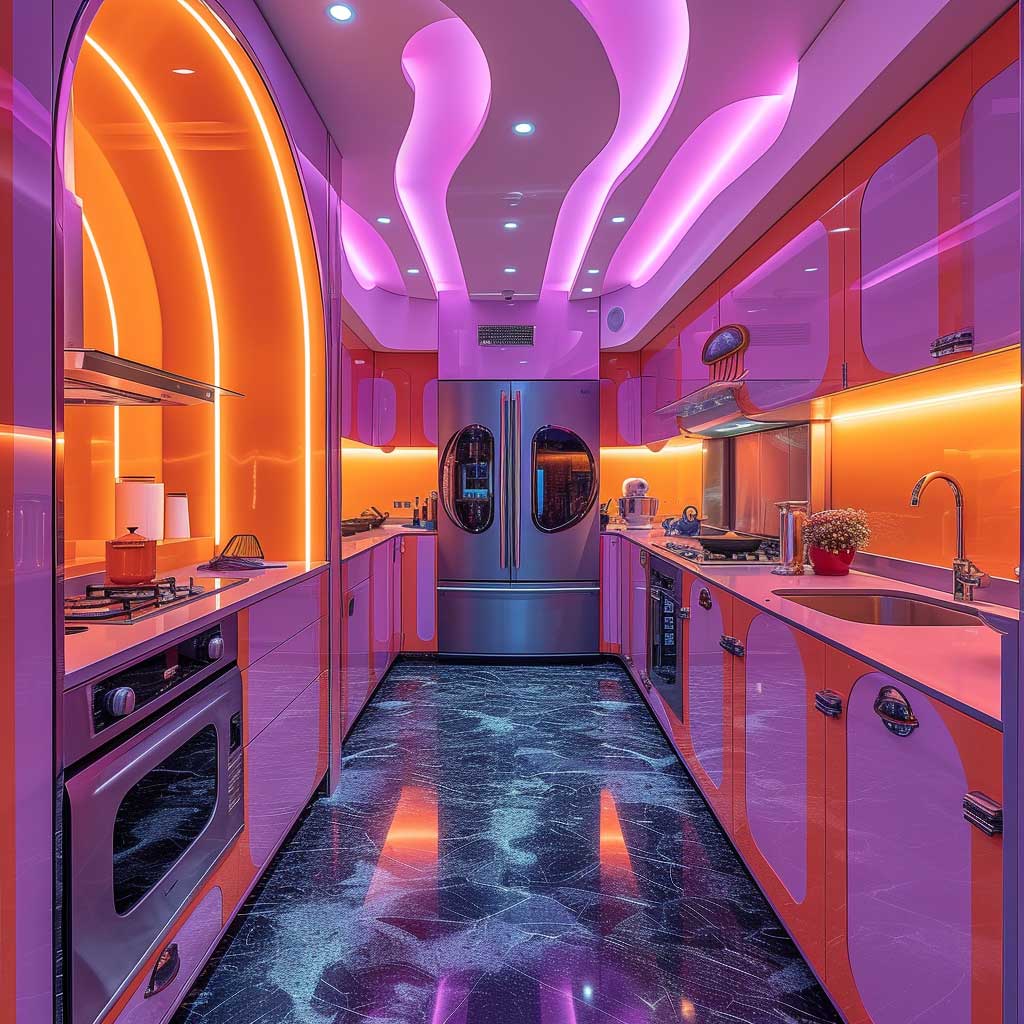
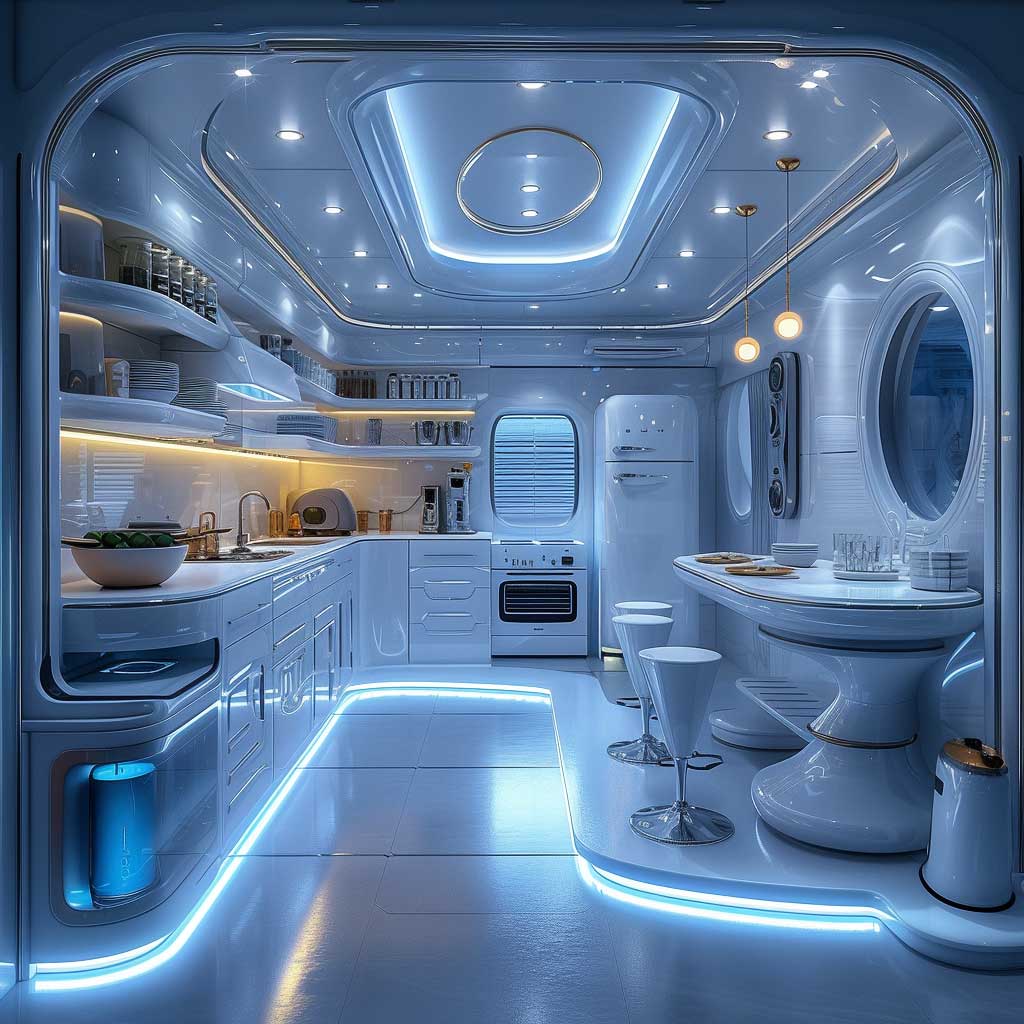
The retro futurism kitchen is the hardest room to get right because kitchens are expensive to change. You need to make one committed choice and let it carry the whole room. My committed choice is always the cabinet color. Deep cobalt blue or avocado-adjacent sage green (think Farrow & Ball’s Mizzle or Benjamin Moore’s Caldwell Green at roughly $65–$80/gallon) sets the retro tone immediately. Stainless steel appliances — Bosch, Miele, or even the GE Profile line — handle the “futurism” side of the equation without you needing to do anything else. The combination reads exactly like those optimistic 1960s magazine kitchens where everything gleamed and nothing looked hard to clean.
Chrome hardware is non-negotiable here. Polished chrome pulls on cabinet doors cost almost nothing relative to the visual return — Rejuvenation has a good set of tubular pulls starting around $12 each that read 100% Space Age. You’ll notice that black hardware, which is everywhere right now, immediately kills the retro futuristic mood. Don’t let a trend from a different design universe sneak into this room. Chrome, brushed nickel, or polished brass. Nothing else.
Neon lighting is the shortcut nobody talks about enough. A warm-toned LED neon strip under upper cabinets — around $35–$50 for a 10-foot Govee or Philips Hue strip — adds the diner-counter glow that references 1950s Googie architecture without committing to anything permanent. What doesn’t work: cool blue neon in a kitchen with warm wood tones. The color temperatures war with each other and the whole room looks confused. Go warm white or a soft amber neon if your cabinetry leans toward wood rather than lacquer.
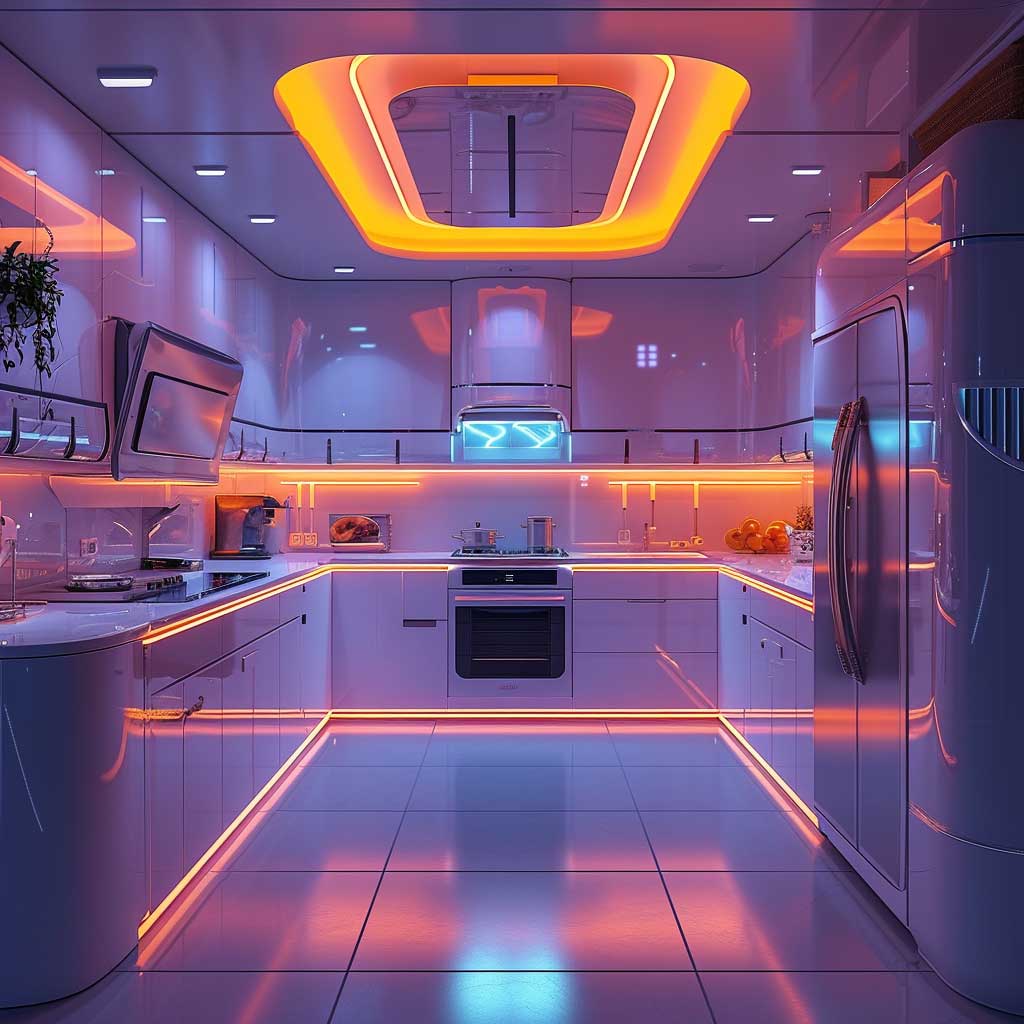
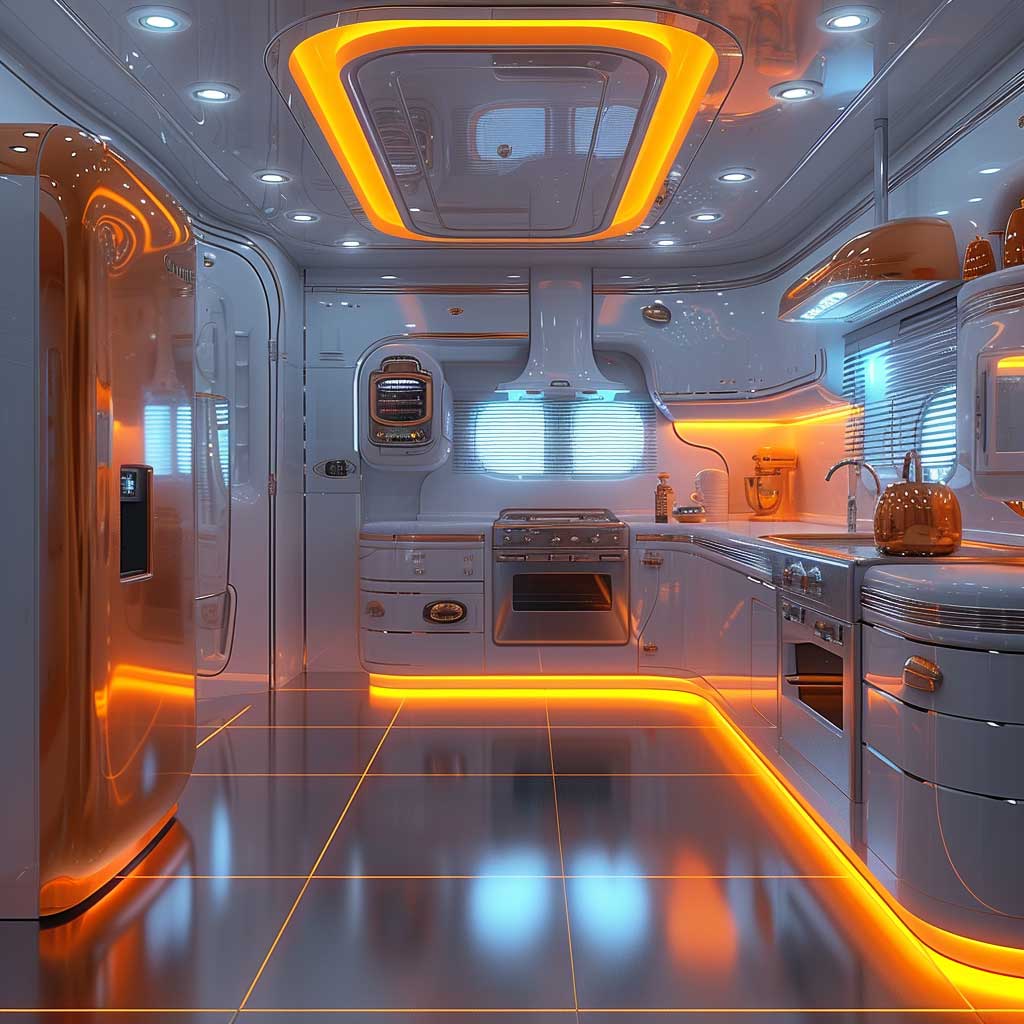
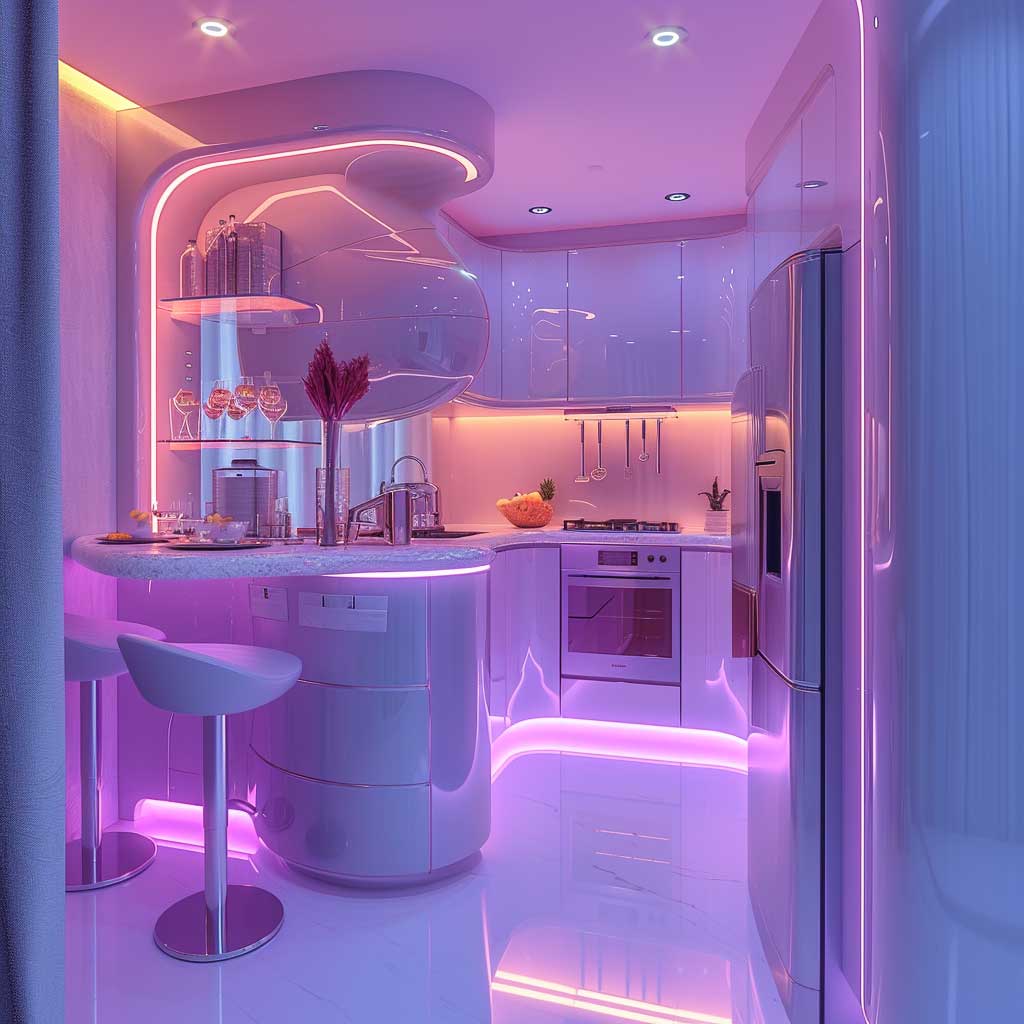

Backsplash tile is where retro futurism kitchen design gets genuinely fun. Geometric tile in a two-color pattern — white and black, or white and teal — references the atomic era’s obsession with pattern without overwhelming the room. Dune Ceramics makes a solid range of retrofuturist-appropriate geometric tiles in matte and gloss finishes. Their 2025 interior trends report specifically highlights iridescent and metallic-finish tiles as the defining surface material for retrofuturist spaces this year. Around €40–€70/m² depending on finish and where you source them.
The seating question in a retro futurism kitchen is simple: diner booth or bar stools, not both. A freestanding island with tubular chrome bar stools (Tolix-style, around $150–$200 each at CB2) closes the loop back to the futuristic diner imagery of the era. Vintage poster art framed in chrome frames adds the final retro layer. Skip the open shelving trend — floating wood shelves are a farmhouse move, and they actively conflict with the Space Age energy you’ve been building.
Don’t Do This
- Don’t mix eras indiscriminately. 50s atomic shapes and 80s Memphis grid patterns share a family tree but clash hard in real rooms — keep your references within a single decade range.
- Don’t use black hardware in a retro futurism kitchen. It kills the Space Age mood immediately and reads as contemporary farmhouse-industrial instead.
- Don’t go half-committed on color. Painting one accent wall in cobalt while leaving everything else builder-beige doesn’t create retro futurism — it creates a confused room with a blue wall.
- Don’t pair a Sputnik chandelier with Edison bulb pendants. They fight each other. Pick the Sputnik and run 2700K LEDs uniformly throughout.
- Don’t buy “retro futurism” furniture that’s actually just purple. A lot of fast-furniture brands use neon purple as a shorthand for “futuristic.” Real retro futurism reads more chrome and teal than anything that looks like a gaming chair.
Retro Futuristic Bedroom Furniture Does the Work a Statement Wall Cannot

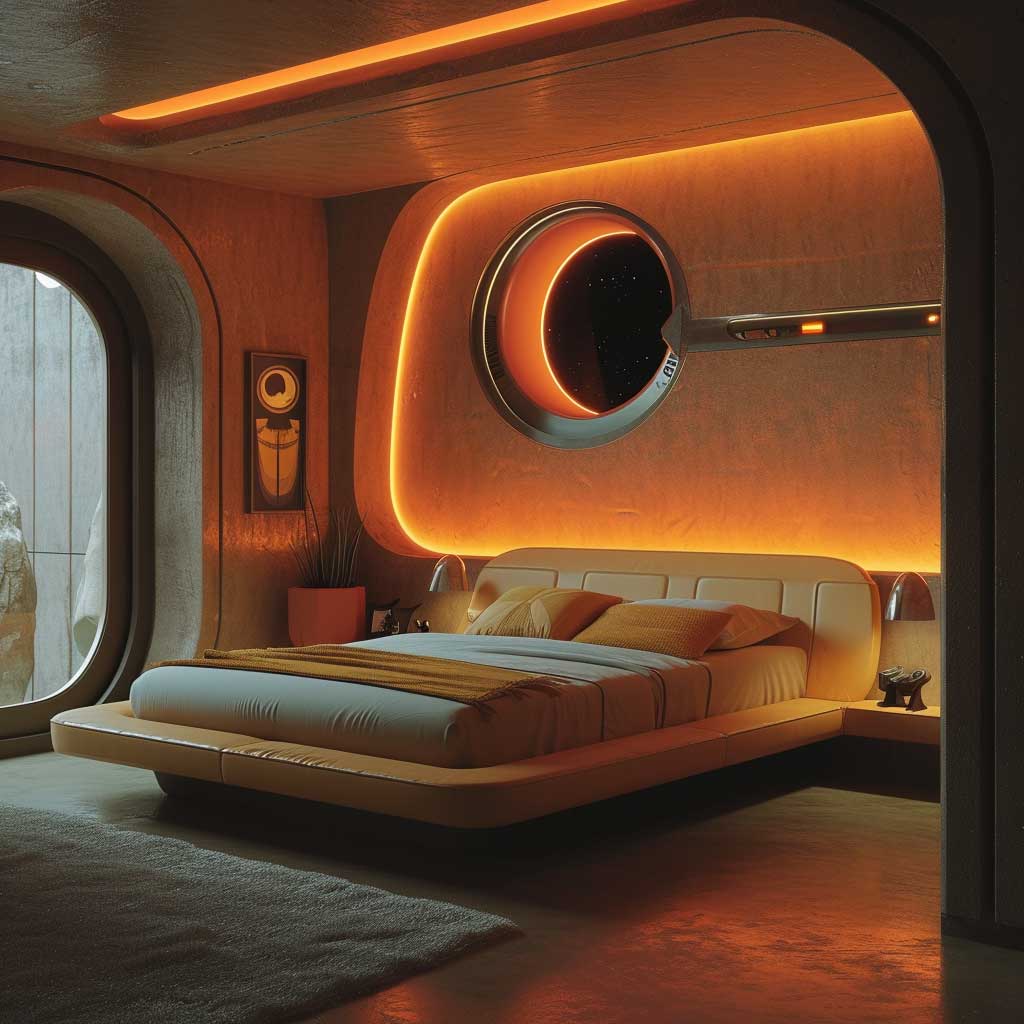
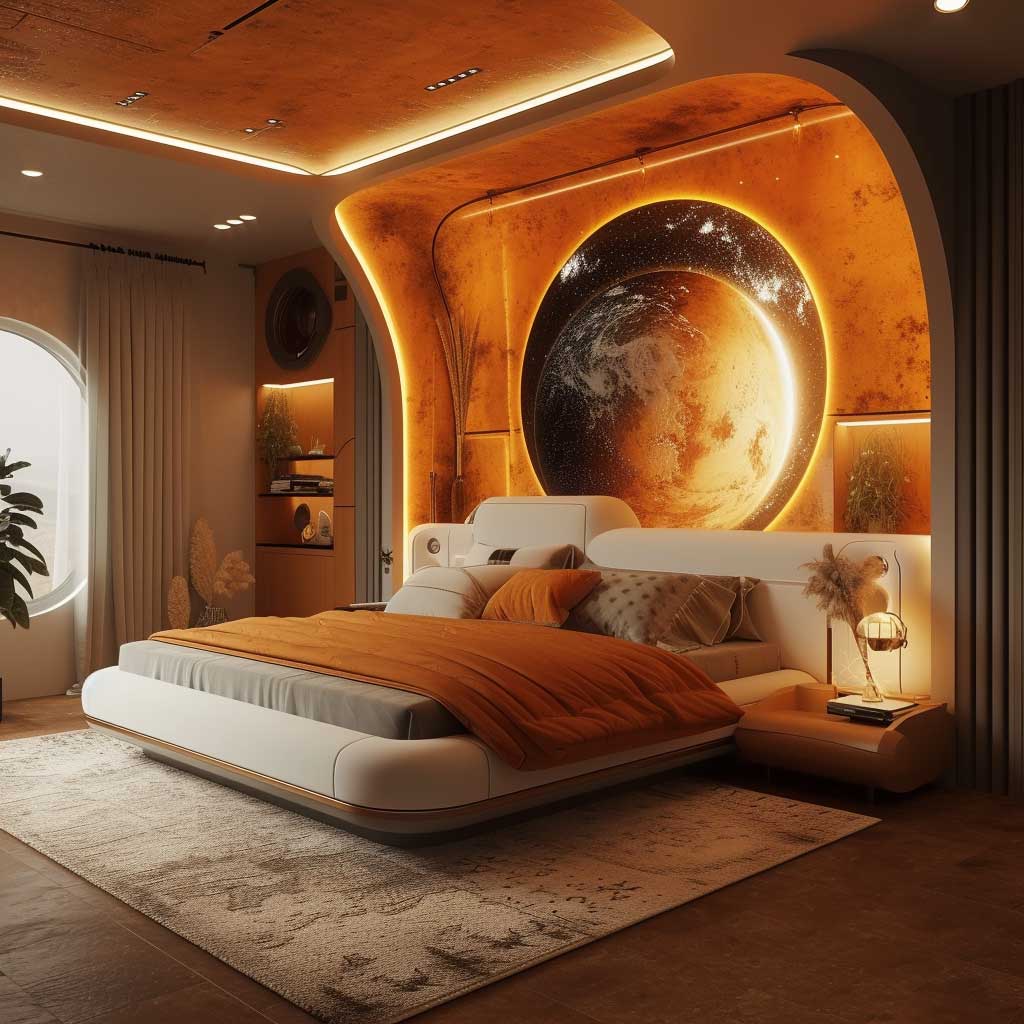
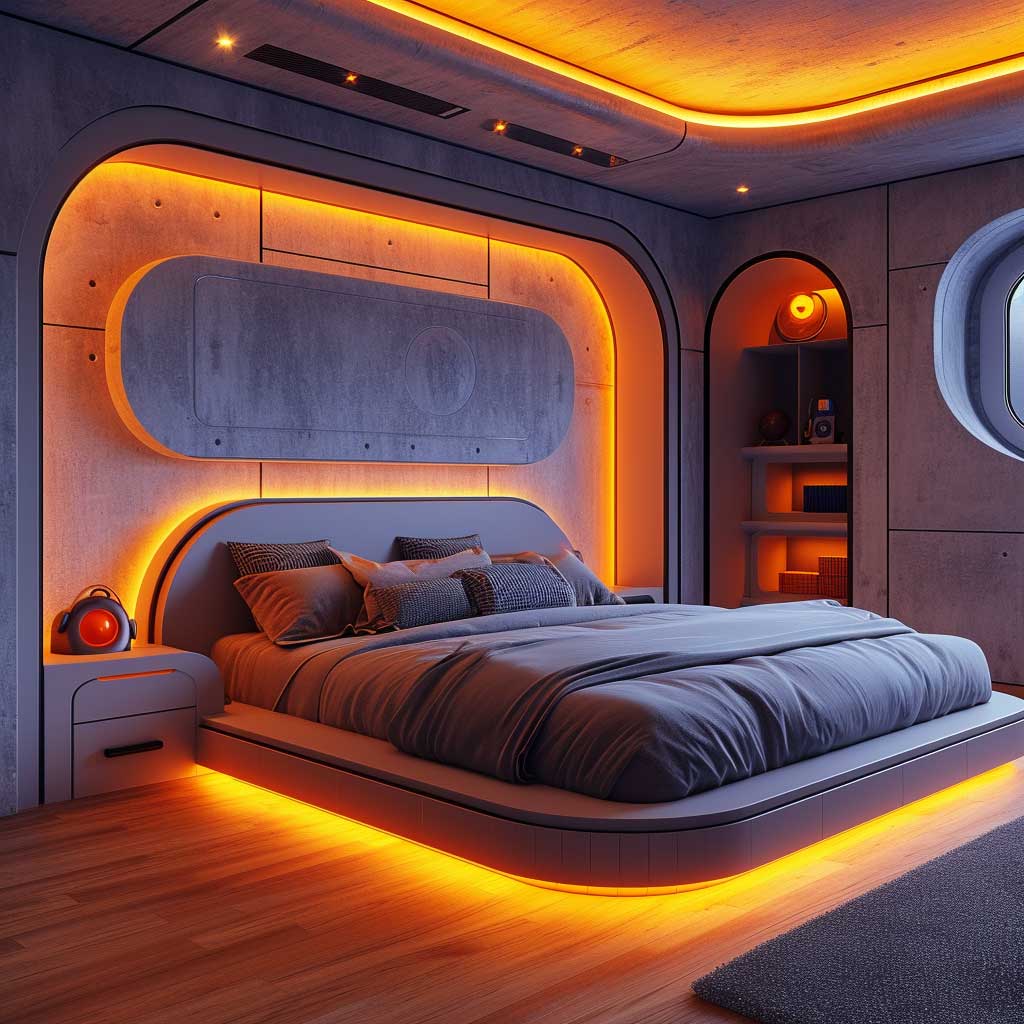
The retro futuristic bedroom works when the bed frame carries the visual weight that accent walls usually try and fail to carry. A low-profile platform bed in glossy white lacquer or lacquered walnut — Room & Board’s Holt bed at $1,499 is my reference point — immediately signals the era without requiring a single piece of art on the wall. The bed is a capsule from the future. Everything else in the room should orbit it calmly. What wrecks this: tufted upholstered headboards. Tufting is a Victorian move. It destroys the Space Age reading immediately.
Bedding in this context is your retro vector. Atomic-era geometric prints — starburst patterns, boomerang shapes, concentric circles — on duvet covers and pillow shams cost almost nothing relative to furniture. Society6 and Deny Designs both carry digitally-printed bedding in atomic-era patterns for around $65–$120 per set. You need the print to be bold enough to register from the doorway. Muted or “vintage-washed” prints look like someone left the original in the sun too long. Go full saturation. The bed can handle it.
Wall treatment in a retro futuristic bedroom is easier than it looks. A single color — deep teal, warm charcoal, or Space Age sage — on all four walls (not just one) gives the room the immersive quality that makes retro futurism feel like a world rather than a theme. I own two rentals where I’ve done this, and the total cost was paint plus two weekends. The full-room color treatment is what separates rooms that look “inspired by retro futurism” from rooms that actually are retro futuristic.
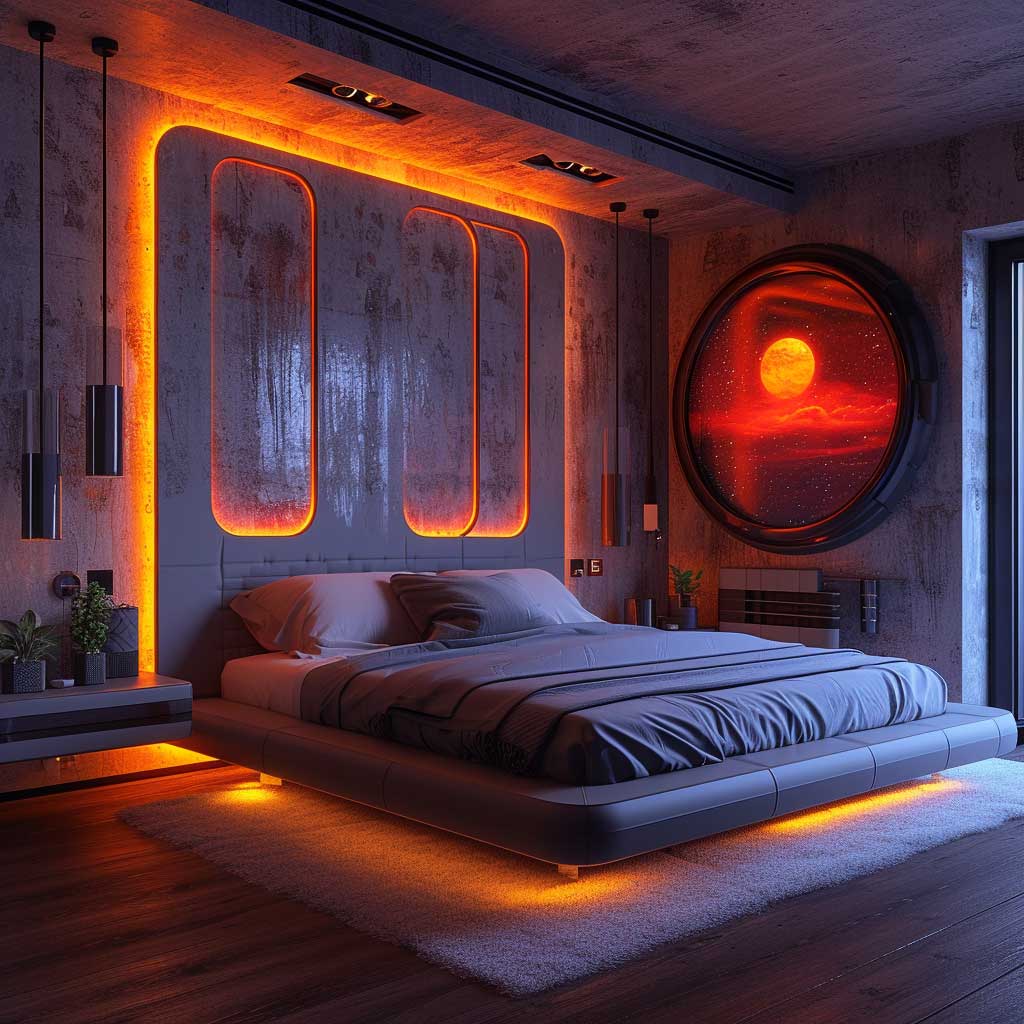


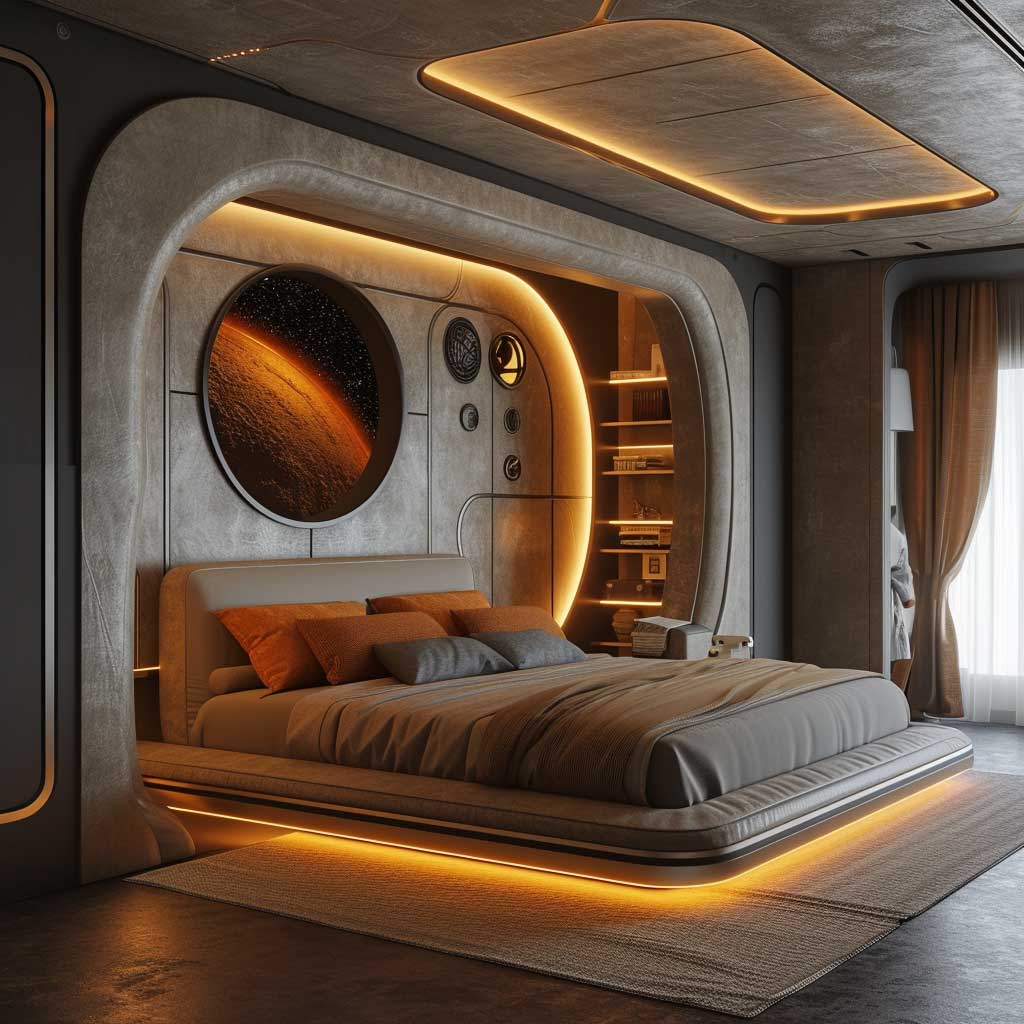
Texture in retro futuristic bedrooms is a precision exercise. Think of it like a costume: one plush element (a velvet throw or boucle cushion), one smooth futuristic surface (the lacquered nightstand), one vintage textile (an atomic-print rug). Three textures, deliberately chosen, deliberately placed. Rooms that pile on plush fabrics everywhere end up looking like a 1970s Vegas suite — which is technically retro futurism but probably not the version you’re after. Mid-century modern bedroom furniture with black and walnut finishes pairs especially well with this palette if you want more specific sourcing ideas for the furniture layer.
Storage in this style is ruthless. It disappears. Built-in or flush-panel wardrobes with no visible hardware, or wardrobes with simple chrome bar pulls, keep the room from looking cluttered. Open clothing racks — also very on-trend right now — are the enemy of retro futurism’s clean silhouette. Clothes are not Space Age. Wardrobes are. Close the doors.
Final Word
Retro Futurism Interior Design Isn’t a Mood Board. It’s a Commitment to a Specific Decade’s Optimism.
The style works because it has rules. Chrome over black hardware. Low profiles over tufted upholstery. One brave color over four tentative ones. Break the rules and you get a room that looks like a thrift store had a conversation with a tech startup.
Start with the one room you’re most willing to commit to — kitchen if you’re brave, bedroom if you want something reversible — and let the furniture make the argument before you touch a paint can.
Save this post before your next furniture search. You’ll want the price references and the “don’t do this” list within reach.