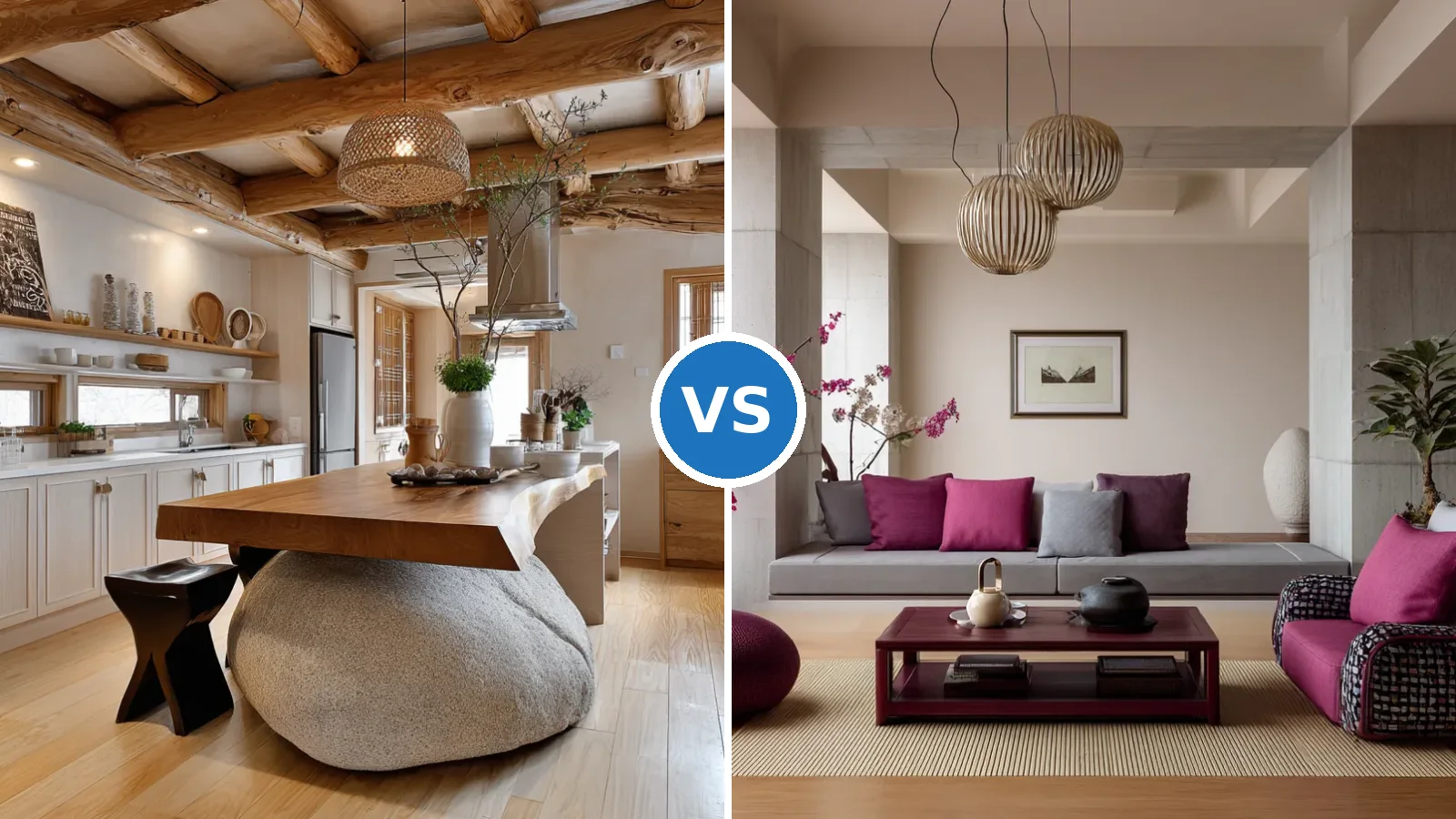
Urban interior design style is what separates apartments that feel lived-in and intentional from ones that look like a showroom nobody loves. I’ve spent years watching people layer IKEA basics over each other and wonder why nothing clicks — the answer is almost always a missing design language, and urban vintage gives you one. It pulls from the raw honesty of industrial lofts and the warmth of collected vintage pieces to create something that actually has a point of view.
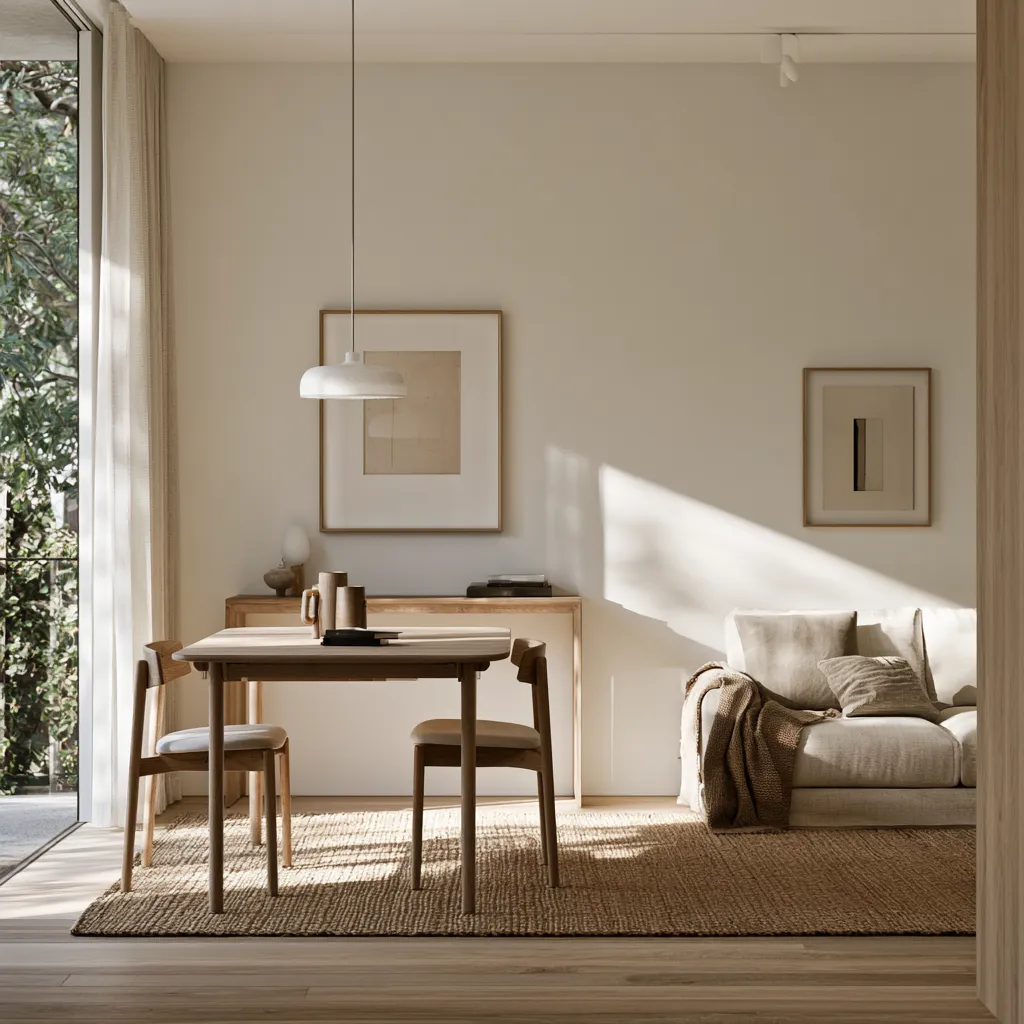
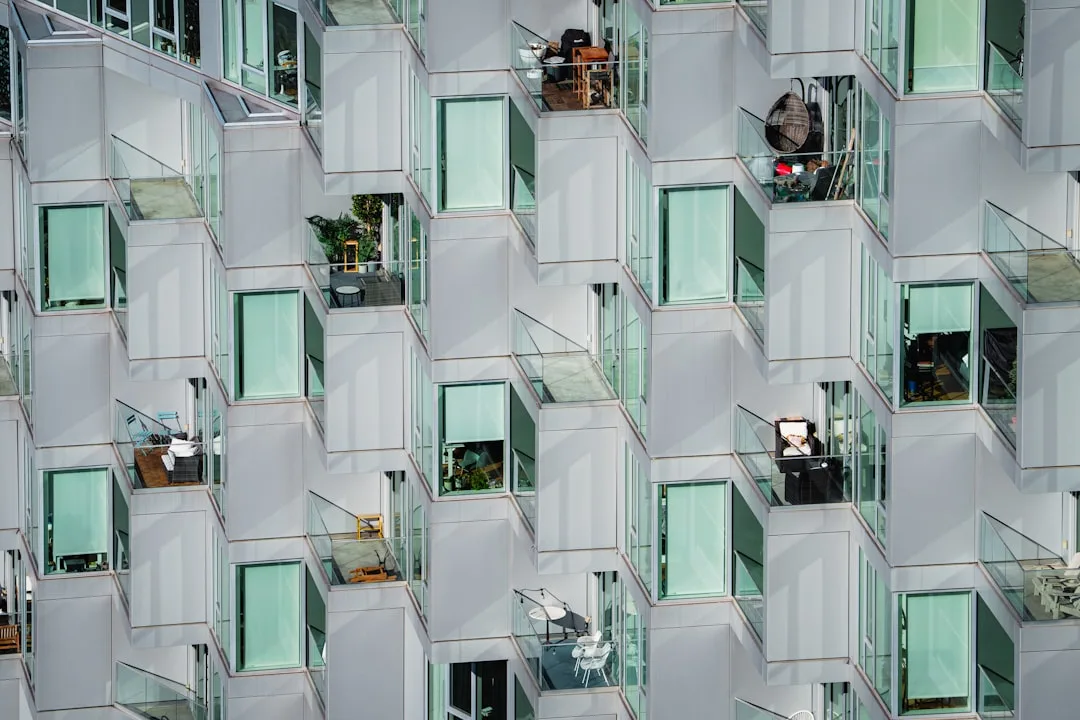
You’ll notice the style works hardest in apartments where modern architecture is already the bones — clean ceilings, open plans, neutral walls. Those spaces are blank canvases waiting for friction, and a 1960s Eames-era chair or a distressed wood console provides exactly that. My go-to starting point is always one strong vintage anchor, then building out from it rather than trying to shop the whole look at once.
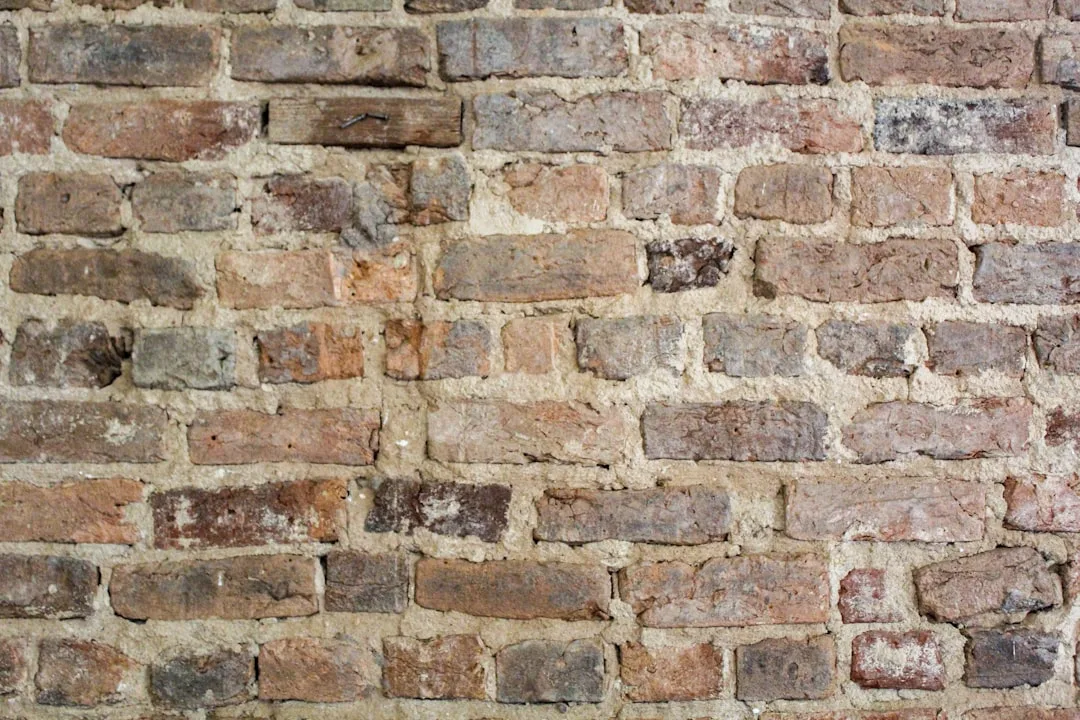
The trap most people fall into is buying “vintage-look” reproductions from mass retailers and wondering why the room still feels hollow. Real urban vintage design comes from mixing genuine periods — a 1950s credenza from Chairish ($180–$400), an industrial pendant from West Elm, exposed brick or a concrete-look wallpaper — not from buying a themed room set. The difference reads immediately in person.
- How to create an urban vintage oasis in a modern apartment without gut-renovating anything
- The retro-meets-urban formula that keeps spaces from reading as costume rather than design
- Bedroom layering tricks that make an eclectic vintage room feel intentional, not chaotic
- Specific brands, price ranges, and sourcing spots (Chairish, Article, 1stDibs, Etsy) used in real rooms
- The single mistake that ruins most urban vintage interiors — and how to avoid it
Urban Vintage in a Modern Apartment Starts With One Wrong Piece
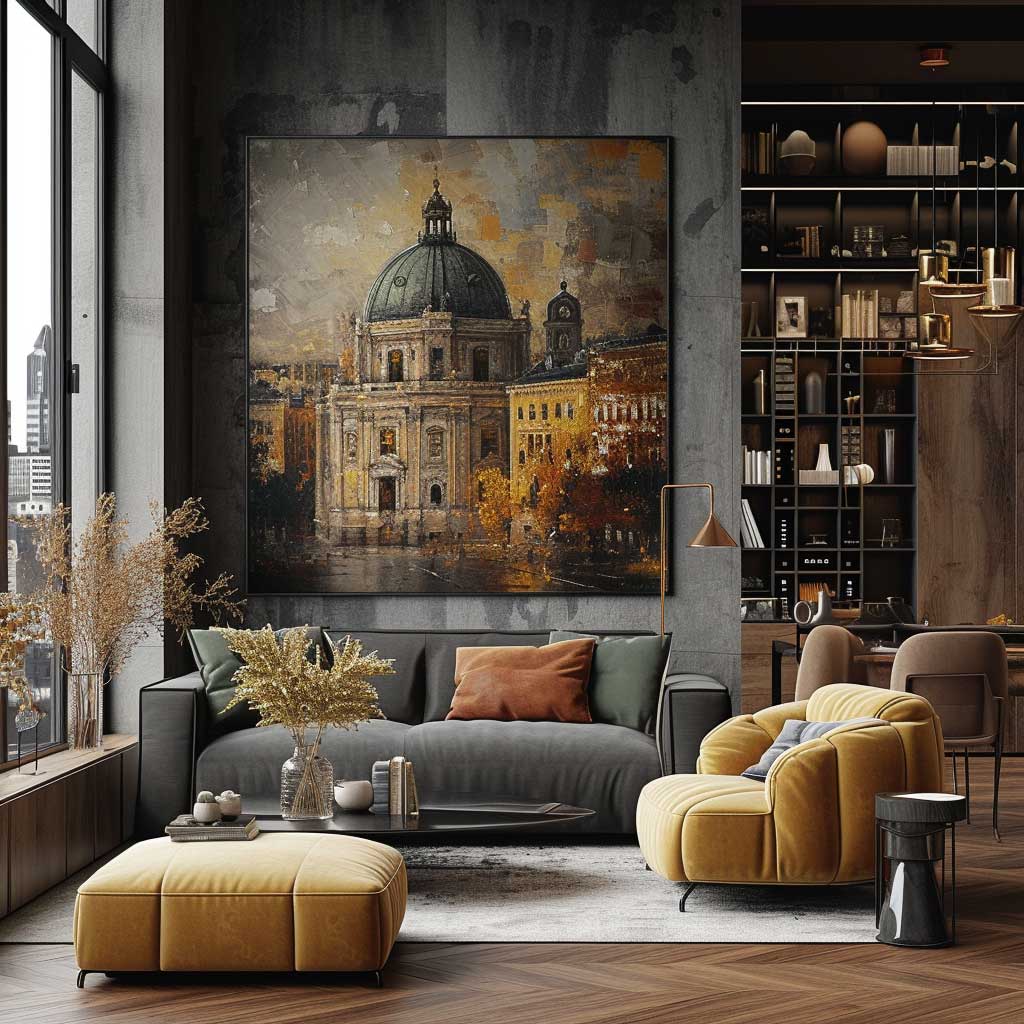
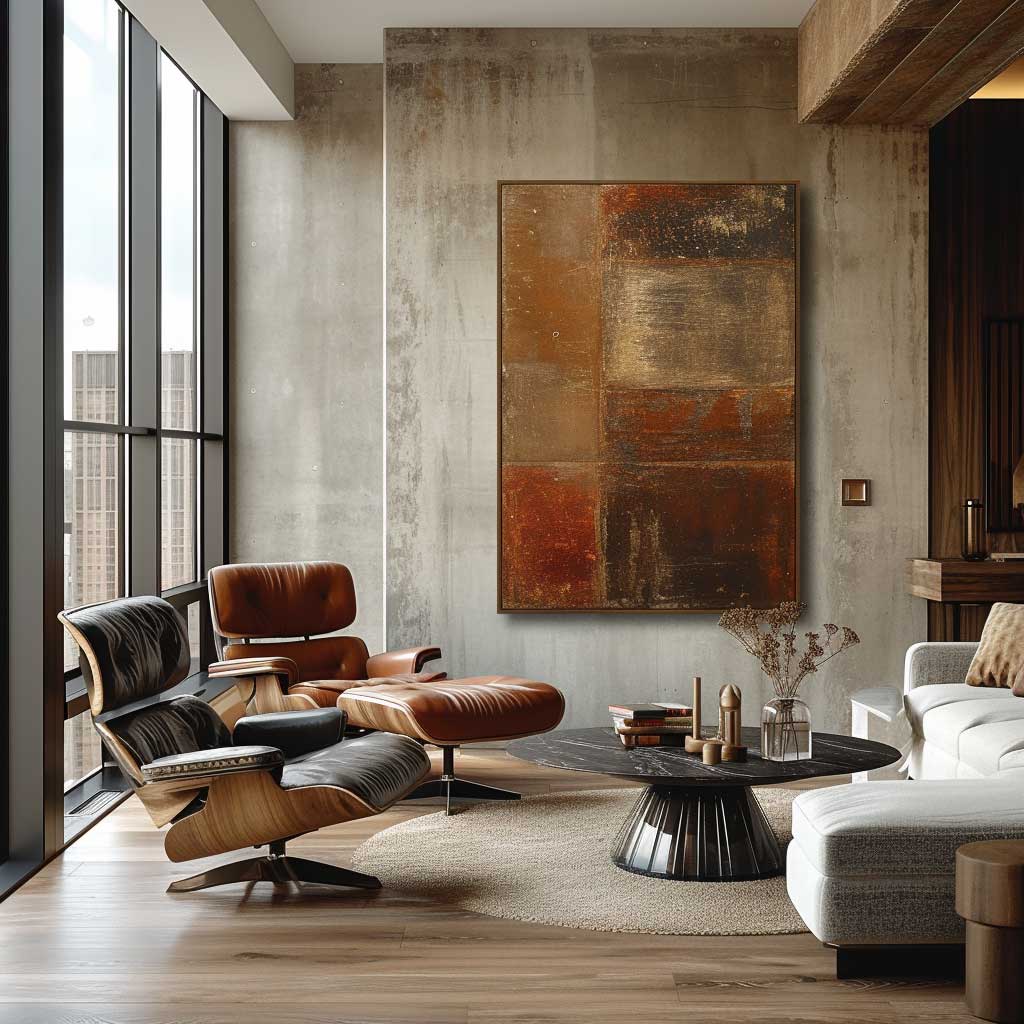
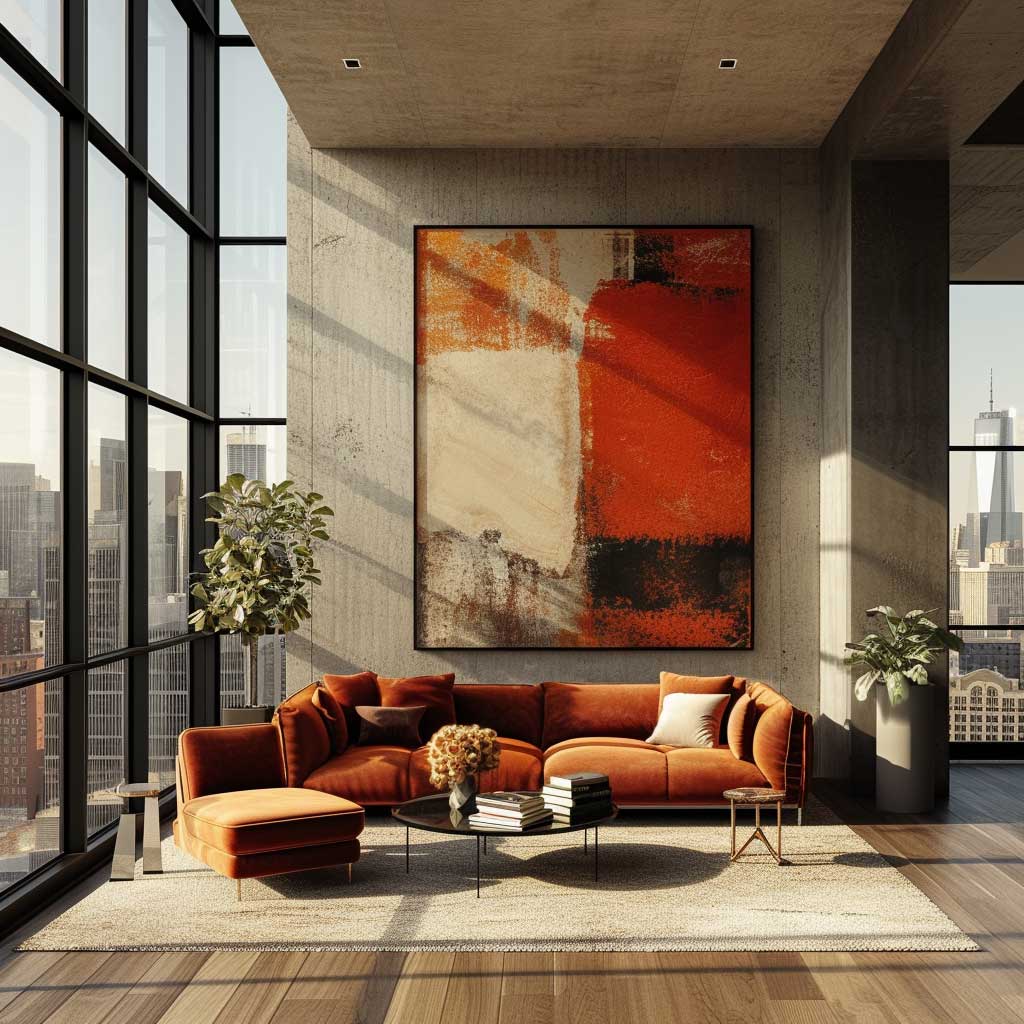
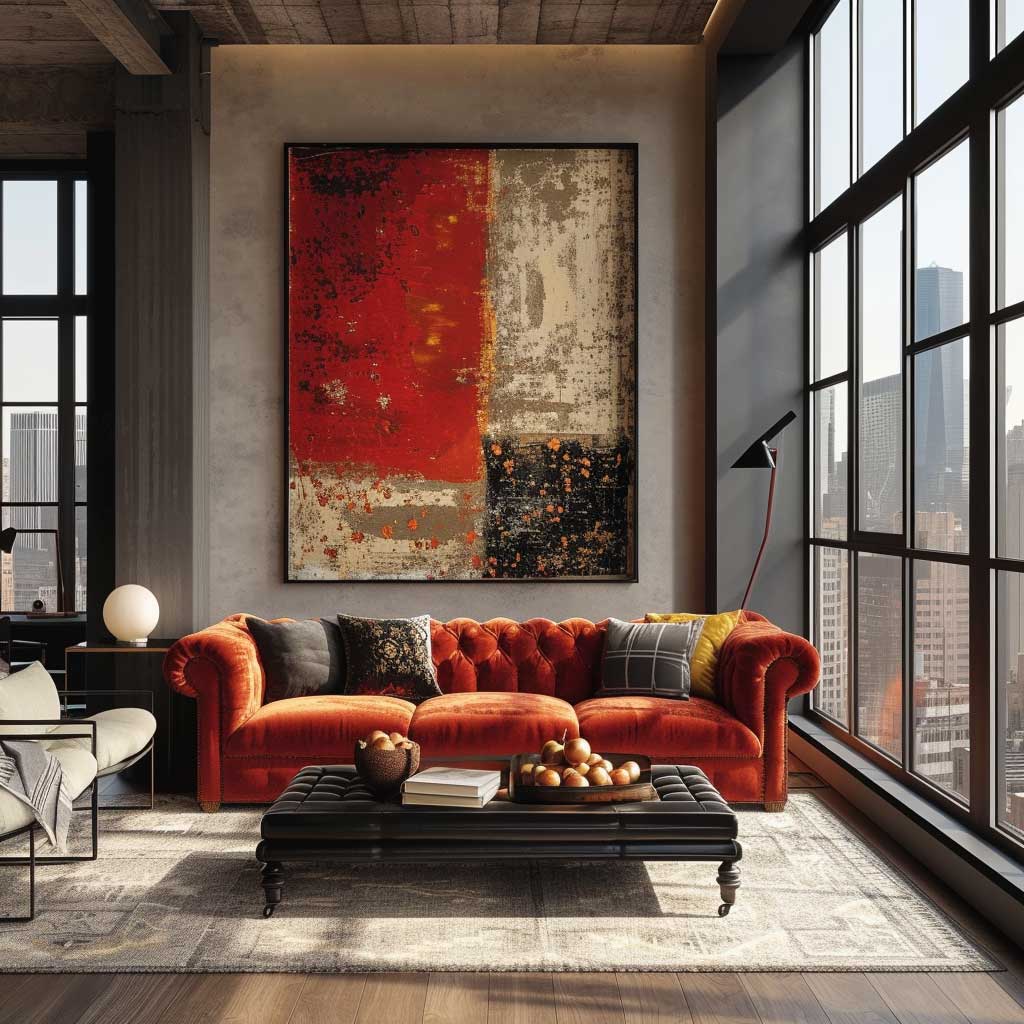
Urban interior design style works in a modern apartment when you introduce something that doesn’t quite belong — and then commit to it. I bought a 1960s rosewood credenza from Chairish for $320 and placed it under a floating TV mount in an otherwise white apartment. Every interior designer who walked in immediately asked about it, not the $900 sectional beside it. The “wrong” piece is the right piece.
Mid-century furniture is the easiest entry point because it straddles both eras convincingly. A credenza, an egg chair replica from Article ($699), or even a teak side table from an estate sale carries enough visual weight to anchor an entire room. What you don’t want is pairing a single small vintage accent — a candle holder, a framed print — with otherwise builder-grade furniture. Proportions matter. The vintage piece needs to be big enough to compete.
Textures are the grammar of this style. Distressed leather, worn velvet, brushed concrete, raw wood — each one signals a different decade and a different narrative. I’ve seen apartments fail because the owner used only smooth, matte surfaces throughout, then added one jute rug and called it vintage. That’s not layering; that’s garnish. Mix at least three distinct textures before you start accessorizing.
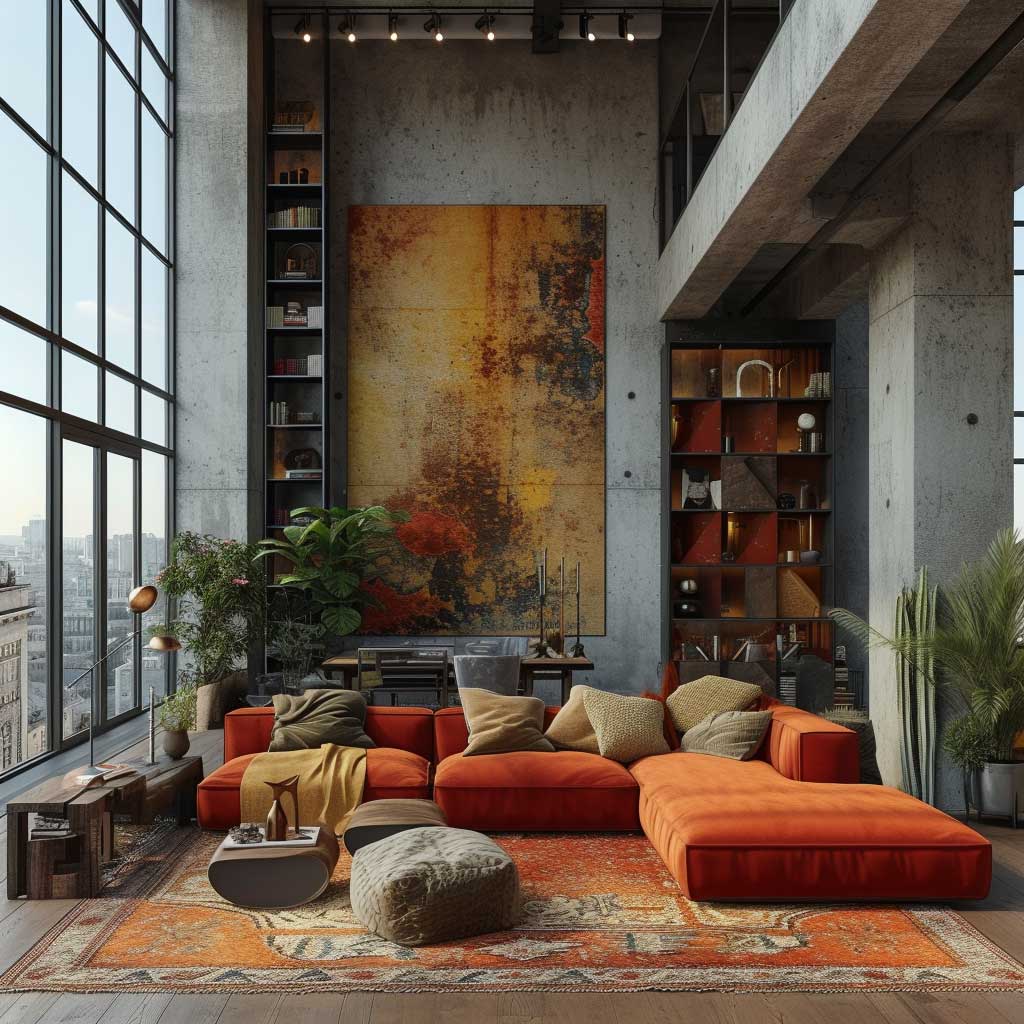
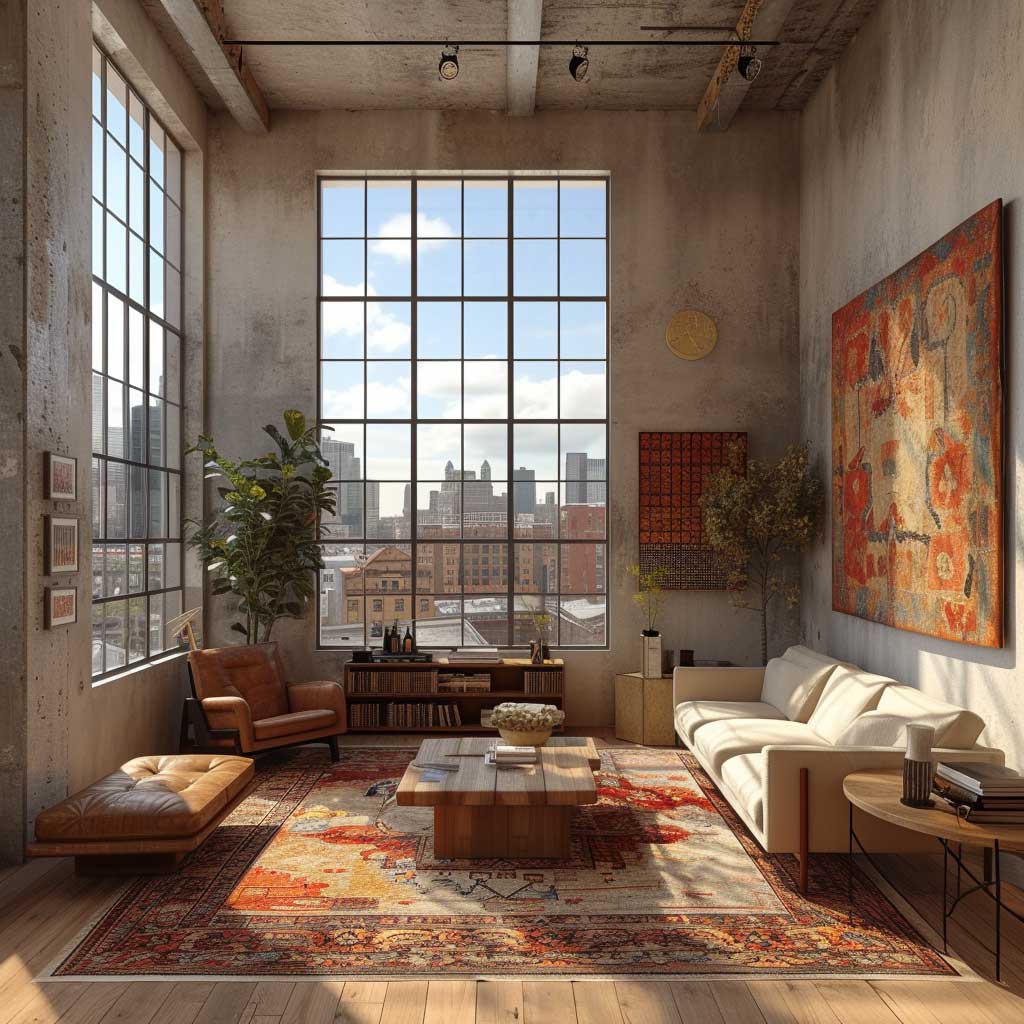
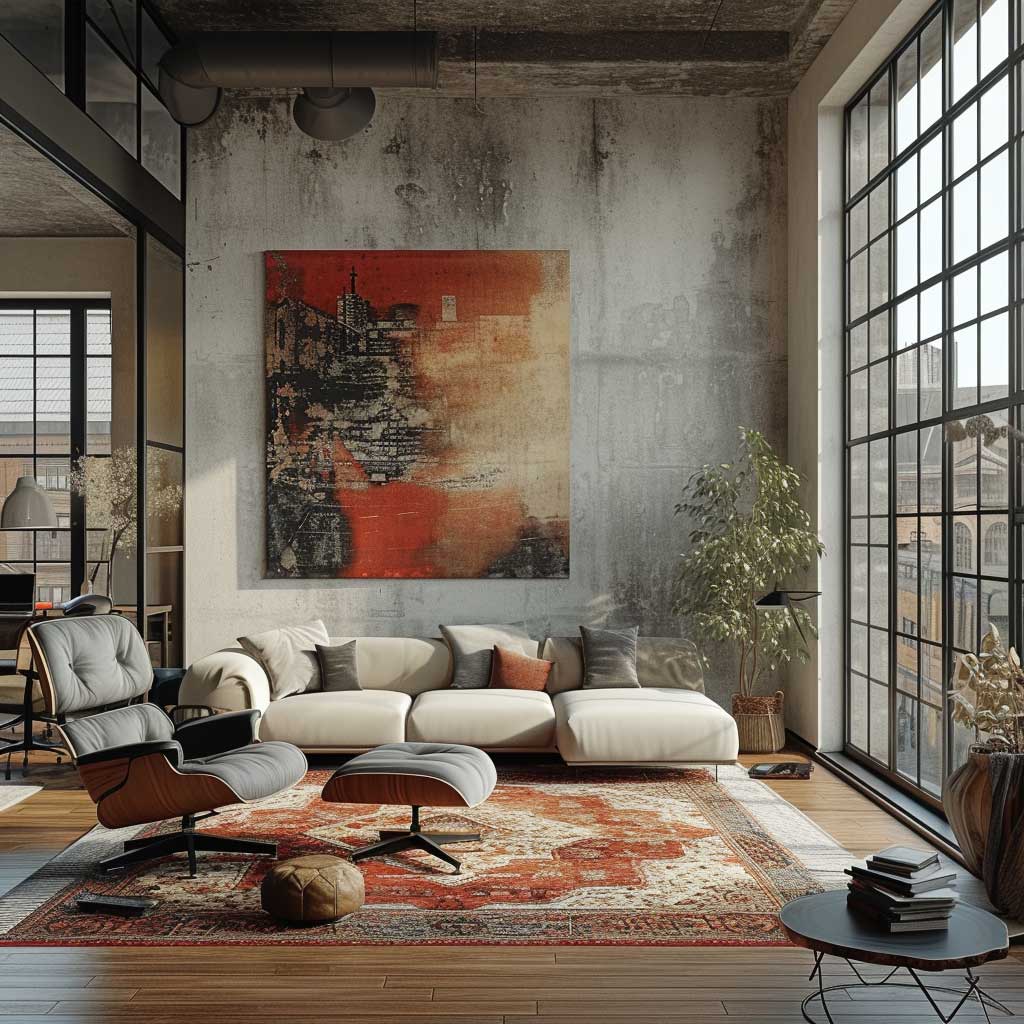
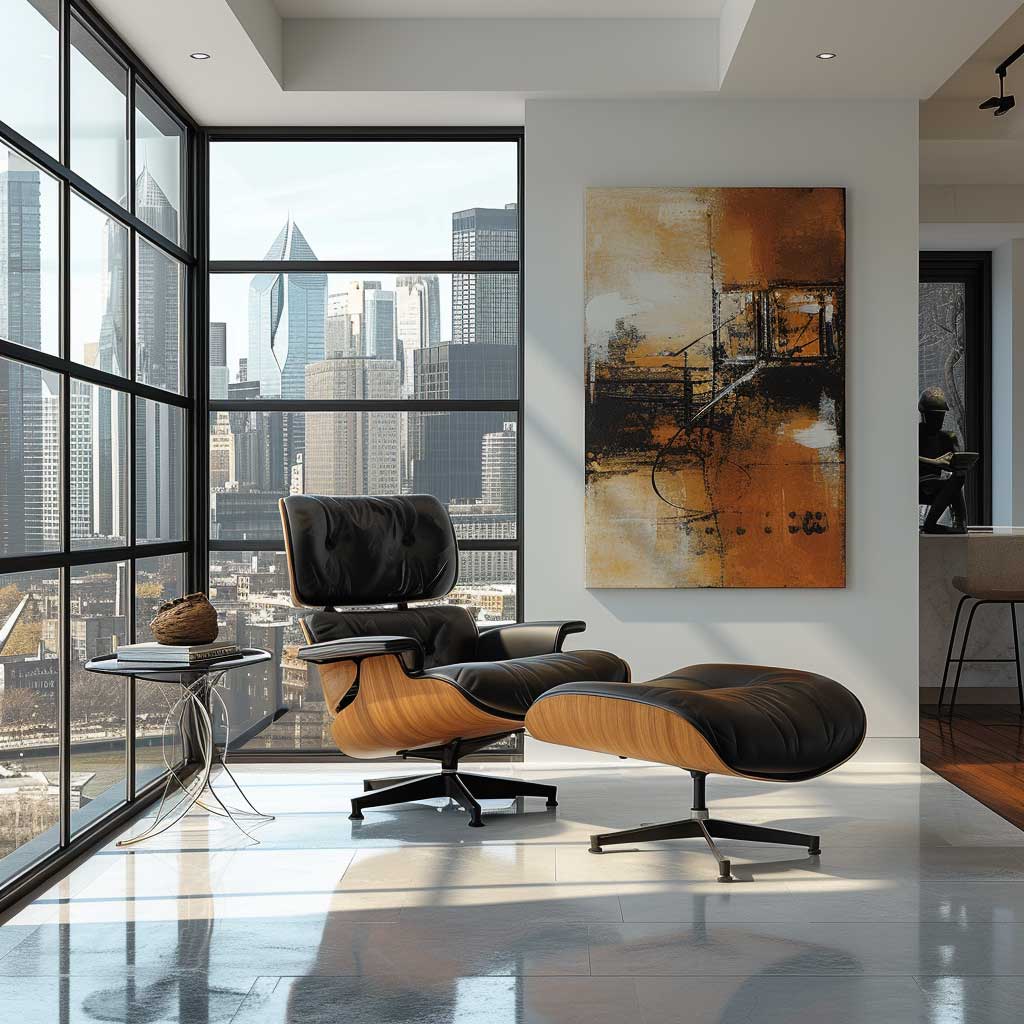
Color is where most people play it too safe. Modern apartments default to greige and white — perfectly fine as a base, but you need a jolt somewhere. Deep forest green (see the Farrow & Ball “Studio Green” at around $120/gallon) on a single wall, or a rust-orange velvet sofa from West Elm’s mid-century line ($1,299), pulls the whole scheme together without making the space feel dark. The vintage pieces need a color ally to read as intentional rather than accidental.
Lighting in an urban vintage apartment is non-negotiable — and it’s the cheapest upgrade relative to its impact. An Art Deco floor lamp from a thrift store ($40–$80), rewired and fitted with an Edison bulb, shifts the entire atmosphere of a room. What doesn’t work is overhead recessed lighting paired with vintage furniture: the flat, even illumination flattens every beautiful shadow and texture you worked to introduce. Turn off the overheads. Layer floor lamps and table lamps instead. You’ll notice the difference in under ten minutes.
The urban vintage apartment is really a conversation between decades, and like any good conversation, it needs contrast to stay interesting. A 1950s brass floor lamp next to a poured concrete side table isn’t a mistake — it’s the whole point. I stole this trick from a stylist I worked with who called it “putting enemies in the same room and letting them figure it out.” That friction is what makes a space feel alive rather than curated to death.
Retro Patterns in an Urban Interior Do One Job — Don’t Let Them Do Three
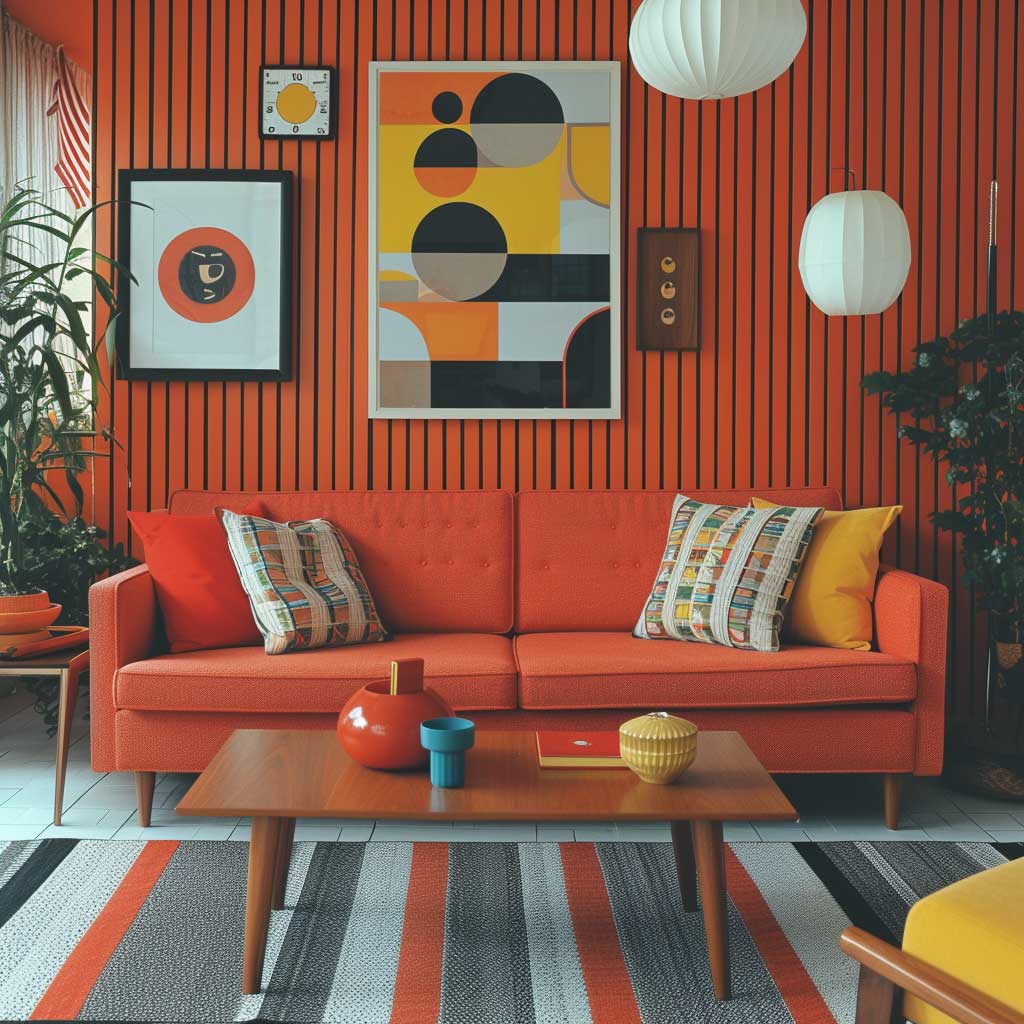
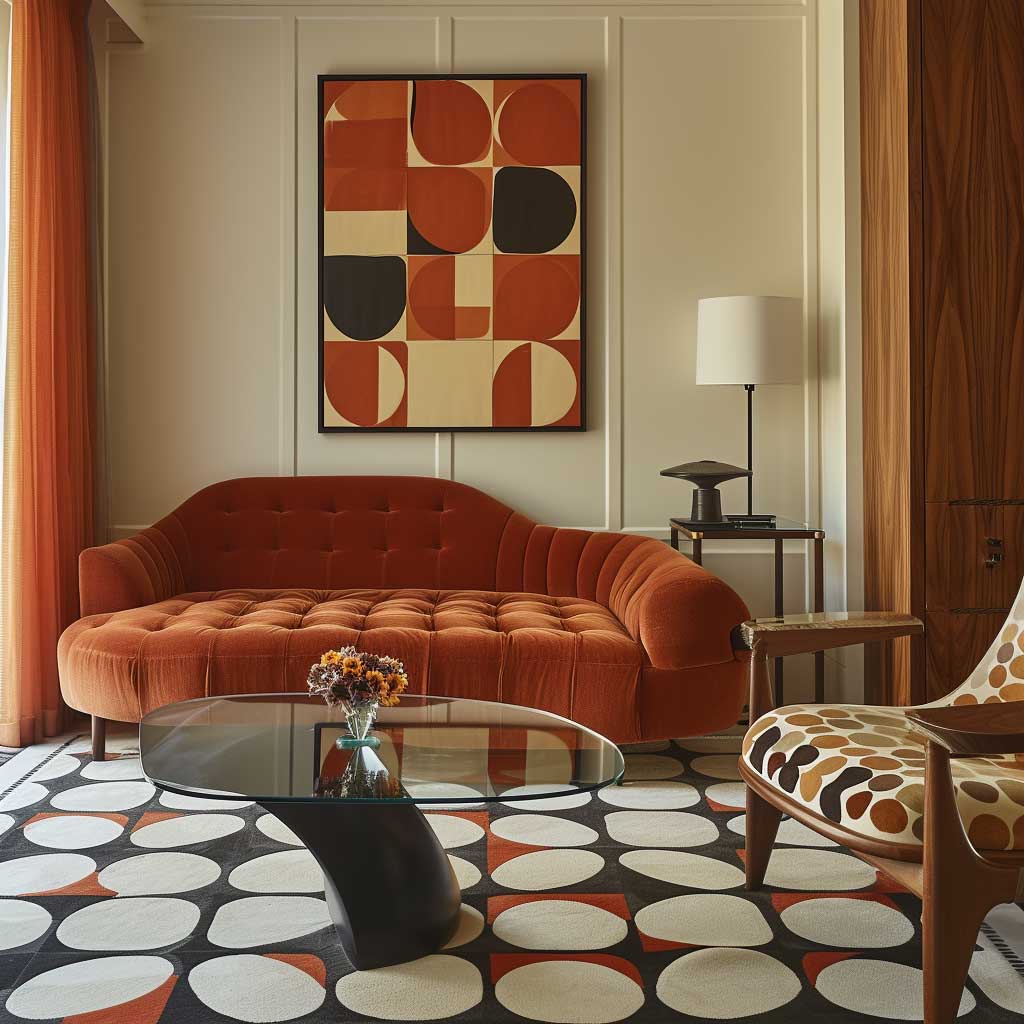
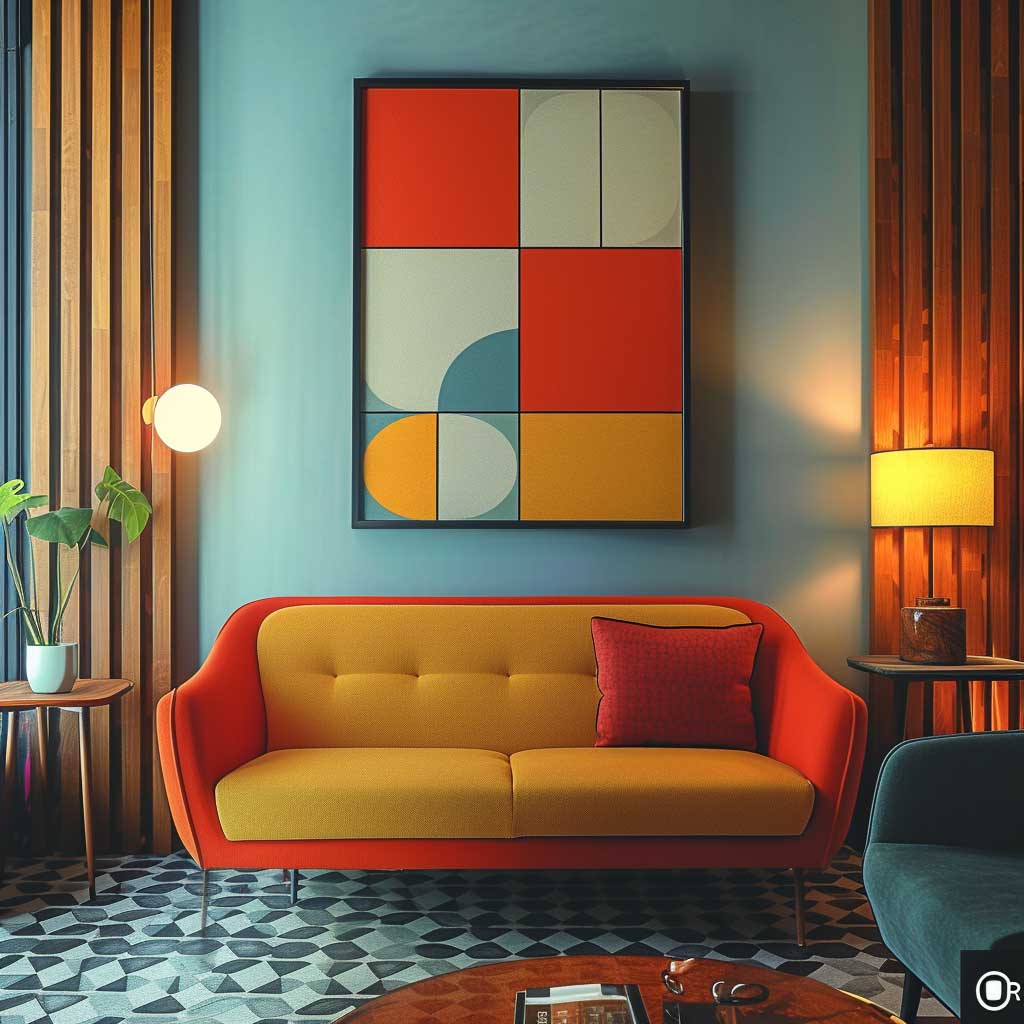
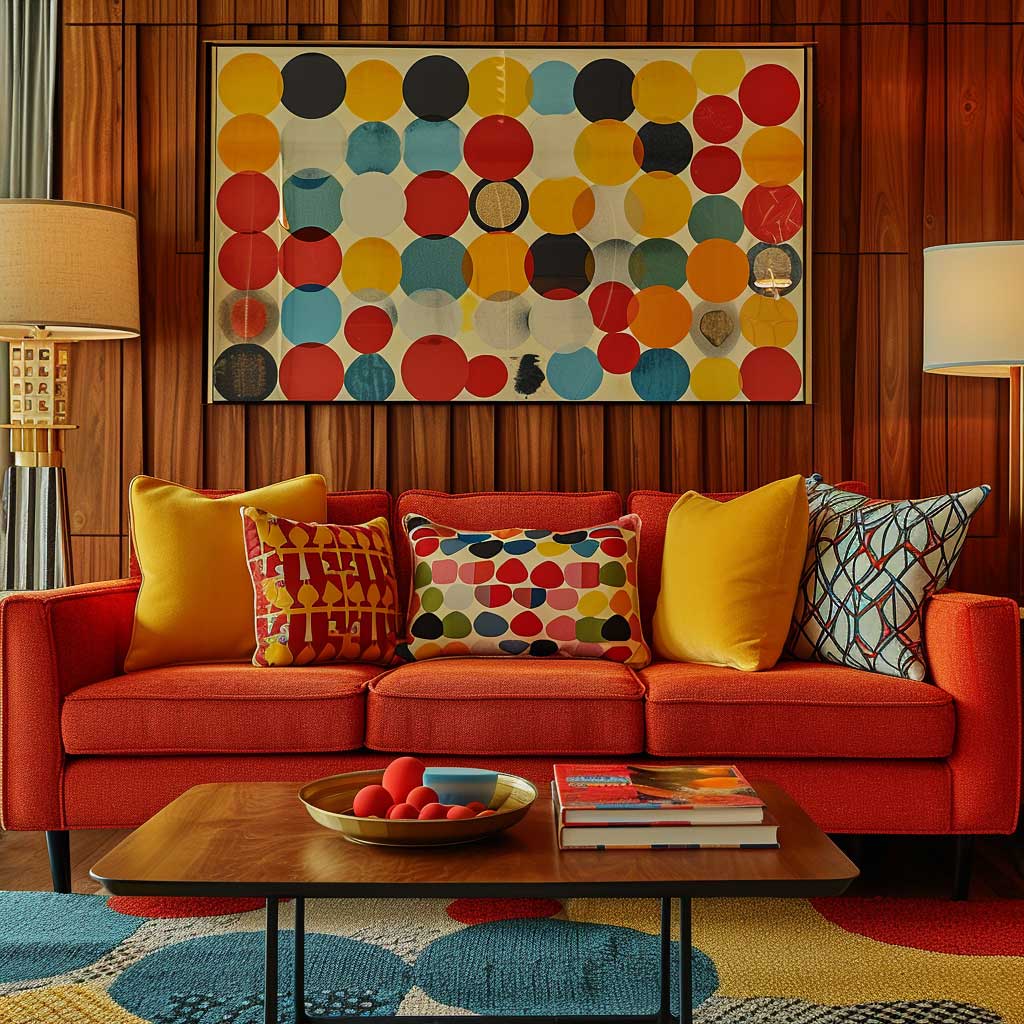
Urban interior design style uses retro patterns as punctuation, not as wallpaper — literally and figuratively. A single bold geometric rug (Loloi’s Rifle Paper Co. collab runs around $380 for a 5×8) introduces the pattern layer without competing with everything else in the room. The minute you add patterned cushions on top of a patterned rug on top of patterned wallpaper, you haven’t decorated the room — you’ve camouflaged it.
Furniture with retro DNA — a 1960s tulip chair, a 1950s diner-inspired bar stool — works in urban spaces because it makes a formal design argument: “I know what era I’m from.” Modern furniture around it creates the contrast that makes both things more interesting. The Saarinen tulip table (original Knoll runs $2,000–$4,000; the Article replica is $699) is the clearest example I know of a piece that looks better surrounded by rough, industrial context than it ever would in a matching set.
How do you keep the retro elements from taking over? Stick to the “one pattern rule per visual axis.” Standing in the entry of your apartment and looking straight ahead, your eye should land on one patterned anchor — not three. Rotate which surface carries the pattern per room: rug in the living room, wallpaper in the hallway, cushion fabric in the bedroom. Your eye gets a hit of energy, then rests. That rhythm is what makes an urban vintage interior feel sophisticated rather than chaotic. For more sourcing ideas, these vintage living room ideas cover specific pieces that hold up in modern city apartments.
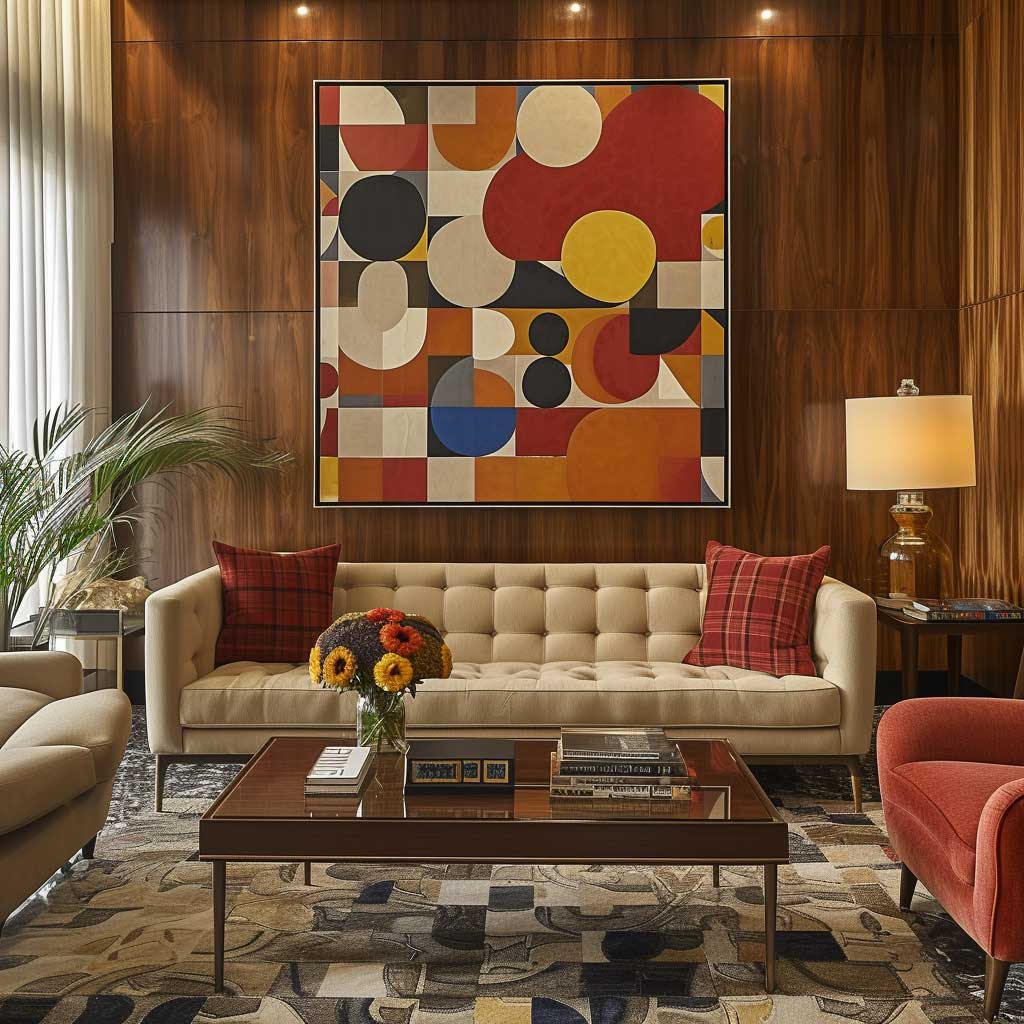
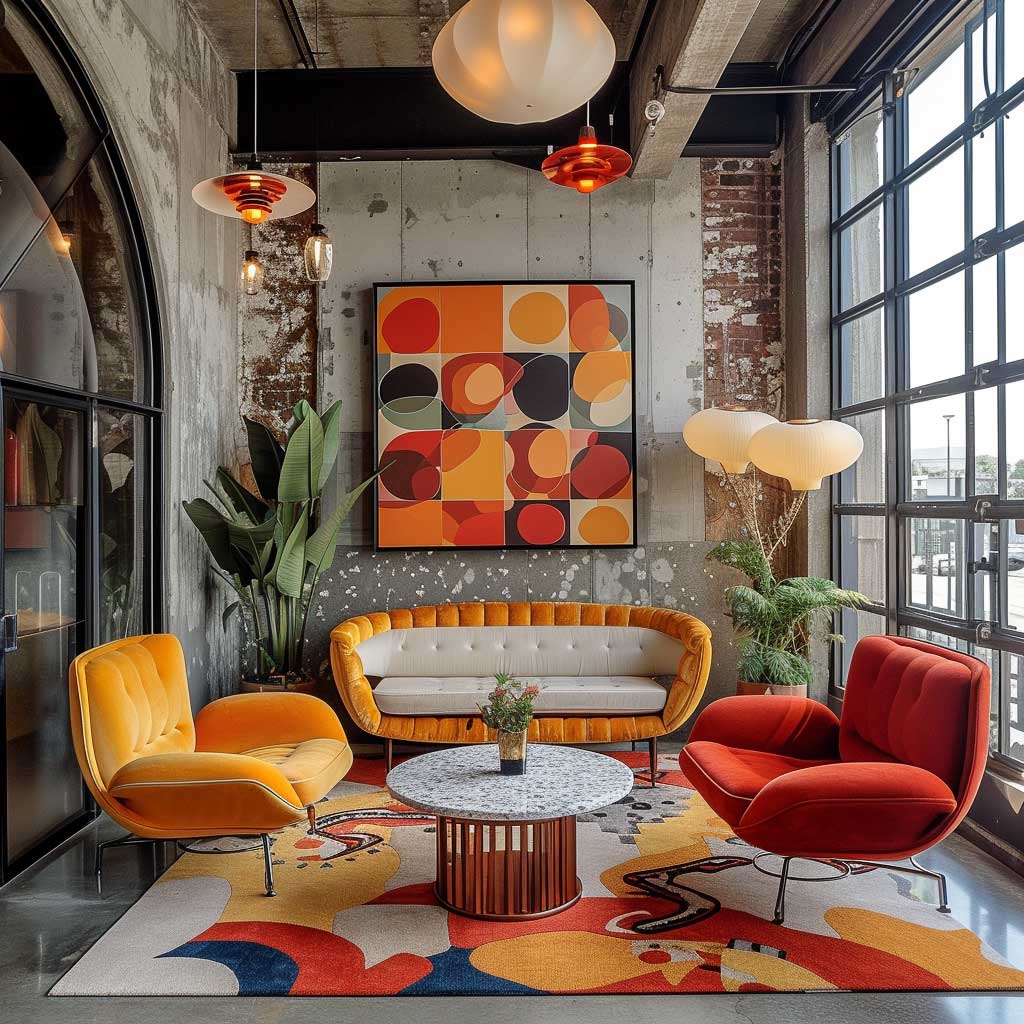


Urban sophistication in this context is maintained by restraint in the layout, not restraint in the objects. A clean, uncluttered arrangement with breathing room between furniture pieces makes each vintage accent legible. I’ve been in rooms with extraordinary vintage finds that felt oppressive because everything was pushed to the walls and the center was jammed with coffee tables and floor poufs. The open plan is the foil — let it do its job.
Accessories close the deal. Vintage lamps from Etsy sellers ($25–$75 for genuine 1960s ceramic table lamps), retro film posters, and a turntable on an open shelf alongside modern art prints create the kind of lived-in density that reads as collected rather than staged. The key is that each accessory should feel like it arrived from a slightly different world than its neighbors. Matching vintage accessory sets — a “retro kitchen set” from a decor box — kill the effect immediately. Real collections don’t match.
The longer you live in an urban vintage space, the better it gets — because you keep adding to it. That’s the opposite of most designed-in-a-day interiors, which peak on the day you finish them and start to feel dated six months later. Urban vintage rooms age like wine, not like milk. Each new piece you add either earns its place or gets edited out, and that editing process is half the pleasure. For a deeper look at how industrial finishes and raw materials support this kind of layering, this breakdown of industrial chic color schemes shows exactly which palettes hold up over time.
Don’t buy a “vintage-inspired” room set from a big-box retailer and call it urban vintage. Mass-produced reproductions — the kind where every piece has the same distressing pattern in the same direction — signal the opposite of what this style is about. Vintage design is credible because it carries actual history. A $600 “distressed wood” dining table from a chain store doesn’t have history; it has a finish. Shop Chairish, 1stDibs, local estate sales, or eBay for genuine pieces. Budget $150–$500 per anchor item for originals that actually hold their value and visual weight. Also: don’t mix more than two dominant eras at once. Trying to blend 1920s Art Deco, 1960s mod, and 1980s Memphis in one room doesn’t read as layered — it reads as indecisive.
An Eclectic Urban Vintage Bedroom That Doesn’t Look Like a Flea Market

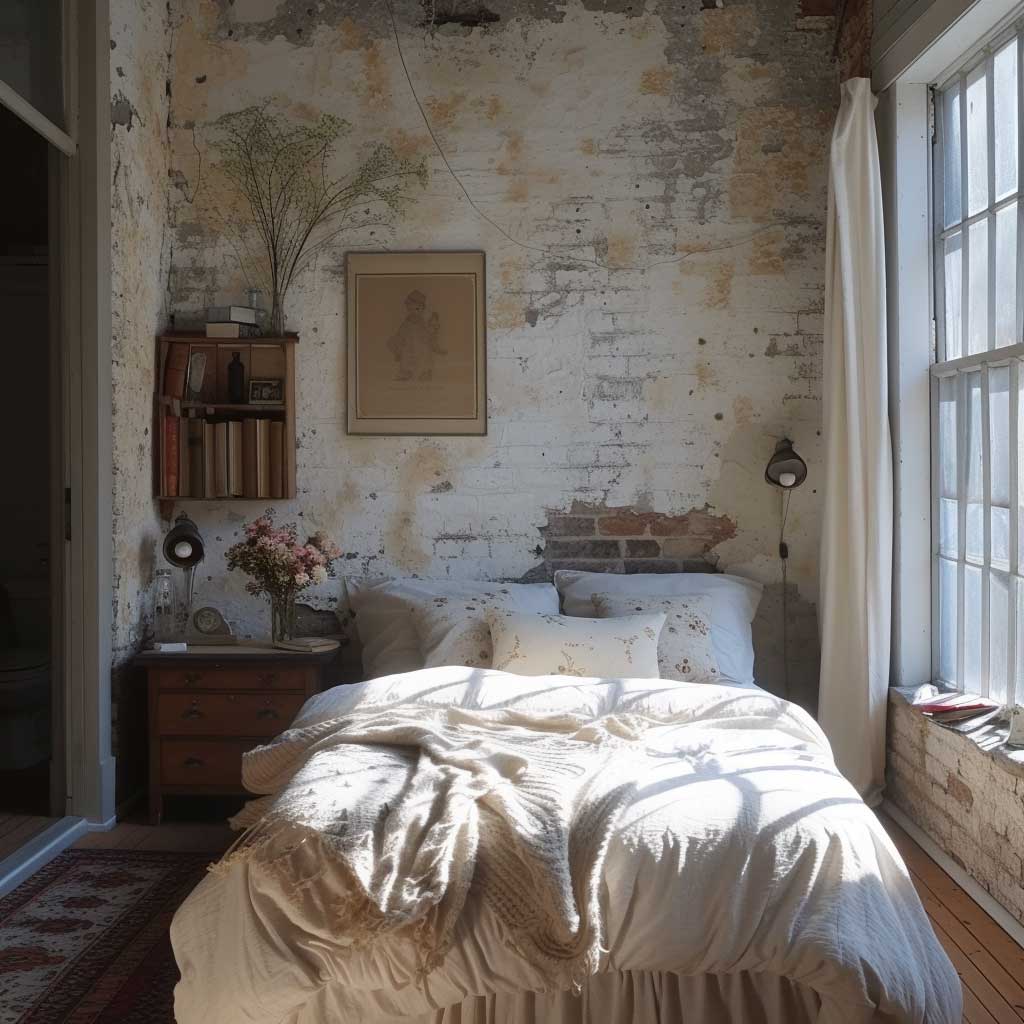
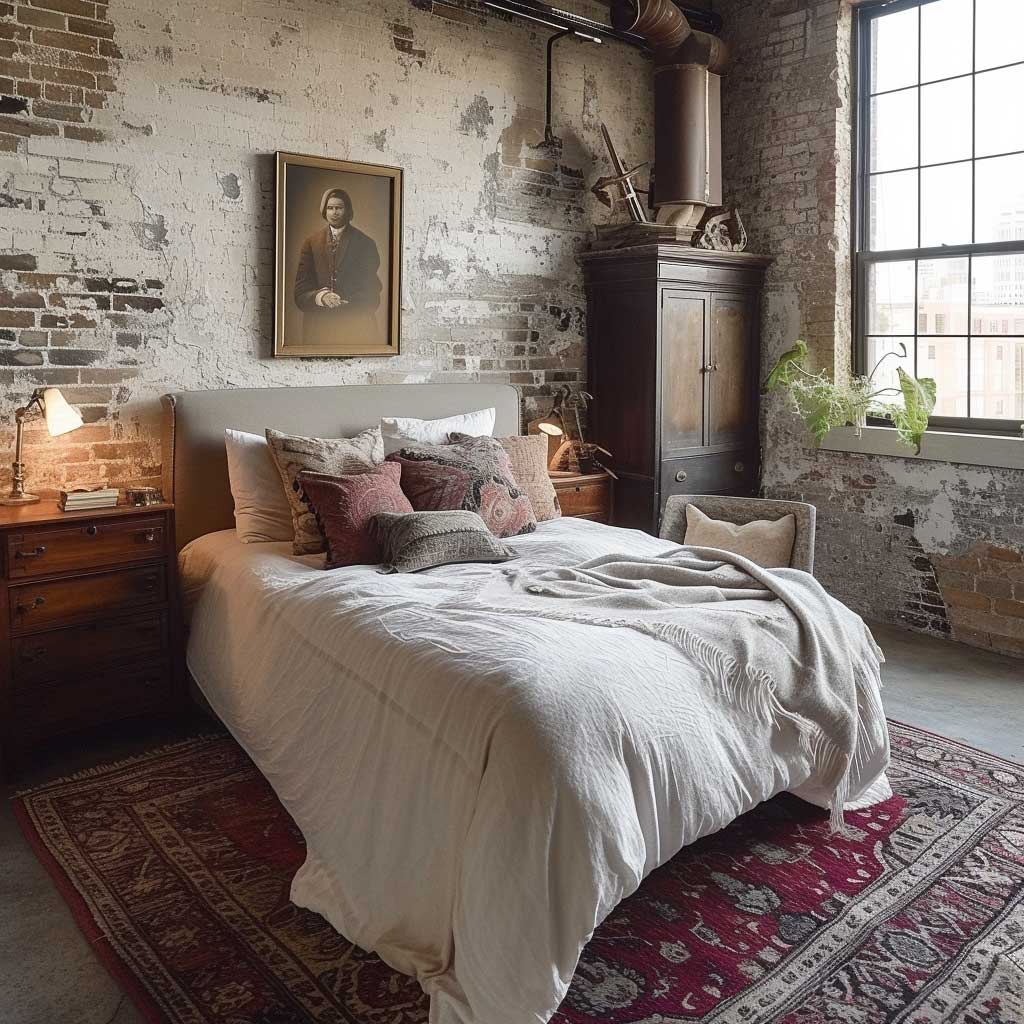

Urban interior design style in a bedroom works by the same logic as the living room but with a higher tolerance for softness. An eclectic urban vintage bedroom needs one structural vintage anchor — a cast-iron bed frame from a salvage yard ($200–$600), a carved wooden headboard from Chairish, or a serious antique wardrobe — and then everything else can be contemporary. The anchor carries the vintage weight so you don’t need to double and triple it elsewhere.
Vintage decor items in the bedroom serve double duty as art and function. An antique brass-framed mirror at $85 from a local estate sale reads as sculpture when hung at a slight angle; a Victorian steamer trunk at the foot of the bed ($120–$180 on Etsy) handles extra blanket storage and doubles as a visual story piece. Is there a risk it looks like a prop? Yes — which is why the bedding underneath it should be rigorously modern. I use Parachute linen ($179 for a queen duvet cover) for exactly this contrast: ancient object, pristine linen.
Lighting is the bedroom’s most underused vintage opportunity. A genuine 1940s ceramic table lamp rewired for modern use ($60–$100 on Etsy or at estate sales) casts warm, directional light that no modern lamp I’ve ever bought at that price point has matched. Edison bulbs in a 2200K color temperature produce the amber glow that makes a vintage bedroom feel like a retreat rather than a staging area. Swap every overhead fixture for table and floor lamps and the room immediately drops ten years of visual tension.
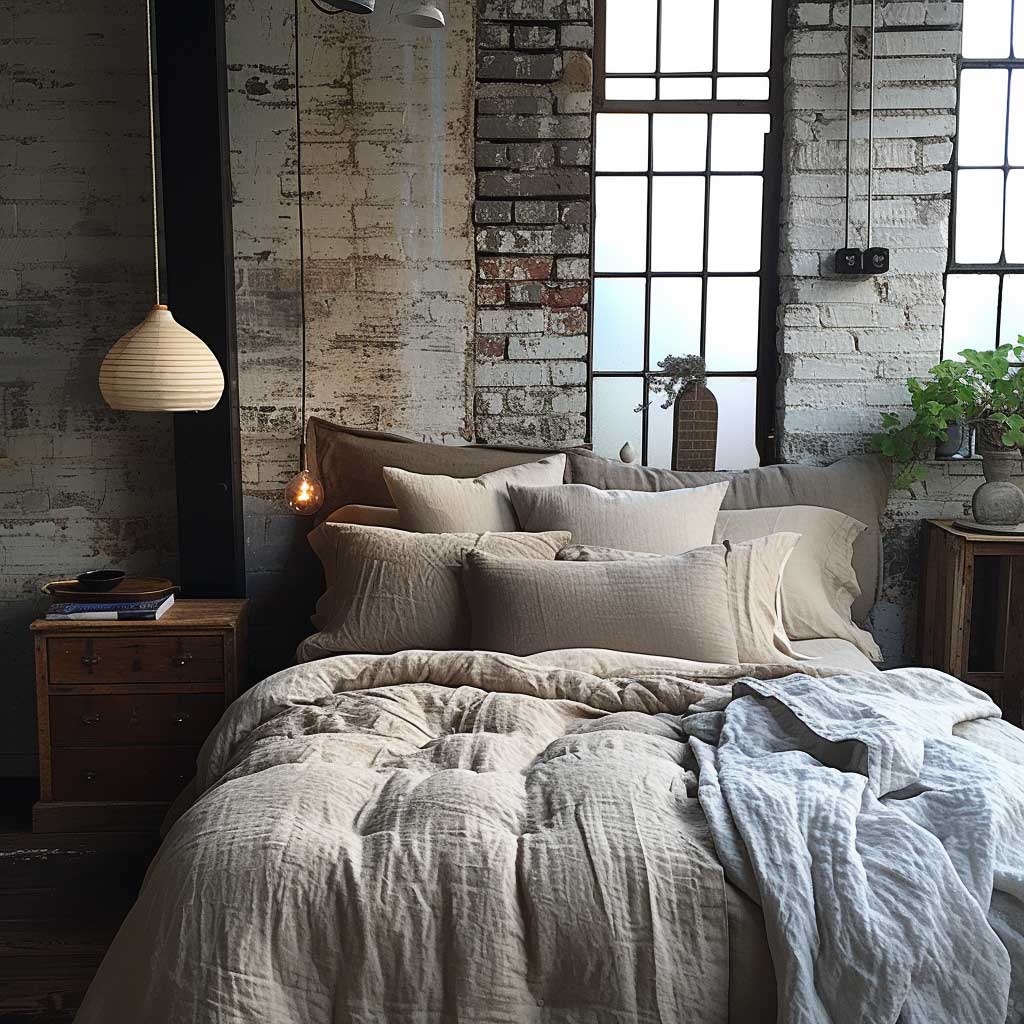
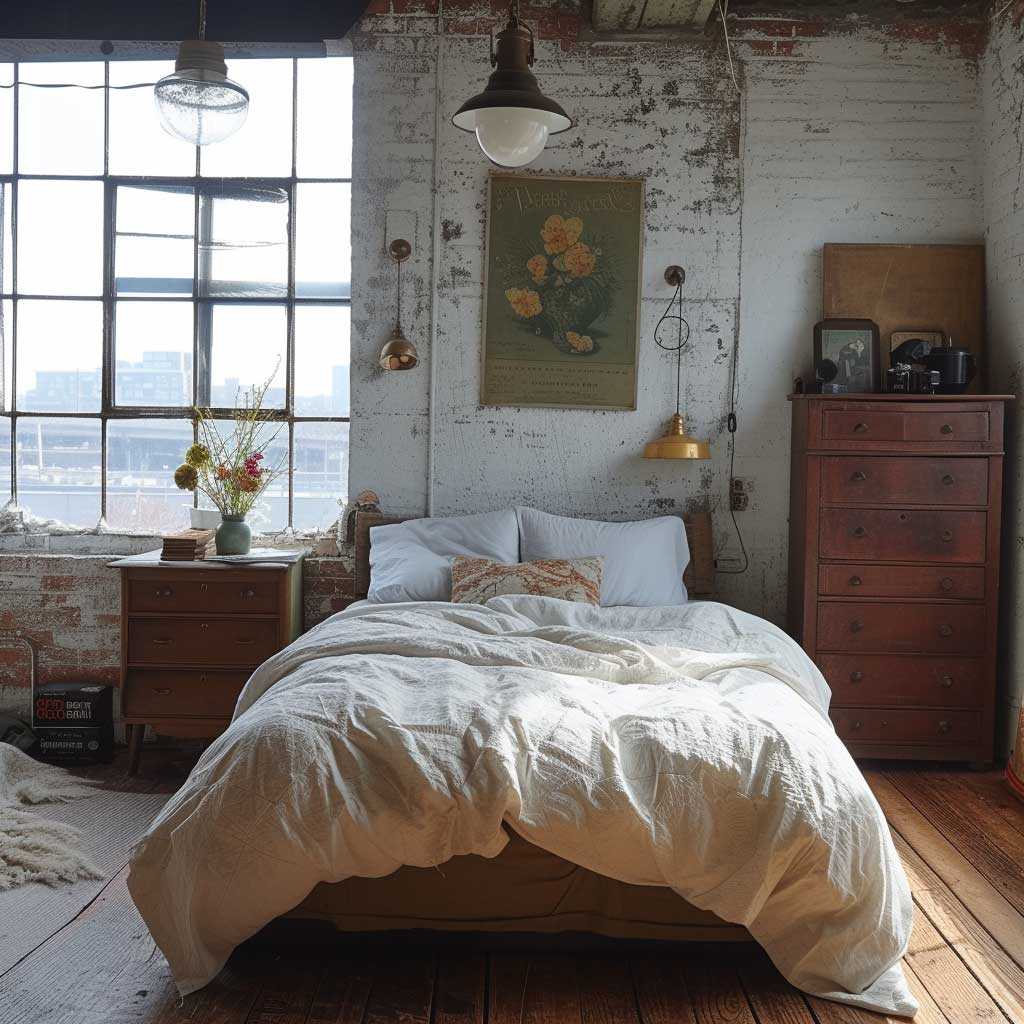
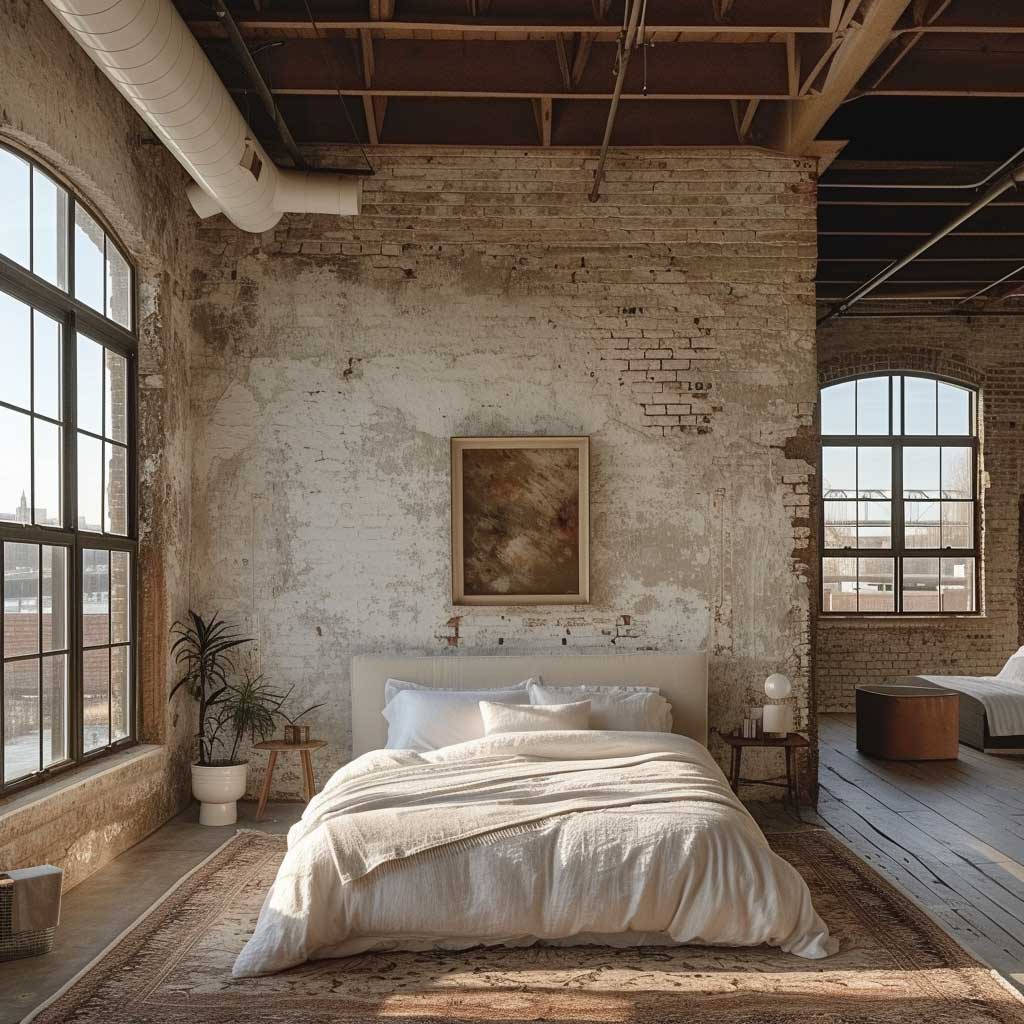
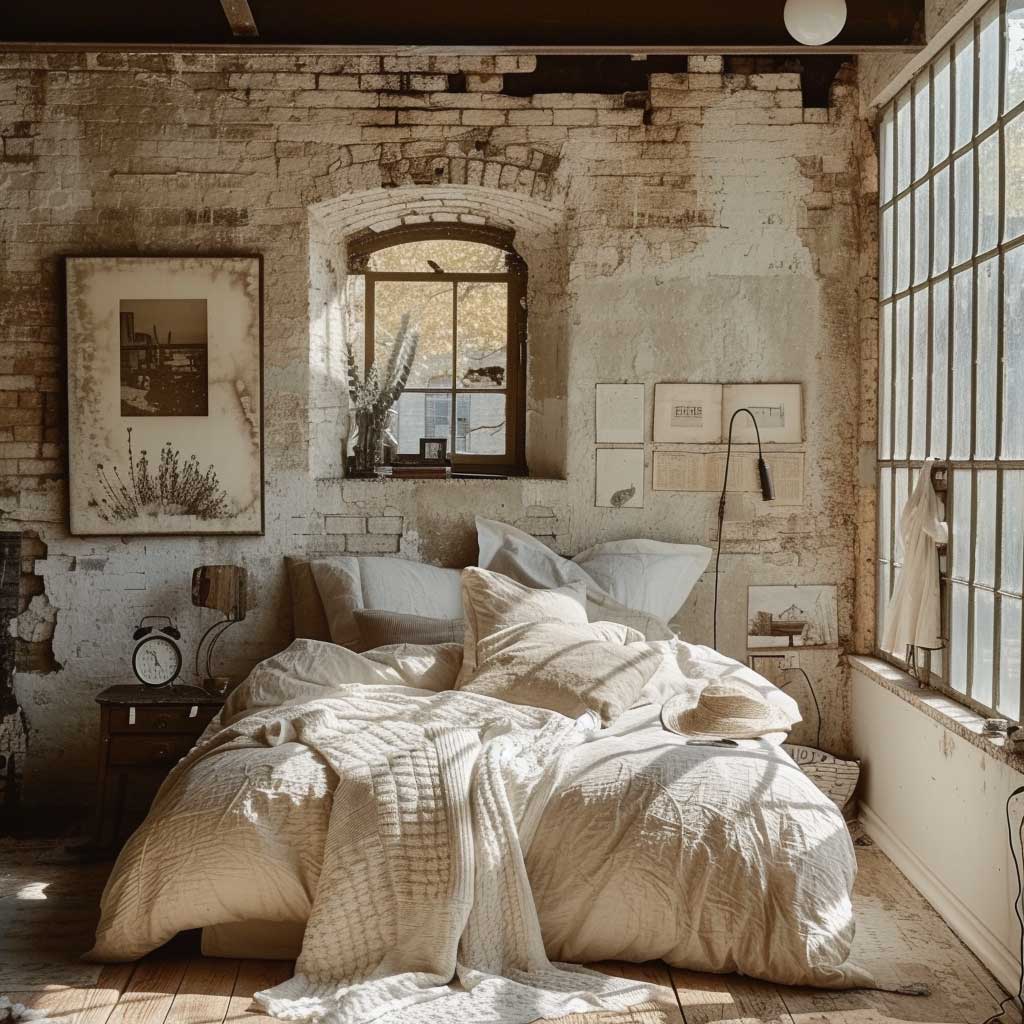
Color in an urban vintage bedroom should read warm but not busy. Muted sage, dusty mauve, or warm charcoal walls (Farrow & Ball “Moles Breath” at $120/gallon is my benchmark) give the vintage pieces enough tonal support without competing with them. Bold color works in accents only — a chartreuse lumbar pillow from Society6 ($35), a rust-orange throw from H&M Home. The wall is the museum; the accessories are the art.
Textures in an eclectic urban vintage bedroom are where the “eclectic” part actually earns its name. You need weathered wood (the nightstand), something metallic (a brass lamp base, a chrome mirror frame), something woven (a jute rug or basket), and something soft (velvet or boucle throw). Those four material families create enough visual complexity that the room never needs to be full to feel rich. Rooms that pile on too many objects to compensate for a lack of material diversity always look cluttered, never collected. The best-designed rooms I’ve been in had fewer than fifteen objects total and felt denser than rooms with sixty. For a deeper dive into how to pull this off across an entire apartment, mixing modern and vintage elements walks through the living room, kitchen, and bedroom in sequence.
The eclectic urban vintage bedroom is the most personal room in the house — so it should contain something genuinely yours. A framed photograph, a book you’ve actually read, a lamp that belonged to someone. Staged eclecticism reads as hollow almost immediately because it lacks the thing no store can provide: actual memory. Buy the vintage piece you want to look at every morning. Design the rest of the room around it. That sequence — emotional anchor first, functional layers second — is the real difference between a beautiful room and a memorable one. Love That Design’s breakdown of industrial interior design history is worth bookmarking if you want to understand which raw materials actually predate the 1960s and which are modern recreations — the distinction matters when you’re sourcing vintage pieces in an urban context.
Final Take
Urban Vintage Interior Design Is a Commitment, Not a Mood Board
Start with one genuine vintage anchor piece — budget $150–$500 — and build outward. Everything else in the room exists to frame it, not to compete with it.
Layer at least three distinct material textures before you add a single accessory. Pattern is punctuation — one dominant pattern per visual axis, maximum.
Save this post before your next thrift store or estate sale run — knowing what you’re looking for before you walk in is the difference between finding the room-maker piece and coming home with a box of candle holders.