Bay window blinds look wrong in most living rooms not because the style is off, but because people hang them incorrectly. The three angled panes of a bay window each carry different light at different times of day — treat them as one flat wall and you’ll get glare in your face by 10am. I’ve reworked this exact mistake in enough rooms to say it plainly: the covering decision comes after you map how light actually moves through your space, not before. Get the bay window blinds ideas right and the whole room recalibrates around this one architectural feature.
Bay windows sit proud of the wall. That protrusion changes everything — depth, angle, shadow, even the way a sofa arrangement feels when you’re sitting near it. Standard window treatments ignore the geometry. The ideas below don’t.
What you’ll find on this page
- Colorful bay window blinds that create a cozy reading nook
- Modern minimalist roller setups for living rooms and lounges
- Light-filtering options for bay windows facing south or west
- How to approach bay window blinds in a bedroom
- The cellular shade argument for older, drafty homes
- A material comparison table: wood vs faux wood vs fabric
Colorful Bay Window Blinds Pull the Room Toward the Window
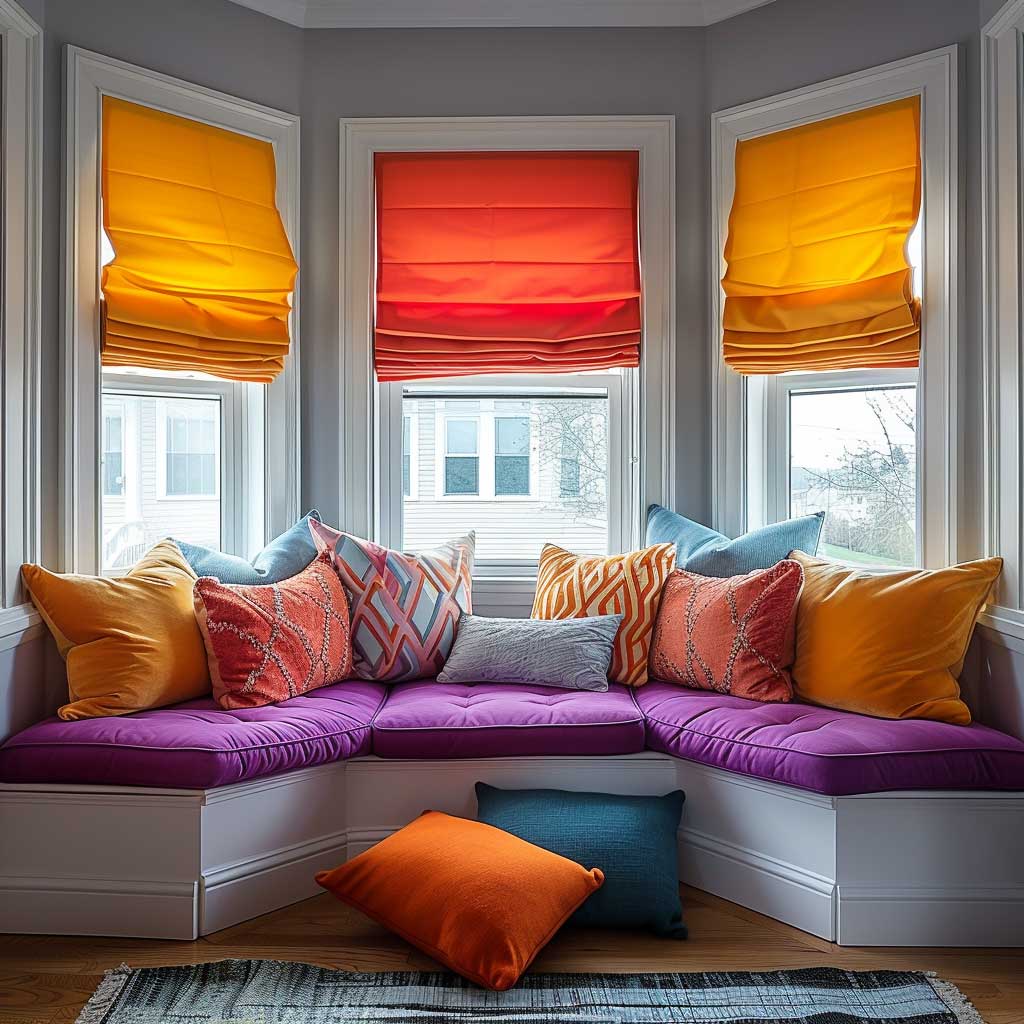
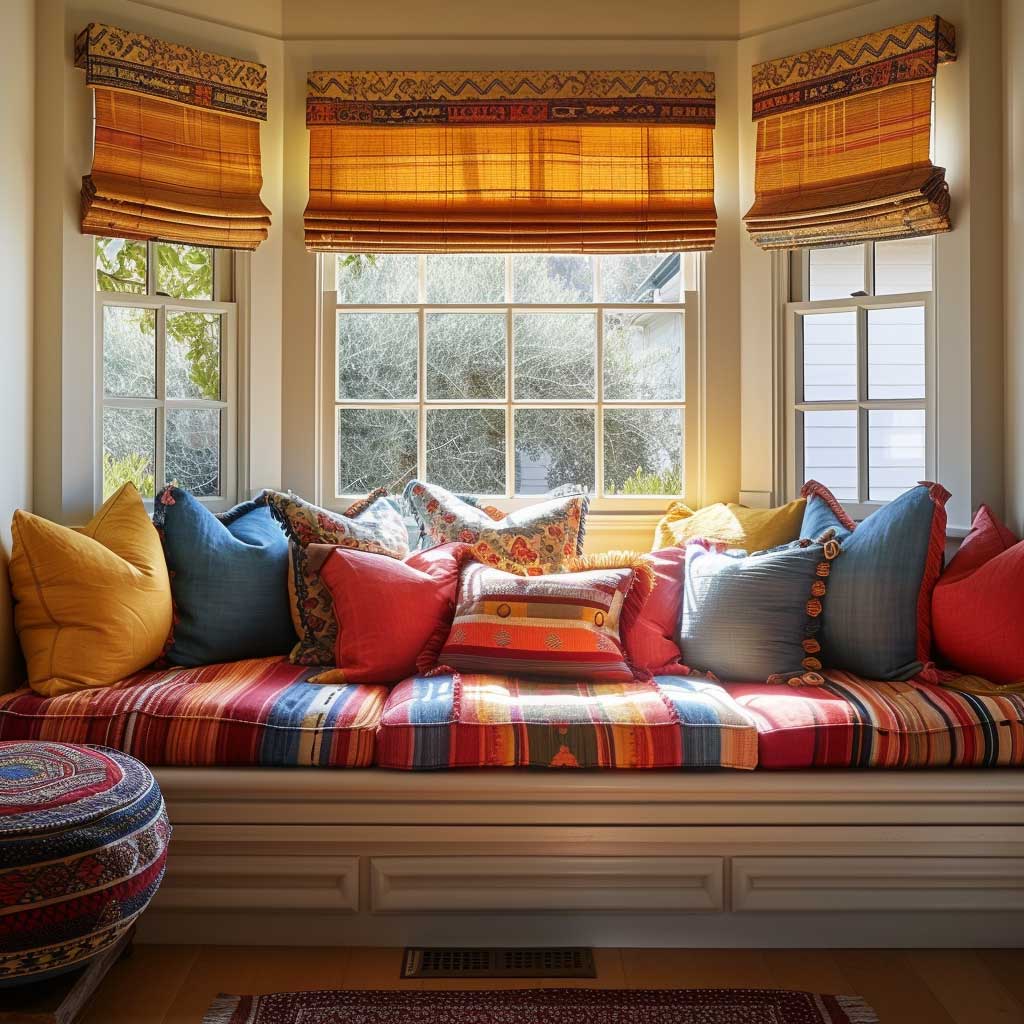
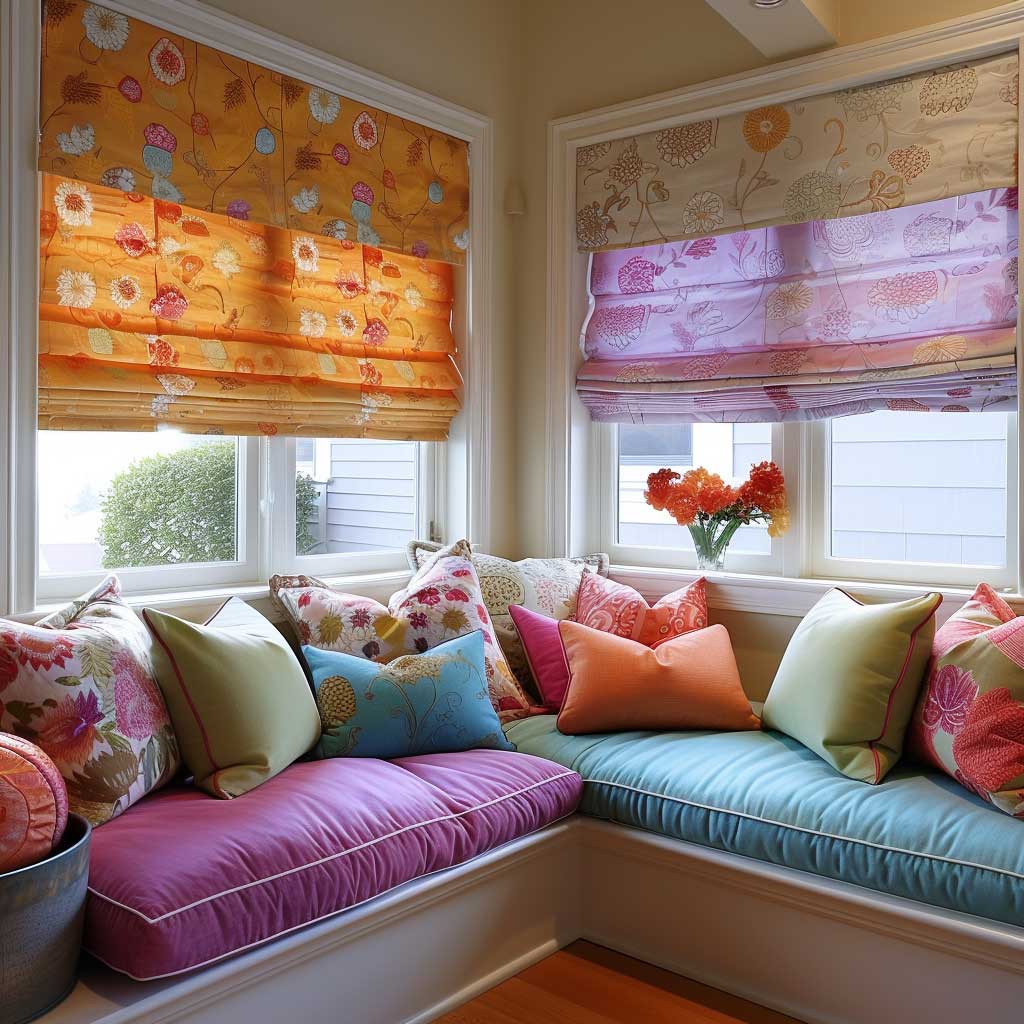
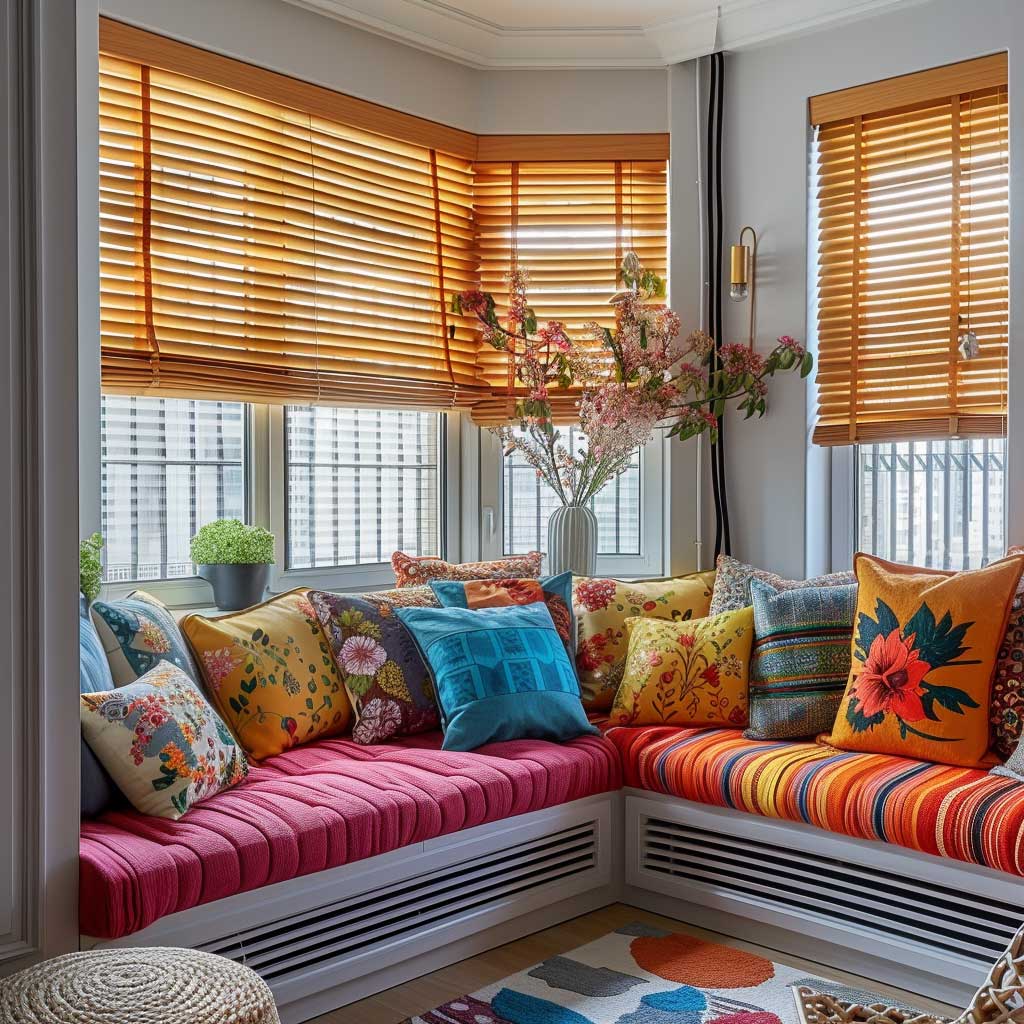
Colorful blinds in a bay window work the same way a statement rug anchors a sofa arrangement — they give the eye a destination. I’ve bought terracotta Roman shades from Pottery Barn’s Roman Shade collection (around $89–$129 per panel depending on size) and watched a previously forgettable bay corner turn into the first thing guests mention. Warm tones — burnt orange, mustard, dusty rose — make the alcove feel like a room within the room. That’s exactly what you want from a bay window living room setup.
Cool greens and blues do the opposite in a useful way: they read as calm rather than cozy, which works in south-facing bays that already run hot. You’ll notice the shift in energy the moment afternoon sun hits a sage-green linen roller blind — the light goes mossy and quiet instead of aggressive. Skip the bold color if your bay window faces north; a dark blind in a low-light bay just makes the room feel like a basement by 3pm.
Fabric matters as much as color here. Semi-sheer weaves let the color perform its job without blocking the architectural view that made the bay window worth keeping. My go-to is a linen-cotton blend at around 40% opacity — enough privacy, enough light, enough color saturation to read from across the room. Fully blackout fabric in a bright color looks flat and muddy; the weave needs to breathe for the hue to land correctly.
What doesn’t work: mixing three different blind colors across the three bay panes to “define each section.” I’ve seen this attempted three times. It always looks like a sample display in a hardware store, not a finished room. Keep the color consistent across all panes, vary only the opacity or pattern scale if you need contrast.
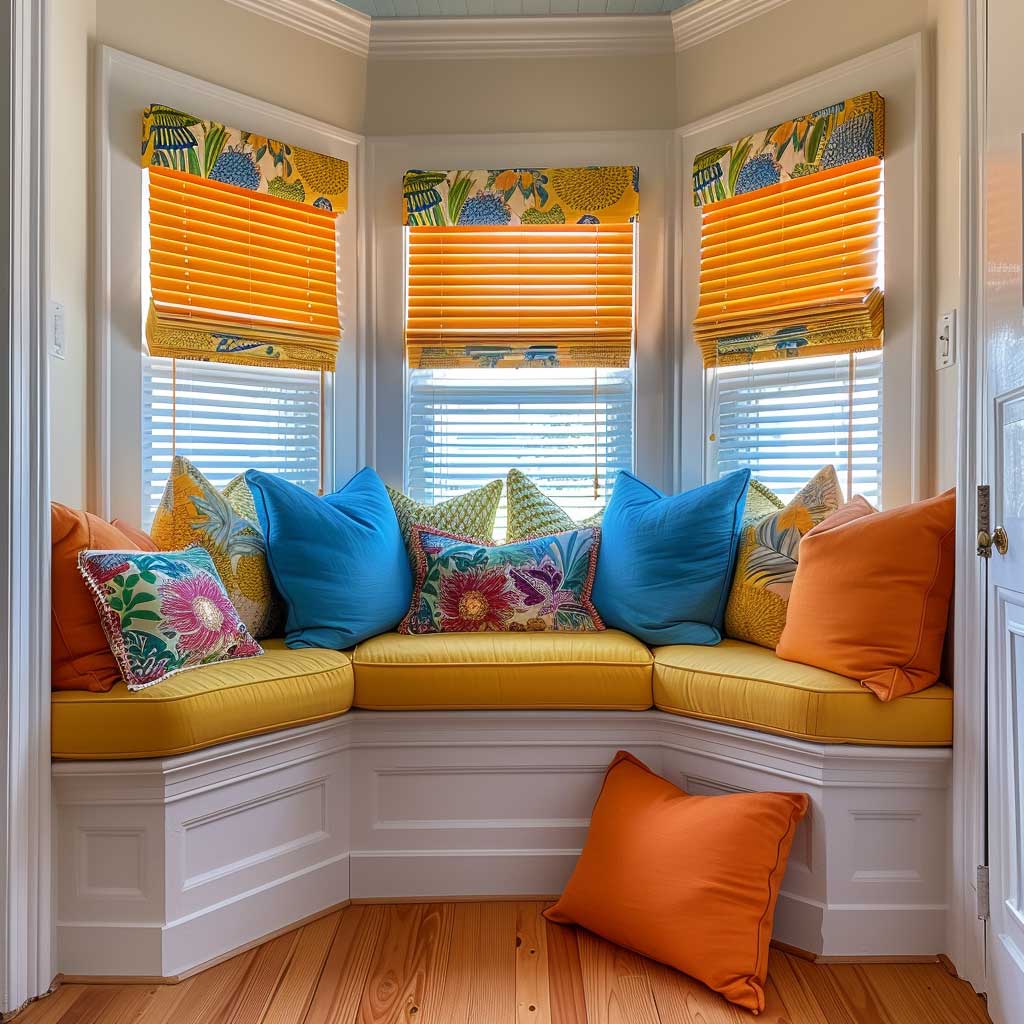
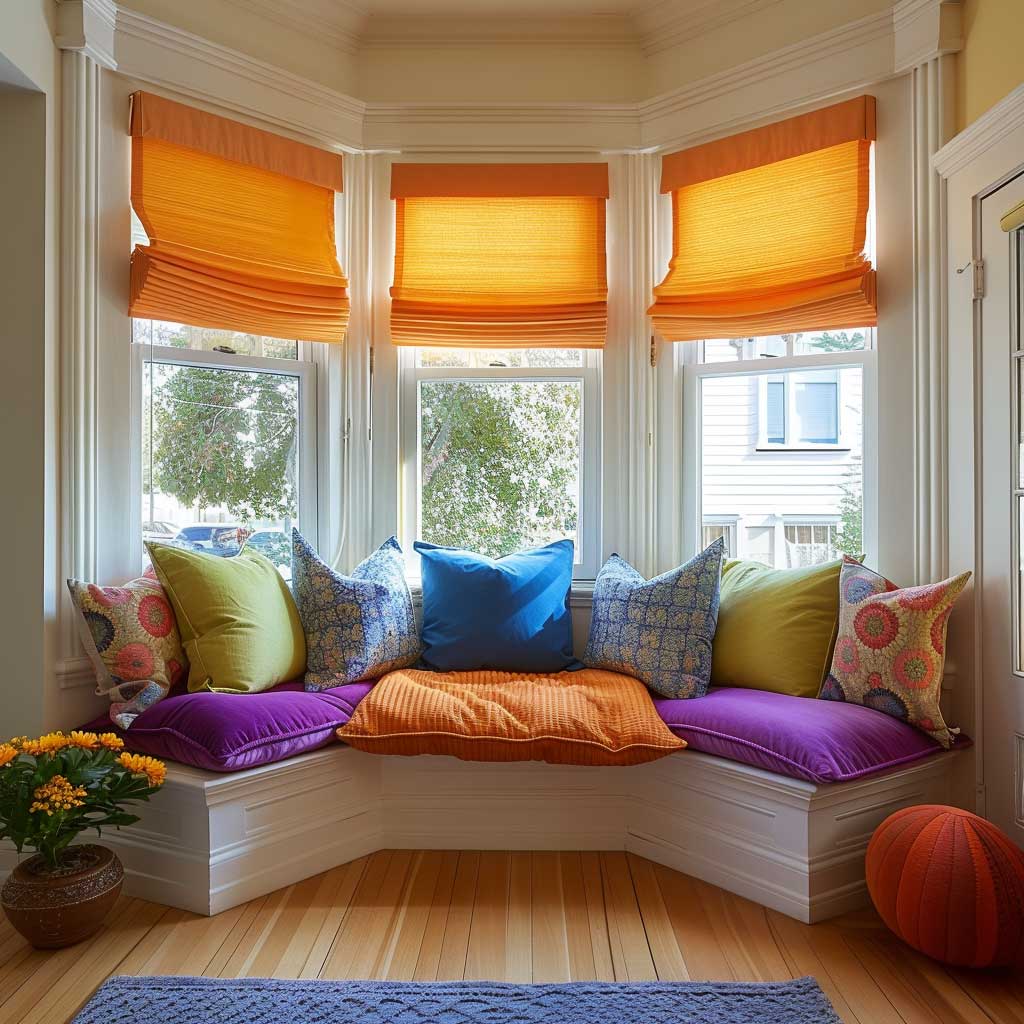
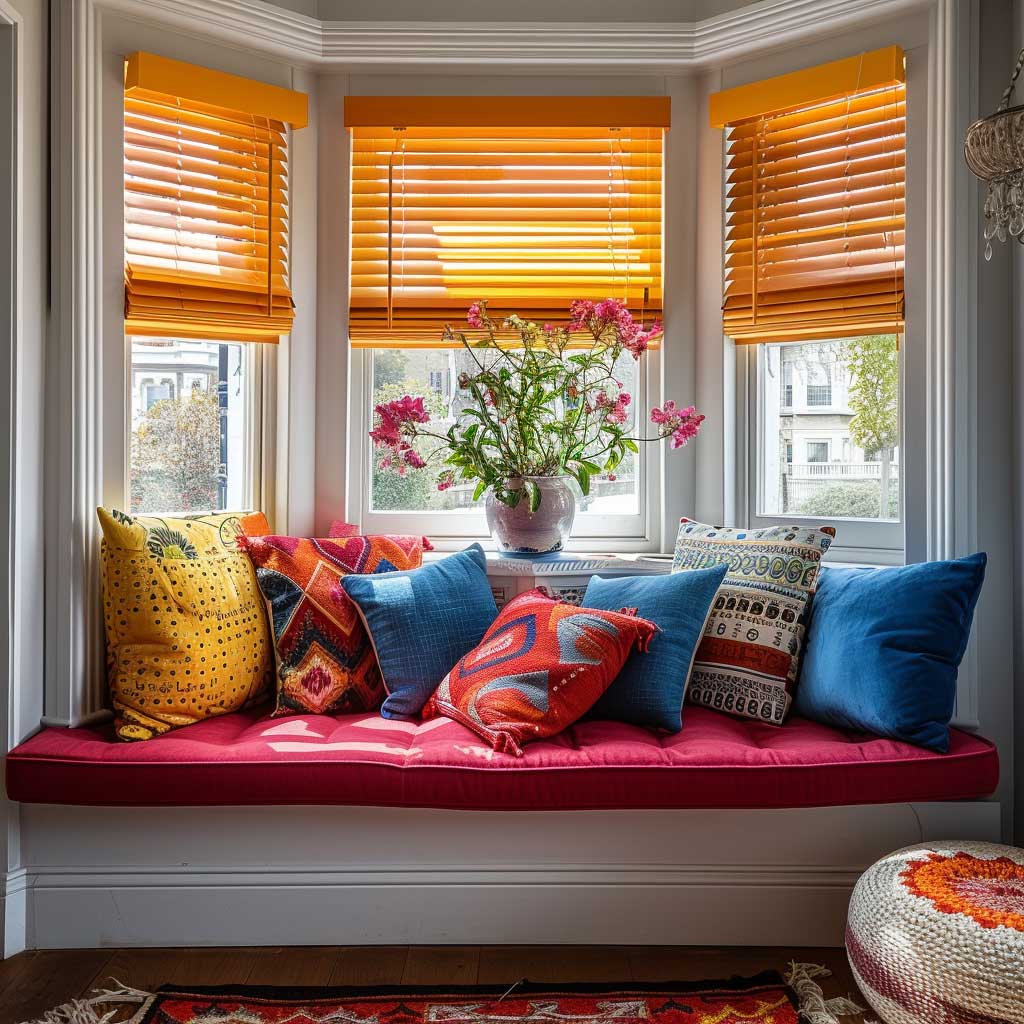
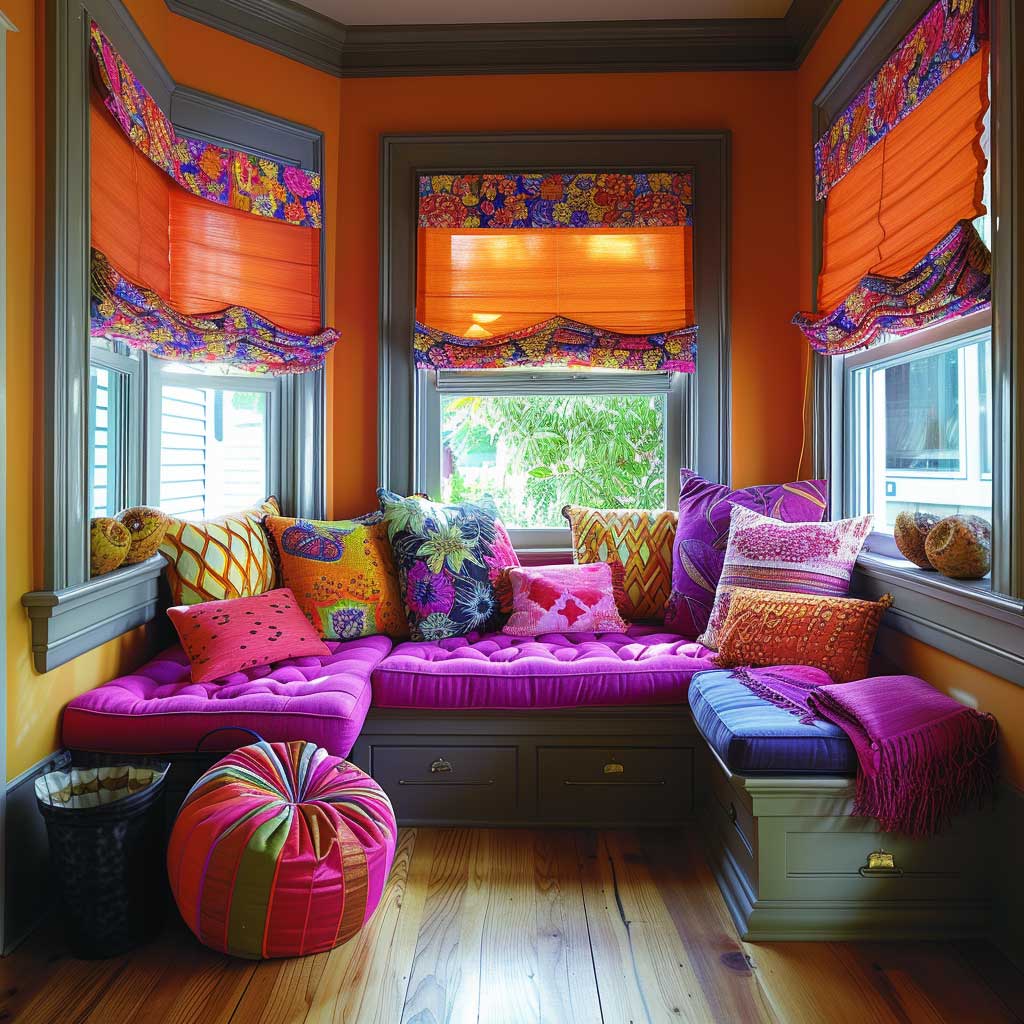
Seat cushions tied to the blind color lock the corner together visually. If you pull a color from the blind into the cushion fabric, you get an effect that looks considered even when the rest of the room is in progress. I stole this trick from a Domino editorial years ago and have used it on every bay window project since. Two items. Same color family. The bay reads as intentional.
Geometric patterns scale well across wide bay windows, especially if the panes are tall. A vertical stripe elongates short windows. A horizontal weave pattern — like the chevron options in the Smith & Noble Woven Wood collection, starting at $119 per shade — adds warmth without the weight of solid fabric. Florals tend to get lost on anything smaller than a 24-inch pane width. Save the pattern drama for the largest center pane.
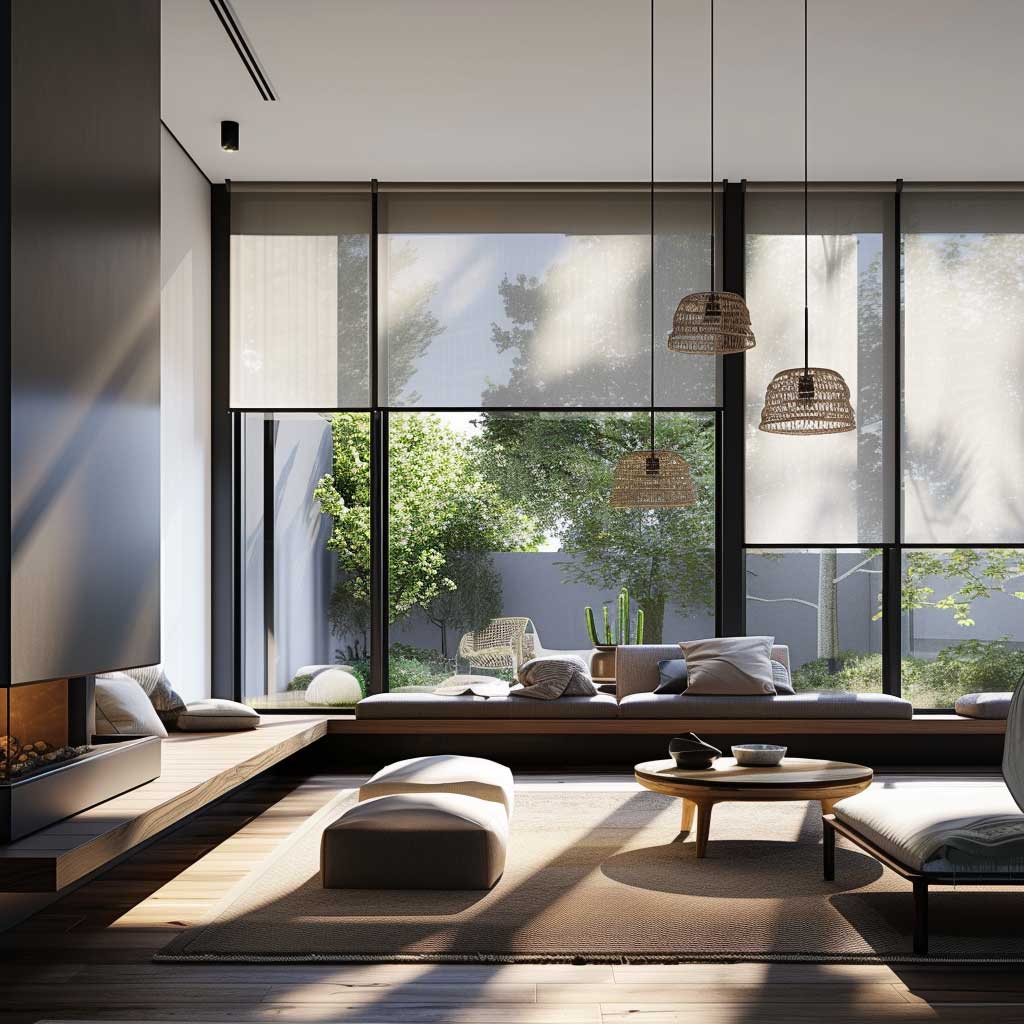
Roller Blinds in Neutral Colors Let the Bay Window Architecture Speak
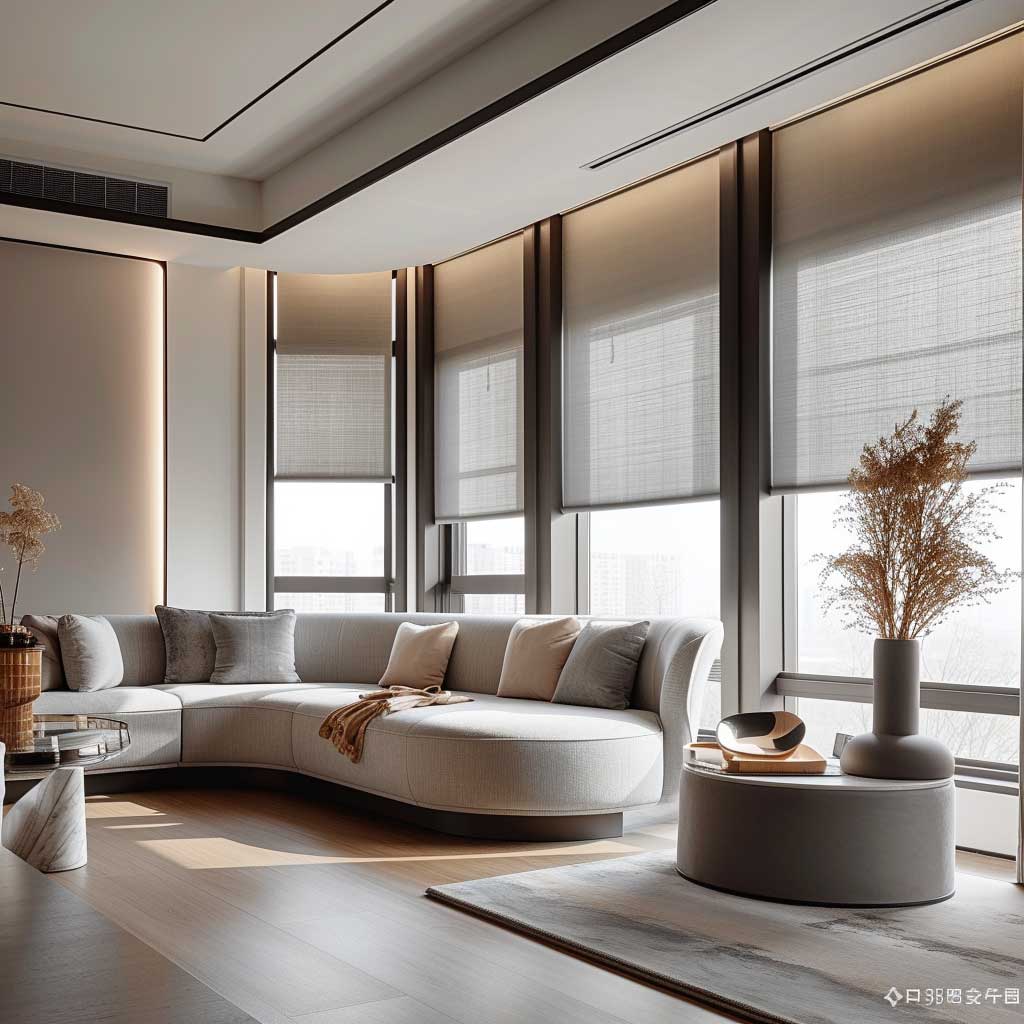
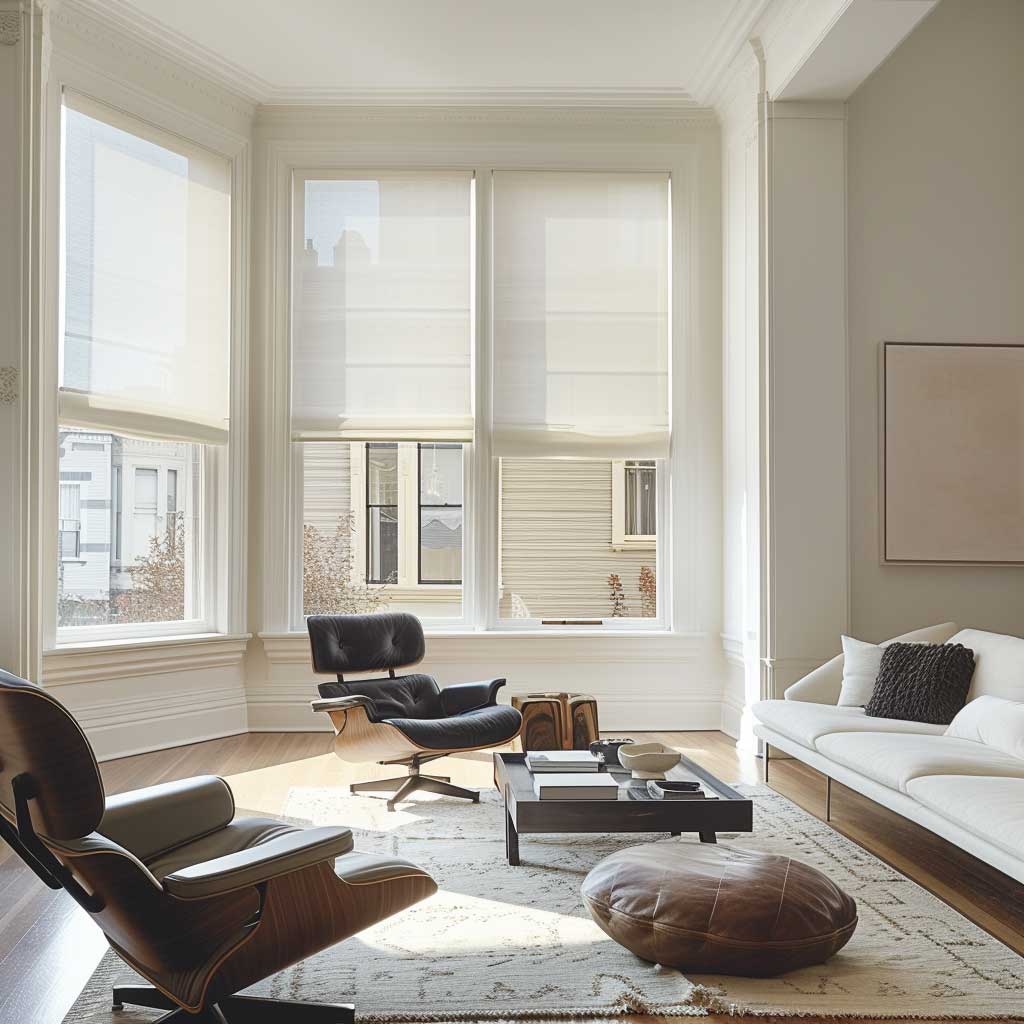
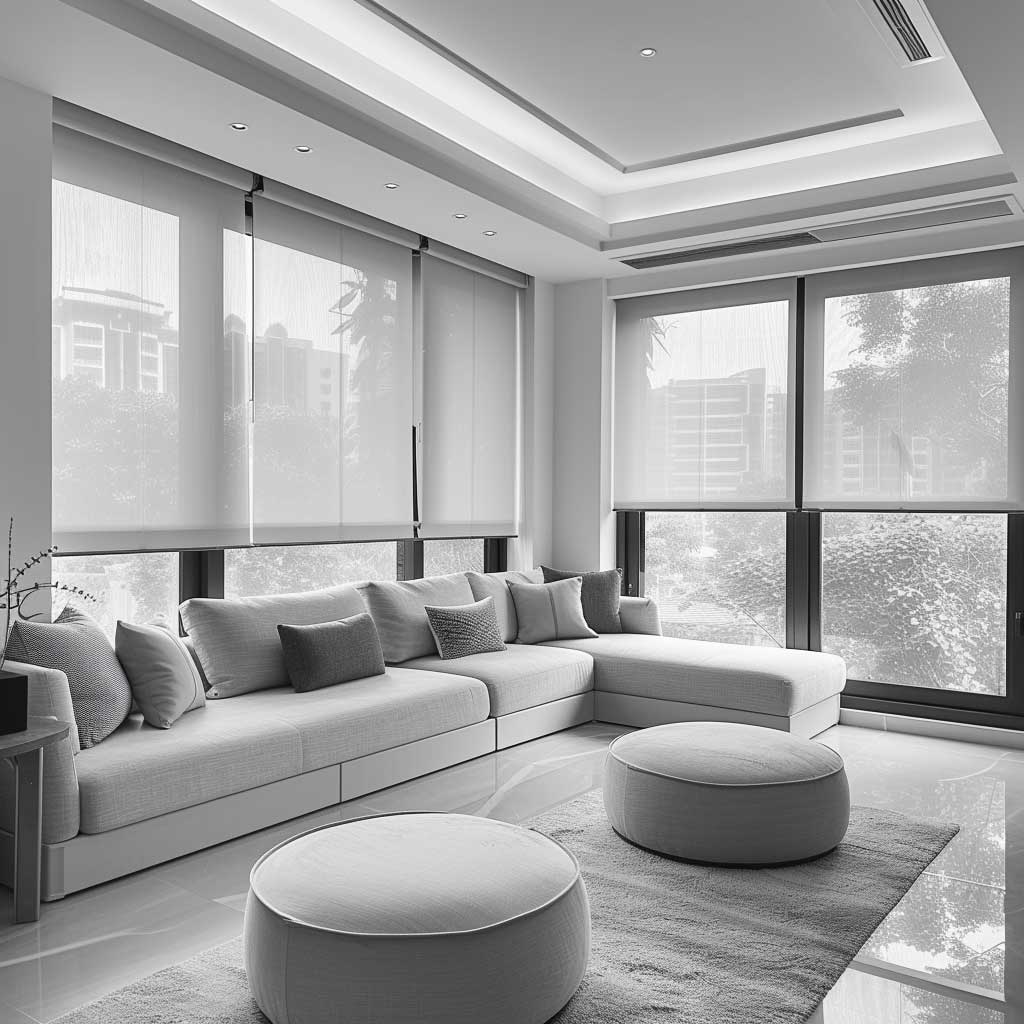
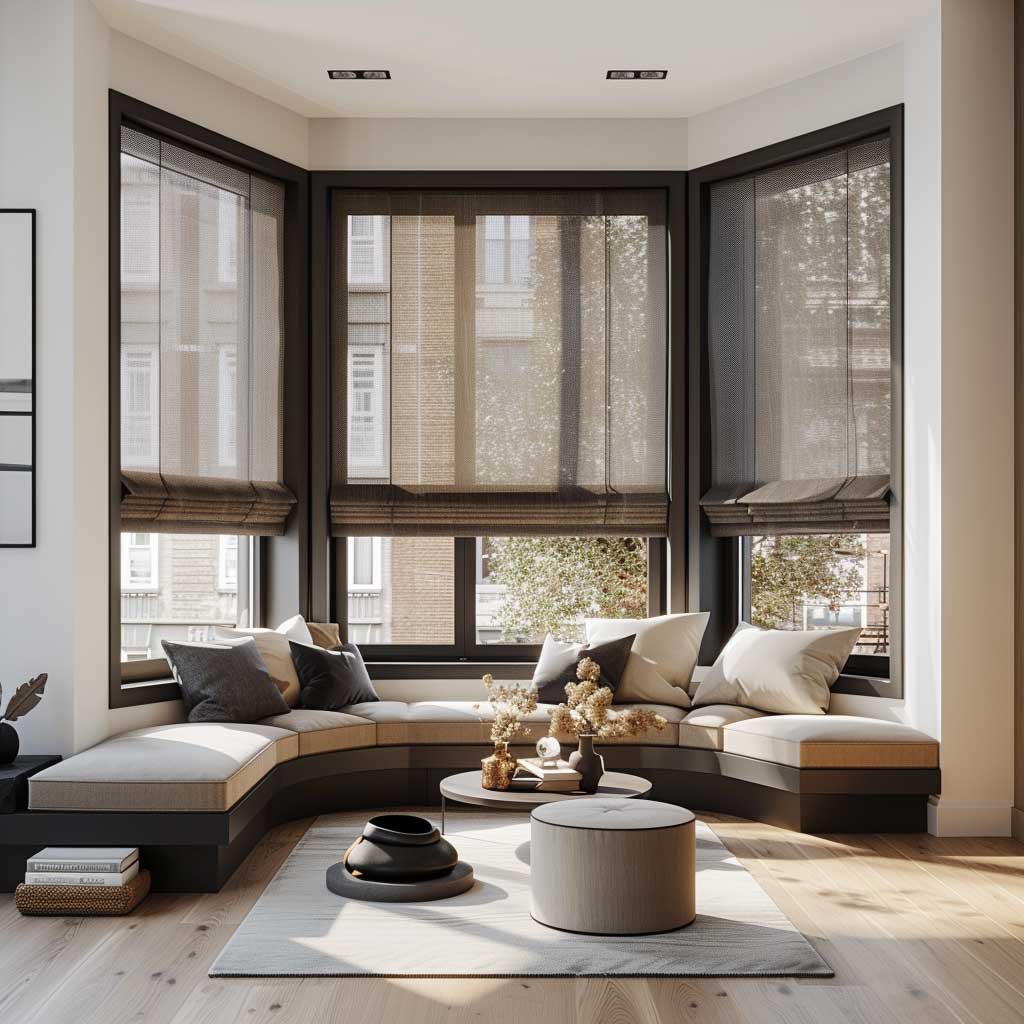
Modern bay window blinds for living rooms mostly get the color right and the hardware wrong. A neutral roller shade in white or warm grey reads clean and considered — until you see the chunky plastic cassette mounting at the top and the whole illusion collapses. Hardware matters. The IKEA TRETUR blackout roller at $25 is fine for a rental. For a room you actually care about, you need a recessed cassette or a fascia mount that sits flush with the window frame. Lutron’s Sivoia QS Wireless roller system starts around $400 per shade but the cassette disappears into the architecture entirely.
The argument for monochrome bay window blinds in a living room or lounge is mainly about the window sill. A white roller blind raised to cornice height turns the sill into a display ledge — a plant, a stack of books, a single ceramic. That composition does more work than any curtain treatment because it lets the structural depth of the bay show. You’ll notice this in almost every clean editorial shot of a bay window sitting room setup: the sill is always in play.
For bay window lounge ideas where the room skews traditional rather than minimal, consider a cellular shade in warm white rather than a flat roller. The honeycomb texture catches light the way plaster moldings do — it adds depth without adding visual noise. The Shade Store’s double-cell cellular shades in Alabaster run about $180–$260 per shade depending on width and come motorized if you don’t want to reach over a sofa to adjust them. More living room blind approaches worth stealing are collected here.
What to avoid: matching the blind color exactly to the wall. Off-white blind against off-white wall creates a smear rather than a frame. The window needs enough contrast to read as a feature. Even a single shade darker on the blind — say, warm linen against bright white walls — gives the bay the definition it needs to anchor the room.
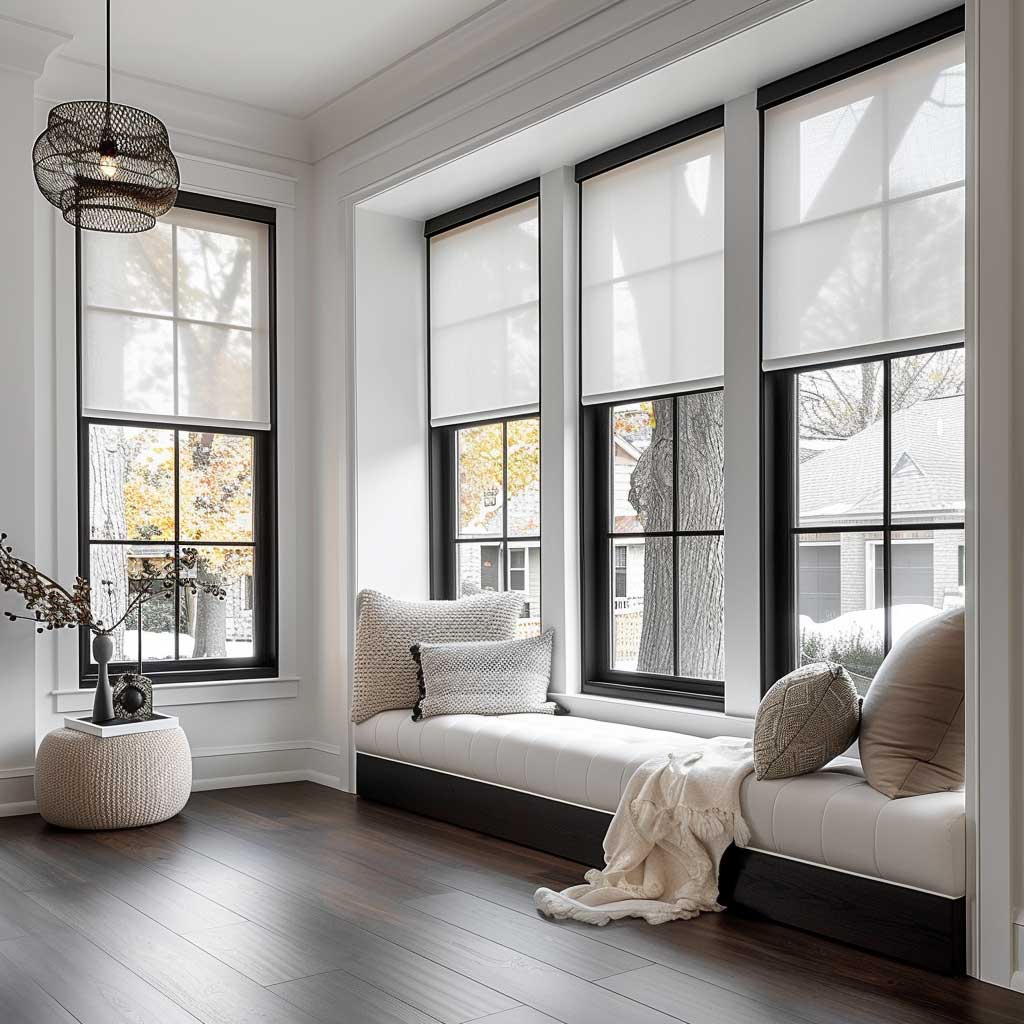
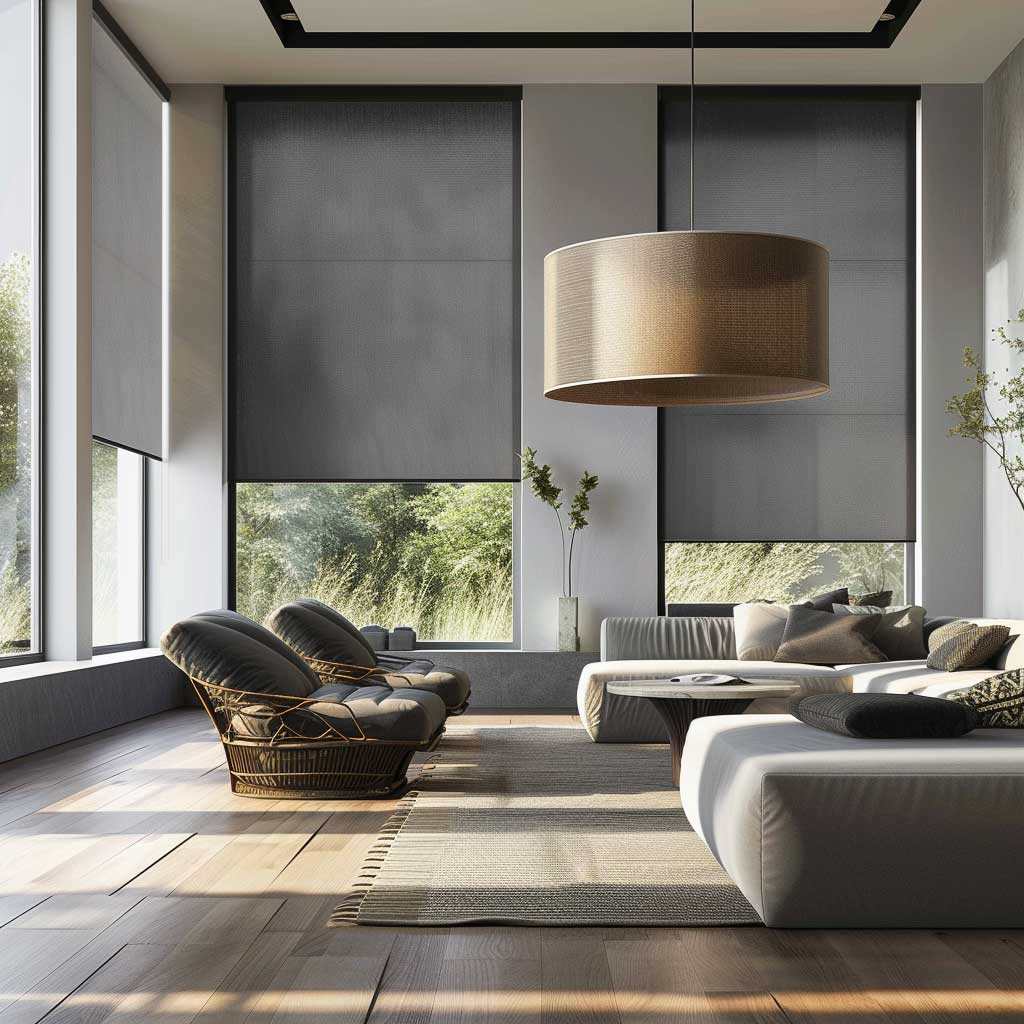
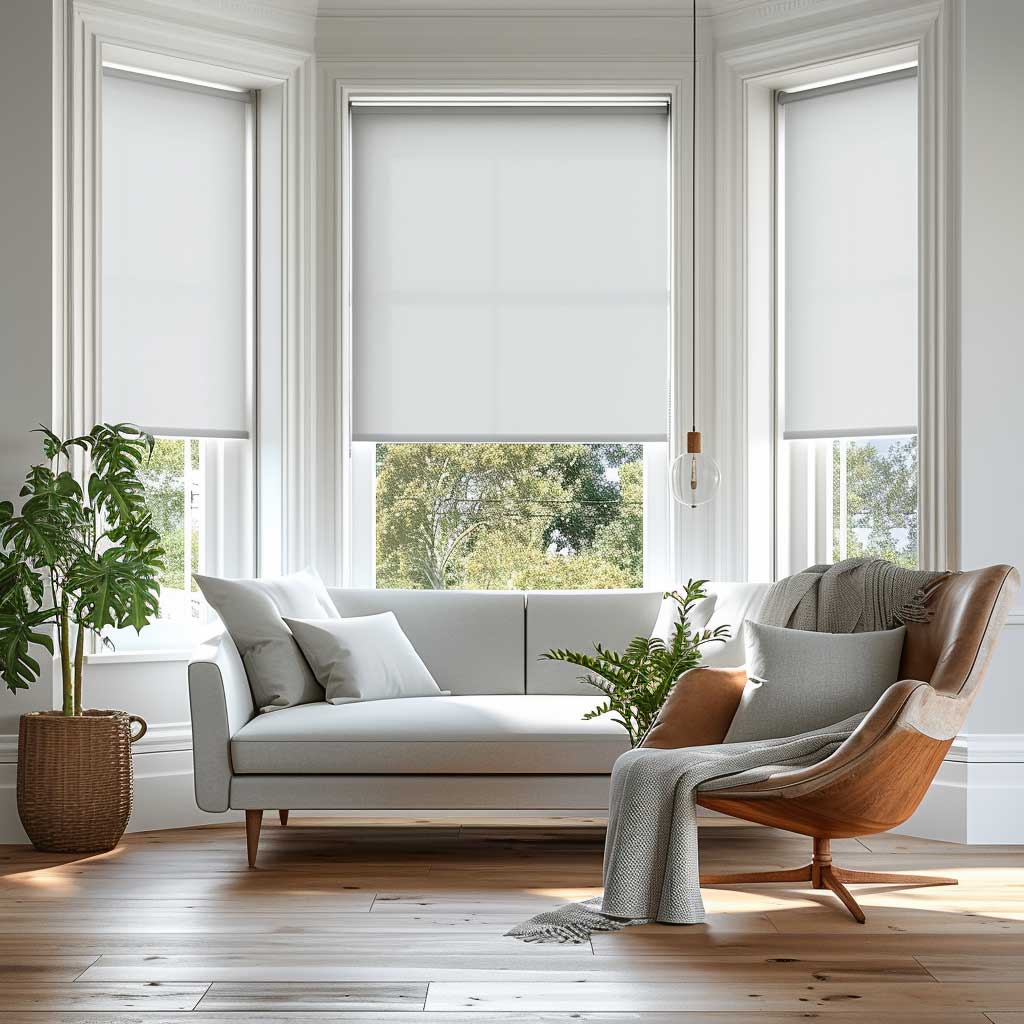
Cordless operation is non-negotiable for a bay window in a room with seating directly below the panes. A dangling cord over a reading chair is both a safety issue and an aesthetic failure. Most of the brands worth buying — Hunter Douglas, Norman, The Shade Store — offer cordless or motorized as standard rather than an upgrade now. Specify it from the start. Don’t let a showroom talk you into a cord loop to save $30.
Depth of the window frame decides inside mount versus outside mount. Inside mount fits inside the frame recess and looks architectural. Outside mount is mounted above the frame and makes a small window look larger. Bay windows almost always have enough depth for inside mount — measure the sill depth before ordering. Most custom blind manufacturers need at least 2.5 inches of sill depth for a clean inside-mount install. I own two Hunter Douglas Duette shades in an inside-mount bay and the top rail literally disappears into the frame at three feet of viewing distance.
Don’t Do This with Bay Window Blinds
- Don’t hang one long curtain rod across the entire bay. It flattens the architecture into a regular window and eliminates the depth that makes a bay worth having.
- Don’t use vertical blinds. They were designed for sliding doors, not bay windows. The slats hang at awkward angles on the side panels and the whole treatment looks like a 1990s office partition.
- Don’t size the blinds to the center pane and repeat for the sides. Measure each panel individually — the side angles are almost always a different width than the center.
- Don’t skip lining on a south-facing bay. Unlined fabric fades within two seasons of direct sun. Spend the extra $20–$40 per blind for a light-filtering liner.
Light Filtering Bay Window Blinds Solve the Glare Problem Without Losing the View

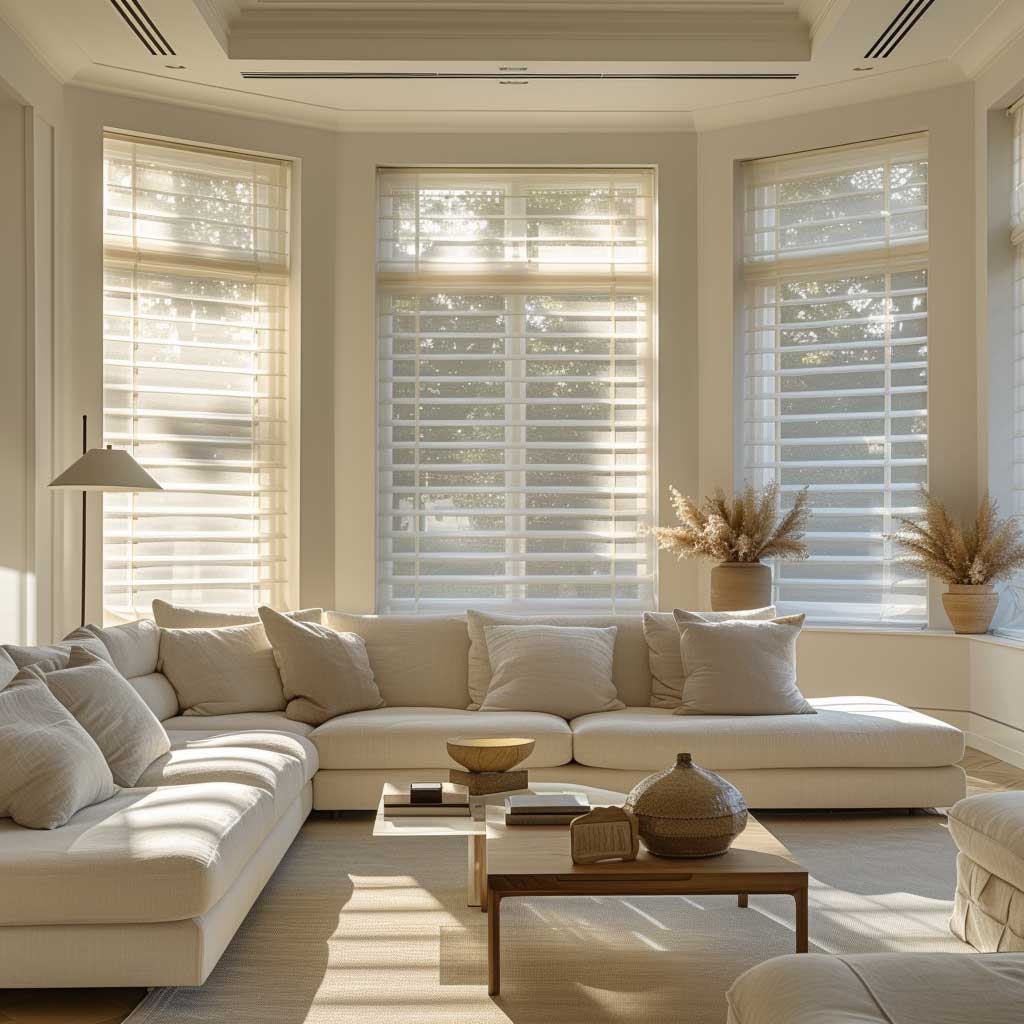
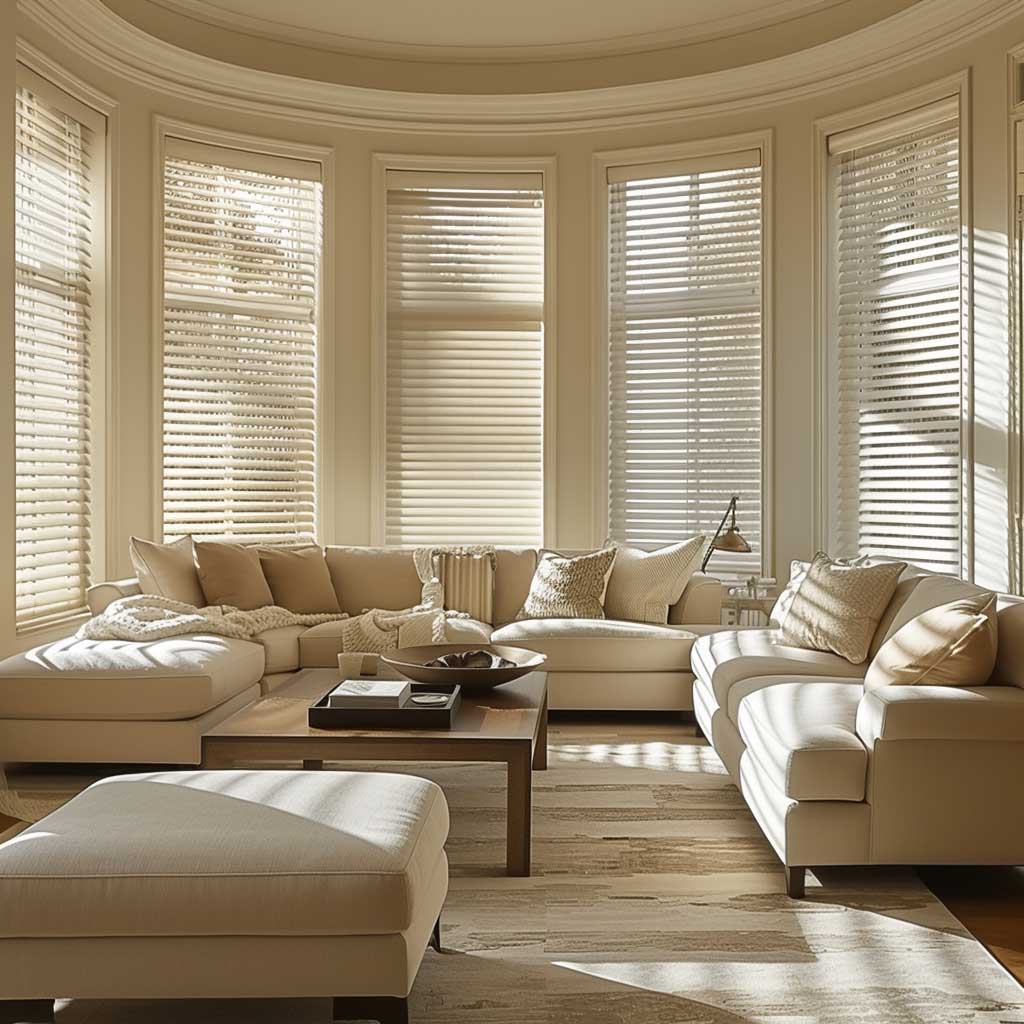
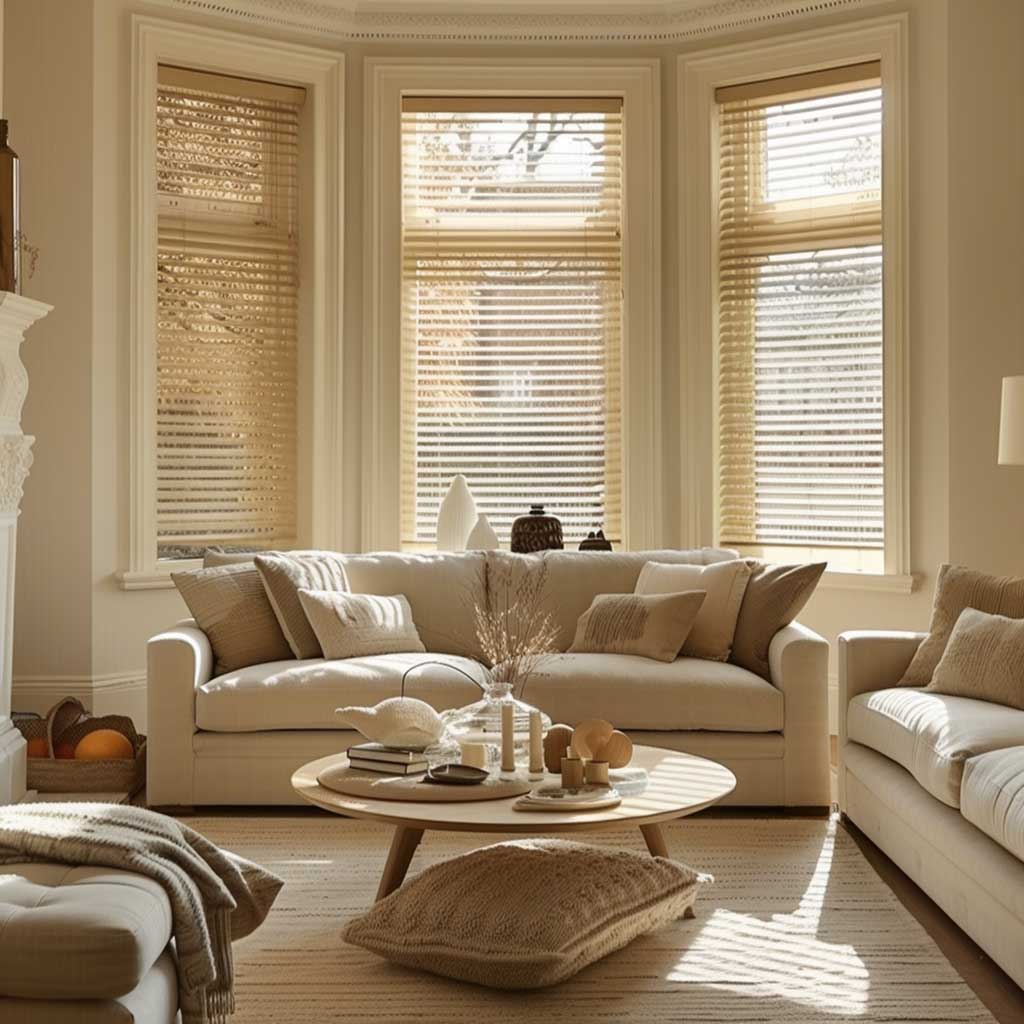
Light filtering bay window blinds do something that fully open or fully closed solutions can’t: they stay in one position all day and the room still looks right at every hour. That’s the real case for them. At 8am the light is soft and diffused; by 2pm the opacity of the fabric is doing actual work against direct sun; by 6pm you’re getting that golden backlight effect that makes interiors photograph impossibly well. I’ve tried this with the Bali Blinds Solar Sheer in Cream (around $55–$85 per blind at Walmart or Lowe’s) and the effect in a west-facing bay is genuinely close to a scrim on a film set.
Semi-transparent materials protect against UV fading without blocking light entirely. This matters if you have furniture or artwork near a bay window that faces south or west. A 3% openness factor solar shade — the kind measured by how tightly the screen weave is woven — blocks around 97% of UV but lets you see outside as clearly as through a car windshield. A 10% openness factor reads brighter and less screen-like but offers less fade protection. For a bay window in a room with upholstered seating directly in the light path, I’d stay at 3–5%.
The interior window design question most people miss is color temperature. Light filtering blinds in warm white or natural linen tone the incoming daylight warm. The same room with a cool grey filter reads colder by mid-afternoon even on a sunny day. Want the room to feel like it has a fireplace even without one? Warm linen solar shade. Want it to read clean and editorial like a Scandinavian showroom? Cool grey or ivory. Pick deliberately. Minimalist window treatment ideas with more detail on opacity grades are here.
What doesn’t work: a single sheer panel hung flat across a bay window to cover all three panes. The fabric gathers at the center, doesn’t reach the side angles cleanly, and the whole thing looks like the window is wearing a toga. Each pane needs its own blind mounted independently. Three separate blinds look intentional. One shared sheer looks like you ran out of time before guests arrived.
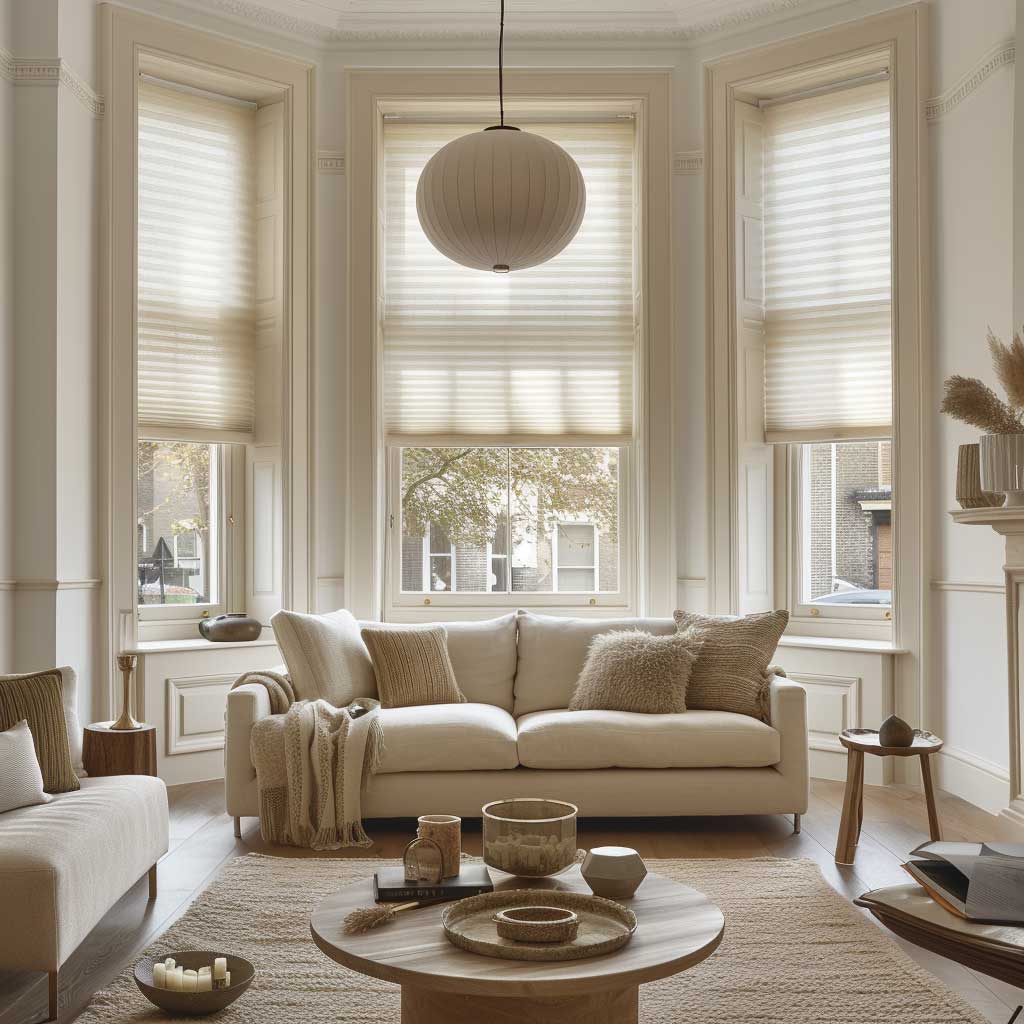

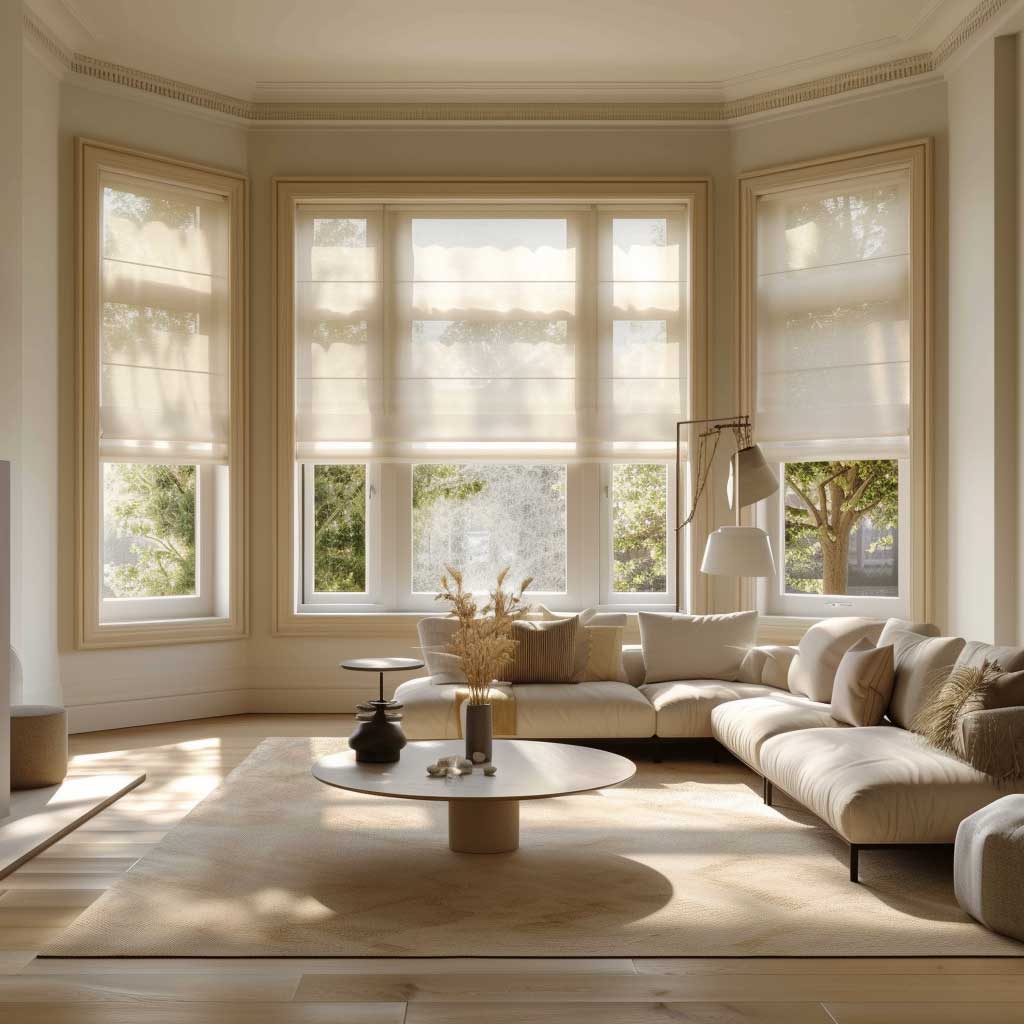

Top-down bottom-up functionality is worth paying for on a light-filtering bay window blind in a living room with both a garden view and a street-side line of sight. You lower from the top to block the neighbor’s view while keeping the sky and garden visible below. Hunter Douglas’s Duette Architella top-down bottom-up option runs about $280–$380 per shade custom — not cheap — but for a front-facing bay it solves a problem that no amount of net curtaining ever really handles cleanly. The privacy control is surgical. You set it once and forget it.
Bay window shades and blinds also play a role in reducing heat gain. A solar shade on a west-facing bay can cut air conditioning load meaningfully. The Department of Energy estimates that heat gain through windows accounts for around 25–30% of residential cooling costs. A good exterior-facing solar shade doesn’t just look better than venetian blinds angled at awkward slats — it actively reduces the temperature difference between the bay alcove and the rest of the room. For a room where you actually want to sit near the window rather than just near the fireplace on the opposite wall, that makes a real difference. The Shade Store’s breakdown of blind types for bay and bow windows covers the energy considerations in more depth.
Bedroom Bay Window Ideas Demand a Different Blind Logic Than Living Rooms
A bedroom bay window is a different problem than a living room bay window. The living room wants filtered light and visual interest. The bedroom needs blackout capacity and a way to close off the alcove entirely from street light at midnight. Most bedroom bay window ideas treat the space like a living room bonus feature and end up with a person lying in bed watching car headlights sweep across the ceiling through improperly lined Roman shades. Not ideal.
My go-to for a bedroom bay window is a layered approach: a light-filtering roller blind mounted close to the glass for daytime privacy, and a separate blackout curtain panel on a track that wraps around the outside of the entire bay alcove. The blinds handle the detail work — precise pane-by-pane light control — and the blackout curtain closes like a curtain call at midnight. IKEA’s MAJGULL blackout curtains ($50 for two panels, 98% blackout rating) work fine for the outer layer if you’re budget-conscious. For a more substantial look, the RH Belgian Linen Blackout Drapery holds its shape and reads expensive even at a distance.
Cellular shades deserve a specific mention in the bedroom bay window context. The honeycomb structure blocks both light and cold drafts — the air pockets act as insulation, the same principle as double glazing. In older houses where the bay window frames are original Victorian or Edwardian joinery, the gap between the frame and the wall can let in a noticeable draft. A double-cell cellular shade in a blackout fabric addresses both the light and the thermal problem simultaneously. Bali Blinds offers a blackout cellular in 30+ colors starting at around $65 per shade. The bedroom stays warmer, quieter, and darker. Worth every dollar for a north-facing bay in a pre-war house.
Don’t make the bedroom bay window purely a light-blocking exercise either. If you have a bay window in a bedroom, you have a free architectural seat. A 12-inch-deep sill with a custom cushion becomes a reading spot, a morning coffee perch, a place to put your phone while it charges without it ending up under the bed. The blind treatment should make that alcove functional during the day — which means a light-filtering option for daytime use alongside the blackout layer for nights. Bay window treatments for other room types are explored in this companion piece.
| Material | Best For | Price Range (per shade) | Drawback |
|---|---|---|---|
| Real Wood | Living room, dining room | $80–$200+ | Warps in high humidity; avoid bathrooms |
| Faux Wood (PVC) | Kitchen bay windows, humid rooms | $30–$100 | Lighter slats can bow on wide spans |
| Woven Fabric | Cozy reading nooks, layered looks | $60–$180 | Limited blackout options; fades without liner |
| Solar Screen | South/west-facing bays, UV protection | $45–$130 | No privacy at night when interior lights are on |
| Cellular (Honeycomb) | Drafty older homes, bedrooms | $65–$300 | More expensive than roller shades at equivalent quality |
Final Take
Bay Window Blinds Fail When You Ignore the Angles
The three panes of a bay window are not a single flat surface. Every treatment decision — mount type, fabric opacity, color temperature — has to account for how each pane catches light at a different angle. Get that right and the rest follows.
Measure each pane width independently. Specify cordless or motorized hardware from the start. Match your light-filtering opacity to the window’s solar orientation, not to a showroom photo taken under controlled studio conditions.
Save this post before you go to a blind retailer — it’ll save you from buying the wrong mount type twice.
Related Topics
FAQ
What are the best blinds for a bay window in a living room?
How do I hang blinds on a bay window with three panes?
What kind of blinds work in a bedroom bay window?
Do light filtering shades provide enough privacy in a bay window?
How much does it cost to put blinds on a bay window?
Can I use Roman shades on a bay window?
Complete guide
Window Treatments That Actually Transform a Room
Curtains, blinds, shades, valances, bay windows, doors — all in one place