Window coverings for sliding glass patio doors are harder to get right than almost any other window in the house — and the wrong call makes an entire living room feel unresolved. The door itself is handsome. It’s usually the covering that kills it. I’ve watched people hang standard curtain panels on a 96-inch slider and wonder why the room looks awkward; the panels are too narrow, the rod is too short, and the whole thing reads like a mistake. Sliding glass patio door window coverings have their own rules, their own proportions, and their own short list of options that actually work without blocking the door’s function.
The challenge is specific: you need something that can span 6 to 8 feet, stack out of the way when the door is open, provide real privacy without making the room feel like a cave, and survive daily use without looking exhausted in six months. That’s not a small ask. This post covers five approaches that solve all of those problems — with real brand names, actual price ranges, and the mistakes I see over and over that you can skip entirely.
Quick Scan
- Sheer vertical blinds — best for light control without losing the view; $80–$300 depending on size and brand
- Panel track blinds — cleanest modern look; panels stack neatly, full coverage with no gaps
- Floor-length drapery — most dramatic; needs a rod that extends 12–18 inches past each side of the door
- Woven wood shades — warmest look; works with bamboo, jute, and reed; eco-friendly
- Hunter Douglas Duette Vertiglide — best energy efficiency; absorbs up to 70% of sound, qualifies for federal tax credits
- Frosted glass film — budget pick starting at $15; permanent privacy without any hanging hardware
Sheer Vertical Blinds Filter Light Without Swallowing the View
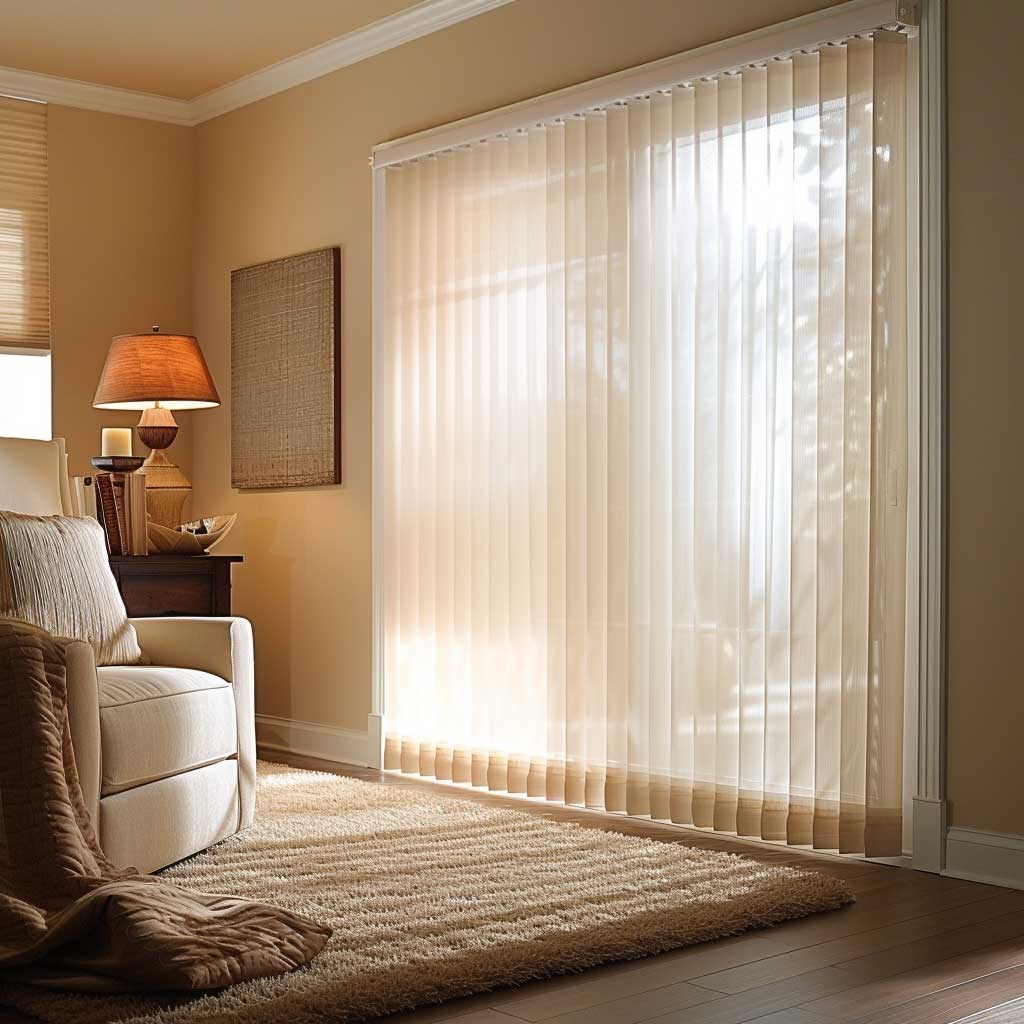
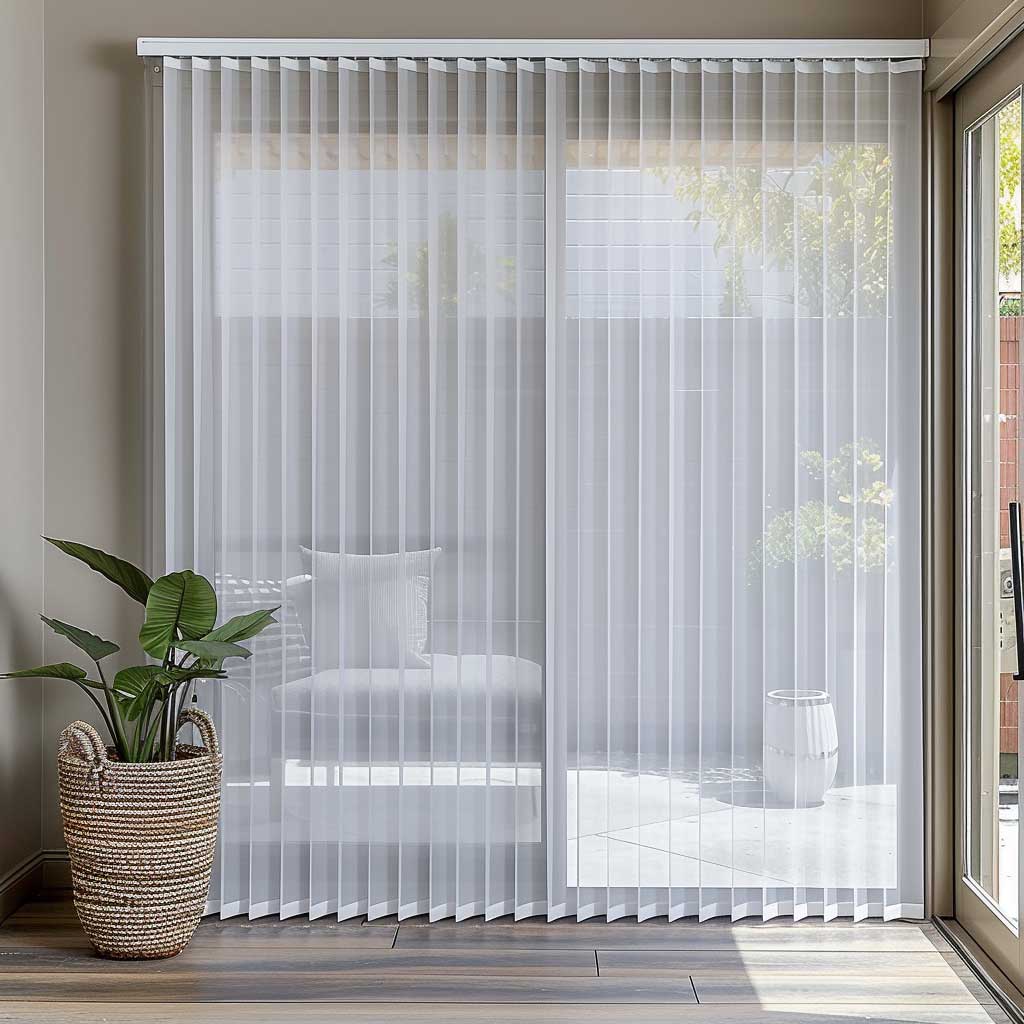
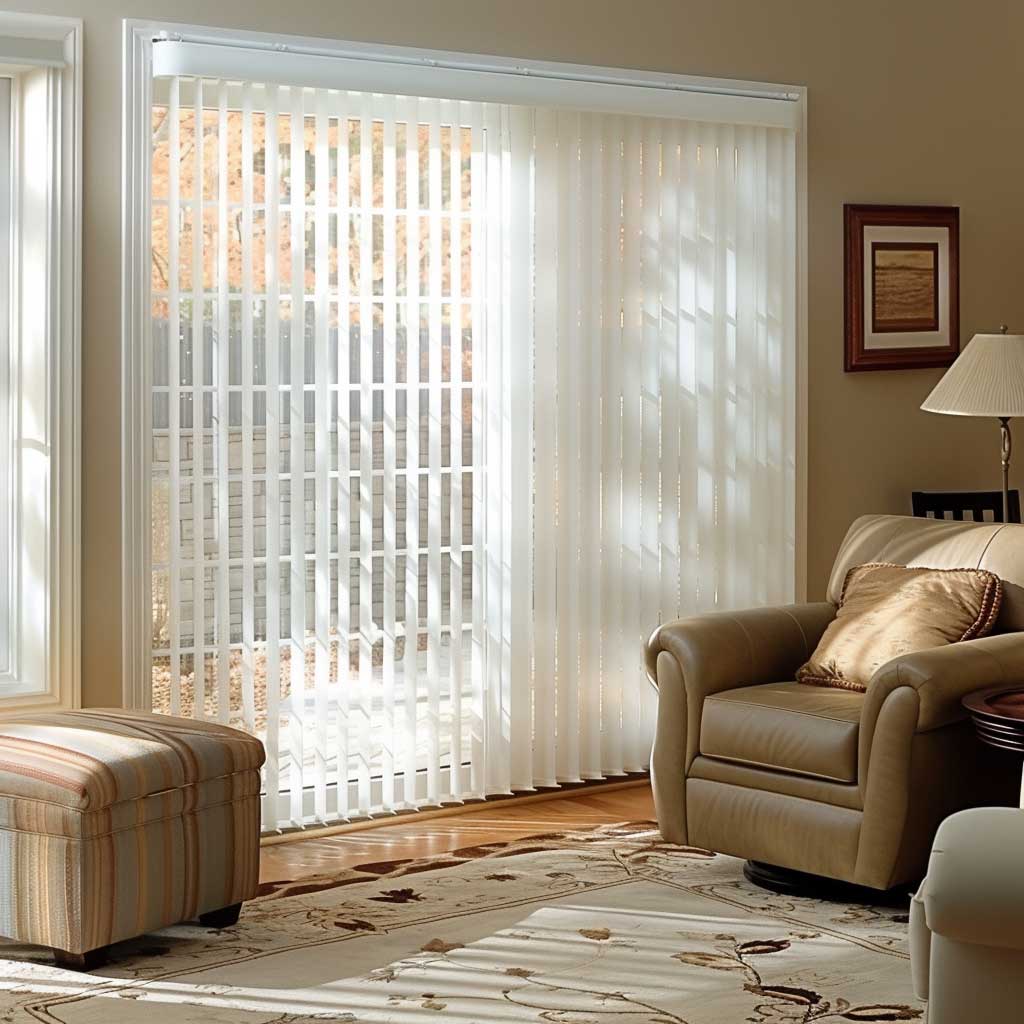
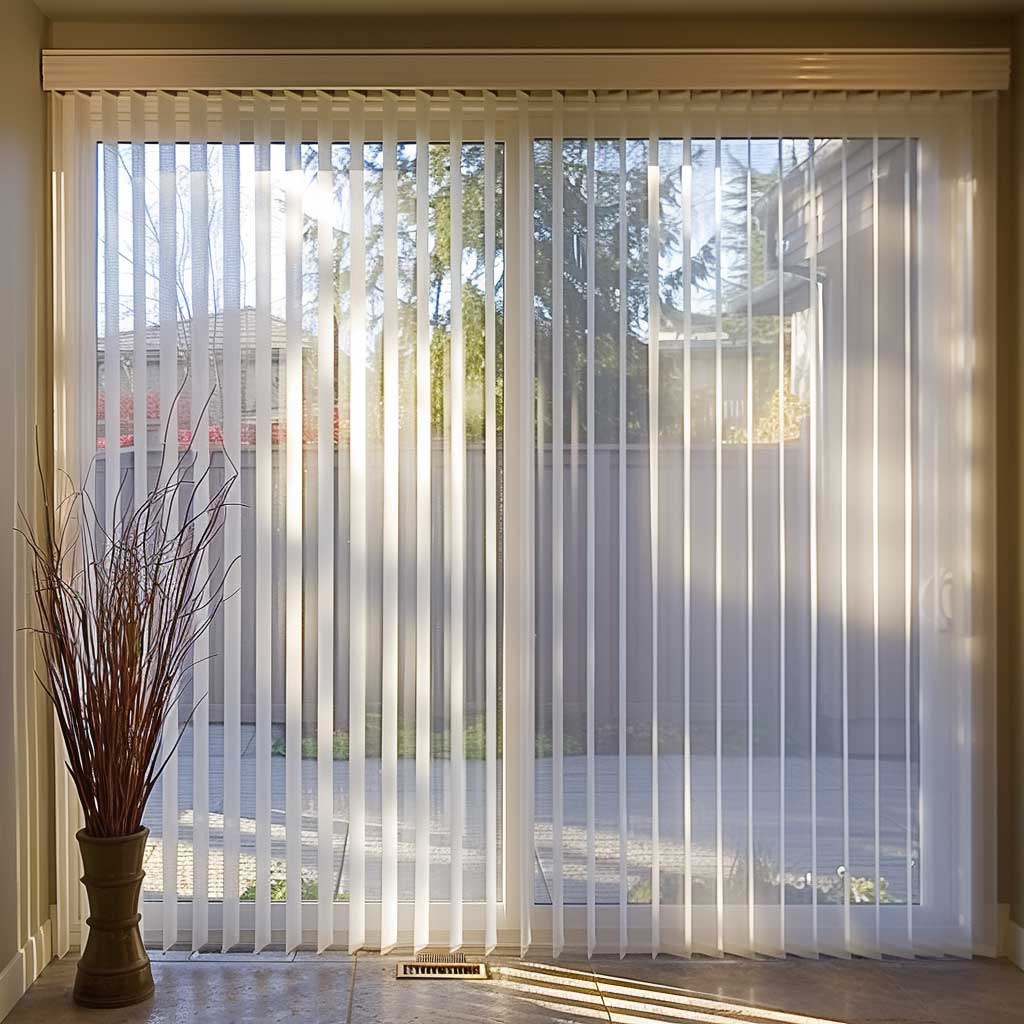
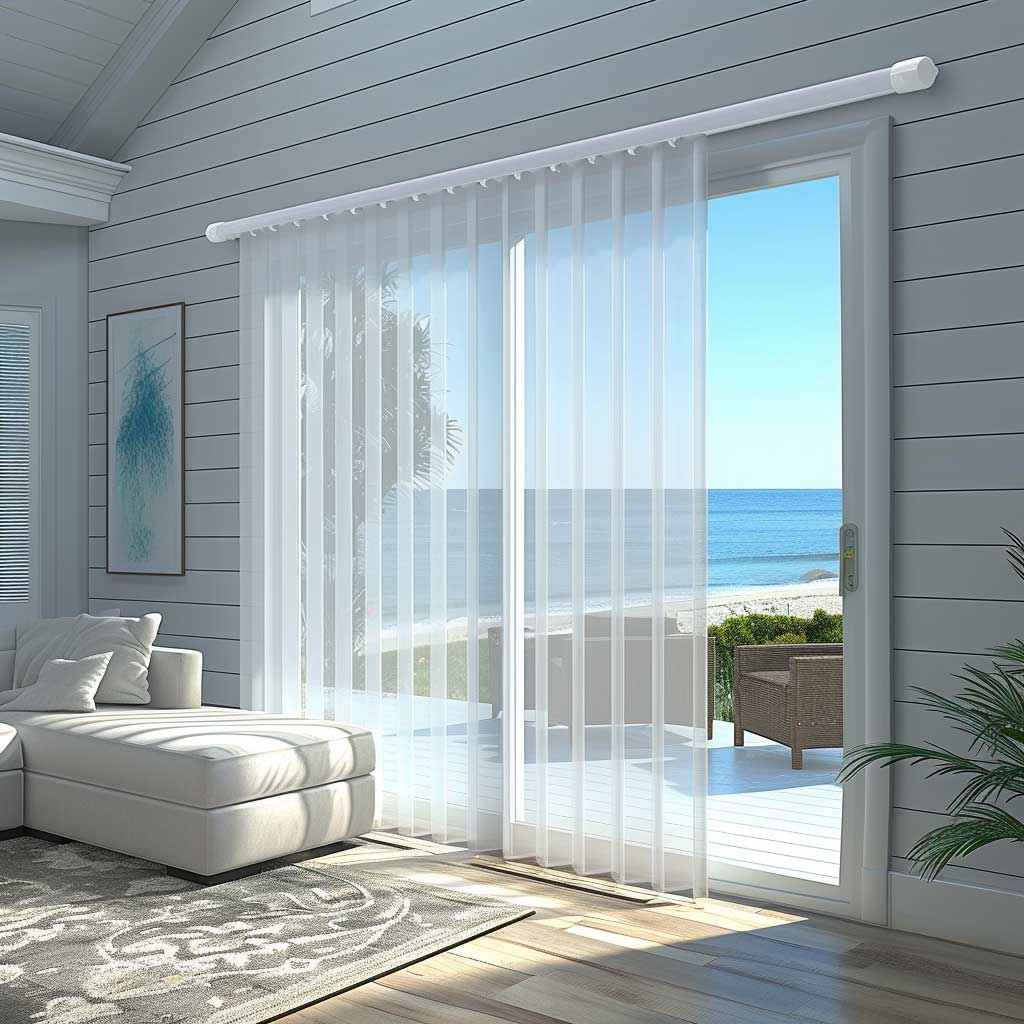
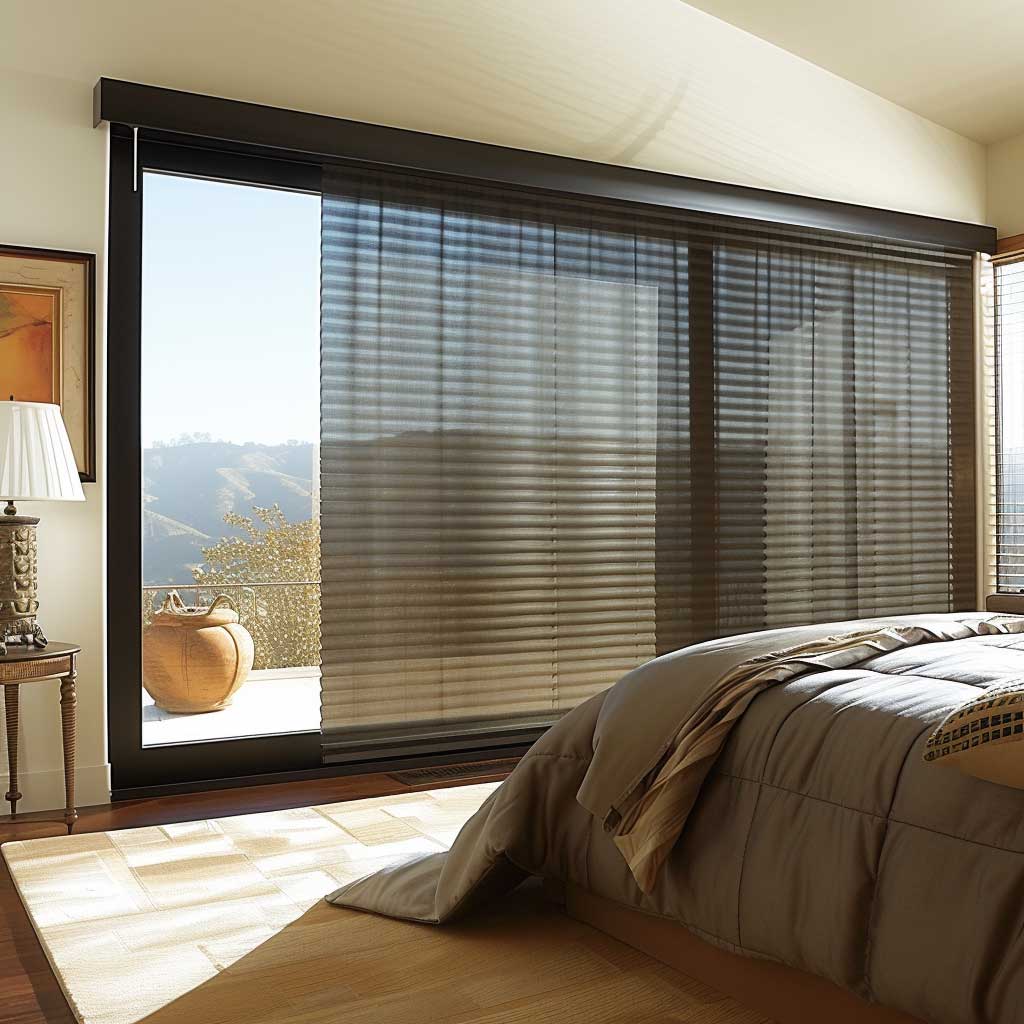
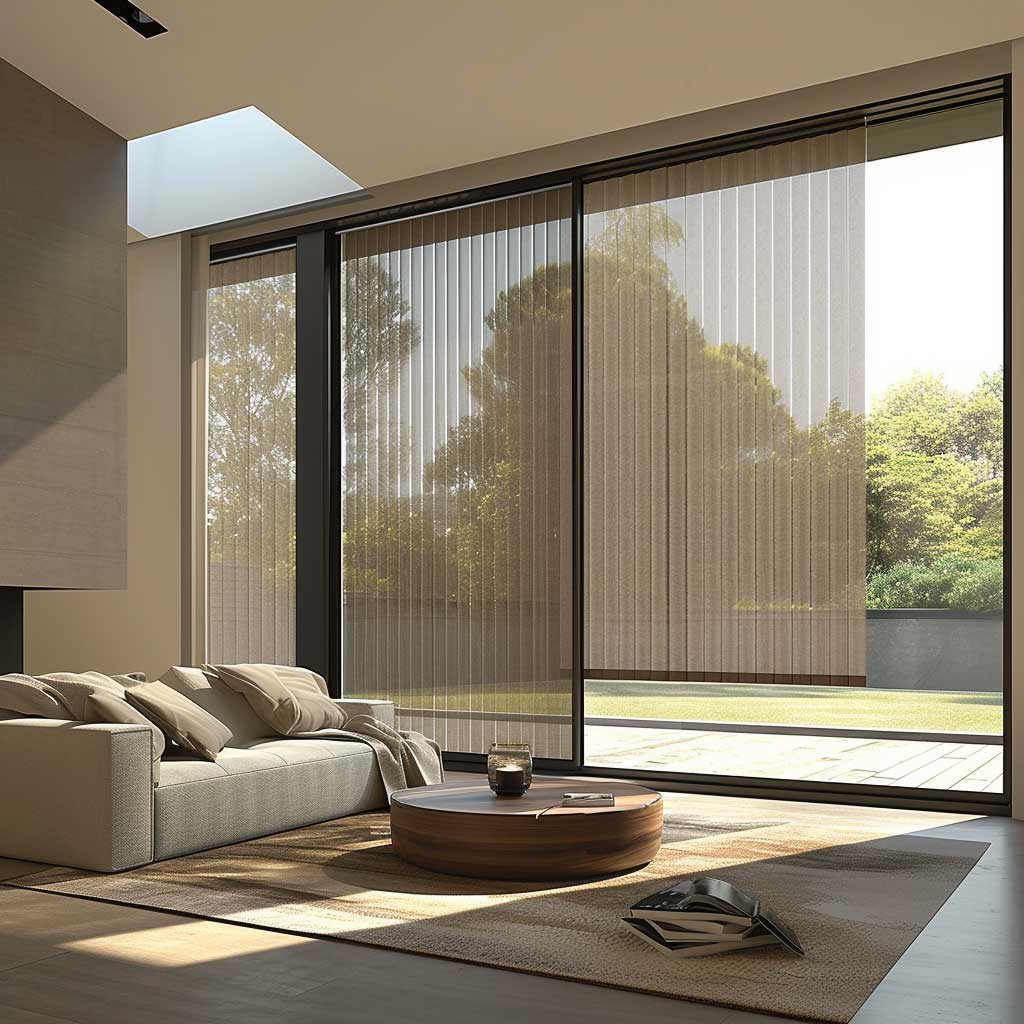
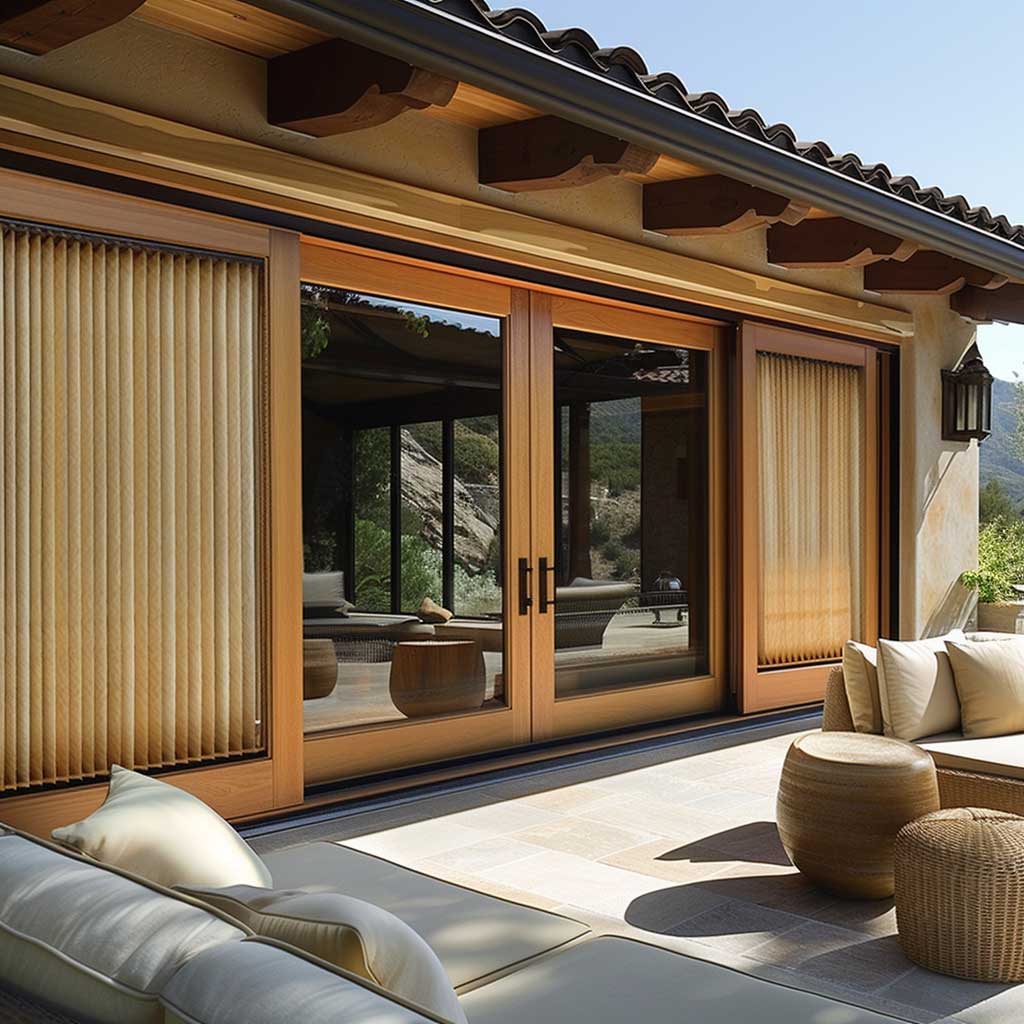
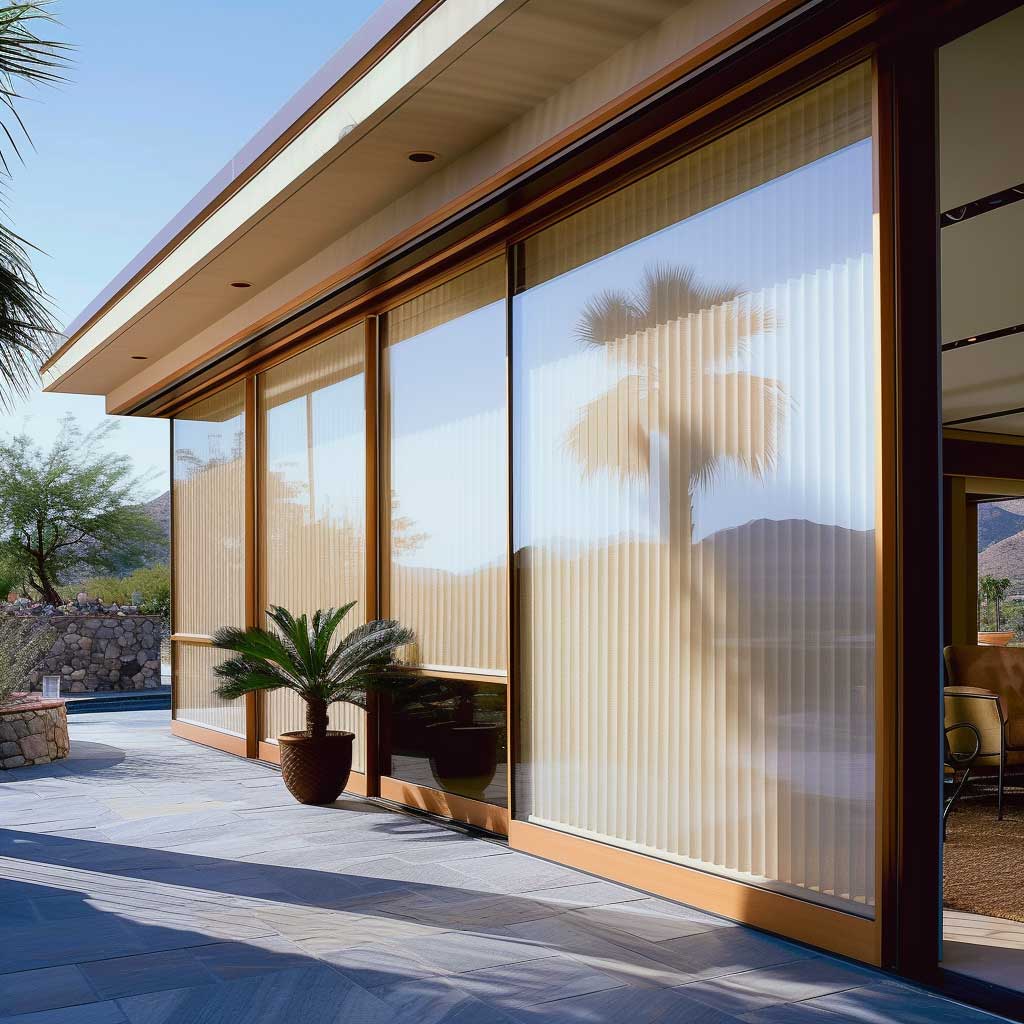
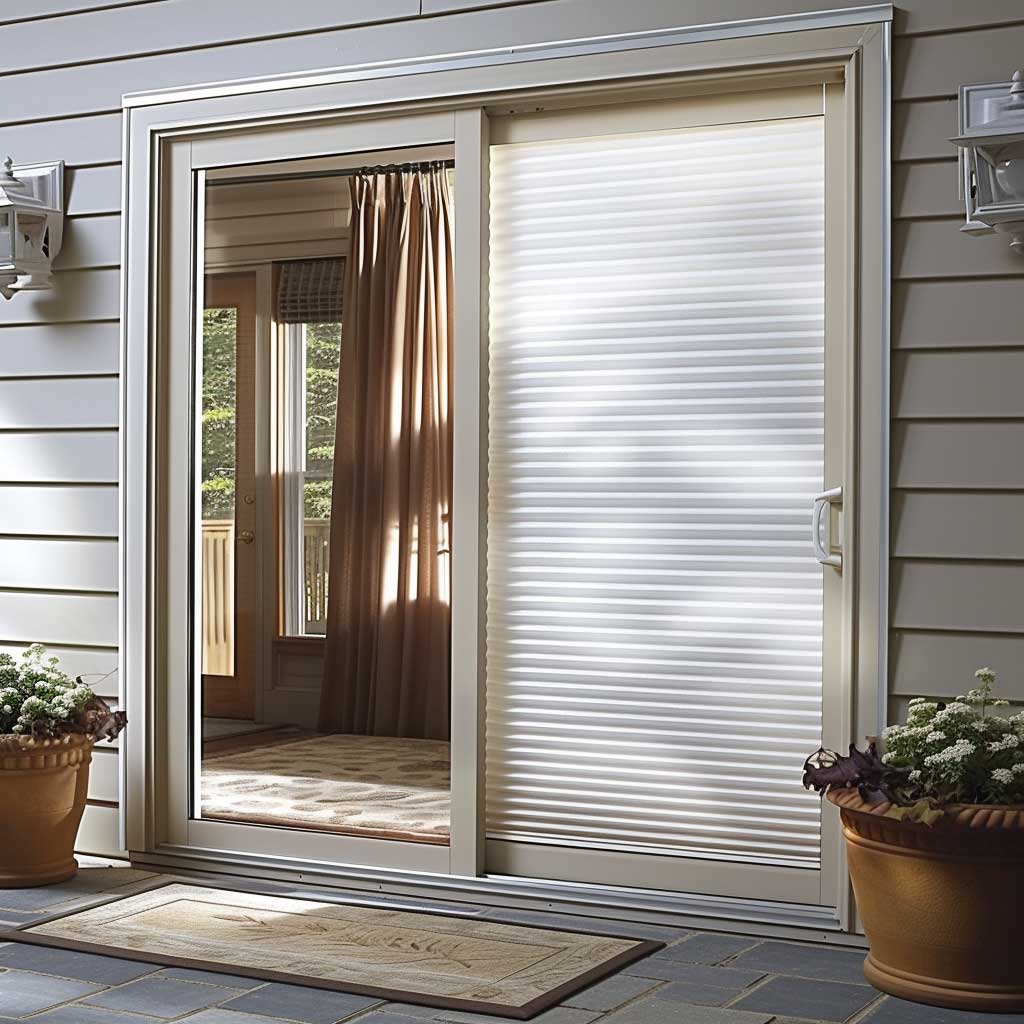
Sheer vertical blinds are the most practical window covering for sliding patio doors — and also the most underrated. The vertical slats rotate to control light angle while a semi-transparent fabric overlay diffuses the sun into something livable. You get privacy during the day, a preserved view when the slats are open, and the kind of soft-glow light that makes a room feel three times more expensive than it is. I own two sets of these; one in a linen-textured cream for a south-facing door, one in a charcoal weave for a door that gets brutal afternoon sun. Both cost under $150 through Budget Blinds.
The vertical orientation isn’t just aesthetic — it’s functional. Because the slats run the same direction as the door’s sliding mechanism, the whole system stacks to one side when you open the door. No bunching, no wrestling. Compare this to a Roman shade mounted above a slider, which you’d have to raise completely just to access the door; it’s like trying to get through a traffic barrier every time you want to step onto the patio.
What doesn’t work? Avoid fabric-only vertical blinds without any slat structure — they sway with every draft and look sloppy within weeks. The plastic-vane versions common in rental apartments have no place in a thoughtful room. You want fabric vanes with an internal stiffener or a sheer-fabric-plus-vane combination like the Bali Solar Shades Vertical or the Levolor Veri Shades, which run $120–$280 for a standard 80-inch slider. Skip the cheapest options; they yellow and warp in under a year near glass that gets direct sun.
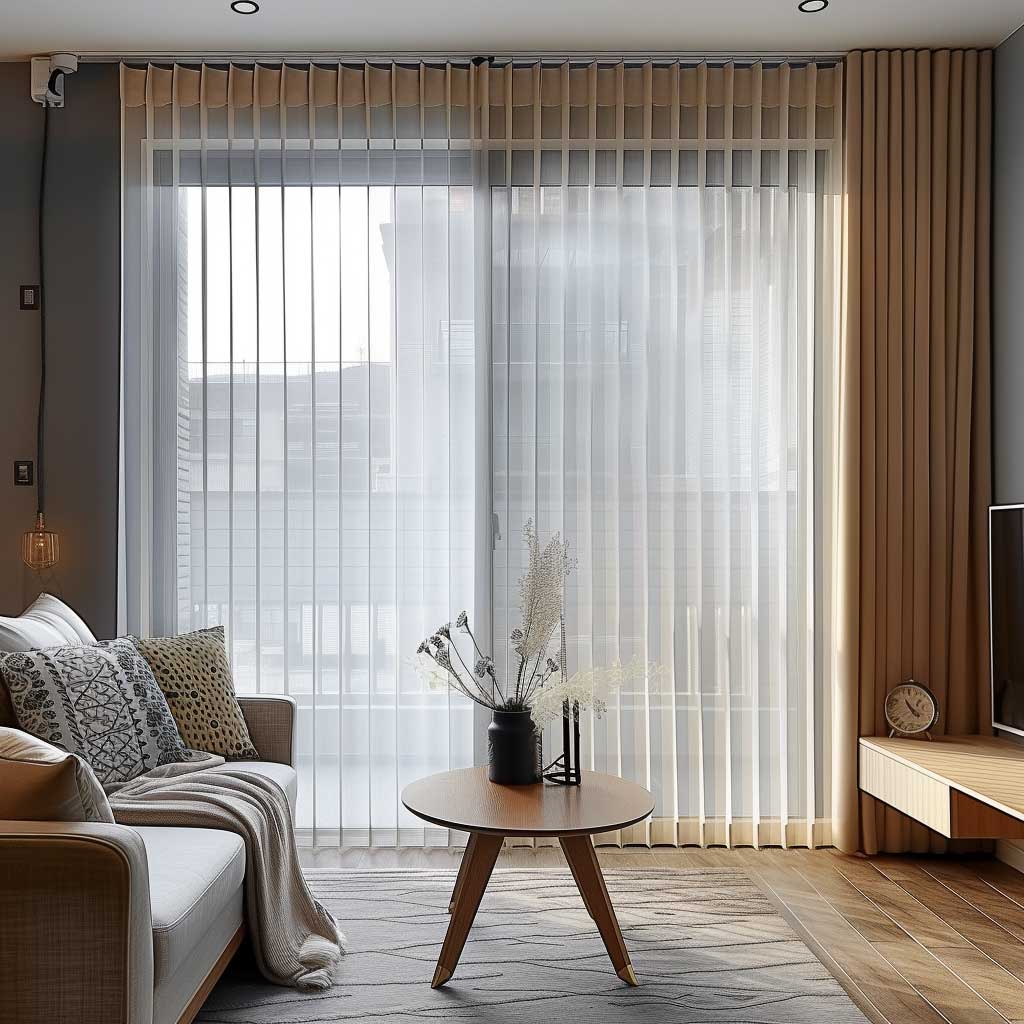
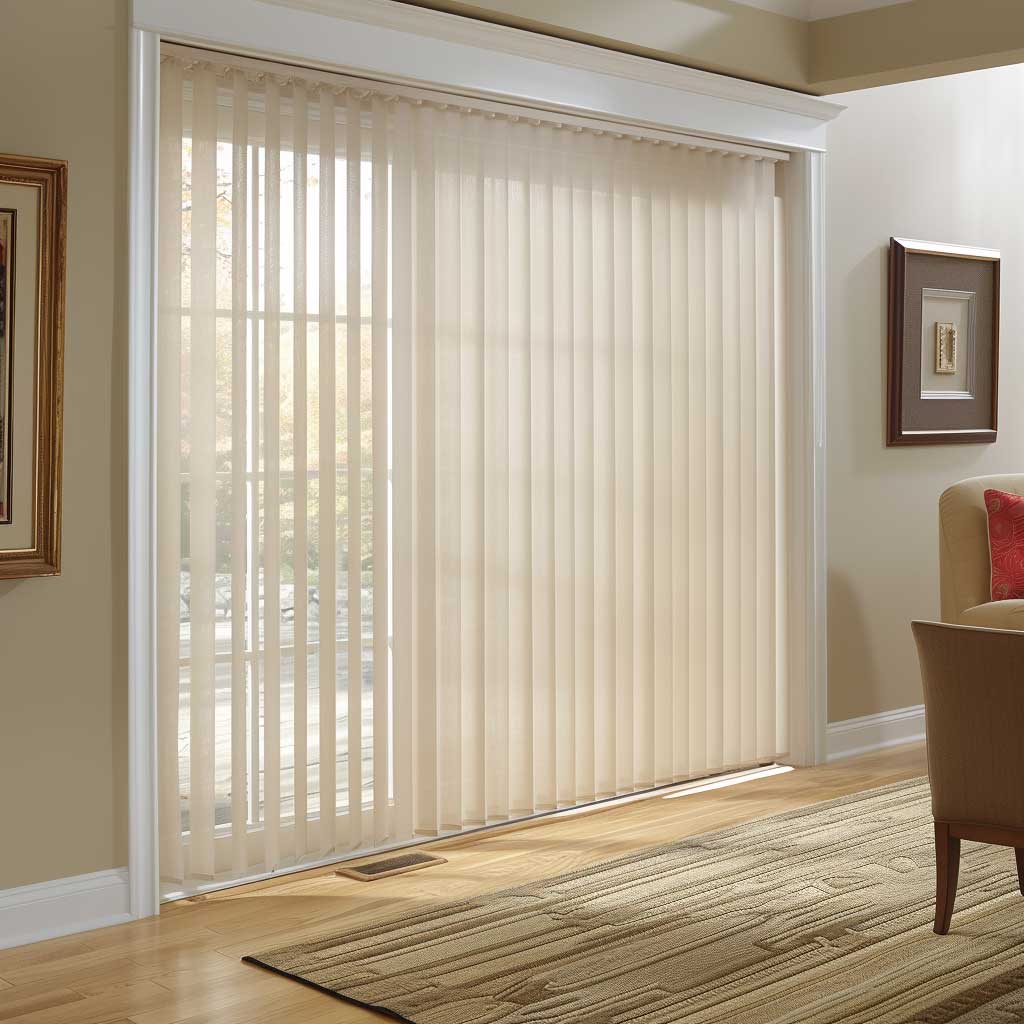
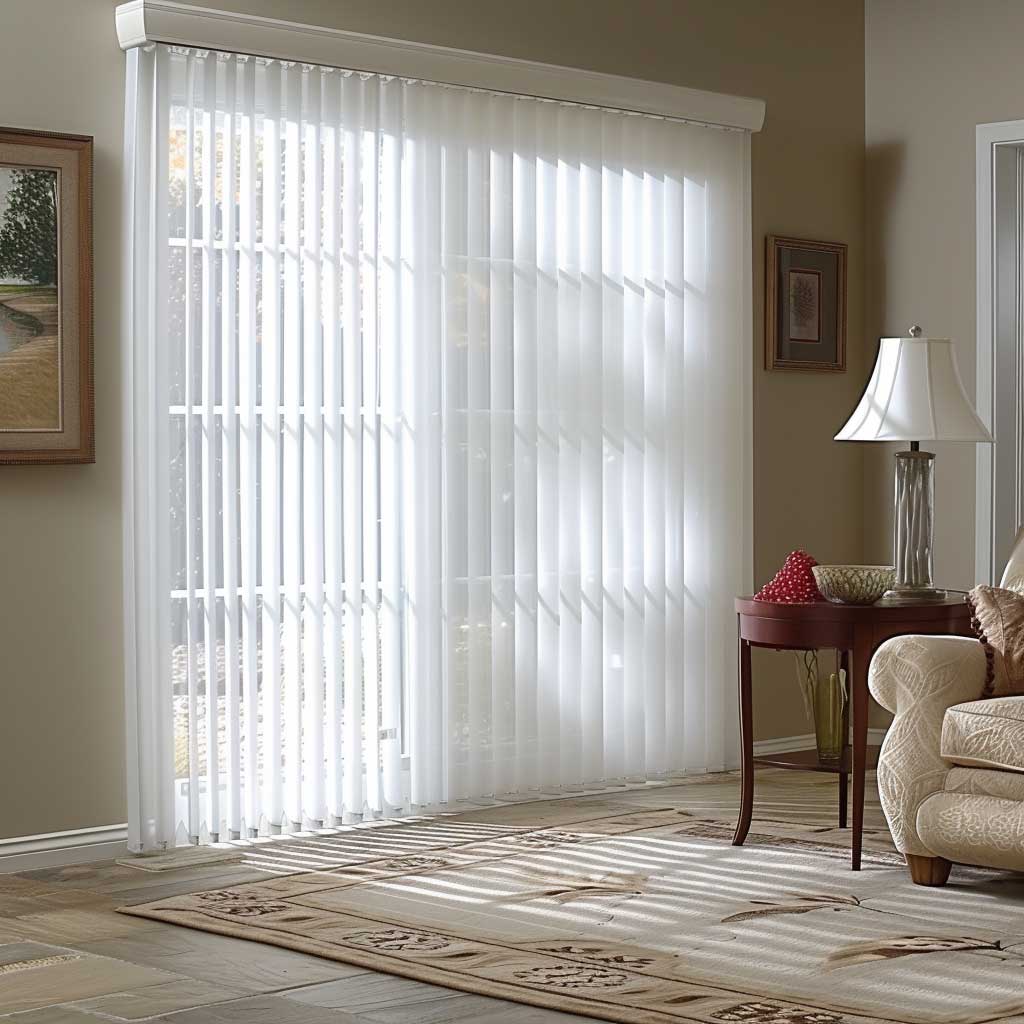
Fabric detaches on most quality vertical blinds for washing — and near a patio door, you’ll want to wash them. Cooking smells, outdoor dust, and sun-driven discoloration are real. Pull a vane, drop it in cold water with a little Woolite, air-dry flat. Takes ten minutes. That maintenance loop is the reason I’d choose this over any fixed film or roller shade for a door that gets daily foot traffic.
The design range is wider than most people realize. You’ll find options in linen, bamboo-look weaves, printed grasscloth textures, and solid blackout fabrics. My go-to for a modern room is a warm white or oat linen vane — it reads clean during the day and goes almost invisible when backlit by the garden. For a bolder room, a stone gray or deep taupe vane reads as a proper design statement. Whatever you pick, order a sample first; the color shift between screen and fabric is dramatic.
Panel Track Blinds Make a Minimalist Room Look Designed, Not Decorated
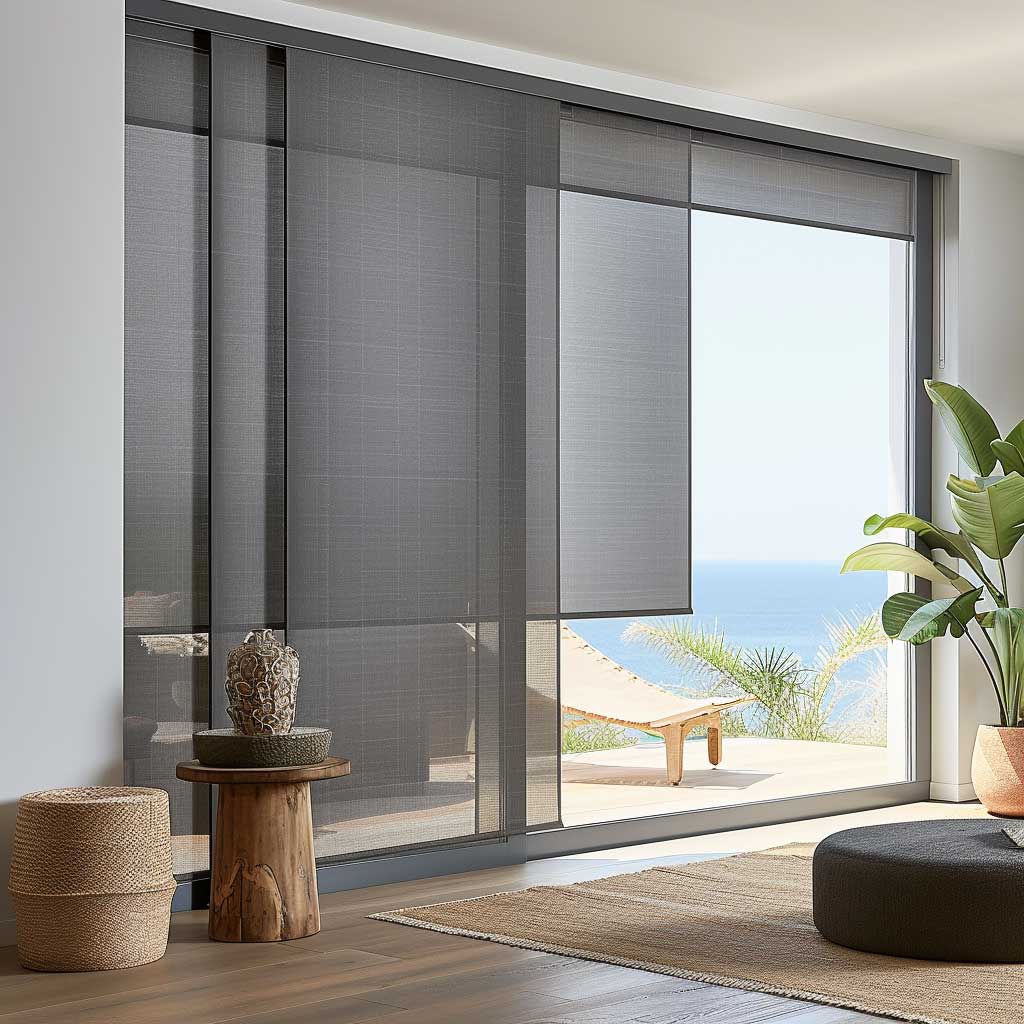
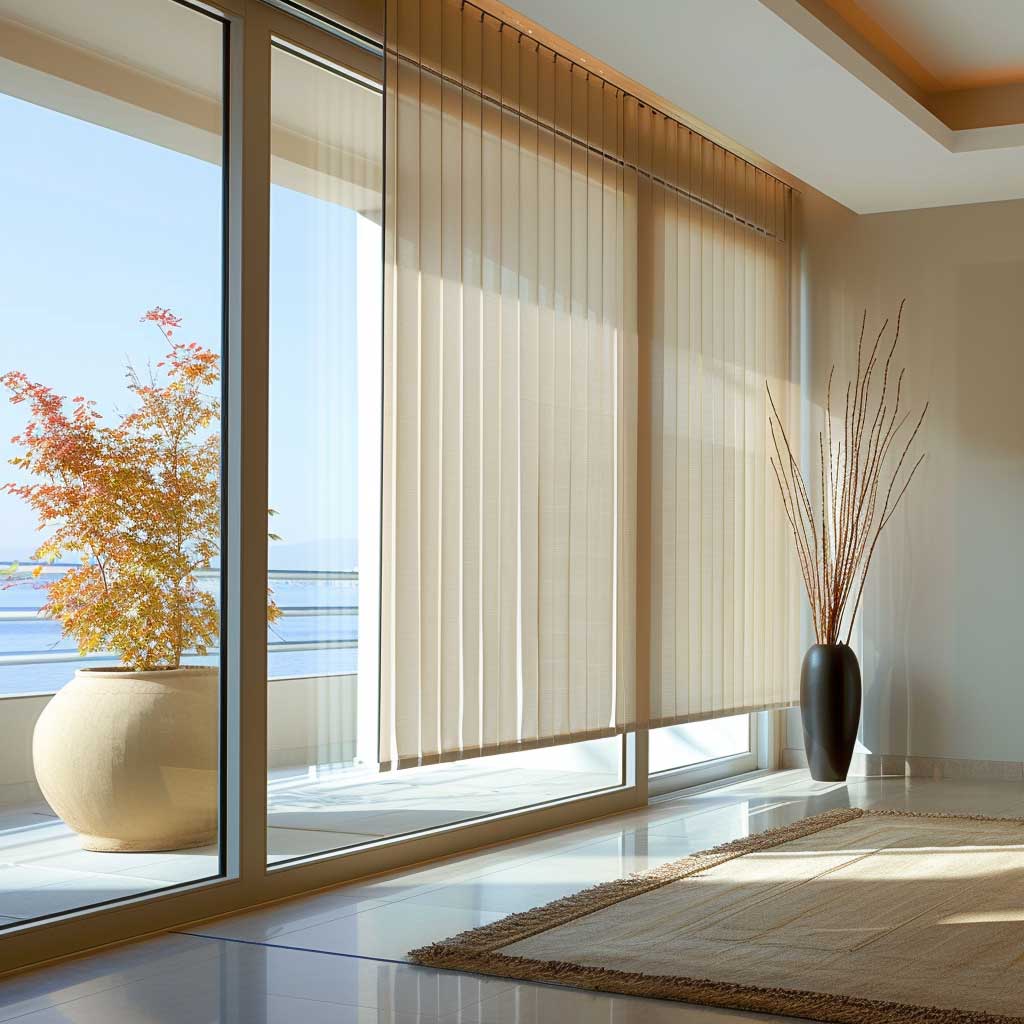
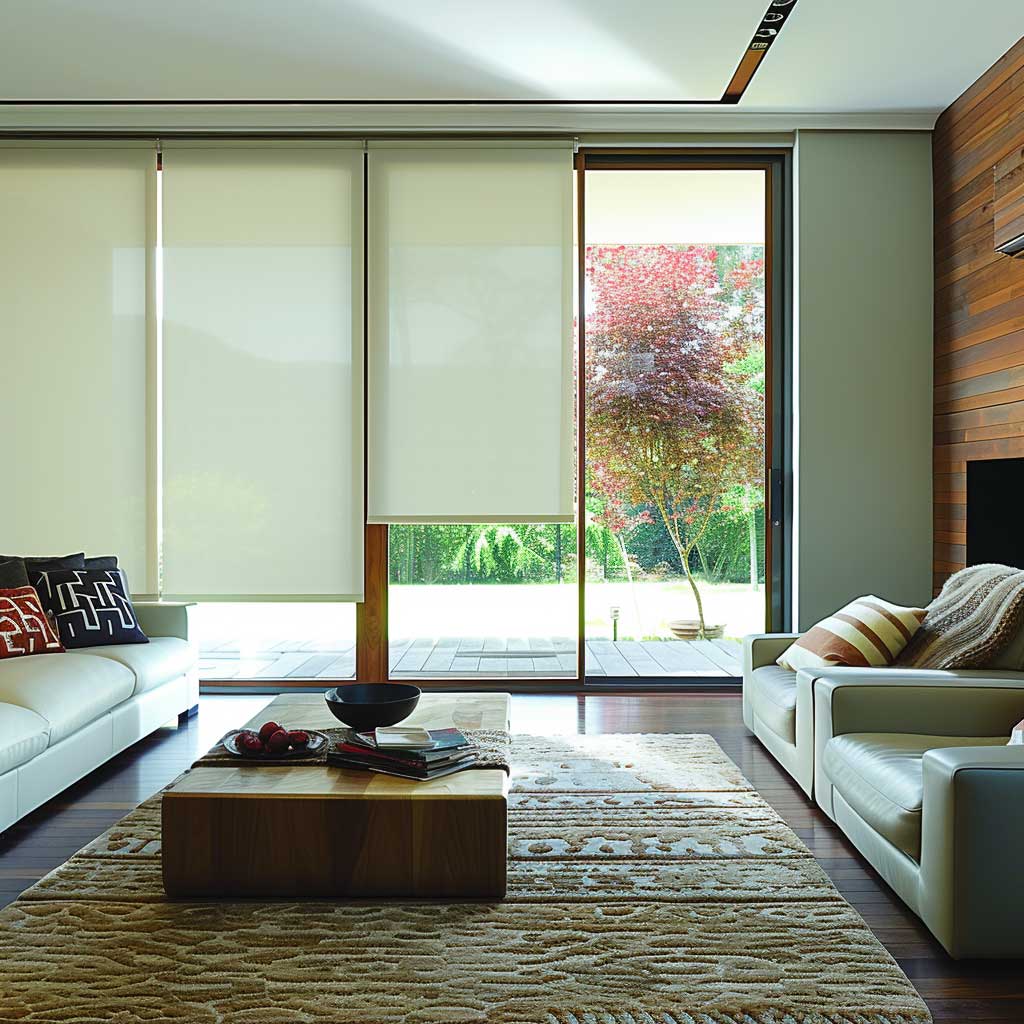
Panel track blinds are the answer to “how do I make a large sliding door look intentional rather than just covered.” Wide fabric panels — typically 18 to 24 inches each — glide on an overhead track and stack flat when open. The result looks architectural rather than decorative. When closed, they form a smooth continuous surface that reads like a wall. I stole this trick from a San Francisco showroom that used three-panel linen tracks on an 8-foot slider and made the whole room feel like a boutique hotel.
The practical case is just as strong. Wide panels leave no gaps between slats, which vertical blinds always do when light hits them sideways. That full coverage matters at night when interior lighting turns a glass door into a mirror. You’ll notice the difference on the first evening after installing panels — the room finally feels enclosed rather than exposed. Sliding glass door blind combinations that mix panel tracks with a sheer layer give you two distinct moods with one hardware installation.
What’s the catch? Panel track systems need wall space on one or both sides of the door for the panels to stack when open. A door jammed into a corner loses half its function. Measure your stack space before ordering — you need at least the width of one panel (18–24 inches) clear beside the door frame. Rooms where the door sits close to a wall or corner usually do better with vertical blinds that stack tighter. Don’t force panel tracks into a space they don’t fit; they’ll constantly block part of the door opening and you’ll hate them.
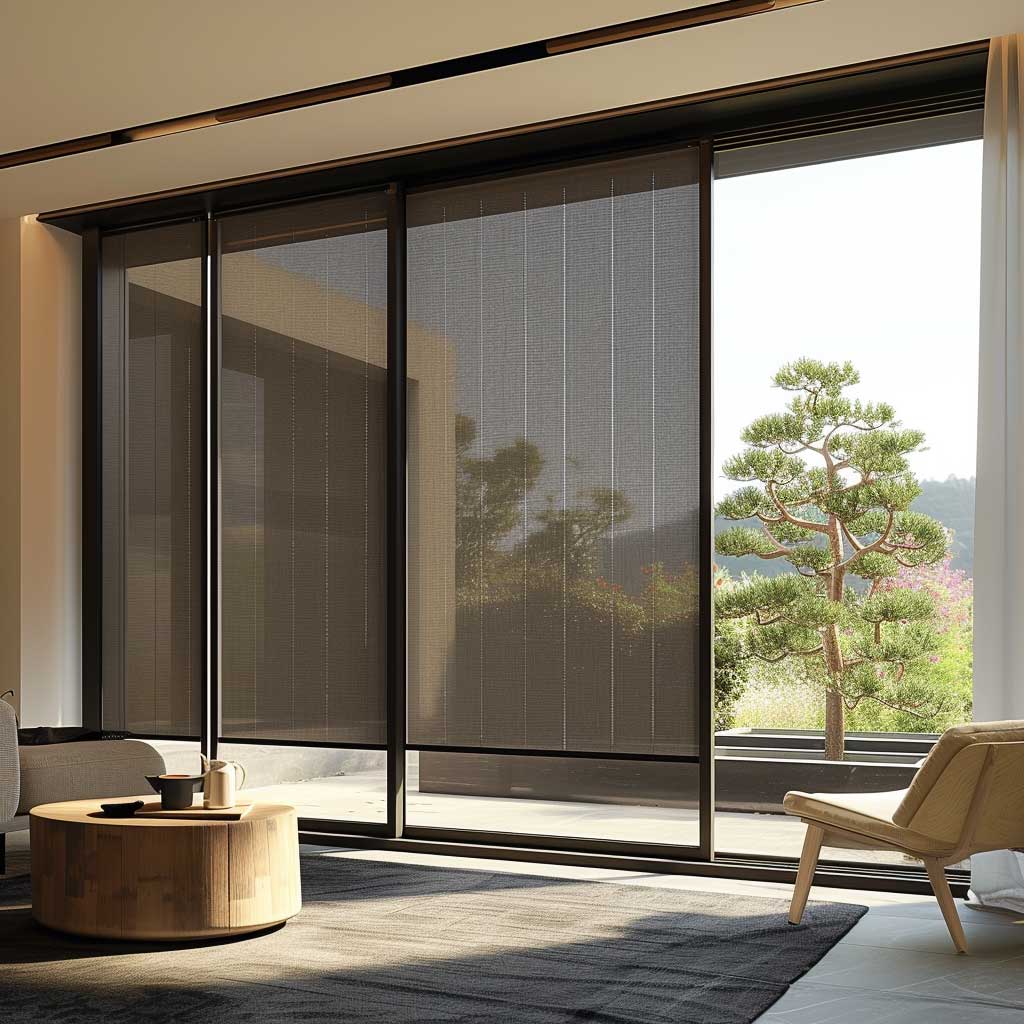
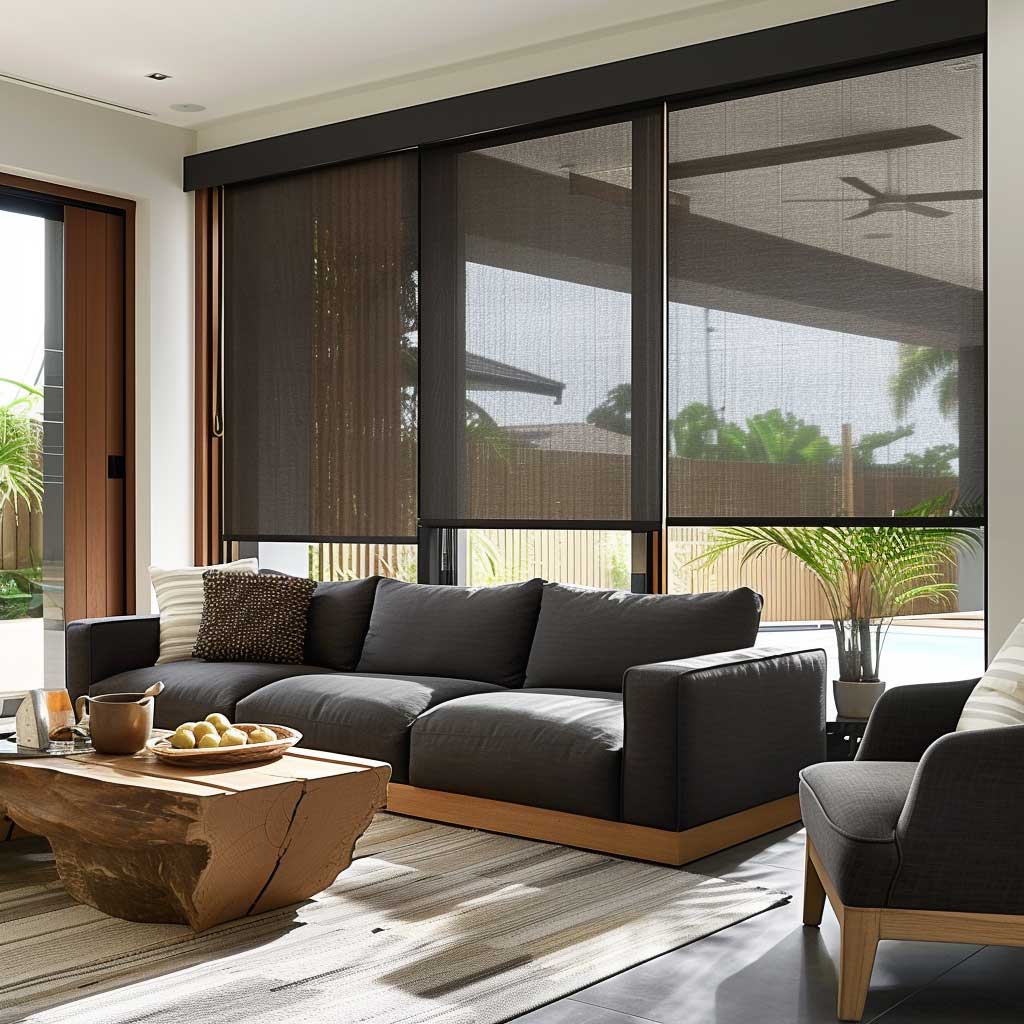
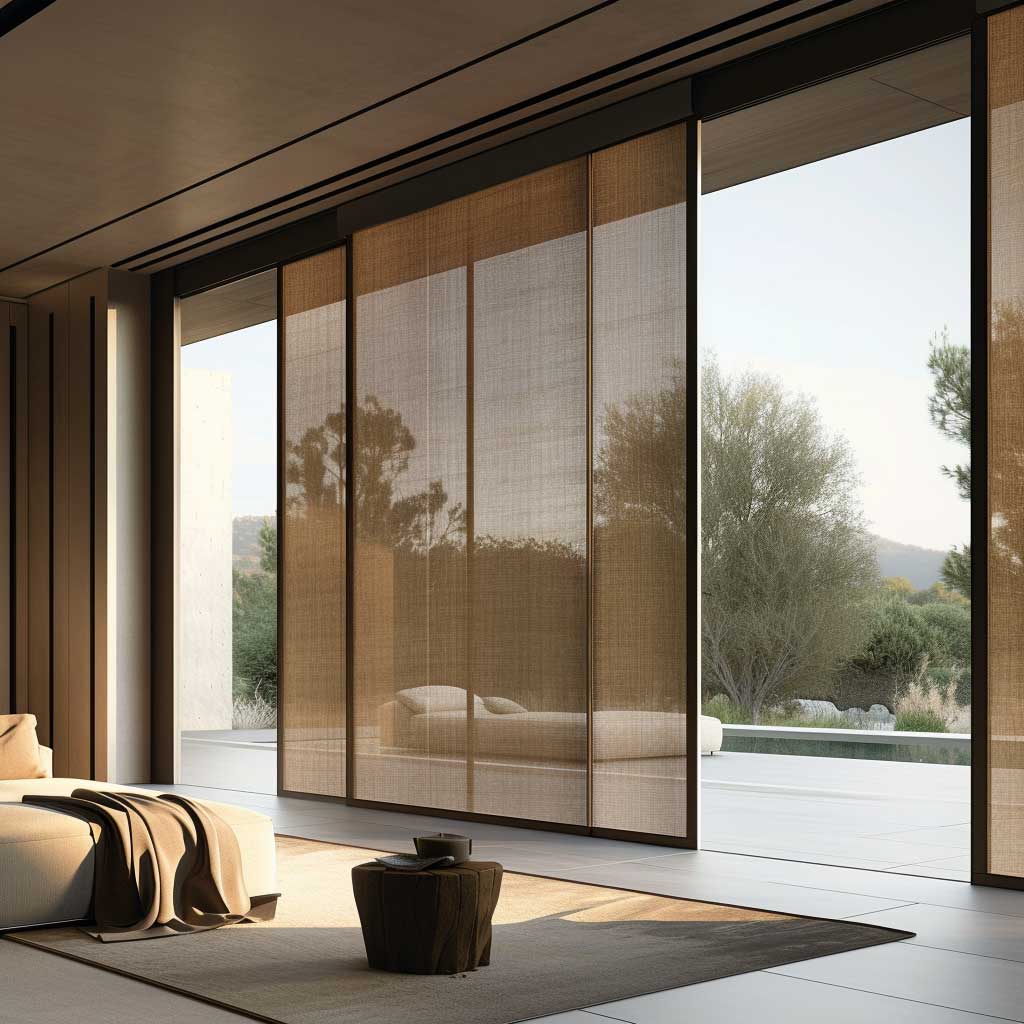
The track hardware itself is worth spending on. Cheap plastic tracks bind and skip; quality aluminum tracks from Smith & Noble or the Horizons line glide with a satisfying smoothness that cheap systems never achieve. Expect to spend $200–$500 for a custom-measured panel track system on a standard 8-foot slider. That’s not cheap, but a good system will last 10 years with zero maintenance beyond the occasional fabric wipe-down.
Fabric options open up the personality of the whole system. Sheer fabrics keep the room bright and airy; solar-screen fabrics cut UV without blacking out the view; blackout fabrics give you a full media-room effect. My recommendation for most living rooms: a light-filtering linen-look fabric in a warm white or pale flax. It reads clean at all hours and holds up better in sunlight than any printed pattern.
Don’t Do This
- Don’t hang curtain panels without a rod extension. Standard curtain rods installed flush to the door frame mean the panels block the door every time you try to open it. The rod needs to extend at least 12 inches past each side of the frame so panels clear the glass completely.
- Don’t use sheer-only curtains on a west-facing door. They glow beautifully in morning light and turn into a furnace filter by 3pm. You need at least a solar-screen layer behind them.
- Don’t buy the $29 panel track kit from a big-box store. The plastic carriers crack within a year. Budget for an aluminum-track system or skip panel tracks entirely.
- Don’t apply frosted film to a textured or low-E glass door. It won’t adhere properly and will peel at the edges within months. Check your door’s glass type before purchasing any adhesive film.
Drapery on a Patio Door Works When the Hardware Is Twice the Size You Think You Need
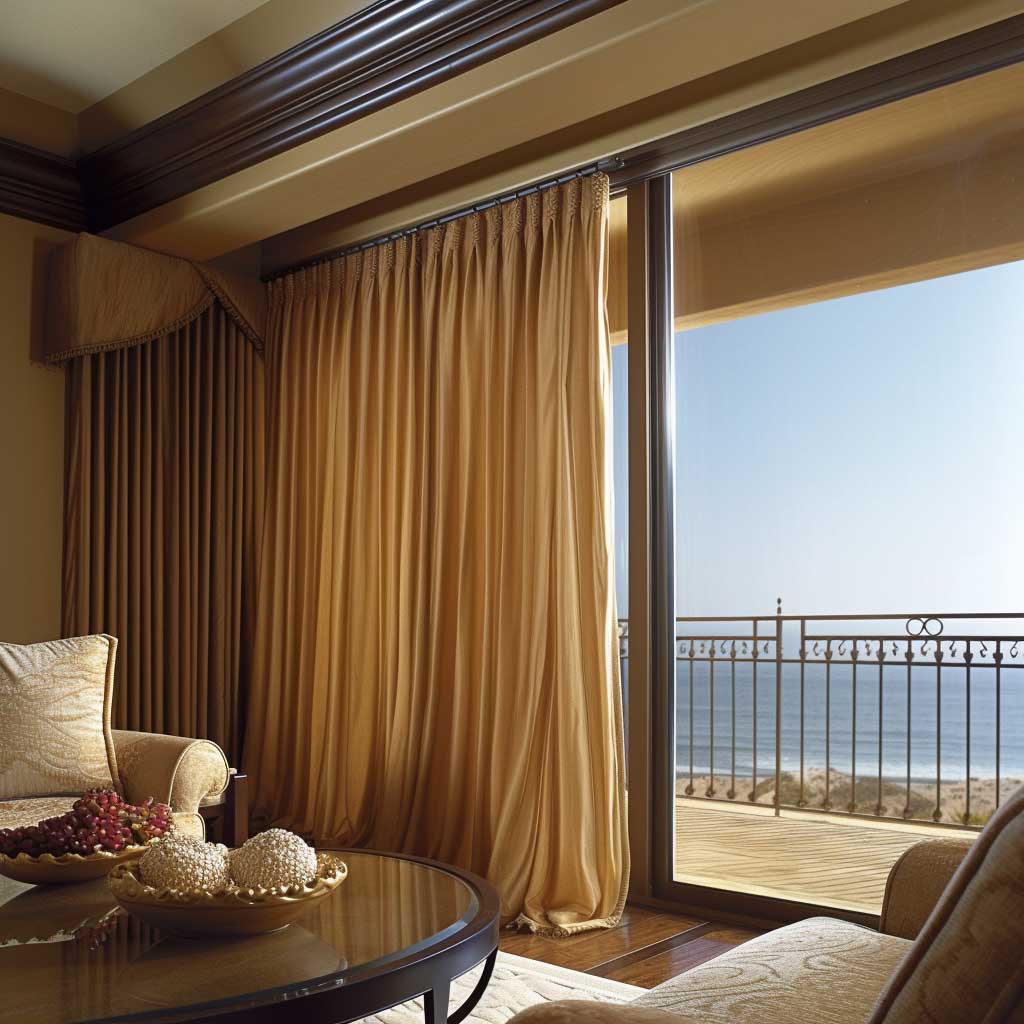
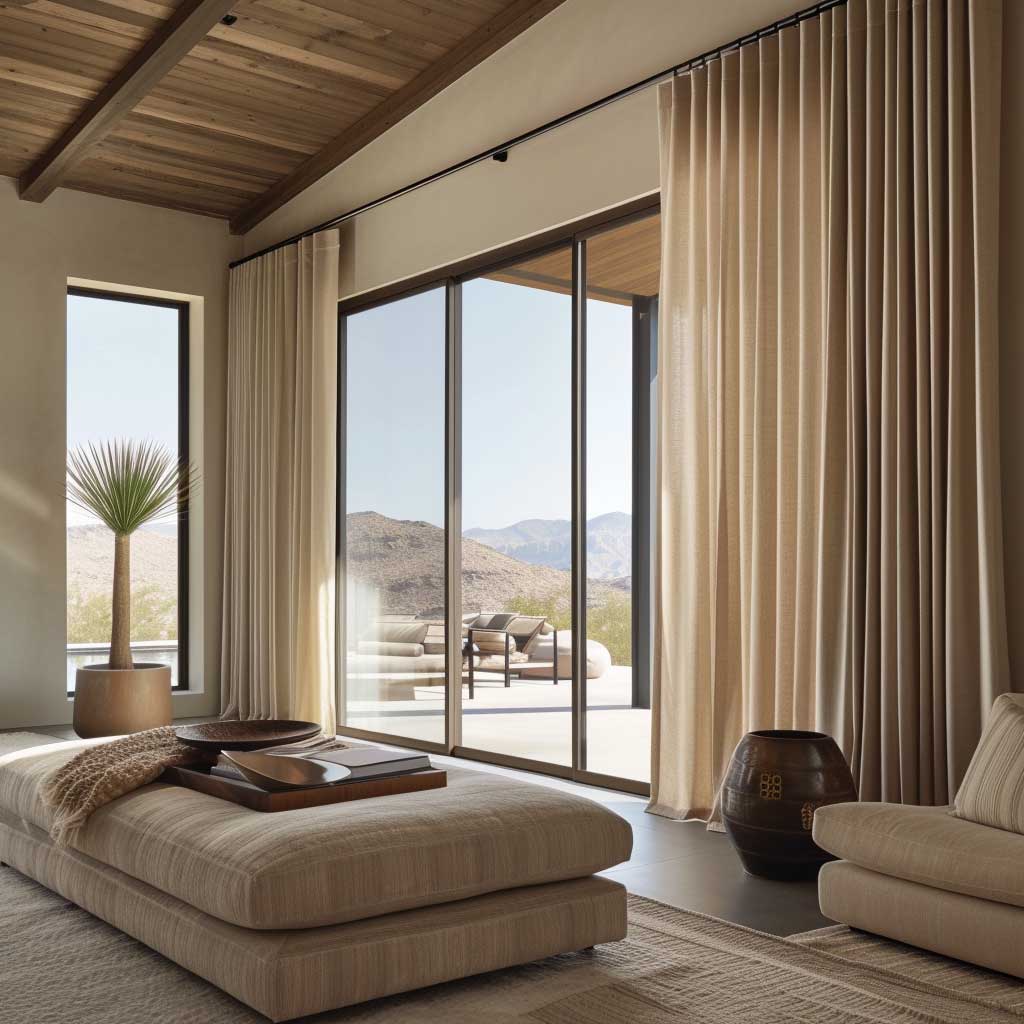
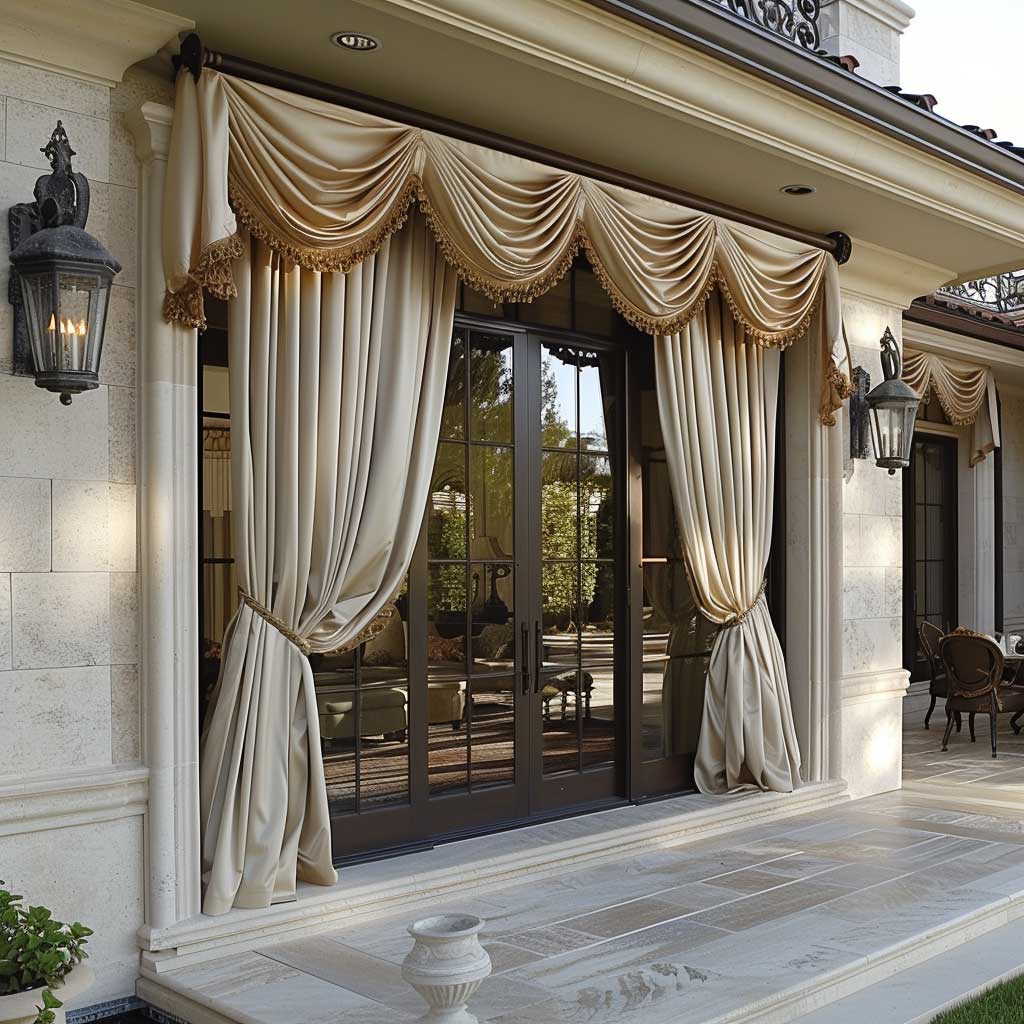
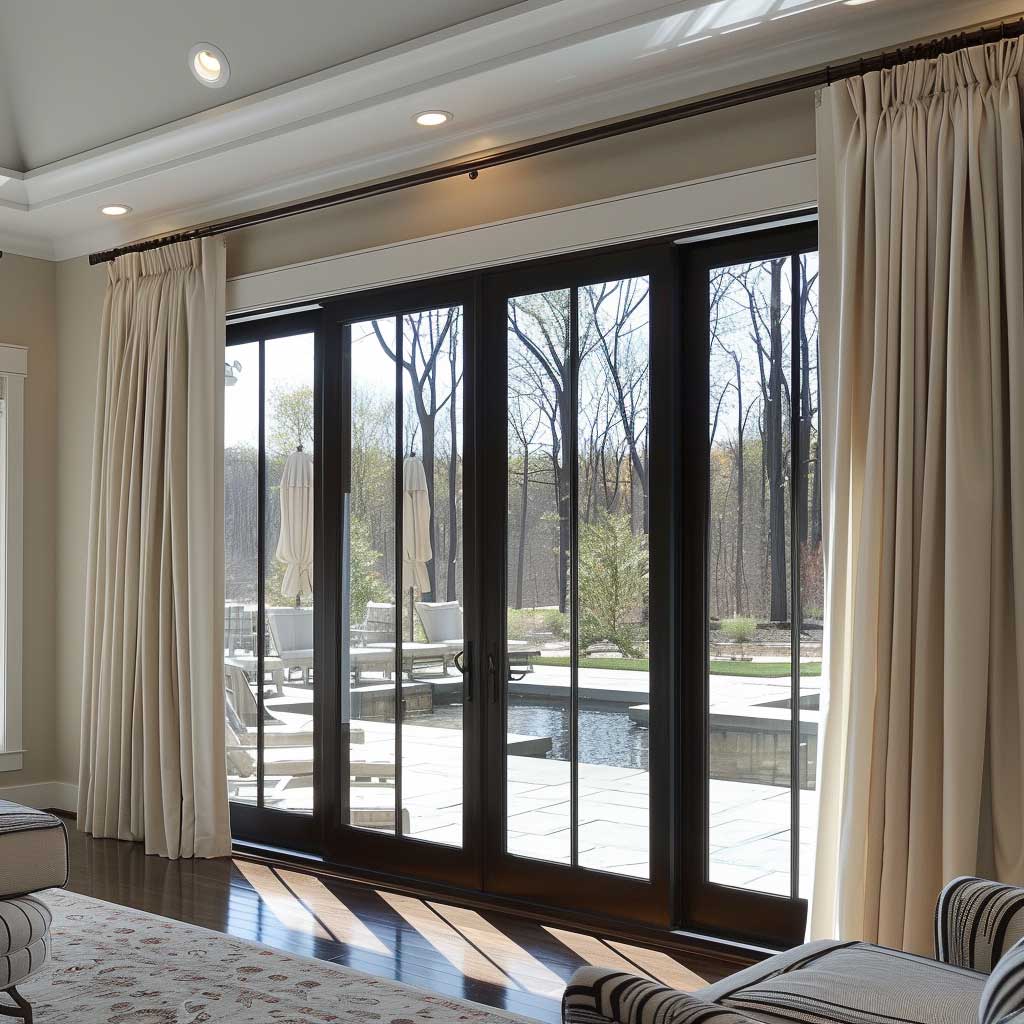
Drapery on a sliding patio door is either the most elegant move in the room or a claustrophobic mistake — and the difference is almost entirely rod length and panel width. You need a rod that extends 12 to 18 inches past each side of the door frame, hung 4 to 6 inches above the frame (or better, at ceiling height). The panels should be wide enough to stack fully off the glass when open. Use panels that are 1.5 to 2.5 times the total door width. Every designer I’ve worked with uses at least 2x fullness. Less than that and the drapes look like someone forgot to order enough fabric.
Heavy fabrics — velvet, linen-cotton blends, or weighted polyester blends from brands like IKEA’s MAJGULL ($49 for two panels) or Pottery Barn’s Belgian Flax Linen ($149–$199 per panel) — do triple duty on a patio door. They insulate against cold glass in winter, block light more effectively than lighter fabrics, and absorb the room noise that bounces off all that glass. A bare sliding door in a large living room creates an echo chamber. The right drapes fix that without an acoustics consultant.
Hardware deserves real money. A flimsy rod sags visibly across the width of a patio door — 8 feet of span is a lot for any curtain rod to hold without center support. Double rods allow a sheer layer behind and a blackout layer in front, which is the setup I recommend for living rooms: sheers during the day, full panels at night. Pottery Barn, Restoration Hardware, and West Elm all sell double rods with ceiling mounts or tension brackets that handle the span without drooping. Budget $60–$120 for decent hardware; it lasts longer than the curtains.
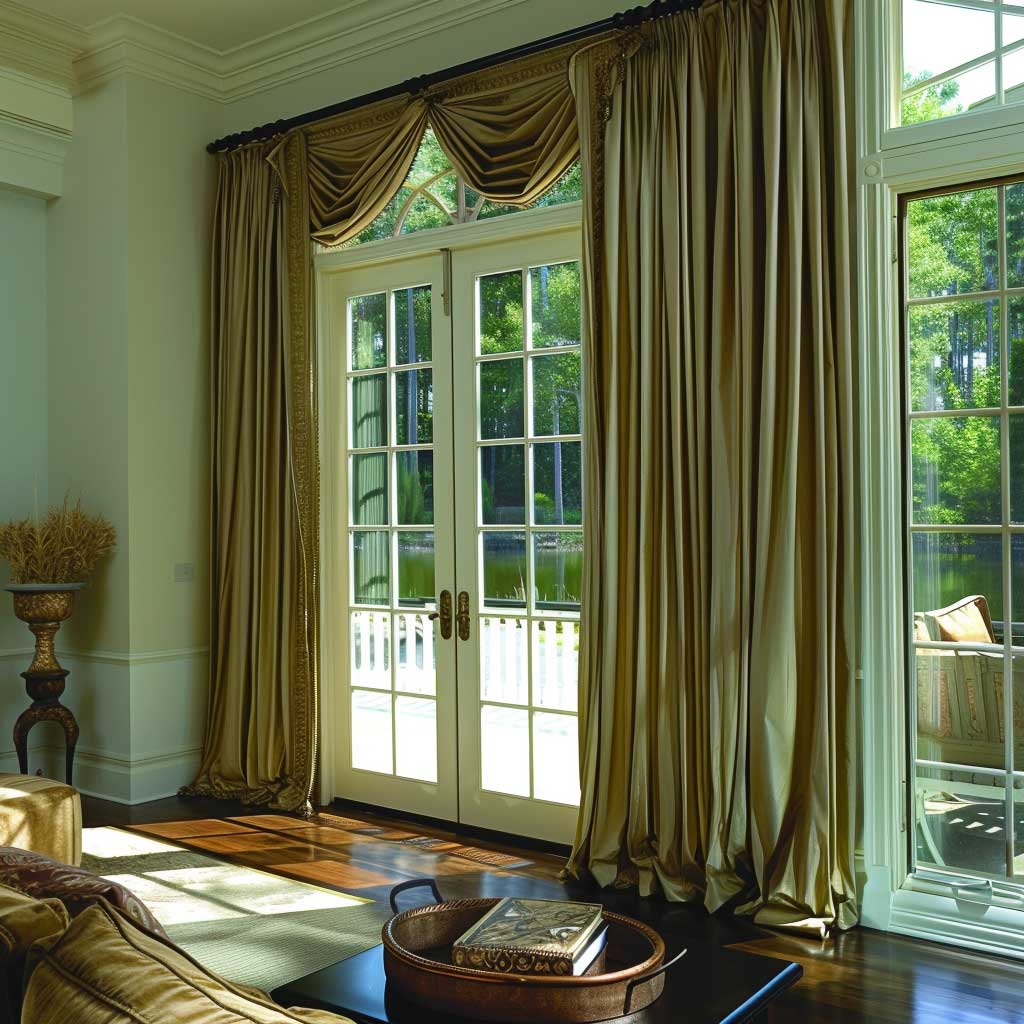
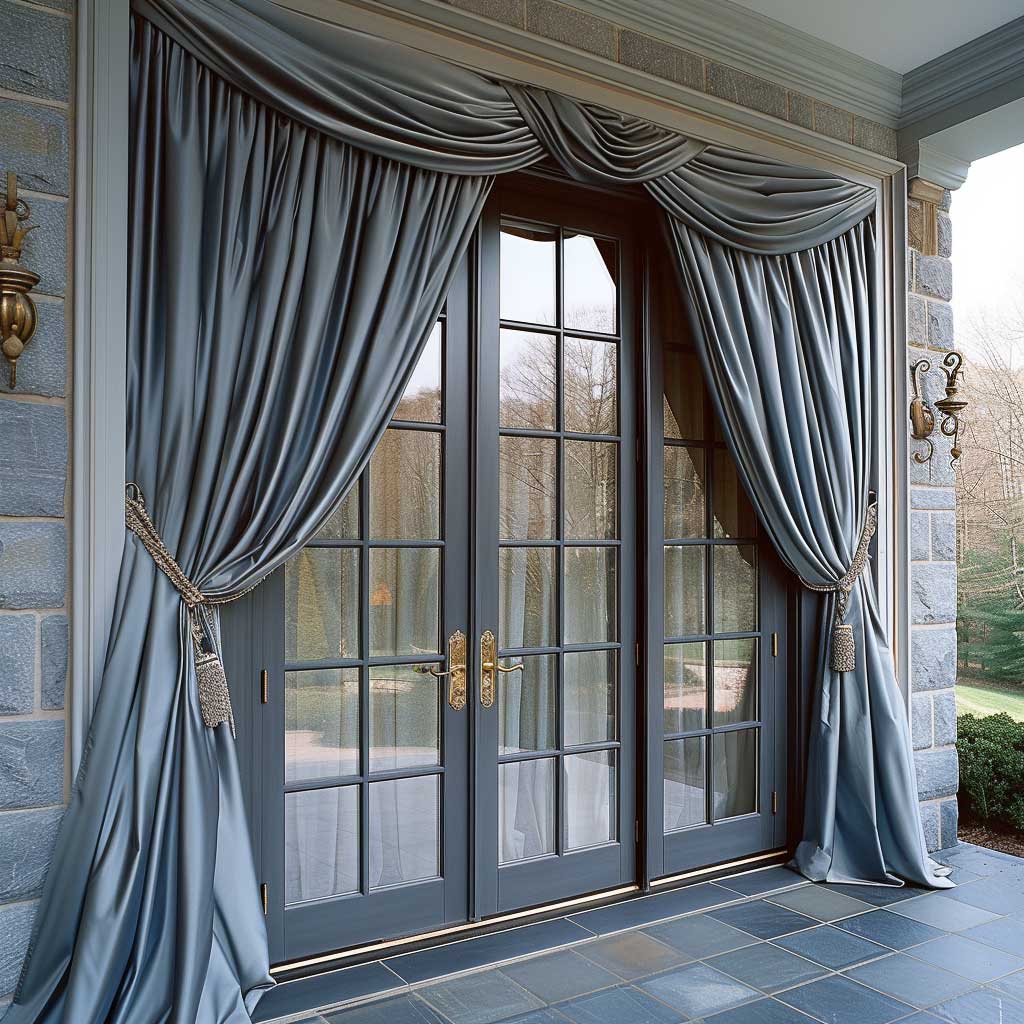
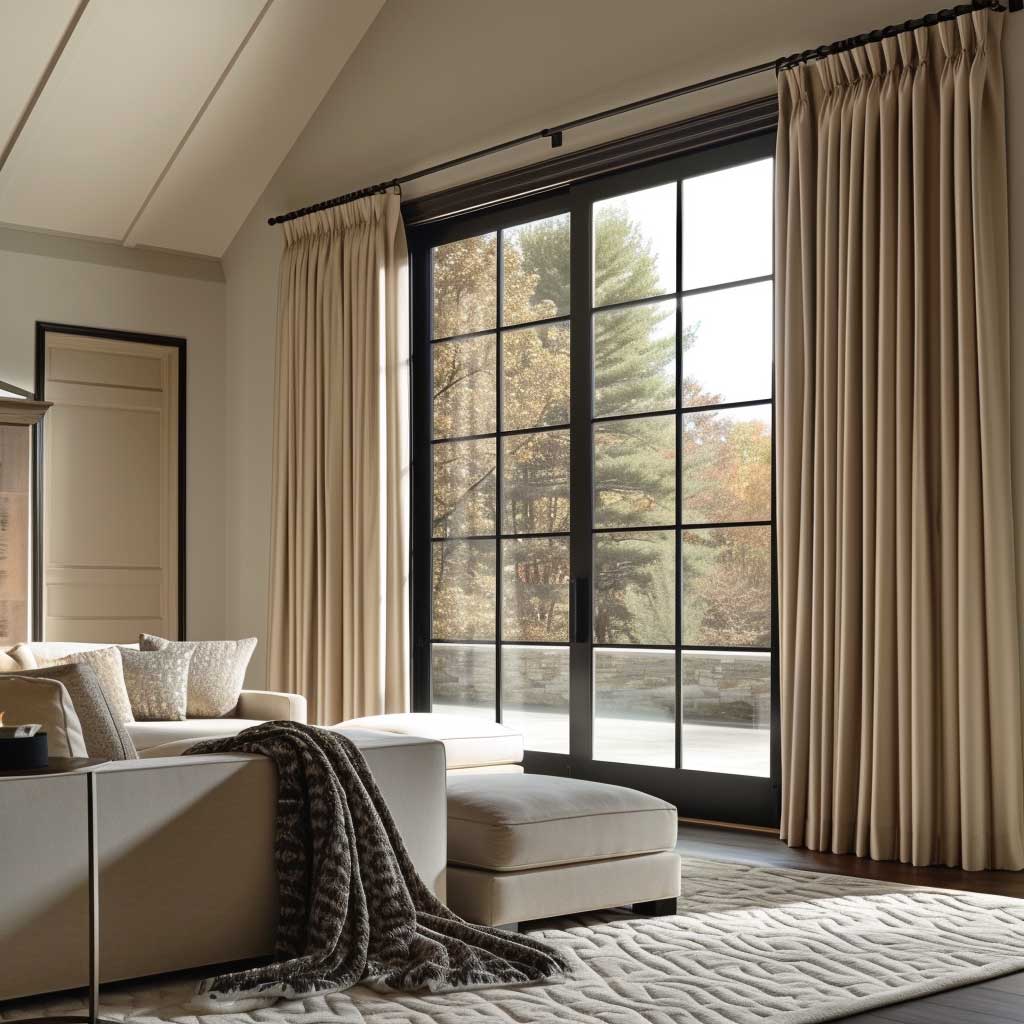
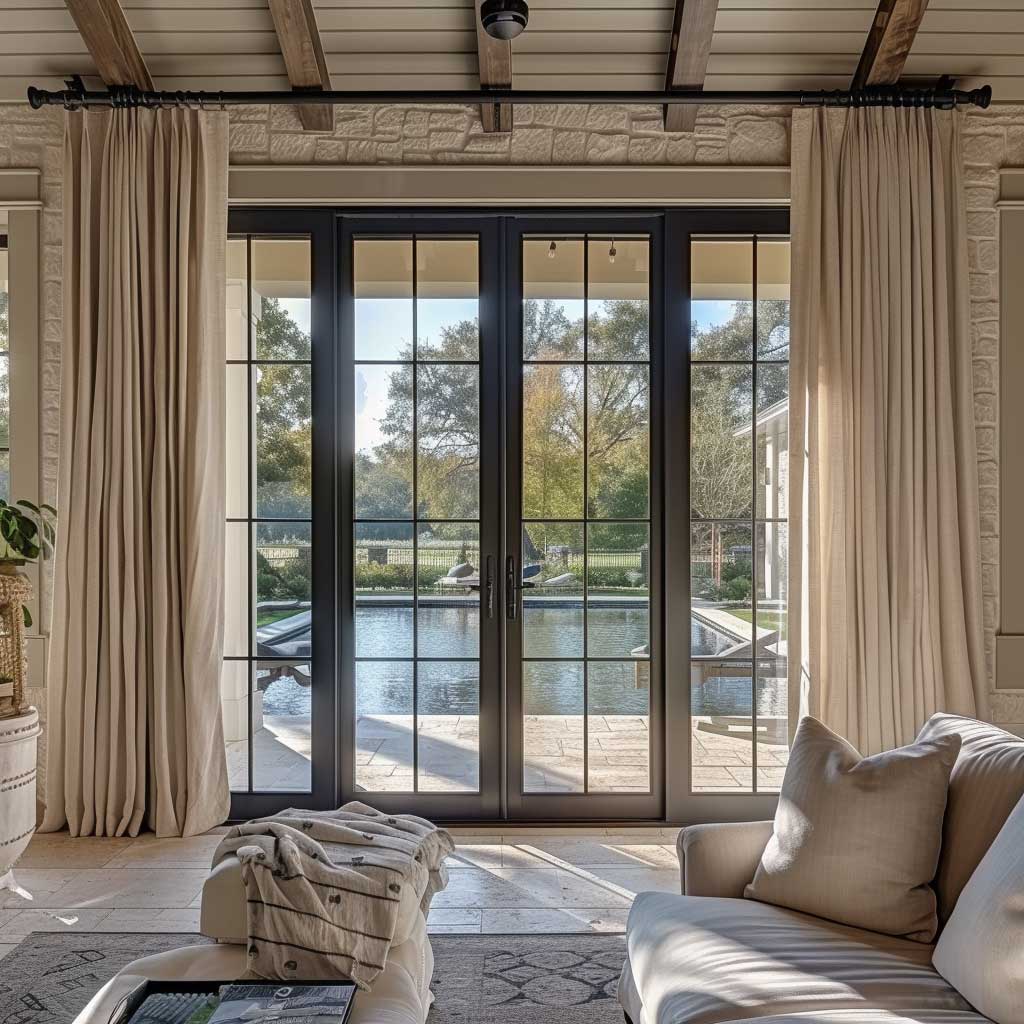
Color is where most people play it too safe with patio door drapes. Neutral is fine — but an off-white or pale linen in a mostly neutral room reads as furniture, not a design decision. Consider going one shade darker than your wall color for the drapes, or two shades lighter for a tonal effect that still registers. What I’d avoid: bright white drapes on a south-facing door that gets direct sun. They yellow faster than any other fabric and look dirty before they actually are. Warm cream, warm gray, or any earthy tone holds better over time.
Tiebacks add a practical layer when one side of the door is the main walking path. A simple rope tieback holds the panel off the door handle during daytime hours, keeping foot traffic unobstructed without having to slide the whole panel to the side. Leather tiebacks run $15–$30 a pair. That small detail makes a draping setup usable as a daily covering rather than a ceremonial one.
Woven Wood Shades Pull the Outdoor-Indoor Connection Indoors
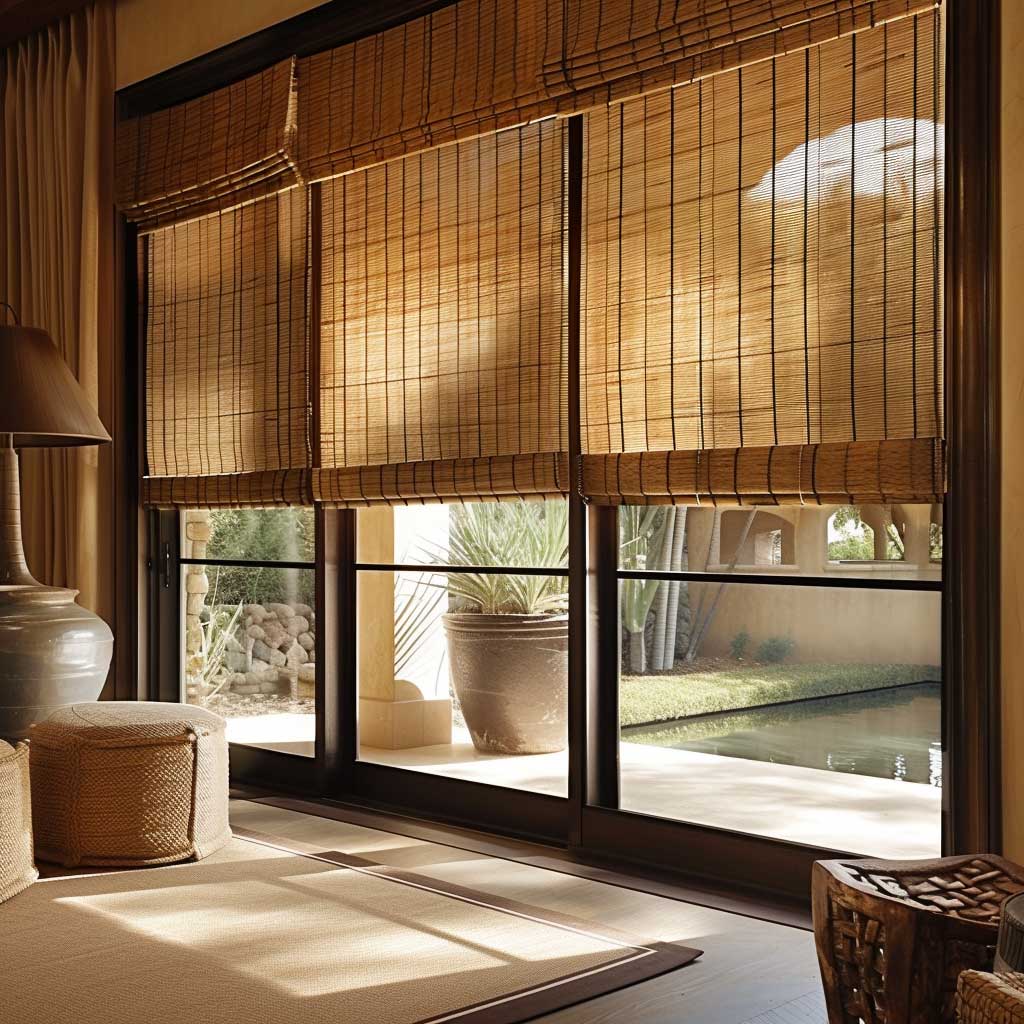
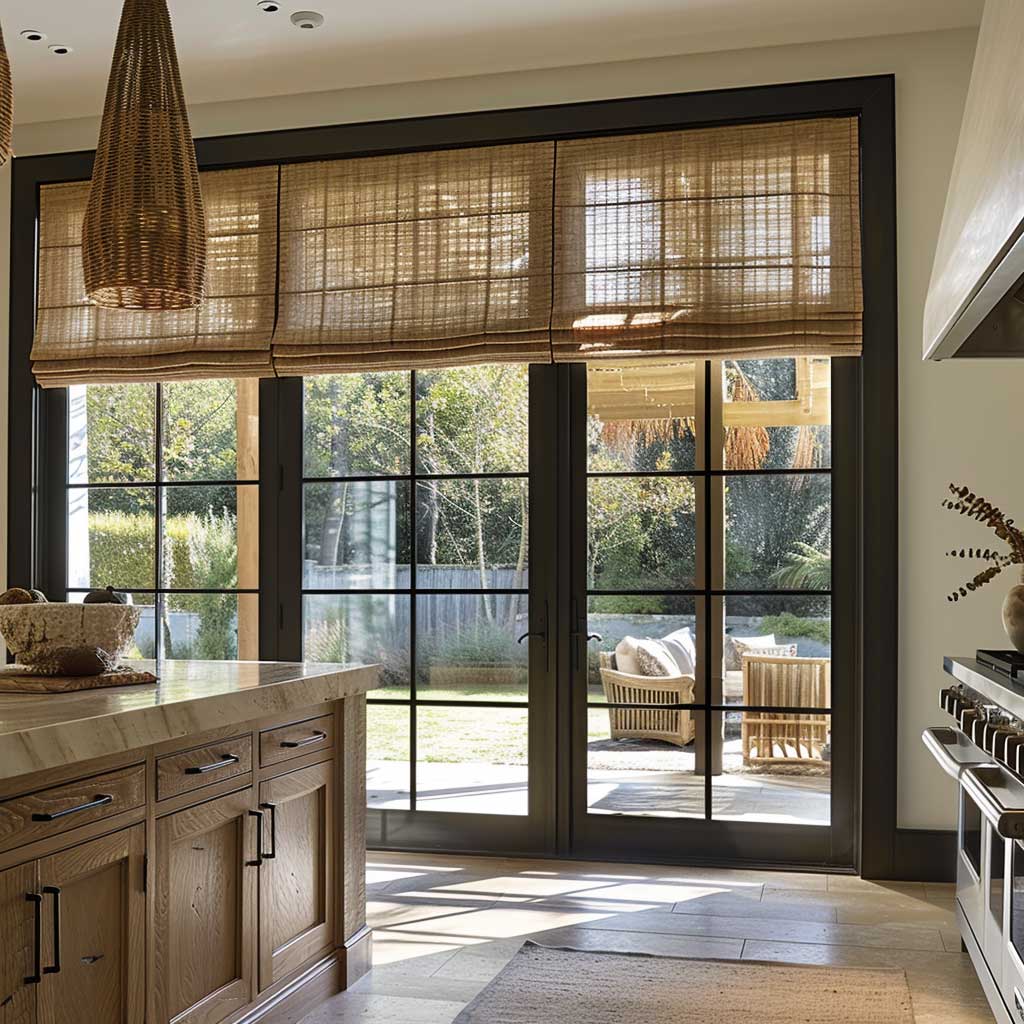
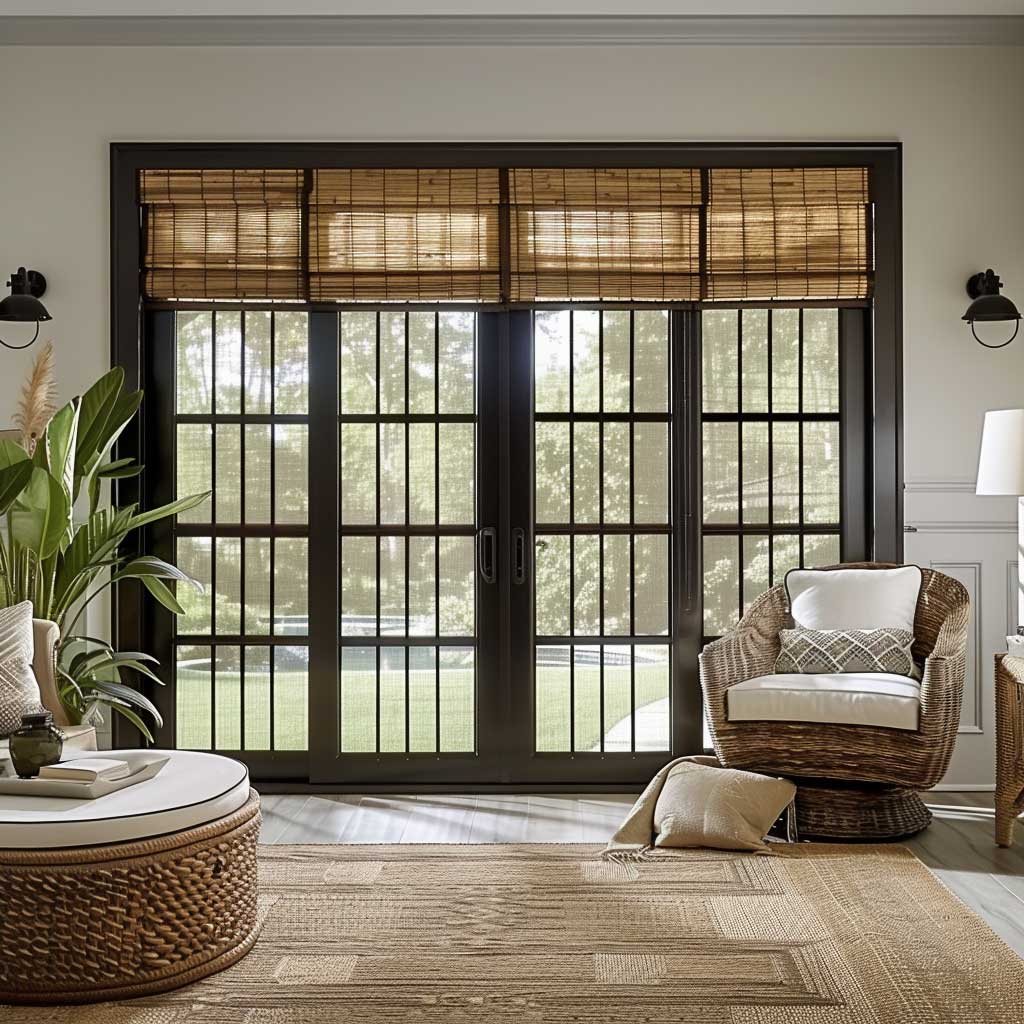
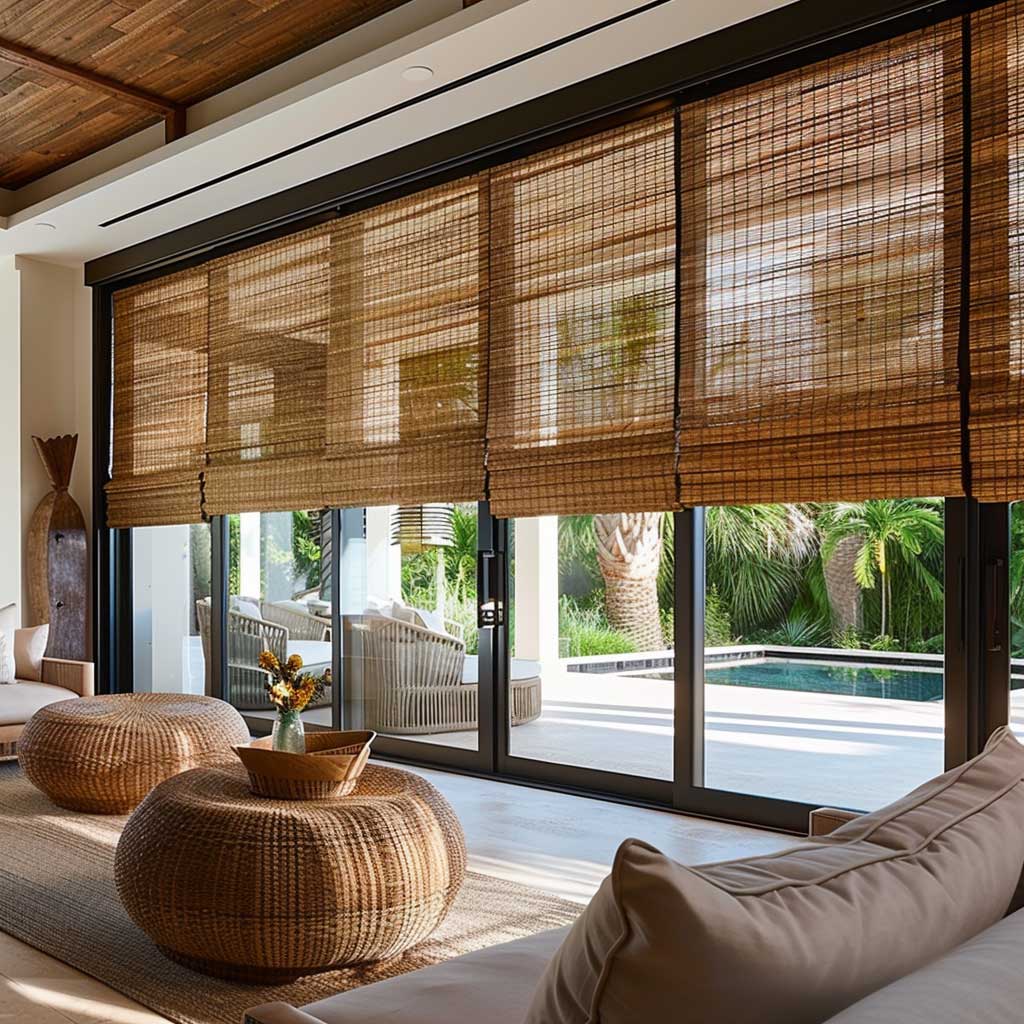
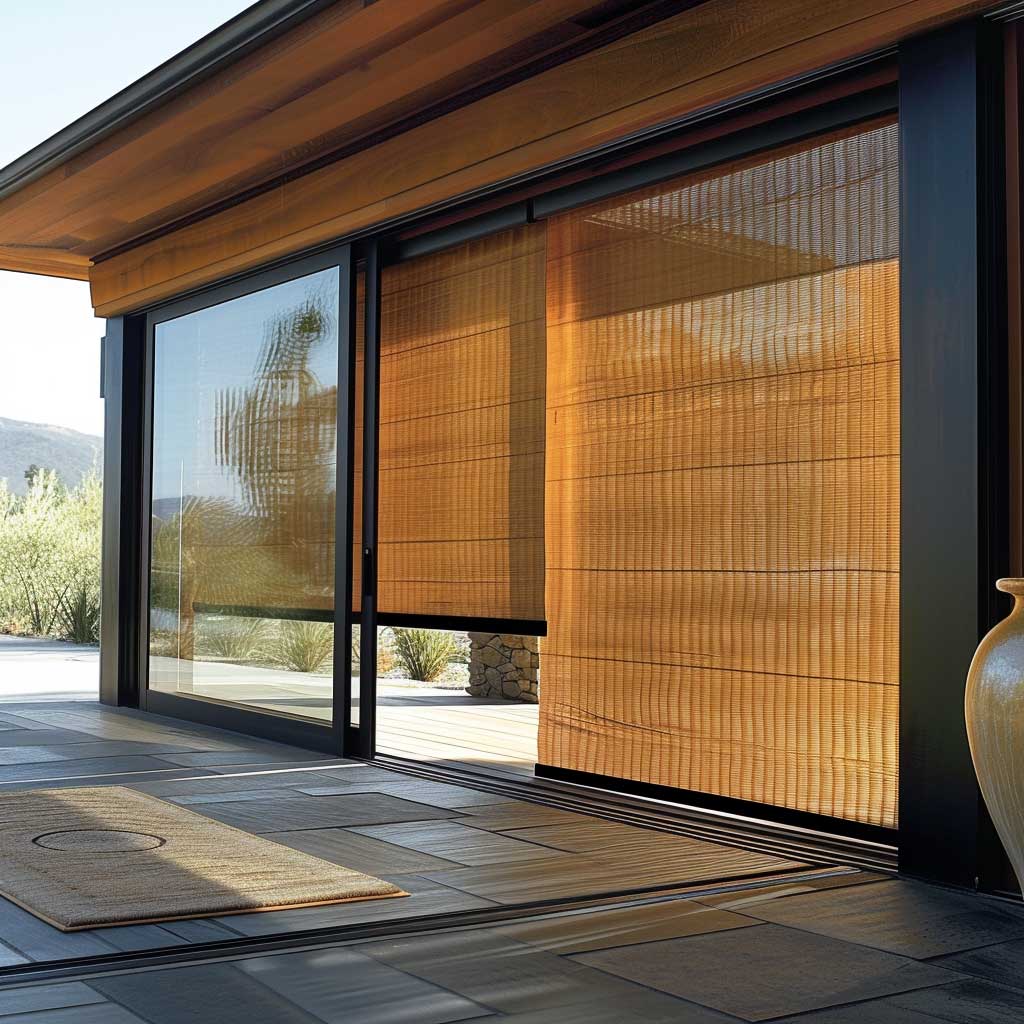
Woven wood shades made from bamboo, jute, seagrass, or reed do something no synthetic covering can replicate: they bring a material vocabulary that matches the outdoors. On a patio door — literally the threshold between the garden and the living room — that continuity matters. The light that filters through a bamboo weave is unlike anything else. It’s warm, dappled, and directional, the way sunlight looks through a pergola. I’ve recommended this option to three clients with rooms that felt cold and disconnected from their gardens, and in every case the shade was the fix.
The practical limitations are worth knowing upfront. Woven wood shades are not blackout. Even a tight weave lets in more light than any fabric shade. For a bedroom patio door or a door in a media room, you’d need a liner added — most manufacturers offer privacy liners ($20–$50 extra) or blackout liners ($35–$80 extra) that attach inside the shade roll. Without a liner, the shade functions as a light filter, not a privacy solution in daylight. At night, with interior lights on, anyone outside can see movement clearly through an unlined woven shade. Plan accordingly.
On a large sliding door — 72 inches wide or more — you’ll typically need two individual shades rather than one. A single woven shade at that width becomes heavy and rolls unevenly. Two shades of 36 inches each hang on independent brackets and operate separately, which also lets you lower just one side depending on where the sun is hitting. Blinds.com and Smith & Noble both offer woven wood shades with custom sizing; a pair of 36×84 bamboo shades runs about $180–$350 depending on material and liner choice. Window covering options by room can help you decide where woven wood works and where it falls short.
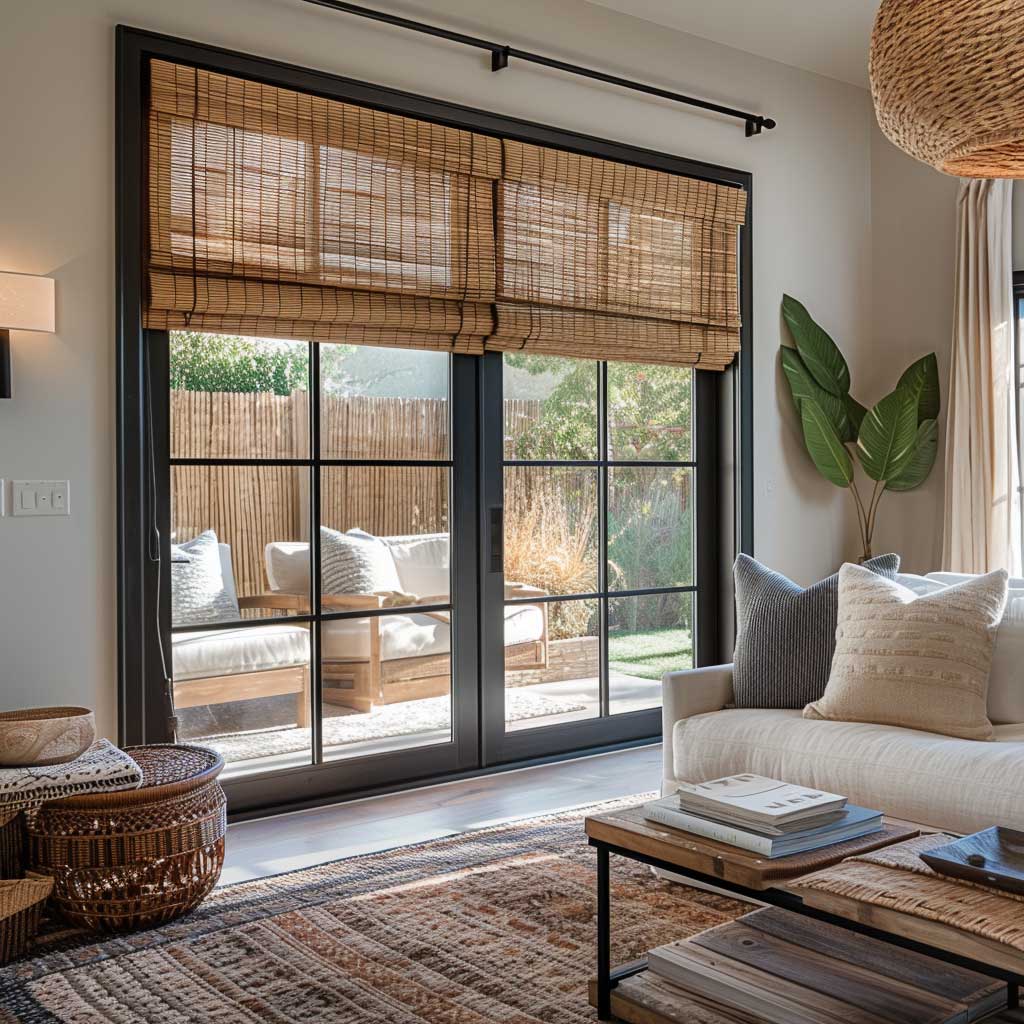
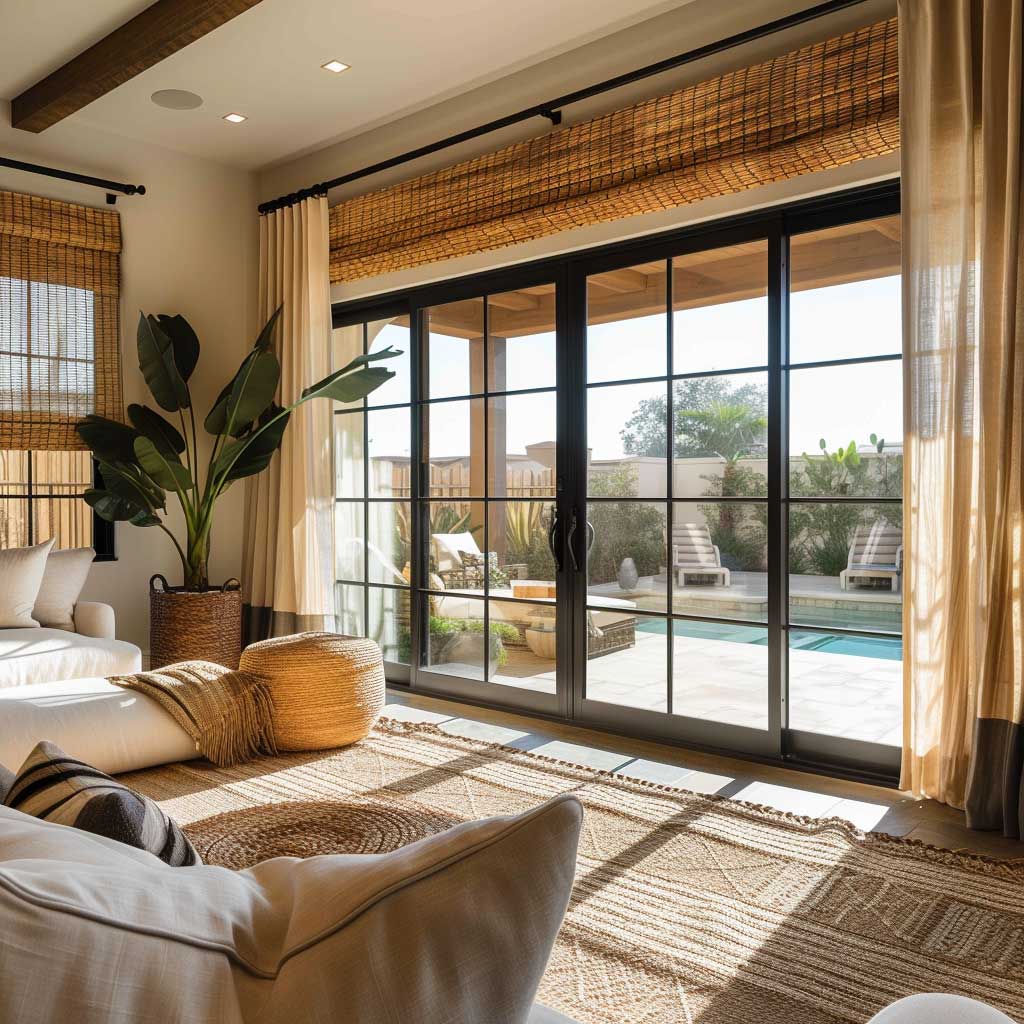
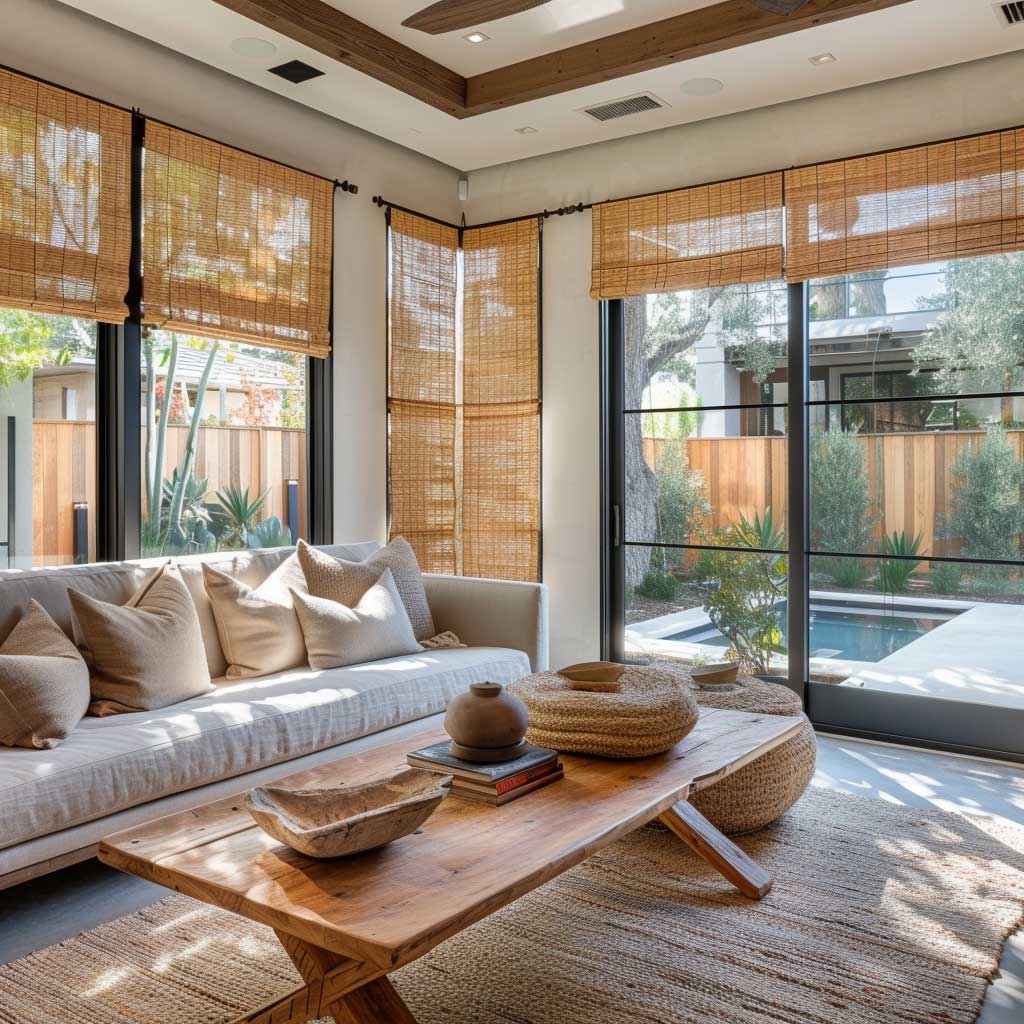
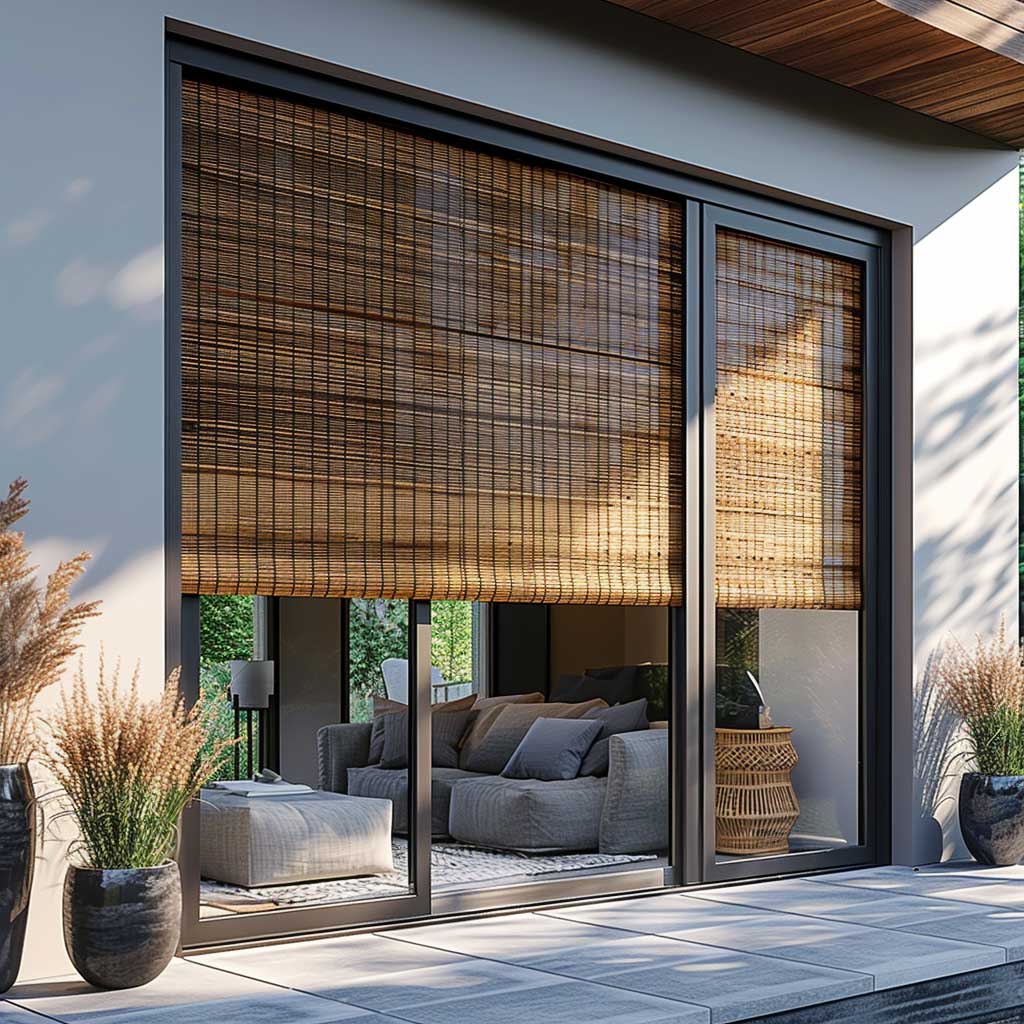
Style-wise, woven shades are the most flexible option in this list. They sit just as comfortably in a Japandi-inspired minimal room as in a Southwestern or Mediterranean interior. The variation in weave pattern does the decorating work — a tight, flat seagrass weave reads modern; a chunky jute weave reads rustic. My go-to for a contemporary room with warm wood tones is a flat-weave bamboo in a natural or whitewash finish. It disappears when raised, adds warmth when lowered, and never looks trendy or dated.
Humidity is the one enemy. If your patio door opens onto a pool area or a space that gets wet air regularly, bamboo and reed can bow or warp over time. In humid climates, stick to seagrass or synthetic woven looks — the latter sacrifice some of the organic texture but last significantly longer near moisture. Cheapest option to test the look: Amazon’s Windows and Gardens brand, cordless woven shades starting around $45 per shade. Surprisingly decent quality for the price, though the color range is limited.
Honeycomb Shades Pay Back Their Price in Energy Bills
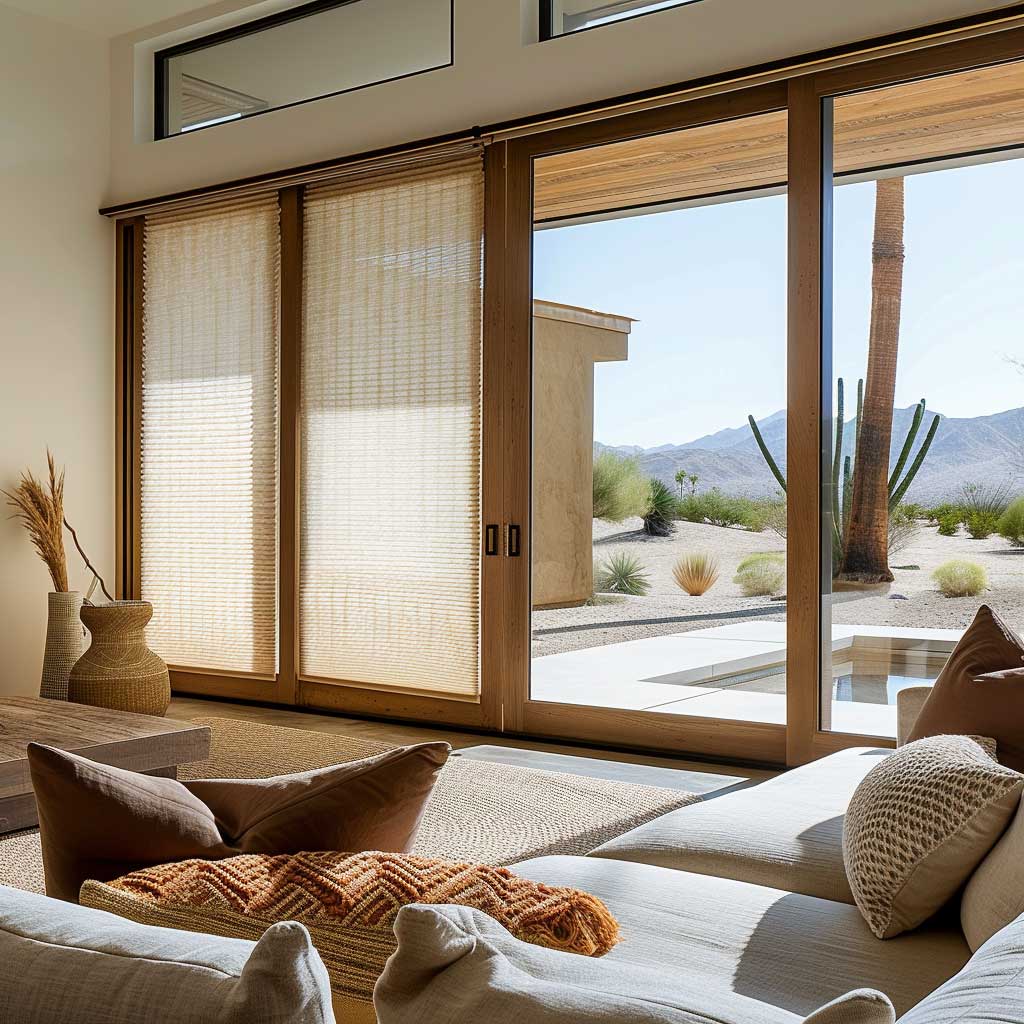
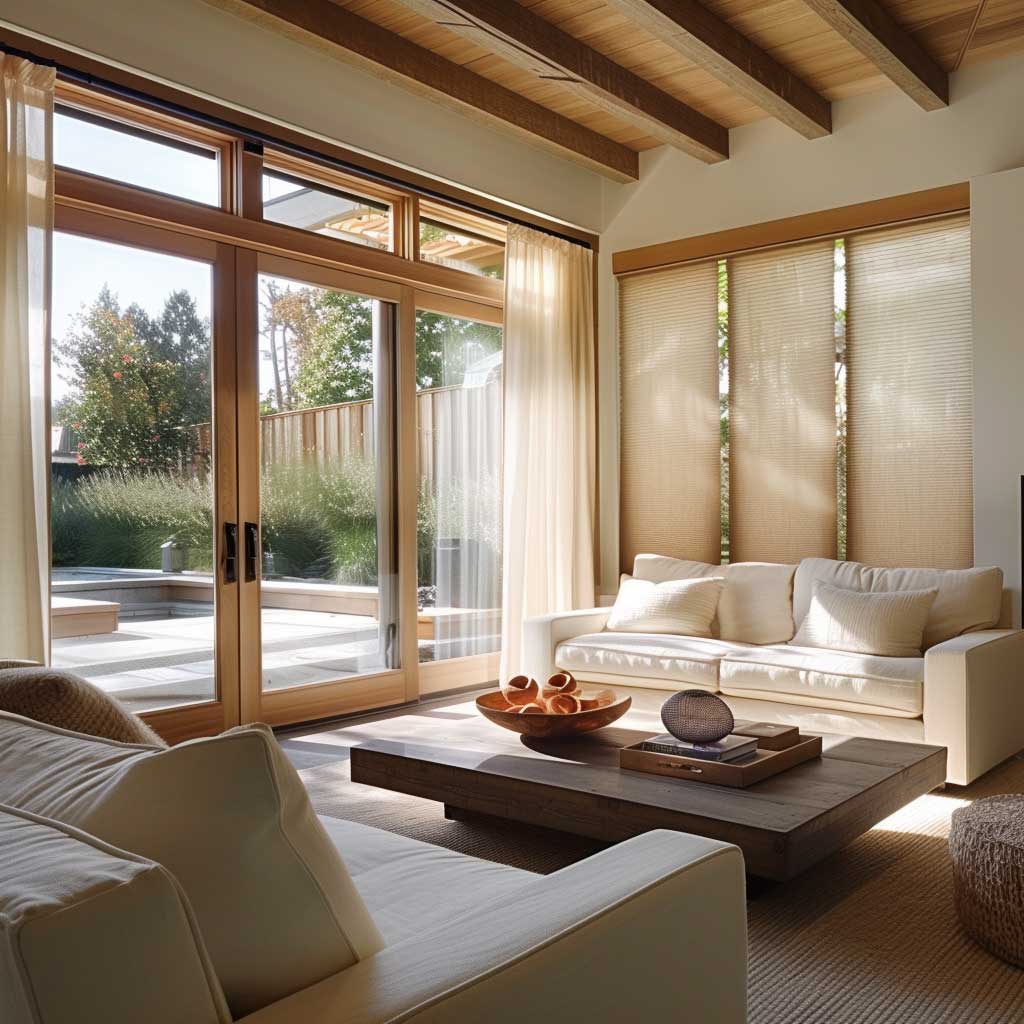
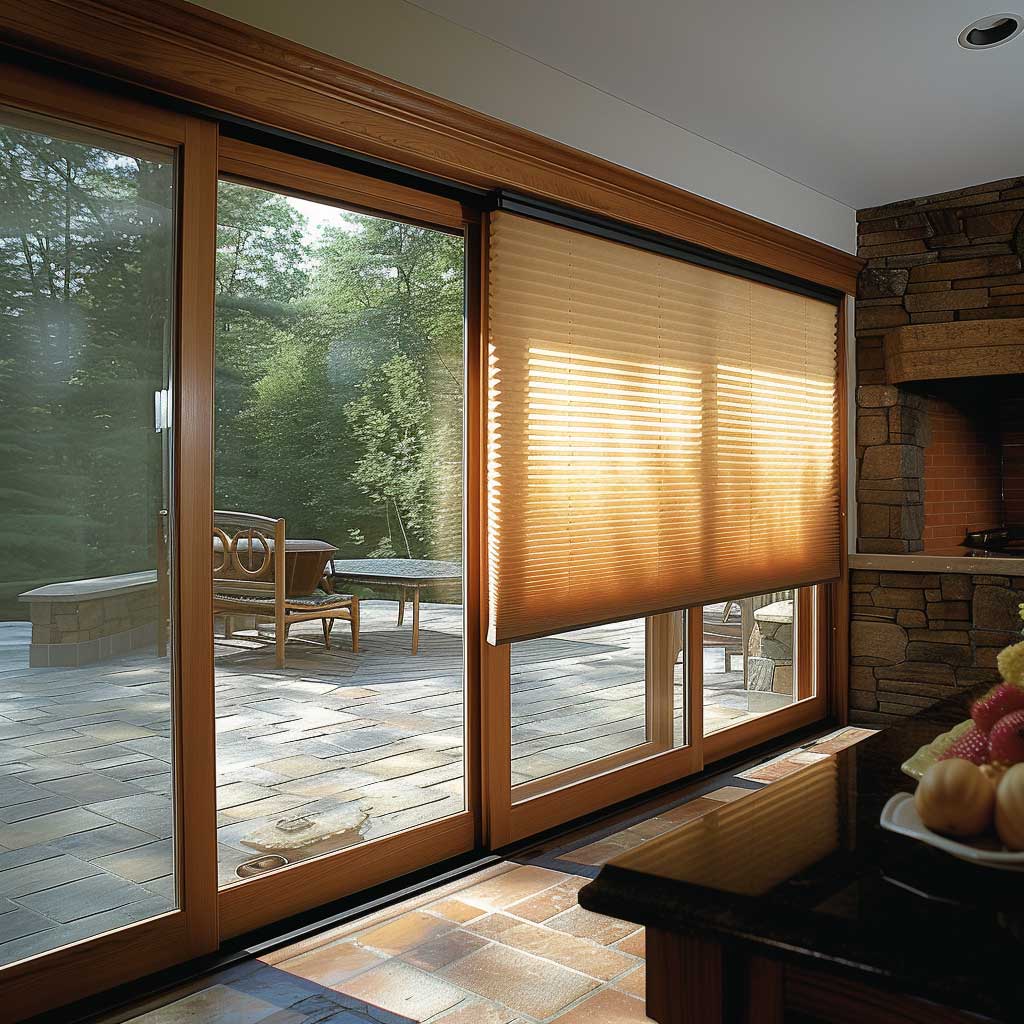
Sliding glass doors are responsible for more heat loss and gain than almost any other surface in a house. The glass is large, often single-pane or older double-pane, and it runs floor to ceiling with no wall insulation on either side. Honeycomb shades — specifically the Hunter Douglas Duette Vertiglide, designed specifically for vertical/door applications — create an air pocket between the fabric cells that insulates the opening. Hunter Douglas claims the Duette Vertiglide also absorbs up to 70% of sound energy, which matters enormously in rooms where the door opens onto a street, a busy pool area, or a neighbor’s patio.
The federal tax credit angle is real and worth knowing about. Select Hunter Douglas Duette shades qualify for up to a $1,200 federal energy-efficiency tax credit under current U.S. energy codes. That’s not a rebate — it’s a credit applied directly to your tax bill. On a $600–$900 custom Vertiglide installation for a standard slider, the credit can cut your net cost by more than half. Talk to a certified Hunter Douglas dealer about which fabrics qualify; not all do, and the distinction isn’t obvious from the website.
Are honeycomb shades the most visually exciting window covering for a patio door? No. They’re clean and quiet — available in a good range of colors and opacities, with options from sheer to full blackout — but they don’t make a statement the way drapery or woven wood does. That’s actually the point. They function as infrastructure, not decor. You install them and forget they’re there, except on your utility bill. For rooms where the priority is comfort and efficiency rather than visual drama, that’s exactly the right trade-off.
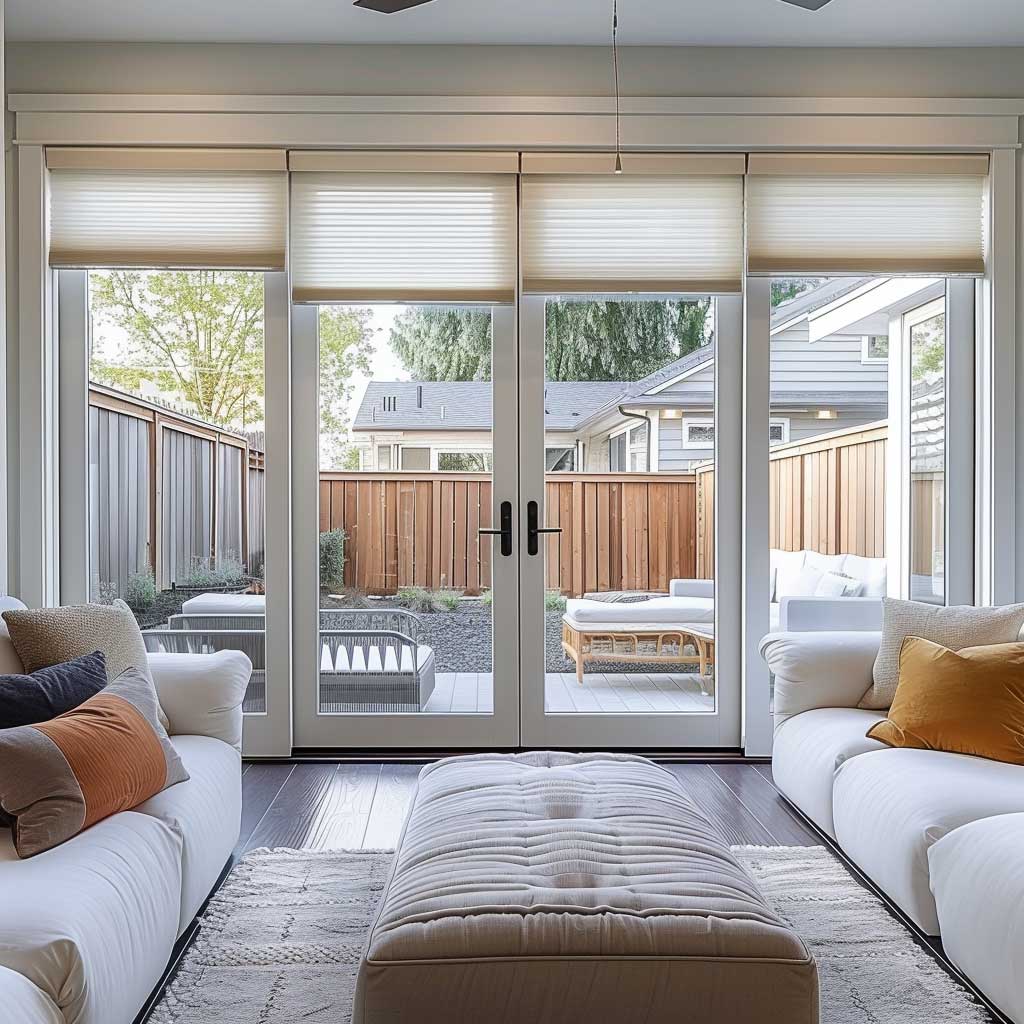
Motorized controls — Hunter Douglas’s PowerView system — let you schedule the shades to raise and lower automatically, which turns out to be a genuinely life-changing feature on a door you use multiple times a day. Set them to raise at 7am, lower during peak afternoon heat, and raise again at sunset. Battery-powered, rechargeable, and compatible with Alexa and Google Home. The PowerView motor adds $100–$200 per shade to the price, but for a high-use patio door it eliminates daily friction in a way manual cords don’t.
What I’d steer away from: budget cellular shades from discount sites that advertise the same cell structure for a quarter of the price. The cell depth matters. A single-cell shade provides basic insulation; a double-cell shade dramatically outperforms it, and the Hunter Douglas Architella triple-cell design is in a different category entirely. Cheap single-cell shades degrade within two years in direct sun and lose their cell structure. Buy the right product once or spend twice replacing the wrong one.
Frosted Glass Film Is the Only Fix That Actually Holds Up
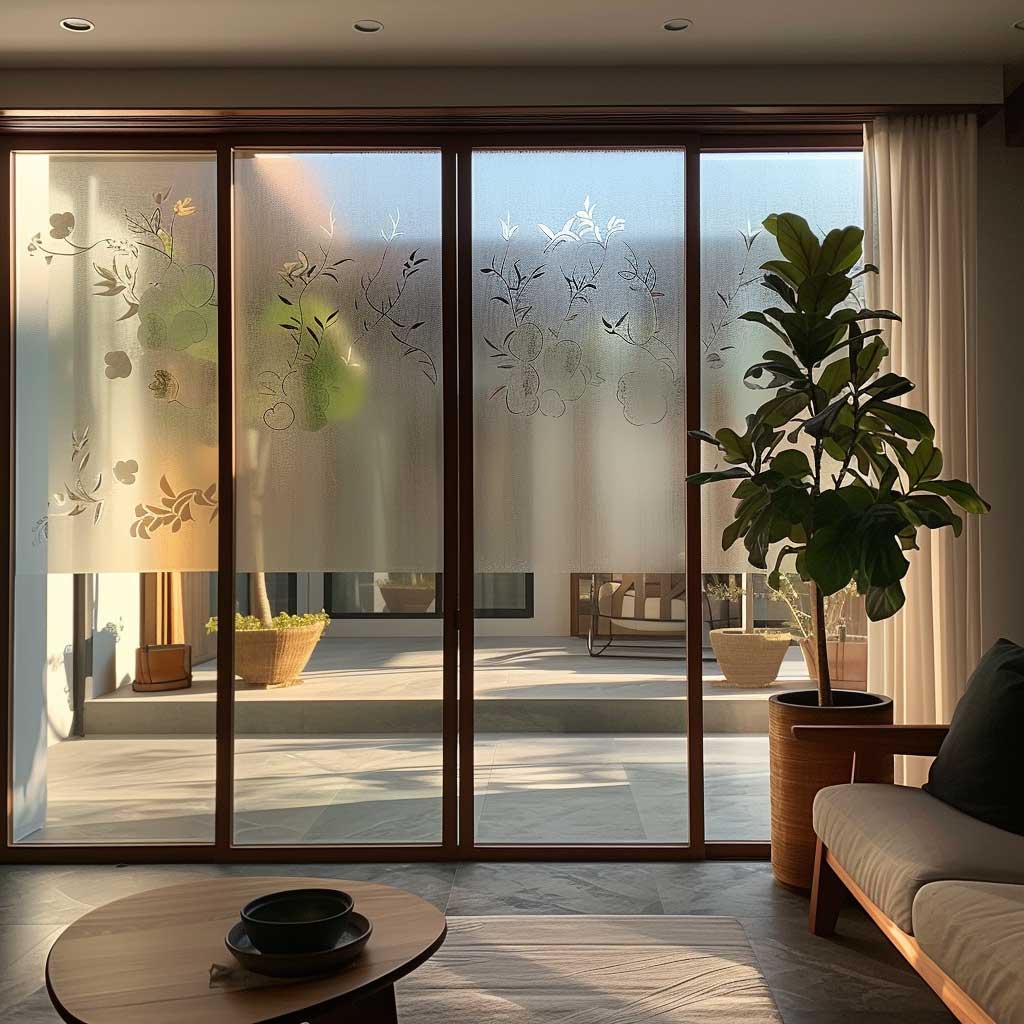
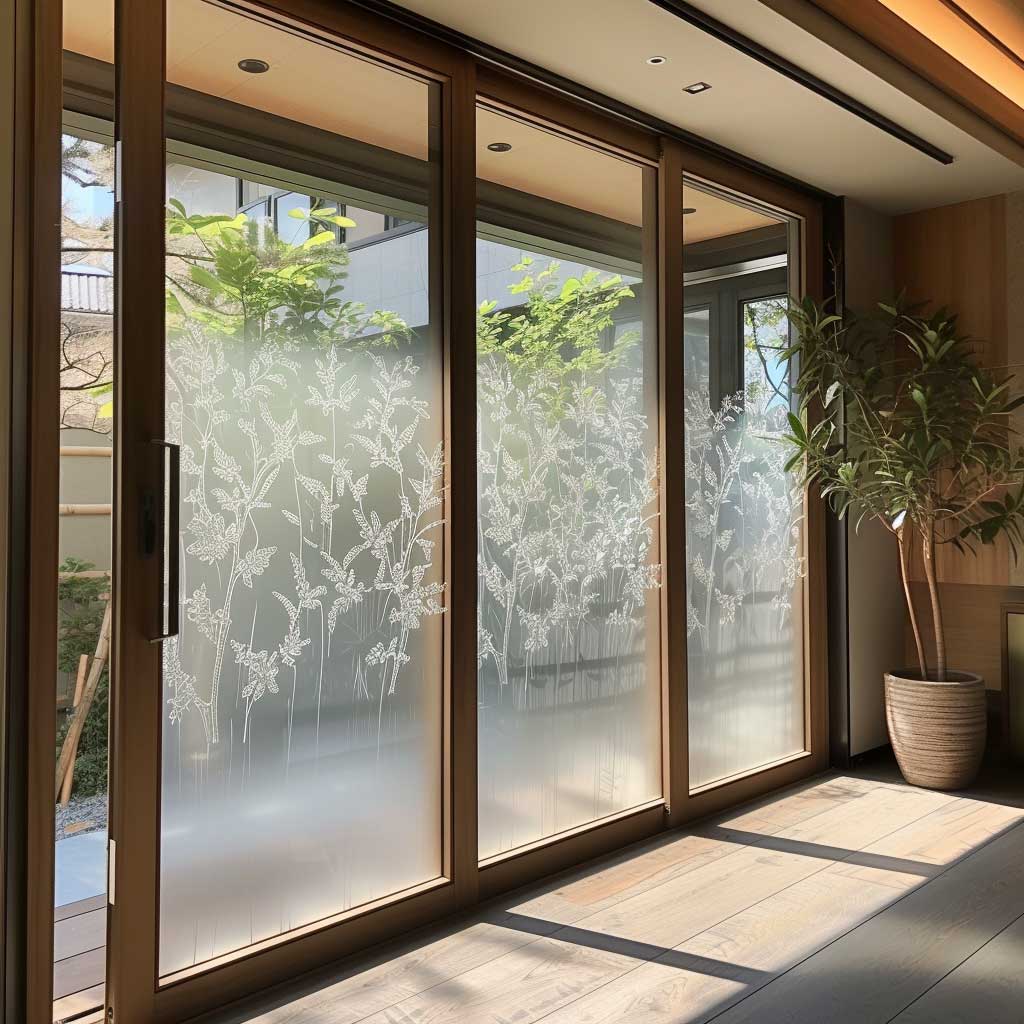
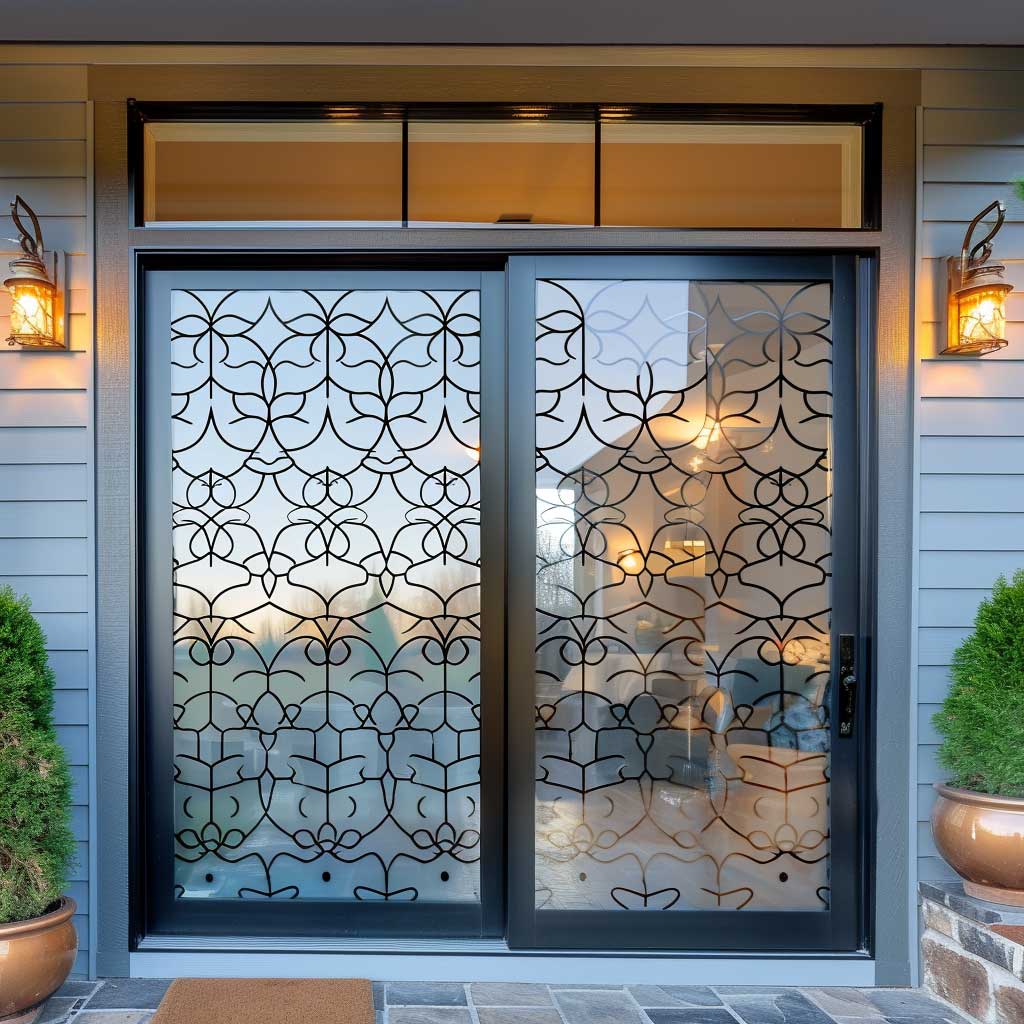
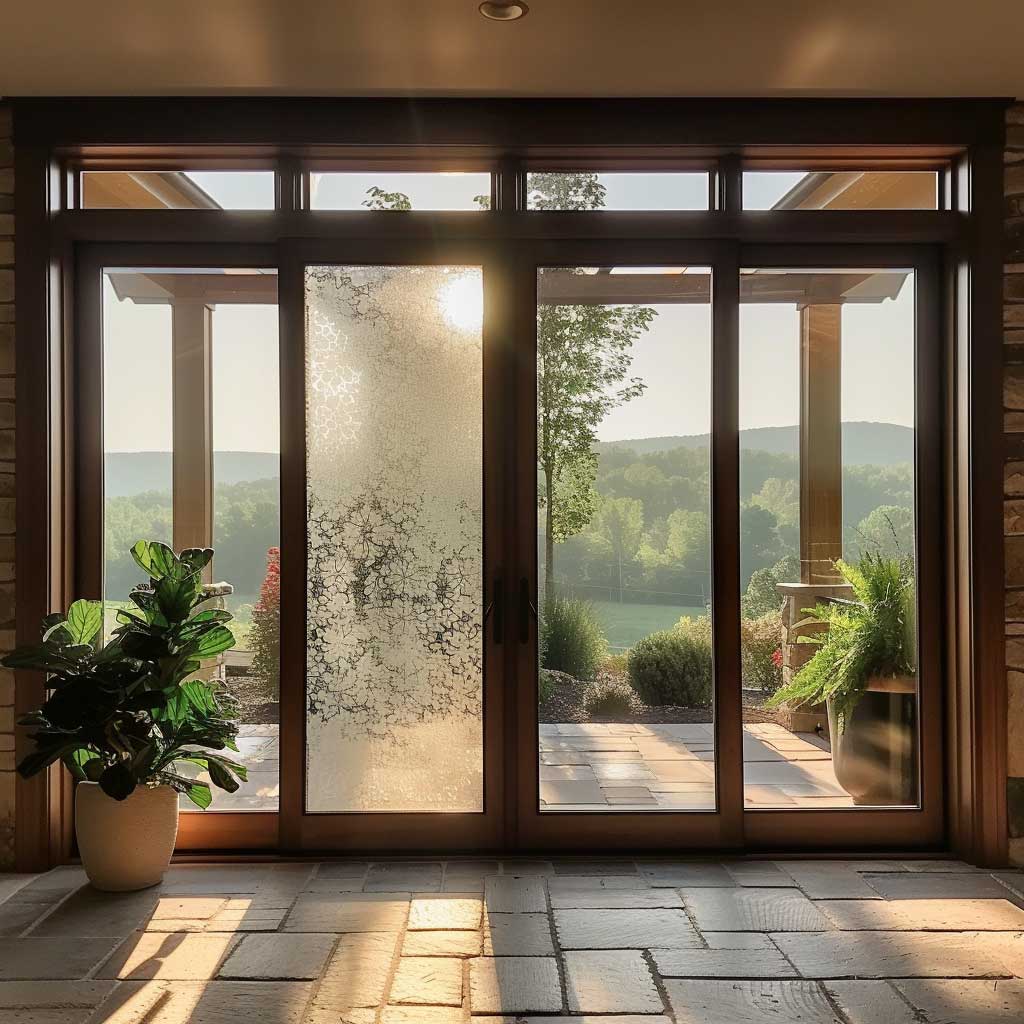
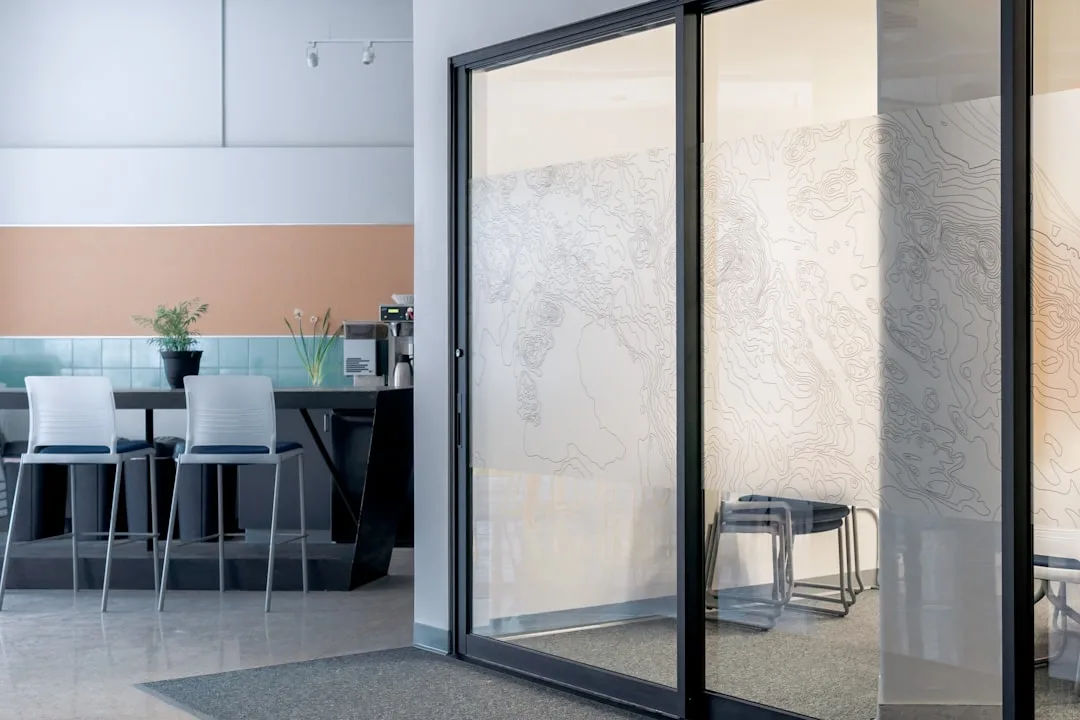
Frosted glass film is the most underutilized window covering idea for sliding patio doors and the most misunderstood. It isn’t a full covering — it’s a privacy layer that works alongside natural light rather than blocking it. Applied to the lower half of a glass door (the standard zone for neighbor sightlines), it gives you privacy at seated height while leaving the upper portion clear for light and sky view. Applied full-panel, it turns the door into a luminous diffused-light wall that photographers would actually pay for. In many contemporary homes, privacy window film from retailers like Window Film World starts at $15 for a standard roll and ships in two days.
The installation caveat is the most important thing to know. Static-cling film — no adhesive — applies to clean glass with a spray bottle of soapy water and a squeegee. It comes off without residue, which matters if you rent or if you change your mind. Adhesive film is more permanent and holds better on a door that gets heavy use, but it’s harder to remove cleanly. Never apply either type to textured glass, tempered glass with surface coatings, or any glass marked as low-E — the film won’t bond properly and will bubble within a month. Check your door’s glass spec before purchasing anything.
Pattern options have expanded significantly. You’re not limited to plain frost anymore. Geometric repeats, botanical silhouettes, and cut-glass-look patterns all exist at the $20–$60 price point. The risk with pattern films: they date faster than plain frost, and removal from a large door panel is tedious. My recommendation is to stick to plain or lightly textured frost for any covering that will live on the door for more than a year. Use patterned film on a single panel accent or a sidelight, not the full door.
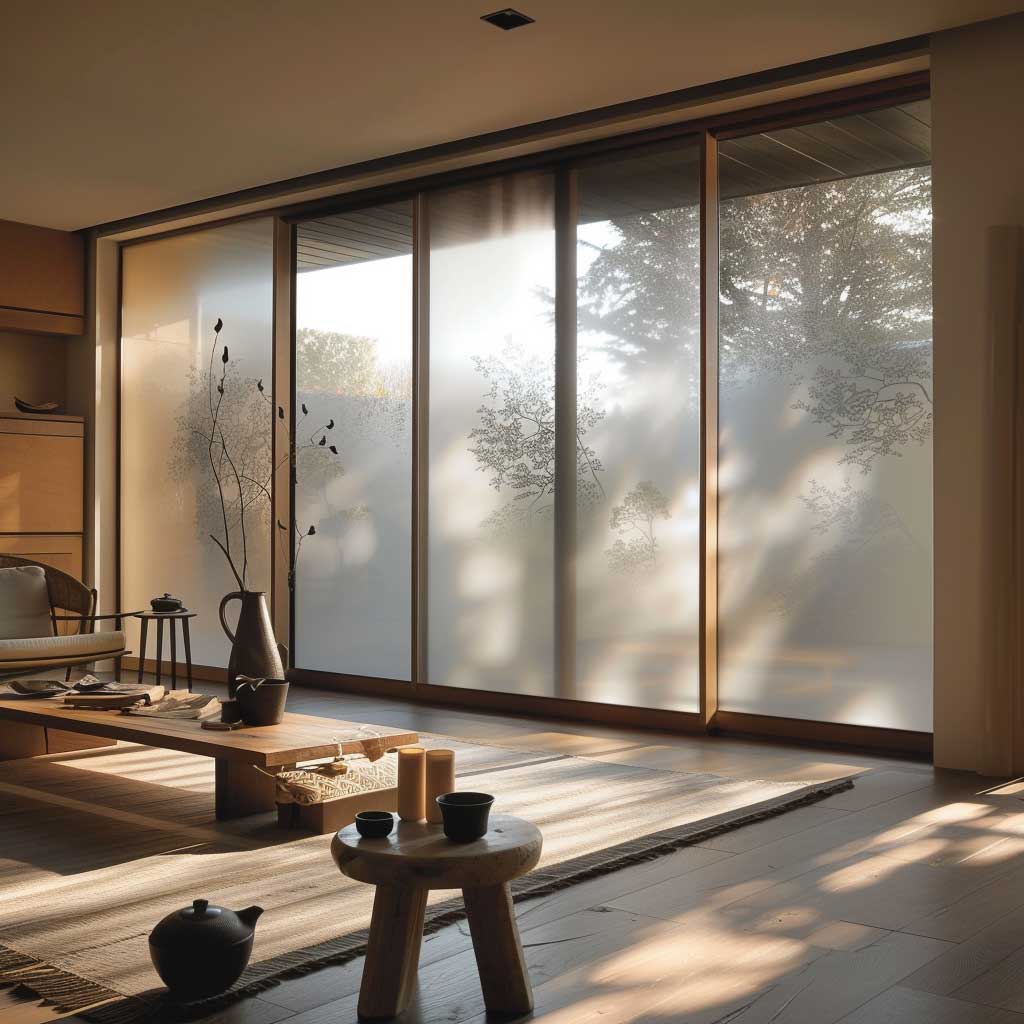
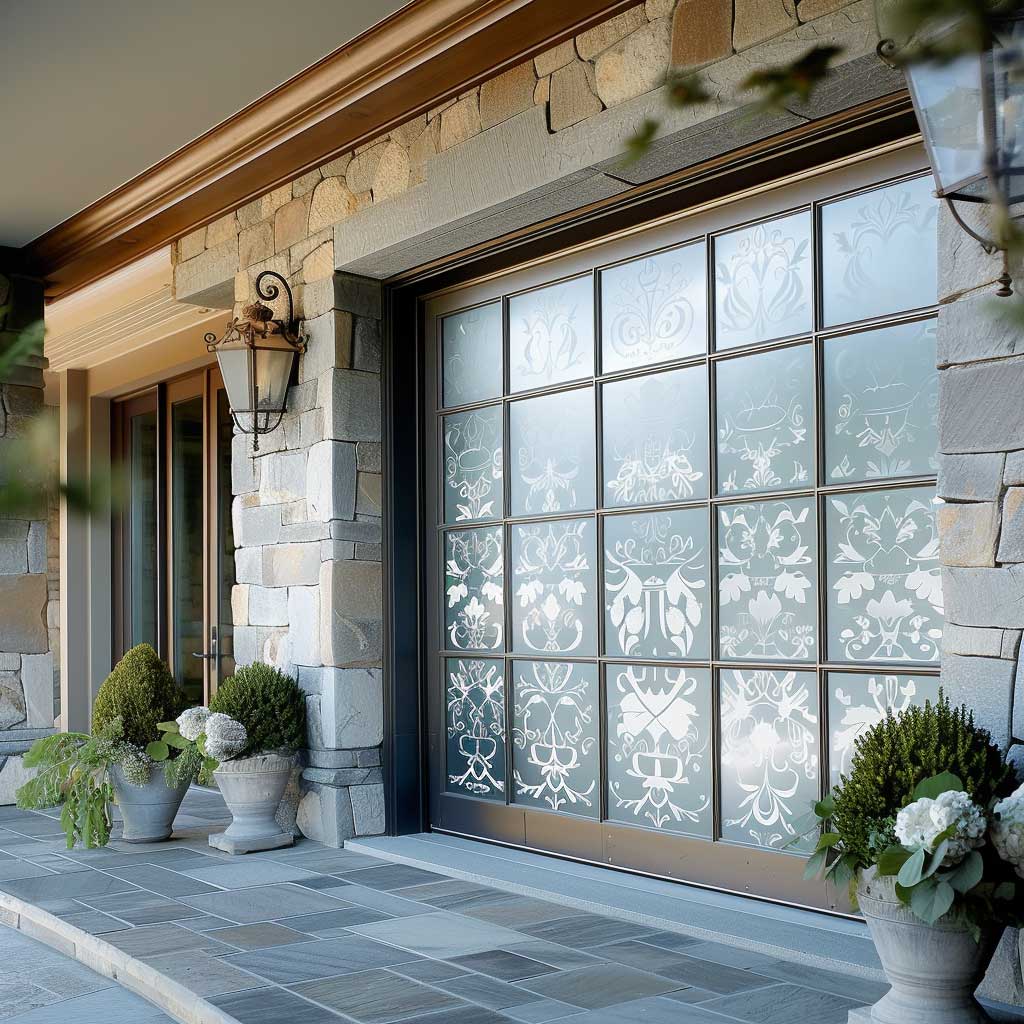
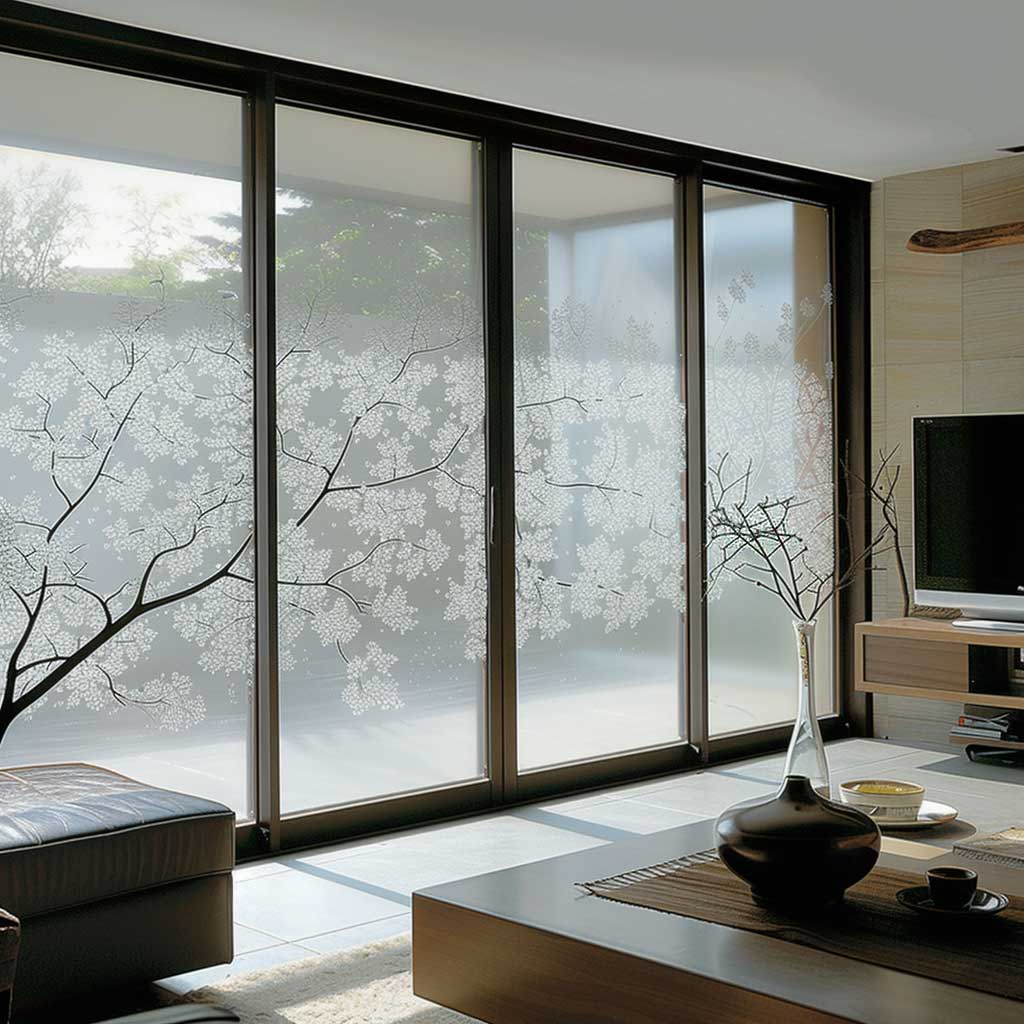
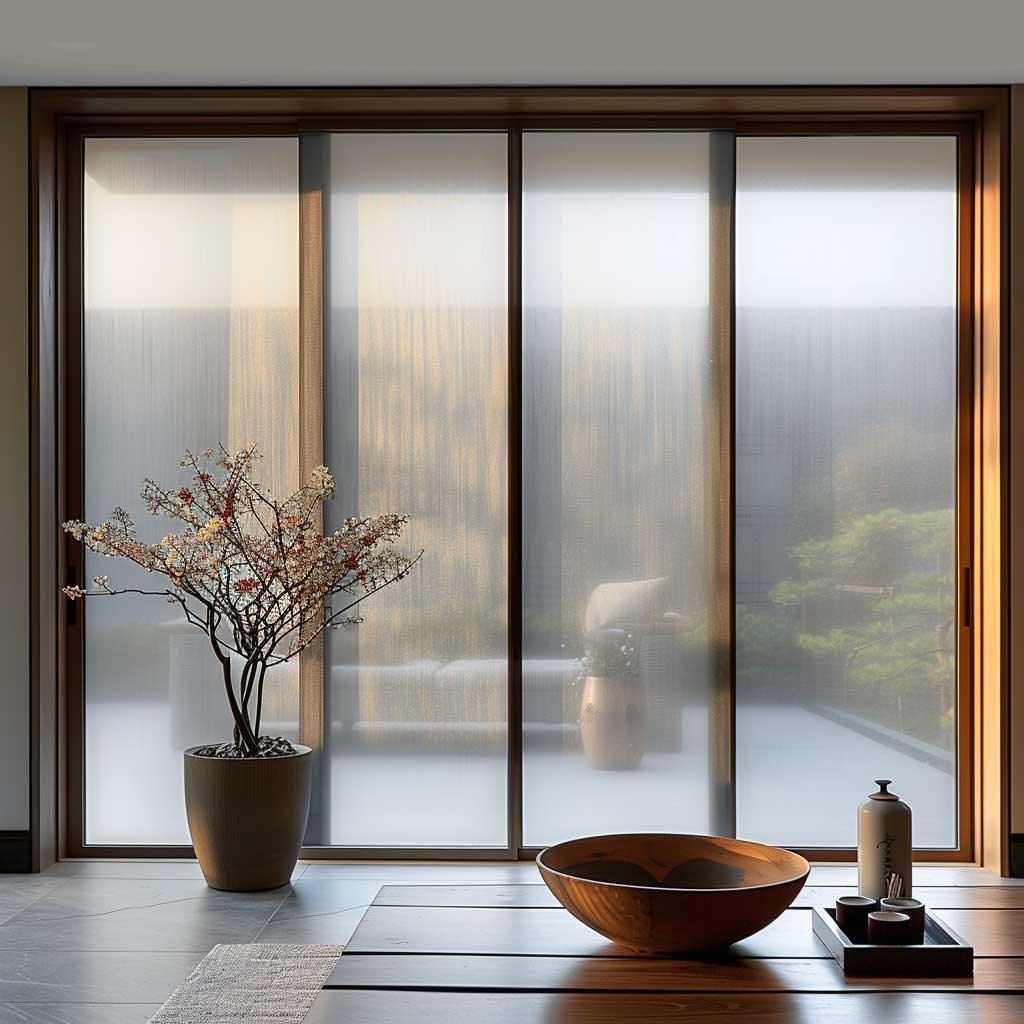
Film also does something no hanging covering can: it works the door’s glass as a design surface. A sliding door with a simple frosted film panel looks intentional in a way that a curtainless door never does. It signals that the glass is doing something architecturally rather than just being a gap in the wall. Used at the lower third of the door with nothing above it, the arrangement is almost Japanese in its restraint. I’ve recommended this combination — lower frost film plus a sheer panel track above — in three projects where the budget was tight and the result needed to look expensive. It always passes.
Maintenance is minimal. Wipe with a damp cloth. Avoid abrasive cleaners near the film edges, which can lift over time. Static-cling film can be removed, repositioned, and reapplied — useful if you get bubbles during installation. Adhesive film is a permanent commitment; once it’s on straight and bubble-free, leave it alone. The energy benefit is modest — solar films with UV-blocking properties can reduce interior heat gain by 30–40% — but don’t buy film primarily for energy savings. Buy it for privacy and aesthetics, and treat any thermal benefit as a bonus.
ARTFASAD VERDICT
The Right Window Covering Changes the Whole Room. The Wrong One Just Covers a Door.
For most living rooms with a sliding patio door, sheer vertical blinds or panel track blinds solve 90% of problems with the least effort. Woven wood adds warmth if your room is already minimal. Drapery earns its complexity only when the rod and panel width are correct. Honeycomb shades are for people who care about the energy bill as much as the aesthetics.
Frosted film is the sleeper. At $15–$60 it’s the only window covering that improves the door’s architecture rather than just sitting in front of it. Try it on the lower panel first. You may not need anything else.
Save this post before your next trip to the hardware store — measuring a patio door wrong is the most expensive mistake in window covering.