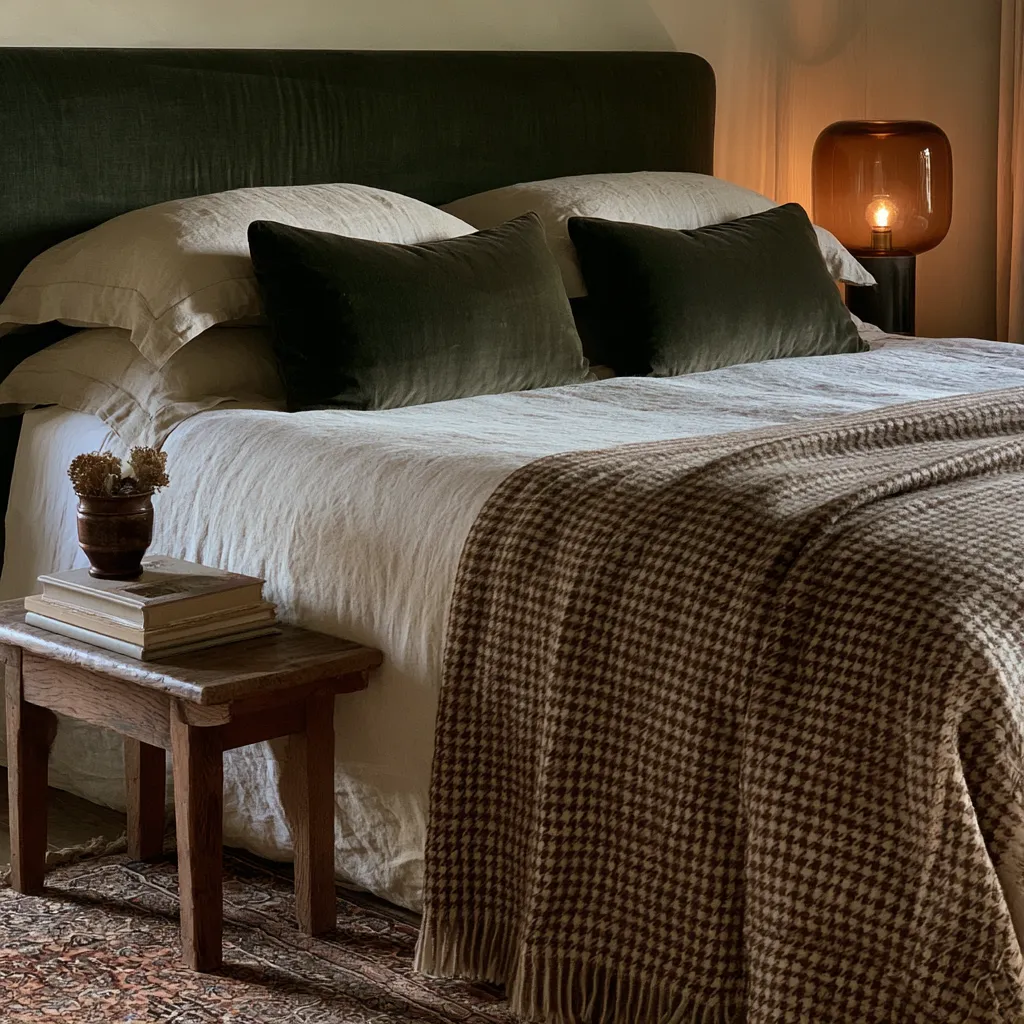
Your bedroom back wall design carries more visual weight than any other surface in the room — and most people spend it on a coat of paint. The wall behind your bed is the first thing you see when you walk in and the last thing you see before you sleep, which means a flat, unconsidered back wall isn’t neutral. It’s a missed anchor. Getting it right doesn’t require a renovation budget or a contractor. It requires picking one material, one finish, and committing to it.
I’ve redone my own bedroom back wall twice. The first attempt — satin paint in warm greige — looked fine in photos and forgettable in person. The second one, reclaimed oak slats with integrated LED strips behind, stopped guests mid-sentence. The difference wasn’t money. It was texture and deliberate contrast with the rest of the room’s flat surfaces.
What this article covers
- Why modern bedroom back wall design works when it combines texture with restraint
- Luxury material options — velvet panels, silk wallpaper, handcrafted wood — and what each actually costs
- How to use the back wall to express personality without turning it into a mood board accident
- Simple back wall design approaches for rooms under 120 sq ft
- Material comparison table: cost, maintenance, visual weight
- FAQ with specific product picks and price ranges
Modern Bedroom Back Wall Design Works Because of Contrast, Not Complexity


Modern bedroom back wall design isn’t about loading the wall with features — it’s about one high-contrast surface in a room full of quieter ones. Think of it the way a photographer thinks about a single light source: everything else recedes, the subject pops. A wall of vertical white oak slats against matte plaster ceiling reads immediately. A wall of mixed-material panels, wood plus stone plus fabric, reads as noise. You’ll notice that the strongest rooms in any design magazine share this: one strong decision, executed cleanly.
Smart lighting systems from brands like Philips Hue ($80–$200 for a behind-headboard strip) make the modern back wall interactive without visible hardware. The light changes with the time of day — warm amber at 9pm, cooler white at 6am — which means the wall design shifts without you touching it. I own two of the gradient strips and they’ve done more for the mood of my bedroom than the furniture rearrangement I spent a weekend on.


Here’s what doesn’t work, and I’ve done it: matching the back wall material to the headboard material. If your headboard is upholstered in linen and your back wall is also a soft, fabric-like wallpaper, the whole zone collapses into one texture. The bed disappears against the wall instead of standing in front of it. You need deliberate contrast — hard surface behind a soft headboard, soft texture behind a structured wooden or metal frame. Sustainable materials like FSC-certified oak or recycled PET felt panels let you build that contrast without the environmental compromise. Wall panel options for the bedroom cover this contrast principle in detail if you want to go deeper on material pairings.
Luxury Back Wall Materials Cost Less Than You Think — and Last Longer Than Anything Else You Buy


Velvet wall panels from Fabricut or Robert Allen run $18–$45 per yard installed, and a standard back wall behind a queen takes about 12 yards. That’s $220–$540 for a surface that feels like a hotel suite. Compare that to a new bed frame, which costs three times that and gets forgotten inside six months. Silk wallpaper is even more dramatic — Phillip Jeffries’ grass-cloth silk lines start at $180 per roll — but a single-wall application needs only 4–5 rolls, putting the full job at around $750–$900. Worth every cent if you’re committing to the room for five-plus years.
What I stole from a Parisian boutique hotel I stayed in: a bespoke art piece hung 8 inches above the headboard with a warm-white picture light mounted directly to the wall, not the art. The light throws focus without visible hardware at eye level. My go-to pick for the picture light is the Cocoweb Winslow LED at $179 — adjustable arm, no flicker, runs cool. The mistake most people make here is buying a statement art piece too small. Anything under 36 inches wide above a king headboard reads as an afterthought.


A wall-integrated fireplace — ethanol insert, no flue required — runs $800–$2,200 for brands like Bio-Blaze or Planika. It adds warmth, literal and visual, and creates the kind of atmosphere that a throw blanket can only approximate. Built-in shelving on the back wall works differently: it fills the wall with your objects, not a material, which either personalizes the space beautifully or clutters it badly depending on your editing discipline. I’ve watched clients install gorgeous floating shelves and immediately overload them with random books and trinkets. Three objects per shelf. Stop there.
The anti-luxury mistake: choosing a back wall finish that photographs beautifully but feels cold to wake up to. Polished Venetian plaster, for instance, looks editorial in photos. In person, at 7am with grey light coming through the curtains, it reads like a bathroom. Save the high-gloss finishes for accent walls in living rooms where you’re not spending eight hours prone. Your bedroom back wall should feel like something you’d want to reach out and touch.
Don’t Do This
Don’t match your back wall material to your headboard material. Linen wall treatment behind a linen headboard erases the bed from the room — the whole zone blends into one flat surface. The bed needs to read as a separate object in front of the wall, not merged with it. You need contrast: hard behind soft, textured behind smooth, dark behind light. Also skip mirrored back walls in anything under 180 sq ft — mirrors double the visual clutter of a small room, not the sense of space. And never install a single framed print that’s narrower than your nightstand as a back wall “focal point.” It looks like you tried and ran out of budget.
Back Wall Decoration as Personal Signature, Not Pinterest Recreation
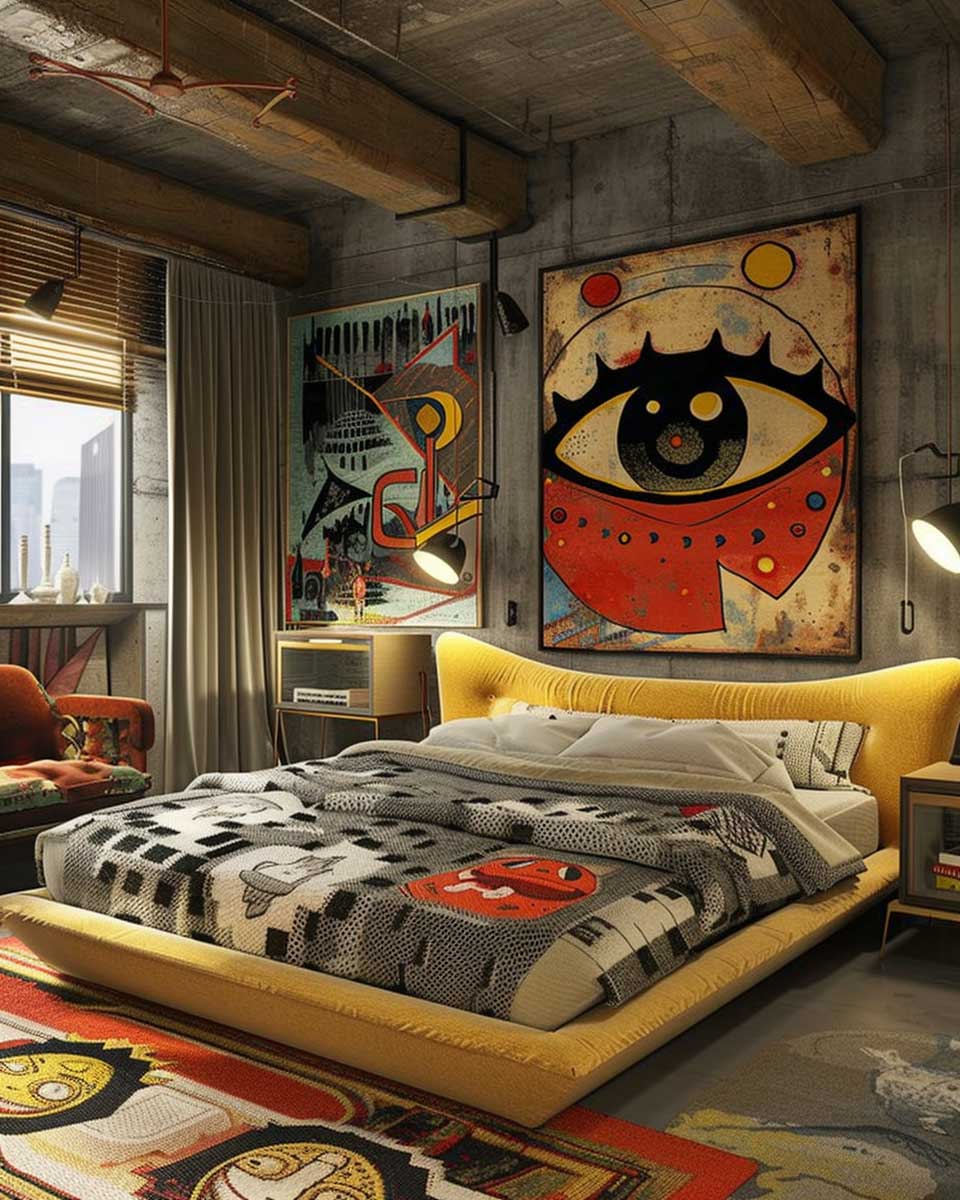


Bedroom back wall decoration is where most people try to replicate a saved Pinterest image and end up with something that belongs to the algorithm, not to them. The traveler’s mural — a hand-painted city skyline or a large-format photo print of a specific coastline, not a generic “world map” — costs $300–$800 from a local muralist or through services like Photowall, and it tells a story no furniture arrangement can. Your specific story. I’ve bought two Photowall murals over the years. They ship flat-packed, paste-activated, and install in three hours with no professional help.
The gallery wall as back wall design divides opinions. Done right — a single frame size, one consistent matting color, arranged in a tight grid with 2-inch gaps — it’s sharp and personal. Done the way most people do it, which is mixed frame sizes, mixed colors, and organic “freeform” placement, it looks like a flea market hung on your wall. You need to decide: grid or nothing. The freeform gallery wall is the decorating equivalent of “organized chaos” — it sounds good and looks messy.


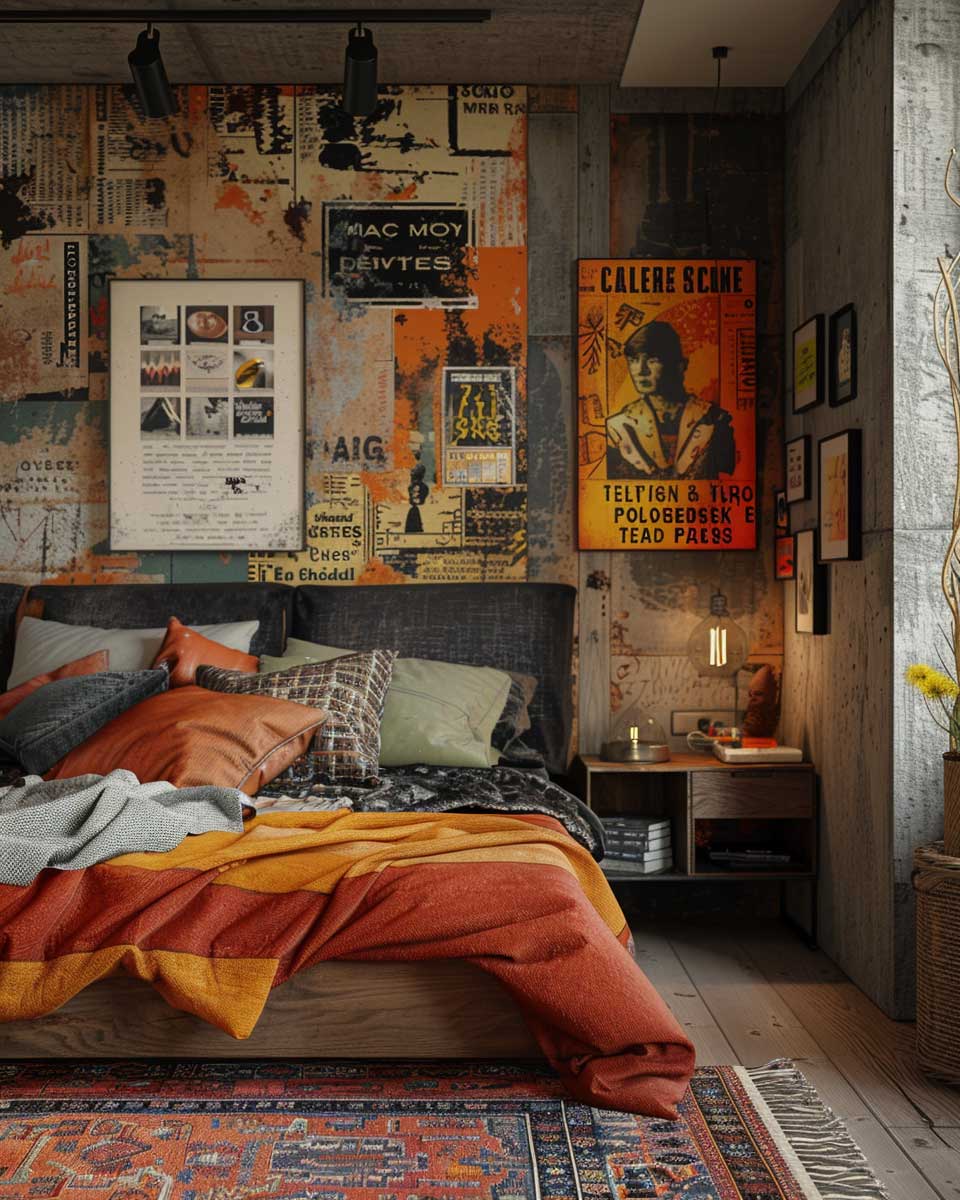
Color tells you more about a person than any object on the wall. Vibrant burnt orange on a back wall says something different than a dusty sage or a near-black navy — and none of those are right or wrong, they’re just honest. What’s wrong is choosing a color because it’s trending. Sherwin-Williams Cavern Clay and Benjamin Moore Hale Navy have both been “trending” for five consecutive years. They’ll keep trending until everyone repaints. Choose the color you’ve been drawn to for a decade, not the one from last year’s Pantone announcement.
Modular systems make the back wall design adaptable over time. IKEA’s KALLAX combined with a picture rail system (Gallery System, around $120 for an 8-foot run) lets you shift art, shelves, and hanging objects without new holes. This is not a compromise — it’s an investment in a wall that grows with you rather than dating you. Bedroom wall texture designs offer a solid base reference if you’re deciding between paint and a tactile surface before committing to any personal decor layer.
Simple Back Wall Design for Small Bedrooms Doesn’t Mean Less Impact
Small bedrooms — under 120 sq ft — need their back wall working harder, not doing less. The instinct is to go light and minimal: white paint, nothing on the walls, keep it airy. That instinct is half right. Keep the palette light, but add a single texture or material to the back wall that creates depth without adding visual bulk. A subtly textured wallpaper in off-white or warm cream from Graham & Brown (their Superfresco Easy range starts at $38 per roll) adds depth that reads as dimension rather than mass. You’ll notice the room feels larger when the back wall has texture, not smaller.
Bed back wall design in compact rooms benefits from one rule I stole from hotel design: raise the treatment’s vertical height. A back wall panel that runs floor to ceiling instead of stopping at headboard height makes the ceiling feel taller. PVC panels — covered in detail on this overview of PVC panel ideas for bedrooms — run $2–$8 per square foot installed and can be cut to floor-to-ceiling height without custom fabrication. They’re lightweight enough to mount on a rental apartment wall with construction adhesive and removed without damage, which is the practical reason they’ve taken over small-space design.
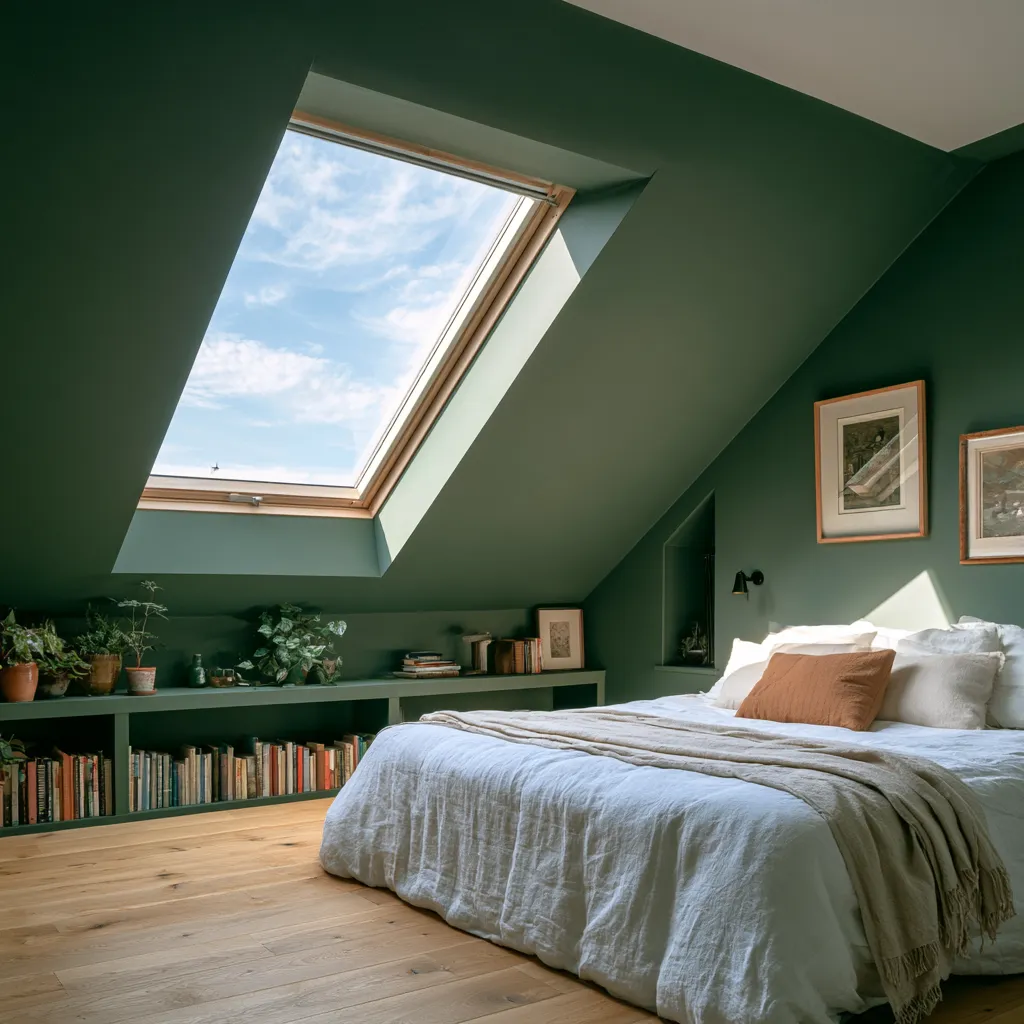
What doesn’t work in small rooms: dark back walls with no light source behind or above the bed. A charcoal or deep teal back wall in a 100 sq ft room absorbs every lumen your ceiling light produces and makes the bed zone feel like a cave. If you want a dark back wall in a small bedroom — and you absolutely can have one — you need a dedicated picture light or wall sconce at headboard height, minimum 800 lumens pointed at the wall. Without that, the dark wall reads as a problem, not a statement. Scale your ambition to your light source, not just your floor plan.
| Material | Cost per sq ft | Visual Weight | Maintenance | Best For |
|---|---|---|---|---|
| Wood slat panels | $6–$18 | Medium-high | Low | Modern, Scandinavian, Japandi rooms |
| Velvet upholstered panels | $18–$45 | High | Medium (dust) | Luxury, maximalist, couples’ bedrooms |
| Silk/grasscloth wallpaper | $8–$30 | Medium | Low-medium | Any size room, classic or transitional |
| PVC panels | $2–$8 | Low-medium | Very low | Small rooms, rentals, budget builds |
| Venetian plaster | $10–$25 | High | Low | Large rooms, living rooms, maximalist spaces |
| Mural / large-format print | $3–$12 | Variable | Low | Personal expression, travel themes |
For readers who want the research side of bedroom feature walls covered in one place, Sharps Fitted Bedrooms publishes an ongoing reference on bedroom wall ideas with panel, colour, and texture breakdowns that’s worth bookmarking alongside your material shortlist.
Bottom Line
Your bedroom back wall design earns its authority from one committed decision — not a collection of half-measures.
Pick the material that you’d be happy touching at 7am. Get the scale right — a 36-inch art piece above a king bed is not a back wall design, it’s a placeholder. Contrast your wall finish against your headboard material, not with it.
Rooms that get remembered have a back wall that looks like it was planned, not assembled. One surface, one material, executed fully.
Save this post before you start shopping for materials — the comparison table above will save you at least two wrong purchases.