
Farmhouse rustic bedroom ideas work best when three things carry the room: pale whitewashed wood, layered natural bedding, and one honest piece of hardware such as a sliding barn door. Each element pulls double duty, adding texture while solving a practical problem. A barn door, for example, can free up to 14 square feet that a swinging door would claim. Start with the element your room lacks most, not with accessories.
Does the style still work in a small or modern home? Yes, as long as the palette stays light and the materials stay real. Sleep researchers put the ideal bedroom at 65–68°F, which favors breathable linen and cotton over synthetic layers. A typical installed barn door runs $600 to $2,000, so the door is the big budget call while walls and bedding stay affordable. Spend on one anchor piece and keep everything around it simple.
Quick Scan
- Whitewash at 1 part paint to 1 part water for balanced grain; go 1:3 for a sheer veil.
- Brushing along the grain beats rolling for an aged, chalky finish.
- Linen sheets at 80–120 thread count breathe as well as cotton at 200–400.
- Keep the room near 65–68°F so layered quilts feel cozy, not stuffy.
- Barn doors cost $600–$2,000 installed, averaging about $1,200.
- A 30-inch sliding door needs about 61 inches of clear wall beside the opening.
- One rustic anchor on light walls beats five rustic accessories on dark paint.
Whitewashed Walls Set the Tone for Farmhouse Rustic Bedroom Ideas

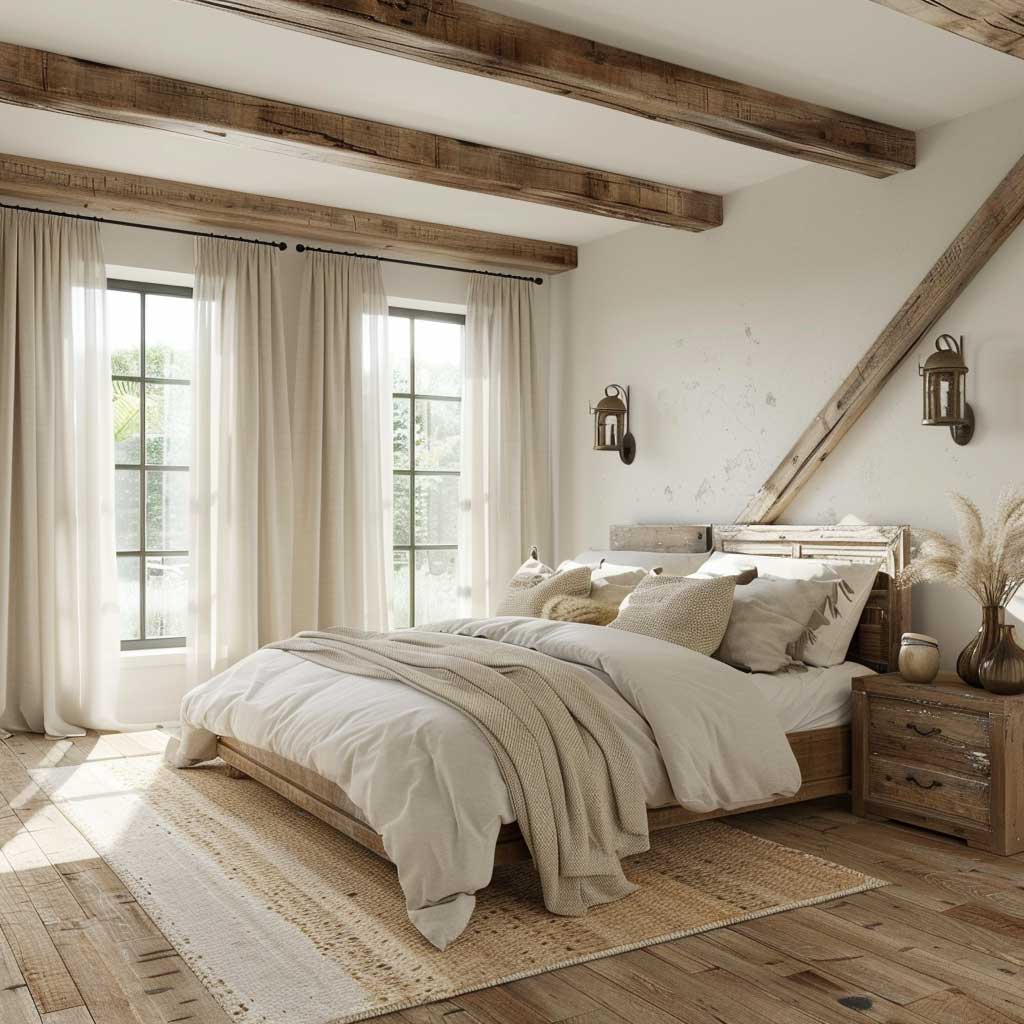


Whitewashed walls are the quiet base layer of most farmhouse bedroom design ideas, giving wood a chalky white veil while the grain still shows. Think of it as frosted glass for timber: you see the shape underneath, only softer. Modern whitewash is simply water-based white paint thinned with water, and the standard mix is 1 part paint to 1 part water. Test the ratio on a scrap board first, because pine drinks paint faster than oak.
Solid paint vs whitewash is the real choice here. Solid white flattens planks into one uniform surface, while a 1:1 wash keeps knots and saw marks visible, which is the whole point of a farm style bedroom. Some DIYers prefer 1 part water to 2 parts paint for heavier coverage, and others thin all the way down for a faint veil. Pick the ratio by how much grain you want to keep, using the scale below.
- 1 part paint to 3 parts water — faint veil, grain dominates, best on reclaimed boards.
- 1 part paint to 1 part water — the classic farmhouse balance of white and wood.
- 2 parts paint to 1 part water — near-solid white, wood reads only as texture.
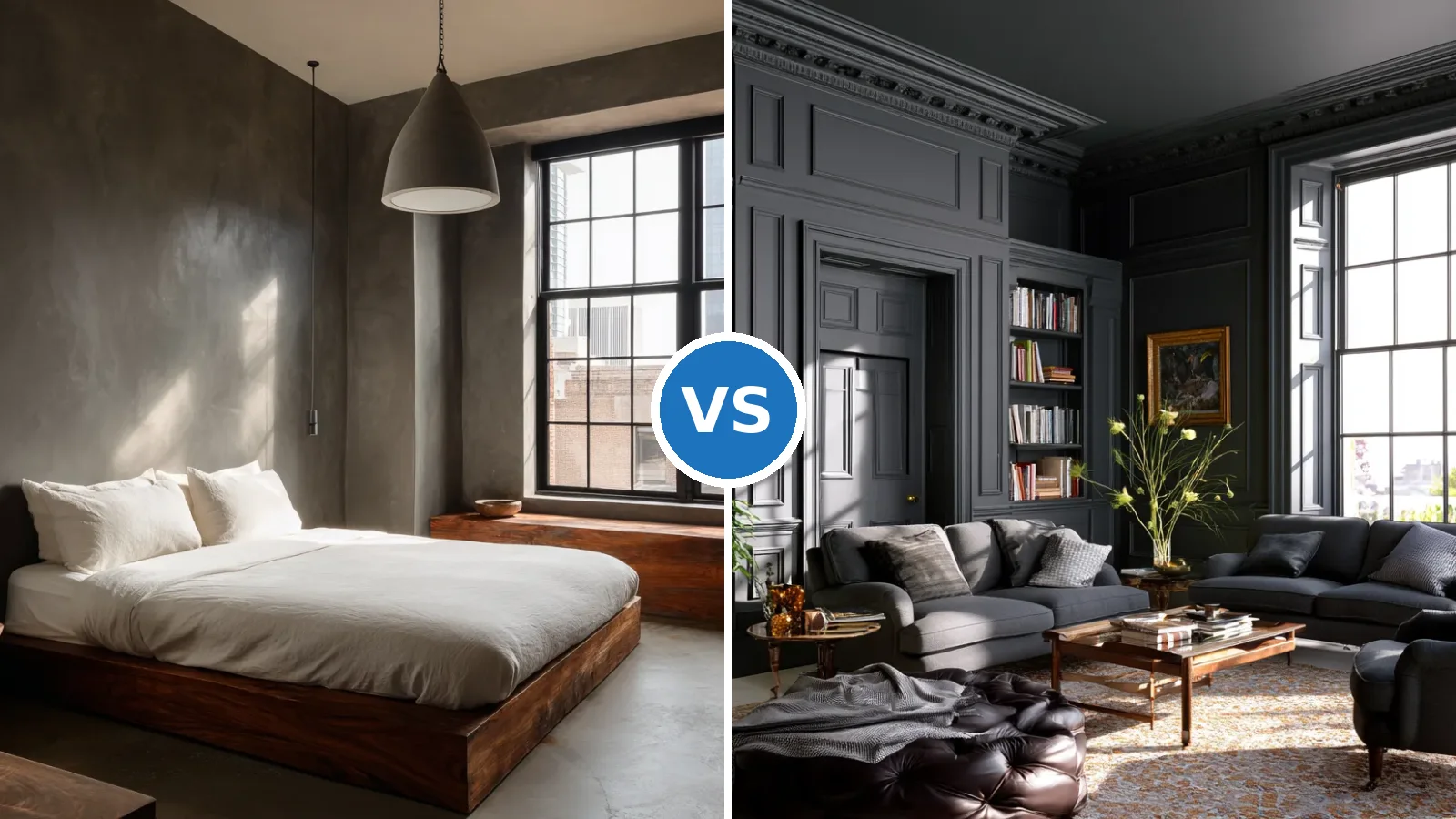
Should every wall get the same treatment? Not necessarily. Washing only the headboard wall creates a focal point, while washing all four walls makes a small room read larger and calmer, the same trade-off covered in this comparison of accent walls versus color drenching in a bedroom. Avoid washing over glossy varnish, since the thin mix sits on top and peels instead of soaking in. Sand or degloss sealed wood before the first coat.

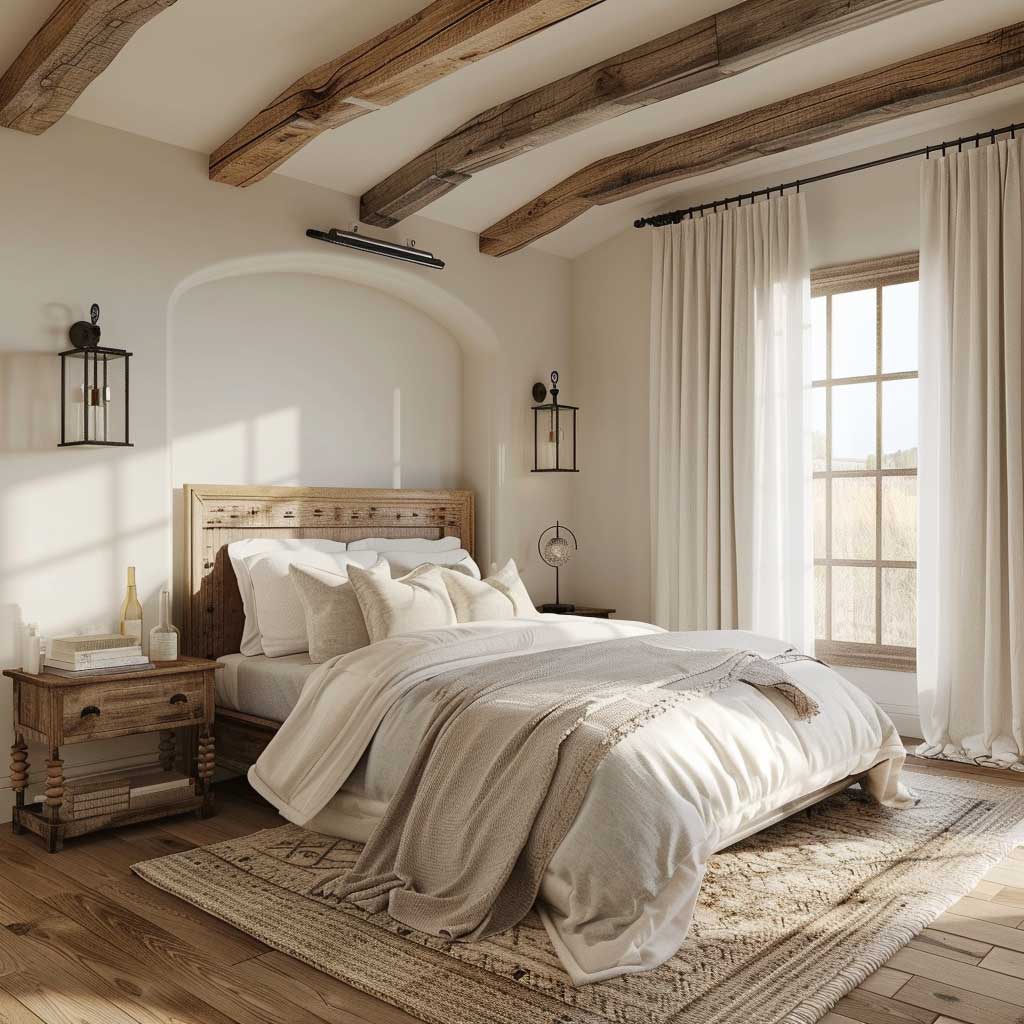


Technique decides whether the wash looks aged or streaky. Brush the mix along the grain, let it soak for about a minute, then wipe the excess with a damp rag so the finish penetrates instead of pooling. A roller pushes paint into an even film and erases the hand-made quality you are after. Work in sections no wider than your arm’s reach so each patch gets the same soak time.
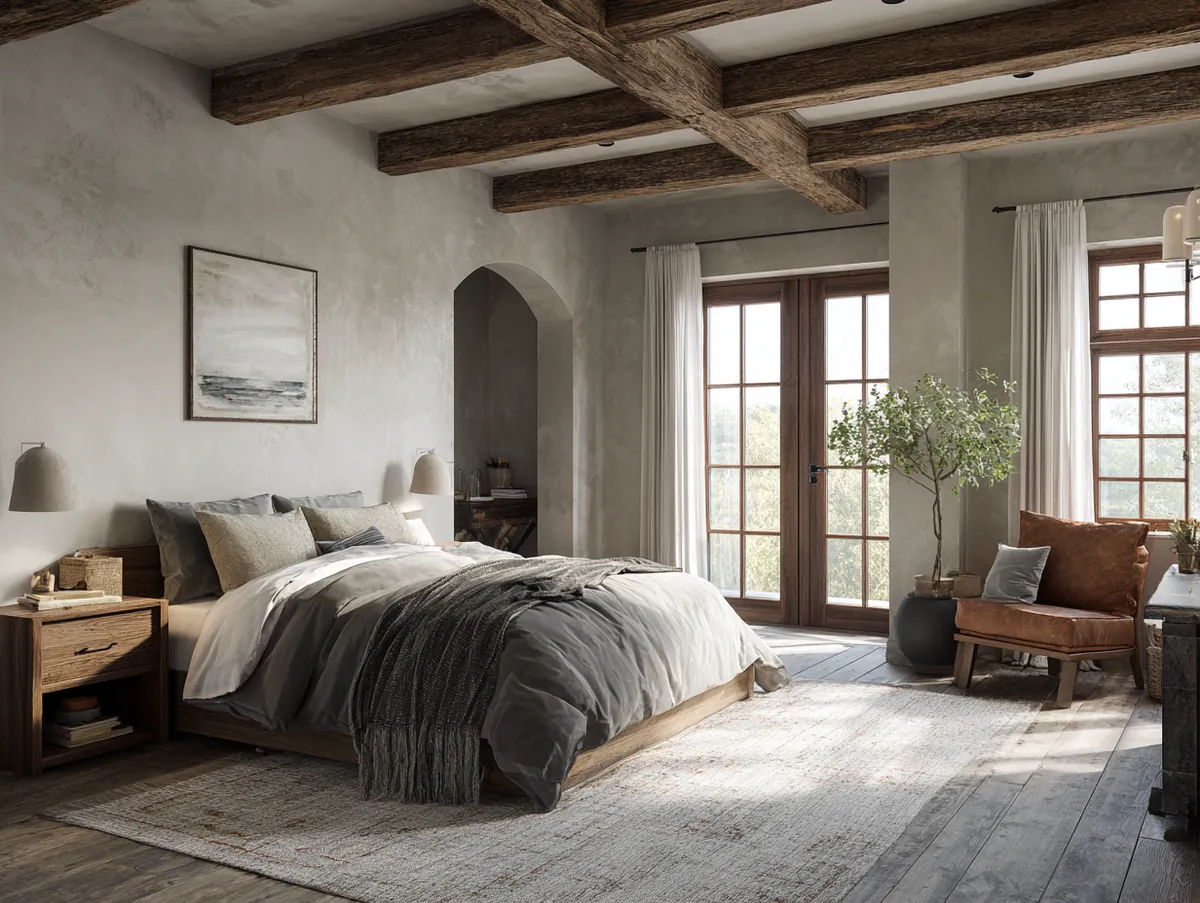
Light finishes the whitewashed look. Floor-length sheer curtains spread daylight across a pale wall the way a lampshade softens a bare bulb, and bedside wall sconces cast raking light that pulls the grain forward at night. A single central ceiling fixture flattens texture like harsh midday sun. Place sconces at the sides of the bed and keep the overhead light for cleaning days.
Layered Bedding Makes Farmhouse Rustic Bedroom Ideas Feel Cozy


Cozy farmhouse bedroom ideas start at the mattress and build upward in thin, breathable layers rather than one heavy comforter. Picture dressing for a cool autumn morning: a base layer, a middle layer, and something you can shed by noon. Sleep specialists place the best bedroom temperature at 65–68°F, so layers matter more than bulk. Choose three or four lighter pieces instead of one thick duvet.
The Sleep Foundation’s guide to sleep temperature notes that body temperature starts dropping about two hours before sleep, and a room that runs too warm cuts into deep, restorative sleep. That makes the sheet layer the most important one. Linen vs cotton comes down to feel: linen at 80–120 thread count runs cool and slubby, while cotton at 200–400 feels smoother and crisper. Hot sleepers should start with linen, and cold sleepers can stay with cotton.
Where do you find bedding that suits the look? Search by fiber and fabric weight, not by the word “farmhouse” on the label. Good linen sheets sit around 150 gsm, heavy enough to drape and light enough to breathe. Do not chase a high thread count on linen, since its thick fibers never reach cotton-style numbers and a 1,000-count claim usually signals a blend.


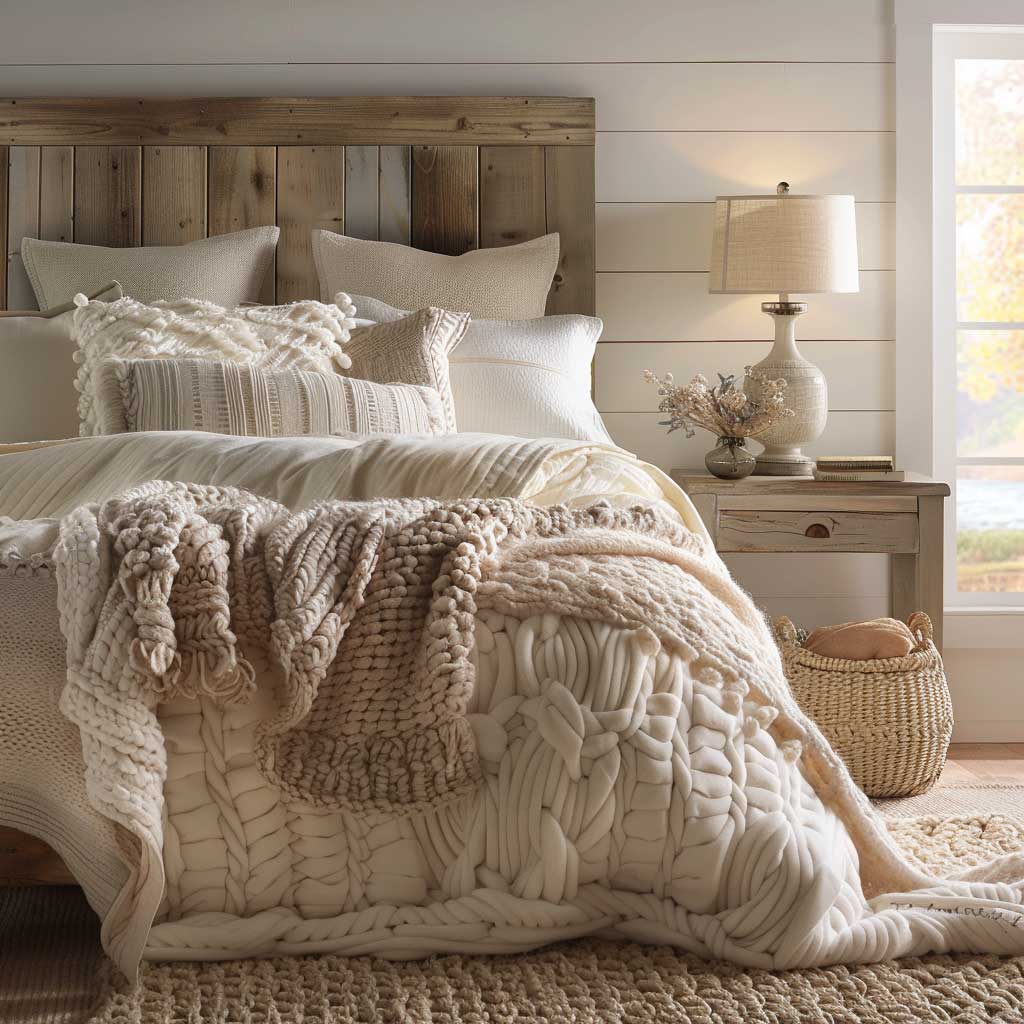

The top layers carry the romantic, cozy farmhouse bedroom look that shows up in photos. A hand-stitched quilt folded at the foot, a chunky knit throw, and two euro shams in front of two standard pillows build height without clutter. Farmhouse bed ideas also hinge on the frame: a reclaimed wood headboard reads warmer, while a black metal frame reads lighter and slightly industrial. Pick one frame and let the bedding supply all the softness.
Seasonal swaps keep the bed from feeling stale. Trade a wool throw for a cotton one once nights push past 68°F, and switch the quilt for a lighter coverlet. A bed piled with eight decorative pillows looks like a showroom and gets stripped every night. Cap accent pillows at two or three and put the budget into better sheets.
Don’t Do This
- Rolling whitewash onto rough planks — brush along the grain and wipe after about one minute instead.
- Washing over glossy varnish — a thin 1:1 mix sits on the surface and peels.
- Buying “1,000-thread-count linen” — genuine linen runs 80–120.
- Heating the bedroom past 68°F and still piling on a heavy duvet.
- Ordering a 30-inch barn door for a wall with less than 61 inches of clear space.
A Sliding Barn Door Gives the Farmhouse Chic Bedroom Its Edge


A statement barn door is the fastest way to turn a plain room into a rustic farmhouse bedroom, because it adds wood mass and hardware in one move. It behaves like the sliding panel of an old library bookcase: decorative when closed, out of the way when open. National cost data puts installed barn doors at $600 to $2,000, with most homeowners paying about $1,200 for a 36-inch solid wood door. Budget for the door first, then style the room around it.
Sliding vs swinging is mostly a floor-space decision. Door manufacturers estimate a barn door kit can save up to 14 square feet compared with a traditional swinging interior door, which is enough room for a dresser or reading chair. The catch is wall space: a 30-inch sliding door needs about 61 inches of clear wall beside the opening. Measure that run before ordering, including outlets and switches the door will slide over.
Is a barn door private enough for a bedroom? Less than a hinged door, since it hangs off the wall and leaves small gaps at the edges. Avoid using one for an en suite bathroom where sound and smell travel, and save it for closets, walk-in wardrobes and bedroom entries. Professional installation usually takes 2–6 hours depending on door width and wall prep, so book it as a half-day job.


Finish matters as much as the frame. A distressed or reclaimed plank door brings nail holes and open grain, while a smooth painted door reads cleaner and more modern; if the plank look appeals for walls too, compare options in this piece on textured wood wall panels for modern interiors. Keep the surrounding wall light so the door stays the hero. Repeat the black track hardware once more in a lamp base or picture rail.
A metal bed dressed in white and pale blue linens balances a dark wood door, the same way a white shirt calms a heavy tweed jacket. Industrial sconces and one piece of vintage art complete the farmhouse chic bedroom without tipping into theme-park country. Stop at three rustic elements per wall, because a fourth starts to feel like a stage set.
Compare Whitewash, Bedding and Barn Doors Side by Side
Farmhouse country bedroom ideas usually combine all three upgrades, yet they differ sharply in cost, time and reversibility. Bedding is the cheapest test, whitewash is a weekend commitment, and a barn door is the biggest spend. Use the numbers below to decide which one your room needs first.
| Upgrade | Key number | Typical range | Install time | Reversibility |
|---|---|---|---|---|
| Whitewashed walls | 1:1 paint to water | 1:3 sheer to 2:1 near-solid | About 1 minute soak per section | Low, needs sanding to undo |
| Linen sheet layer | 80–120 thread count | Around 150 gsm weight | Same day | High, swap any time |
| Cotton sheet layer | 200–400 thread count | Best in a 65–68°F room | Same day | High, swap any time |
| Sliding barn door | About $1,200 average | $600–$2,000 installed | 2–6 hours | Medium, track leaves holes |
Build the Room Around One Anchor
One honest anchor beats a room full of rustic props. A $1,200 barn door or a single whitewashed wall does more for the space than ten decorative signs.
Start with the walls if the budget is tight. A 1:1 whitewash on existing planks costs little more than a can of paint and a free weekend.
Dress the bed for 65–68°F nights with linen at 80–120 thread count or cotton at 200–400. Layer it so pieces come off as the season turns, rather than relying on one heavy duvet.
Measure twice before buying a barn door. Saving up to 14 square feet only counts if you have about 61 inches of clear wall for the door to slide along.
Complete guide
Bedroom Design Ideas That Actually Change How You Sleep, Feel and Live
Styles, colors, furniture, walls, layouts — 300+ ideas in one place
Complete guide
Farmhouse Style Ideas for Every Room and Outdoor Space
Kitchens, bathrooms, bedrooms, exteriors, decor, outdoor — all in one place
You Might Also Like

Related Topics