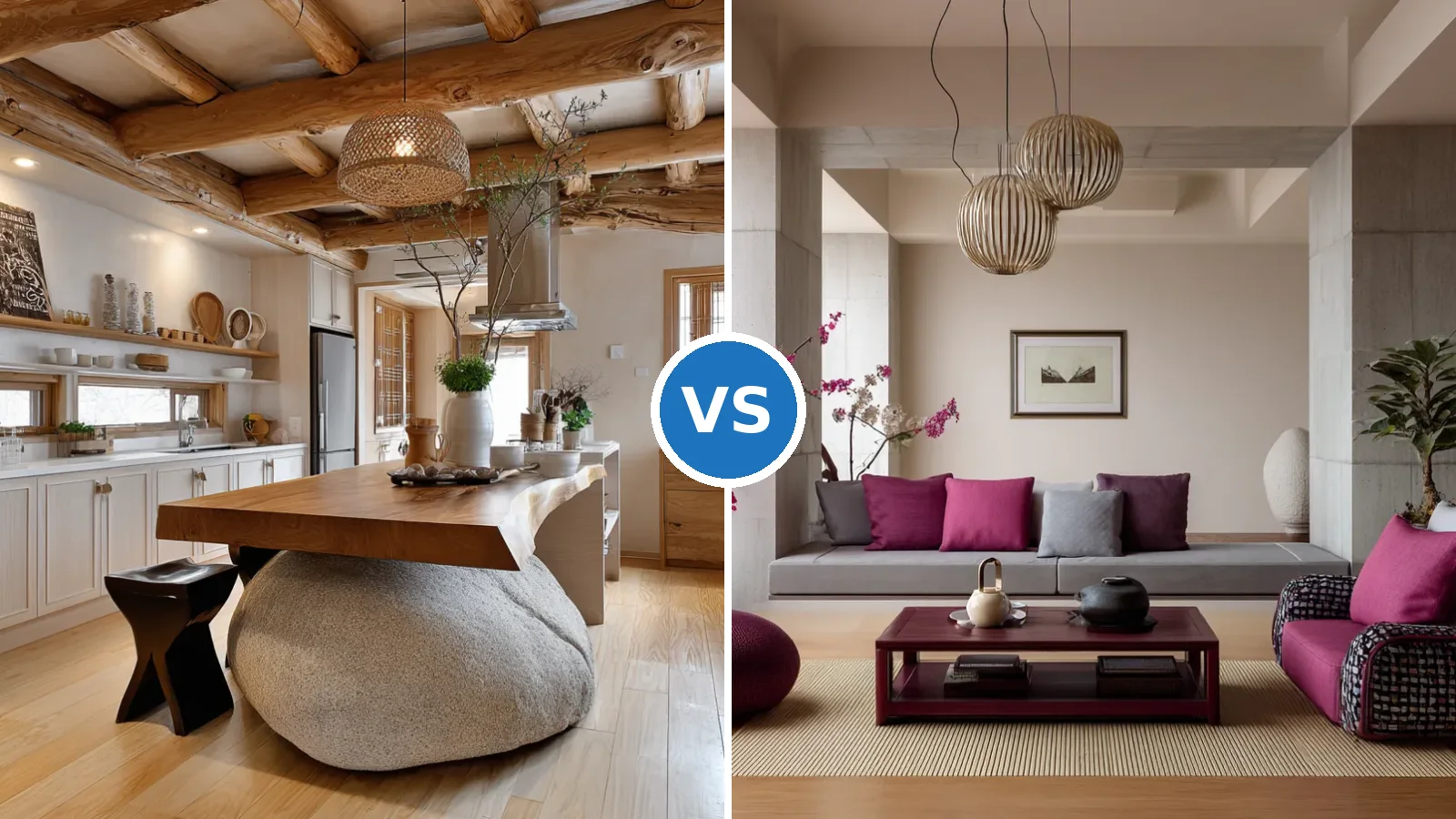
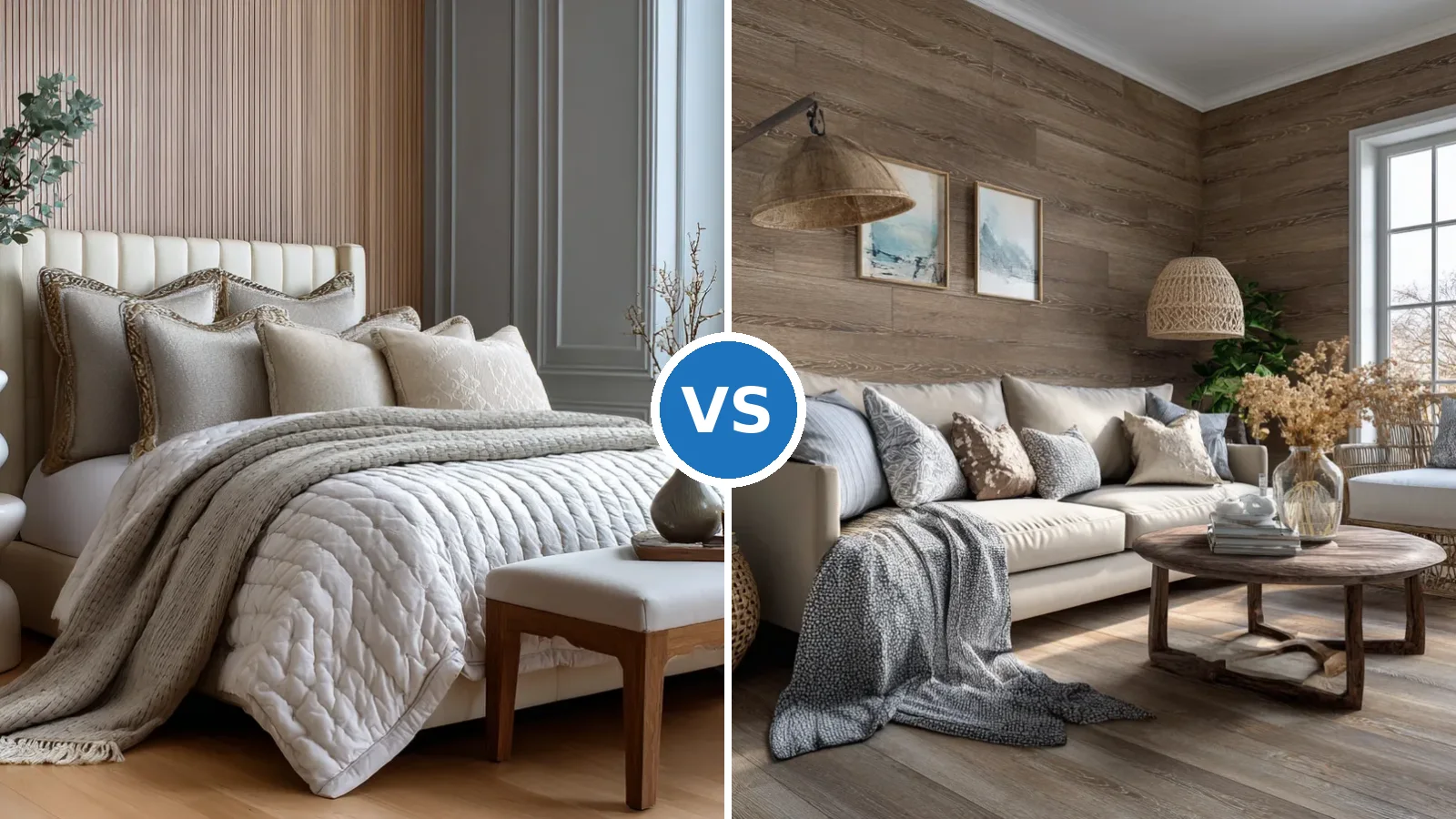
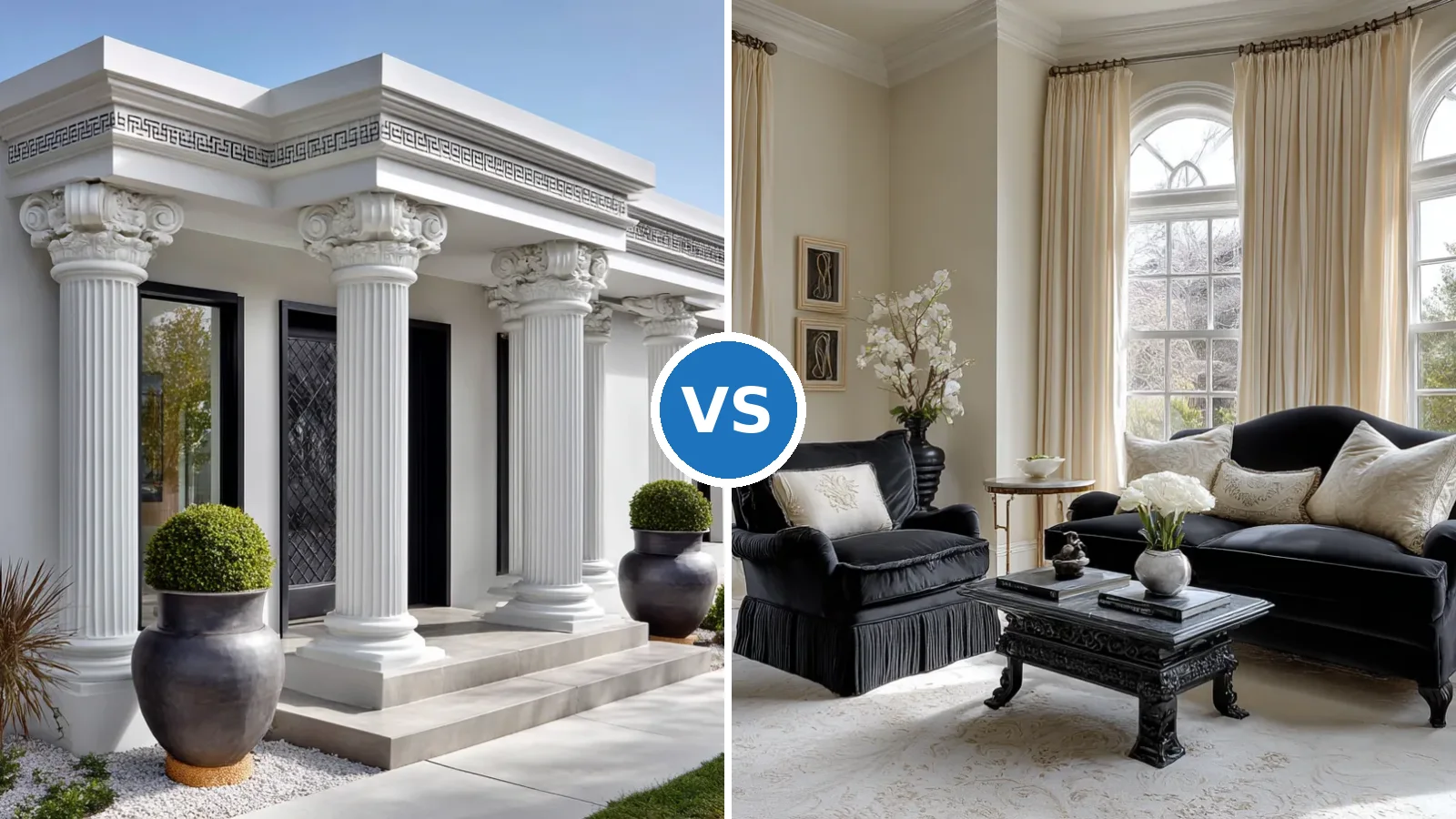
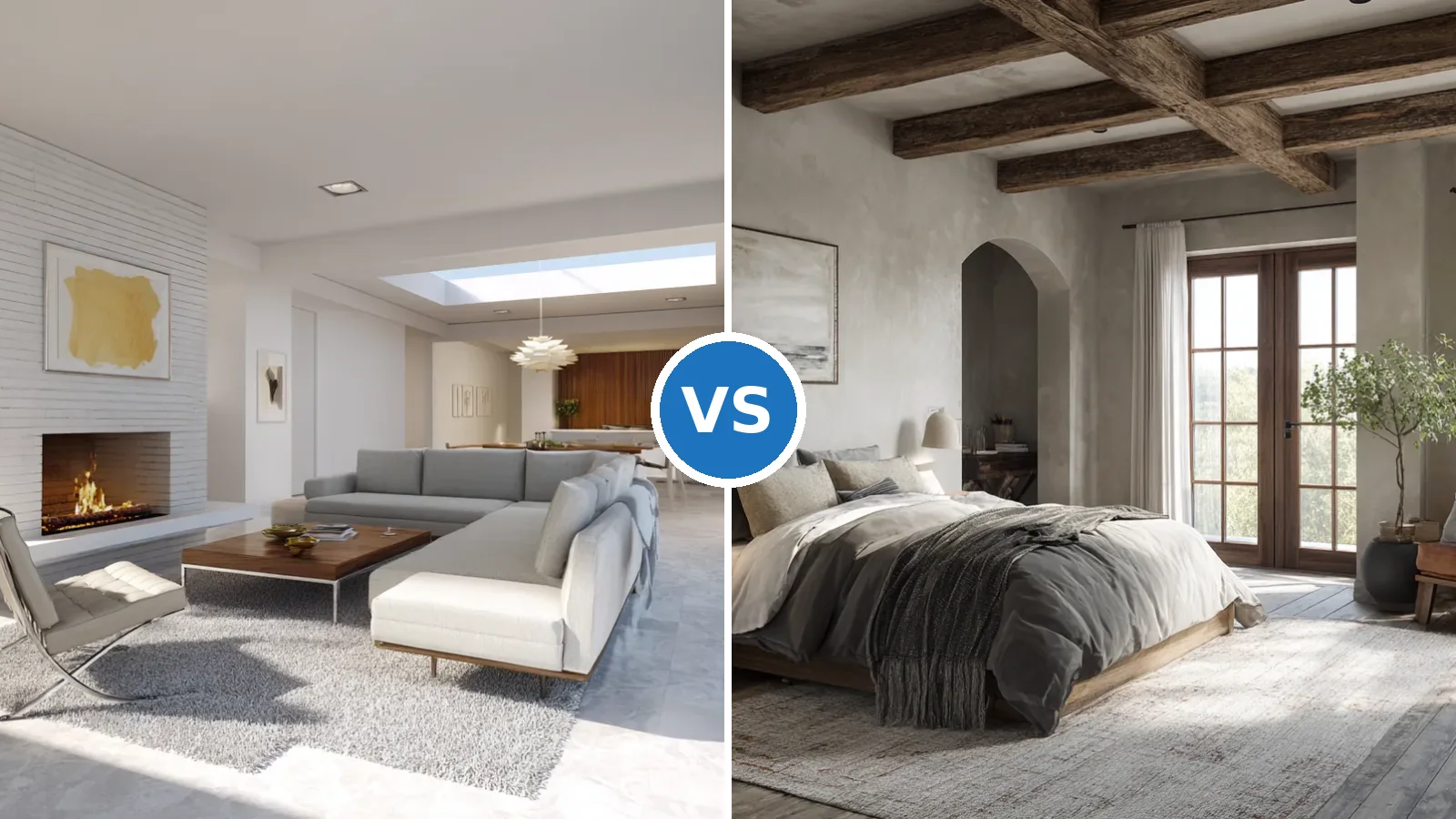
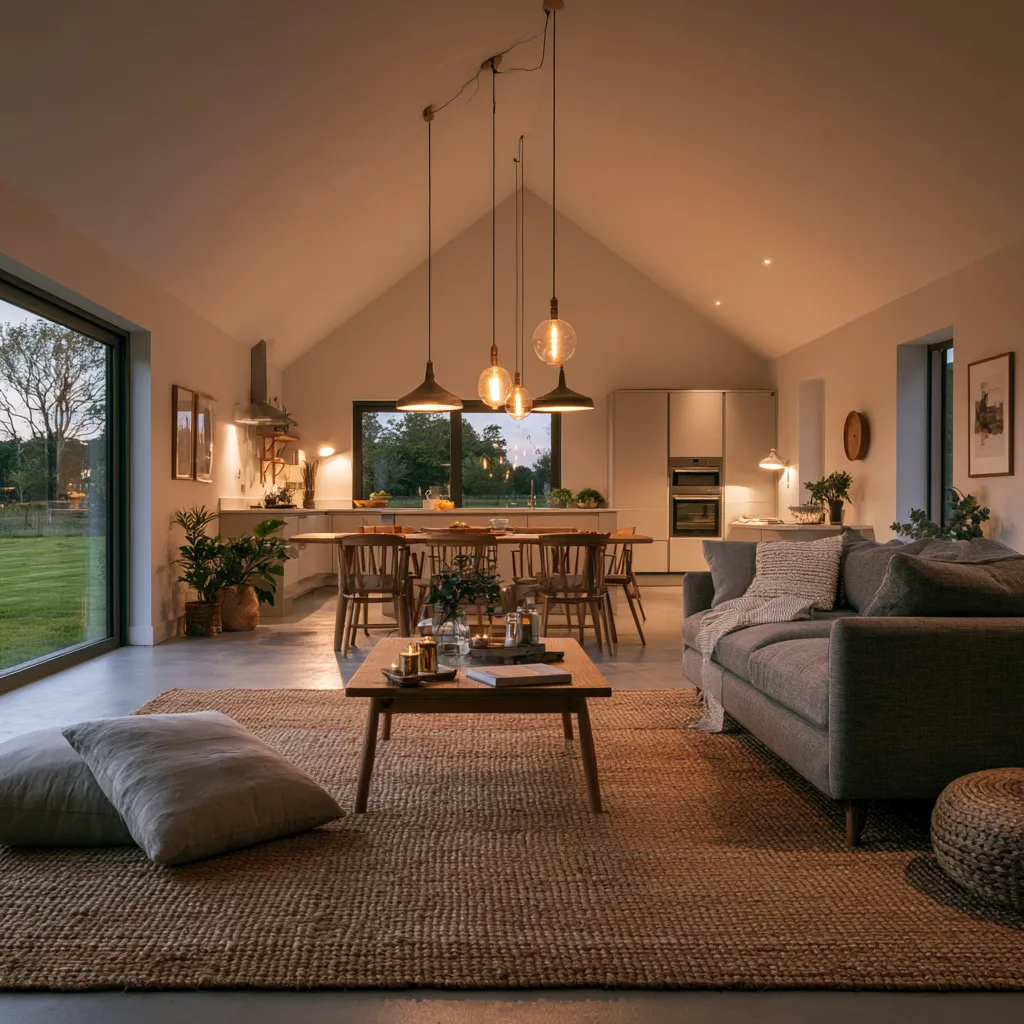
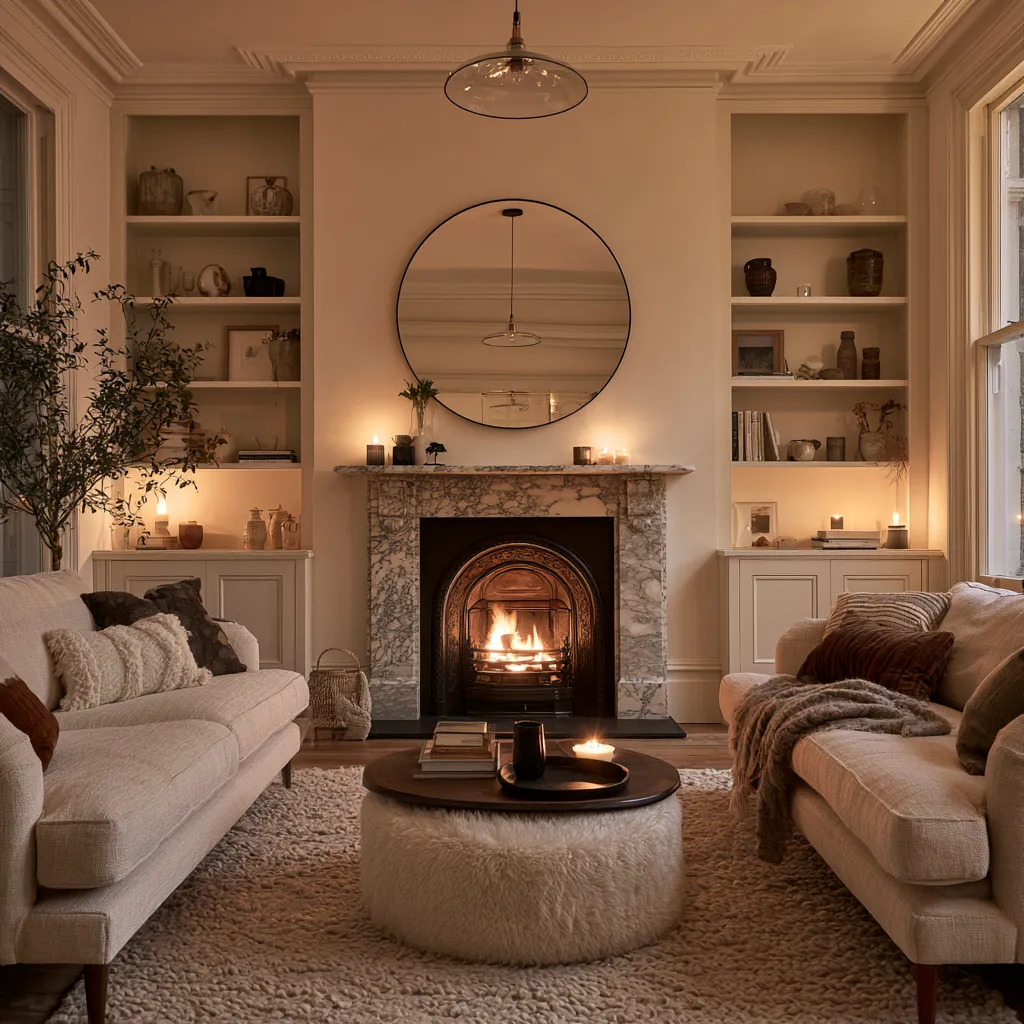
L-shaped room design rewards people who commit to a layout plan before they buy a single piece of furniture. I’ve rearranged my own L-shaped living room twice, and both times the room looked wrong until I treated the two legs as separate zones with a shared visual anchor. You’ll notice the difference immediately: rooms that feel cohesive have a deliberate furniture arrangement, not just furniture that fits. This page walks through three proven approaches — minimalist, rustic, and contemporary — so you can pick the one that matches your home size, style, and the way you actually live in the space.
Skip this planning step and you end up with what most people get: a sofa shoved along one wall, a rug that’s too small, and a short leg of the room that functions as a hallway. That’s not a layout problem. It’s a decision problem.
Quick Scan
- Minimalist layout — low-profile sectional, long leg as seating zone, short leg as reading nook or desk area
- Rustic layout — exposed materials, tufted or leather sofas, the corner of the L as a dramatic focal wall
- Contemporary with color — floating sectional, bold accent wall on the short leg, a single statement rug to unify both zones
- The one rule all three share — place the main sofa facing inward toward the room’s center, never flat against the longest wall
- Rug sizing — the rug should sit under at least the front legs of every seating piece in the main zone
Minimalist L-Shaped Room Design Where the Short Leg Does the Work
Modern minimalism in an L-shaped room design is not about empty space — it’s about making each leg of the L legible. The long leg holds the main seating arrangement: a low-profile sectional like the IKEA VIMLE (around $900–$1,200 depending on configuration) angled slightly inward, a concrete or light oak coffee table at 16–18 inches height, and nothing else on the floor. The short leg becomes a reading nook or a quiet workspace, separated from the main zone by intention, not by a wall. I keep a Muuto Rest Chair ($1,200) and a Flos Arco floor lamp ($1,200) in my own short leg — the difference between that corner feeling designed versus abandoned is one piece of considered furniture.
Neutral doesn’t mean cold. My go-to palette for minimalist L-shaped rooms is warm white walls — Benjamin Moore White Dove OC-17 — with a single warm oak wood element. A floating shelf on the shorter wall, a low media console, or exposed wood flooring all work. What doesn’t work: adding both stone and wood as texture layers. Pick one. Two natural materials in a minimalist room compete instead of cooperating.
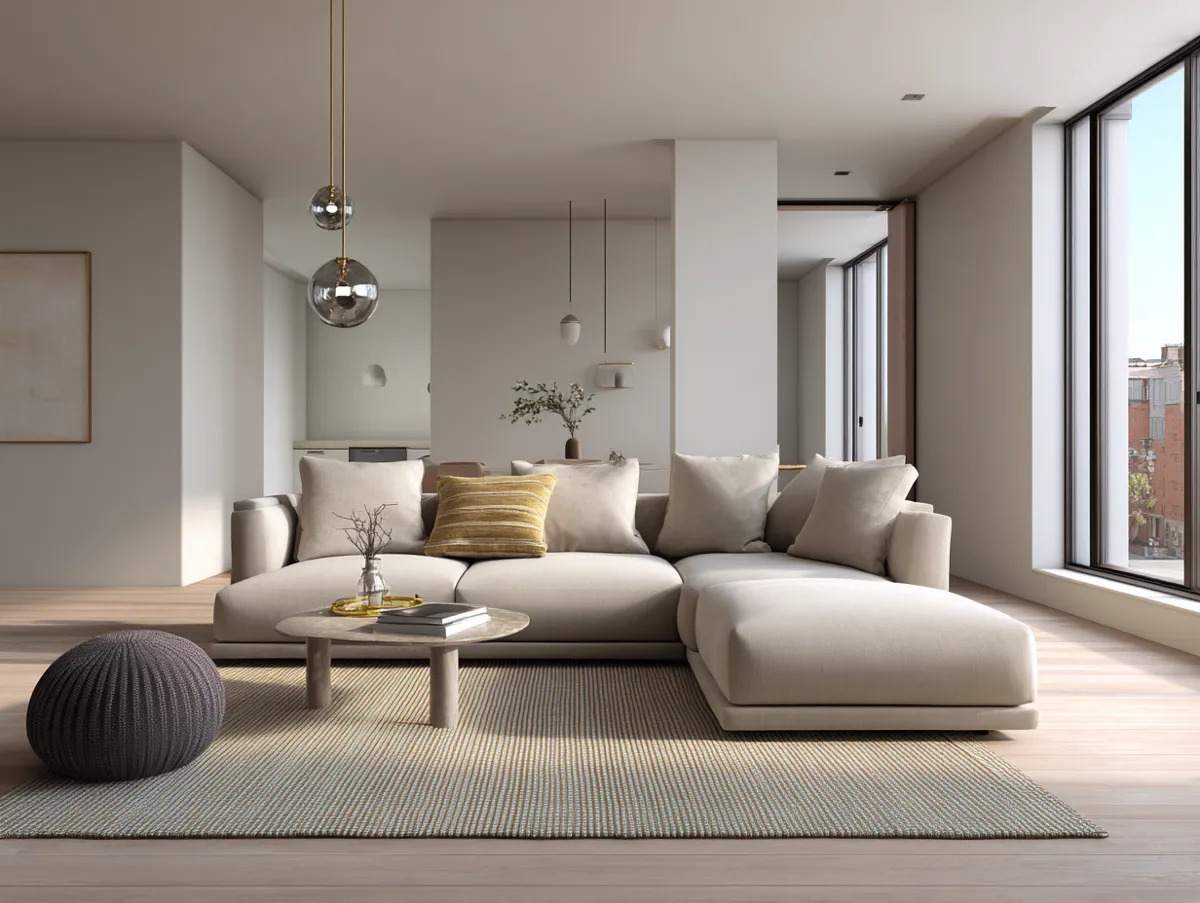
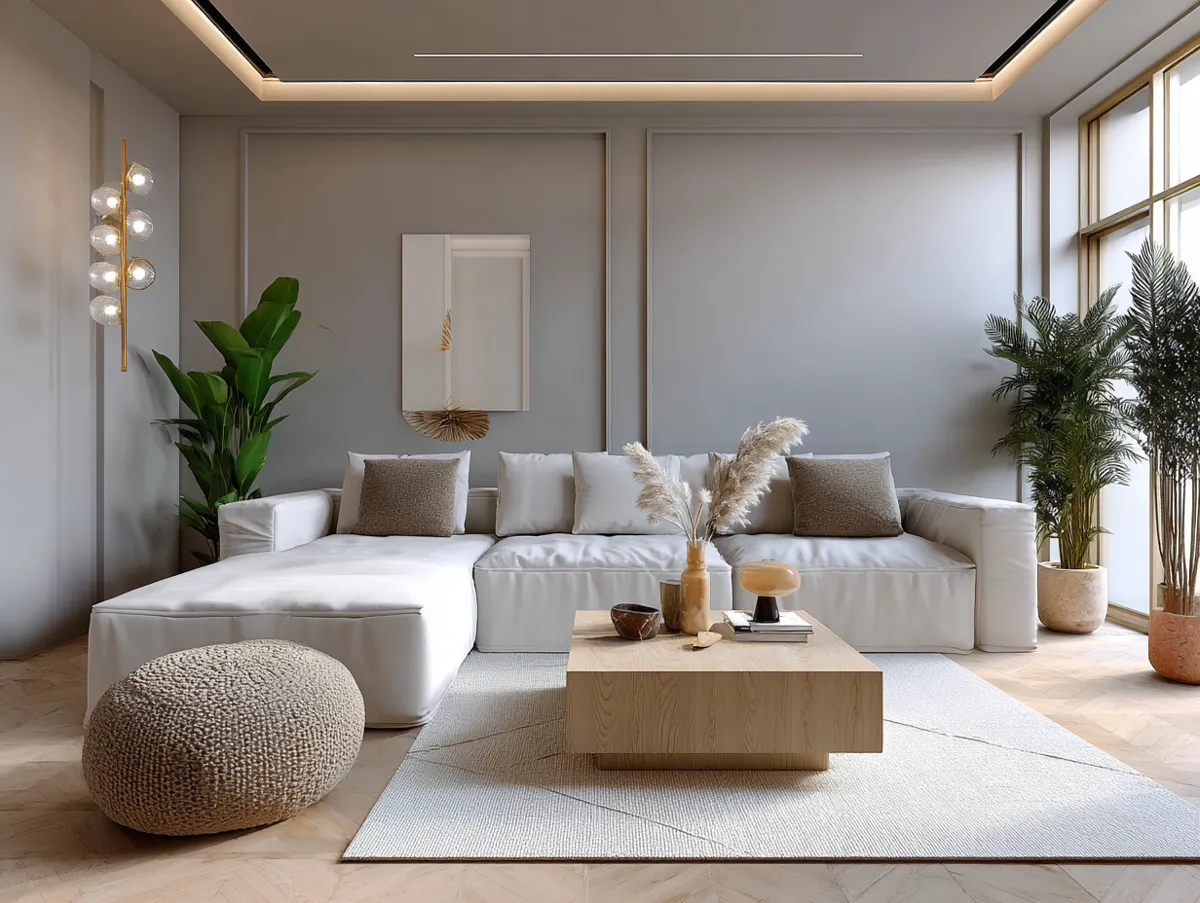
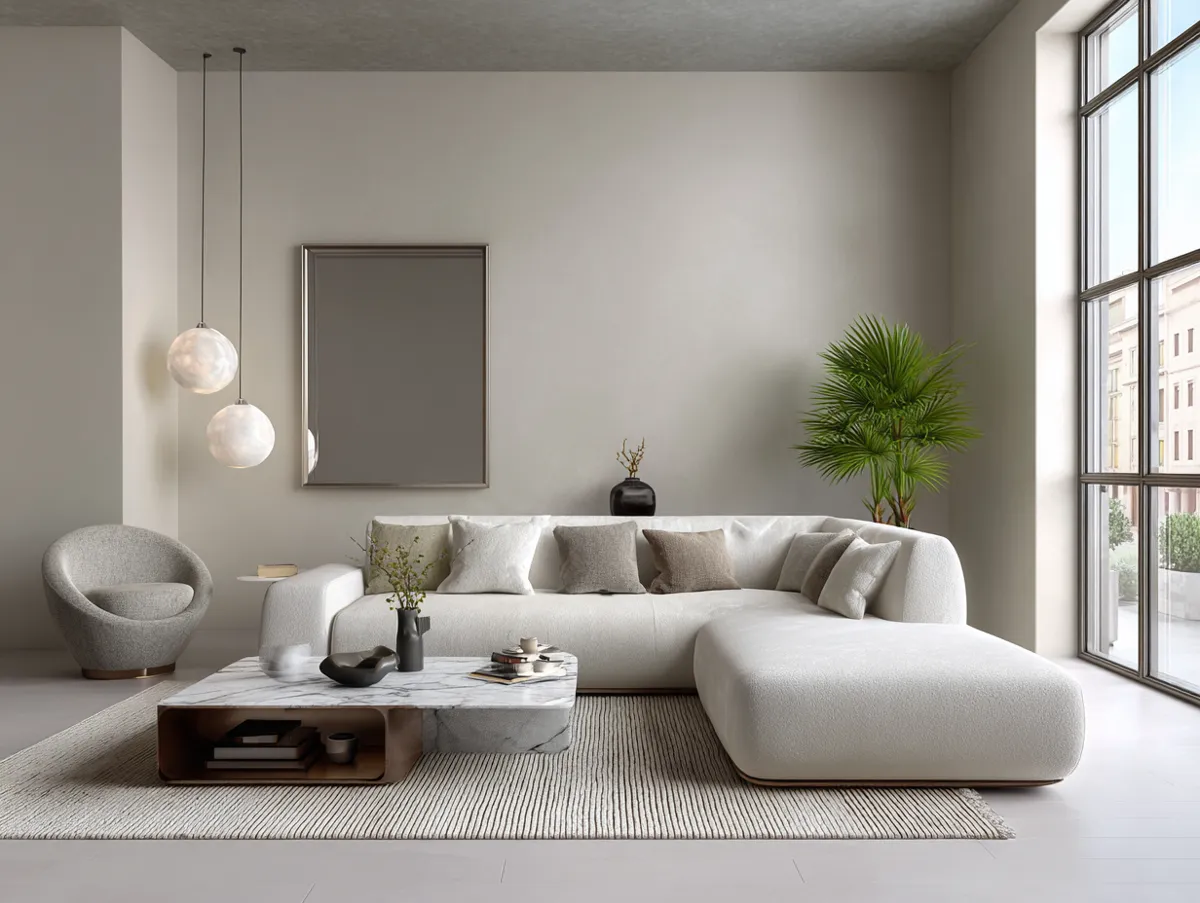
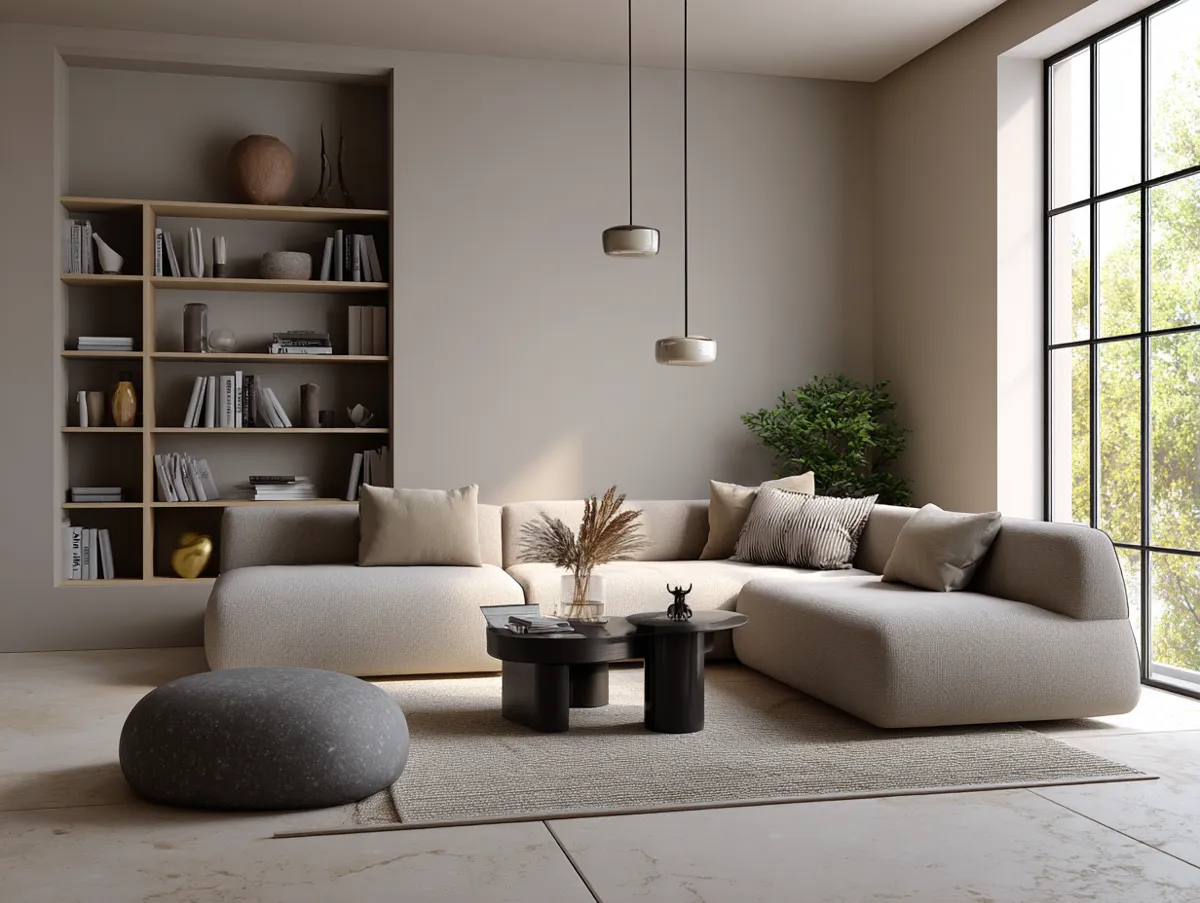
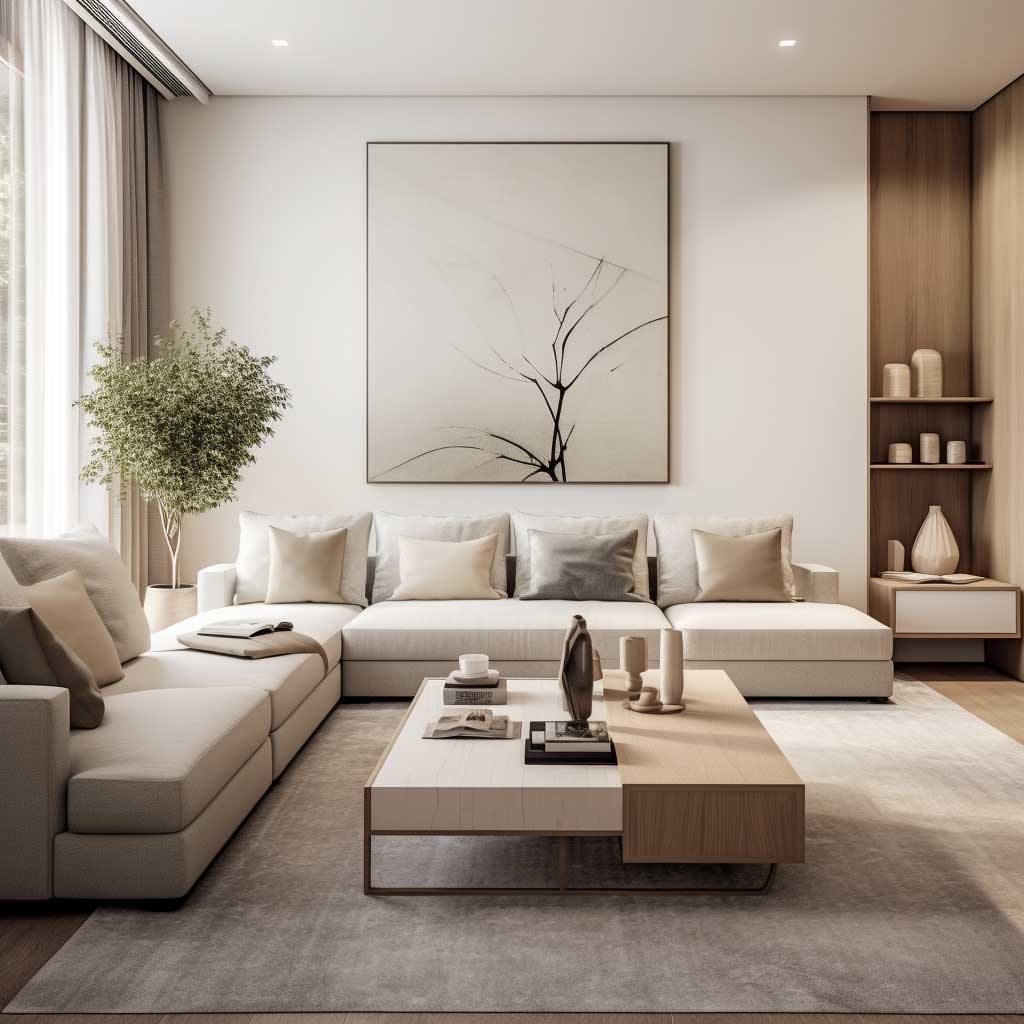
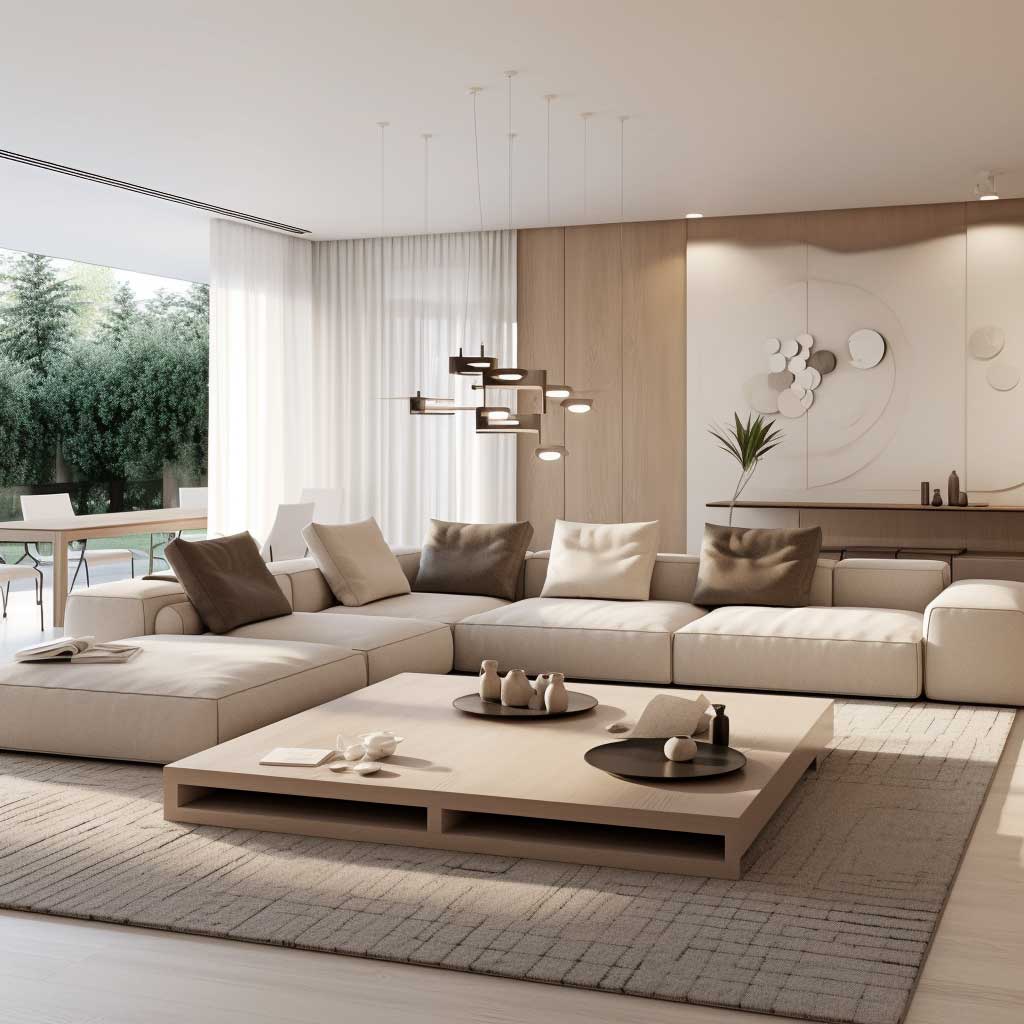
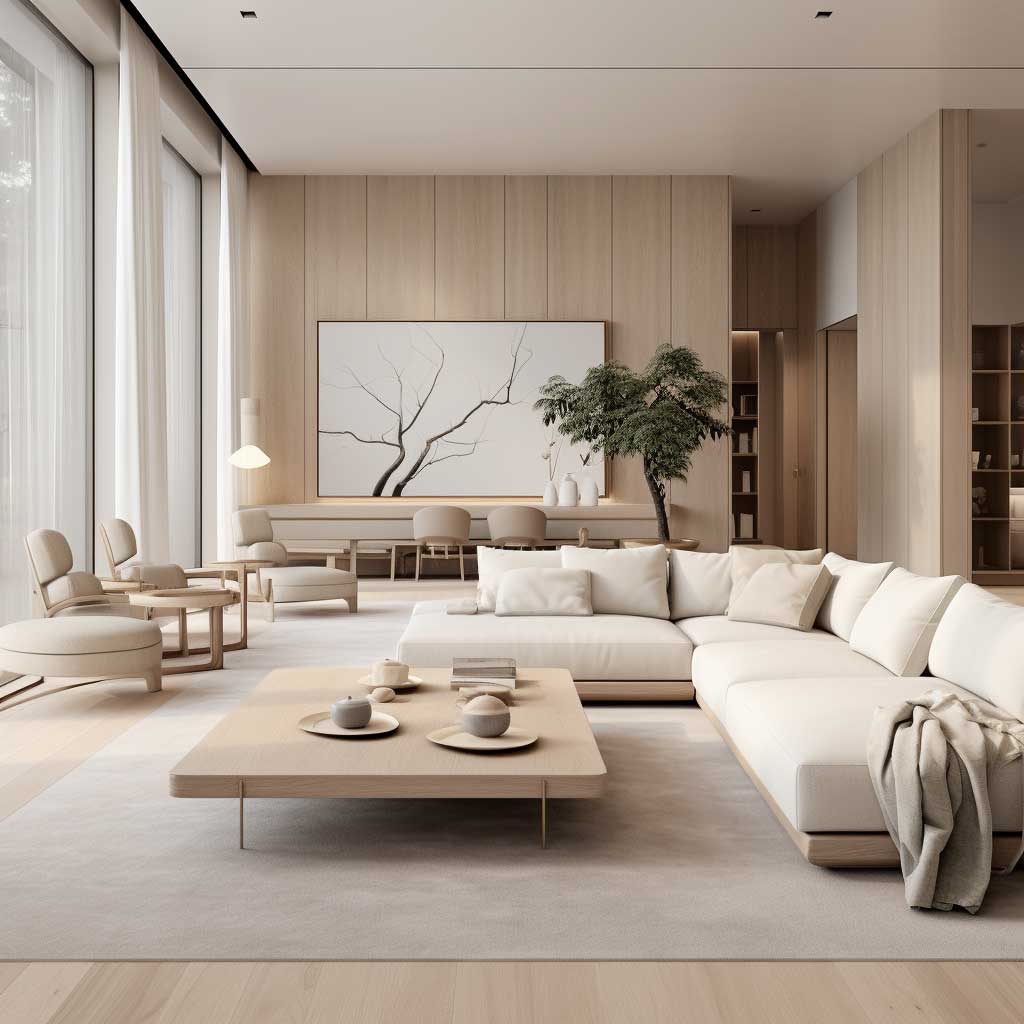
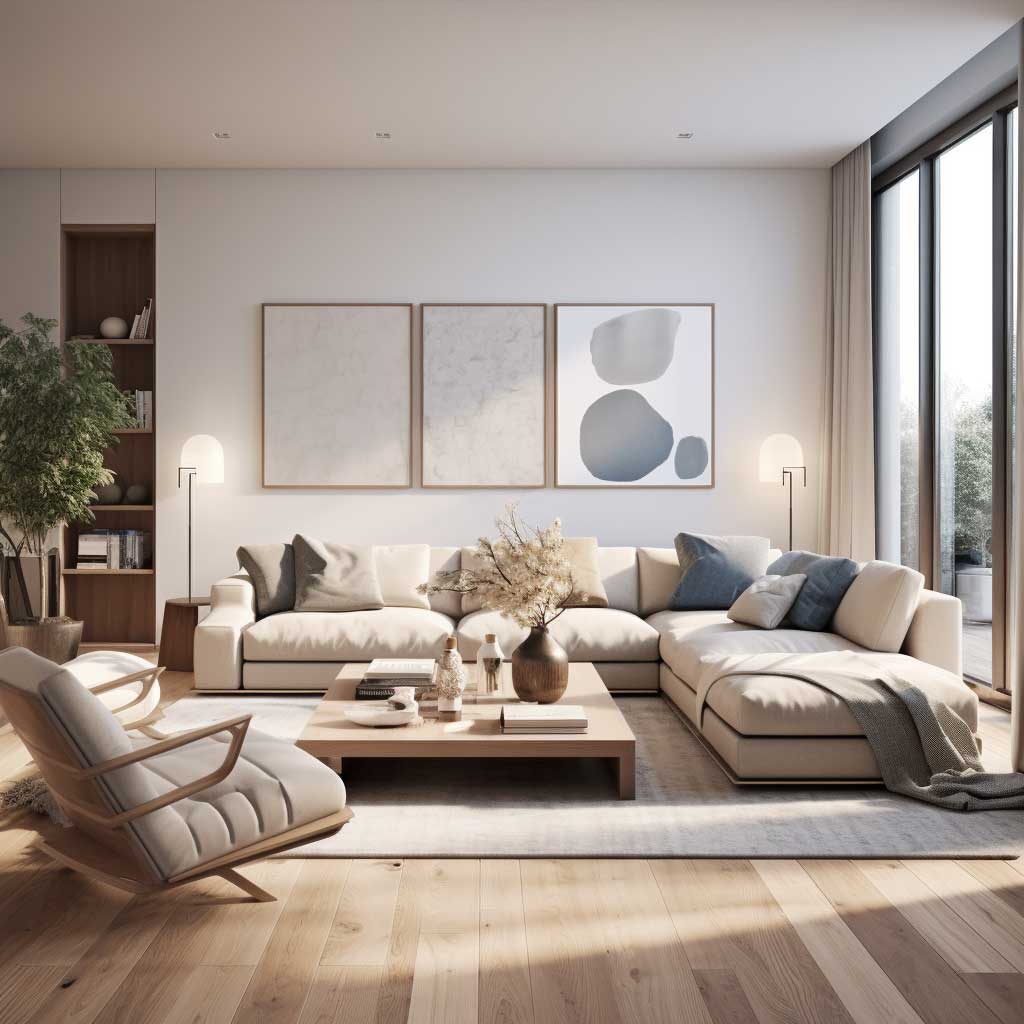
Lighting is where most minimalist L-shaped rooms fail. Recessed cans in a uniform grid flatten the room — you lose all sense of the two distinct zones. Use one pendant or Plug-in Huub floor lamp over the reading-nook end and keep the main zone lit with a single arc floor lamp behind the sofa. Recessed lighting is fine as ambient fill, but it should never be the only source. The room starts to feel like a dentist’s office. You need a warm source at eye level in at least one zone.
Scale is the mistake I see most often in L-shaped rooms going minimalist. People buy furniture that fits the short leg dimension and the long leg ends up proportionally empty. Measure the long leg wall before choosing a sofa. For a 16-foot long leg, you need a sectional or sofa + separate chaise that stretches at least 110 inches combined. The West Elm Harmony Sectional starts at $2,599 and hits this range — it’s my personal starting point for rooms in the 300–400 sq ft combined range. A small 84-inch sofa on a 16-foot wall reads as furniture that wandered in from a different house.
Decor in a minimalist L-shaped room should have one visual anchor per zone. One large abstract print (Desenio’s unframed posters run $15–$30 and punch well above their price point) in the main zone, one sculptural object — a Muuto Unfold pendant or a Tom Dixon Melt light — in the short leg. That’s it. Resist every impulse to add more. The L-shape already provides visual interest through its architecture. Let it.
For more on furniture placement principles in unusual room shapes, this breakdown of awkward living room layout solutions covers zoning logic that applies directly to L-shaped configurations.
Rustic Materials in an L-Shaped Interior and How to Keep Them From Going Cabin
Rustic elegance in an L-shaped room design lives and dies by the ratio of raw to refined. Exposed wooden beams, brick walls, hardwood floors — these establish the rustic foundation. Alone, they’re a mountain cabin. Paired with one or two elevated pieces, they become something editorial. My rule: one raw architectural element (beam or brick, not both), one plush upholstered sofa, and two pieces of vintage or antique furniture. The ARHAUS Lanier leather sectional (~$4,000) hits exactly the right note — it reads rugged in material but refined in its tight tailoring.
The L-shape corner is your most underused real estate in a rustic room. Don’t waste it on a bookshelf or a TV unit. Instead, place the fireplace — freestanding or built-in — at the inside corner of the L. The Dimplex Revillusion electric fireplace insert ($799–$1,200) works for apartments. For homes, a real wood-burning fireplace insert at the corner turns the bend of the L into the room’s visual climax. Everything faces inward toward it. That’s how you make an L-shaped room feel intentional rather than accidental.

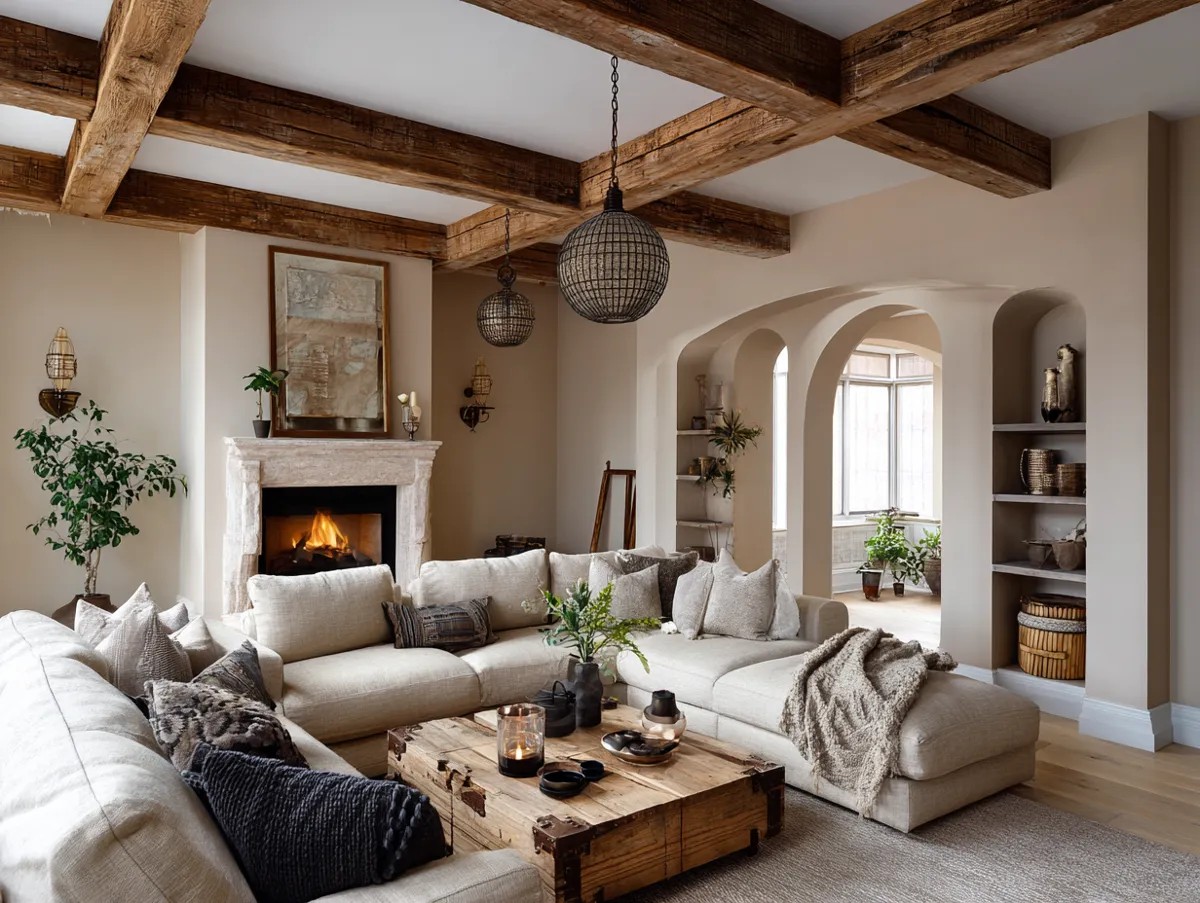


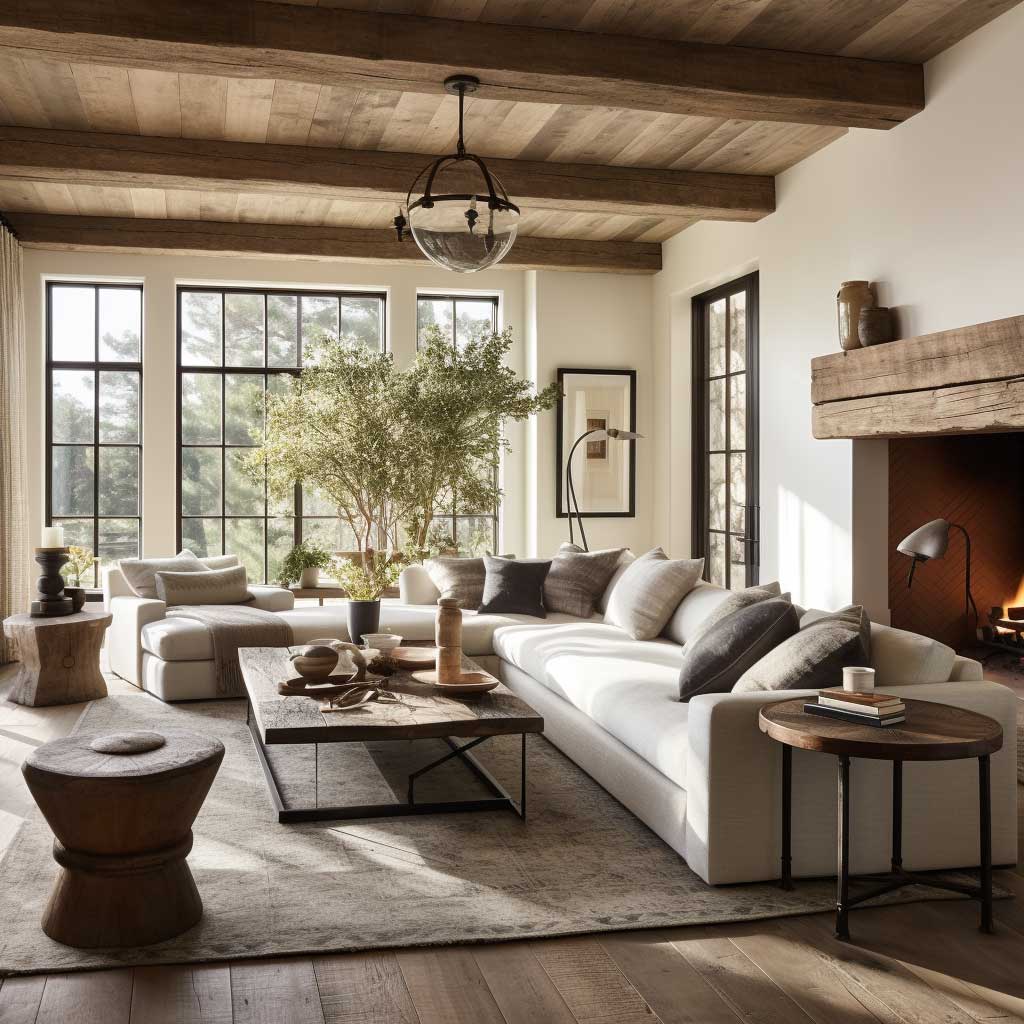

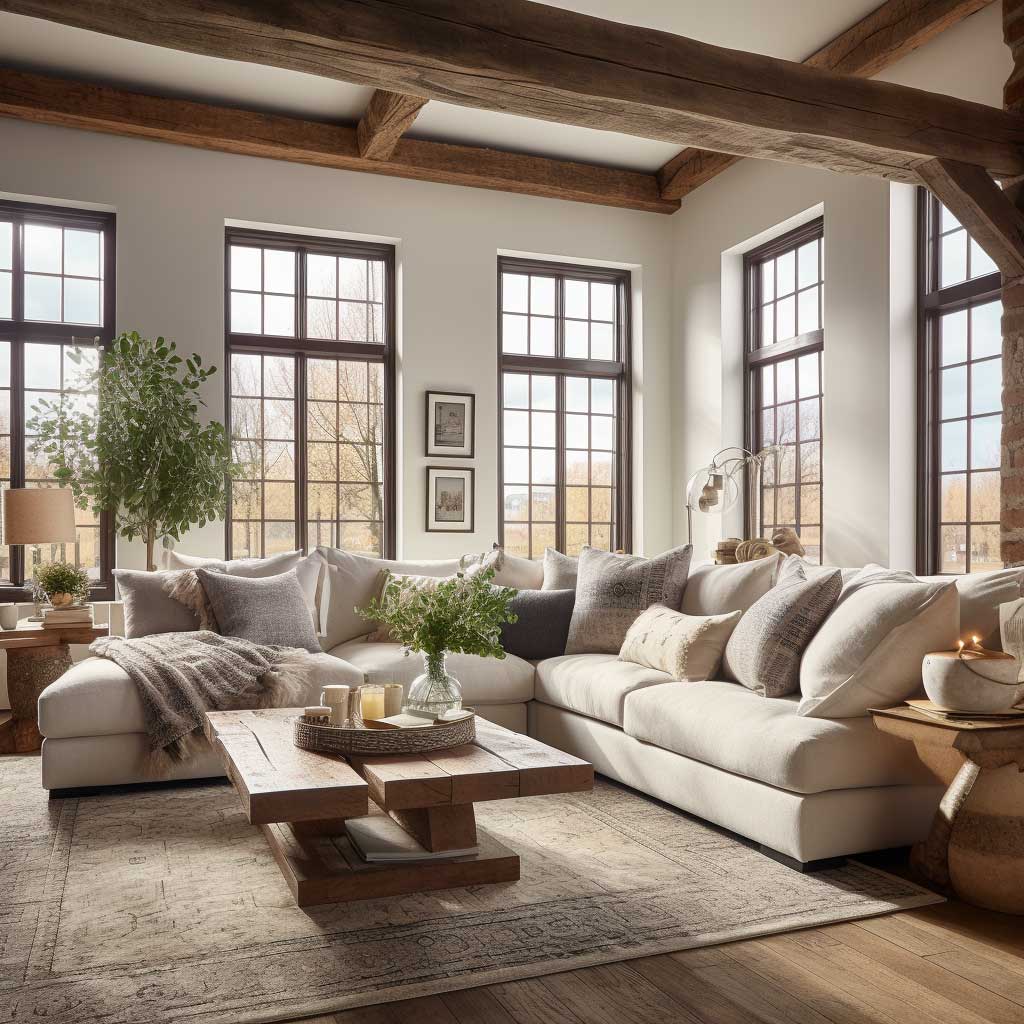

Color in a rustic L-shaped space should anchor, not decorate. I’ve tested muted sage green (Farrow & Ball Mizzle No. 266, $125/gallon) on the short-leg wall — it reads as a continuation of the wood tones rather than a contrast. Burgundy (Benjamin Moore Tuscan Red 2006-10) works on an accent wall but needs to be paired with cream upholstery or it goes dark fast. What I’d avoid entirely: gray. Gray in a rustic room erases all the warmth you just paid to install with the wood and leather. It reads as a renovation halfway abandoned.
Furniture layering is what elevates this from rustic to rustic-elegant. Start with the tufted leather sofa as the anchor. Add an antique wooden coffee table — Chairish has solid options in the $300–$800 range that look like they cost four times more. Then add one refined piece: an ornate mirror over the fireplace or a vintage chandelier. The contrast between rough wood, soft leather, and one elegant surface is the whole formula. Sticking to all-rough or all-refined collapses the effect.
Don’t Do This in a Rustic L-Shaped Room
Woven baskets, pottery, and dried pampas grass all at once turns the room into a Pinterest board that nobody actually wants to sit in. Pick one rustic accent category and commit. Three different texture themes — woven, ceramic, and botanical — cancel each other out and the room reads as cluttered, not curated. Also: farmhouse Edison bulbs in an ornate chandelier look like they arrived from two different design universes. Match the bulb warmth to the chandelier style — warm filament for industrial fixtures, soft diffused for ornate.
The short leg of a rustic L-shaped room is where most designs lose their nerve. People fill it with a TV unit and call it a day. Instead, use it as a dining alcove. A farmhouse table for four, a pair of Windsor chairs, and a pendant light at 30 inches above the table surface transform the short leg into a genuinely useful second zone — not a hallway. The POTTERY BARN Benchwright Dining Table ($1,699) is built for exactly this application: it handles the rustic side while the finish keeps it from looking like a picnic table.
Contemporary L-Shaped Living Room Color Placement and Why Most People Get It Backwards
L-shaped room ideas in the contemporary register work because the two-zone structure gives color a place to land. Most people place bold color on the longest wall because it’s the biggest surface. Wrong direction. Place the accent color on the short leg’s end wall — the wall you face when you’re sitting on the main sofa. That wall is your visual horizon. An Emerald green (Sherwin-Williams Cascades SW 6483) or deep navy (Benjamin Moore Hale Navy HC-154) on that 10–12 foot wall reads as a considered design decision. The same color on a 16-foot wall reads as an accent gone wrong.
Contemporary design in an L-shaped room needs one rug, not two. I own two of the CB2 Striped Terracotta Jute rugs and I made the mistake of putting one in each zone — the room looked like a hotel lobby with two separate reception areas. One large rug (9×12 minimum for rooms over 300 sq ft combined) that partially extends into both legs of the L reads as intentional zoning. Two separate rugs read as two separate rooms that didn’t finish moving in.
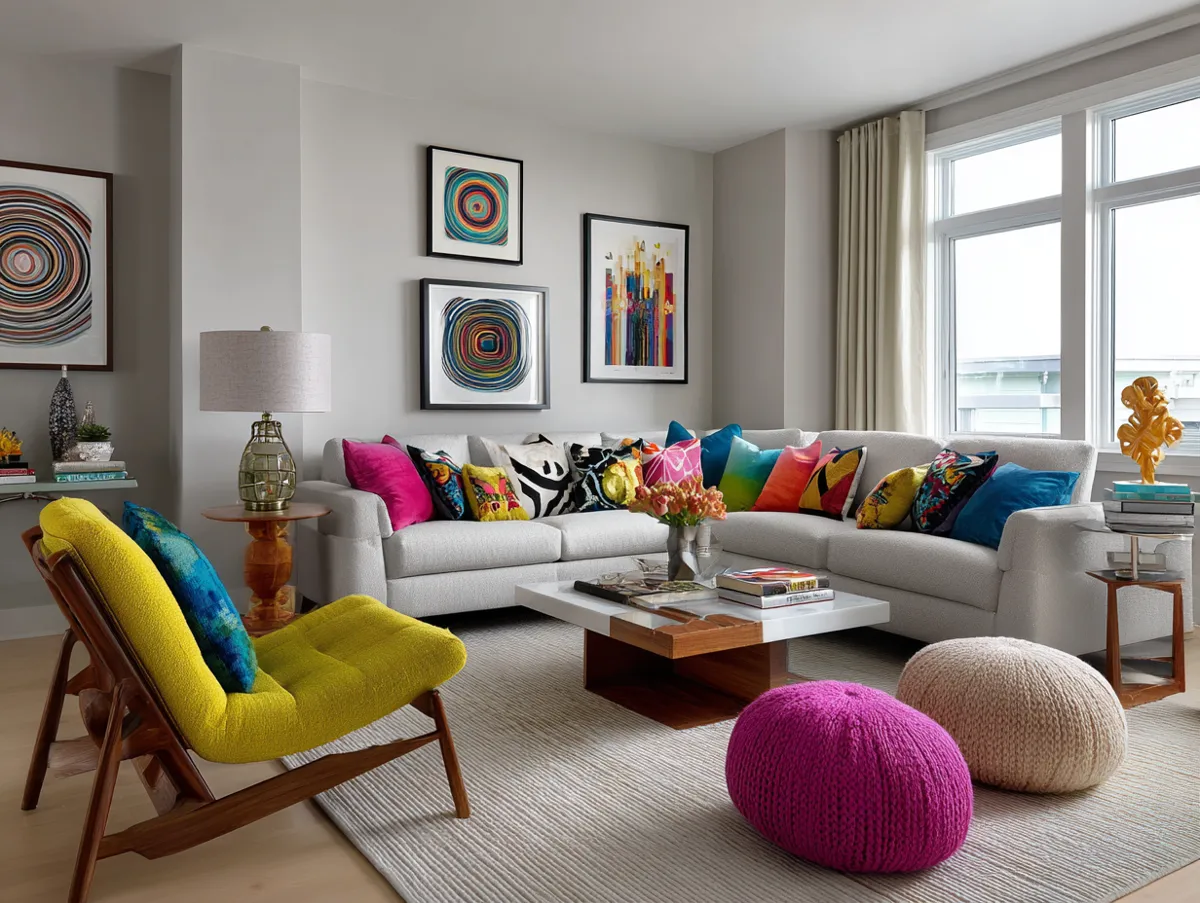


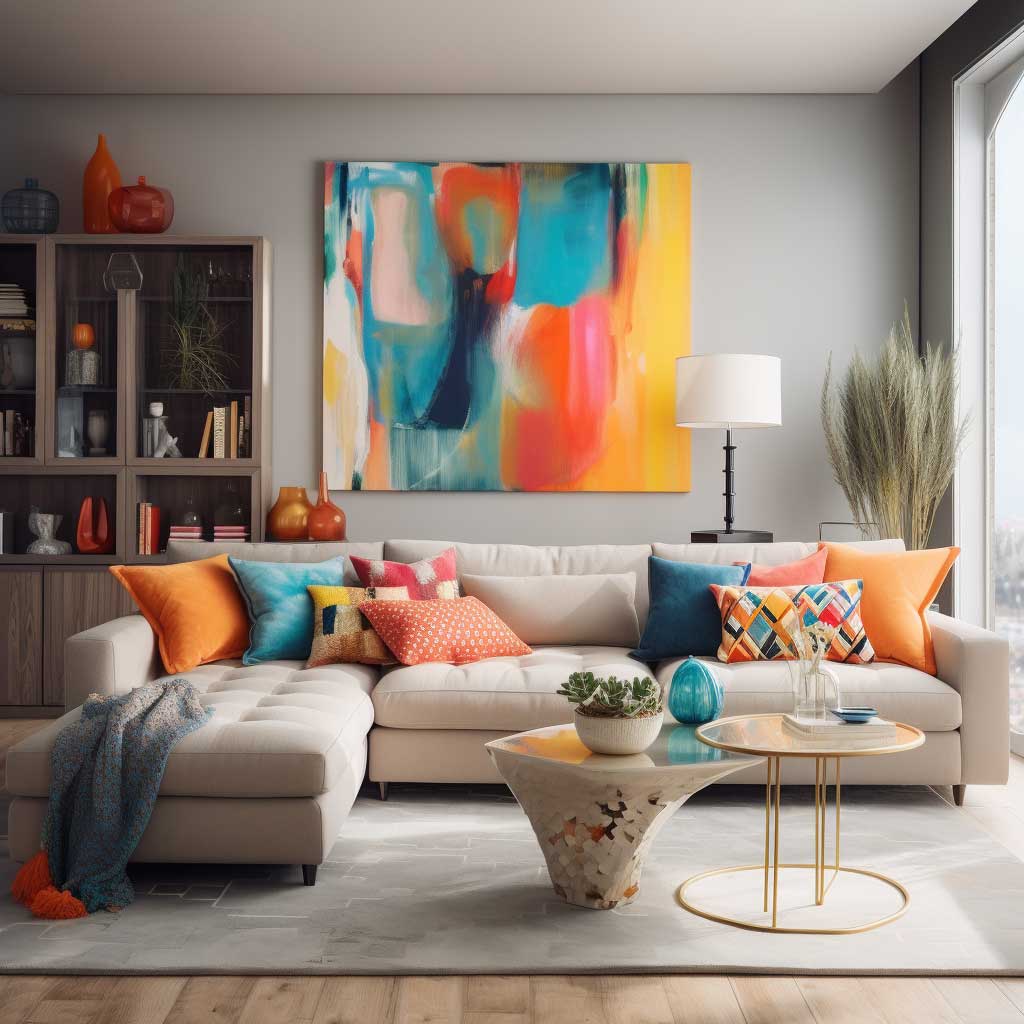

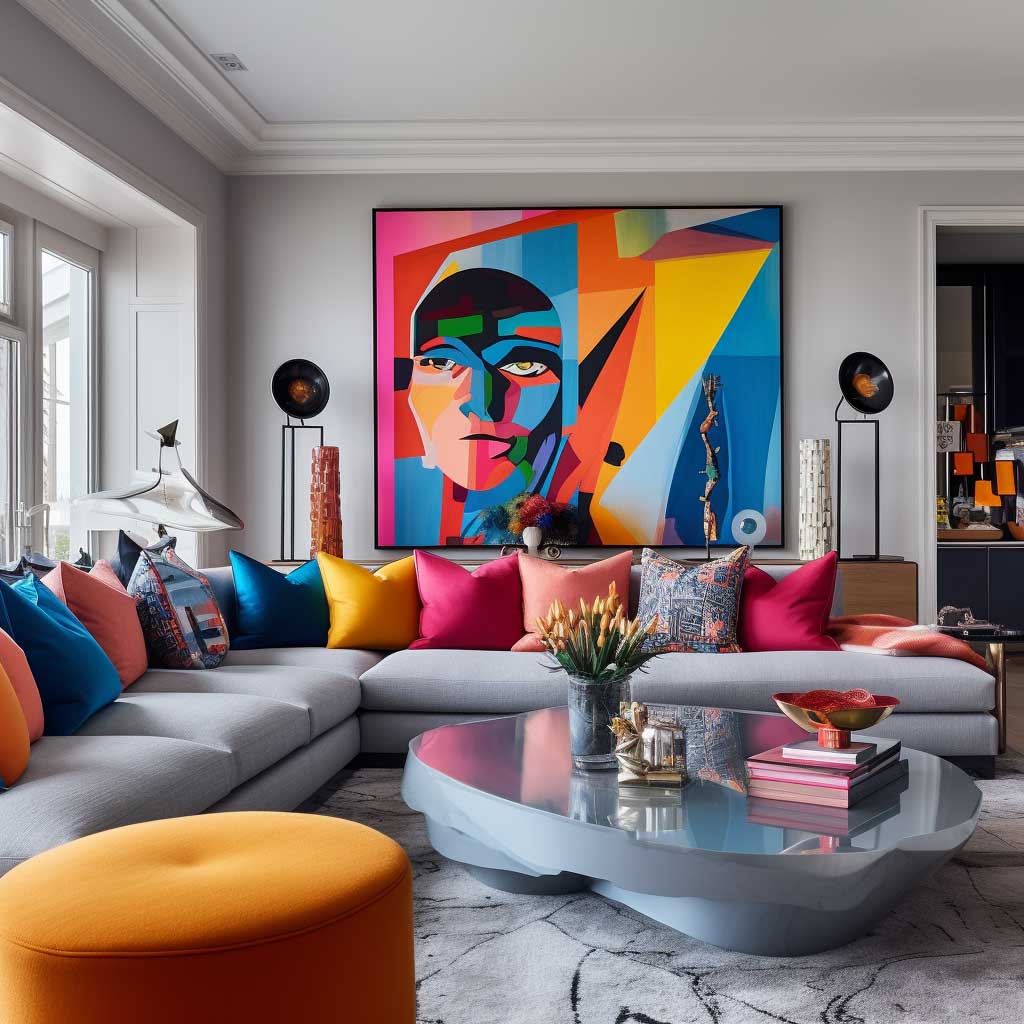
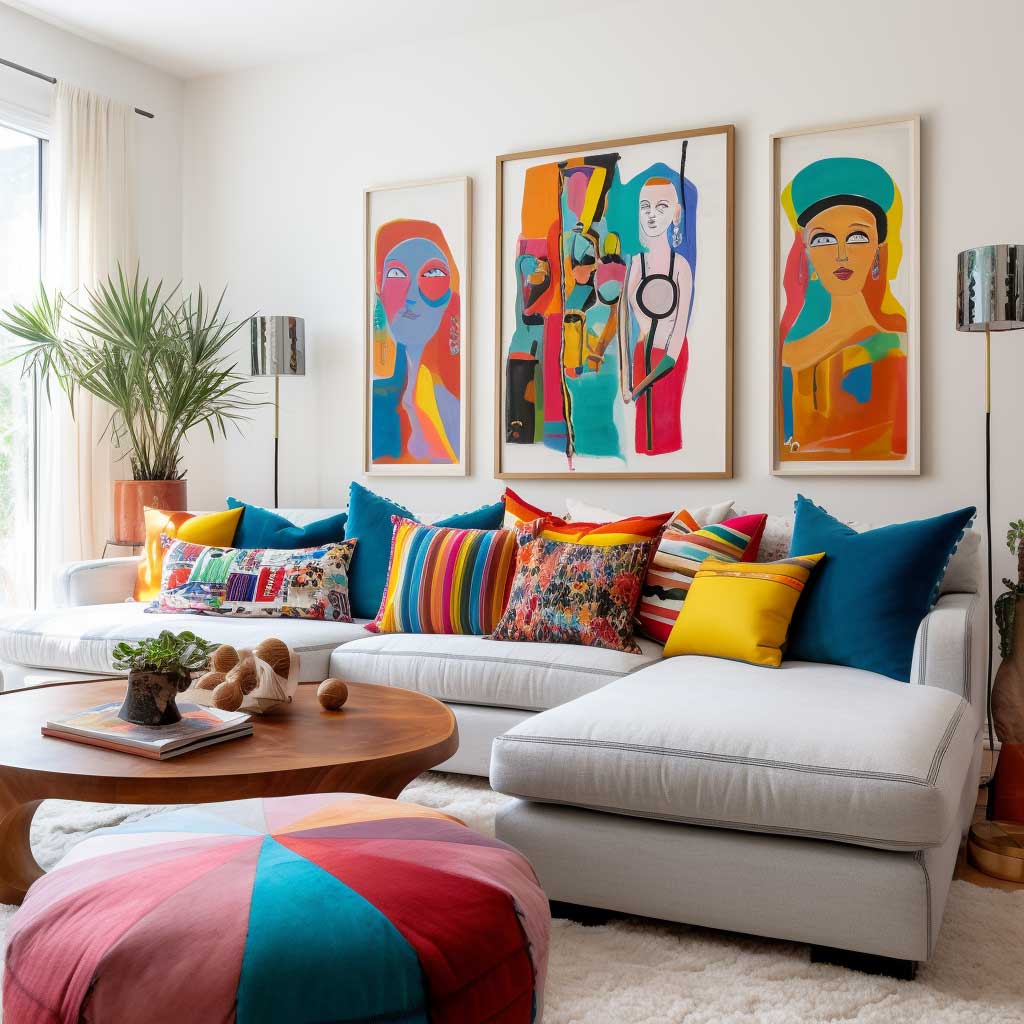
Furniture color in a contemporary L-shaped room follows a hierarchy: one bold piece, everything else neutral. The bold sofa or two accent chairs are your statement. The HAY Mags sofa in Olavi mustard or terracotta runs $3,000–$4,500 and reads as art-level presence in a room. Pair it with a white or light gray companion sofa in the same zone — not matching, just neutral. Two bold pieces fight for the same visual attention and the room starts to feel like a showroom floor. Ask yourself: is this the room I want to live in or just the room I want to photograph?
Color balance across the two legs is where contemporary L-shaped designs either hold together or fall apart. Pull one color from the accent wall into a soft furnishing in the main zone — same tone, different saturation. If the end wall is navy, bring in navy at 30% opacity via a linen throw pillow or a single ceramic vase. You’ll notice this trick makes the room feel deliberate rather than decorated. I stole this approach from a 2023 AD feature on Neri&Hu’s Shanghai residential work — they always run a muted version of the primary into the secondary zone. It costs nothing and fixes everything.
For rectangle rooms that share layout challenges with long-leg L-shapes, these rectangle living room strategies include sofa placement logic that translates directly when you’re working with one dominant long wall.
Decor should reinforce the color story, not expand it. A geometric rug in the primary and one accent color — the Ruggable Fringe Colorblock in Rust/Ivory ($249–$349 depending on size) is my current recommendation for rooms under $3,000 total budget — anchors the main zone without adding a third color. Wall art should be large format, one piece per zone maximum. Two 24×36 prints in the main zone at $40–$80 each from Society6 hit the scale a contemporary room needs without requiring an art budget. Three smaller pieces arranged in a grid look like a mood board, not a room. Expert furniture arrangement guidance for L-shaped rooms confirms that defining each zone with a clear focal point is the single most impactful layout decision you can make.
Final Thought
L-shaped room design is not a layout problem. It’s a commitment problem.
Every room in this article looks resolved because someone decided what each leg of the L was for before they bought a single piece of furniture. The zone function drives every purchase after that.
Pick your style. Lock your zones. Buy furniture that fits the zone, not just the room. Save this post before you measure anything.