Blinds for large windows ideas center on three proven approaches that control light, protect privacy, and suit different interiors without blocking views. Sheer options keep rooms bright while softening glare, vertical designs handle wide spans with clean lines, and wooden styles add warmth plus modest insulation. Each works when the window exceeds standard sizes and needs adjustable coverage rather than fixed drapes.
Large openings demand treatments that scale without looking sparse or heavy. The right choice filters sunlight, reduces heat gain, and maintains the open feel that drew you to oversized glass in the first place. Skip one-size-fits-all solutions; match the material to the room’s light levels and daily use instead.
Measure the full width and height first, then decide whether inside or outside mount better suits the frame. That single step prevents the most common fit failures on oversized panes.
- Sheer blinds filter daylight and keep privacy without darkening the room
- Vertical blinds stack neatly on wide or multi-pane openings and cost $50–$350 installed
- Wooden blinds deliver natural texture and R-value around 2 for mild energy savings
- Custom sizing for large windows raises material use and price compared with standard units
- Layering or motorization remains optional; basic manual operation covers most needs
- Avoid rigid blackout fabrics if the goal is soft natural light all day
Sheer Blinds That Soften Light Across Expansive Glass


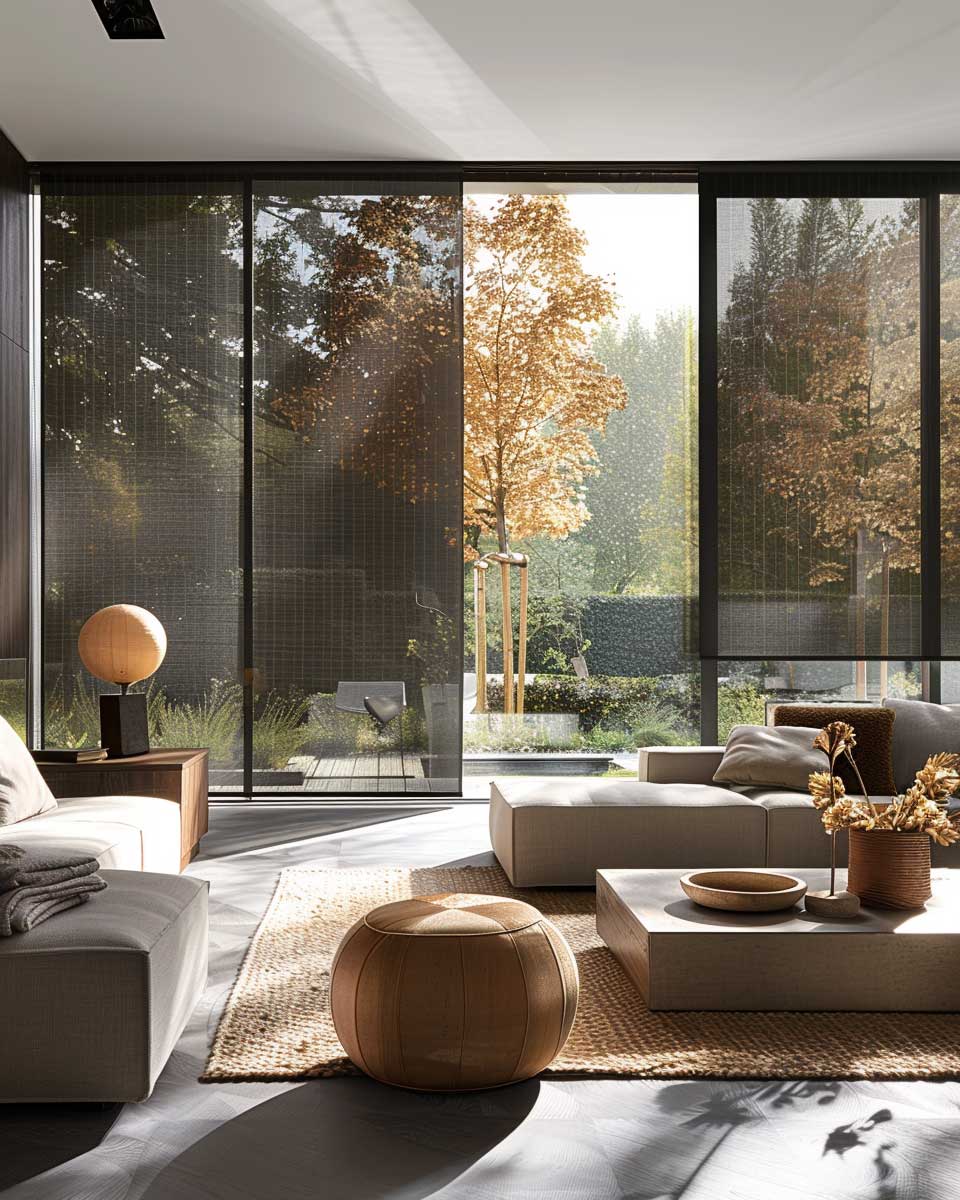
Sheer blinds for large windows ideas start with fabric that diffuses sunlight rather than blocking it. The material acts like a soft screen, turning harsh rays into even glow that reaches deep into the room. Privacy holds during the day because the weave obscures clear sight lines from outside while still showing outdoor shapes.
Why choose sheers over denser options? They preserve the expansive feel that large glass provides. Average custom sheer shades for a mid-size opening fall between $100 and $150 in materials, climbing toward $300–$900 for oversized or motorized versions according to current retailer ranges. Avoid pairing them with heavy blackout layers if daytime brightness is the priority; that combination cancels the main advantage.


Think of sheer fabric as a permanent soft-focus filter. It softens edges the way a sheer curtain softens a portrait photograph. Rooms stay livable even when the sun sits low and direct. For more ideas on clean modern treatments that pair well with open living areas, explore living room blinds ideas for clean light control.
Mount the headrail high and extend past the frame so the fabric stacks fully clear of the glass when raised. That small detail keeps the view uninterrupted and makes the window appear larger still.
Vertical Blinds Delivering Clean Lines on Wide Openings


Modern vertical blinds for large windows ideas excel when the opening is wider than it is tall or spans multiple panes. The vertical vanes rotate for precise light angles and stack to one side so the full glass remains accessible. Installed costs typically range from $50 to $350 per opening depending on material and width, with vinyl or fabric options at the lower end.
Do vertical blinds look dated? Only the thin plastic versions common in older rentals. Current fabric or faux-wood vanes with stiffer cores hang straight and resist warping near sun-exposed glass. Choose a track rated for the full span rather than joining two shorter tracks; continuous hardware reduces snags on wide runs.
The motion resembles a set of tall doors that fold open. Once stacked, the room gains an almost frameless glass wall. Skip cheap vinyl if the window faces strong afternoon sun; the material can yellow within a season.



For sliding doors or patio walls that share the same scale issues, the same vertical logic applies. See practical mounting details in window treatment ideas for sliding glass doors.
Measure the exact track length and confirm the stack side before ordering. That prevents the finished unit from blocking a door handle or sitting unevenly.
Wooden Blinds Adding Warmth and Insulation Value


Rustic wooden blinds for large windows ideas introduce grain, weight, and a modest thermal break. Real wood or quality faux-wood slats create an air pocket when closed, delivering an approximate R-value of 2 and potential energy savings in the 10–15 percent range for heating and cooling according to manufacturer and efficiency data. Installed prices for wood options commonly sit between $200 and $800 per opening, higher for wide custom spans.
Is solid wood always better than faux? Real hardwood offers superior feel and insulation, yet faux-wood resists humidity and stays flatter on very wide runs. Choose real wood only in dry rooms; moisture can warp slats over time.
The material behaves like a wooden shutter that opens fully. Closed, it blocks drafts the way a solid door slows cold air. Leave a small gap at the bottom if condensation forms on single-pane glass; full contact can trap moisture against the frame.


Order cordless or motorized lifts for tall openings so operation stays convenient. Manual cords become impractical once the window exceeds standard reach.
Side-by-Side Comparison of the Three Options
| Type | Best For | Approx. Installed Cost | Light Control | Key Limitation |
|---|---|---|---|---|
| Sheer | Bright rooms, soft privacy | $100–$900 | Diffuse only | Limited night privacy |
| Vertical | Wide spans, sliding doors | $50–$350 | Precise angles | Vane noise in drafts |
| Wooden | Warmth, mild insulation | $200–$800 | Full to partial | Weight on very wide runs |
Pick the column that matches the room’s primary need rather than chasing every feature. A single strong match outperforms a compromise that does three things poorly.
Choosing the Right Fit for Your Space
Sheer, vertical, or wooden blinds each solve a different part of the large-window challenge. Start with the light quality you want most of the day, then check the budget against the spans that need coverage. The numbers above come from current retailer and installer averages and shift with custom sizing.
Measure twice, order once, and confirm the stack or raise direction before fabrication begins. That sequence prevents the majority of installation surprises on oversized glass.
Keep the hardware simple unless motorization is required for height or frequency of use. Manual operation still serves most homes without added cost or maintenance.
When the treatment matches both the architecture and the daily rhythm of the room, the large windows become the asset they were meant to be rather than a problem to solve.