A French country front porch earns its look the same way a Provençal farmhouse does — through texture, not theme. I’ve seen dozens of porches dressed with lavender bundles and distressed paint that still read as generic cottage, because the furniture bones were wrong and the plant choices were too tidy. The right porch feels like it collected itself over decades: a wrought-iron side table next to a linen-cushioned bench, terracotta pots that have been outside long enough to acquire a ring of white mineral stain, climbing roses that frame the entry without being manicured into submission.
What most American front porches get wrong is symmetry — everything centered, matching, bought as a set. French country porches are asymmetric in the best way. Two unmatched chairs, a basket on the floor, a lantern on a post that’s slightly taller than expected. You’ll notice immediately that the porches that photograph best on Pinterest are never catalog-perfect. They have one item that shouldn’t work and does.
Quick Scan
- Main furniture — Rustic wood bench or distressed wooden coffee table as anchor piece
- Key accent — Vintage wrought-iron side table, $40–$120 at estate sales or HomeGoods
- Plants that work — Lavender, geraniums in terracotta, hydrangeas, climbing roses on trellises
- Fabrics — Linen or cotton cushions in cream, dusty blue, or sage; lace tablecloths on small round tables
- Lighting — Small ornate chandelier overhead or blackened iron lanterns; skip modern solar path lights
- What to avoid — Matching patio sets, plastic planters, navy cushions, and anything that ships flat-packed
Natural Textures Anchor the French Country Front Porch Look
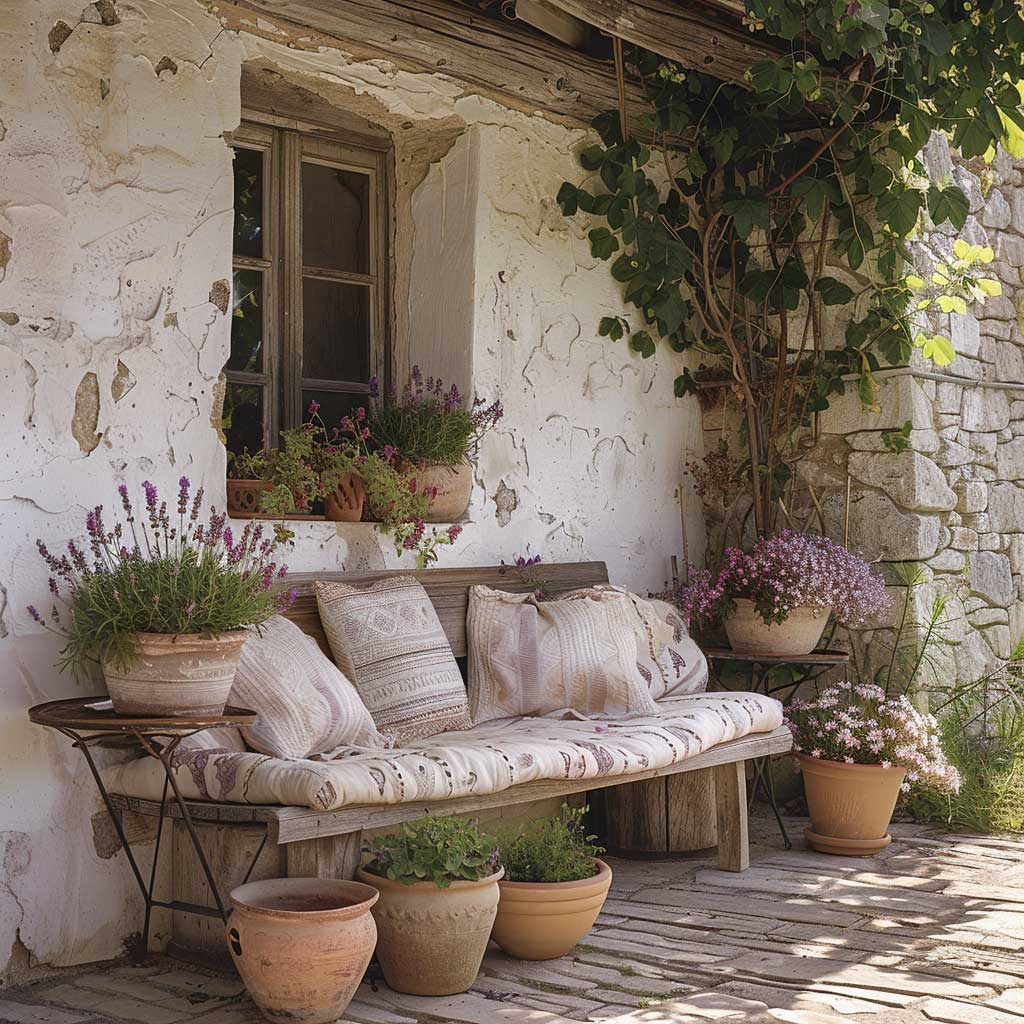
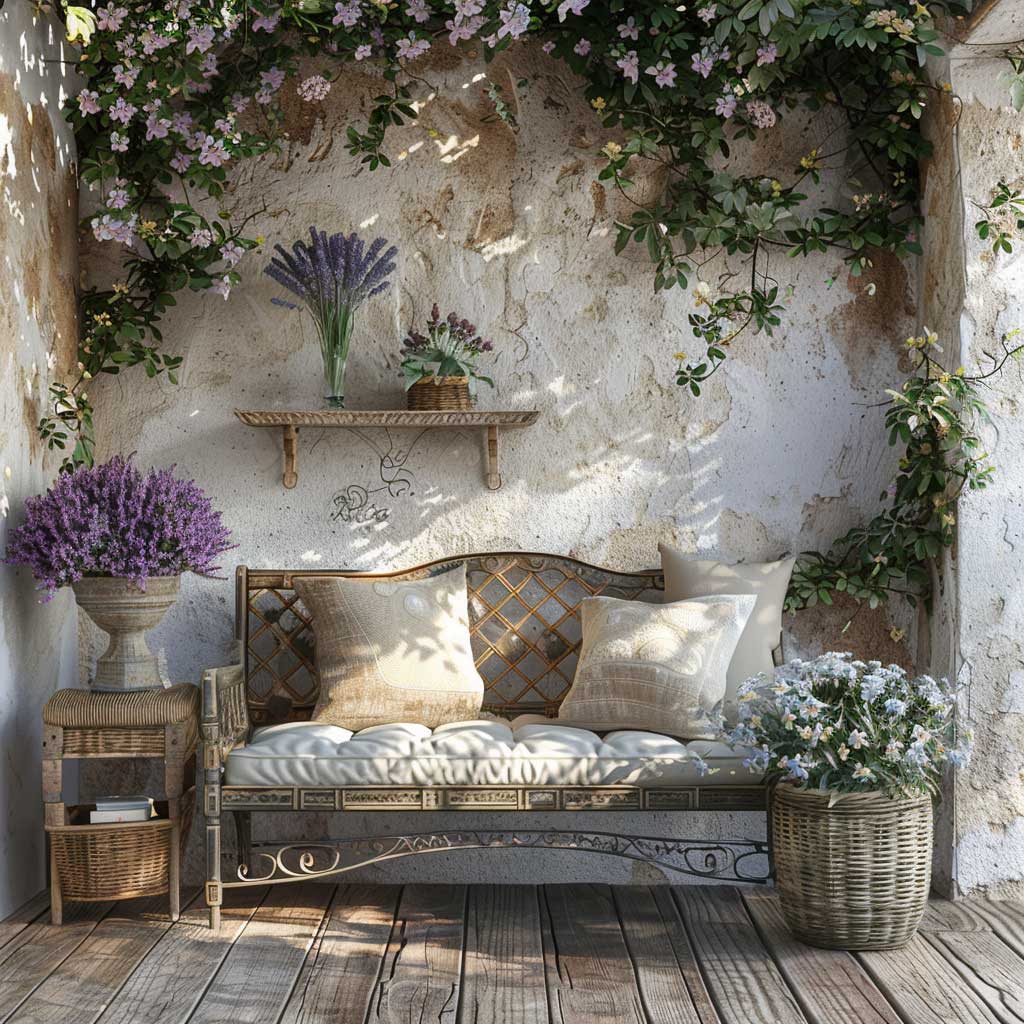
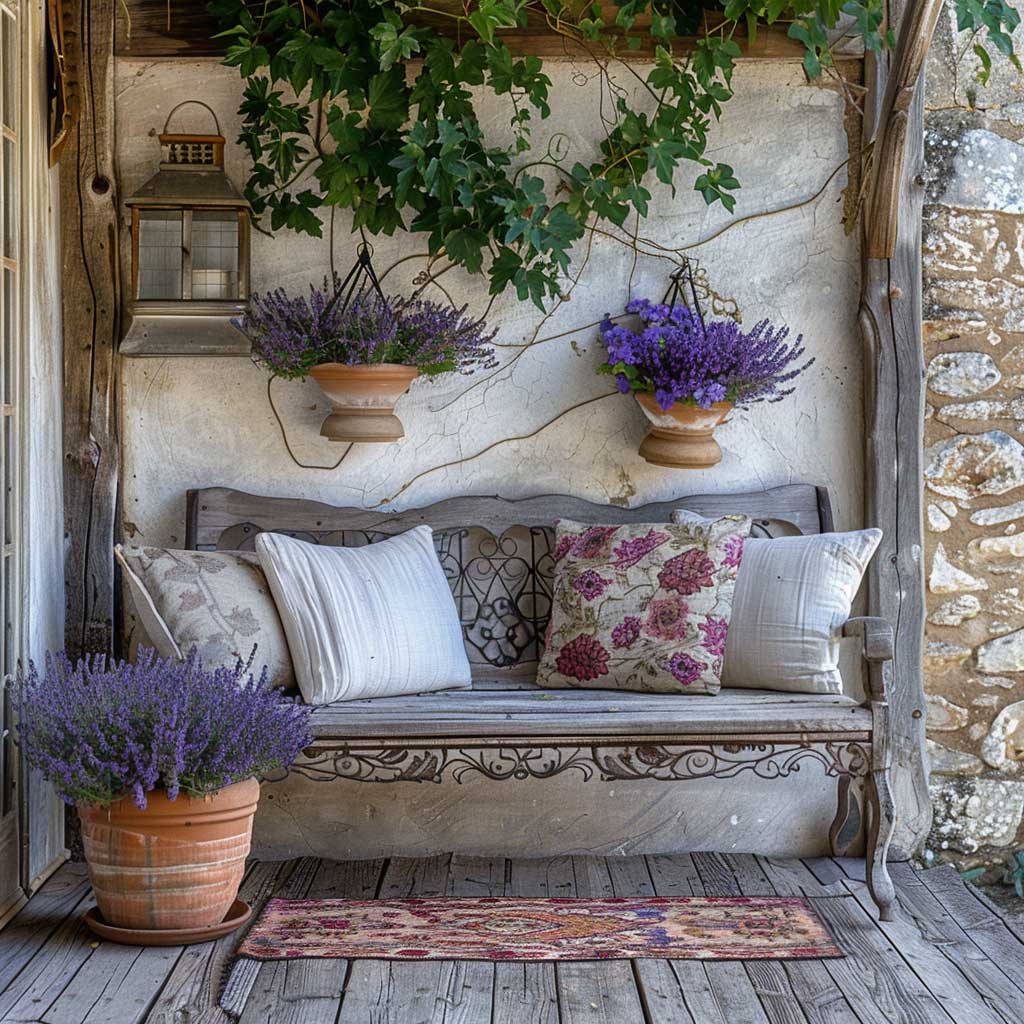
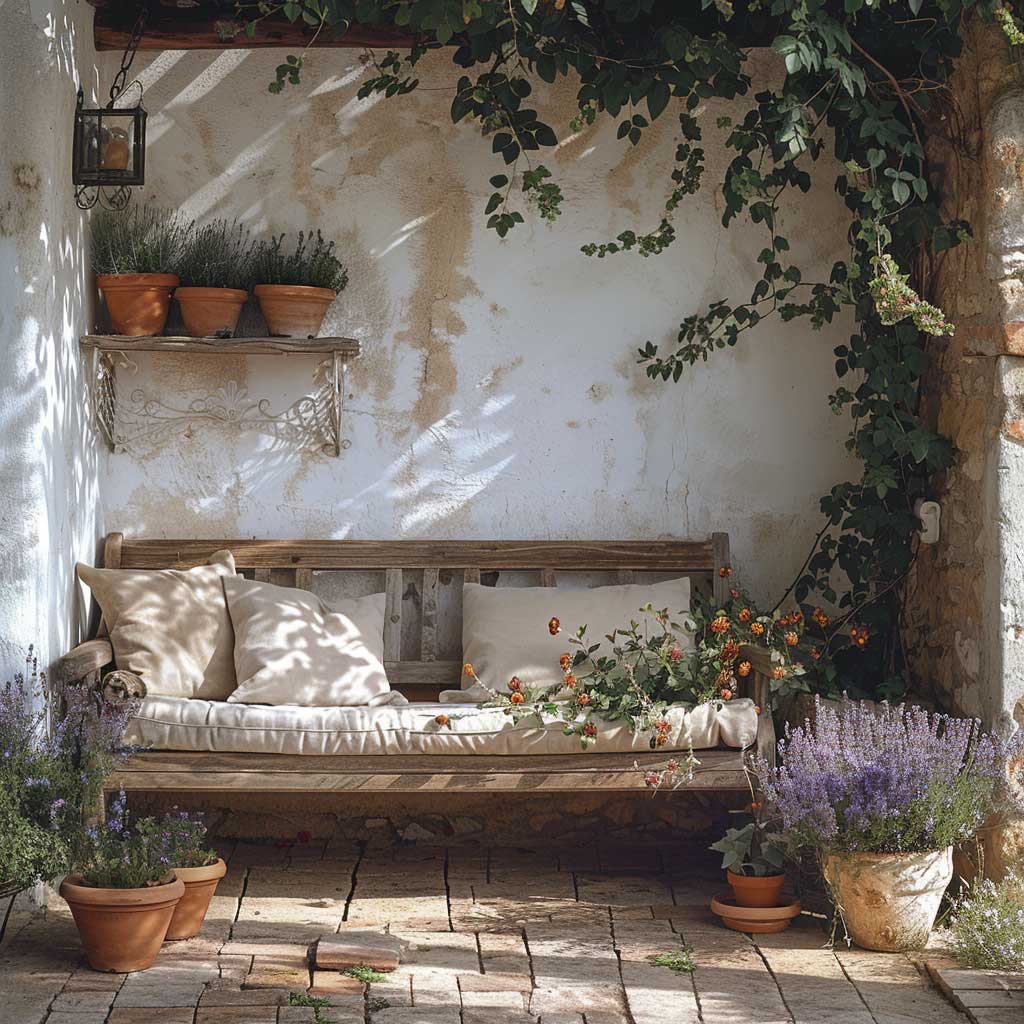
Start with the bench. A plain rustic wood bench — something in reclaimed pine or weathered oak — works as both seating and visual anchor because it carries weight without competing with anything else on the porch. My go-to is the kind of piece you’d find at an antique market for $80–$150, not the pre-weathered “rustic” versions from big-box stores that look artificially aged five minutes after you put them down. Pair it with plush, neutral-colored cushions: cream, oatmeal, or the kind of dusty sage that Anthropologie charges $68 for a pillow cover of. Comfort matters. A beautiful porch that nobody sits on has failed.
Add a vintage wrought-iron side table beside the bench and set a vase of just-cut lavender on it. That’s the move. Lavender is the closest thing the French country style has to a signature scent, and it does double duty — visual and olfactory. I’ve bought sprigs from farmers’ markets for $4–$6 and they last two weeks in a simple terracotta vase. Enhance with terracotta pots of geraniums or hydrangeas with blossoms: the red geranium against a whitewashed wall is the most efficiently French thing you can put on a porch without renovation. Skip the matching planters. Three slightly different terracotta pots of different heights look far more lived-in than a matched set.
Climbing ivy on a whitewashed wall is the backdrop that ties everything together. It’s not just visual — connecting with actual growing things makes the porch feel inhabited in a way that staged furniture never quite achieves. Don’t force it into neat borders. Let it go where it wants and trim it once a year. The soft, dappled light that comes through ivy leaves on a whitewashed surface in the afternoon is something no pendant light can replicate.
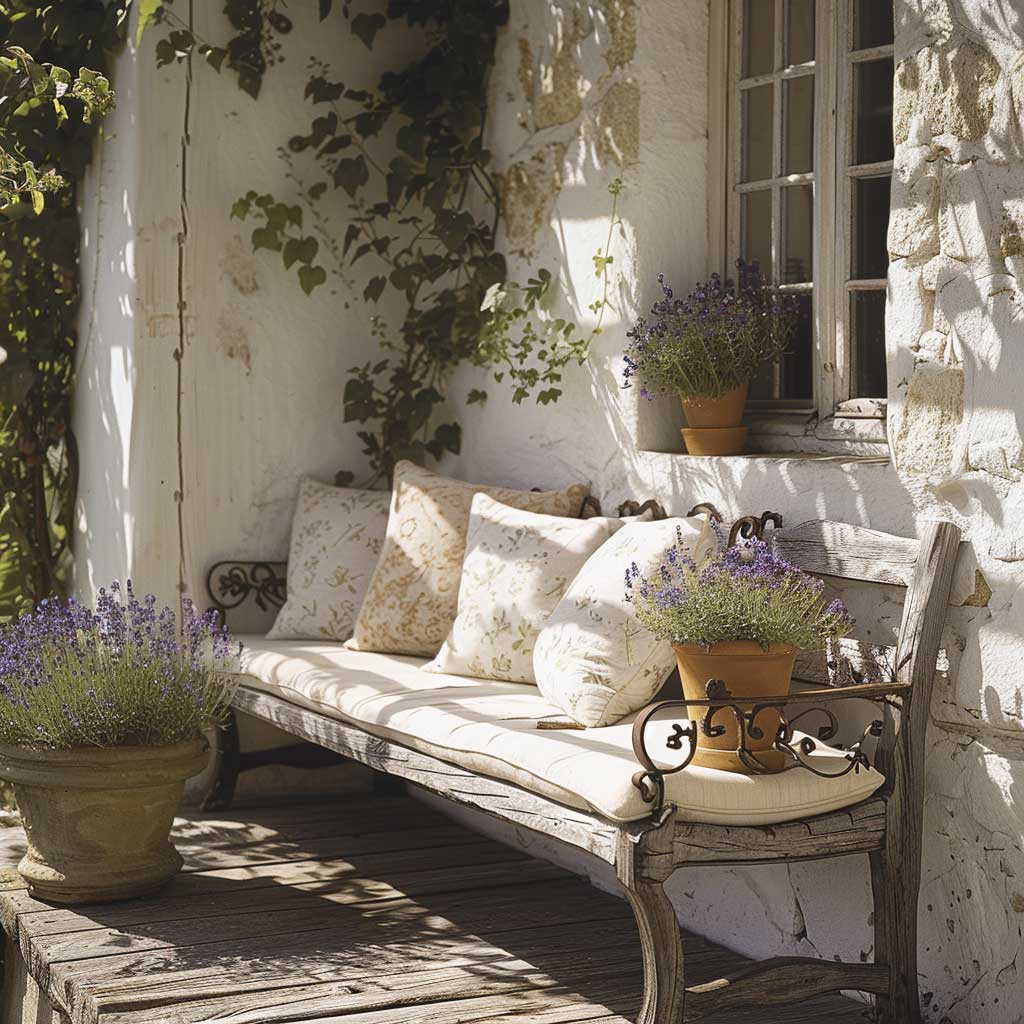
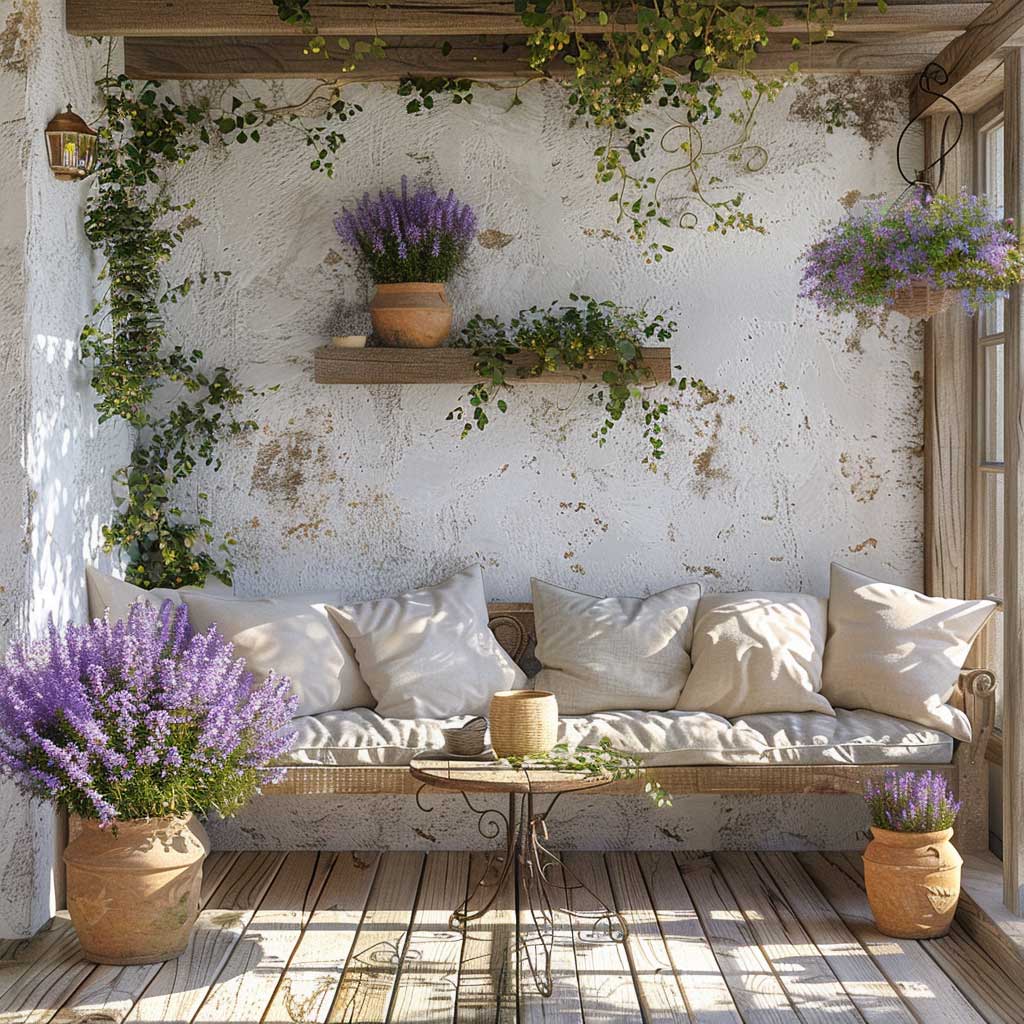
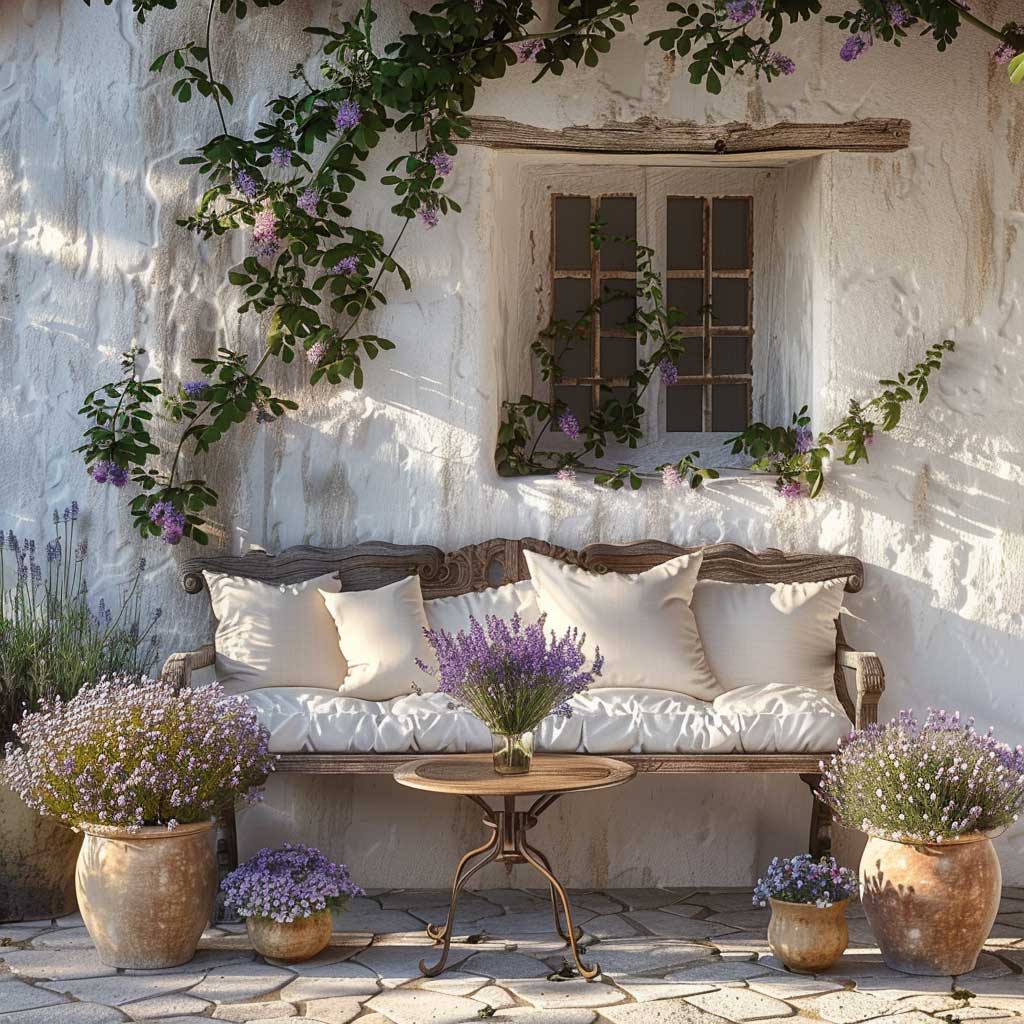
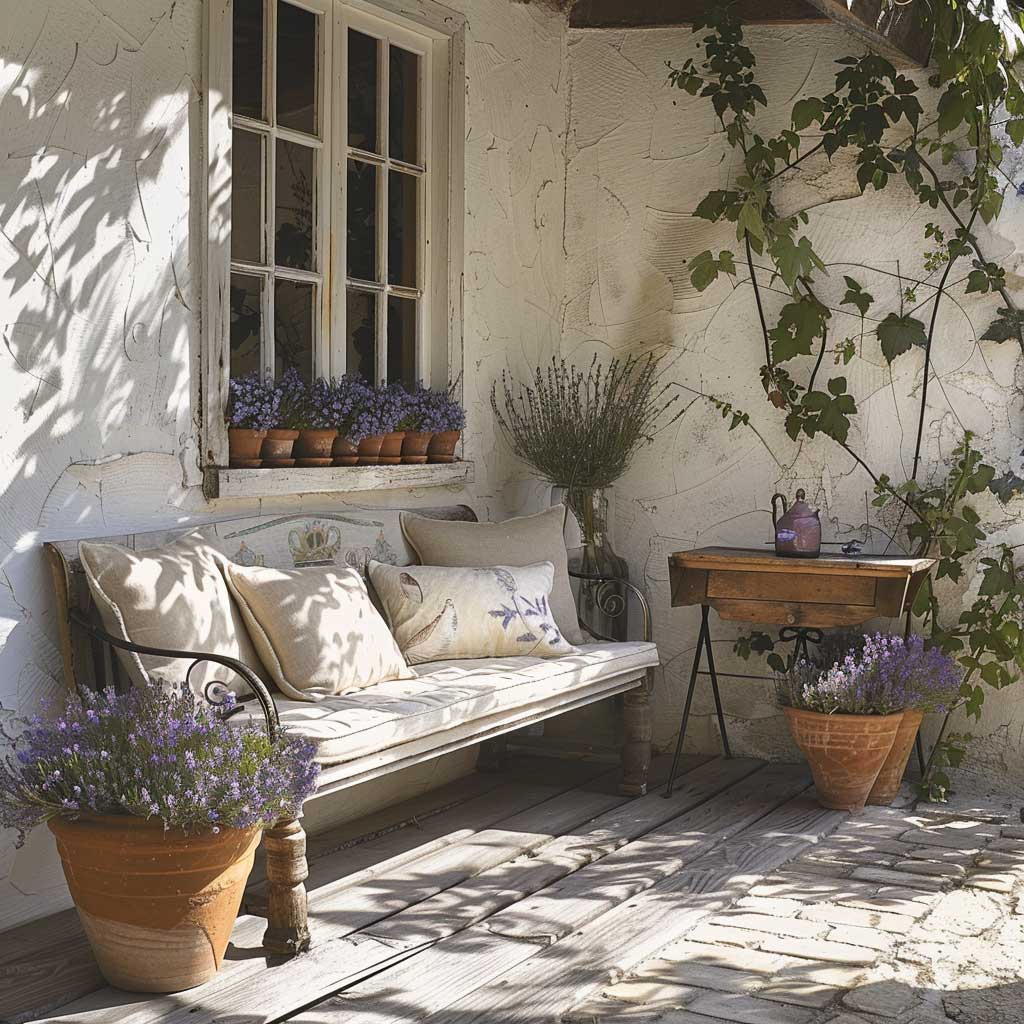
What doesn’t work here: wicker furniture in brown or espresso tones. I’ve tried it. Brown wicker on a French country porch reads as coastal American cottage, not Provence. If you love wicker, go white-painted or natural blonde — both of those land closer to the right reference. Dark wicker pulls the palette down and competes with the terracotta and stone tones that are doing the actual French-country work. Stick to iron, wood, and unfinished natural materials and you won’t go wrong. For the bigger picture of how these porch choices connect to the full facade, this breakdown of modern French country exterior design covers material and color decisions at the house level.
Distressed Wood and Ornate Iron Make French Porches Feel Layered
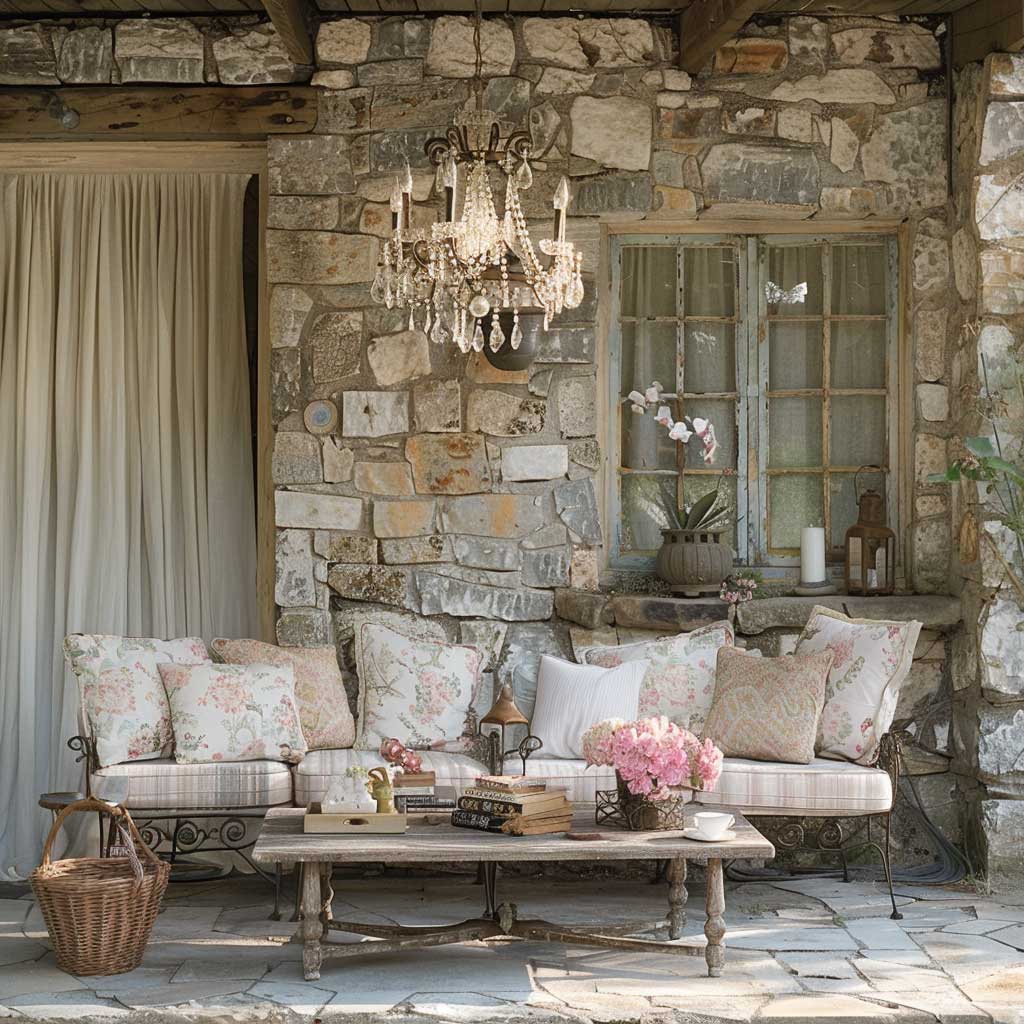
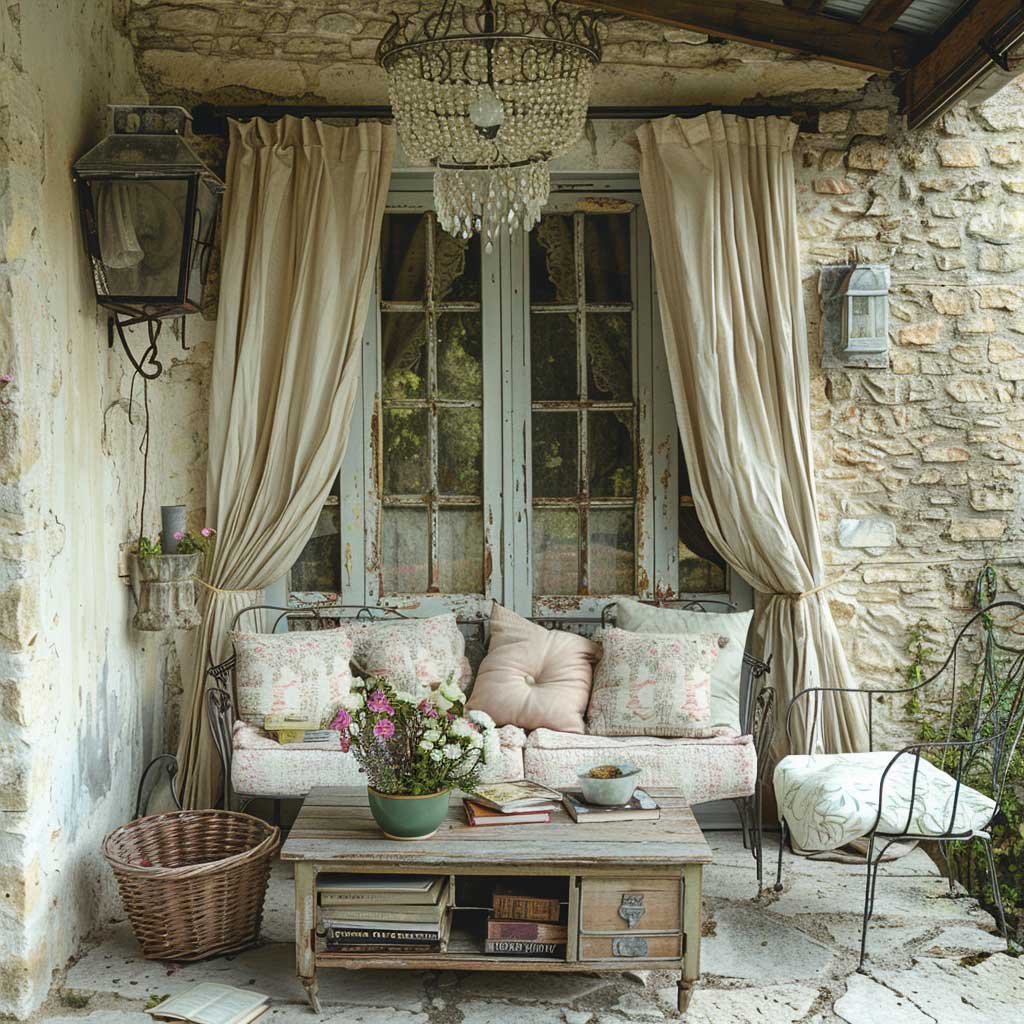
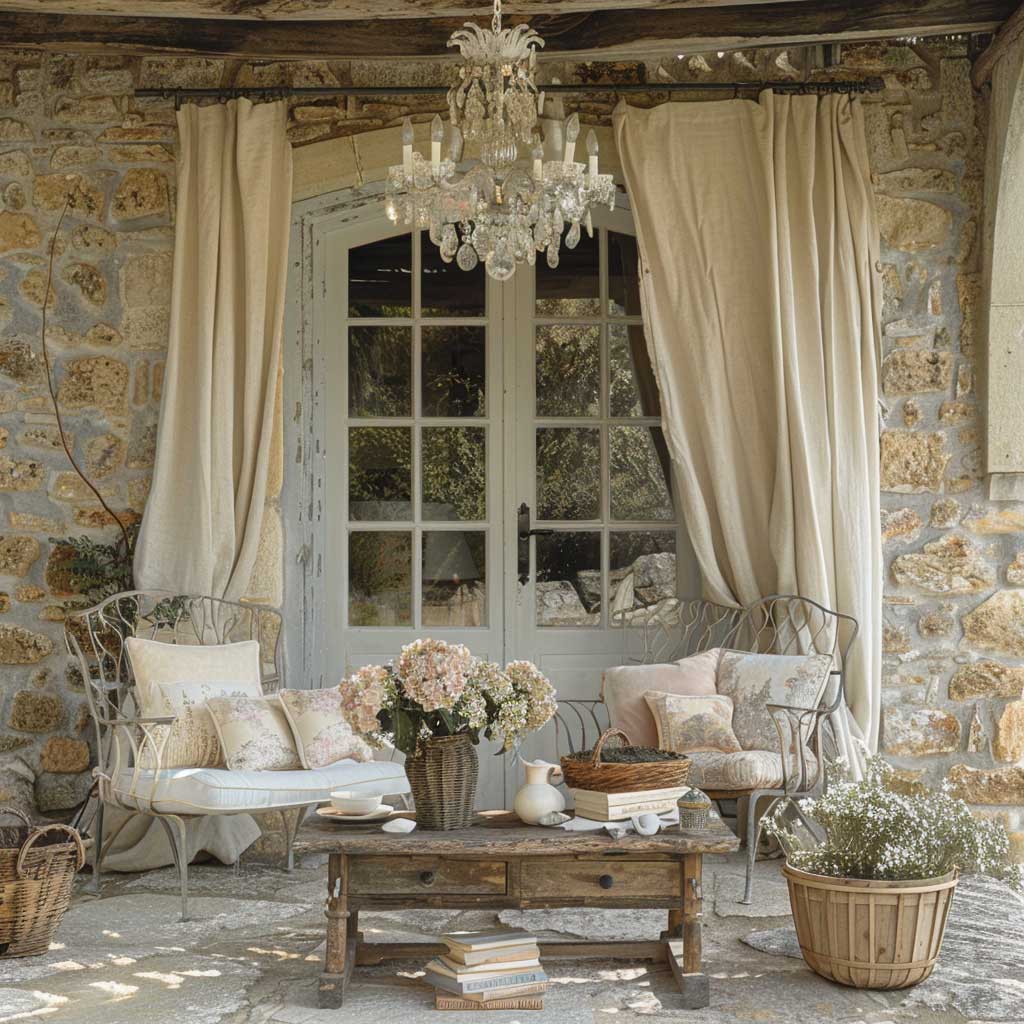
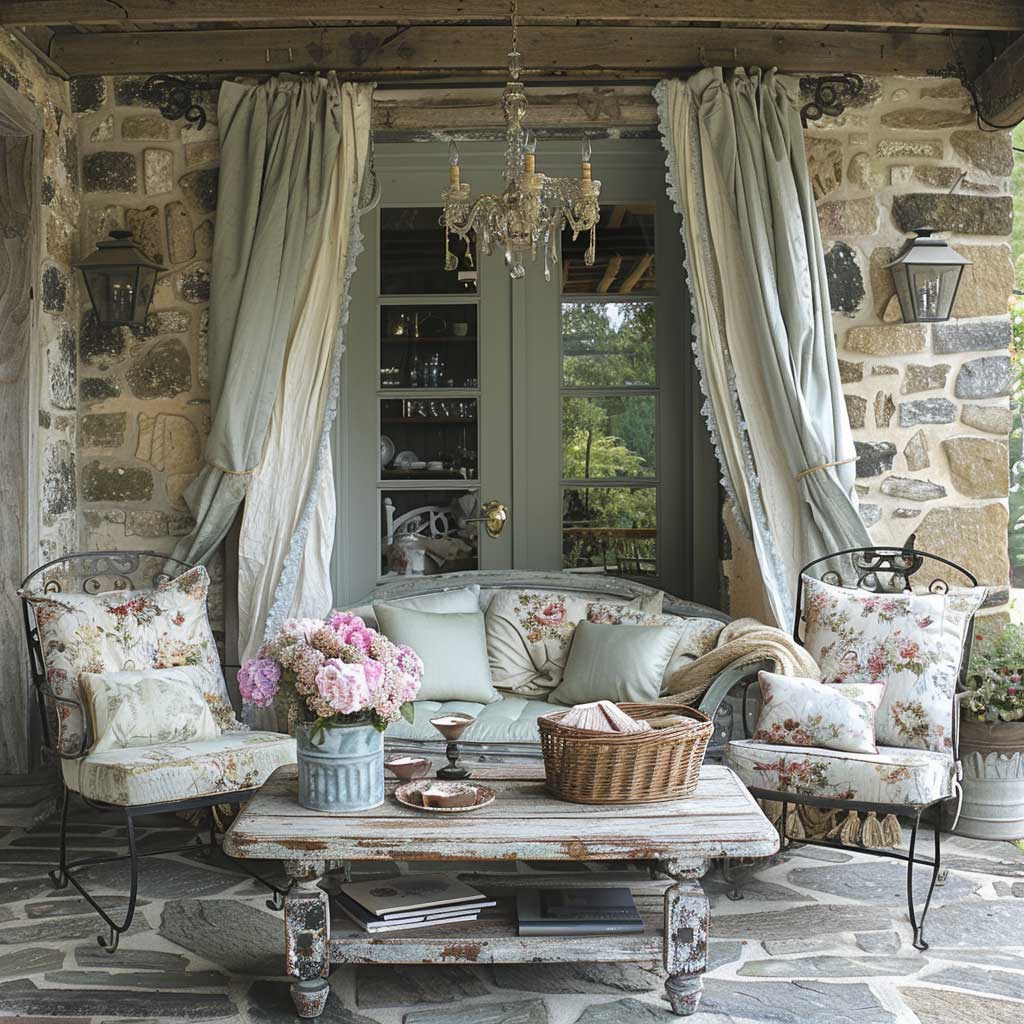
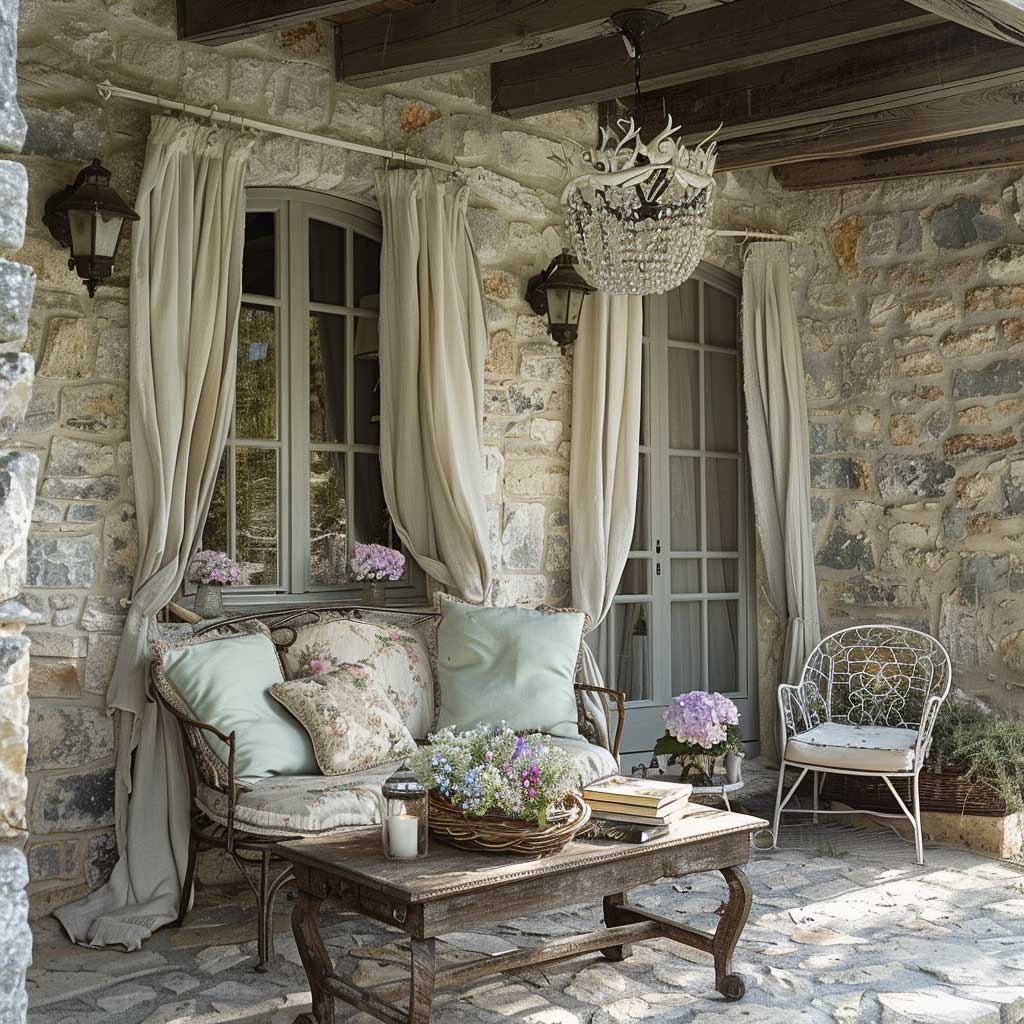
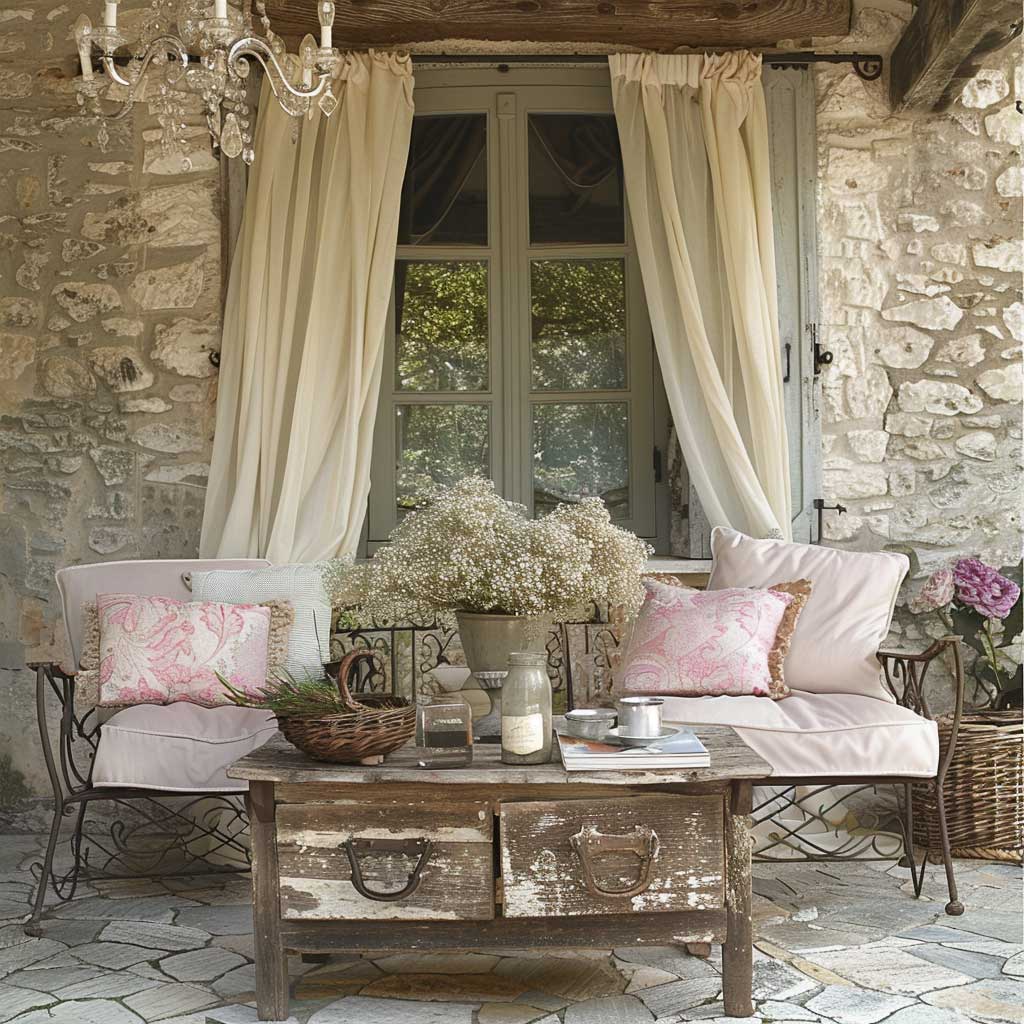
A distressed wooden coffee table is the piece that earns its place by looking like it arrived before anyone was paying attention to the design. The surface worn rough by afternoons outside, the legs slightly uneven — this is the functional object that communicates the whole French country philosophy: beauty as a byproduct of honest use. Pair it with antique metal chairs in a faded iron finish and soft pastel-colored cushions — blush, sage, or the kind of washed-out blue you’d find on a Marseille shutter. Crate & Barrel’s Outdoor Felix Chair in Iron runs about $299 and has the right profile; you can find near-identical pieces at estate sales for $30.
Here’s a question worth asking before you buy anything: does this piece look like it could have been on this porch for twenty years? If the answer is yes, buy it. If it looks like it arrived yesterday in cardboard, leave it. A small ornate chandelier overhead is the one exception to this rule — it’s clearly a deliberate choice, not an accidental accumulation, but it earns its place because it signals that someone cared enough to bring indoor luxury outside. Visual Comfort’s Carrier Lantern series in Aged Iron starts at about $220 and works well in a covered porch ceiling without looking like a restaurant fixture.
The backdrop matters as much as the furniture. A faded stone wall with a French-style window or two is the ideal setting; if you have it, use it. Light, airy curtains at those windows — loose linen in undyed ecru — add movement that furniture alone cannot provide. The curtains ripple. Everything else stays still. That contrast is what makes a French country porch feel alive rather than arranged. Add a basket of books and a small vase of whatever is in bloom in the garden. The books are not decoration — they’re a signal that someone actually sits here.
Don’t Do This
Don’t use a matching outdoor furniture set bought as one unit. Sets read as “patio,” not French country — the coherence is too deliberate. French country porches work because they look like they accumulated over time, not because someone ordered everything from one catalog page. Also skip the small round resin planters in terracotta color. They photograph like terracotta until you see them next to actual terracotta — then the difference is embarrassing. Real terracotta costs $8–$20 at any garden center; there’s no reason to use the imitation.
Floral Abundance and Loose Fabric Are the Difference Between Cottage and French Country
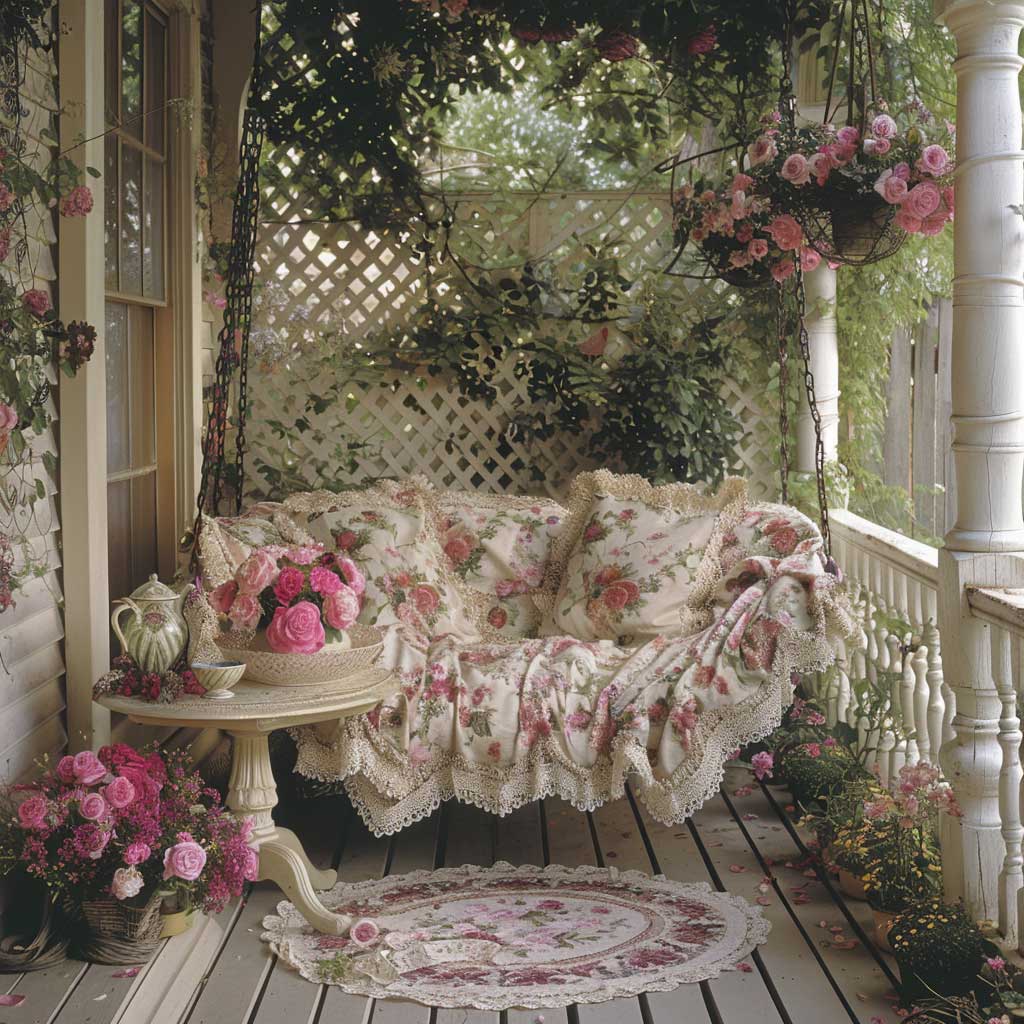
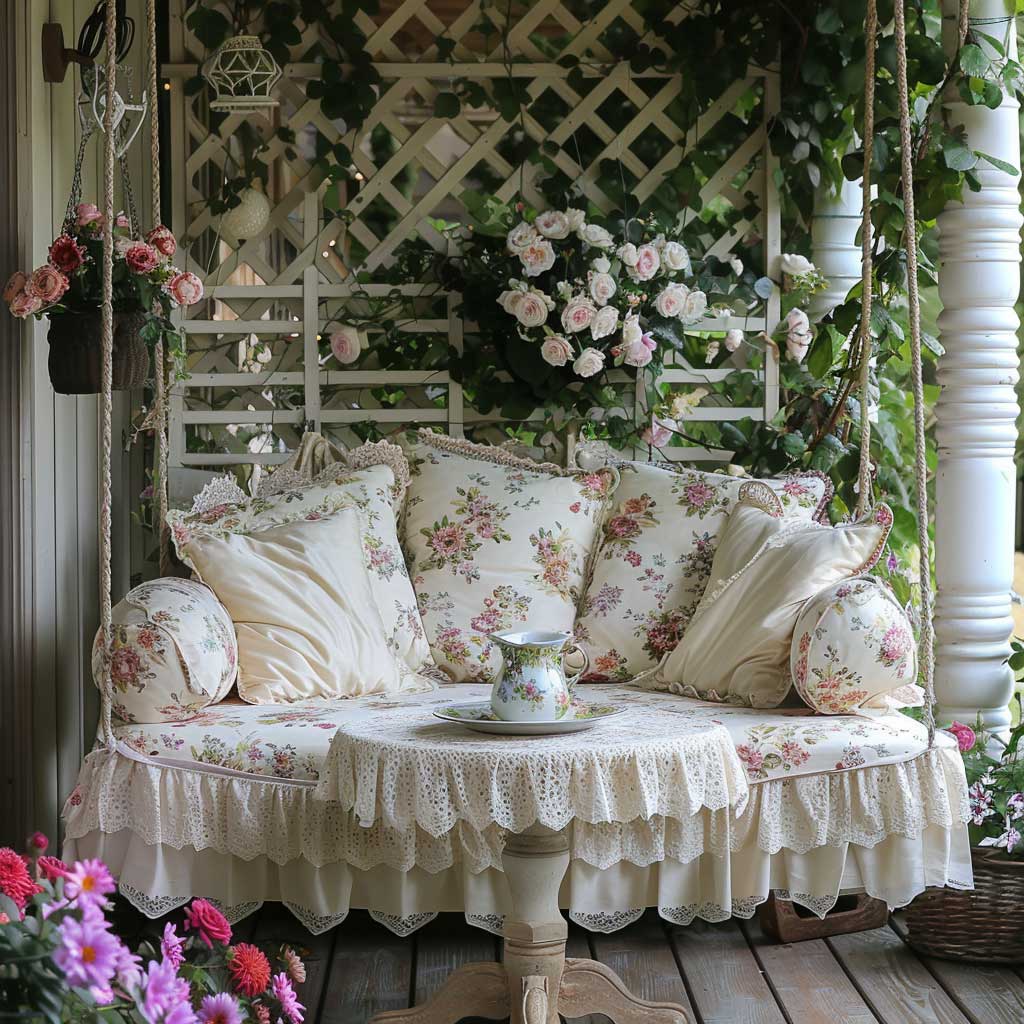

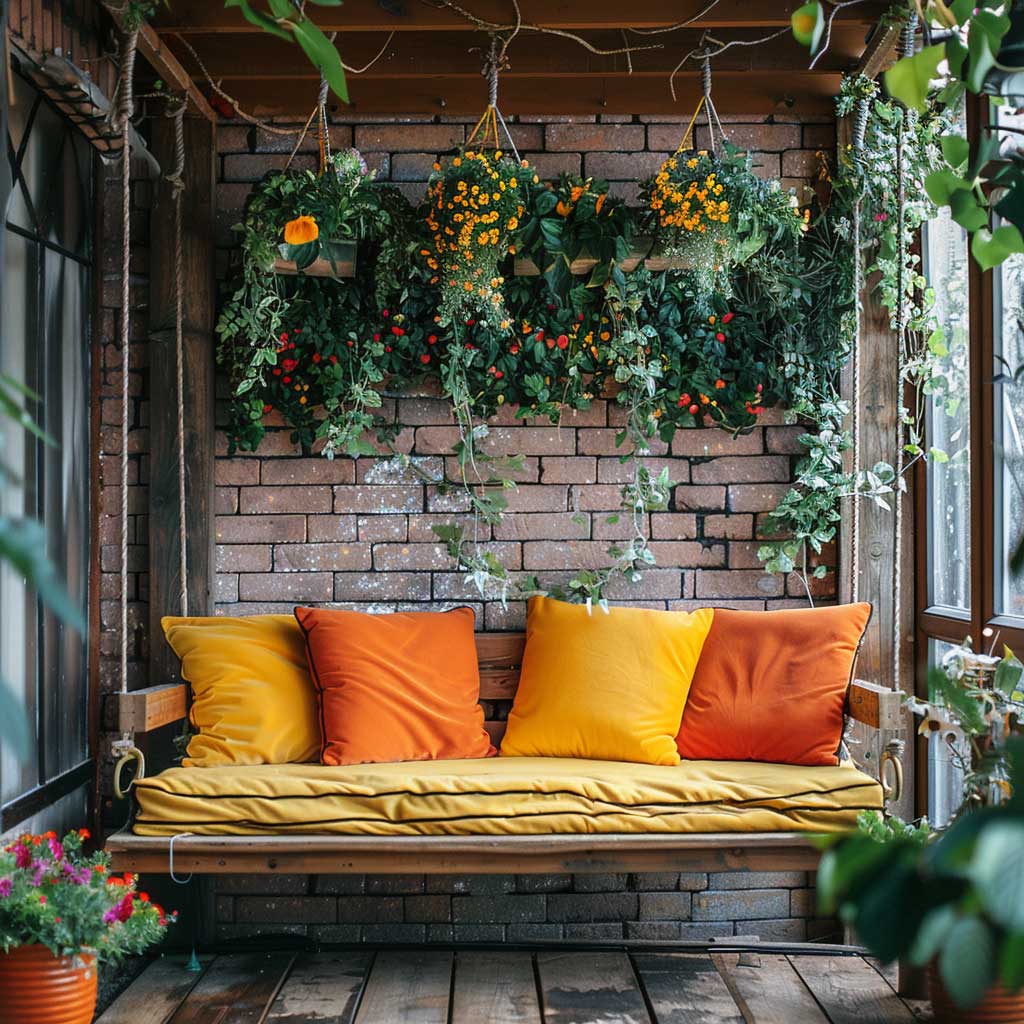
A porch swing with loose linen throws is the single piece of furniture that does the most French country work per square foot. I stole this trick from a farmhouse I photographed in the Loire Valley region: a simple wooden swing, two mismatched pillows, a cream linen throw draped over the arm — and the whole porch instantly read as a place where someone actually lives, not a Pinterest mockup. The swing costs $180–$350 at most garden centers; the Pottery Barn Chatham version in weathered teak runs about $299. The linen throw adds $30 from Target and does the remaining 40% of the aesthetic work.
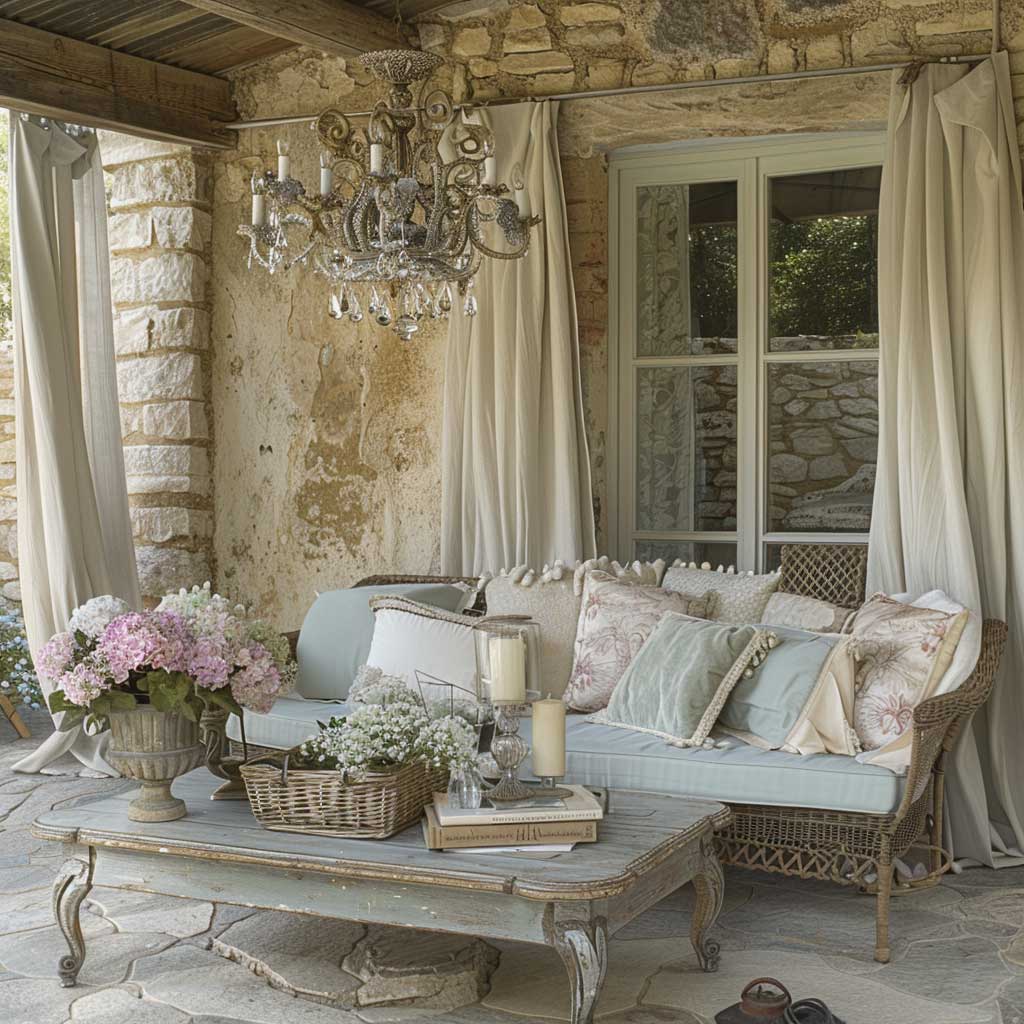
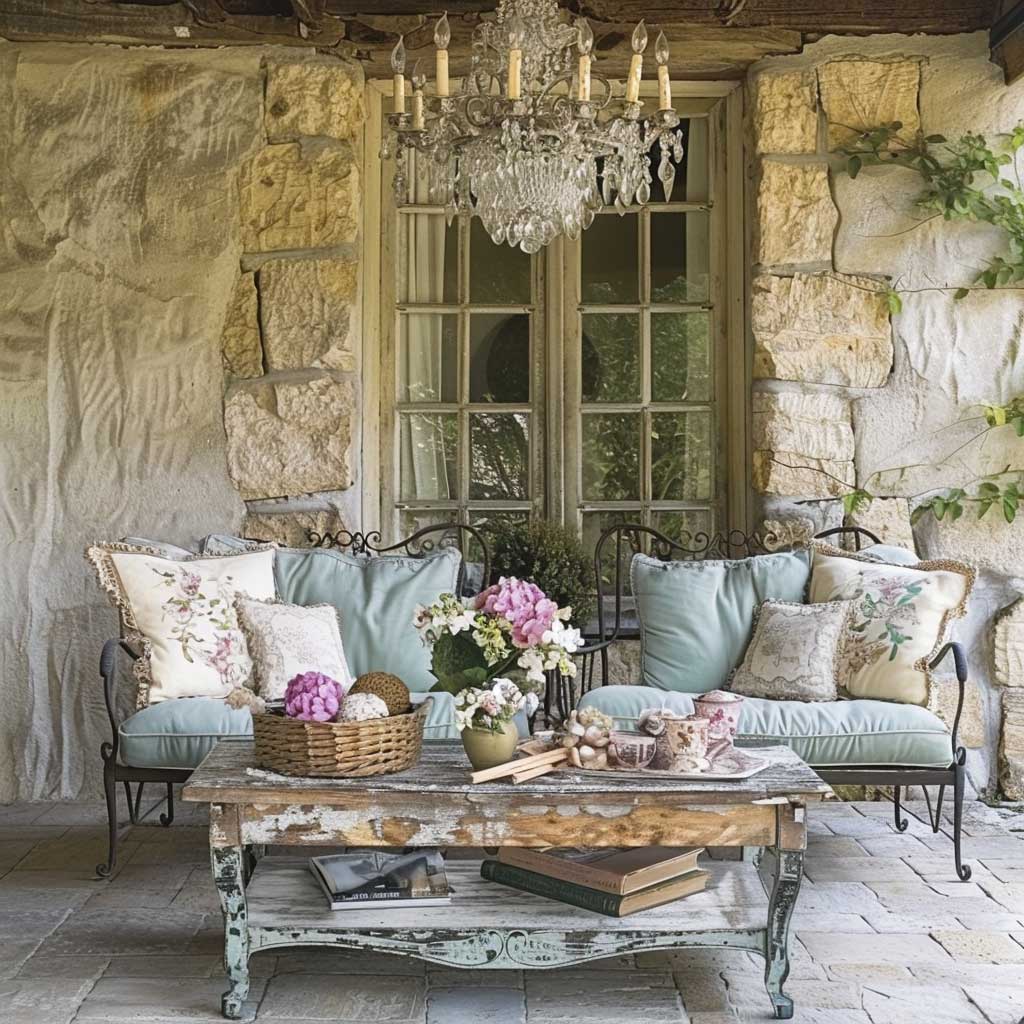
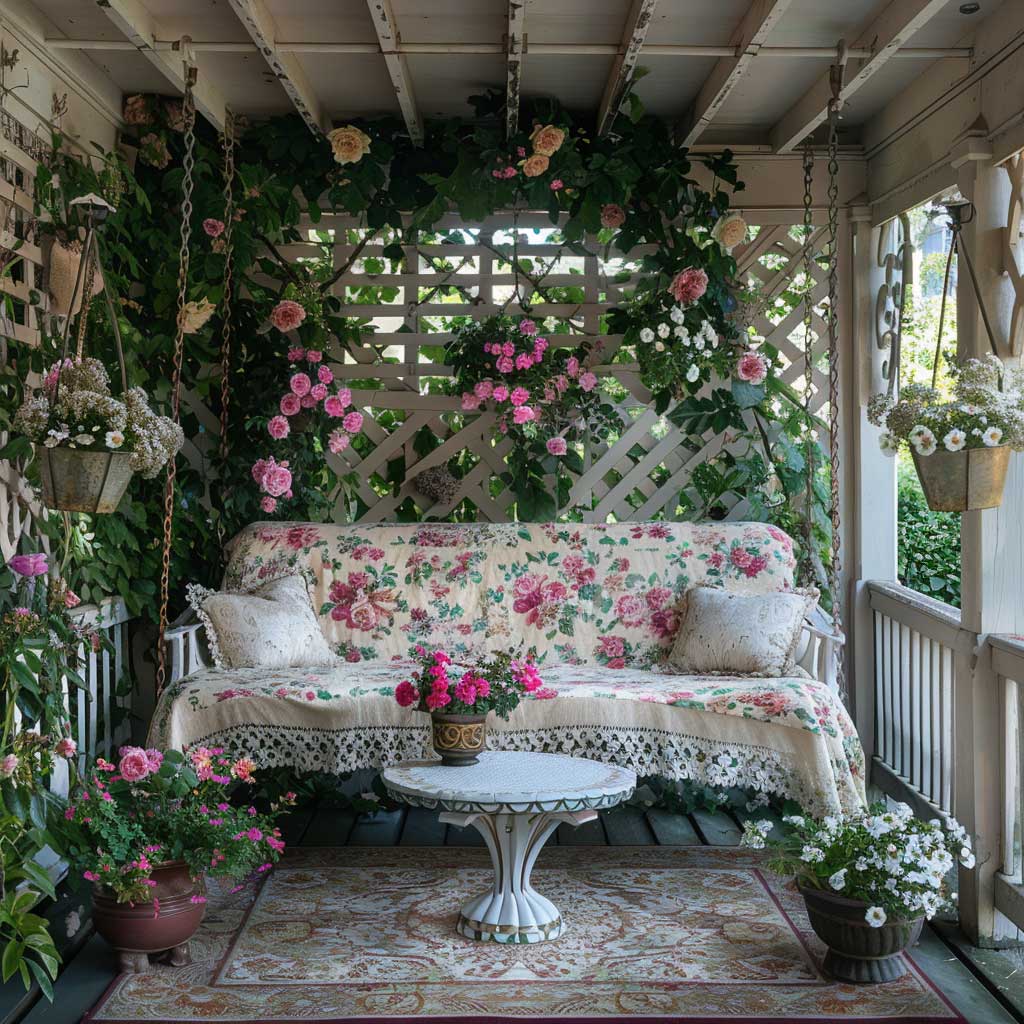
Hanging baskets of trailing blooms — petunias or fuchsias — add exactly the lush, slightly undisciplined quality that separates French country from English cottage. English cottage keeps the blooms contained. French country lets them trail. Buy three hanging baskets instead of two and overlap them slightly. The density is the point. A nearby small round table with a lace tablecloth and a jug of wildflowers pulled from the garden completes the tableau. You’ll notice the lace tablecloth looks fussy in a catalog photo and completely correct in context — that’s how you know it’s working.
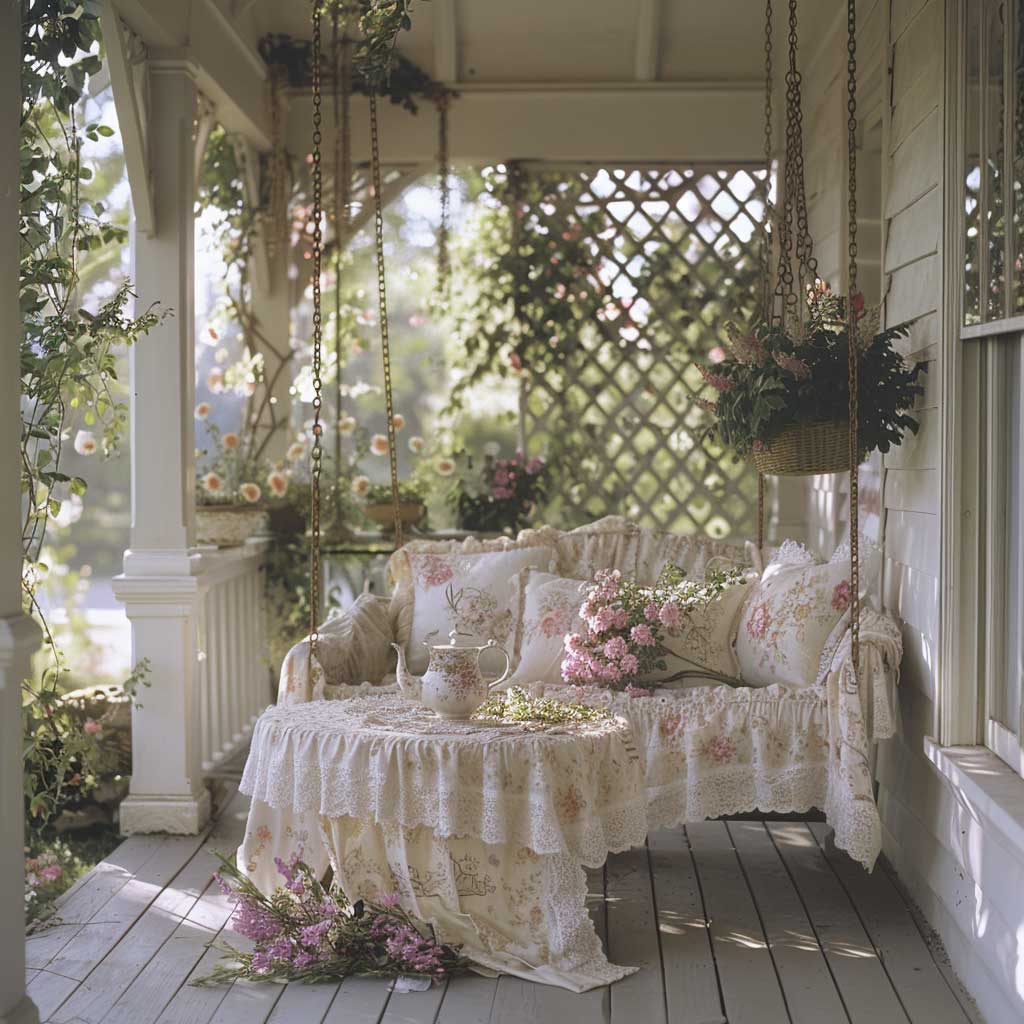
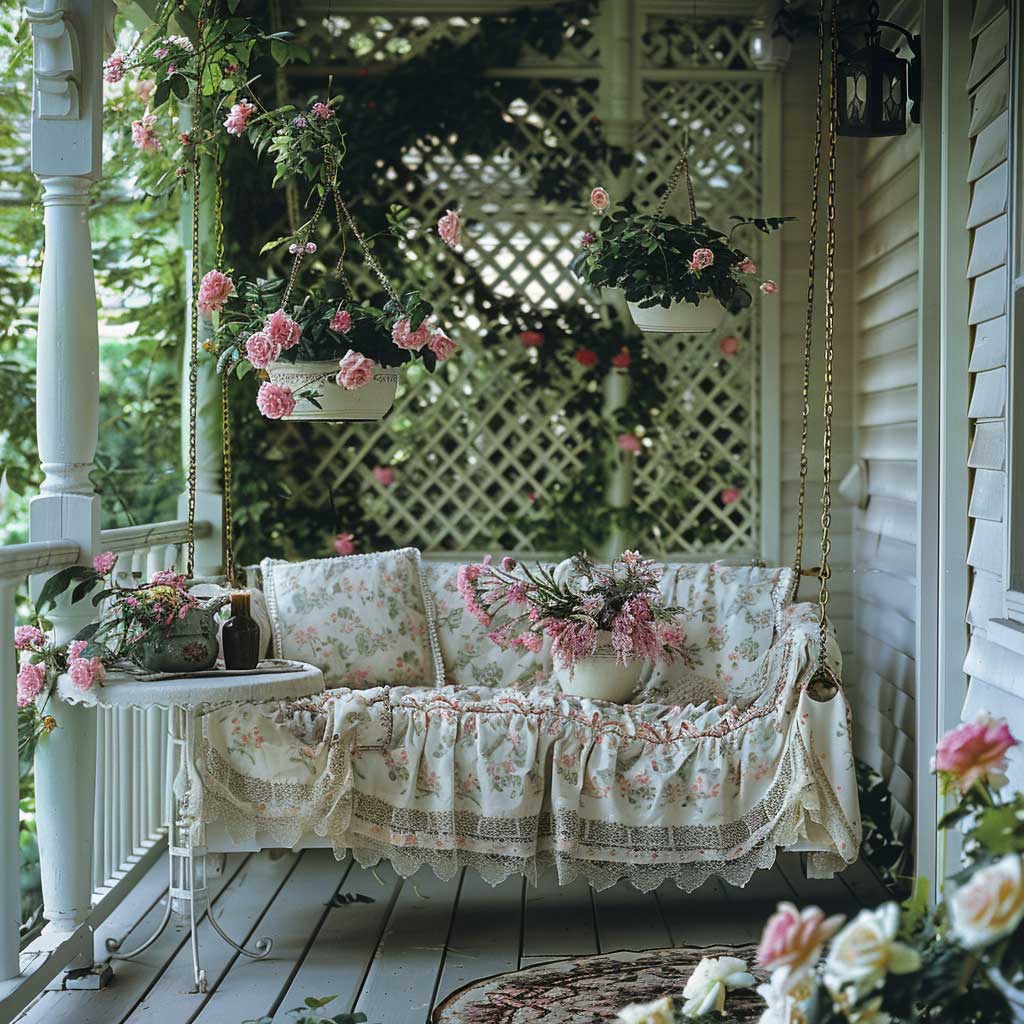
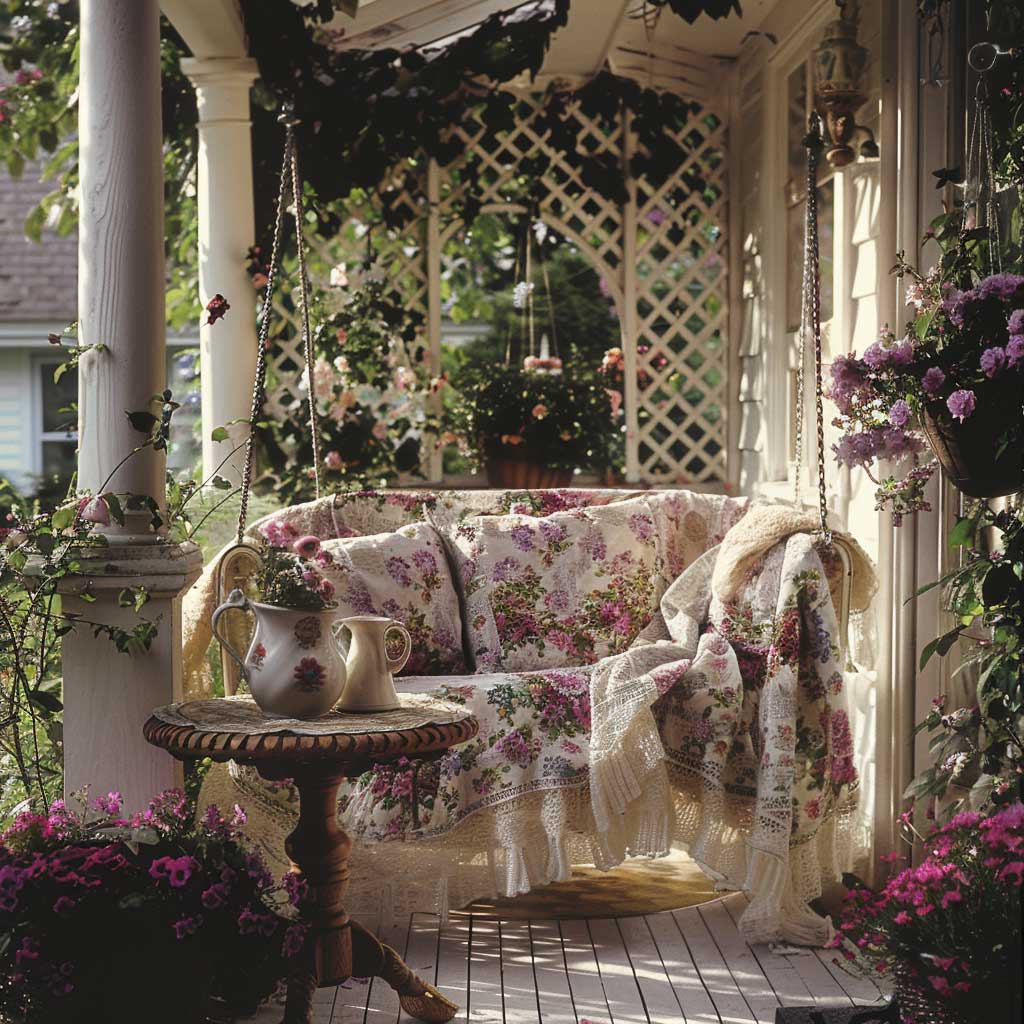
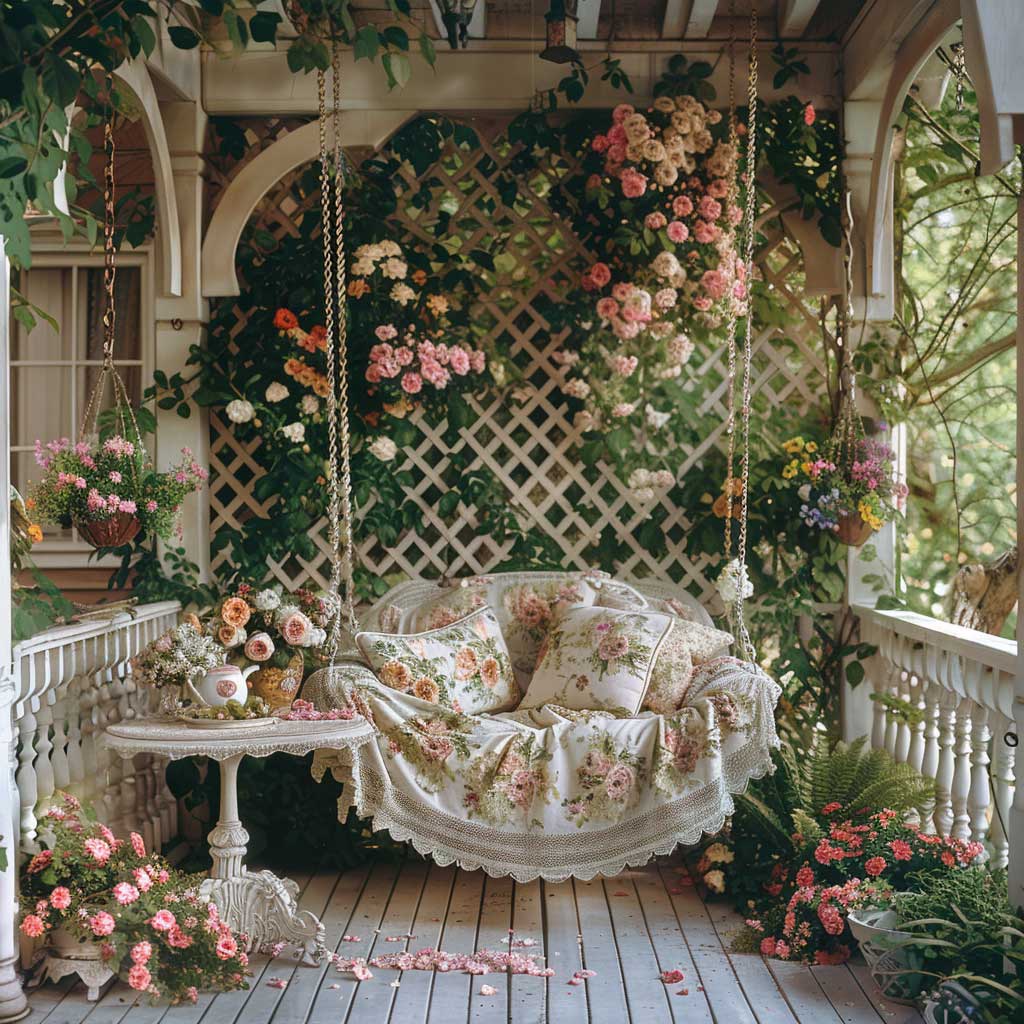
A lattice clothed with climbing roses on the fence or railing is one of the most characteristic elements of French garden design — and it does three jobs simultaneously: natural fragrance, visual softness, and a sense of enclosure that makes the porch feel like a room rather than a platform. David Austin’s Claire Austin climbing rose runs about $28 a plant and produces creamy white blooms that don’t fight with any color palette. Give it two seasons to establish and it will cover a six-foot lattice section completely. Don’t rush it with fertilizer and don’t trim it into a shape — the slight wildness is exactly what you need. For how these entrance-zone choices connect to the full front entry picture, these French country front door entrance ideas show how stone pathways and arched entries extend the porch aesthetic to the whole approach.
Avoid impatiens in hanging baskets. I know they’re cheap and available everywhere, and they produce flowers reliably — but they read as suburban American front porch, not Provence. The color is too saturated and the flower form too round and uniform. Fuchsias trail properly and have the right drooping, slightly theatrical quality. Petunias in a single soft color — pale pink or white — work. Mixed-color petunia baskets from the hardware store do not. Pick one color and be deliberate about it.
PORCH STYLE SNAPSHOT
A French Country Front Porch Looks Right Because It Looks Old — So Stop Buying Things That Look New
The foundation is always the same: one piece of distressed wood furniture, one piece of wrought iron, terracotta pots with real plants, and something trailing or climbing on a vertical surface. The fabrics should be linen or cotton, never polyester. The plants should be lavender, geraniums, roses, or hydrangeas — in that order of priority.
Skip matching sets. Skip resin planters. Skip navy cushions and brown wicker. The French country porch gets its authority from age, not from coordination.
Save this post before you head to your next estate sale or garden center.