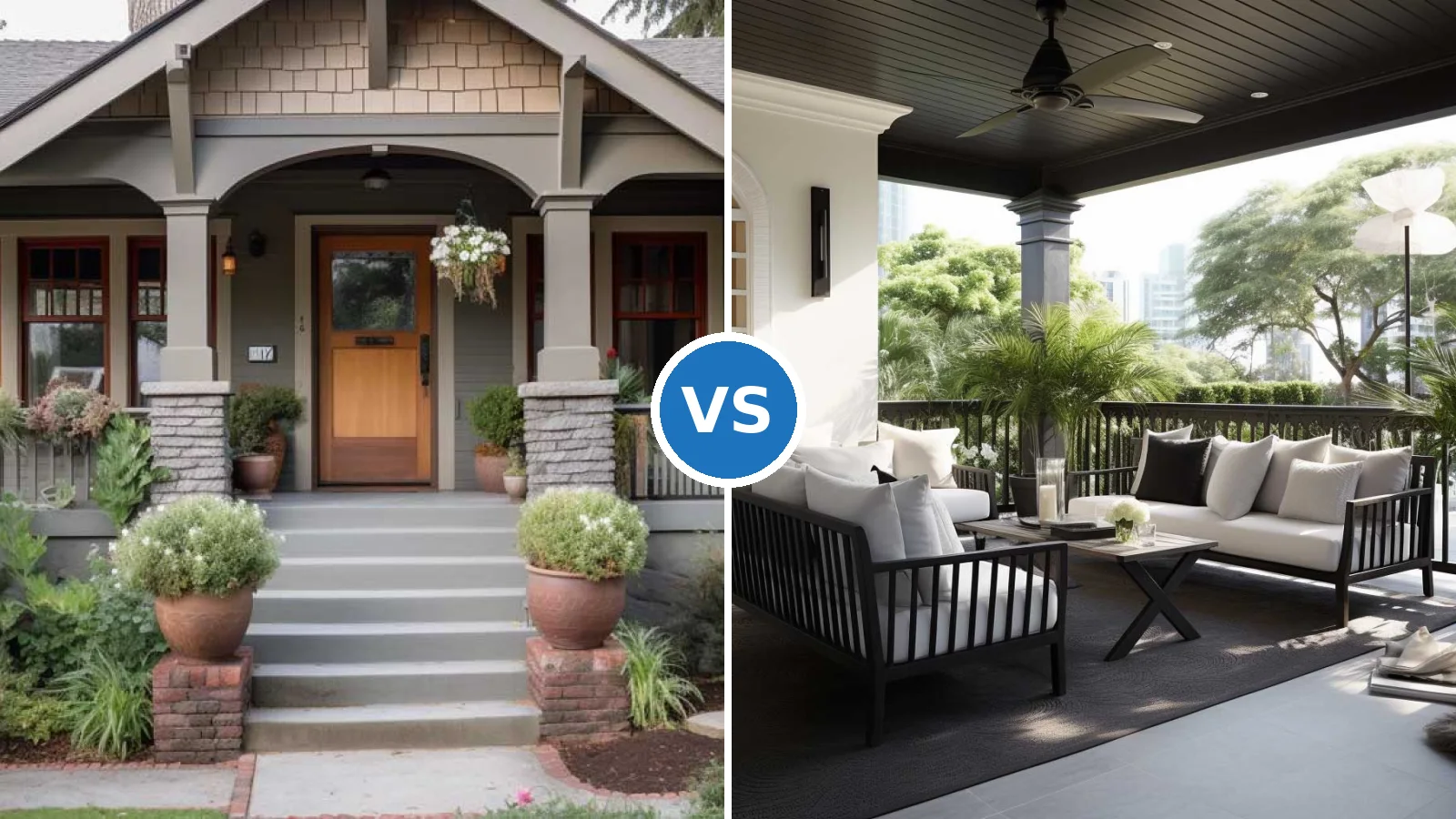
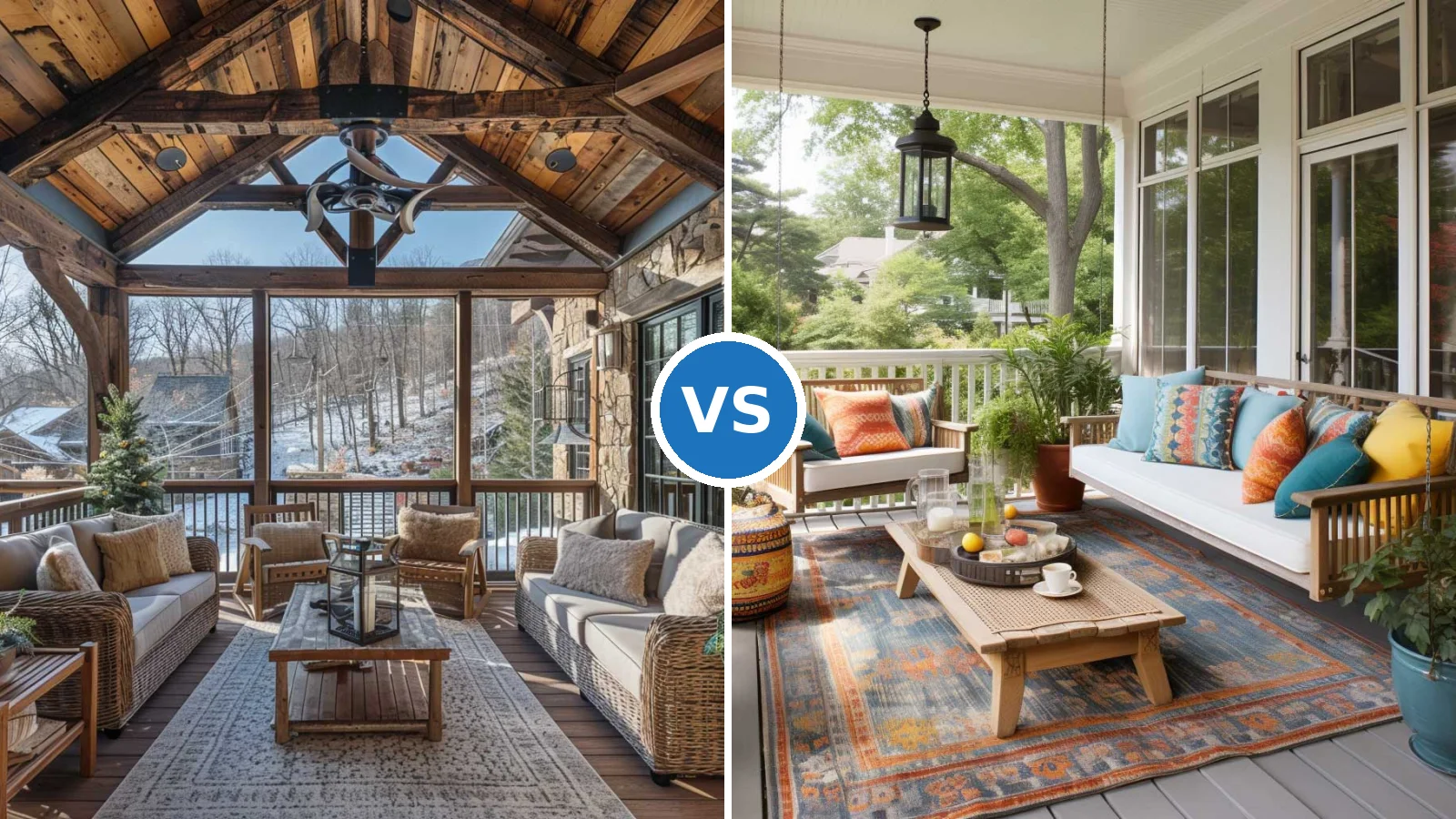
A mid century modern porch works when it borrows the house’s own logic: flat planes, generous glass, warm wood and nothing that shouts. Yes, a simple retro-inspired front porch suits these homes, and it looks best when the design follows the architecture instead of fighting it. The style took shape between roughly 1945 and 1969, so the porch should feel like postwar optimism rather than a themed film set.
What does that look like in practice? Low wooden seating, a restrained cream-and-brown palette, a few green accents and one or two retro details such as a sculptural pendant lamp. Skip the pile of vintage props, because every extra object weakens the clean lines the era is known for.
Below you will find furniture price ranges, decking costs, lighting numbers and a quick comparison table. Use them to decide what deserves the budget first and what can wait until spring.
- Let the house lead: flat planes, slim posts and open sightlines set the rules.
- Pick low, slim-legged wood furniture; folding sets start near $65 to $150.
- Keep 30 inches of clear walkway around every seating group.
- Choose warm 2700K to 3000K light and hang pendants at least 7 feet high.
- Allow one retro accent per zone instead of a full vintage collection.
Flat Planes and Glass Define a Mid Century Modern Porch
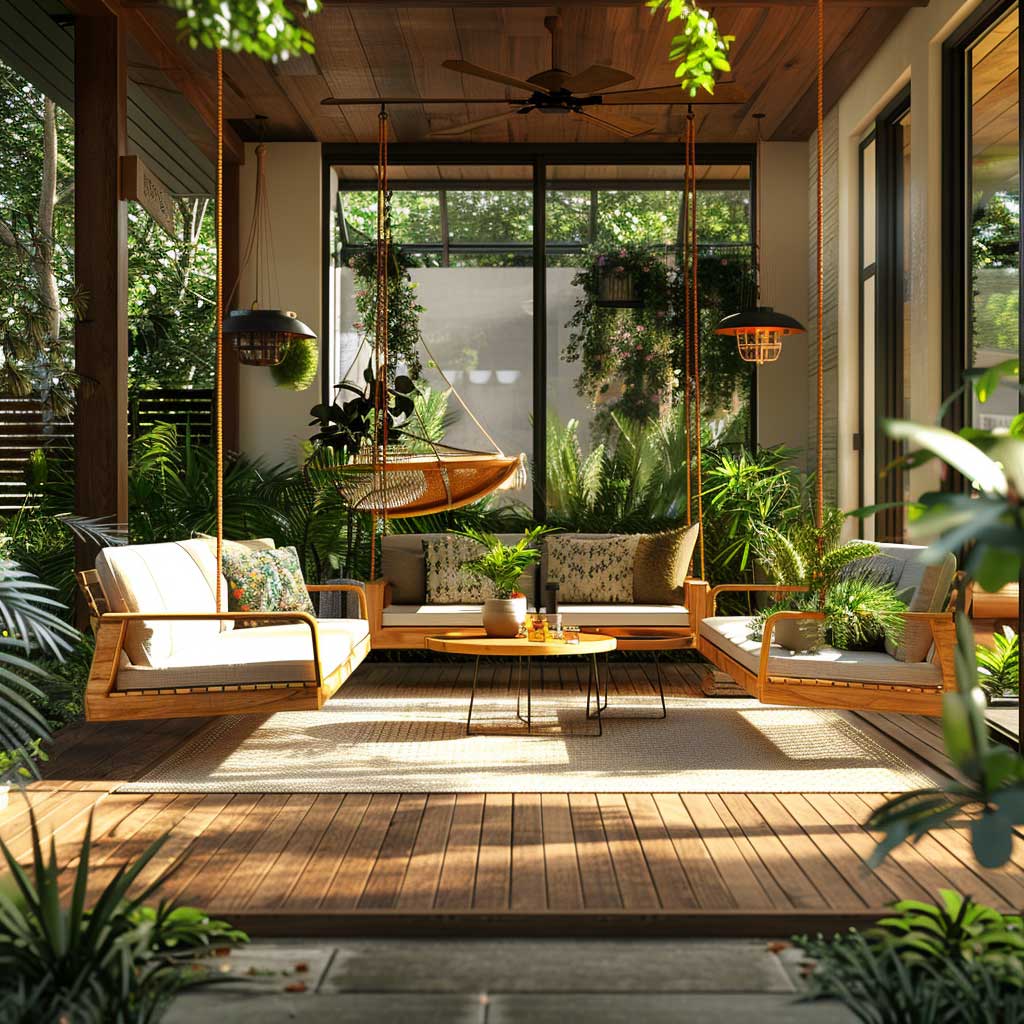

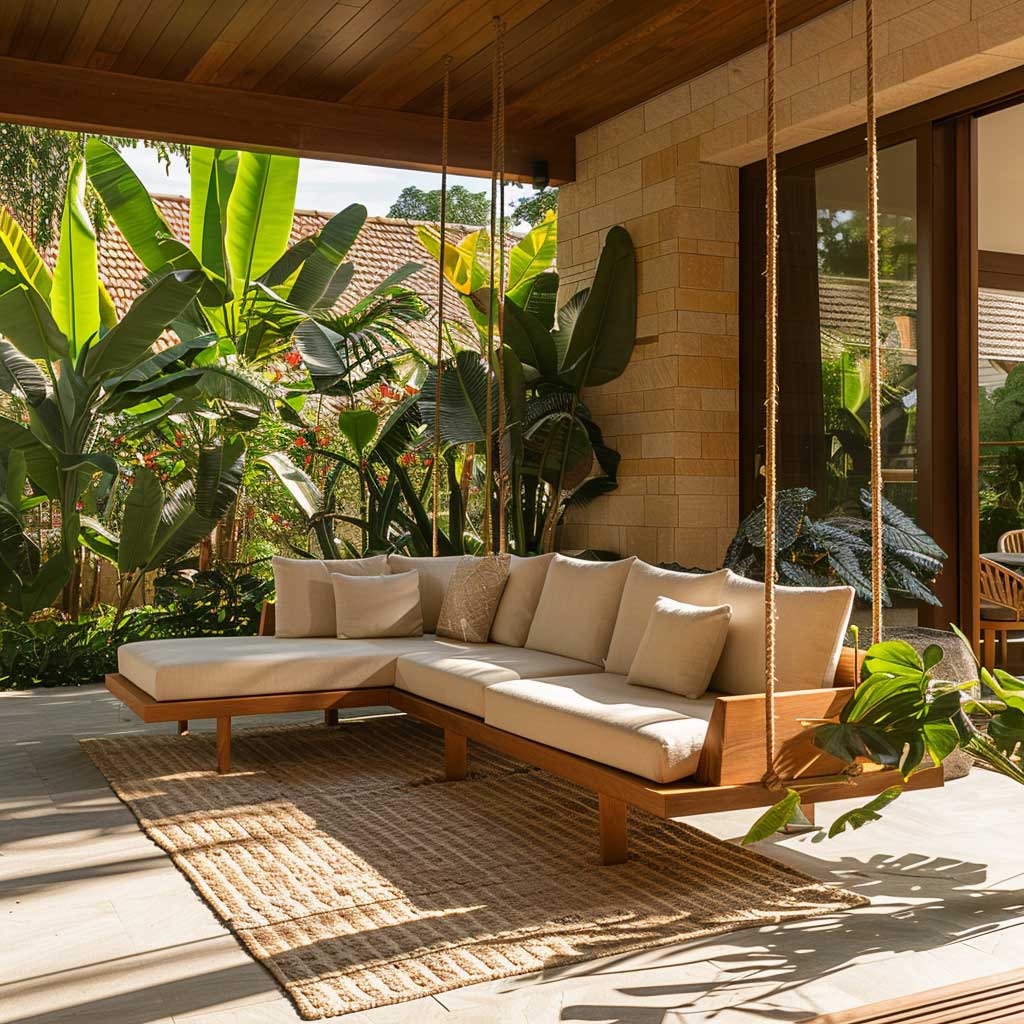
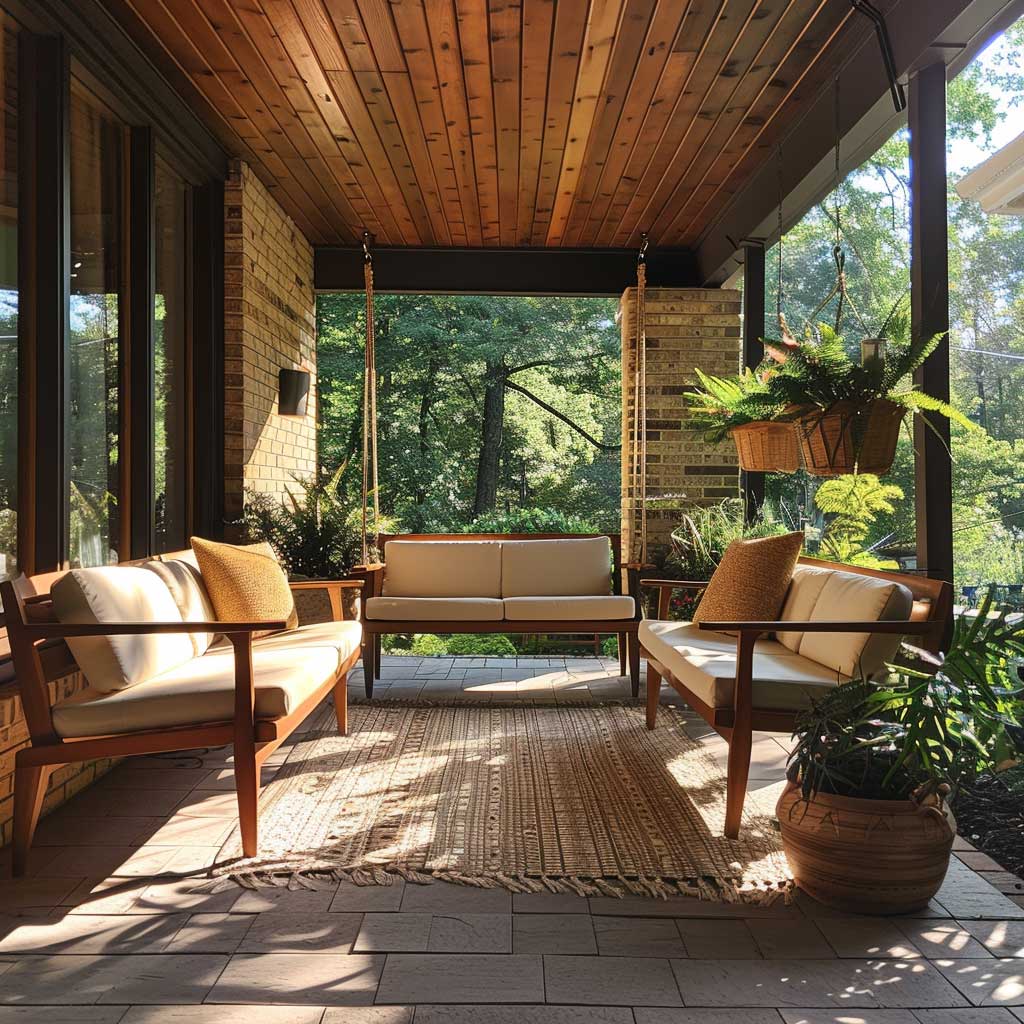
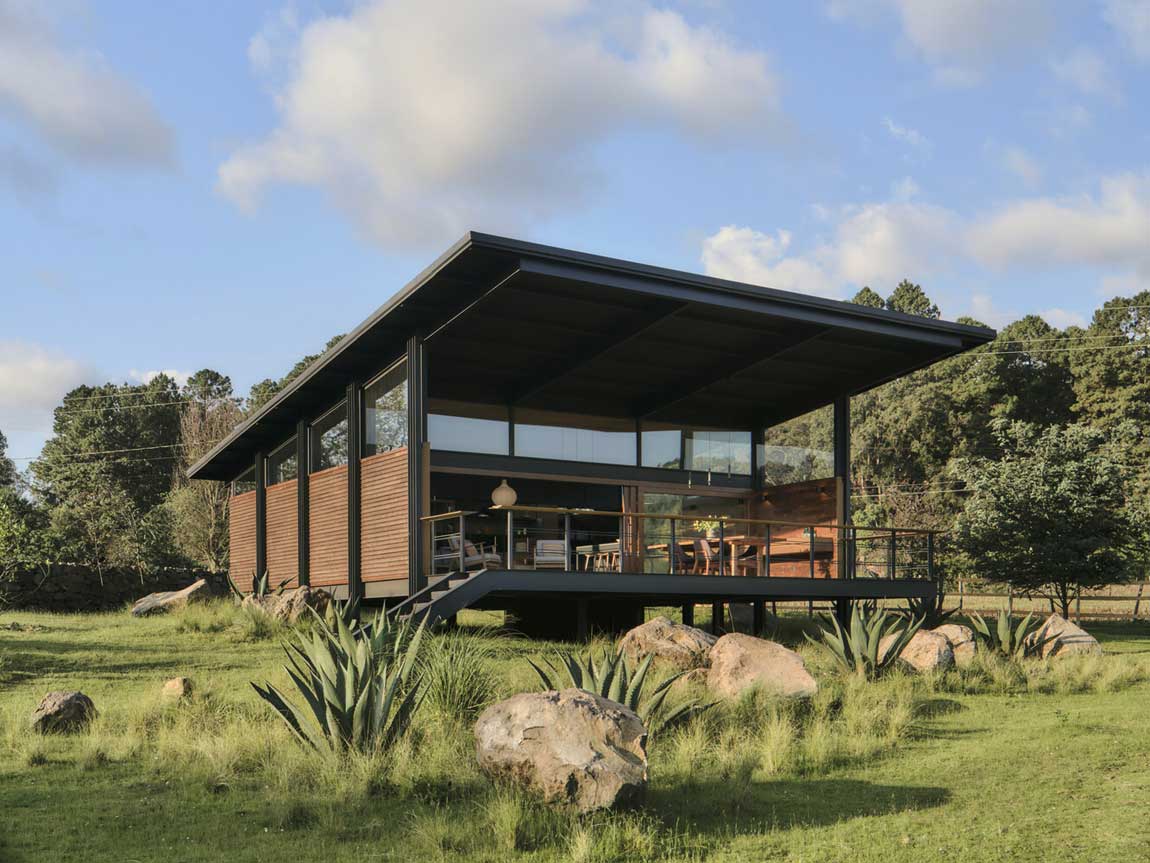
A simple mid century porch design starts with the house, not the furniture. Postwar architects favored flat planes, low rooflines and big sheets of glass, and where a traditional window sits at about 4 to 5 feet, mid-century glass walls run far taller. Why does that matter outdoors? Because the porch should echo the same openness, and think of it as the home’s handshake: firm, uncluttered and honest about its materials. Repeat the horizontal lines of the facade in railings, bench slats and steps.
The same rules run indoors, where clean lines, organic curves and plants act as design partners. If you are weighing this look against a calmer one, this comparison of mid century modern style versus Scandinavian design shows where the two overlap. Don’t copy the living-room formula outside, though, since velvet and plush rugs do not survive rain. Choose one tactile material per zone and let weather-ready wood carry the rest.
Furniture and Layout for a Mid Century Front Porch
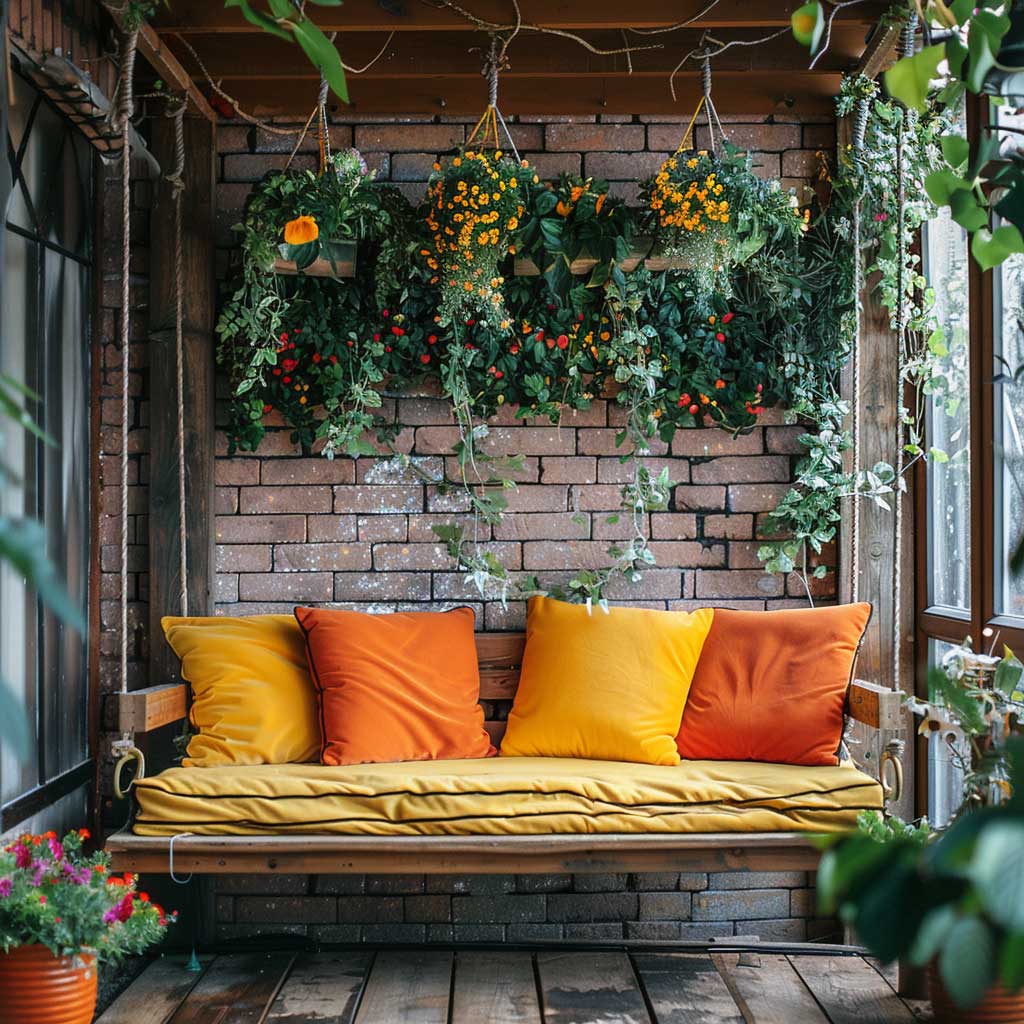
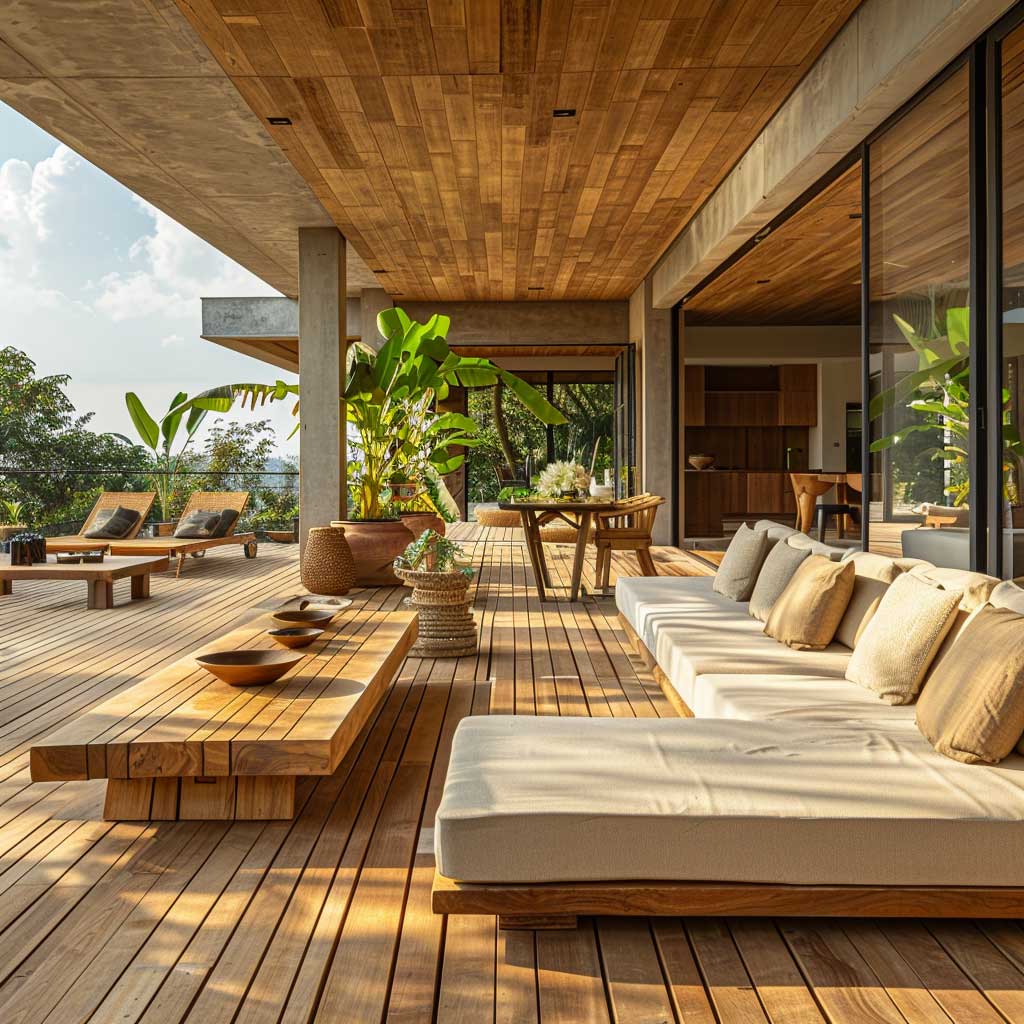
Furniture on a mid century front porch should feel sculptural without looking heavy. Look for tapered legs, slatted wood and low lounge profiles, then keep the count small. Entry-level folding sets typically retail around $65 to $150, while compact modular seating often lands between $150 and $550, according to retailer price ranges. How much seating is enough? Two chairs and a small table cover daily use, and a single wooden bench or swing can anchor the whole look.
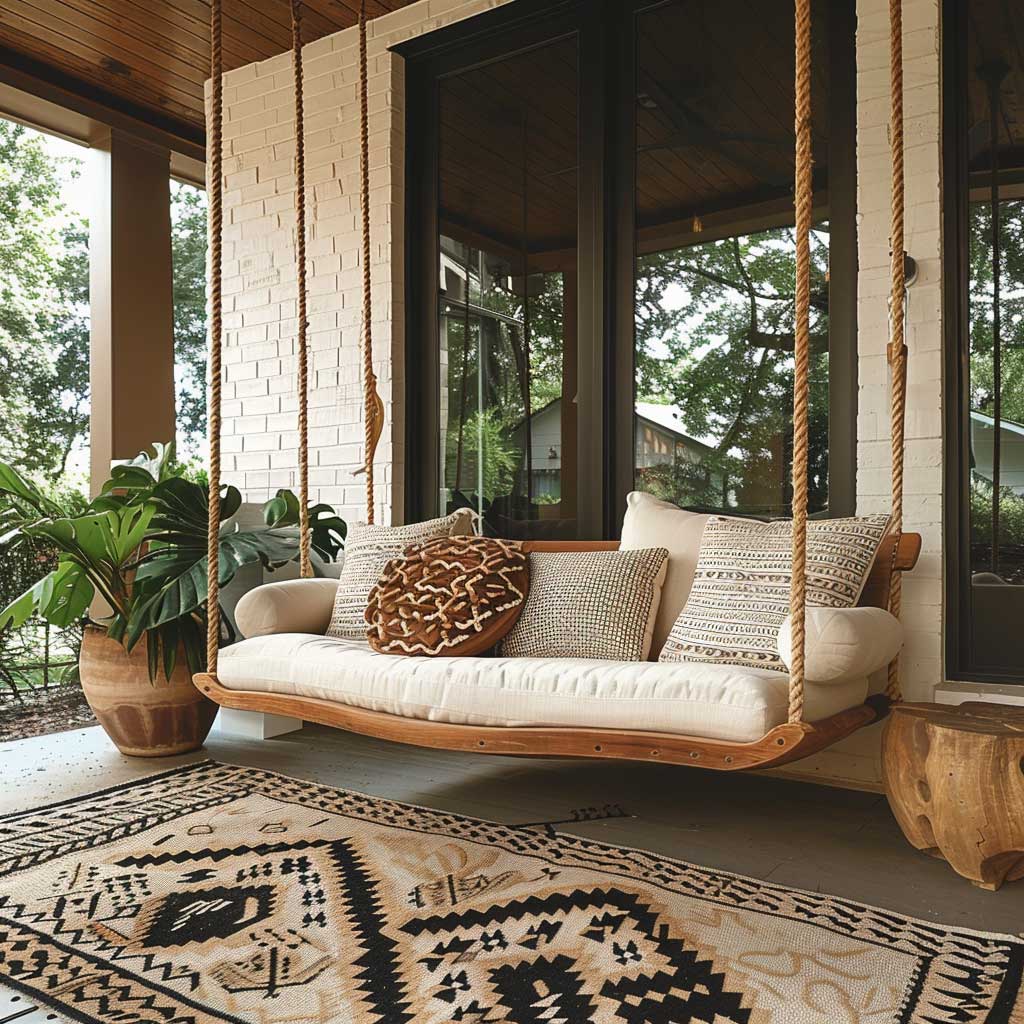
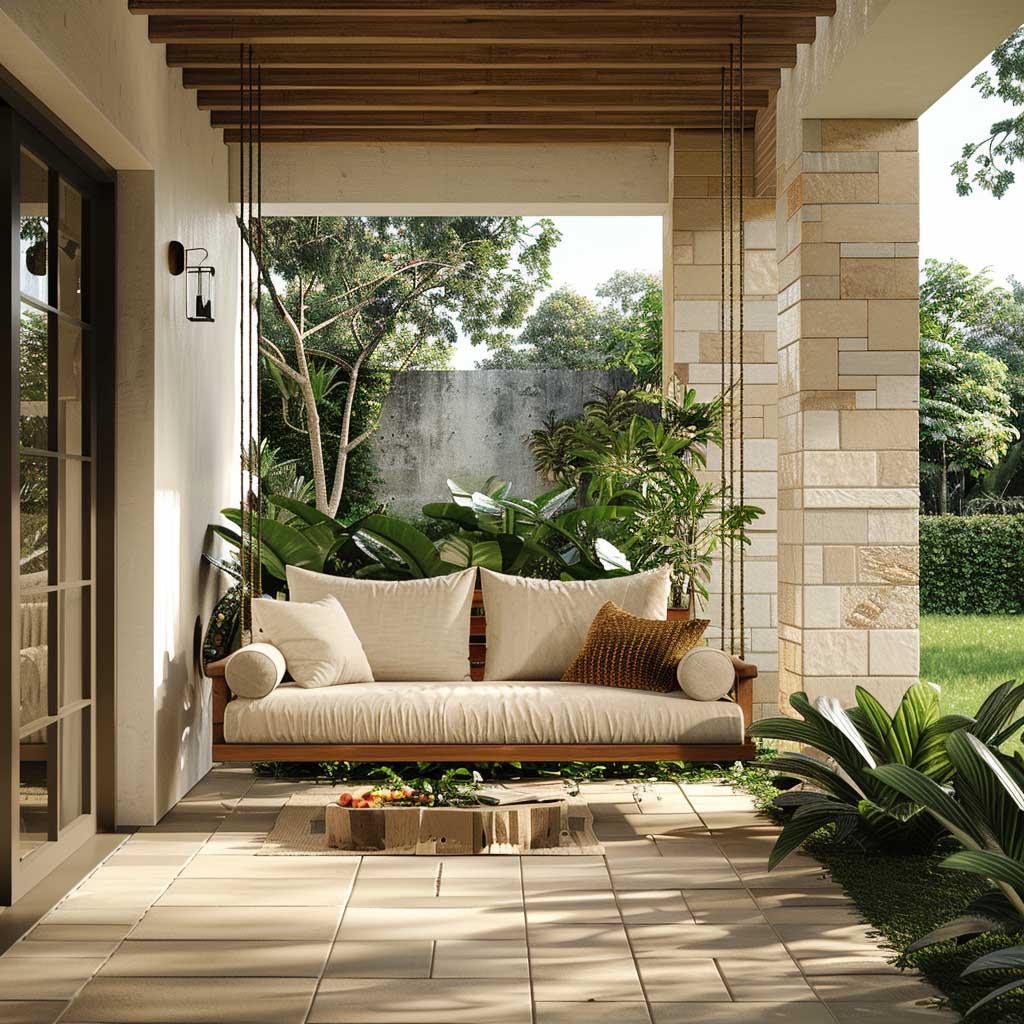
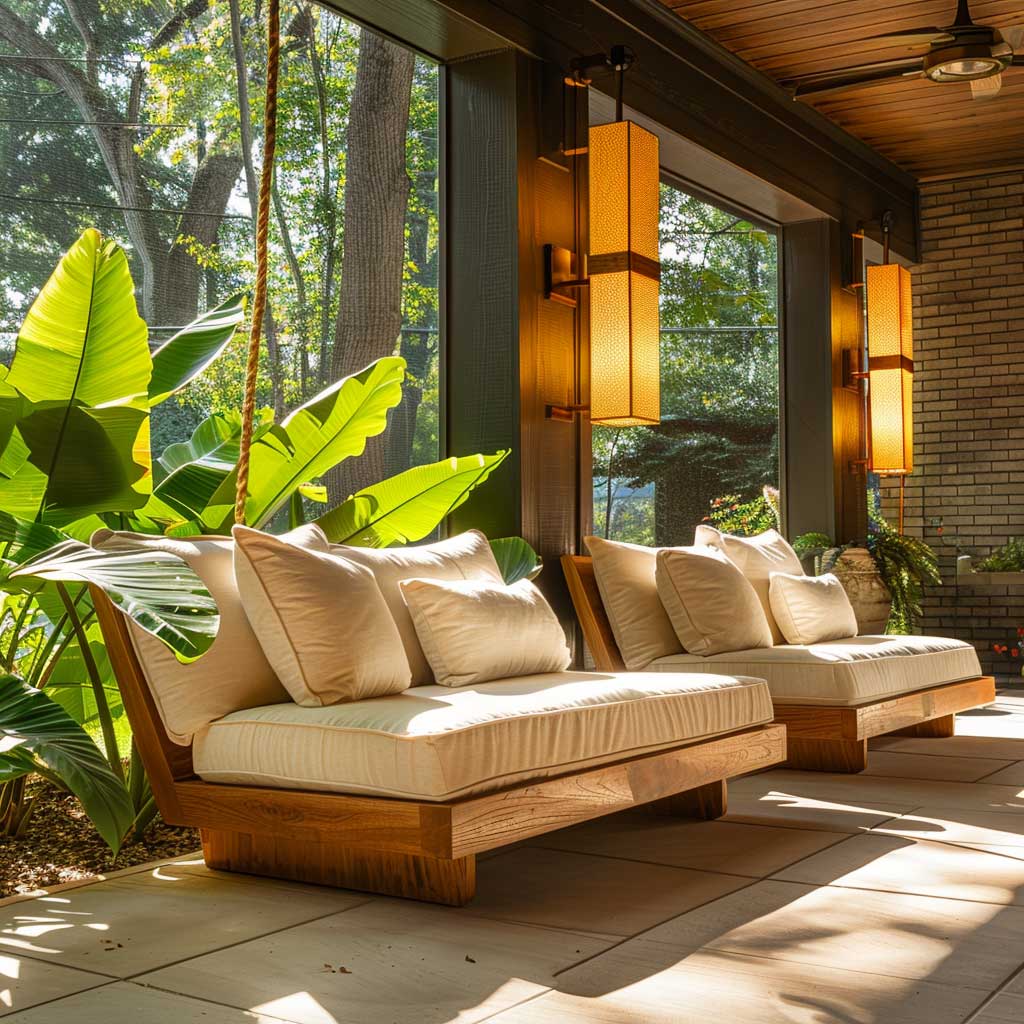
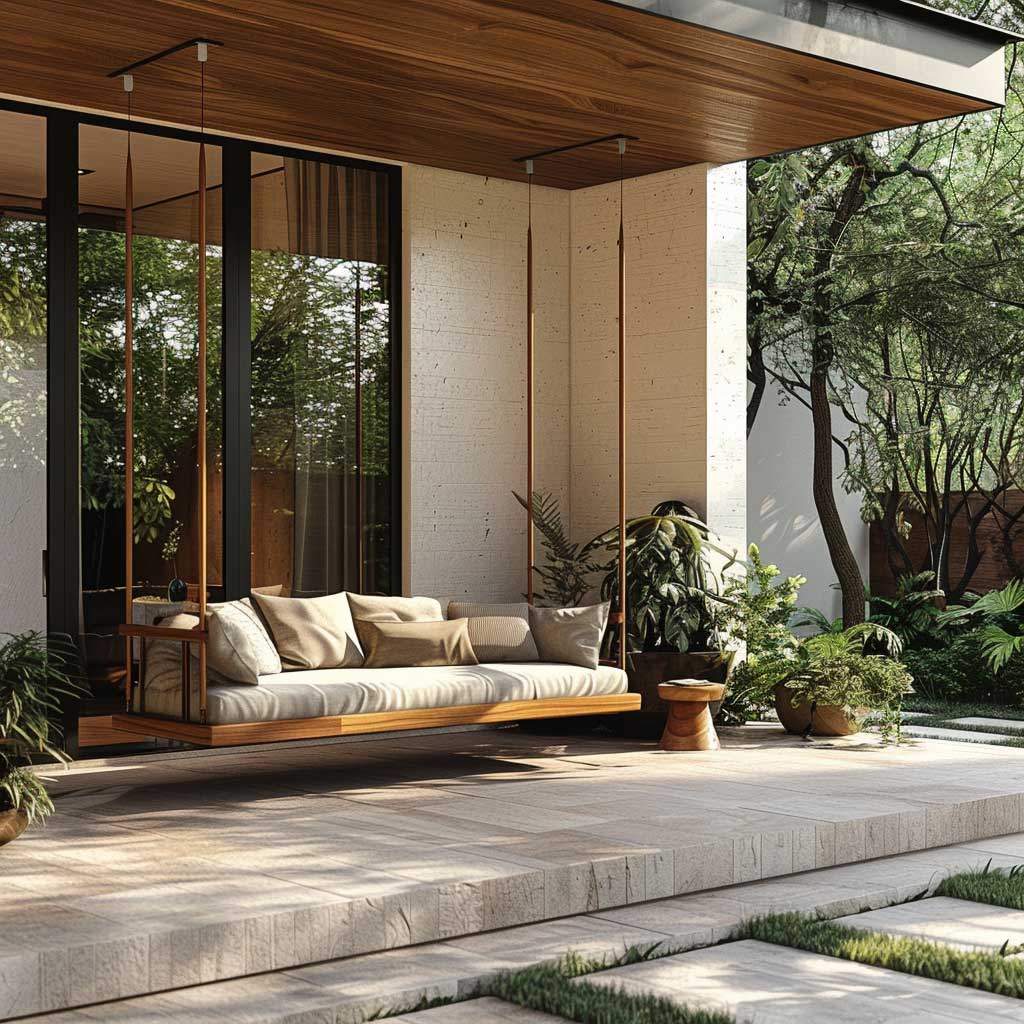
Leave at least 30 inches of clear walkway around every grouping, and keep tables under 28 inches wide so chairs can turn toward each other. Picture the layout as a small conversation pit rather than a showroom line-up. Pushing everything against the railing is the fastest way to flatten the space and block the view. Float each piece a few inches inward and angle two chairs toward a shared table.
Materials and Color That Keep a Mid Century Porch Calm

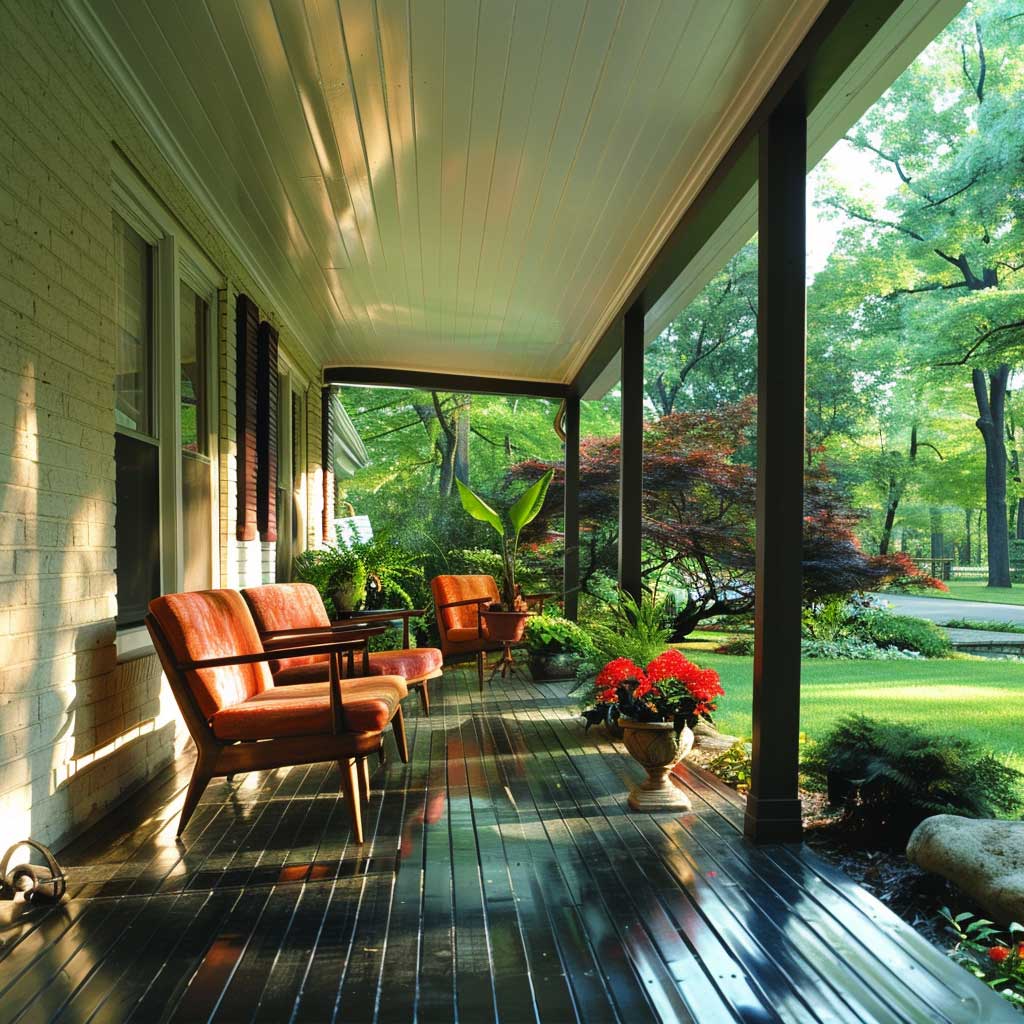
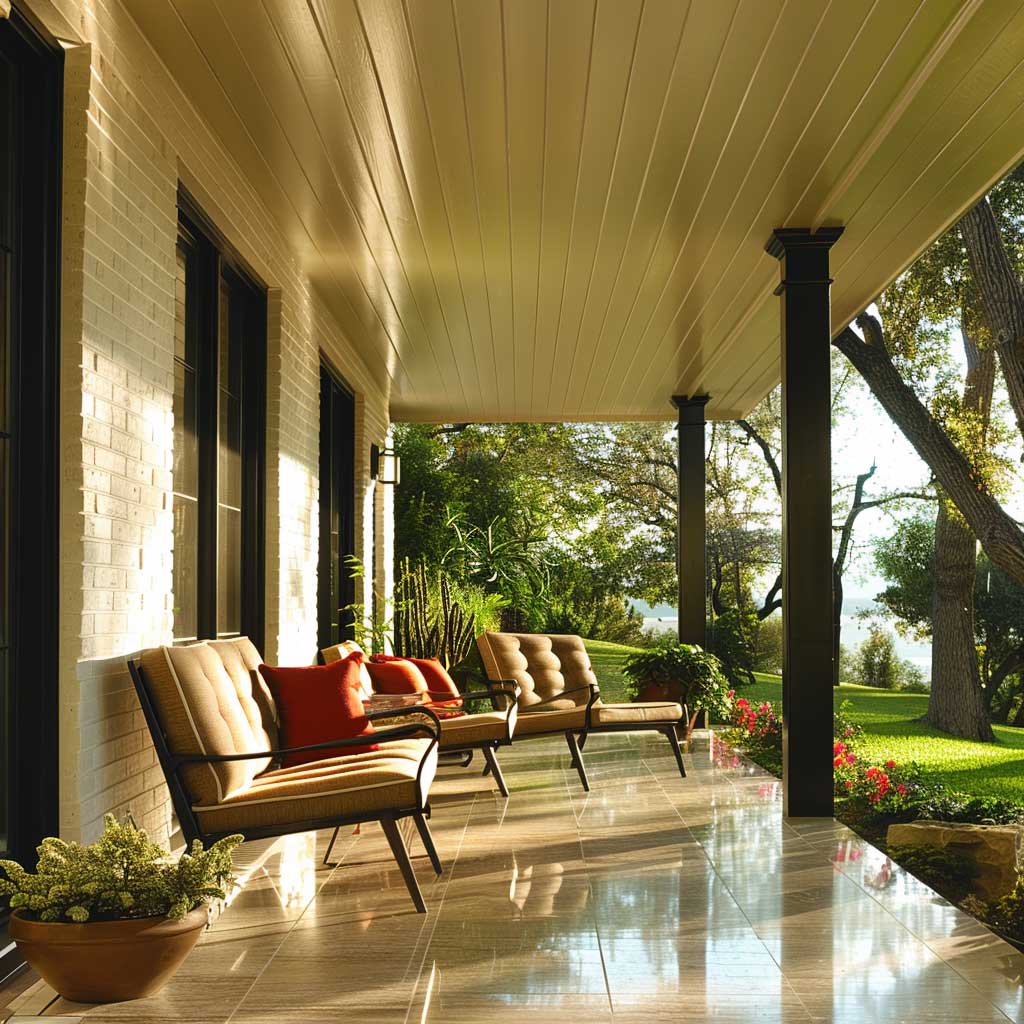
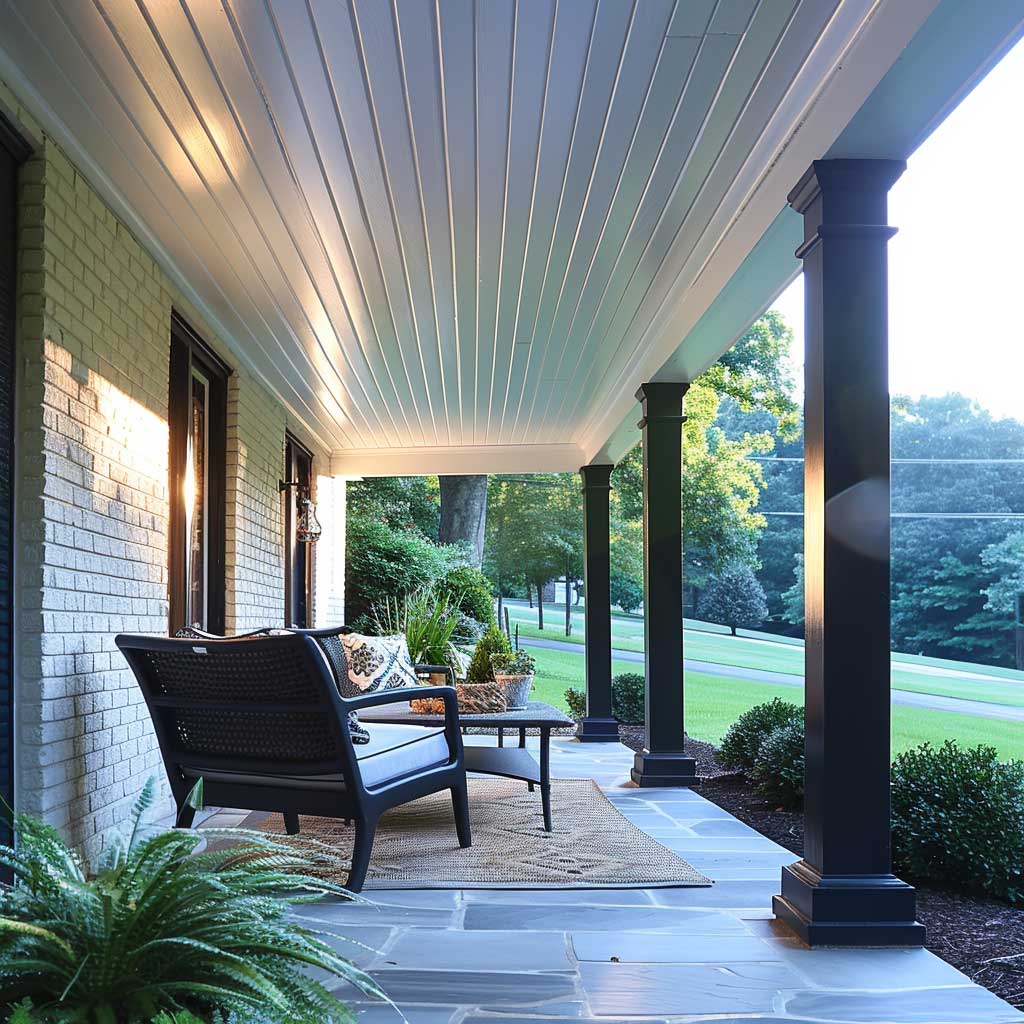
A neutral base of cream, warm brown and soft white lets the architecture do the talking. Assign one earthy tone to the floor, one to the furniture and one to the walls, then add a single pop such as mustard or teal. What happens when every cushion gets its own color? The porch starts to resemble a fabric store. Limit bright accents to two items and repeat them once.
Materials matter as much as color. Wooden planks start at about $5 per square foot, composite at roughly $5 to $13 and brick at $6 to $10, based on decking supplier ranges. Wood gives the warmest match to the era, while composite trades a little character for less upkeep. Sample two boards under your porch light before ordering the full run.
Don’t Do This
- Don’t buy a matching vintage set; pair one hero piece with plain supporting pieces.
- Don’t paint every surface a bold shade; keep strong color for small accents.
- Don’t hang heavy ornament from slim beams or thin posts.
- Don’t let leaves pile up on a flat canopy or roof.
A Mid Century Modern Portico Frames the Front Door

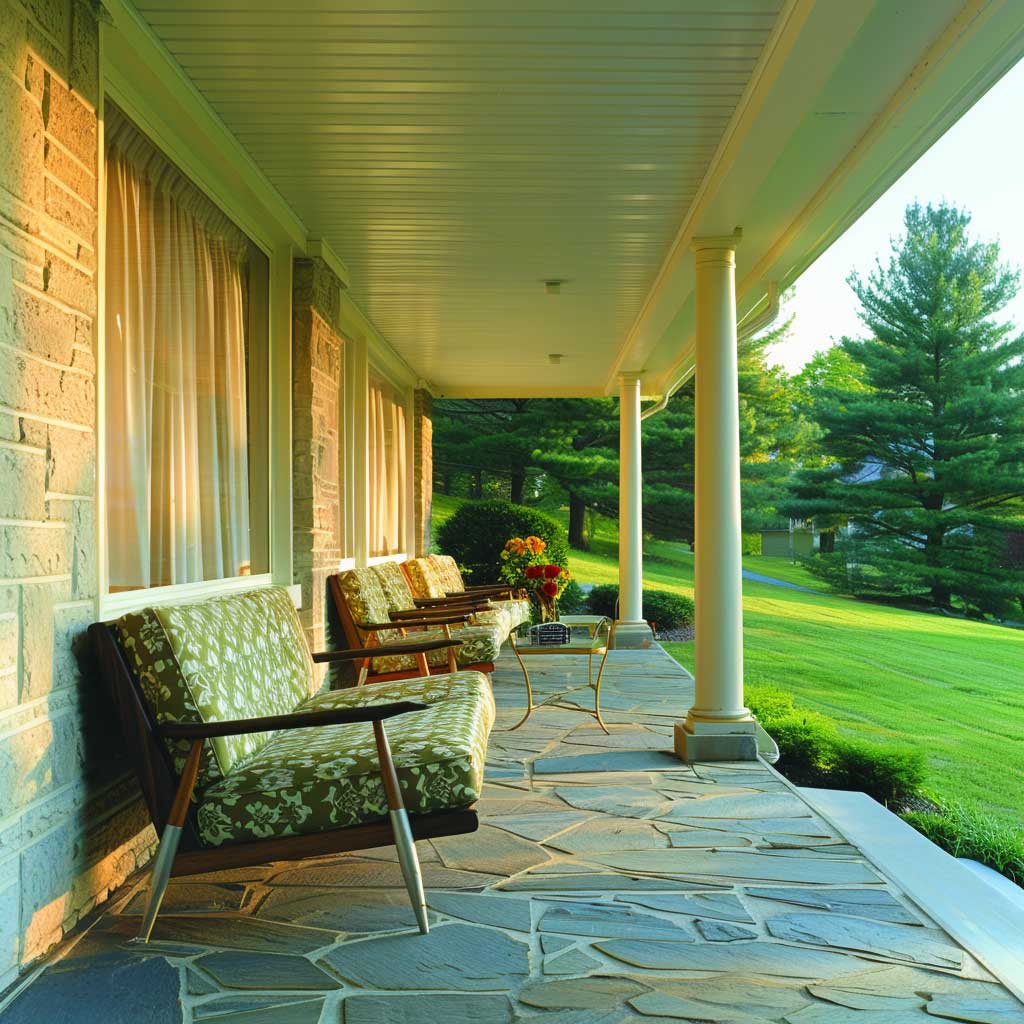

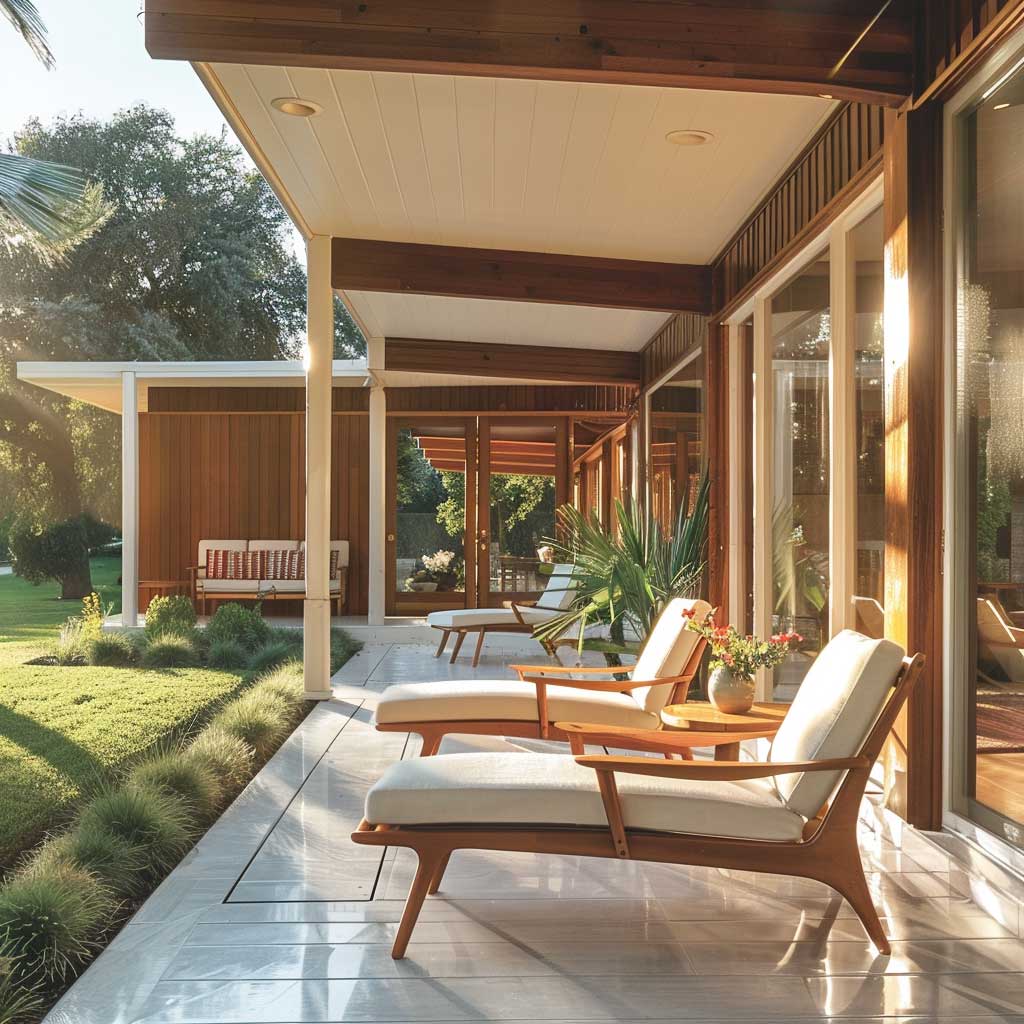
A portico is the porch’s shy cousin: a covered entry that sheds rain and announces the door without adding a full seating area. On mid-century homes it usually reads as a slim flat or low-slope canopy on thin posts. Do you need a big footprint for it? No, a shallow profile with slender supports makes the roof look like it floats above the entry. When space is tight, choose a portico with one bench over a porch that crowds the door.
Budget the structure before the styling. A pier foundation often runs about $5 to $8 per square foot and a concrete slab about $3 to $5, according to porch-building guidance from a decking supplier. Skip a heavy gable roof, because it fights the flat lines of the house. Flat roofs also need attention, since leaves and debris invite leaks, as this HGTV overview of mid-century modern architecture points out. Clear the canopy before the rainy season starts.
| Floor material | Typical cost per sq ft | Mid-century fit | Upkeep |
|---|---|---|---|
| Wood planks | From $5 | Warmest, closest to the era | Regular sealing or oiling |
| Composite | $5 to $13 | Clean and consistent | Low |
| Brick | $6 to $10 | Solid retro base, heavier look | Low, occasional cleaning |
Retro Lighting, Plants and Accents for Mid Century Porch Ideas
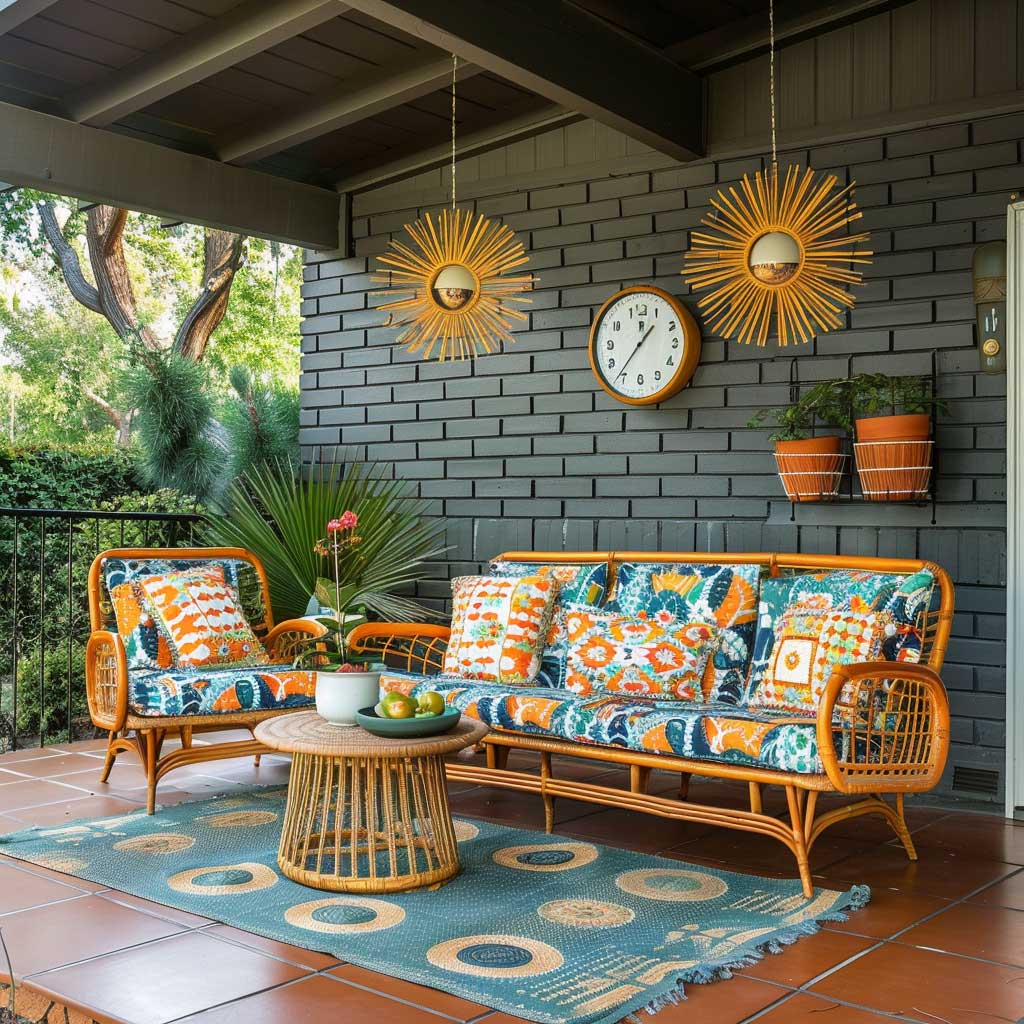
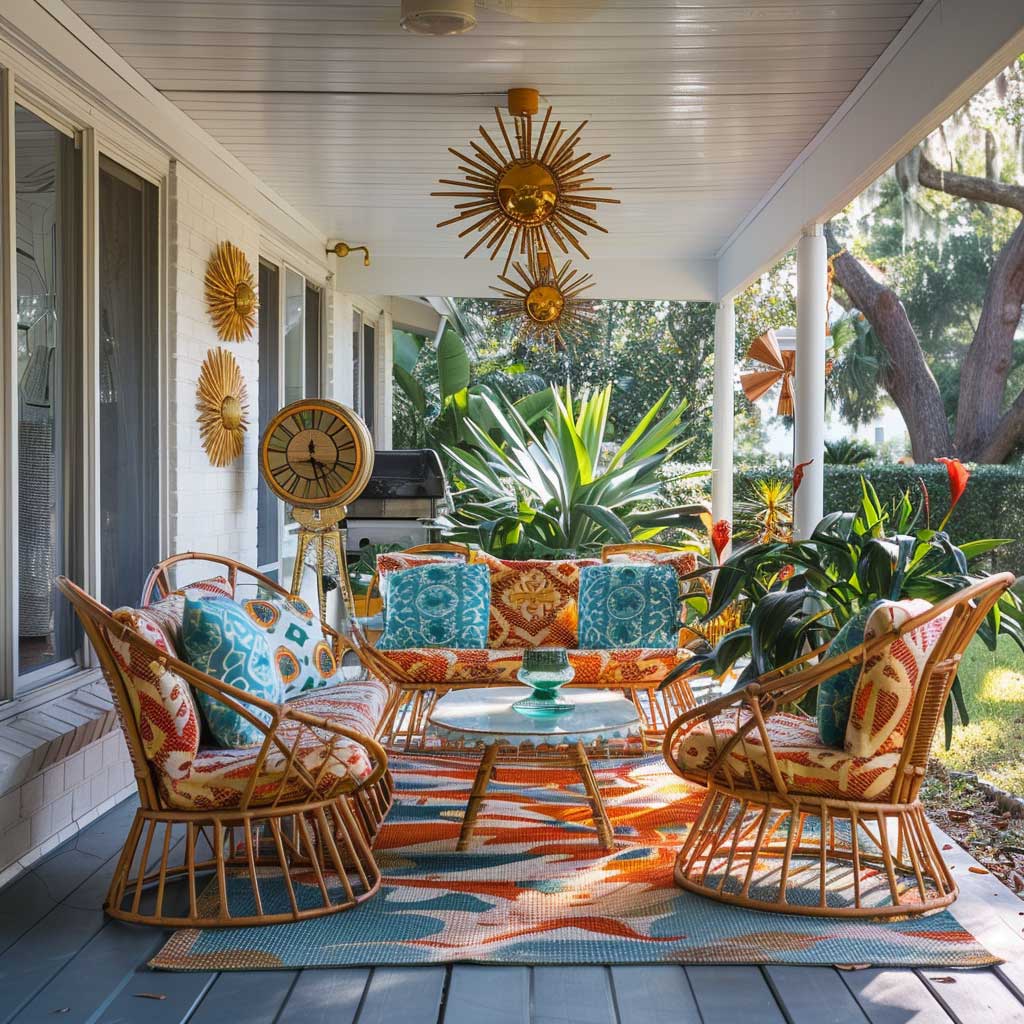


Lighting sets the mood faster than any cushion. Warm bulbs in the 2700K to 3000K range flatter wood and cream tones, while light above 4000K turns a porch clinical, according to lighting manufacturers’ guidance. A sculptural pendant should hang at least 7 feet above the floor so nobody bumps it. Does the fixture have to be vintage? No, a reissue with a tapered or globe silhouette gives the same look. Pick a frosted or opal shade to soften glare.
Plants soften hard edges the way a rug softens a floor. Two or three large planters in matte ceramic or wood look more intentional than a dozen small pots, and a low shrub border blurs the line between porch and yard. Never crowd the entry with containers that block the door swing. Put the tallest plant at a corner, not in front of the door.
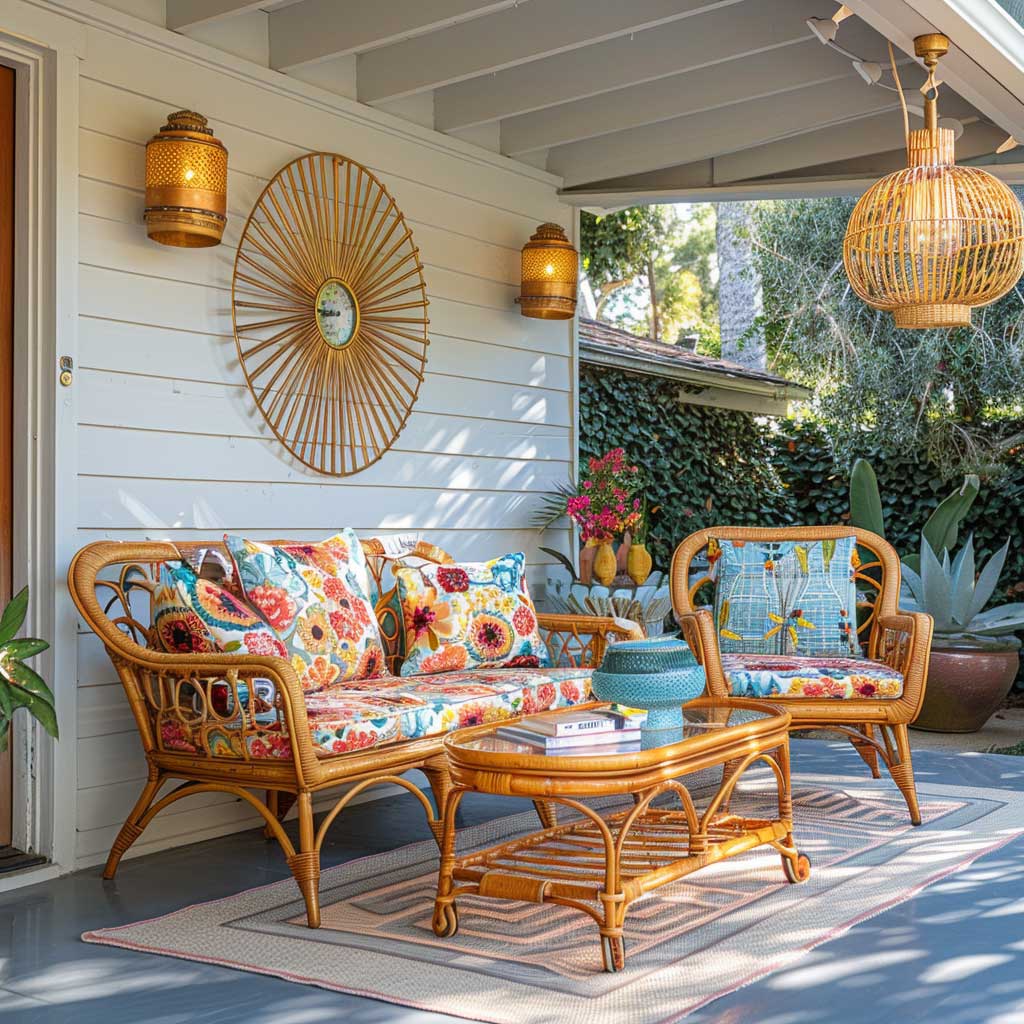
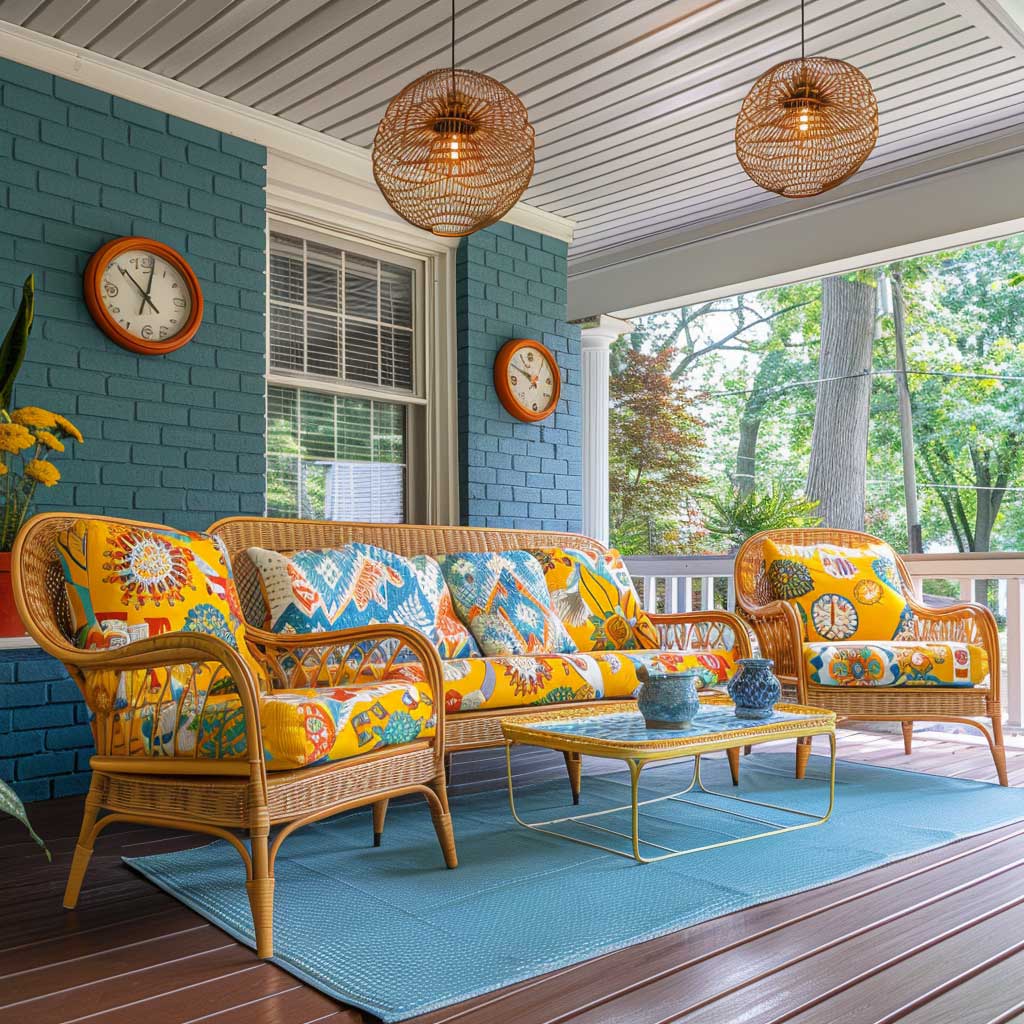
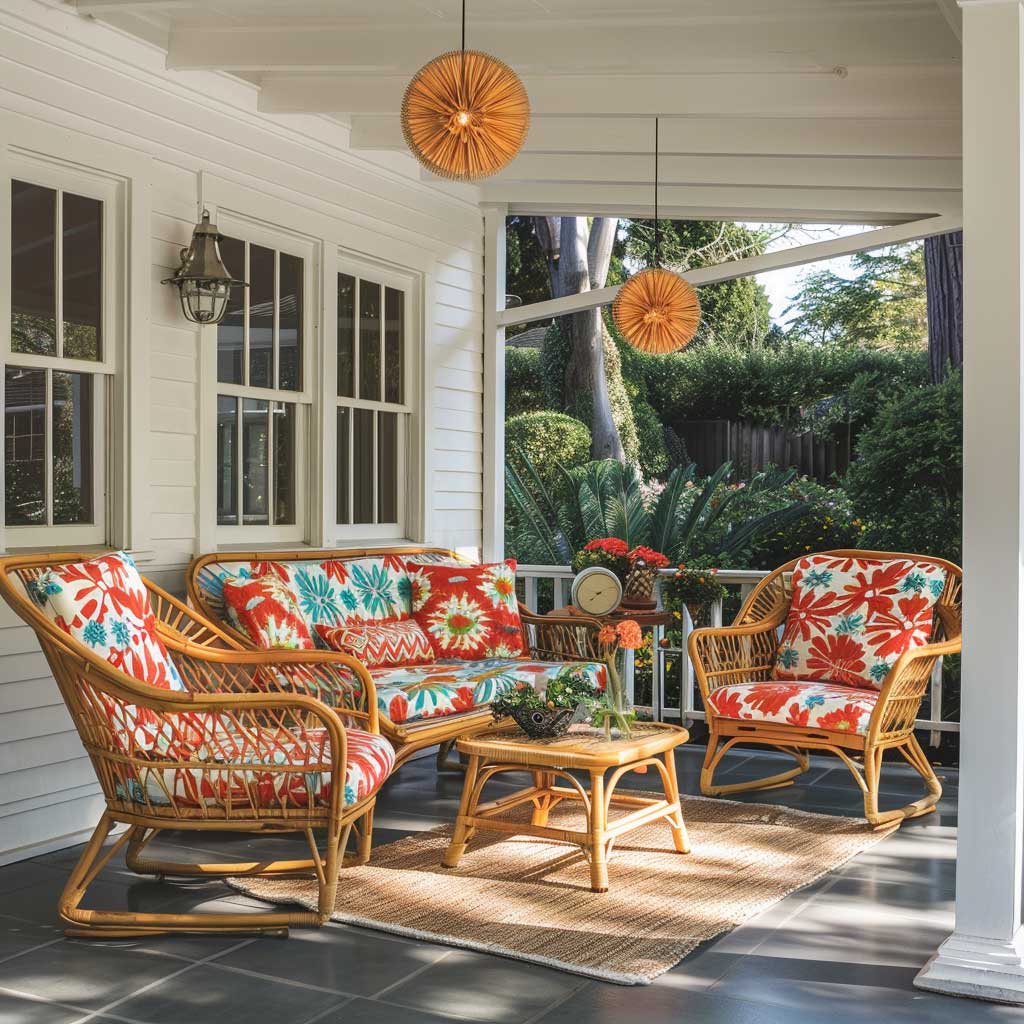
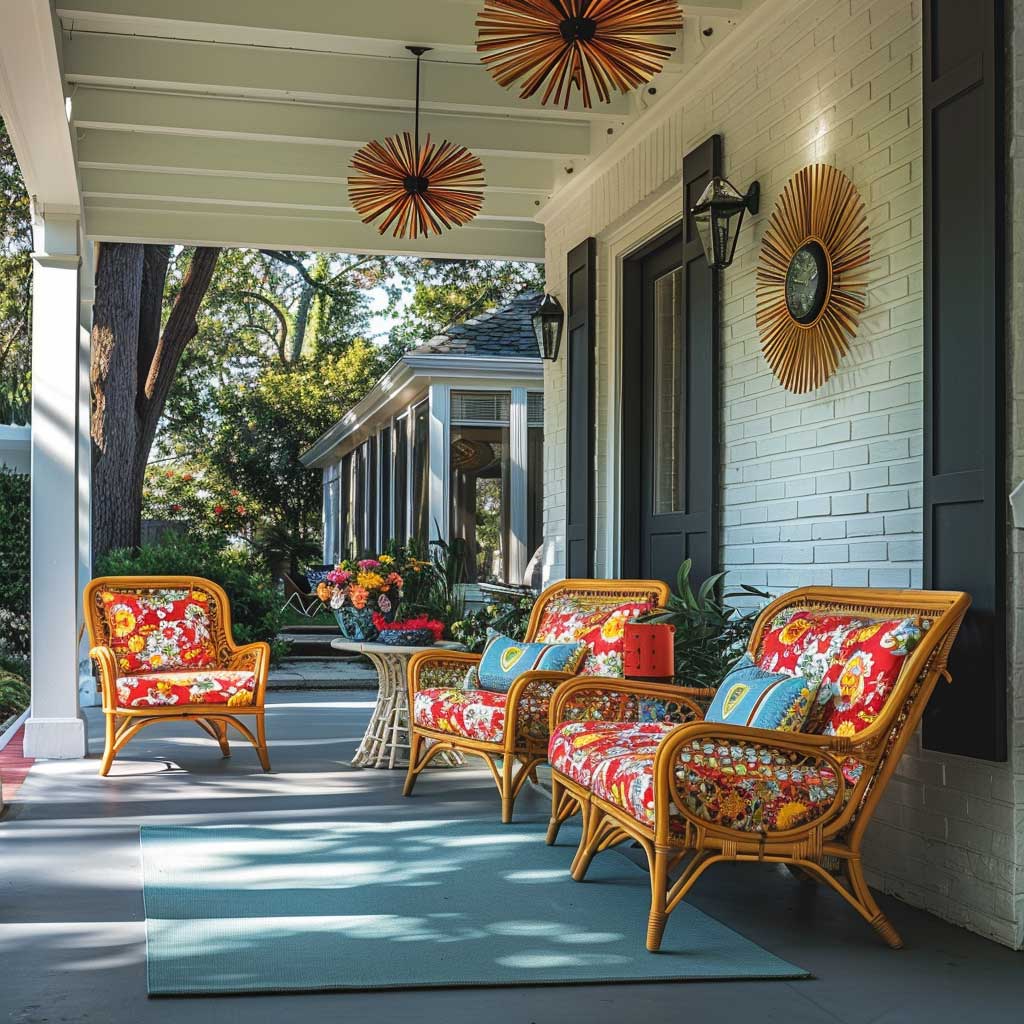
Retro accents should be few and deliberate: a starburst clock, a small sculpture or a rattan chair. Woven pieces suit the era’s playful side, and a bold cushion against plain wood or white paint adds energy without clutter. Is the entry narrow? Then browse space-saving outdoor furniture for compact patios for folding and stackable options that keep the path open. Add one accent per zone and stop there.
What Holds Up in the End
A good mid century modern porch is disciplined, not decorated.
Start with the architecture: flat planes, slim posts and clear sightlines. Spend first on the floor and the shelter, since decking runs about $5 to $13 per square foot and a pier foundation about $5 to $8.
Then add low wooden seating, warm 2700K to 3000K light and two or three planters. Keep 30 inches of walkway clear so the space stays easy to use.
Finish with a single retro accent per zone. If the porch still feels busy, remove one thing.