Art deco wall panelling is not a trend. It never left — it just spent forty years being covered with drywall.
Wood panels with Art Deco geometry do something plain paneling cannot. The angles catch light differently at 8am than at 8pm. The room shifts. You notice it in photos before you can name what changed.
I’ve looked at a lot of failed attempts at this. Flat MDF with routed lines painted cream — that’s not art deco wood paneling, that’s a budget hotel corridor. The difference is in the relief depth, the finish, and whether the geometry actually reads from across the room.
Three approaches below. Each one works for a different budget and a different kind of room.
QUICK SCAN
Three Art Deco Wood Paneling Approaches at a Glance
Geometric Wood + Modern Room — quarter-sawn oak, satin finish, ~$18–24/sqft installed
Dark Wood + Brass Accents — walnut with metal routing, ~$40–65/sqft custom; $22–30 ready-made
Monochrome Gloss Version — black-stained panels, catalyzed lacquer finish, ~$6–9/sqft finish only
| Approach | Wood Type | Finish | Cost/sqft | Best Room |
|---|---|---|---|---|
| Art Deco Geometry + Modern | Quarter-sawn white oak | Satin | $18–24 | Living room, office |
| Dark Wood + Brass Accents | Walnut with metal routing | Lustrous/deep | $22–65 | Dining room, bedroom |
| Monochrome Gloss | Any species, black-stained | High-gloss lacquer | $6–9 (finish only) | Hallway, bar, lounge |
Art Deco Geometry Reads Cleaner on Wood Than on Any Other Material
The reason art deco wood paneling works better than stone or plaster versions comes down to grain direction. Wood has a natural linear quality that amplifies geometric patterns instead of fighting them. Fan motifs, stepped arches, chevrons — all of them look resolved against walnut or oak. On smooth plaster they look drawn on. On wood they look structural.
My go-to spec for this approach is quarter-sawn white oak with a satin finish. Around $18–24 per square foot installed, depending on your region. Don’t cheap out here. Rotary-cut veneers with visible cathedral grain will muddy the Art Deco patterns completely — the geometry disappears into the wood movement.
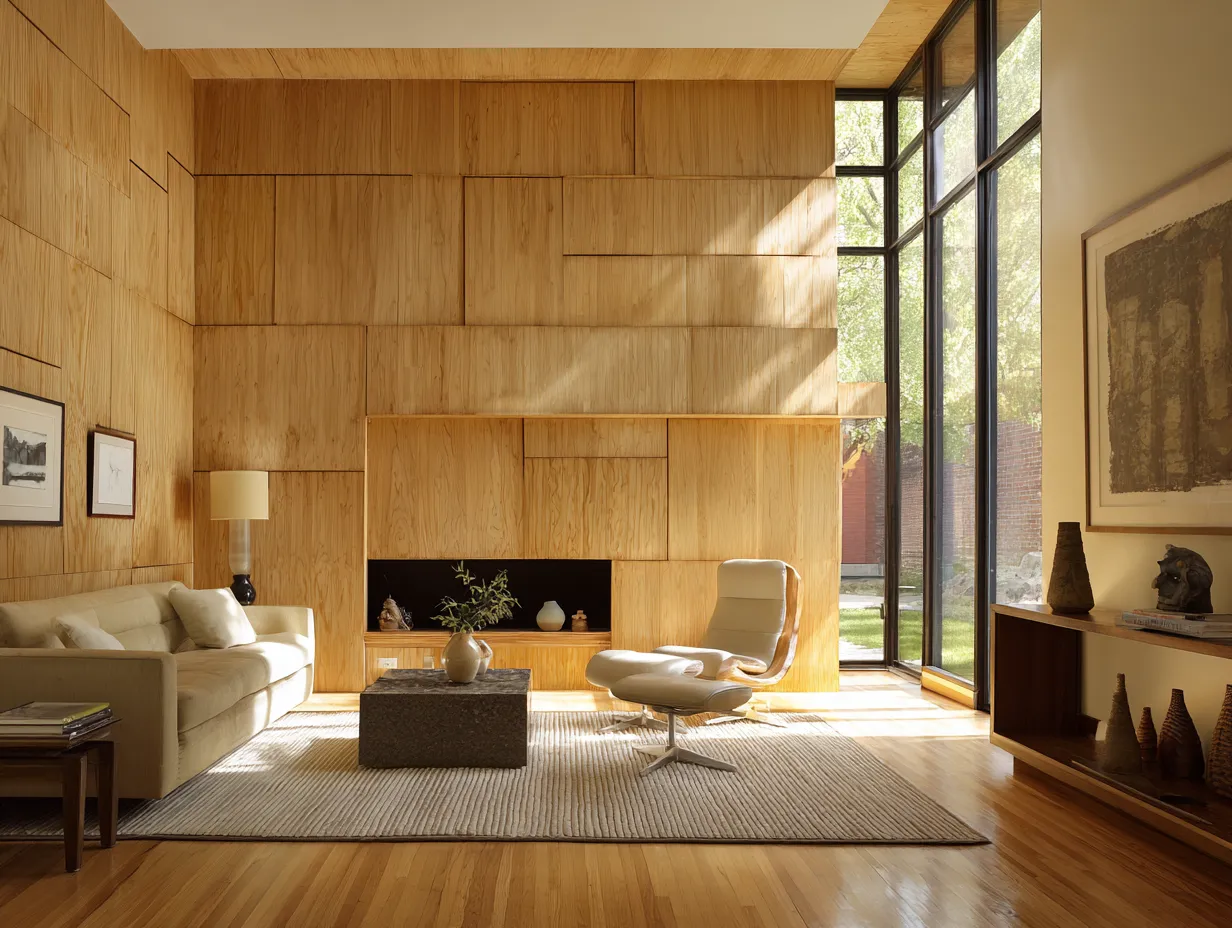
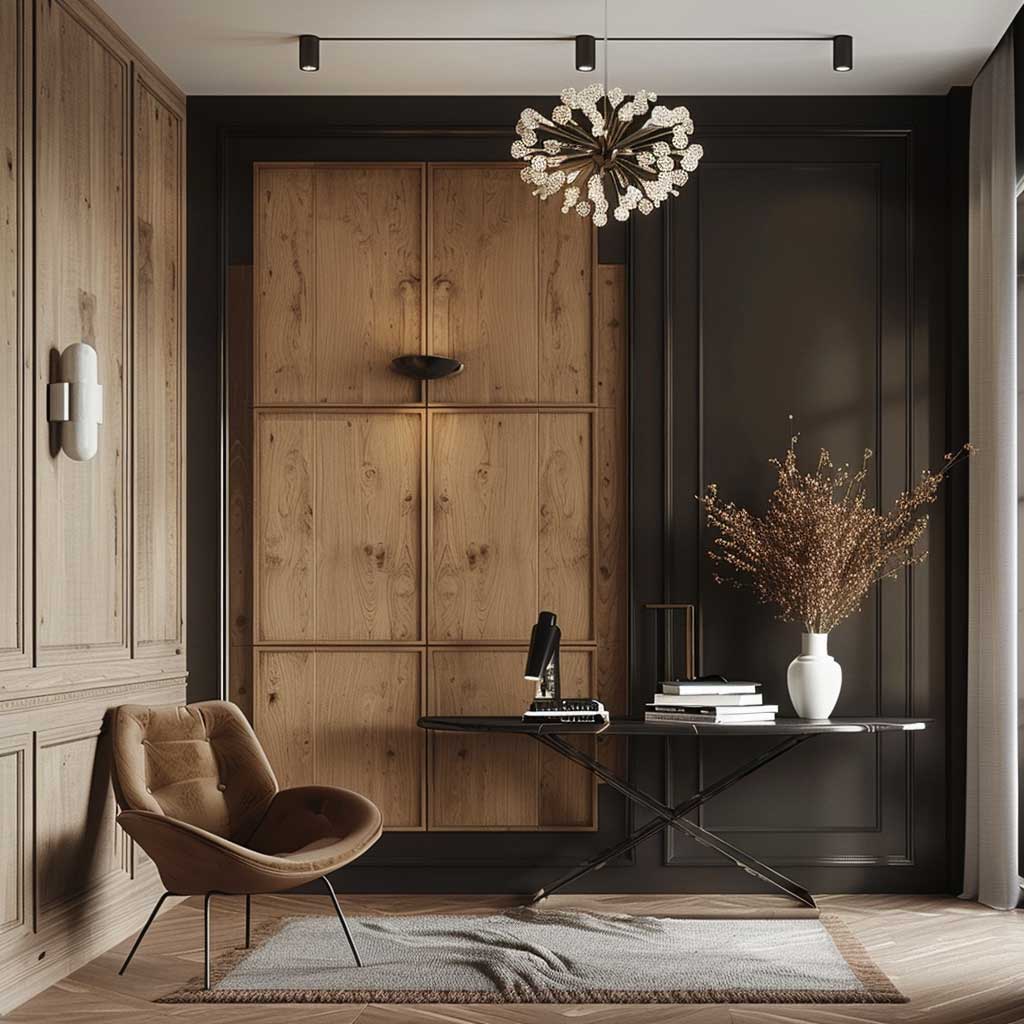
The modern version of this keeps the palette tight. Warm taupe walls, no crown molding competing with the panel geometry, furniture that sits below the panel rail height. You’re framing the wall, not the room. One thing I see go wrong constantly: people add too many accent colors. The paneling is already doing a lot. Let it.
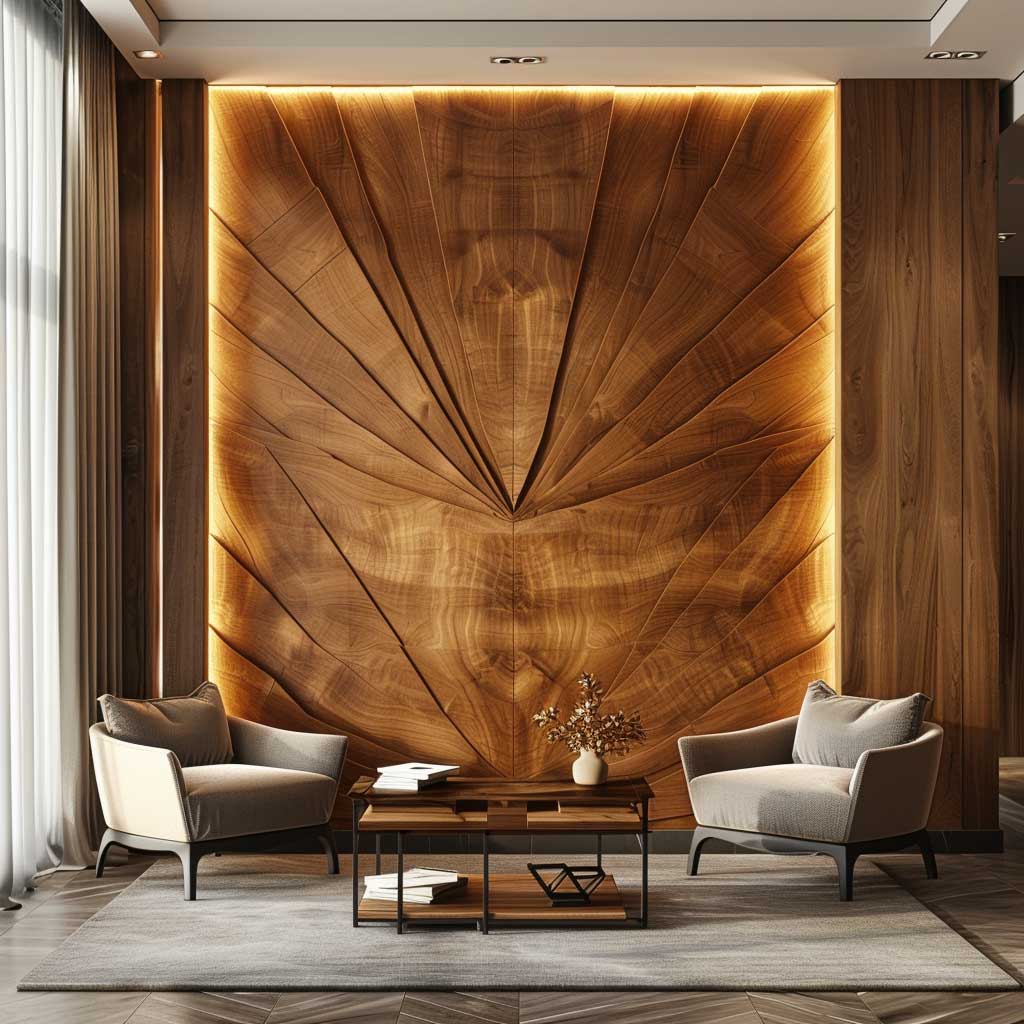
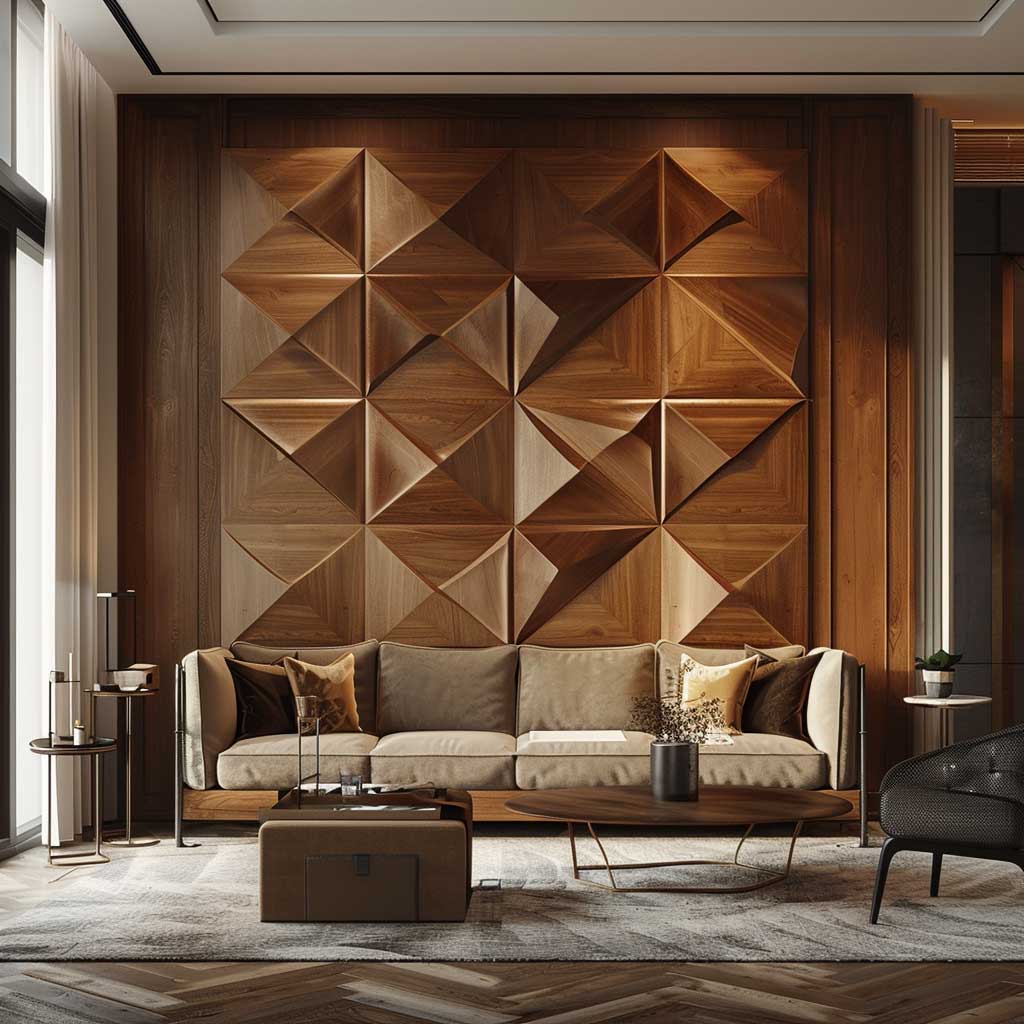
In the realm of interior design, the fusion of time-honored traditions with modern aesthetics offers an exciting opportunity for innovation. This is particularly evident in the approach to wooden wall paneling designs, where the rich heritage of wood craftsmanship meets contemporary design principles. This juxtaposition creates a unique style that enhances the functionality and aesthetic appeal of living spaces.
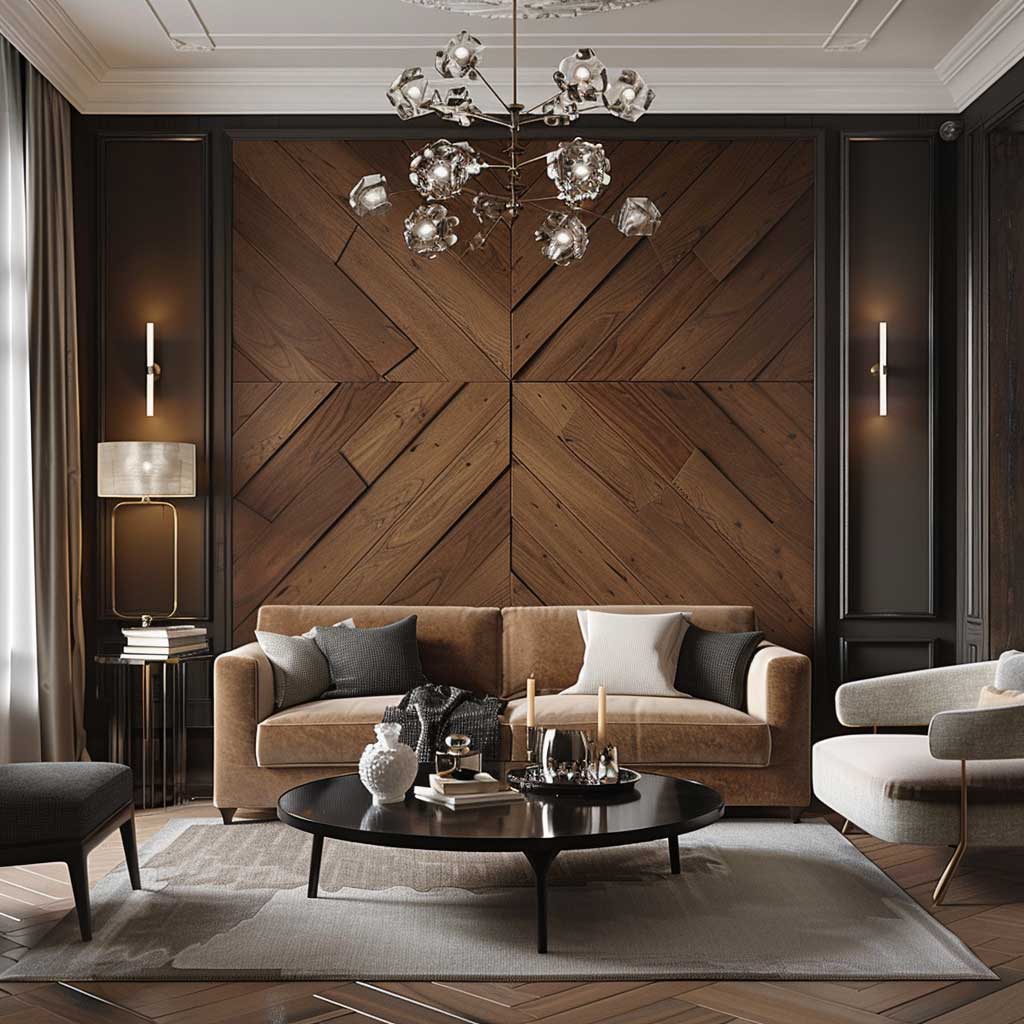
This design concept excels in areas where the ambiance of tradition needs to meld seamlessly with the simplicity and functionality of modern design. In such spaces, the walls, adorned with wooden panels, serve not just as structural elements but as key design features. The geometric patterns, inspired by the lavish Art Deco movement, are reimagined through the lens of modern minimalism. These designs incorporate clean lines and reduced complexity, which harmonize with modern interiors without overwhelming them.
Such a room might feature furniture that reflects contemporary tastes—sleek, angular sofas, minimalist coffee tables, and discrete storage units, all selected to complement rather than compete with the intricate patterns of the wood paneling. Strategic lighting plays a crucial role as well; soft LED strips might highlight the paneling’s detailing, while spotlights can accentuate art pieces or architectural features, adding layers of visual interest.
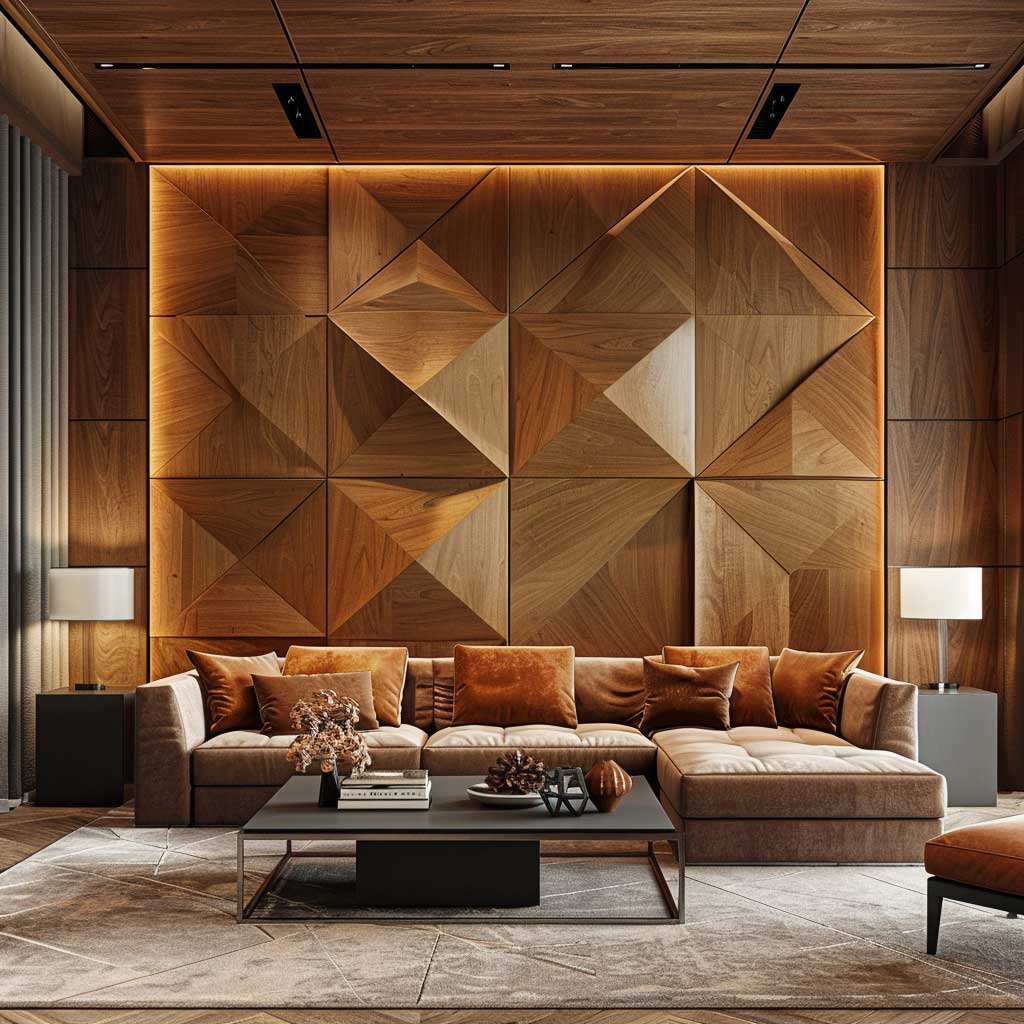
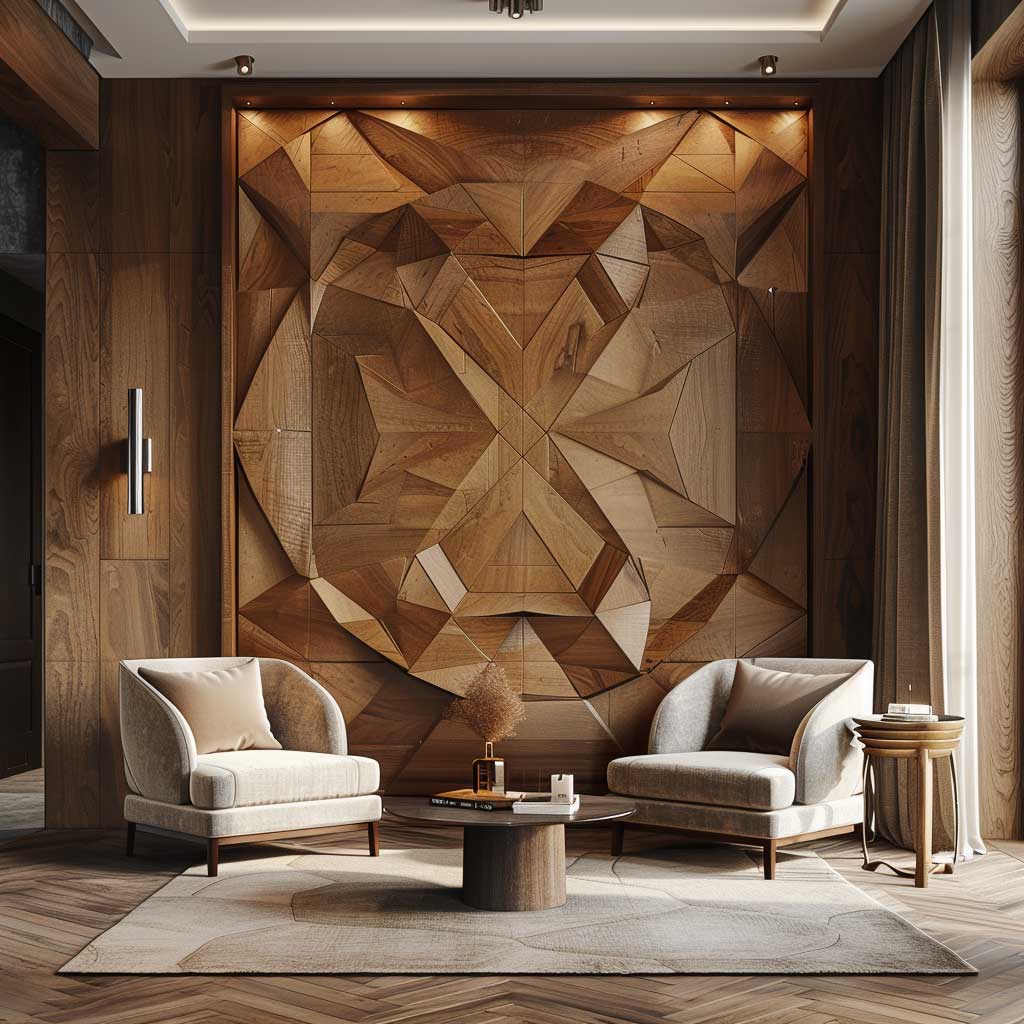
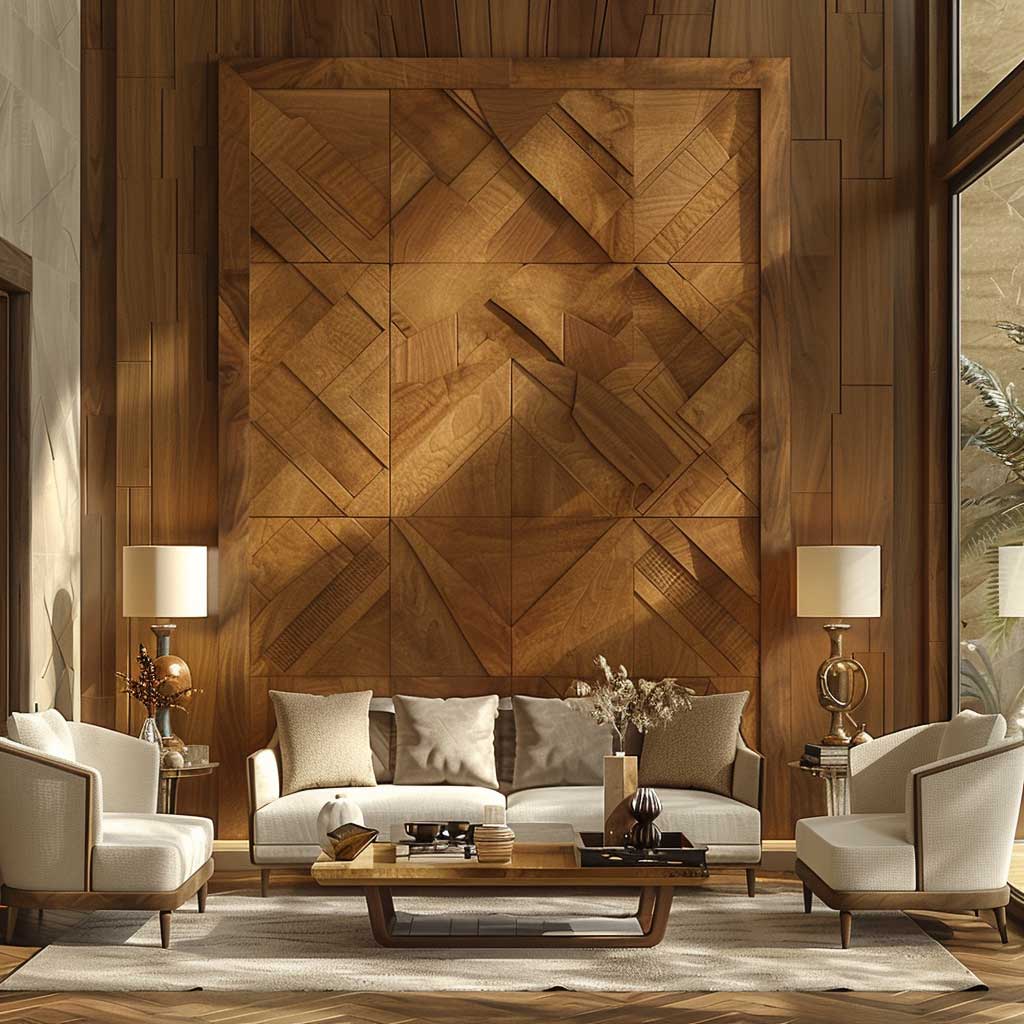

Moreover, the natural texture and color of wood bring a touch of the natural world indoors, promoting a sense of calm and connection to the environment, which is often lacking in urban settings. This can be particularly appealing in high-stress environments or homes in bustling cities where a touch of natural elements creates a tranquil retreat.
Through this innovative use of wooden wall paneling design, one can achieve a balance that respects both the rich traditions of the past and the sleek, clean lines favored in contemporary design. The result is a space that feels both expansive and intimate, classic yet contemporary, proving that wood paneling can adapt to the most modern of spaces without losing its charm and warmth.
Gold Accents on Dark Wood Paneling Hit Different at Night
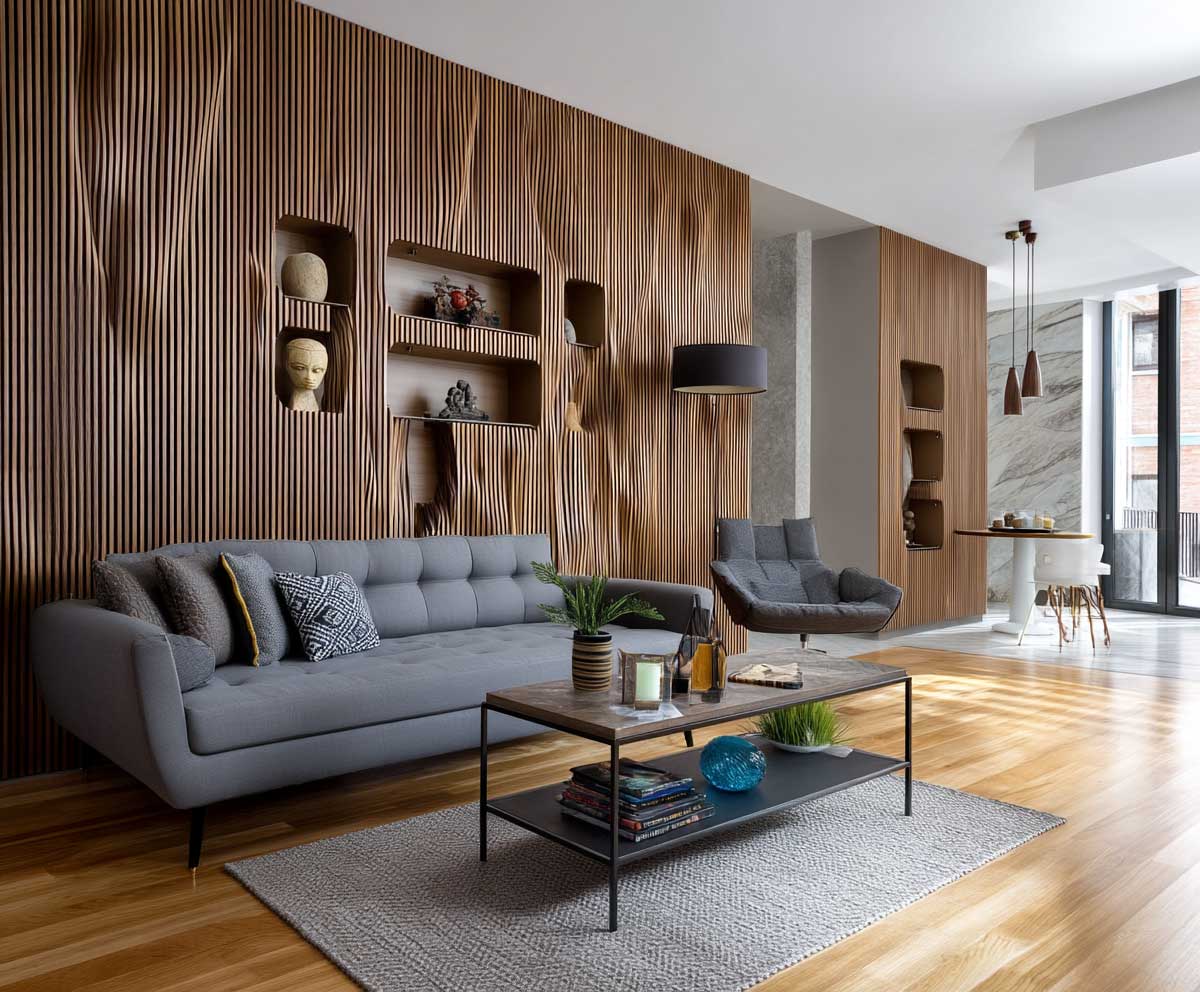
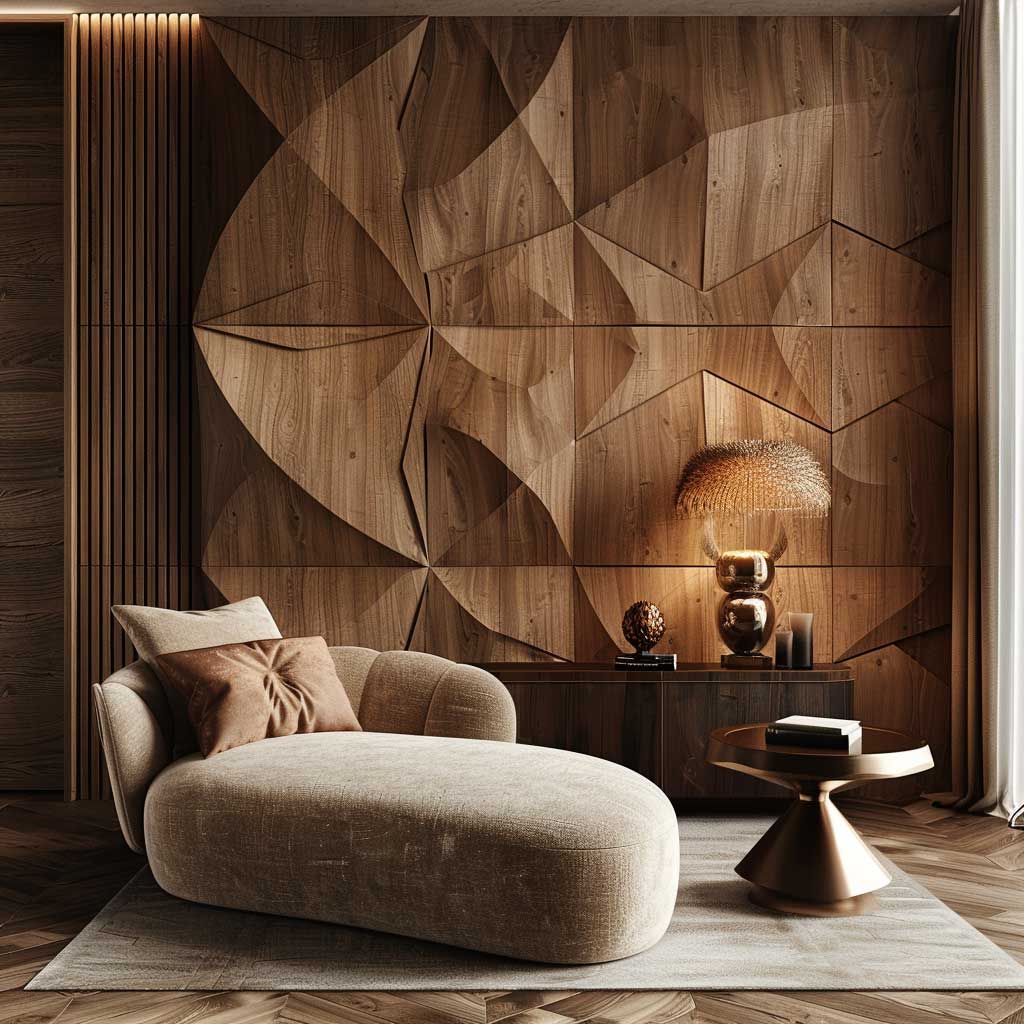
Brass inlay on dark walnut paneling costs more than most people expect. Budget $40–65 per square foot for custom work with metal accent routing. Ready-made panels with applied brass-finish moldings run closer to $22–30 and hold up reasonably well if you avoid high-humidity rooms.
You’ll notice the difference between real Art Deco paneling and the imitation version immediately in evening light. The real thing has depth — relief panels that cast actual shadows. The imitation has surface-applied trim that flattens under lamplight. I’ve seen $800 panels that outperform $3,000 custom jobs because the profile was cut correctly and the finish wasn’t lacquered into oblivion.
What doesn’t work here: mixing brass accents with chrome fixtures in the same room. Looks indecisive. Pick your metal and commit. The Art Deco era understood this — every element in the room spoke the same material language. That discipline is what made it feel wealthy rather than decorated.
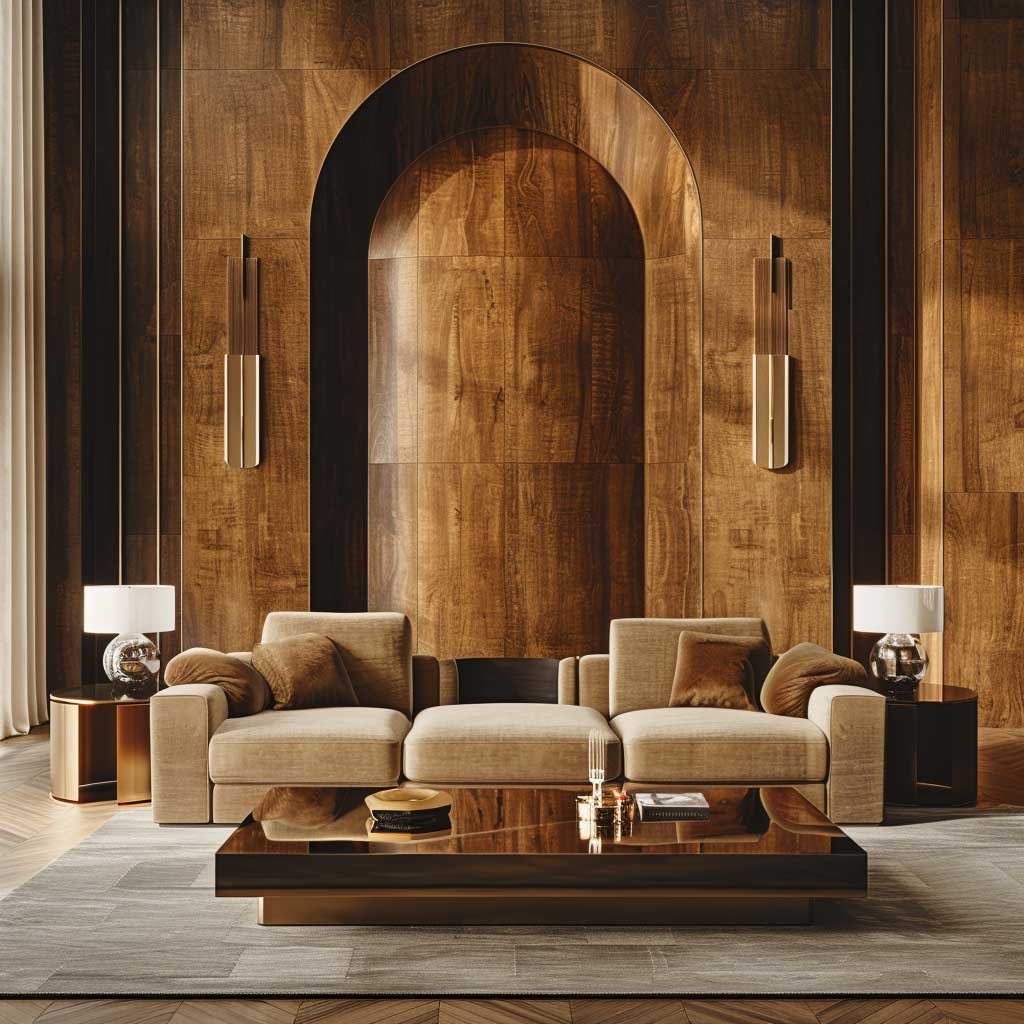
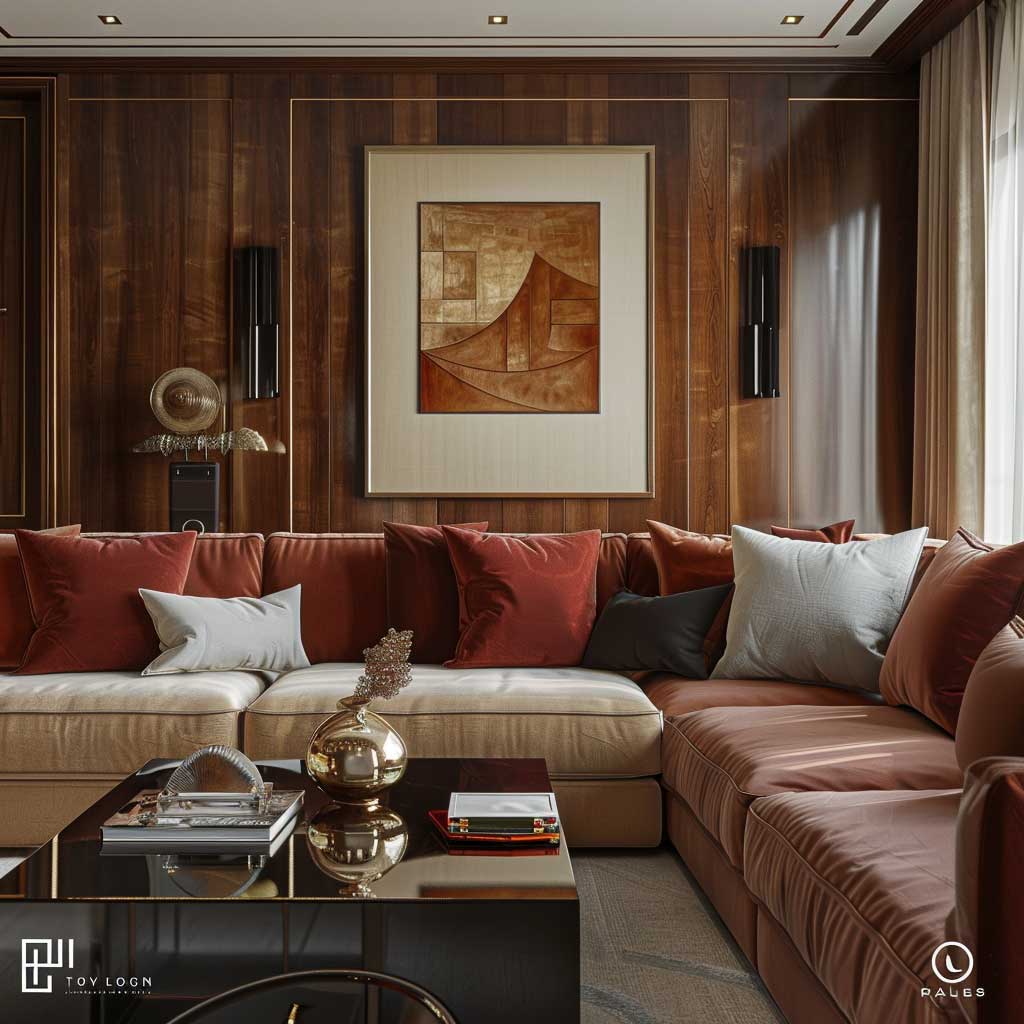
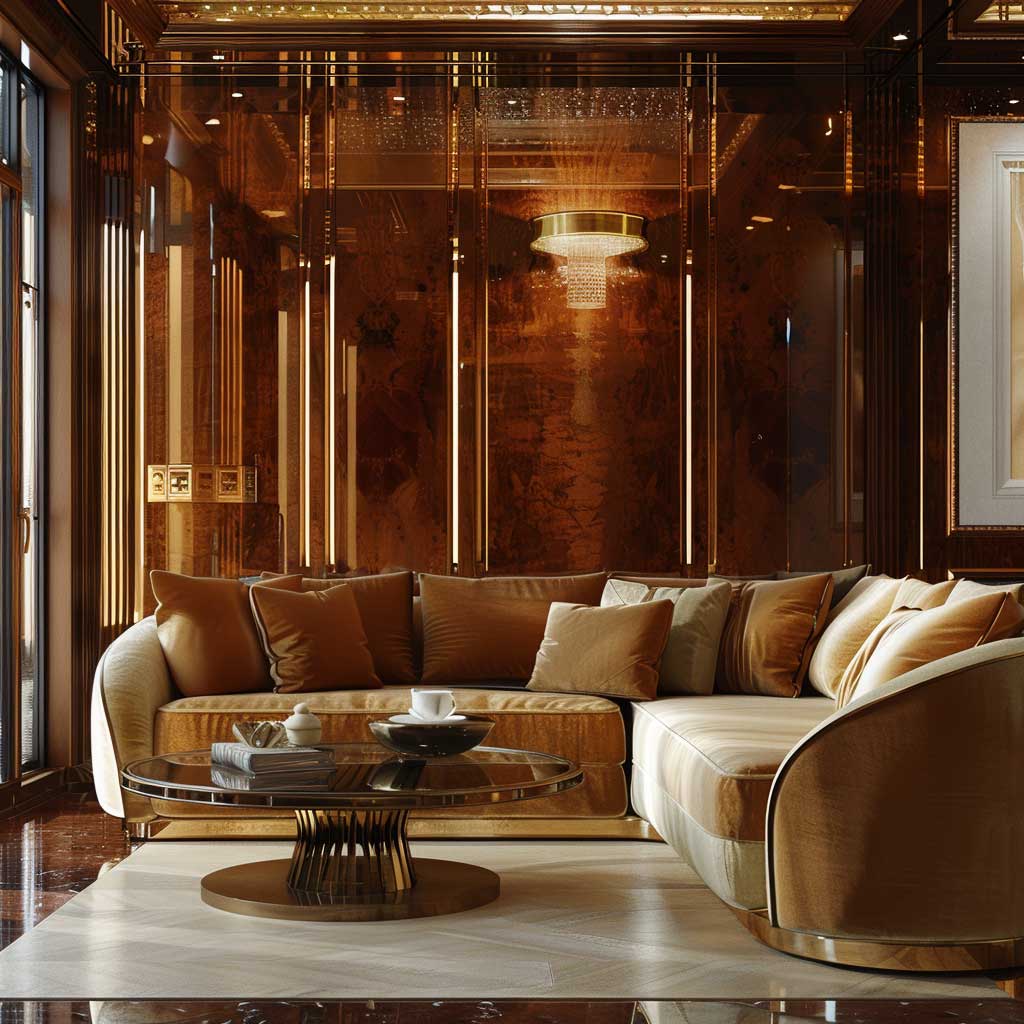
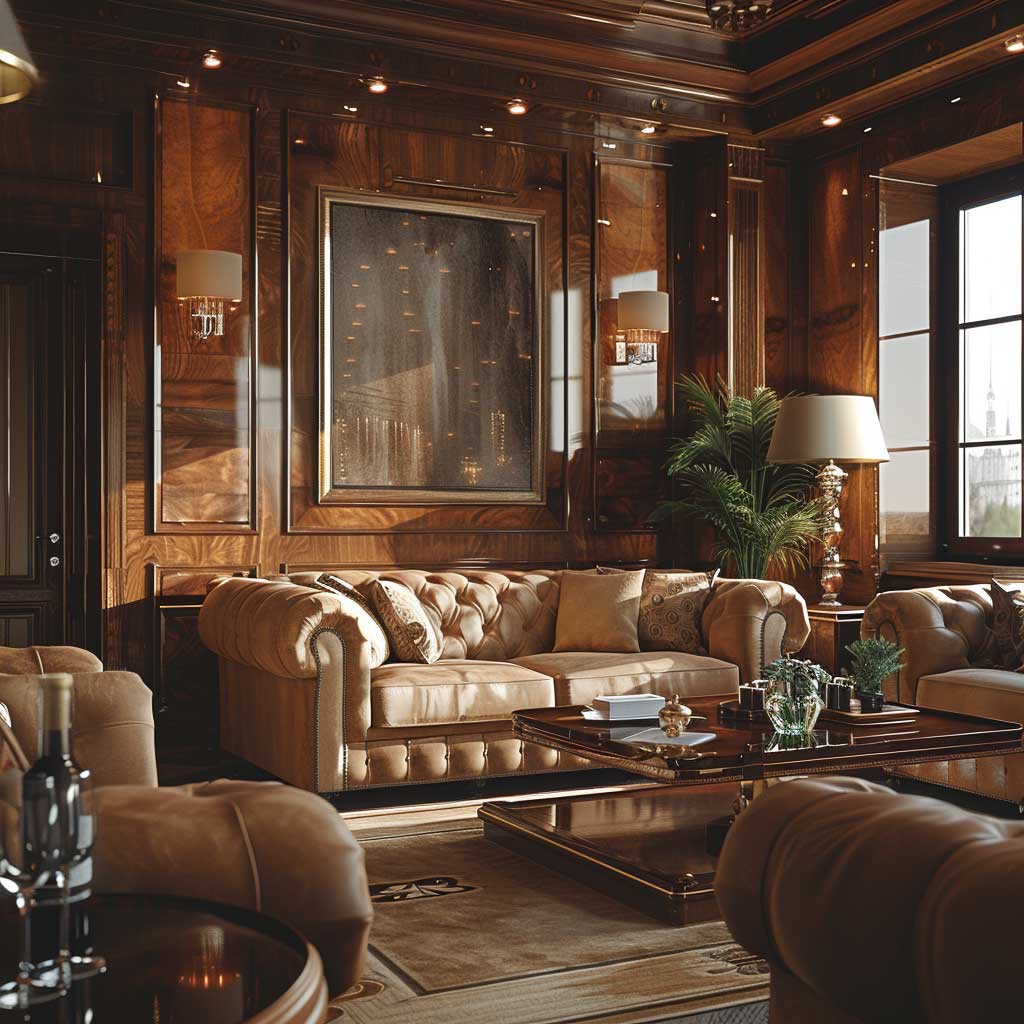
Luxury in interior design often conveys a sense of opulence and refinement, with every element carefully chosen to create an atmosphere of upscale elegance. This is beautifully expressed in interiors where wooden wall paneling designs incorporate Art Deco accents, a style known for its rich materials and elaborate details. Such designs transform ordinary spaces into stunning showcases of design history and luxury.
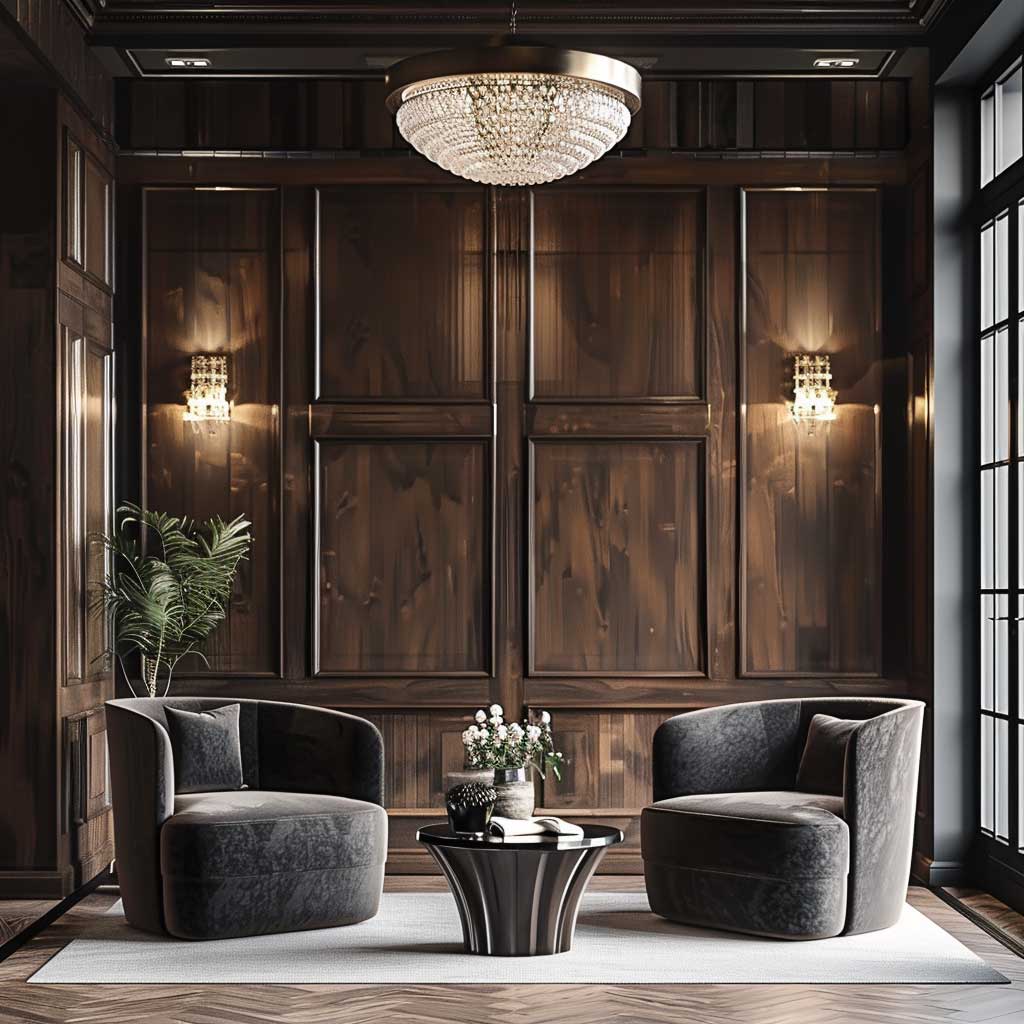
In a setting defined by luxurious wooden paneling with Art Deco accents, every detail counts. The wood used is typically of a high quality, with rich hues and a deep, lustrous finish. Accents in gold, silver, or bronze might trace intricate patterns across the paneling, reflecting light and adding a tactile dimension that invites closer inspection. The effect is both dramatic and harmonious, lending the space a feeling of well-curated luxury.

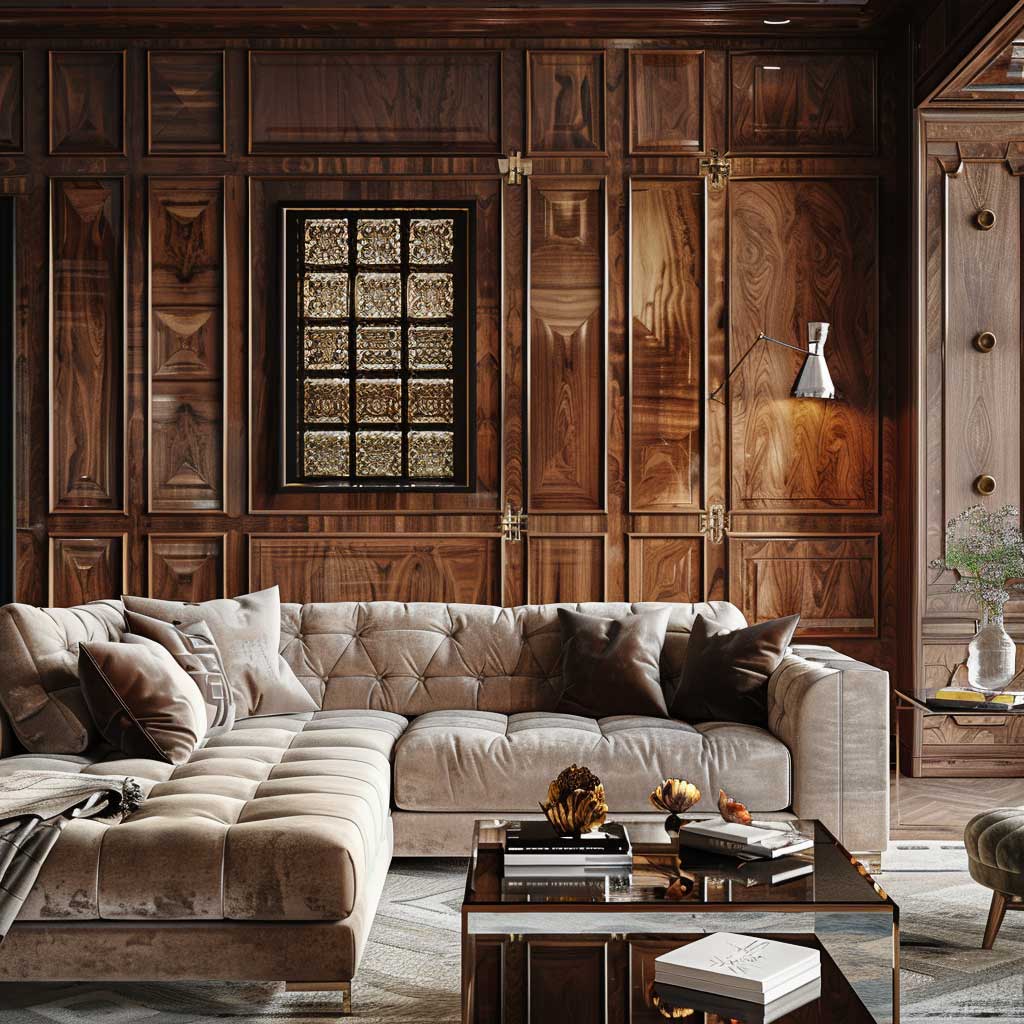
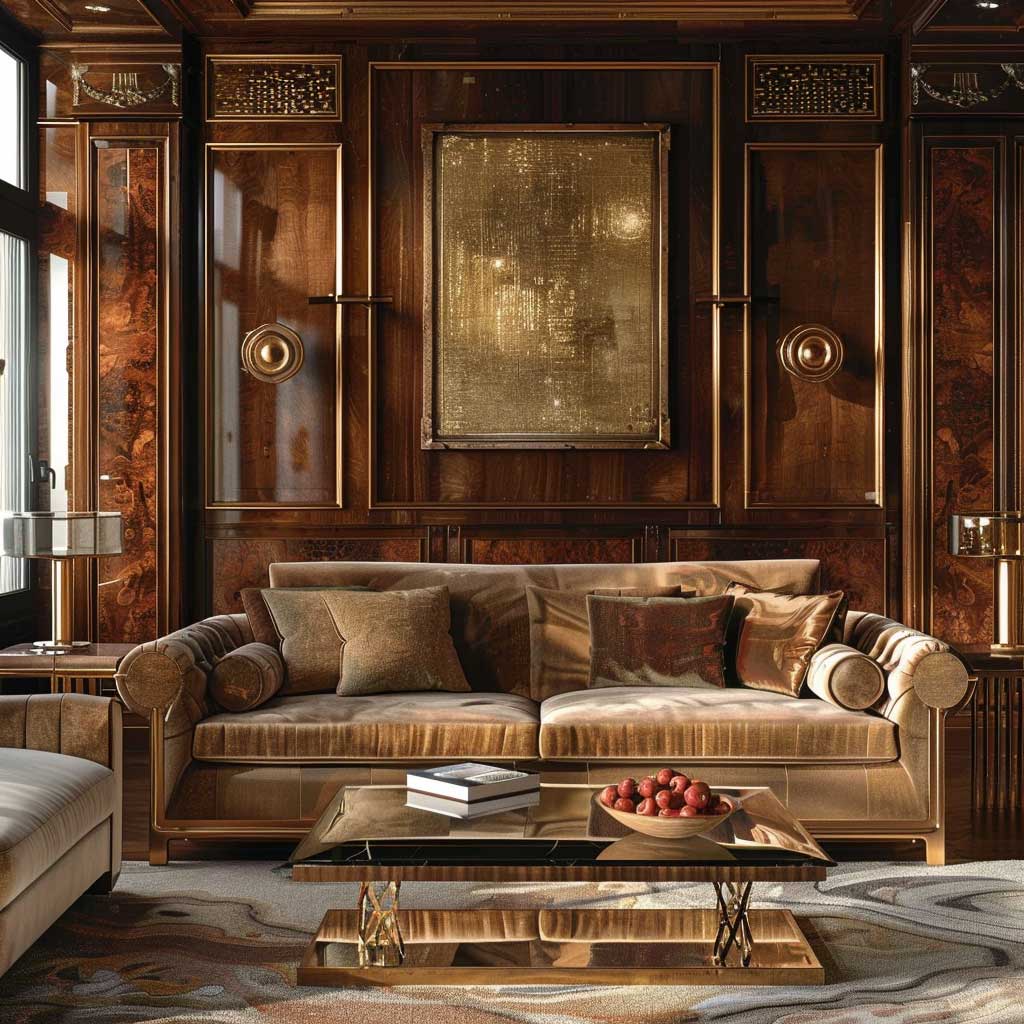

Furnishings in such spaces are just as grand, echoing the boldness of the Art Deco era. Plush velvet sofas, ornate armchairs, and sleek glass tables coexist with modern comforts, ensuring the space remains as functional as it is beautiful. Decorative rugs, silk curtains, and soft, ambient lighting further enhance the sense of indulgence, making the room not just a living area but a lavish escape from the outside world.
This approach to wooden wall paneling design is not just about aesthetics; it’s also about creating an environment that reflects the tastes and lifestyles of those who appreciate historical richness blended with modern luxury. The panels themselves act not only as part of the structure but as key elements of the overall design narrative, telling a story of luxury, elegance, and the enduring appeal of Art Deco design.
DON’T DO THIS
Art Deco Wood Paneling Mistakes That Kill the Look
Rotary-cut veneer with cathedral grain. The wood movement fights the geometric patterns. The design disappears. Pay for quarter-sawn or rift-sawn — the grain lines run parallel and the Art Deco geometry reads correctly.
Mixing brass accents with chrome fixtures. Looks like two different people designed the room. Art Deco is about material discipline. One metal. Everywhere.
Painting over profiled panels. Paint fills the relief shadow lines and flattens the geometry. If you want a painted finish, the panel profile needs to be twice as deep to survive it.
Adding a gallery wall opposite Art Deco paneling. Two feature walls face to face is not bold — it’s a stalemate. One wall wins. The other should support it.
The Monochrome Version Nobody Bothers to Try
Black-stained art deco wood paneling with a gloss finish is the most underused version of this style. Everyone goes dark walnut or cream. Black reads as bold in a rendering and practical in person — marks less, photographs better, and makes the geometric patterns visible from anywhere in the room without the help of warm lighting.
The finish is where this lives or dies. Satin cuts the drama. Matte looks painted. High-gloss on correctly profiled panels looks like it belongs in a 1930s private railway car — which is exactly the point. Rubio Monocoat doesn’t work here. You need a catalyzed lacquer or a two-part polyurethane. Expect $6–9 per square foot just for the finish application if you hire it out.
Furnishing this version is easier than it looks. You don’t need period furniture. A single low sofa in charcoal bouclé, a brass floor lamp, bare floor. The paneling is the room. Trying to add a gallery wall opposite this kind of art deco wood panelling is the mistake I see most often — it splits the visual story in half and neither side wins.


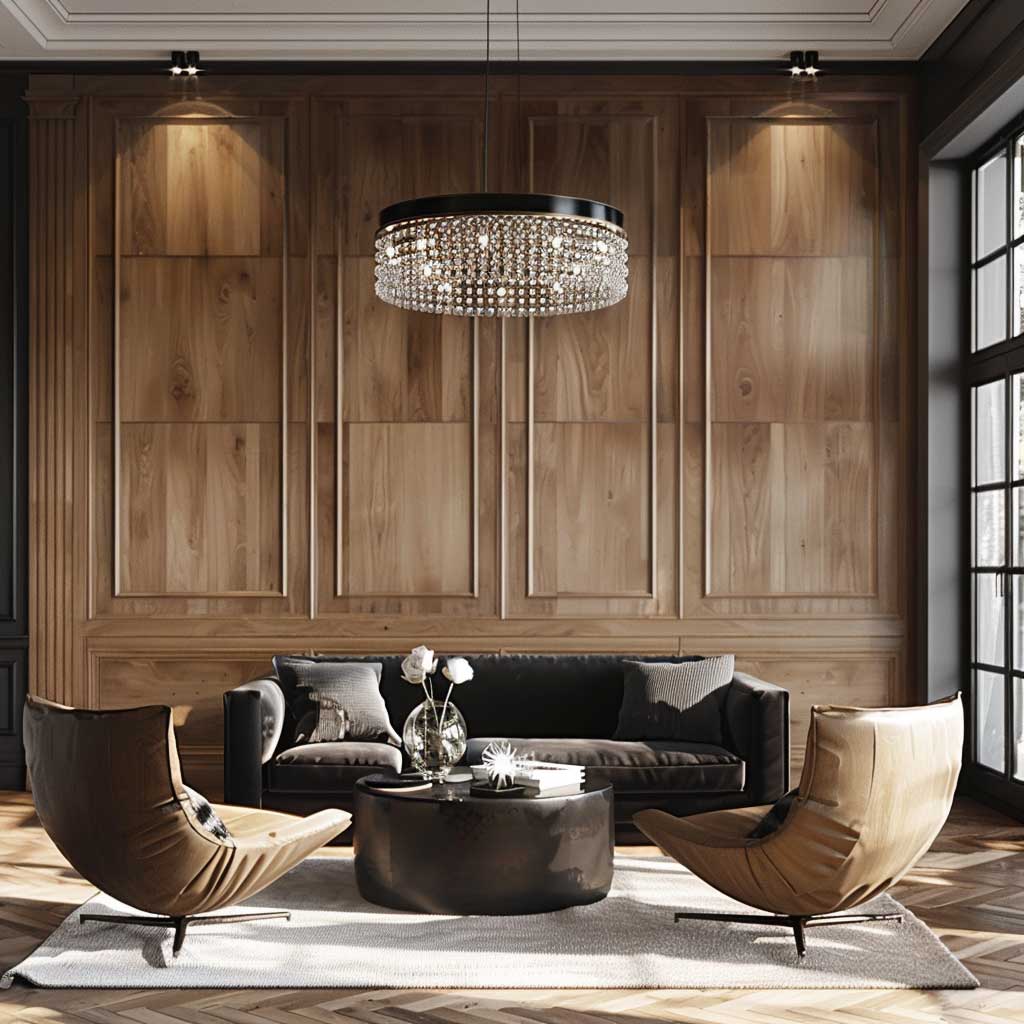
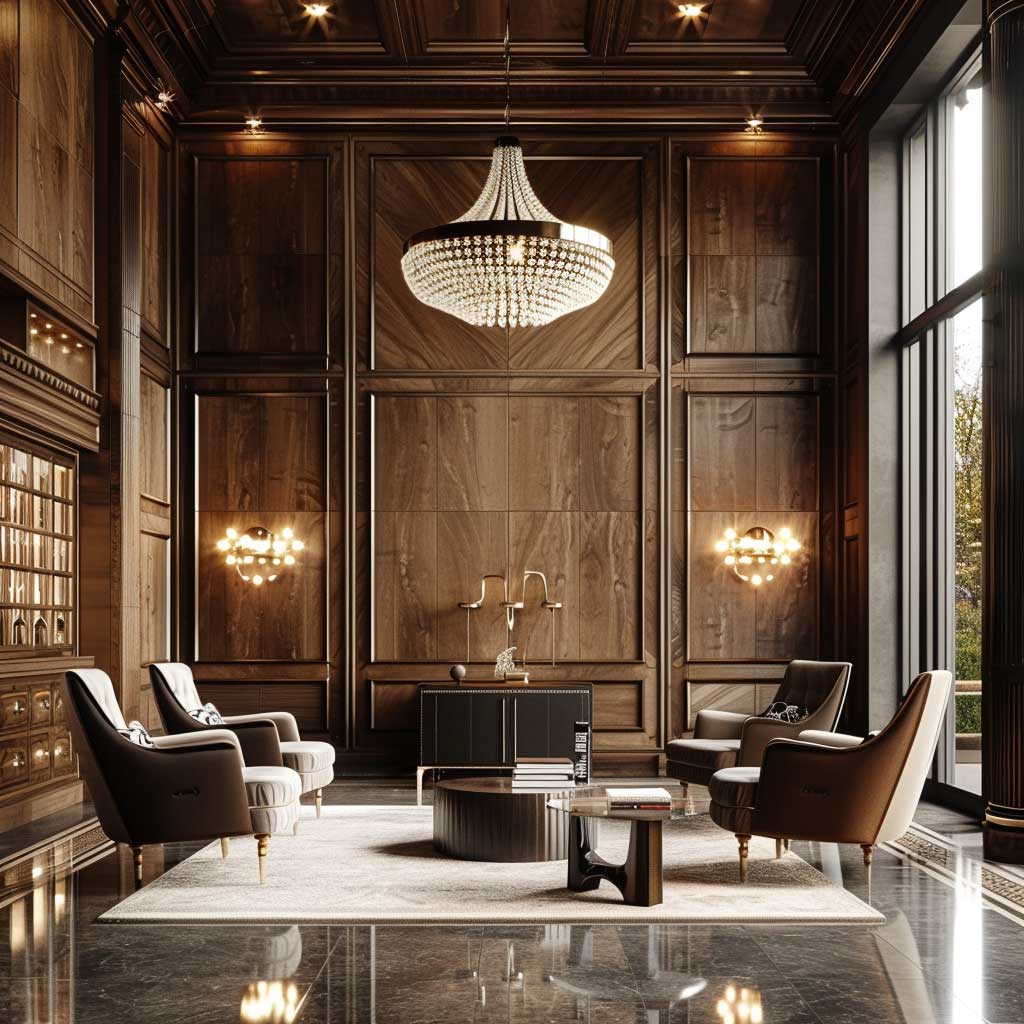
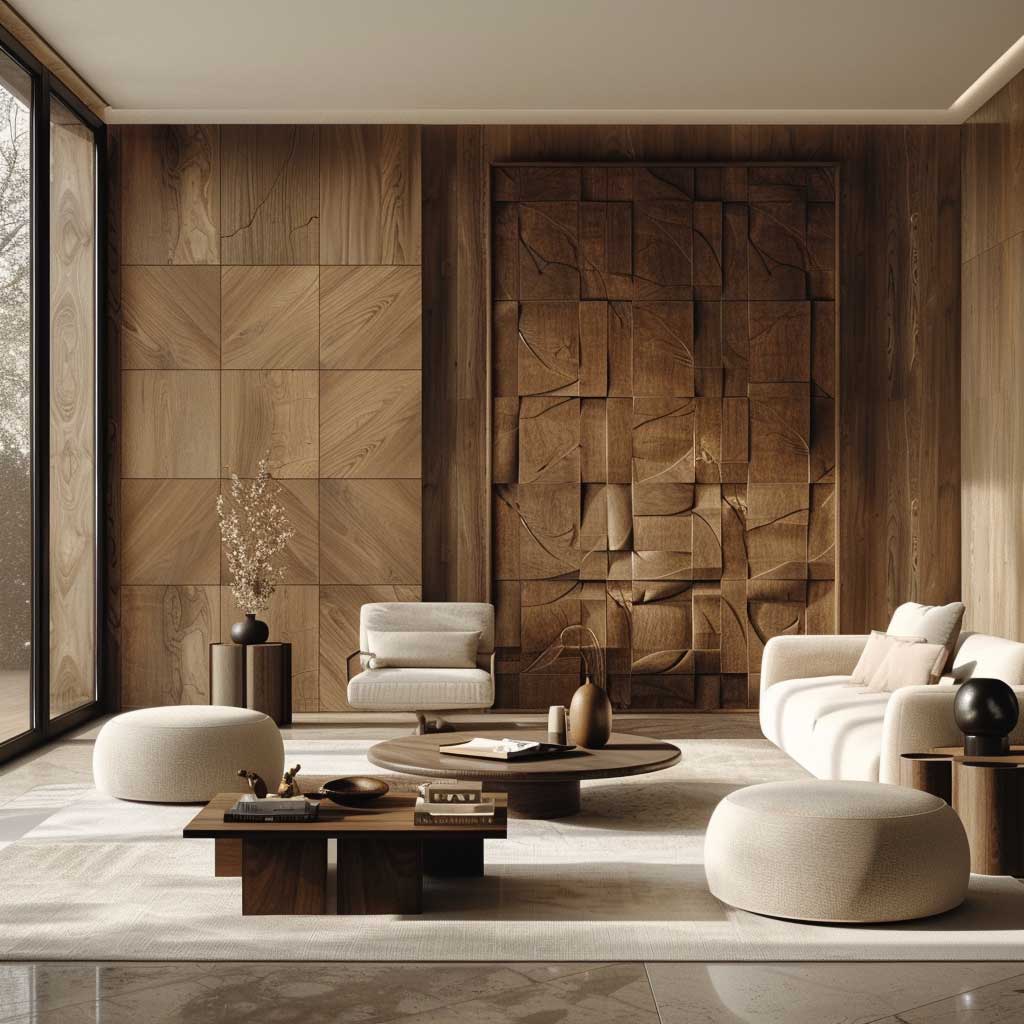
Embracing the streamlined forms and geometric elegance of Art Deco, a sleek and stylish approach to wooden wall paneling design can transform a simple space into a statement of personal style and historical appreciation. This design strategy is particularly appealing for those who admire the precision and glamour of the Art Deco period but prefer a more understated version suited to contemporary living.
In these interiors, the wood paneling features clean, precise lines and symmetrical patterns that celebrate the architectural beauty of Art Deco without the traditional opulence. The finish is often glossy, reflecting light and enhancing the sense of space. This minimalist approach does not dilute the distinctiveness of the design but rather highlights its essence in a more subdued and modern context.

The color palette for such a design scheme is typically monochromatic, focusing on blacks, whites, and grays, which underscore the chic and sophisticated nature of the space. Furnishings are selected for their functional beauty, with an emphasis on form and material rather than color, ensuring that the wood paneling remains the focal point. Accents like stainless steel fixtures, streamlined lighting solutions, and contemporary art pieces complement the clean lines of the paneling, reinforcing the modern aesthetic.
This type of wooden wall paneling design is not just about embracing past trends; it’s about reinterpreting them in a way that is both respectful to their origins and relevant to current design trends. It offers a way to integrate the elegance and detail of Art Deco into modern homes — and if you want to see how far the transformation can go, the most common wall panelling mistakes are worth reviewing before you start. Historical styles can be successfully adapted to meet the demands of contemporary interior design.
Related Topics
FAQ
What makes art deco wood paneling different from standard wall panels?
The geometry is structural, not applied. Art deco wood panelling uses relief profiles — stepped arches, chevrons, fan motifs — that cast actual shadows and change the room at different times of day. Flat MDF with routed lines is not the same thing. The profile depth and the grain direction of the wood both have to be right for the pattern to read from across the room.
What wood species works best for art deco wall paneling?
Quarter-sawn white oak is the go-to. The grain runs parallel to the panel edge, which means it amplifies geometric patterns rather than competing with them. Rotary-cut veneers with cathedral grain pull attention away from the design. Walnut works well for the darker, brass-accent version — the color contrast between wood and metal is sharper and holds better in evening light.
How much does art deco wood panelling cost to install?
The modern geometric version in quarter-sawn oak runs $18–24 per square foot installed. Custom walnut paneling with brass or metal accent routing is $40–65 per square foot. Ready-made panels with applied brass-finish moldings come in closer to $22–30. The finish application alone — catalyzed lacquer for the high-gloss version — adds $6–9 per square foot on top of materials.
Can art deco wood paneling work in a modern room?
Yes, and it usually works better in a modern room than in a period-styled one. The key is keeping the palette tight — warm neutrals, no competing crown molding, furniture that sits below the panel rail height. The geometry does the work. The rest of the room should support it, not argue with it.
What finish should I use for art deco wood panels?
Satin for the modern geometric version — it reads the grain without overpowering the room. Deep lustrous finish for dark walnut with brass accents. High-gloss catalyzed lacquer or two-part polyurethane for the monochrome black version — this is the one finish where gloss is non-negotiable. Matte on a black-stained panel looks painted, not designed.
Does art deco wall panelling work in small rooms?
It depends on which version. The monochrome high-gloss approach actually expands a small room — the reflective surface bounces light and the strong vertical lines draw the eye up. The brass-accent version can overwhelm a small space if the furniture doesn’t pull back. Keep the paneling on one wall only, and leave the opposite wall completely bare.
WORTH KEEPING
Art Deco Wall Panelling Earns Its Cost Because It Doesn’t Age Out
Every other wall treatment — limewash, plaster, shiplap — has a five-year window before it starts reading as dated. Art Deco wood paneling doesn’t work that way. The geometric language is old enough to be historical and specific enough to never be generic.
The three versions here cover the range from $18 to $65 per square foot. None of them is cheap. All of them outlast three rounds of whatever comes next in interior trends. That’s the actual value calculation.
Save this post. When you’re standing in front of a bare wall wondering why nothing feels finished, you’ll want this reference.