A warm Scandinavian living room keeps the pale walls, clean lines and open floor of Nordic design, then adds wood, wool and low golden light so the space feels lived in rather than staged. Does it work outside Scandinavia? Yes, in any home with long evenings or a north-facing room, because the formula depends on materials and light, not climate. Two numbers explain the approach: lighting guides put 2700K warm white as the default for living rooms, and Danes burn about 6 kg of candles per person each year. Swap your bulbs before you swap your sofa.
The style grew out of necessity. Copenhagen sees roughly 7 hours of daylight around the winter solstice compared with about 17.5 hours in June, so Nordic rooms are built to catch sun by day and glow by lamp at night. Cool Scandi relies on white, grey and chrome, while warm Scandi trades them for cream, caramel, forest green and honey-toned oak. Keep the structure minimal and let textiles carry the warmth.
The four rooms below show four routes to the same result: a hygge haven, a textured Nordic nook, a sunlit space and a rustic modern mix, followed by layout rules for small rooms and a side-by-side table. Each section lists real sizes, prices and light levels. Pick the route closest to the room you already have instead of starting from zero.
Quick Scan
- Use 2700K warm white bulbs in every living room lamp; 4000K reads cool and clinical by comparison.
- Danes burn about 6 kg of candles per person a year, and roughly 85% link candles with hygge.
- Copenhagen gets about 7 hours of daylight in late December vs 17.5 hours in June, which is why Scandi rooms layer lamps.
- An 8×10 rug (96 x 120 inches) holds the front legs of an 84-inch sofa and covers about 48% more floor than a 6×9.
- A jute 8×10 costs about $150–$500, while wool in the same size often passes $1,000.
- A fiddle leaf fig wants 250–1,000 foot-candles of bright indirect light; low-light plants manage with 25–75.
- One dark green sofa, soft white walls and oak floors give warmth without clutter.
Hygge Turns a Warm Scandinavian Living Room Into a Winter Refuge
A warm Scandinavian living room starts with hygge, the Danish habit of making a home feel safe, soft and slightly golden after dark. The idea covers mood more than furniture, which is why a room with five or six pieces can feel cozier than a packed one. Danes burn roughly 6 kg of candles per person each year, the highest rate in Europe, and surveys put the share of Danes who link candles to hygge at about 85%. Start with light and texture before you buy a single new piece of furniture.

Cool Scandi vs warm Scandi is the first fork in the road. The classic version leans on white walls, grey textiles and chrome, while the warm version swaps in cream, oatmeal, caramel and a deep forest green sofa. Think of it as a crisp white shirt with a chunky wool sweater pulled over it: the structure stays, the comfort arrives. Keep the walls soft white and move all the color into fabrics, so the mood can change without repainting.
Does hygge require a fireplace? No, a cluster of three to five candles on a tray and two table lamps at 2700K do the same job in a rental. Lighting makers class 2700K as soft white, close to candlelight, while 4000K reads noticeably cooler and suits kitchens and work zones better. Survey data also show about 28% of Danes light candles every day, so this is a daily habit, not holiday decor. Never leave candles burning in an empty room, and keep them well away from throws and curtains.

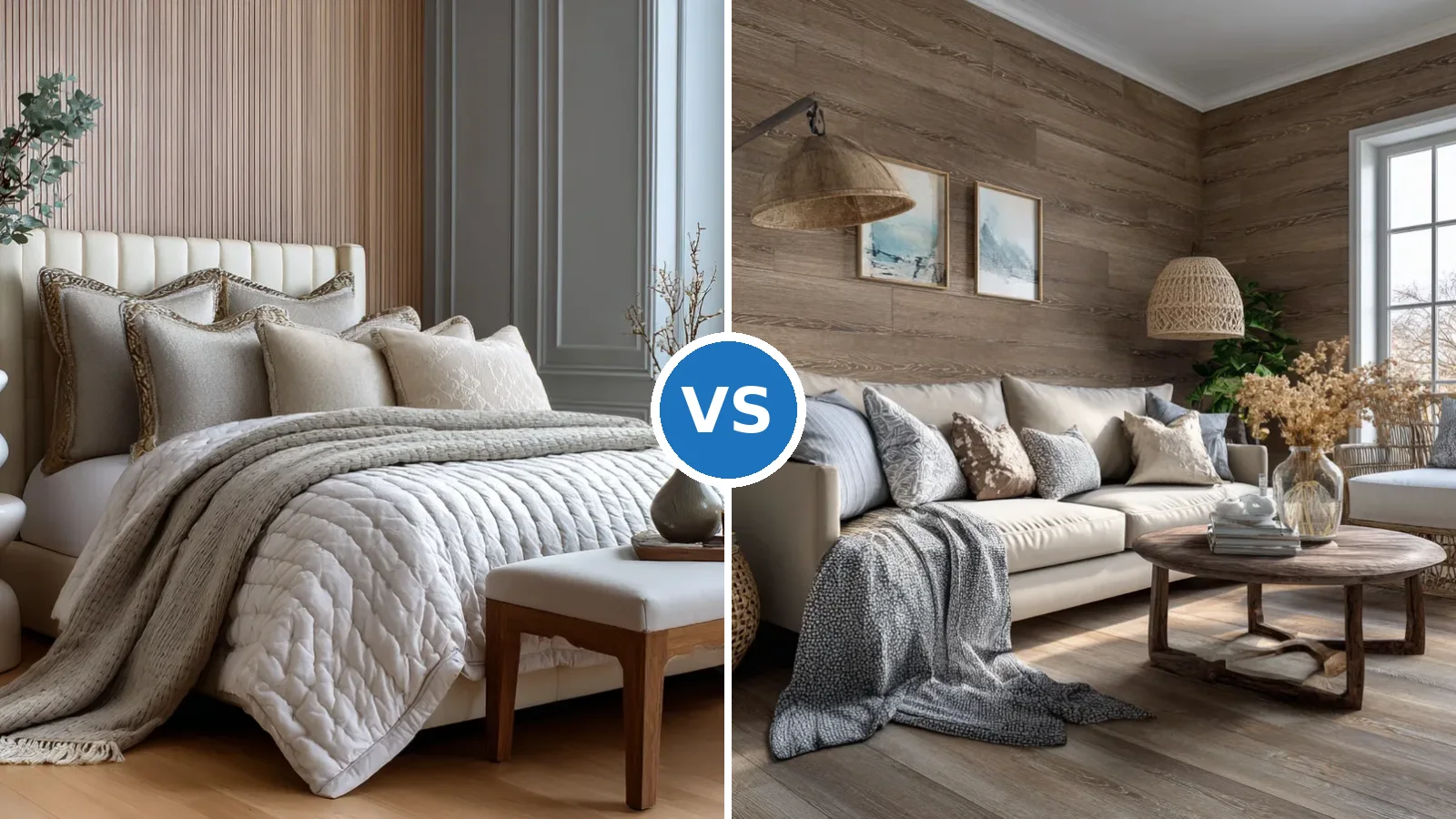
Pillows and throws carry most of the warmth in a hygge haven. Mix three textures, such as bouclé, chunky knit and washed linen, in a palette of cream, beige and brown pulled from the wood floor. A woven wool rug over light oak parquet works like a down duvet on a cold bed, changing how the whole room feels underfoot. Stop at four or five cushions on the sofa so it still looks like a place to sit.

A reading nook with a mustard armchair and a shelf of plants adds the living element that warm Scandi rooms rely on. Fiddle leaf fig vs spider plant is a fair test of your windows: the fig wants bright indirect light of roughly 250–1,000 foot-candles, while the spider plant copes with a medium 75–150. Below about 50 foot-candles, most houseplants slowly decline. Put the fig within a few feet of the brightest window and give darker corners to trailing spider plants.
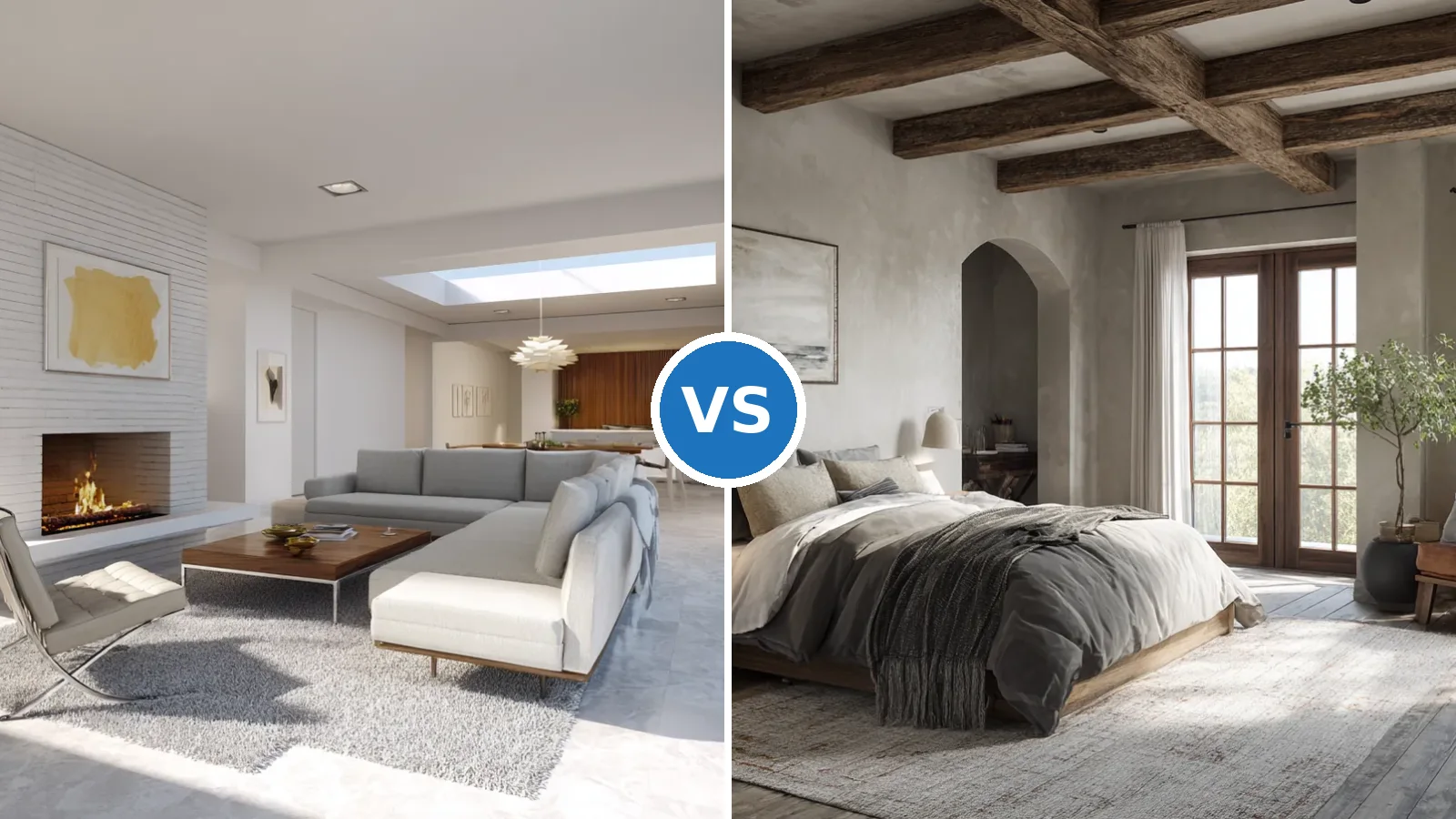
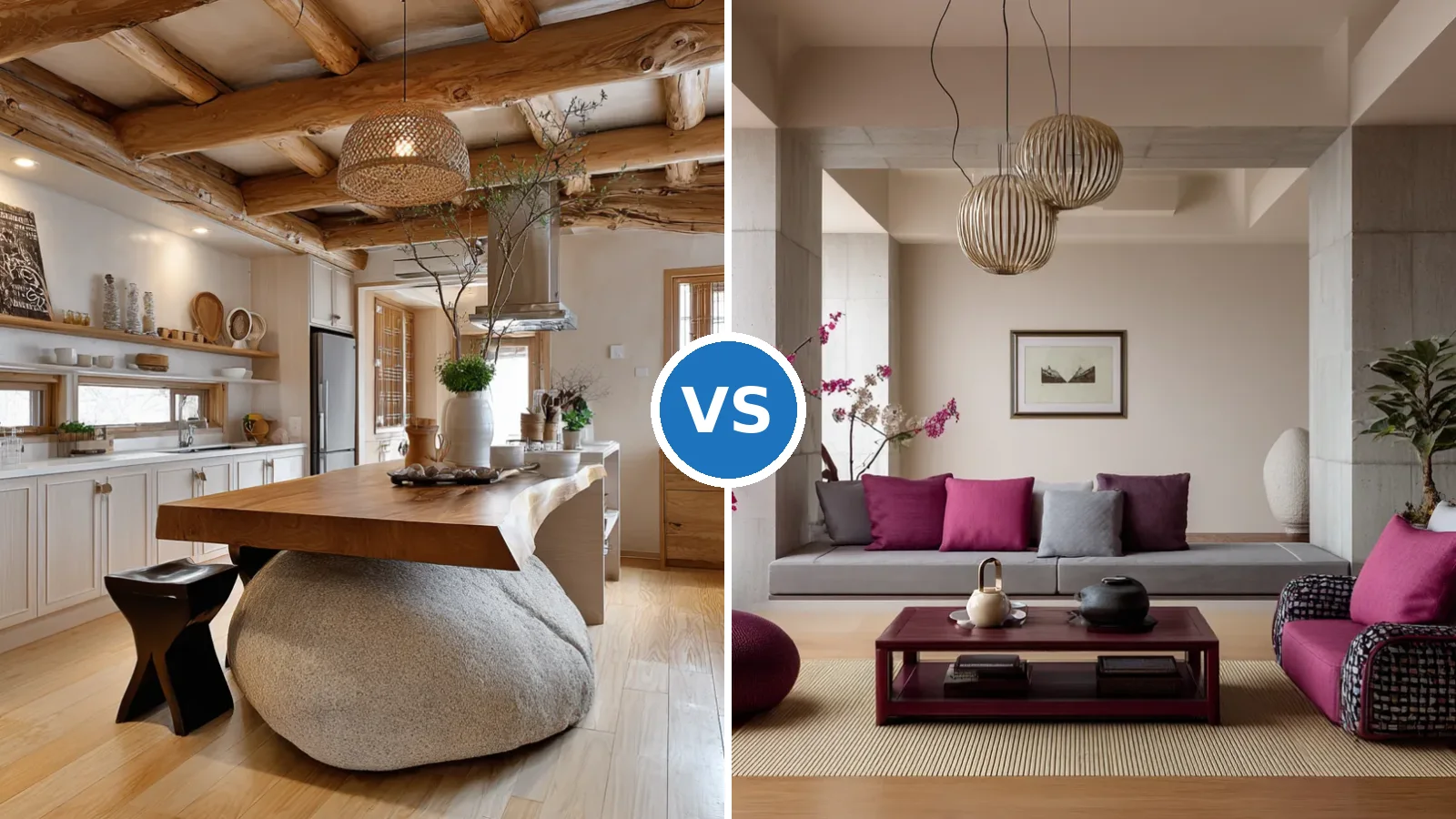
Clutter is the fastest way to lose the effect, because hygge reads as calm, not crowded. Keep the mantel to one candle group and a few black-and-white photos, and hide the rest in lidded baskets. Japanese interiors push the same no-clutter rule even further, as this light and airy modern Japanese style living room shows with its low furniture and open floor. Clear one surface completely before adding any new object.

Textured Nordic Nooks Where Velvet, Leather and Wool Do the Heating
Warm Scandinavian interior design treats texture as a heating system: velvet, leather, wool and wood each add a different kind of warmth. In this Nordic nook a pine-green velvet sofa anchors the room, and cushions in ochre, rust and navy add color without breaking the calm. Velvet vs linen is a real trade-off, since velvet looks richer under 2700K lamps while linen wrinkles and feels cooler in summer. Pick velvet for the main sofa if evenings are when the room gets most use.

A leather lounge chair adds the second texture and a dose of design history. The Eames Lounge Chair and Ottoman, released in 1956, still lists at about $8,700 in its standard size, so many homes borrow the look from a vintage or mid-century style alternative instead. Is the original worth it? Only if it will be used nightly for a decade or more, like a good winter coat. Drape a knitted throw over the back so the leather never feels cold to the touch.
Above the sofa, one large abstract canvas in aurora greens and violets gives the eye a place to rest. One big piece vs a gallery of six small frames is a useful comparison: the single canvas reads calm, while the cluster reads busy in a minimal room. Center the canvas at about 57 inches from the floor, the eye-level standard galleries use. Skip glossy glass frames here, since glare breaks the soft lamp light.

A slim round coffee table on thin metal legs balances the plush sofa, much like a fine-nibbed pen beside a soft leather notebook. Keep it 14–18 inches from the sofa edge so a mug is within reach and knees still clear. Style it with two design books and a single monstera leaf in a vase, nothing more. Avoid a heavy square block of a table here, because it competes with the sofa for attention.

On the floor, a large hand-woven rug adds warmth underfoot and softens the honey-toned boards. Hand-knotted wool can last 20–50 years or more, while a machine-made wool rug typically lasts 5–10, so a good handmade piece often costs less per year of use. Choose a quiet pattern so the rug supports the sofa instead of fighting it. Vacuum handmade pieces with the beater bar switched off to protect the pile.
Sculptural floor lamps give the corner its evening mood. Two or three pools of light at seat height beat one ceiling fixture, which flattens texture the way a camera flash flattens a portrait. Keep every bulb in the room at the same temperature, 2700K or 3000K, rather than mixing them. Put at least one lamp on a dimmer so the room can shift from reading to conversation.

Sunlit Scandi Rooms That Hold Their Warmth After Dark
A sunlit warm Scandi living room is designed around the fact that Nordic daylight swings hard between seasons. According to sunrise and sunset data for Copenhagen, the city gets about 17.5 hours of daylight at the June solstice and around 7 hours in late December, a gap of more than 10 hours. That is why pale walls, big windows and light wood dominate: they bounce every available minute of sun. Choose a white paint with a warm base rather than a blue one, so walls stay creamy on grey days.

Bright day vs dim evening is the comparison that shapes the whole room. By day, the dark green sofa contrasts with pale walls and earthy art, but by 4 pm in a Danish December the same room depends entirely on lamps. Is a single overhead light enough? It rarely is, because it lights the floor and ceiling while leaving faces and fabrics flat. Plan at least three light sources at different heights before the first dark month arrives.
Lighting guides put 2700K warm white as the standard for living rooms, with 3000K as a slightly crisper option that mimics halogen. The warmer 2700K sits closer to candlelight, which suits a hygge room built around textiles. Ceramic lamp bases with woven fabric shades diffuse that glow like frosted glass on a lantern. Never mix 2700K and 4000K bulbs in one room, because the cooler bulb stands out instantly.

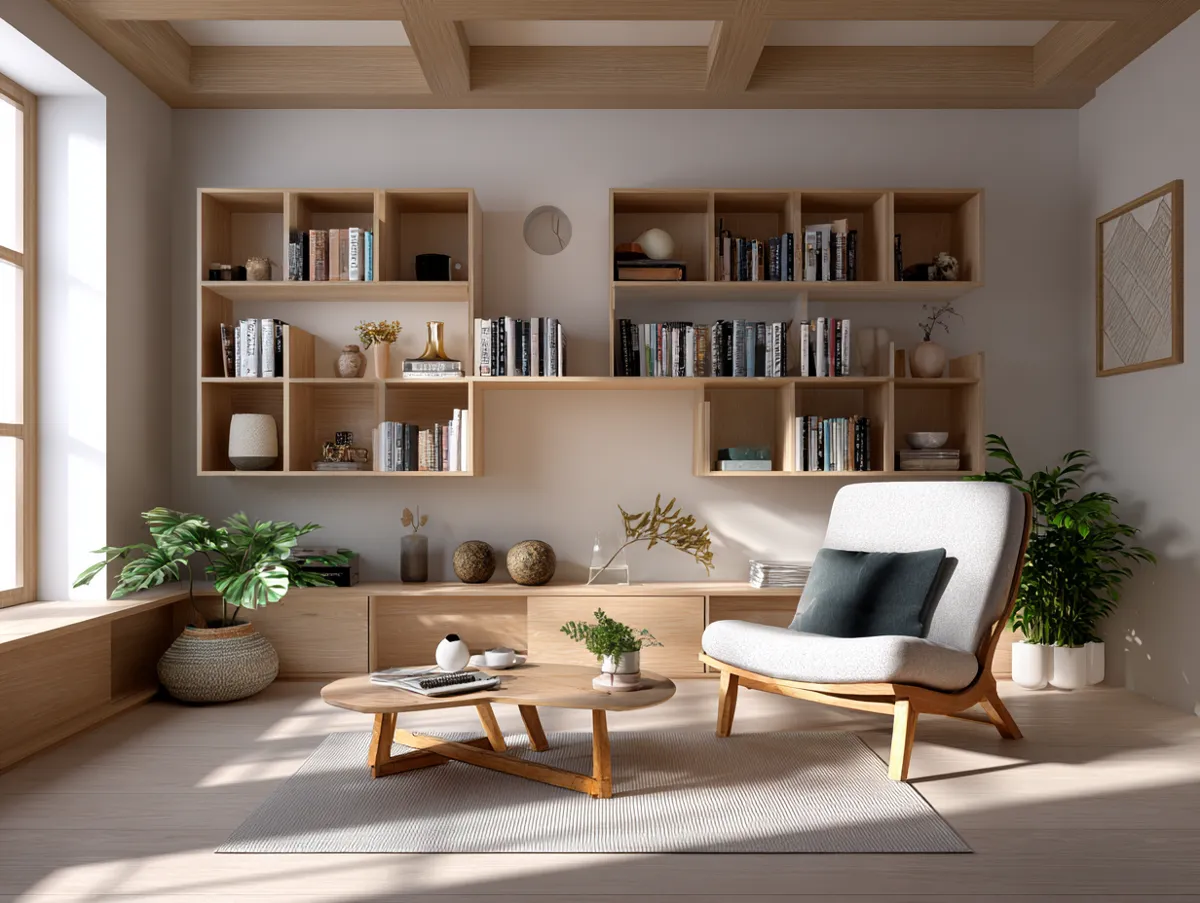
A light wood coffee table keeps the center calm with one ceramic bowl of seasonal fruit, one small potted plant and a short stack of design books. Three objects vs ten is the line between styled and cluttered. Group pieces in odd numbers and vary the shapes: one tall, one round, one flat. Leave at least half the tabletop empty so it still works as a table.

Across from the sofa, a classic armchair with generous cushioning turns the layout into a conversation zone. Facing seats encourage talk the way a round table encourages a shared meal. Keep main walkways around 30–36 inches wide so nobody squeezes past the chair with a tray. Set both the sofa and the chair with their front legs on the same rug to tie the group together.
In summer the same room opens up: windows thrown wide, heavier throws folded into a basket, plants pushed closer to the glass. Winter reverses the process, with wool layers back on the sofa and lamps switched on mid-afternoon. Treat the room like a wardrobe with two seasonal weights rather than one fixed outfit. Keep a single lidded basket for off-season textiles so the swap takes minutes.

Rustic Charm Meets Modern Lines in a Warm Scandinavian Living Room
A rustic warm Scandinavian living room mixes rough natural materials with crisp modern shapes, so the space feels grounded without tipping into cabin decor. The base here is oak flooring with a natural matte finish, a dark green sofa and walls in a muted shade that whispers rather than shouts. Rustic vs modern Scandi comes down to surface: rustic keeps knots, grain and visible wear, while modern keeps planes smooth and edges sharp. Let one or two rough pieces carry the rustic side and keep everything else clean-lined.

A reclaimed wood coffee table is the obvious rustic anchor, its knots and saw marks reading like rings in a cut log. Overhead, faux beams cost about $15–$35 per linear foot installed vs roughly $25–$60 for solid timber, so a ceiling detail fits even a modest budget. Is solid wood worth the premium? Only where a beam hangs low enough to touch. Never hang solid beams from an older ceiling without a structural check.
A woolen throw over the sofa back and a leather armchair with a mid-century silhouette set up the key contrast of this room. Knit vs leather plays soft against sleek, the way a wool scarf looks richer next to a leather jacket. The chair gives a firm perch, while the sofa invites a long sprawl. Keep both pieces in warm tones, cognac and forest green rather than black and grey.

Rustic Scandi shares a lot with farmhouse style, from wide planks to woven textiles, and these boho farmhouse living room ideas with jute rugs and barn wood show how far the rustic side can go before Nordic calm disappears. The Scandi version uses fewer patterns, usually one rug and two cushion prints at most. A jute 8×10 rug runs about $150–$500, while wool in the same size often passes $1,000. Pick wool for busy family rooms and jute for quieter, drier ones.
A sculptural pendant above the coffee table and a brass floor lamp beside the sofa give evenings their depth. Brass vs chrome is a quick warmth test: brass throws back a golden tone, chrome throws back blue-white. Pendant light pools on the reclaimed wood the way late sun pools on a barn floor. Keep both fixtures at 2700K so the oak keeps its amber color after dark.

A handwoven rug in greys and creams ties the floor together, echoing the stone and snow of a Nordic landscape. Wool sheds dirt the way a sheep’s fleece sheds rain, which helps explain why wool outlasts jute, with jute typically lasting only about 3–7 years. Does a rustic room need a pattern-heavy rug? No, a subtle tonal weave keeps the reclaimed wood as the star. Rotate the rug every 3–6 months so sun and footsteps wear it evenly.

Small Warm Scandi Living Rooms Need Bigger Rugs and Fewer Pieces
A small warm Scandinavian living room gets the same treatment at a tighter scale, and the rug is where most small rooms go wrong. An 8×10 rug measures 96 by 120 inches and covers about 48% more floor than a 6×9, enough to hold the front legs of a standard 84-inch sofa and two chairs. A 6×9 suits a loveseat or a floating layout where no legs touch the rug. Measure the sofa first, then buy the rug.
Bare floor around the rug matters as much as the rug itself. Designers usually leave about 18 inches between rug edge and wall, and as little as 8 inches in tight rooms. Does a large rug make a small room look smaller? No, it works like a wide mat around a print, making the whole frame look generous. Tape the outline on the floor with painter’s tape before ordering.
- Set the sofa’s front legs 6–8 inches onto the rug.
- Keep the coffee table 14–18 inches from the sofa edge.
- Hold main walkways at 30–36 inches wide.
- Choose one sofa plus one armchair instead of two loveseats.
- Plan three light sources, all at 2700K, at floor, table and ceiling height.
Leggy vs skirted furniture is the second space-saving choice. Sofas and chairs raised on tapered legs show floor beneath them, so the eye reads more open space than a skirted piece allows. Light oak, cream upholstery and one green accent keep the palette warm without visual weight. Skip bulky storage units and use a wall shelf at seat height instead.
Don’t Do This
- Don’t mix 2700K and 4000K bulbs in one room; the cooler bulb shows instantly.
- Don’t put a 6×9 rug under a full seating group with an 84-inch sofa; an 8×10 covers about 48% more floor.
- Don’t push the coffee table closer than 14 inches to the sofa edge.
- Don’t place a fiddle leaf fig in a corner under 250 foot-candles; it needs bright indirect light.
- Don’t hang solid timber beams without a structural check; faux beams at $15–$35 per foot skip the risk.
Comparing the Four Warm Scandi Looks Side by Side
The four warm Scandi looks share pale walls, wood and 2700K light but differ in anchor pieces, textures and cost. Hygge and the textured nook lean on fabric, the sunlit room leans on daylight, and rustic modern leans on raw wood. Read each row across, then match it to the room and budget you already have.
| Look | Anchor piece | Key textures | Lighting | Rug choice | Typical numbers | Best for |
|---|---|---|---|---|---|---|
| Hygge haven | Dark green sofa, mustard armchair | Bouclé, chunky knit, linen | 2700K lamps plus 3–5 candles | Woven wool 8×10 | Wool 8×10 often $1,000+ | Long winter evenings |
| Textured Nordic nook | Velvet sofa, leather lounge chair | Velvet, leather, wool | 2700K floor lamps on dimmers | Hand-knotted wool | Lasts 20–50+ years; Eames original lists about $8,700 | Reading and conversation |
| Sunlit serenity | Pale walls, light oak coffee table | Cotton, wool, ceramic | Daylight plus 2700K–3000K table lamps | 8×10, front legs on | Daylight 7 h in December vs 17.5 h in June | North-facing or large-window rooms |
| Rustic modern | Reclaimed wood table, oak floor | Raw wood, leather, wool | Pendant plus brass floor lamp at 2700K | Jute or wool 8×10 | Jute $150–$500; faux beams $15–$35 per ft | Family rooms and cabins |
| Small room version | 84-inch sofa plus one chair | Linen, knit | 3 sources at 2700K | 8×10 over 6×9 | 18 in bare floor, 8 in minimum | Apartments and narrow lounges |
Warmth Lives in the Layers
A warm Scandinavian living room comes down to three layers: a calm shell of pale walls and wood, a soft middle of wool, velvet and leather, and a top layer of 2700K light and candles that carries the room through roughly 17 dark hours of a Danish December day.
Start cheap and high-impact. Warm bulbs and a correctly sized 8×10 rug change more than any single furniture purchase, and a jute version costs about $150–$500.
Spend where lifespan pays back. A hand-knotted wool rug lasting 20–50+ years or a leather lounge chair used every night earns its price, while trend accessories rarely do.
Measure before you buy. Leave 18 inches of bare floor around the rug, 14–18 inches between sofa and coffee table, and 30–36 inch walkways, and even a small Nordic room stays calm.