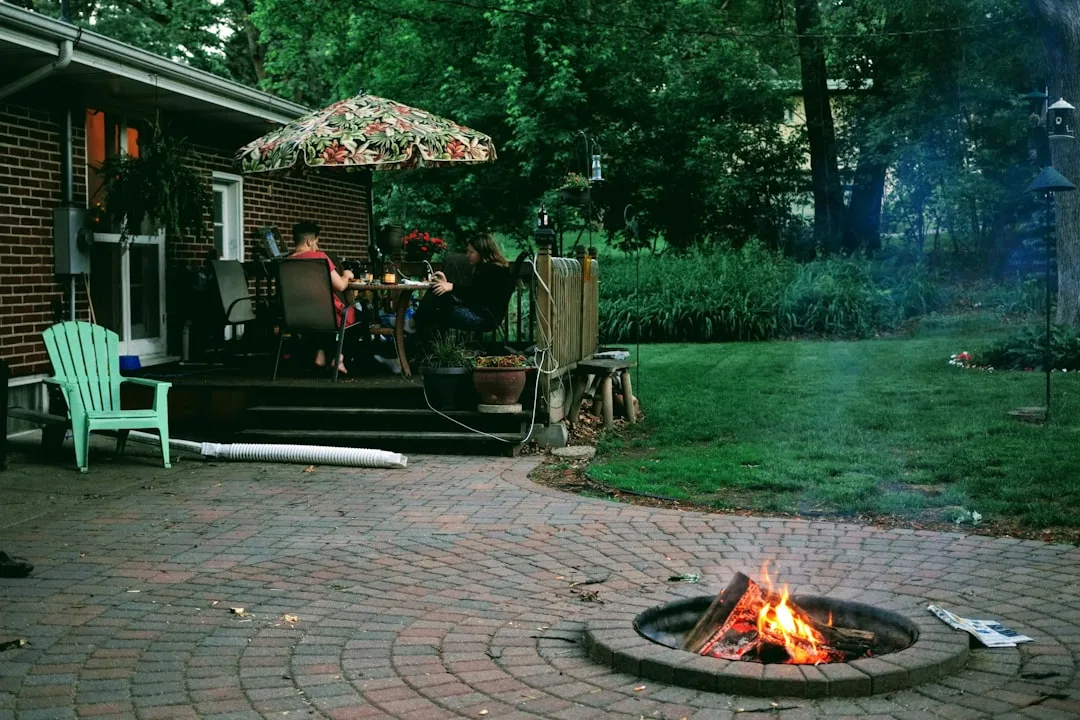
Backyard fire pit designs have moved well past the ring-of-stones era. The strongest versions today function as outdoor architecture — anchoring seating zones, directing sightlines, and giving a yard a reason to exist after dark. A well-placed fire feature changes how the entire space reads from the house, not just from the chairs around it.
The gap between a fire pit that looks intentional and one that looks like an impulse purchase is almost always a design decision, not a budget one. A $300 concrete ring laid in the right spot outperforms a $2,000 prefab steel bowl dropped randomly into a lawn. Material, shape, and placement are the variables that actually matter.
What follows covers four distinct approaches — contemporary, seating-led, water-paired, and sculptural — along with the specific trade-offs each carries. The pricing ranges referenced here come from verified installation data: most homeowners spend between $200 and $3,000, with the average professional installation landing around $850.
- Contemporary fire pit designs use stainless steel or cast concrete; expect $250–$1,200 for steel and $200–$1,000 for concrete at a 36-inch diameter.
- Seating distance from a wood fire: 6–7 ft minimum. Gas fire: 3–4 ft. Built-in bench back walls: 40–48 inches from the flame.
- Fire-and-water combinations start around $1,000 DIY; the visual payoff outweighs the complexity only when both elements share a material palette.
- Artistic fire pits function as sculpture — effective only with deliberate lighting; spotlights at ground level, not overhead strings.
- All four designs require 10–15 ft clearance from any structure per standard fire safety codes.
Stainless Steel and Concrete Changed What Backyard Fire Pit Designs Can Look Like
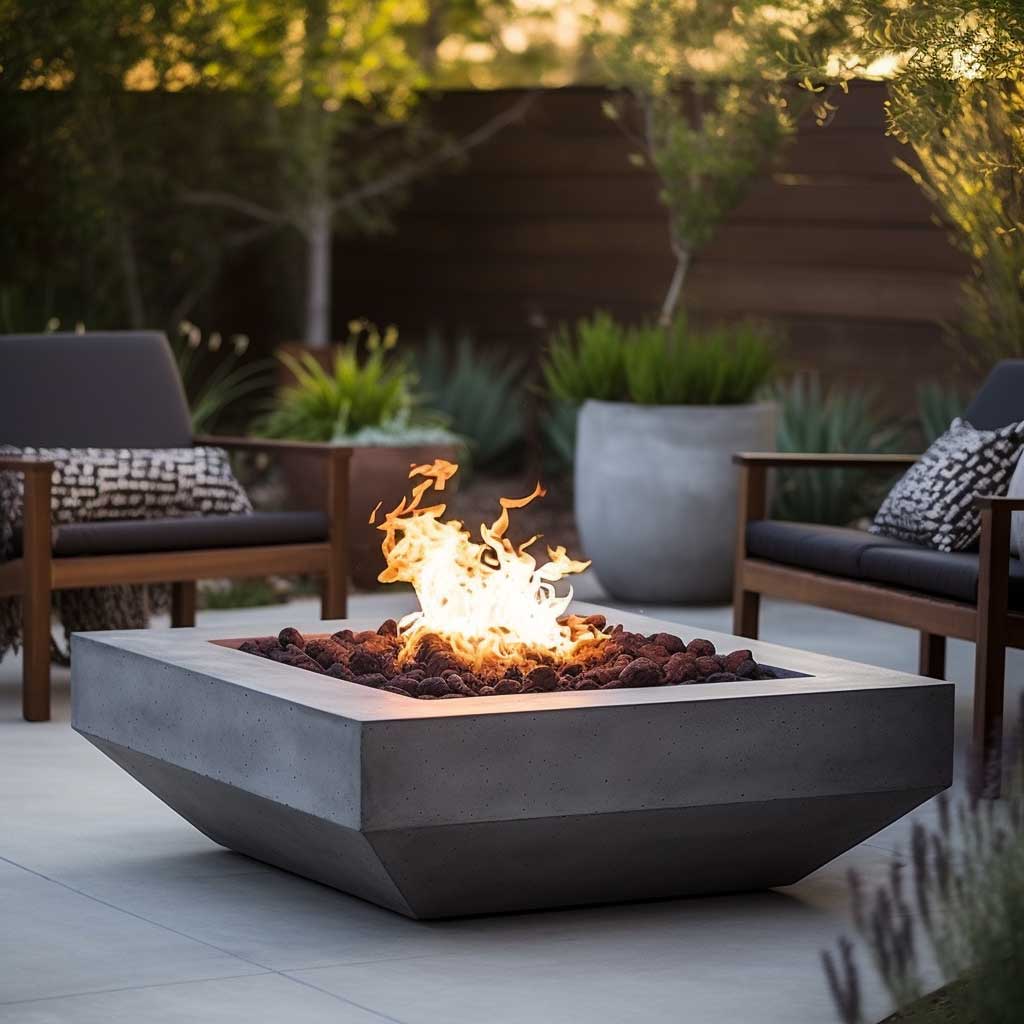
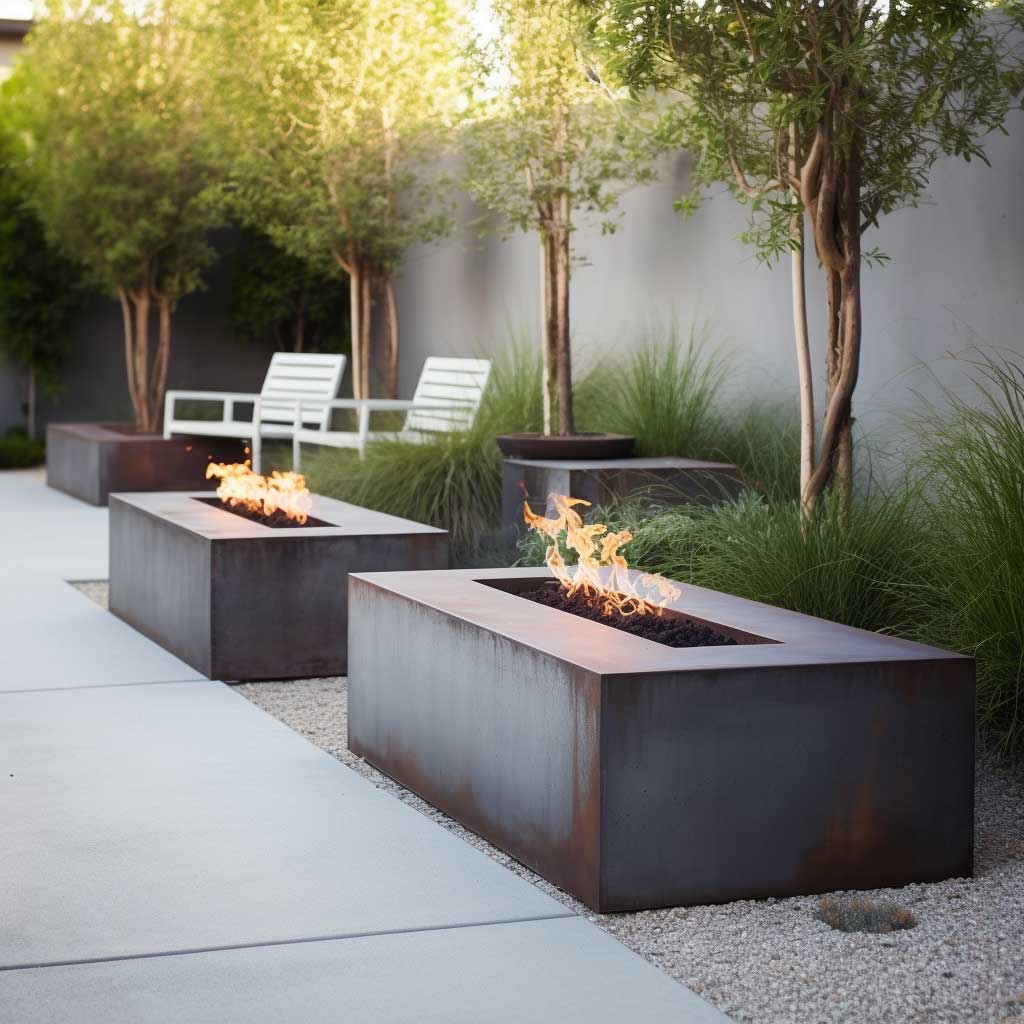
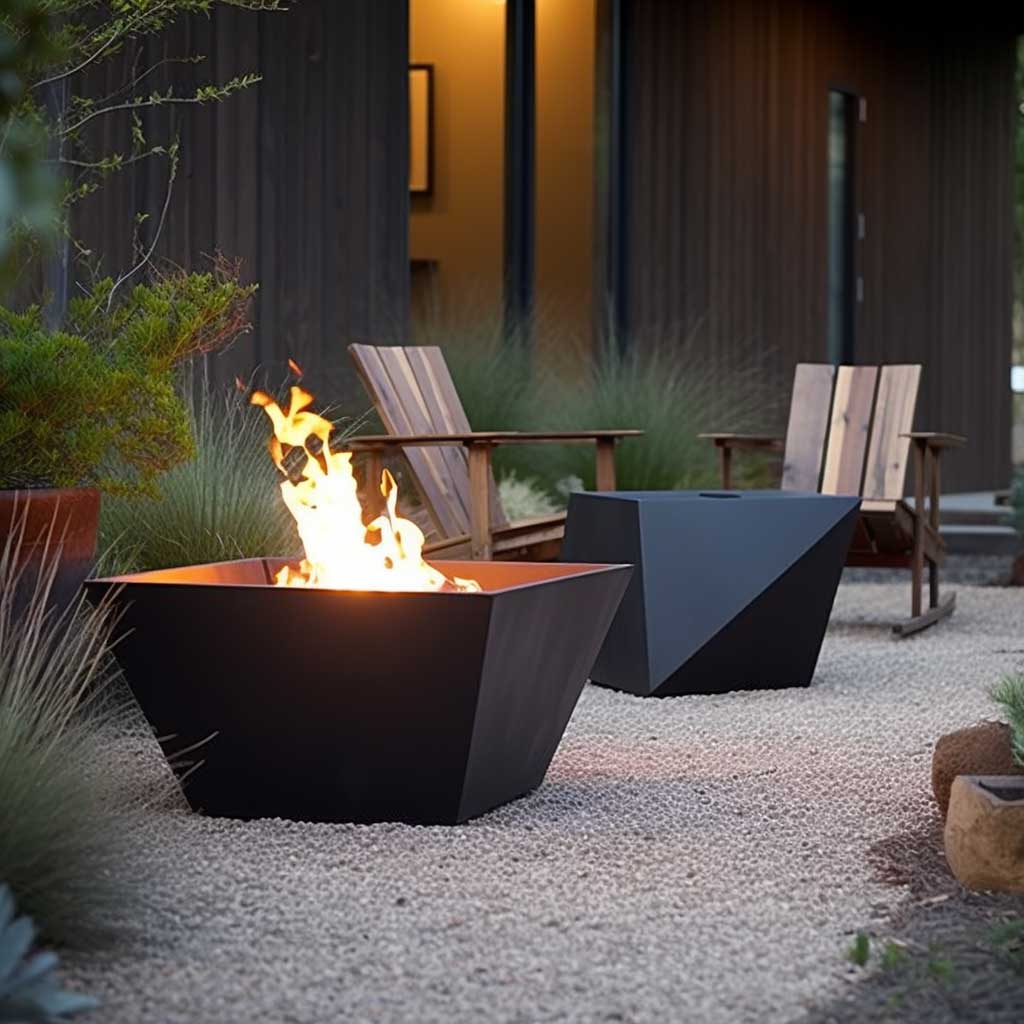
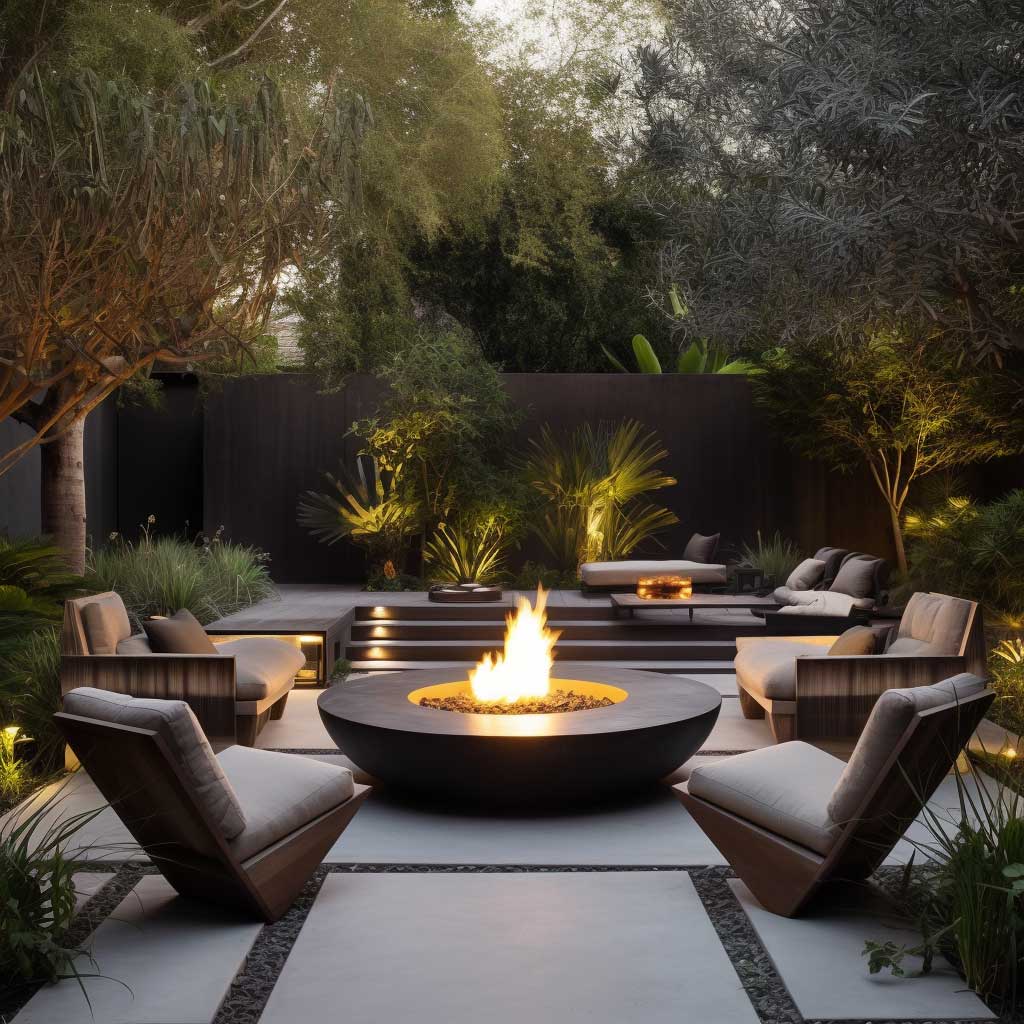
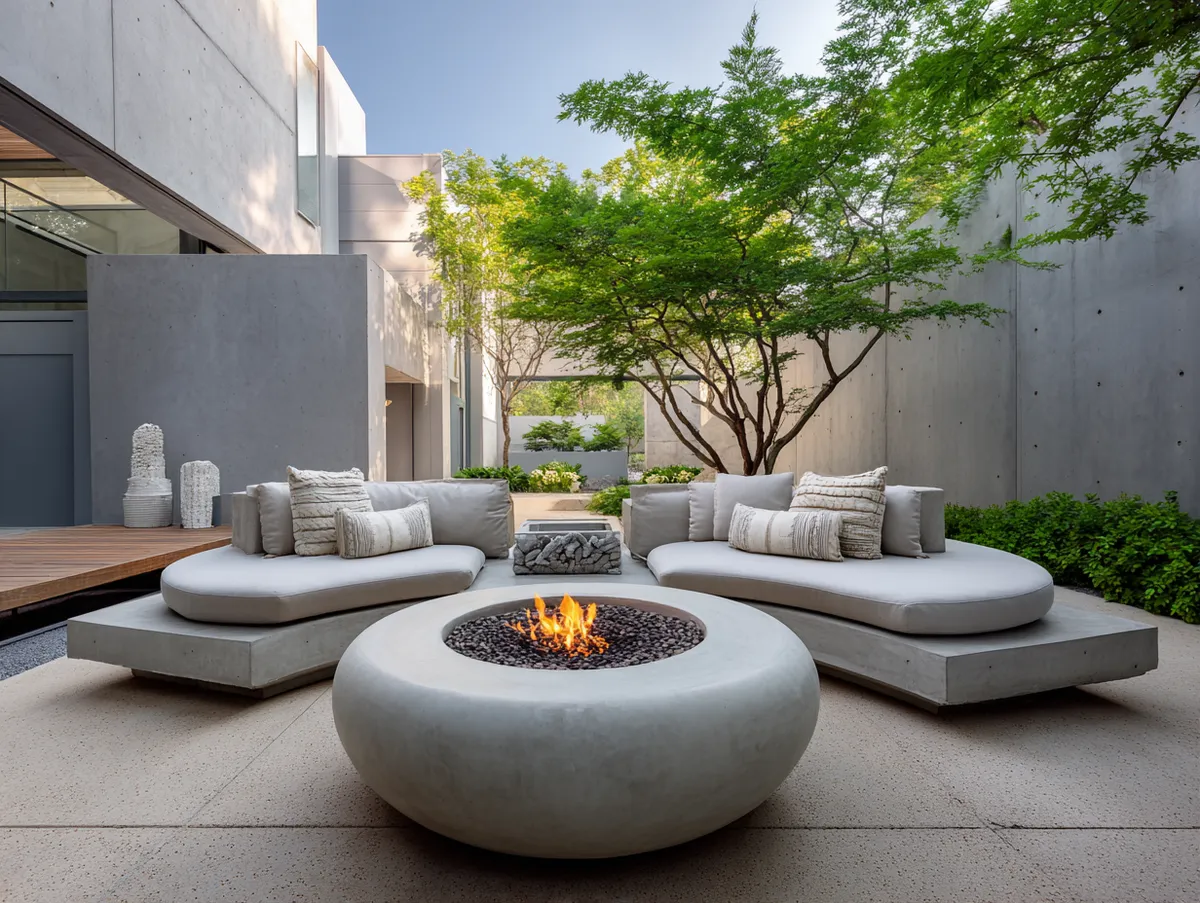
Contemporary fire pit designs succeed because their materials refuse to apologize for themselves. A standard 36-inch stainless steel fire pit runs $250–$1,200 depending on grade and finish; a cast concrete version in the same diameter lands at $200–$1,000. Both outlast powder-coated steel by years — stainless is corrosion-resistant, concrete gains character rather than rust. The trick here is matching the finish to whatever hardscape already exists: polished concrete on a polished concrete deck reads as intentional architecture; the same bowl on rough-cut slate looks like it was moved there temporarily.
What drives the contemporary look isn’t the material alone — it’s the absence of visual clutter around it. Landscape lighting placed at ground level, not on overhead pergola strings, preserves the fire as the primary light source. Strategically positioned low-voltage LED path fixtures at the perimeter cost around $80–$300 per fixture to install and produce enough ambient light to navigate the space without competing with the flame. The pit becomes a sculpture during the day and the focal point at night, two jobs handled by one element.
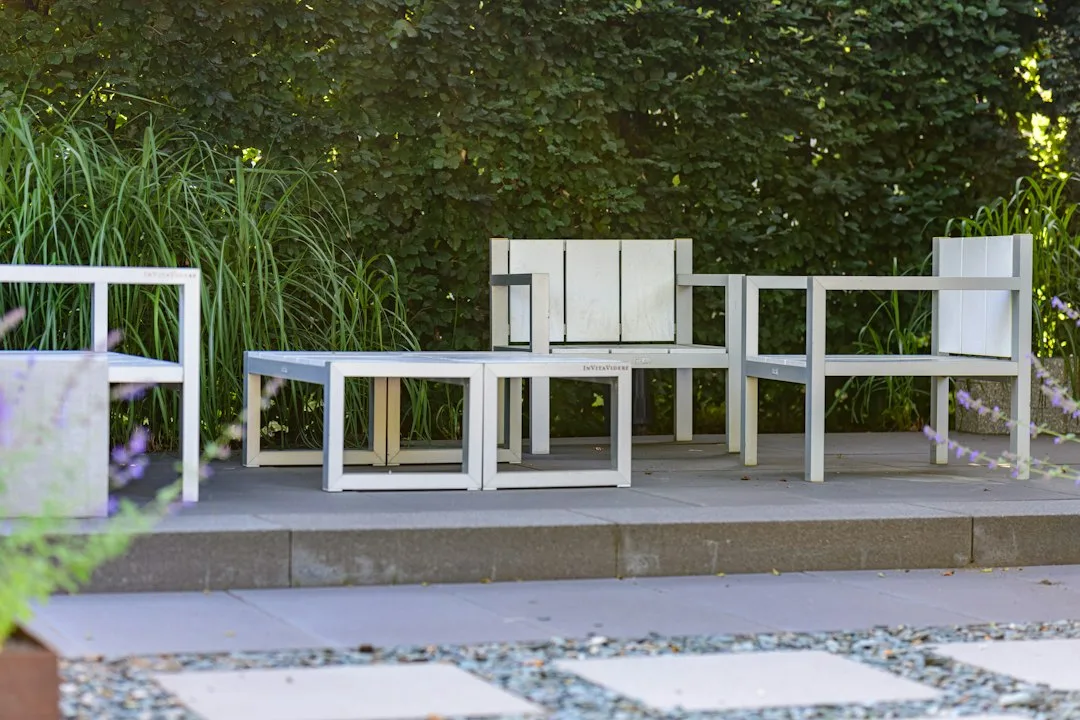
A seating arrangement scaled to the pit makes or breaks the result. A 36–44 inch pit comfortably accommodates 6–8 chairs; scaling up to 60 inches suits larger groups without reducing heat efficiency. What doesn’t work: placing four mismatched chairs at random distances. The geometry of the seating carries as much visual weight as the pit itself — four identical pieces at even intervals, or a continuous low bench on one arc, anchors the space the way a rug anchors an interior room.
For contemporary fire pit designs on covered patios or enclosed courtyards, gas is the only option — wood-burning fires produce smoke that accumulates under a roof within minutes. A linear gas insert set inside a concrete trough runs approximately $1,800 installed and gives precise flame height control. For a deeper look at material options and build types, the collection of modern fire pit ideas on this site covers concrete, Corten steel, and DIY builds with real cost comparisons.
Don’t install a contemporary fire pit without confirming the 10–15 ft clearance requirement from any structure, fence line, or overhanging branch — this is the minimum set by standard fire safety codes, not a guideline. The most common mistake on new patios is placing a sleek fire feature close to a pergola or privacy screen to create a cozy enclosure, then discovering the installation violates local code and requires expensive relocation. Measure first, build second.
Seating Geometry Is Half the Fire Feature Design — Not an Afterthought
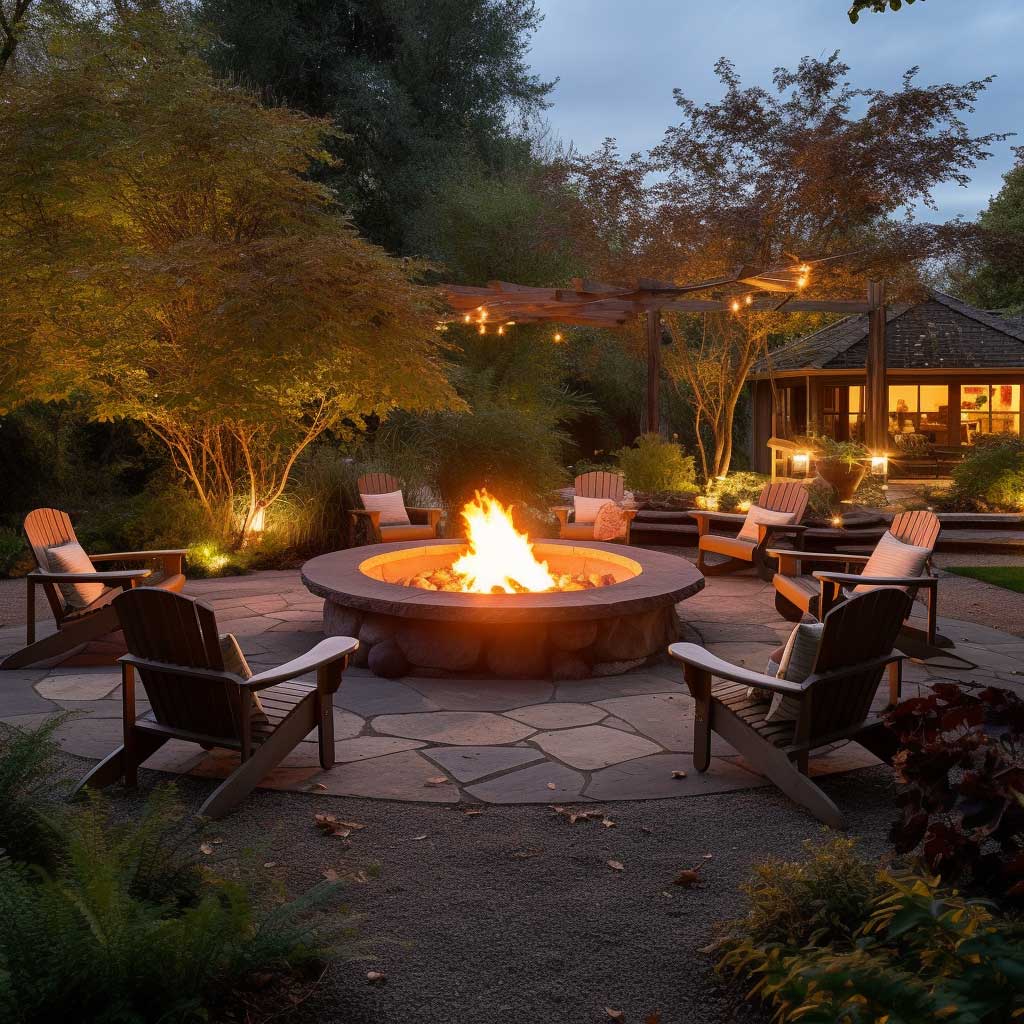
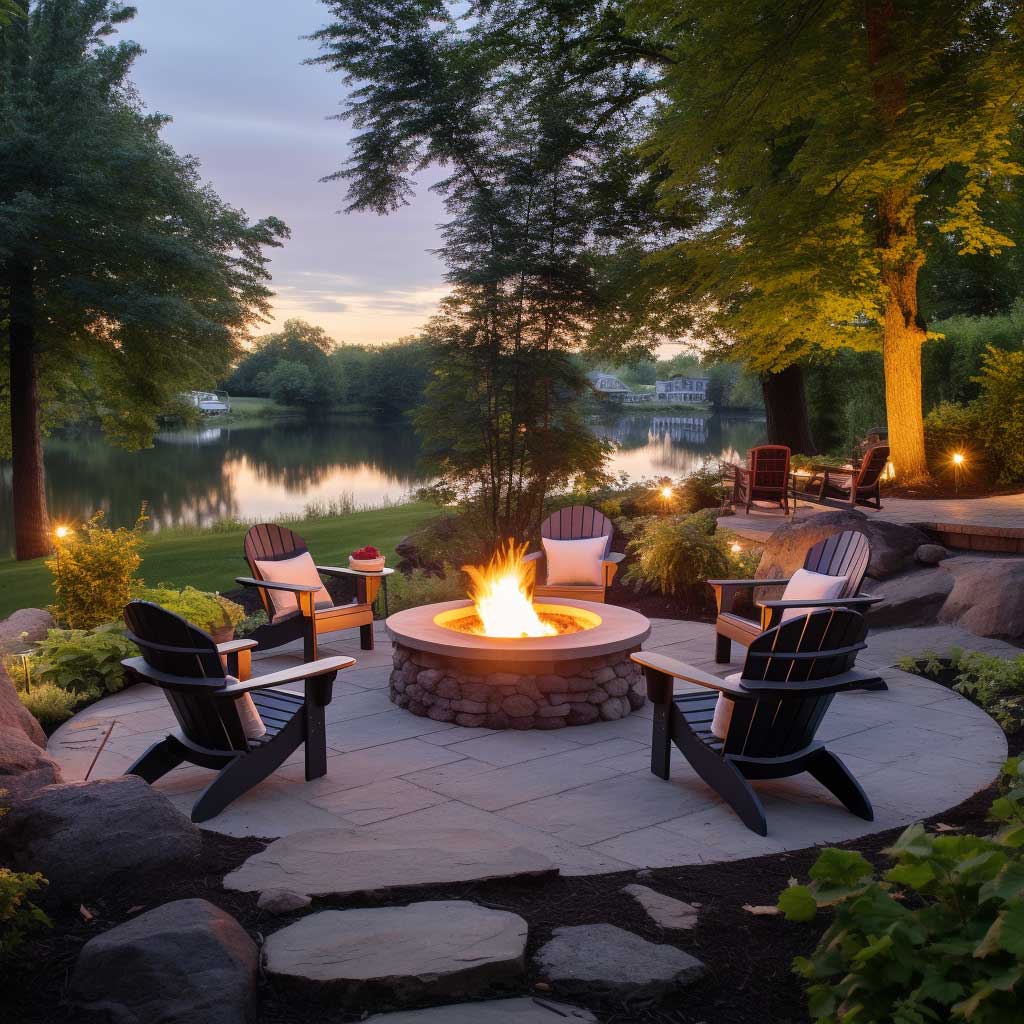
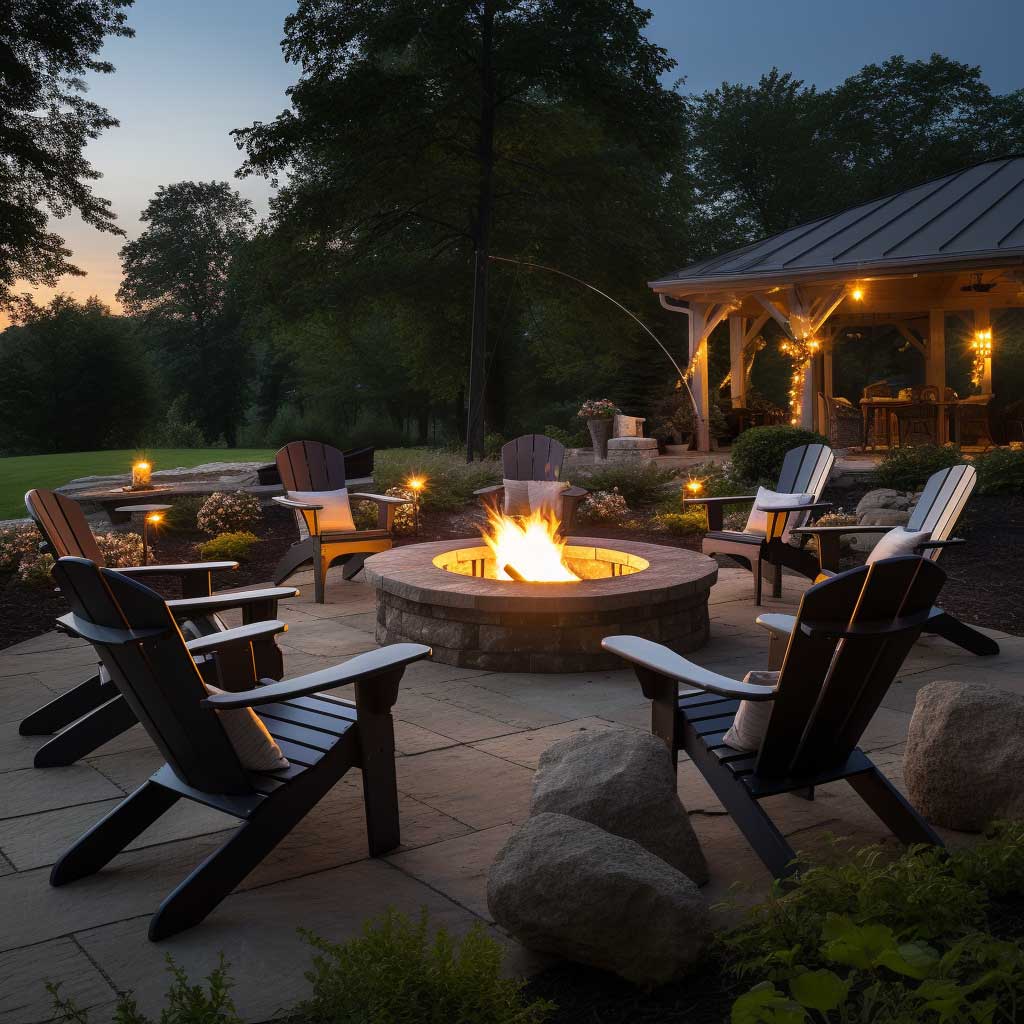
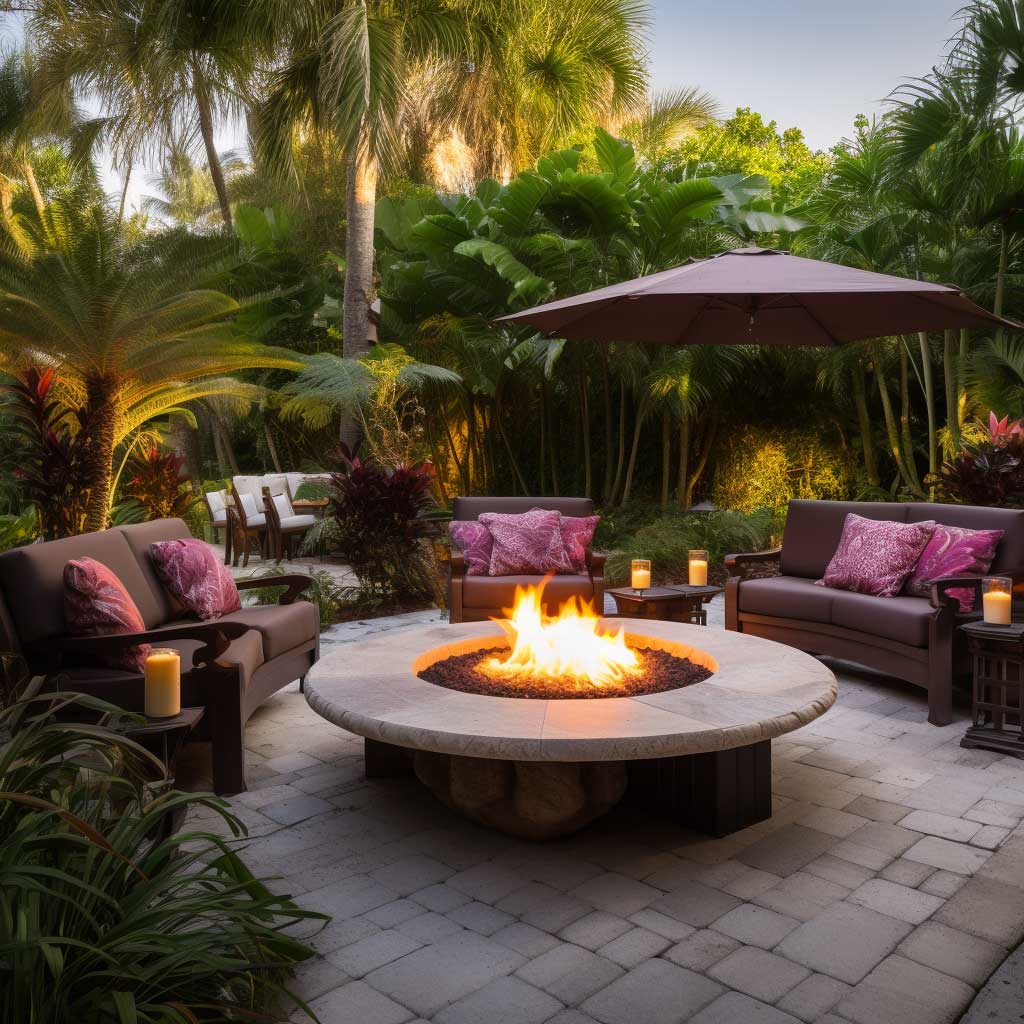
Fire feature design in a backyard starts with the seating radius, not the pit diameter. For a wood-burning fire, stylists recommend a minimum of 6–7 feet between the flame edge and the front of any chair; gas fires allow 3–4 feet because they produce less radiant heat and no flying embers. If built-in seating is part of the plan, the back wall of the bench should sit 40–48 inches from the fire — close enough to feel warmth, far enough that no one gets roasted after 20 minutes. These aren’t aesthetic preferences; they’re the practical geometry that determines whether people actually stay seated.
Circular arrangements earn their reputation for a reason: they put every seat at the same distance from the fire and face every guest toward the others. Think of it like a campfire from childhood — the circle is a social contract. A U-shaped arrangement with the open end facing a view or a pathway trades some intimacy for flow, which works better for entertaining where guests move in and out. What fails in almost every case is a linear sofa-and-chairs configuration borrowed from an interior living room: the seats on the ends sit too far from the heat, and the layout creates a stage-and-audience dynamic rather than a gathering.
Materials for seating need to survive outdoor conditions without constant upkeep. Powder-coated steel chairs in the $120–$200 per piece range maintain their finish through multiple seasons. Weather-resistant cushions in Sunbrella or comparable marine-grade fabric cost around $60–$150 per cushion and hold up to UV and moisture where standard outdoor fabric fails within a single season. The seating budget often exceeds the fire pit budget on well-designed installations — a custom fire pit with an integrated seating area runs $5,000–$12,000 for professionally designed projects.
Does the seating style matter as much as the seating distance? Yes — but the order of priority is safety first, then aesthetics. Once the 6–7 foot radius is secured, the choice between built-in masonry benches and movable chairs determines how flexible the space will be. Built-in benches are permanent, photogenic, and require zero maintenance; movable chairs let the space convert for different group sizes and activities. Most designers combine both: a fixed curved bench on the back arc, movable chairs on the open sides.
Fire and Water Together Require a Plan, Not Just a Good Photograph
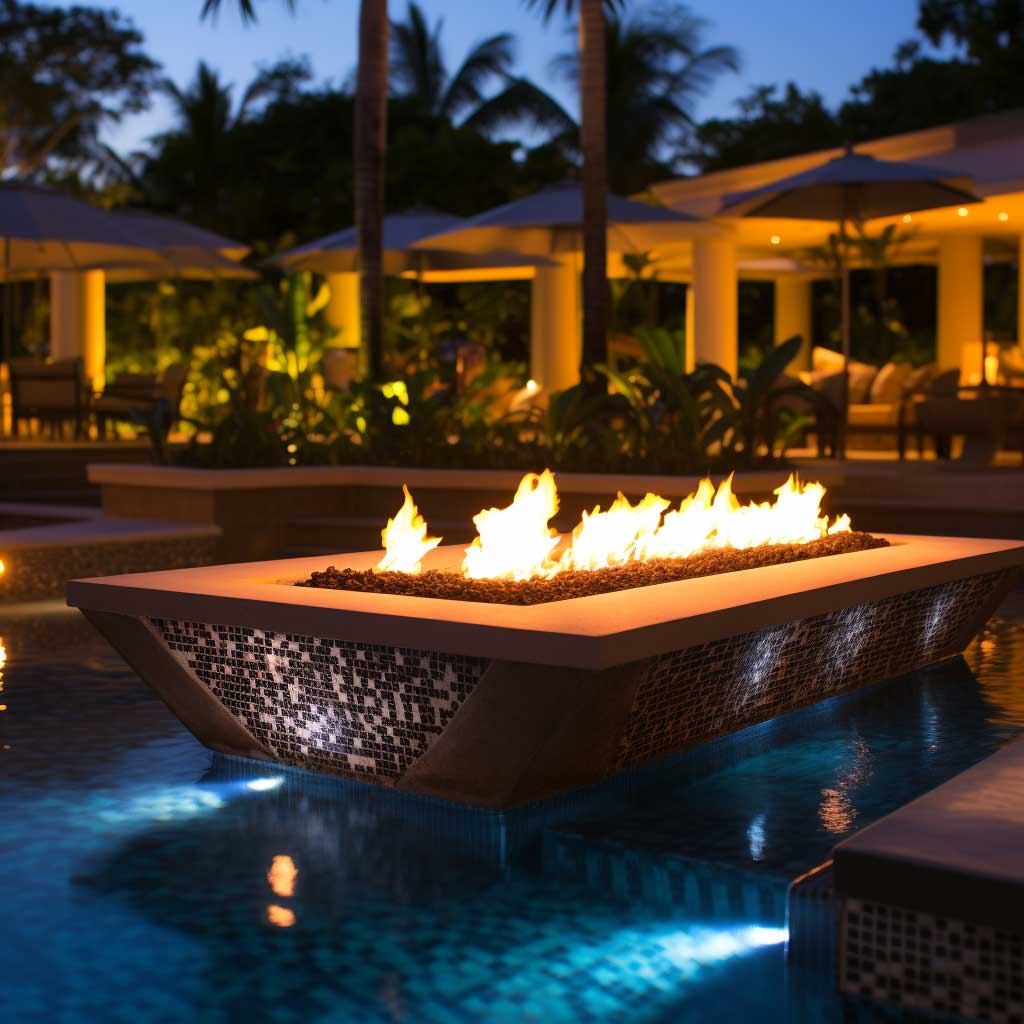
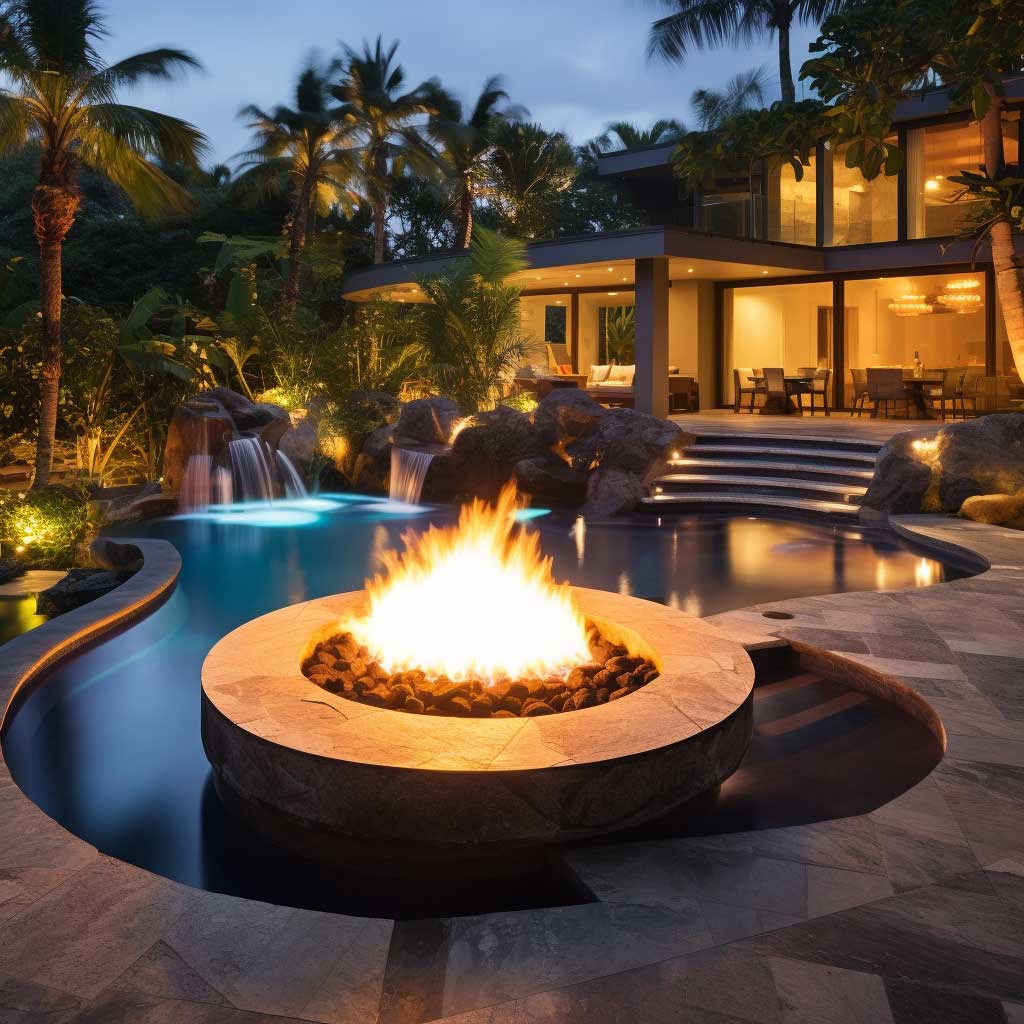
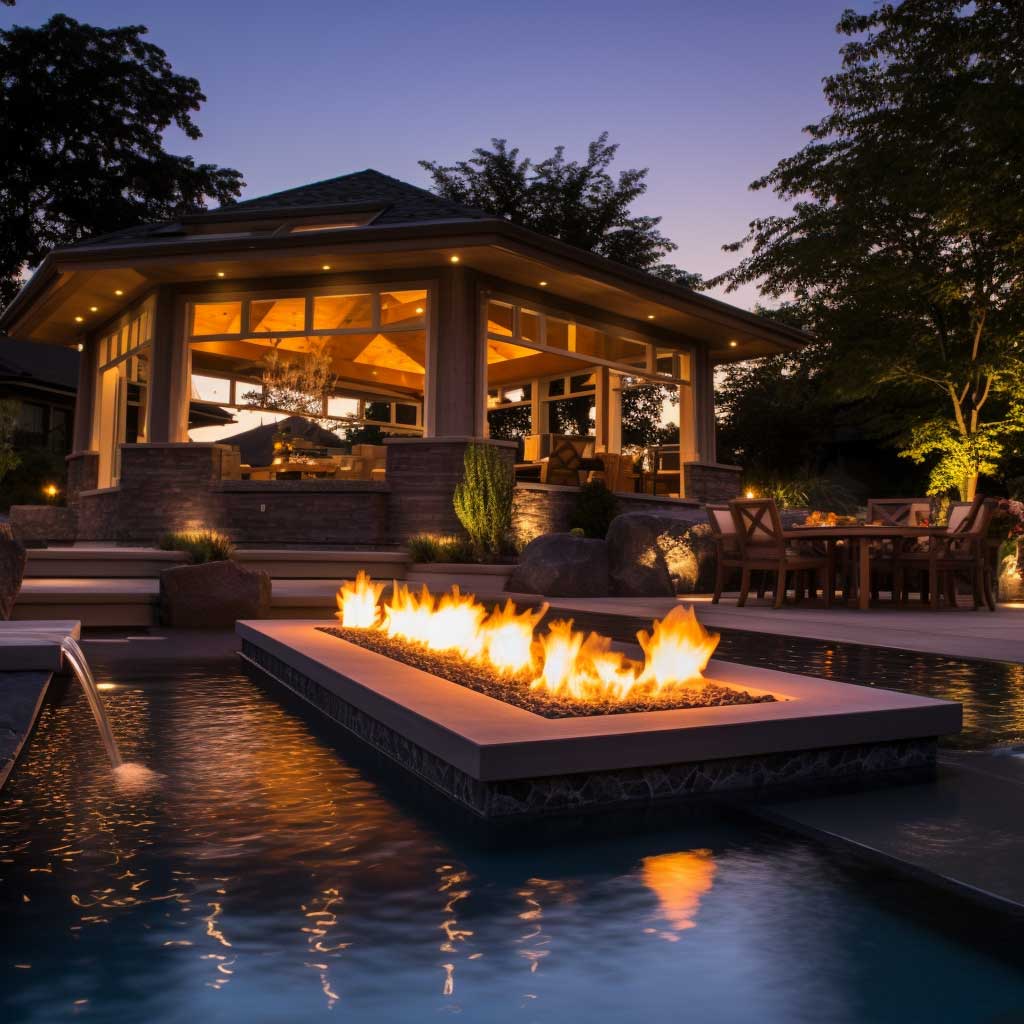

Courtyard fire feature designs that incorporate water work on a specific principle: the two elements need to share a material language, or they fight each other visually. A hammered copper fire-and-water bowl looks cohesive because the same material forms both the fire rim and the water basin. A concrete trough fire pit positioned next to a river-rock fountain does not — the materials have different textures and different visual weights that pull the eye in opposite directions. The combination earns its complexity only when a single material unifies both.
The acoustic effect is the most underrated reason to pair fire and water. Moving water at 2–3 gallons per minute produces a sound level around 40–50 decibels — roughly the background hum of a quiet office. That’s enough to mask traffic noise from a street-facing yard without overpowering conversation. The crackling of a wood fire layers on top of that, and the result is a sensory environment that no amount of outdoor speaker systems quite replicates. Courtyard and privacy-garden installations benefit the most from this combination because the enclosure amplifies both sounds.
Budget entry points vary widely. A DIY fire-and-fountain combination using a prefab propane fire bowl and a standalone recirculating fountain starts around $1,000 in materials. A custom-built integrated system — fire bowl and water cascade sharing a single stone or concrete base — runs $6,000–$13,000 from specialty fabricators. The structural requirement that separates DIY from custom is drainage: the water pump and reservoir need a sealed basin, and any seam between the fire and water zones must be properly waterproofed. Skipping this step creates a maintenance problem that compounds every season.
Placement matters more than scale. A small, well-positioned fire-and-water feature in a 10×12 ft courtyard reads as architecture. The same budget spent on a larger, poorly placed combination in an open lawn reads as a furniture arrangement that hasn’t found its room yet. The water element should be visible from the primary seating position, not tucked behind the fire — the reflection of flame on moving water is the payoff, and it only works if the sightline is clear. For more on how to plan the full outdoor space around a fire feature, the outdoor living space ideas guide covers zoning, drainage, and material selection across different yard sizes.
Artistic Fire Pit Designs Work Because of Lighting, Not Despite the Darkness
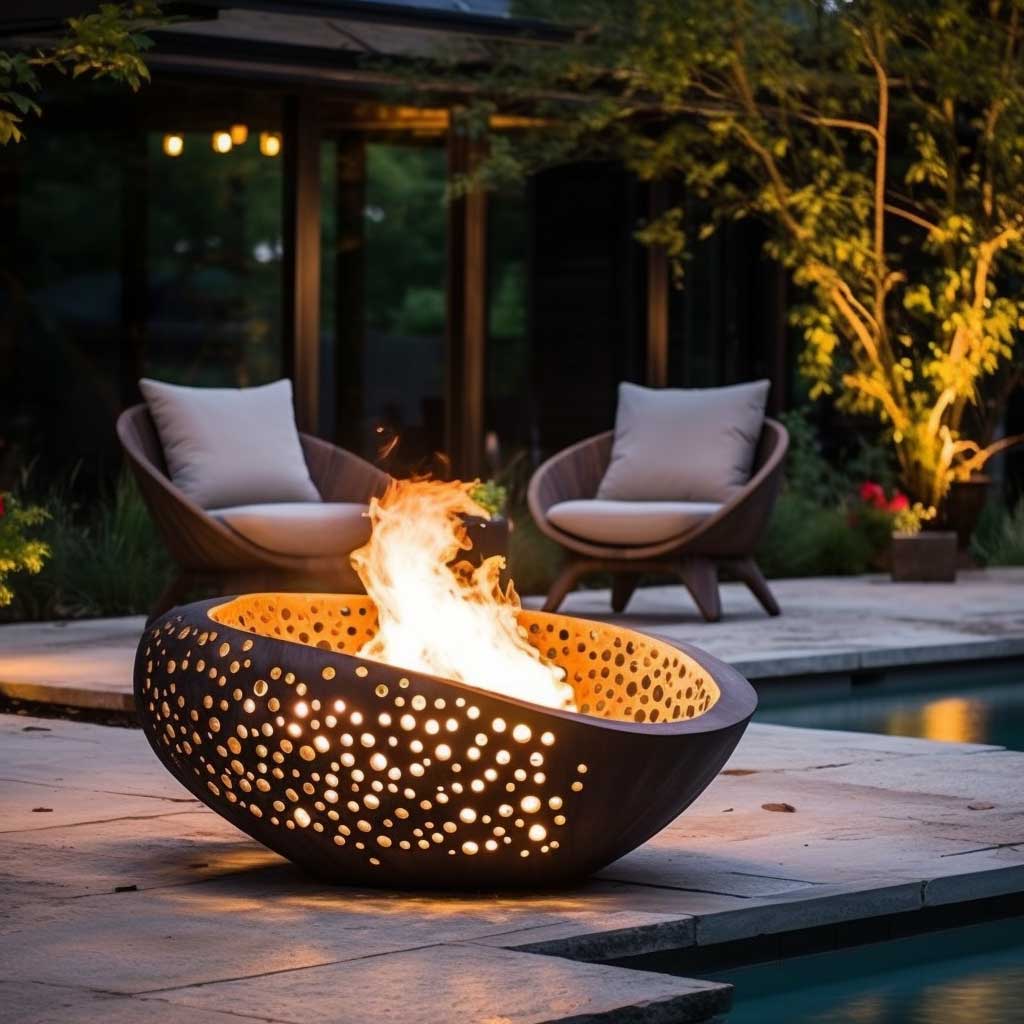

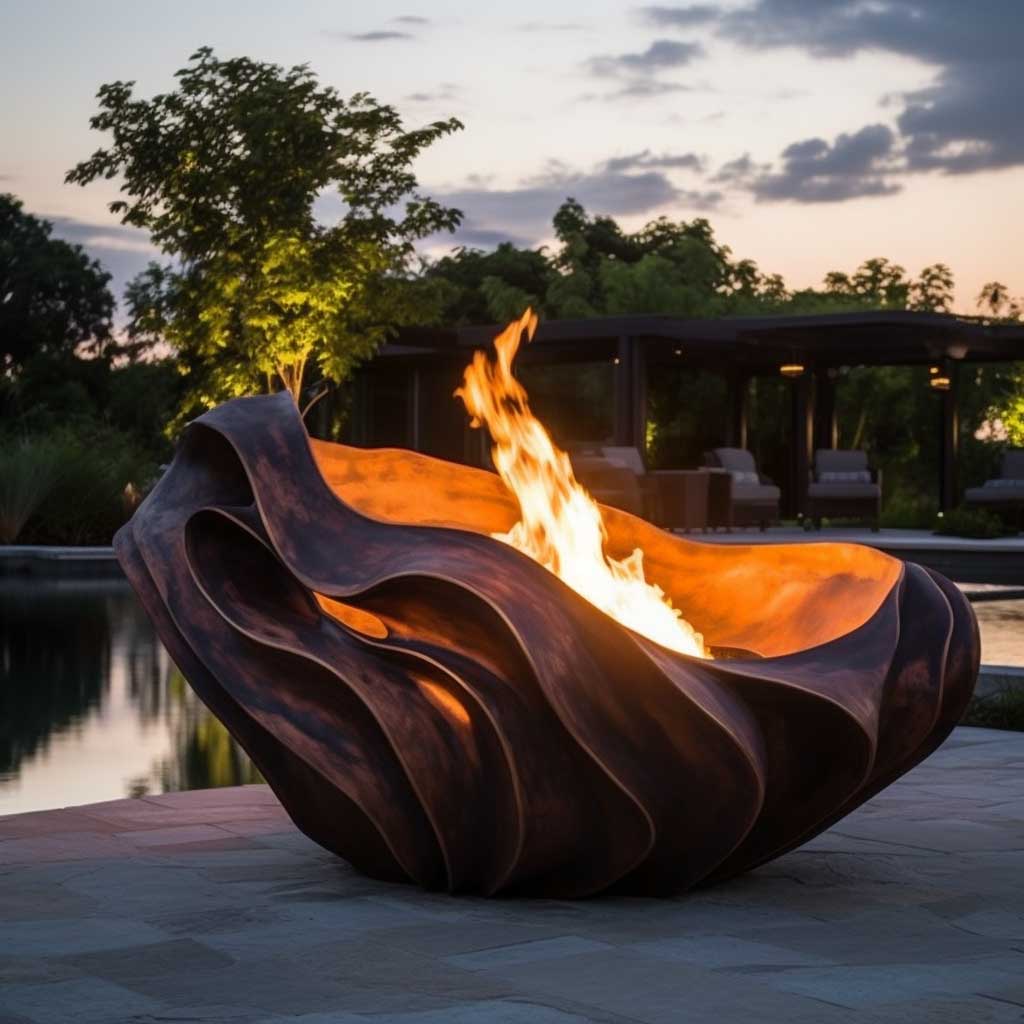
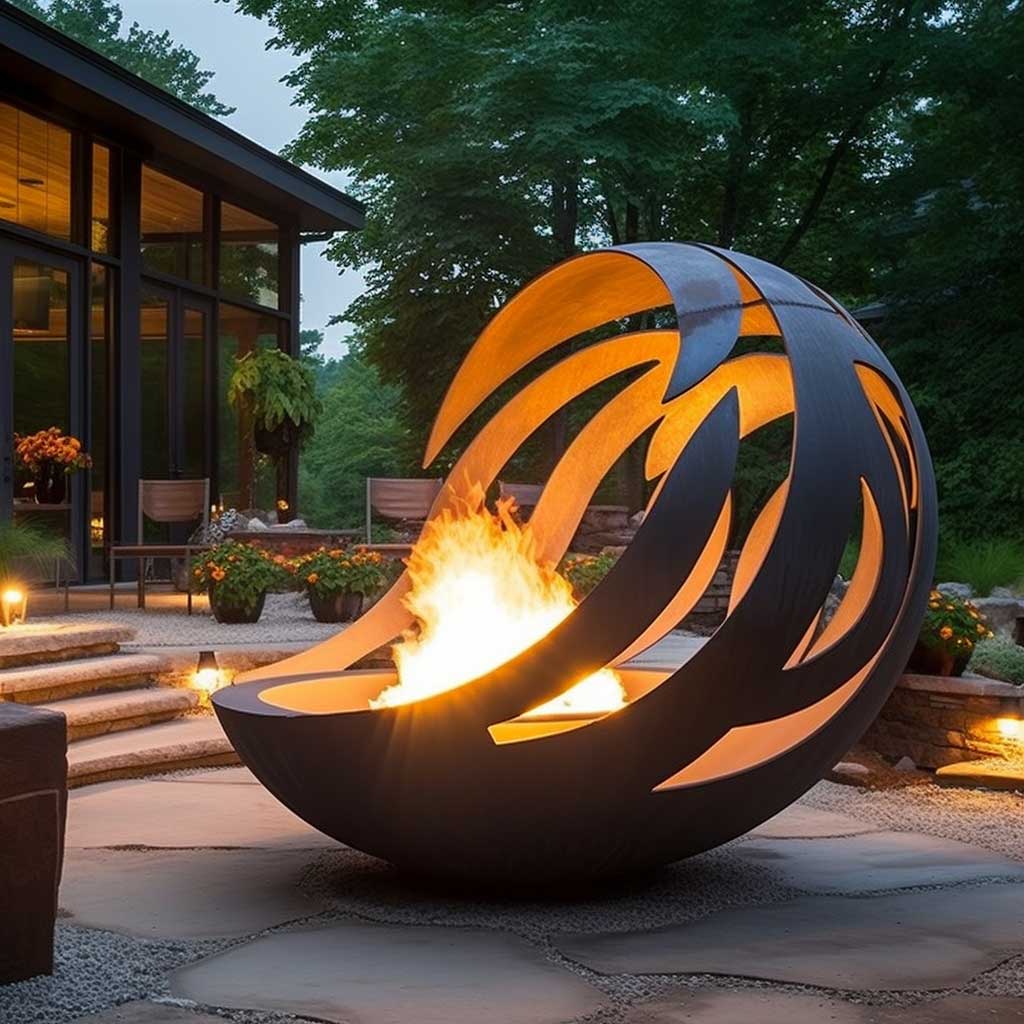
Custom fire pit designs built as artistic centerpieces operate on a different logic than functional fire features. The form competes with the flame for attention, which means the design has to be strong enough to hold its own during daylight — as a daytime sculpture — and transparent enough to let the fire dominate at night. Cut-metal designs with geometric or organic patterns achieve this: during the day, the pattern reads as surface decoration; at night, the fire backlights it and the shadows it casts become the actual installation. Fire Pit Art, one of the better-known producers of cut-steel designs, prices their handcrafted pieces from around $500 for smaller portable units to well over $3,000 for large custom work.
Lighting is where most artistic fire pit installations fail. The instinct is to add overhead string lights or cafe lighting to make the space feel festive — and it does, but it also kills the shadow play that makes a cut-steel or perforated design worth having. A single well-positioned uplight at ground level, aimed at the pit, does more for the overall effect than a dozen overhead fixtures. The shadow patterns cast onto surrounding walls and pavers at a range of 8–12 feet from the pit are the visual event; overhead lighting washes them out entirely.
Custom-designed artistic fire pits typically use Corten steel, cast iron, or hand-painted ceramic tile as the primary material. Corten develops a stable rust patina after one season and requires no maintenance after that point — the oxidation layer protects the steel beneath and deepens in color over time. Cast iron holds detail well and radiates heat evenly but weighs significantly more, which affects placement flexibility. The fire pit ROI data suggests outdoor living improvements return 67–80% of their cost at resale, and a well-executed artistic fire pit tends to be the feature buyers remember and reference most during showings.
What doesn’t work: using colored glass as the primary material in a high-wind location. Glass fire media and colored aggregate look striking in sheltered courtyard settings and genuinely poor in open-exposure yards where debris accumulates and the glass shifts out of the intended pattern within a season. The rule is that any material chosen for an artistic fire pit needs to perform well under the actual site conditions, not just in the catalog photograph. For open-exposure yards, Corten or cast iron holds its integrity; for sheltered patios, colored glass or ceramic tile are viable choices.
| Design Type | Best Fit | Cost Range (Installed) | Key Risk |
|---|---|---|---|
| Contemporary / Sleek | Modern patio with existing hardscape | $250–$1,800 | No defined seating geometry |
| Seating-Focused | Entertaining-oriented yards, regular gatherings | $5,000–$12,000 (with built-in seating) | Seats placed too close to flame |
| Fire + Water Feature | Courtyard, enclosed or screened spaces | $1,000–$13,000 | Mismatched materials between elements |
| Artistic Centerpiece | Sheltered patios, homes with outdoor entertaining focus | $500–$3,500+ | Wrong lighting cancels the design effect |
Full fire pit installation cost data — broken down by fuel type, material, and size — is available at HomeAdvisor’s fire pit cost guide, which draws on verified project data from homeowners nationwide.
Fire Feature Takeaway
A fire pit that earns its place changes the backyard’s purpose — not just its appearance.
Material and placement come before budget. A $300 pit in the right spot outperforms a $2,000 one dropped without intention.
Seating geometry — specifically the distance between seat and flame — determines whether the fire actually gets used or just photographed once.
The fire-and-water pairing pays off only when both elements share a material language. Mismatched combinations split the eye and halve the impact. Save this post before you start planning — the clearance distances and cost ranges above will prevent at least one expensive decision from going wrong.