A sloped backyard is not a problem. It’s a flat backyard that hasn’t been finished yet.
Retaining wall ideas for sloped backyard projects range from $200 DIY timber stacks to $12,000 engineered stone terraces — and the gap between them isn’t always visible from the street. What is visible: whether you addressed the slope or just ignored it. Most people ignore it for three years, then panic when the soil shifts toward the patio.
I’ve seen stone retaining wall ideas executed on a $600 budget with Allan Block concrete units from Home Depot that looked like a professional landscape job. I’ve also seen $8,000 poured-concrete walls that made the yard feel like a parking structure. Material doesn’t determine outcome. Layout does.
This article covers all three tiers — aesthetic statement walls, simple retaining wall ideas for sloped backyard use cases, and DIY options that hold without cracking in year two. Sloped front yard versions are covered too, because the front slope gets ignored even more than the back.
Quick Scan
Retaining Wall Ideas for Sloped Backyard
- Stone walls — Allan Block, dry-stack fieldstone; best for freeze-thaw climates
- Timber walls — 6×6 pressure-treated; 15–20 years; hide behind plantings
- Simple DIY — 3 stacked 18″ walls beat one 4-foot wall every time
- Terraced levels — minimum 30–36″ depth per terrace to be usable
- Front yard walls — match house material; mismatch reads as accident
- Drainage first — gravel backfill + weep holes before any aesthetic decision
- Cost range — $200 DIY timber to $12,000 engineered stone
Stone and Timber Do Different Things on a Slope. Know Which One You Actually Need
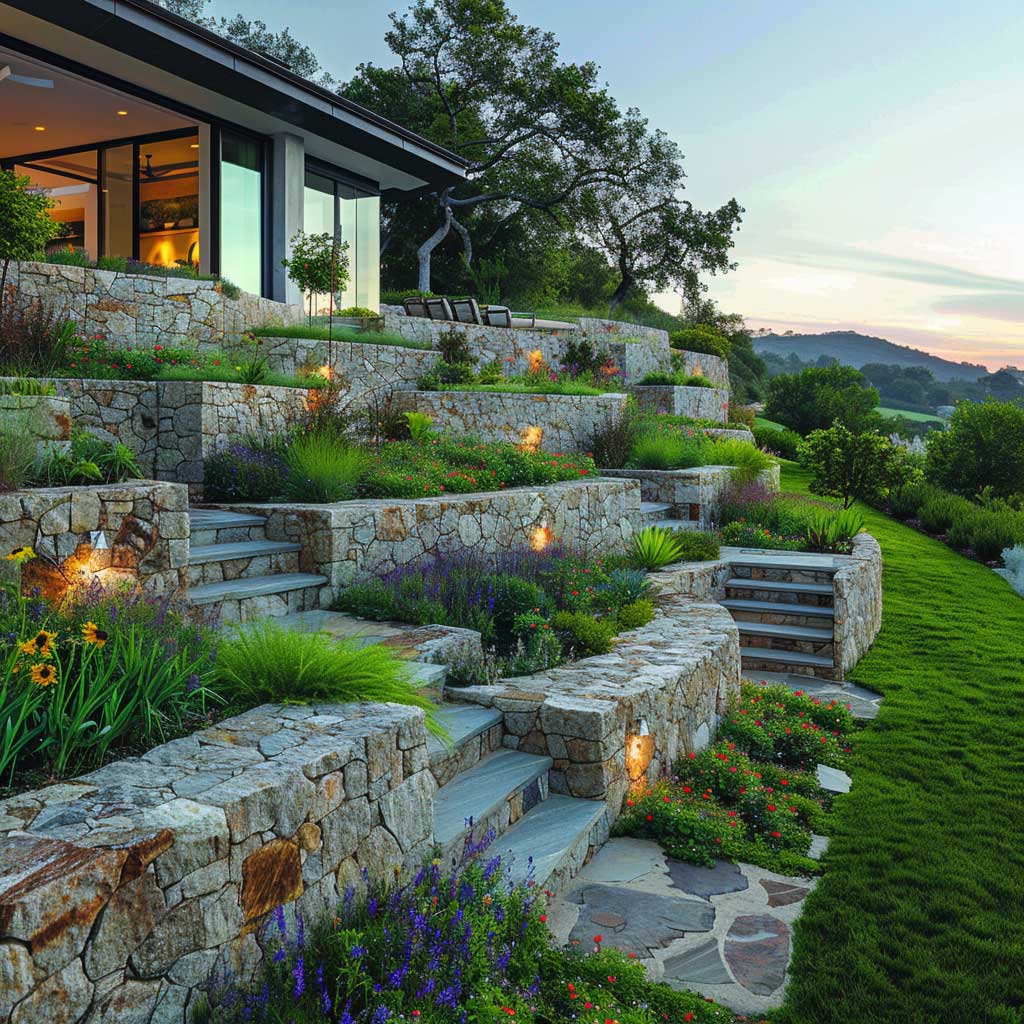
Stone retaining wall ideas for sloped backyard projects dominate Pinterest for a reason — dry-stack fieldstone and concrete block hold up to freeze-thaw cycles that destroy timber in five to eight years. My go-to for a visible wall under 3 feet is Allan Block Standard in “Brown Blend,” around $3.50 per block at most big-box stores. You’ll need a gravel base, a rubber mallet, and a weekend. That’s it.
Wood retaining wall ideas work better when the wall is hidden — tucked behind a planting bed, or used for a raised vegetable garden where you’re replacing the soil anyway. Pressure-treated 6×6 timbers cost around $18–$22 each and last 15–20 years when installed with proper drainage behind them. Skip the landscaping ties. They’re cheaper but they bow under pressure, and a bowed wall looks terrible by year three.
Don’t use railroad ties from a salvage yard. They contain creosote, which leaches into garden soil and kills plants. You’ll find out in spring when nothing comes up.

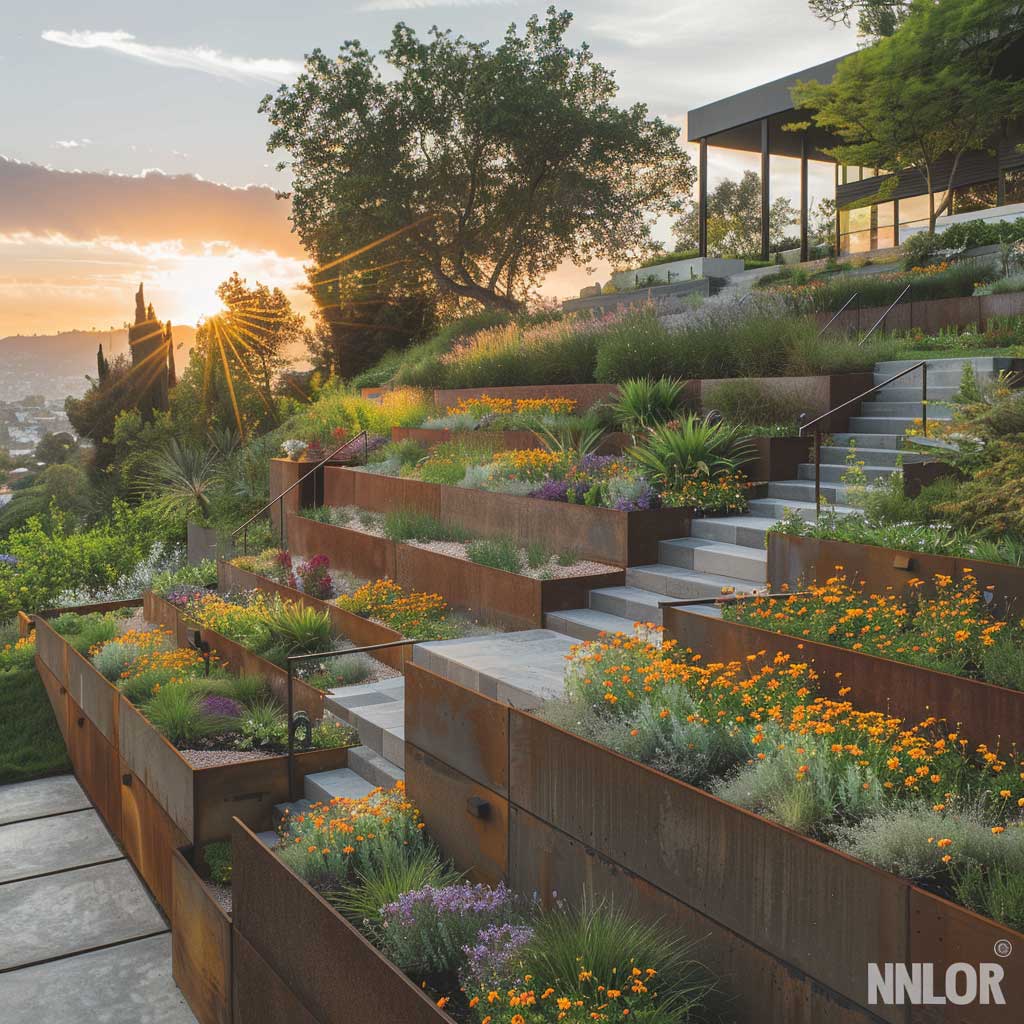
| Material | Cost (DIY) | Lifespan | Best For | Avoid When |
|---|---|---|---|---|
| Concrete block (Allan Block) | $3–$5/unit | 25–50 yrs | Visible walls, freeze-thaw climates | Tight curves without a wet saw |
| Natural/dry-stack stone | $10–$30/sq ft | 50–100 yrs | Aesthetic walls, front yard | Walls over 3 ft without a mason |
| Pressure-treated timber (6×6) | $18–$22/beam | 15–20 yrs | Hidden walls, raised beds | High-visibility front yard |
| Gabion (wire + stone fill) | $25–$40/sq ft | 30–50 yrs | Modern aesthetic, drainage-heavy sites | Small detailed gardens |
| Poured concrete | Not DIY | 40–80 yrs | Tall walls, engineered projects | Residential DIY, any wall under 4 ft |
In the realm of landscaping, a sloped backyard presents a unique canvas for both challenge and creativity. Traditional methods of managing these slopes often lean towards purely functional retaining walls, designed to combat erosion and manage water flow. However, the latest trends in landscape design push the boundaries, turning these necessities into striking features that enhance the beauty and utility of outdoor spaces. Exploring innovative retaining wall ideas for sloped backyards unveils a world where function meets form in the most artistic ways.
Don’t Do This
Four Retaining Wall Mistakes That Cost Double to Fix
- Building one tall wall instead of three short ones. Anything over 3 feet needs engineering approval in most counties. Three 18-inch terraces hold more total soil, distribute load better, and don’t require a permit.
- Skipping gravel backfill. Soil pressed directly against a wall traps water. Water pressure destroys walls. Gravel backfill costs $30–$50 per section. Wall repair costs $800+.
- Using railroad ties from salvage yards. Creosote leaches into garden soil. Nothing edible should be planted near them. They’re also dense and difficult to cut cleanly.
- Matching the wall to your mood board instead of your house. A rustic timber wall against a modern stucco exterior looks like two separate design decisions fighting each other. Pick the house first.
Imagine a backyard where the retaining walls tell a story, not just of necessity but of innovation and sustainability. In such a landscape, the walls themselves become a focal point, crafted from unconventional materials that spark curiosity and admiration. Recycled glass bottles, shimmering under the sun, form a mosaic-like facade that not only supports the earth but also reflects the homeowner’s commitment to sustainability. These materials, unexpected in their application, transform a simple retaining structure into a piece of environmental art.
Beyond the choice of materials, the design of these retaining walls breaks away from the traditional straight lines and right angles. Instead, they flow like the terrain they embrace, with curves and contours that mimic natural landforms. This biomimicry approach not only enhances the visual appeal of the garden but also works in harmony with the natural processes of water flow and soil stability. The walls curve around garden beds filled with wildflowers and native plants, creating micro-habitats that support local wildlife and biodiversity.


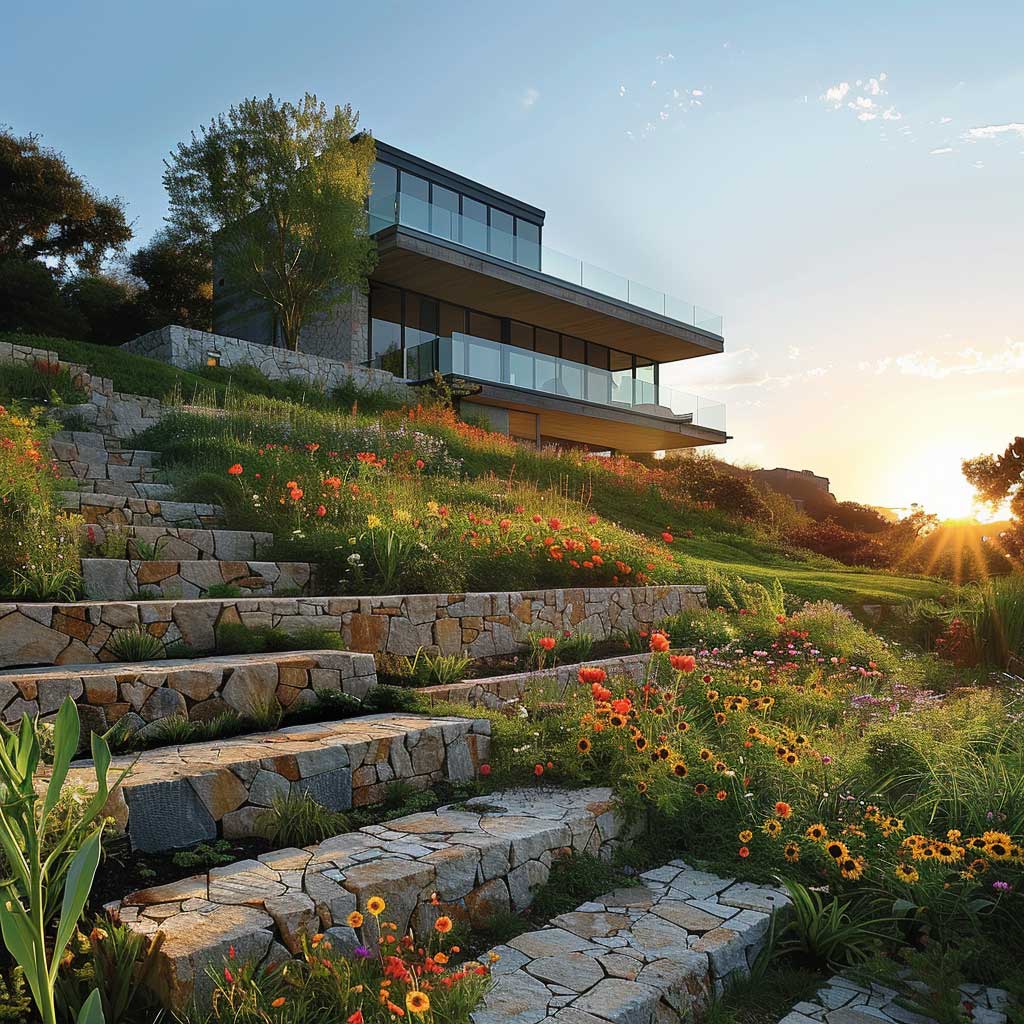
Lighting plays a crucial role in bringing these innovative retaining walls to life after sunset. Integrated solar-powered lights illuminate the paths and highlight the textures of the walls, creating a mesmerizing landscape that can be enjoyed even during the evening. This thoughtful integration of lighting accentuates the beauty of the materials and the fluidity of the designs, making the backyard a 24-hour oasis. Before any of this matters aesthetically, the wall has to hold — and according to Family Handyman’s structural guide on retaining walls, the most common failure point is water pressure behind under-drained walls, not the material itself.
In these innovative landscapes, the retaining wall transcends its traditional role, becoming a statement of creativity and sustainability. Homeowners and designers collaborate to create spaces that are not only functional but also reflective of personal values and artistic vision. These innovative retaining wall ideas for sloped backyards not only solve practical challenges but also offer a new way to experience and interact with the outdoor environment.
This approach to sloped backyard landscaping represents a shift towards more conscious and creative outdoor living spaces. By reimagining the purpose and potential of retaining walls, we can transform our backyards into places of beauty, sustainability, and innovation.
The Terraced Backyard Works Because of What Sits Between the Levels
The mistake I see most often: people build the retaining walls and then stand at the bottom wondering why the yard still doesn’t feel right. The walls are the structure. What goes between them — planting beds, gravel paths, a flat lawn panel, a seating area — is what makes the terracing feel intentional rather than industrial.
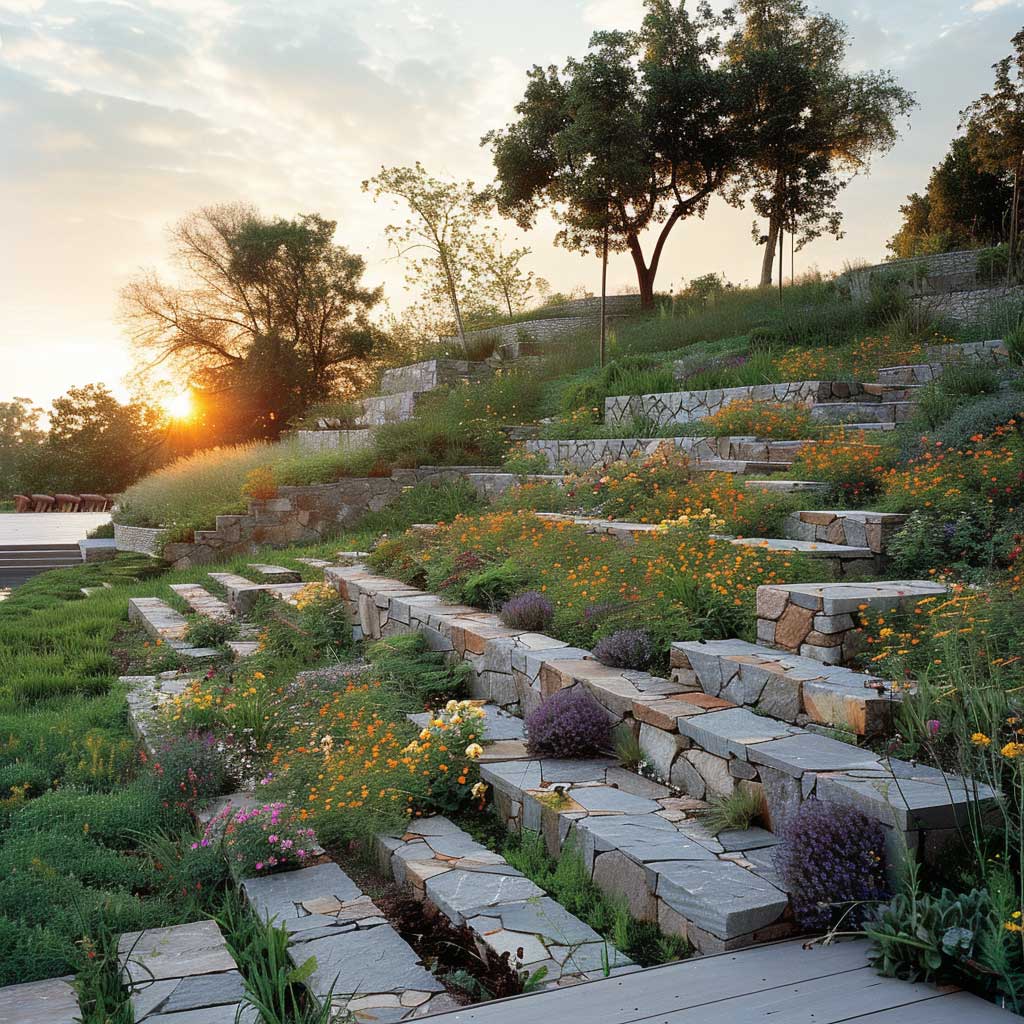
Simple retaining wall ideas for sloped backyard terracing don’t require a landscape architect. Three 18-inch walls stepped across a 6-foot grade change will hold more soil, drain better, and look cleaner than one 4-foot wall trying to do everything at once. Each terrace needs at least 30–36 inches of flat depth to be usable. Narrower than that and it becomes a maintenance headache with no payoff.
The pathways between levels deserve as much attention as the walls themselves. Concrete pavers, decomposed granite, or even simple stepping stones in mulch — all work. What doesn’t work: leaving the transitions as raw soil. It erodes, it muddy, and it signals “unfinished” to everyone who sees it.


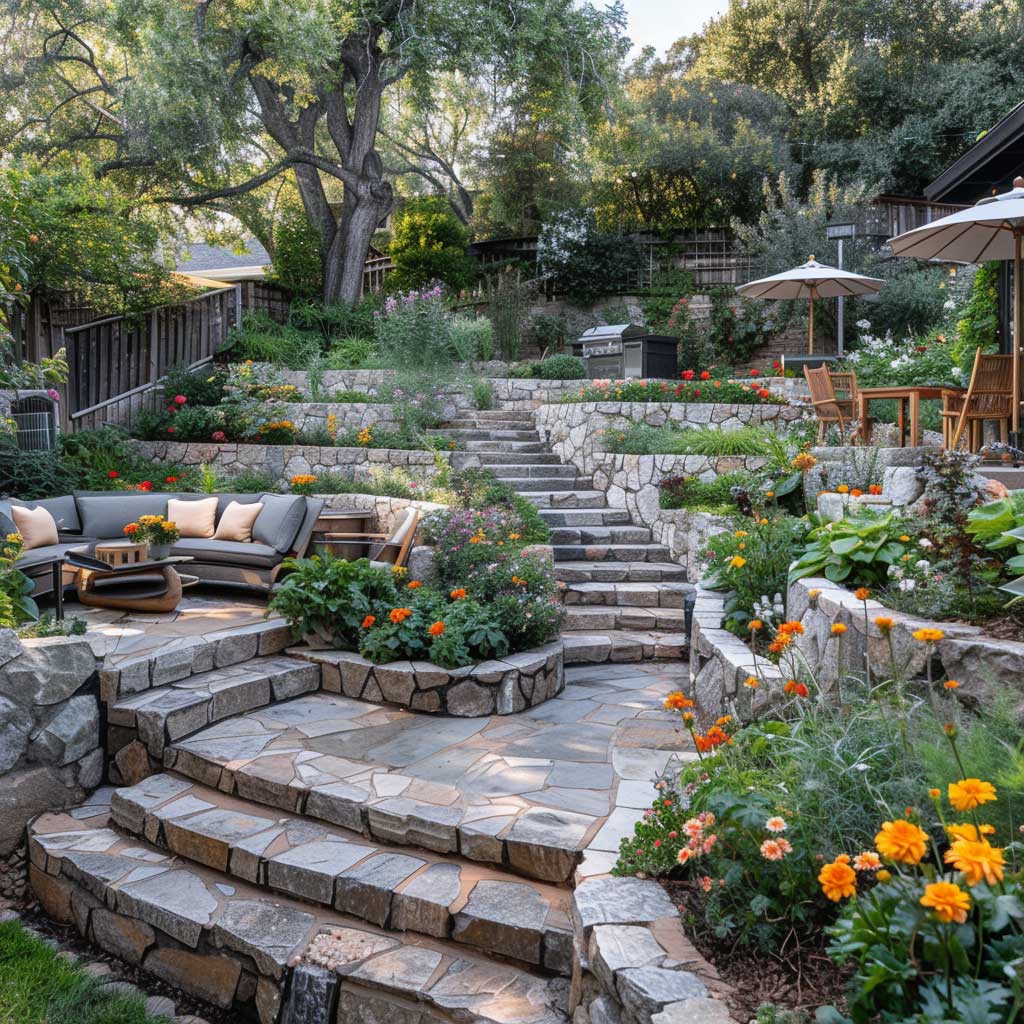
When faced with the challenge of a sloped backyard, the opportunity to blend beauty with function becomes paramount. The goal is not merely to tame the slope but to harness its potential and transform the space into a multi-tiered sanctuary that serves a multitude of purposes. In this vision, retaining walls are the architects of space, crafting terraces that invite exploration and interaction, turning what could be a landscape challenge into a series of outdoor rooms filled with life and activity.
The journey begins with the conception of retaining walls that do more than hold back soil. These structures are imagined as the backbone of terraced gardens, where each level offers a distinct experience. On one terrace, a lush vegetable garden thrives, supported by nutrient-rich soil held firmly in place by sturdy, yet visually appealing, stone walls. The next level down might feature a tranquil water garden, with a small, recirculating waterfall that adds soothing background noise to the serene setting. Here, the retaining walls incorporate niches for aquatic plants, blending functionality with natural beauty.
Transitioning from one level to another is an experience in itself, facilitated by thoughtfully designed steps and pathways that respect the natural contours of the land. These pathways serve as invitations to explore, winding through the terraces and offering changing views and experiences with each turn. The retaining walls play a critical role in this design, their placement and construction dictating the flow and feel of the space.


Materials for these retaining walls are chosen not just for their structural integrity but for their aesthetic appeal and environmental compatibility. Local stone, reclaimed brick, and sustainable, pressed-earth blocks are among the favorites, blending seamlessly with the natural landscape and contributing to a cohesive look and feel. If you want the boundary between your retaining wall and your garden to disappear entirely, the right garden edging ideas do exactly that — they define the line without announcing it. The choice of materials, along with the design of the walls, reflects a commitment to creating spaces that are both beautiful and ecologically responsible.
The result is a sloped backyard that is no longer seen as a challenge but as an asset. Through the strategic use of retaining walls, the space is transformed into a series of outdoor rooms, each with its own character and purpose. From productive vegetable gardens to peaceful water features, the terraces offer a variety of experiences, all integrated into a cohesive whole. This approach to landscaping not only maximizes the beauty and function of the sloped backyard but also creates a space that encourages interaction with the natural world, fostering a deeper connection to the environment.
In this way, innovative retaining wall ideas for sloped backyards become the cornerstone of outdoor living spaces that are as functional as they are beautiful. By embracing the slope and seeing it as an opportunity for creativity and design, homeowners can create outdoor spaces that enrich their lives and enhance the beauty of their natural surroundings.
Aesthetic Retaining Walls Are Built From the Bottom Up, Not Decorated From the Top Down
Aesthetic retaining walls start with drainage, not design. A wall that looks like a magazine photo and has no gravel backfill or weep holes will crack, tilt, or blow out within two to four years. I’ve watched it happen to neighbors who prioritized visual appeal at the planning stage and skipped the boring part. Fix that wall later costs three times what correct installation would have.
For a sloped front yard retaining wall, the aesthetic bar is higher — this is the first thing people see. Retaining wall ideas for sloped front yard applications almost always benefit from matching the house material: brick house gets brick or tumbled concrete block, stone-clad house gets natural fieldstone, modern stucco gets a smooth poured-concrete finish. Mismatching here reads as an afterthought, not a design decision.
Before and after sloped backyard retaining wall transformations almost always show the same pattern: the “before” is an unmarked slope with sparse grass. The “after” has defined levels, visible materials, and planting that reinforces the geometry. The wall is never the hero of the photo. The space the wall creates is the hero.
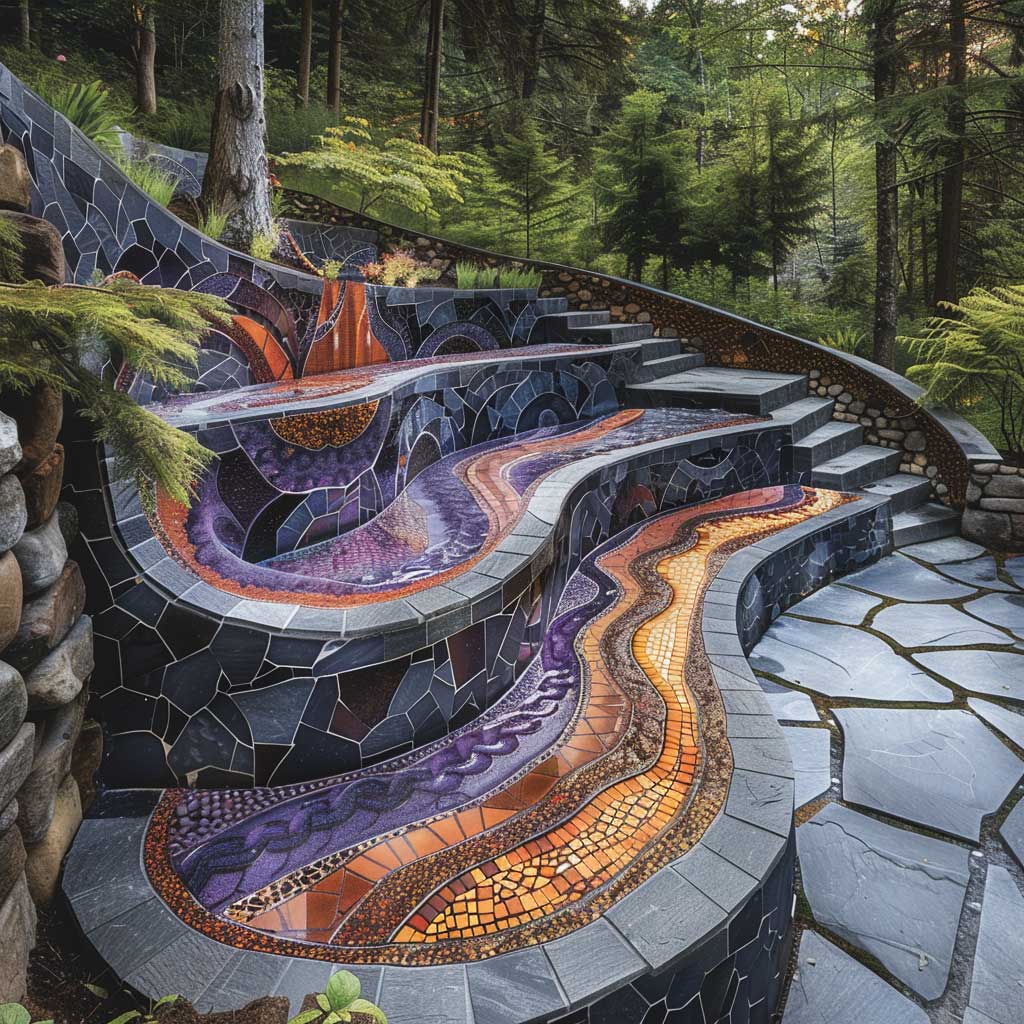


The transformation of a sloped backyard into a landscape masterpiece is a journey of creativity, where the natural terrain’s challenges are met with imaginative and artistic solutions. In this landscape vision, retaining walls are not mere structural necessities but the very foundation of a garden’s aesthetic and functional evolution. Through creative design, these walls serve as canvases for artistic expression, blending seamlessly with both the man-made and natural elements of the garden to create a tranquil, cohesive outdoor sanctuary.
Envision a backyard where each retaining wall is a statement piece, sculpted to flow with the land’s natural curves, reminiscent of the undulating contours of a natural landscape. These walls do more than just hold back soil; they carve out intimate garden rooms, each with its unique atmosphere and purpose. One area might feature a serene Zen garden, complete with a raked gravel bed, minimalist plantings, and a central, artistically placed rock feature, all enclosed by gently curving retaining walls that mimic the gentle slopes of a distant mountain range.
The materials chosen for these retaining walls are integral to the garden’s overall aesthetic. Imagine walls adorned with colorful mosaic tiles, reflecting the sunlight and adding vibrant splashes of color throughout the garden. Elsewhere, walls constructed from natural stone blend into the landscape, their rugged texture complementing the soft foliage of garden plantings. The incorporation of sculptural elements into the walls themselves—a niche for a water feature, or a built-in bench for contemplation—transforms these structures into interactive artworks that engage the senses and invite pause.


Lighting is thoughtfully integrated into the design, highlighting the unique features of each wall and extending the garden’s beauty into the evening hours. Soft, ambient lighting illuminates pathways, creating a magical atmosphere that invites evening strolls and outdoor gatherings. The play of light and shadow brings the texture and colors of the retaining walls to life, showcasing their beauty and the dynamic interplay with the surrounding landscape.
In this reimagined sloped backyard, the retaining walls become the backbone of a landscape designed for both beauty and introspection. They facilitate a deeper connection with the natural world, transforming the backyard into a place of refuge and inspiration. The garden rooms created between each terrace are the same impulse behind garden wall decoration ideas — the wall itself becomes part of what you’re looking at, not just what holds the soil in place. Here, the landscape is not just seen but experienced, offering a multitude of spaces for relaxation, entertainment, and personal reflection.
This vision of utilizing creative retaining wall ideas for sloped backyards demonstrates that with imagination and thoughtful design, even the most challenging landscapes can be transformed into masterpieces. It underscores the power of integrating art and nature, using retaining walls not just as practical solutions but as opportunities to enhance the beauty and functionality of outdoor spaces. In doing so, it transforms the backyard into a living work of art, a testament to the harmonious coexistence of human creativity and the natural world.
Save This
The Slope Isn’t the Problem. The Unfinished Slope Is.
Retaining wall ideas for sloped backyard projects don’t require a landscape architect or a $10,000 budget. They require one decision: pick the material that matches your house and your climate, install drainage behind it, and terrace in levels narrow enough to actually be usable. That’s 80% of the work done.
Stone holds longer. Timber costs less upfront. DIY concrete block splits the difference at around $3–$5 per unit. The before and after sloped backyard retaining wall transformation you’re picturing is closer than it looks — one weekend and a plan.
Save this post. You’ll want it when you’re standing at the hardware store trying to remember how much gravel you need.
Related Topics
FAQ
What is the cheapest retaining wall idea for a sloped backyard?
What are simple retaining wall ideas for a sloped backyard that I can build myself?
What are retaining wall ideas for a sloped front yard?
How deep should a retaining wall go into the ground for a sloped backyard?
What does a sloped backyard retaining wall before and after actually look like?
Do I need a permit to build a retaining wall on a sloped backyard?
Complete guide
Garden Design Ideas That Actually Transform Your Outdoor Space
Landscaping, planting, patios, walls, structures, ecological design — all in one place