Want to look polished without overthinking it? Men’s formal wear doesn’t have to mean rigid dress codes — it’s about finding the combination of cut, colour, and occasion that works for you. Below: three distinct approaches to formal style, from classic black suits to navy slim-fits to smart-casual blazers, each with practical notes on what makes the look work.
QUICK ANSWER
The sharpest men’s formal look = well-fitted suit + one accent piece. Fit beats price every time — a tailored mid-range suit outperforms an ill-fitting designer one.
Classic Men’s Formal Outfits: The Black Suit
In the realm of fashion, the quest for a timeless style often leads us back to the classics. The quintessential black suit, a symbol of unrivaled elegance, remains a cornerstone among men’s formal outfit ideas. Imagine a man, the epitome of sophistication, bathed in sunlight as he stands confidently in a room that whispers luxury. His suit, tailored to perfection, hugs his form in a manner that speaks both of power and poise. This isn’t just clothing; it’s a statement—a declaration of an individual who values the grace of classic fashion.

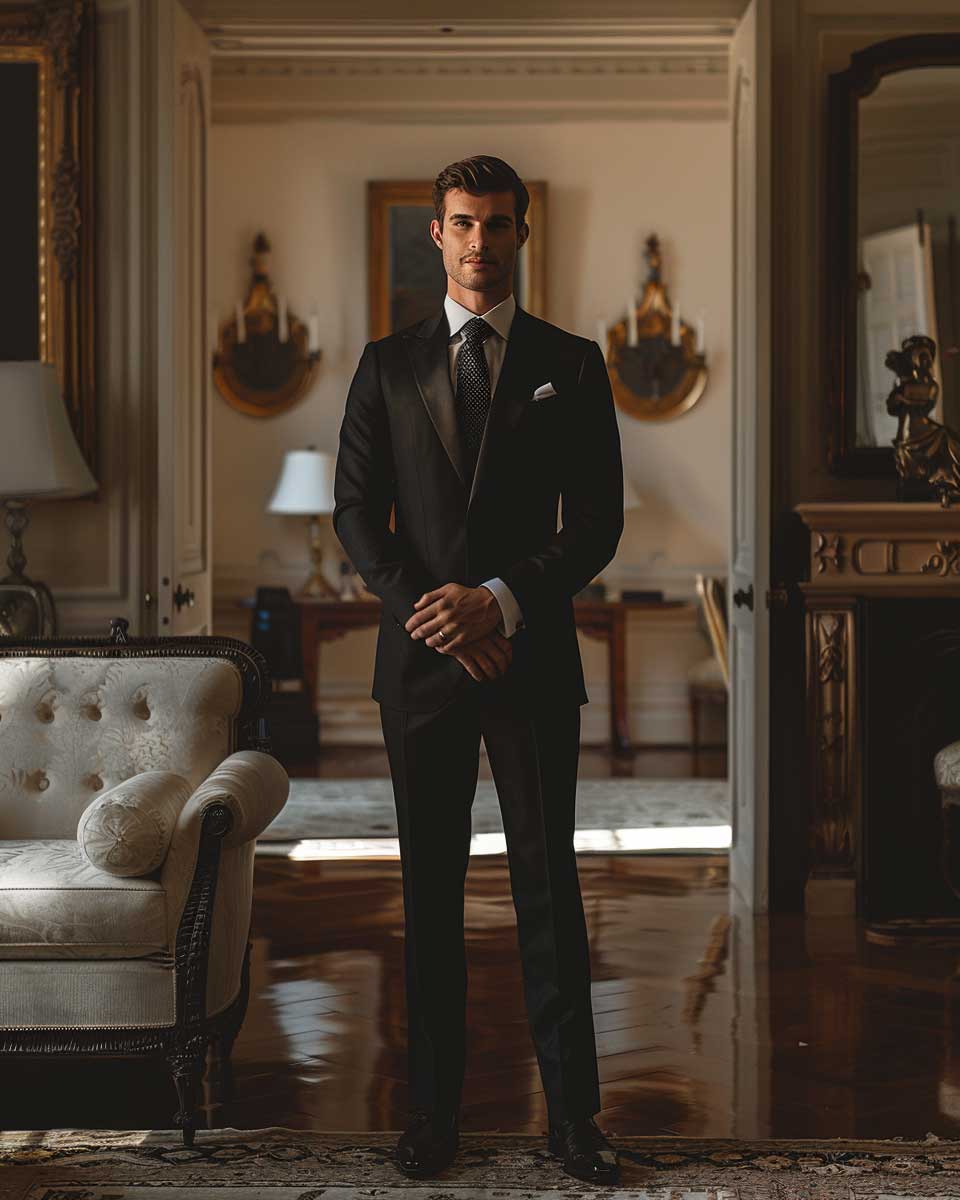
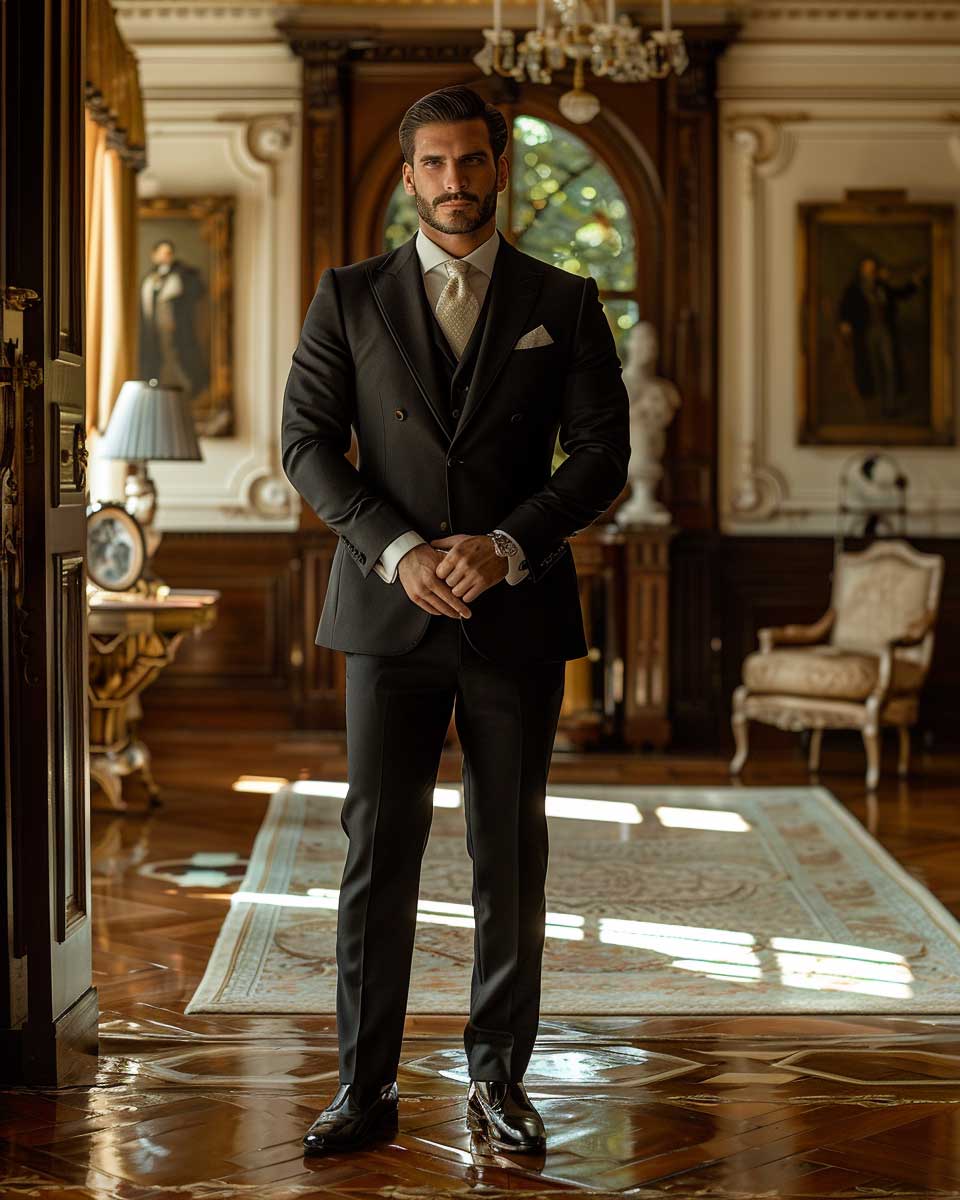

The scene is set in an interior that mirrors his elegance, with each element complementing the other. The crisp white shirt under his suit acts as a canvas, allowing his personality to shine through. The silk tie, the final touch, is not merely an accessory but a symbol of attention to detail. This imagery isn’t just about wearing a suit; it’s about embodying an attitude that appreciates the beauty of timeless men’s formal wear. It’s a reminder that certain styles transcend passing trends, offering a beacon for those aspiring to achieve a look of distinguished sophistication.
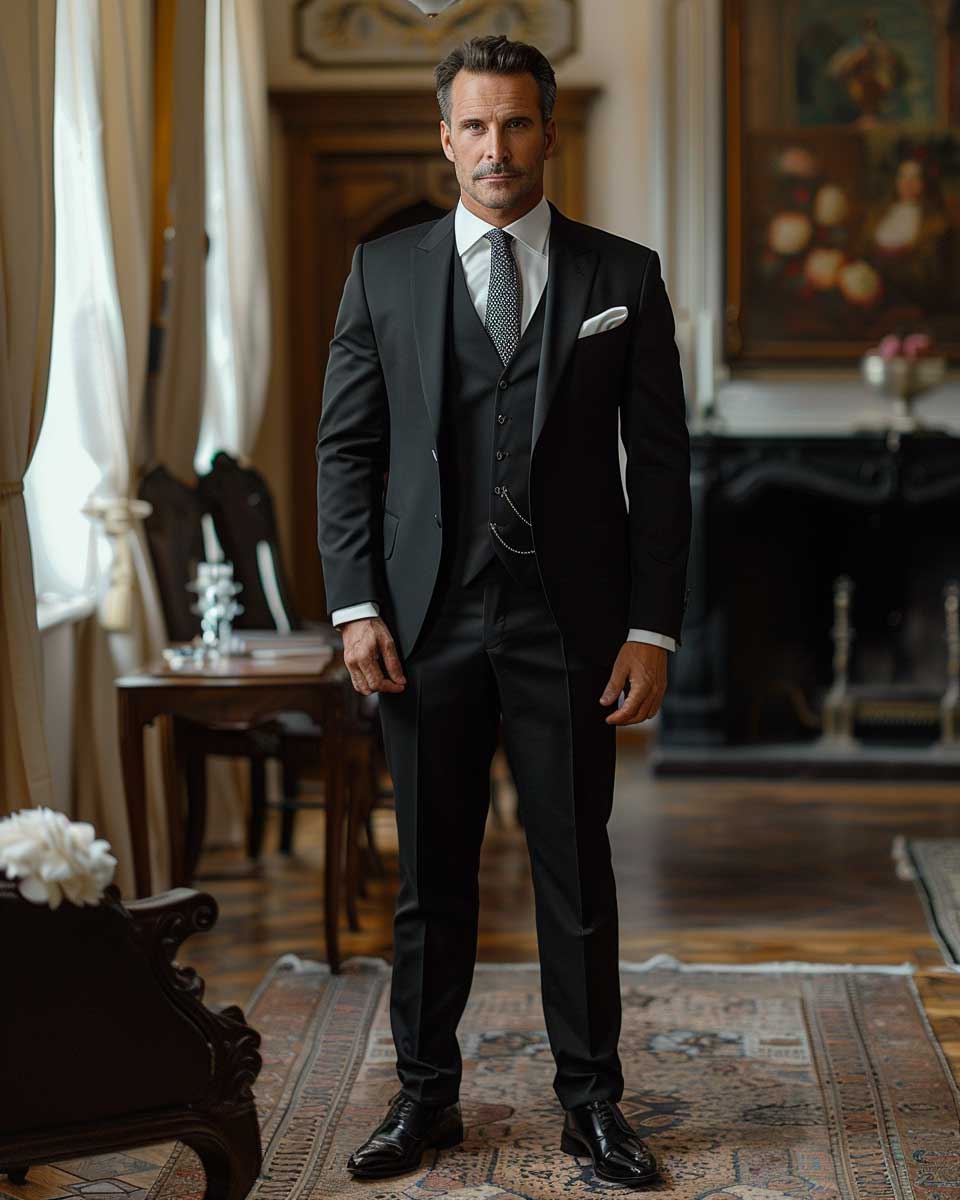


This portrayal goes beyond fabric and stitches; it encapsulates an ethos. The classic black suit, an emblem of men’s formal attire, has stood the test of time, adapting to the changing landscapes of fashion while retaining its essence. It’s a testament to the enduring appeal of simplicity and elegance, qualities that are increasingly cherished in a world often dominated by fleeting styles.
The black suit works precisely because it asks nothing of the wearer — no colour theory, no seasonal adjustments. But that simplicity is also its trap: without the right details, it reads as a uniform rather than a choice. The difference comes down to three things: fabric weight, lapel width, and shirt contrast.
For daytime formal events, opt for a lighter wool blend — it drapes cleanly without appearing heavy under natural light. For evening occasions, a heavier fabric with a slight sheen elevates the look without crossing into tuxedo territory. Lapel width should mirror your shoulder width: broader shoulders carry a wider lapel naturally; slimmer frames benefit from a narrower notch lapel that elongates the silhouette.
The white shirt remains the default pairing, but it’s worth distinguishing between a poplin and an oxford weave. Poplin is crisper and more formal — the right choice for business and ceremony. Oxford cloth has a softer texture that works better in smart-casual settings where the suit is dressed down without a tie. Either way, the collar should sit flat against the jacket lapel with no gap — if it doesn’t, the shirt is the wrong size regardless of how the suit fits.
One practical note: the black suit is the only colour where brown shoes genuinely divide opinion. Conservative dresscodes call for black Oxford or Derby shoes. More relaxed occasions — a wedding reception, a dinner — allow dark brown or burgundy leather, which actually adds more visual interest than a matching black. If in doubt, black shoes are never wrong.
| Occasion | Suit Style | Shirt | Shoes | Formality |
|---|---|---|---|---|
| Corporate Event | Black or charcoal suit | White dress shirt + tie | Oxford or Derby | Black Tie |
| Wedding (Guest) | Navy slim-fit | Light blue or white | Brown leather Oxford | Formal |
| Office / Work | Grey or navy suit | White or pale blue | Derby or Loafer | Business |
| Evening Out | Navy or dark suit | No tie, open collar | Chelsea boots | Smart |
| Smart Casual Event | Blazer + dark trousers | White tee or OCBD | Loafers | Casual Formal |
Chic Men’s Formal Looks: Navy Suit Ideas
As dusk embraces the city, the streets become a canvas for the display of personal style. Amidst this urban tapestry, a man in a navy blue suit captures attention—not just for the clothes he wears but for the statement he makes. His outfit, a blend of chic and sophistication, serves as inspiration for those exploring men’s formal outfit ideas. The slim-fit suit, meticulously chosen for its modern silhouette, speaks volumes of his keen eye for fashion. The light blue shirt beneath serves not just as a contrast but as a testament to his ability to mix and play with color, proving that formal wear doesn’t have to be monotonous.
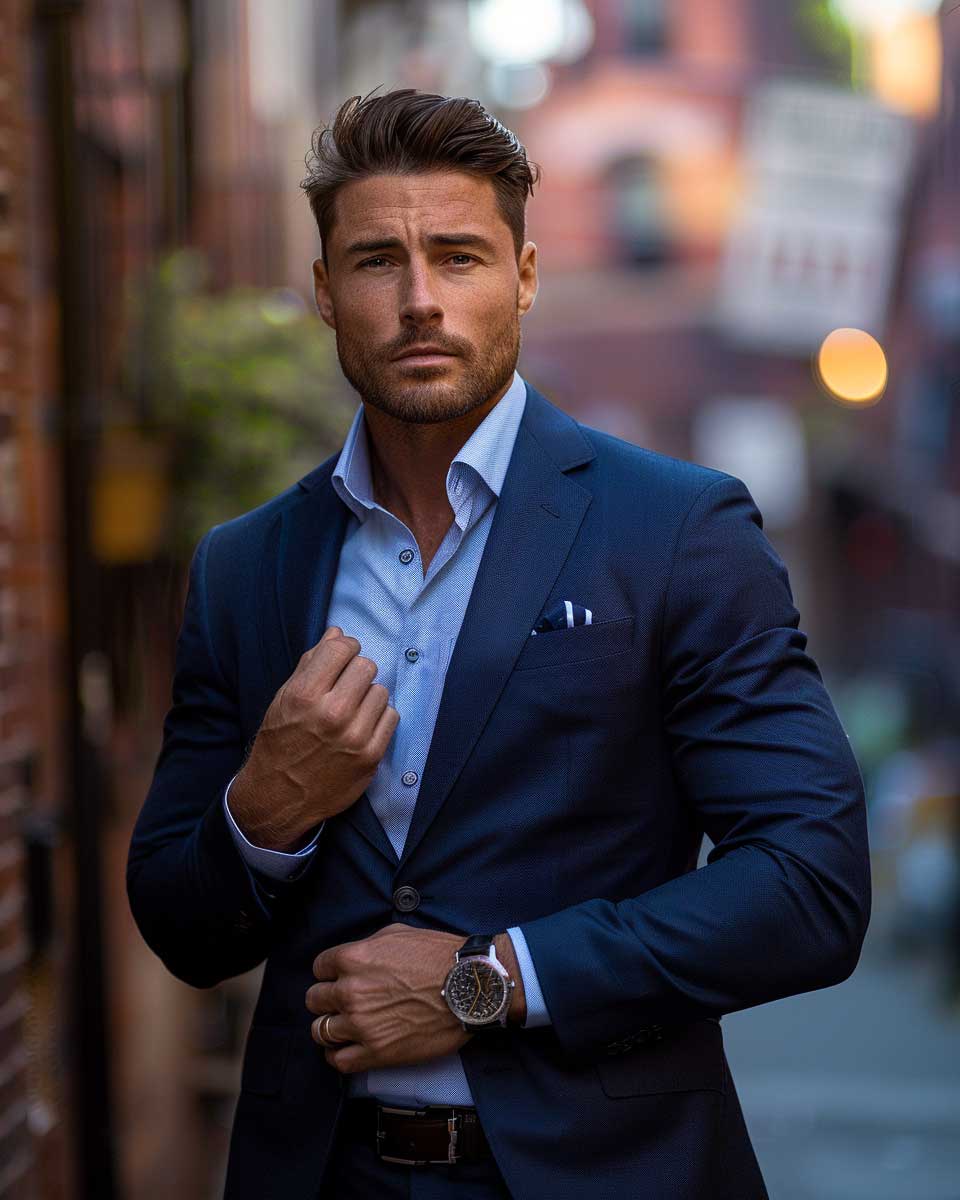
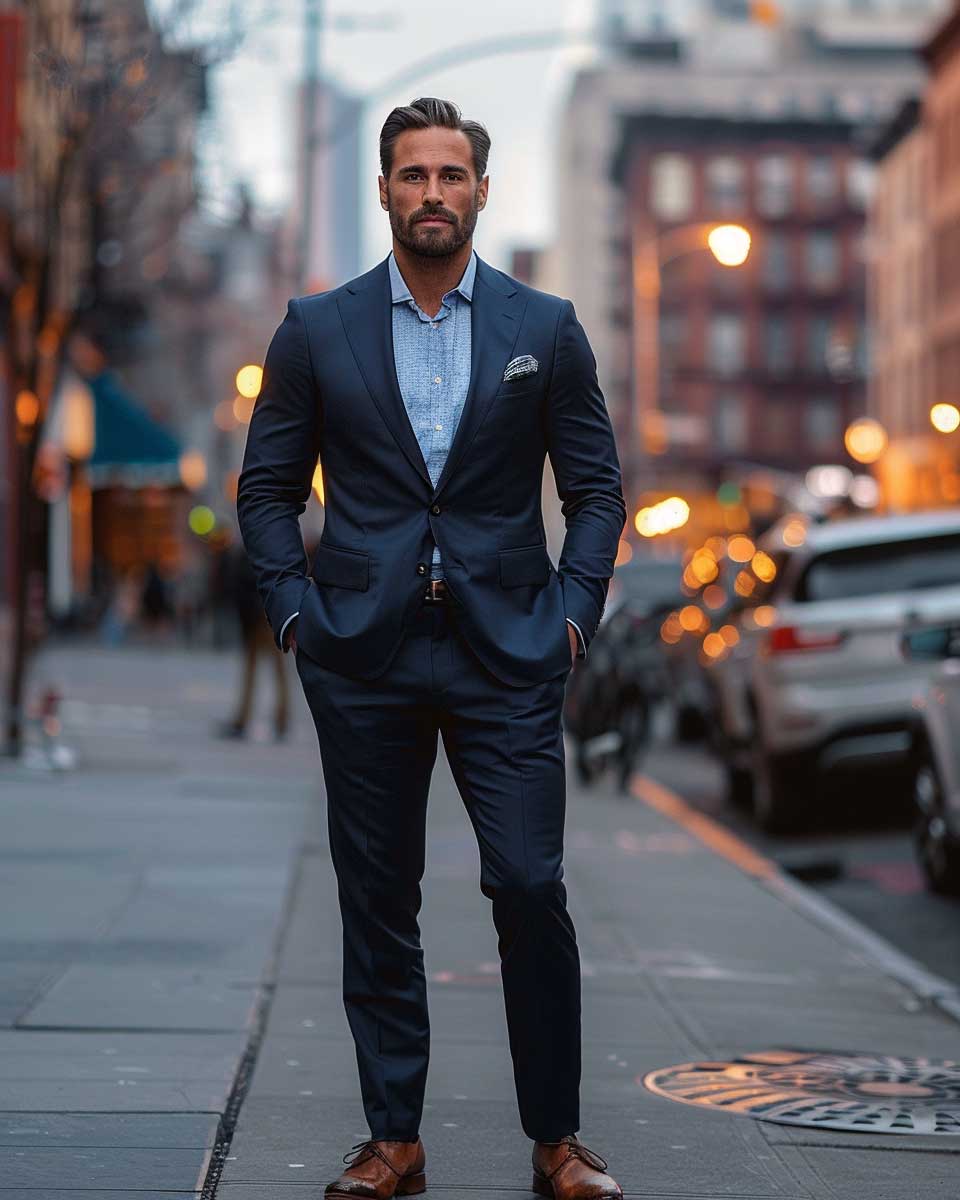
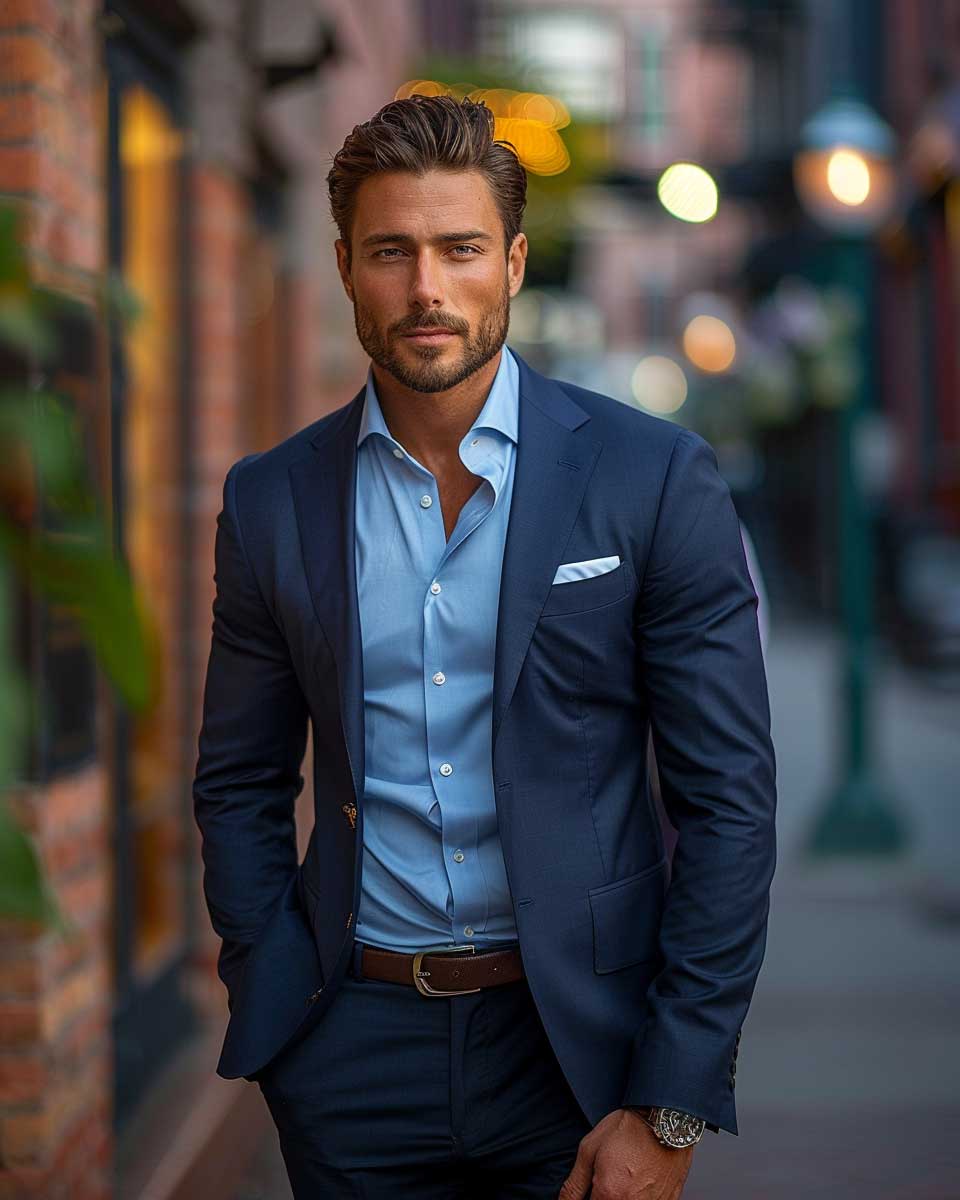
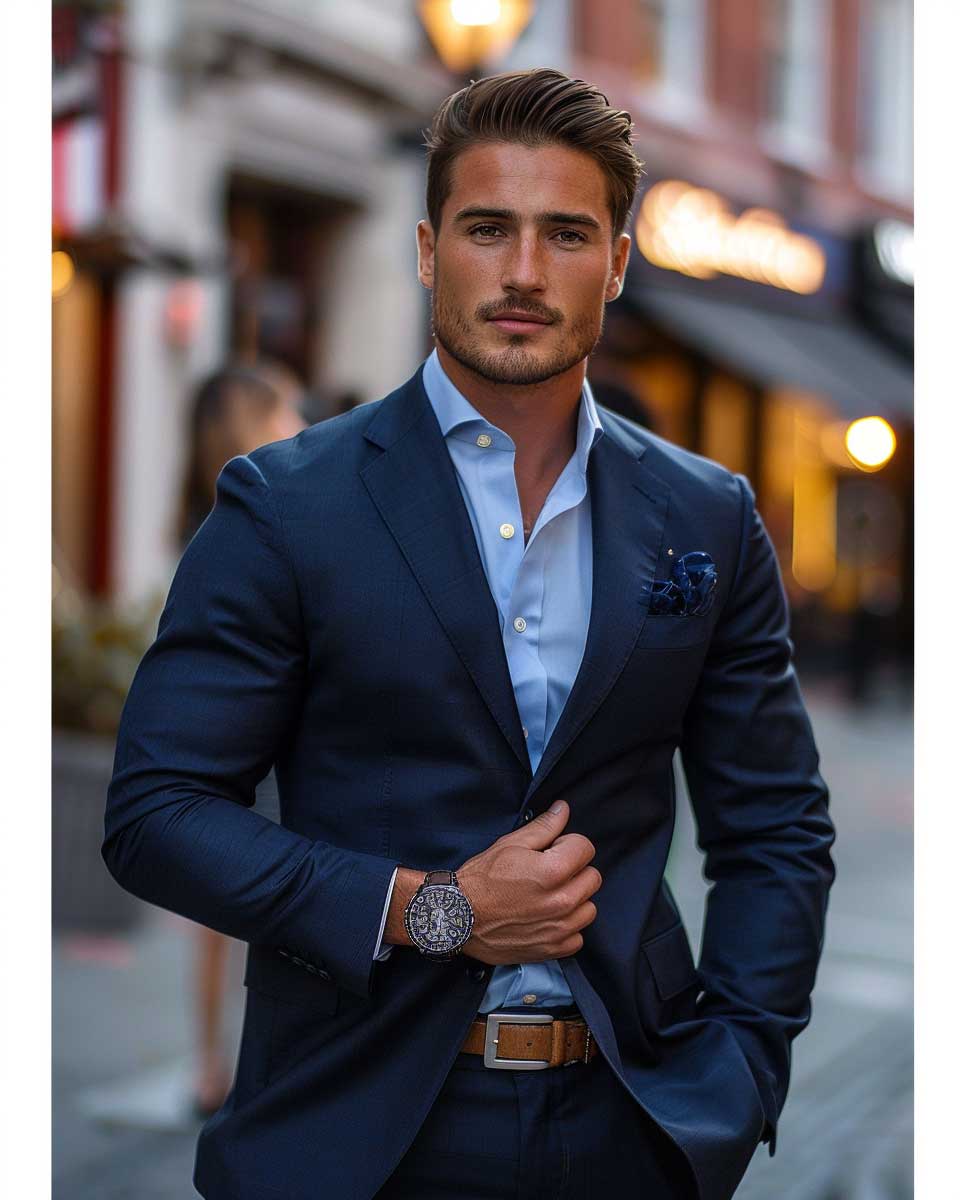
His pose, casual yet full of intent, against the backdrop of a city at dusk, tells a story. It’s one of confidence, of a man who understands that the essence of style lies in the details—the minimalist watch, the perfectly chosen shoes, and the way his outfit complements the city around him. This scene is a lesson in men’s formal wear; it’s about breaking free from the conventional while still respecting the fundamentals of formal attire.


This man’s attire is a beacon for those looking to infuse their formal wardrobe with a sense of individuality. It shows that while the foundations of men’s formal wear remain rooted in tradition, there’s ample room for personal expression. The navy suit, far from being just another piece of clothing, becomes a medium through which personal style is communicated. In the blending of classic and contemporary elements, a new standard for men’s formal wear is set—one that champions creativity while upholding elegance.
Navy is the most forgiving colour in men’s formal wear — it flatters more skin tones than black, photographs better in natural light, and transitions between formal and smart-casual more convincingly than any other option. The reason it works so well is contrast: navy is dark enough to read as serious, but warm enough to avoid the severity that black can project in daylight settings.
The slim-fit silhouette shown here is the most practical starting point, but fit terminology varies between tailors and brands. A useful rule: when the jacket is buttoned, you should be able to slide one flat hand inside the chest — not two, not zero. The trousers should break once at the shoe, no more. A full break adds bulk; cropped trousers work in editorial contexts but can look unfinished in conservative business environments.
Shirt colour matters more with navy than with black. A white shirt maximises contrast and formality. A light blue shirt — as worn here — softens the overall look and is more appropriate for non-black-tie events. A grey shirt pushes the combination into smart-casual territory. Avoid a navy shirt with a navy suit unless the shades are distinctly different; matched tones at this distance flatten the whole outfit.
For accessories, the navy suit is one of the few formal options that genuinely benefits from a tie in a different texture rather than a different colour. A knit tie in dark burgundy or forest green adds depth without competing. If going tieless, a simple pocket square in white linen — flat fold, not puffed — is enough to signal that the open collar is intentional.
STYLING RULES
① Fit first — alter cheap suits before buying expensive ones
② One statement piece: tie OR pocket square OR watch, not all three
③ Navy suit = most versatile; black suit = most formal
④ Shoes and belt must match in leather and colour
Smart-Casual Men’s Formal Style: Blazer Outfits
Against the textured backdrop of a brick wall, a young man stands, embodying the seamless blend of casual and formal wear. His attire, a charcoal grey blazer paired with a simple white t-shirt, redefines men’s formal outfit ideas for the modern era. This ensemble speaks to the versatility of formal wear, showcasing how traditional elements can be reimagined for everyday elegance. The dark trousers and leather loafers complete the look, straddling the line between laid-back and refined.

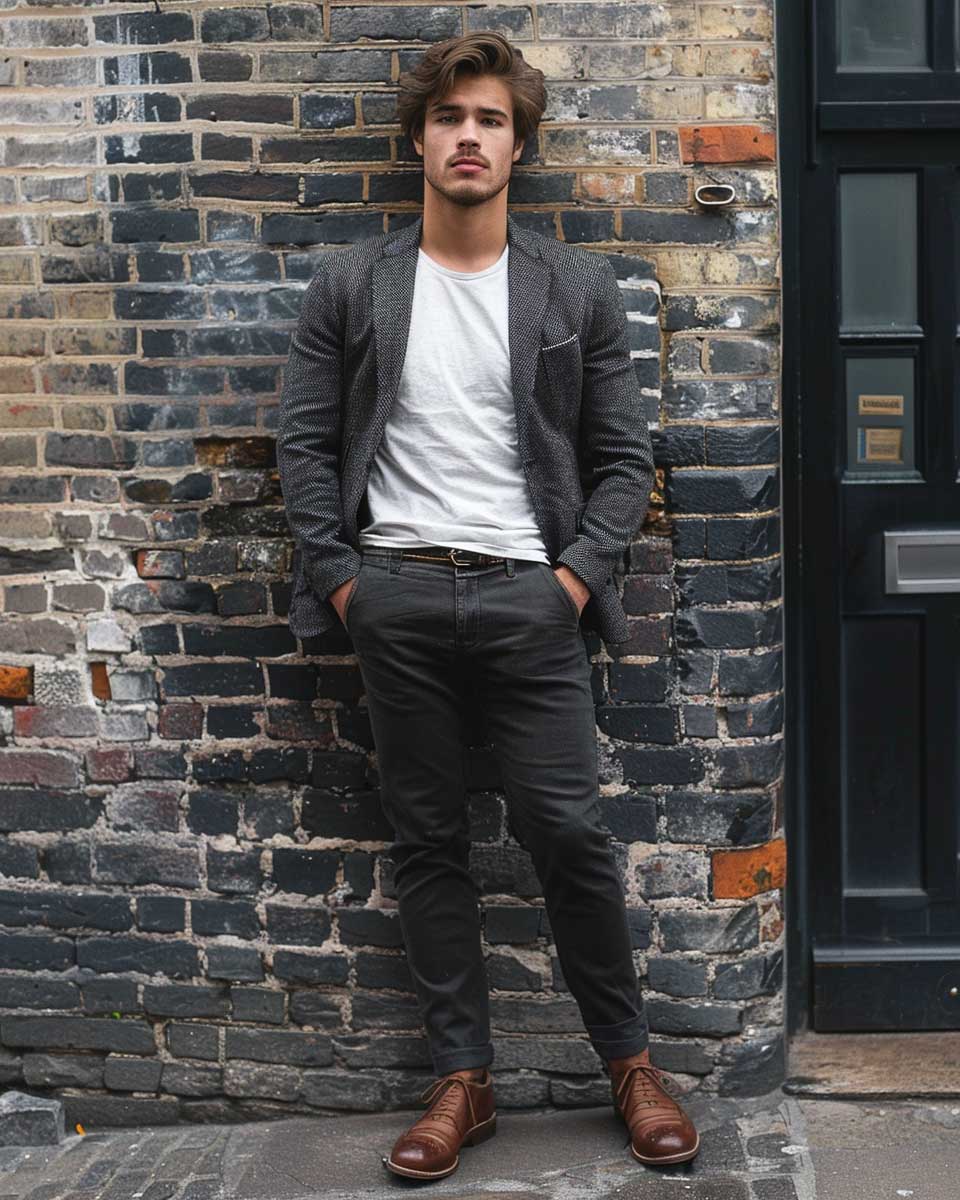
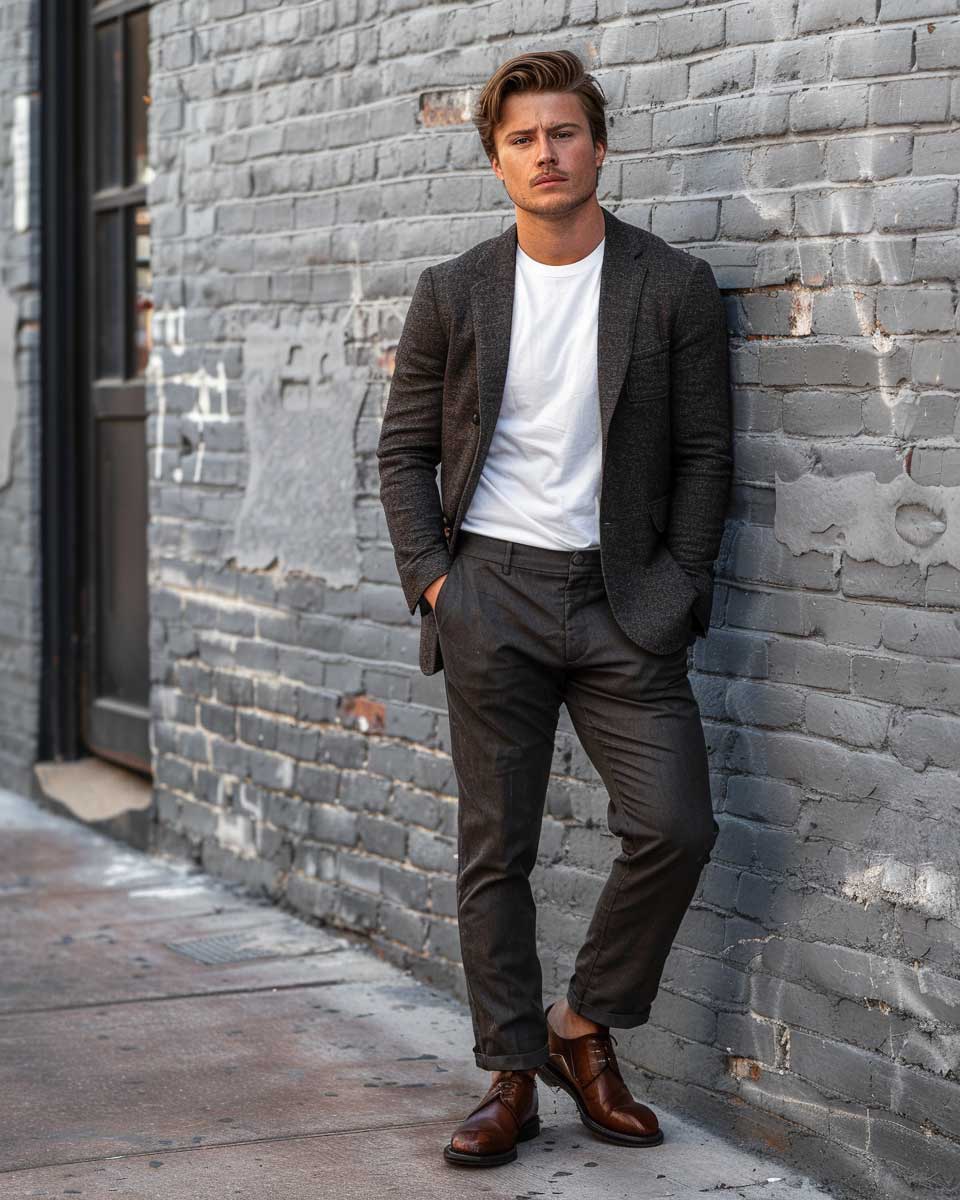
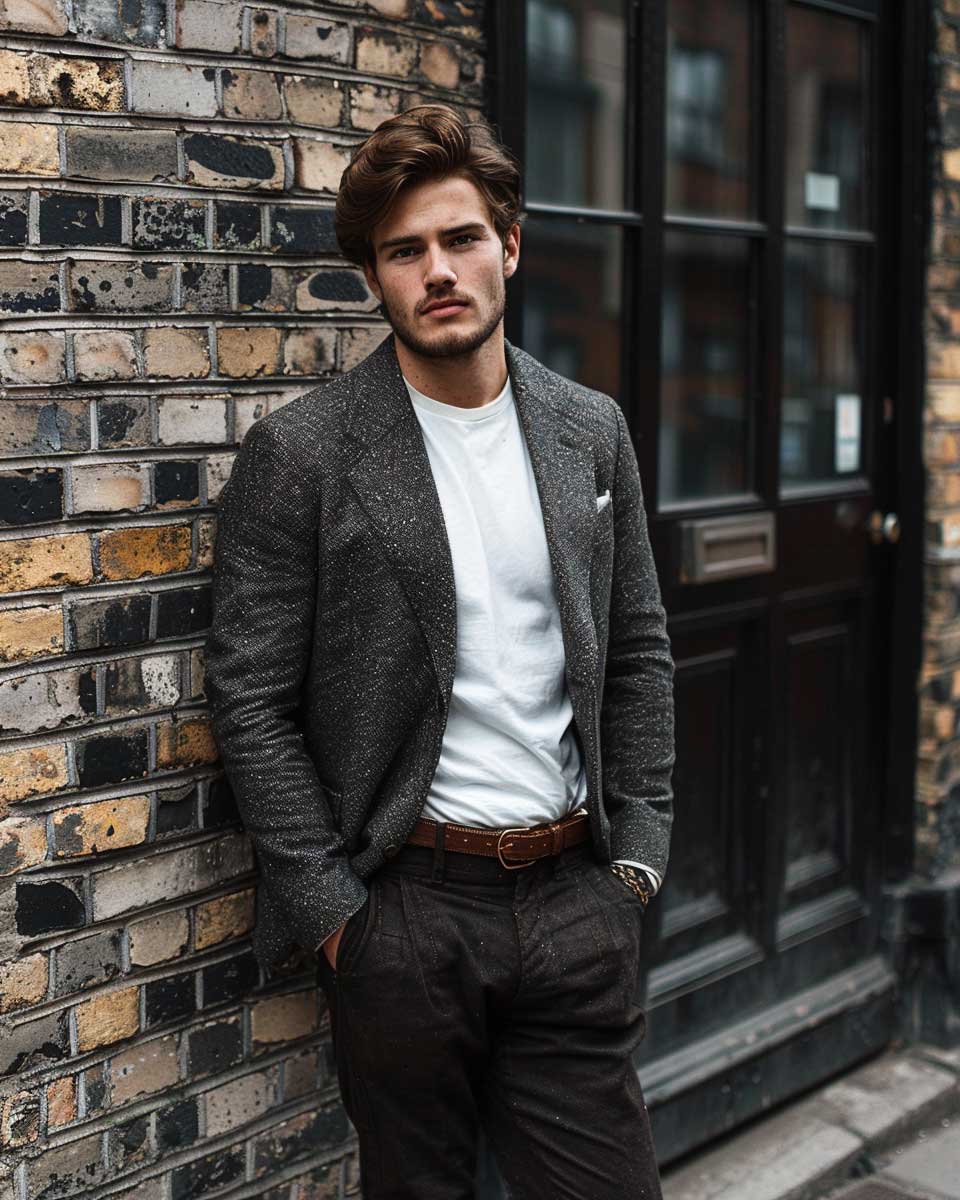
This setting, illuminated by natural daylight, highlights the transformative power of clothing. The man’s casual lean against the wall, his relaxed demeanor, and the contemporary twist on formal attire all contribute to a narrative of adaptability and style. This scene captures the essence of today’s fashion landscape, where the rules of men’s formal wear are being rewritten to accommodate the rhythm of daily life.
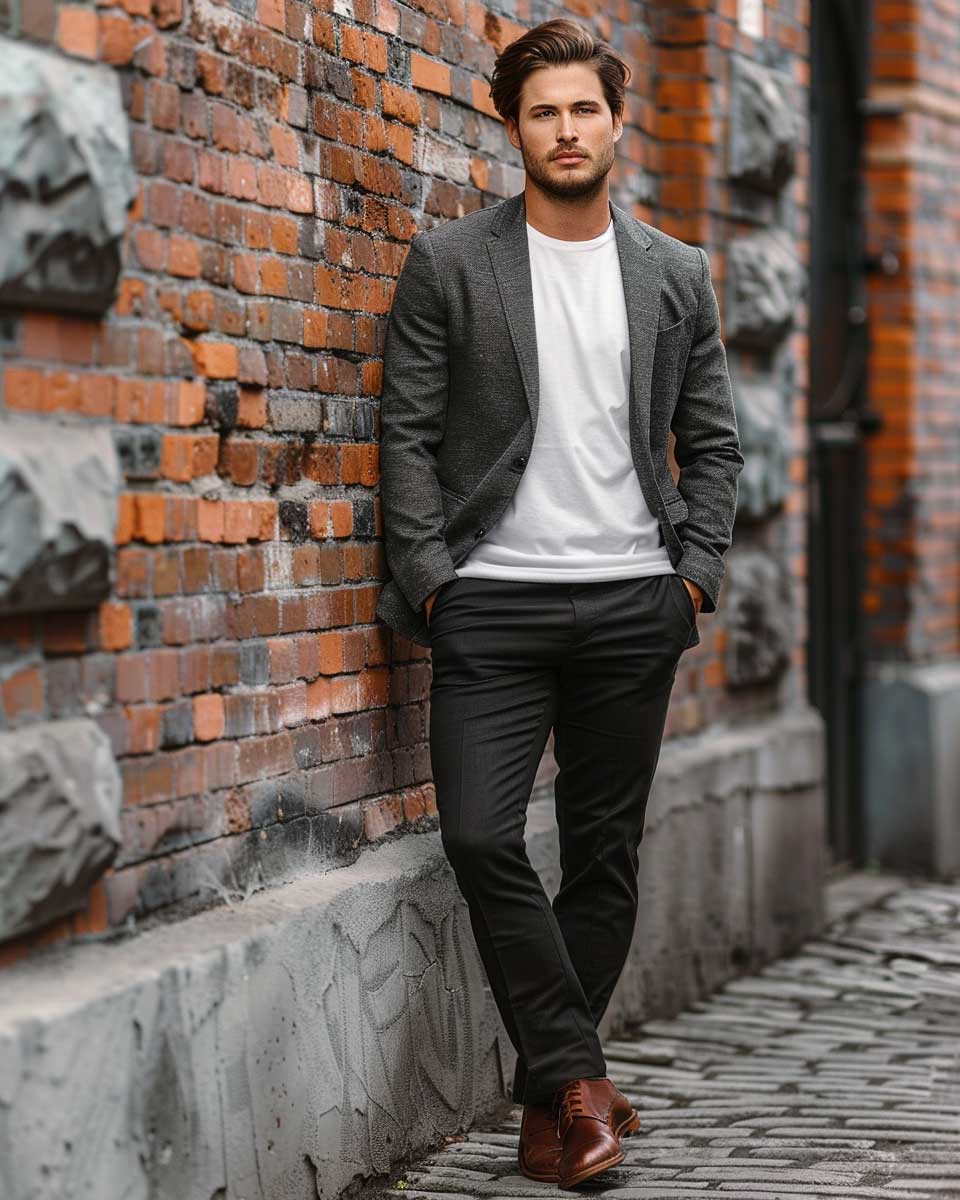
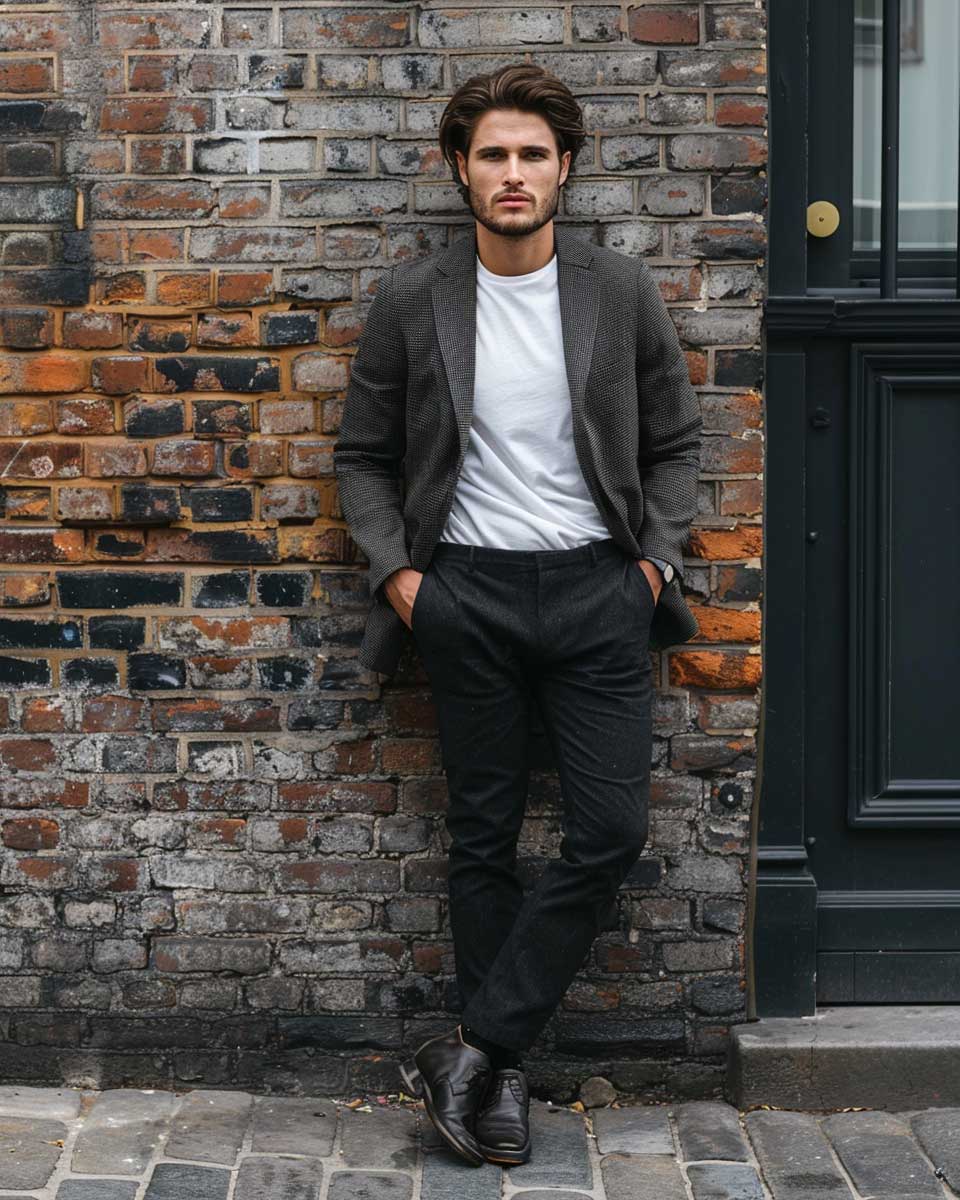
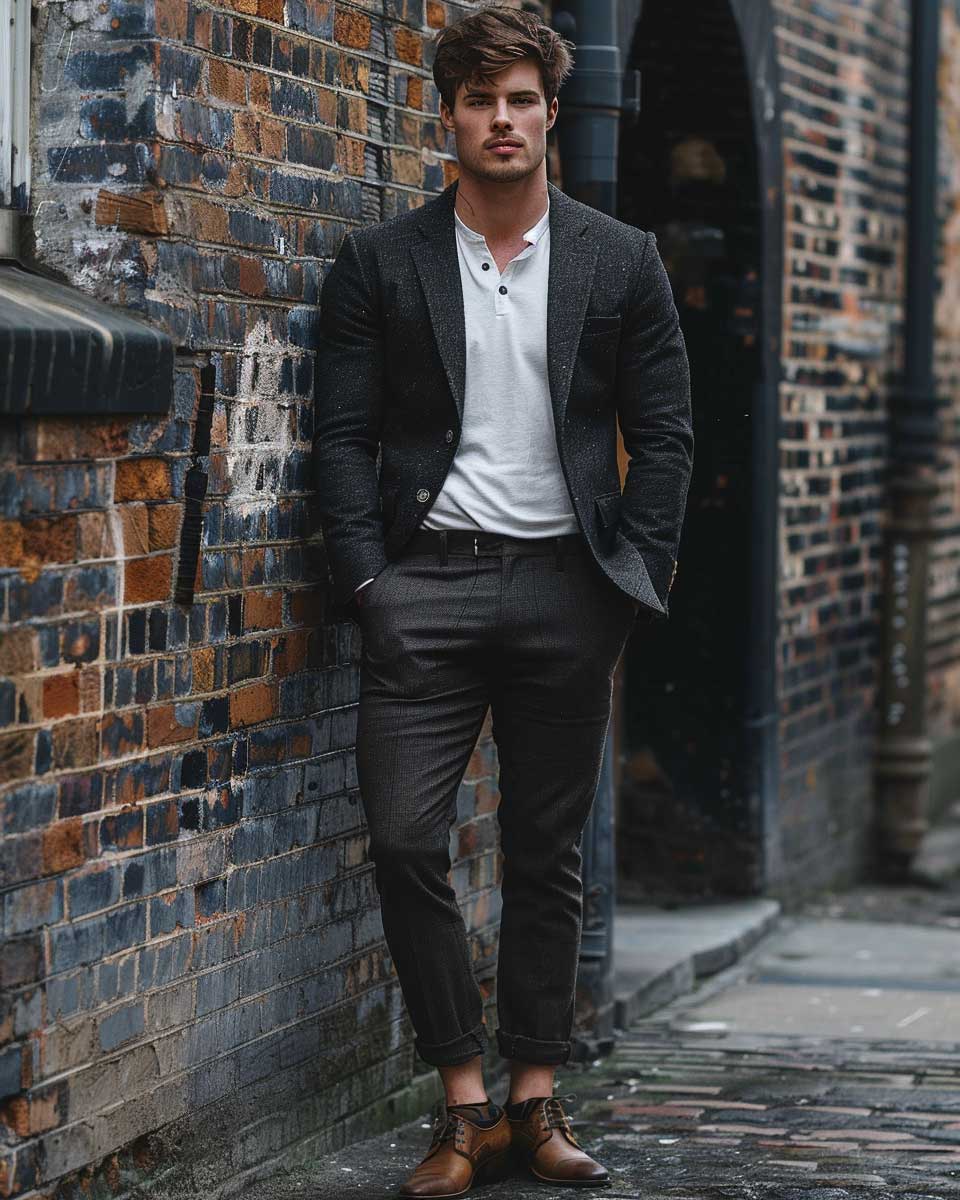

The inclusion of a casual t-shirt under a blazer isn’t just a fashion statement; it’s a declaration of the evolving nature of men’s formal outfits. It acknowledges that the realms of formal and casual wear are no longer mutually exclusive but can coexist and complement each other. This approach to fashion invites men to explore beyond traditional boundaries, encouraging them to experiment with their style.
In this narrative, men’s formal wear is not confined to special occasions but is reintegrated into the fabric of everyday life. It’s a celebration of individuality, where each choice of clothing is a reflection of personal style and lifestyle. This fusion of casual and formal elements signifies a broader trend in men’s fashion—a movement towards greater flexibility, where elegance and ease go hand in hand.
The blazer-over-t-shirt combination works when the proportions are right and falls apart when they’re not. The most common mistake is choosing a blazer that fits like a suit jacket — structured, close to the body — when the outfit calls for slightly more room. A blazer worn over a t-shirt needs to drape rather than hug; the relaxed silhouette of the casualwear underneath requires the jacket to follow suit, otherwise the contrast reads as an accident rather than a choice.
Fabric is the other variable. A wool or wool-blend blazer in charcoal or mid-grey is the most versatile option — it reads formal enough for dinner, relaxed enough for a gallery opening or a weekend lunch that requires effort. Cotton blazers work better in warmer months but wrinkle faster and lack the structure that makes the combination look intentional. Avoid polyester blends; they flatten under light in a way that immediately signals fast fashion regardless of the price point.
Trouser choice determines whether the look is smart-casual or simply casual. Dark slim-fit chinos or tailored trousers in navy or charcoal keep the outfit in formal territory. Mid-grey trousers with a charcoal blazer is a tonal combination that works particularly well because it creates visual continuity without the rigidity of a matching suit. Avoid light-wash jeans; dark, well-fitted denim can work in genuinely casual settings but removes the outfit from any context that requires formal dress.
Footwear is where most smart-casual outfits are won or lost. Leather loafers — penny or tassel — are the default choice and work across every occasion this outfit covers. White leather sneakers are acceptable in creative or social settings if the rest of the outfit is sharp, but they shift the balance decisively towards casual. Chelsea boots in tan or dark brown add a slightly more structured note and work well for evening occasions where the blazer-and-tee combination would otherwise feel underdressed.
Crafting the perfect formal outfit is an art that balances tradition and personal flair. By focusing on timeless pieces, you can ensure that your wardrobe is not only versatile but also sophisticated. Remember, the right outfit can boost your confidence and make any day feel special. Keep exploring different styles within men’s formal wear to discover the looks that best express your individuality and make you feel your best.