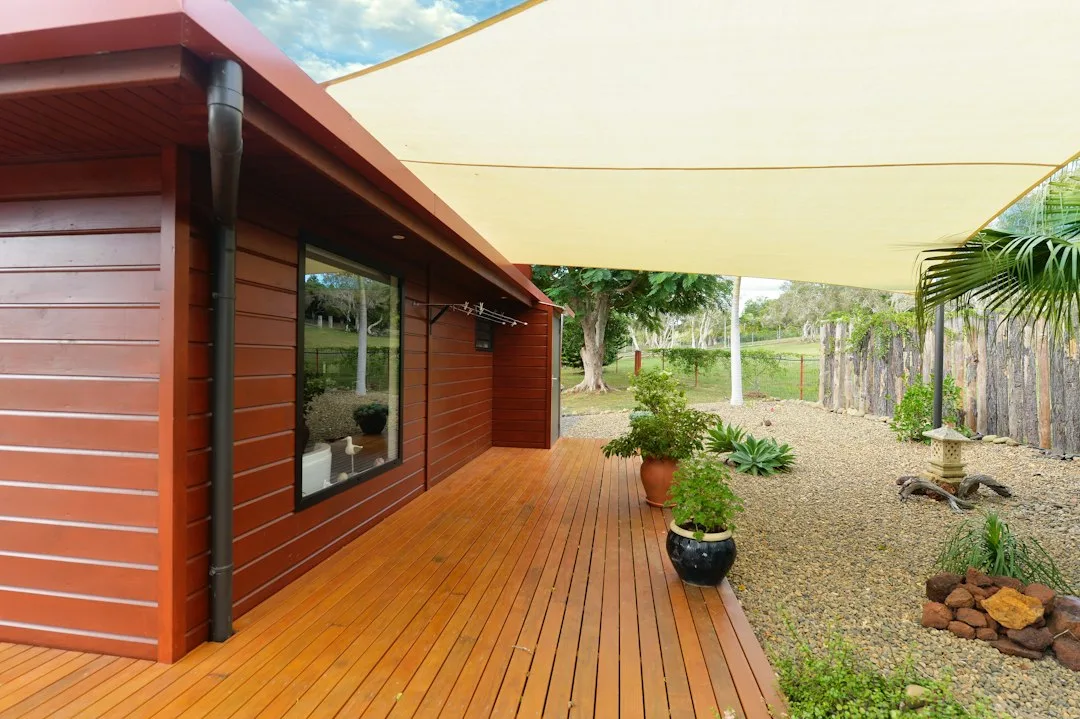
Mediterranean compound wall designs pull off something most exterior styles can’t — they feel warm before you even open the gate. Natural stone, terracotta plaster, and whitewashed surfaces absorb heat differently than painted concrete, and you’ll notice the difference the first afternoon you stand near one. I’ve photographed dozens of homes over the past few years, and the ones that stop people mid-street almost always have this coastal Southern European DNA in their boundary walls.
The mistake most homeowners make is treating a compound wall like a fence — purely functional, neutral, forgettable. Mediterranean architecture has never thought that way. From Santorini to the Amalfi Coast, the perimeter wall is where the design story starts. It sets the palette, signals the material language, and frames the entry long before any door or garden comes into view.
What follows covers three distinct expressions of Mediterranean compound wall design — Riviera-inspired stonework, the rustic-modern hybrid, and the Aegean whitewash approach — with concrete material choices, real cost expectations, and the specific mistakes that make these walls look cheap instead of considered.
- Natural limestone, rough-cut sandstone, and terracotta plaster are the three materials that define an authentic Mediterranean compound wall — not smooth render or painted concrete block.
- Riviera-style walls layer stone base with climbing plants (bougainvillea, jasmine) for texture that costs $15–$30 per linear foot installed.
- Rustic-modern hybrid designs pair rough-hewn stone with clean steel coping — the juxtaposition is the point, not a compromise.
- Aegean whitewash uses lime-based paint, not latex — lime is breathable, develops a subtle patina over 18 months, and actually protects exterior masonry better in humid climates.
- Wrought iron inserts work in Mediterranean walls; aluminum faux-iron does not — the difference is visible within one summer season.
Riviera Stone Compound Walls That Read as Architecture, Not Boundary
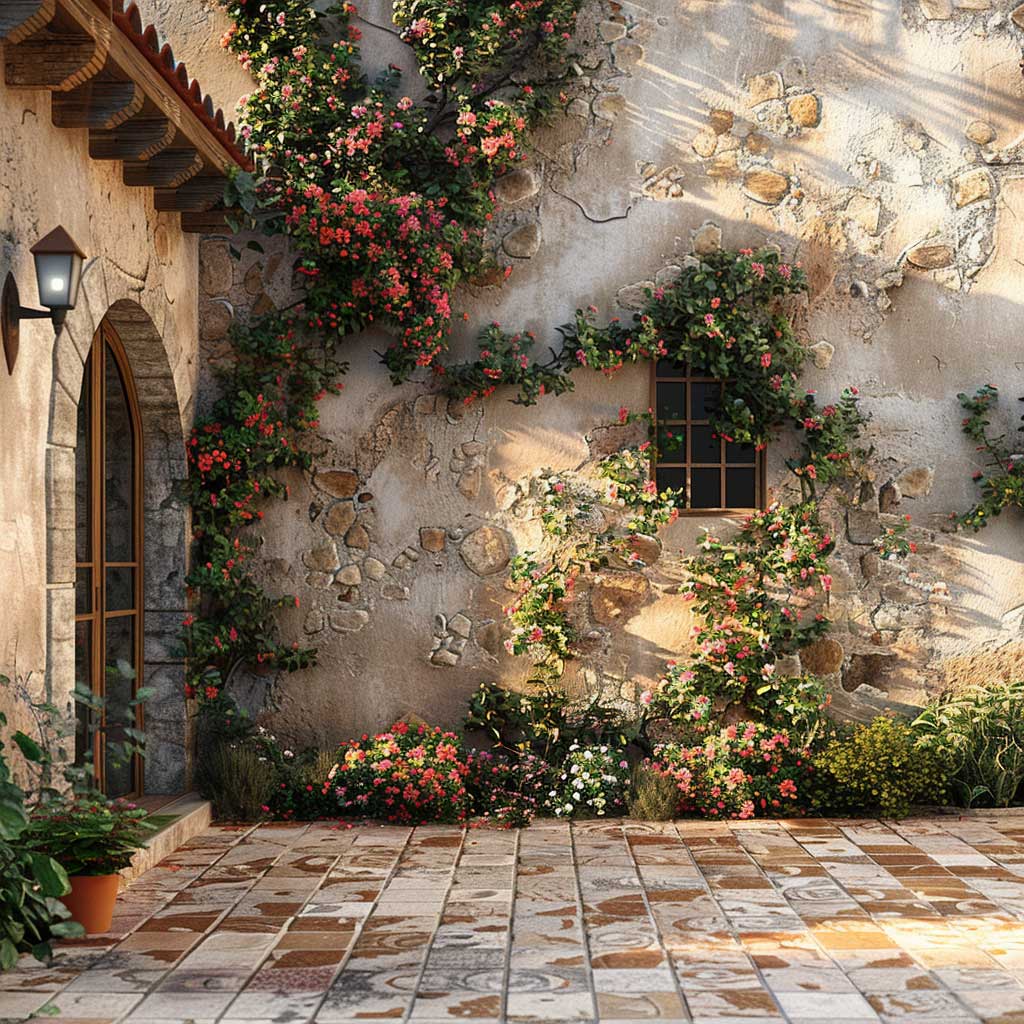
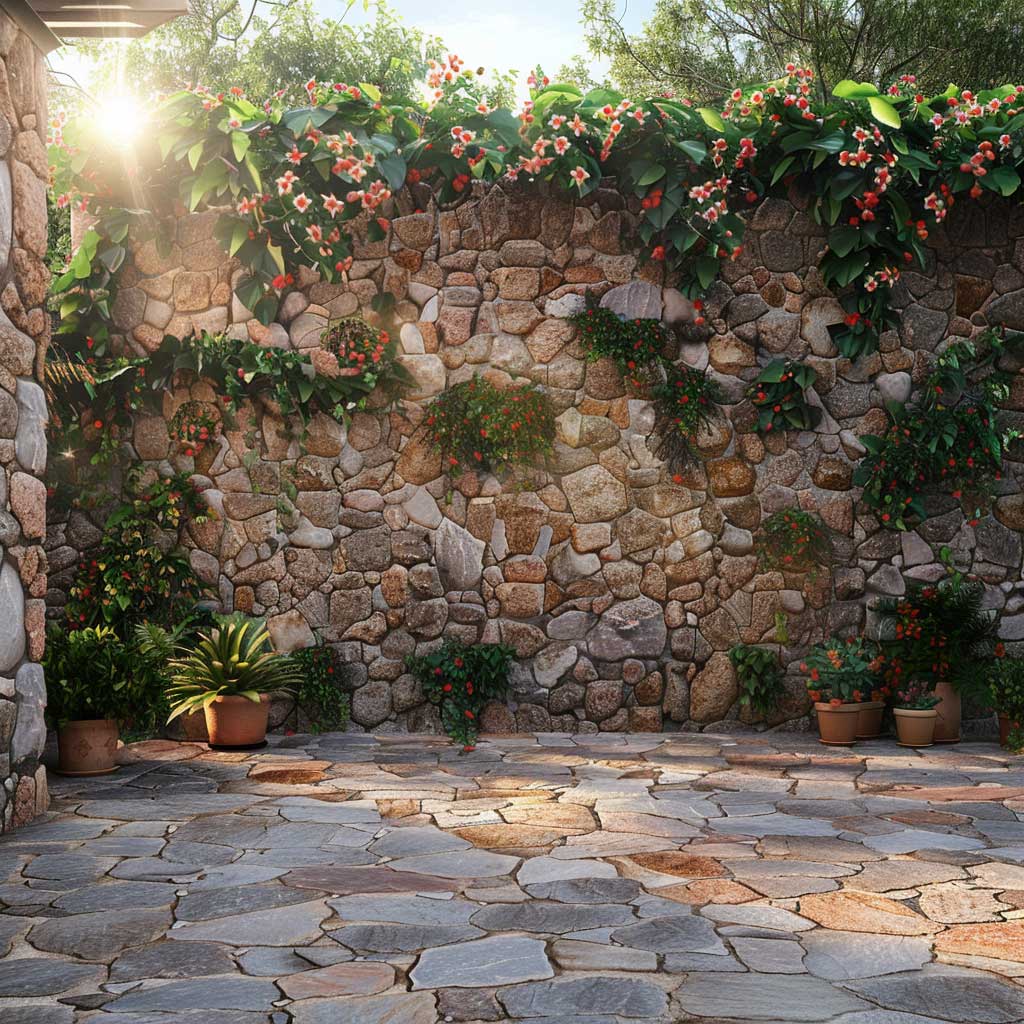
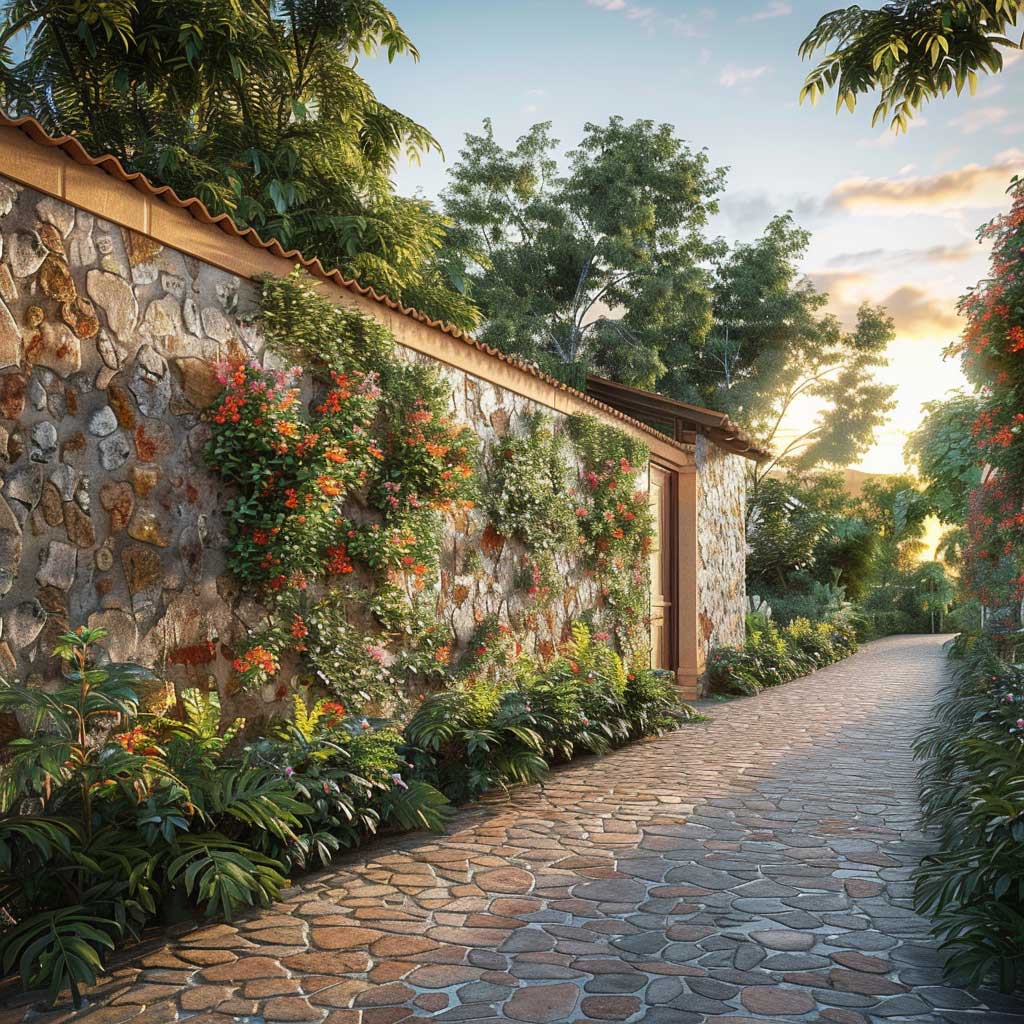
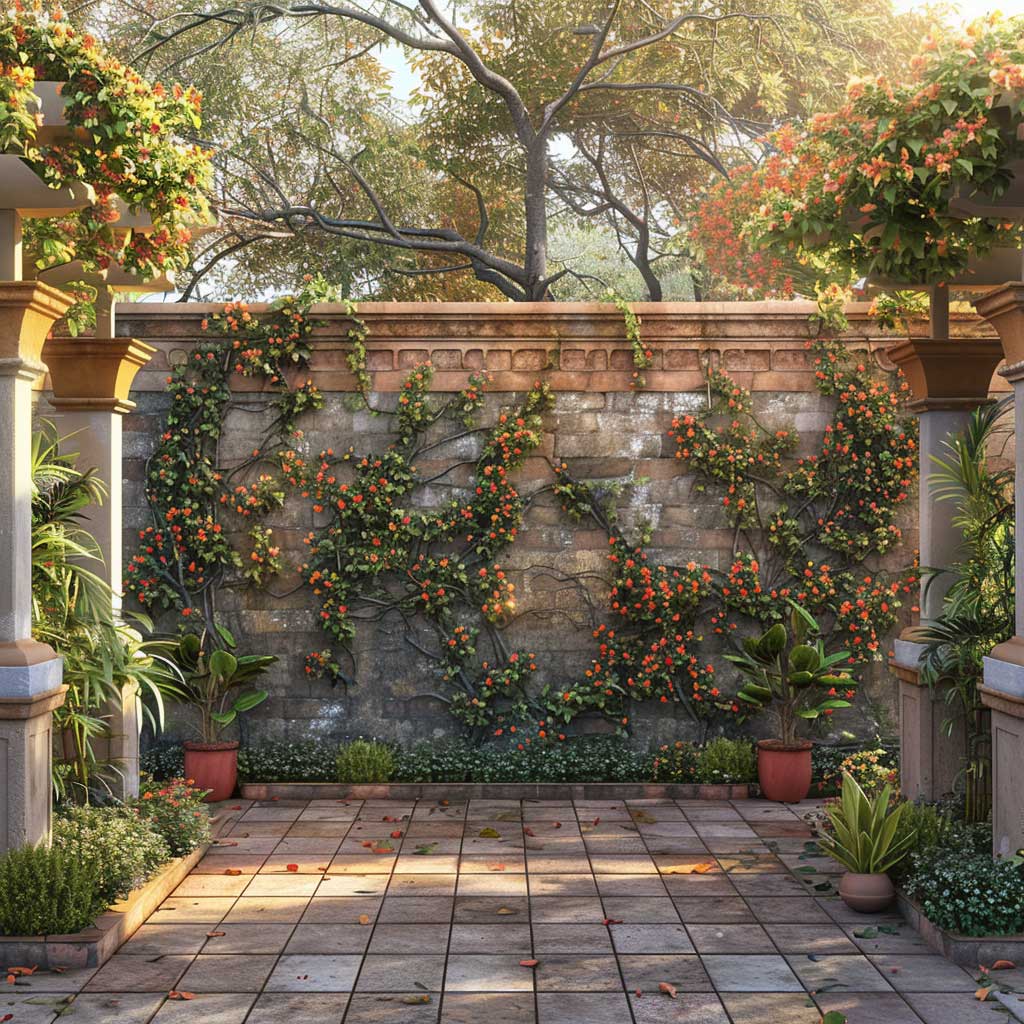
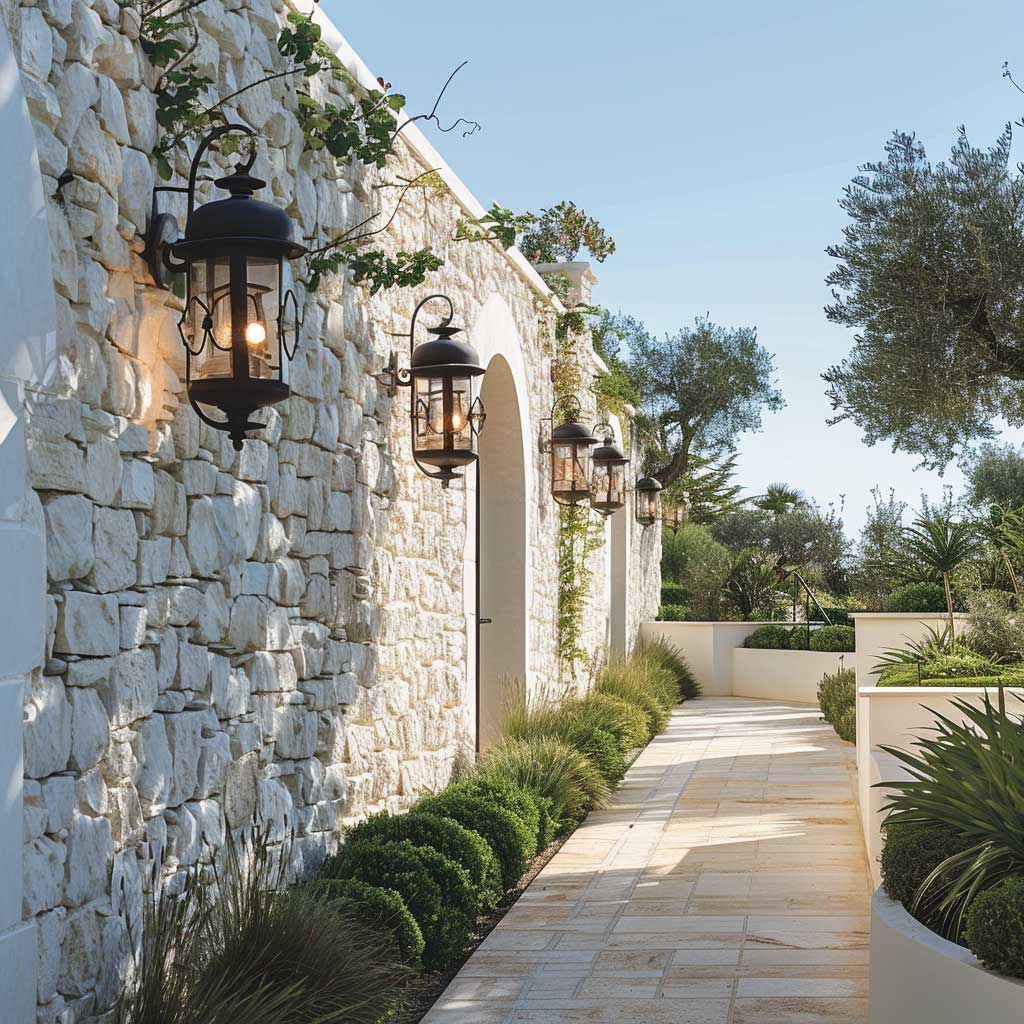
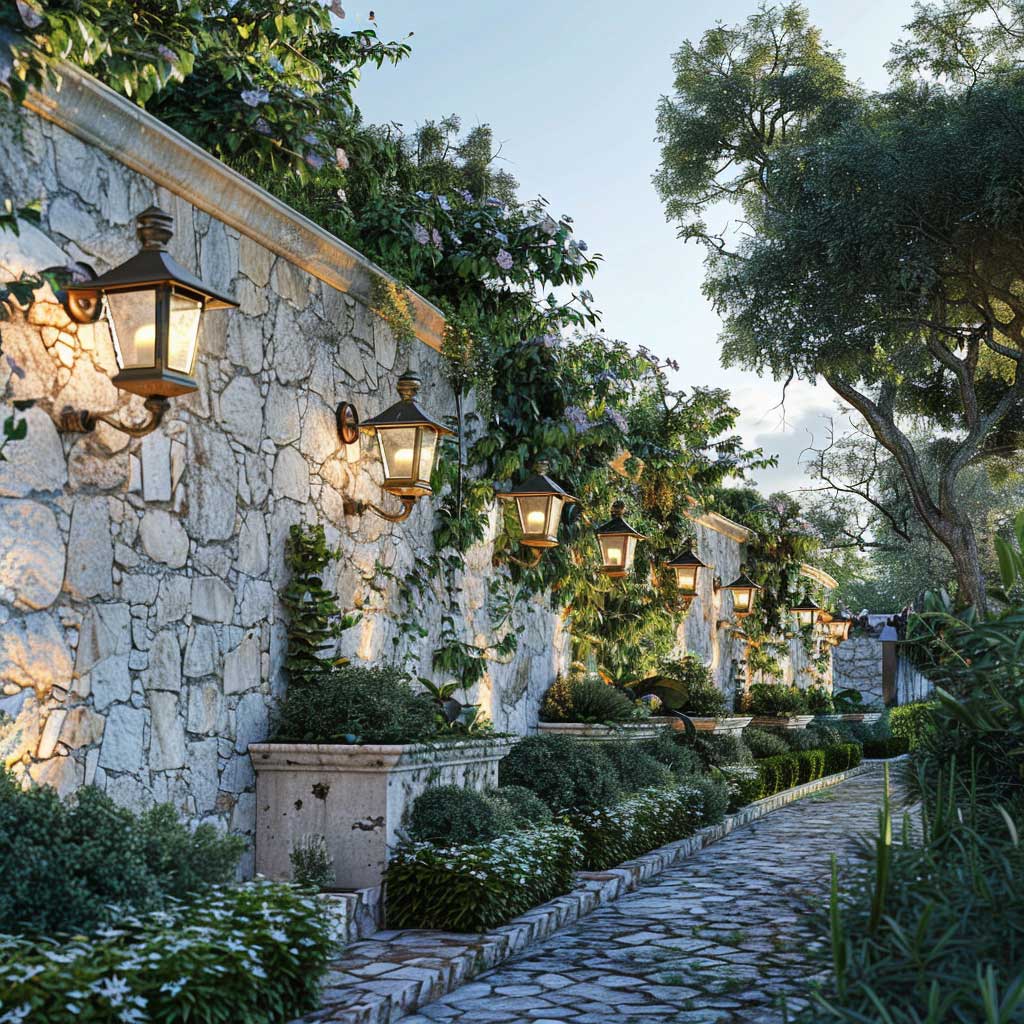
Mediterranean compound wall designs in the Riviera tradition start with material selection, and rough-cut limestone or sandstone is the non-negotiable foundation. You’re looking at $18–$28 per square foot for natural stone cladding from suppliers like MSI or Eldorado Stone — not cheap, but the visual return over painted render is immediate and lasts decades without refinishing. The texture matters as much as the color: irregular, slightly uneven coursing reads as authentic, while perfectly uniform blocks read as imitation regardless of material quality.
Climbing plants are structural elements in this design language, not afterthoughts. Bougainvillea establishes itself within two to three growing seasons and covers approximately 20 square feet of wall annually in warmer climates. Jasmine and trumpet vine are slower but create a denser, lower-maintenance finish. I’ve seen homeowners plant these too close to the wall surface — you want 6 to 8 inches of gap between the plant structure and the stone so moisture doesn’t wick into the masonry and cause spalling over time.
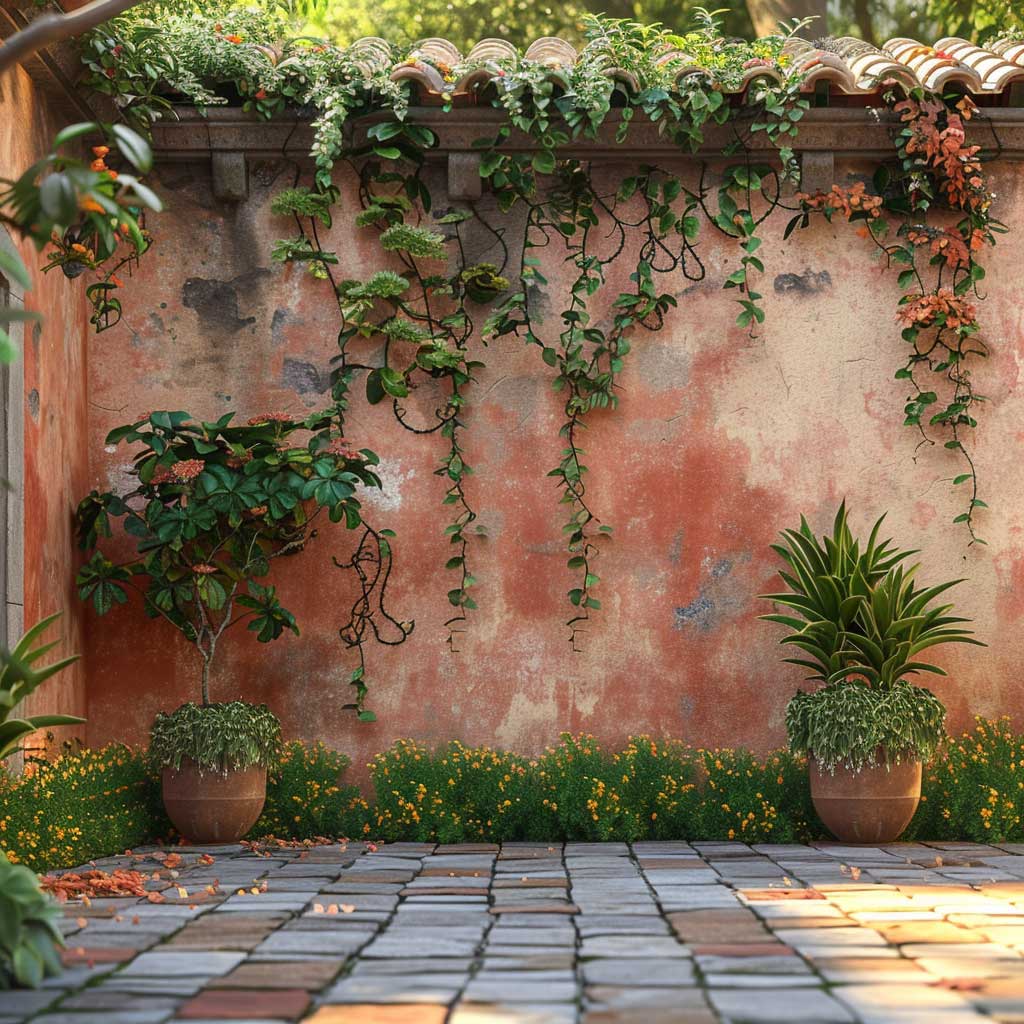
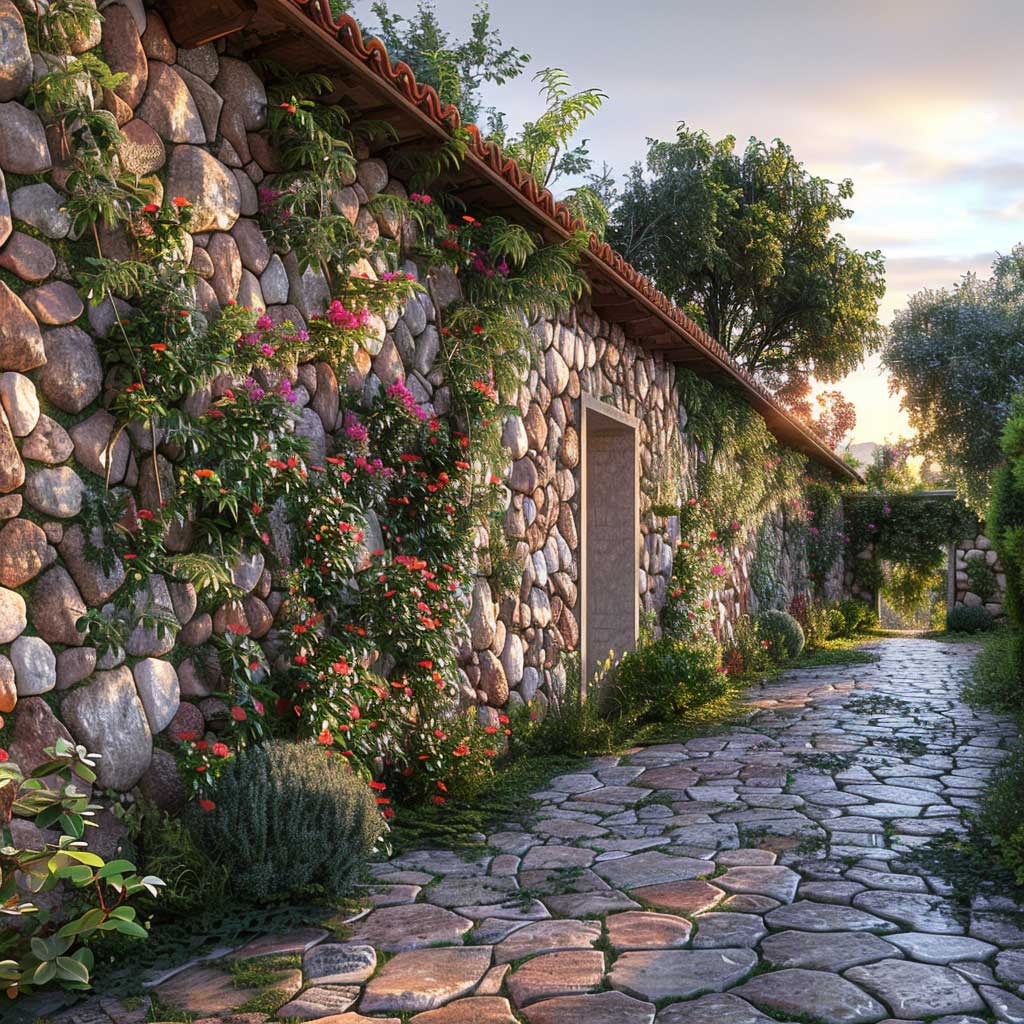
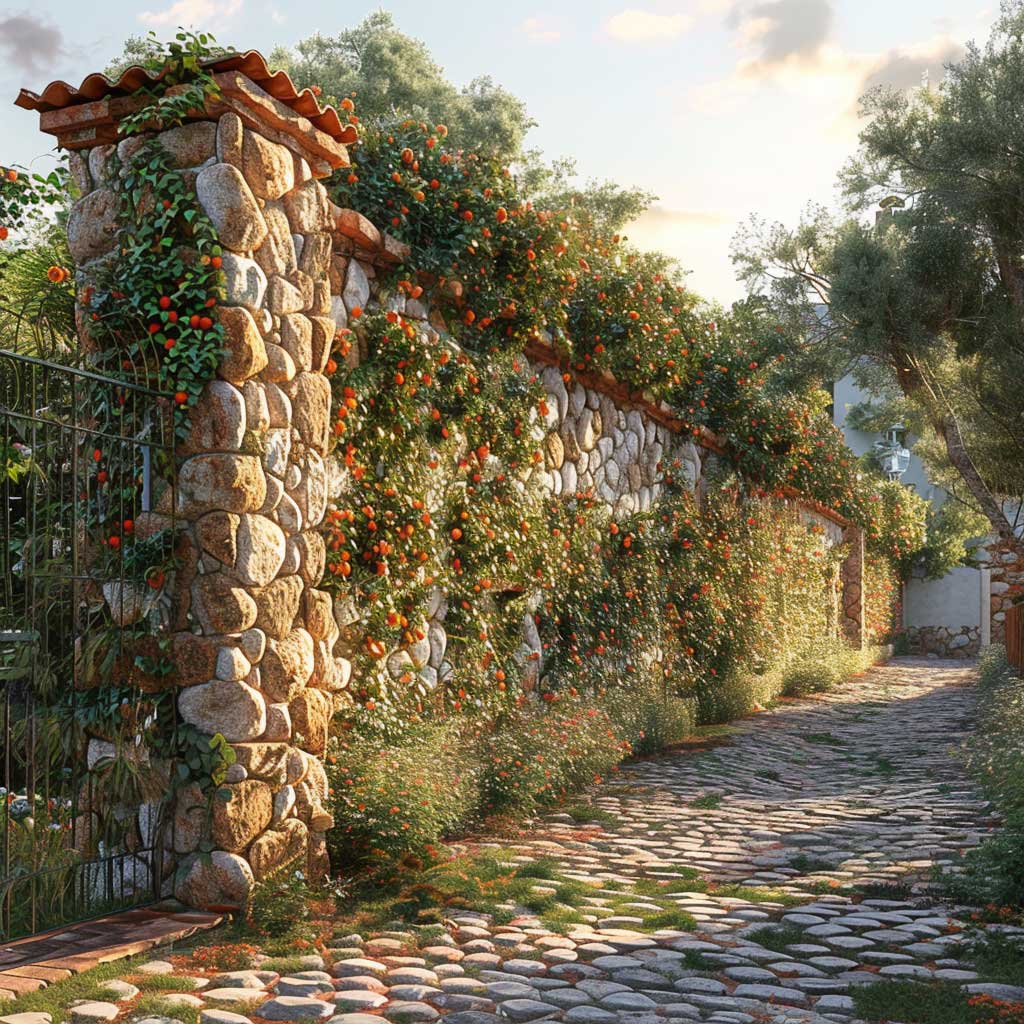
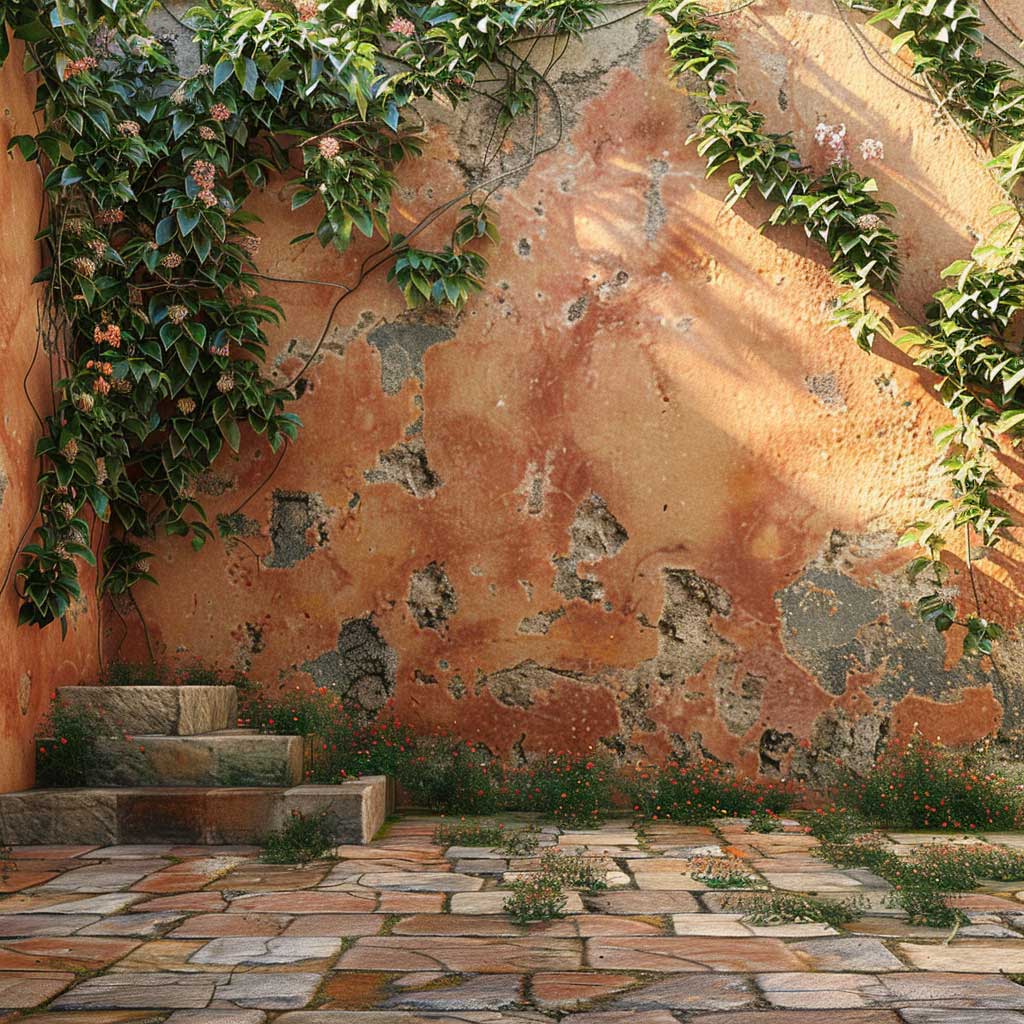
Does the wall height affect how Mediterranean it reads? Yes — and the ratio is specific. Walls between 1.2 and 1.6 meters feel human-scaled and open, which is core to this aesthetic. Go above 1.8 meters with solid stone and you’ve crossed into fortress territory; the warmth disappears. If privacy is the requirement, use the stone base to that 1.4-meter mark and add a wrought iron upper section — solid iron, not tubular aluminum profile. The iron section carries light through the wall visually, and that permeability is what makes the whole composition feel Riviera rather than suburban.
One observation worth repeating: the lighting fixture choice breaks these walls faster than any material mistake. A cast-iron or hammered-bronze lantern mounted at gate level — Arroyo Craftsman makes reliable versions from $180 — completes the material story. A brushed-nickel modern fixture on a limestone wall is like putting a cell phone case on a vintage watch. The disconnect reads immediately, even to people who can’t name why. For more on Mediterranean entrance design details that carry from wall to front door, those principles apply directly here.
- Don’t use smooth render over block and call it Mediterranean. The texture of the substrate matters — rough, irregular surfaces create the light-and-shadow play that makes stone walls look alive. Smooth render looks like a painted box regardless of color.
- Don’t plant ivy directly on limestone or sandstone. Ivy’s holdfasts penetrate porous stone and cause structural damage within 5–7 years. Use a trellis system with 6 inches of clearance from the wall surface.
- Don’t use terracotta-colored paint as a substitute for terracotta plaster. Paint fades to a chalky orange within 18 months in direct sun. Lime-based or acrylic terracotta renders hold color 4–5 times longer and develop the right texture as they age.
- Don’t install aluminum faux-iron inserts. Real wrought iron costs 3–4x more but oxidizes in ways that look intentional. Aluminum profiles look like what they are — substitutes — within one summer season.
Mediterranean Compound Wall Materials When Rustic Meets a Steel Coping
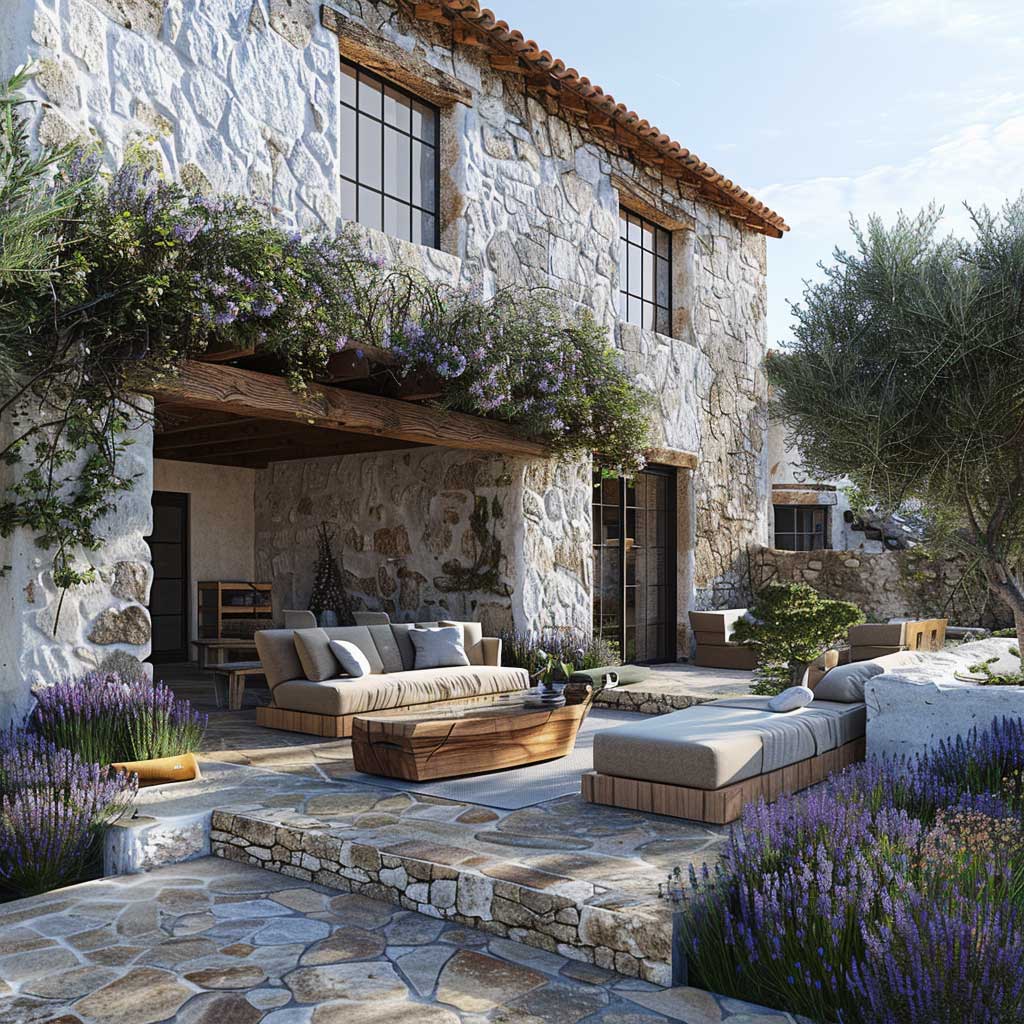
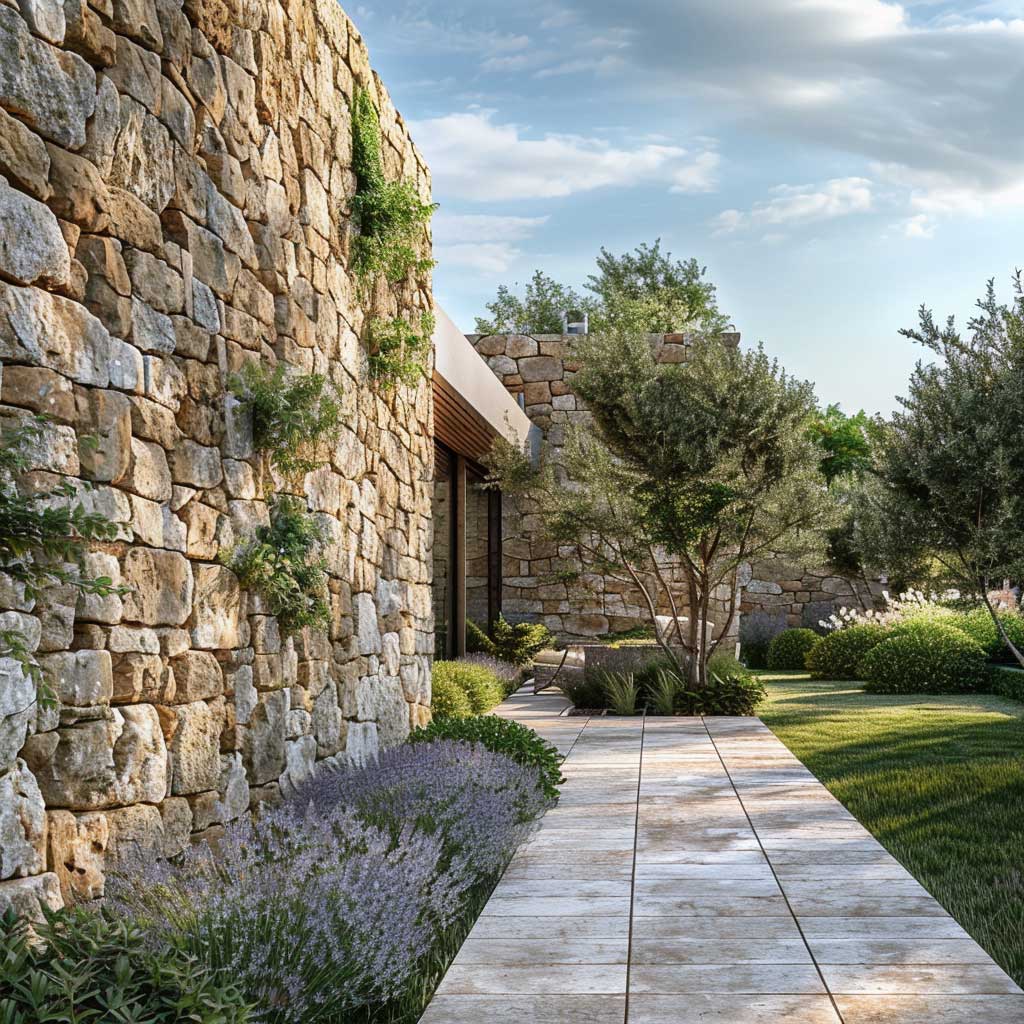
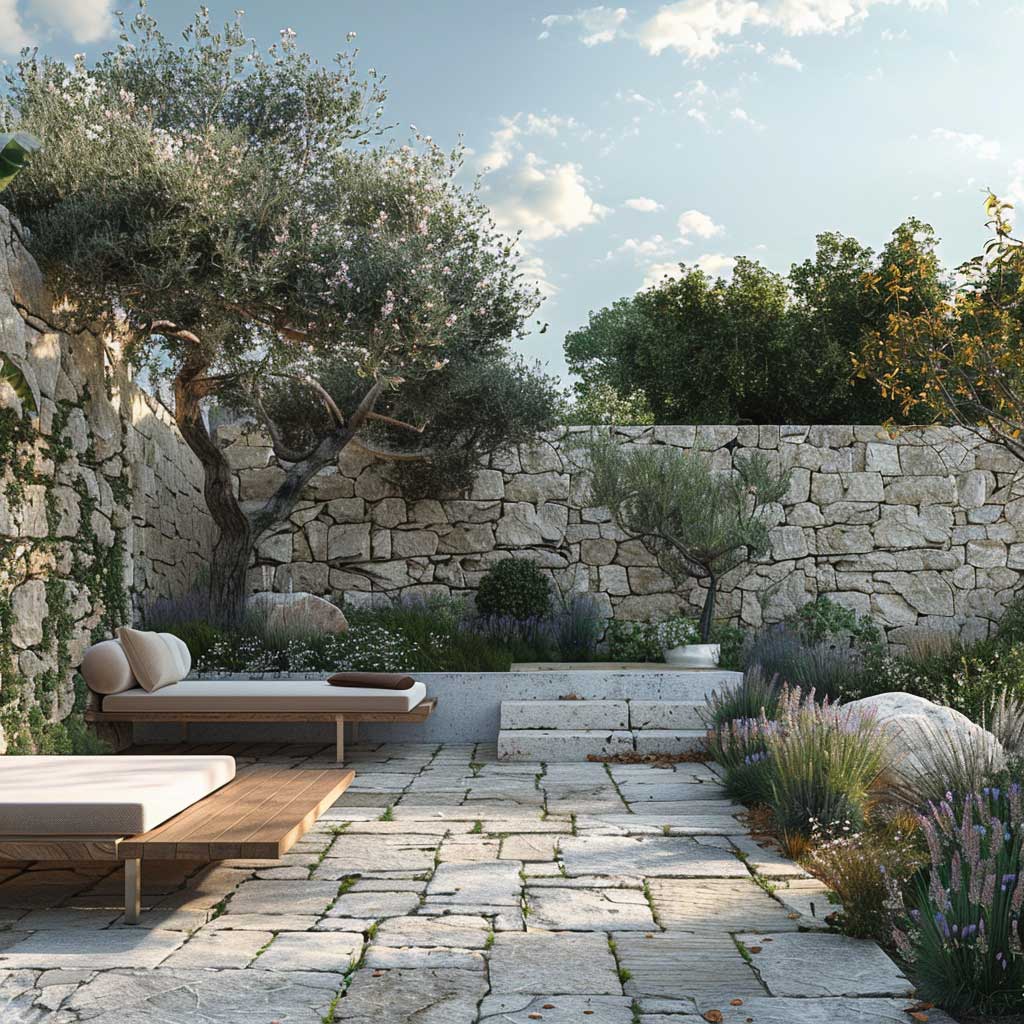
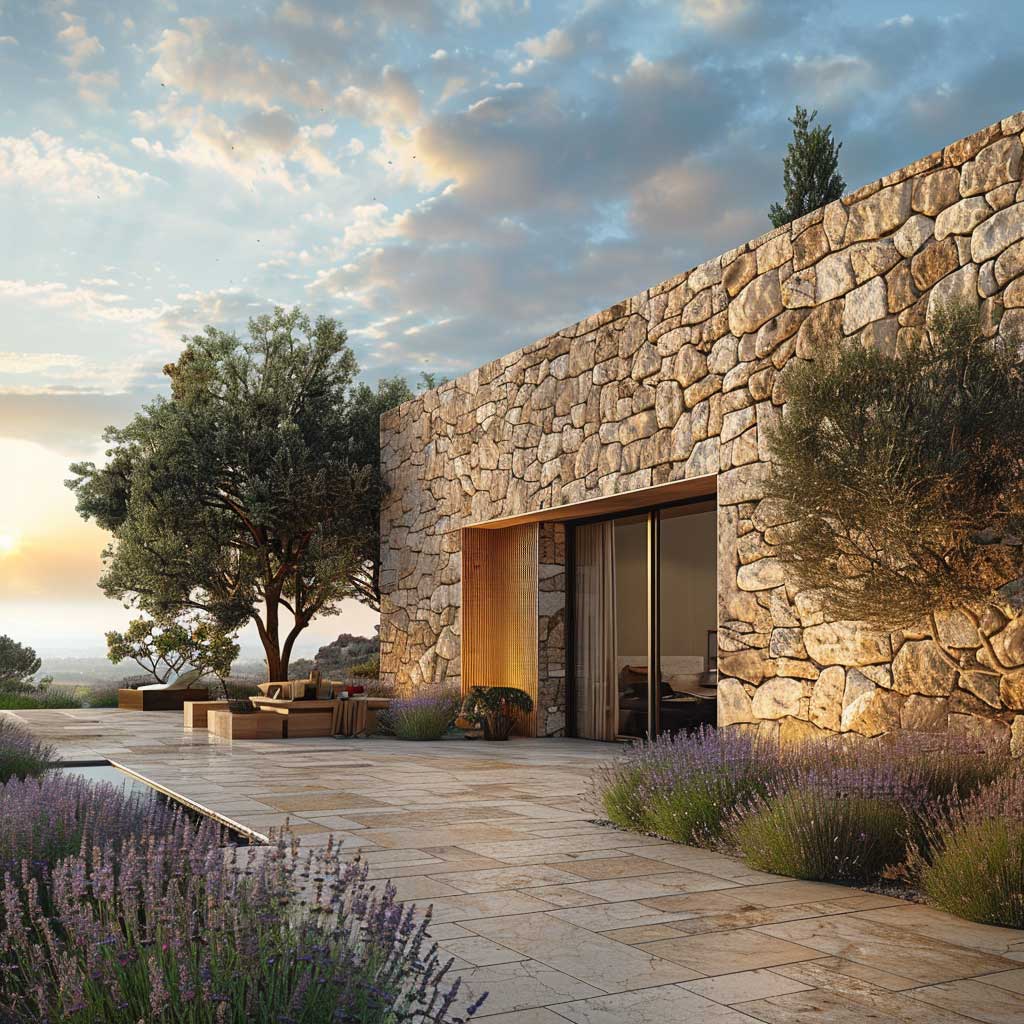
Rustic-modern Mediterranean compound wall designs work because the contrast is honest — rough stone and clean steel coping aren’t fighting each other, they’re having a conversation. My go-to combination is split-face travertine or fieldstone for the body of the wall, finished with a flat Corten steel or powder-coated aluminum coping at the top. Corten develops a controlled rust patina over 12 to 18 months that reads as warm and intentional next to stone. Powder-coated matte black coping is the contemporary version — sharper, slightly colder in feeling, but still cohesive.
Olive trees are load-bearing design elements in this aesthetic, not optional landscaping. A single multi-trunk olive specimen planted at the wall’s base — expect $250–$600 for a 3-to-4-inch caliper tree from a nursery specializing in Mediterranean varieties — does more visual work than any decorative insert. The gnarled silver-grey trunk against rough stone is a combination that’s been working for 2,000 years in the actual Mediterranean, so you can trust it. Lavender massed at the base costs next to nothing and adds the olfactory dimension that photographs can’t capture.
What doesn’t work in this rustic-modern hybrid? Mixing too many stone types. I’ve watched projects try to combine travertine, fieldstone, and slate within a single compound wall run — the result looks like a sample board, not a design decision. Pick one stone type and vary the coursing pattern instead. Alternating between tight-set horizontal courses and more random rubble sections within the same material creates visual rhythm without the incoherence of multiple materials competing. The wall in the wood and stone compound wall design approach applies this principle exactly — material restraint, coursing variation.
Lighting in this hybrid style rewards specificity. You want warm-white LED in a color temperature around 2700K — anything cooler reads as institutional against warm stone. Recessed ground-level uplights at $45–$90 each (WAC Lighting and Kichler both make reliable outdoor versions) aimed at the stone face create the shadow play that makes rough texture visible at night. That shift from flat daytime surface to dramatically shadowed nighttime wall is what separates a considered design from an adequate one.
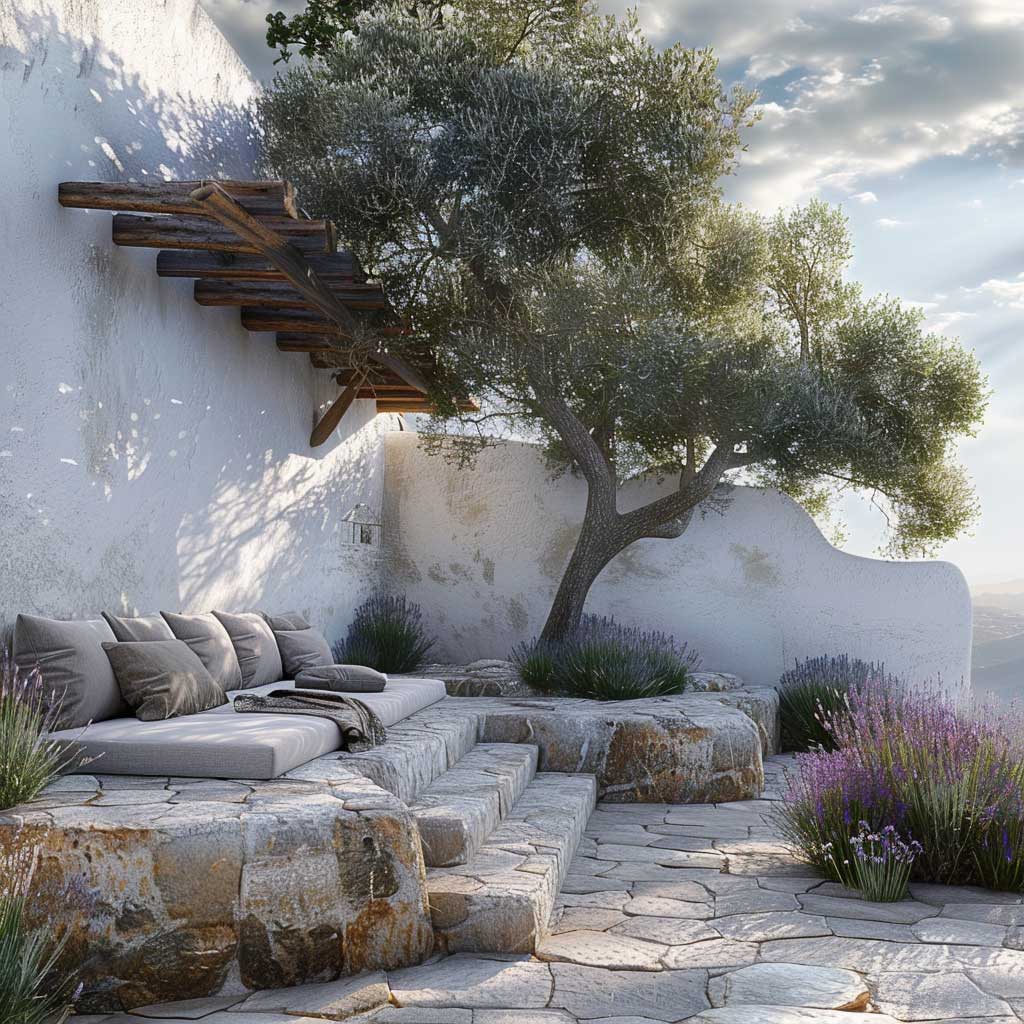
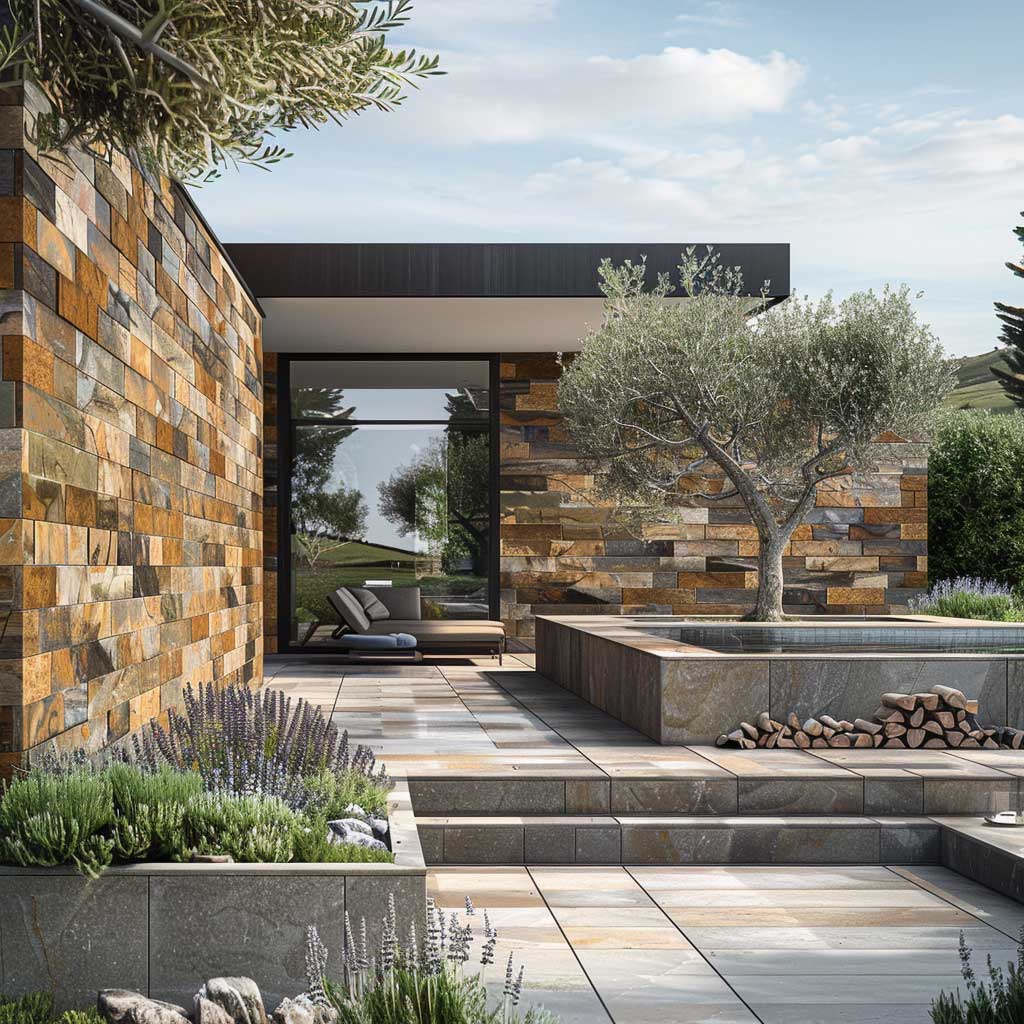
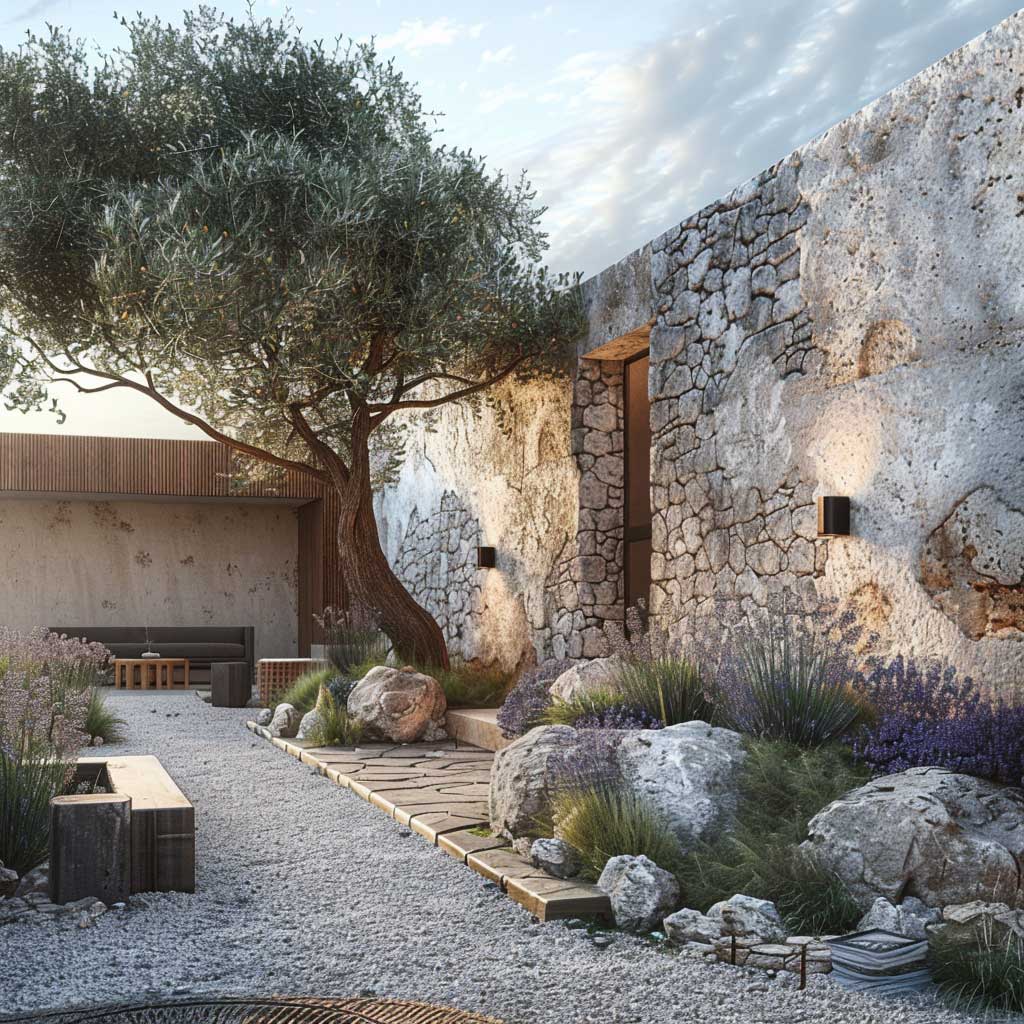
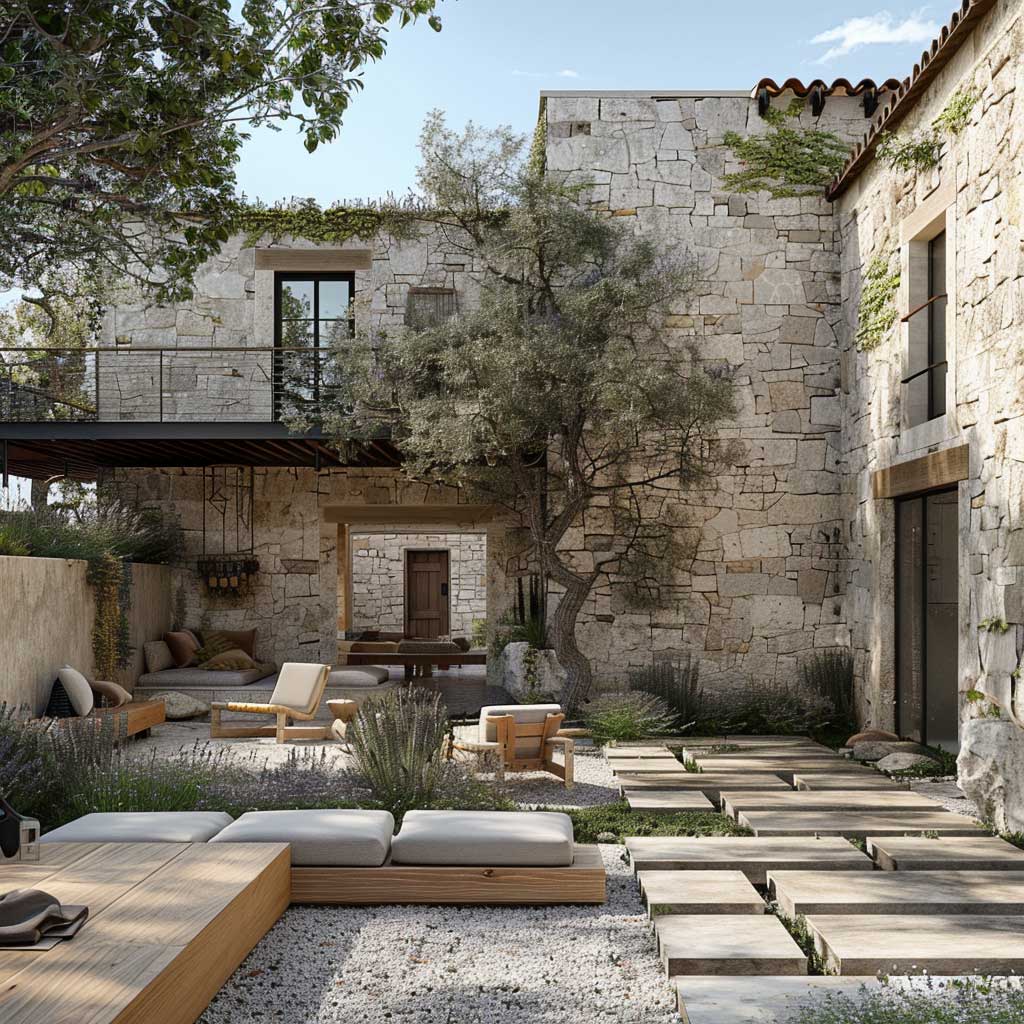
Can you retrofit this style onto an existing concrete block wall? Yes, but only with full stone cladding — not stick-on veneer panels. The adhesive on peel-and-stick stone products fails within 3–5 years outdoors in temperature-cycling climates. Mortar-set real stone veneer (3/4 to 1.5 inches thick) onto a properly prepared substrate works permanently and costs $12–$20 per square foot in materials. That’s the threshold where the rustic-modern look holds up long enough to justify the project.
Aegean Whitewash on Compound Walls — What the Color Actually Does
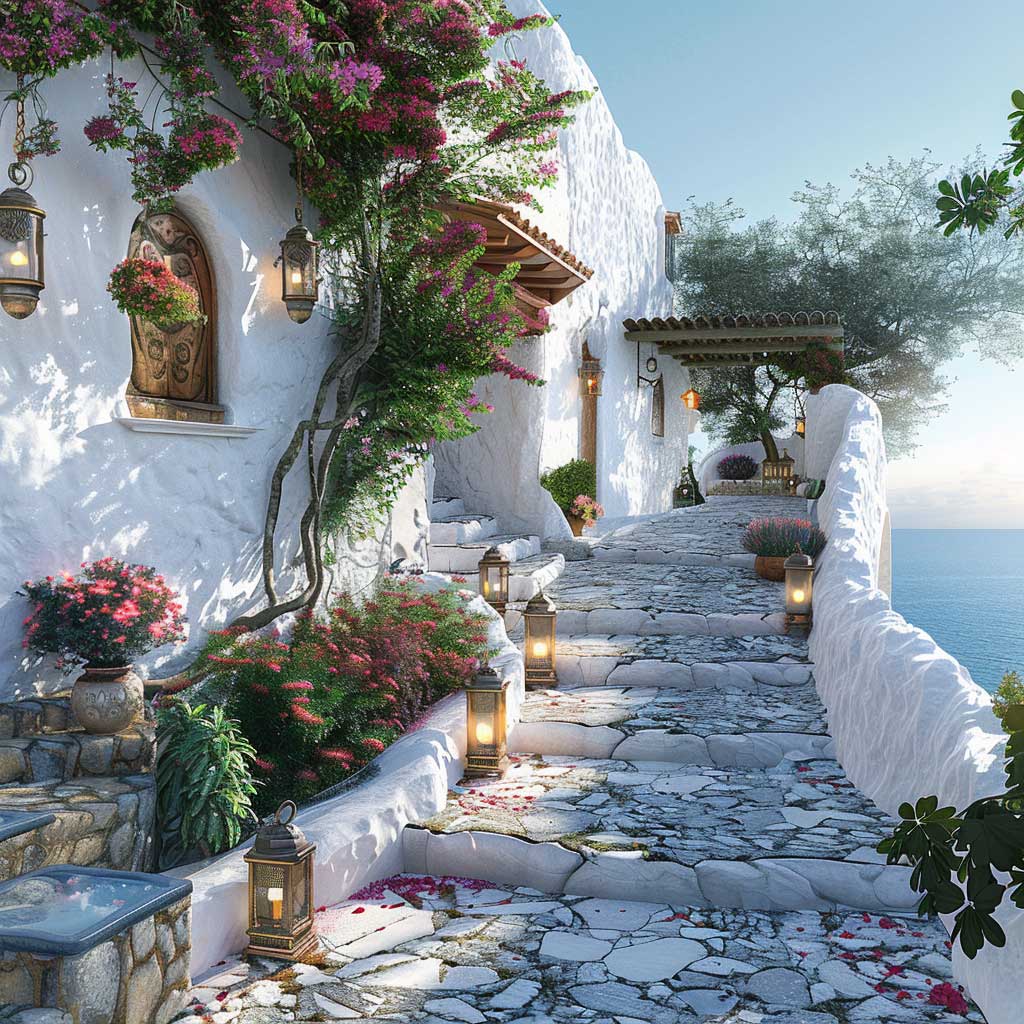
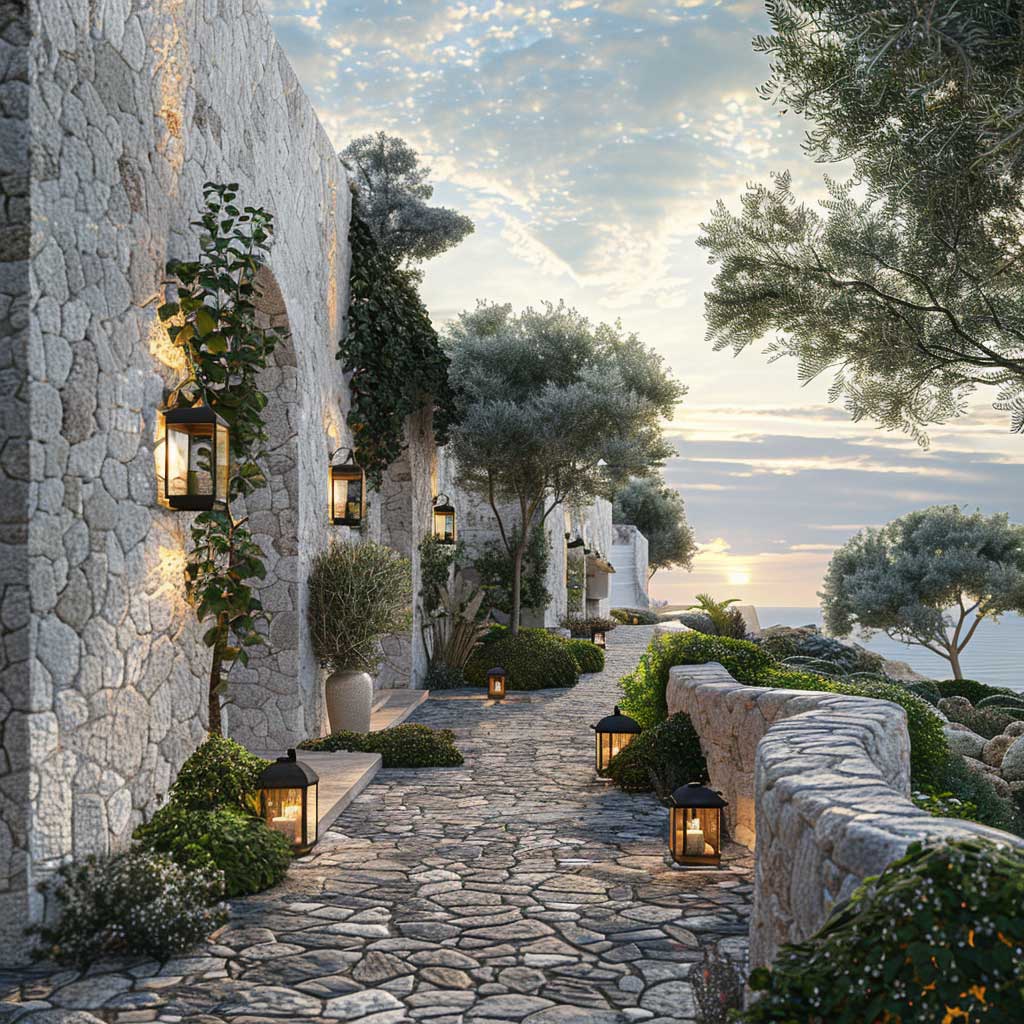
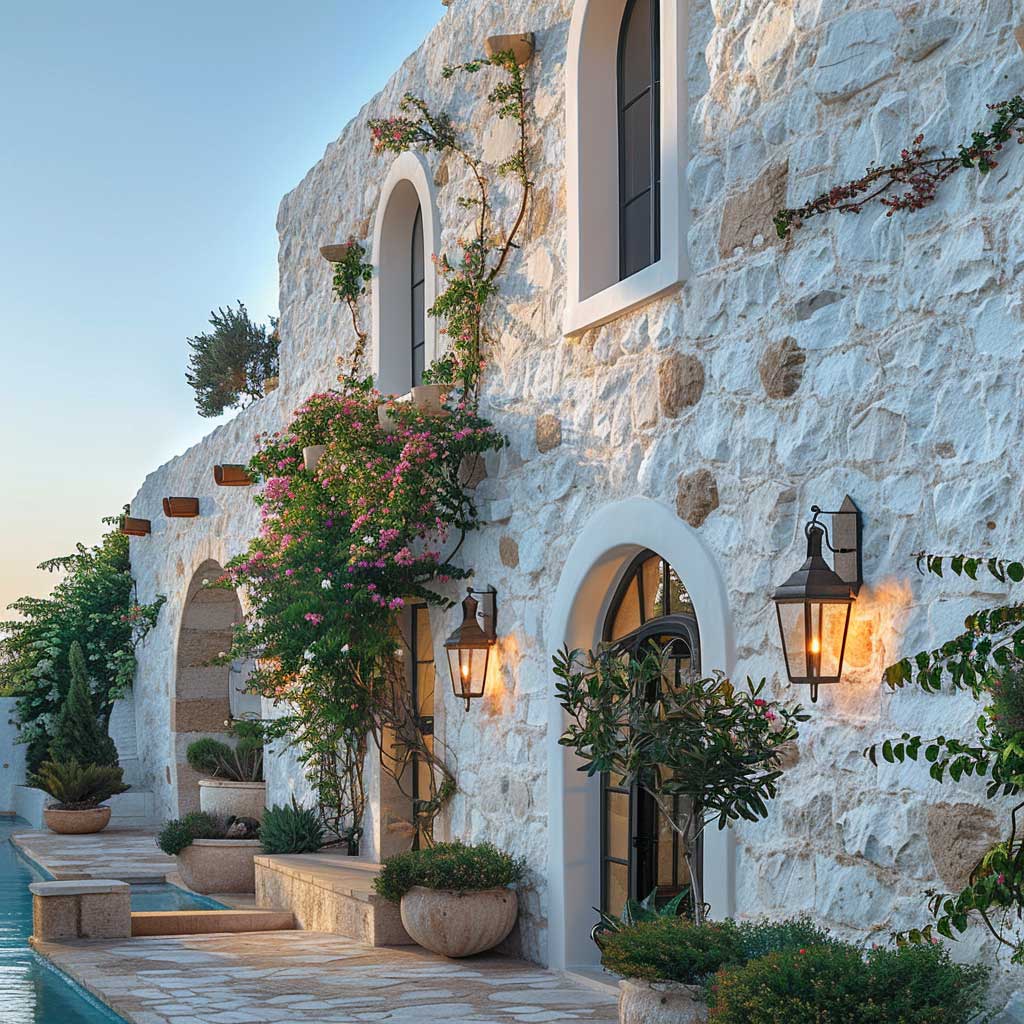
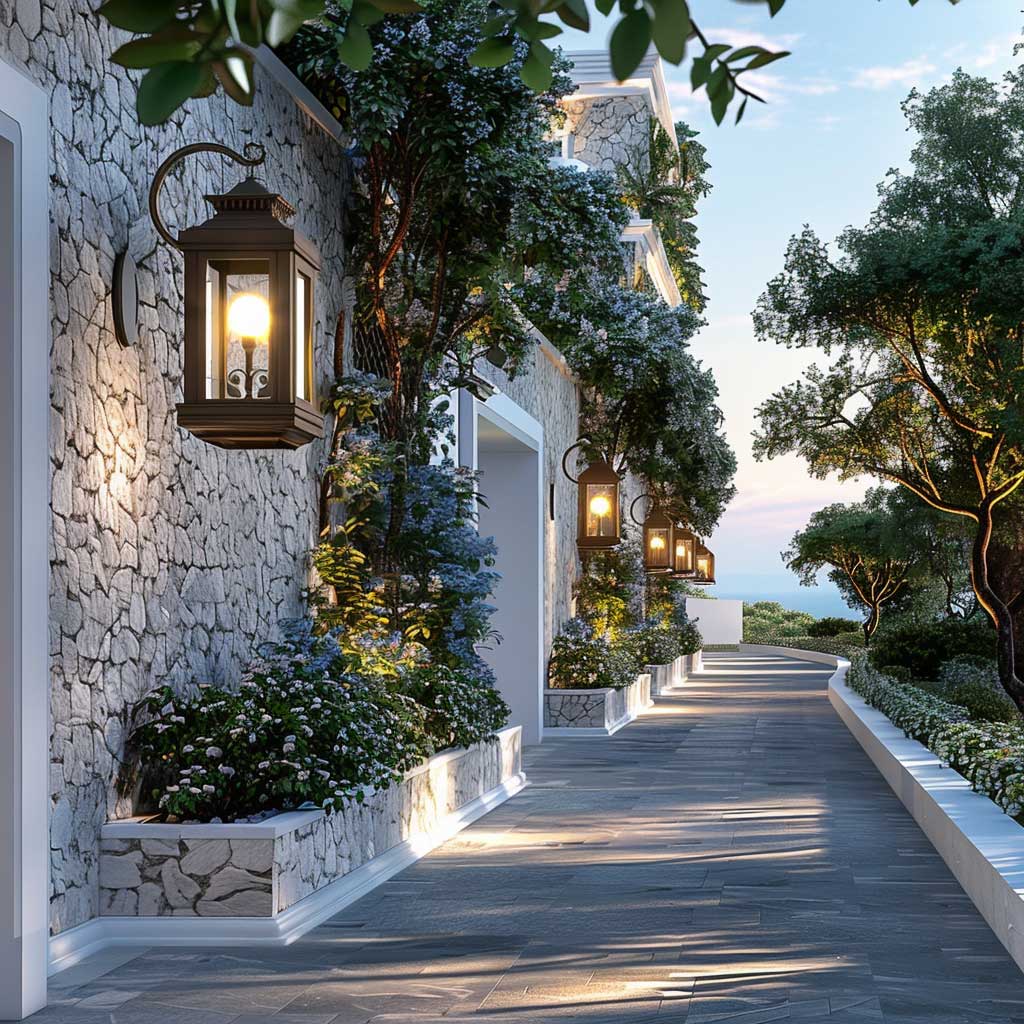
Aegean-inspired Mediterranean compound wall design is built on a specific white — not bright white, not cool white, but the warm, slightly chalky off-white of genuine lime wash. That distinction changes everything about how the wall reads against a blue sky. I own two properties with lime-washed exterior walls, and the difference between lime and latex paint is visible from 50 feet: lime has a soft depth that catches oblique light, while latex looks flat and slightly reflective in ways that kill the Mediterranean effect entirely. The terracotta and turquoise color palette from Santorini and the Cyclades specifically pairs with this lime-washed base — the blue is always a secondary accent, never the primary surface.
Blue accent placement in this design is more specific than most people realize. You’re not painting the entire wall blue — you’re painting the gate, the integrated planter boxes, a narrow reveal around an arch, or a single panel section. Benjamin Moore’s Aegean Teal 2136-40 and Farrow & Ball’s Cooks Blue No. 237 (about $110 per liter) are the shades that photograph most closely to what you see in actual Cycladic villages. Paint the wrong blue — anything with a green undertone — and it reads as teal rather than sea, which breaks the reference completely.
Native plantings complete the Aegean language: myrtle (Myrtus communis), fig trees for structure, and Greek basil in terracotta pots massed at the gate. Does the planter color matter? More than you’d expect — unglazed terracotta in the warm orange-brown range looks right; glazed ceramic pots in any other color look imported from a different design vocabulary entirely. Stick with clay, and buy the cheapest version you can find locally — this is one case where the artisanal option and the $12 nursery pot look nearly identical.
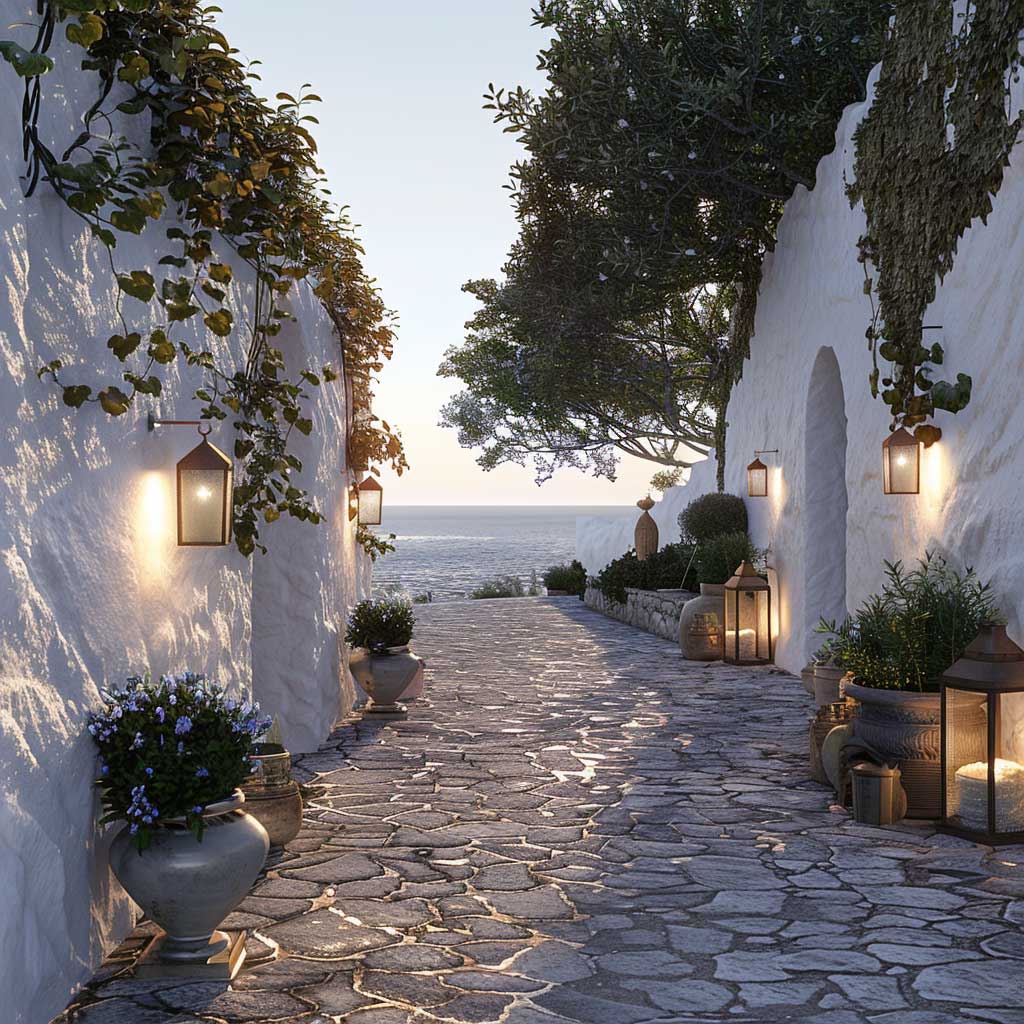
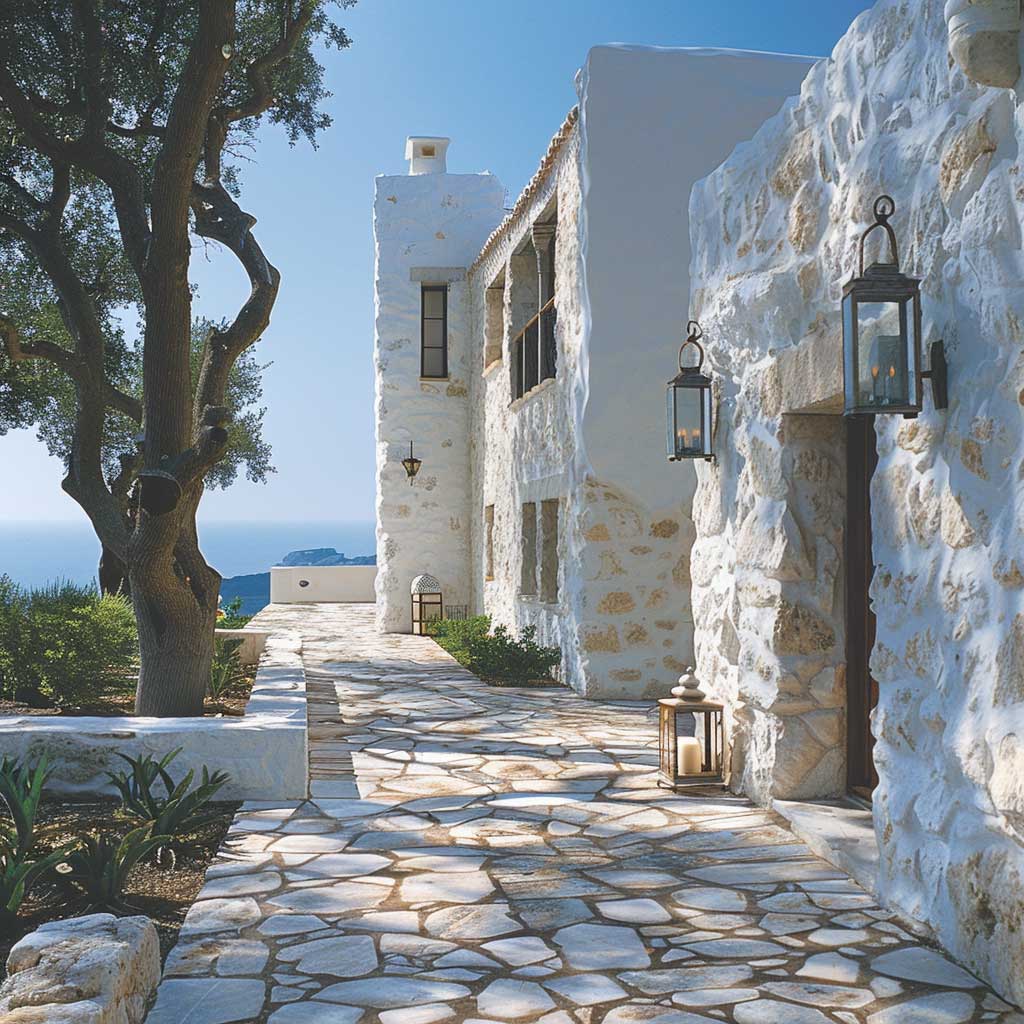
Lime wash applied over existing painted walls is possible but requires stripping the old paint first — lime needs porous masonry to bond properly. The breathable chemistry that makes lime whitewash so effective at moisture management in humid climates is exactly what makes it incompatible with sealed latex-painted surfaces. Budget $3–$6 per square foot for a professional lime wash application including surface prep. DIY is doable with Classico Limewash by Portola Paints ($72 per gallon, covers approximately 200 square feet in two coats) — this is the product I’d actually recommend before any other.
Traditional lanterns at gate level complete the Aegean compound wall — ceramic or cast iron, not powder-coated metal. The form language of a whitewashed wall with blue accents calls for lighting fixtures that look handmade, not manufactured. Pottery Barn’s Layla Outdoor Lantern collection runs $129–$189 and gets the proportions right for a residential gate. Mount them at 1.5 meters height on either side of the entry rather than overhead — that placement frames the gate like a painting and draws the eye directly to the entry point in a way overhead fixtures never do.
Final Word
Mediterranean compound wall design earns its look through material honesty, not surface decoration.
Rough-cut limestone and split-face travertine in the $18–$28/sq ft range outperform any painted or rendered imitation within two years of installation. The stone develops character; the imitation develops cracks.
For Aegean whitewash, lime-based products are the only option worth installing. Portola Paints Classico Limewash at $72/gallon and Farrow & Ball Cooks Blue No. 237 for accent work are the two purchases that matter most.
Save this post before you spec materials — the fixture and plant details above are the ones that get cut from budgets and regretted within a single season.
Related Topics