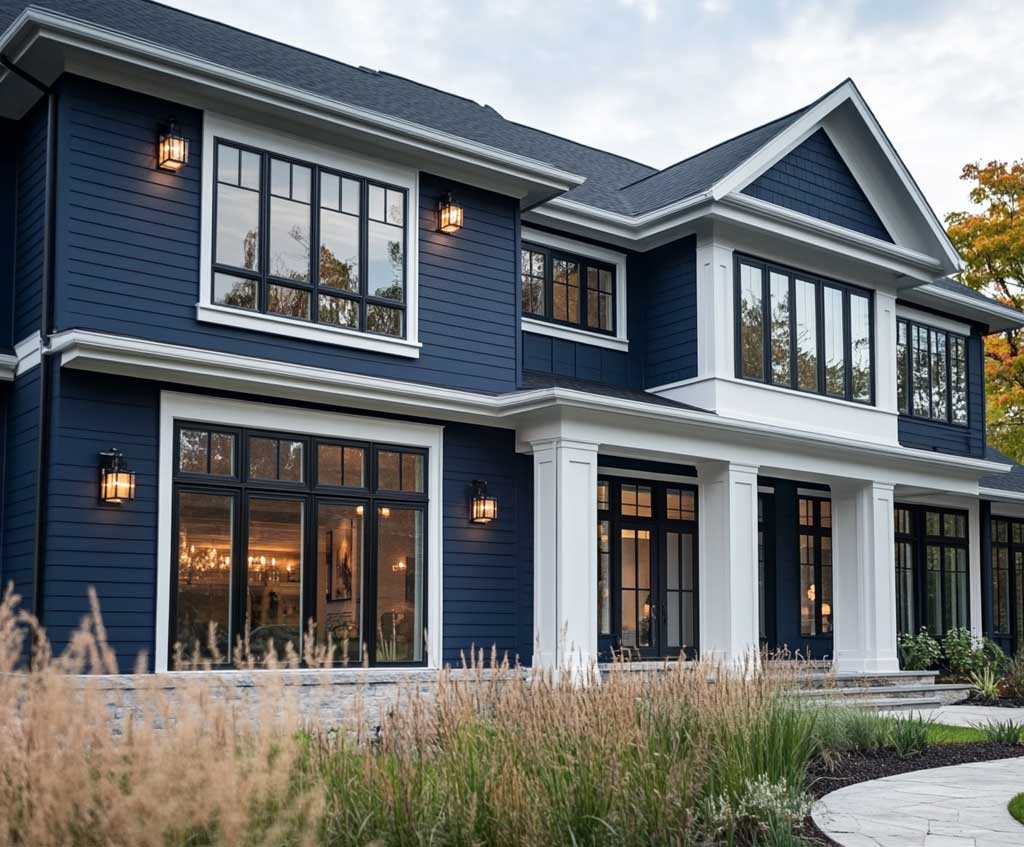
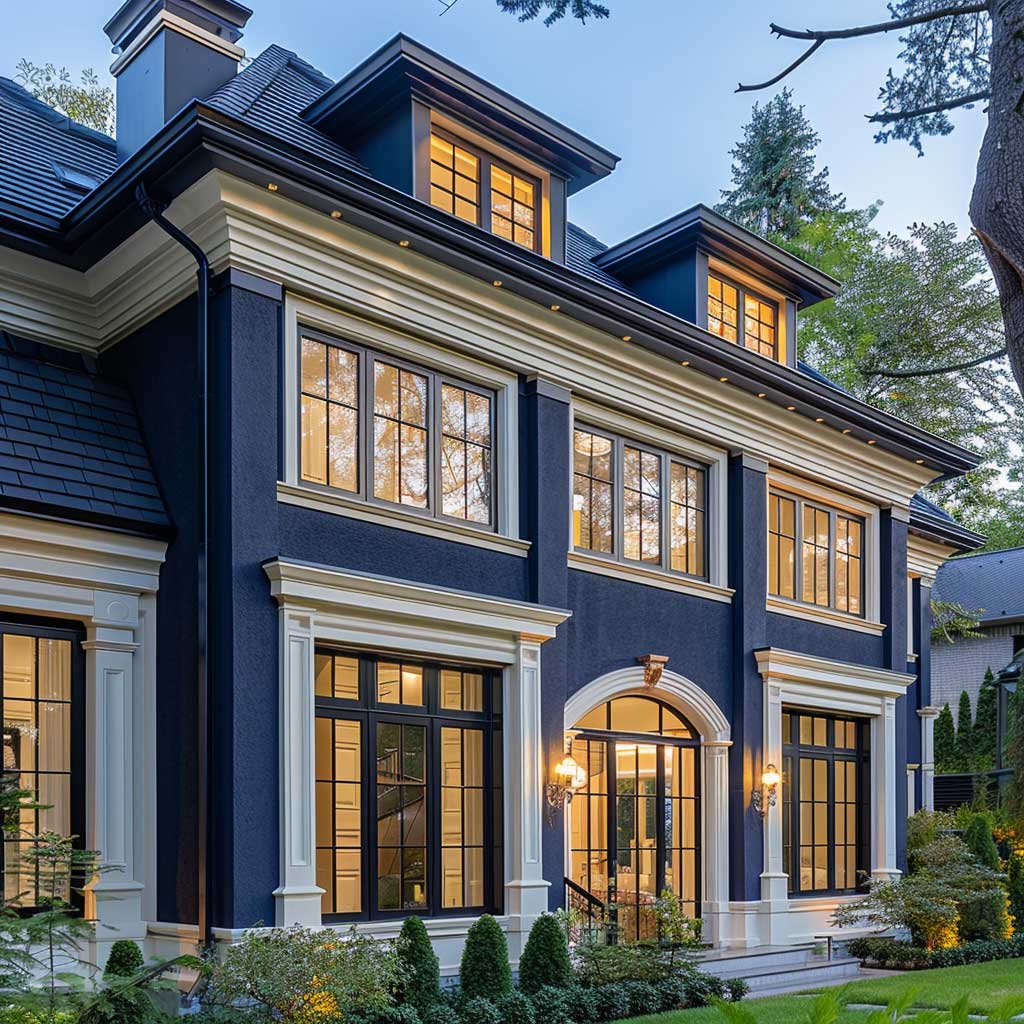
Blue exterior house color ideas span a range wider than most homeowners expect — from muted sky tones that read almost white in full sun to near-black navies that anchor a facade with quiet authority. The shade you choose does more than update curb appeal: it changes how the house reads against its roof, how it holds up under UV exposure, and whether a repaint in seven years feels like maintenance or a mistake. Getting the blue right the first time matters.
Three blue families dominate exterior applications: sky blue, navy, and azure. Each behaves differently under direct sunlight, pairs with different trim colors, and suits different architectural types. A sky blue that photographs beautifully on a Cape Cod will flatten on a contemporary box house; a navy that looks sophisticated on a colonial may read as near-black on a south-facing wall by 2 PM. Knowing which blue belongs on which house is the actual decision here.
Benjamin Moore exterior paint runs $63.99–$69.99 per gallon at the Regal Select and Element Guard tiers, and one gallon covers roughly 300–400 square feet per coat. A two-coat job on a 1,500 sq ft exterior needs 8–10 gallons for the body alone. The investment is real — so this breakdown goes shade by shade, with specific paints, trim pairings, and the mistakes that cost homeowners a second repaint.
– Sky blue works on wood-framed cottages, Cape Cods, and craftsman homes — pairs with white or cream trim; avoid on modern flat facades where it reads too soft.
– Navy (LRV 4–7) darkens noticeably on south-facing walls by mid-afternoon — go one value lighter than your initial swatch choice.
– Azure/vibrant blue is the boldest move: floor-to-ceiling windows amplify it, but saturated blue on stucco fades faster than on fiber cement — expect to repaint in 5–7 years vs. 10–15.
– One gallon of quality exterior paint covers 300–400 sq ft; a standard 1,500 sq ft exterior needs 8–10 gallons per coat.
– Benjamin Moore Regal Select exterior runs ~$63.99/gallon; Element Guard ~$69.99/gallon — worth the premium on a color this visible.
Sky Blue Exterior House Color — Where Light Siding Earns Its Keep
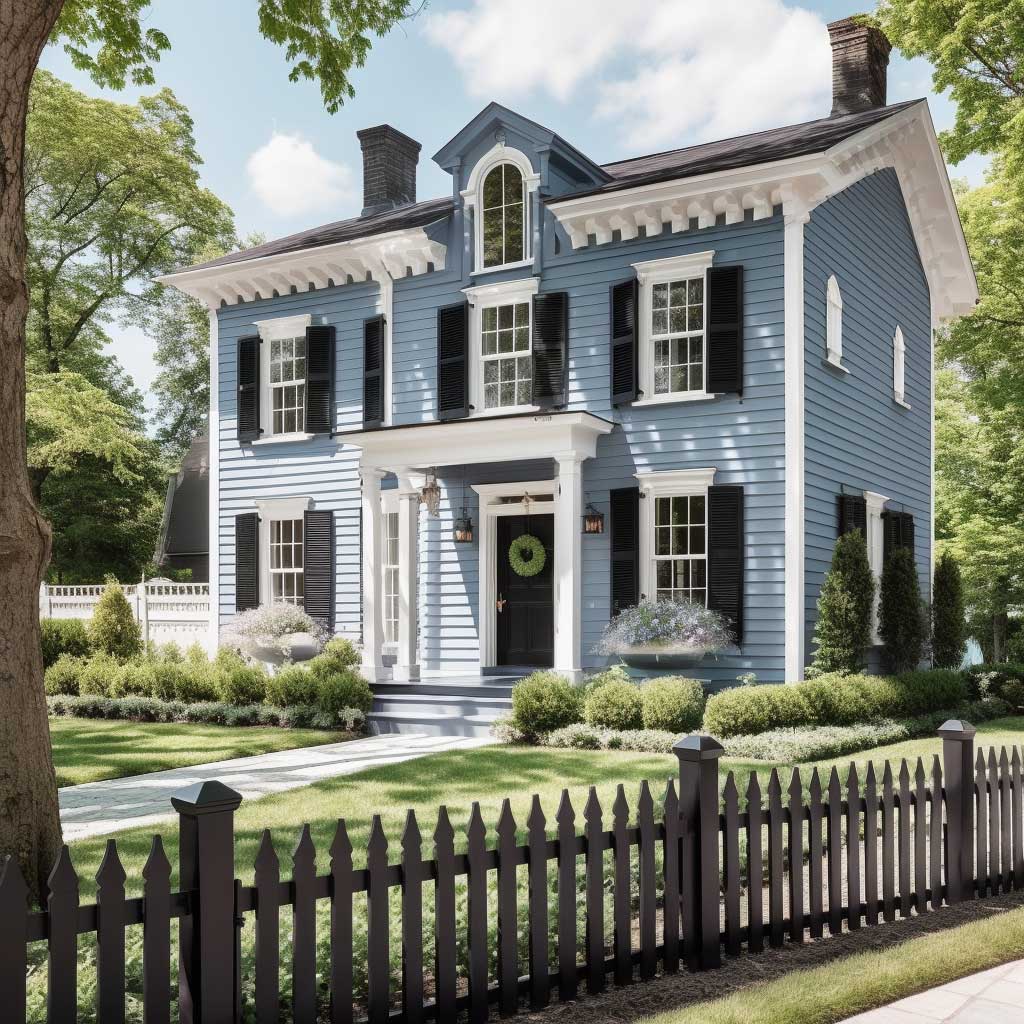
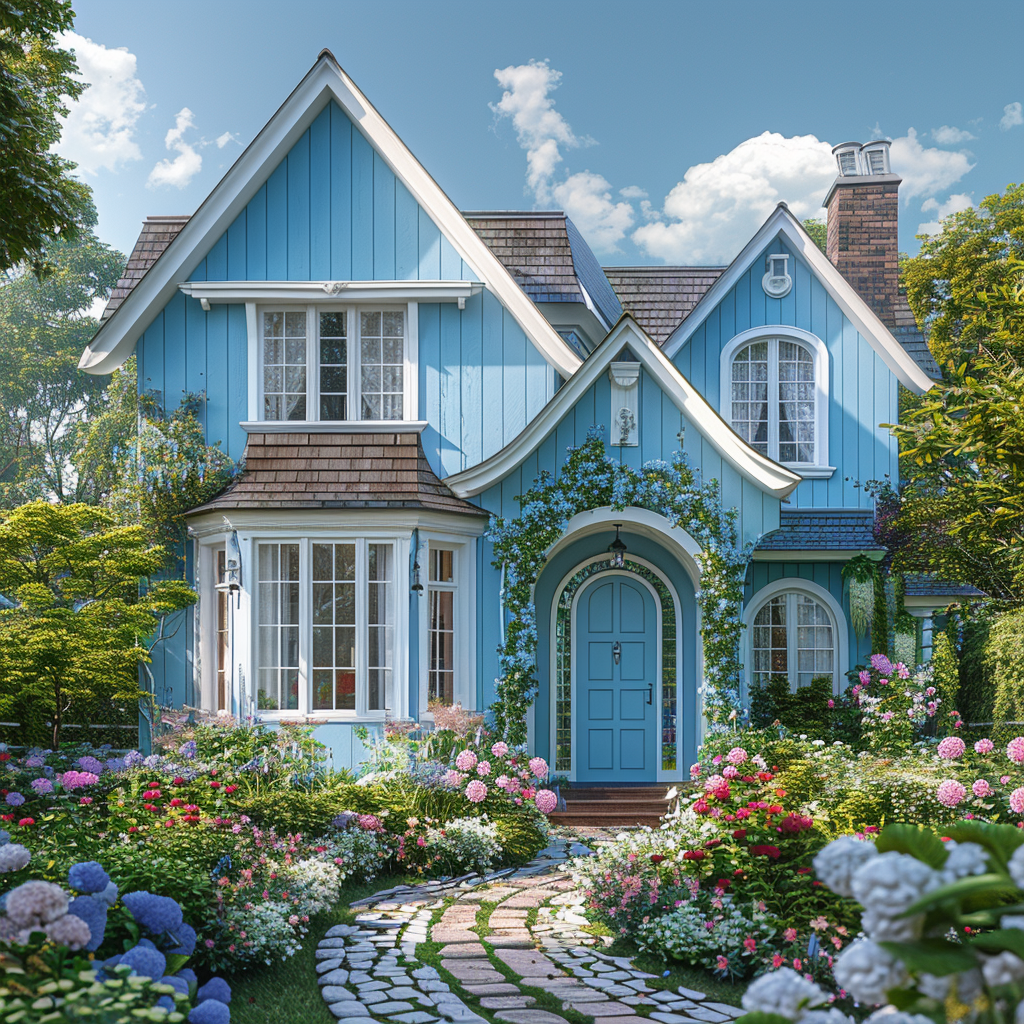
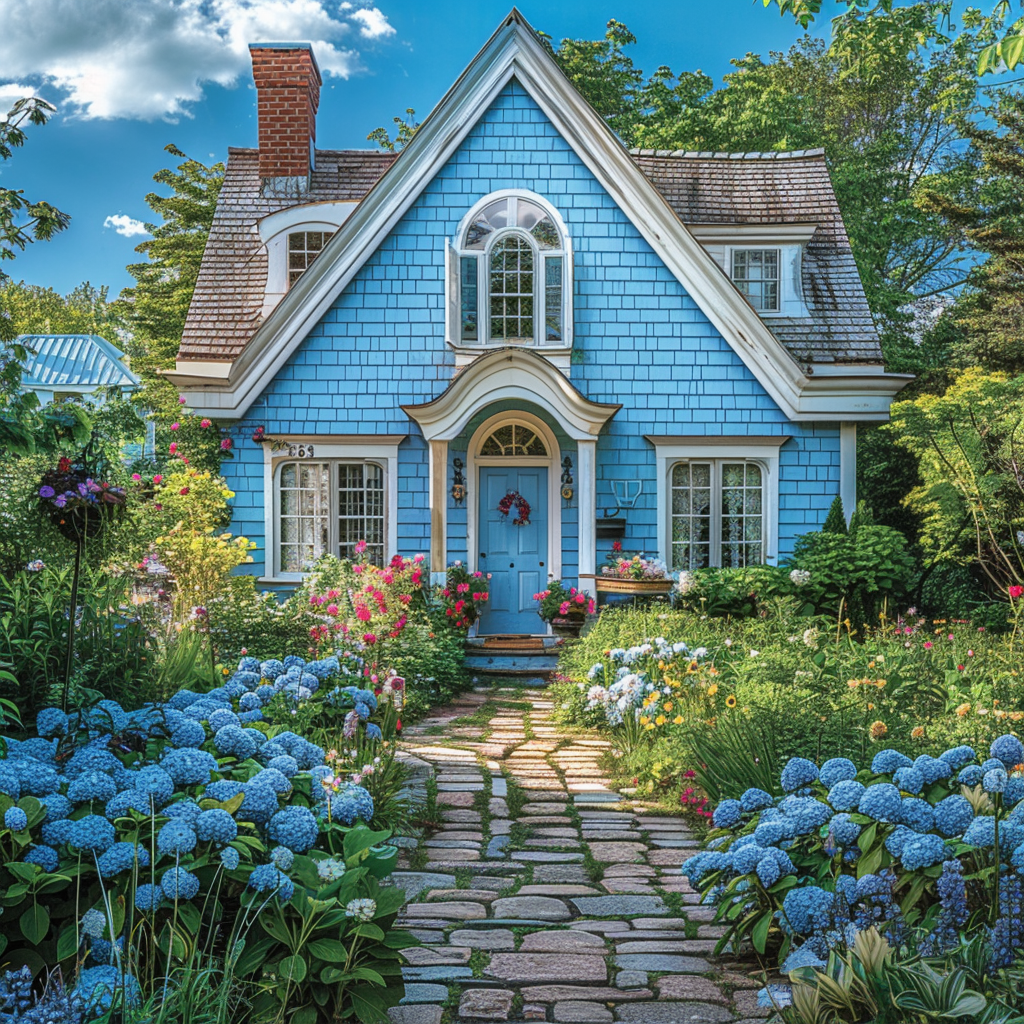
Sky blue and light blue exterior house colors sit in a deceptive part of the palette — they look almost neutral on a swatch card, then arrive on the facade with a presence you didn’t anticipate. That’s the trick. A shade like Benjamin Moore’s Morning Sky Blue (2053-70) reads as pale in the can, but against green landscaping and a gray or dark roof it becomes the visual anchor of the entire property. Stylists recommend this family for homes where the architecture already has character — carved trim, shutters, a covered porch — because sky blue amplifies detail rather than competing with it.
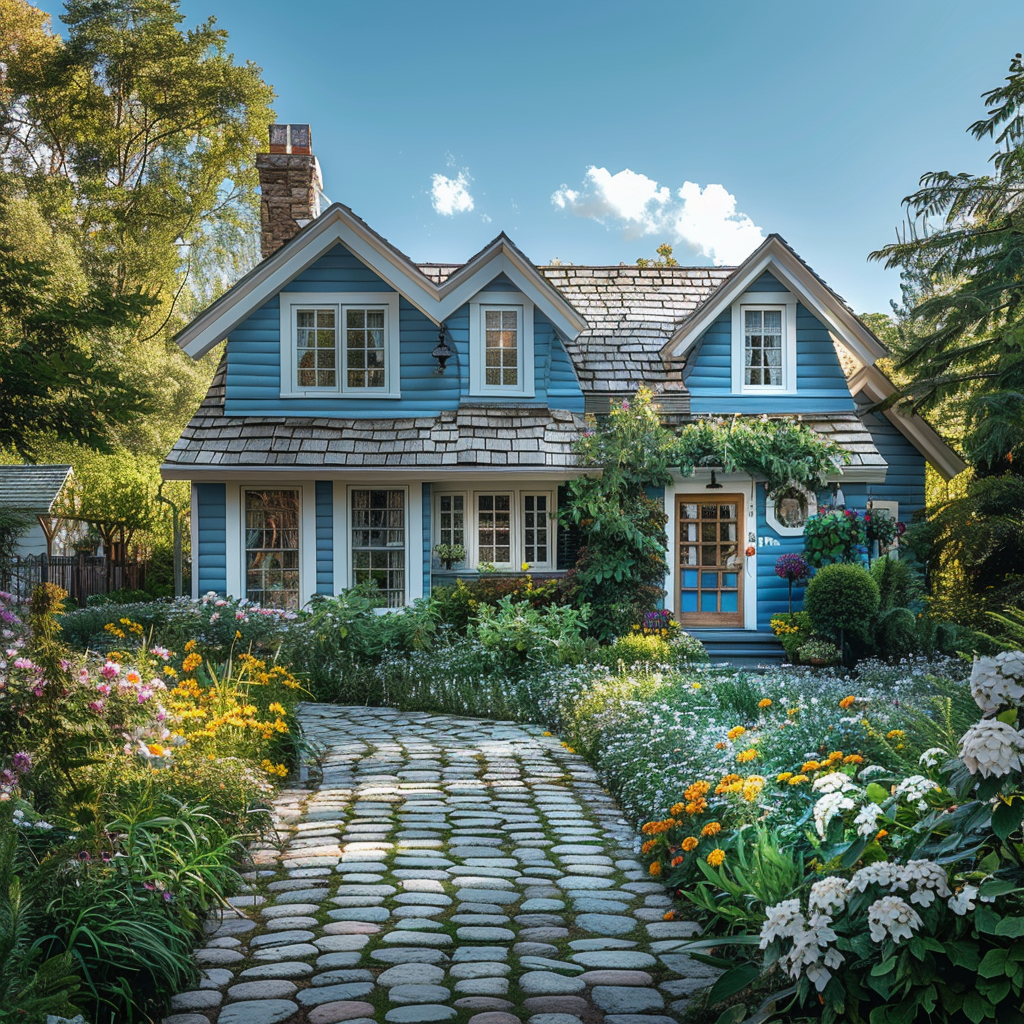
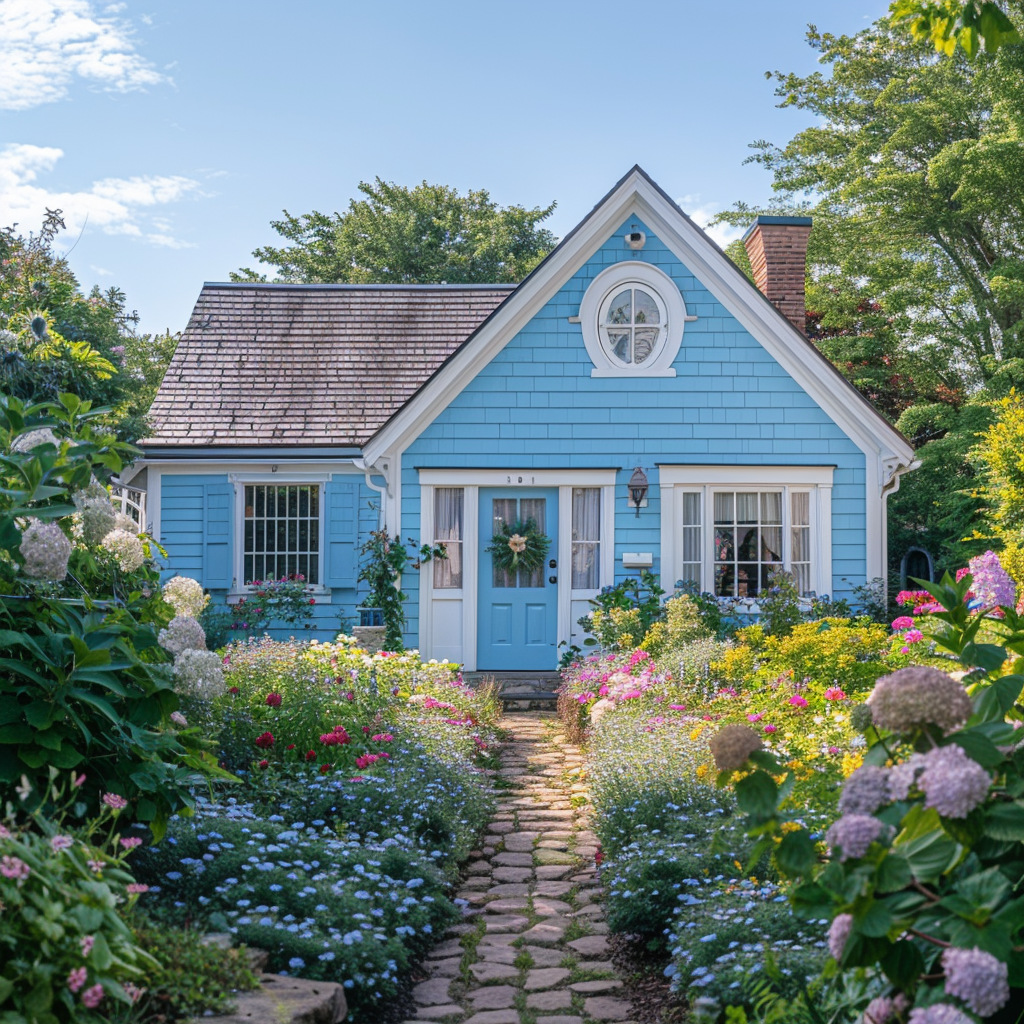
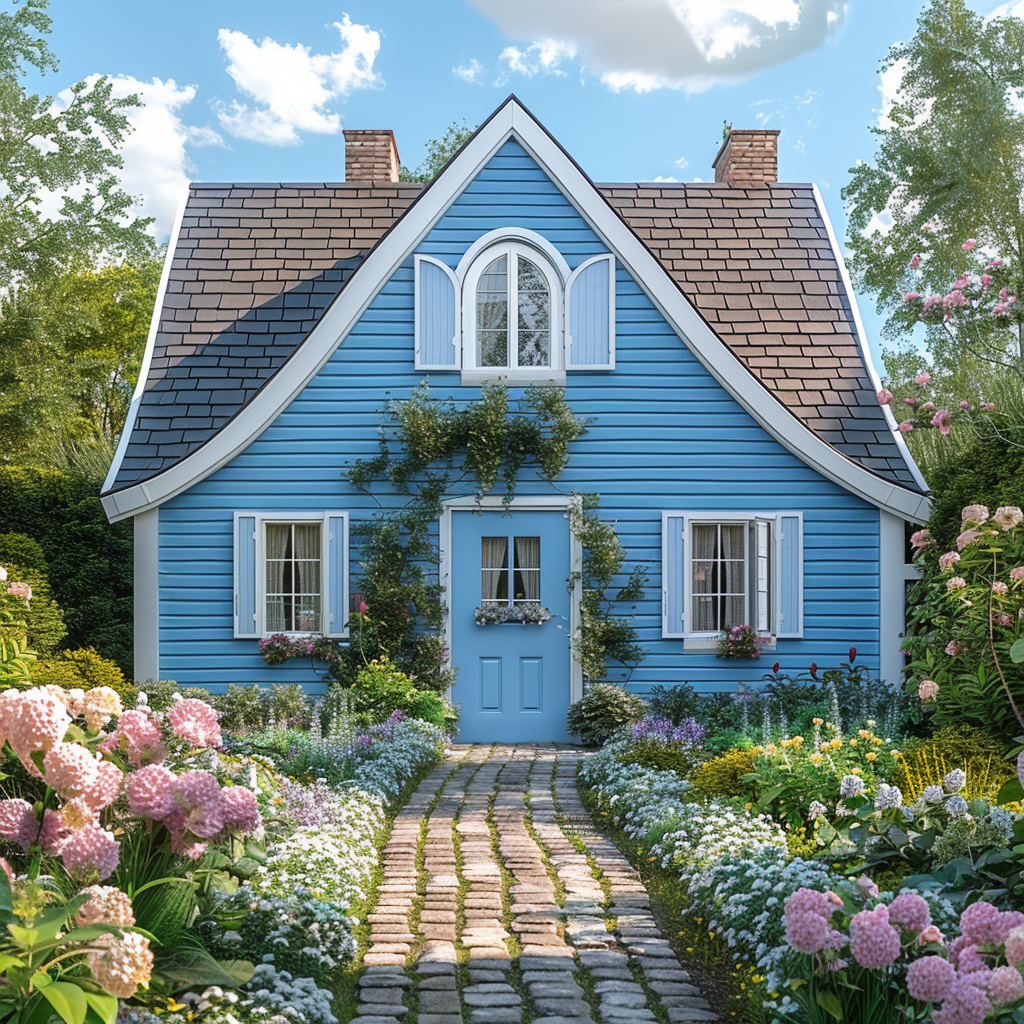
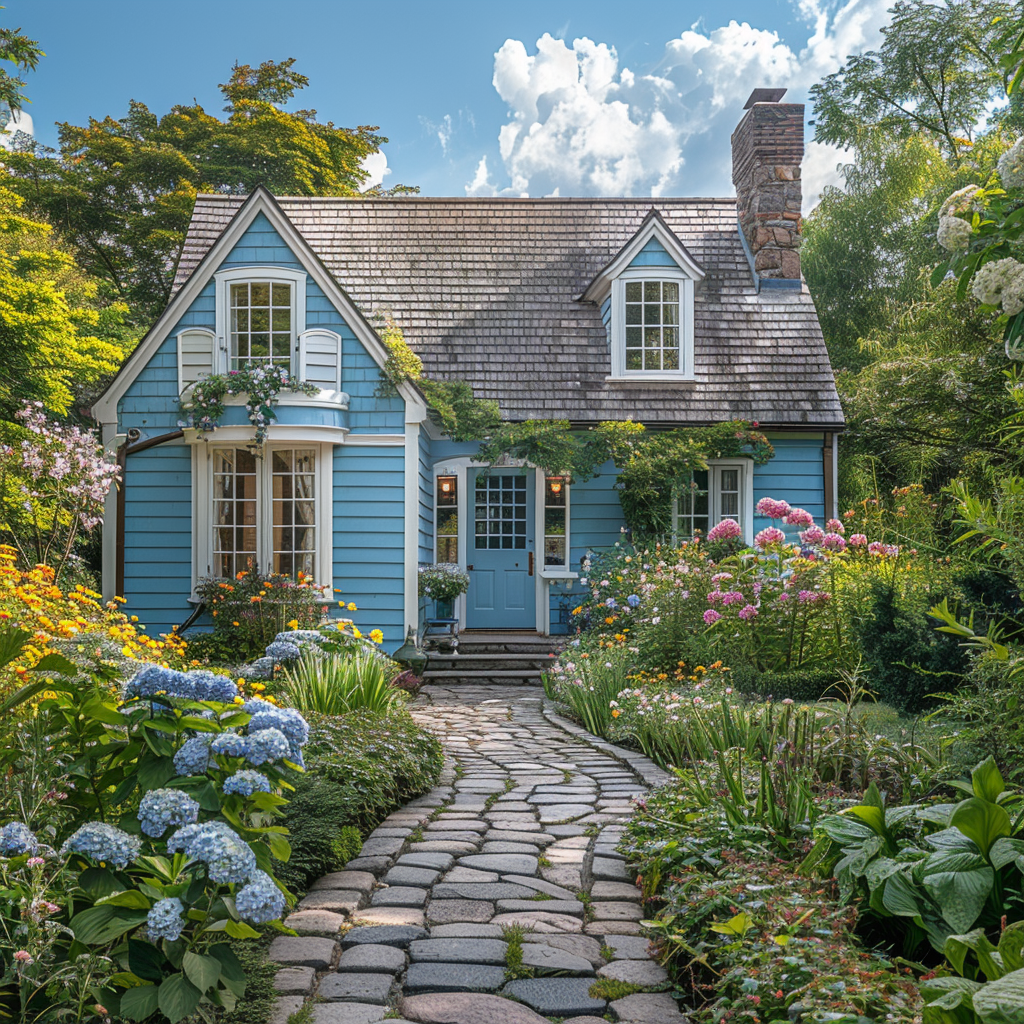
Lighter exterior blues hold color well on north- and east-facing facades where indirect light keeps them from washing out. On west- and south-facing walls, the same shade will brighten significantly by mid-afternoon, sometimes reading almost white. Is that a problem? Not always — but it means the color you test in morning shade is not the color your neighbors see at 4 PM. Paint a 2×2-foot swatch directly on the wall, check it at 8 AM, noon, and 4 PM for two days before committing. Wood siding painted with premium exterior acrylic needs repainting every 7–10 years, so choosing wrong has consequences that outlast your enthusiasm for the decision.
What doesn’t work: sky blue on a modern flat-roof house with no trim detail. Without architectural relief, a single pale blue field reads as unfinished — like primer waiting for its real color. The trim pairing matters almost as much as the blue itself. Pure brilliant white next to sky blue creates a joint that looks painted rather than designed; off-whites with warm undertones (think linen or light cream) soften that edge while keeping the contrast. Avoid matching shutters and trim to the same sky blue as the body — it dissolves the definition the color needs to read well from the street.
Coverage math: one gallon of Benjamin Moore Regal Select exterior (~$63.99) covers 300–400 sq ft per coat on smooth wood siding. A modest 1,200 sq ft Cape Cod at two coats needs roughly 7–8 gallons for the body — budget around $500 in paint before primer, trim, and any accent color. That figure climbs quickly on larger homes, which is why knowing you have the right blue before purchasing full gallons is not optional.
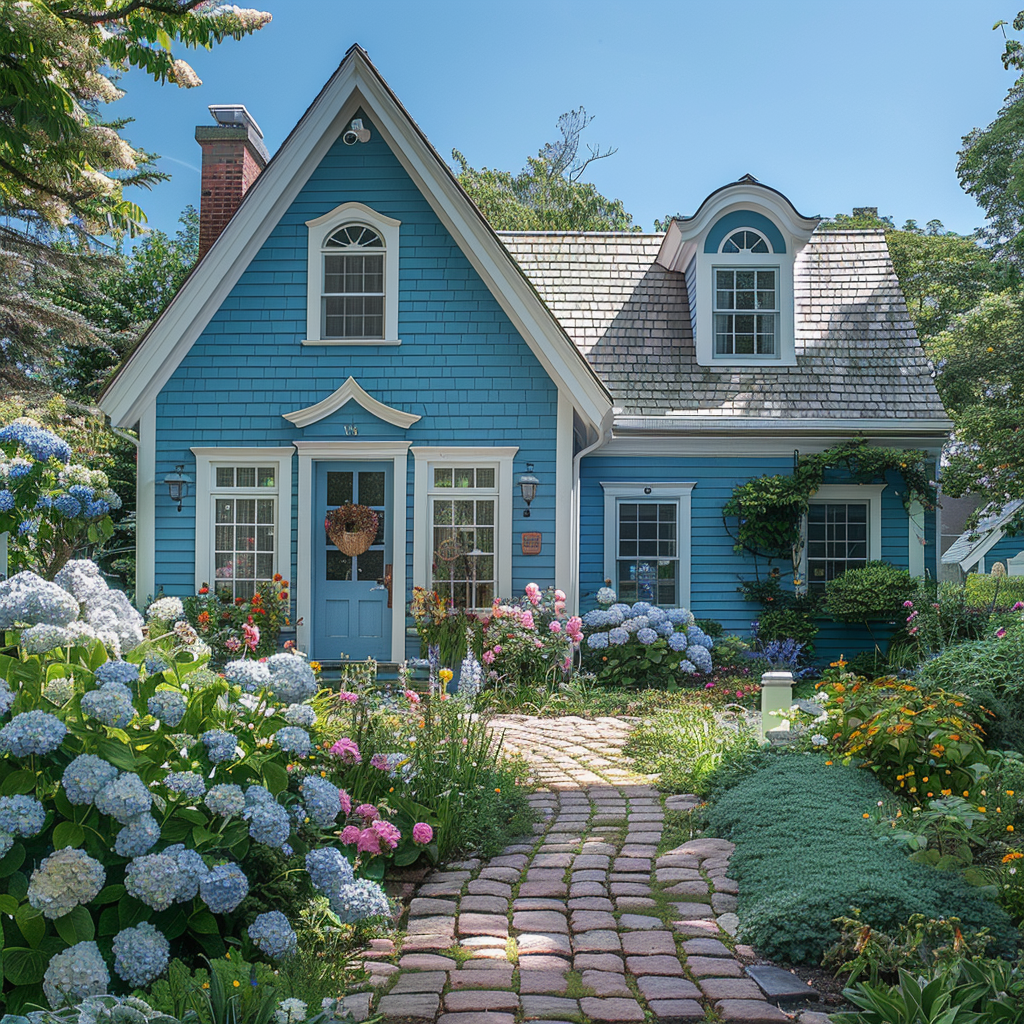
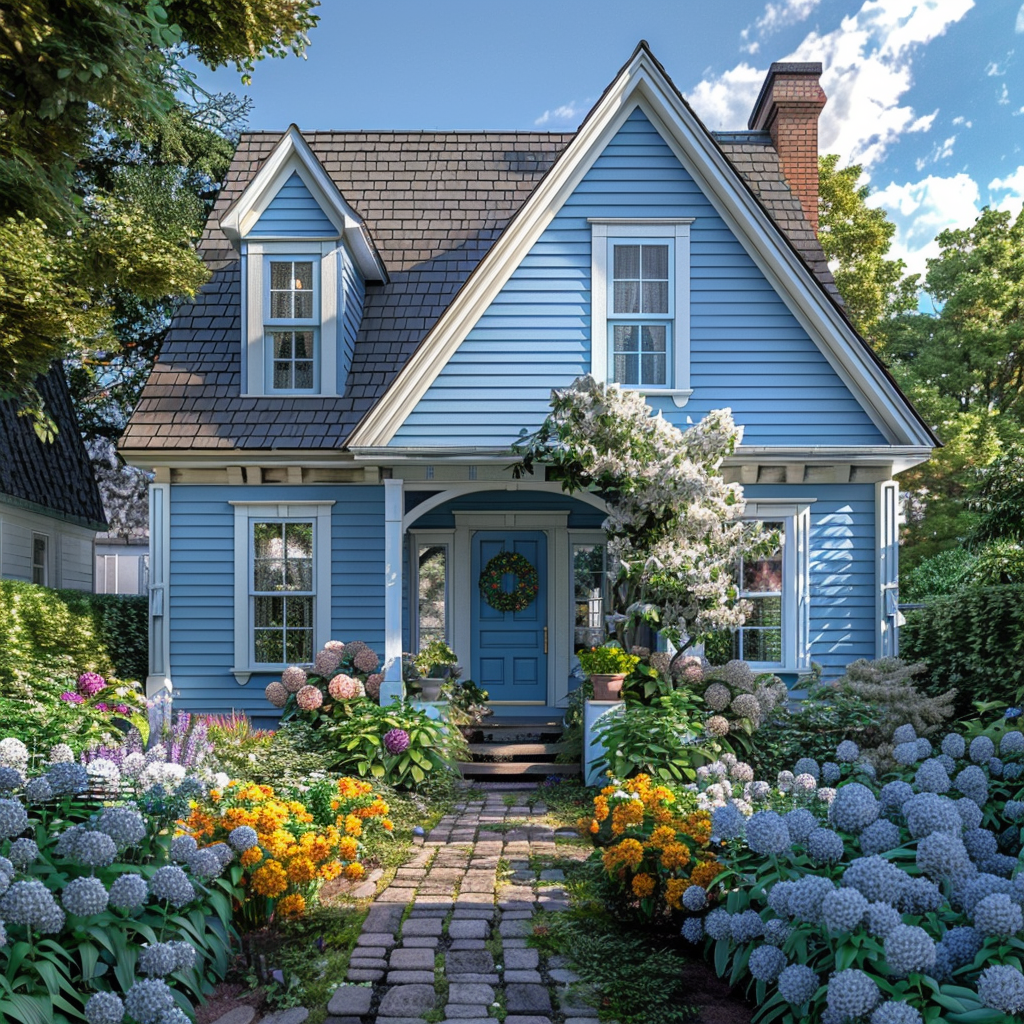
Navy Blue Exterior House Color — What Royal Blue and Dark Blue Actually Cost You
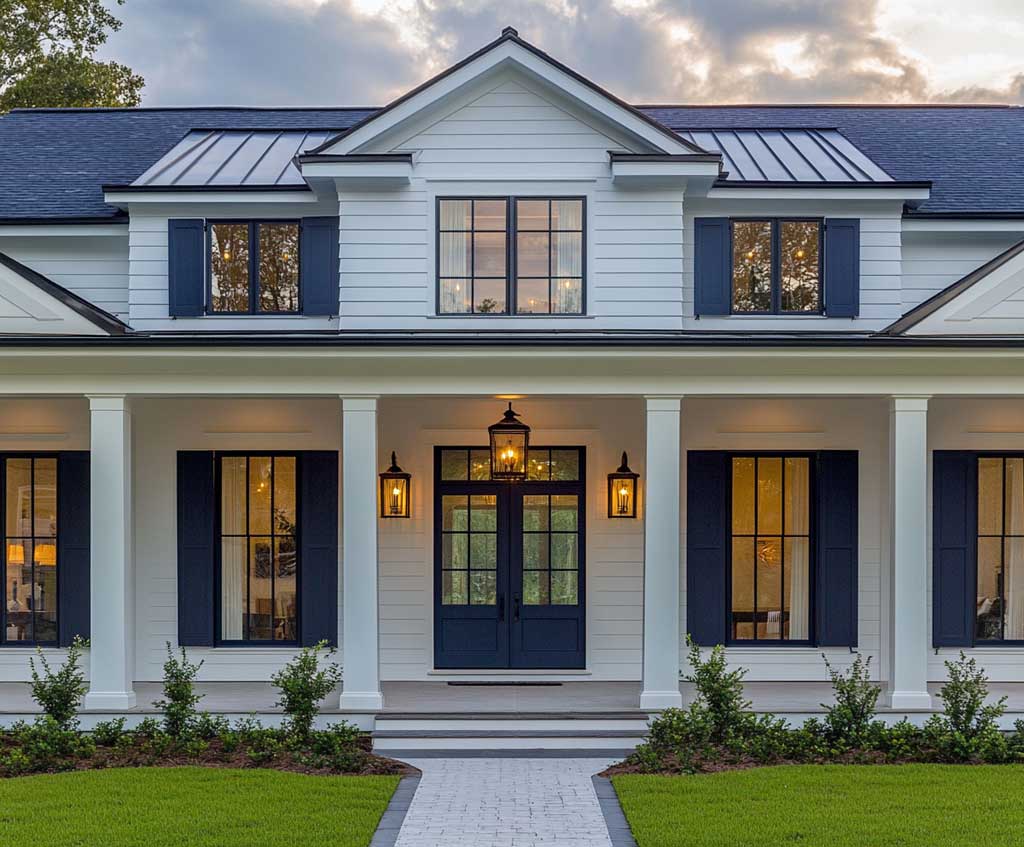
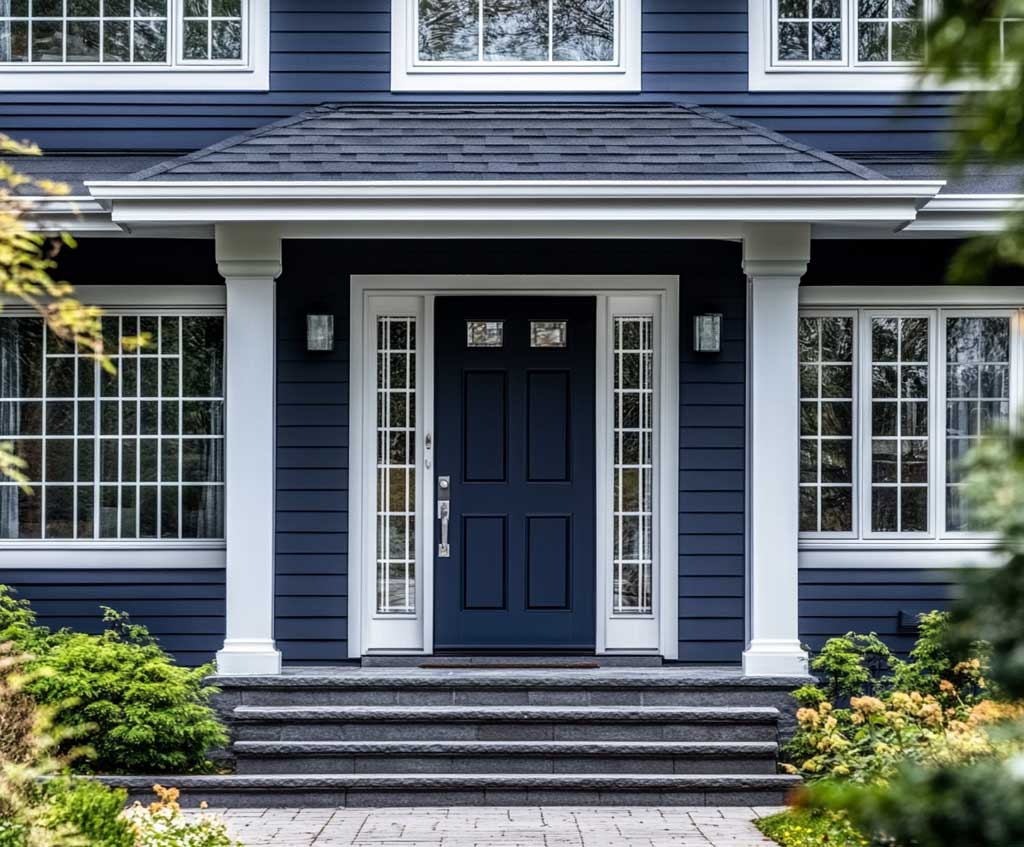
Navy and royal blue exterior house colors carry one technical fact that changes everything about how you choose them: Light Reflectance Value. Sherwin-Williams Naval (SW 6244) has an LRV of 4 — meaning it absorbs 96% of available light. Benjamin Moore Hale Navy (HC-154), slightly lighter at LRV 6.83, is the shade that painters on coastal and colonial projects come back to consistently. Both read as deep, sophisticated blue in overcast conditions and shift toward near-black on a south-facing wall under direct afternoon sun. That shift is not a flaw — but you need to account for it before the paint truck arrives.
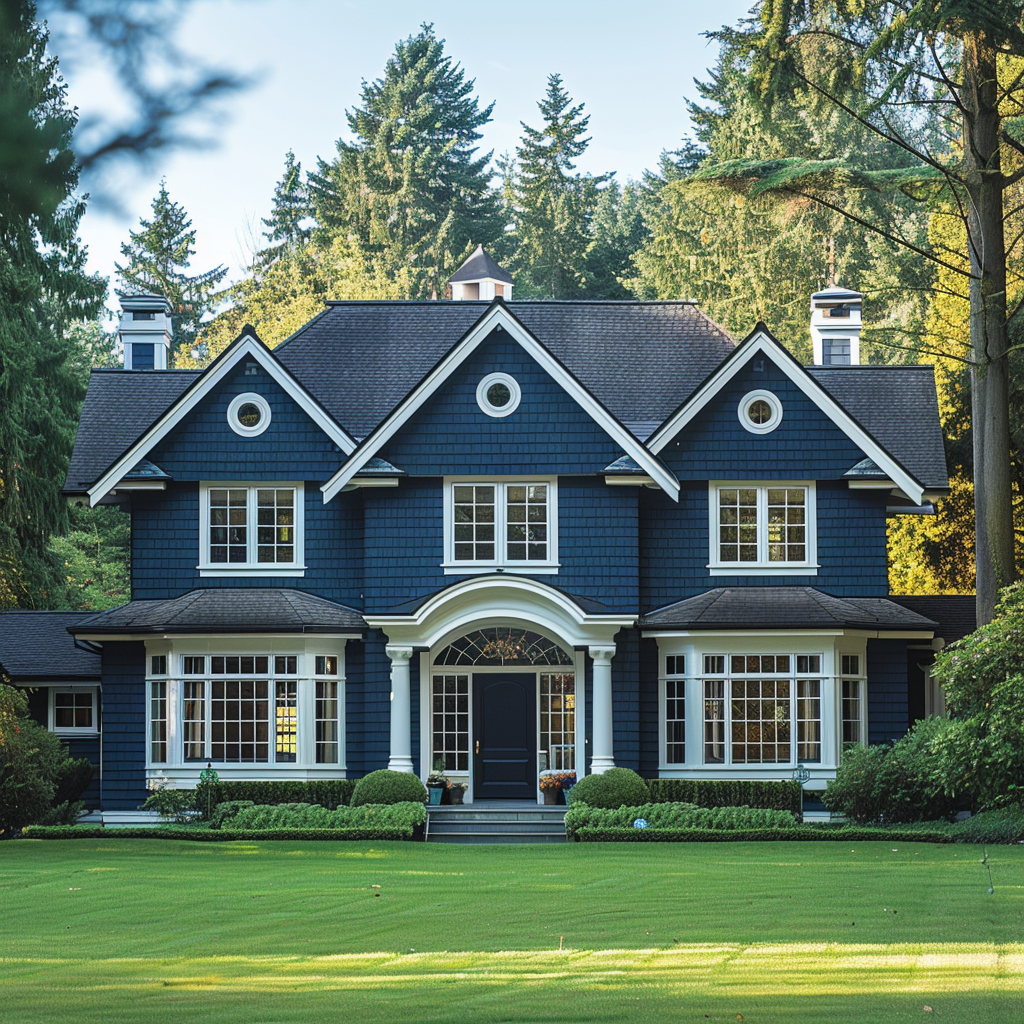
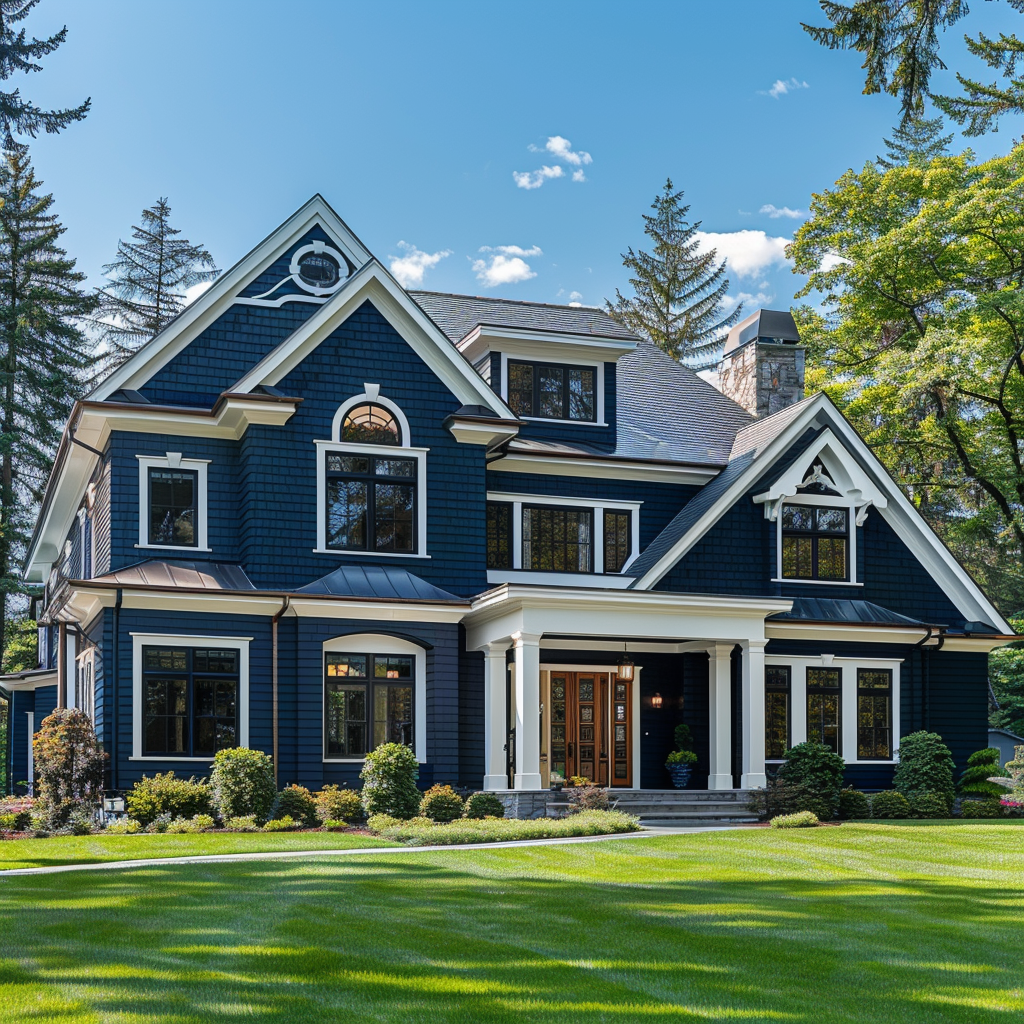
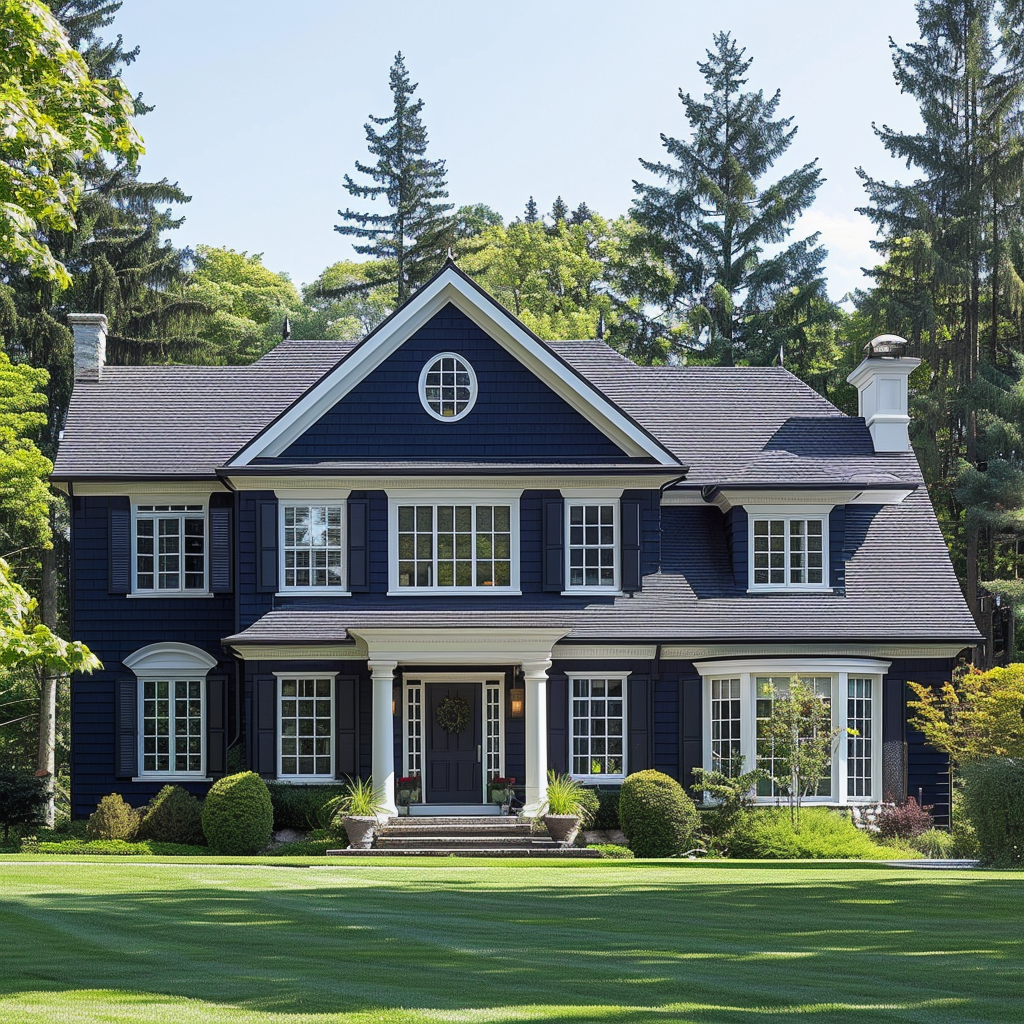
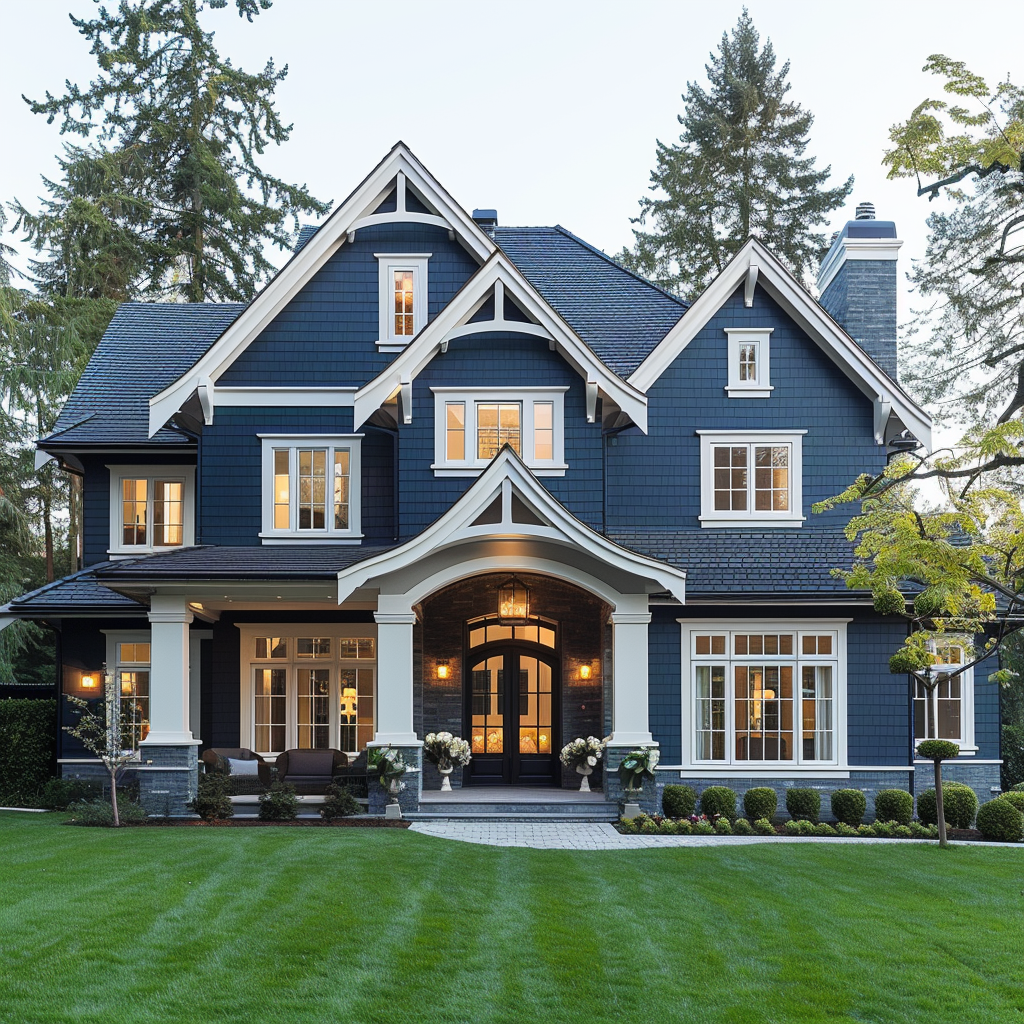
Why does navy hold such authority on traditional architecture? Think of it like a formal jacket: the cut (your house’s trim and moldings) becomes suddenly legible once the body goes dark. White fascia, window frames, and a front door in cream or off-white pop forward against navy siding in a way they simply don’t against lighter colors. A common approach is to use a satin or semi-gloss finish on trim next to a dark body — flat white trim next to deep navy absorbs moisture faster in humid climates and degrades noticeably within a few years. The trim finish is not a decoration decision; it’s a maintenance decision.
The question worth asking before going navy: does your house face south or west on its primary facade? If so, the afternoon sun load is real. Painters recommend choosing one LRV value lighter than your first swatch instinct — the color will read correctly at 2 PM instead of reading like weathered charcoal. Dark blue exterior paint also fades faster than light blues under prolonged UV exposure; on wood siding, plan for a repaint cycle of 7–10 years with premium exterior acrylic, and 3–7 years on older wood that has already seen weather stress. The paint is not the weak link — surface prep and primer are.
For trending exterior colors for houses, navy consistently lands near the top across Cape Cod, colonial, and coastal architectural styles — not because it’s trendy, but because the contrast it creates against white trim is one of the few exterior combinations that photographs well, ages well, and reads well from the street simultaneously. Avoid carrying the navy onto shutters and window casings — the contrast collapses when body and trim run the same dark hue, and the facade loses dimension.
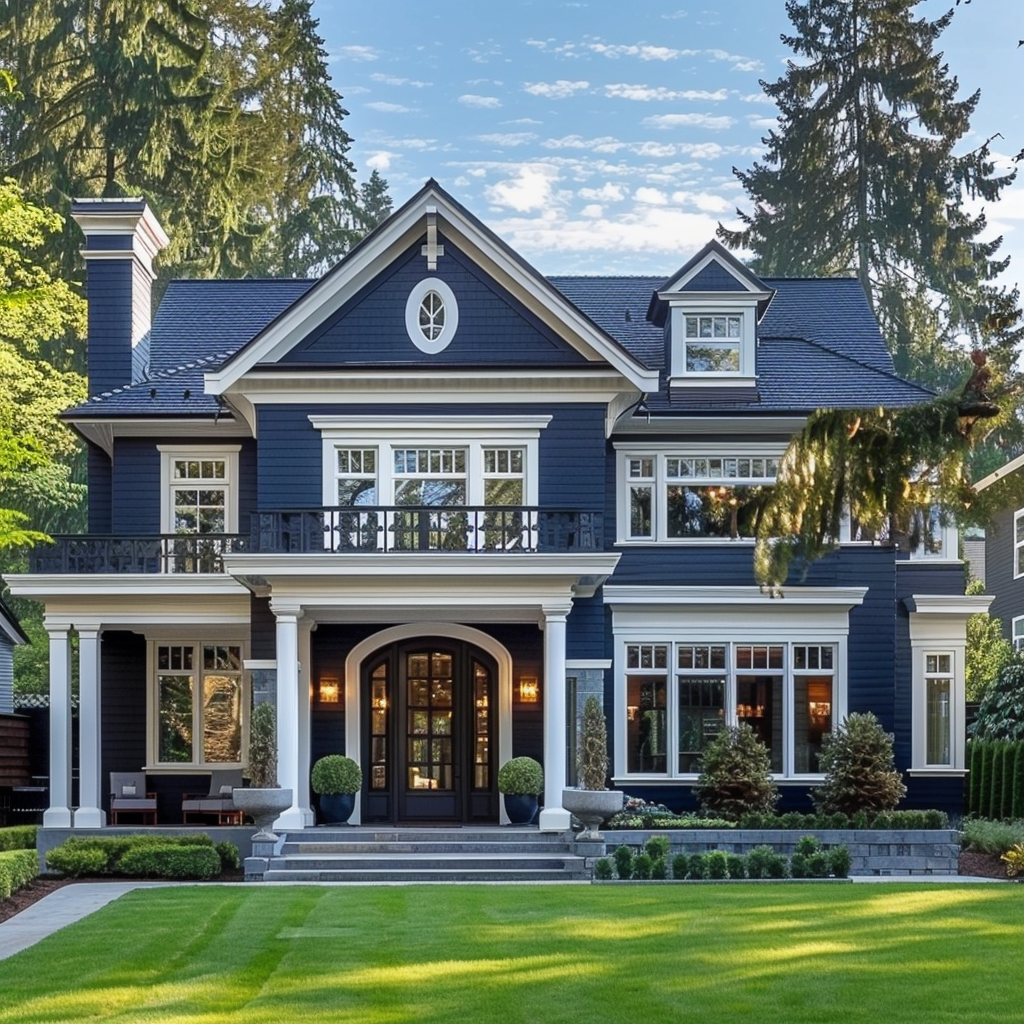
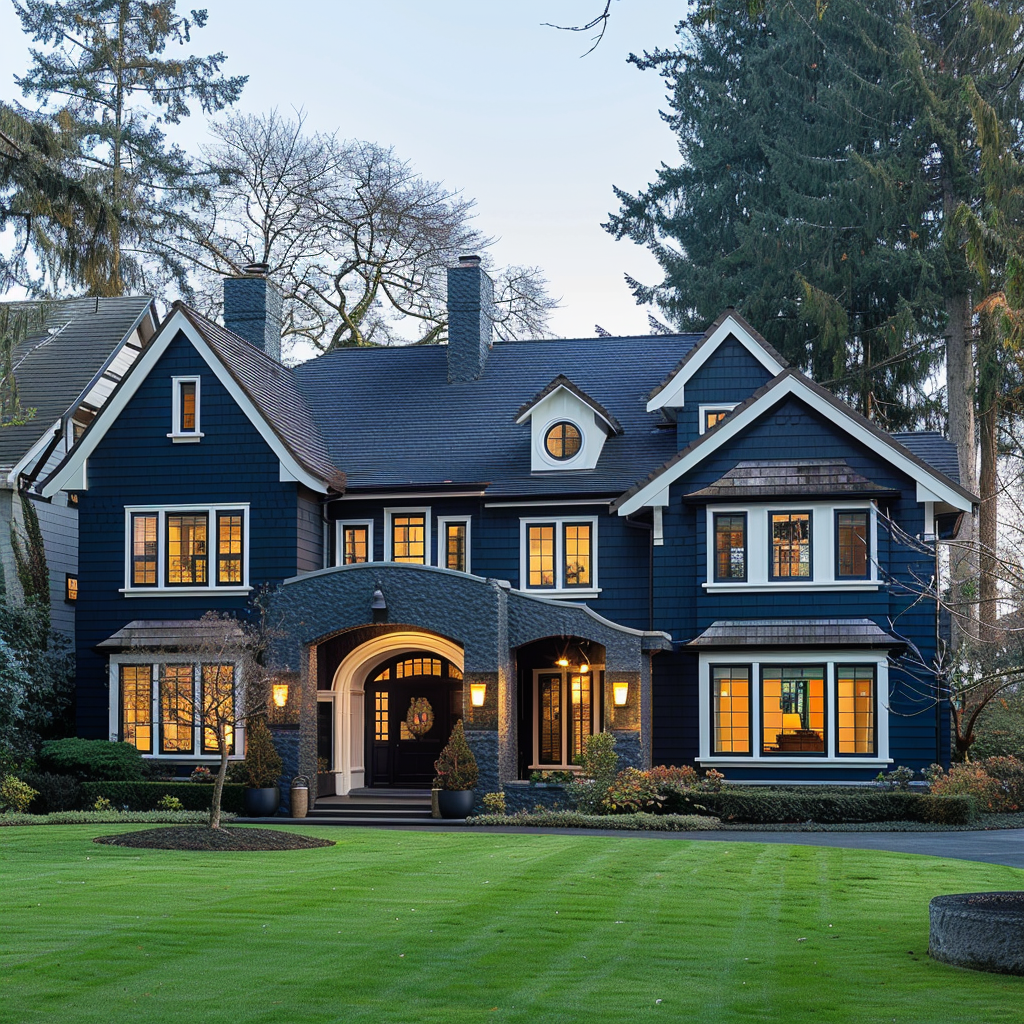
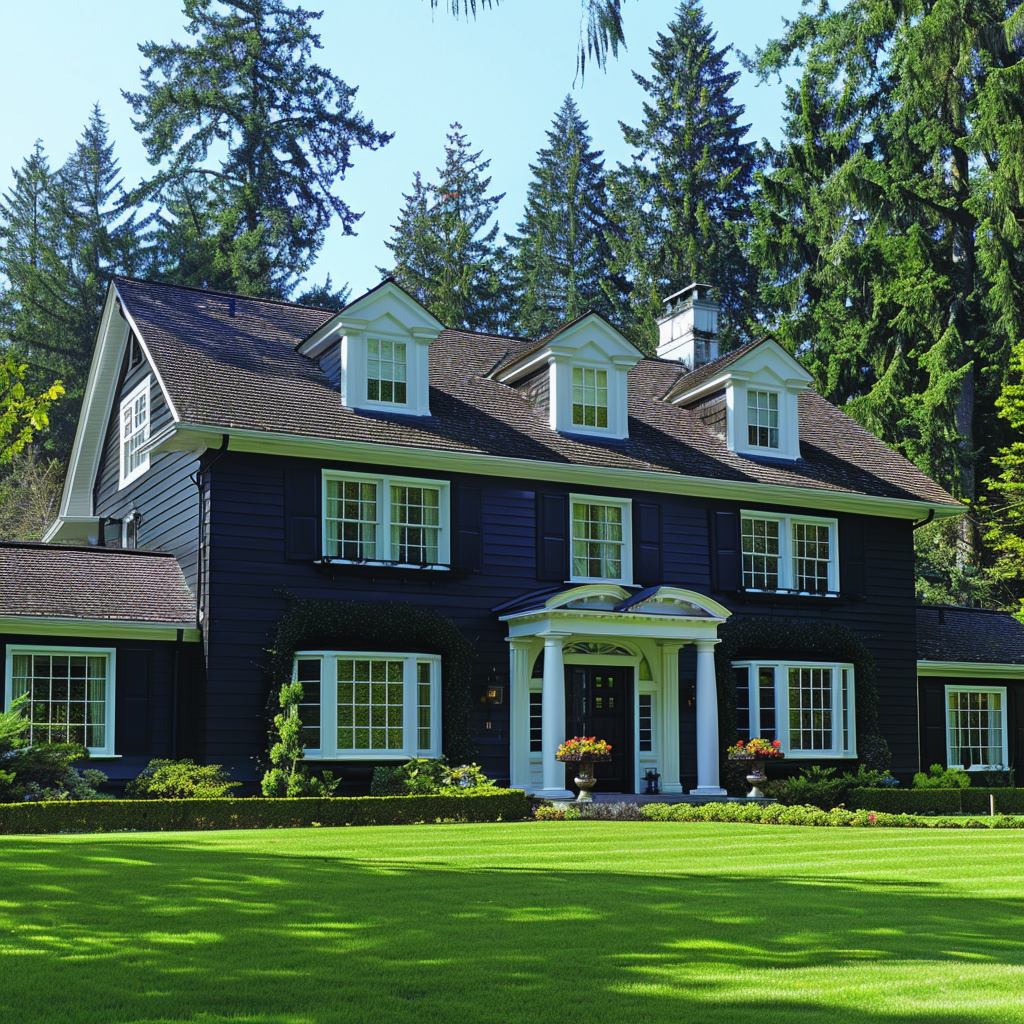
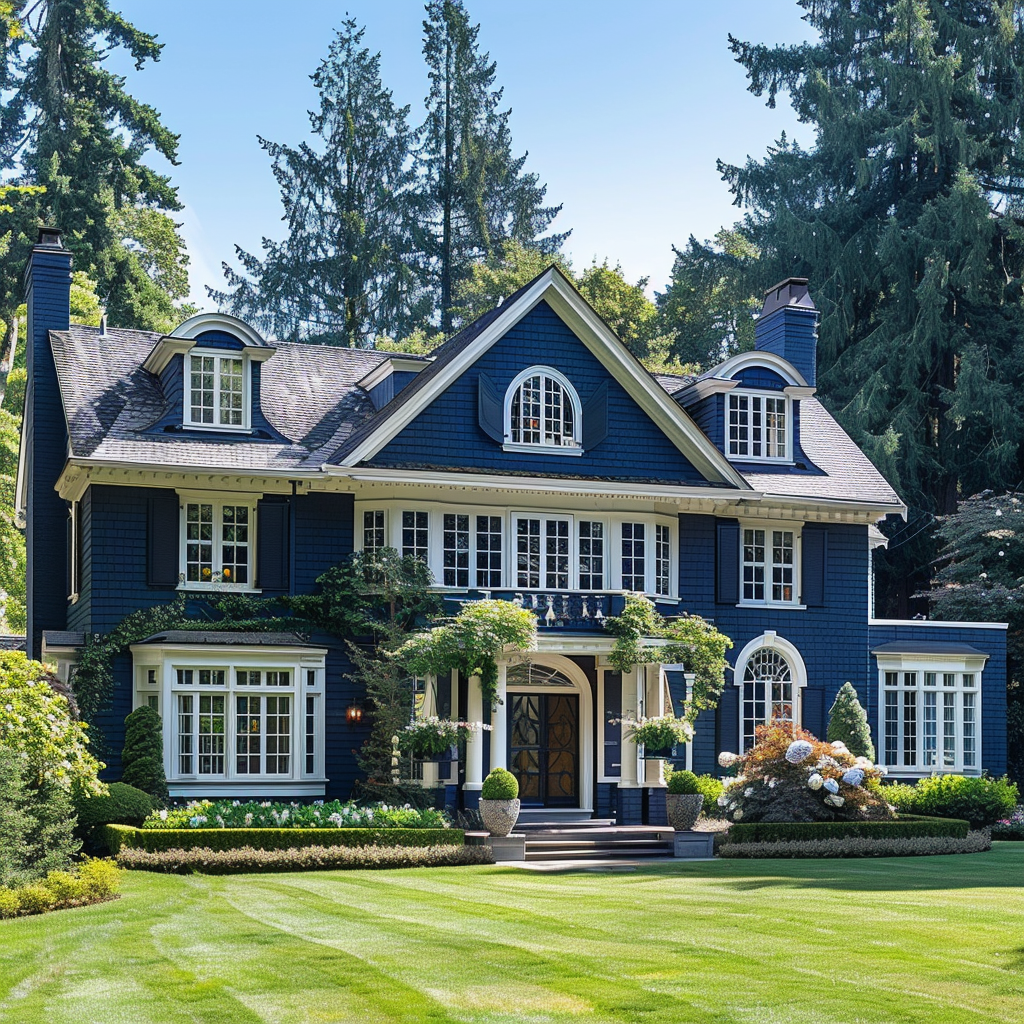
Don’t choose your navy from a phone screen. Dark blues shift more dramatically than any other exterior color family between indoor LED lighting and outdoor natural light — many shades look like medium blue on a screen and read as near-black on the facade by mid-afternoon. Order a physical sample, paint a 2×2-foot patch on the actual wall, and check it at 8 AM, noon, and 4 PM for two days. Don’t apply dark blue over raw or unpainted wood without primer — the porosity of bare wood creates uneven absorption and the color will look blotchy and dull within one season. And don’t carry the navy onto gutters, shutters, and fascia all at once: when body and trim run the same dark value, the facade flattens to a single tone at street distance, which defeats the architectural logic of choosing a high-contrast color in the first place.
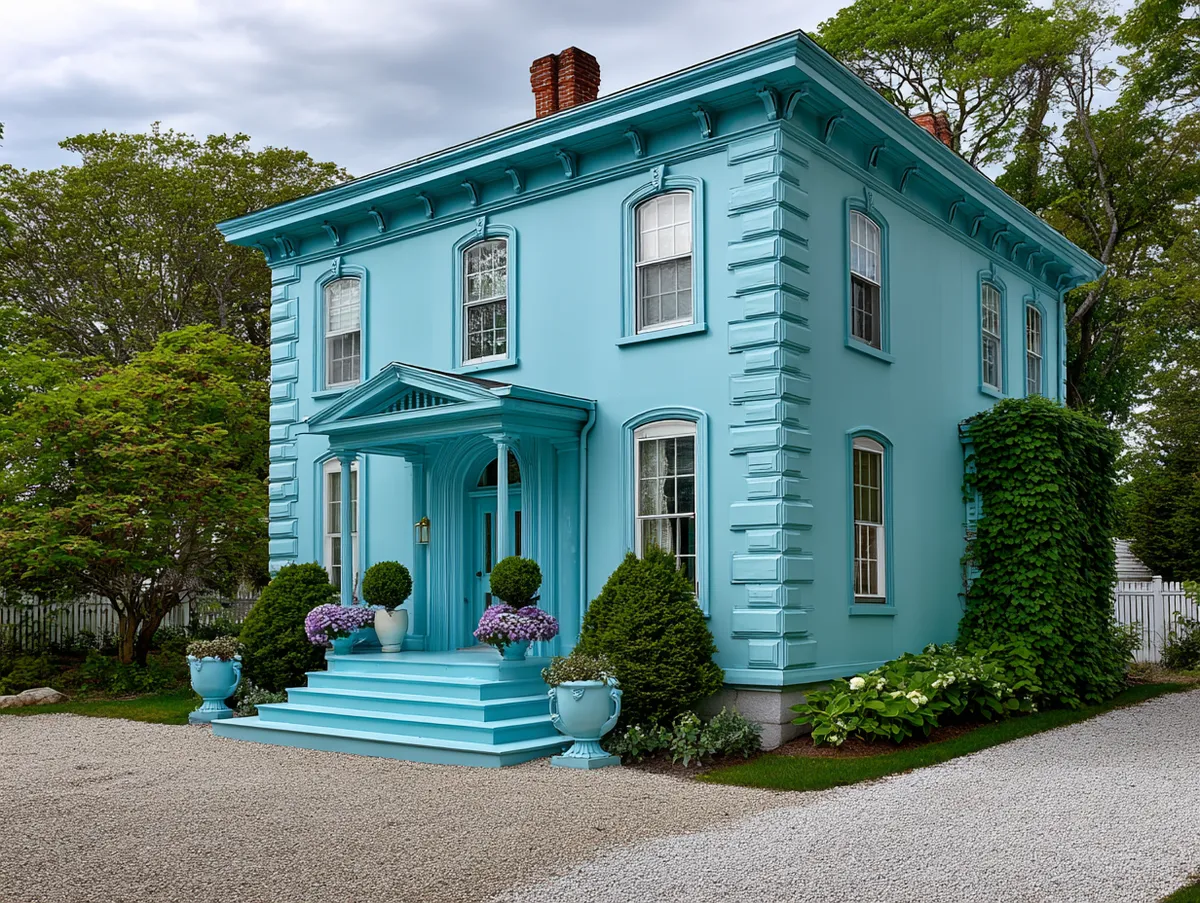
Vibrant Azure as a Blue Exterior House Color Idea That Skips the Obvious
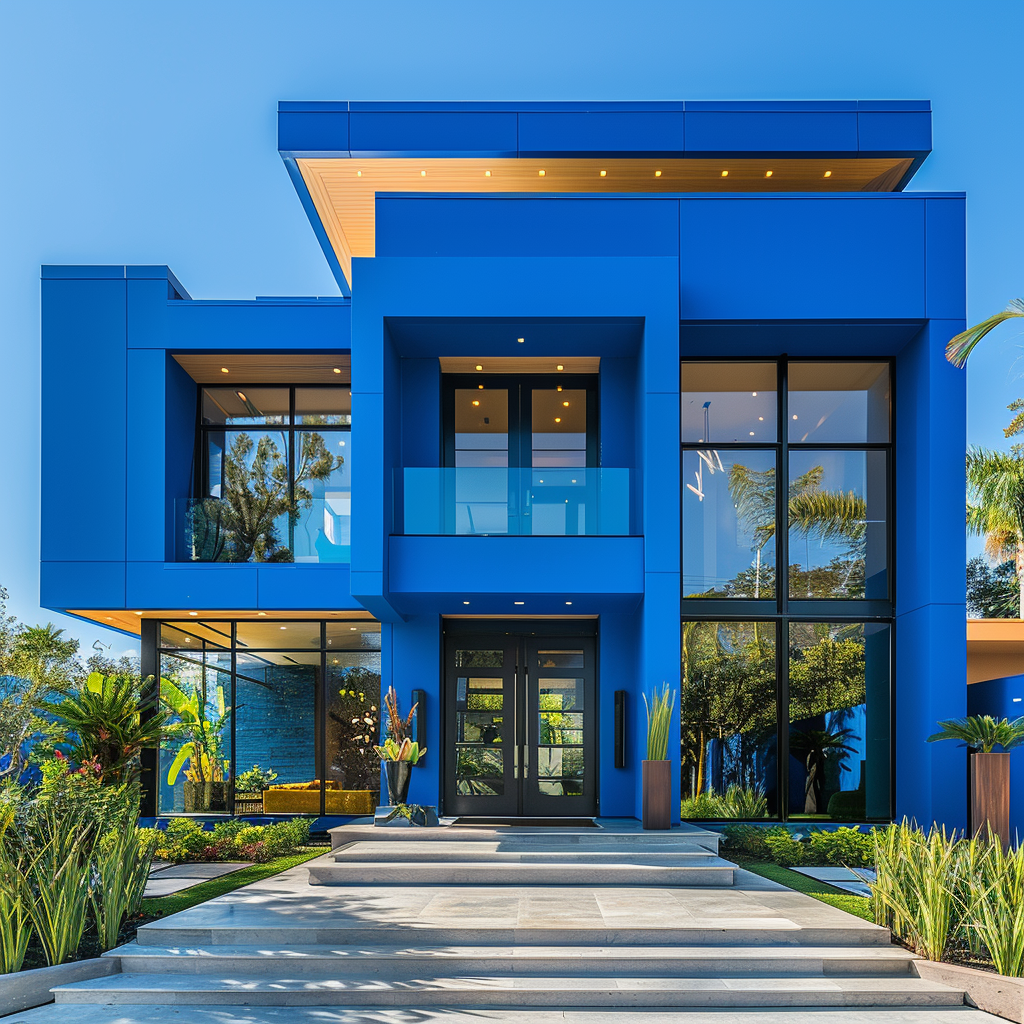
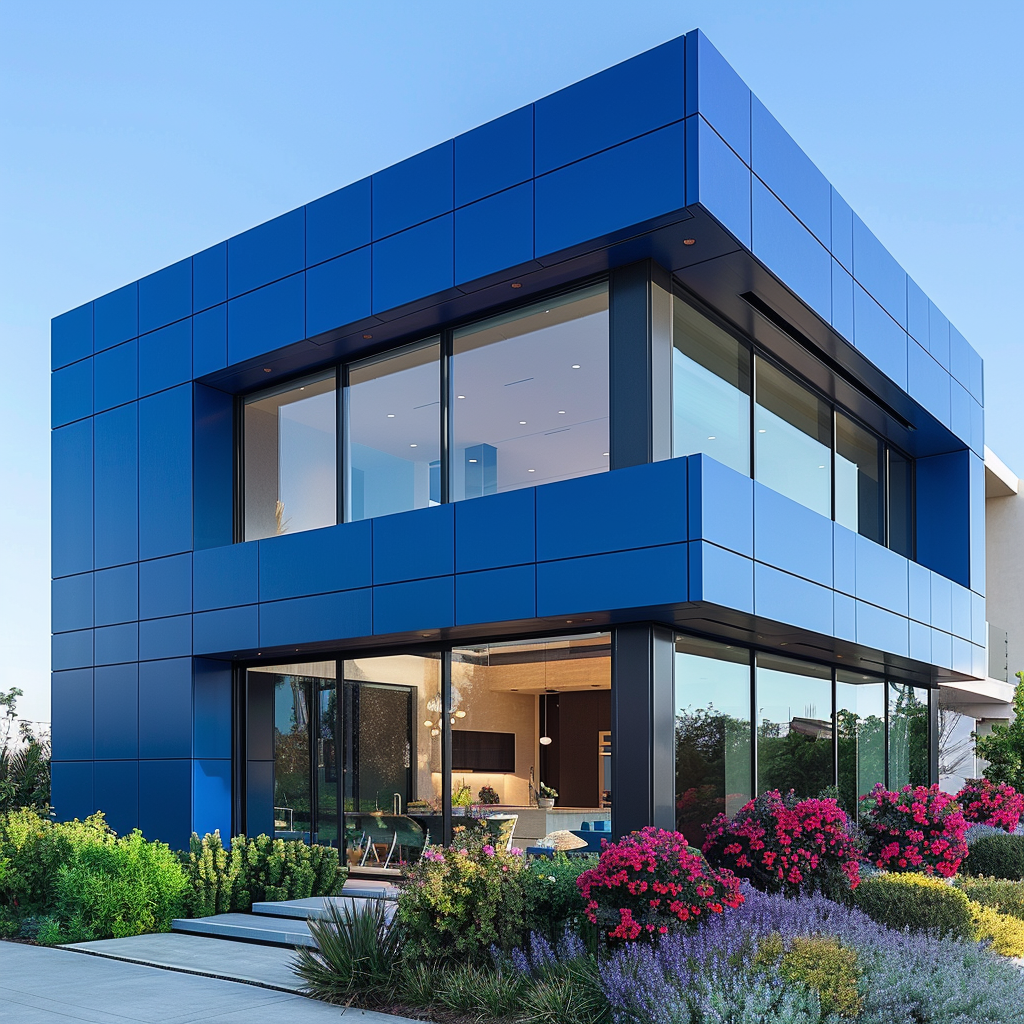
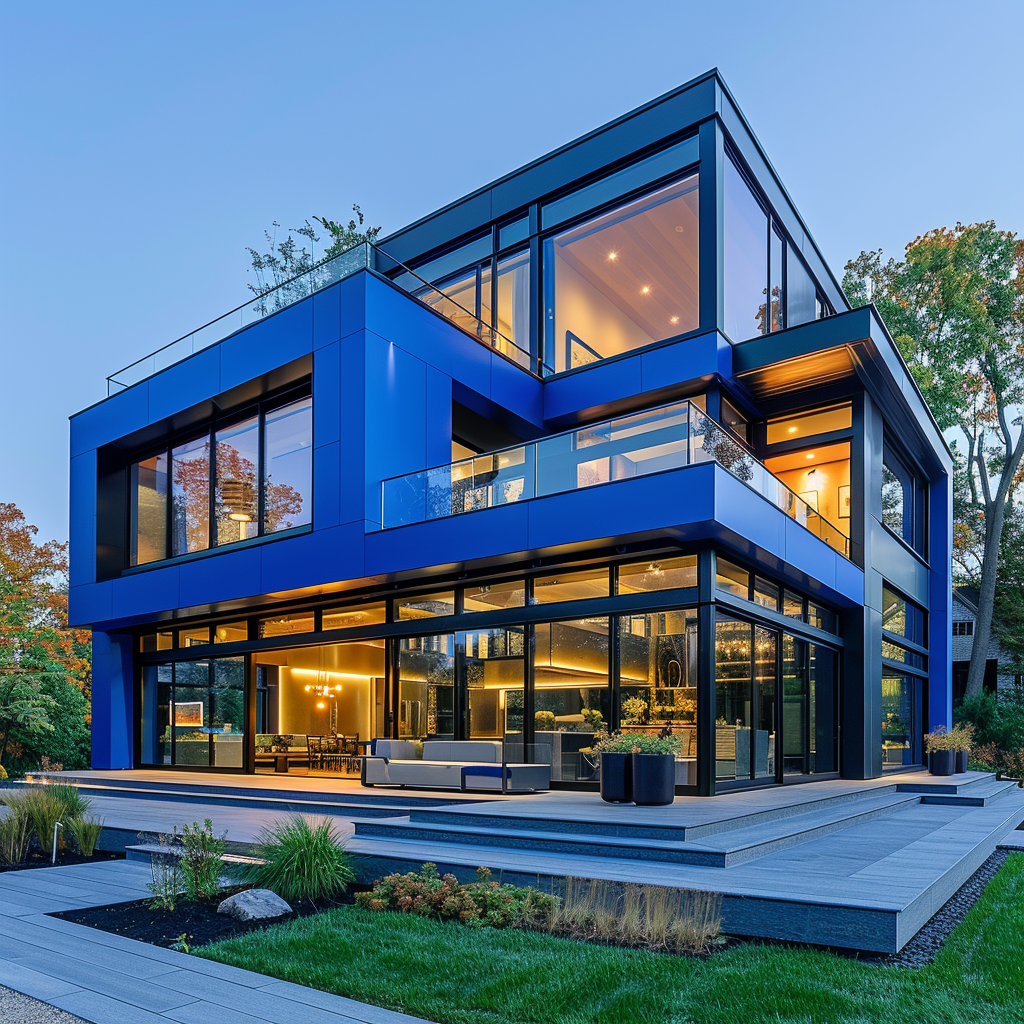
Azure and vibrant mid-tone blues occupy the territory between sky and navy — saturated enough to read as a deliberate color statement, light enough to stay lively in morning shade. This family suits modern architecture specifically: clean horizontal lines, large glass panels, flat or low-pitched roofs. The glass is the detail that makes azure work on contemporary houses — floor-to-ceiling windows reflect the blue back against itself on clear days, reinforcing the color rather than interrupting it. On a traditional colonial with small punched windows, the same azure shade reads as an awkward mismatch with the roofline and massing.
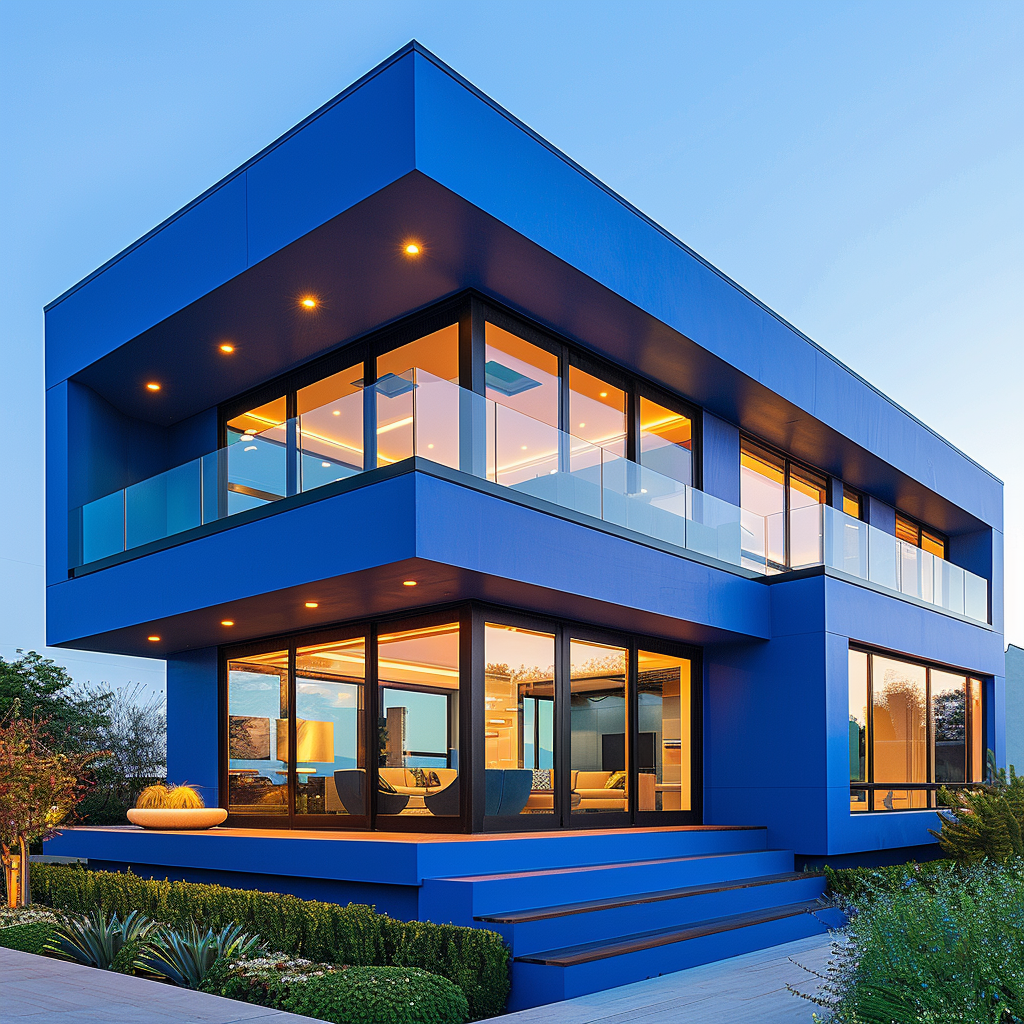
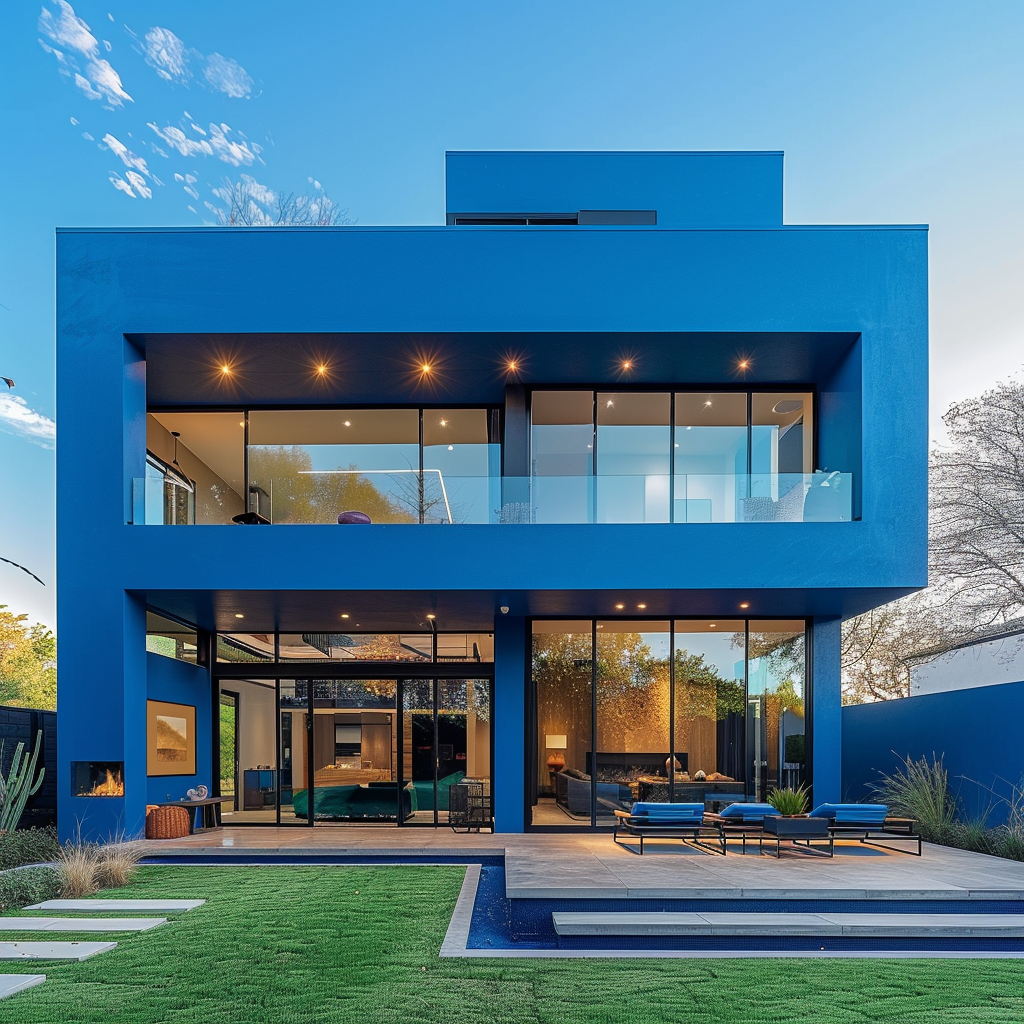
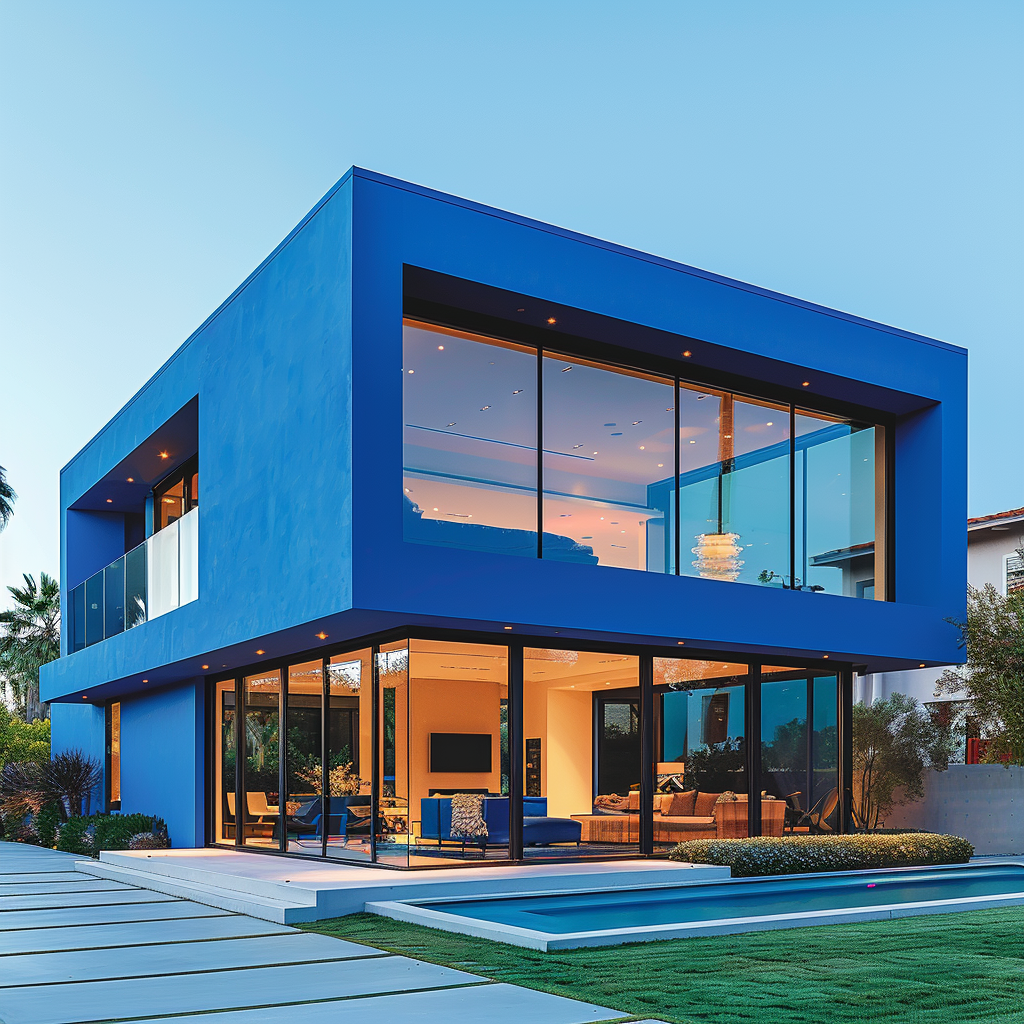
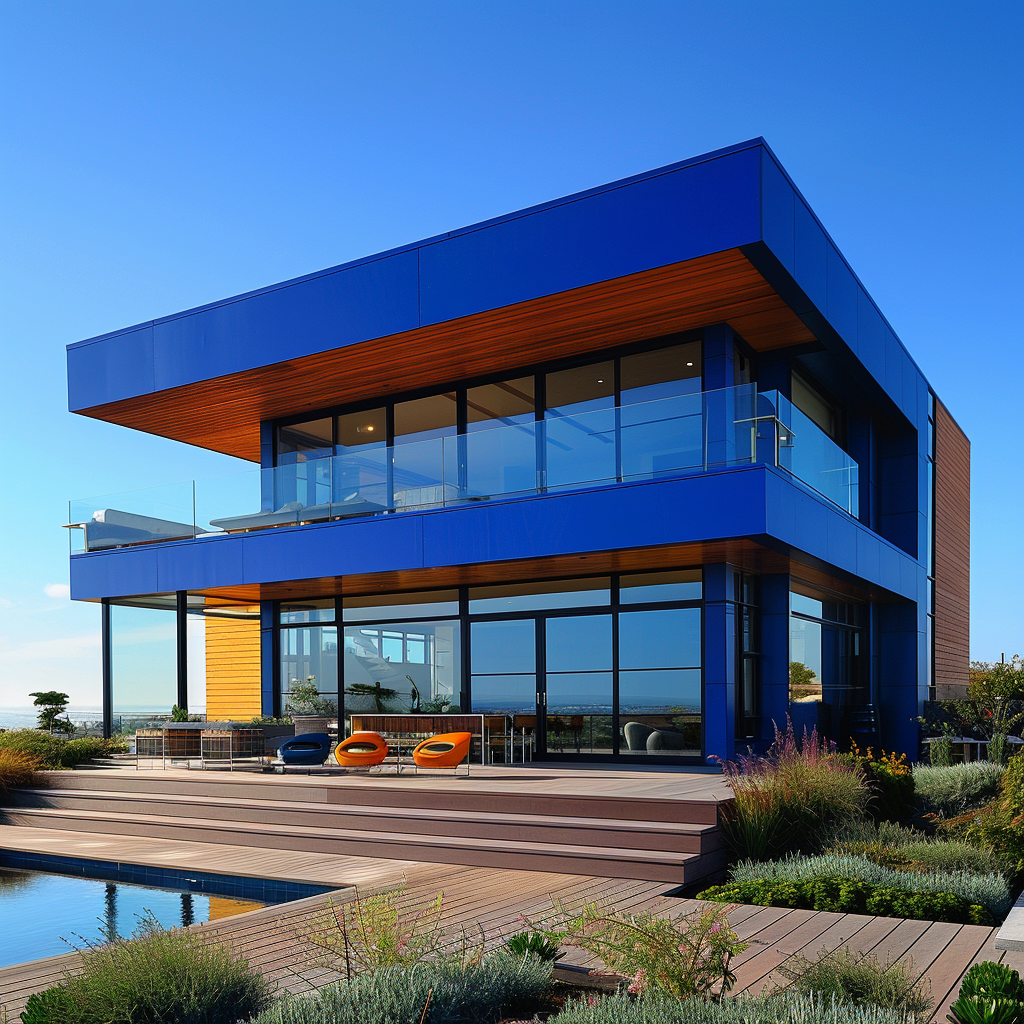
The maintenance reality of saturated blues is worth knowing upfront. Highly pigmented exterior blues rely on organic pigments that UV radiation degrades faster than iron-oxide-based pigments used in earth tones and neutrals. On stucco — a common substrate for modern construction — expect to repaint a vibrant blue body every 5–10 years; on fiber cement siding, the more stable substrate pushes that toward 10–15 years. Spending on premium exterior paint ($63–$70/gallon) versus a mid-tier option is less about initial appearance and more about how many years you get before the fade becomes noticeable. Lighter blues fade more gracefully than saturated ones; vibrant azure that fades goes grayish-green in ways that sky blue does not.
Minimalist landscaping is not optional with this color — it’s structural. A saturated blue facade against an overgrown or visually busy garden turns chaotic fast. The color acts like a large-format graphic; it needs breathing room to read as a design choice rather than an accident. Simple massed evergreens, a gravel or concrete ground plane, and restrained plant material let the blue facade do its work. The trick here is treating the exterior like a composition, not a collection of separate decisions. A navy or charcoal front door anchors the azure without competing — avoid white doors, which create a contrast so sharp the entry reads like an afterthought.
For context on how azure blue compares to other tested house exterior paint colour combinations — including the blue-and-white pairing that works across far more architectural styles — the comparison is instructive. Azure goes further than blue-and-white as a design statement, but it narrows the architectural range considerably. If your house is a craftsman, a colonial, or anything built before 1980, the classic navy-or-sky-blue path is almost certainly the more durable call.

| Blue Variant | Best Architectural Fit | Repaint Interval | Key Risk |
|---|---|---|---|
| Sky / Light Blue | Cape Cod, Craftsman, Cottage | 7–10 years (fiber cement) | Washes out on south-facing walls in full sun |
| Navy / Royal Blue | Colonial, Coastal, Cape Cod | 7–10 years; 3–7 on wood | Reads near-black by mid-afternoon (LRV 4–7) |
| Azure / Vibrant Blue | Modern, Contemporary | 5–10 years (stucco) | Fades to grayish-green; needs minimalist context |
Sherwin-Williams maintains a color detail page for Naval SW 6244 where you can view the shade on different home styles and request a physical sample — useful before committing to full gallons of any dark exterior blue.
Blue Exterior House Color
Match the Blue to the House — Not to the Mood Board
Sky blue amplifies architectural detail on traditional homes; navy creates contrast that makes white trim look expensive; azure belongs on modern construction with large glass and minimal landscaping.
One gallon of premium exterior paint covers 300–400 sq ft. A 1,500 sq ft two-coat exterior job needs 8–10 gallons for the body alone — test your blue on the actual wall for 48 hours before buying at that scale.
Dark blues (navy, LRV 4–7) darken further on south-facing walls by mid-afternoon. Always go one value lighter than your initial swatch instinct if your primary facade faces south or west.
Save this post before your next trip to the paint store.
Related Topics
FAQ
What is the best blue exterior house color for a colonial or Cape Cod home?
How often do I need to repaint a blue exterior house?
Does blue exterior house color affect home resale value?
What trim color works with a blue exterior house?
Can I use blue exterior house color on a modern home?
How do I choose between sky blue, royal blue, and navy for my house exterior?
Complete guide
Blue Home Color Ideas for Every Room and Style
Navy, sky blue, slate, teal — interiors, exteriors, kitchens, bedrooms — all in one place