Bedroom window treatment ideas solve three jobs at once: block light for real sleep, keep the room private after dark, and keep the space looking intentional. Classic drapery, roller shades and Roman shades remain the strongest options because each can deliver near-total darkness when lined correctly and still match modern or traditional rooms.
The right choice depends on how much light leaks at the edges and how much fabric volume the room can handle. Drapery softens acoustics and adds weight. Roller shades sit flush and cost less. Roman shades fold into clean stacks and sit between the two. Average installed prices run $70–$450 for roller shades and $100–$600 for Roman shades per window, according to current manufacturer data.
Layering a blackout shade behind drapery panels closes residual side gaps that single treatments leave. That combination turns an ordinary bedroom into a reliable sleep space without sacrificing style.
Quick scan
- Blackout-lined drapery blocks 95–100 % of light when rods extend past the frame.
- Roller shades start at $70 per window installed and suit minimalist rooms.
- Roman shades average $100–$600 and give structured folds without floor length.
- Side channels or layered panels cut residual glow below 10 lux for deeper sleep.
- Mount hardware 4–6 inches above the frame to stretch ceiling height visually.
- Skip unlined fabric on east-facing windows—morning light will still wake you.
Classic Drapery Still Anchors Strong Bedroom Window Treatment Ideas

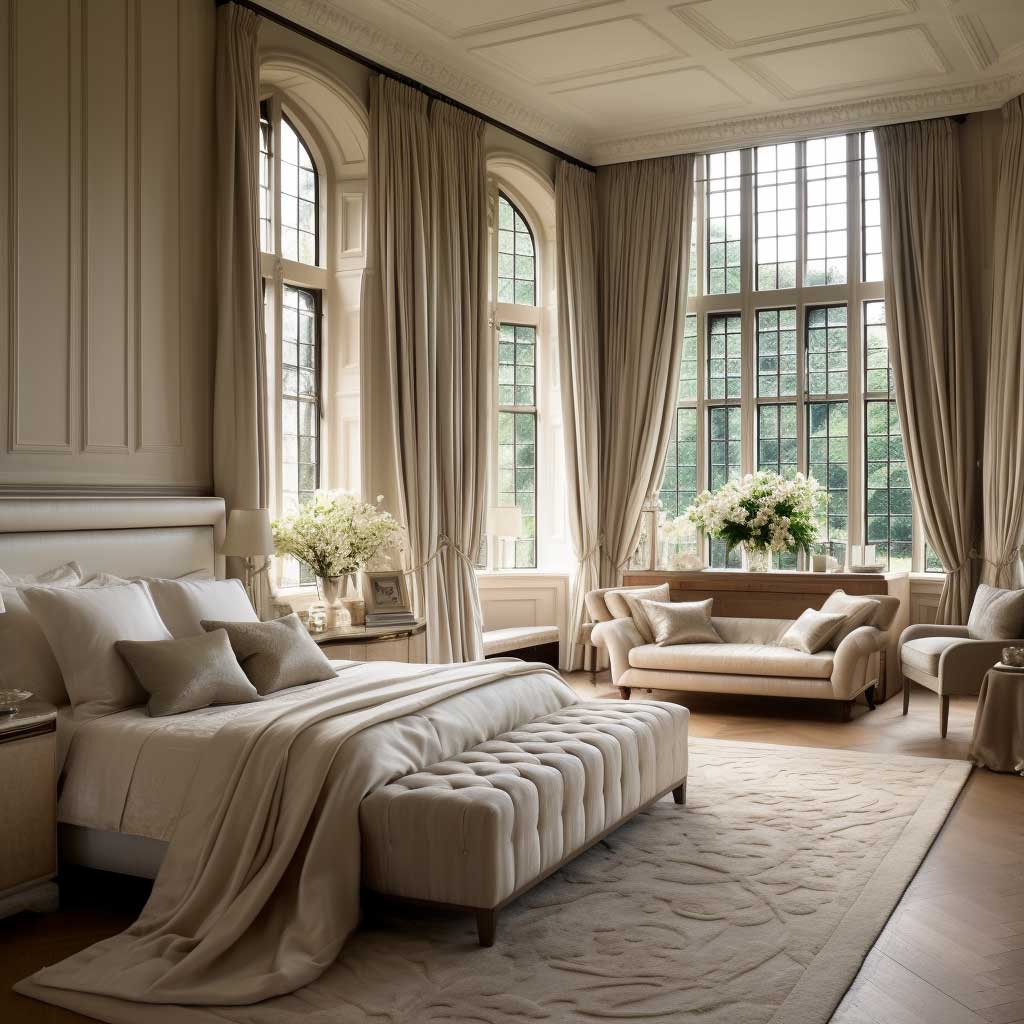
Classic drapery remains the first recommendation for bedroom window treatment ideas when the room needs both softness and full light control. Heavy fabric with a blackout liner can block 95–100 % of incoming light through the panel itself. The remaining glow usually comes from side gaps, not the cloth.
Why do so many rooms still feel bright at 6 a.m.? Unlined panels and rods mounted only as wide as the glass leave light strips that suppress melatonin. Extend the rod 8–12 inches past each side of the frame and the panels stack clear of the glass. That single change turns ordinary fabric into a functional blackout system.


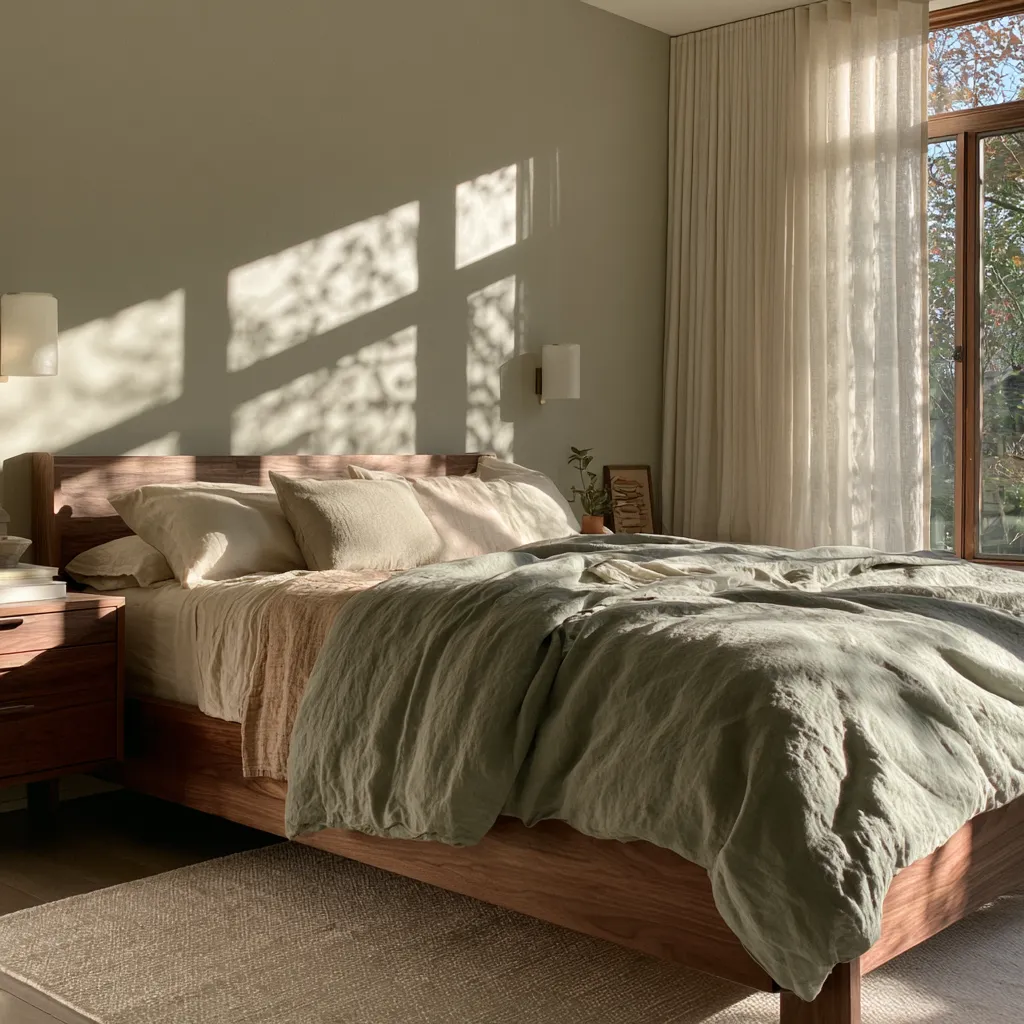
Think of drapery as a soft wall rather than decoration. The volume absorbs sound the same way a heavy rug quiets footsteps. Choose a neutral that matches the wall undertone so the panels disappear during the day and reappear as privacy at night. For more drapery variations that pair well with these panels, explore bedroom drapery ideas for stylish updates.
Do not hang the rod at frame height. That drop makes ceilings feel lower and leaves a bright strip above the fabric. Mount 4–6 inches higher and the room gains visual height while the panels gain coverage. Puddle the hem by one inch or kiss the floor—floating hems look unfinished.
Roller Shades Deliver Clean Modern Bedroom Window Treatments


Roller shades bring a modern touch to bedroom window treatments when the priority is clean lines and space efficiency. Installed prices average $70–$450 per window, making them the most accessible blackout option for most budgets. The fabric rolls into a compact cassette that sits inside or outside the frame without eating floor space.
How much darkness do you actually get? Side-channel blackout rollers can reduce light leakage to under 0.1 % when fully closed. Without channels the edges still admit a faint glow, so light sleepers should specify channels or pair the shade with stationary side panels. The result feels like closing a camera aperture rather than drawing a curtain.


Choose a fabric that matches the wall value so the shade disappears when raised. White or soft grey keeps the room airy; darker tones add contrast but can make small bedrooms feel tighter. Cordless lift is non-negotiable for safety and for the quiet operation needed near a bed.
Avoid mounting the cassette so high that the bottom rail hits the sill before full blackout. Measure the exact drop and order the shade longer rather than shorter. A roller that stops two inches above the sill leaves a permanent light strip no amount of fabric can fix.
Roman Shades Balance Soft Folds with Practical Light Control


Roman shades sit between drapery and rollers for anyone who wants structured folds without floor-length fabric. Installed costs typically range $100–$600 per window. When lowered they form horizontal pleats that look tailored; when raised they stack into a neat band at the top of the window.
Can Roman shades deliver true blackout? With the right liner they block most light, yet edges still admit more residual glow than a side-channel roller. For bedrooms that face streetlights, pair them with a simple roller behind or accept a soft morning glow. The fabric volume itself adds a quieting effect similar to a folded blanket.


Inside-mount Roman shades keep the look compact and suit smaller bedrooms. Outside-mount versions make narrow windows appear wider. Match the fabric weight to the room scale—lightweight linen for airy spaces, heavier weaves for formal suites. For white or light fabric choices that photograph cleanly, see these white curtain designs for bedroom interiors.
Do not choose a busy pattern if the rest of the room is already patterned. Solid or subtle texture keeps the folds readable and prevents visual clutter near the bed. Cordless or continuous-loop lift prevents the shade from slamming and keeps cords away from sleeping areas.
Side-by-Side Comparison of the Three Core Options
| Feature | Classic Drapery | Roller Shades | Roman Shades |
|---|---|---|---|
| Installed cost per window | $150–$500+ | $70–$450 | $100–$600 |
| Light blockage potential | 95–100 % with liner | Near-total with side channels | High with blackout liner |
| Space required | Floor length + rod projection | Minimal cassette depth | Fits inside or outside frame |
| Best for | Soft acoustics, layered style | Minimalist, hard-to-reach windows | Structured folds, medium formality |
| Cleaning | Dry clean typically | Wipe or removable fabric | Spot clean or removable |
Numbers come from aggregated manufacturer and installer data. Actual quotes vary by fabric, motorization and local labor rates. Always request samples and measure twice before ordering custom sizes.
Don’t do this
- Buy unlined fabric for east- or west-facing bedrooms—morning and evening sun will still wake you.
- Mount rods only as wide as the glass; residual side light defeats any blackout claim.
- Choose glossy polyester under $20 per panel; it yellows and sags within a year.
- Ignore cordless options when children or pets share the room.
Practical Choices That Improve Sleep Quality
True blackout performance depends more on installation than on marketing labels. Research shows even low residual light (above roughly 10 lux) can suppress melatonin. Side channels, wraparound rods and layered treatments close those gaps. Current cost guides list standard shades at $60–$600 per window installed, with motorized versions climbing higher when convenience is required.
Match the treatment to the window’s orientation. East-facing rooms need denser fabric or dual layers to stop sunrise. North-facing rooms can stay lighter and still feel private. Always test a fabric sample against the actual glass at the brightest hour of the day before committing to a full order.
For detailed pricing ranges by shade type, consult the current overview at HomeGuide window shade costs.
Final Selection Criteria That Hold Up
The strongest bedroom window treatment ideas combine measurable light control with fabric that feels intentional in the room. Drapery softens and isolates sound. Rollers stay minimal and affordable. Roman shades deliver tailored folds without excess volume.
Measure the window, decide the darkness level required, then choose the hardware that closes residual gaps. A well-installed blackout system costs more once than years of restless mornings.
Order samples, check edge leakage at night, and hang the treatment high and wide. Those three steps turn any of the three core options into a reliable sleep solution.
Keep the palette quiet so the fabric supports rest instead of competing with it. The goal is a room that goes fully dark when needed and still looks finished when the sun is up.