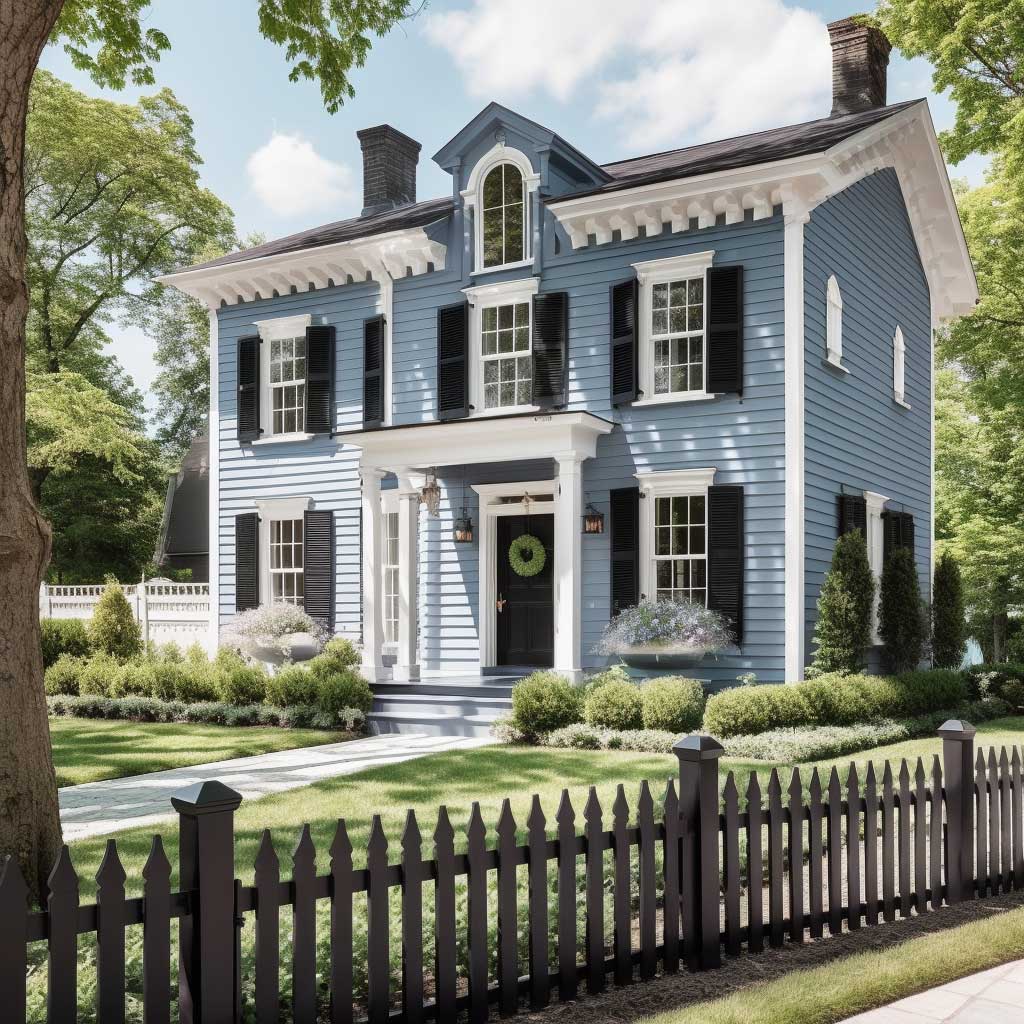
House front window design shapes how a façade reads from the street — and most people don’t realize how much the wrong choice undercuts an otherwise solid exterior. Georgian sash, French casement, Craftsman divided-light: each carries a visual language that either reinforces your home’s architecture or quietly fights against it. I’ve spent years photographing facades across the UK and the US, and the pattern is consistent. Get the window style right and the whole front snaps into focus. Get it wrong and no amount of landscaping saves you.
The three styles covered here — Georgian six-over-six, French casement, and Craftsman divided-light — account for the majority of classic front window designs still installed on new builds and renovations today. They’re worth understanding in detail before you commit to anything, because replacing windows is expensive. A standard double-hung replacement runs $400–$900 per unit installed; a full-front redesign with new casements can push past $8,000 easily.
At a glance
- Georgian sash windows — six-over-six pane pattern, symmetrical placement, dark wood or white painted frames, crown molding surrounds. Ideal for traditional and colonial-revival fronts.
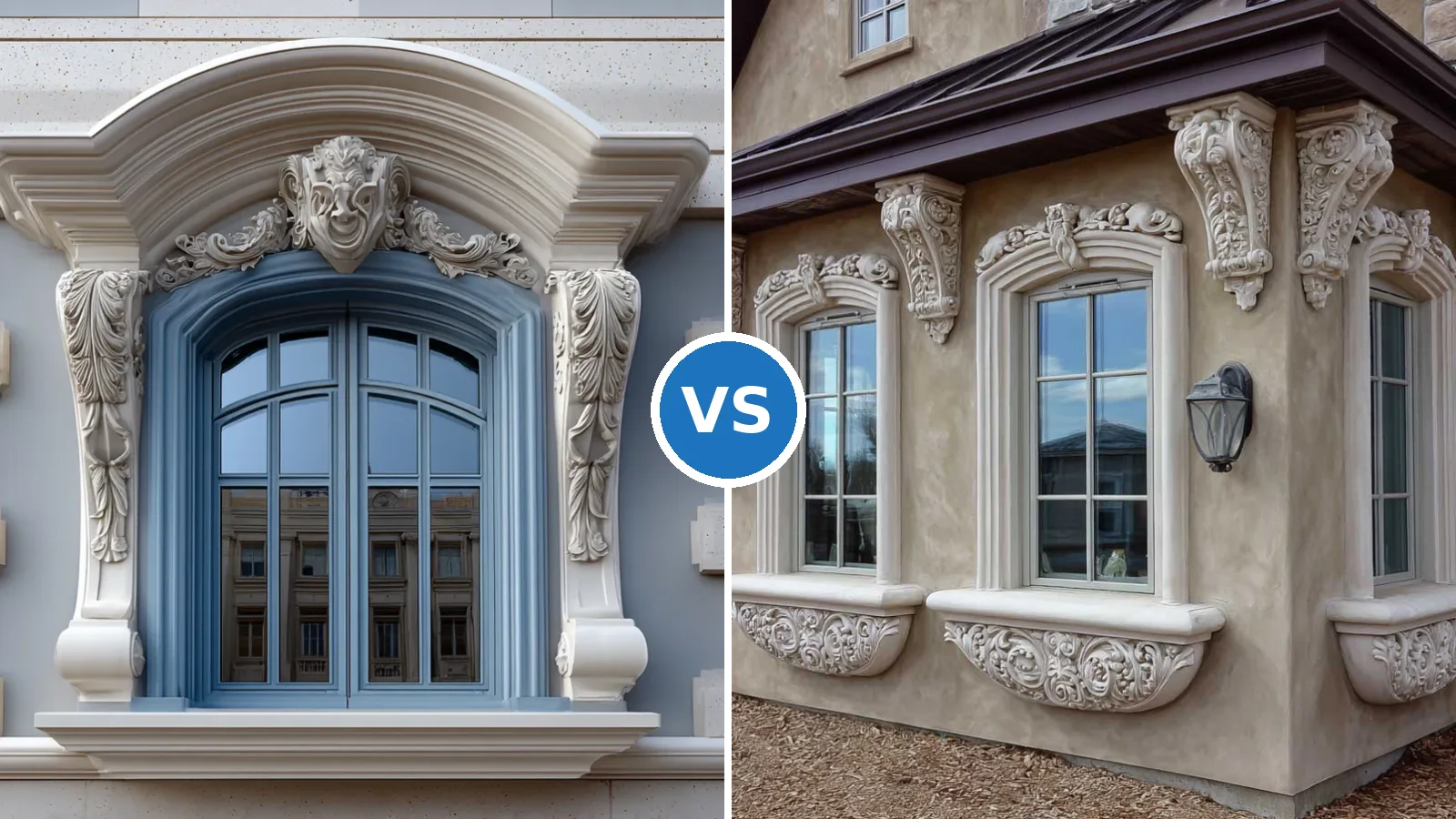
- French casement windows — twin sashes swinging outward from center, arched top options, iron grillwork, wooden shutters. Best on stucco, stone, or rendered brick facades.
- Craftsman divided-light windows — multi-pane upper sash, single clear lower pane, natural wood frames, occasional leaded glass. Native to bungalows but increasingly used on modern farmhouse fronts.
- Common mistake — mixing window styles across the front of a single house. Stick to one primary type per façade elevation.
- Price range — Georgian sash replacements from $500 per unit; French casements $600–$1,400; Craftsman custom units from $700 upward.
Georgian Sash Windows Earn Their Façade Real Estate
The Georgian period ran 1714 to 1830, and its window logic was built around a single principle: symmetry earns authority. The six-over-six pane sash — six glass lights in the upper sash, six in the lower — is not a decorative choice so much as a structural one. Each pane is small enough that 18th-century glass technology could produce it without distortion, and the resulting grid locks the façade into a rigid, satisfying order. I own a Georgian revival townhouse built in 1923, and the original six-over-six units on the front are the reason the building photographs well from any angle.
Dark stained mahogany frames were the period default, but most surviving Georgian fronts have been repainted white — which actually reads better against red brick than the original wood tone. Crown molding or dentil cornices above the window head are load-bearing visually, not just decorative. Remove them on a renovation and the windows look punched into the wall rather than framed by it. Don’t do that.
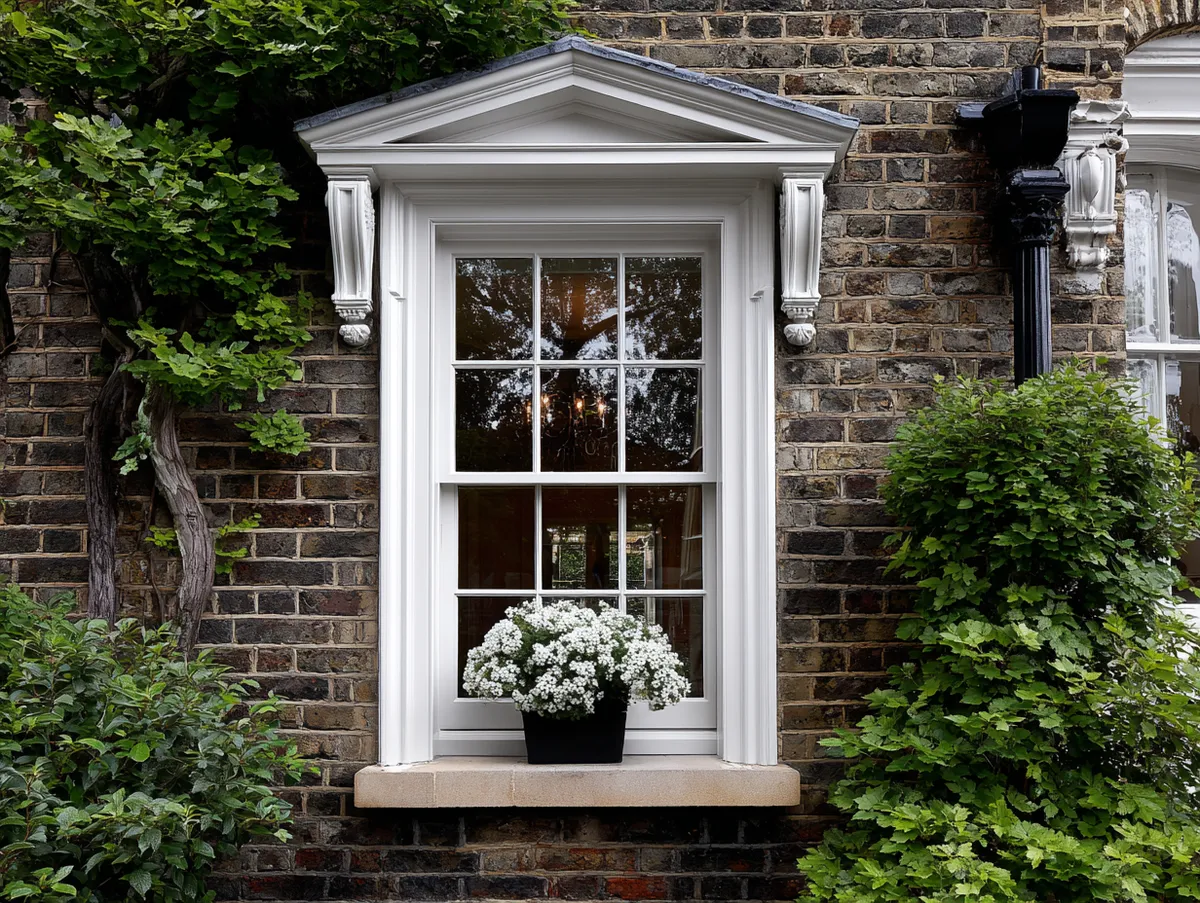
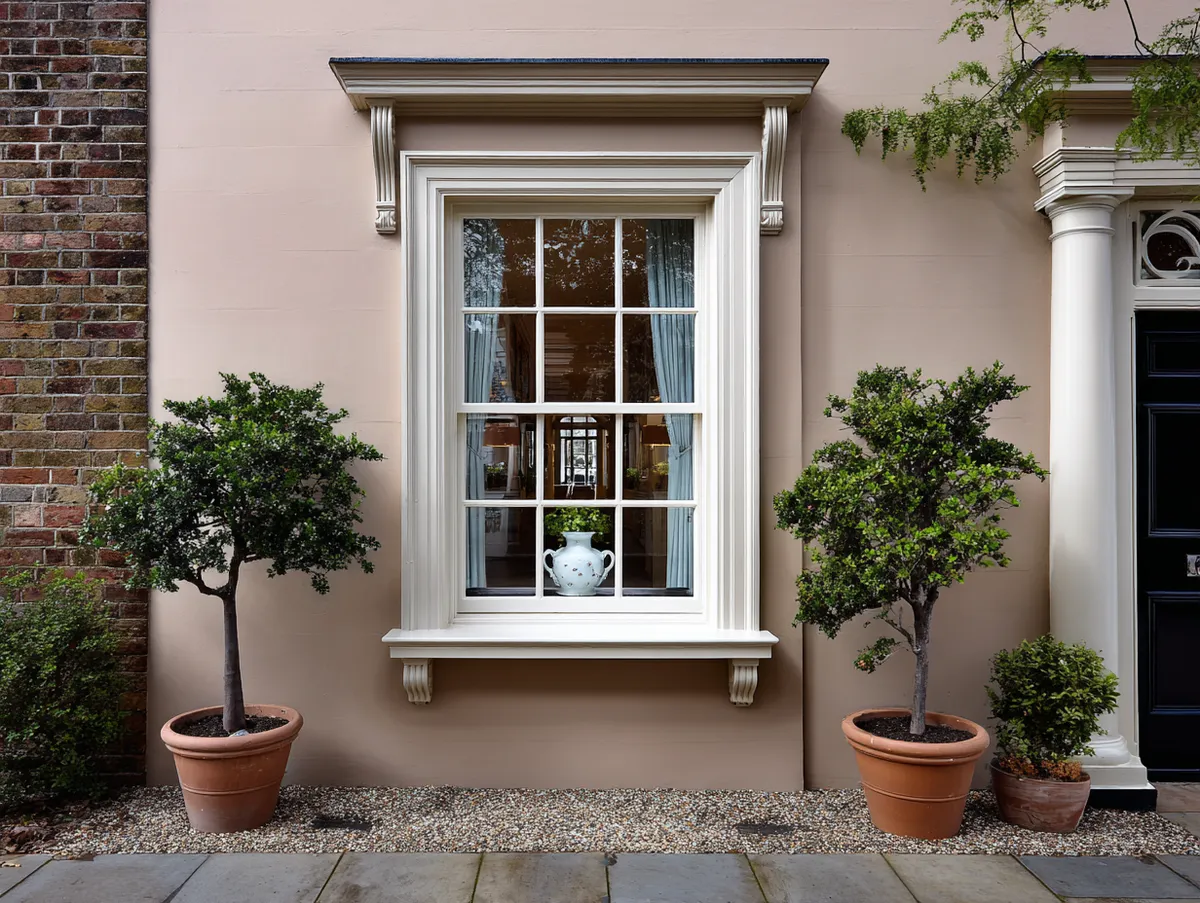
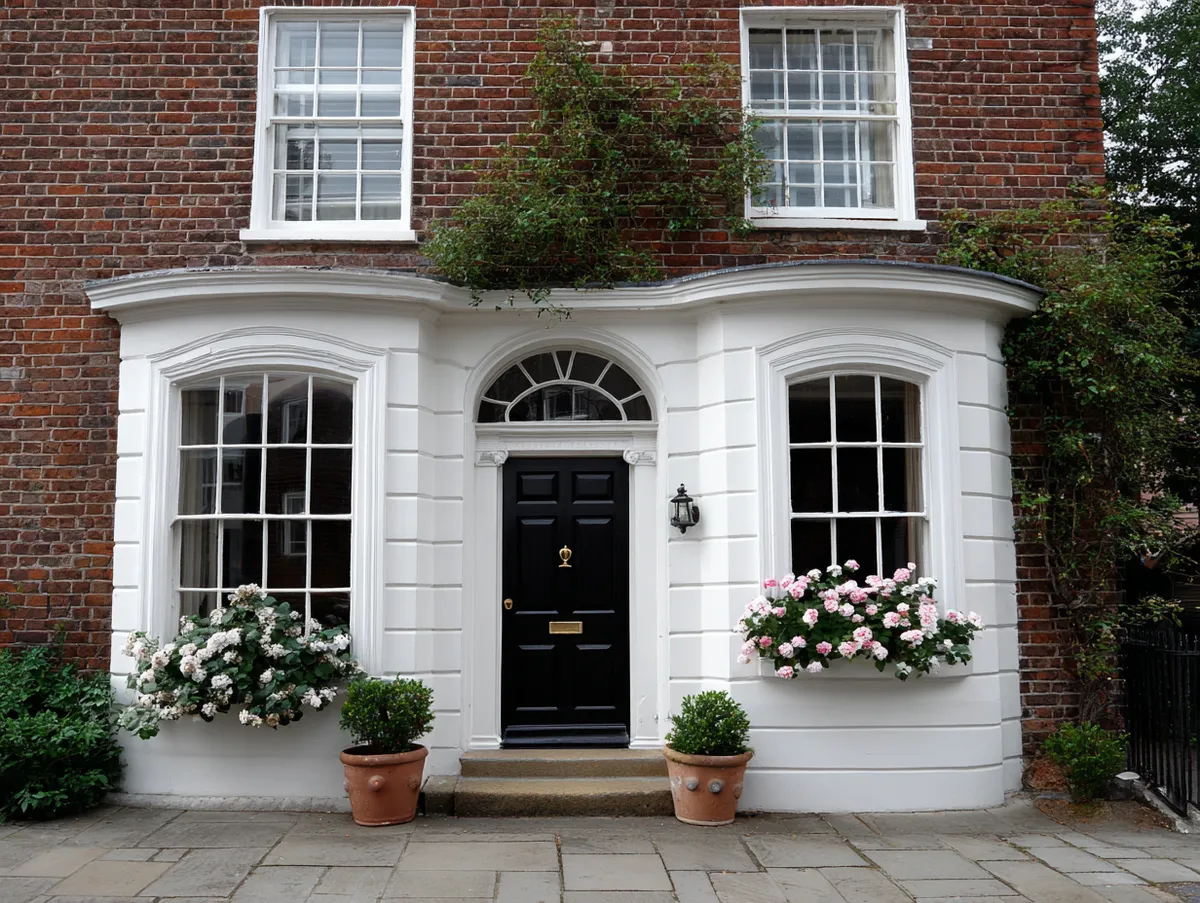
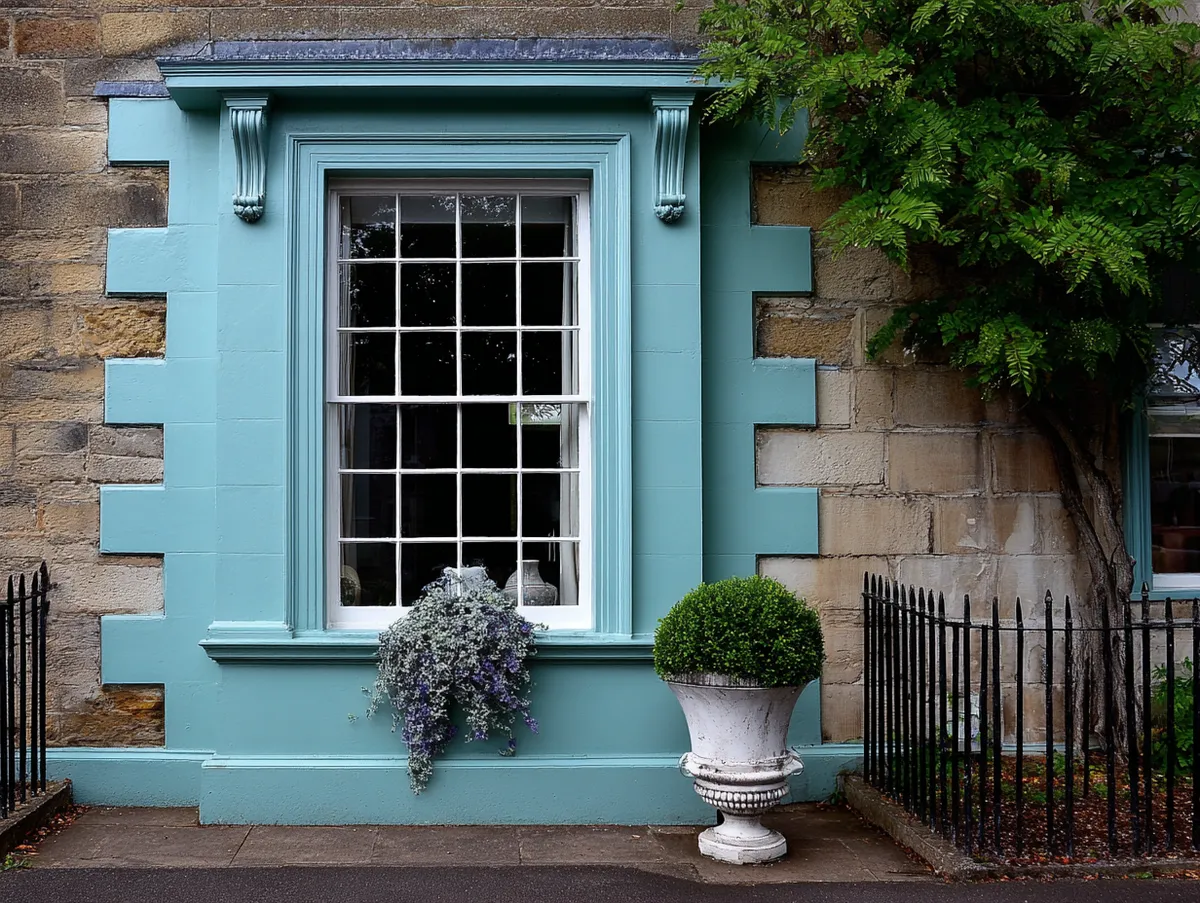


The double-hung mechanism means the window opens from top, bottom, or both — which matters more than people admit. You get ventilation without weather driving rain horizontally through the gap. Modern uPVC versions of Georgian sash are available from Marvin and Andersen starting around $520 per unit, but the frame proportions on budget uPVC are usually too thick. You’ll notice. The glazing bar width should be no more than 1.5 inches on a period front — anything thicker and the grid looks heavy rather than refined.
Energy efficiency on single-pane originals is genuinely poor. Secondary glazing — a separate inner pane fitted inside the existing frame — is the preservation-sensitive fix, running about $150–$300 per window versus a full replacement. It’s what I used on my own front windows and the difference through winter is real. If you’re working on a house front window design for a traditional property in a conservation area, your local planning authority may require secondary glazing rather than replacement anyway.
One thing the Georgian style cannot survive is mismatched sizing. If you add a window mid-renovation that doesn’t align with the existing sill line and head height, the symmetry collapses. The whole point of the style is the lock-step grid. Blow one unit’s proportions and you’re done — every photo of that façade will look wrong. That’s not an opinion. It’s geometry.
French Casement Windows and the Façade Detail Nobody Talks About
French casement windows have two sashes that swing outward from a center point with no vertical bar between them — which is the entire appeal. You get an unobstructed rectangle of view and, when both sashes are open, a genuine full-width aperture that functions as a secondary exit. That safety angle is underrated. Standard egress requirements in the US call for a minimum 5.7 square feet of clear opening area; a French casement at 36 inches wide clears that threshold with room to spare. Standard double-hung at the same width does not.
The iron grillwork on the exterior face of classic French casements is not structural — it’s a reference to the wrought iron balconies of Haussmann-era Paris, and it reads as such. On a rendered white or pale stone façade, that black ironwork is doing serious visual work. Skip it on the same window design applied to a red-brick suburban front and the result is weirdly naked. Context matters more than the window itself.
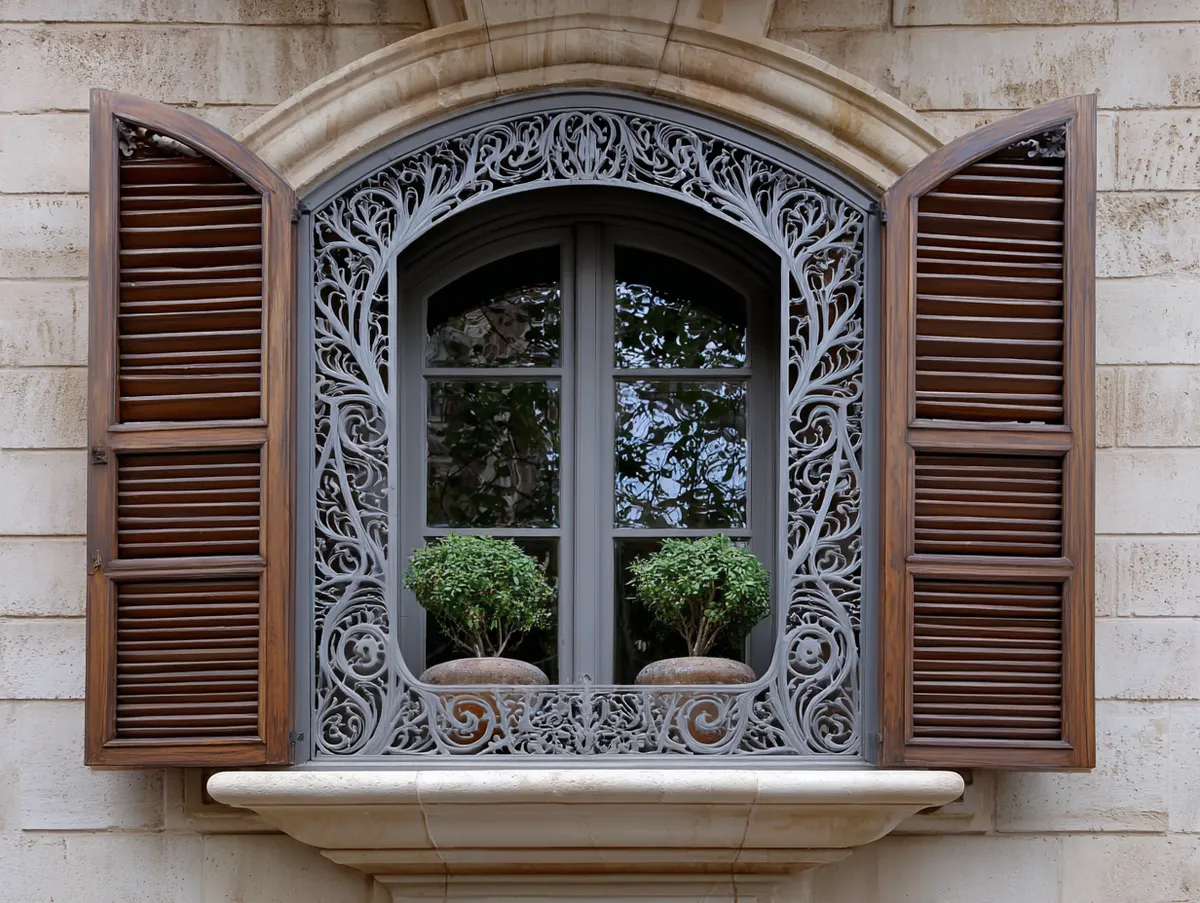
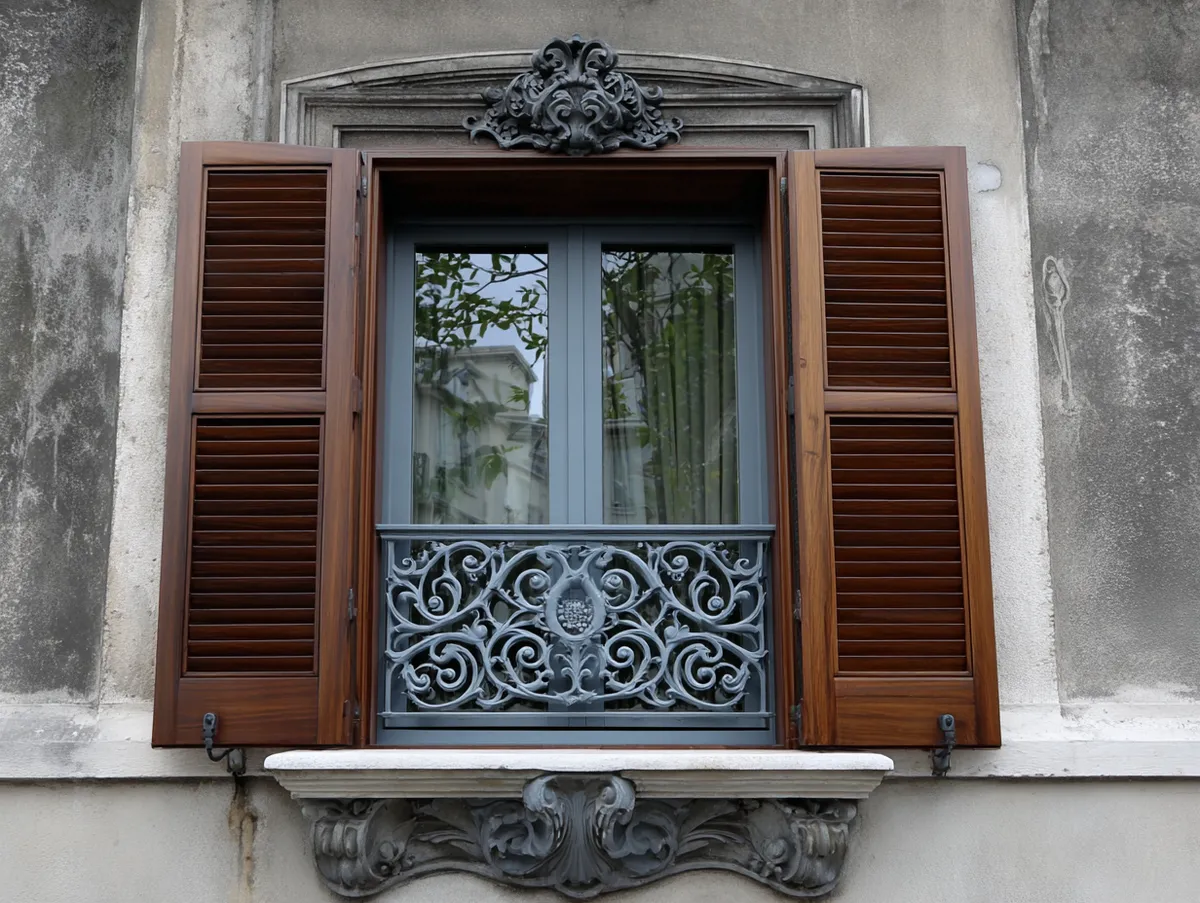
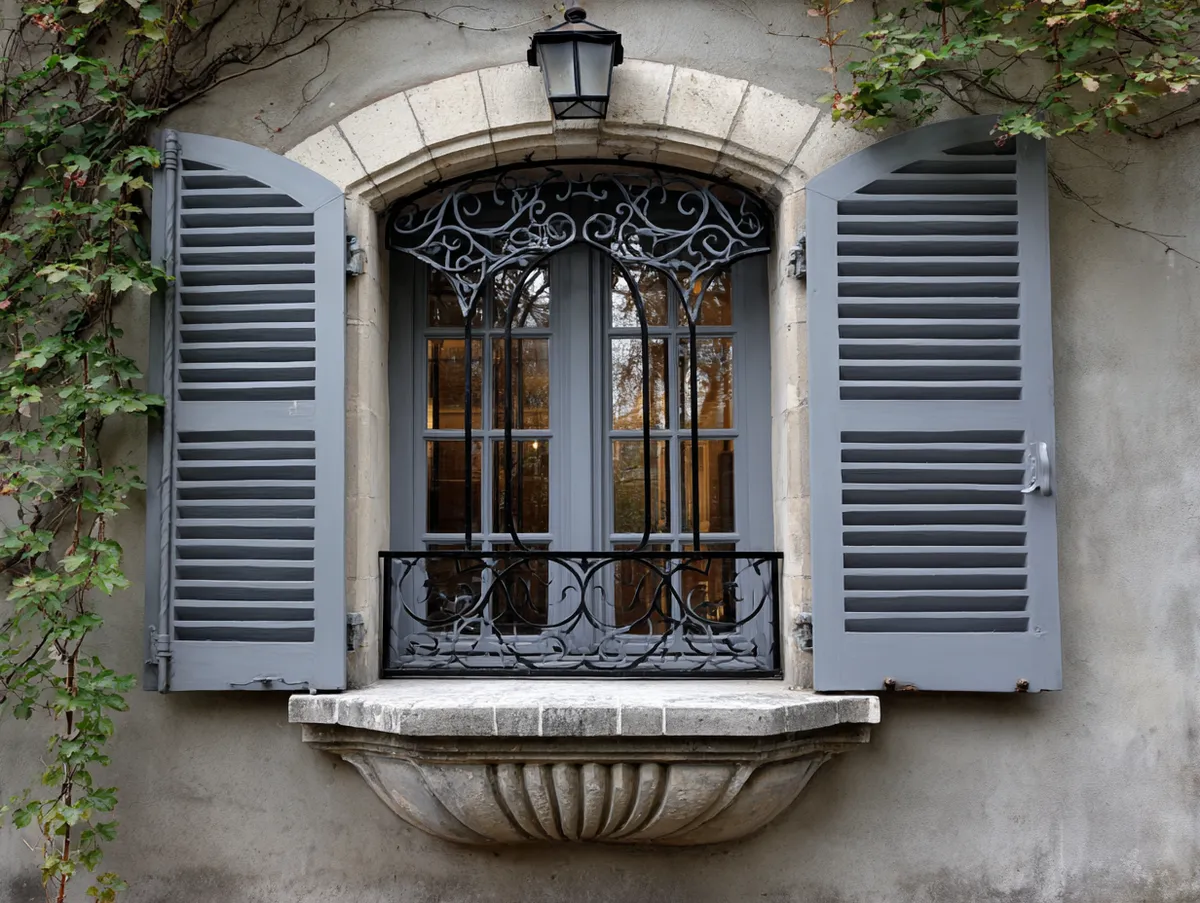
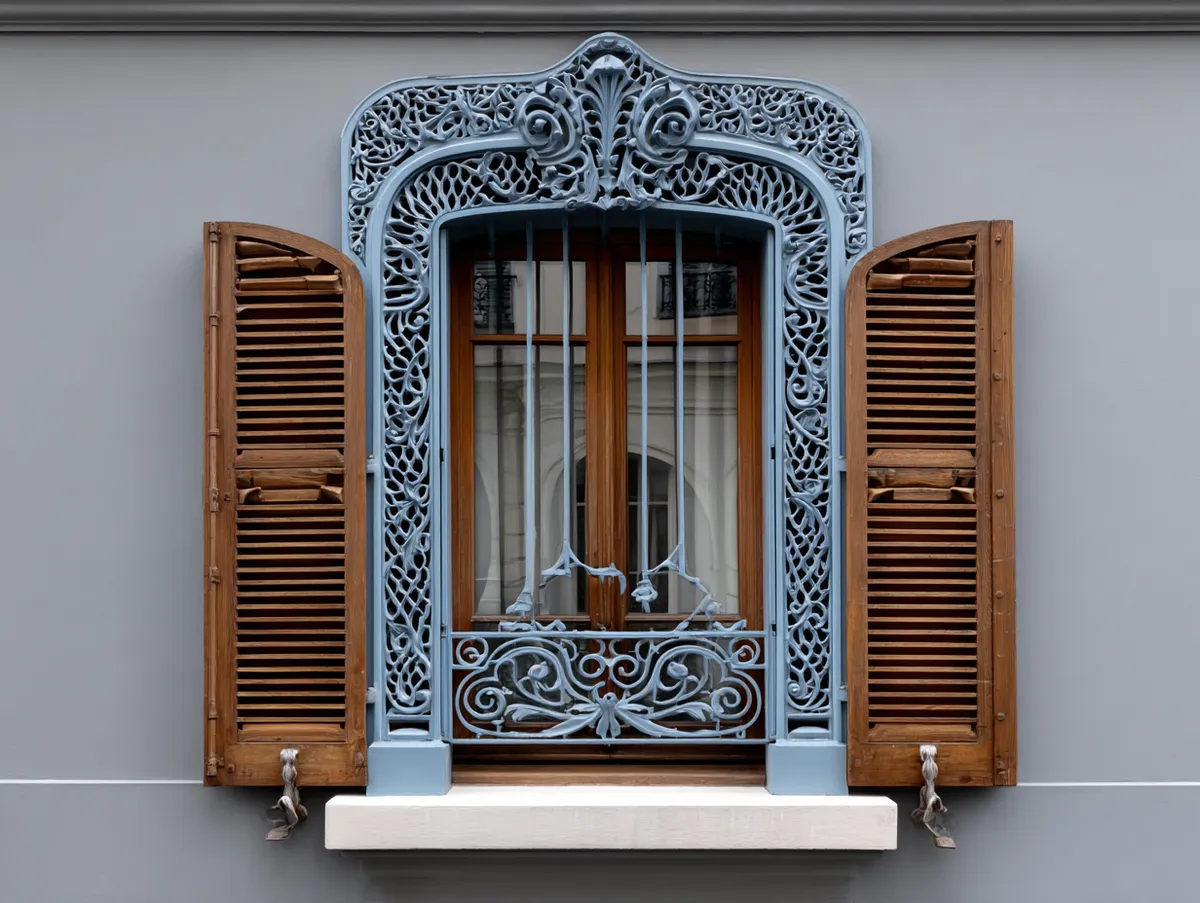


The semi-circular arched head is the design move that separates a French casement from a bog-standard outward-swing unit. Architecturally, that arch is a reference to the Roman fanlight tradition — the same curve you see above formal entrance doors on Federal-style townhouses. It softens the rectangular opening and creates a visual relationship between the window and any arched elements on the door surround. You want that conversation happening across the façade. A flat-head casement on a front with an arched door is a missed opportunity, full stop.
Wooden shutters on French casements are functional only if they’re sized to actually cover the opening. I’ve seen renovations where the shutters are decorative — fixed to the wall at a width that couldn’t possibly reach across the window even if hinged. It looks exactly as wrong as it sounds. Shutters should be half the window width each, hung to swing closed and latch at center. That’s the original logic and it shows in the proportions. Schuco and Internorm both produce French casement systems with correct shutter-ready reveals from around $850 per unit.
Don’t Do This with Front Window Design
- Don’t mix casement and sash on the same elevation. One outswings, one slides — the operational logic signals different eras and the eye reads it as a mistake, not a choice.
- Don’t install decorative-only shutters that couldn’t close over the window. The proportions expose the lie instantly.
- Don’t skip the cornice on Georgian windows. The window without its surround looks unfinished, the same way a painting without a frame looks unframed.
- Don’t upsize windows on a Georgian front by widening the opening. The pane grid stops working the moment the aspect ratio drifts from the original module.
- Don’t use white uPVC frames with thick glazing bars on any period front. The bar width betrays the material regardless of the profile shape.
Cost comparison on French casements versus standard double-hung: you’re typically looking at $600–$1,400 per unit for casements versus $400–$900 for a double-hung replacement of similar dimensions, per Angi and This Old House pricing data. The premium is real but the function argument is also real — This Old House notes that casement windows provide full top-to-bottom ventilation where double-hung sashes block half the opening when raised. On a front room that doubles as a home office in summer, that airflow difference is noticeable by 11am.
Craftsman Divided-Light Windows Punish Cheap Material Choices Immediately
Craftsman windows from the Arts and Crafts period (roughly 1900–1930) work on a simple compositional rule: a multi-pane upper sash over a single large lower pane. The upper section carries the decorative weight — leaded glass, prairie-style geometric patterns, or simple clear divided lights — while the lower pane maximizes the view and the natural light load. It’s a two-zone window: art on top, aperture below. Most budget versions get this ratio wrong by making the upper section too small, which collapses the composition.
My go-to source for authentic Craftsman replacement units is Marvin’s Elevate Collection, which starts around $700 per window and gets the muntin profile right. The glazing bars on a period Craftsman window are narrow and flush with the glass plane — not raised above it. Raised muntins are a Victorian detail. Flat muntins are the Craftsman signature. You can tell the difference from twenty feet and it determines whether the house reads as authentic or approximate.
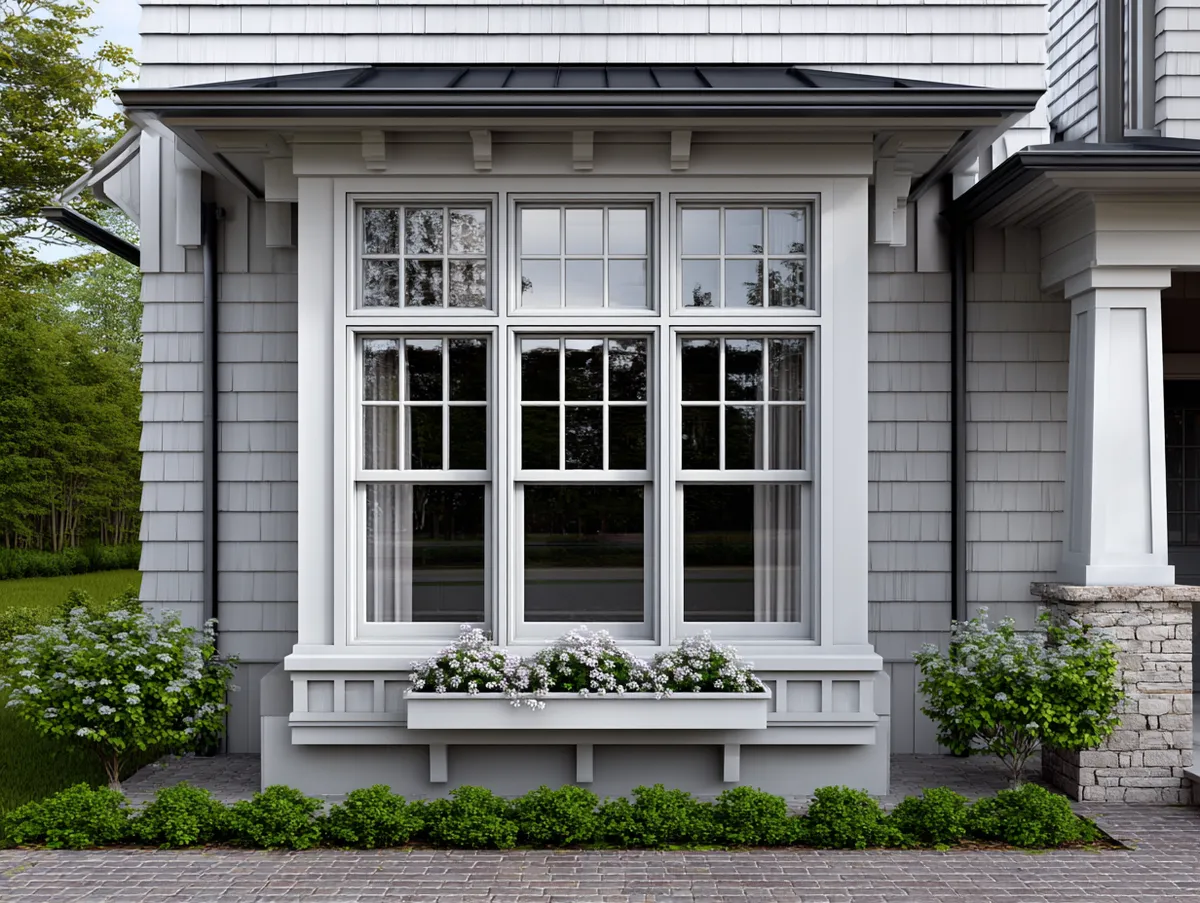
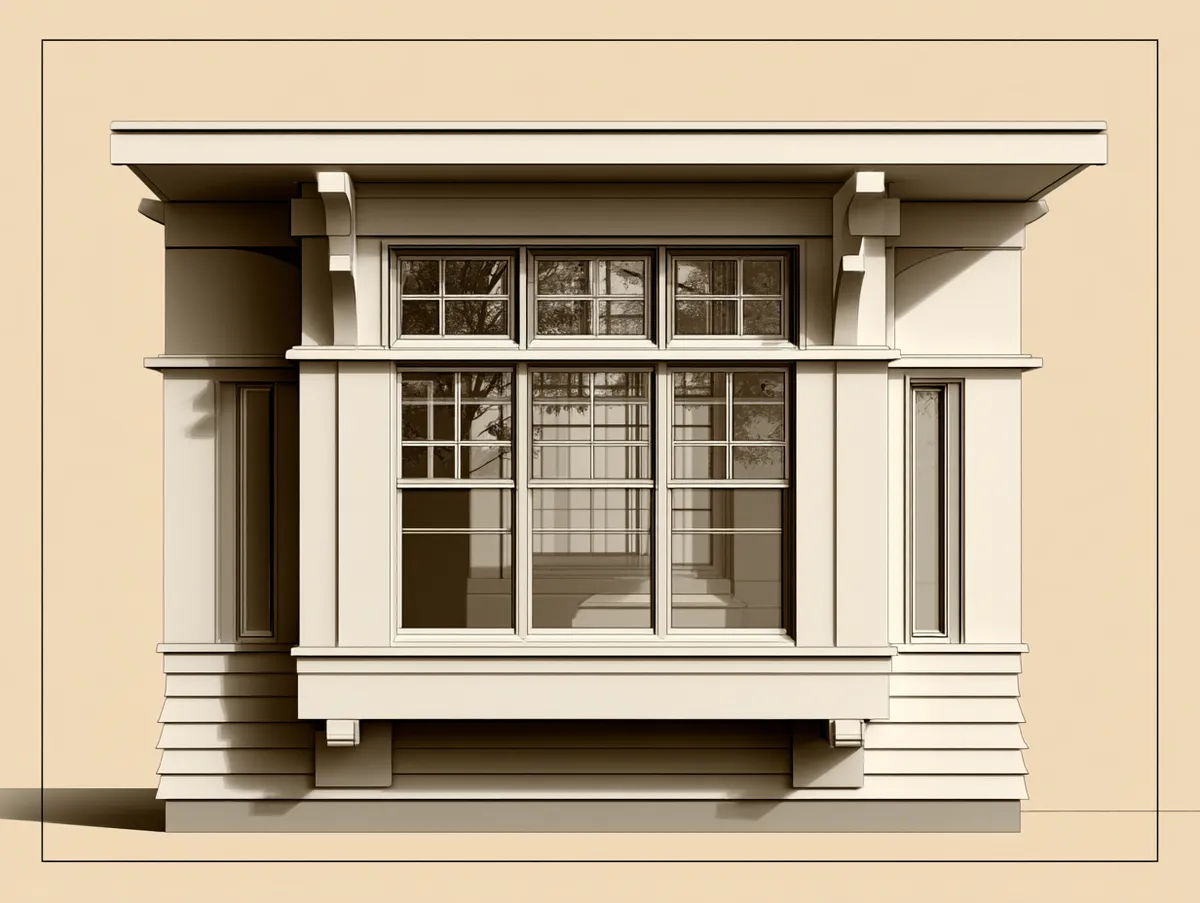
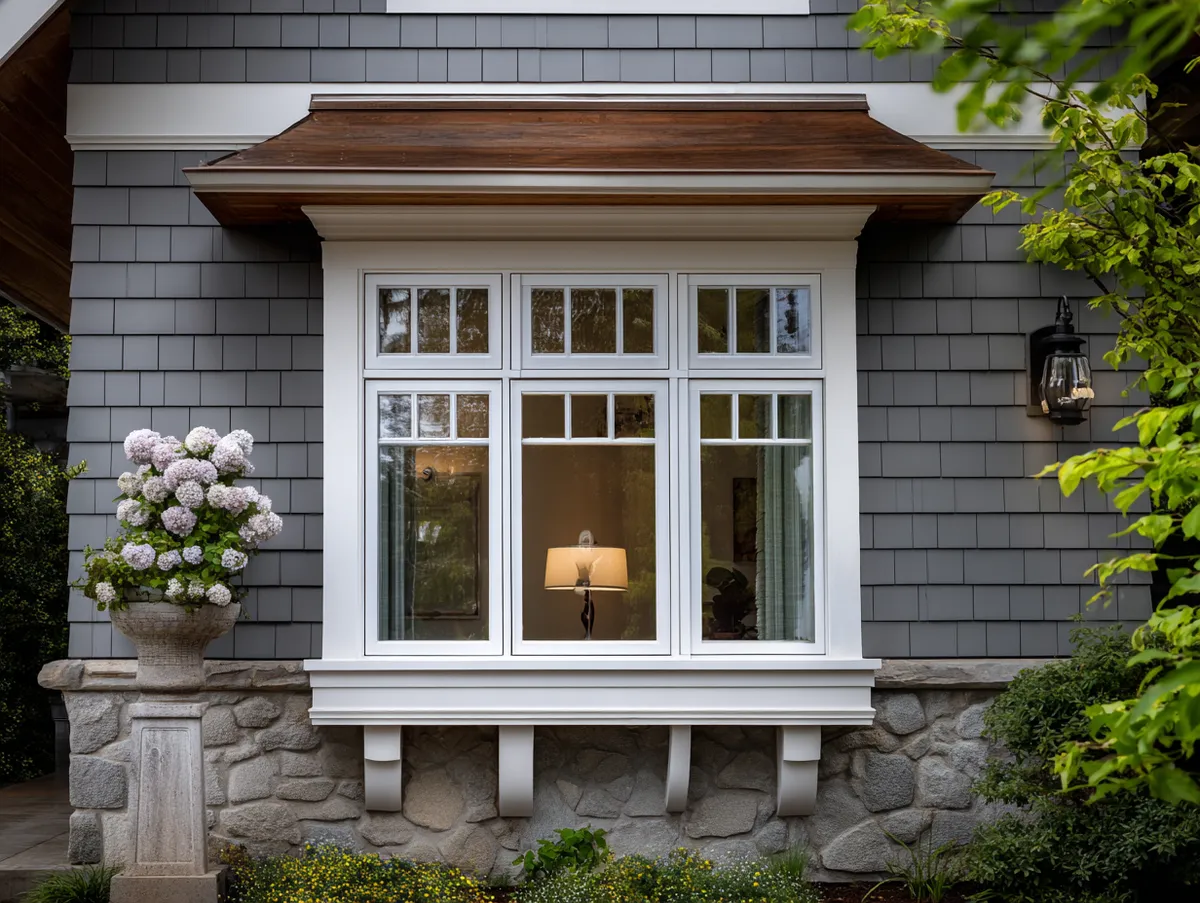
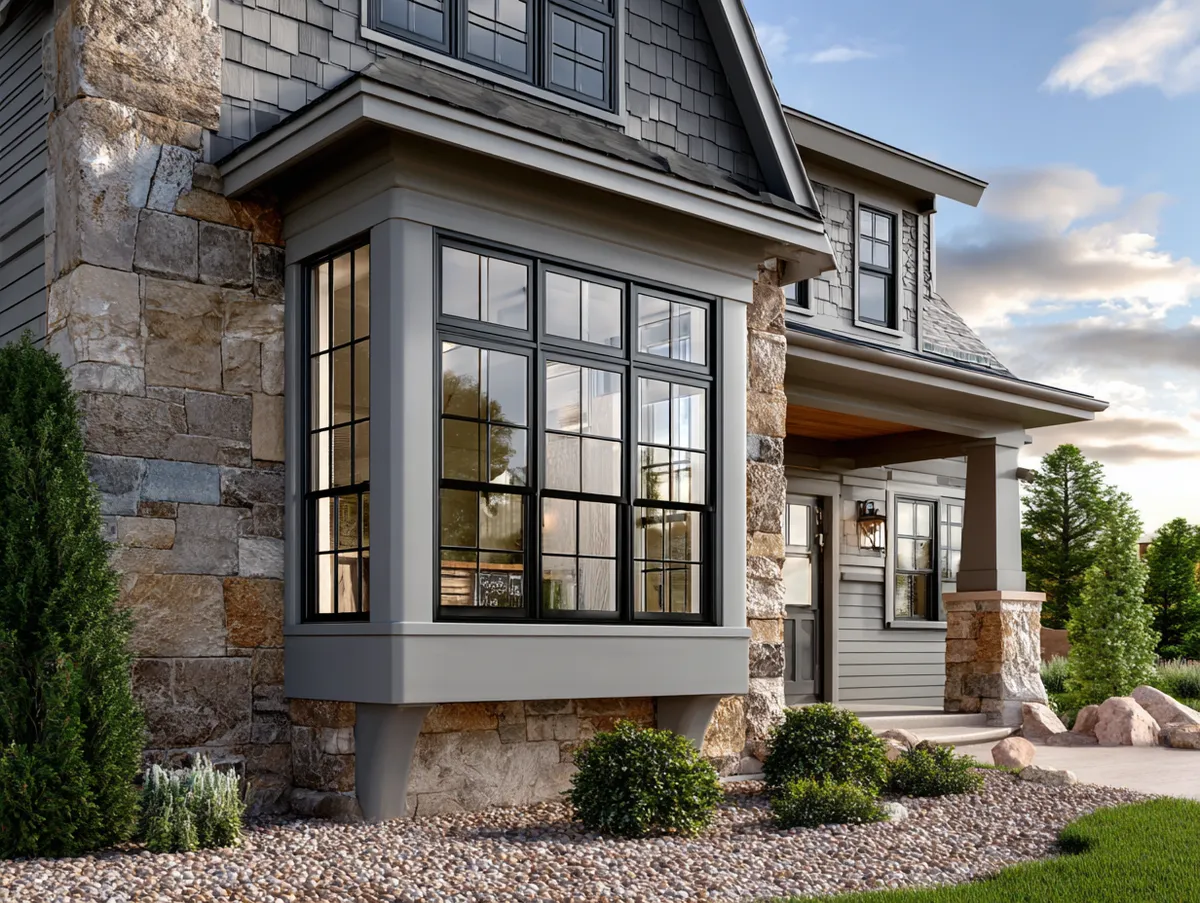


Leaded glass in the upper section is the move that takes a Craftsman front from competent to genuinely interesting. Prairie-style leaded lights — the horizontal rectangle compositions Frank Lloyd Wright used obsessively — cost around $200–$400 extra per sash from a specialist like S.A. Bendheim, but they transform how the façade reads at dusk when interior light throws the geometry outward. You’ll notice that every photograph of a Craftsman bungalow front that looks extraordinary has something happening in that upper section. Plain divided-lights in clear glass are fine. Art glass is the reason people stop walking.
The material question is where people overspend on the wrong thing or underspend on the critical thing. Wood frames on a Craftsman front are authentic and correct. They require painting or staining every 5–7 years. Fiberglass-clad wood from Pella or Andersen gives you the interior wood feel with a maintenance-free exterior — I stole this trick from a preservation architect I worked with in Portland who had restored fourteen Craftsman bungalows. The clad units run 15–20% more than unclad wood but the math works out over a decade. Raw uPVC on a Craftsman front is a visual disaster at any price point. The material reads cold and the proportions are wrong. Walk away.
Craftsman windows fit well on modern farmhouse fronts — a design language that borrows the same emphasis on natural materials and visible construction logic. The principles behind a front window design that works go deeper than style alone, and the Craftsman tradition understood that earlier than most. What doesn’t work is placing Craftsman windows on a Federal or Georgian front. The compositional grammars are incompatible and the result looks like two different architects argued over the façade and nobody won.
| Window Style | Best Facade Type | Price Range (per unit) | Key Detail to Get Right | Common Mistake |
|---|---|---|---|---|
| Georgian Sash (6-over-6) | Red brick, stucco, Federal, Colonial | $500–$900 | Glazing bar width max 1.5 in; crown molding surround | Mismatched sill/head heights across units |
| French Casement | Rendered stone, stucco, pale brick | $600–$1,400 | No center bar; arched head on formal fronts | Decorative shutters wrong width for opening |
| Craftsman Divided-Light | Timber, shingle, farmhouse, bungalow | $700–$1,200 | Flat muntins; upper-to-lower sash ratio | Raised (Victorian) muntins instead of flat |
For anyone working with exterior trim around these window types, the detailing is where the style lives. Classic exterior window trim designs carry period references that reinforce whichever front window style you choose — and the trim is usually cheaper to change than the window itself if you want to shift the visual register without replacing the units.
Worth Keeping
Classic House Front Window Design Comes Down to Three Decisions Made in the Right Order
Match the window style to the architectural language of the facade first — before you choose the frame material, before you pick the glass spec, before you get a single quote. The style decision is the one you can’t walk back cheaply.
Get the proportions right within that style. Sash bar width, shutter sizing, upper-to-lower pane ratio — these are not finish details. They’re the structure of the composition, and they’re what separates a front that photographs like an architecture magazine from one that just looks like a house.
Save this post before you talk to a window company. They’ll have opinions and they won’t all be right.