Front porch column ideas shape how a house greets the street. The right columns support the roof, frame the door, and set the entire curb-appeal tone in under ten seconds of viewing. Classic white rounds, slim metal posts, reclaimed wood, tapered Craftsman shafts, and stucco Mediterranean forms all deliver different results depending on the home’s proportions and material palette.
Most homeowners decide based on photos alone and later regret the scale or finish. Standard residential porch columns run 8–10 feet tall and cost $150–$1,200 each before installation, according to current market ranges. Choosing the correct profile and material early prevents the most common mismatch: a heavy classical column on a low modern roof or a thin metal post under a deep traditional beam.
This guide walks through five proven directions with real material notes, spacing rules, and practical cost anchors so the final choice looks intentional from the sidewalk and holds up for decades.
- White traditional columns still deliver the highest perceived value on colonial and farmhouse facades.
- Metal and glass combinations open the view but demand precise scale—4–6 inch profiles on small porches.
- Reclaimed wood and stone bases create instant warmth yet require moisture-management details at grade.
- Craftsman tapered posts look correct only when paired with a substantial masonry pier.
- Mediterranean stucco shafts plus tile accents work best when the surrounding walls already carry textured finishes.
- Average installed cost for a mid-range fiberglass or composite column sits between $400 and $900.
Classic White Columns That Define Traditional Entrances
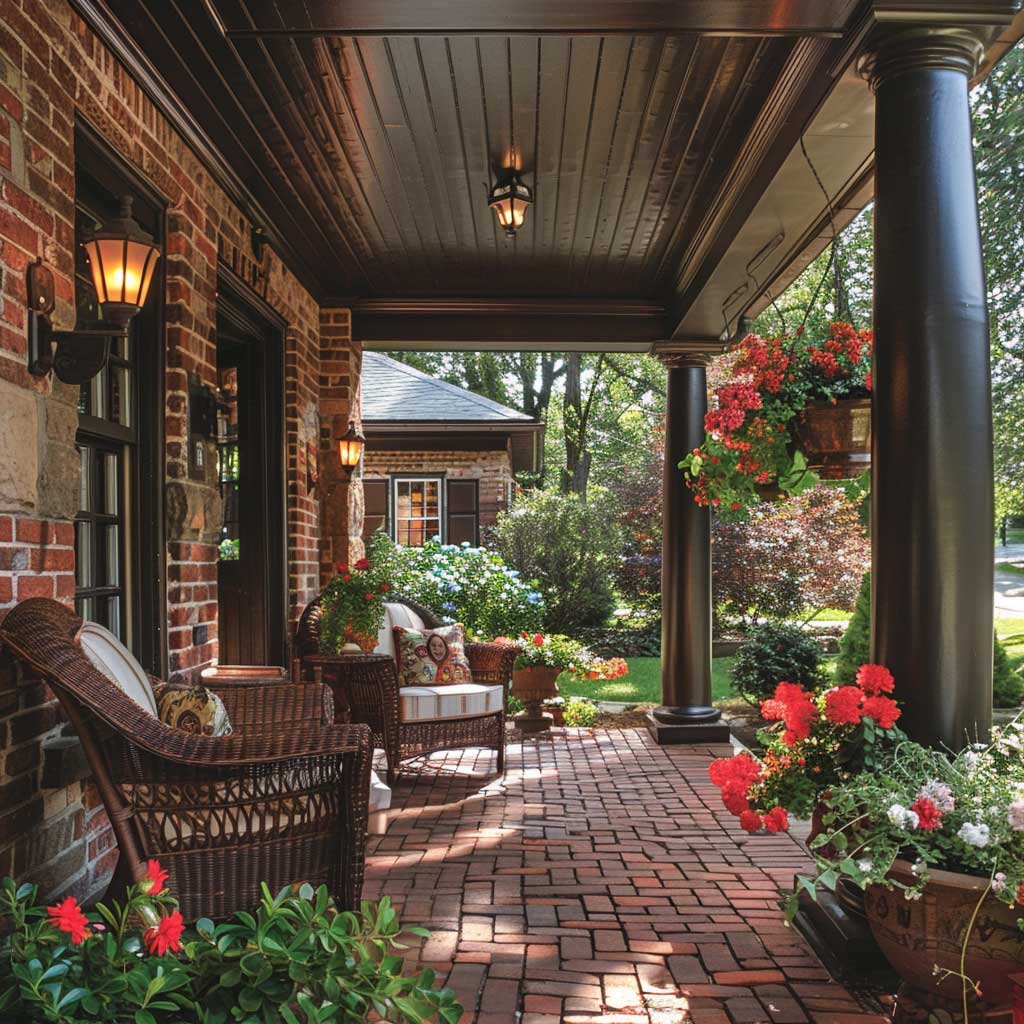
Front porch column designs built around elegant white rounds remain the most searched traditional solution because they read as finished architecture rather than added posts. The white finish reflects light, enlarges the perceived width of the porch, and pairs cleanly with wooden railings and simple landscaping.
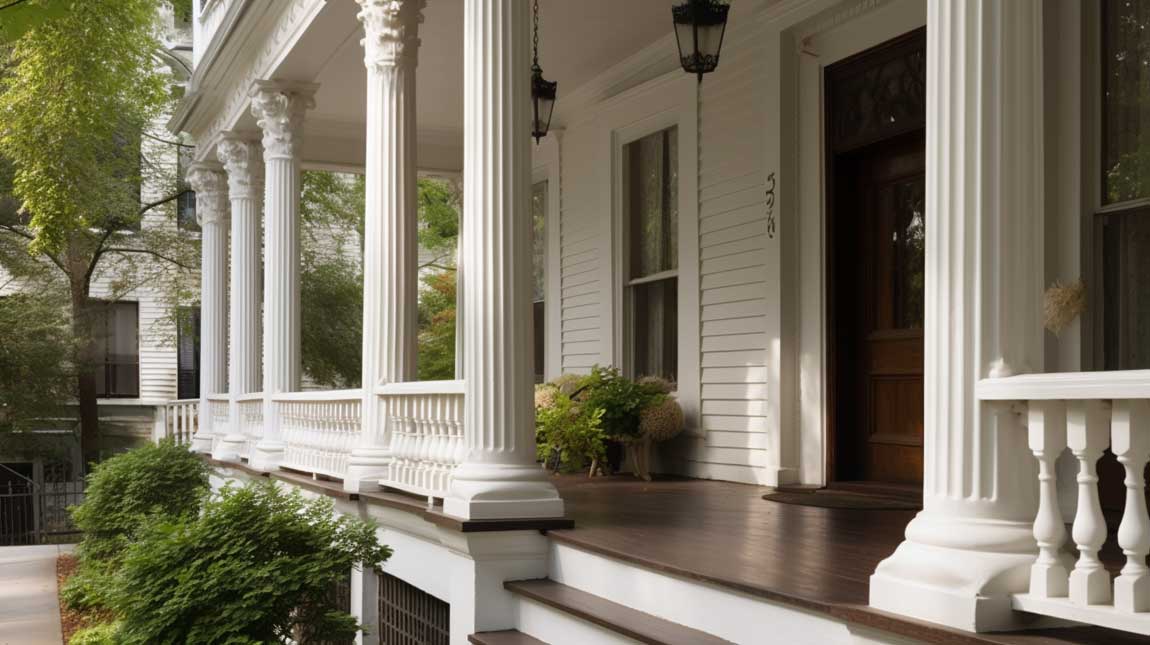
Intricate capitals and bases turn a structural necessity into a focal point. Avoid painting them pure refrigerator white on a warm-toned house; a soft off-white with a slight cream undertone keeps the columns from looking cold against brick or beige siding. The railing should share the same paint family so the entire assembly reads as one unit.
Why do so many traditional porches still rely on wood or composite white columns? Because the material takes paint well and can be detailed with classical moldings that metal cannot match. A typical 8-foot composite column with capital and base retails between $300 and $700 before labor.
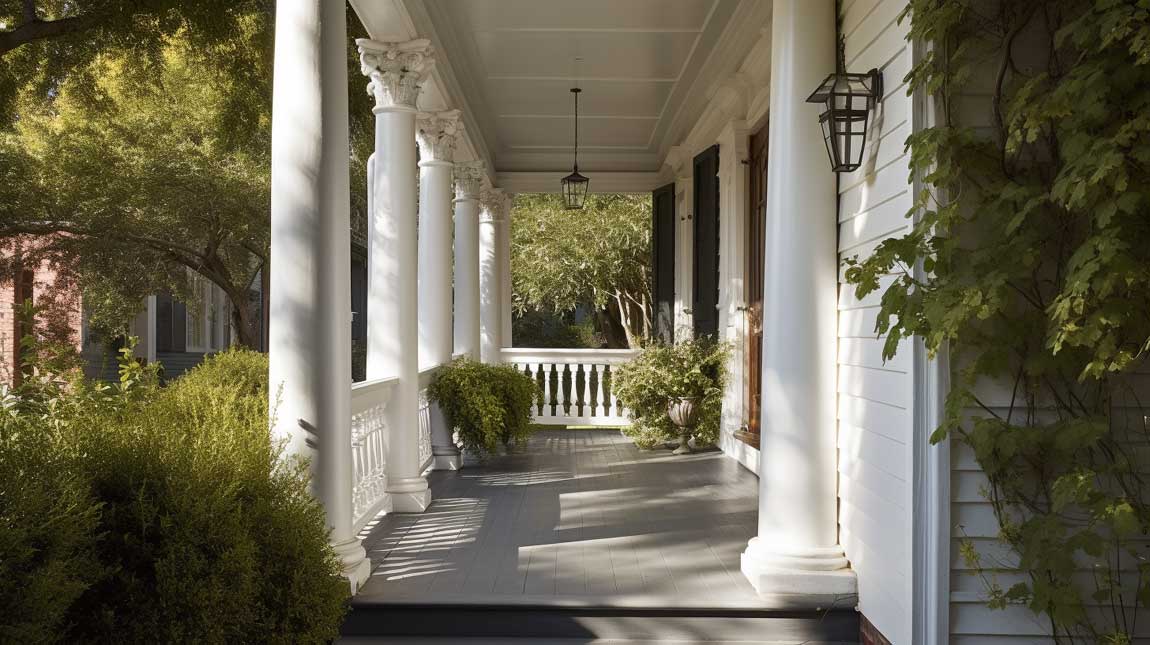
Landscaping and lighting complete the effect. Soft path lights aimed at the column shafts create evening drama without competing with the architecture. Skip dense foundation plantings that hide the base; leave at least 12 inches of clear space so the column reads fully from the street.
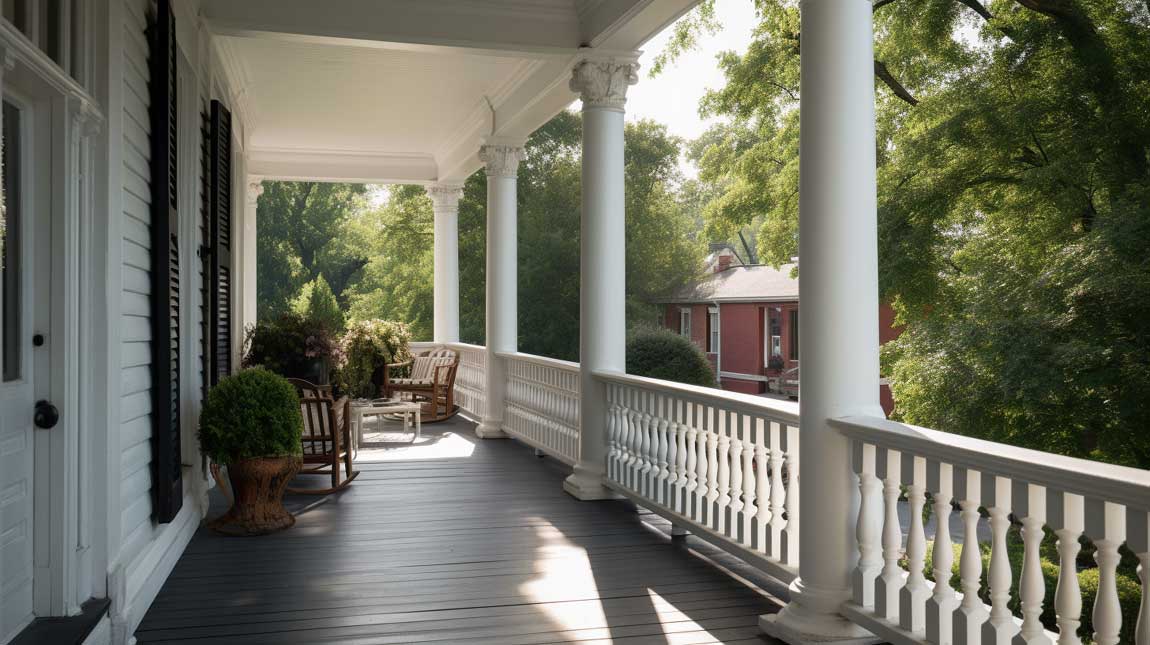
The combination of white shafts, wood rail, and measured greenery produces an entrance that feels both formal and welcoming. For homes that need square rather than round profiles, see the practical selection guide for square columns suited to front porch makeovers.
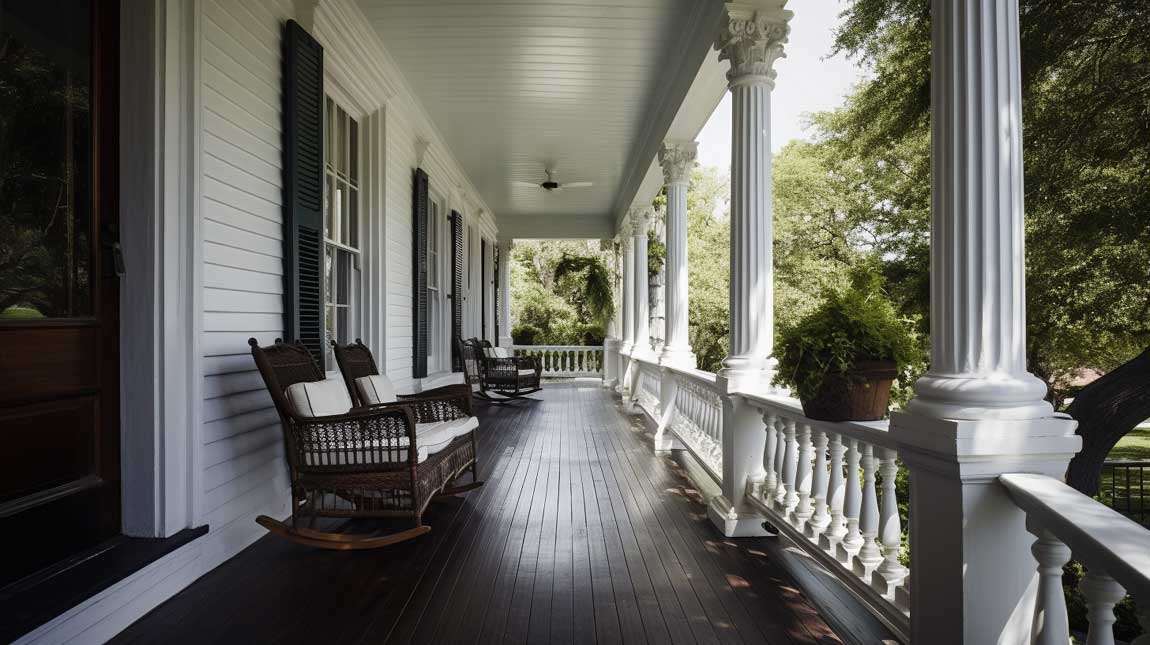
Sleek Metal Columns for Modern Front Porch Statements
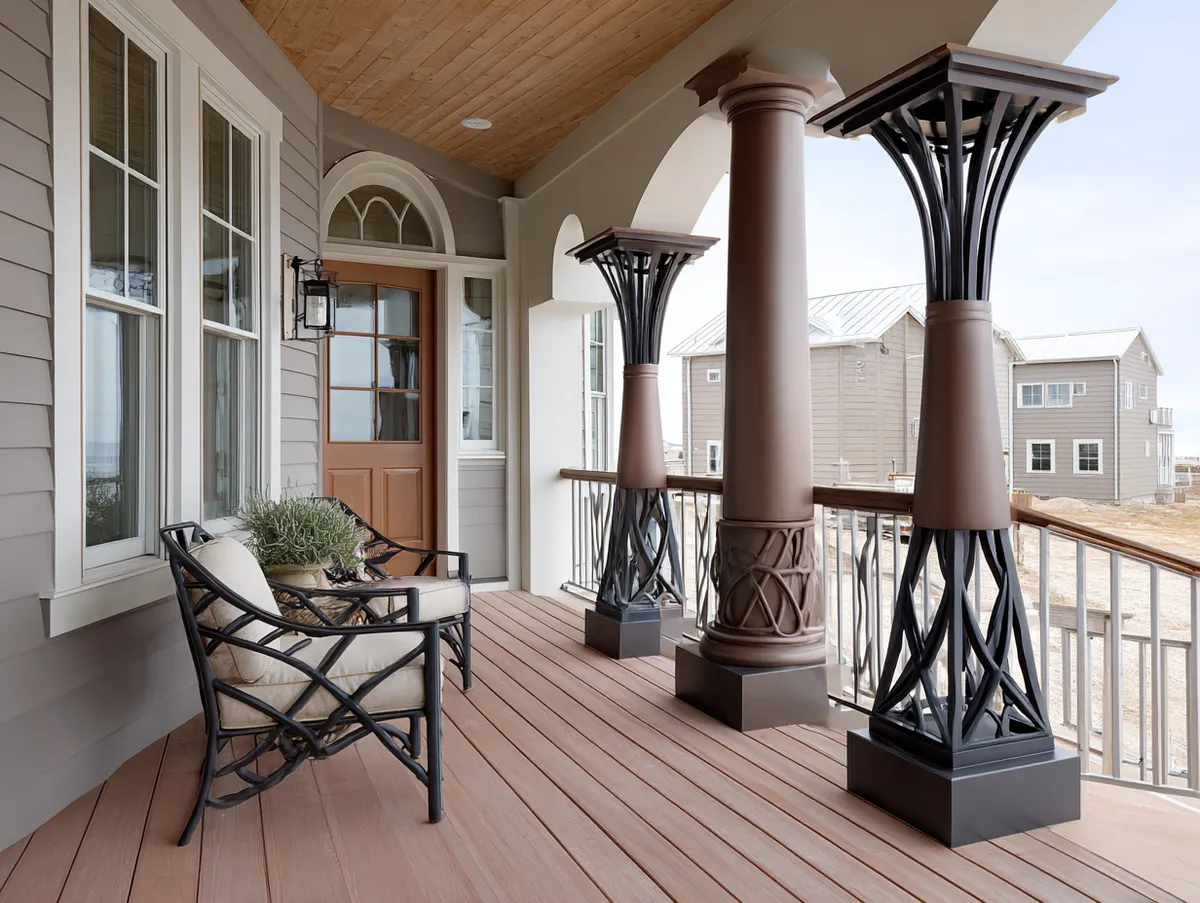
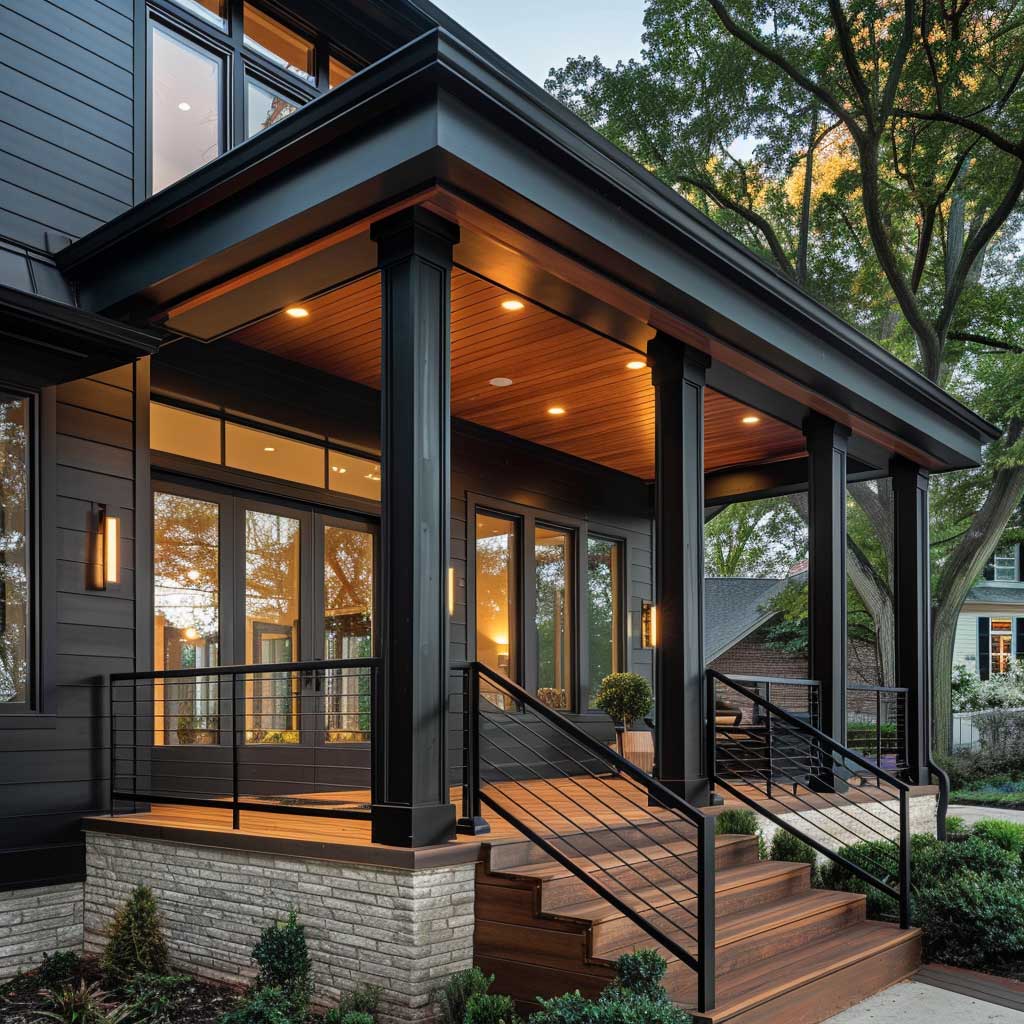
Modern front porch columns built from powder-coated metal and paired with glass railings strip away visual weight while still carrying structural loads. Clean vertical lines and reflective surfaces open the view and suit low-pitched or flat-roof houses.
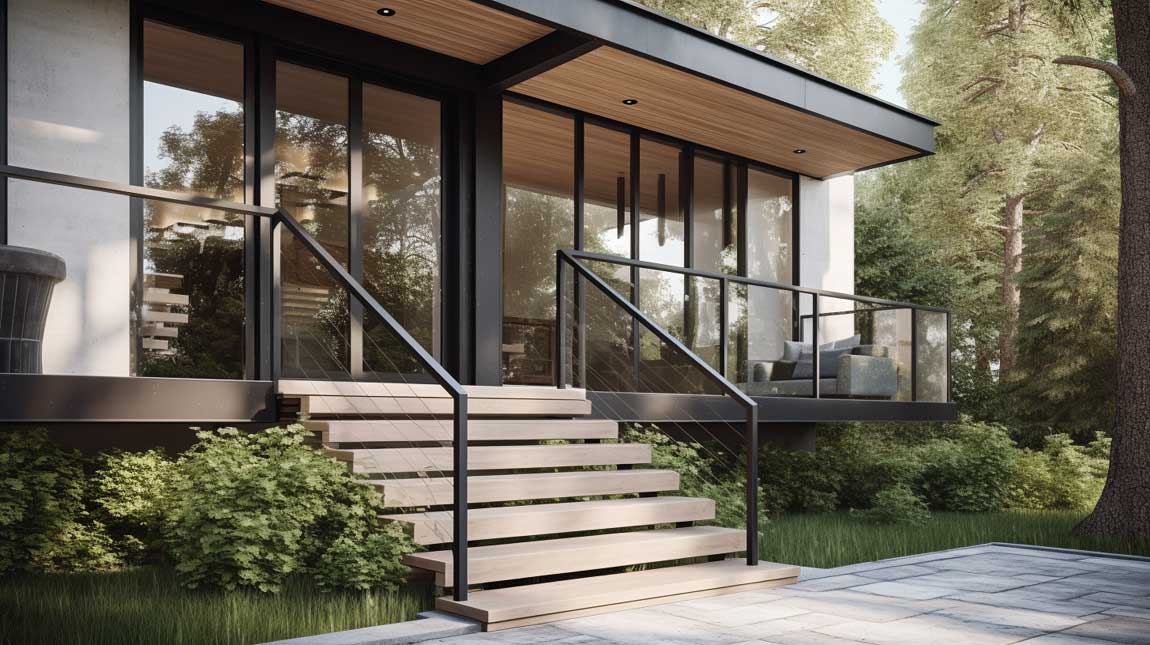
Metal introduces an industrial edge that wood cannot replicate. Matte black or charcoal finishes work against light facades; polished stainless can look clinical unless the rest of the house already uses metal accents. Glass railings keep sight lines open but demand regular cleaning and cost more than cable systems—often $150–$250 per linear foot installed.
What happens if the metal posts are oversized? The porch starts to feel like a commercial lobby. Scale them to 4–6 inches on smaller entries and keep furniture sparse so the architecture stays the focus. Minimalist outdoor pieces with thin frames reinforce the same language.
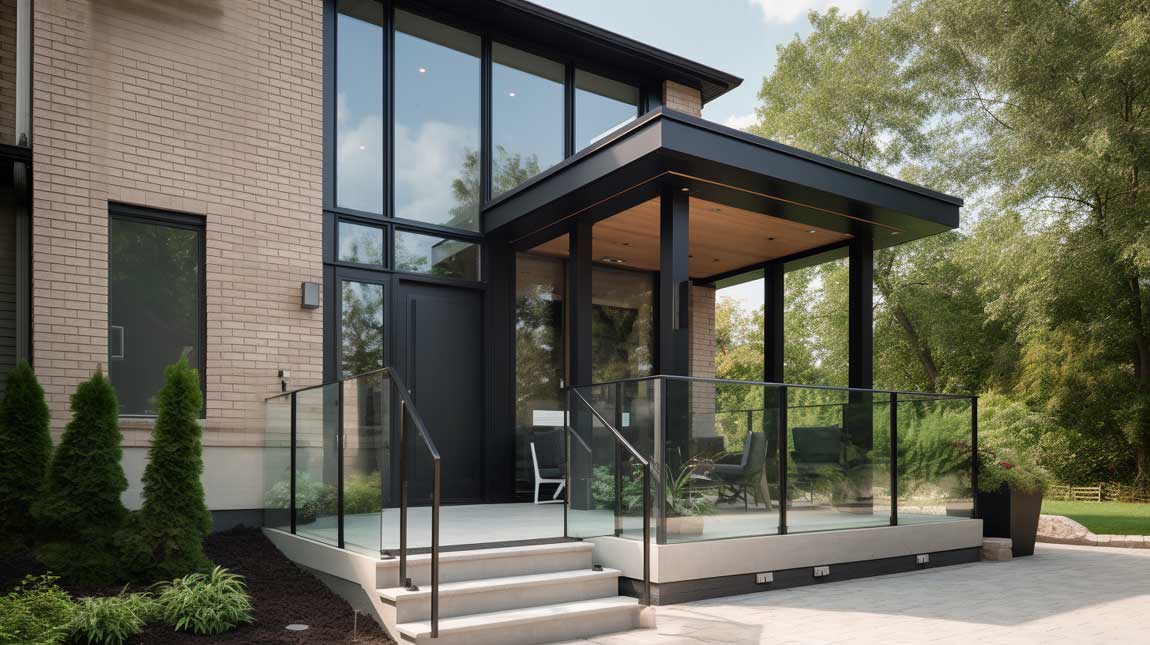
Furniture and décor must stay edited. One linear bench, a pair of geometric planters, and recessed lighting finish the composition without clutter. The result is a porch that photographs cleanly and feels larger than its actual footprint.
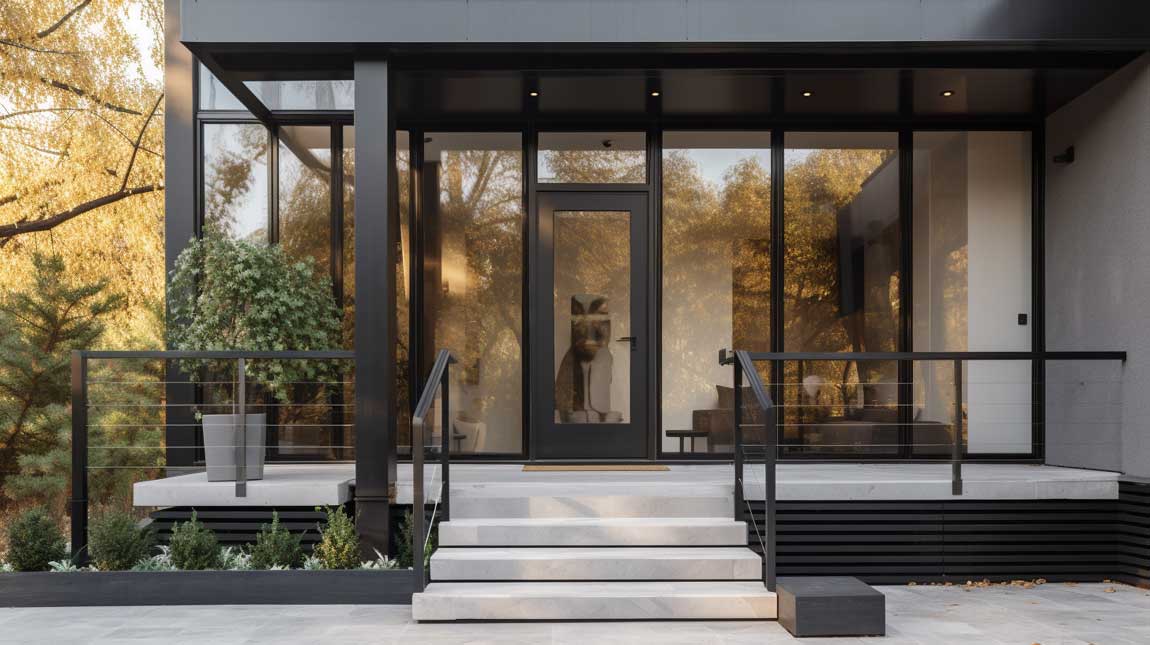
Metal and glass together form one of the strongest modern front porch column ideas currently in use. They reward precise detailing and punish visual noise, so keep every accessory intentional.
Rustic Reclaimed Wood Columns with Natural Stone Bases
Rustic front porch columns made from reclaimed wood and set on stone bases deliver warmth that factory finishes rarely match. The irregular grain and aged surface create immediate character and suit farmhouse, cabin, and transitional exteriors.
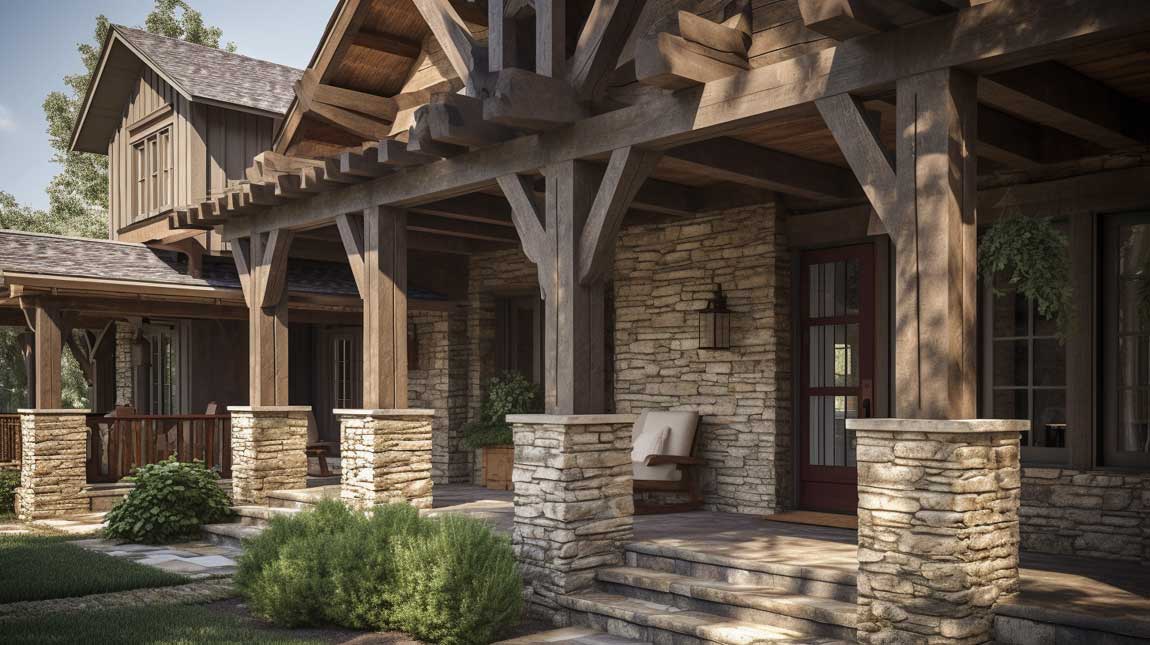
Reclaimed timber carries history in its checks and nail holes. Pair it with hand-set stone or river rock for a base that feels planted rather than perched. Budget $2,000–$4,500 per stone pier when the work is done by a mason who understands irregular coursing; cheaper veneer panels tend to delaminate within a few seasons.
How do you keep the wood from absorbing moisture at the base? Raise the post on a galvanized bracket or stone pad so air circulates under the end grain. Skip this detail and the bottom of the column becomes a sponge within five years.
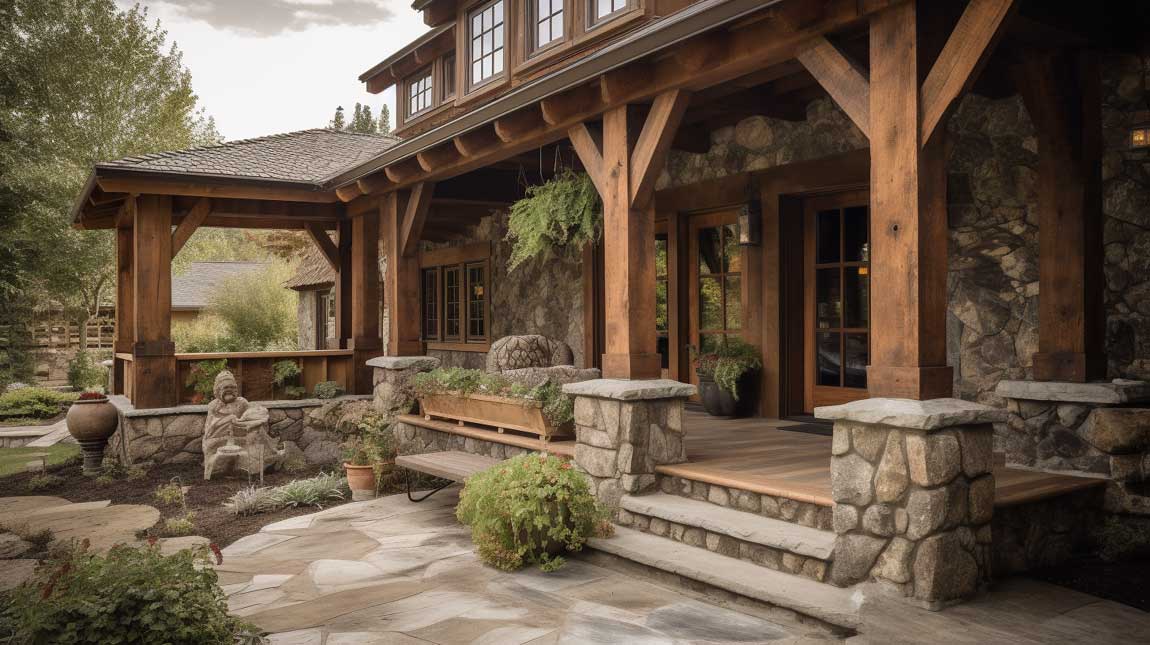
Seating and textiles should echo the same material honesty. Weathered wood benches, woven throws, and simple lanterns reinforce the relaxed mood. Avoid glossy metals or bright plastics that fight the natural palette.
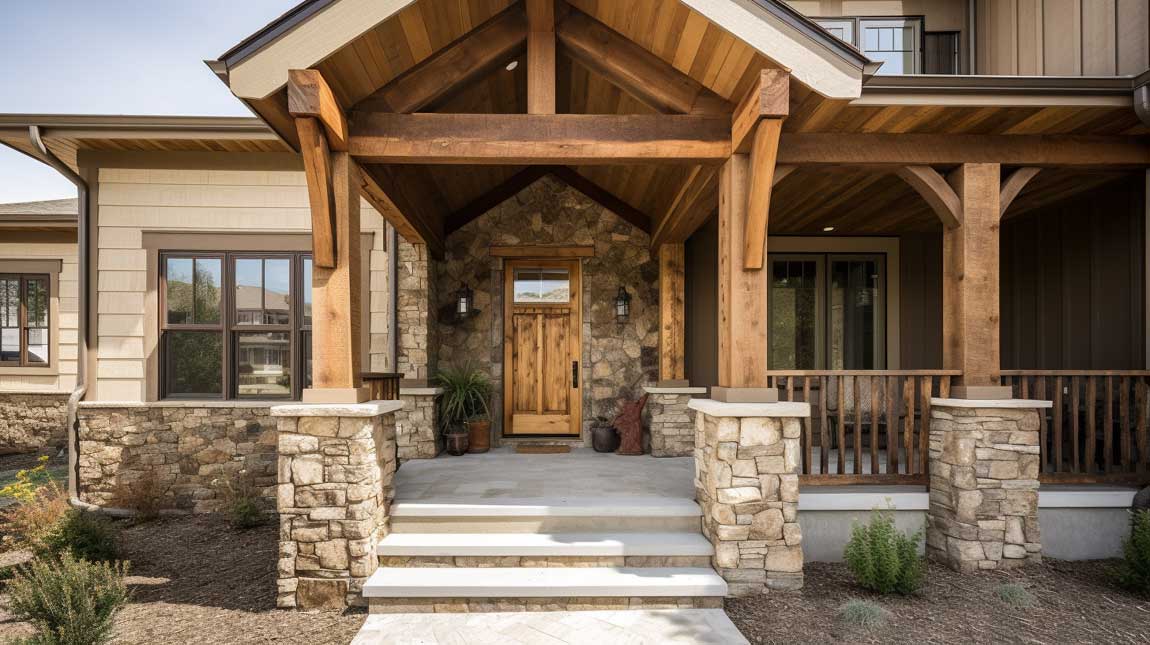
The finished porch feels like an outdoor room rather than a formal entry. That quality makes reclaimed-wood columns one of the most inviting front porch column ideas for homeowners who want character over polish.
Craftsman Tapered Columns Built for Lasting Curb Appeal
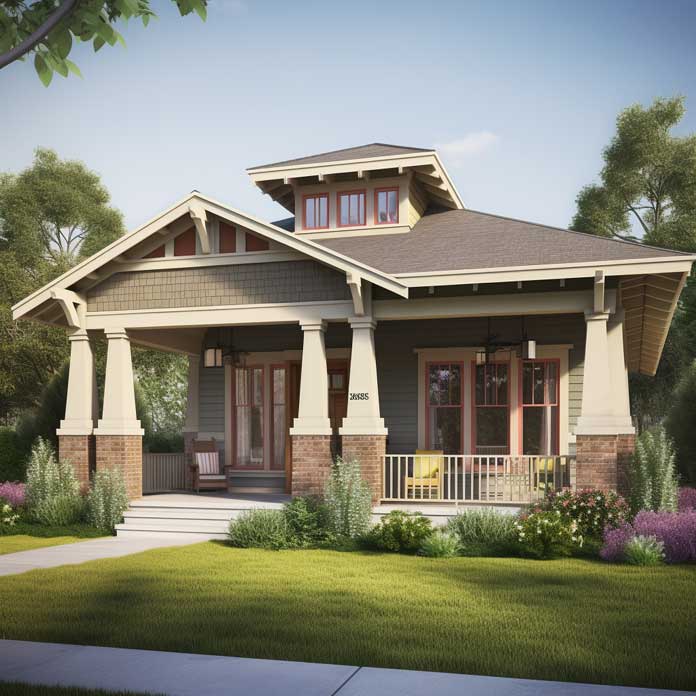
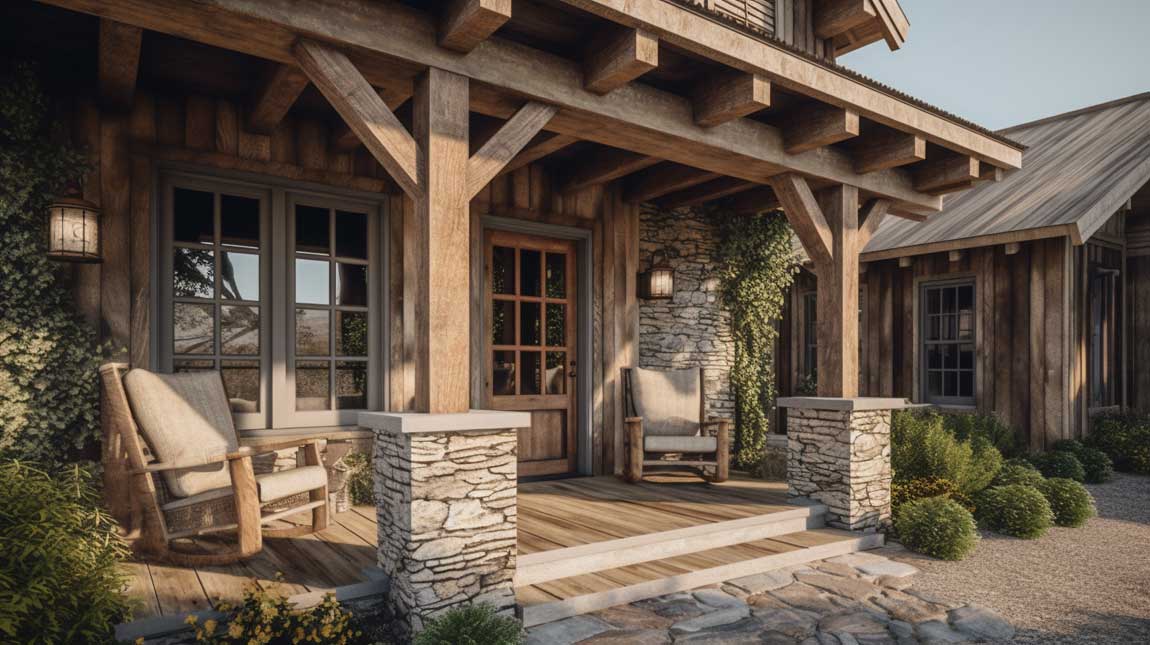
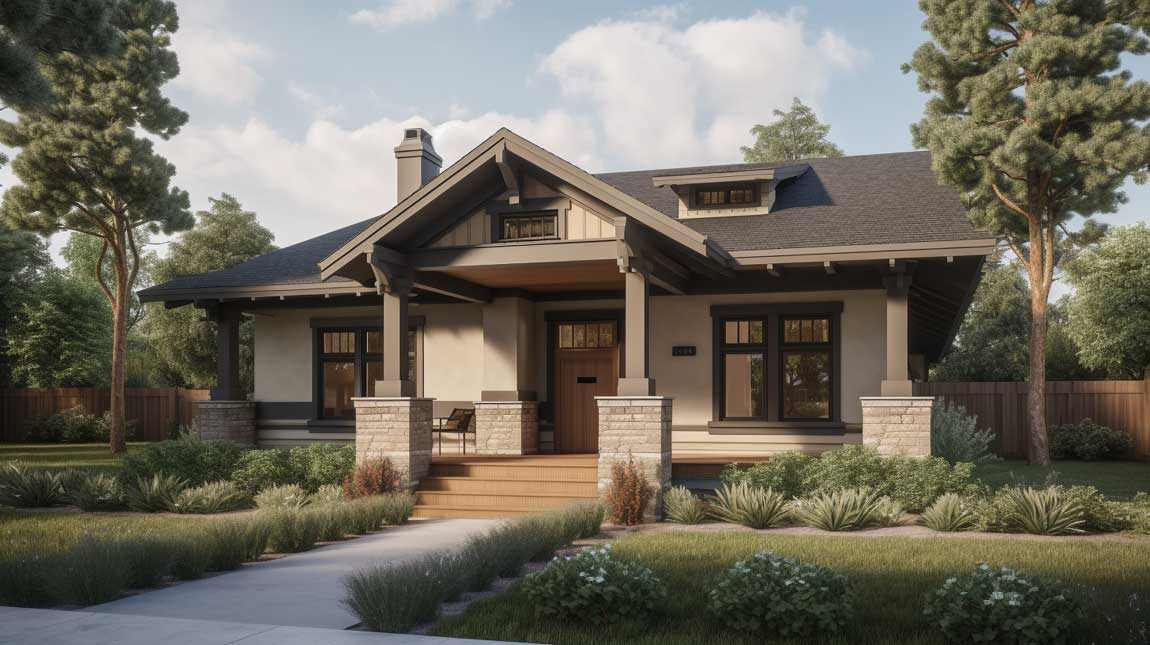
Craftsman-style front porch columns rely on tapered shafts and substantial bases to announce honest construction. The taper—wider at the bottom, narrower at the top—is the signature move that separates true Craftsman work from generic farmhouse posts.
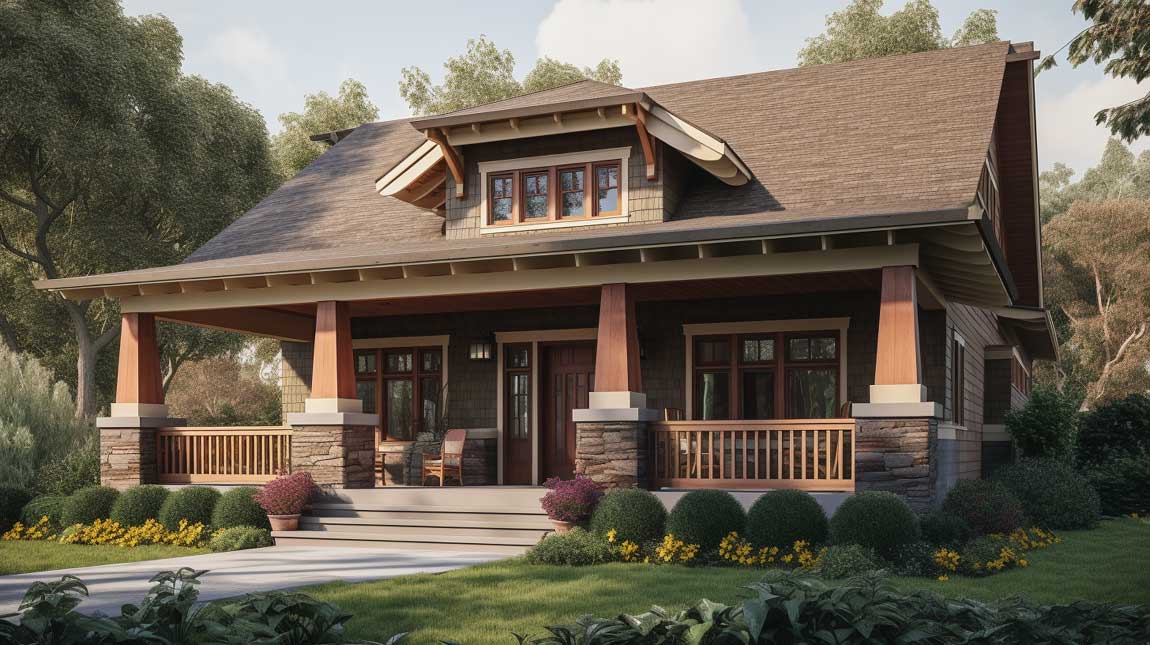
Douglas fir or cedar holds paint and stain longer than pine and mills cleanly into the required profile. Custom-milled fir runs roughly $180–$260 per running foot; off-the-shelf pine posts look exactly like off-the-shelf pine. Wooden detailing at the capital and beam connections rewards close viewing and signals care in construction.
Should the base be wood or masonry? Authentic Craftsman porches almost always use a short stone or brick pier under the tapered post. The heavy base grounds the composition and protects the wood from splash-back. Full wood columns without a pier tend to look top-heavy and age faster at grade.
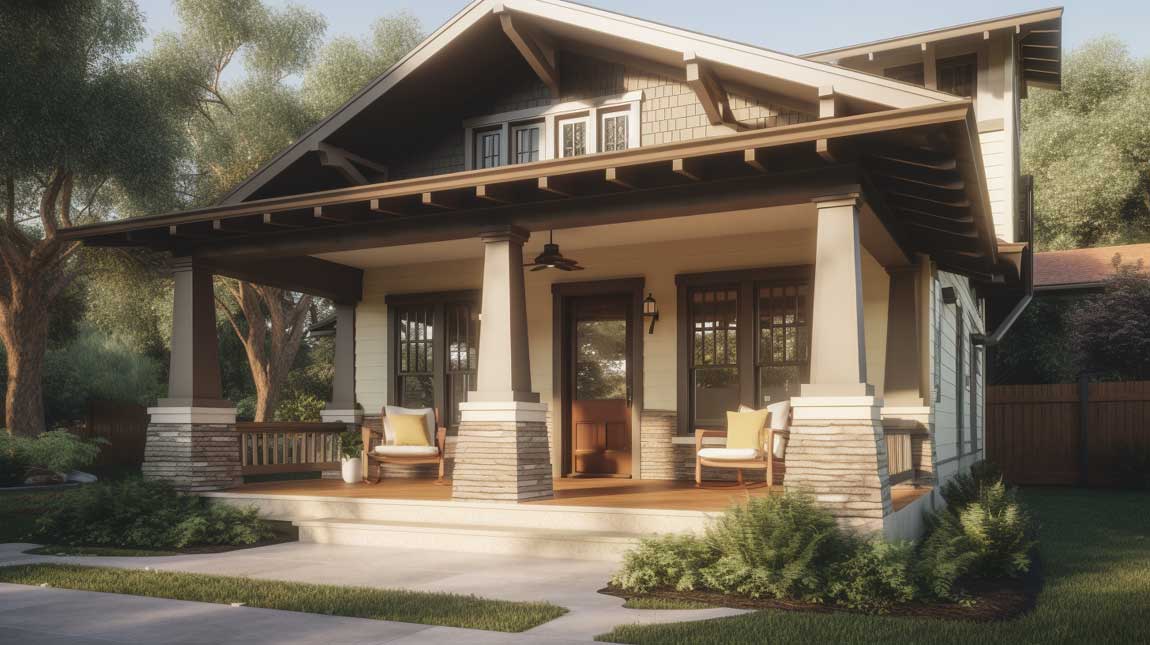
Furniture with clean lines and natural finishes complements the architecture without competing. A simple wood bench or pair of Adirondack chairs keeps the focus on the columns and the beam work above them. For a deeper look at material choices that hold up after a decade, review the guide to Craftsman style front porch columns in wood, stone and brick.
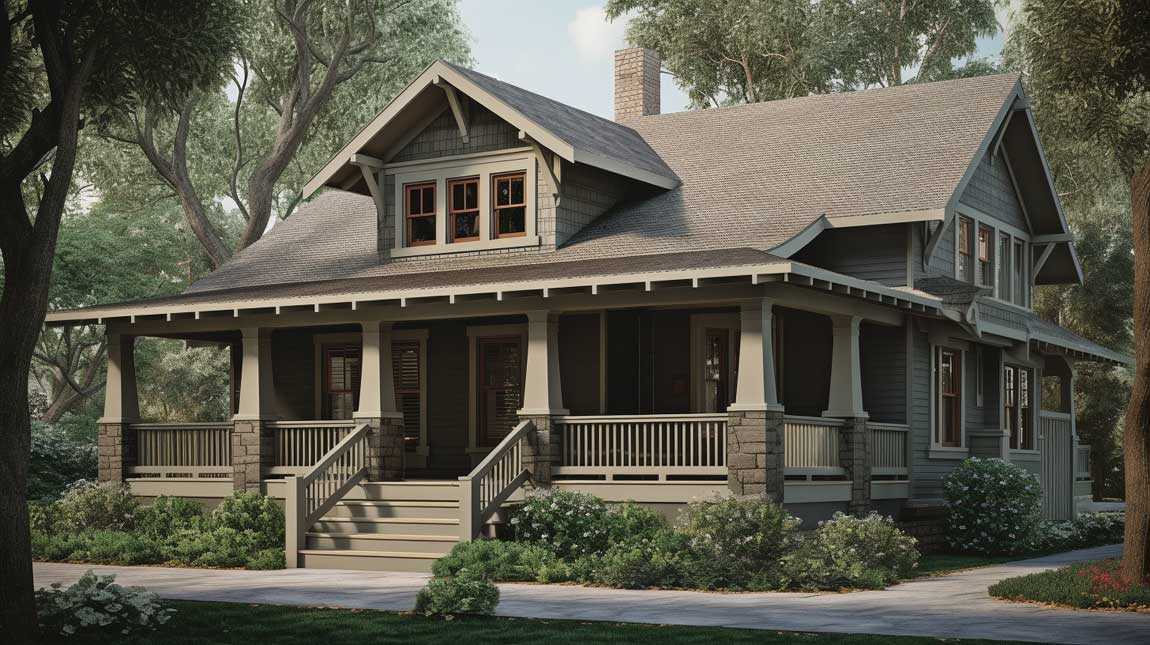
When the taper, the pier, and the detailing all align, the porch feels permanent rather than applied. That permanence is the real value of well-executed Craftsman columns.
Mediterranean Stucco Columns Accented with Colorful Tile
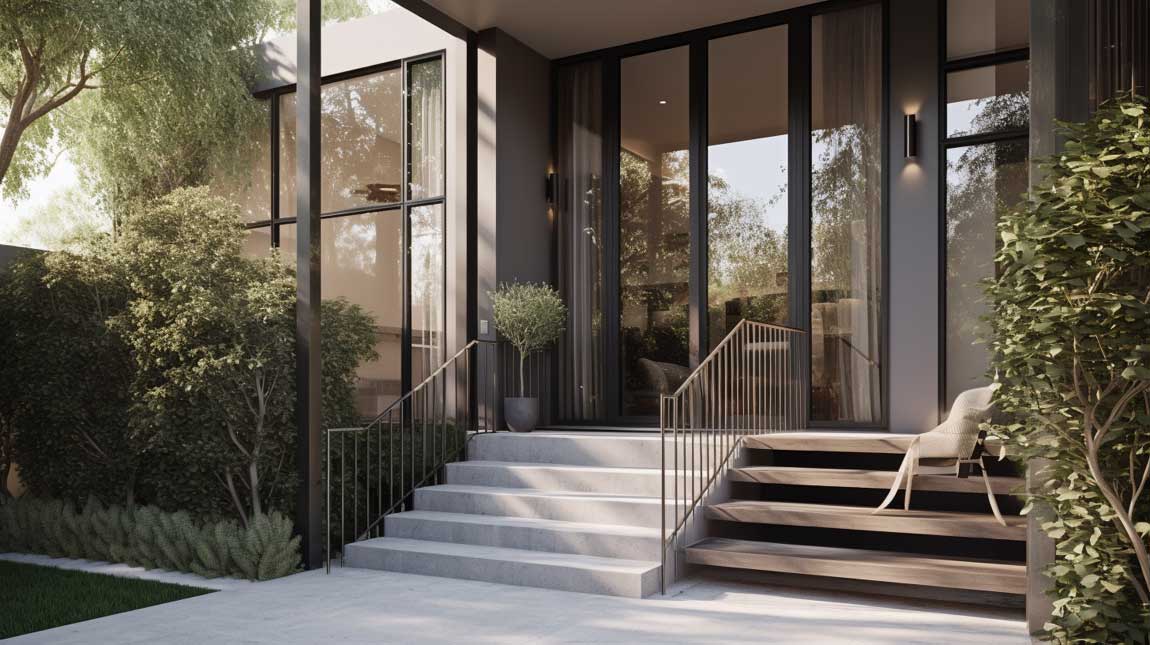
Mediterranean-inspired front porch columns use smooth stucco shafts and vibrant tile to introduce color and texture without heavy ornament. The combination works especially well when the main walls already carry stucco or textured finishes.
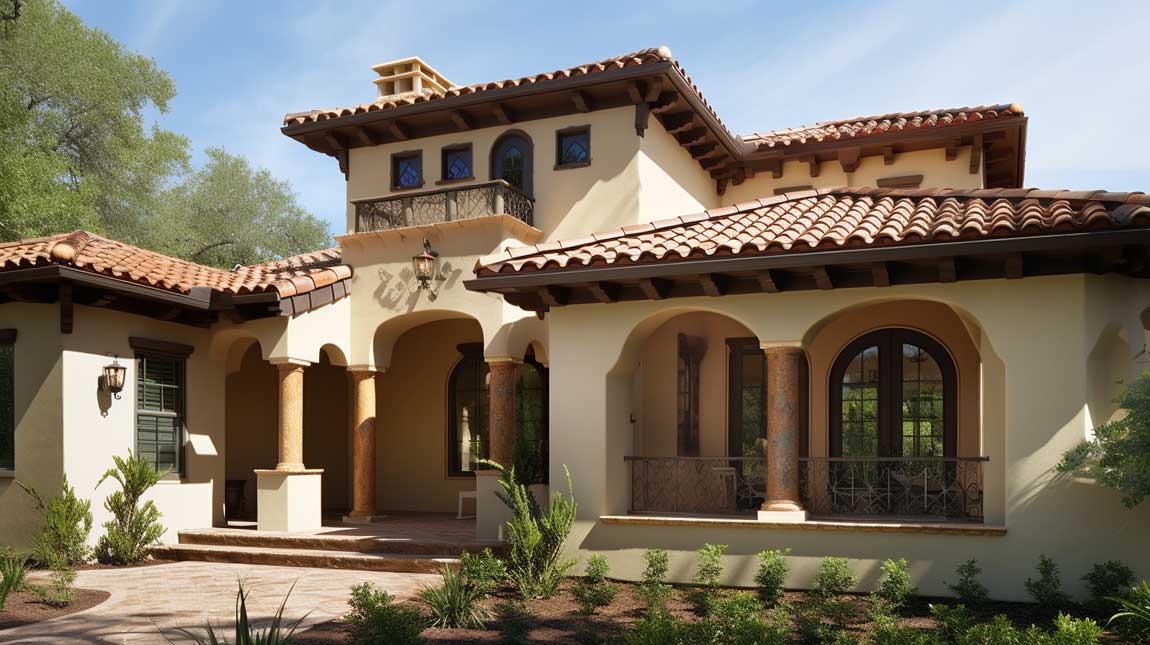
Stucco provides a continuous surface that can be painted or left natural. Tile inserts at the base or as a band around the shaft add personality and echo traditional Mediterranean courtyard details. Choose frost-resistant tiles if the climate freezes; otherwise the glaze will crack within a few winters.
What breaks the Mediterranean look fastest? Mixing glossy contemporary metal railings or stark white plastic furniture. Soft ironwork, terracotta pots, and trailing greenery keep the palette coherent. Lush plantings in large containers further soften the geometry and reinforce the outdoor-room feeling.
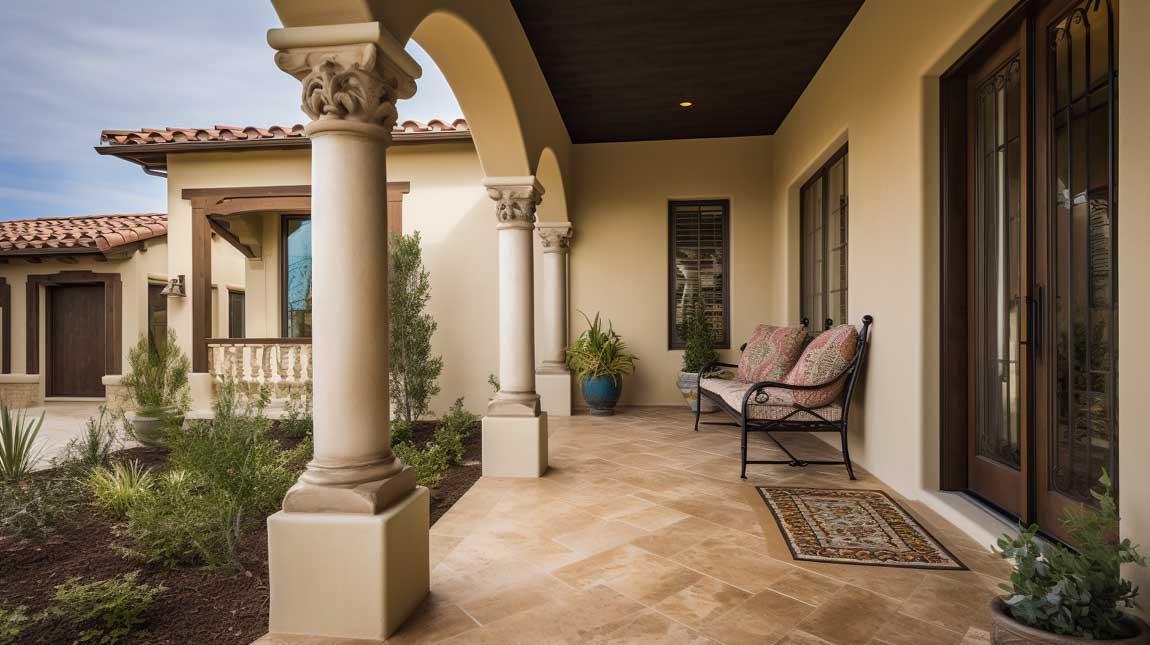
Greenery is not optional here. Climbing vines, olive trees in pots, or simple boxwood spheres complete the composition and prevent the stucco from reading as flat. The result is an entrance that feels lived-in and inviting rather than strictly formal.

Stucco, tile, and thoughtful planting together create one of the most distinctive front porch column ideas available. The style rewards restraint in furniture and generosity in greenery.

Material Comparison for Front Porch Columns
| Material | Typical Cost Range (per column) | Maintenance Cycle | Best Architectural Match |
|---|---|---|---|
| Composite / Fiberglass | $300–$700 | Low – occasional cleaning | Traditional, transitional |
| Powder-coated Metal | $180–$500 | Very low – rinse yearly | Modern, industrial |
| Reclaimed Wood | $300–$600 + base | Medium – seal every 2–3 years | Rustic, farmhouse |
| Custom-milled Fir or Cedar | $180–$260 per running foot | Medium – repaint 7–10 years | Craftsman |
| Stucco over structural core | $400–$900 | Low – crack repair as needed | Mediterranean, Spanish |
Costs reflect mid-2020s retail and installed ranges drawn from manufacturer pricing and contractor surveys. Local labor and structural reinforcement can push totals higher, especially when temporary shoring is required during replacement.
Don’t Do This
Never install hollow vinyl column wraps over untreated 4×4 posts and call the job finished. The seams telegraph within a year, the base traps moisture, and the profile almost always looks undersized. Spend the extra money on a solid composite or properly detailed wood column instead—the difference is visible from the street and permanent.
Choosing Columns That Match the House
Front porch column ideas succeed when the chosen style reinforces the existing architecture rather than fighting it. A classical round column on a flat-roof modern house creates the same visual conflict as a slim metal post under a heavy colonial cornice. Match profile to roof pitch and material to the dominant facade finish.
Proportion matters as much as style. A useful rule of thumb places roughly one inch of column diameter for every foot of height. An 8-foot porch therefore wants an 8-inch column as a minimum; anything thinner starts to look structurally unconvincing. Spacing typically falls between 8 and 10 feet on center for residential work.
For broader context on classical versus modern profiles and material durability, the overview of classic column types and outdoor applications remains a reliable reference. Use it to confirm that the style you like is also the style the house can support.
Final Selection Notes
The strongest front porch column ideas share three traits: correct scale, material honesty, and clear relationship to the rest of the facade. When those three align, the porch stops looking like an afterthought and starts reading as architecture.
Start with the house style, not the product catalog. Measure the existing beam depth and porch height before ordering. Confirm that the chosen material can handle local weather without constant maintenance.
Budget realistically for the full assembly—columns, bases, capitals, railings, and finish work. A mid-range set of four composite columns with proper detailing often lands between $2,000 and $5,000 installed. That investment pays back every time someone approaches the front door.
Choose once, detail carefully, and the columns will still look deliberate a decade later. That is the real measure of a successful porch upgrade.