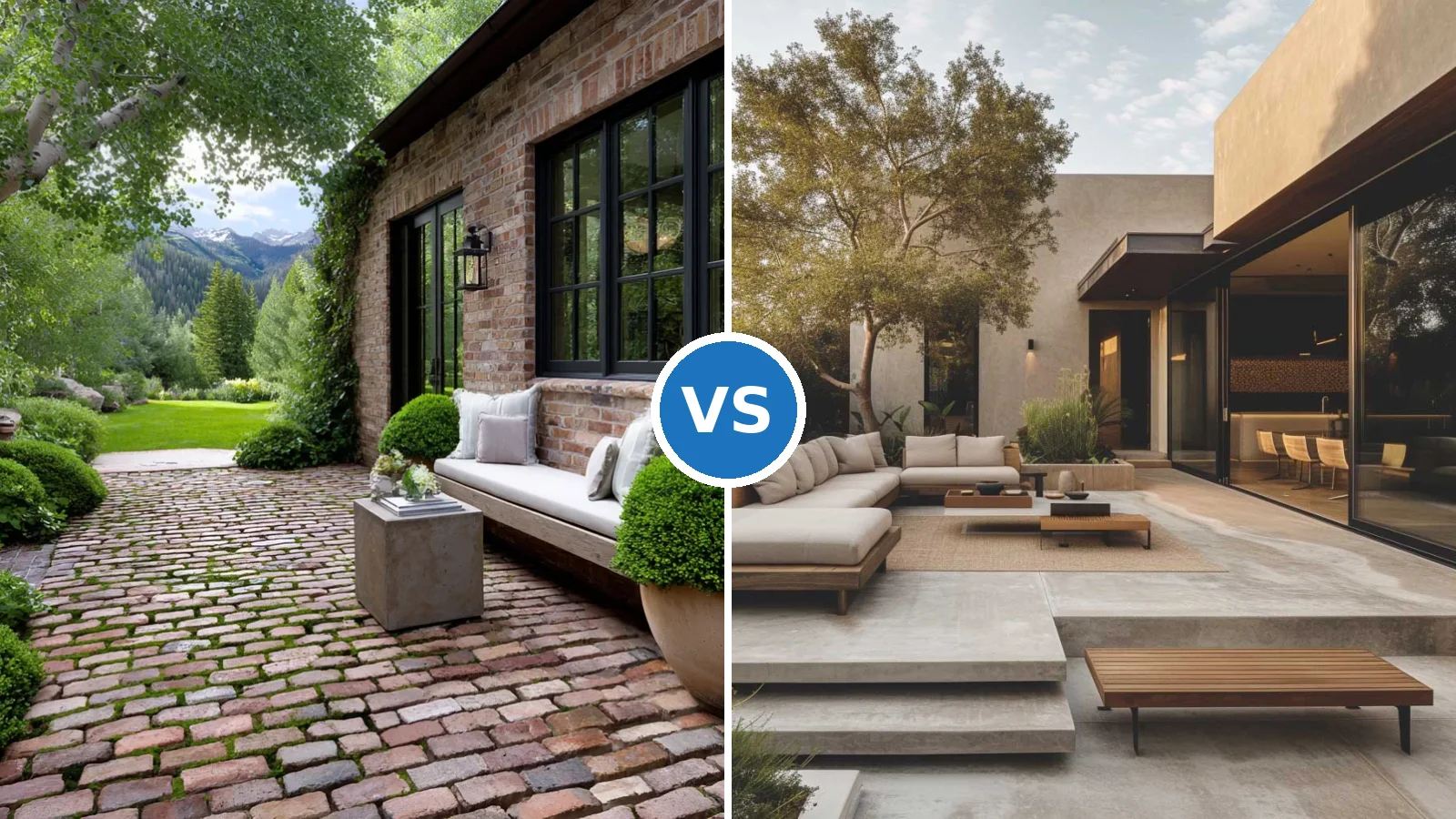
Concrete porch ideas get dismissed as a budget fallback, but the material does something wood and pavers can’t match — it holds a stamped pattern, absorbs integral color, and survives freeze-thaw cycles for 30+ years without warping. My own front porch is a polished broom-finish slab poured in 2019, and strangers still ask if it’s limestone. That confusion is the point.
You need to know upfront that concrete is unforgiving once it sets. A bad pour decision — wrong finish, skipped sealer, no expansion joints — is expensive to fix. The ideas in this article cover the full range from a dead-simple modern concrete front porch slab to a covered back porch with a fireplace and pergola, with real costs attached to each. A plain broom-finish concrete porch runs $6–$13 per square foot. Stamped concrete porch designs start at $10 and climb past $20 for multi-color work.
I’ve watched homeowners blow $4,000 resurfacing a porch they could have stamped correctly the first time for $3,200. Read the section on stamped concrete before you pour anything. It will save you money and at minimum one very frustrating conversation with a contractor.
- Polished concrete with a smooth finish reads as modern luxury; broom-finish is slip-resistant and cheaper
- Stamped concrete porch patterns cost $10–$20+ per sq ft — worth it for a front porch, overkill for a utility back porch
- Stone accents on concrete walls add about $8–$14 per sq ft using Eldorado or similar veneer panels
- Built-in planters cast directly into the concrete slab are cheaper than adding them post-pour
- Pergola + concrete porch combinations extend usable outdoor time by 3–4 months in most climates
- Seal every concrete porch annually with a penetrating silane sealer — skipping it causes 80% of surface failures
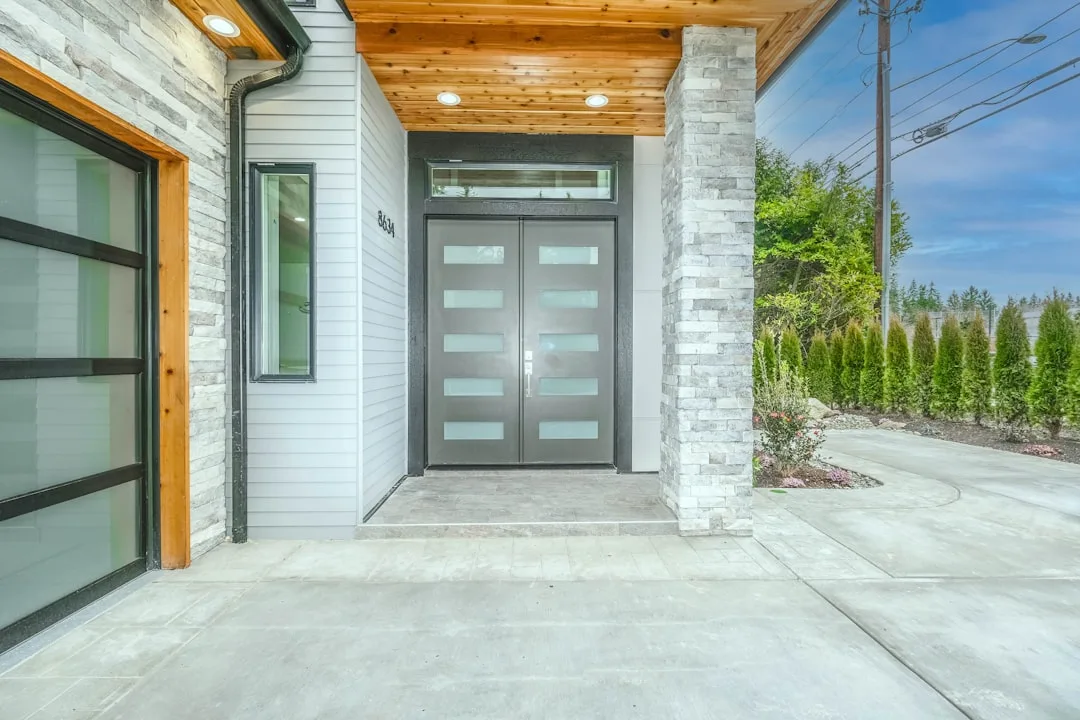
Modern Concrete Front Porch with Polished Finish and Clean Sight Lines
A modern concrete front porch works because it doesn’t ask for attention — it earns it through surface quality. The finish is everything here. I’ve specified both polished and broom-finish slabs for clients, and the polished version consistently photographs better and holds its look longer in dry climates. Wet climates demand a light broom drag for traction. Skip the shiny finish on a north-facing porch in Minnesota — you will regret it in January.

The furniture strategy on a polished concrete porch is counterintuitive — you want less of it, not more. Two low-profile chairs from CB2’s Flex line (around $299 each) and a single side table in matte black leave enough slab exposed that the finish does the visual work. Cluttering this kind of concrete porch ideas with matching furniture sets and planters on every corner turns a statement into a clearance sale. What makes minimalist concrete porches fail is not the concrete — it’s the furniture overload.

Greenery on a modern concrete porch works best when it’s architectural — tall ornamental grasses, a single large fiddle-leaf fig in a concrete planter, or one Japanese maple in a low-profile steel box. I stole this trick from a landscape designer in Portland who charged $8,000 for a porch redesign that essentially placed three plants and called it done. She was right. The moment you add a row of mixed annuals in plastic pots, the concrete porch design stops reading as modern and starts reading as a gas station.

Neutral color isn’t the same as boring. A concrete front porch in warm gray — something like a 3% buff integral color from Sika — reads completely differently at noon versus dusk. You’ll notice the surface changes mood without you touching it. This is the concrete porch equivalent of a white linen shirt: understated until the light hits it right. Apply a clear penetrating sealer from Ghostshield (around $65/gallon) and reapply every 18–24 months to keep that surface tone intact.

Rustic Concrete Porch — Stone Accents, Warm Lighting, and Seats People Actually Want to Use
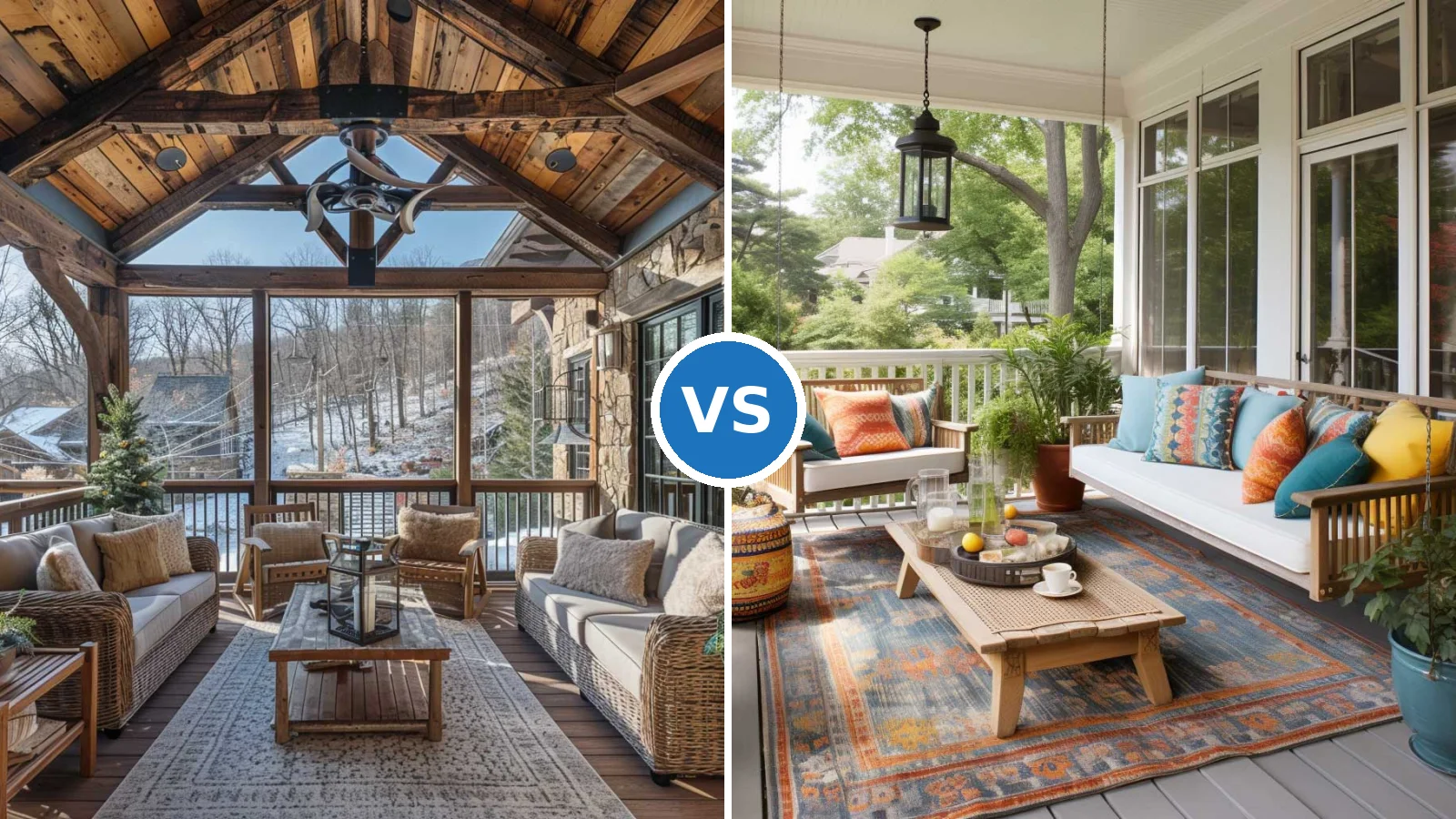
Concrete back porch ideas lean rustic more naturally than front porches do, because the back of a house invites longer, slower time. The combination of poured concrete underfoot and stacked stone on the wall face is the design equivalent of a wool blanket next to a fireplace — textural contrast that makes a space feel physically warmer. Eldorado Stone’s “Country Ledgestone” panels run about $10–$14 per square foot installed, and they adhere directly to a poured concrete porch wall without a structural engineer getting involved.

The seating question on a rustic concrete porch — is it a sectional or individual chairs? — comes down to how you actually use the space. I own two Polywood Adirondack chairs in saddle brown, around $219 each, and they’ve survived four winters in the Pacific Northwest. Sectionals trap moisture underneath unless they’re rated for outdoor use, which most people don’t check. POLYWOOD and Loll Designs both make furniture that won’t grow mold under the cushions. Furniture that looks great in May and disintegrates by October isn’t a rustic concrete porch idea — it’s an expensive mistake.

Lighting on a rustic concrete porch does more design work per dollar than any other element. String lights — Edison bulbs on 48-foot strands from AmazonBasics — cost about $22 and completely change a concrete back porch after dark. The mistake is running them in a single straight line overhead, which looks like a parking lot. Drape them in a grid or drape from corner posts to center hook at a gentle catenary arc. That arc is the difference between a porch and a destination.

Stone and concrete together age better than stone and wood together. Wood deteriorates where it meets the concrete surface — moisture wicks into end grain and you get rot in three to five years without proper flashing. My go-to detail for this is a 1/4-inch rubber isolation joint between any wood element and the concrete slab. A $4 roll of foam backer rod from the hardware store does the same job as a custom rubber gasket. Concrete porches with stone accents are low-drama to maintain; concrete porches with wood trim are not.

Stamped Concrete Porch Patterns — How Color and Texture Change the Entire Design
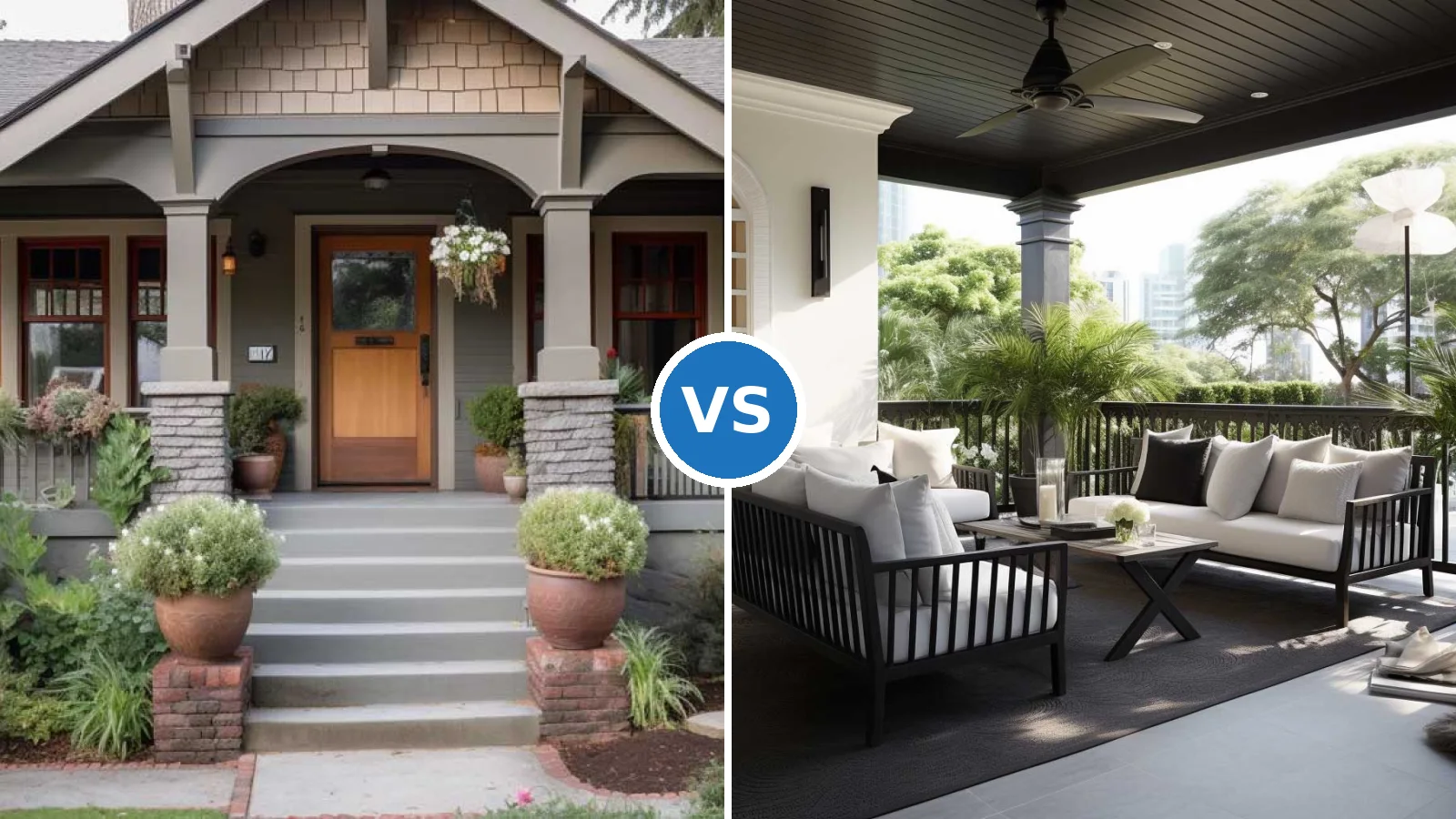
Stamped concrete porch designs are one of the few places where more upfront cost reliably delivers more value. A plain gray slab at $8 per square foot looks like a sidewalk. A cobblestone-stamped slab with a charcoal antiquing release at $15 per square foot looks like a European courtyard. The difference between the two is roughly $1,400 on a 200-square-foot porch — about what you’d spend on one season of potted flowers that don’t make the same impact. Small front porch ideas benefit the most from stamped concrete because the pattern maximizes visual complexity in a limited footprint.

Pattern choice matters more than color choice. Ashlar slate, running bond brick, and random fieldstone are the three stamped patterns I’ve seen hold up visually over 10+ years. Geometric patterns — hexagons, diamonds, modern tile shapes — look dated faster than natural-stone mimics. Ask your contractor specifically whether they use Brickform or Proline stamp mats. Those two brands cut sharper edges than generic sets, and sharp edge definition is what separates a stamped concrete porch that photographs well from one that looks like it was done with a rubber bath mat.

Color is the variable that most homeowners get wrong on stamped concrete porch ideas. Two-tone color with a base integral color and a darker antiquing release applied over the stamps is the standard technique — it’s what creates depth and makes the pattern read as three-dimensional. Single-color stamped concrete, by contrast, looks flat. You’ll notice this immediately in outdoor photos: the ones that pop always have a two-toned color treatment. Expect to add $1–$3 per square foot for the antiquing release on top of the base color cost. According to the Concrete Network, basic stamped work runs $10–$14 per square foot, while multi-color designs reach $20 and up.

- Skip the sealer on stamped concrete. The color lives in the top 1/8 inch of the surface. UV and foot traffic strip it in 18 months without a UV-resistant sealer. Behr makes a solid penetrating sealer for about $39/gallon. Apply it every 1–2 years or the $15/sq ft pattern you paid for will look like a $4 broom finish by year three.
- Stamp over an existing cracked slab. An overlay can hide hairline cracks for a season, but they reflective-crack through. If the slab has movement cracks, pour new concrete with proper rebar and expansion joints. A $500 overlay on a compromised slab is a guaranteed $500 wasted.
- Choose pattern colors from a small sample card. Integral colors look 30–40% darker once the full slab cures in outdoor light. Ask your contractor to pour a 12×12 test square and let it cure for 28 days before committing to the full pour.
Furniture coordination with a stamped concrete porch follows one rule: match the tone, not the pattern. A warm-tone ashlar slate stamp pairs with teak, cedar, and terracotta pots. A cool-tone flagstone stamp pairs with powder-coated steel and galvanized metal. Putting wicker furniture on a cool-gray stamped porch creates a visual temperature conflict that reads as unresolved. Does matching matter this much? Ask anyone who’s tried selling a house with a mismatched porch — the feedback shows up in every offer.

Concrete Porch with Built-In Planters — Cast-In Design vs. Bolt-On Afterthoughts
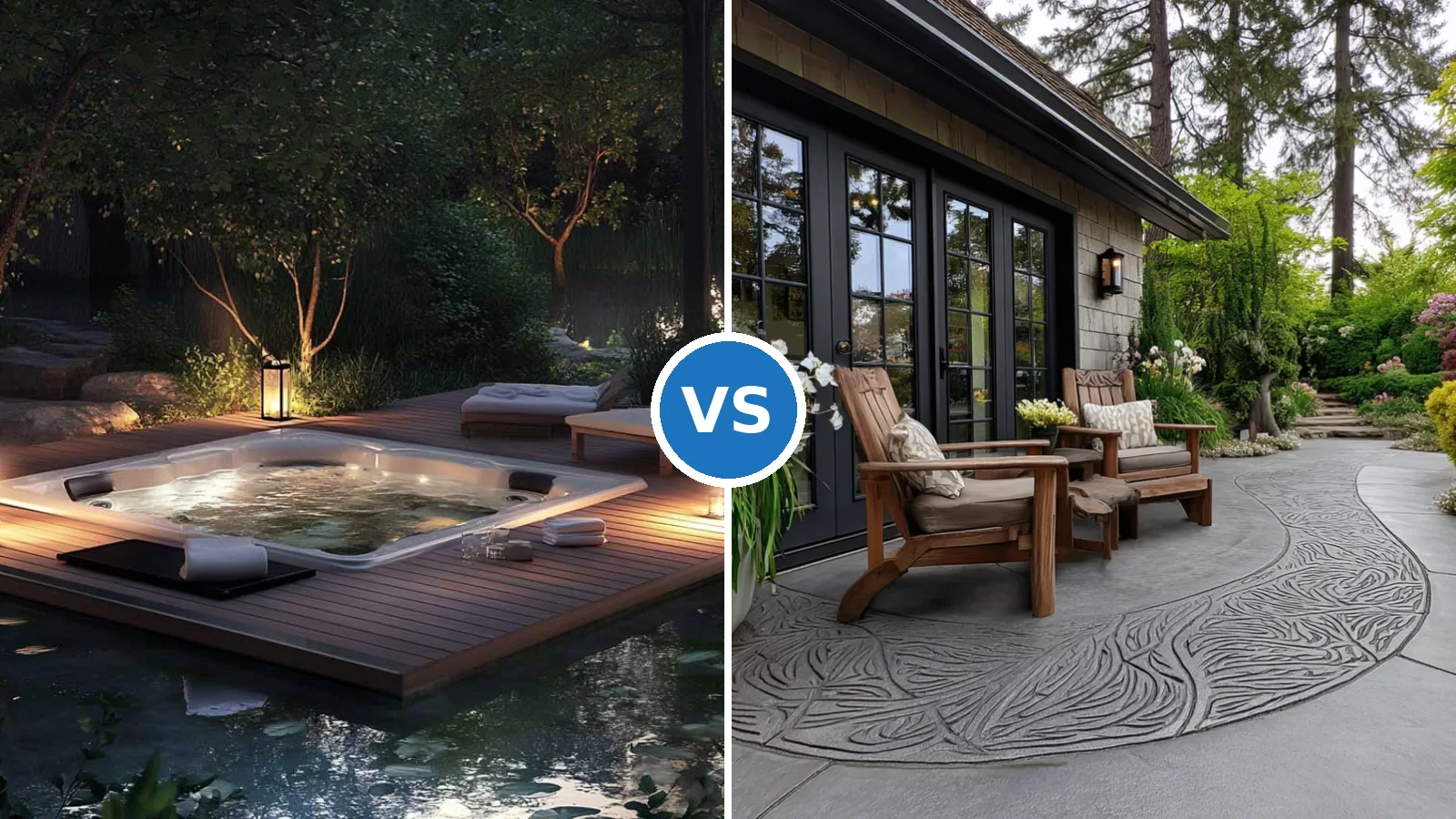
Concrete porch ideas with built-in planters photograph better than any other porch type because the integration is seamless — there’s no visual gap between the porch floor and the greenery containers. The key detail most people miss is that built-in planters cast directly into the slab pour need drainage holes at the low point and waterproof membrane liner on the interior faces. Without the liner, the soil moisture migrates into the adjacent concrete and creates efflorescence — the white mineral staining that makes a new concrete porch look abandoned within two years. A 20-mil HDPE liner from Firestone costs about $0.80 per square foot and takes 20 minutes to install before the forms go in. Industrial porch designs also use built-in concrete planters effectively, often with succulents or ornamental grasses that echo the material palette.

Modern landscaping on a concrete porch means geometric containment. Every plant lives in a defined box, row, or line — not scattered randomly across the surface. Ornamental grasses like Karl Foerster feather reed grass in a row of built-in planters creates a privacy screen effect that costs about $12–$18 per plant from a nursery. A row of five flanking a concrete front porch entry runs you under $100 in plants. That same privacy screen from a landscape contractor with a design fee attached? I’ve seen quotes for $1,200. Buy the plants yourself.

What doesn’t work is bolt-on planters added after a concrete porch is finished. They sit on top of the slab, collect water underneath, leave rust rings and mineral stains on the concrete surface, and usually look like afterthoughts — because they are. If you’re in the planning phase of a concrete porch build, budget built-in planters into the original pour. If you’ve already poured and want planters, go with elevated fiberglass containers from IOTA or Campania International on casters — at least you can move them before the staining starts.

Hardscape materials adjacent to a concrete porch need to share at least one visual characteristic — color or texture, but not both. Concrete porch floor plus limestone steppers plus gravel border plus stacked river rock walls is too many materials fighting for attention. My go-to combination is poured concrete plus a single boulder or a simple Belgian block border to define the perimeter. That’s it. Restraint in hardscape is the same as restraint in editing — the second material should make the first look better, not compete with it.

Covered Concrete Porch with Pergola and Fireplace — What the Budget Breakdown Actually Looks Like
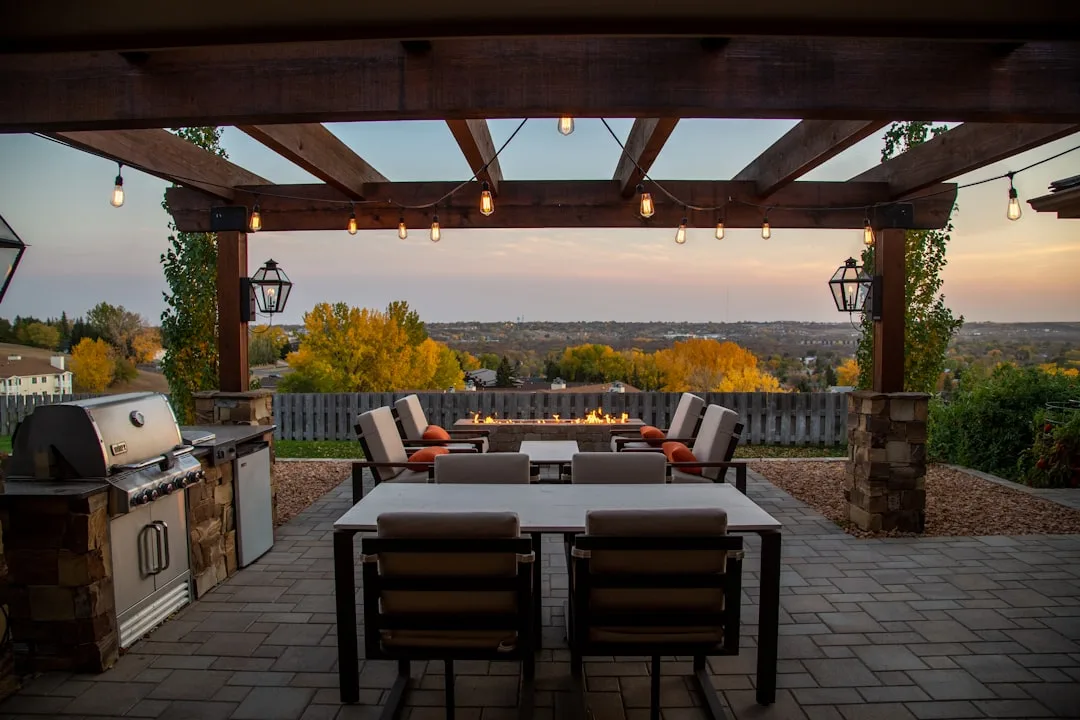
A covered concrete porch with a pergola is the highest-ROI outdoor project I’ve seen consistently add value to a home. A 12×16 foot cedar pergola kit from Cedarshed or Outdoor Living Today runs $2,400–$3,500 installed. That pergola over a concrete porch slab that already exists costs a fraction of what a full patio cover addition runs — and it adds covered outdoor living that buyers pay for. The concrete provides the structural base; the pergola provides the enclosure. These two elements work like a house’s foundation and roof — neither is complete without the other.

Wood pergola on concrete is the standard combination because the visual warmth of the wood offsets the hardness of the concrete below. The detail that matters is the post base connection. Simpson Strong-Tie post bases — model ABA44 for 4×4 posts at about $8 each — lift the post off the concrete surface and prevent moisture wicking into the wood end grain. Posts set directly into concrete holes or sitting flush on the slab without a base will rot. I’ve seen a $3,000 pergola need full post replacement at year four because the builder skipped $32 in post bases. Do not skip the post bases.

The outdoor fireplace on a concrete porch is the most polarizing budget decision in residential outdoor design. A basic gas-insert fireplace with a stacked stone surround runs $4,000–$8,000 installed. Wood-burning units add chimney requirements that can push the total past $12,000. Is that worth it? For a house in a climate with eight or more months of outdoor weather, yes — I’ve watched listings in the Pacific Northwest sell $15,000 over ask specifically because the back concrete porch had a fireplace. For a house in Phoenix, it’s a luxury that adds cost without adding usage.

Seating around a concrete porch fireplace follows the same rule as a living room — anchor it with an outdoor rug to define the conversation zone. My go-to is a Dash & Albert indoor-outdoor rug in a neutral stripe, around $189 for an 8×10, which visually grounds the furniture arrangement on the concrete slab. Without the rug, furniture on concrete looks like it was pulled out of a storage unit. With the rug, it looks intentional. The fireplace becomes the focal point; the rug tells people where to sit.

CONCRETE PORCH IDEAS — FINAL WORD
Concrete performs exactly as well as the decisions made before the pour
Material selection is the easy part. Getting the finish, drainage slope, expansion joints, and sealer schedule right is where concrete porch ideas succeed or fail. A $12/sq ft stamped pour that’s never sealed looks worse at year three than a $6/sq ft broom finish that gets sealed annually.
Pergola + fireplace combinations deliver the highest observable value bump at resale. Built-in planters only work when the liner and drainage are built in from the start. Stamped concrete beats plain concrete every time on a visible front porch — the extra $5–$7 per square foot is not a splurge.
Save this post before you meet with a contractor — the cost benchmarks here will keep you from overpaying for things that should cost $40 not $400.