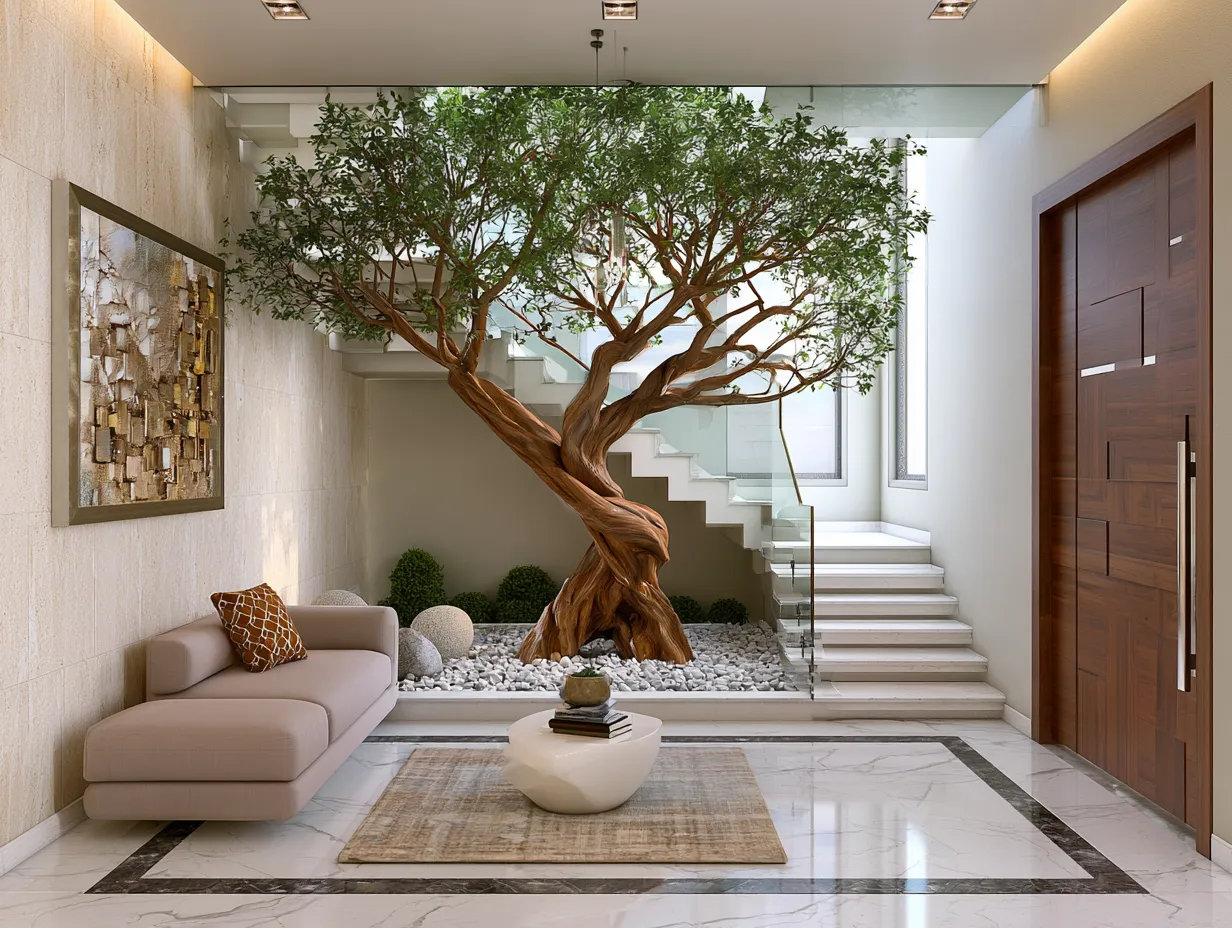
Four square meters. That’s what most small house entrance lobbies actually measure. And somehow that’s the space doing all the heaviest lifting — coats, shoes, bags, keys, guests forming an opinion in under three seconds.
Small lobby design for home isn’t about cramming in more storage. It’s about deciding what the space is for and cutting everything else. I’ve seen entryways ruined by one oversized console table more times than I can count. Takes up 40% of floor space, holds a vase nobody chose, and makes the whole entry lobby feel like an obstacle course.
The 20 ideas below are all built around one constraint: you don’t have room to waste on anything decorative that isn’t also functional. Every pick earns its place or it goes.
Quick Scan
20 Small Lobby Design Ideas — What’s Actually Worth Your Time
- Wall hooks + narrow bench — clears the floor, costs under $200
- Mirror opposite the door — doubles perceived depth instantly
- One accent wall — personality without crowding
- Storage bench — seating + shoes + bags in one footprint
- Built-in cabinets — best ROI if you’re renovating anyway
- Floating shelves — display + storage with zero floor space
- Dimmer switch — the $20 upgrade that changes the whole mood
- Room divider — makes an open-plan corner feel like a real lobby
- Vertical garden — greenery without losing floor space
- Hidden storage ottoman — the cleanest look if you have kids or pets
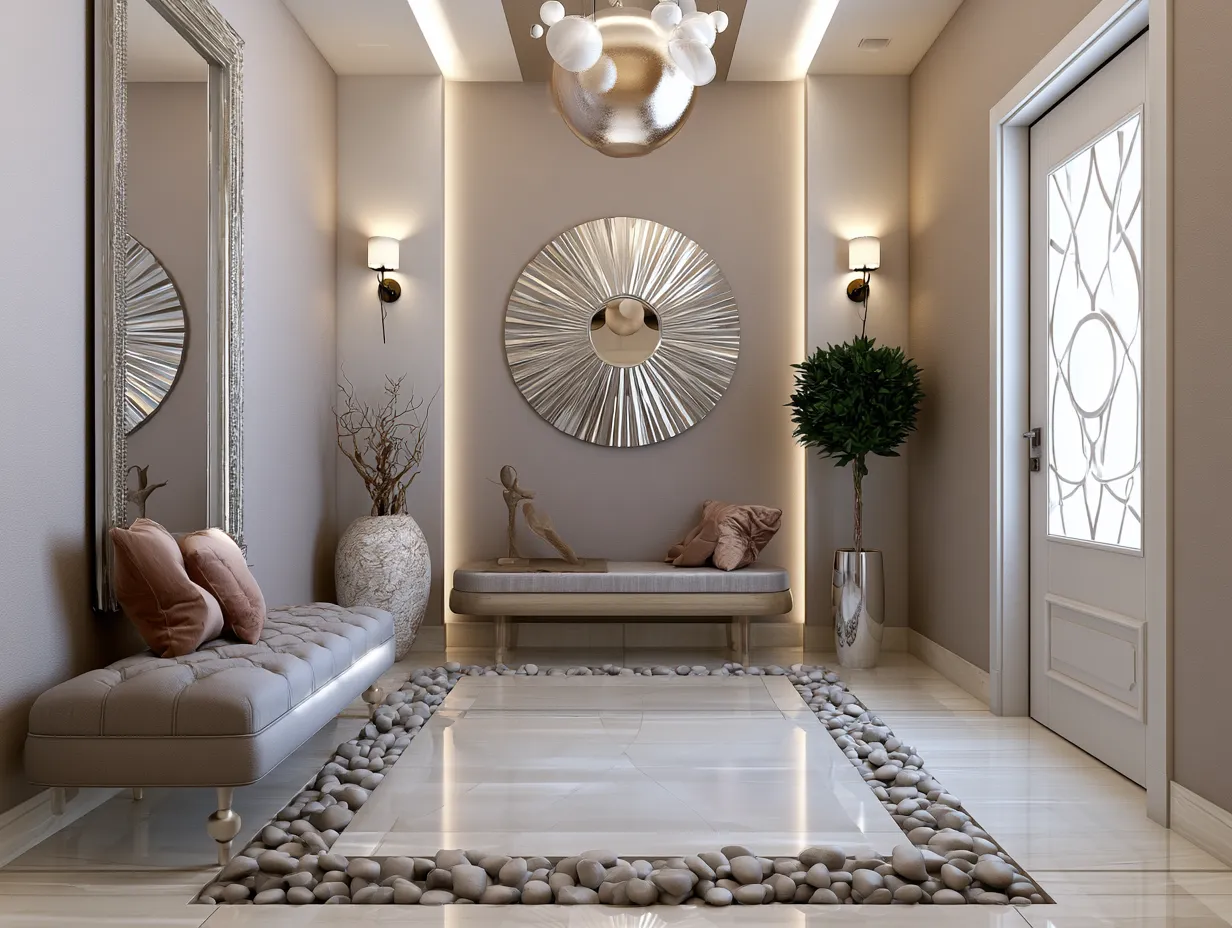
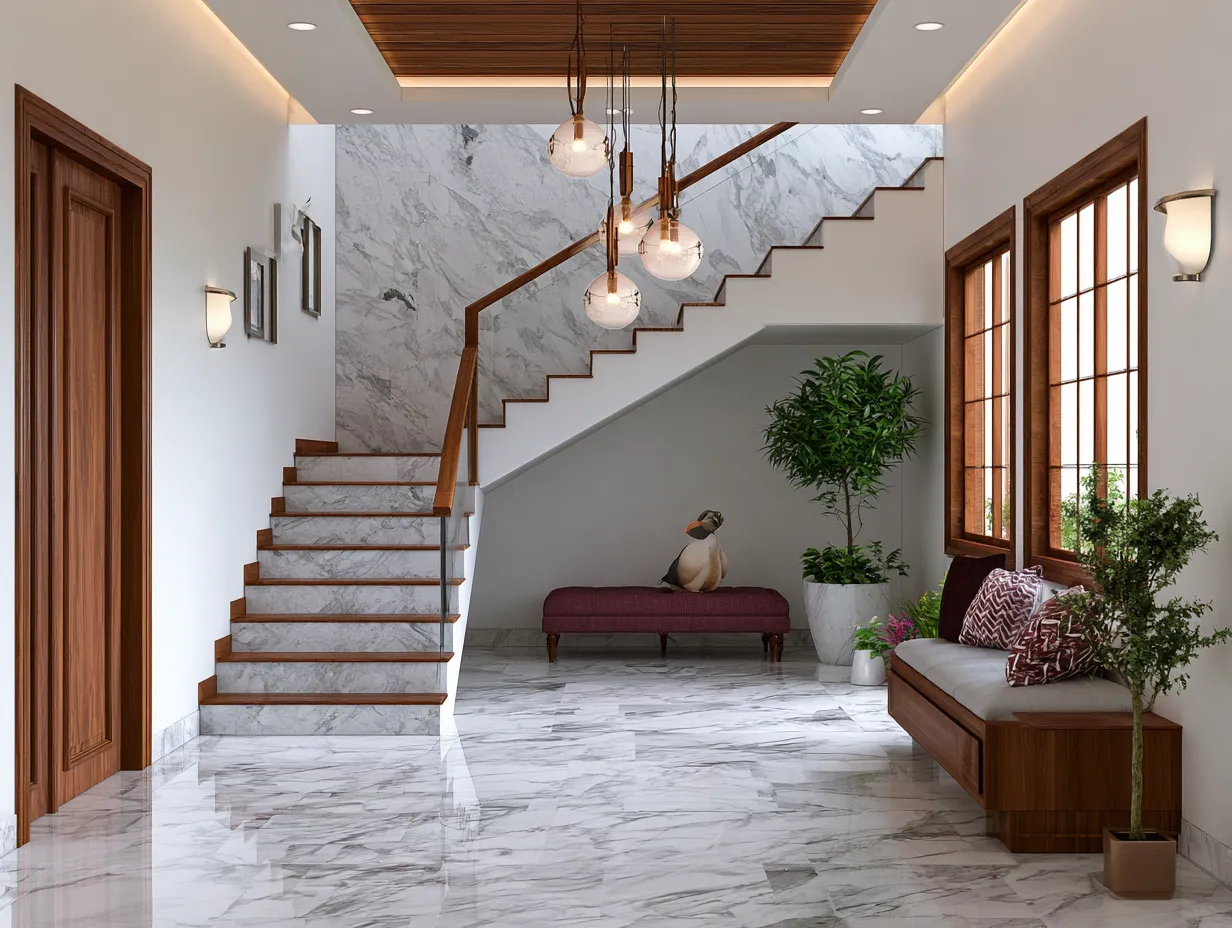
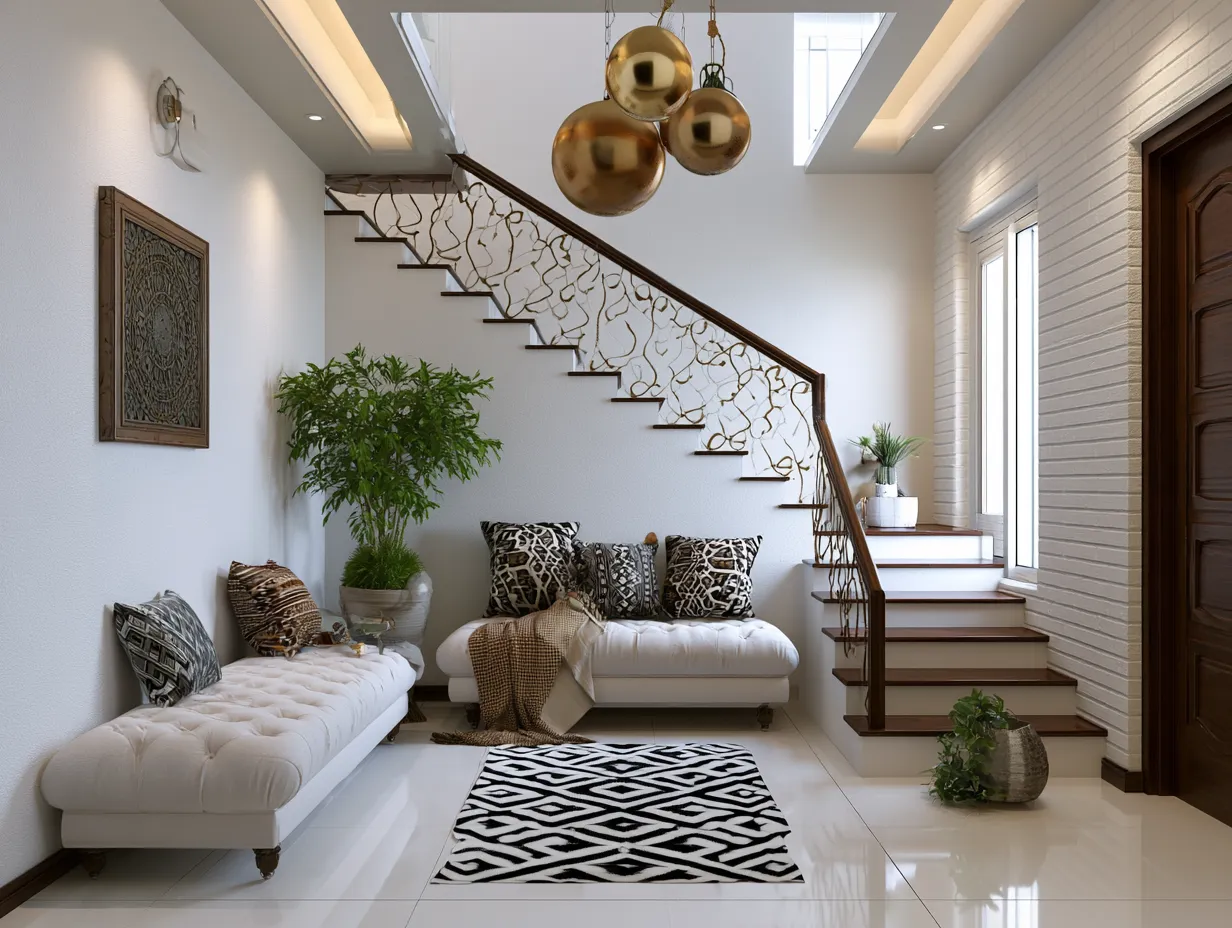
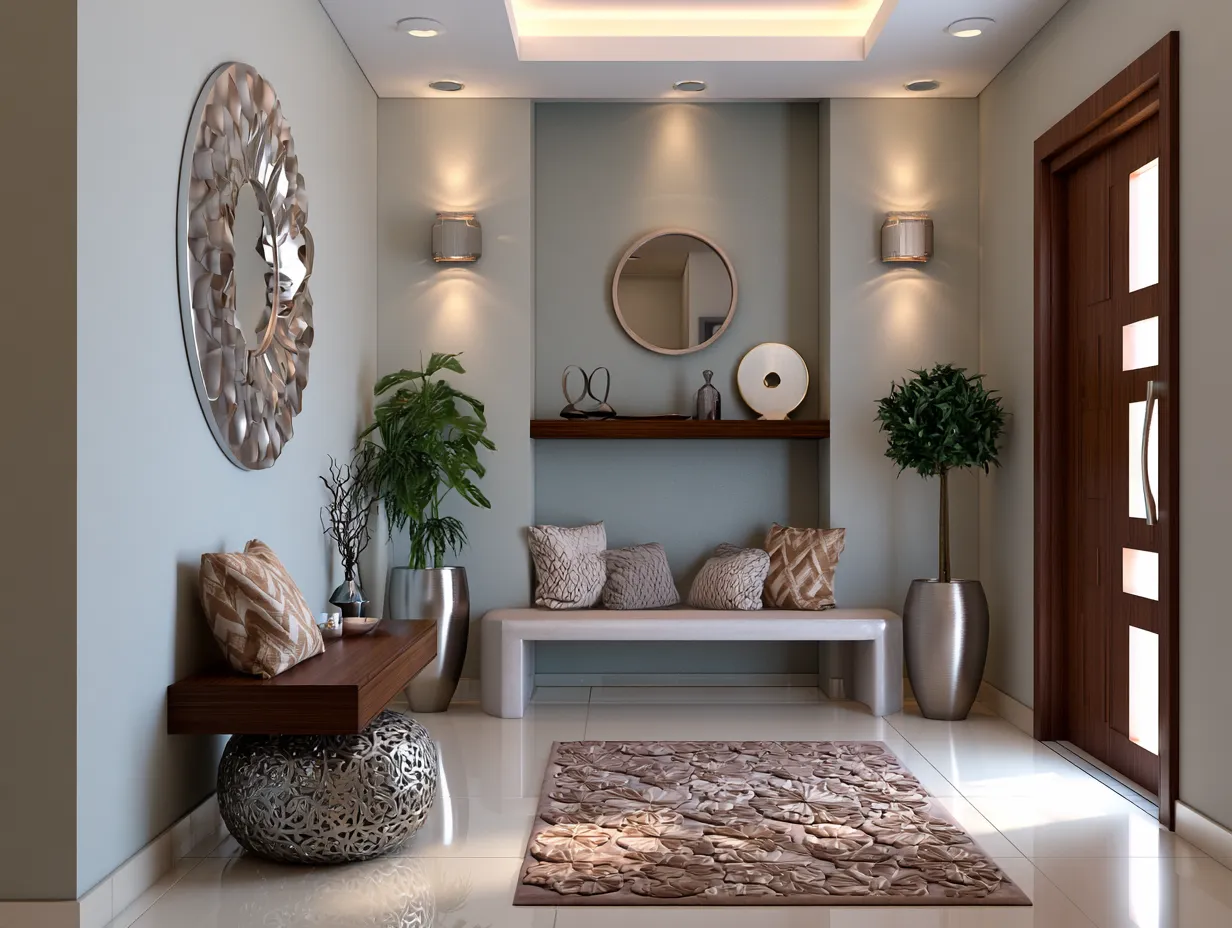
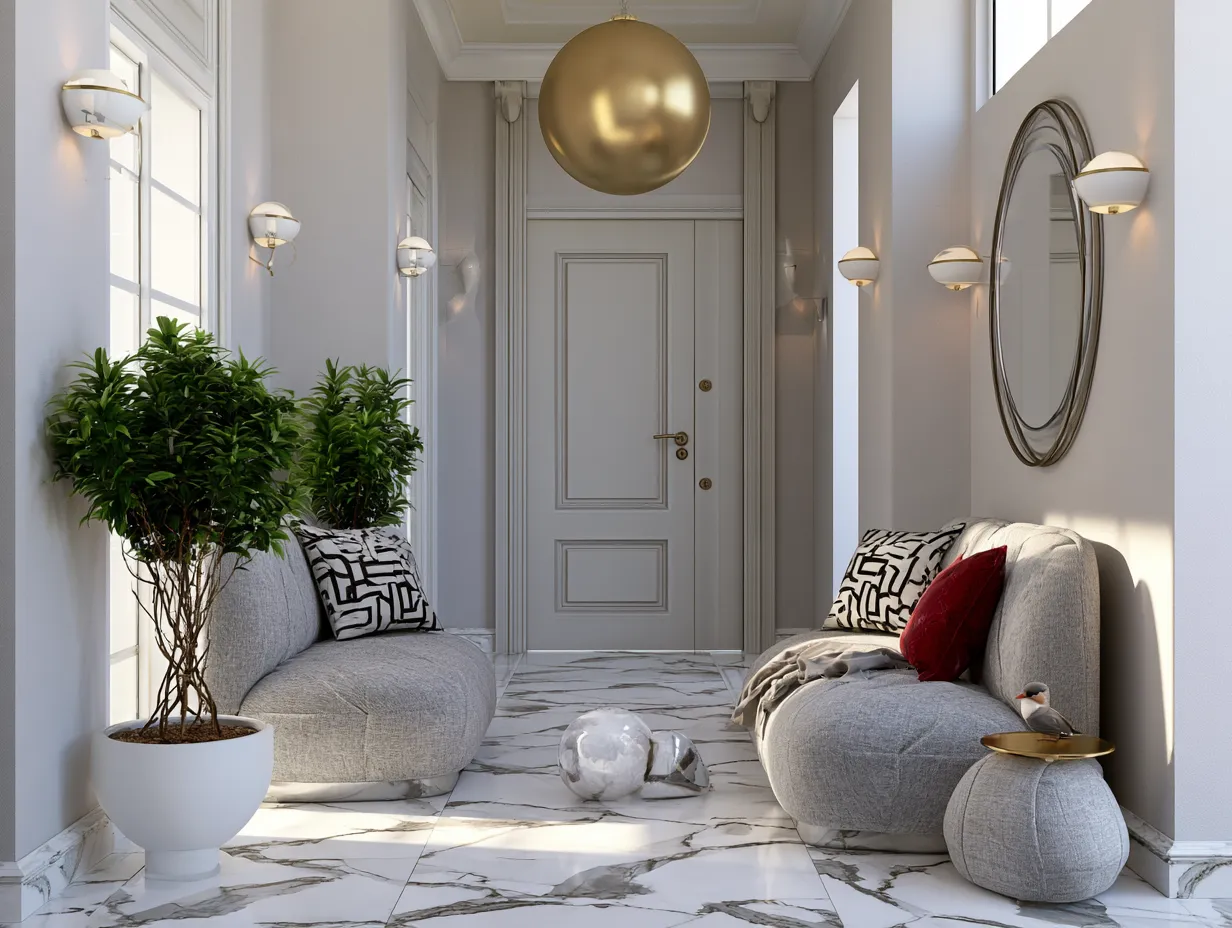
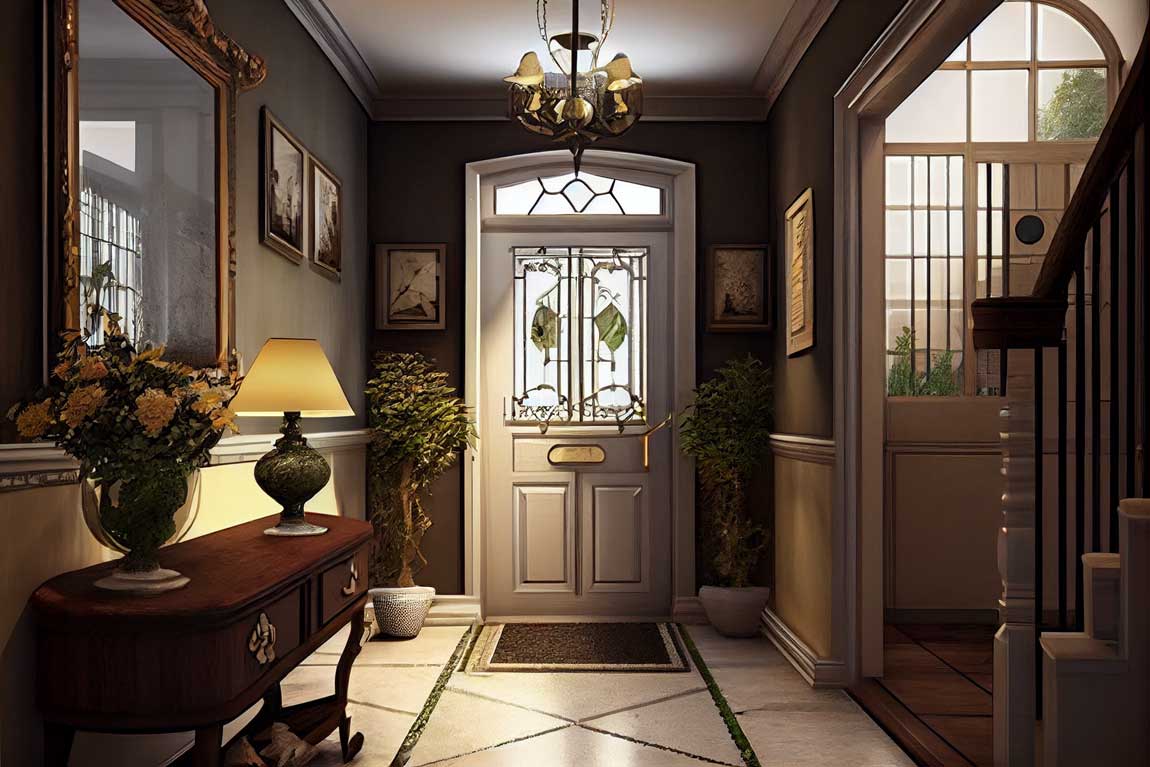
Hooks and Shelves Beat a Console Table Every Time
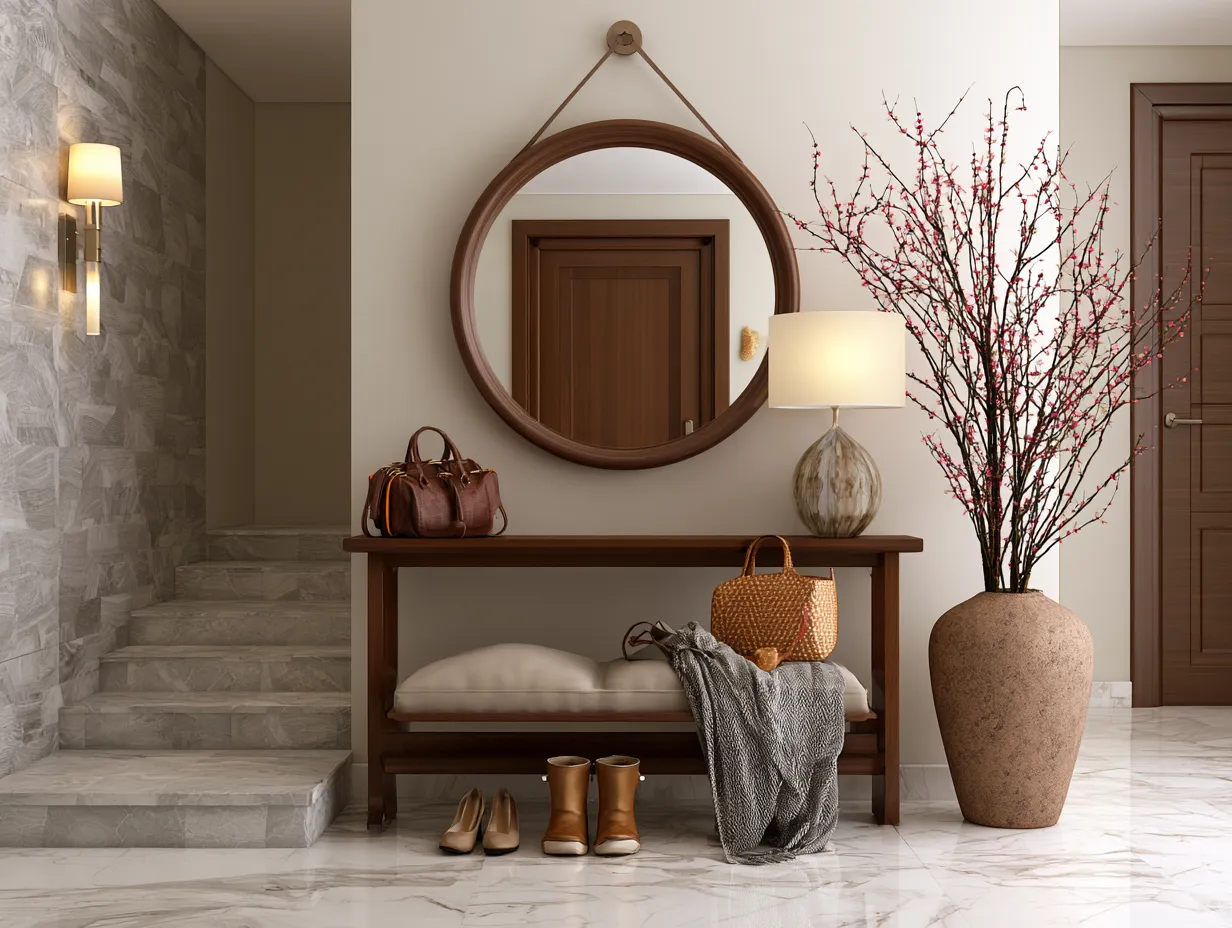
In a small entrance lobby, storage is key. You don’t want shoes and coats cluttering up the space and making it feel smaller than it already is. One of the best small house entrance lobby design ideas is to use wall-mounted storage. You can install shelves, hooks, and cabinets on the walls to keep your things organized and out of the way. A small bench or stool can also provide a place to sit down and put on or take off your shoes.
Wall-mounted storage is the single best move in a small lobby design for home — not because it looks good in photos, but because it keeps the floor clear. Clear floor reads as more space. It’s that simple. A set of sturdy hooks at 160–170cm height handles coats, bags, and scarves without stealing a centimeter of walking room.
Don’t go with the cheap floating shelf kits from big-box stores. The ones that come with drywall anchors and no real weight rating start sagging within six months. IKEA’s BERGSHULT shelf with GRANHULT brackets runs around $35 and handles real load. Pair it with a narrow bench below — $80 to $120 range — and you have a functional entry lobby in under a weekend.
The mistake I see most: people mount hooks too close together. Everything ends up in a pile. Space them at least 20cm apart so each hook actually works as a hook.
The Mirror Placement That Makes a Small Lobby Feel Twice as Wide
A mirror is a great addition to a small entrance lobby. It not only helps you check your appearance before you leave the house, but it also reflects light and makes the space feel larger. Good lighting is also essential in a small entrance lobby. You can use overhead lighting, wall sconces, or even floor lamps to brighten up the space and make it feel welcoming.
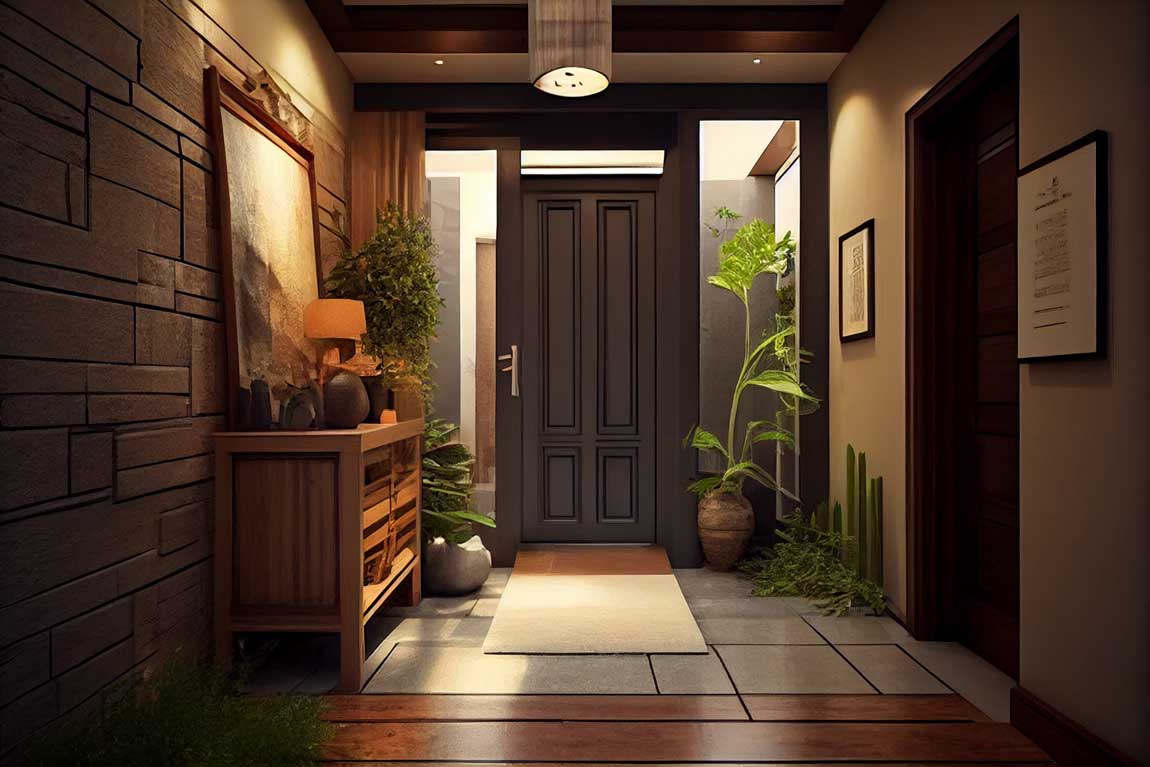
A full-length mirror on the wall opposite the door is the oldest trick in small entrance lobby design. It works because your brain reads the reflected depth as real space. Position it dead center and it doubles the perceived length of the room every time the door opens.
What doesn’t work: mirrors hung too high. I owned a HEMNES mirror from IKEA for two years before I realized I’d mounted it at eye level for someone six feet tall. Nobody was using it. Drop the bottom edge to about 30cm from the floor and suddenly it actually functions as a mirror.
Lighting and mirrors work together or they work against each other. A warm-toned sconce on either side of the mirror — around $40–80 each from brands like Kichler or Progress Lighting — turns that corner into something that looks designed, not assembled.
One Bold Wall Saves You From Decorating Everything Else
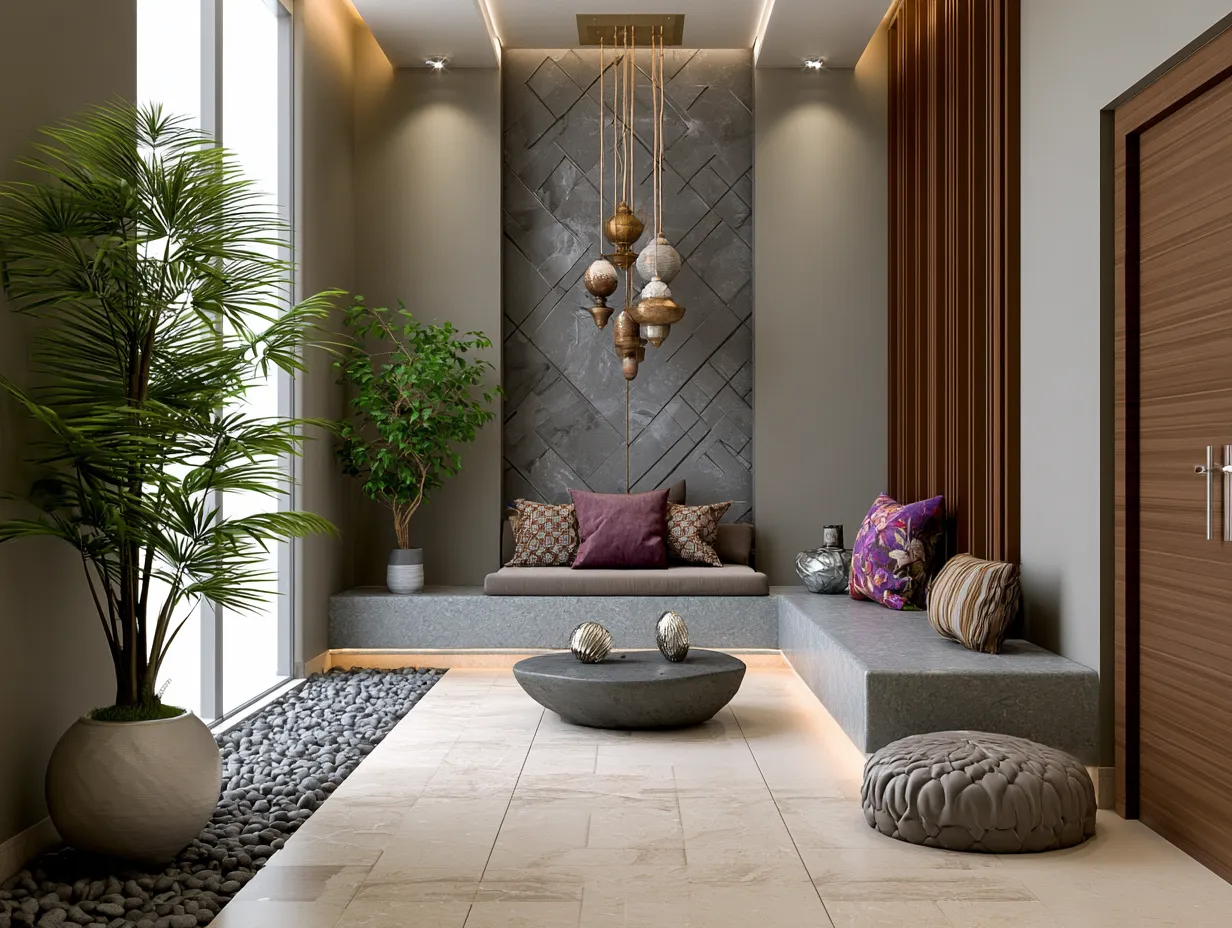
A small entrance lobby doesn’t have to be boring. You can add a touch of personality to the space with an accent wall. This could be a bold color, wallpaper, or even a mural. An accent wall can make the entrance lobby feel like a separate room and create a sense of depth. It’s also an opportunity to showcase your style and creativity.
Greenery Works Here. A Gallery Wall Usually Doesn’t
Plants and artwork are other small house entrance lobby design ideas that can add life and character to the space. A potted plant or two can bring in some greenery and fresh air, while a piece of artwork can be a conversation starter and a reflection of your taste. Just make sure not to overcrowd the space with too many decorations. A few carefully chosen items can make a big impact in a small entrance lobby.
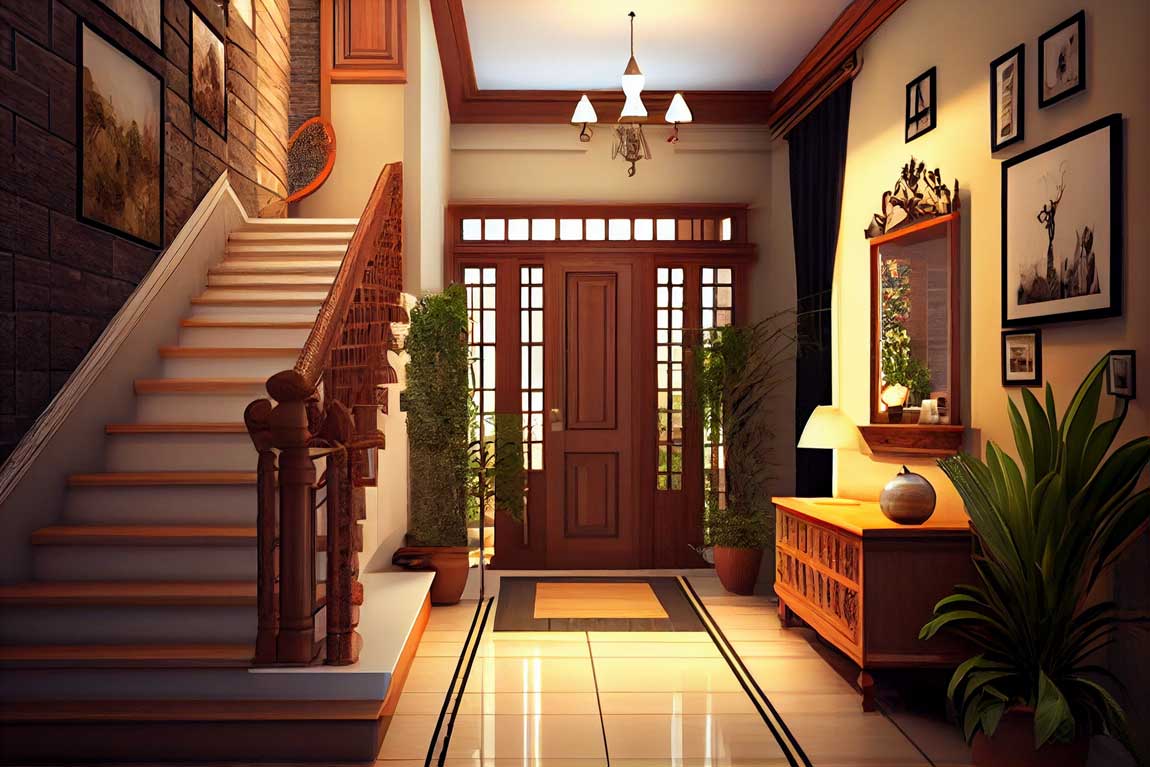
The Bench With Storage Under It Is the Only Furniture You Actually Need
In a small entrance lobby, every inch of space counts. That’s why multifunctional furniture is a great solution. A console table with drawers or a cabinet can serve as storage and a display surface, while a bench with built-in storage can provide seating and a place to put your shoes. You can also consider a folding or extendable table or stool that can be tucked away when not in use. These small house entrance lobby design ideas make the most of the limited space and can even save you money by eliminating the need for extra furniture.
Multifunctional furniture in a small lobby isn’t a nice-to-have. It’s the only furniture math that makes sense. One piece that does one thing is a piece you probably can’t afford — not in floor space.
A storage bench is the clearest example. You sit to put on shoes (you will, even if you think you won’t). Shoes go underneath or inside. Bags go beside you. That’s three problems solved by one object taking up roughly 100cm of wall. IKEA’s HEMNES bench with shoe storage runs $179. Pottery Barn’s options start around $350 and up. Both work. The price difference is mostly aesthetic.
Avoid folding furniture in a lobby unless you live alone and have iron discipline. A folding stool that needs to be unfolded is a stool that never gets used. Convenience wins every time in high-traffic daily use.
| Storage Solution | Floor Space Used | Approx. Cost | Best For | Avoid If |
|---|---|---|---|---|
| Wall hooks + narrow shelf | Zero | $30–80 | Coats, bags, keys | You need shoe storage |
| Storage bench | ~100cm wall length | $120–350 | Shoes, seating, bags | Lobby under 80cm wide |
| Floating shelves | Zero | $35–120 | Display + light items | Heavy daily-use items |
| Built-in cabinets | Minimal (wall-flush) | $800–3,000+ | Full family storage | Renting or short stay |
| Console table with drawers | 30–40cm depth | $80–400 | Keys, mail, display | Lobby narrower than 120cm |
| Hidden storage ottoman | ~60×40cm footprint | $50–150 | Flexible shoe/bag storage | You need to sit down daily |
Your Rug Is Defining the Zone Whether You Like It or Not
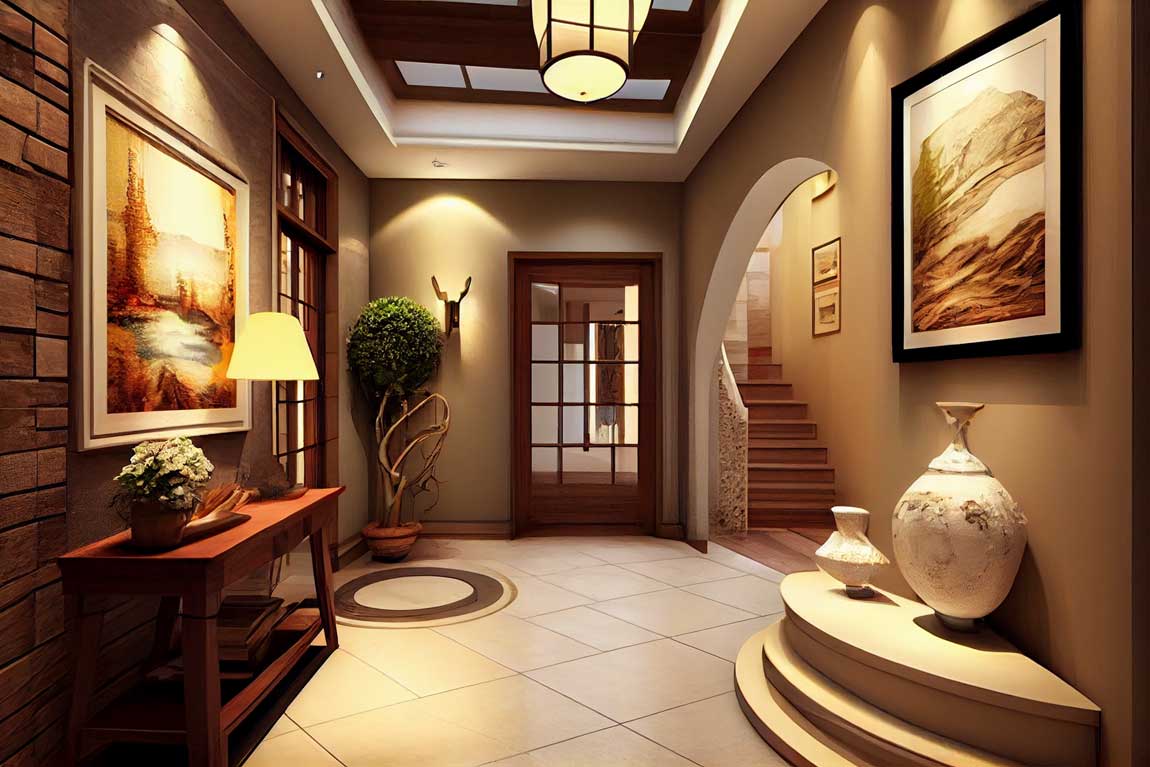
A statement rug is another way to add color and texture to a small entrance lobby. A bold pattern or bright color can draw the eye and make the space feel more dynamic. A rug can also help define the entrance lobby as a separate area from the rest of the house.
Less Furniture Isn’t Minimalism. Choosing Fewer Things Is
Finally, one of the most effective small house entrance lobby design ideas is to embrace a minimalist approach. By keeping the space simple and uncluttered, you can create a sense of calm and order.Choose a few key pieces of furniture and decorations, and keep everything else out of sight. A minimalist design can also make the entrance lobby feel more spacious and open.
Minimalist small lobby interior design gets misread constantly. People clear the floor, leave the walls blank, and then wonder why the space feels cold instead of calm. Bare isn’t minimal. Chosen is minimal.
Pick one functional anchor — bench or console — and one visual anchor — mirror, single artwork, or a plant that’s actually impressive rather than apologetic. Everything else earns veto. A coat thrown on a chair isn’t a design problem; it’s a storage problem. Solve the storage and the minimal look takes care of itself.
The worst version of this I’ve seen: a lobby with nothing in it except a mat and a doorstop. Technically uncluttered. Felt like a holding area, not a home.
Don’t Do This
Small Lobby Mistakes That Make the Space Feel Smaller
- Oversized console table. Anything deeper than 30cm eats walkable floor and makes a small lobby feel like a narrow corridor.
- Gallery wall of small frames. Looks busy, reads as clutter, competes with every other surface. One large piece does more.
- Dark paint on all four walls. One accent wall adds depth. Four dark walls in a small entry lobby just feel like a closet.
- Fake plants near the door. Natural light hits them first. Everyone notices. Skip them.
- A rug that’s too small. A 60×90cm mat under a bench and nothing else looks like you forgot to finish the room. Go 90×150cm minimum.
- Overhead light only. One ceiling fixture casts shadows downward and makes people look tired walking in. Add a sconce or a lamp.
Built-In Cabinets Make a Small Lobby Interior Design Look Intentional
If you have limited space in your small entrance lobby, consider built-in storage. You can install cabinets or shelves that blend in with the walls to maximize storage space while keeping the area clutter-free. Built-in storage can also provide a cohesive look to the space, making it appear larger and more organized. You can also consider adding a storage bench with drawers or cubbies to keep shoes, bags, and other items out of sight. For a look that carries through beyond the lobby, the same built-in logic works well in main entrance double door design — where the entry statement starts before anyone even steps inside.

One Color Punch Goes Further Than You’d Think
A small entrance lobby doesn’t have to be boring. You can add some personality to the space by incorporating colorful accents. This can be achieved through bright artwork, a vibrant rug, or a colorful piece of furniture. Don’t be afraid to experiment with different colors and patterns. Just remember to keep the rest of the space neutral to avoid overwhelming the area with too many vibrant hues.
A Divider Turns an Entry Lobby Into an Actual Room
A small entrance lobby can also benefit from a room divider. This can be a tall plant, a bookshelf, or even a curtain that separates the entrance lobby from the rest of the house. A room divider can create the illusion of a separate area, making the entrance lobby feel more spacious and private. It can also serve as a functional element, providing additional storage or a display area for decorations.

A small entrance lobby can also benefit from a room divider. This can be a tall plant, a bookshelf, or even a curtain that separates the entrance lobby from the rest of the house. A room divider can create the illusion of a separate area, making the entrance lobby feel more spacious and private. It can also serve as a functional element, providing additional storage or a display area for decorations. If you’re working with an open-plan layout, pairing a divider with smart zoning strategies from open-plan living makes the whole floor plan feel more intentional.
A bookshelf placed perpendicular to the wall at about 150cm height does it without blocking light. A curtain on a ceiling track does it cheaper. Either creates the sense that the entry lobby is its own zone, which is what makes lobby design ideas for small home actually feel like design rather than furniture placement.
Tall plants — a fiddle leaf fig or a snake plant going to ceiling height — work too if your light situation allows it. They’re softer than a shelf and cost anywhere from $30 to $90 depending on size. Just skip the fake ones. They read as fake immediately and undermine everything else you’ve done well.
Wall Space You’re Not Using Is Just Wasted Storage
Floating shelves are a great small house entrance lobby design idea, especially if you have limited floor space. They can be installed on the wall to create additional storage without taking up any floor space. Floating shelves can also be a decorative element, allowing you to display your favorite books, photos, or plants. They can also be arranged in different patterns to create a unique look that reflects your style. For visual reference on how designers use vertical storage in compact entryways, Houzz’s small entryway photo gallery has thousands of real-project examples worth scanning before you commit to a layout.
Metallic and Glass Do What Paint Can’t
In addition to mirrors, reflective surfaces can also be used to make a small entrance lobby feel larger. This can be achieved through glass tabletops, mirrored cabinets, or metallic accents. Reflective surfaces can also create a sense of depth and add visual interest to the space. They can also help reflect natural light, making the entrance lobby feel brighter and more welcoming.

One Large Piece. Not Four Small Ones
Another small house entrance lobby design idea is to incorporate wall art. This can be a single large piece or a gallery wall with multiple smaller pieces. Wall art can be a great way to express your personality and add visual interest to the space. It can also help create a focal point in the entrance lobby and draw the eye away from any clutter or mess.
Every Piece in a Small Lobby Has to Pull Double Duty
When you’re living in a small house, every piece of furniture needs to serve multiple purposes. Dual-purpose furniture can be a great solution for a small entrance lobby. For example, a storage ottoman can provide seating and a place to store shoes or bags. A console table with drawers can be used as a desk or a display area. A coat rack with a built-in umbrella stand can provide storage and a place to hang coats and hats.
Going Vertical With Plants Is the Smartest Floor Move
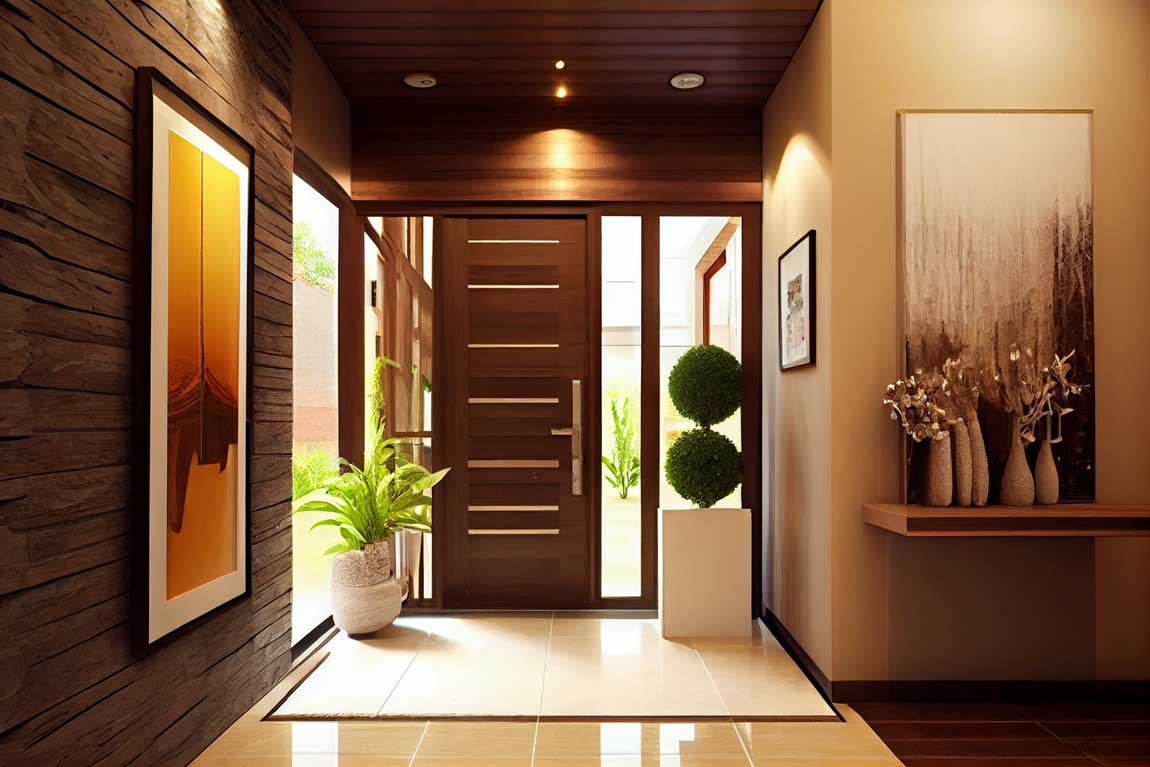
If you want to add some greenery to your small entrance lobby, consider a vertical garden. This can be a series of small potted plants or a wall-mounted planter. A vertical garden can add some life and color to the space without taking up any floor space. It can also help purify the air and create a calming atmosphere.
The Dimmer Switch Nobody Installs But Everyone Should
Good lighting is essential in any entrance lobby, but it’s especially important in a small space. Consider adding a mix of overhead and task lighting to brighten up the area. You can also use lighting to create a sense of ambiance. For example, a dimmer switch can be installed to adjust the brightness of the lights depending on the time of day or the mood you want to create.
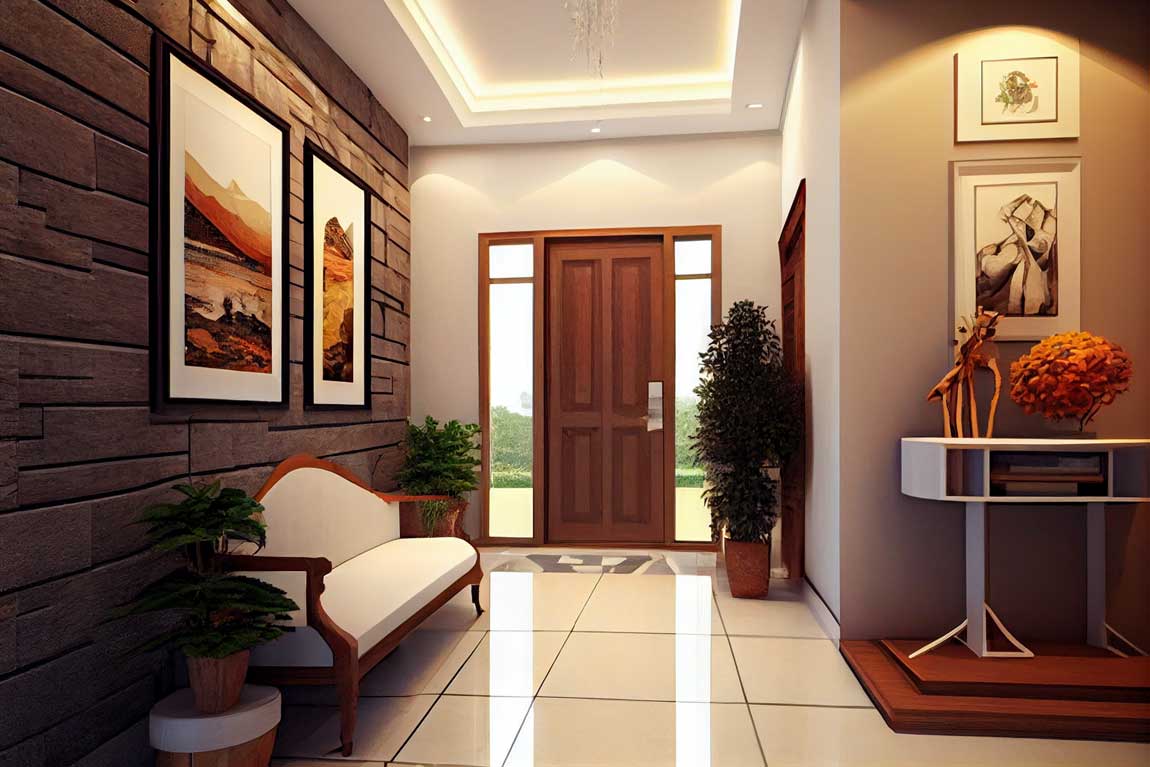
Lighting in small lobby design for home is the easiest upgrade and the most skipped. A single overhead light on a standard switch gives you one setting: on. That’s not enough for a space people enter in daylight and come home to at midnight.
A dimmer switch runs $15–25 at any hardware store and takes 20 minutes to swap out. If your existing fixture is hardwired, this is genuinely a DIY job. If you’re adding a sconce, budget $50–150 for the fixture and hire an electrician for the wiring — around $80–120 per hour depending on your market.
Warm bulbs matter more than wattage. A 2700K bulb in a lobby makes the whole entrance feel like something you want to come home to. A 4000K daylight bulb makes it feel like a hospital corridor. Don’t cheap out on bulbs when you’ve spent money on everything else.
Floor-to-Ceiling Storage Changes What “Small” Feels Like
Another small house entrance lobby design idea is to use multi-level storage. This can be achieved through a wall-mounted shelf or a floor-to-ceiling storage unit. Multi-level storage can provide more storage space without taking up any additional floor space. It can also create a dynamic look in the entrance lobby, making it feel more spacious and interesting.
One Thing That Makes Guests Ask Where You Got It
A statement piece can be a great way to add some personality to your small entrance lobby. This can be a bold piece of artwork, a unique piece of furniture, or even a decorative wall hanging. A statement piece can create a focal point in the entrance lobby and draw the eye away from any clutter or mess. It can also reflect your personal style and make the space feel more inviting.

The Cleanest Small Lobby Design Hides Everything
If you want to keep your small entrance lobby clutter-free, consider hidden storage. This can be a hidden cabinet or a storage ottoman that blends in with the rest of the decor. Hidden storage can provide a functional solution to keep the entrance lobby organized and tidy. It can also create a seamless look in the space, making it feel more cohesive and put together.
Hidden storage works best when the exterior looks deliberate. A storage ottoman with a fabric lid costs $50–150 and holds shoes for a family of four. A wall cabinet that matches the trim color visually disappears — guests won’t even register it as storage. That’s the goal.
The failure mode here is choosing hidden storage that’s slightly inconvenient to access. If the lid requires two hands, the shoes end up on the floor. If the cabinet door swings wide and blocks the hallway, it stays shut and unused. Measure the swing radius before you buy anything with a door.
My go-to: a bench with a hinged top and a fabric bin inside. Lift, drop the shoes, close. Five seconds. Nobody leaves shoes on the floor when the alternative is that easy.
The Rug Size Most People Get Wrong
Finally, don’t forget about the power of a good rug in your small entrance lobby. A rug can add some warmth and texture to the space, while also helping to define the area. Consider a rug with a bold pattern or bright color to add some personality to the space. Just make sure to choose a rug that is the right size for the area, so it doesn’t overwhelm the space or feel cramped.

FAQ
What is the best small lobby design for home when you have no hallway?
A room divider is your first move — a bookshelf at 150cm height or a curtain on a ceiling track creates the zone without blocking light. Pair it with a storage bench against the wall and one large mirror. That combination creates the feeling of a dedicated entry lobby even in a completely open-plan space. Skip the console table; it just eats floor space you can’t afford to lose.
How do you make a small entrance lobby look bigger?
A full-length mirror placed opposite the door is the single most effective trick. Your brain reads the reflected depth as real space. Reflective surfaces — glass tabletops, metallic accents — help too. Keep the floor as clear as possible: wall-mounted hooks and floating shelves instead of freestanding furniture. Light-colored walls and a 2700K warm bulb on a dimmer finish the job for under $100 total.
What furniture works best in a small lobby interior design?
One piece: a storage bench. It handles seating, shoes, and bags in a 100cm footprint. If you have wall space above it, add hooks at 160–170cm height. That’s the whole setup. A console table is the next best option if you don’t need seating — look for one under 30cm deep. IKEA LIATORP runs about $199 and fits well. Avoid anything that requires walking around it to get to the door.
What are the most practical lobby design ideas for small homes on a budget?
Wall hooks ($15–30) are the fastest fix. A secondhand storage bench from Facebook Marketplace runs $40–80 in most cities. A dimmer switch is $15–25 and takes 20 minutes. A large mirror from IKEA NISSEDAL costs $59. Total budget for a functional small lobby: under $200 if you’re patient about sourcing. The one thing not to cheap out on: the rug. A $25 mat looks like a $25 mat.
Does a vertical garden actually work in a small entry lobby?
Yes, but only if your door gets indirect natural light for at least 4 hours a day. A snake plant or ZZ plant tolerates low light and stays vertical without spreading. Wall-mounted planters from brands like Umbra start around $30 for a set. Skip the fiddle leaf fig near the door — temperature swings every time someone enters stress it badly. And never use a fake plant in a spot that gets daylight. It reads as fake immediately.
How do you choose the right rug size for a small lobby design?
90×150cm is the minimum that looks intentional in a small entrance lobby. Anything smaller reads as a doormat, not a design decision. If your lobby is long and narrow, go 60×120cm at minimum and run it lengthwise. The rug should sit fully under the bench or console front legs — floating furniture over a too-small rug is the most common mistake in small lobby interior design. Bold pattern or solid color both work; just pick one and commit.
Worth Saving
Your Small Lobby Design Starts With One Good Decision
Most small entrance lobbies fail because they try to be everything at once — storage, decoration, seating, display. Pick the one problem your entry lobby has right now. Shoes on the floor? Bench with storage. Feels dark and small? Mirror plus dimmer. Looks like a rental? One bold accent wall.
Fix that one thing first. The rest follows faster than you’d expect. Small lobby interior design isn’t a renovation project — it’s usually a weekend and under $300 if you’re strategic about it.
Save this post. You’ll want to come back when you’re ready to actually do it.