$120 pop-up gazebos from Amazon look fine for about three months. Then the fabric sags, the frame bends, and your backyard looks like a sad flea market. I’ve gone through two of those before switching to a permanent minimalist structure — a flat-roof aluminum frame from Mirador that cost around $2,800 installed. Night and day difference.
Minimalist gazebos strip away the fussy lattice, the ornate finials, the Victorian nonsense that collects spiderwebs. You get clean geometry, honest materials, and a structure that actually makes your garden look bigger instead of cluttering it. Steel, wood, glass, or white-painted aluminum — each pulls off the clean look differently.
This roundup covers four material categories with real trade-offs. Not every gazebo here is cheap, and not every one survives harsh winters without maintenance. I’ll flag which ones rusted on me, which wood species warped, and where to spend versus where to save. Skip the Pinterest fantasy version — this is what actually holds up in a yard.
Quick Summary
Best for low maintenance: White powder-coated aluminum frame (budget $2,800–$4,500)
Best for modern industrial look: Galvanized or corten steel frame ($1,500–$4,000)
Best for natural warmth: Western Red Cedar with slatted roof ($4,500–$7,000 materials)
Most dramatic but priciest: Tempered glass walls on metal frame ($8,000–$15,000)
Skip entirely: White vinyl pop-up gazebos under $600 — they sag, crack, and cheapen your yard.
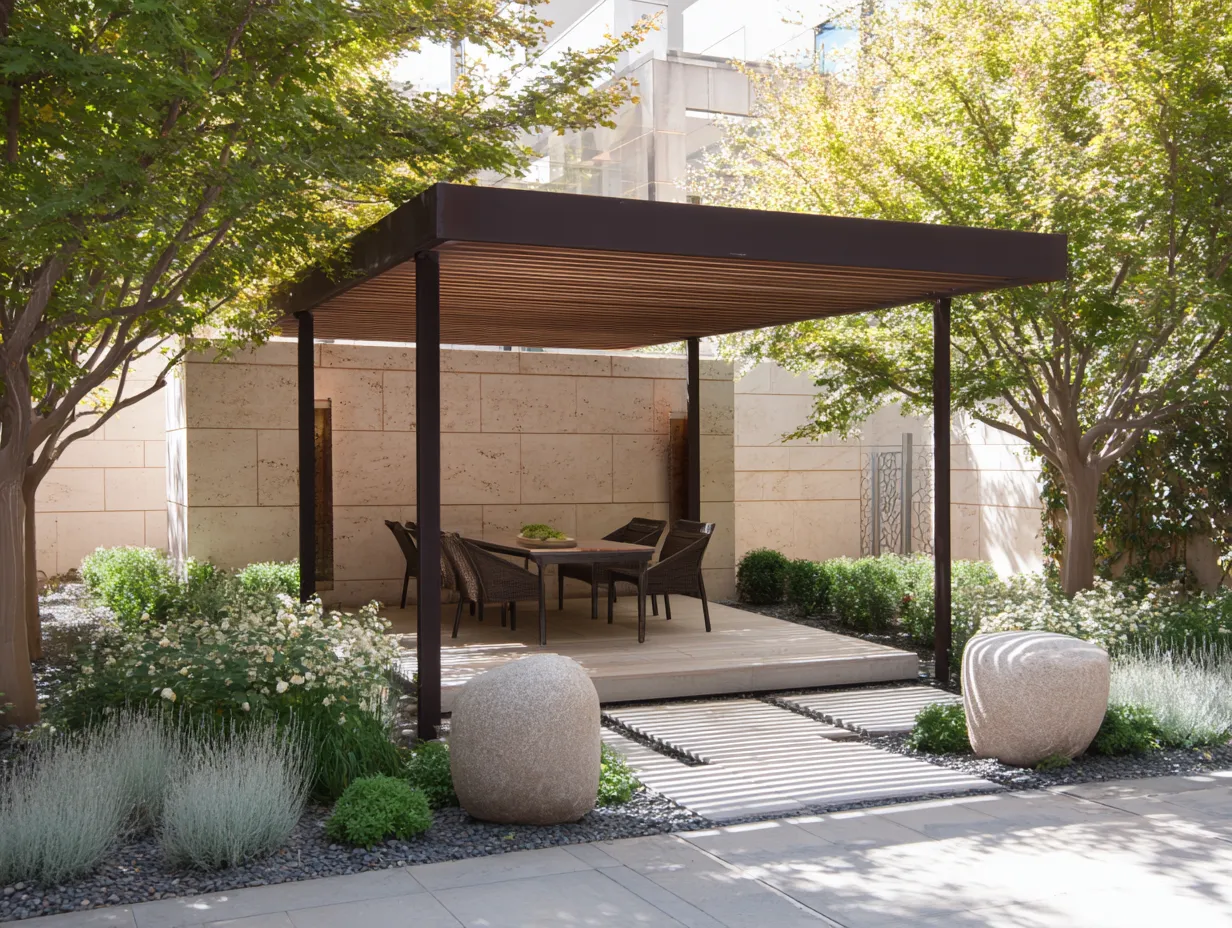
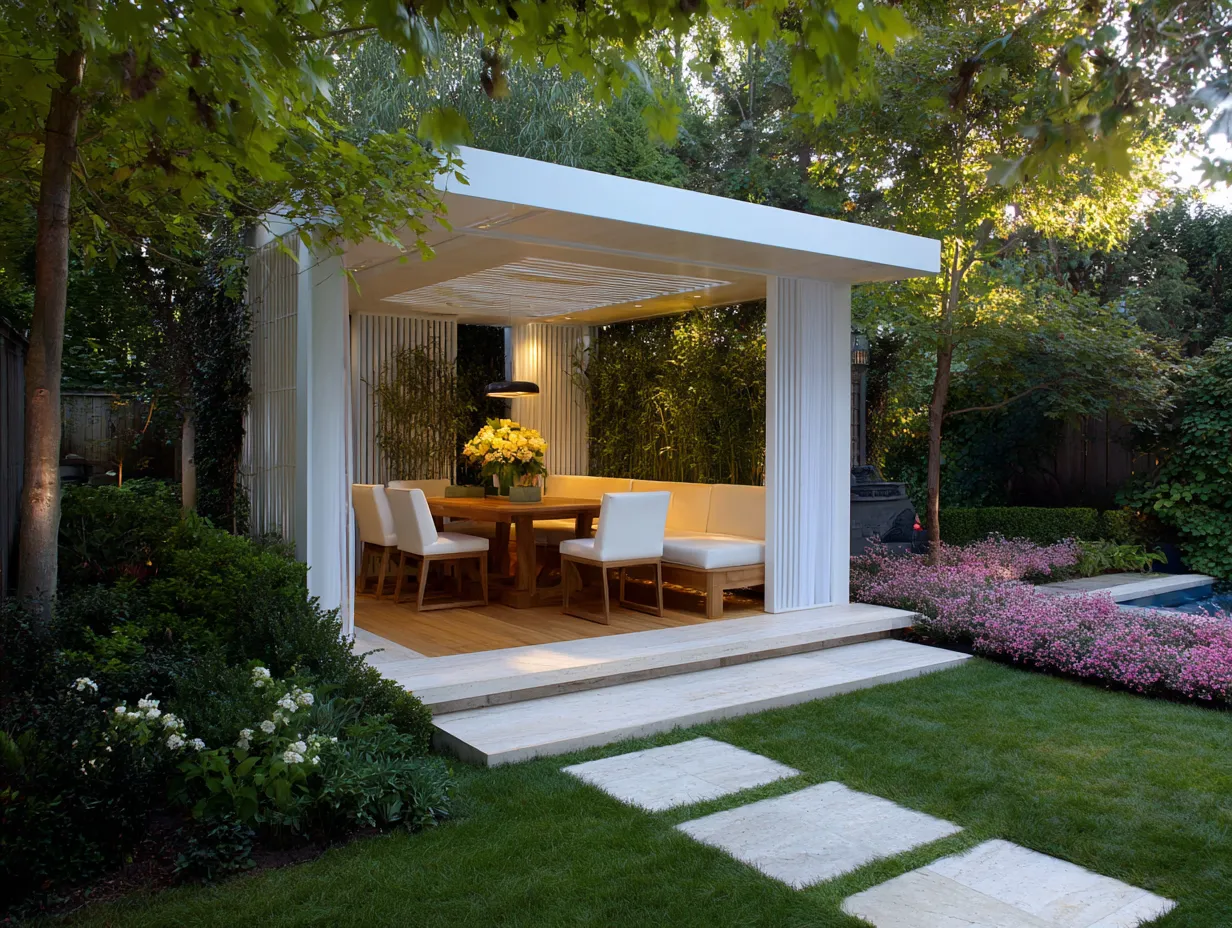
White Minimalist Gazebos: Clean Lines That Pop Against Green
White powder-coated aluminum is my go-to recommendation here — it doesn’t yellow the way painted wood does after two summers of UV exposure. Sefton Park brand sells a 10×12 flat-roof model for about $3,400 that holds up well. The catch? Bird droppings show instantly. You’ll be out there with a hose every week.
Avoid white vinyl gazebos under $600. They flex in wind, the joints crack in cold weather, and they look like outdoor furniture from a motel pool. Spend more or pick a different color entirely. Your yard deserves better than wobbly plastic.
Cushion color matters more than you’d think against an all-white frame. Charcoal and sage green photograph well and hide stains. I tried bright coral once — looked amazing for Instagram, looked like a kids’ birthday party in real life. Stick with muted tones unless you’re running a resort.

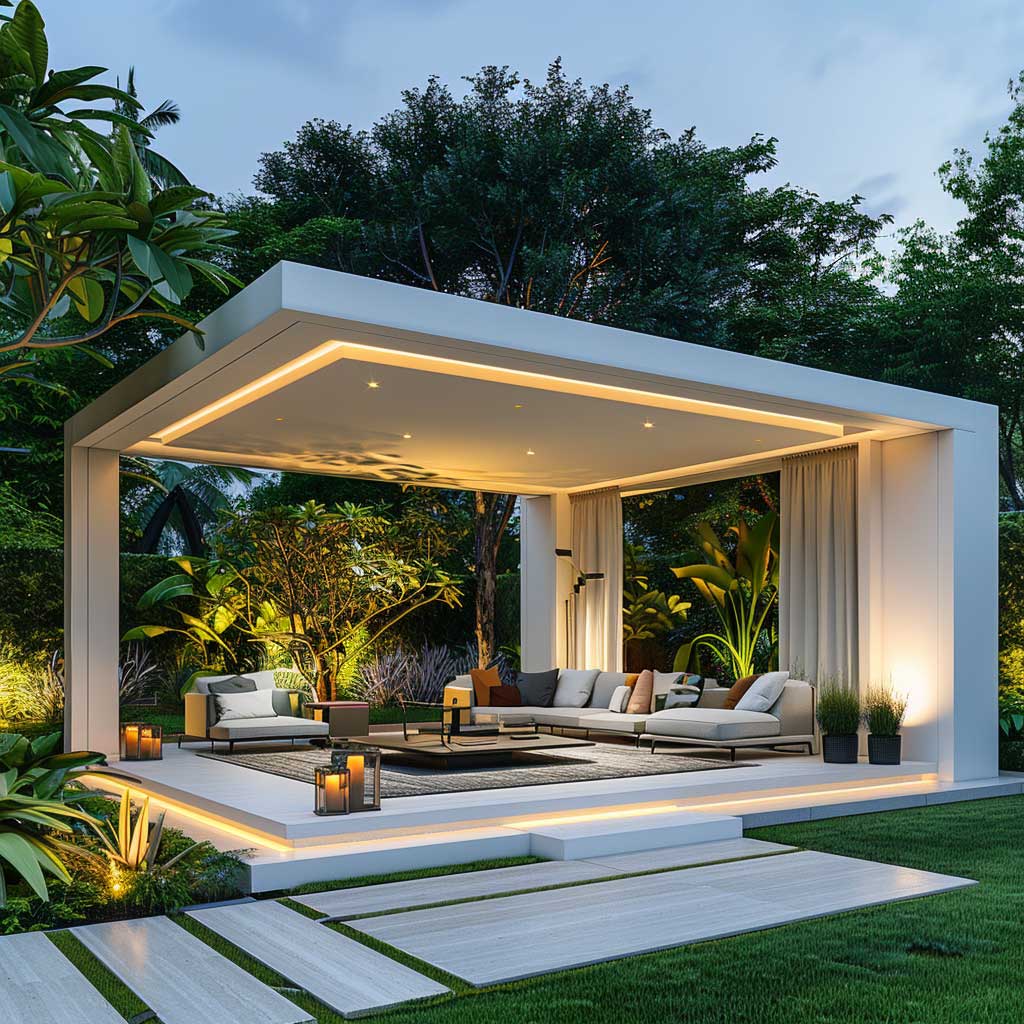


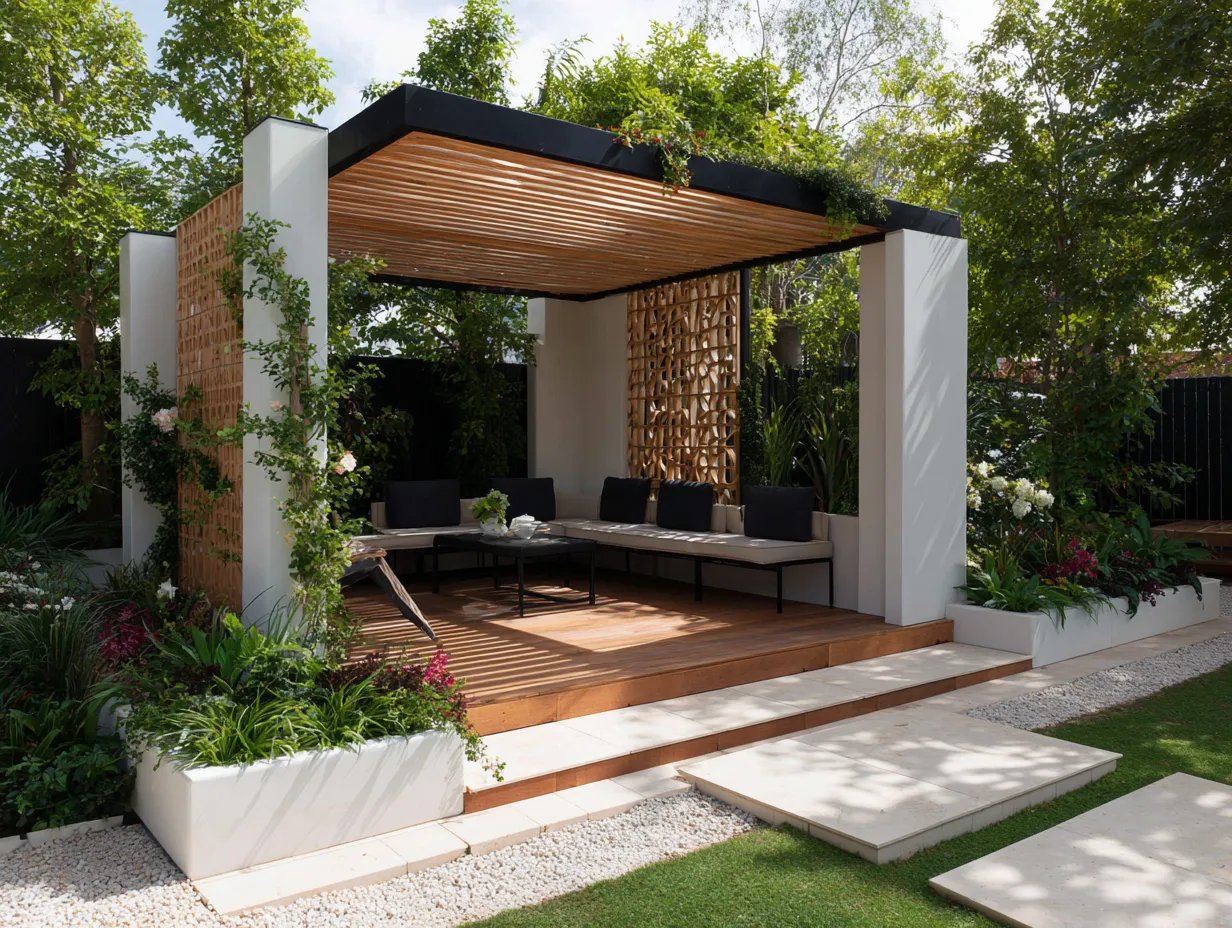
A sleek white garden gazebo offers a striking yet subtle focal point for any garden. The minimalist design, characterized by its clean lines and unadorned structure, creates a sense of calm and order. The white color palette enhances the gazebo’s simplicity, blending seamlessly with the lush green surroundings. This type of gazebo is perfect for those who appreciate modern design and a clutter-free environment.
Imagine sitting under this gazebo on a warm evening, the sun setting in the background, and soft ambient lighting casting a gentle glow. The modern furniture, with its simple yet comfortable design, adds to the overall aesthetic without overpowering it. This garden gazebo is not just a structure but a serene retreat where you can unwind, read a book, or enjoy a meal with family and friends.
The simplicity of the white gazebo also allows for versatility in decor. You can easily change the cushions, add a pop of color with plants, or even drape some minimalist curtains for added privacy and shade. HGTV’s gazebo and pergola design roundup covers dozens of similar styling approaches worth stealing. This adaptability ensures that the gazebo can evolve with your tastes and the changing seasons.
Metal Frame Gazebos: Industrial Look Without the Rust Headache
Galvanized steel frames run $1,500–$4,000 depending on size and brand. Palram’s Milano series is decent at the budget end. For anything coastal or humid, go stainless or corten steel — regular powder coat chips near saltwater faster than you’d expect. I watched a neighbor’s black steel pergola start flaking after eighteen months in North Carolina humidity.
Flat-roof metal gazebos pool water if the drainage slope is off by even half an inch. Insist on at least a 2% pitch or add a channel drain along the low side. Standing water means mosquito breeding ground and eventual corrosion at the joints. Not a fun repair.
One trick I stole from a landscape architect: hang a single oversized pendant light from the center beam instead of wrapping string lights everywhere. A Hinkley Foundry fixture at $280 does more for the space than $40 worth of fairy lights tangled around every post. Less is more — that’s the whole point of minimalist, right?

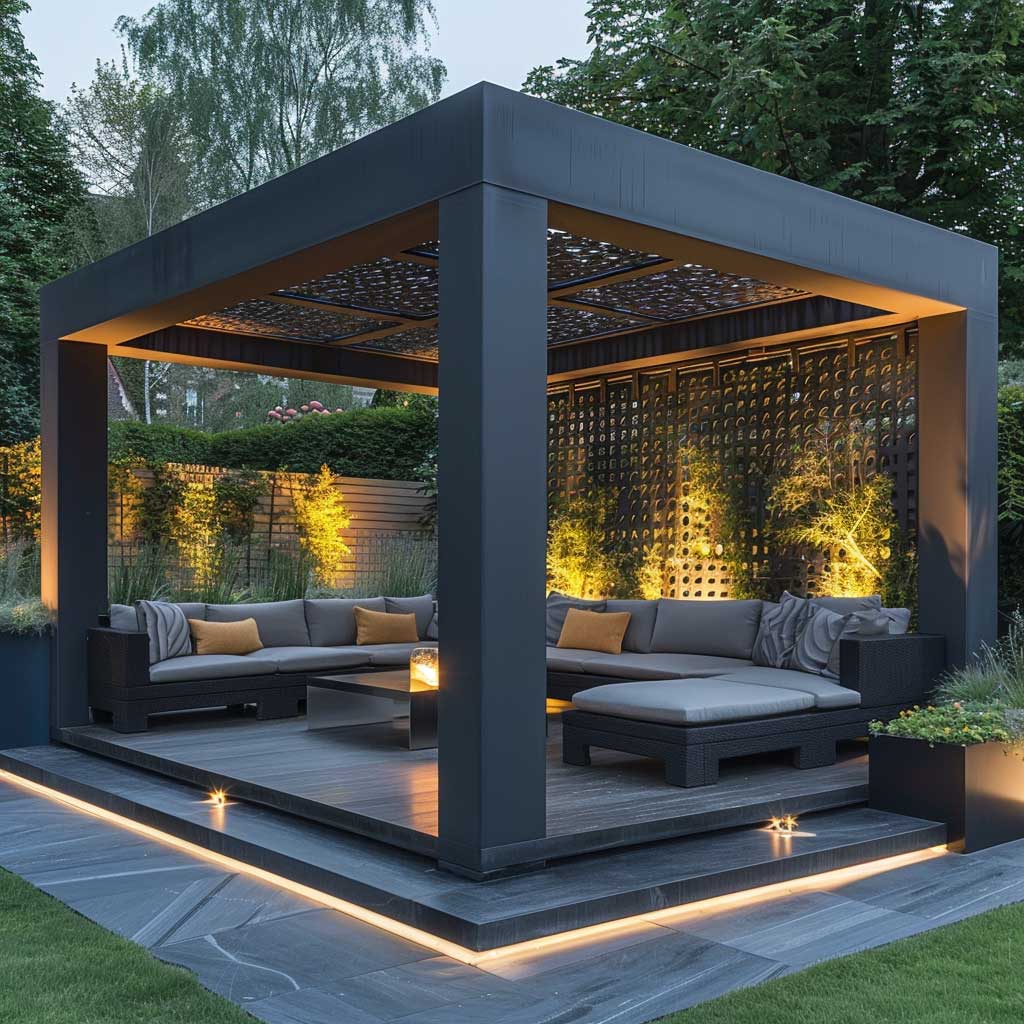
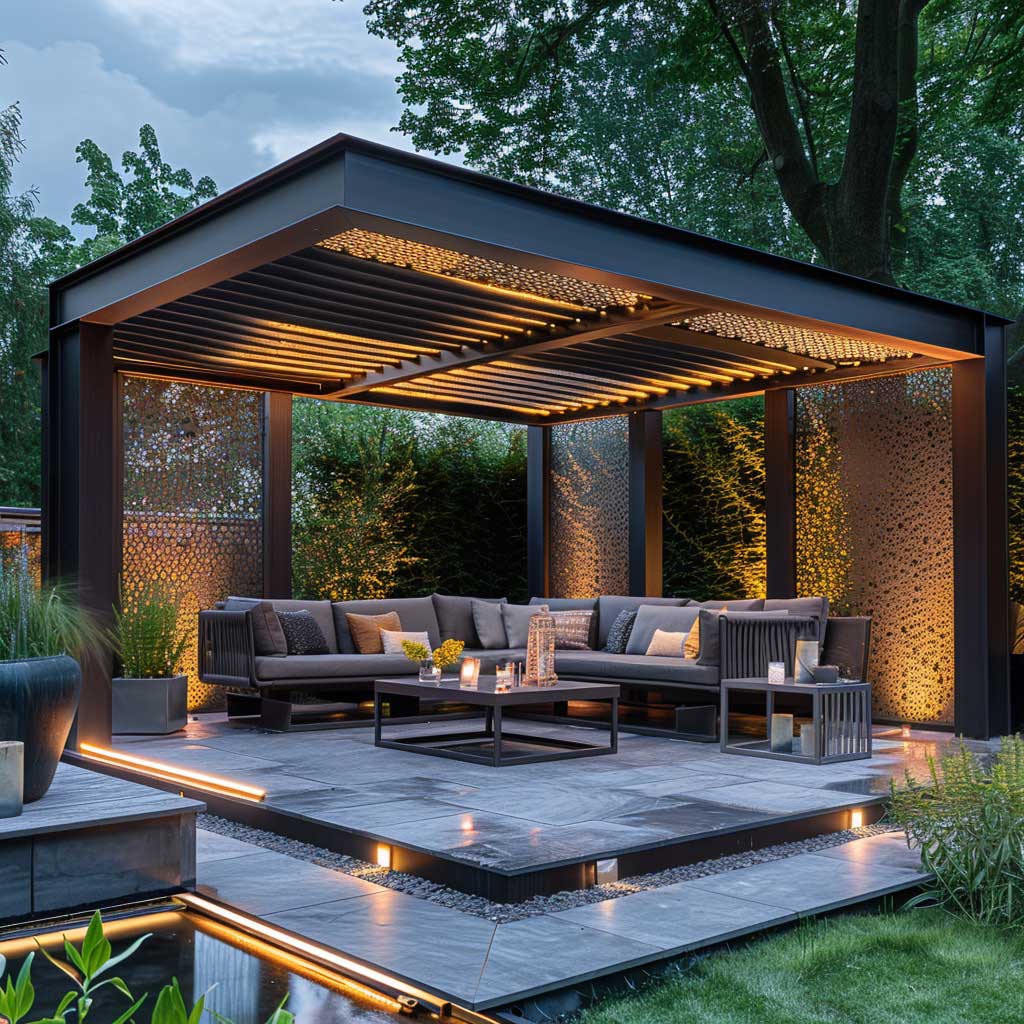
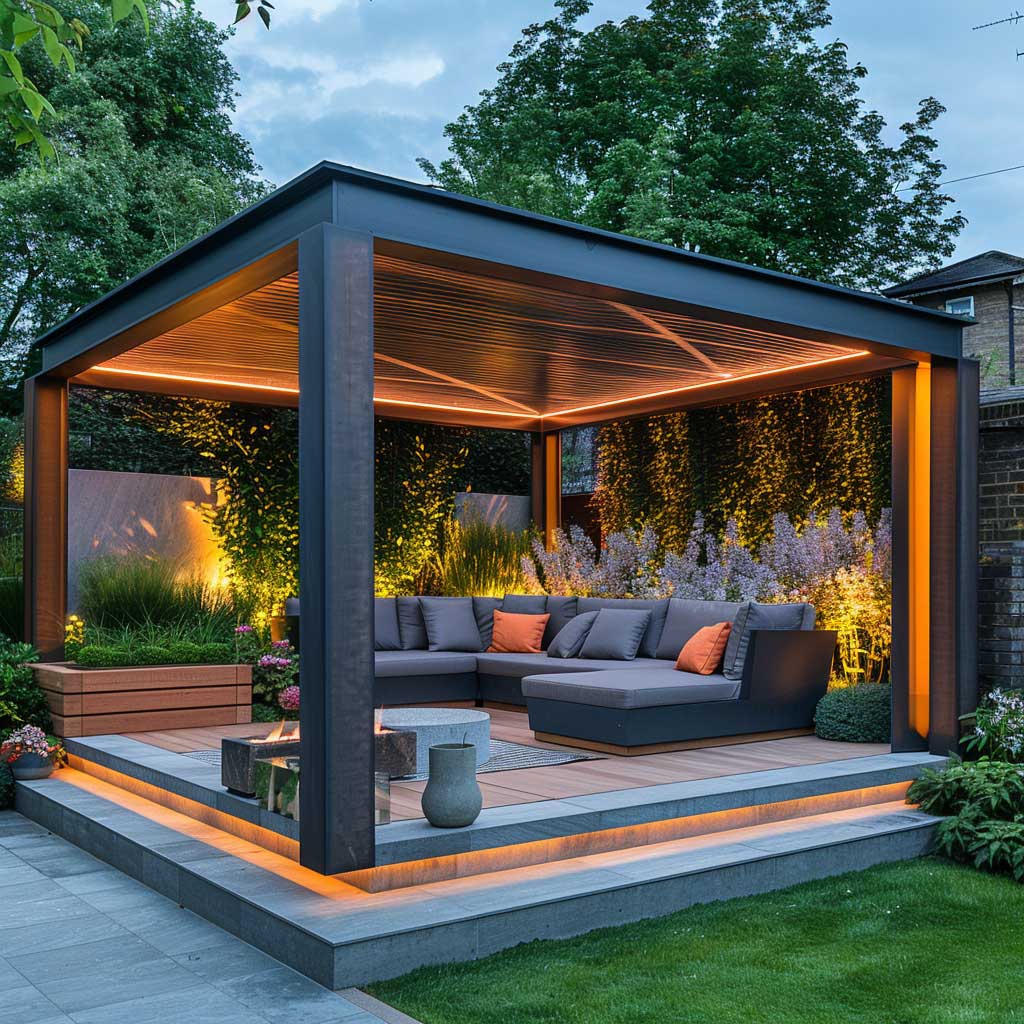
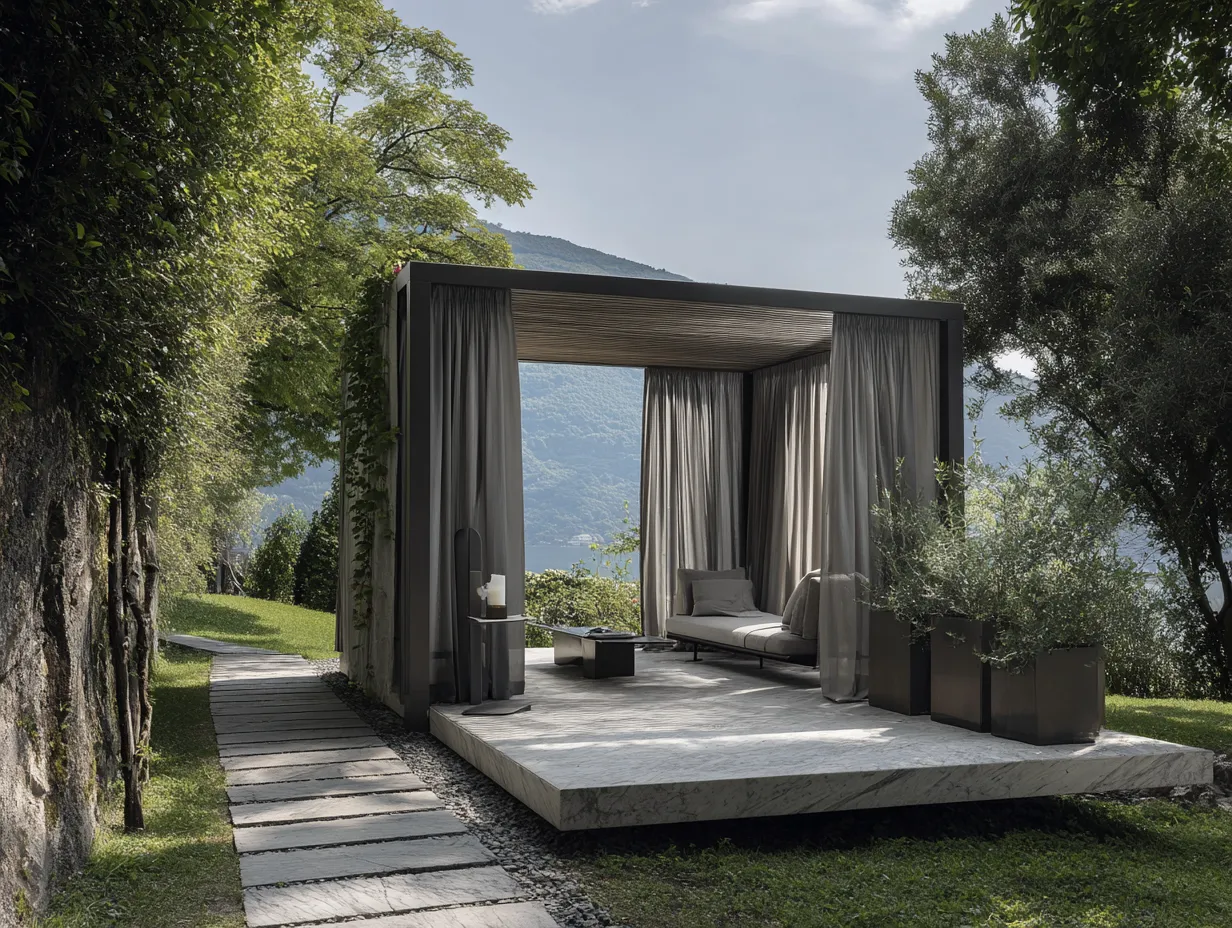
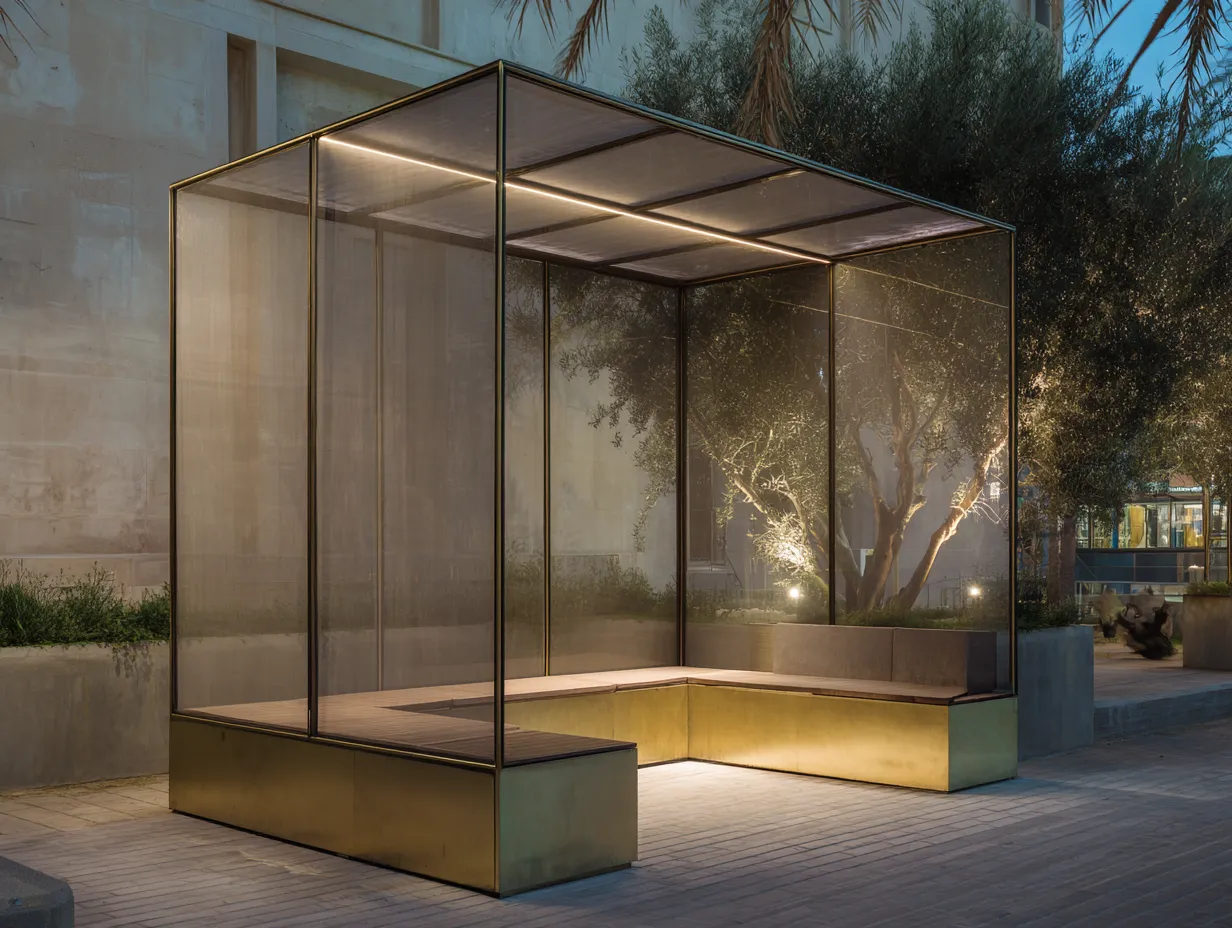
For those who prefer a contemporary and industrial aesthetic, a modern metal garden gazebo is an excellent choice. The open design promotes a sense of spaciousness and connection with nature. The sleek metal frame, often finished in black or dark grey, provides a striking contrast against the greenery of the garden. If you’re designing the full outdoor area around it, contemporary patio design ideas pair perfectly with a metal-frame gazebo to keep the look cohesive.
This type of gazebo is particularly well-suited for modern gardens with clean lines and geometric shapes. The open design allows for plenty of natural light, making the space feel airy and welcoming. Comfortable seating, perhaps with cushions in neutral tones, complements the minimalist design, ensuring comfort without compromising style. The Sunjoy 10×12 Hardtop Steel Gazebo around $1,200 is a solid entry point if you want the metal-frame look without custom fabrication costs.
The durability of metal makes this gazebo a practical choice as well. It can withstand various weather conditions, making it a long-lasting addition to your garden. Whether you’re hosting a summer barbecue or enjoying a quiet morning coffee, this modern metal gazebo offers a stylish and functional space for all your outdoor activities.
Wood Gazebos with Minimalist Details: Warm but High-Maintenance
Cedar holds up best without chemical treatment — five to seven years before you need to reseal. Pressure-treated pine is cheaper by about 40%, but it warps. Every single time. My first gazebo was PT pine from a big box store. Within two years the corner posts twisted enough to notice from across the yard. Worth the cedar upgrade.
Western Red Cedar 4×4 posts run about $12–$18 per linear foot depending on your region. That adds up fast on a 12×14 structure. Budget $4,500–$7,000 for materials alone if you’re doing cedar with a flat slatted roof. Labor doubles it. Not cheap, but it weathers into this silver-grey patina that looks like it belongs in an architecture magazine.
Don’t skip the footer pads. Wooden posts sitting directly on soil or even gravel will wick moisture and rot from the bottom up. Simpson Strong-Tie makes a $14 post base bracket that lifts the wood off the ground. That one $14 part saves you from a $2,000 post replacement in five years.
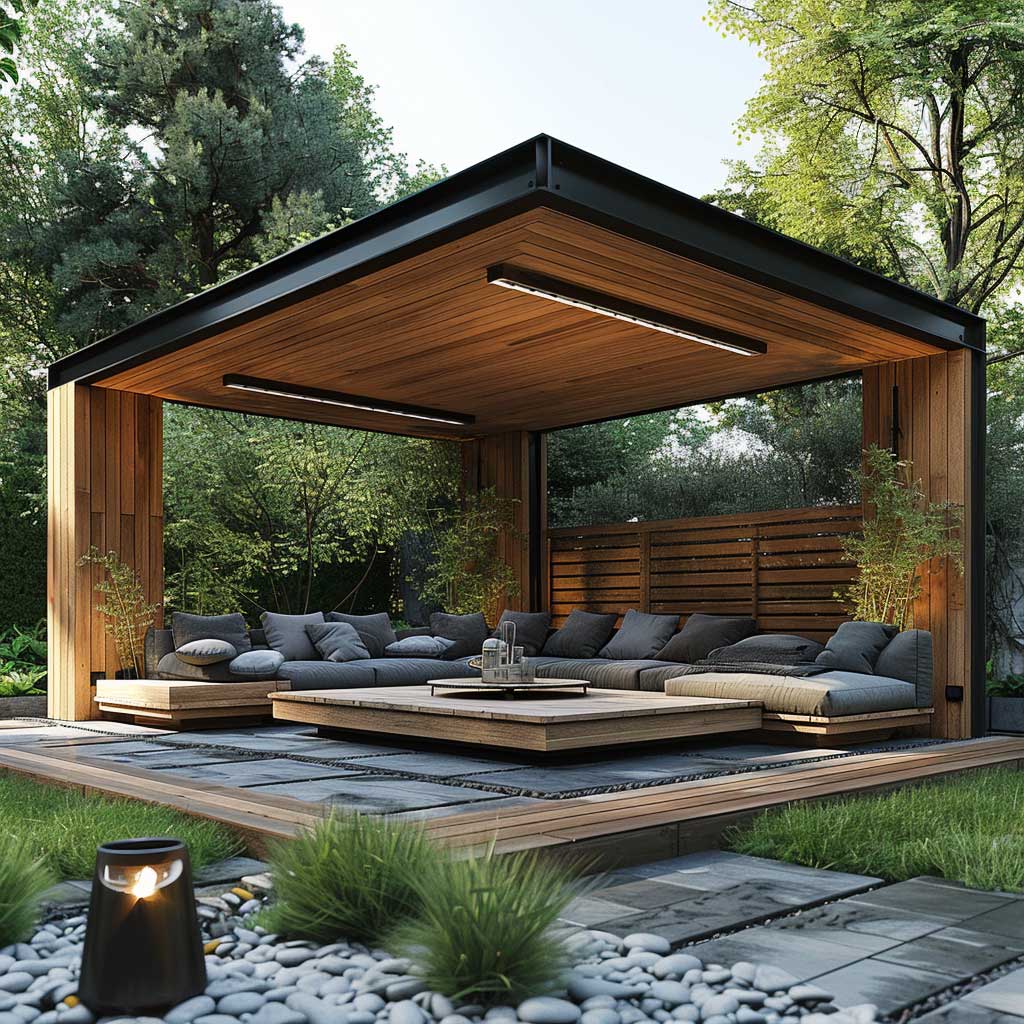


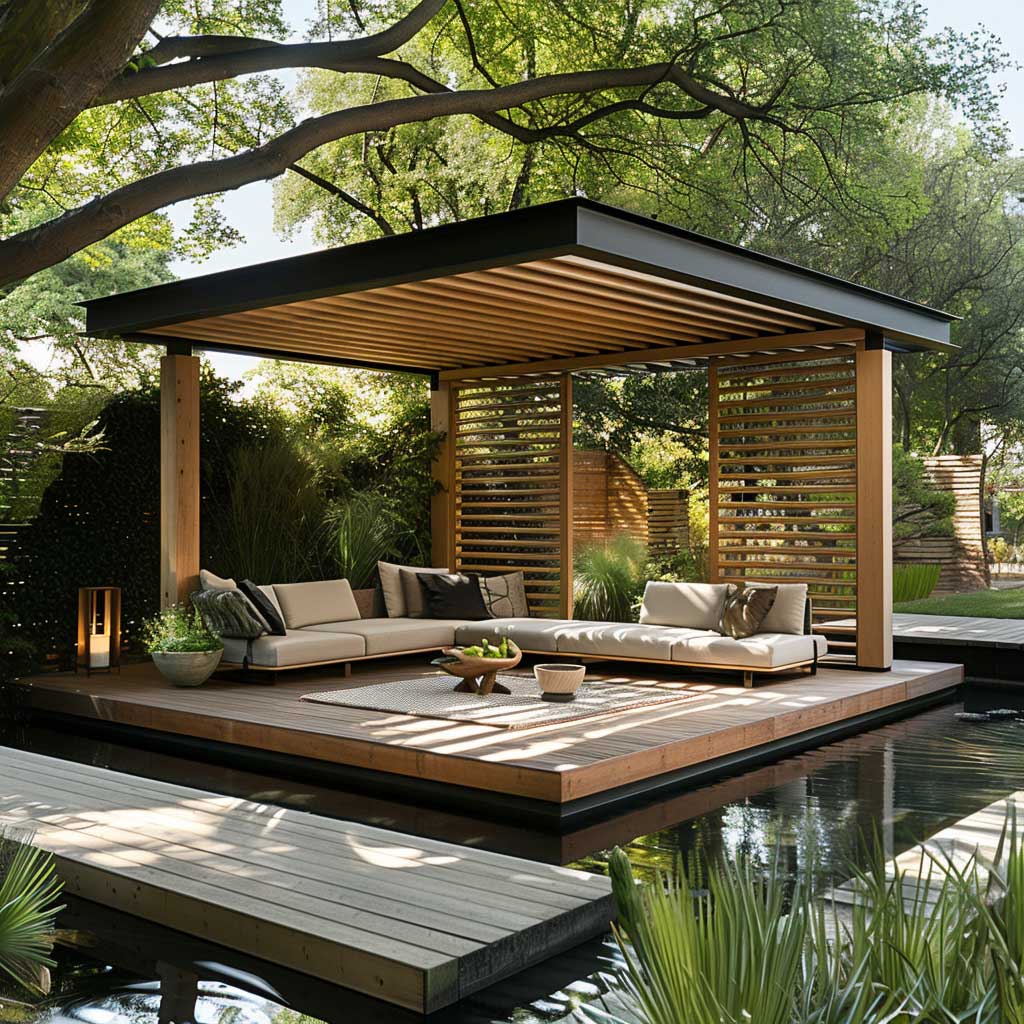
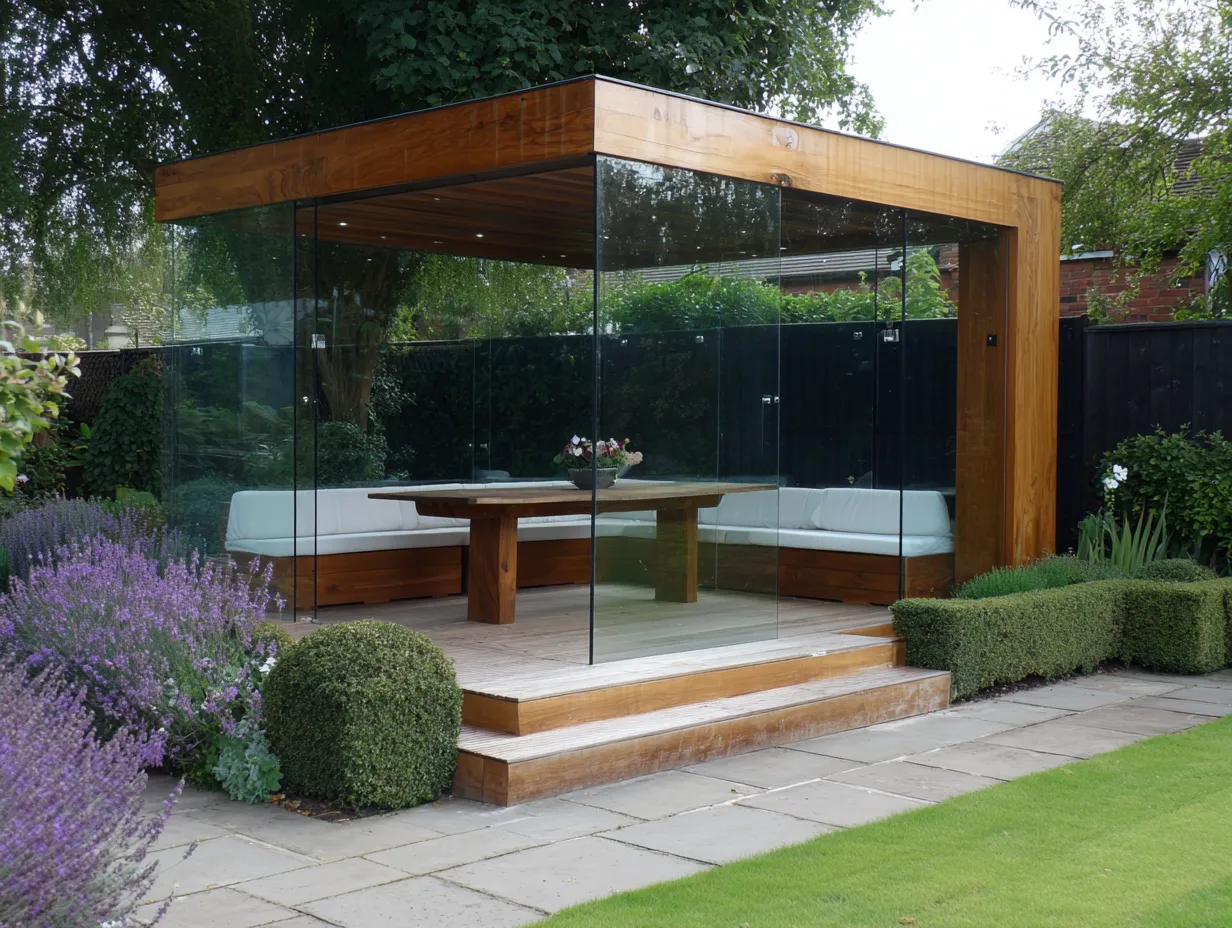
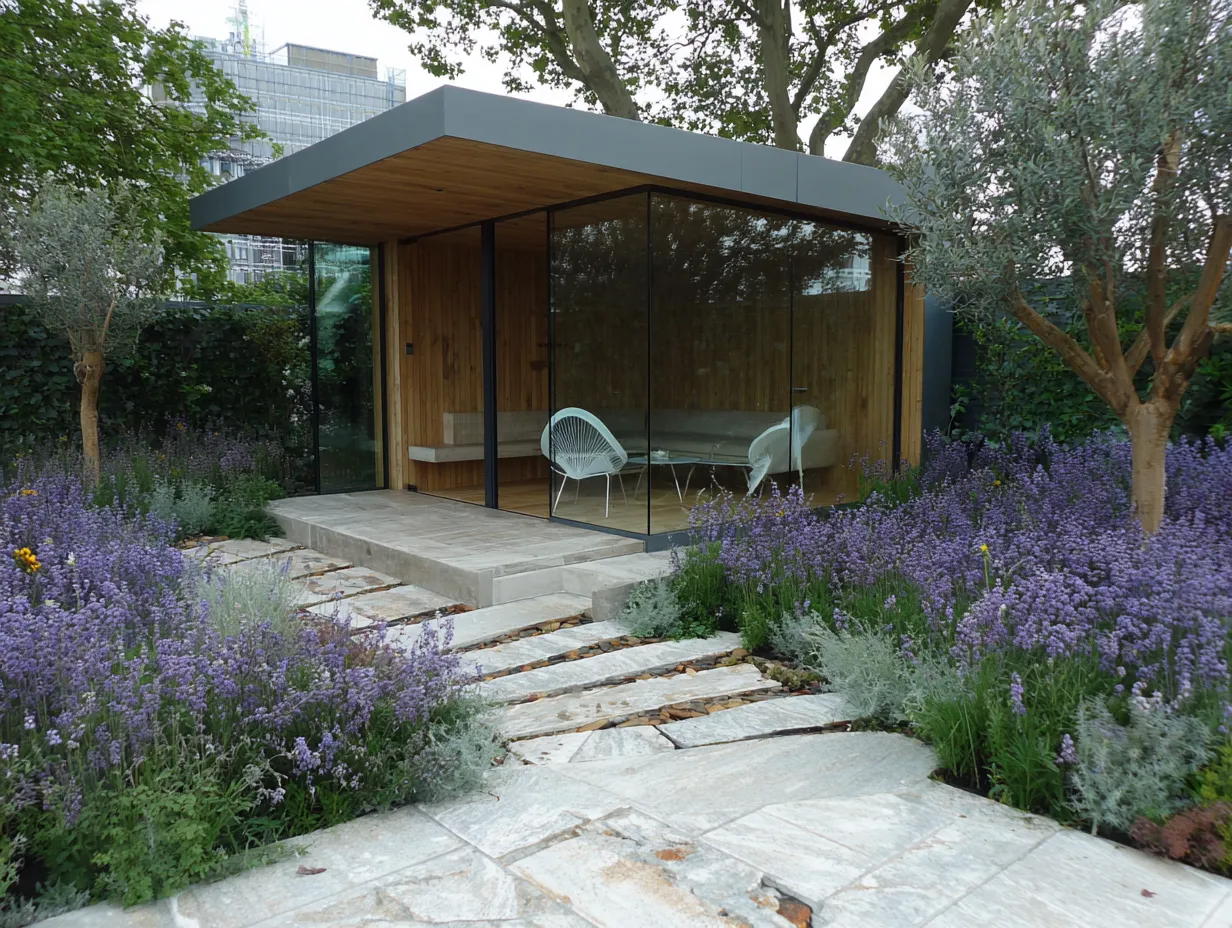
A wooden garden gazebo brings a touch of natural warmth and texture to your garden. When designed with minimalist accents, it exudes a timeless elegance that blends with the natural surroundings. The clean lines and unembellished structure highlight the beauty of the wood, creating a serene and inviting atmosphere. For more ways to bring natural materials into your outdoor space, check out these minimalist wooden house designs that use the same cedar-and-simplicity approach.
This gazebo is perfect for those who appreciate the beauty of natural materials. The simplicity of the design allows the wood’s natural grain and color to take center stage. Modern furnishings, such as sleek chairs and a simple table, enhance the gazebo’s minimalist appeal while providing a comfortable space for relaxation and entertainment.
Nestled in a tranquil garden, the wooden gazebo becomes a peaceful retreat where you can escape the hustle and bustle of daily life. Add some potted plants or minimalist garden decor to personalize the space and create a cohesive look that reflects your style. The result is a harmonious blend of nature and modern design that enhances the overall aesthetic of your garden.
How to Plan and Set Up a Minimalist Garden Gazebo
A step-by-step walkthrough for choosing, positioning, and assembling a clean-line garden gazebo — from site prep to final styling.
Tools & Materials:
- Level (48-inch)
- Concrete footer forms
- Post base brackets (Simpson Strong-Tie)
- Impact driver
- Tape measure
- Gazebo frame kit or lumber
- Gravel for drainage
Choose Your Material Based on Climate
Aluminum for coastal or humid areas. Cedar for moderate climates. Steel only if you’re inland and dry. Glass if your summers stay under 85°F or you’re adding ventilation. Match the material to your weather — not to your Pinterest board.
Pick the Site and Check Drainage
Place the gazebo on the highest point of your yard or create a slight grade away from the structure. Flat spots pool water. Use a 48-inch level across the footprint — if it’s off by more than an inch over 10 feet, you need to grade first.
Pour Concrete Footers and Install Post Bases
Dig below your frost line — 36 to 42 inches in most zones. Pour concrete into tube forms. Set Simpson Strong-Tie post brackets into the wet concrete. Let it cure 48 hours minimum before mounting posts. Don’t rush this step.
Assemble the Frame and Roof
Bolt posts into brackets. Attach beams and cross-supports. For flat roofs, ensure a minimum 2% slope for water runoff. Two people can handle an aluminum kit in 4–6 hours. Cedar builds take a full weekend with a helper and a miter saw.
Add Minimalist Furniture and One Focal Light
Keep furniture to three pieces maximum — a low sofa or bench, one side table, and a planter. Hang a single pendant or lantern from the center beam. Skip the string lights. One strong light source looks cleaner than twenty weak ones scattered everywhere.
Glass-Walled Gazebos: The Modern Flex That Costs the Most
Tempered glass panels run $150–$300 per panel depending on thickness and size. A full four-sided enclosure on a 10×10 frame can hit $8,000–$15,000 installed. That’s not a typo. Glass gazebos are gorgeous but they’re priced like a bathroom renovation.
Fingerprints, water spots, pollen film — glass shows everything. You’ll need a squeegee and glass cleaner on a weekly rotation or it stops looking like a design statement and starts looking like a neglected fish tank. Low-iron glass cuts the green tint you get with standard tempered panels, but it costs roughly 20% more.
Climate matters here more than with any other material. Glass traps heat like a greenhouse. Without operable panels or at least two sides left open, your summer gazebo becomes an oven by noon. I’ve seen people install motorized louvered roofs above glass walls to vent hot air — Stobag and Renson make good systems starting around $5,000 for the roof mechanism alone. Worth it if you live anywhere south of Philadelphia.


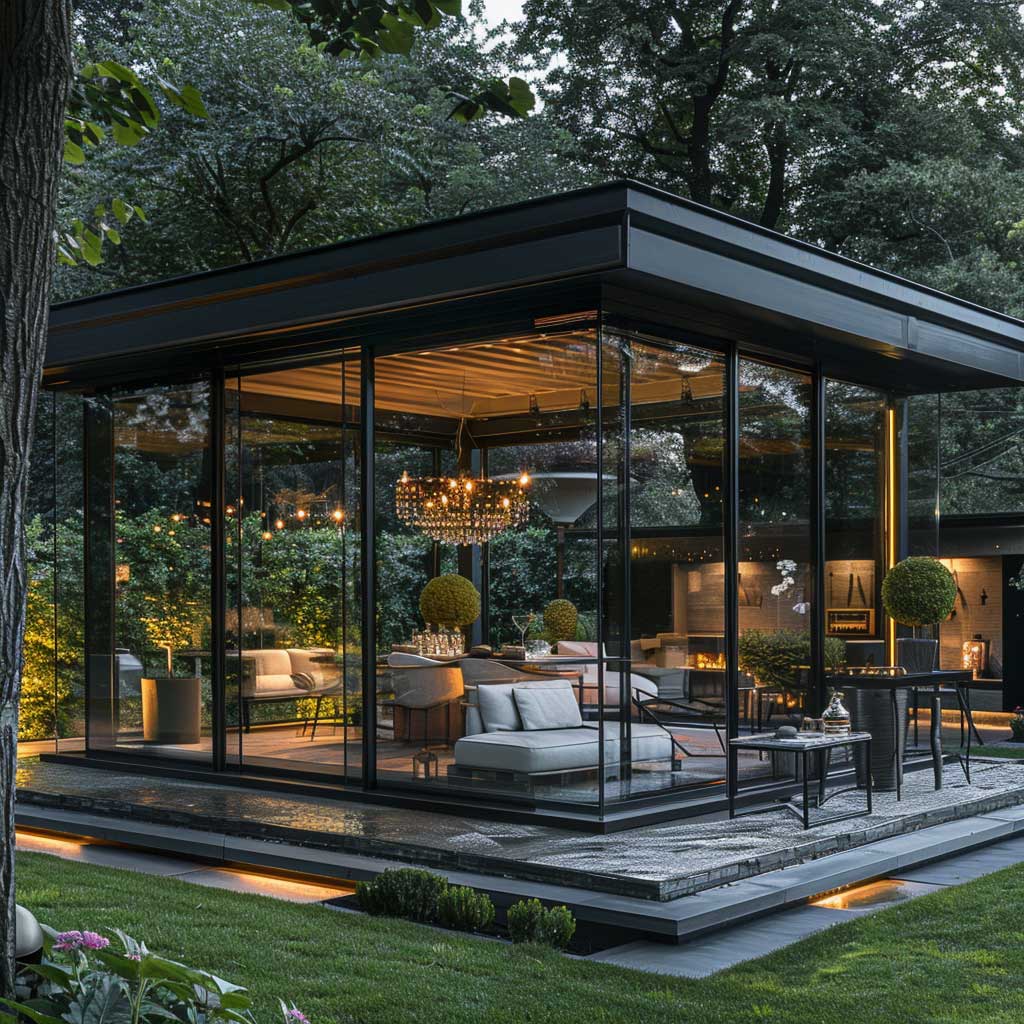

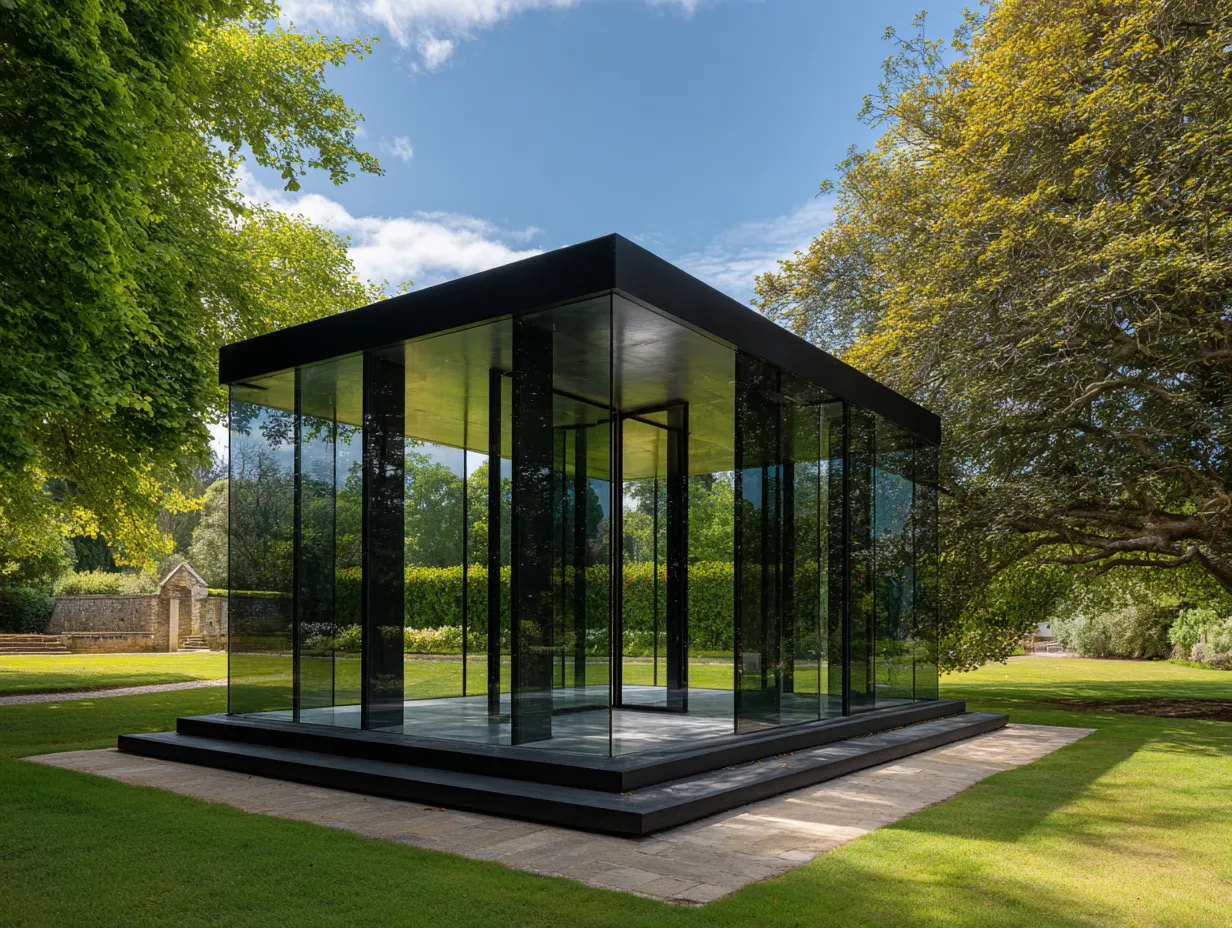
A glass garden gazebo offers a contemporary and sophisticated addition to any garden. The clean lines and transparent structure create an open and airy feel, allowing you to enjoy the beauty of your garden from every angle. The minimalist design ensures that the gazebo blends seamlessly with the surroundings, providing a stylish yet unobtrusive focal point.
The use of glass in the gazebo’s design allows for an abundance of natural light, making the space feel bright and welcoming. Modern outdoor furniture, with its simple and elegant design, complements the minimalist aesthetic while providing a comfortable space for lounging or dining. Soft lighting can enhance the ambiance in the evening, creating a warm and inviting atmosphere. If a full glass build blows your budget, the PURPLE LEAF 10×13 Retractable Pergola at around $900 gives you an open-air modern aluminum frame to which you can later add glass panels on two sides.
This type of gazebo is ideal for those who appreciate modern architecture and design. It offers a sleek and stylish space where you can relax, entertain, or simply enjoy the view of your garden. The minimalist approach ensures that the gazebo enhances, rather than competes with, the natural beauty of the garden, creating a harmonious and balanced outdoor space.
| Feature | White Aluminum | Steel / Metal | Cedar Wood | Glass Walls |
|---|---|---|---|---|
| Budget Range | $2,800–$4,500 | $1,500–$4,000 | $4,500–$7,000 | $8,000–$15,000 |
| Maintenance | Low — hose off weekly | Medium — check for chips | High — reseal every 3–5 yrs | High — squeegee weekly |
| Lifespan | 20+ years | 15–25 years | 15–20 years | 25+ years (panels) |
| Best Climate | Any | Dry / inland | Moderate humidity | Cool / temperate |
| Biggest Downside | Shows bird droppings | Rust near coast | Warps if skipping seal | Greenhouse effect in heat |
| DIY-Friendly? | Yes (kit) | Moderate | Yes if skilled | No — hire a pro |
Bottom Line on Minimalist Gazebos
White aluminum frames give you the sharpest contrast against greenery for the least ongoing work. Metal frames suit anyone who wants an industrial edge but hates painting. Cedar gazebos age beautifully — if you actually reseal them every few years. Glass walls look incredible in photos and cost twice what you budgeted.
Pick the material that matches your honesty level about maintenance. I love cedar. I also know I’ve skipped resealing mine for three years running. Aluminum would’ve been the smarter call for someone like me.
Spend at least 60% of your budget on the frame and foundation — not on cushions and string lights. A solid structure with cheap accessories always looks better than a flimsy frame dressed up with $400 throw pillows.