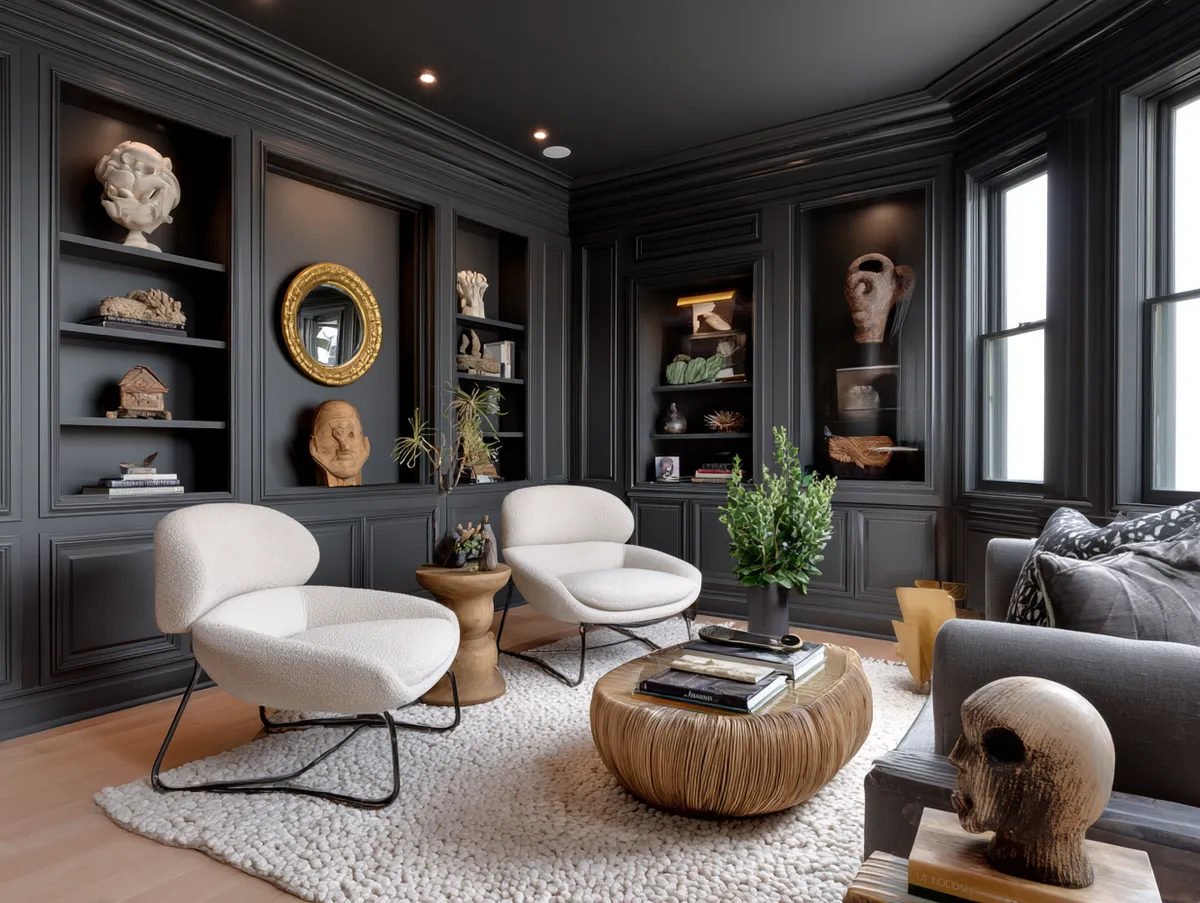
Bathroom ideas with wooden panels are everywhere right now — and for once, the trend has genuine staying power. Wood panelling in a bathroom brings something no tile can fake: grain variation, warmth that shifts with the light, and a tactile quality that makes even a small bathroom feel like a room that was thought about. I’ve renovated two bathrooms with wood feature walls, and the difference is immediate.
The problem is that most people treat wood panelling as a surface decision when it’s actually a structural one. Pick the wrong species or skip the sealant and you’ll be pulling warped boards off the wall within two years. Get it right and the walls outlast every trend cycle.
Quick Scan
- Best wood species for bathroom humidity: teak, cedar, bamboo, reclaimed hardwood
- Horizontal slats and shiplap add visual width — useful in small bathrooms with wood panelling
- Wainscoting and half-wall panelling require less sealing than floor-to-ceiling applications
- Rustic reclaimed panels: expect to pay $8–$18 per sq ft; Scandomodern engineered slats run $12–$25 per sq ft
- Avoid untreated pine inside wet zones — it swells, stains, and embarrasses you within months
- Teak oil vs teak sealer: use the sealer, not the oil — sealers contain mildew inhibitors the oil lacks
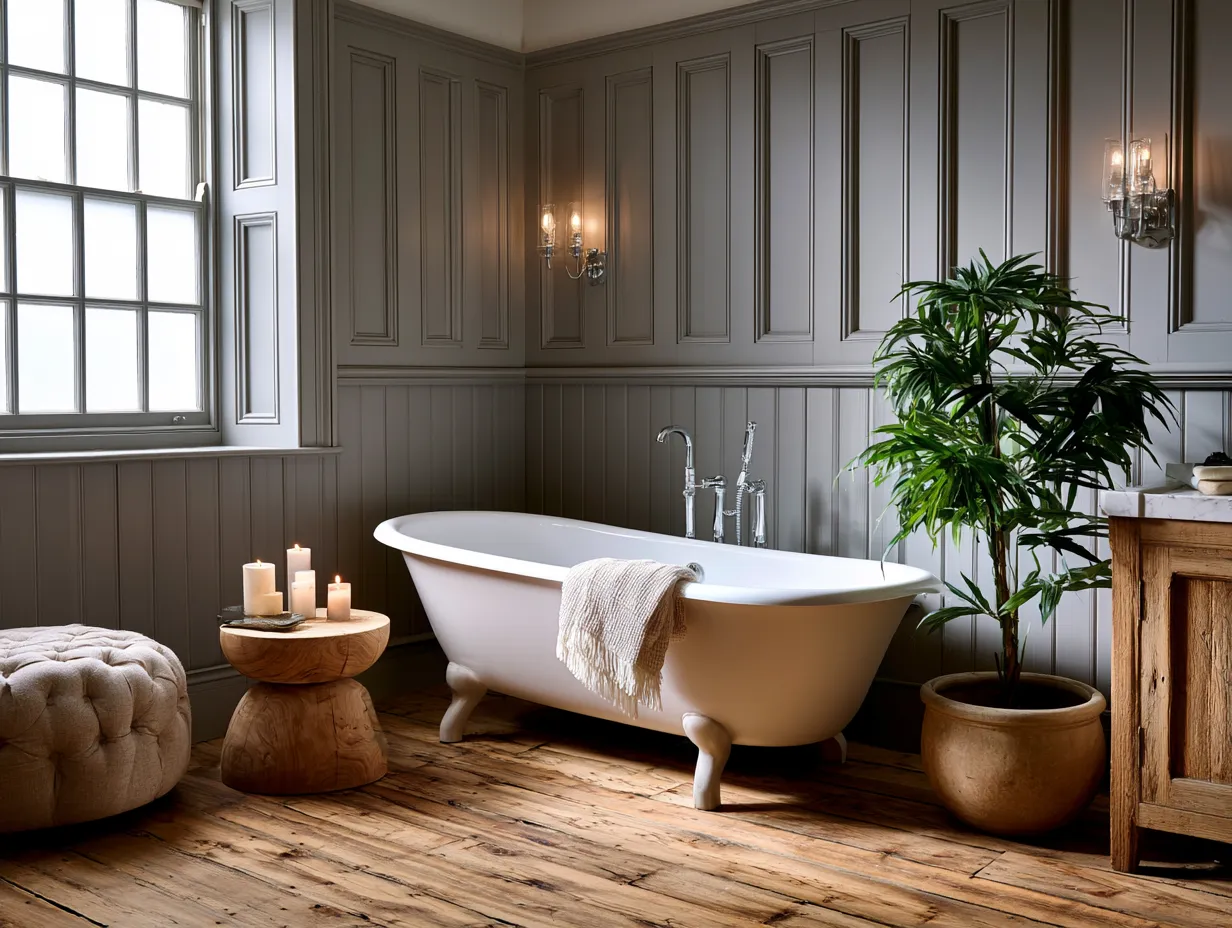
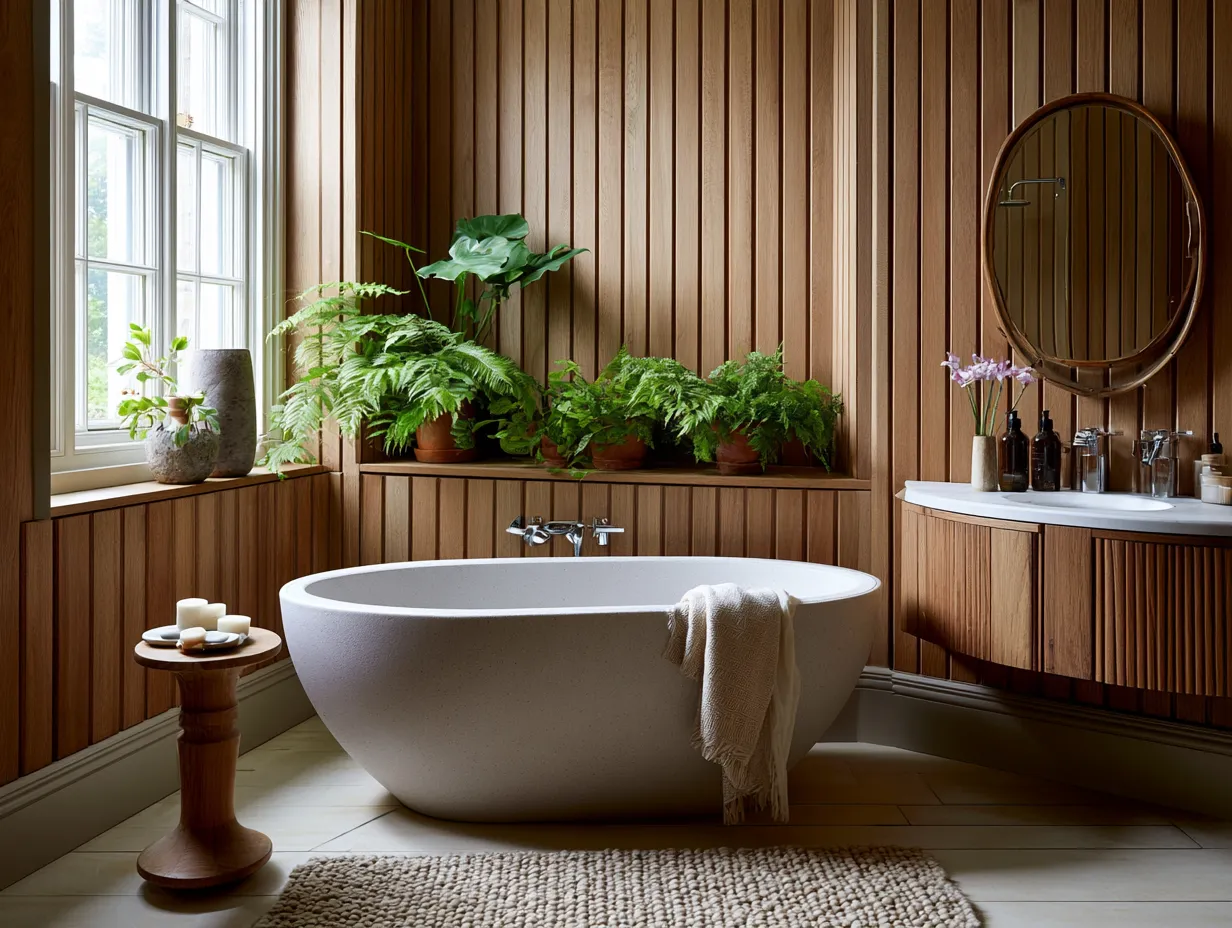
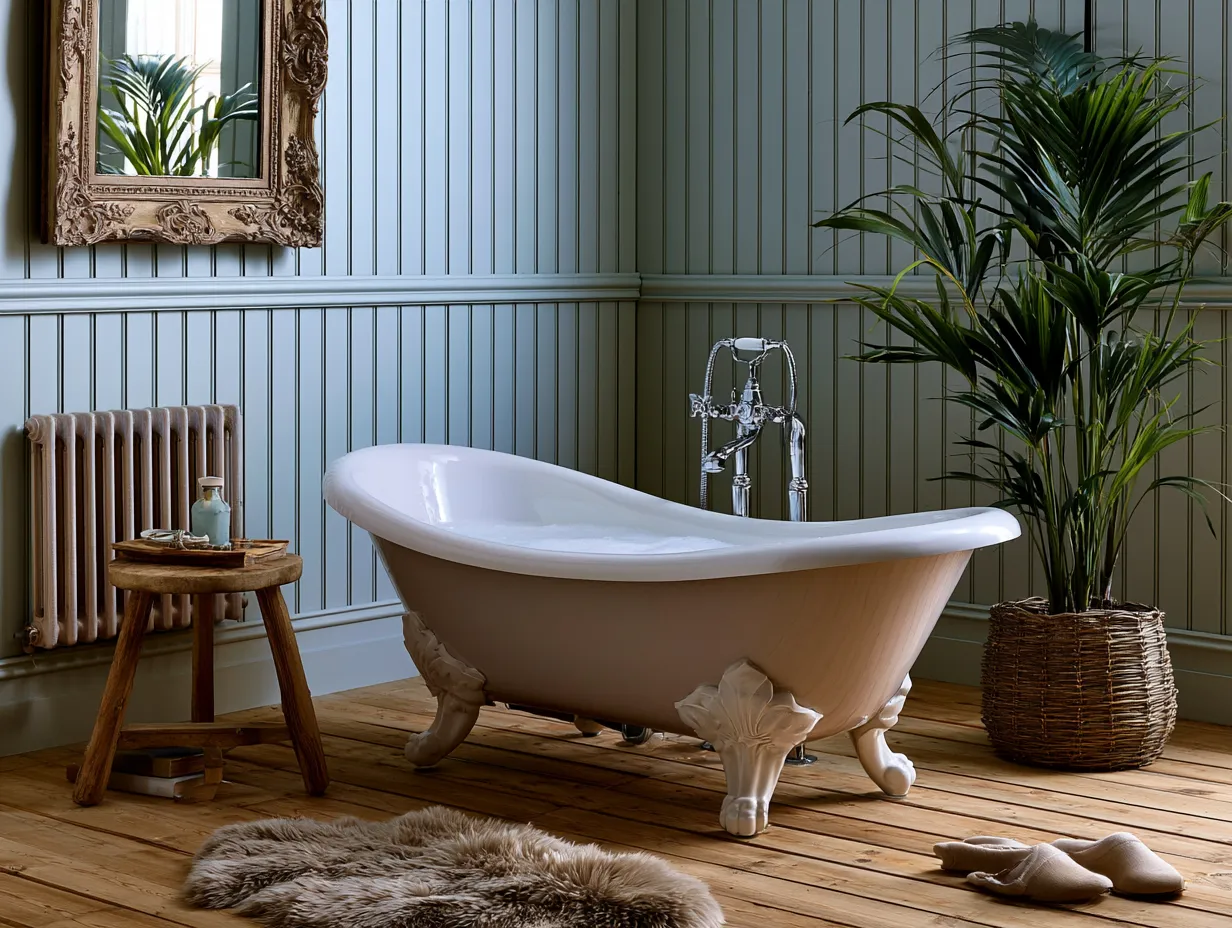
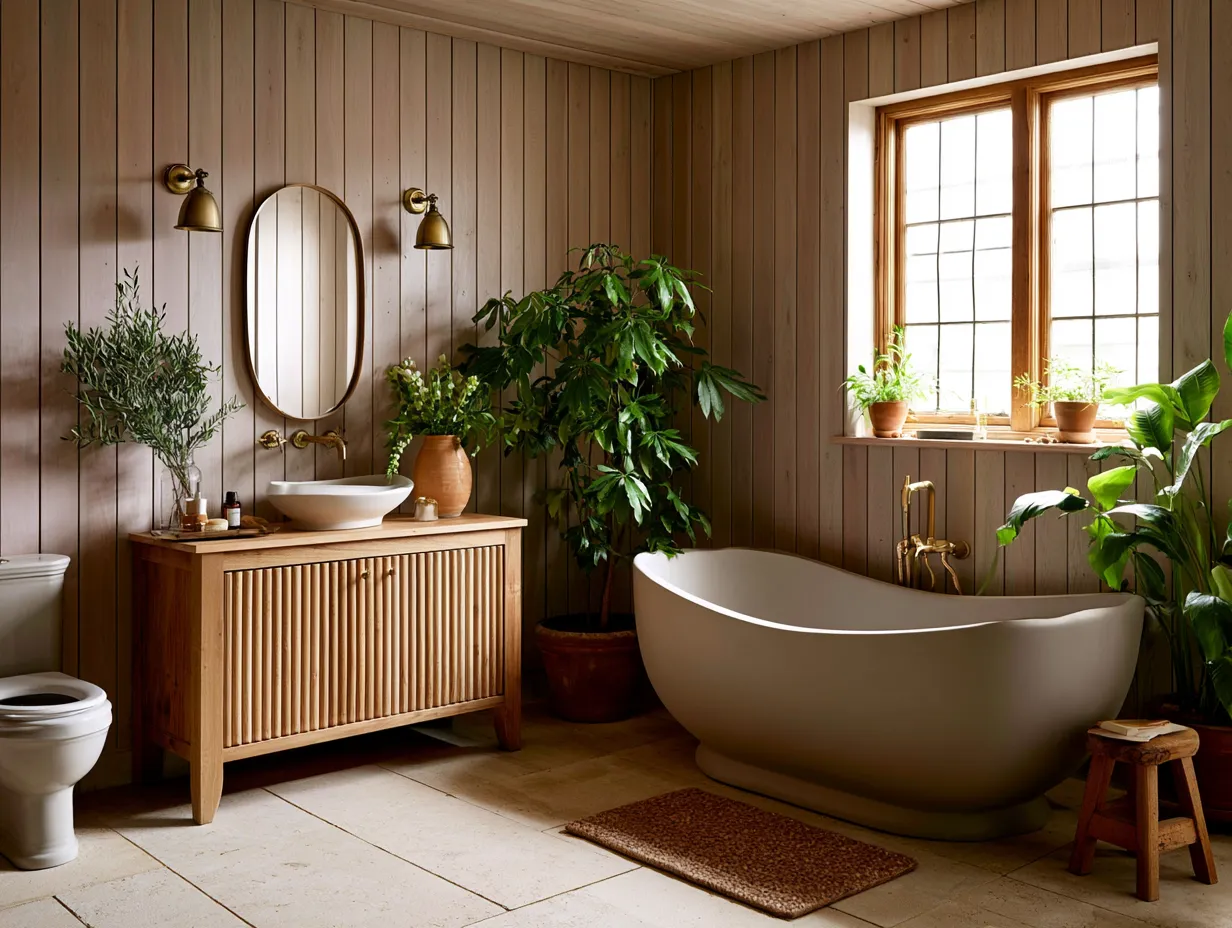
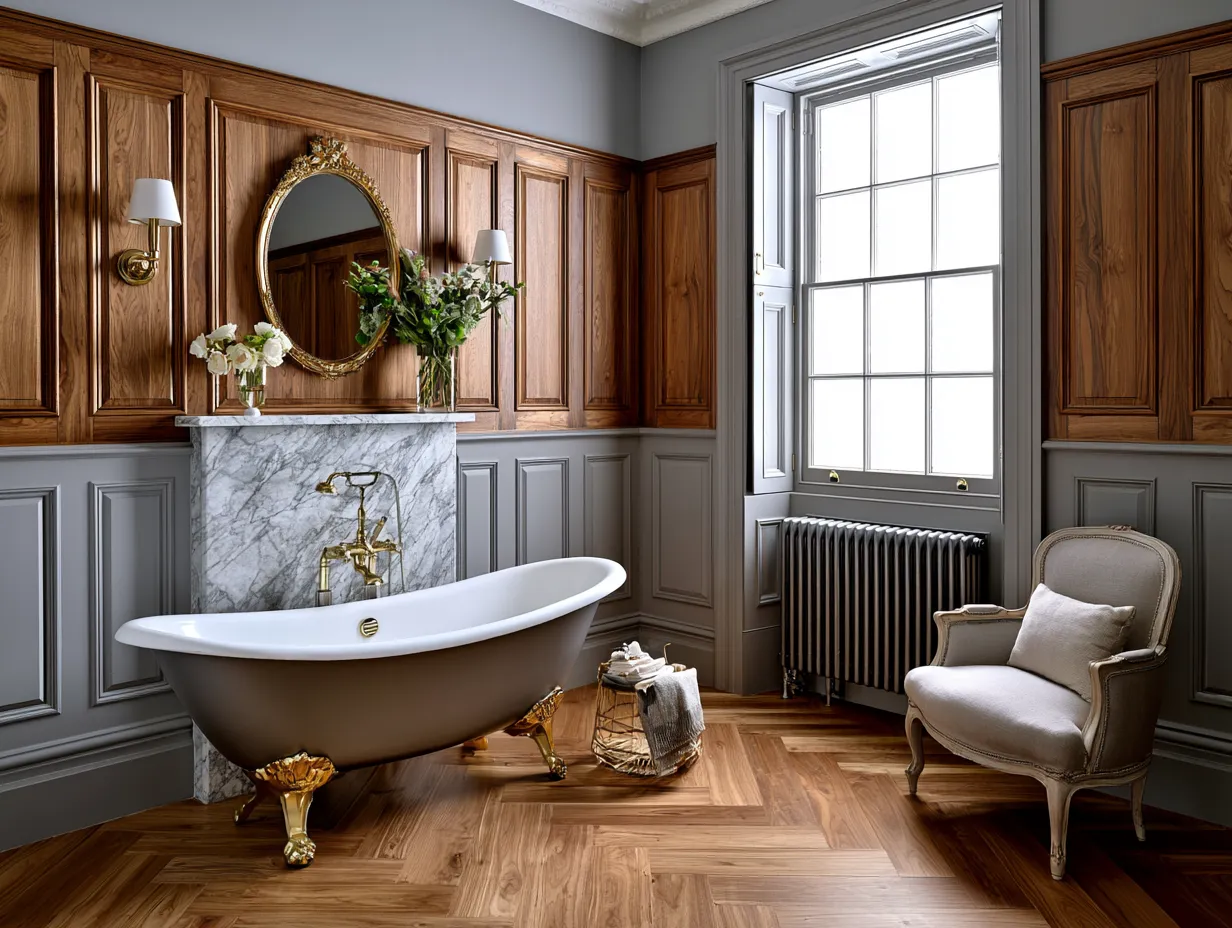
Rustic Reclaimed Wood Panels Photograph Differently Every Season
Reclaimed wood panels are the one category where imperfection is the whole point. Knots, grain reversals, old nail holes — these are features, not defects. I sourced a batch of reclaimed barn oak for $9 per sq ft from a salvage yard in Pennsylvania and the character you get for that price is impossible to manufacture. You’ll notice the difference the moment you compare it to the box-store “rustic” vinyl alternatives.
Distressed panels are the shortcut version: sand back factory-fresh boards, apply a grey-tinted stain, and dry-brush lighter tones across the grain. Farmhouse bathrooms eat this up. The anti-advice here is to avoid distressing soft pine — it absorbs stain unevenly and the result looks streaky rather than aged. Stick to oak, ash, or elm for distressing work.

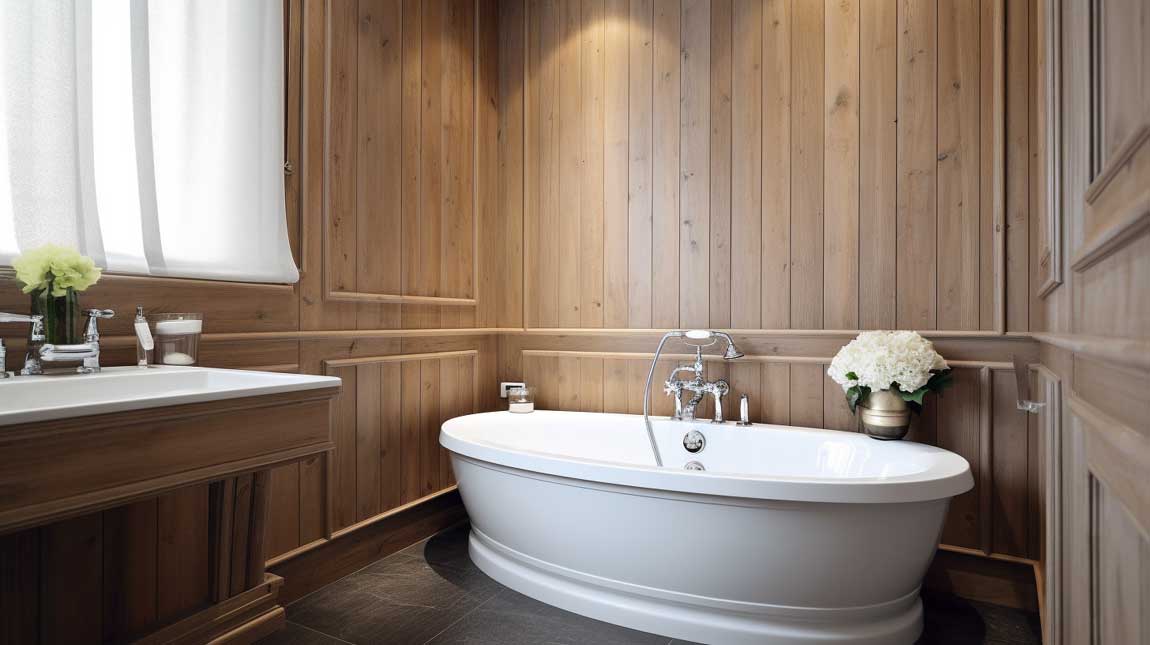
Raw live-edge planks push the concept furthest. Each plank preserves the natural silhouette of the tree, so no two bathrooms with wood panelling like this ever look alike. My go-to installation approach is to leave a 2–3mm gap between planks, fill with flexible sealant, and finish with two coats of Rubio Monocoat Oil Plus 2C ($49 per litre) — it penetrates rather than sitting on the surface, which means no peeling in humidity.
Dont Do This
Do not install untreated softwood (pine, spruce, fir) in any wet zone — not even the wall beside the bath. It swells across the grain within months, gaps open up, water tracks behind the panel, and you end up with mould that you can smell before you can see. If the board flexes easily along the grain, it’s not bathroom-ready. Teak, cedar, bamboo, or a quality engineered panel only.
Modern Horizontal Wood Slats Make a Narrow Bathroom Read Wider

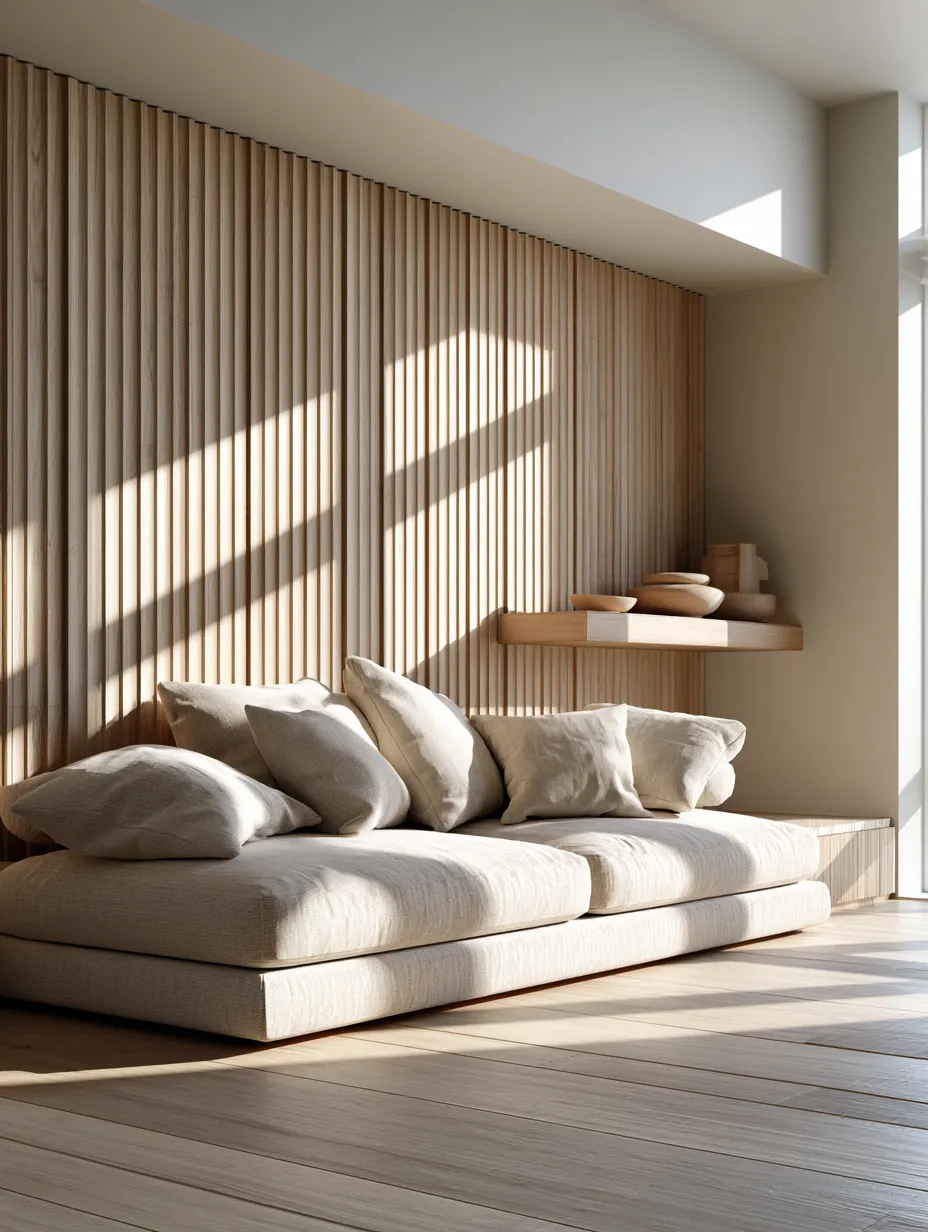
Horizontal wood slats are the move for bathrooms with wood paneling that feel cramped on the sides. Lines that run parallel to the floor pull the eye toward the walls rather than upward, which physically widens the perceived footprint of the room. I’ve used this in a 1.8m-wide bathroom and the effect is the closest thing to a no-demo renovation I’ve seen.
Mixed wood tones in a geometric layout push the look into proper interior design territory. Light ash against dark walnut, alternating in 90mm bands — that’s my go-to combination for a modern wood panel bathroom without the sterile quality of all-white schemes. Avoid mixing more than two species in one installation; three becomes a craft project, not a design decision.
Glossy lacquered wood finishes reflect ceiling-mounted downlights beautifully. They’re also the hardest to maintain — fingerprints show at every angle, and any moisture left on the surface leaves a mark. You need a squeegee in the same way you need one for a glass shower screen. The Scandinavian brand Timberwise offers engineered wood panels in lacquered finish at around $18–$22 per sq ft and they hold up considerably better than site-lacquered boards.
For a wider look at bathroom wall panelling materials and directions, the comparison between horizontal slat wood, tile, and engineered panels covers things this section doesn’t have space for.
Bamboo and Teak Panels Survive Humidity Where Most Wood Fails

Bamboo panels are technically a grass, which is why they outperform most hardwoods in high-humidity environments. The cellular structure is dense and moisture doesn’t penetrate the way it does in open-grained timber. You’ll find strand-woven bamboo panels for $10–$16 per sq ft that are credibly waterproof and take stain in the same way real wood does — darker tones especially. The tropical aesthetic is a side effect. The durability is the actual reason to use it.
Teak is the benchmark species for any wood panelling used near water. Its natural oils create a barrier that most tropical hardwoods lack — the same reason teak has been used in yacht construction for centuries. DuraShield makes a teak bathroom panel specifically treated for wet zones at around $28–$35 per sq ft. It’s not cheap, but I’ve seen teak installations in bathrooms that are fifteen years old and still look like they were installed last month.
Rattan accents alongside wood panels — a rattan mirror frame, woven storage baskets — keep the material language consistent without committing to all-wood walls. Rattan stays intact in humidity if it’s kept out of direct splash zones. Inside a shower recess, even rattan will deteriorate. The rule: anything porous lives in the dry zone only.
Painted Wood Panels and Wood Mosaic Tiles Change the Category Entirely

Painted wood panels are the least-discussed option in bathroom ideas with wooden panels, and they’re underrated. Benjamin Moore’s Advance line in Hale Navy (HC-154) on flat-profile MDF panels reads as proper cabinetry-grade finish — clean, matte, and much better in person than it photographs. The trick is two coats of oil-based primer before the topcoat; skip this and the humidity raises the grain within weeks.
Wood mosaic installations use small hardwood tiles — typically 5cm square — arranged in geometric or pictorial layouts. This is genuinely bespoke work. Expect to spend $150–$300 per sq ft for a custom fabricated design, or DIY it with Havwoods Hex Mosaic tiles (around $45 per sq ft) and a slow-set epoxy adhesive. Seal religiously. Grout lines are the weak point in any mosaic bathroom installation.
Carved wood accent panels belong in the same conversation as custom tile murals: commissioned, expensive, one-of-a-kind. CNC-routed panels from suppliers like Decorative Ceiling Tiles start at around $85 per sq ft for walnut. Don’t install carved work in wet zones — the recesses hold water and accelerate decay faster than flat-profile panels.
Whitewashed Shiplap and Coastal Wood Bring Salt Air Into a Landlocked Bathroom

Whitewashed wood panels work because they split the difference between the warmth of raw timber and the lightness of white paint. You can achieve the look with a 1:3 dilution of white emulsion paint in water, brushed on and wiped back while still wet. The grain shows through as a ghost pattern. Oak responds best — the open grain holds the pigment in a way that closed-grained maple doesn’t.
Driftwood-framed mirrors are the accessory that locks the coastal mood in. The organic grey tones of weathered drift wood read as a colour that doesn’t have a paint chip equivalent — it’s somewhere between warm grey and taupe with a hint of green. Anthropologie sells driftwood-frame mirrors for $180–$340 that work well as a focal point above a vanity.
Vertical shiplap adds ceiling height. This is my go-to recommendation for small bathroom with wood panelling where the ceiling is the constraint. Run the boards floor-to-ceiling, paint the boards and the ceiling the same shade, and the room suddenly has no visible top. White Dove OC-17 (Benjamin Moore) is the shade I’ve used twice for this effect.
Wainscoting and Herringbone Patterns Age Without Going Stale

Wood panel wainscoting is the design decision that people compliment without knowing why. Cover the lower 900mm of the wall in flat-panel or shaker-style wood boards, paint above in a contrasting shade, and the room immediately reads as finished rather than furnished. I’ve done this with 18mm MDF primed with Zinsser BIN shellac primer — it holds paint in humid conditions and costs around $2.50 per sq ft in materials.
Herringbone wood panels are the pattern equivalent of a statement tile, except they work with the warmth of natural material rather than fighting it. The pattern creates apparent movement — the eye follows the zigzag and the room feels larger and more dynamic as a result. Reclaimed oak herringbone panels from The Real Wood Store run $22–$30 per sq ft and install with the same adhesive you’d use for parquet flooring.
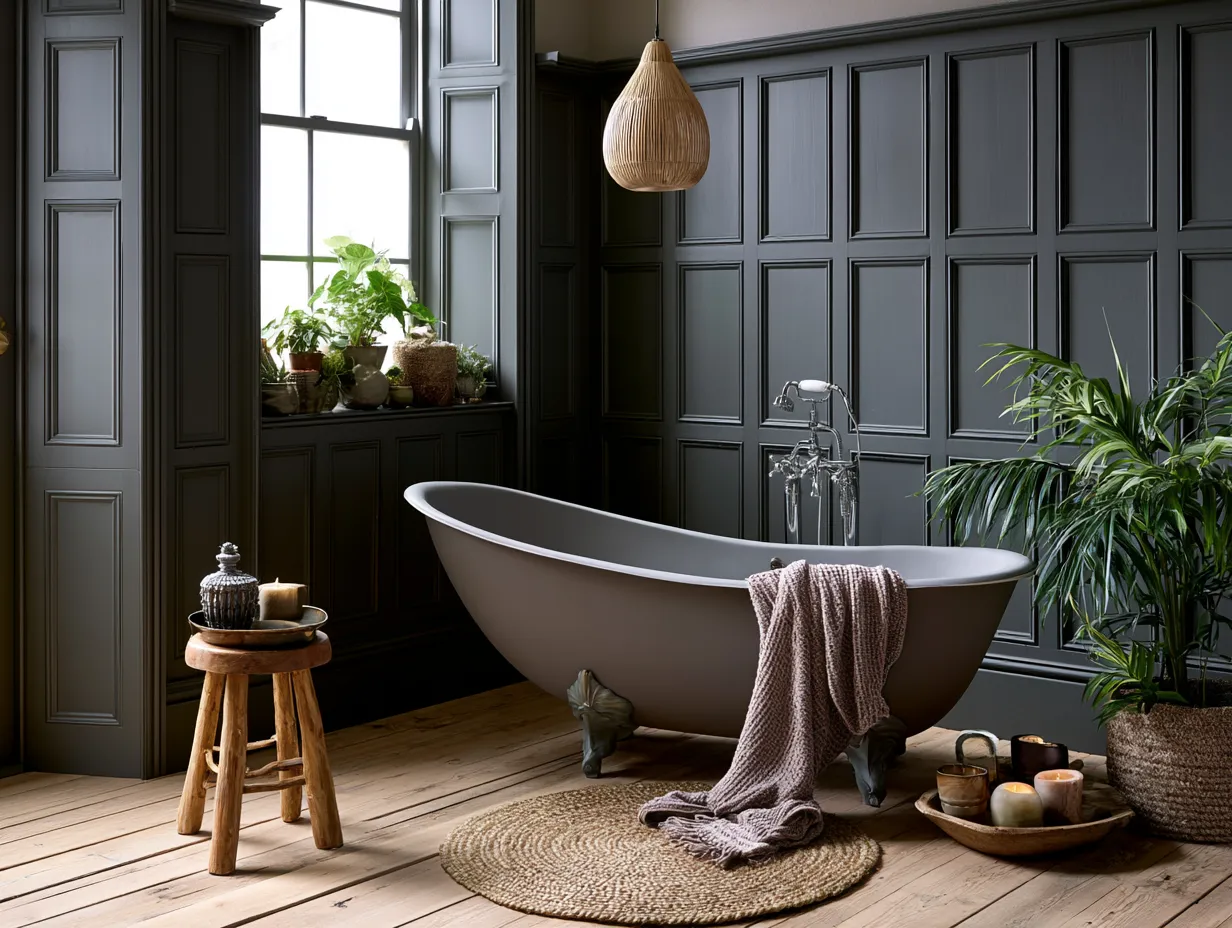
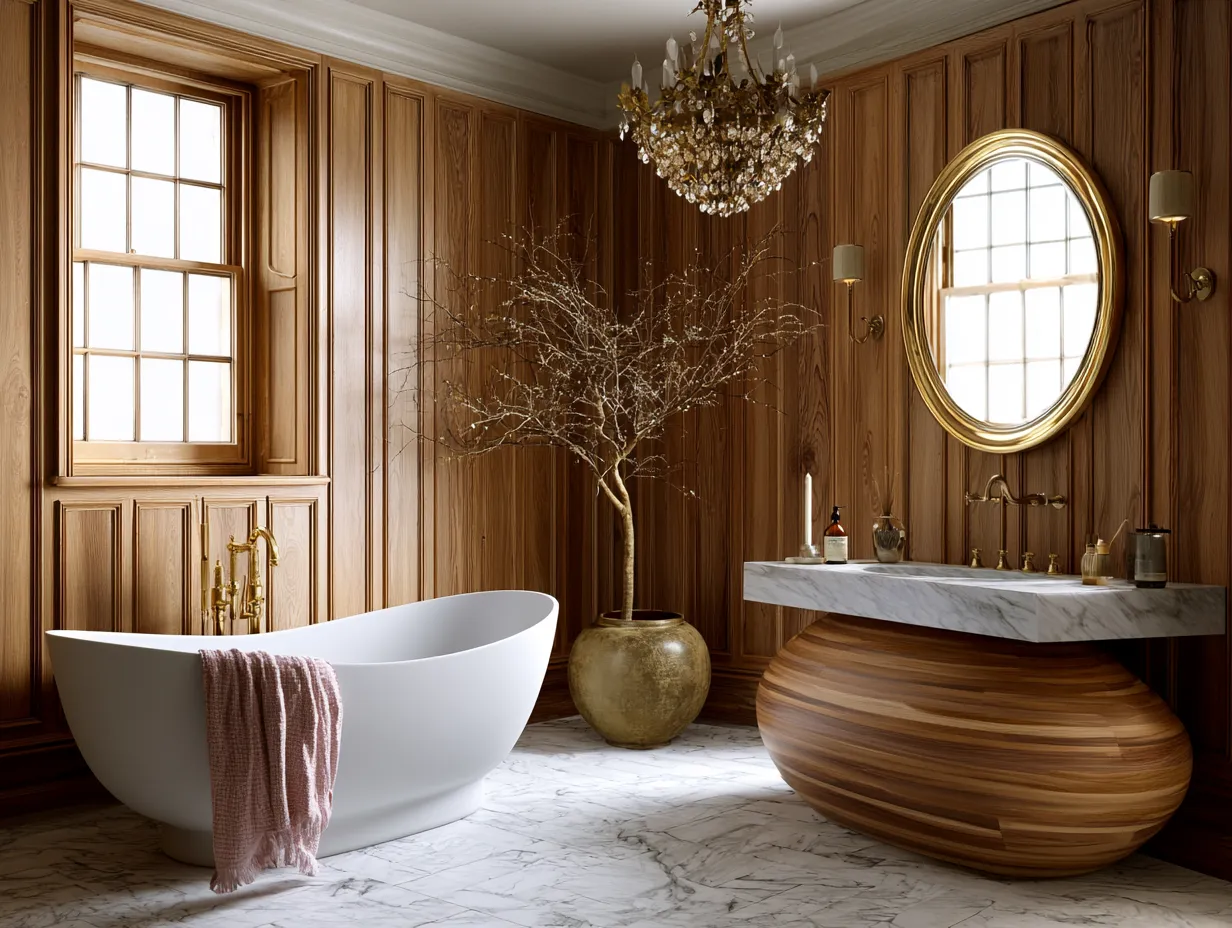
Dark wood tones — walnut, smoked oak, wenge — polarise bathrooms with wood panelling into rooms that feel like a private members club. Pair with brass hardware and a stone countertop. Avoid dark wood with dark grout and dark tiles simultaneously; you need one pale element to give the eye somewhere to rest, or the whole room reads as a cave.
More on bathroom wall panels by texture and colour application if you want to compare wood tones against stone-effect and concrete-effect alternatives.
Wood and Stone Together — The Zen Formula That Actually Reads as Calm

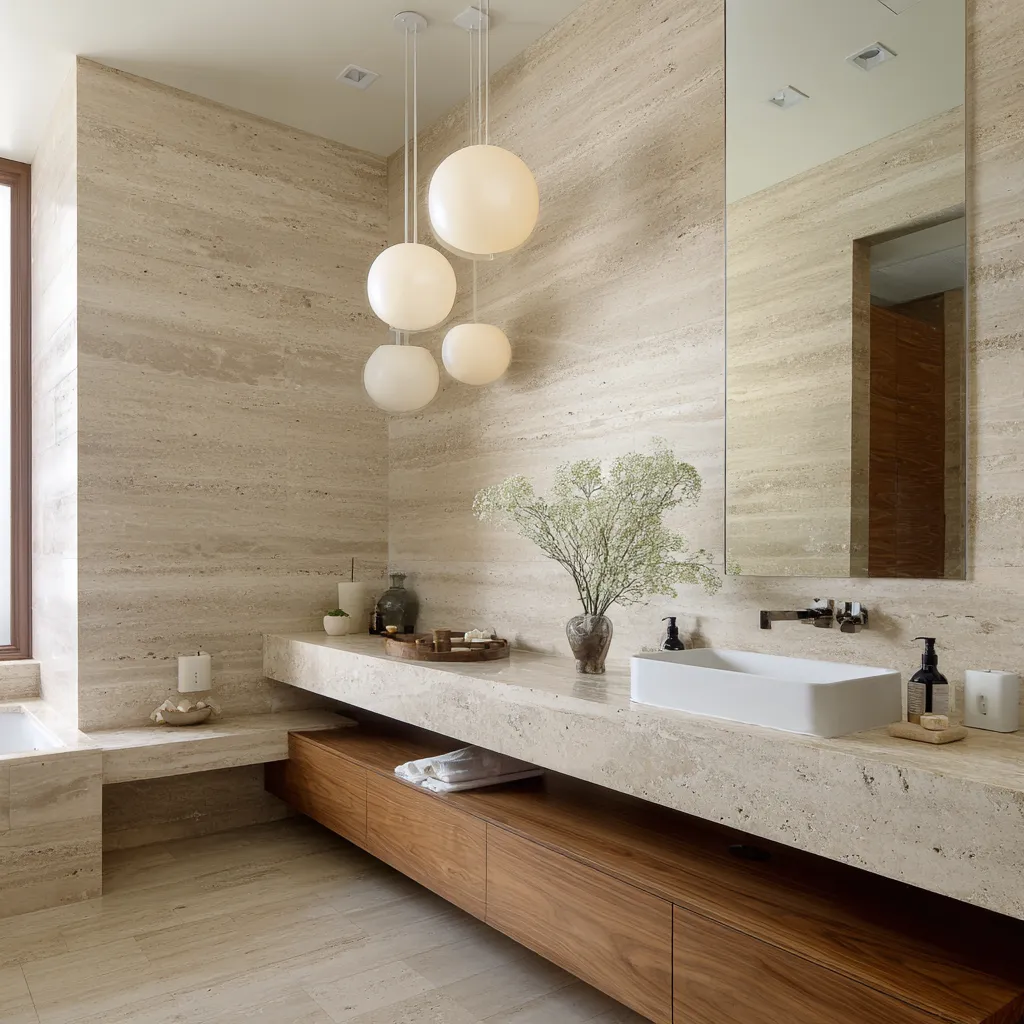
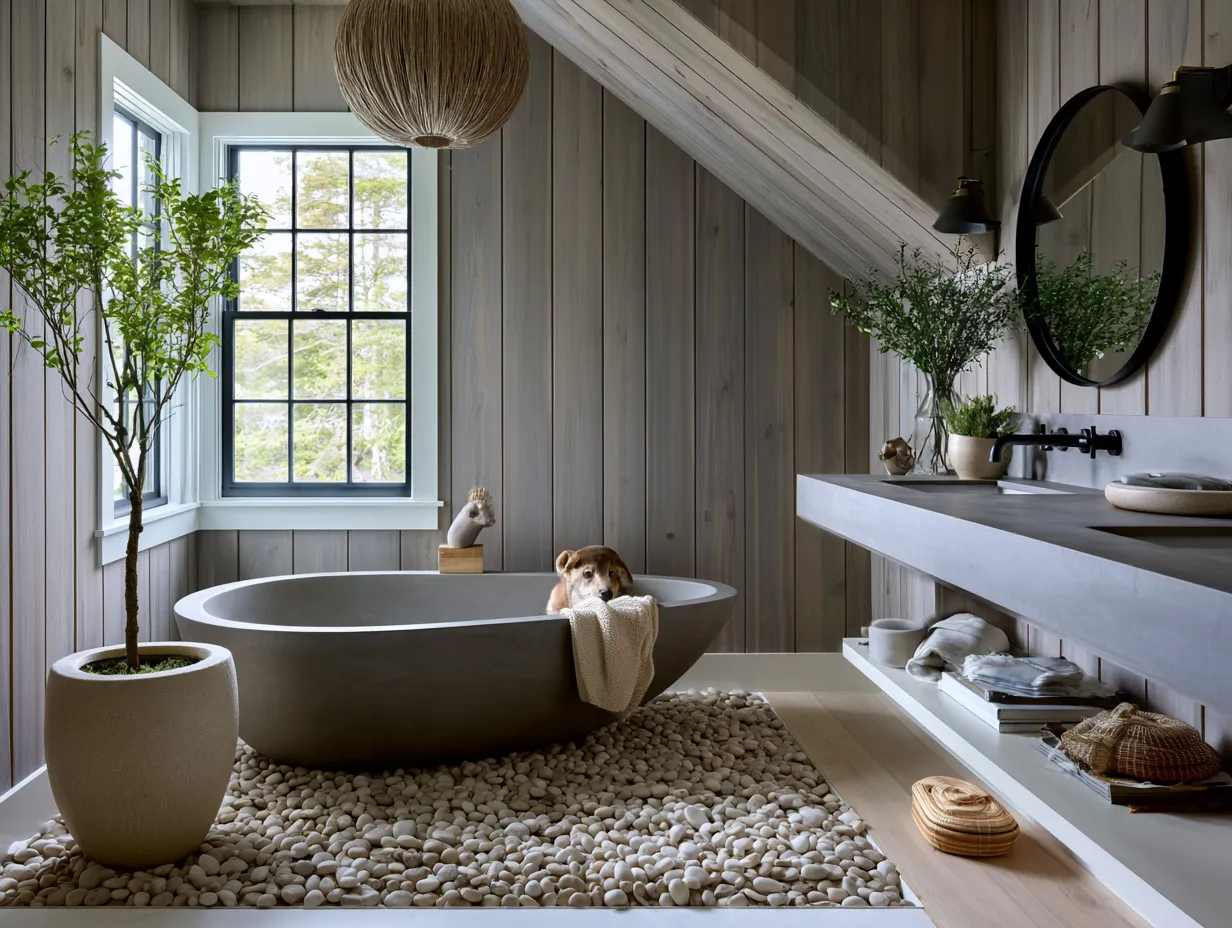
Wood and stone in the same bathroom work because both materials exist in the same sensory category — matte, natural, warm in weight even when cool to the touch. Pair horizontal cedar slats with a slate or travertine floor and the transition feels deliberate rather than accidental. The mistake most people make is choosing stone with too much veining; busy marble against wood grain creates visual competition rather than harmony. Stick to honed, low-pattern stone.
Japanese Ofuro soaking tubs are the pinnacle of the wood-in-bathroom concept. Hinoki cypress is the traditional material — it costs $3,000–$8,000 for a custom tub from Japanese suppliers like Cypress Tub Co. The scent alone is worth noting: hinoki releases a warm, cedar-adjacent aroma when wet, which is the closest thing to a scent-diffuser built into your architecture. Not a practical choice for every bathroom. An extraordinary one for the bathrooms that can hold it.
Minimalist wood panels in this context means thin, smooth, close-grained boards with no decorative profile. I stole this trick from a Kyoto guesthouse bathroom — three walls plain plaster, one wall raw cedar slats at 60mm width, no skirting, no cornice. The cedar wall does all the work. Everything else steps back.
Patterned and Mixed-Material Panels Reward the Rooms That Can Take the Noise


Patterned wood panels — geometric, chevron, scale — need a large room or a contained accent wall to land correctly. In a small bathroom with wood panelling under 4sqm, a heavily patterned panel on all four walls creates the visual experience of being inside a jigsaw puzzle. Use one wall. Keep the other three plain.
Mixed-material installations combining wood with glass partition panels or powder-coated metal framework are popular in bathrooms with wood paneling that want industrial character without going full exposed-pipe. The material contrast works best when the colours are close in temperature — warm brass-tone metal against warm oak, not cold stainless against orange pine.
Upcycled wood art — pallet slat arrangements, reclaimed timber offcuts formed into geometric patterns — is the highest-effort, lowest-cost option in bathroom ideas with wooden panels. Buy a bundle of reclaimed pallet wood from eBay for $25–$40, sand, sort by tone, arrange in a chevron or basket-weave. Seal with three coats of water-based polyurethane. The result looks like something that cost ten times the materials budget.
Floor-to-Ceiling Wood Panels Change How Big the Room Feels

Floor-to-ceiling wood panels eliminate the visual interruptions that break up a wall — no chair rail, no tile line, no paint change — and the room reads as taller and more cohesive as a result. It’s the architectural equivalent of wearing one colour head to toe. You’ll notice immediately that the ceiling feels higher even if it isn’t.
Greenery pairs with wood panelling better than it pairs with tile because the textures belong to the same material family. Pothos, monstera, and Boston fern all tolerate the humidity of a bathroom without much fuss. I own two of these — a pothos on a shelf and a hanging staghorn fern — and both have been in my wood-panelled bathroom for three years. They’ve never looked better.
A skylight above a wood-panelled bathroom is not a luxury — it’s the ventilation and light solution you need if you want the wood to last. Natural light shows grain in a way artificial light simply doesn’t replicate. UV exposure from a skylight also keeps surface mould in check. The Velux FCM series fixed skylights start at around $400 and change what a bathroom with wood panelling looks and smells like permanently.
For more on how wood walls interact with light and material combinations, Edward Martin’s deep-dive into bathroom wood species and moisture performance is the most thorough published breakdown of the topic.
Exposed Beams and Weathered Wood Pull Off Industrial Without the Clichés
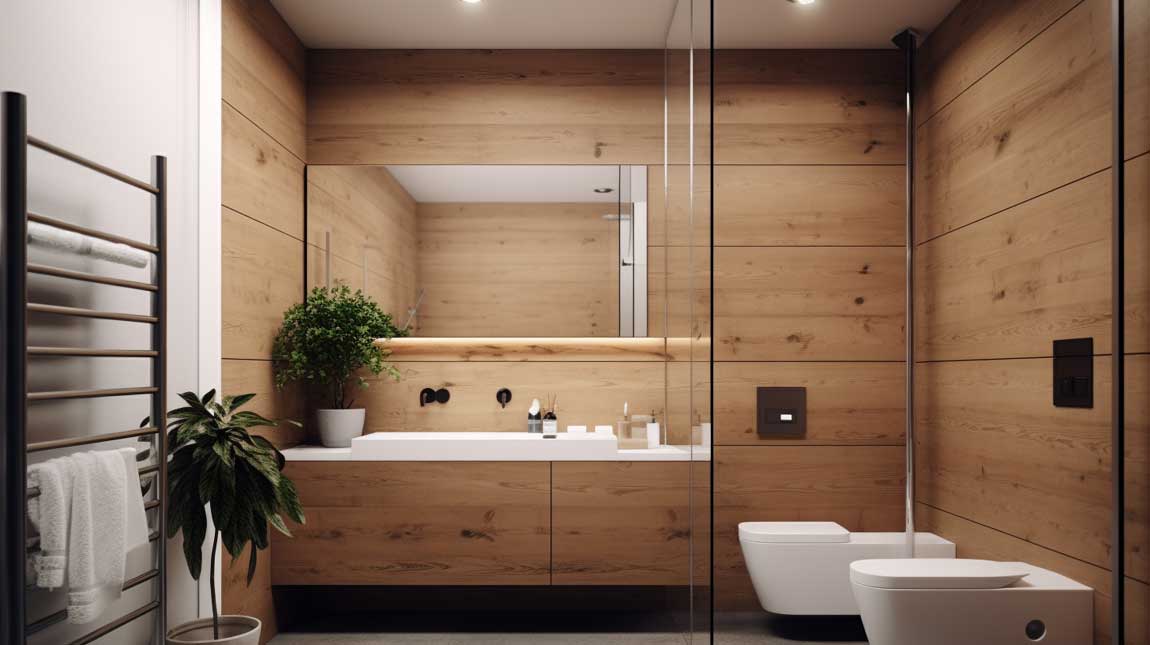
Exposed wooden beams in a bathroom with wood panelling signal craft and structure in a way that decorative beams can’t. Real structural timber — even if it’s been repurposed and cleaned up — has the proportions and surface quality that tells you it once held weight. Fake polystyrene beams painted to look like wood are the one thing in this category I’d actively avoid. The scale is always wrong.
Metal accents alongside wood choose their temperature carefully. Matte black fixtures with dark weathered oak — that’s a combination I’ve used and it reads as deliberate. Polished chrome with the same wood reads as mismatched. Brushed nickel sits in the middle and is the safe choice for bathrooms with wood paneling where you’re not sure which direction to commit to.
Weathered wood panels — grey-brown, surface-checked, genuinely aged — are harder to source than they are to fake. Ask salvage yards for barn siding specifically; the exterior exposure gives you the grey colouration that interior reclaimed wood doesn’t have. Seal it anyway, regardless of how weathered it looks — the appearance of being impervious to moisture is not the same as actually being impervious to moisture.
Spa Bathrooms Need Built-In Wood Storage or the Warmth Reads as Clutter

Warm wood tones with soft lighting is a combination that appears in every high-end spa for a reason — it mimics the quality of candlelight against natural material. The key is lamp temperature: 2700K maximum. Anything cooler and the wood looks greenish under halogen, which defeats every design decision you made to get warmth into the room.
Built-in wooden shelves and niches are the organizational system that actually works in a bathroom with wood panelling because they’re flush with the wall surface. No lip to catch dust. No brackets to clean around. My go-to specification is 200mm-deep niches between wall studs, lined with the same timber as the wall panels, sealed to match. The material continuity makes the niche read as part of the architecture rather than an afterthought.
In-wall wooden accent panels framing a freestanding tub are the focal point decision that either makes the room extraordinary or looks like an unfinished renovation. The panel has to be sized correctly relative to the tub — roughly 150mm taller and 200mm wider on each side is the proportion that frames rather than crowds. Get this wrong and the tub looks like it was placed in front of a billboard.
Birch and Ash Panels Carry the Scandinavian Palette Without Pale Looking Bland


Light wood panels in birch or ash keep a bathroom feeling open rather than oppressive. The pale, even grain of these species is what makes Scandinavian interiors look effortless rather than sparse. I own birch-panelled bathroom walls that are eight years old — the colour has barely shifted, which tells you about the species stability in humidity far better than any specification sheet.
Clean lines in a Scandinavian bathroom with wood panelling means panel profiles with no shadow gap, no decorative moulding, no visible fixings. It means choosing a basin and taps with geometric rather than organic forms. Duravit’s D-Neo wall-hung basin ($280–$380) works structurally with this approach — the rectangular profile and minimal footprint match the discipline of the wood behind it.
Monochromatic colour palette in Scandinavian wood panel bathrooms means selecting one wood species and one wall colour in the same temperature range, then not adding a third. Off-white ceiling, pale ash panels, white fixtures. The restraint is the design decision — not the absence of one. Any bathroom with wood panelling benefits from this principle even if the style isn’t strictly Nordic.
Wood Panelling in Bathrooms
The species you pick matters more than the style you choose.
Bathroom ideas with wooden panels live or die on moisture resistance before aesthetics. Teak and cedar survive where pine fails. Reclaimed wood adds character money can’t manufacture. And a single wood accent wall does more for a bathroom than four walls of mediocre tile ever will.
The installation details — sealing, gap spacing, primer — separate the bathrooms that look good for fifteen years from the ones that need pulling out after two.
Save this post before you start specifying materials.