Farmhouse kitchen backsplash ideas that stay easy to clean turn a busy cooking zone into a surface you can wipe down in seconds after every meal. The right material resists grease, moisture and daily splatters while keeping the warm, textured look that defines the style. Ceramic, sealed wood, metal and glazed tile all deliver that balance when chosen with maintenance in mind.
Most homeowners settle on one of a dozen proven options that cost between $2 and $25 per square foot for materials and last 15–30 years with basic care. The fastest cleaners are smooth glazed surfaces; the warmest textures need a good sealant. Below you will find the practical picks that actually survive real kitchens.
Skip anything porous that sits unfinished near the stove. A single coat of the wrong finish can turn daily wipe-downs into scrubbing sessions. Choose materials rated for wet areas and you avoid that trap from day one.
- Glazed ceramic and porcelain wipe clean with mild soap in under a minute.
- DIY shiplap or beadboard finishes under $150 for a standard run.
- Sealed reclaimed wood and brick need only a damp cloth when protected properly.
- Stainless and glass surfaces hide almost no residue after a quick pass.
- Installed costs for mid-range tile typically land between $15–$40 per square foot.
- Avoid unfinished porous stone or raw wood behind the range—moisture wins every time.


Brick That Holds Up to Real Cooking
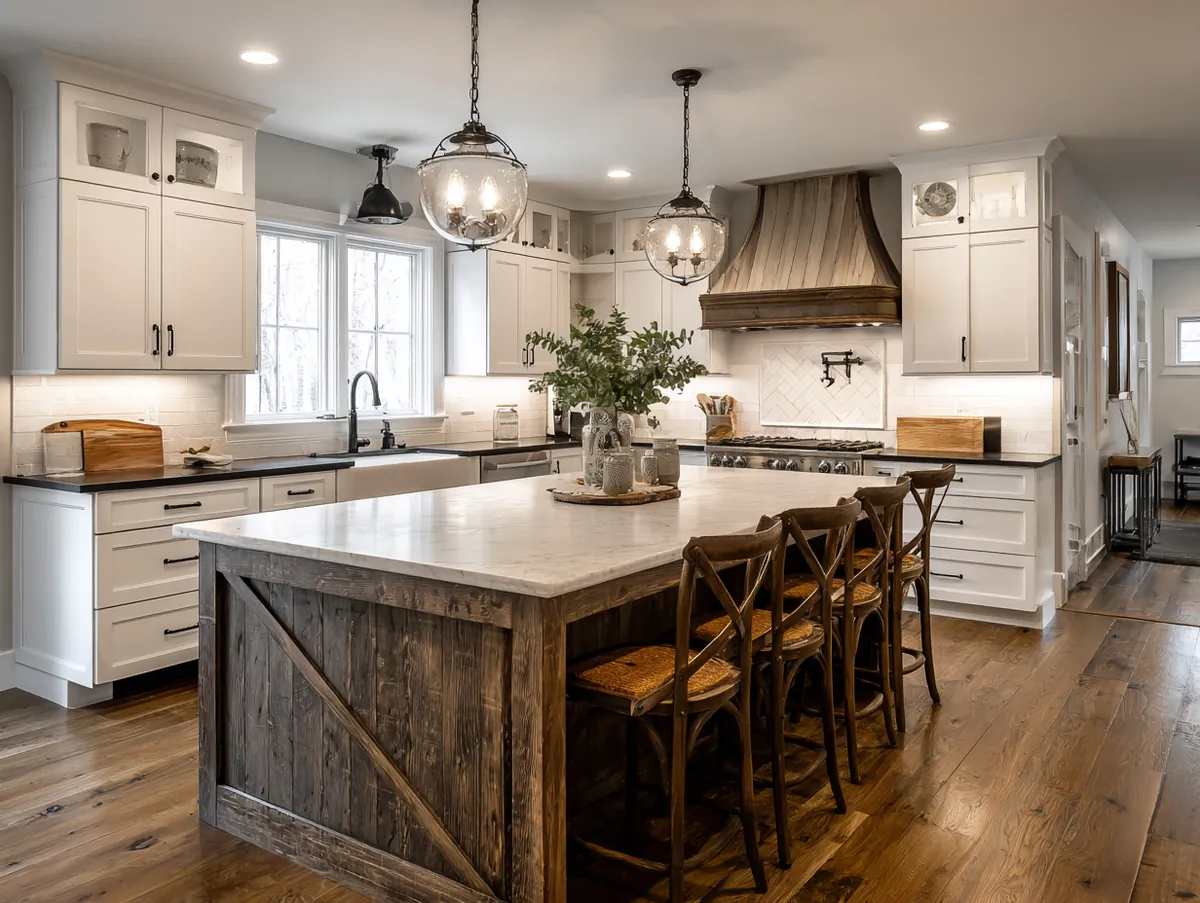
A brick farmhouse kitchen backsplash delivers instant texture and stays low-maintenance once sealed. Thin brick veneer runs $5–$12 per square foot in materials and installs with construction adhesive. Wipe with a damp cloth and mild detergent; the surface shrugs off most grease without special cleaners.
Why choose painted brick over raw? The painted version hides stains better and still reads as classic farmhouse. White or soft gray paint keeps the look light while the texture remains. Skip unsealed brick near the cooktop—oil settles into the pores and becomes a permanent resident.
Think of brick as the workhorse denim of kitchen surfaces. It softens with age yet never loses its shape when you protect it. A quick reseal every few years keeps the barrier intact and the cleaning routine simple.


Shiplap That Feels Bigger Than the Room
Shiplap creates a farmhouse kitchen backsplash with horizontal lines that stretch the eye and cost as little as $50–$150 in materials for a typical run. Pine or PVC boards go up with adhesive and brad nails, then take a semi-gloss paint that wipes clean. One coat of polyurethane over the paint turns daily maintenance into a single pass with a damp cloth.
Is raw wood shiplap practical behind a sink? Only if you seal every edge and keep a heat-resistant zone near the range. PVC versions handle moisture better and still look like classic farmhouse boards. The anti-move here is leaving the wood unfinished—water finds every gap and warps the surface fast.
Shiplap acts like a visual expander, the same way a striped shirt lengthens a silhouette. Keep the color light and the finish scrubbable so the boards stay bright for years.
Subway Tile Still Wins for Speed and Style
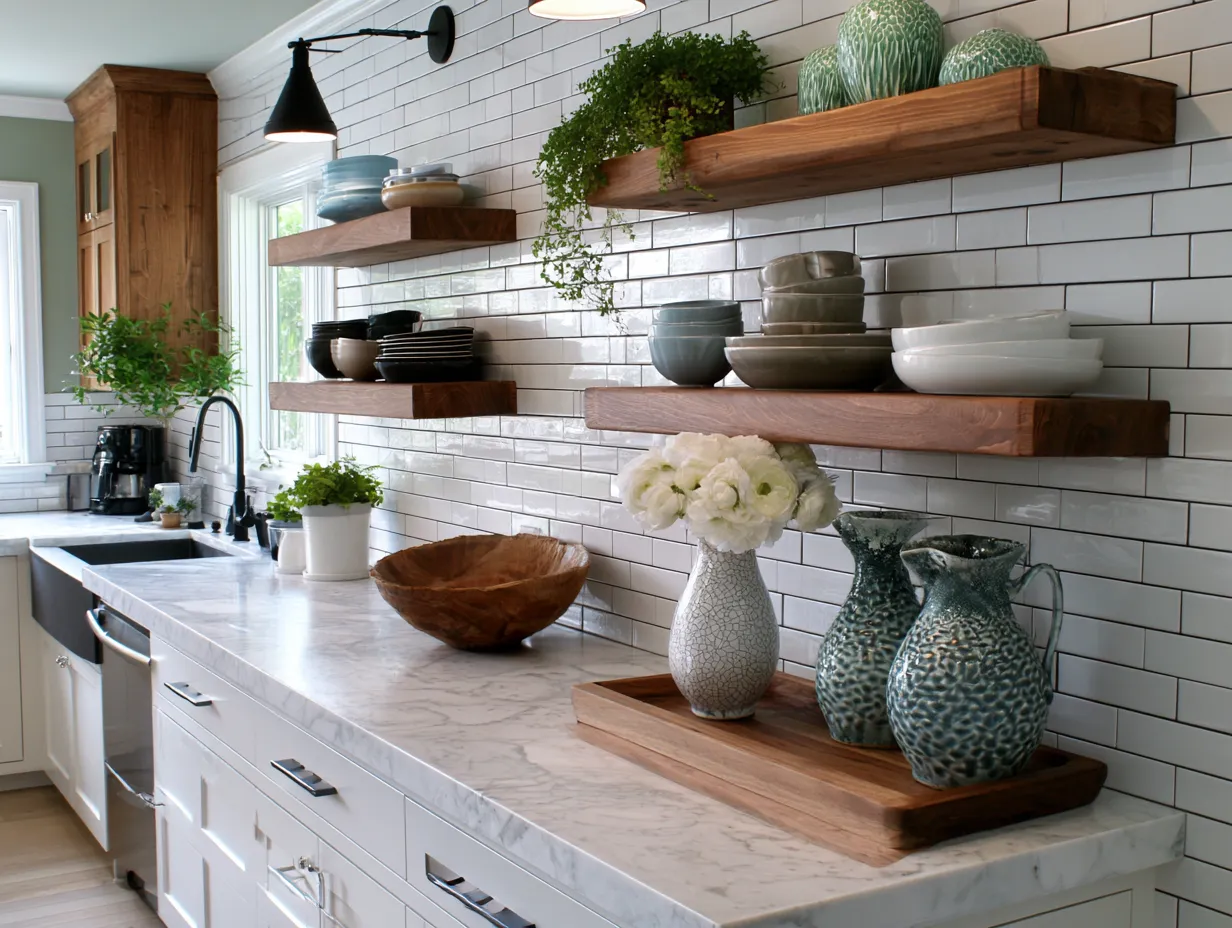
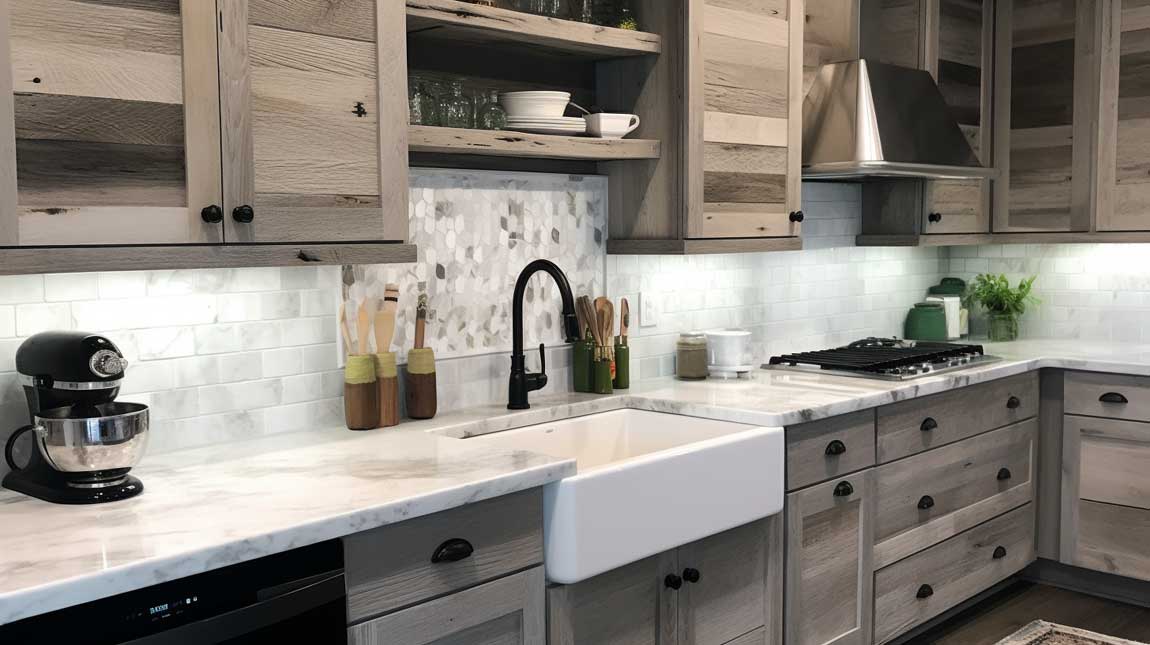
Subway tiles remain the most reliable farmhouse kitchen backsplash because the glazed surface cleans in seconds and materials start around $2–$7 per square foot. A standard 20-square-foot run often costs $100–$300 in materials for DIY, or $15–$30 per square foot installed. Mild soap and water remove grease without etching the finish.
Want a modern farmhouse kitchen backsplash without the full renovation price? Choose a longer format or soft gray grout for a fresher read. The classic white 3×6 still works, but darker grout hides more. Never skip sealing the grout—unsealed lines collect grime like a sponge.
Subway tile is the kitchen equivalent of a well-cut white shirt: always appropriate, easy to refresh, and hard to mess up. Pair it with open shelves for a look that stays current.
For more ways to pair tile with softer cabinetry colors, see these green backsplash ideas for white cabinets that keep the same easy-clean principles.

Patterned Cement That Adds Character Without Chaos
Patterned cement tiles give a farmhouse kitchen backsplash artistic depth while remaining wipeable when sealed correctly. Material costs usually sit in the $15–$30 per square foot range. A pH-neutral cleaner and soft cloth keep the patterns sharp; abrasive pads dull the surface fast.
How much pattern is too much? Limit the boldest designs to a short run behind the stove and keep the rest quieter. Full-wall cement can overwhelm a small kitchen. The mistake to avoid is installing unsealed cement—stains set permanently once they soak in.
Cement tile behaves like a good pair of boots: distinctive, durable, and better with a protective finish. Choose colors that already live in your cabinets or counters so the pattern feels intentional rather than loud.

Reclaimed Wood That Feels Authentic
Reclaimed wood brings genuine farmhouse kitchen backsplash warmth when every board is sealed against moisture. Expect material costs of $10–$25 per square foot depending on source and finish. A damp cloth and mild detergent handle daily cleaning once the protective coat is in place.
Can real wood sit behind a gas range? Only with a clear heat-resistant barrier or a metal inset panel. Unprotected wood near high heat cracks and stains. The smart move is sealing all six sides of every board before installation so moisture never reaches the core.
Reclaimed wood is the kitchen version of a well-worn leather jacket—rich with history yet practical when treated right. Keep the finish matte and the surface sealed so the character stays visible and the cleaning stays easy.

Beadboard That Keeps Its Vintage Edge
Beadboard delivers a classic farmhouse kitchen backsplash with vertical texture and materials that often stay under $100 for a full run. MDF or PVC sheets install quickly, take paint well, and clean with a damp cloth once coated in scrubbable enamel. The grooves add depth without creating hard-to-reach dirt traps when the finish is smooth.
Should you paint beadboard the same color as the cabinets? Matching tones create a quiet, built-in look; contrast makes the texture pop. The one move that backfires is using flat paint—it scuffs and holds marks. Semi-gloss or enamel finishes survive real kitchens and wipe clean without extra effort.
Beadboard works like a well-fitted vintage frame: it defines the space without shouting. Keep the color soft and the top edge capped so the whole run feels finished and practical.

Stainless Steel for the Modern Farmhouse Kitchen Backsplash
Stainless steel gives a modern farmhouse kitchen backsplash industrial clarity and the easiest daily clean of any option. Sheets or panels cost $15–$35 per square foot and need only a soft cloth plus a dedicated stainless cleaner. Water spots and fingerprints disappear with the right product and direction of wipe.
Does brushed finish hide more than polished? Yes—brushed surfaces mask scratches and daily marks better. Polished looks sharper but shows every fingerprint. Never use steel wool or abrasive pads; they leave permanent swirl marks that ruin the uniform look.
Stainless behaves like a good chef’s knife: precise, durable, and better when cared for properly. Pair it with warm wood or soft paint so the metal feels intentional rather than cold.

Terracotta That Brings Earthy Warmth
Terracotta tiles create a farmhouse kitchen backsplash with natural color variation and a cozy feel. Material prices typically fall between $8–$20 per square foot. Seal them well, then clean with a damp cloth and mild detergent; periodic resealing keeps stains from settling into the clay.
How often does terracotta need resealing? Most manufacturers recommend every one to two years in a kitchen setting. Skip the sealant and the porous surface becomes a sponge for oil and wine. Choose matte or lightly glazed finishes so the earthy look stays authentic while the surface stays practical.
Terracotta is the kitchen equivalent of a sun-warmed clay pot—grounding, slightly imperfect, and better with a protective layer. Keep the palette close to your counters so the tiles feel native rather than imported.

Mosaic That Turns a Small Run into a Focal Point
Mosaic tiles let a farmhouse kitchen backsplash carry pattern and color in a compact zone. Sheet-mounted mosaics cost $8–$25 per square foot and clean with the same mild soap used on larger tile. The small scale hides minor chips better than large-format pieces.
Where should mosaic live? Behind the range or as a short vertical accent works best. Full-wall mosaic can feel busy in a compact kitchen. The error to avoid is mixing too many colors or materials—limit the palette so the pattern stays readable from across the room.
Mosaic acts like a well-placed piece of jewelry: it draws the eye without needing to cover every surface. Choose a scale that matches the size of your cabinets so the detail feels balanced.

Glass Tile That Brightens Every Corner
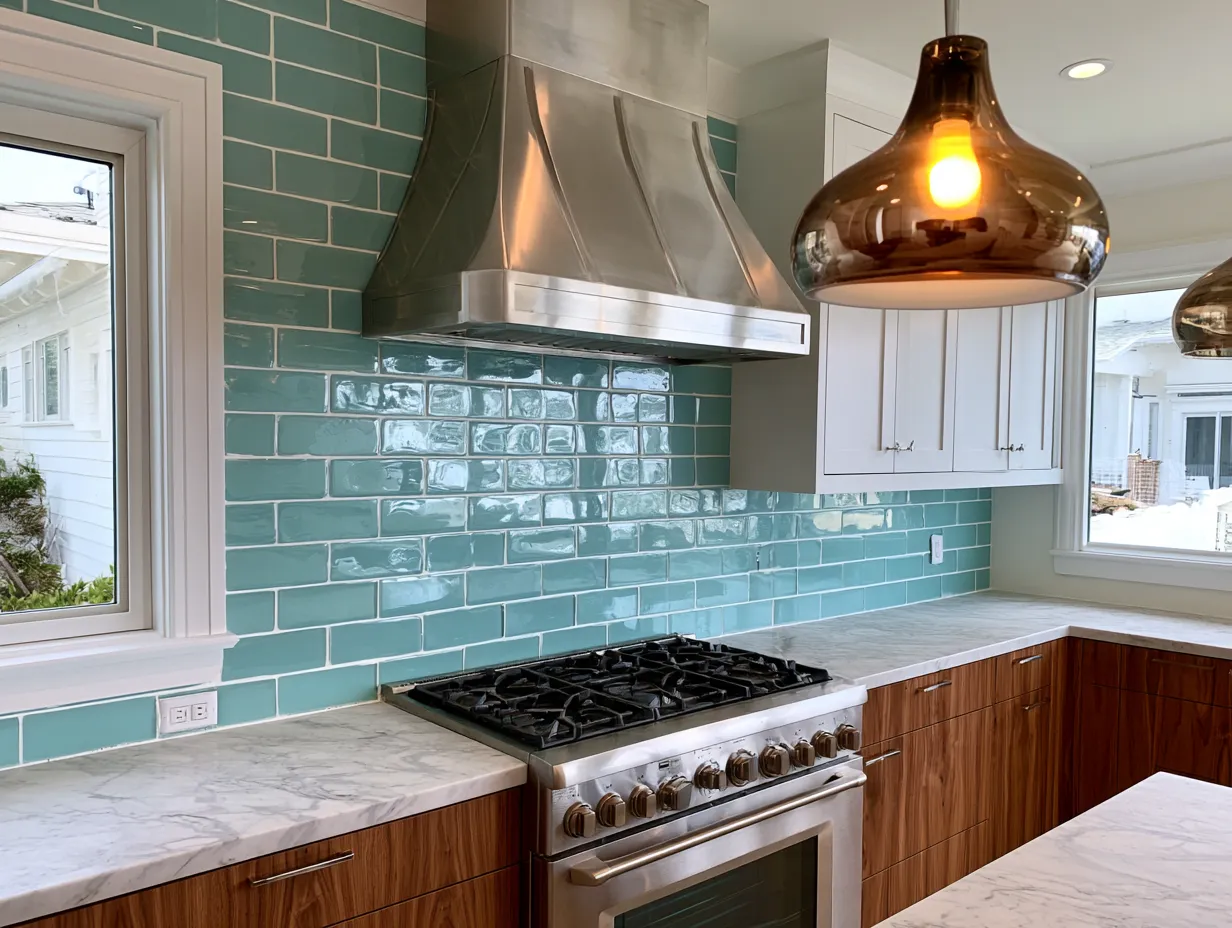
Glass tile brings light and a smooth finish to a farmhouse kitchen backsplash while staying simple to maintain. Prices usually range $5–$15 per square foot for materials. A damp cloth and mild detergent restore the shine; glass cleaner removes water spots without residue.
Does glass show more fingerprints than ceramic? In high-traffic zones it can, so choose a slightly textured or frosted option if fingerprints bother you. The real pitfall is using abrasive cleaners that cloud the surface permanently. Stick to soft cloths and non-abrasive products.
Glass tile works like a clear window on a cloudy day—it multiplies available light and keeps the space feeling open. Pair soft neutrals with warmer wood tones so the reflective surface never feels cold.

Penny Tile with a Playful Scale
Penny tiles offer a farmhouse kitchen backsplash with small-scale personality and a smooth surface that cleans easily. Material costs sit around $5–$12 per square foot. Mild cleaner and a soft cloth keep the round shapes bright; the dense layout leaves few places for dirt to hide.
Can penny tile feel too busy? In a large open kitchen a monochromatic field stays calm; multicolored versions work better as limited accents. The one decision that complicates cleaning is dark grout that shows every water mark. Light or medium grout stays more forgiving day to day.
Penny tile is the kitchen version of a scattered pebble path—small units that create rhythm without demanding attention. Keep the color quiet so the shape itself becomes the interest.

Marble That Feels Luxurious Yet Practical
Marble remains a high-end farmhouse kitchen backsplash choice when sealed and cleaned correctly. Material costs often start at $10–$25 per square foot and climb higher for premium slabs. A damp cloth and marble-safe cleaner protect the surface; acidic cleaners etch it permanently.
Is marble too high-maintenance for a family kitchen? Properly sealed marble handles normal cooking messes if you wipe spills quickly. The real risk is leaving lemon juice or vinegar sitting—those etch the polish. Choose a honed finish if you prefer less shine and fewer visible marks.
Marble behaves like a fine wool coat: beautiful, worth the care, and better when protected from the elements. Limit the run or choose a more durable alternative if the kitchen sees constant heavy use.
For cabinets that pair especially well with lighter stone, explore these gray farmhouse kitchen cabinet ideas that keep the same balanced palette.

Material Comparison at a Glance
| Material | Approx. Material Cost / sq ft | Cleaning Ease | Best For |
|---|---|---|---|
| Ceramic subway | $2–$7 | Excellent | Everyday kitchens |
| Shiplap / beadboard | $3–$8 (DIY total lower) | Very good when sealed | Budget farmhouse looks |
| Brick veneer | $5–$12 | Good when sealed | Texture and warmth |
| Glass or stainless | $5–$35 | Excellent | Modern farmhouse edge |
| Cement / terracotta | $8–$30 | Good when sealed | Pattern and earth tones |
| Marble | $10–$25+ | Moderate (needs care) | Higher-end focal points |
Dont Do This
Never install unfinished porous materials directly behind a range or sink. Raw wood, unsealed brick or open-pore stone will absorb oil and water that no amount of scrubbing fully removes. Always seal first, keep a heat-safe zone near burners, and choose scrubbable finishes so daily wipe-downs stay quick.
Choose the Surface That Matches Your Real Life
The best farmhouse kitchen backsplash is the one that still looks good after a week of real cooking, not the one that photographs perfectly once. Smooth glazed tile and sealed metal win for pure speed of cleaning. Textured wood and brick win for warmth when you commit to proper sealing.
Start with the area that sees the most splatters—usually the wall behind the range—and choose the most durable option there. Secondary runs can carry more texture or pattern. Measure the linear feet, multiply by roughly 1.5 for an 18-inch height, and you have a solid square-footage starting point.
Test a sample of your top choice against actual grease and water before ordering the full amount. The surface that cleans in one pass is the one that will still feel right years later. Keep the finish practical and the palette consistent with the rest of the room, and the backsplash will do its job without demanding constant attention.
For additional material guidance from professional installers, see this overview of kitchen backsplash materials and care.