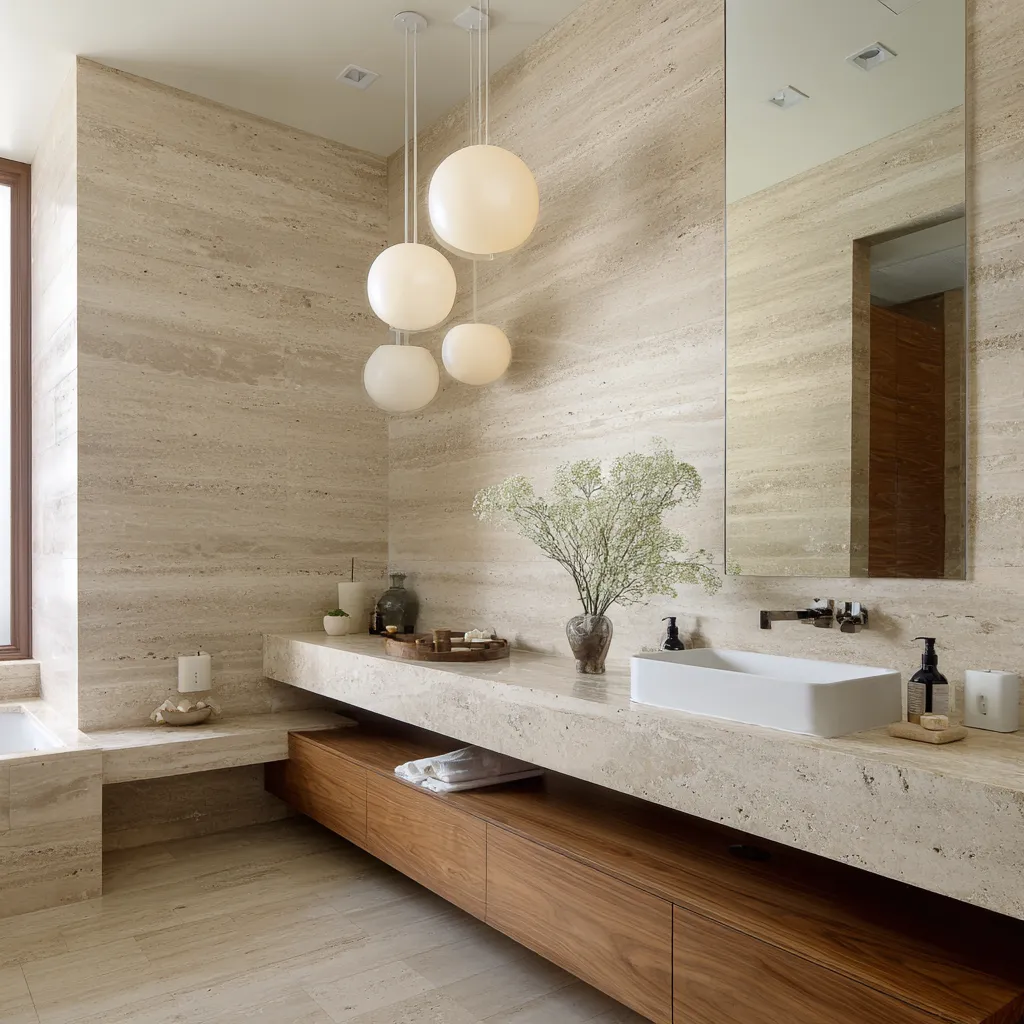
Art deco bathroom mirrors turn an ordinary powder room into a space that feels intentional and glamorous. The style works because bold geometric frames, metallic finishes and reflective surfaces deliver both function and presence without needing a full remodel.
A well-chosen art deco bathroom mirror instantly expands light, anchors the vanity and gives the room a clear period character. Most designs range from 20 to 30 inches in height for wall pieces, while larger statement versions can span nearly the full vanity width. Installation typically costs $140–$430 including the mirror and labor, according to current home-service data.
Whether the goal is a gilded vintage statement or a sleek symmetrical wall of glass, the right mirror solves the dual need for practical reflection and visual impact. Skip anything that feels purely decorative and prioritize pieces that balance proportion with daily use.
- Gilded frames create instant contrast against modern fixtures
- Symmetrical layouts expand perceived space in compact powder rooms
- Geometric accents catch light and reinforce the 1920s–30s character
- Average wall mirror height sits between 20 and 30 inches
- Professional install runs $140–$430 for most bathroom sizes
- Pair metallics with neutral tile to keep the look grounded
Gilded Frames Bring Vintage Weight to Clean Walls

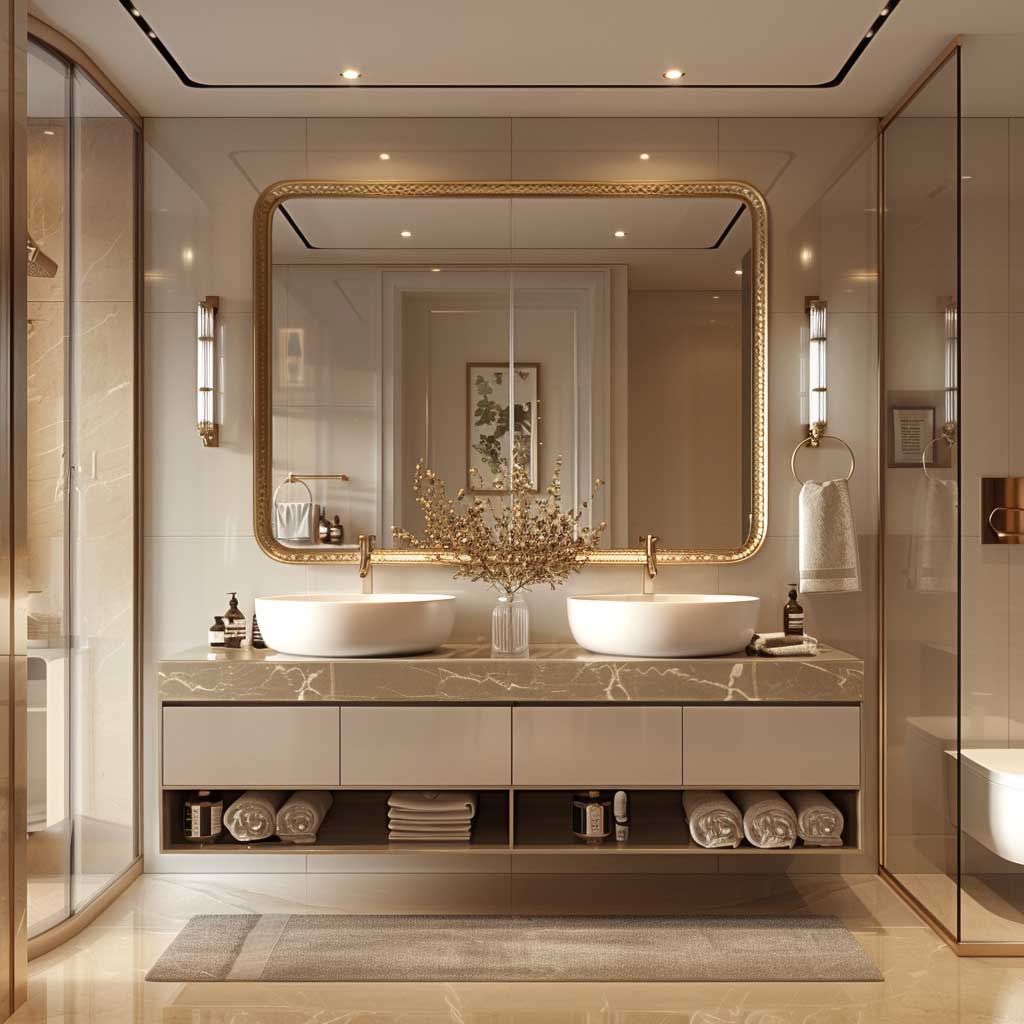


Gilded frames turn a standard bathroom mirror into the room’s main visual anchor. The gold or aged-metal border draws the eye the way a picture frame focuses attention on a painting. Pair the ornate piece with a simple pedestal sink and the contrast feels deliberate rather than mismatched.
Why does this combination work so well? The frame’s carved curves and stylized motifs reference the Art Deco love of both geometry and nature. Surround it with matte neutral tile and the metallic surface becomes the single high-note. Avoid placing the mirror too close to busy patterned wallpaper—the frame needs breathing room to register as intentional.
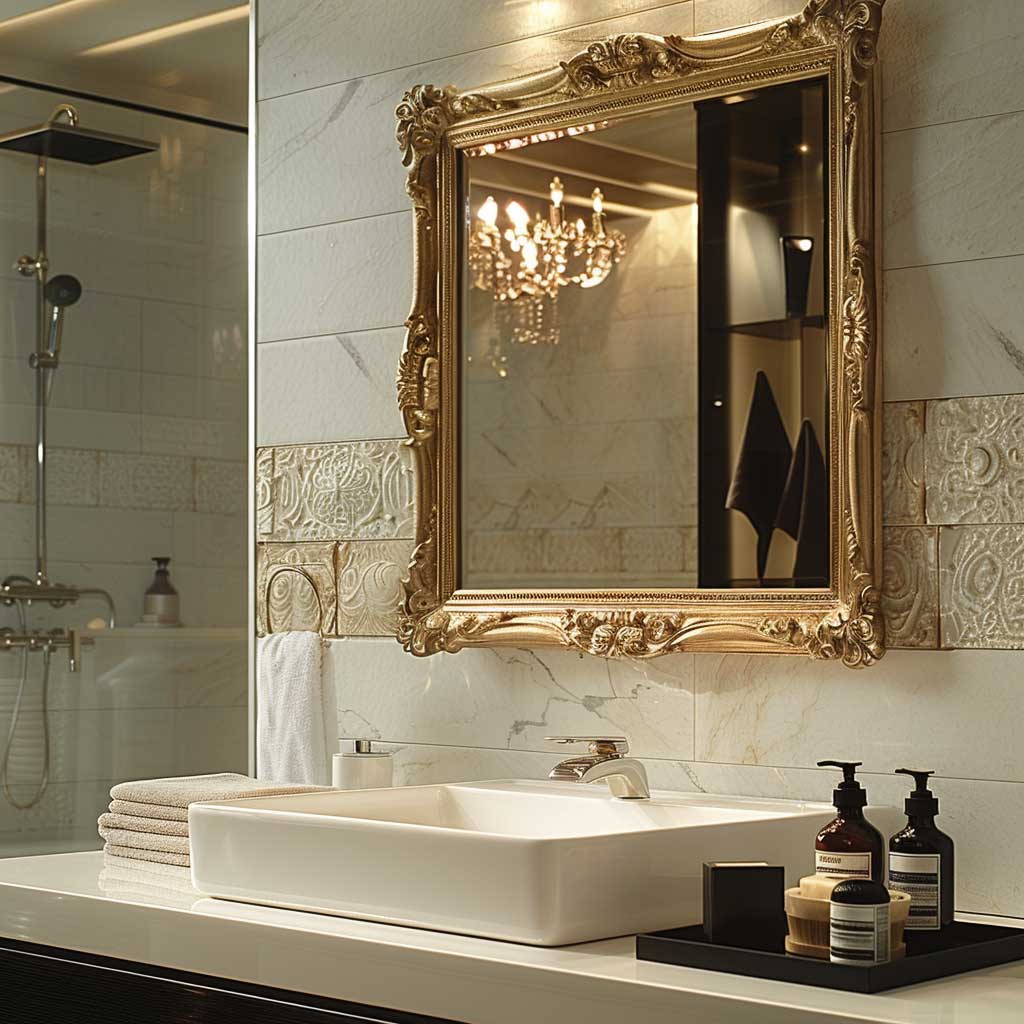
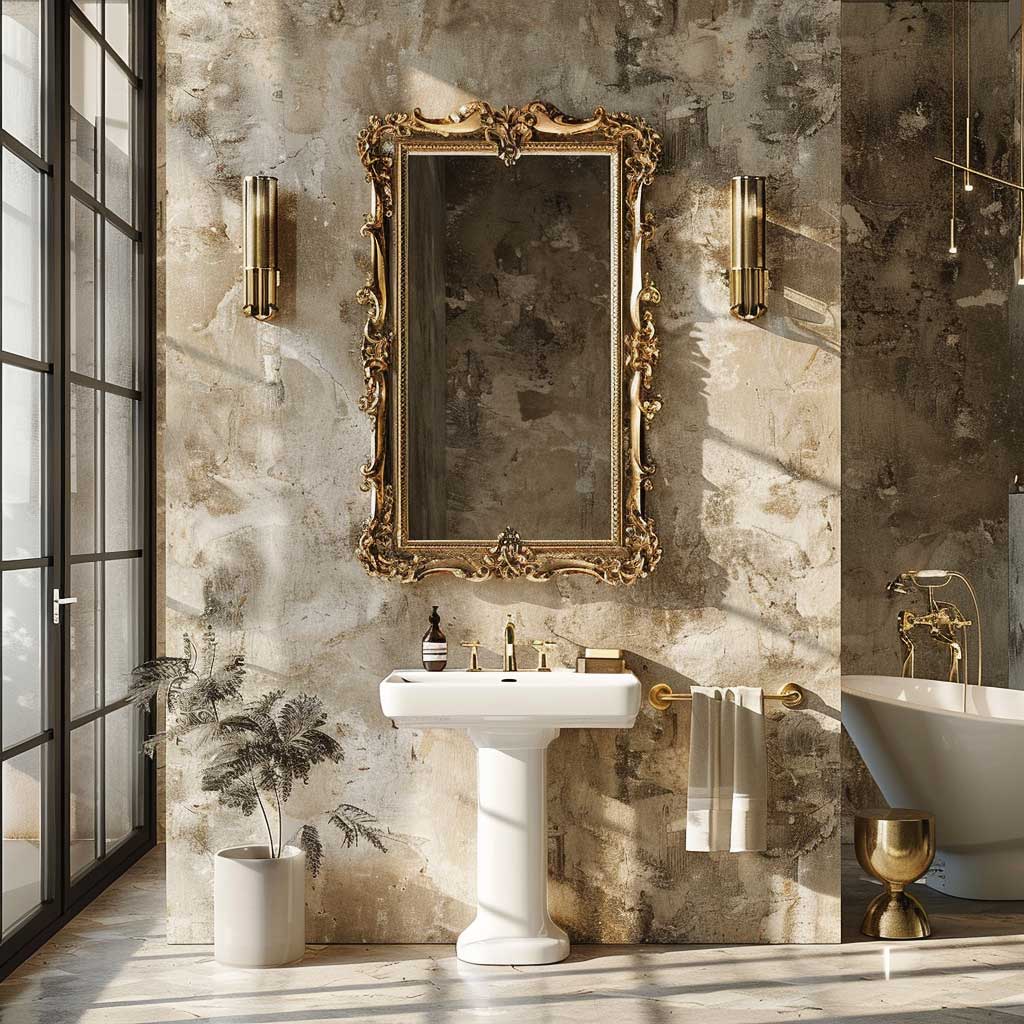
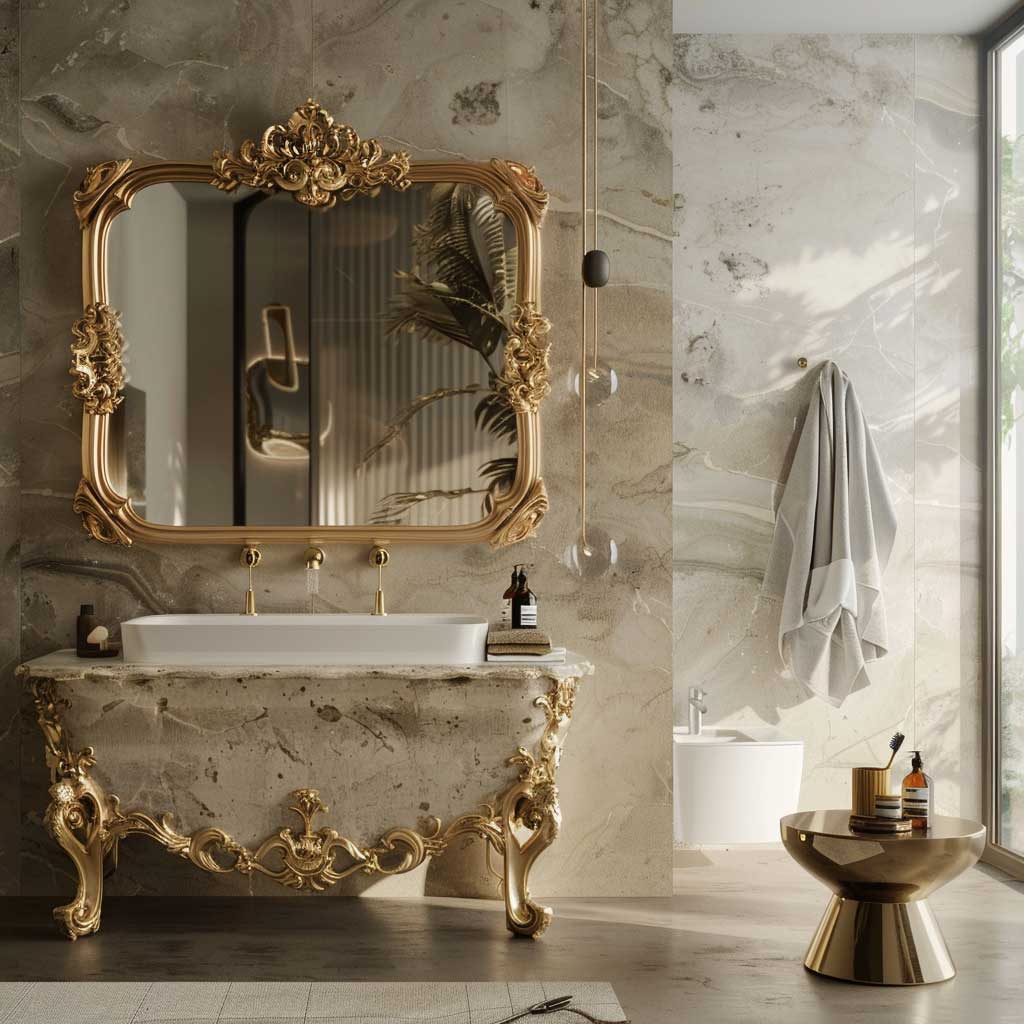
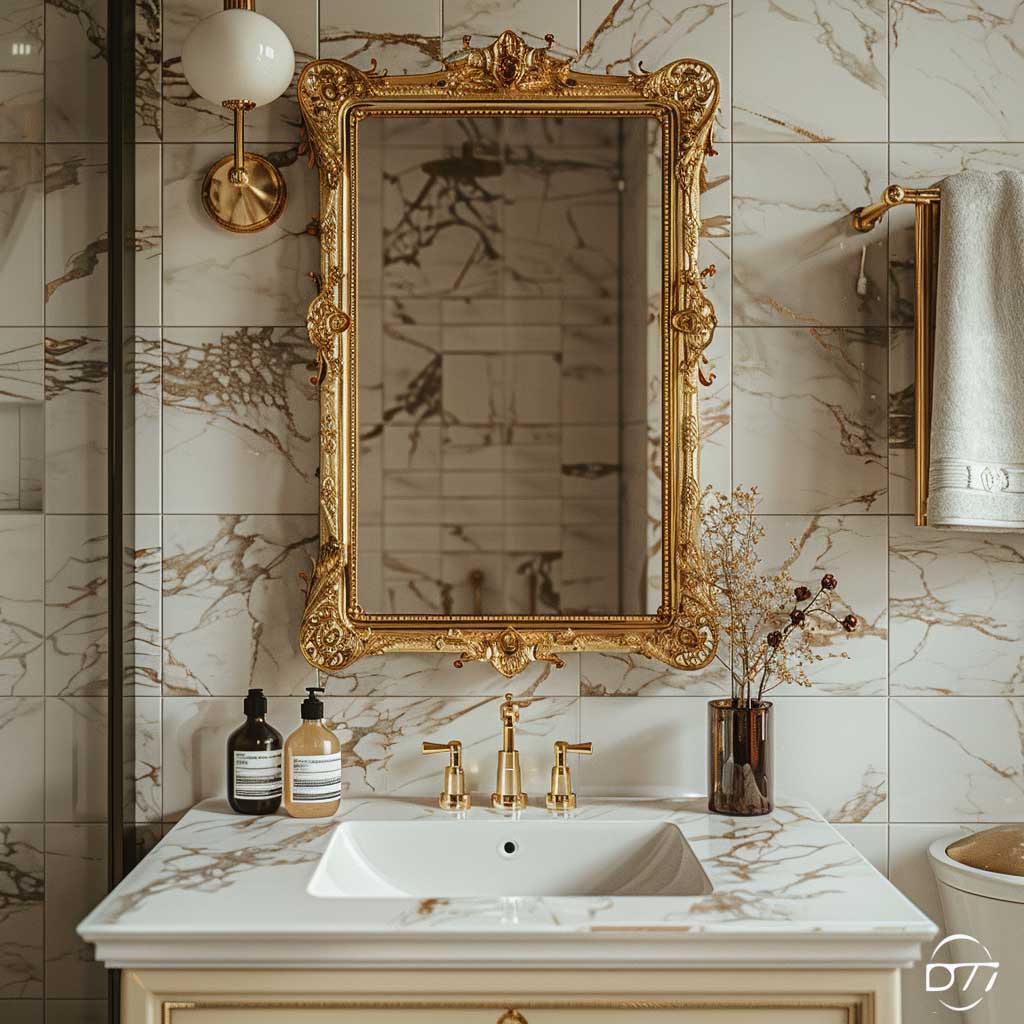
Think of the gilded mirror as the soloist in a quiet ensemble. Modern chrome faucets and a minimalist counter let the frame shine without competition. Average prices for quality reproduction gilded pieces start around $150 and climb past $500 for larger or hand-finished versions. Keep the color palette restrained so the gold reads as intentional luxury rather than decoration overload.
One practical anti-tip: skip heavy gilding if the powder room has no natural light. The metallic surface needs ambient light to catch and bounce. In dim spaces a softer champagne finish performs better than bright gold. For more black-and-white Art Deco pairings that complement gilded mirrors, see Art Deco black and white bathroom ideas for vintage glamour.
Symmetrical Layouts Expand Compact Powder Rooms
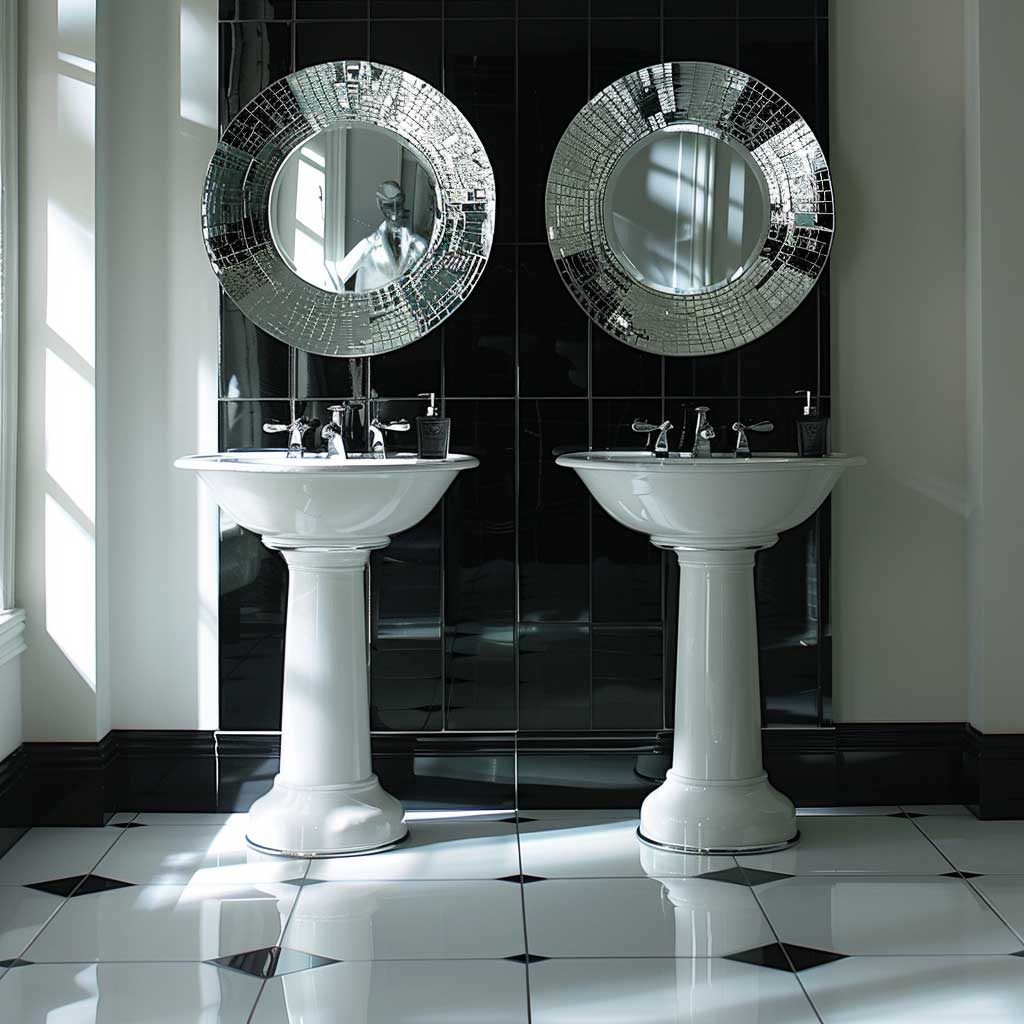

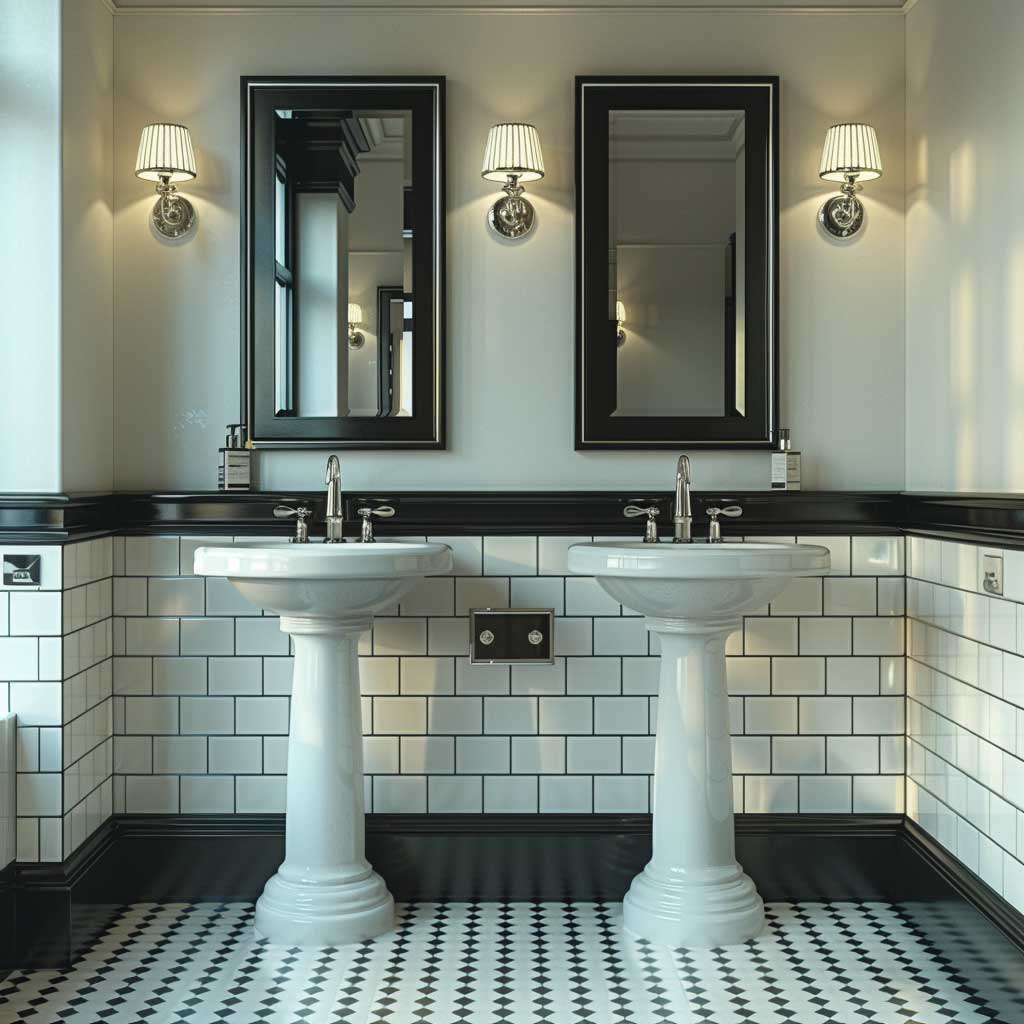
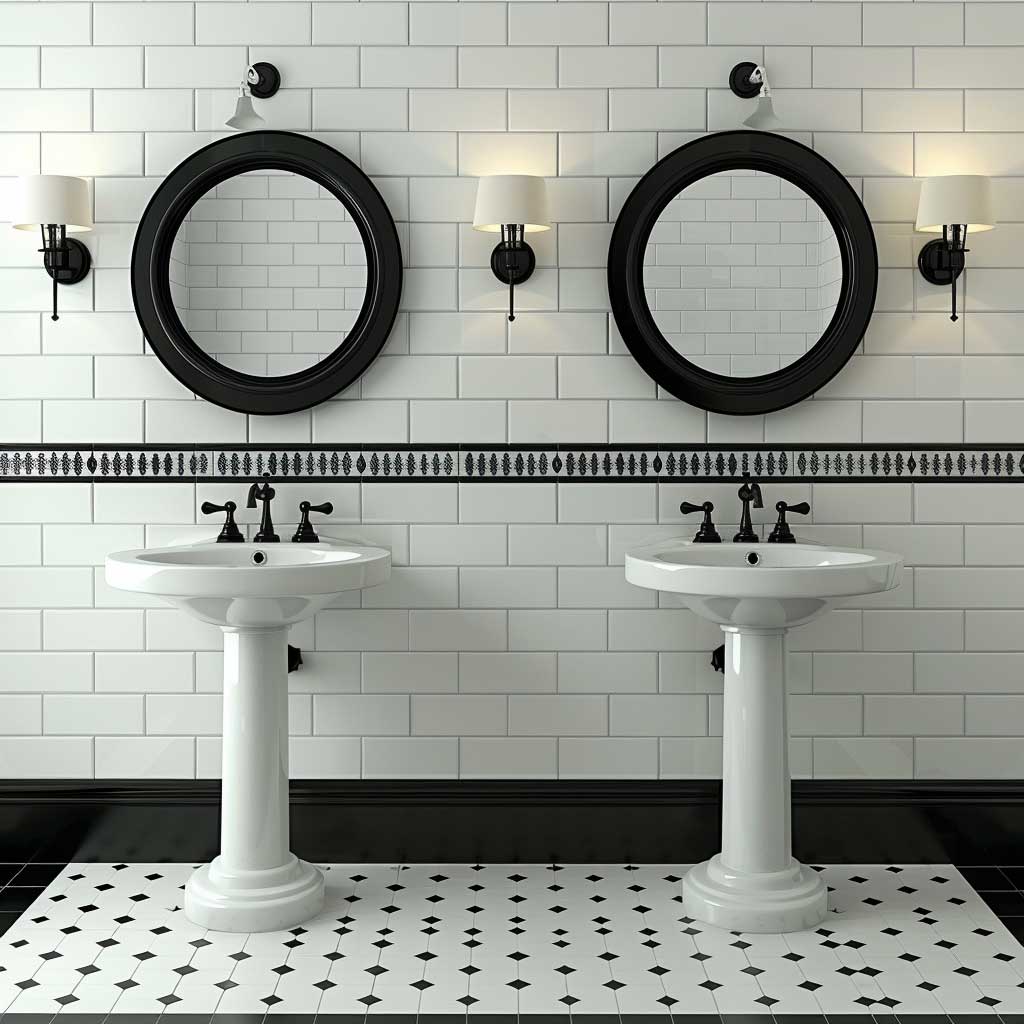
Symmetrical beauty defines many successful art deco bathroom mirrors in smaller rooms. A single large mirror that nearly fills the wall above twin sinks creates order and doubles the sense of width. The eye reads the repeated elements as calm rather than busy.
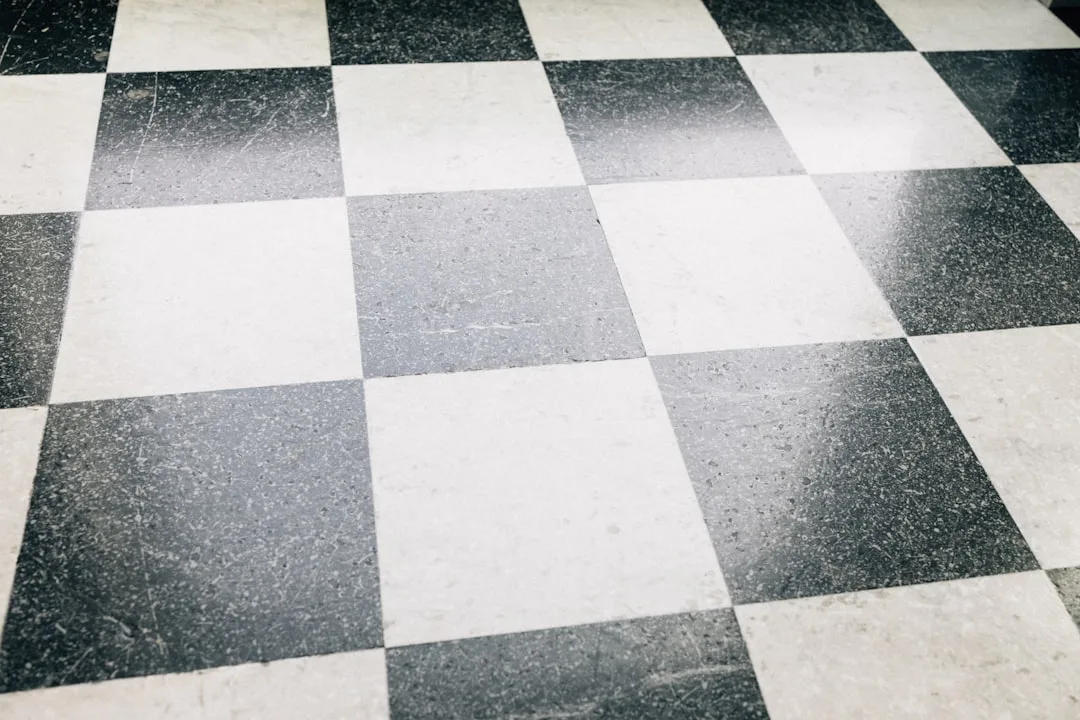
How far should the mirror extend? Aim for roughly 4–8 inches narrower than the vanity so a thin reveal of wall remains on each side. That proportion keeps the piece grounded. Black or chrome framing reinforces the clean geometry without adding visual weight. Geometric black-and-white floor tile then echoes the same ordered rhythm underfoot.
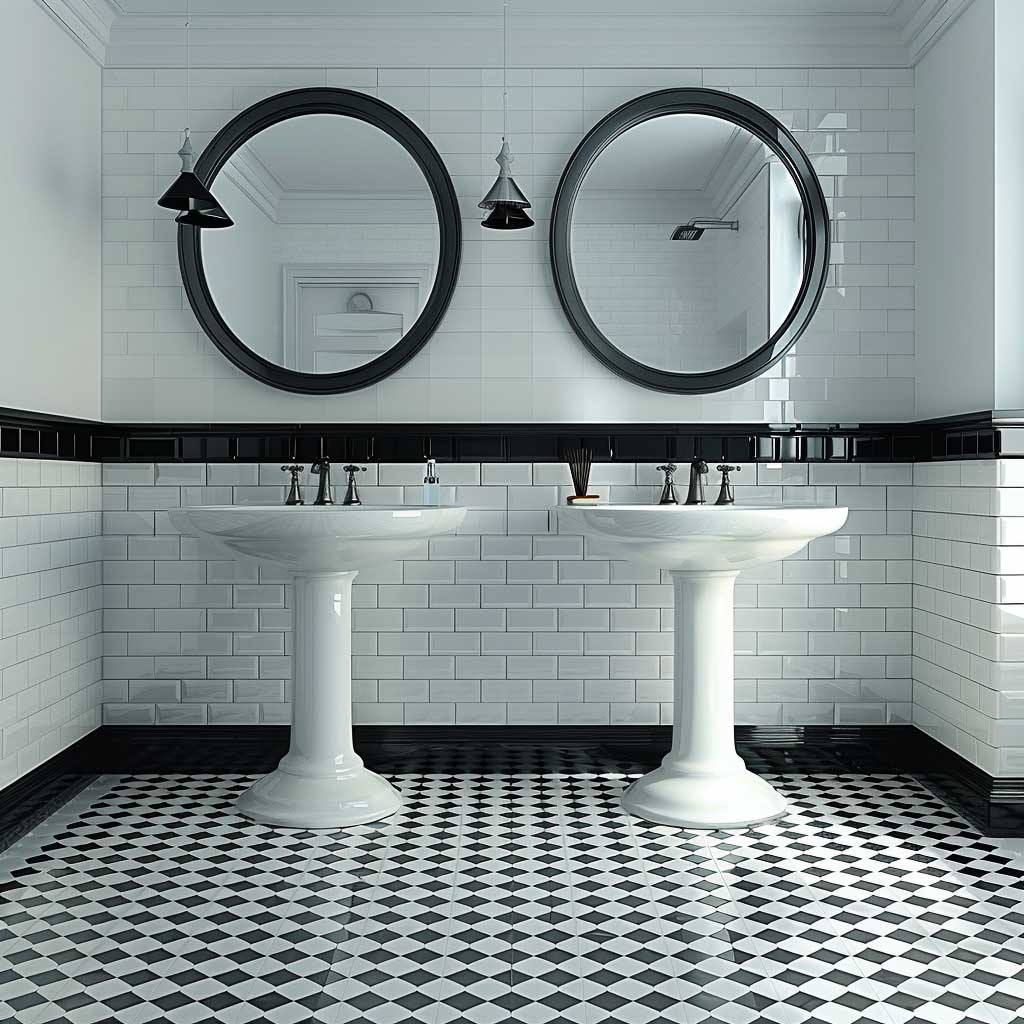
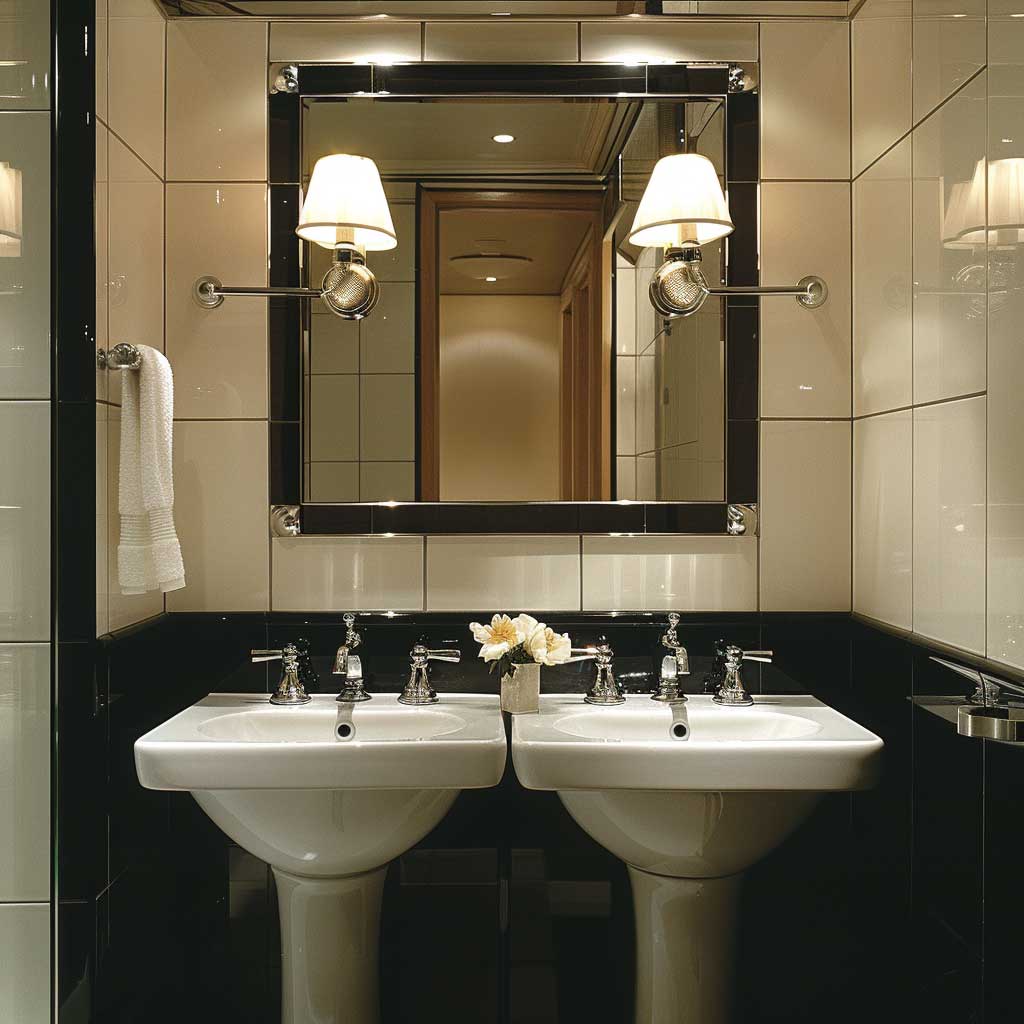

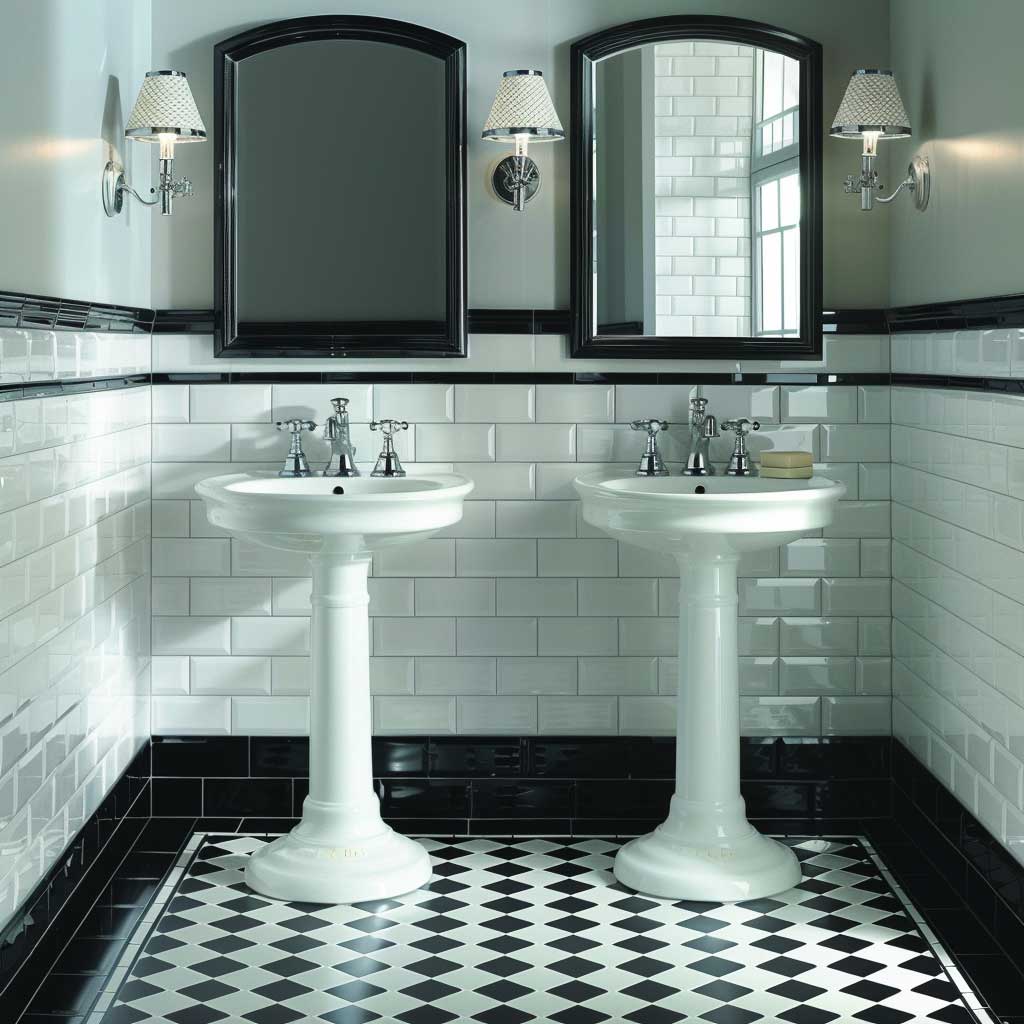
The layout works like a well-set table: every object has a counterpart and the result feels resolved. Matching chrome faucets and identical pedestal sinks complete the mirror effect. Skip mismatched lighting—sconces should sit at equal height and distance on either side. A typical 36-inch vanity pairs cleanly with a 30–32-inch mirror width for everyday powder rooms.
Anti-advice worth noting: resist the urge to hang a second decorative mirror on an adjacent wall. The power of this approach lies in the single strong axis. Extra reflections dilute the symmetry and make the room feel smaller again.
Geometric Patterns Catch Light Across Reflective Surfaces
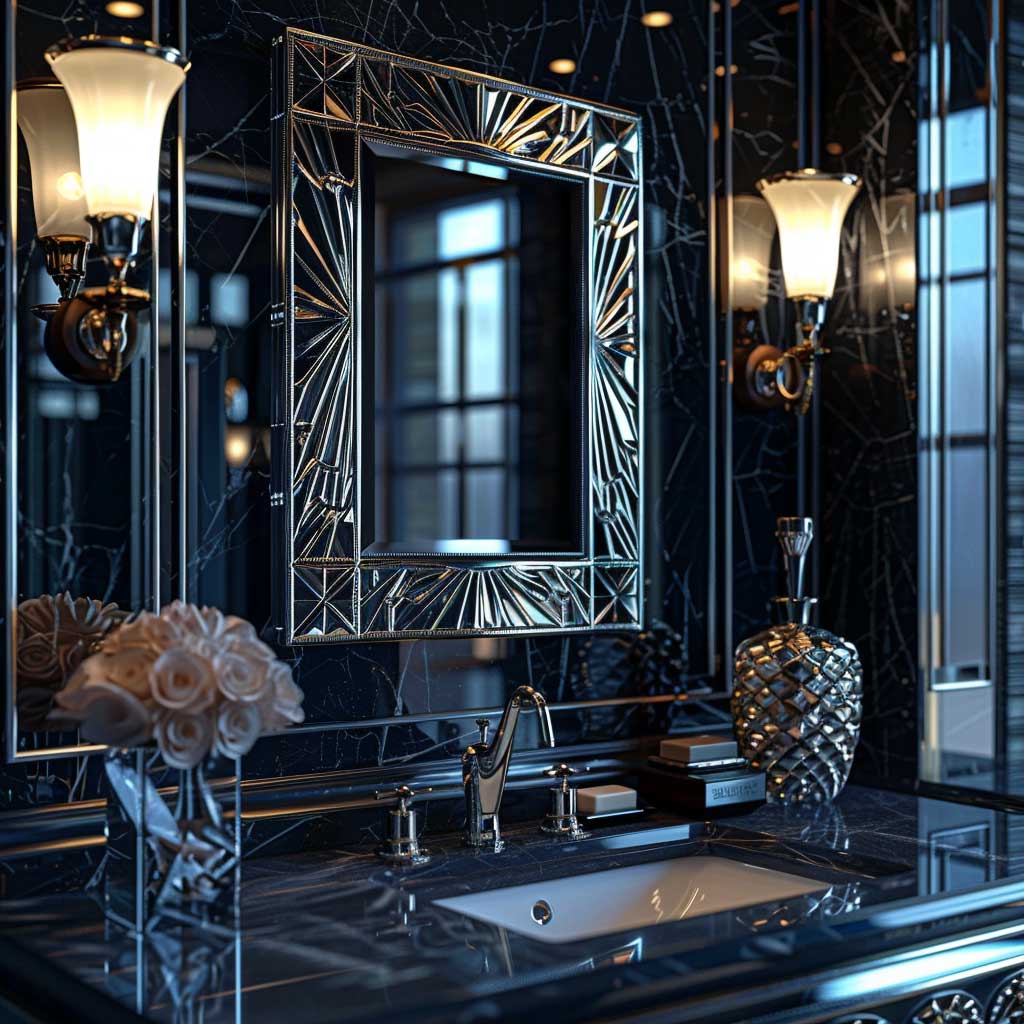


Geometric elegance sits at the core of every authentic art deco bathroom mirror. Stepped edges, fan motifs and repeating angles turn the reflective surface into an active design element rather than a flat plane. The patterns catch and bounce light the way a cut-crystal glass multiplies a single candle flame.
What size works best for these detailed pieces? Many wall versions measure 20–30 inches in height, large enough to register the geometry yet practical above a standard vanity. Silver, chrome or mirrored frame details amplify the effect. Pair the mirror with a marble-topped vanity and polished brass fixtures for warmth against the cooler metallics.
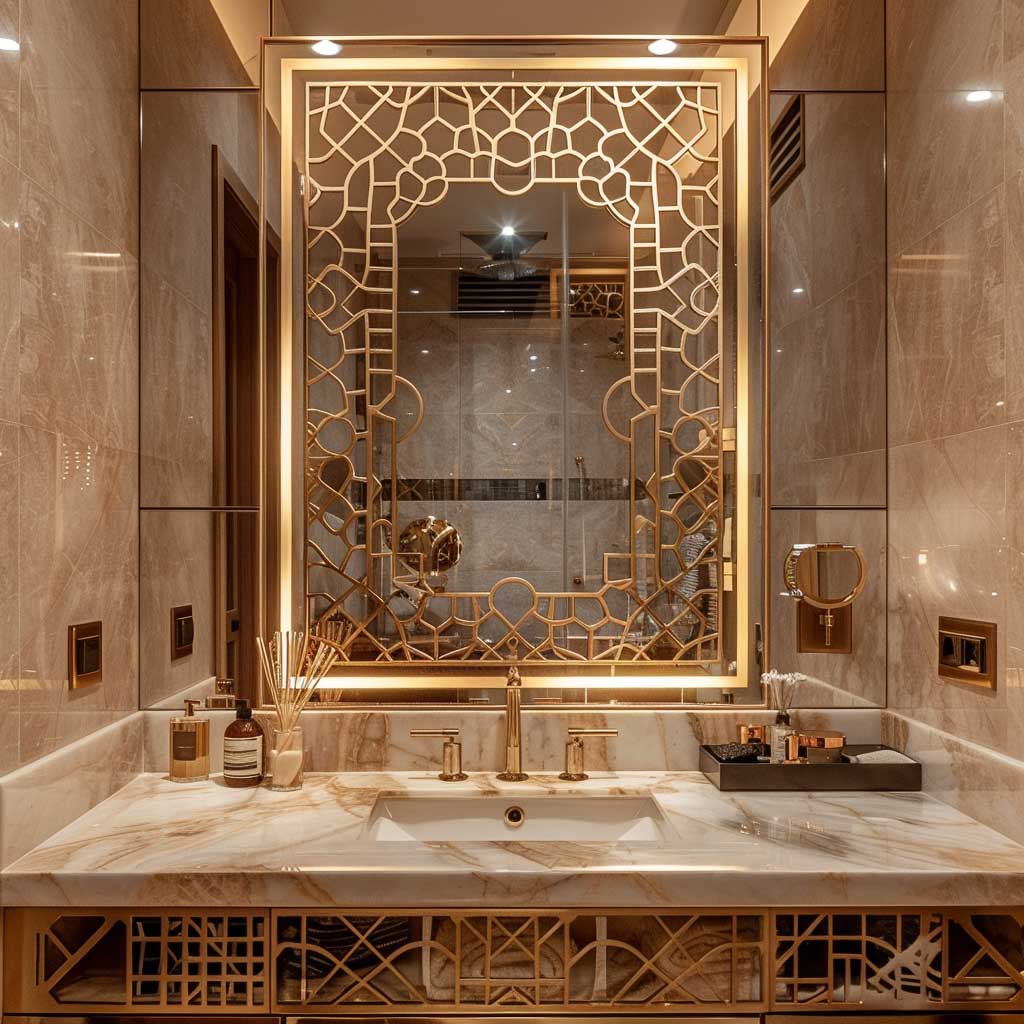
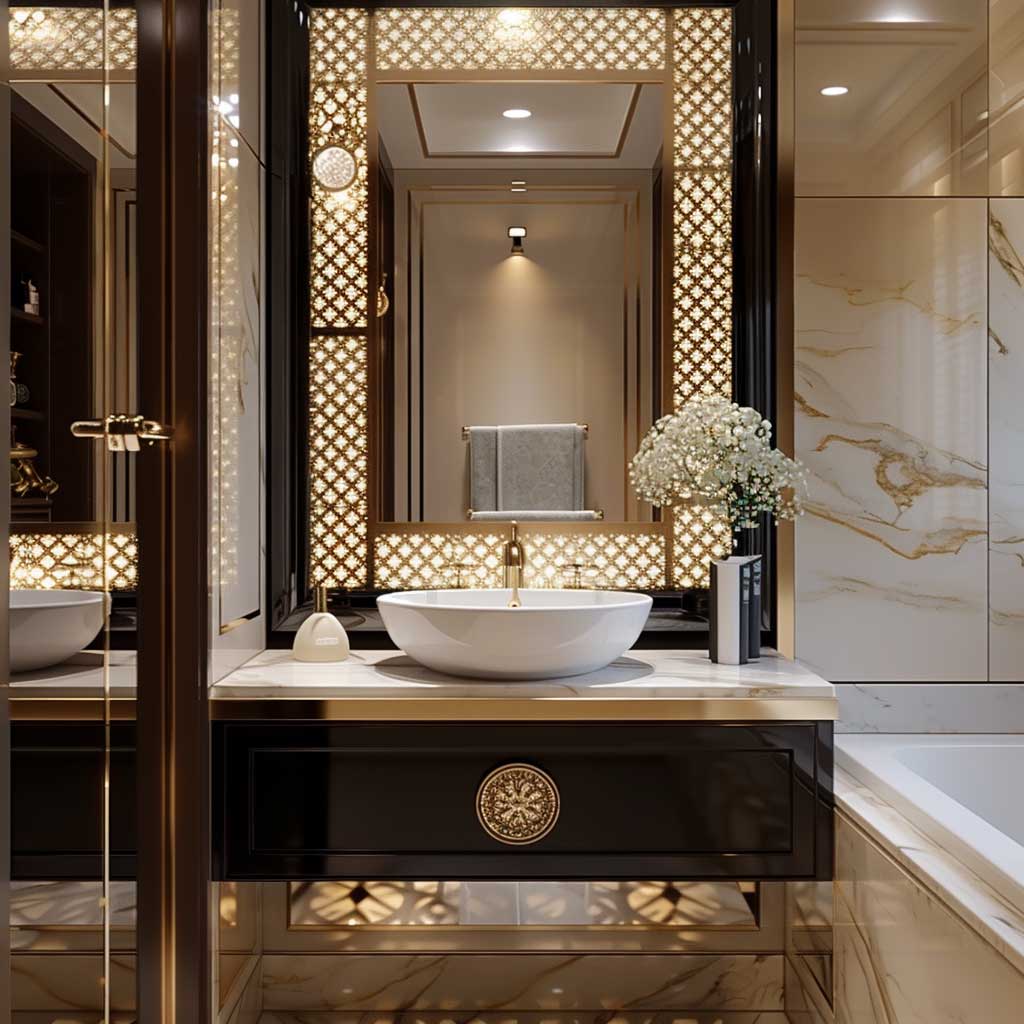

A monochrome wall palette lets the mirror’s geometry take center stage. The same principle appears in luxury vanity designs that favor bold shapes and reflective finishes—see luxury bathroom vanity designs for a lavish retreat for complementary approaches. Average bathroom mirror replacement with a quality geometric frame falls in the $80–$200 range for mid-size pieces including basic install.
Do not choose a highly patterned geometric mirror if the room already has busy tile. The two patterns will fight. Keep walls and floors quieter so the mirror can perform as the primary geometric statement. The result feels intentional rather than crowded.
Quick Comparison of Frame Styles
| Frame Style | Best Setting | Typical Height Range | Key Strength |
|---|---|---|---|
| Gilded ornate | Neutral modern walls | 24–36 in | Instant vintage contrast |
| Symmetrical black/chrome | Twin-sink powder rooms | Full vanity span | Space expansion |
| Geometric detailed | Marble or monochrome | 20–30 in | Light play and pattern |
Dont Do This
Never hang an oversized ornate art deco bathroom mirror in a room that already contains competing statement pieces such as patterned wallpaper and colored tile. The mirror loses its authority and the space becomes visual noise. Choose one dominant element and let everything else support it.
Practical Finishing Notes
Art deco bathroom mirrors succeed when proportion, finish and surrounding materials stay in clear relationship. A 20–30-inch geometric piece above a quiet vanity delivers more impact than a larger but poorly placed frame. Professional installation averages $140–$430 and protects both the glass and the wall surface.
Keep lighting warm and even. Side sconces at eye level flatter both the user and the mirror’s reflective details. Avoid cool overhead LEDs that flatten gold and chrome finishes. For cost and sizing reference, current home-service guides list bathroom mirror replacement in the $80–$200 range for standard framed pieces.
Test the scale with paper templates before ordering. A mirror that looks balanced on paper can still feel undersized once hung. Leave 5–10 inches of clear wall above the countertop so the frame sits comfortably clear of faucets and backsplash.
The strongest rooms treat the mirror as architecture rather than accessory. When the frame, the sinks and the tile share a common geometric language, the powder room gains the quiet drama that defines lasting Art Deco interiors.