A modern stone house works when stone does one strong job per room, such as an accent wall, a floor or a fireplace, while everything around it stays smooth and simple. Does real stone justify the price indoors? In most homes it does, because natural stone veneer costs about $11–$18 per square foot in materials against $5–$8 for manufactured veneer, and the quarried version usually outlasts the copy. Choose the single surface you see or touch most often and spend there first.
Floors and counters make the strongest case for the material. Marble and granite floors can last well over 100 years with routine care, and granite counters typically run $45–$80 per square foot compared with $75–$250 for marble. That gap decides whether a kitchen reads calm and practical or costly and fussy. Price the counter before the cabinets, since the stone sets the budget ceiling.
The sections below move from stone accents to hard-working surfaces, then to decor that softens rough walls and lighting that makes texture visible. Two tables near the end put cladding, fireplaces, floors and counters side by side with typical price ranges. Start with the accent wall section if the house is still on paper.
Quick Scan
- Natural stone veneer costs about $11–$18 per sq ft in materials vs $5–$8 for manufactured veneer.
- Thin natural veneer weighs 8–15 lb per sq ft, roughly a quarter of full-bed stone.
- Granite counters run about $45–$80 per sq ft; marble climbs to $75–$250.
- Marble and granite floors can last 100+ years with regular care.
- A stone fireplace averages about $8,000, with most projects at $4,000–$15,000.
- Grazing lights sit within 12 inches of a stone wall; washing lights sit farther back.
- Cool 6000K bulbs turn warm stone gray, while warm white keeps its color.
Stone Accents That Give Modern Houses Their Weight


Modern houses with stone accents usually rely on one feature wall to carry the room, the way a single heavy coat anchors an otherwise minimal outfit. A rough wall set against smooth plaster, flat cabinetry and large glass shows texture far better than stone spread over every surface. Natural thin veneer installs at about $18–$45 per square foot, while manufactured stone lands near $10–$20. Don’t clad all four walls; one wall facing the entrance or the sofa does the work.
Is manufactured stone a fair substitute? On a tight budget it can be, but the difference shows with time. Cast concrete stone often shows color shift after 10–15 years, while quarried stone keeps its mineral color and resists chipping better. Use real stone where hands and furniture touch the wall, and the cast version only on high, low-traffic surfaces.
Weight drives the structural decision more than style does. Thin natural veneer cut to ¾–1½ inches weighs about 8–15 pounds per square foot, roughly one-quarter of full-bed stone, so it can go on a standard wood-frame wall without a footing. Pairing that texture with floor-to-ceiling glass walls that pull daylight deep into a room gives the stone the side light it needs to show depth. Confirm the framing with a contractor before ordering full-thickness stone.


Floors and Counters That Carry a Modern Stone House
Stone floors and counters are where a modern stone house earns its keep, because these surfaces take daily wear that paint and laminate cannot. Installed stone flooring runs about $8–$47 per square foot overall, with entry-level slate near $4–$10 and limestone at $13–$30. Marble floor tile at roughly $10–$20 installed costs less than many buyers expect, but it etches faster than granite. Pick honed finishes underfoot, since polished stone turns slippery when wet.
Which counter stone suits a modern kitchen best? Granite usually gives the best value at $45–$80 per square foot, quartz runs $55–$155, and marble reaches $75–$250. Quartz is engineered and non-porous, while marble behaves like a white shirt that records every coffee spill. Keep granite or quartz in the cooking zone and save marble for a bar top or bath.
Bathrooms follow the same logic on a smaller scale. A vanity top is the surface touched twice a day, and these luxury bathroom vanity designs with stone and quartz tops compare bath quartz near $80–$180 per square foot with marble that needs sealing every 6–12 months. One slab across a 60-inch double vanity reads cleaner than tile broken by grout lines. Match the vanity stone to the bathroom floor rather than to the kitchen counter.
Where each stone works best indoors:
- Granite: kitchen counters and entry floors that take grit, heat and heavy traffic
- Slate: mudrooms and hallways, from about $4–$10 per sq ft installed
- Limestone: living-room floors and bath walls, about $13–$30 per sq ft installed
- Marble: vanity tops, fireplace faces and low-traffic floors
- Quartz: busy family kitchens where nobody wants to reseal
Don’t do this
- Don’t cover every wall in stone; one feature wall reads stronger than four.
- Don’t light beige or brown stone with cool 6000K bulbs; the warm tone turns gray.
- Don’t hang full-bed stone on a wood-frame wall without a load check; veneer at 8–15 lb per sq ft is the safer route.
- Don’t put polished marble in a busy kitchen; granite at $45–$80 per sq ft handles heat and acid better.
- Don’t skip sealing porous stone; marble in daily use needs it every 6–12 months.
Stone House Decor That Softens the Rough Edges


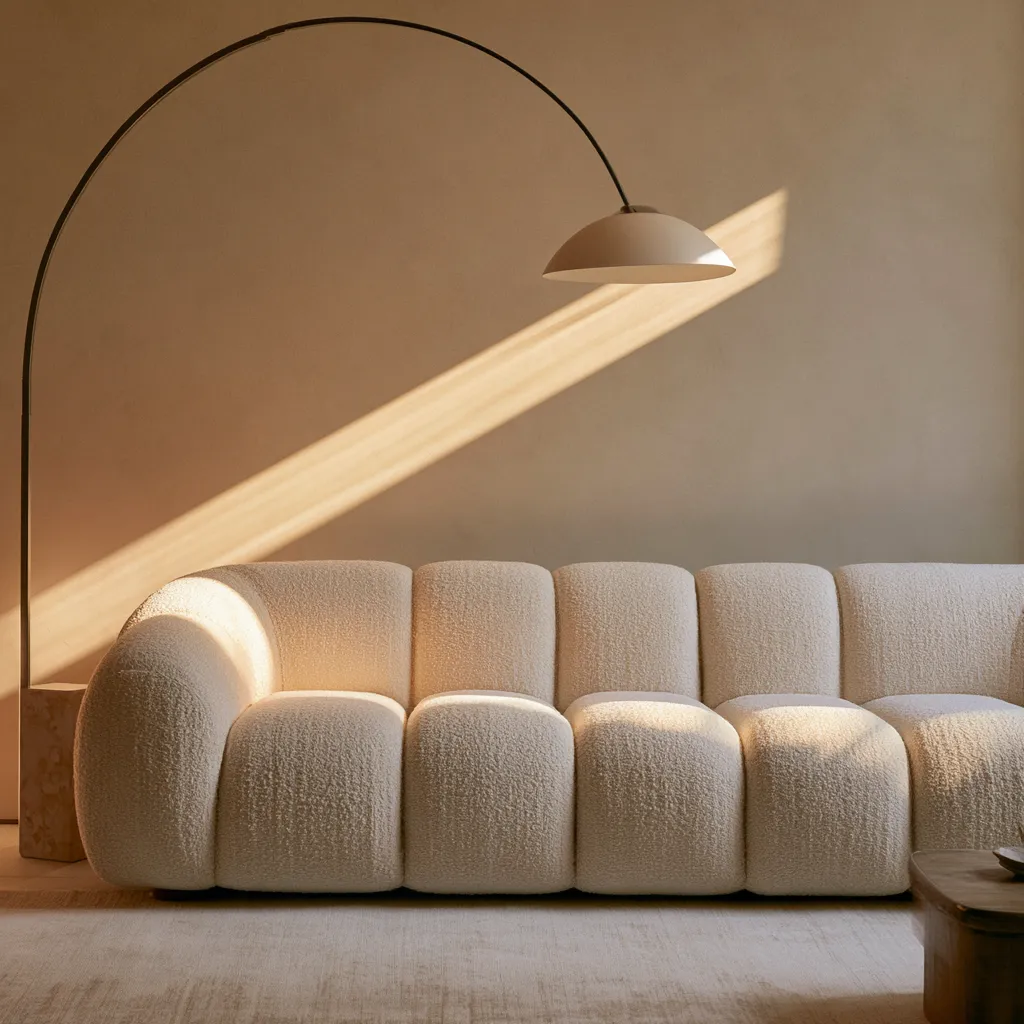
Stone house decor works when soft materials answer the hard walls, much like a wool blanket thrown over a leather chair. Linen, wool and bouclé absorb the echo that bare stone and hard floors bounce around a room. Low, geometric furniture in a neutral palette keeps attention on the wall, while one saturated color in art or plants stops the space from feeling like a cave. Keep loud prints off any surface that sits right next to rough stone.
Color sets the mood before any furniture arrives. Gray granite and slate lean cool, while limestone and travertine lean warm, so the paint should follow the stone instead of a trend. Does bright white always work beside stone? Not with yellow-beige stone, where stark white makes the wall look dirty and a warm off-white blends far better. Test paint samples next to the stone under both daylight and lamp light.


A stone fireplace is the decor piece most owners of a modern stone house build the living room around. According to Angi’s stone fireplace cost data, most projects land at $4,000–$15,000 with an average near $8,000, and natural stone runs $8,000–$20,000 against $4,000–$10,000 for manufactured veneer. The same data puts resale return at about 60–80% of the cost. Spend on the fireplace face and keep the side walls in plain plaster.
Mantels and hearths shift the budget faster than the stone itself. Custom mantel, hearth or surround upgrades add about $500–$3,000, and stone labor alone typically runs $25–$40 per square foot. A slim floating oak beam over limestone looks more current than a heavy carved mantel over fieldstone. Don’t crowd the mantel; three objects at different heights look deliberate, while ten look like storage.
Innovative Decor Built on Light, Metal and Glass


Innovative decor in a stone interior starts with lighting, because the same wall looks flat at noon and sculpted at dusk. Grazing places fixtures within about 12 inches of the wall, so the beam skims the surface and every ridge throws a shadow. Wall washing sets fixtures at least 12 inches back, which evens out the light and softens texture. Graze rough fieldstone and wash smooth honed limestone.
Color temperature decides whether stone looks warm or sickly. Cool 6000K light strips warm undertones, so beige stone can look gray or mildewed and red brick can turn purple. Warm white around 2700–3000K keeps those tones true, much like late-afternoon sun on a farmhouse wall. Is one fixture enough? Rarely, since grazers spaced about 15–30 cm apart give an even line while a single spot leaves a hot patch, so buy dimmable fixtures in sets.


Metal and glass give rough stone a modern counterpoint. Brushed steel, brass and blackened iron in frames, pulls and light fittings echo the stone’s cool or warm tone, and genuine brass fittings typically cost $400–$1,200 against $150–$400 for chrome. A stone tabletop on a thin steel base looks far lighter than the same slab on a chunky stone pedestal. Don’t mix three metal finishes; pick one and repeat it at least three times across the room.
Long life is the quiet argument for real stone. Marble and granite floors can last well over a century, while manufactured stone may show fading after 10–15 years, so the cheaper option can cost more across a 30-year ownership. Dense stone also acts like a thermal battery, soaking up daytime warmth and releasing it slowly after dark. Source local stone where possible to cut freight weight and delivery cost.
Stone Prices Across a Modern Stone House
Stone prices across a modern stone house vary more by format than by species, so a veneer wall and a solid fireplace can differ by thousands of dollars. The tables below line up typical ranges reported by suppliers and cost guides. Which row deserves the splurge? Usually the surface used every day, since a $45–$80 granite counter works like a good pair of boots while an $18–$45 accent wall mostly gets looked at. Don’t compare quotes until each one covers the same square footage and installation scope.
| Wall or fireplace option | Typical cost | Weight or lifespan | Upkeep | Best use |
|---|---|---|---|---|
| Natural thin stone veneer | $18–$45 per sq ft installed | 8–15 lb per sq ft; color does not fade | Low; occasional cleaning | Feature walls, entries |
| Manufactured stone veneer | $10–$20 per sq ft installed | Lighter; color shift possible after 10–15 years | Sensitive to moisture and install errors | Budget accent walls, high spots |
| Natural stone fireplace | $8,000–$20,000 | Decades of service | Pro resealing or mortar visits $200–$600 | Main living-room focal point |
| Manufactured veneer fireplace | $4,000–$10,000 | Less durable than natural stone | Same visit costs, fewer years | Secondary rooms, tight budgets |
| Stone | Floor cost (installed) | Counter cost per sq ft | Upkeep | Best use |
|---|---|---|---|---|
| Granite | $2–$10 per sq ft for tile, size dependent | $45–$80 | Periodic sealing | Kitchens, entries |
| Marble | $10–$20 | $75–$250 | Reseal every 6–12 months; etches | Baths, bar tops, fireplace faces |
| Quartz | $40–$75 | $55–$155 | No sealing needed | Busy family kitchens |
| Slate | $4–$10 entry tier; $23–$28 premium | $20–$60 | Seal surface and grout | Mudrooms, hallways |
| Limestone | $13–$30 | $15–$35 average | Regular sealing; avoids acids | Living rooms, bath walls |
The Stone Worth Paying For
Real stone wins wherever hands and feet touch it daily, and veneer wins on walls nobody brushes against. Natural veneer at $11–$18 per square foot in materials versus $5–$8 for manufactured stone is the clearest trade-off in the whole house. Spend the difference on the wall visitors see first.
In the kitchen, granite at $45–$80 per square foot gives the most durability per dollar, while marble at $75–$250 suits low-traffic tops. Quartz sits between the two and skips sealing entirely. Choose by how the counter gets used, not by the showroom sample.
In the living room, a stone fireplace averaging about $8,000 anchors the space and returns roughly 60–80% at resale. Natural stone adds about $4,000–$10,000 over veneer on a typical project. Go natural only when the fireplace is the room’s main focal point.
For lighting, graze rough stone from within 12 inches and keep bulbs warm instead of 6000K cool. Dimmers let one wall serve both bright mornings and quiet evenings. Plan the lighting together with the stone, never after the masons leave.