Wood strip wall design turns a flat surface into a textured focal point that adds warmth, depth, and linear rhythm without heavy construction. Vertical or horizontal strips create shadow lines that shift with natural light, making the wall read as architecture rather than decoration. The approach works in living rooms, bedrooms, and dining spaces when the species, spacing, and orientation match the room proportions.
Most installations succeed when the strips stay under 4 inches wide and leave a consistent shadow gap. Wider boards flatten the effect and start to look like siding. Lighter species open the space; darker ones add weight. A single feature wall delivers the strongest result; covering every surface usually overwhelms the room.
Expect material costs for basic pine or poplar strips to land between $2.50 and $7 per square foot, with installed prices commonly ranging from $8 to $16 per square foot for a finished accent wall. Premium oak or walnut systems push higher. Regular dusting and an occasional clear finish keep the surface looking fresh for years.
- Choose strips under 4 inches wide for clean shadow lines
- Vertical runs raise perceived ceiling height; horizontal runs widen narrow rooms
- One feature wall outperforms full-room coverage
- Light woods expand the space; dark woods add formal weight
- Installed costs for a typical accent wall often fall between $1,200 and $3,500
- Pair with soft lighting to reveal grain and texture
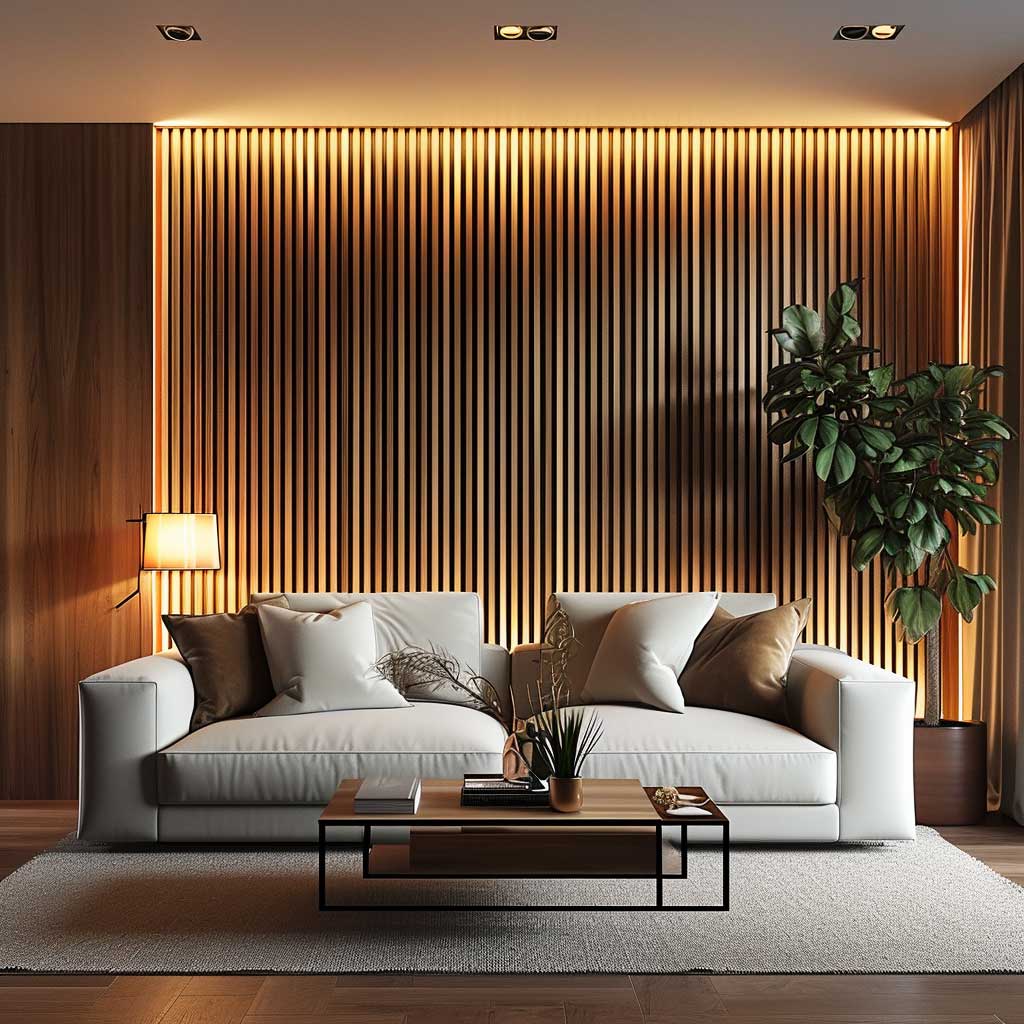
Modern Living Rooms Gain Linear Rhythm from Wood Strip Walls
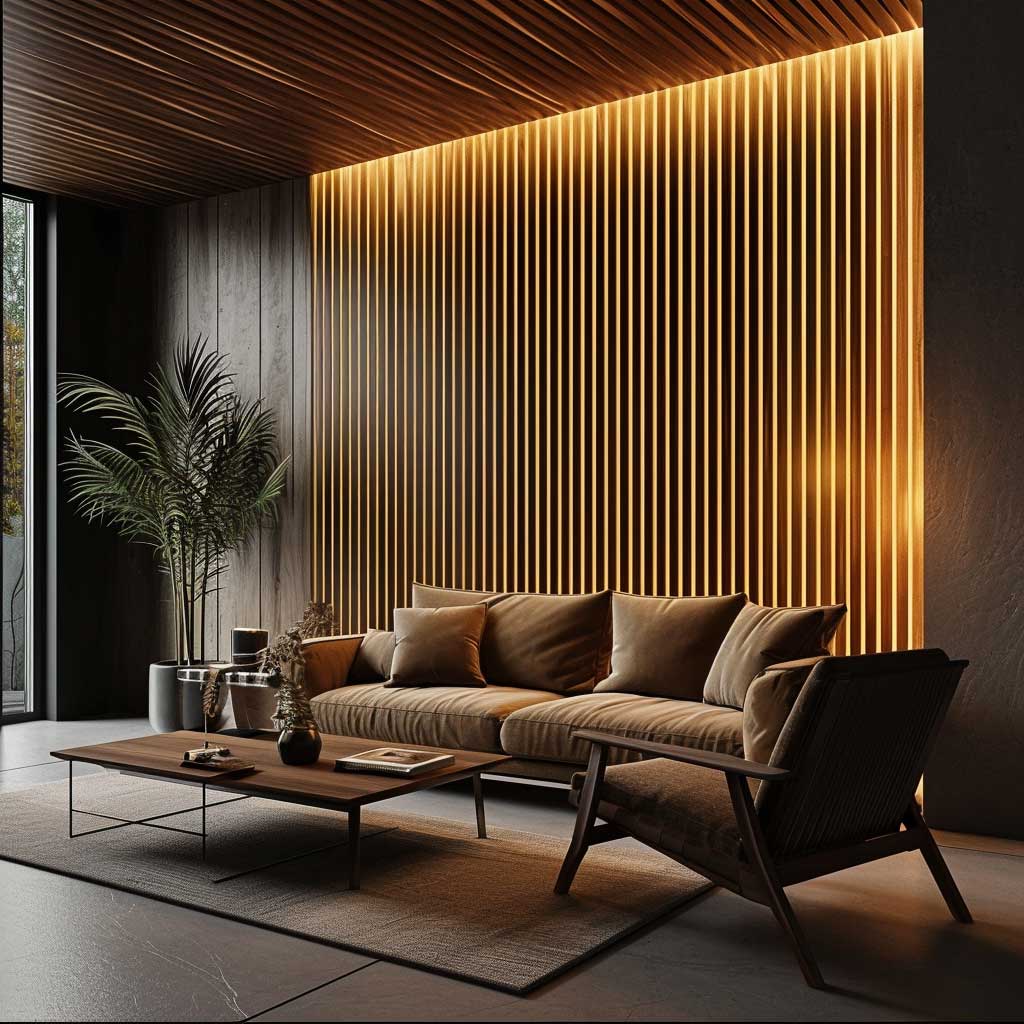
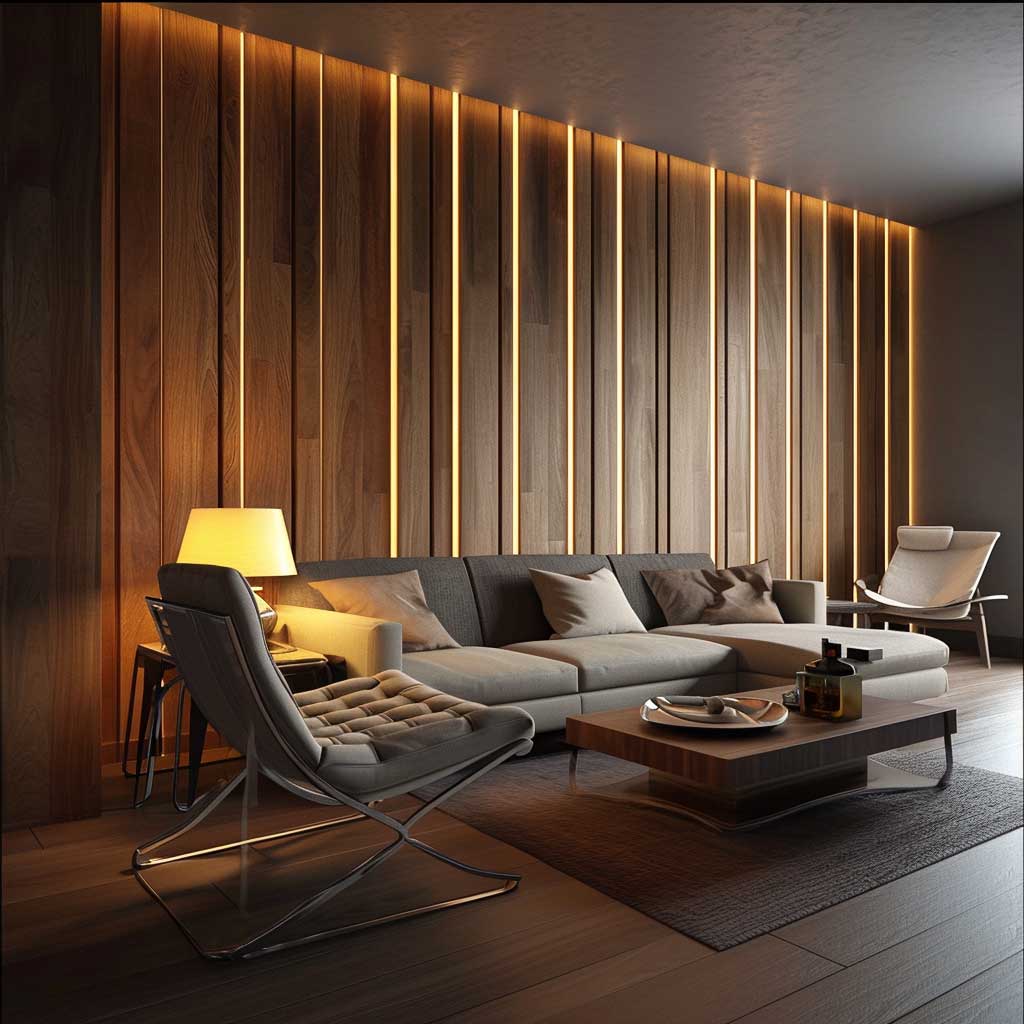
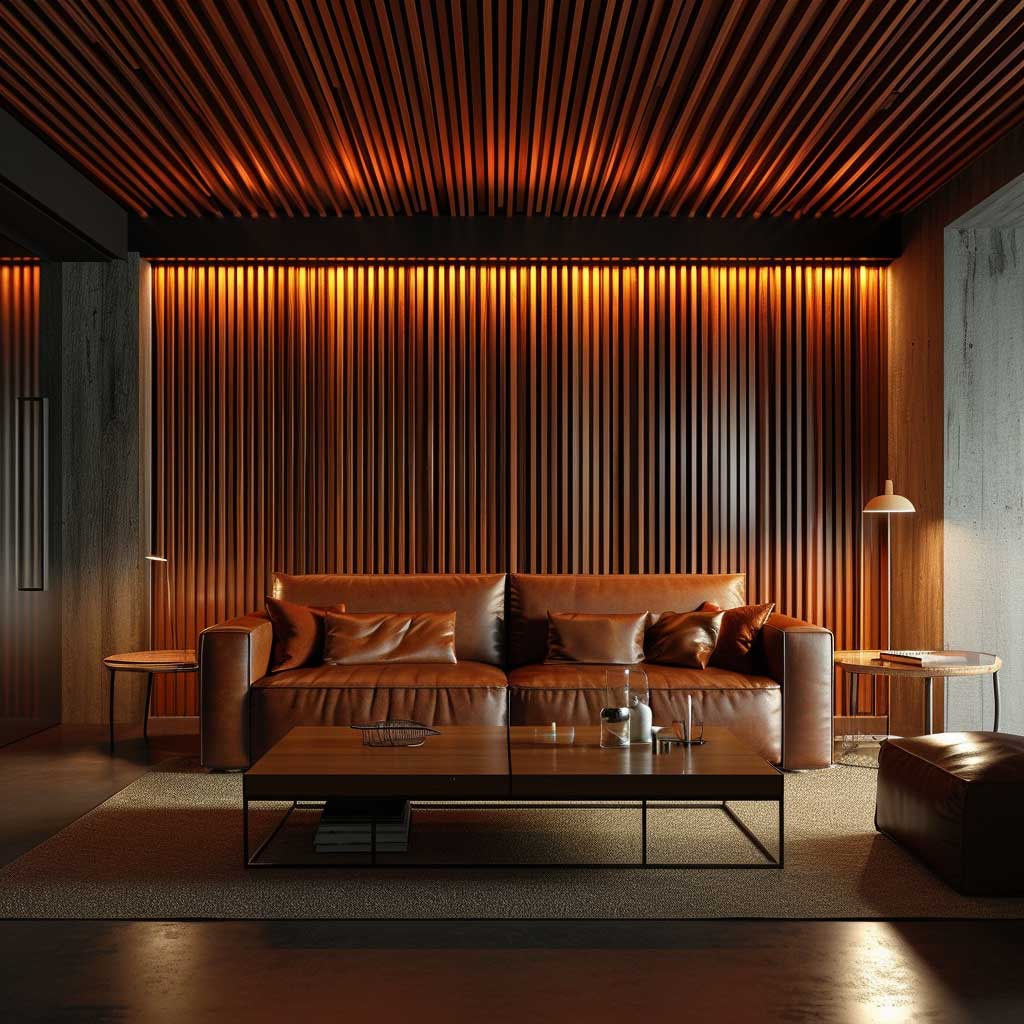

Wall design with wood strips in a modern living room creates an instant focal plane that anchors seating without competing with furniture. Vertical strips pull the eye upward and make standard 8-foot ceilings feel taller. Why choose vertical over horizontal here? Vertical lines emphasize height while horizontal ones expand width—pick the orientation that corrects the room’s weakest proportion.
Walnut or smoked oak strips deliver formal weight, while white oak or birch keep the space airy. Keep furniture silhouettes simple so the linear pattern remains the hero. Soft ambient lighting or LED channels in the gaps reveal the grain and create gentle shadow play after dark. One anti-move: do not run strips across every wall. Full coverage turns the room into a box and loses the contrast that makes the design work.
Think of the wall as a woven fabric stretched tight—each strip is a thread that only looks strong when the gaps stay even. Average installed costs for a 100-square-foot living-room feature sit near $1,500 to $2,800 depending on species. Dust weekly and apply a matte clear coat every few years to protect the surface from dry indoor air.
For more contemporary panel options that pair well with these strips, explore modern wood panel wall ideas with real costs.
Bedroom Sanctuaries Built Around Soft Wood Strip Texture

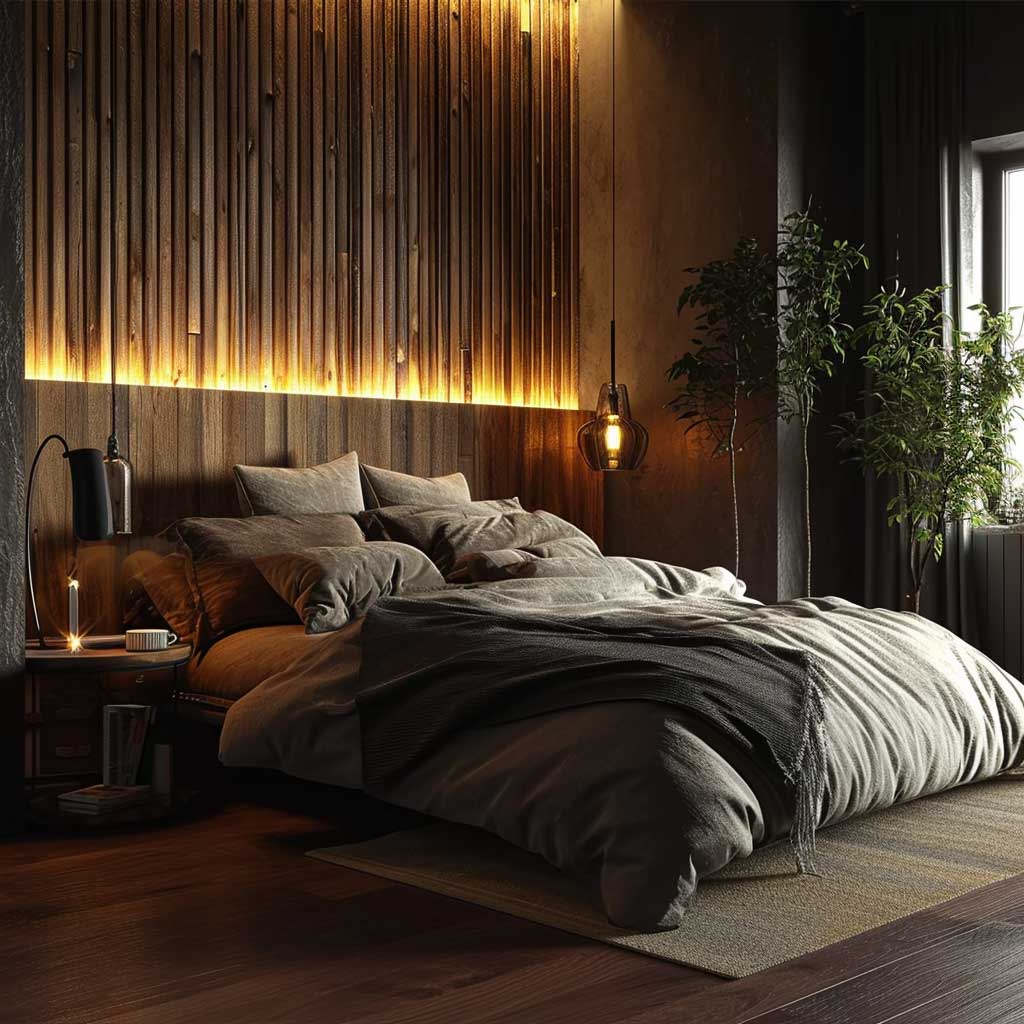
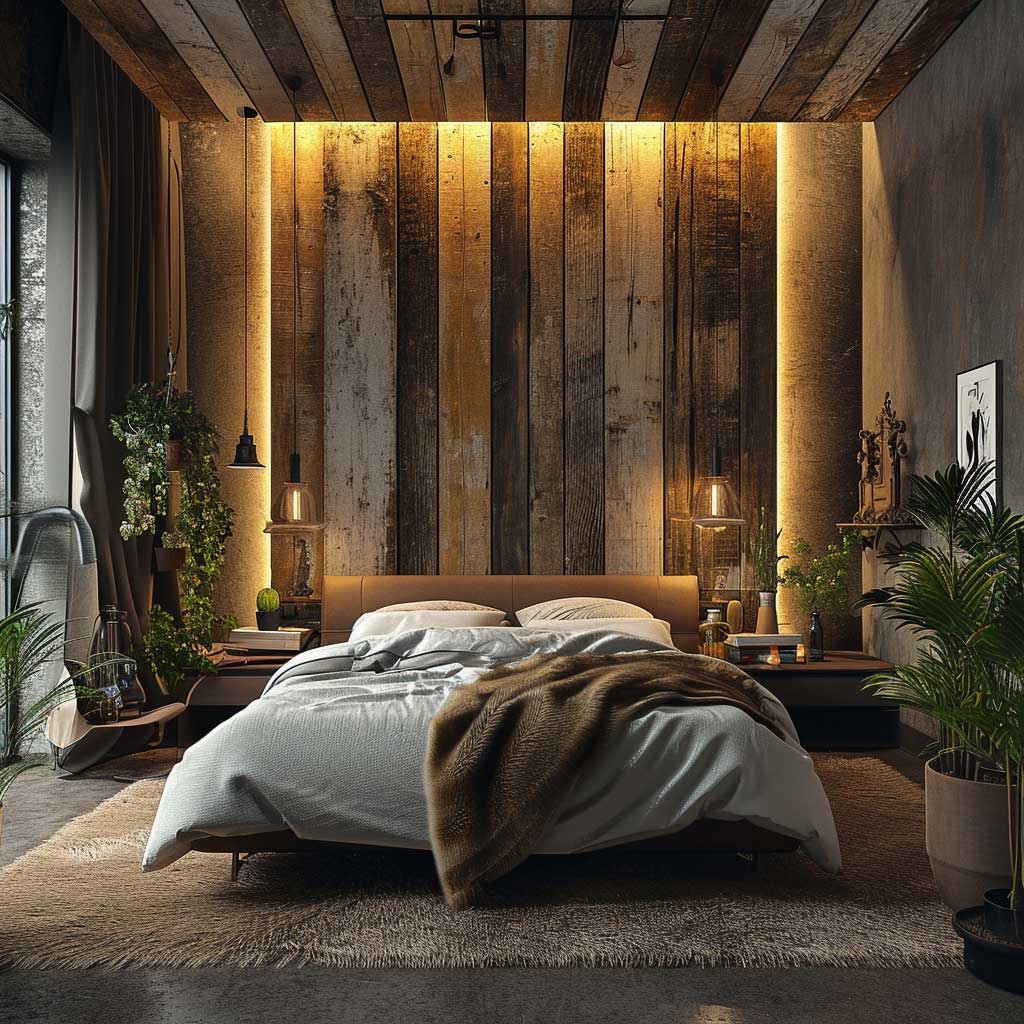
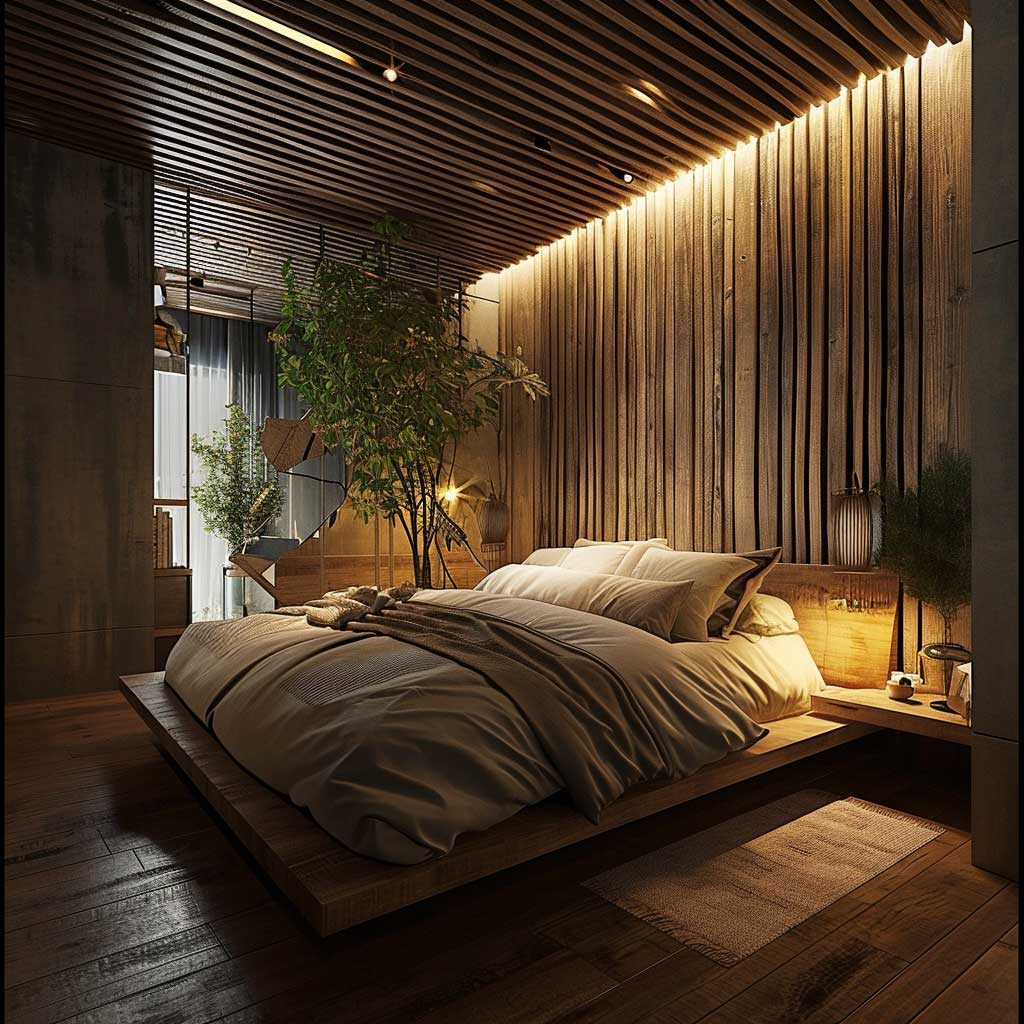
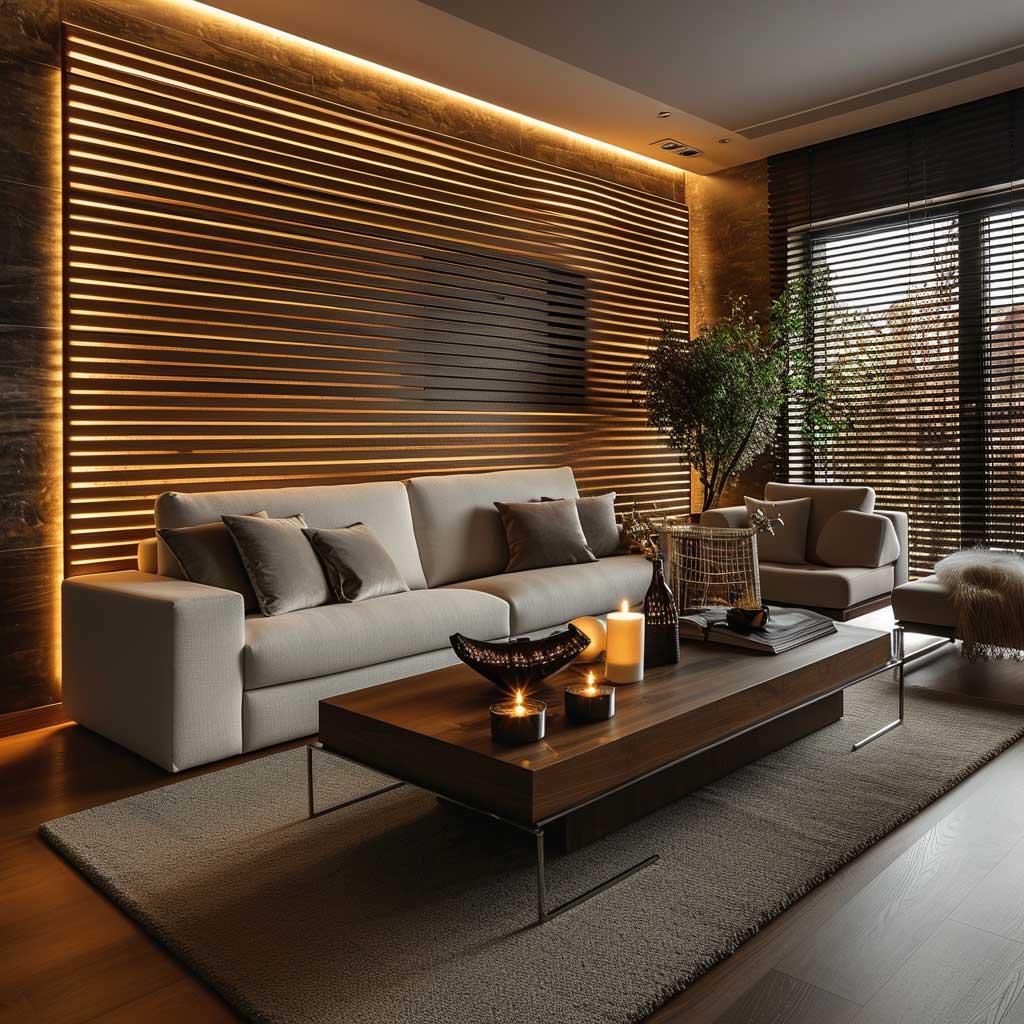
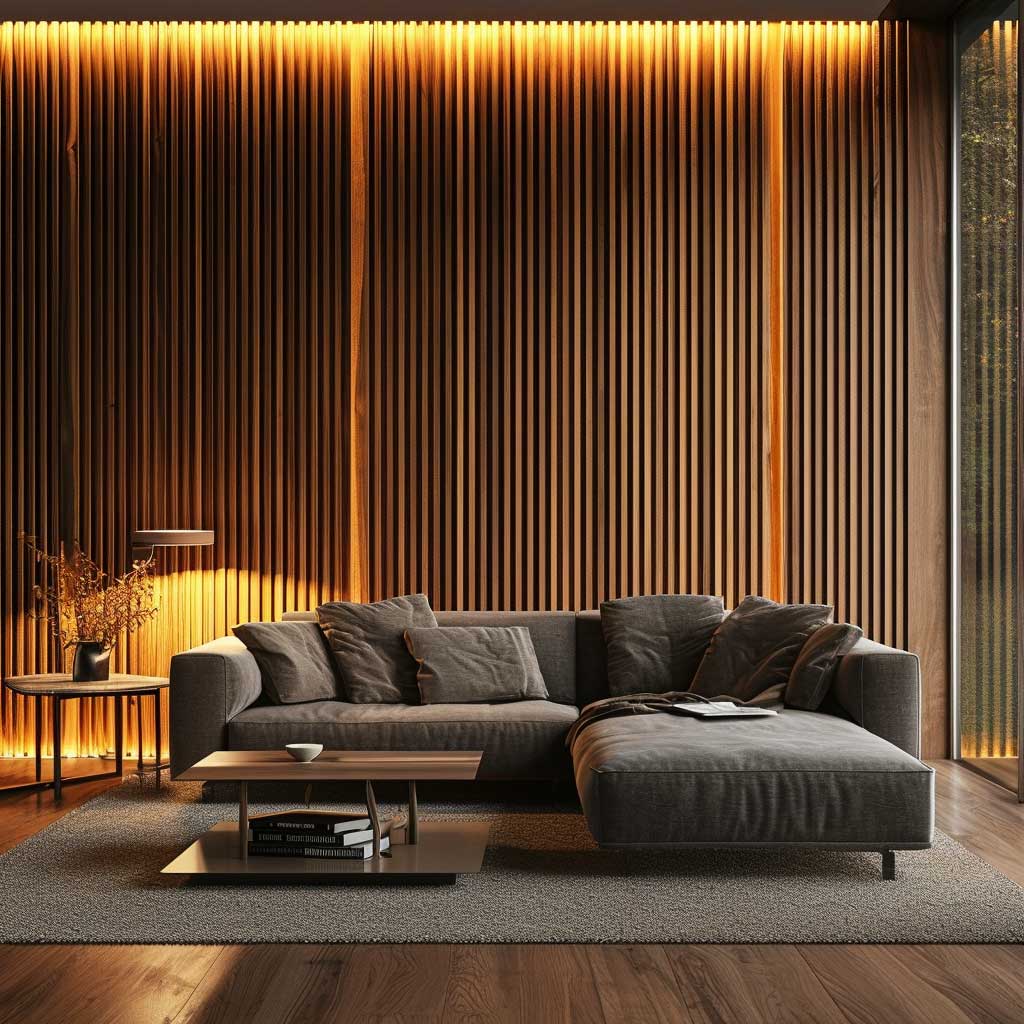
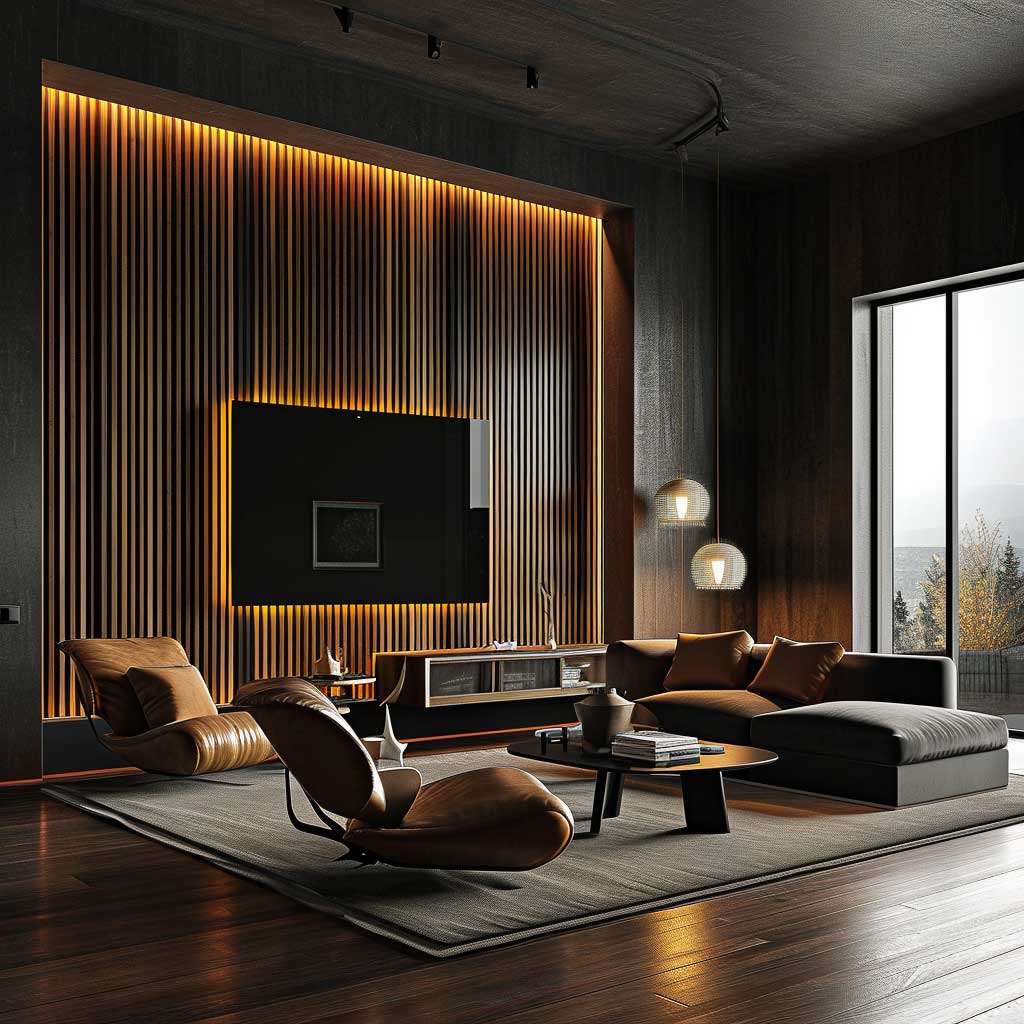
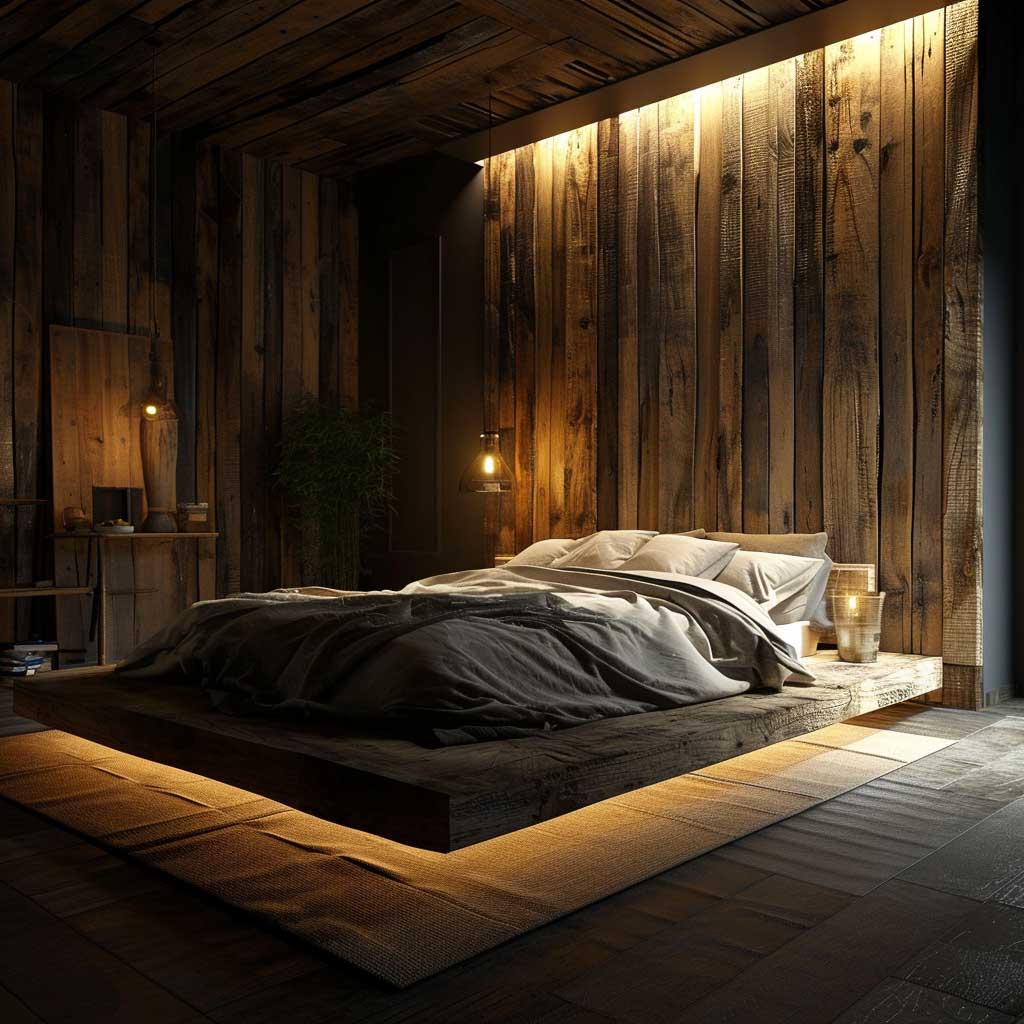
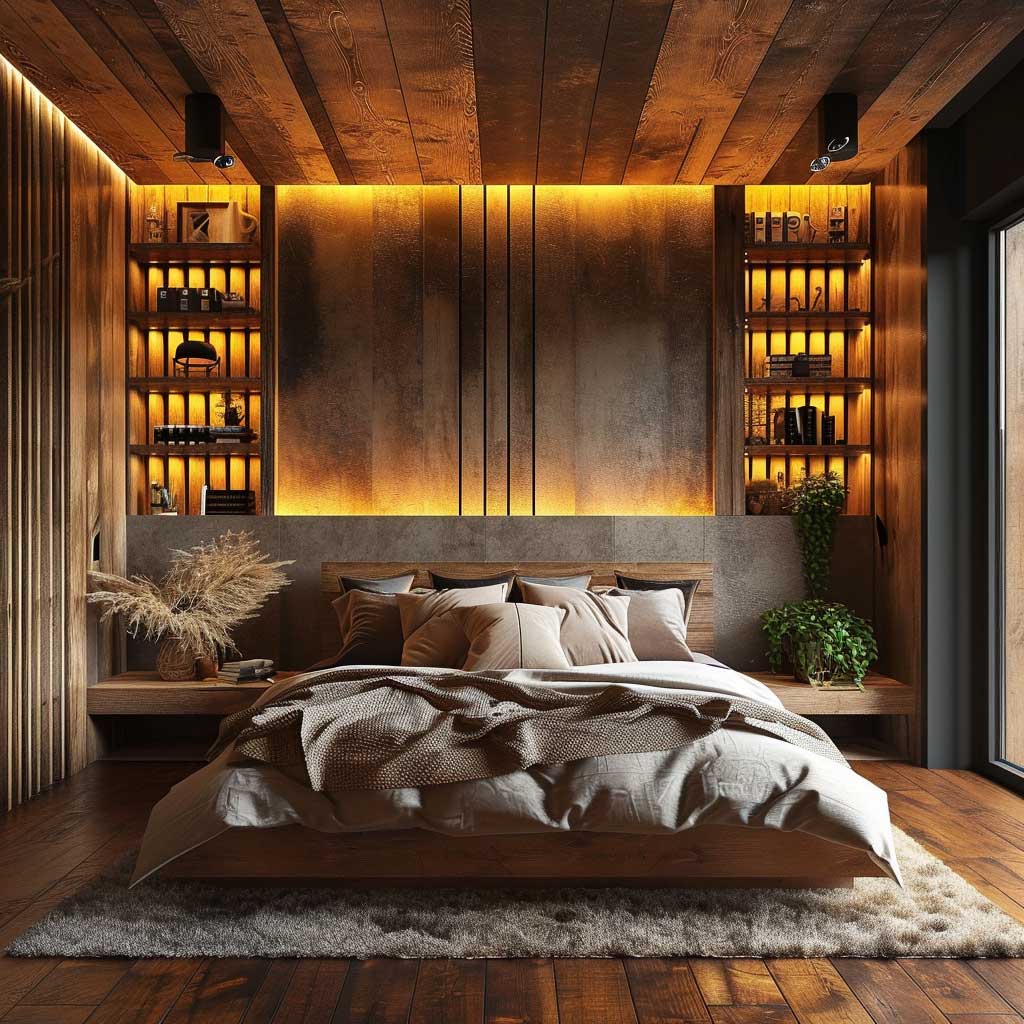
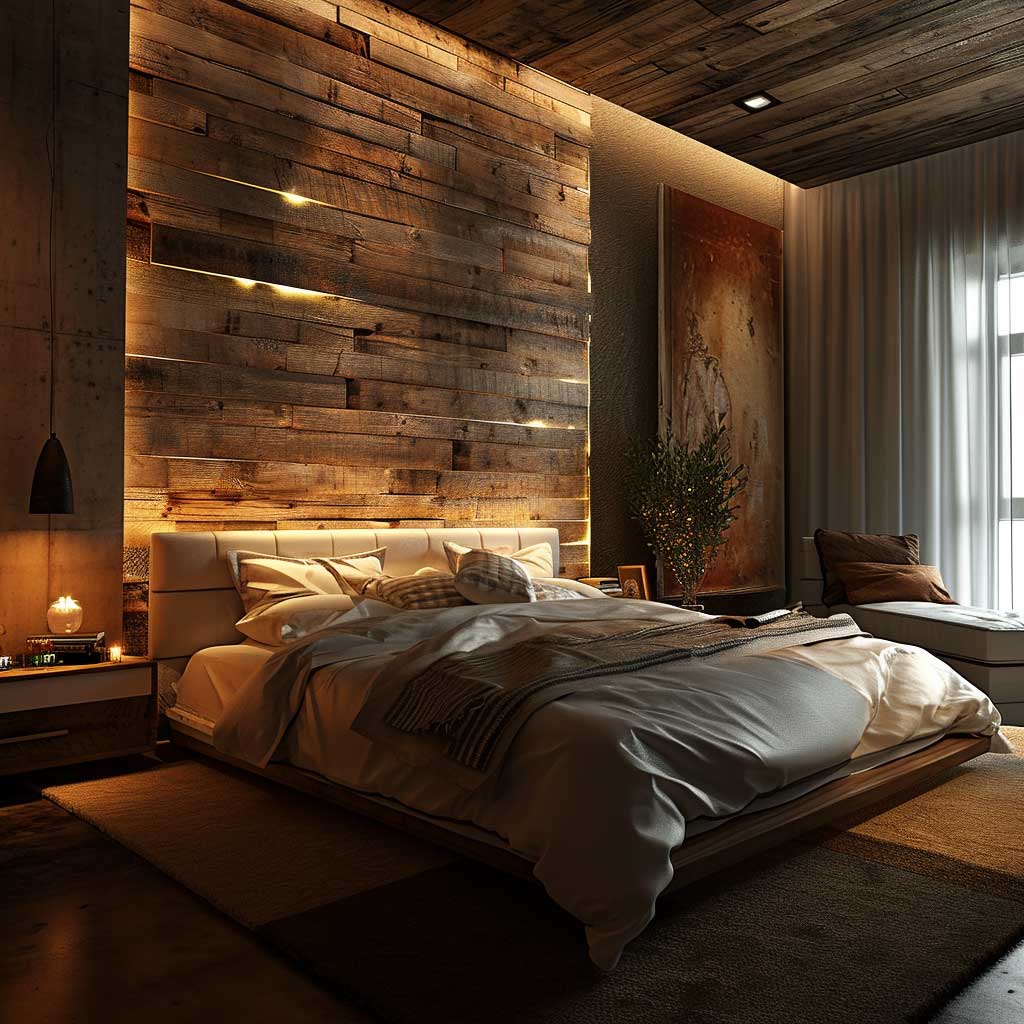
Rustic wood strip wall design in the bedroom turns the headboard wall into a quiet backdrop that absorbs visual noise. Reclaimed or lightly finished pine and cedar bring irregular grain that feels lived-in rather than polished. Horizontal runs make the room feel wider and more grounded; vertical ones add a sense of lift that suits low ceilings.
What happens if the strips are too dark? The room can feel closed in after sunset. Stick to mid-tone or pale species and pair them with soft bedding in linen or washed cotton. A single bedside lamp with a warm bulb is enough to catch the edges of the strips and create gentle depth. Avoid glossy finishes—they reflect light harshly and fight the calm mood the wall is meant to support.
Treat the wall like a continuous headboard that never needs upholstery. Material prices for softwood strips start near $2.50 per square foot, while a full 80-square-foot bedroom feature typically finishes between $800 and $1,800 installed. Dust the grooves every month so they do not collect the fine particles that settle near beds.

Dining Spaces Where Wood Strip Patterns Set the Mood
Wood strip wall design around the dining table turns meals into longer, quieter gatherings by giving the eye a textured plane to rest on. Darker species such as cherry or walnut raise the formality of the room; lighter maple or ash keep conversations casual. Vertical strips make the ceiling feel higher and suit formal layouts, while horizontal runs favor relaxed, everyday spaces.
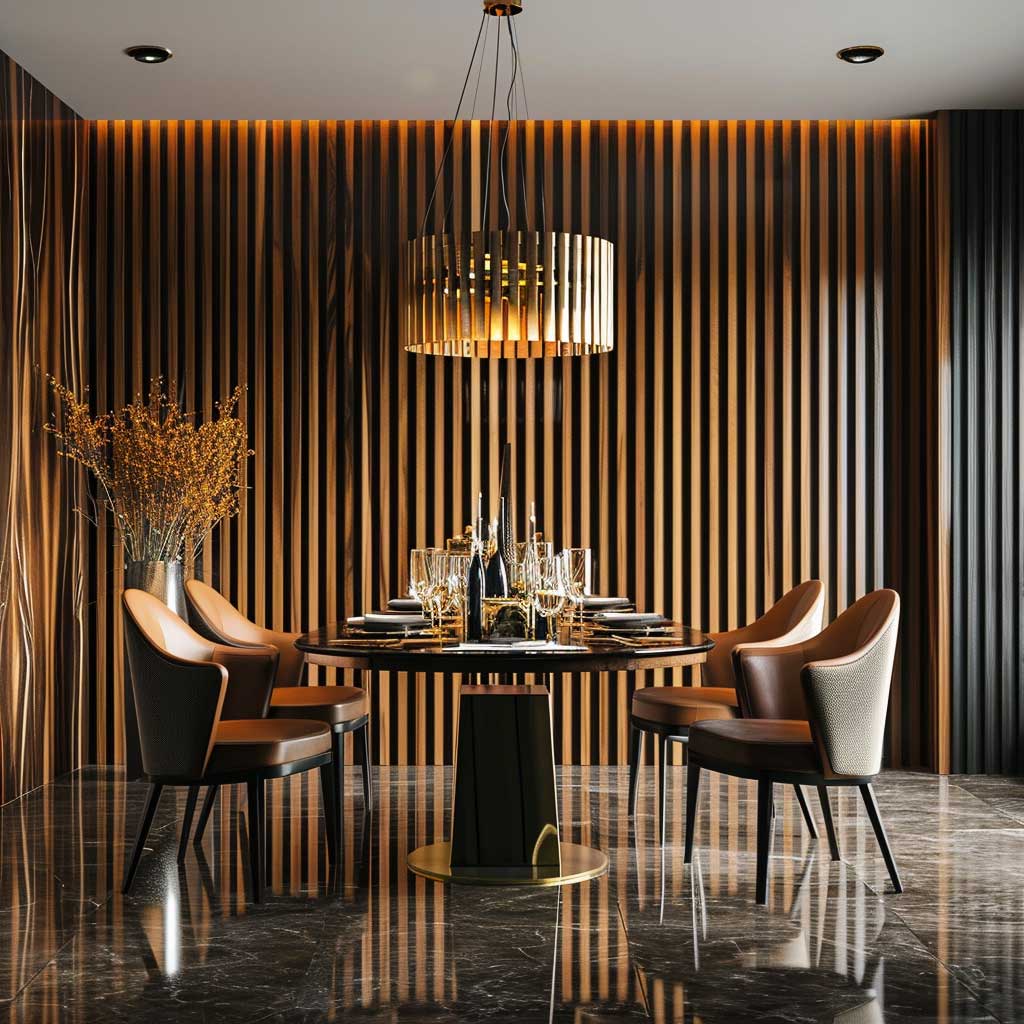
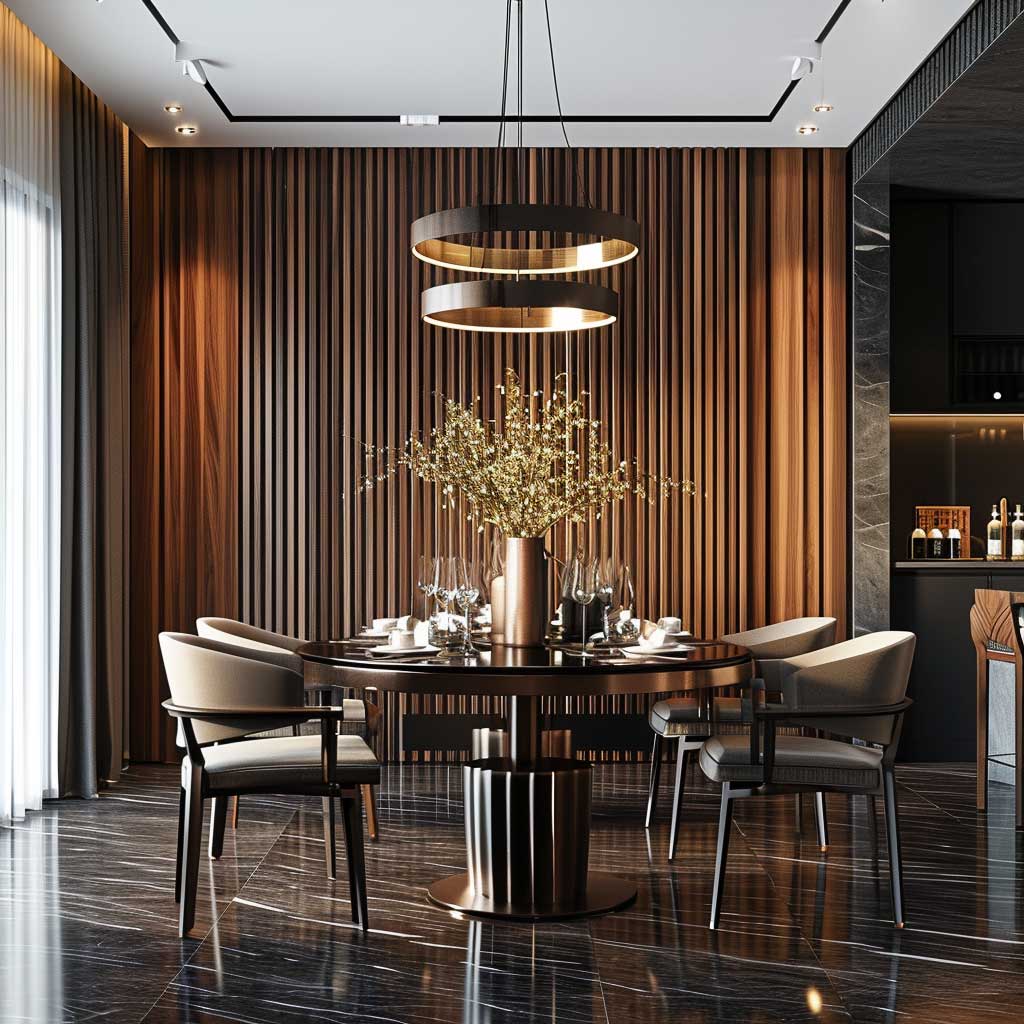


How much wood is too much? Stop at one wall so the table and chairs remain the functional center. A solid wood table that echoes the wall species ties the scheme together without matching everything. Pendant lights with warm bulbs highlight the grain; cool LEDs flatten it. Skip high-gloss finishes—they create glare under overhead lighting and make the surface look busy rather than calm.
View the wall as a permanent table runner stretched vertically—its job is to frame the gathering, not dominate it. Installed prices for a dining feature wall of 90–120 square feet commonly fall between $1,200 and $3,000. A light monthly wipe keeps food vapors from settling into the gaps.


Orientation and Pattern Choices That Shape the Room
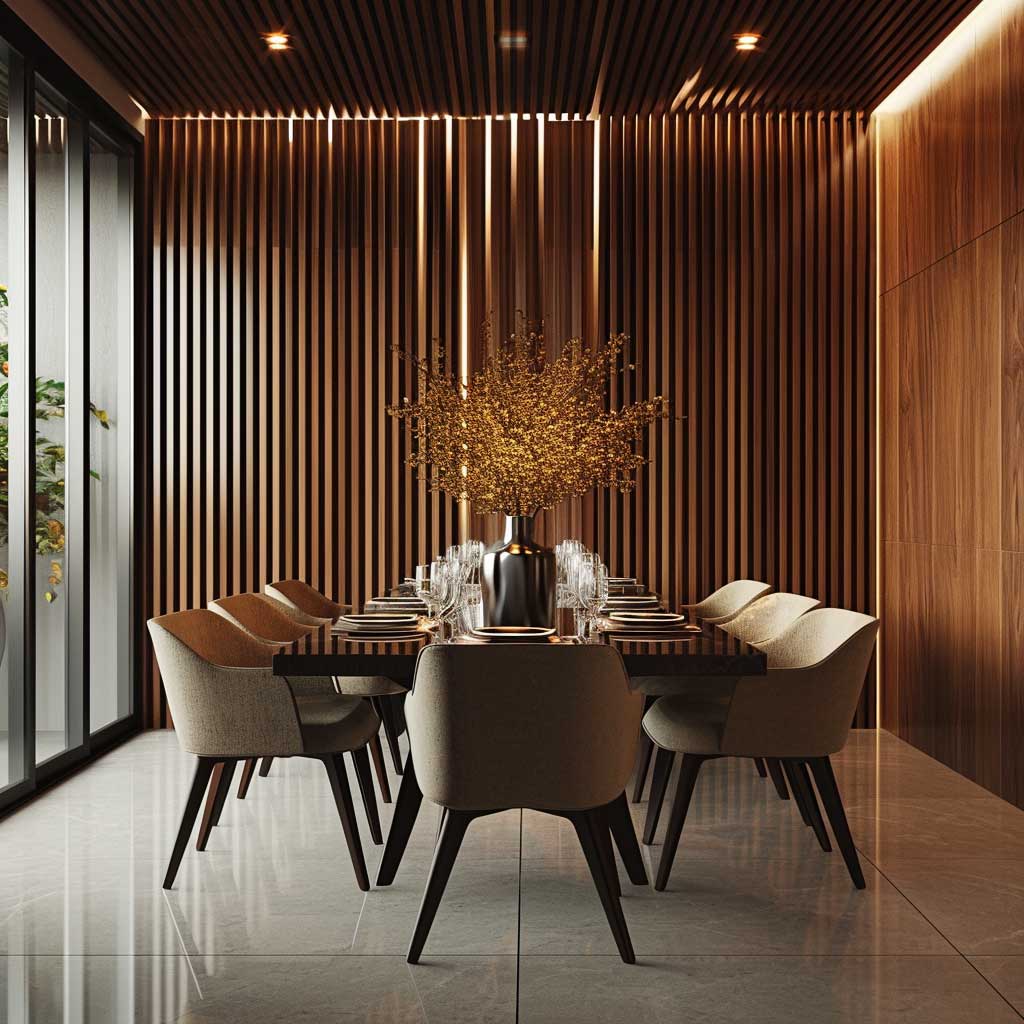
Choosing between vertical and horizontal wood strip wall design is the single decision that most affects how the room feels. Vertical strips act like visual elevators and work best where ceilings sit at 8 feet or lower. Horizontal strips stretch the walls outward and suit narrow rooms or corridors that need breathing room.
Chevron or herringbone layouts add movement but raise material waste by 20–30 percent because every cut ends at an angle. Straight runs remain the most efficient and the easiest to keep consistent. Do not mix orientations on adjacent walls—the eye reads the change as a mistake rather than a feature. Keep gaps between strips even; uneven spacing is the quickest way to make a careful installation look amateur.
Think of orientation as the grain direction on a piece of fabric: once it is set, everything else follows. Basic softwood systems start near $5 per square foot installed for simple vertical layouts. For acoustic performance, look at felt-backed panels that absorb sound while delivering the same linear look; many of those systems run $8–$18 per square foot.
Detailed fluted and ribbed alternatives that expand on the same linear language appear in fluted wood wall panels for every room.
Practical Installation Limits Worth Respecting
Successful wood strip wall design starts with a flat, dry substrate. Uneven drywall or plaster shows through thin strips and creates wavy shadow lines. Use construction adhesive plus brad nails into studs for solid hold; adhesive alone can creep over time in heated rooms.
What should never happen on a feature wall? Stopping the strips at chair-rail height. Half-height runs read as incomplete rather than intentional. Floor-to-ceiling coverage on one wall is the cleaner move. Leave a small expansion gap at the top and bottom so seasonal movement does not buckle the surface. Avoid oil-based finishes in bedrooms if the room lacks good ventilation during the first 48 hours after application.
Treat the installation like hanging a large piece of fabric: measure twice, keep tension even, and finish the edges cleanly. Labor often accounts for half the total cost; a 100-square-foot wall can take one or two skilled people a full day. External guidance on current material and labor ranges is available from manufacturers who publish transparent pricing sheets.
For broader cost and trend context across panel types, review the ranges published by Andor Willow on wood wall paneling costs.
Don’t Do This with Wood Strips
- Do not cover all four walls—contrast disappears and the room feels closed
- Do not mix species or finishes on the same plane
- Do not skip the shadow gap; butted edges telegraph movement
- Do not use high-gloss coatings under strong overhead lights
- Do not install on damp or uneven substrates
Keep the Wall Working for the Room
Wood strip wall design rewards restraint. One carefully proportioned wall delivers more impact than a full-room treatment that competes with every other surface.
Match orientation to the room’s weak dimension, choose a species that supports the desired mood, and keep finishes matte. Installed costs stay manageable when the layout stays simple and the material stays consistent.
Dust the grooves regularly and reapply a clear protective coat every few years. The result is a surface that continues to look intentional rather than dated.
Start with a single feature wall in the room you use most. Once the proportions feel right, the rest of the house will tell you where the next set of strips belongs.