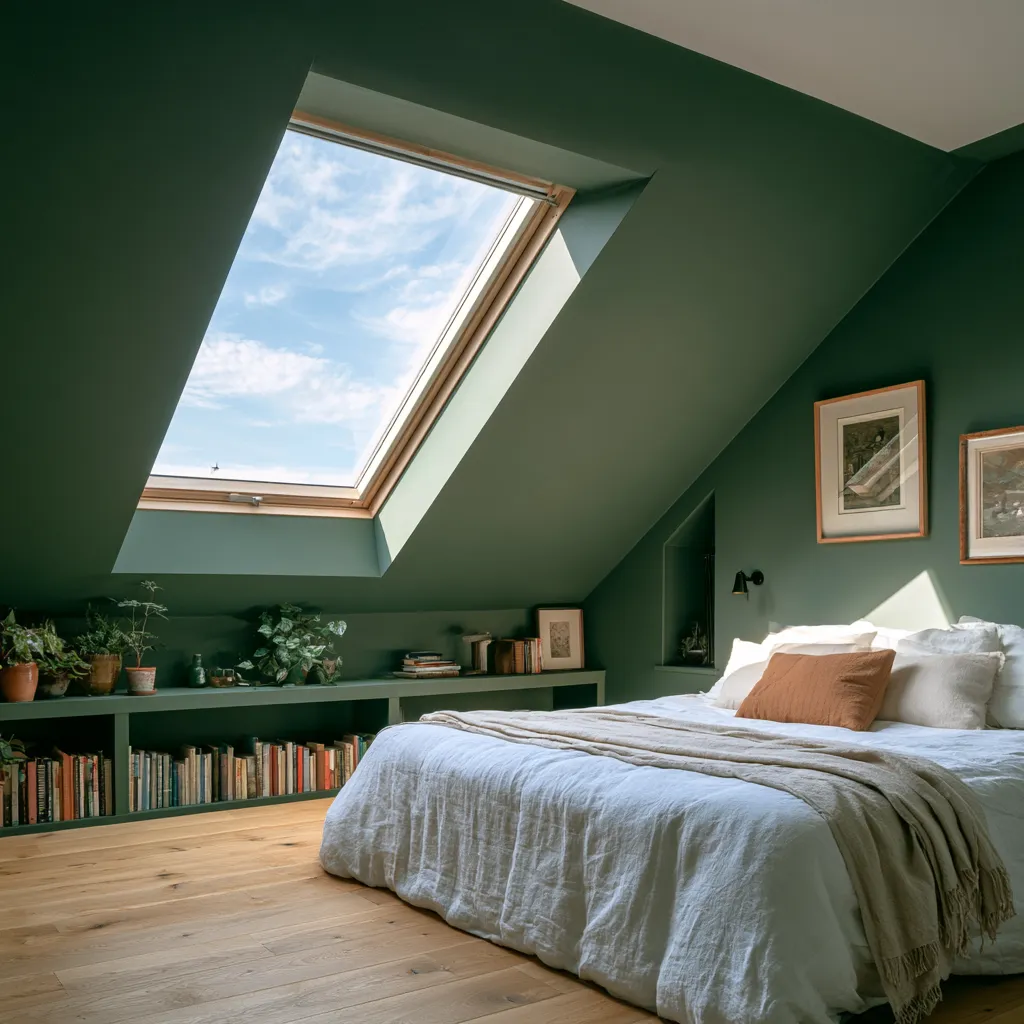
Sage green, emerald green, mint green. Three completely different moods for a bedroom, and all three can go wrong fast if you pick the wrong undertone. I’ve tested over a dozen green swatches on my own walls, and most looked nothing like the swatch in store lighting. Green reads differently depending on your room’s exposure, your trim color, even whether your floors are warm or cool.
This page breaks down three green bedroom directions — soft sage, bold emerald accent wall, and airy mint — with specific paint names, pairing tips, and the stuff nobody warns you about. Like how some sage greens turn baby blue in north-facing rooms. Or how emerald looks muddy against beige carpet. Skip the guesswork.
Quick Summary
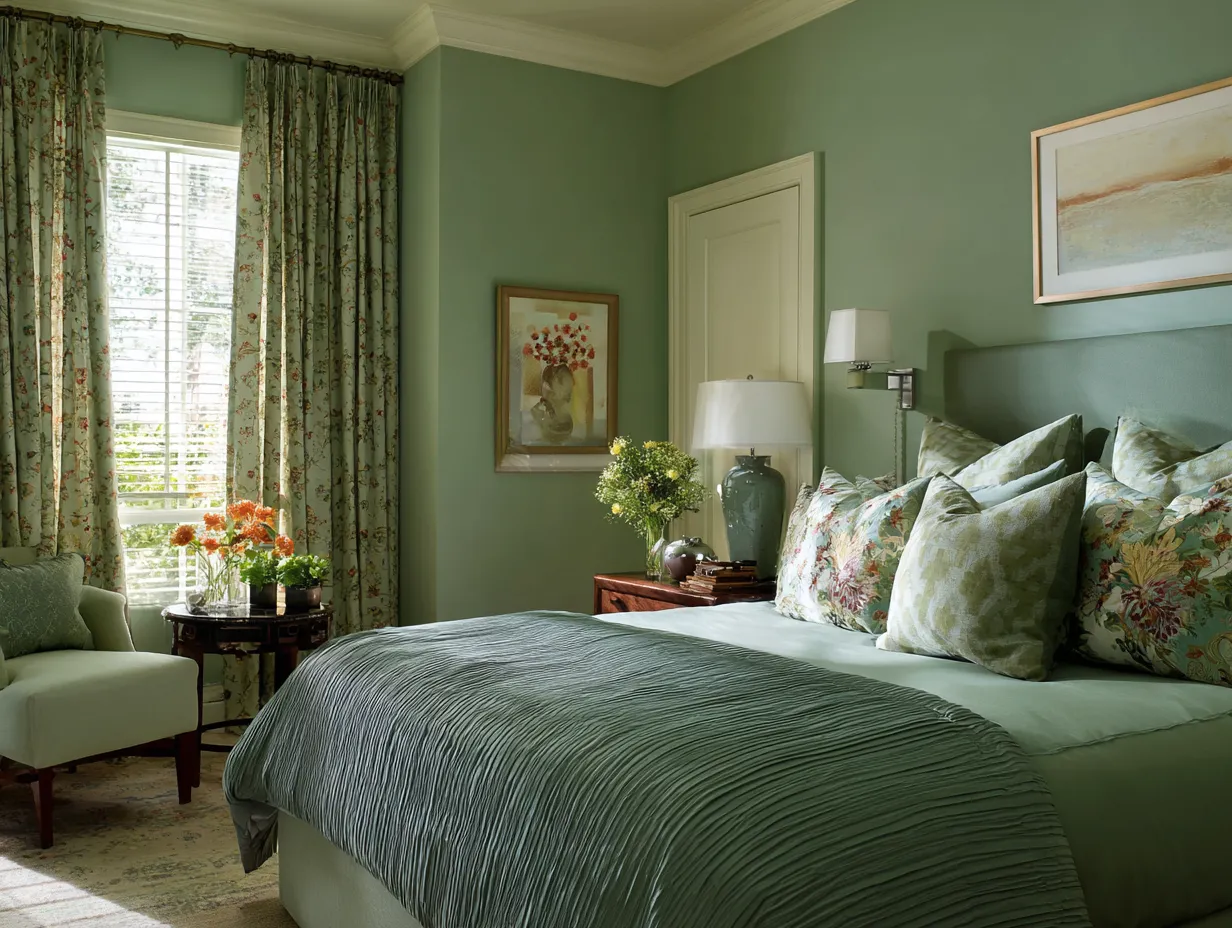
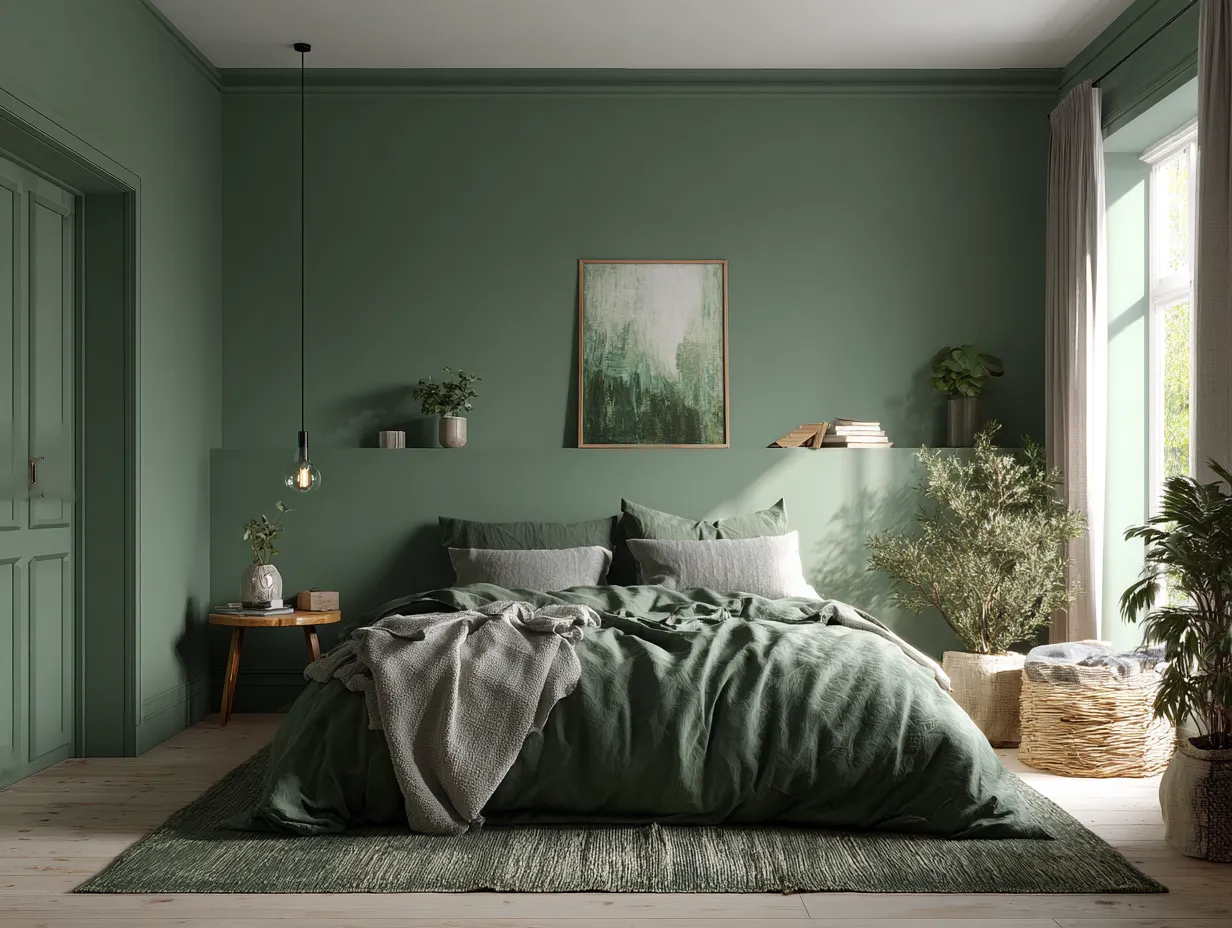
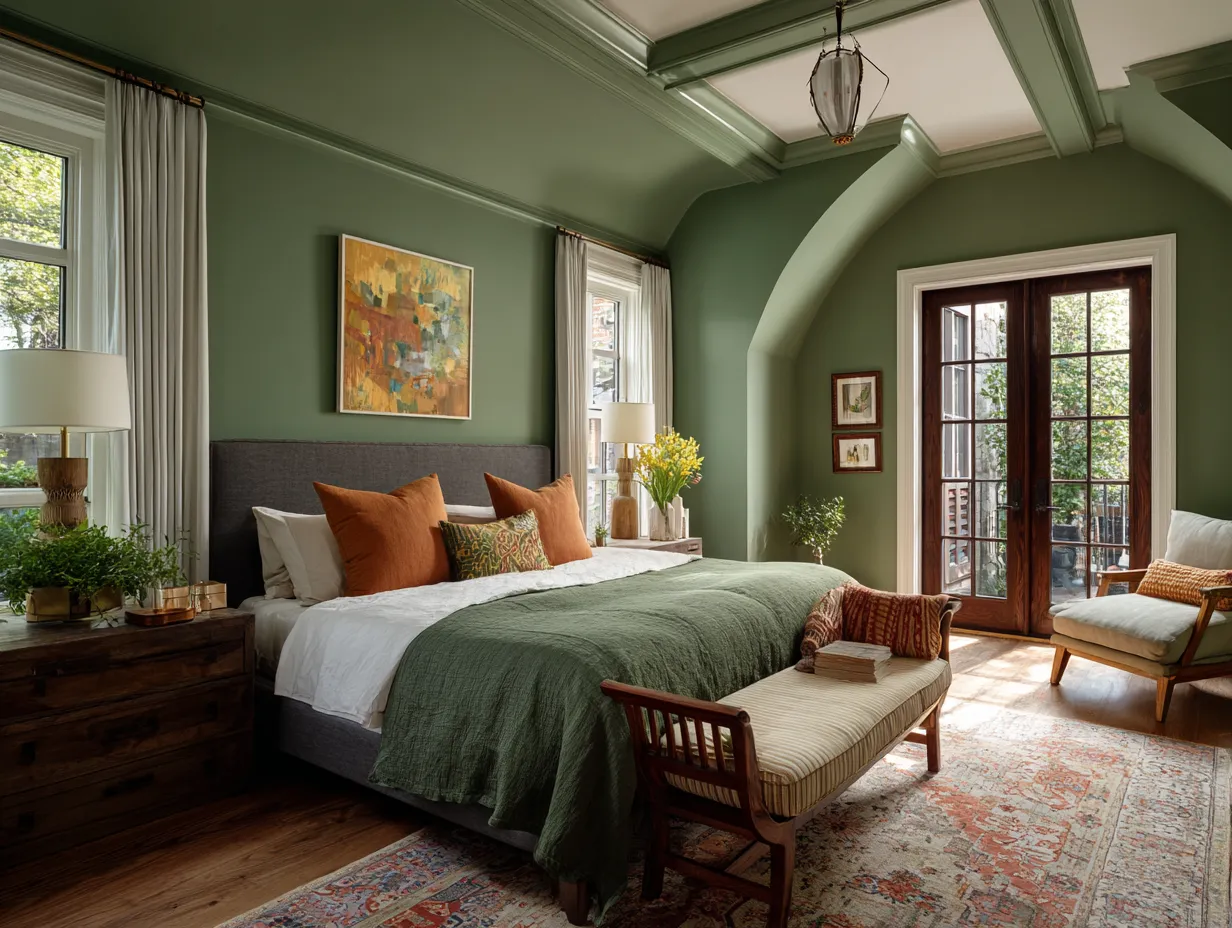
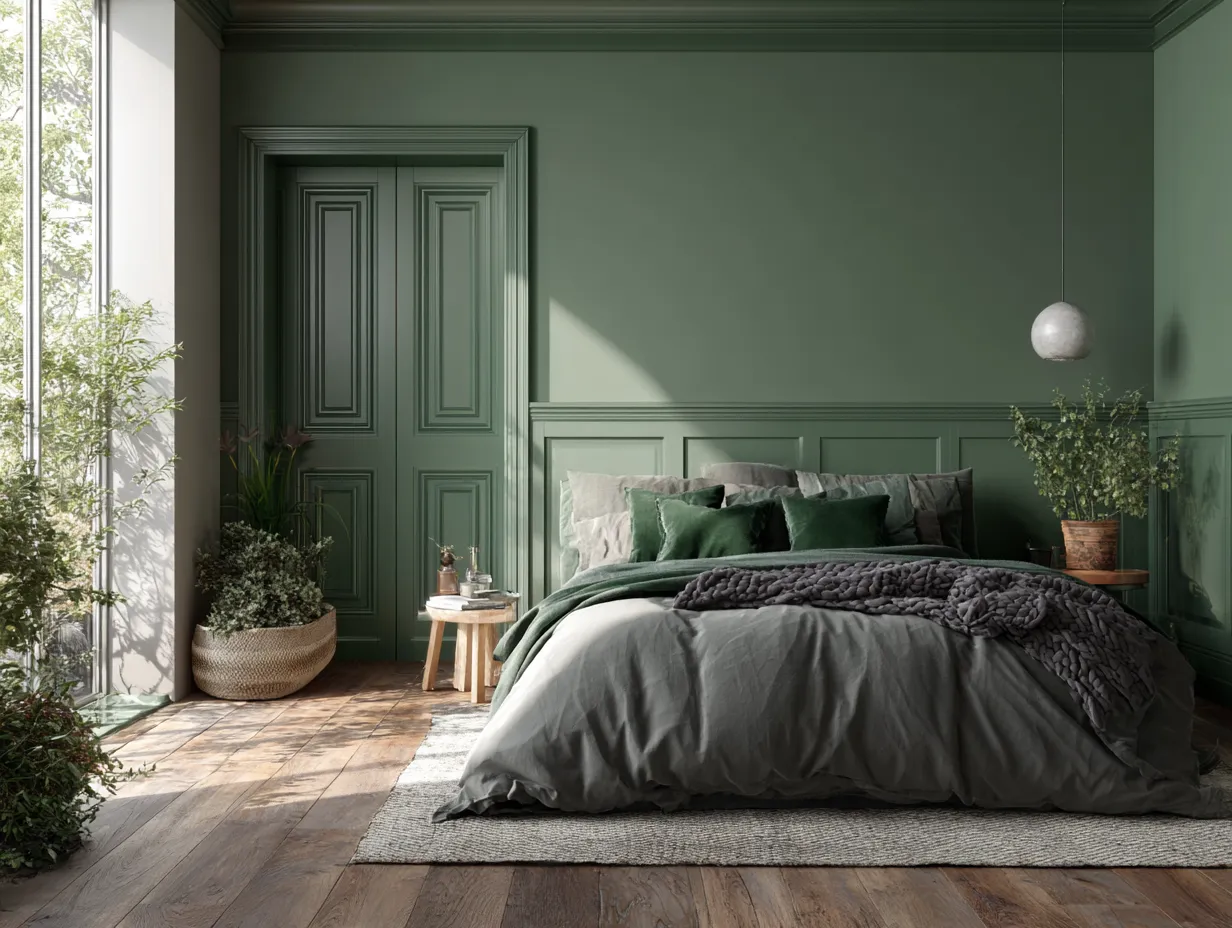
Sage green — Best for: full-room color. Pairs with off-white trim, light oak, brass. Try Sherwin-Williams Evergreen Fog or Benjamin Moore October Mist.
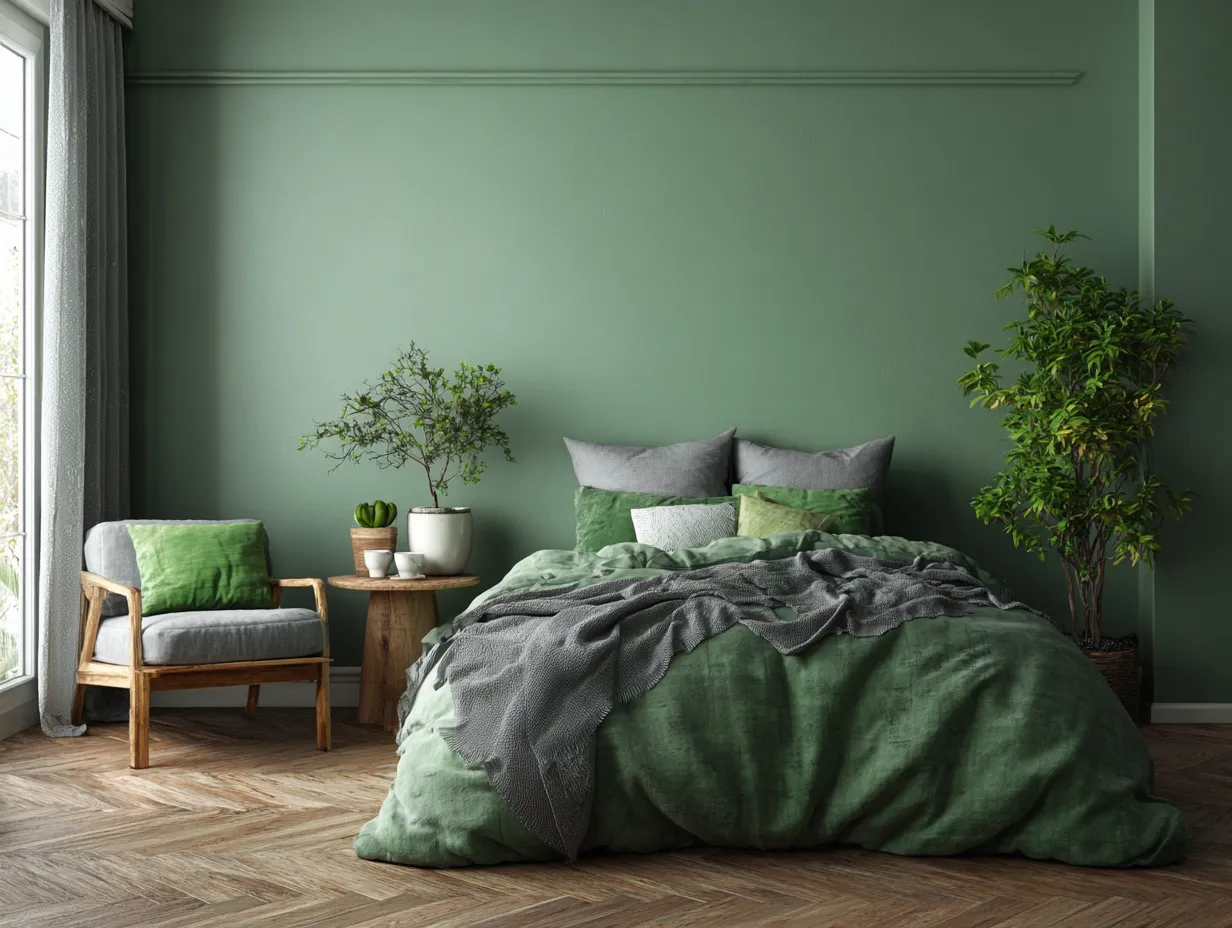
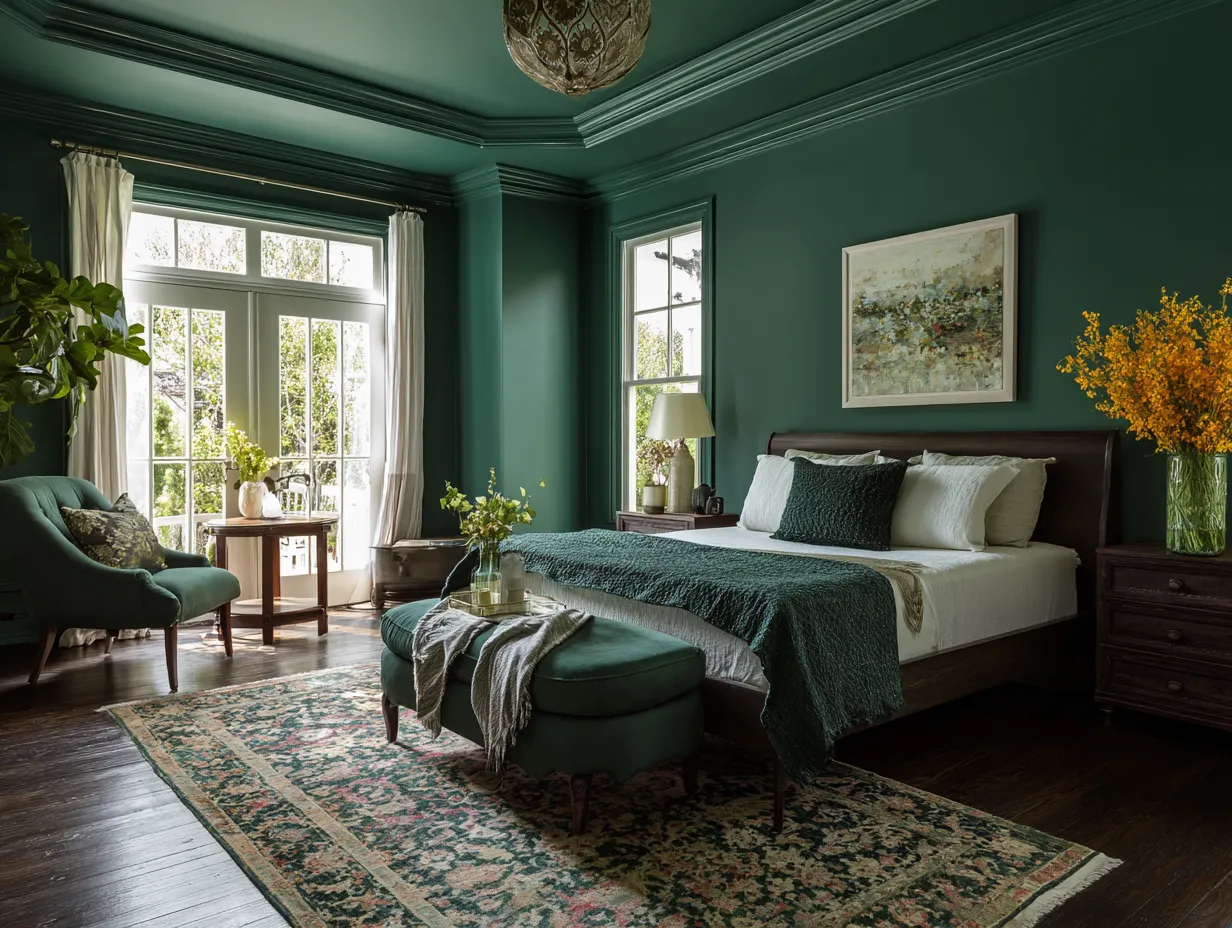
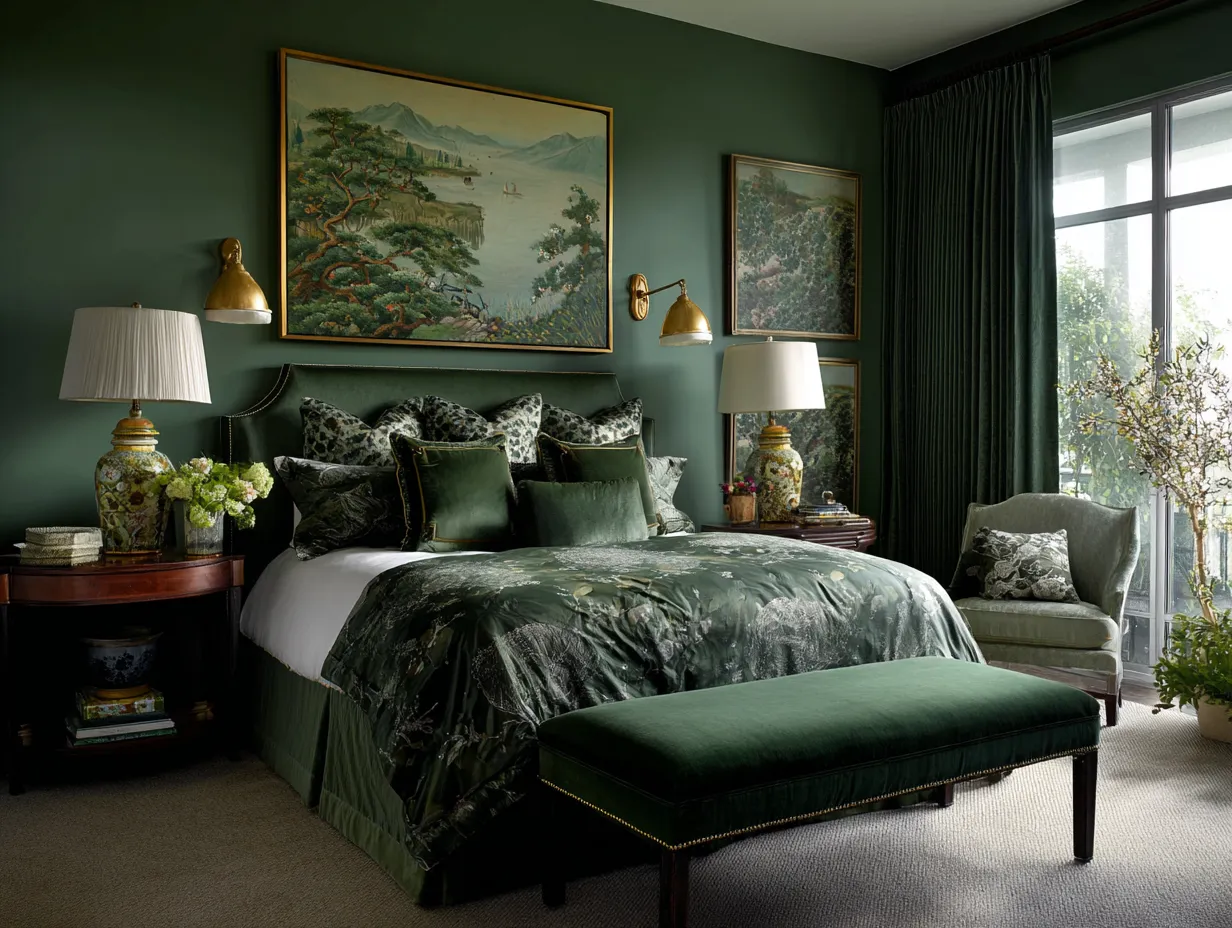
Emerald green — Best for: single accent wall behind the bed. Pairs with warm white walls, gold hardware, neutral bedding. Try Benjamin Moore Forest Green.
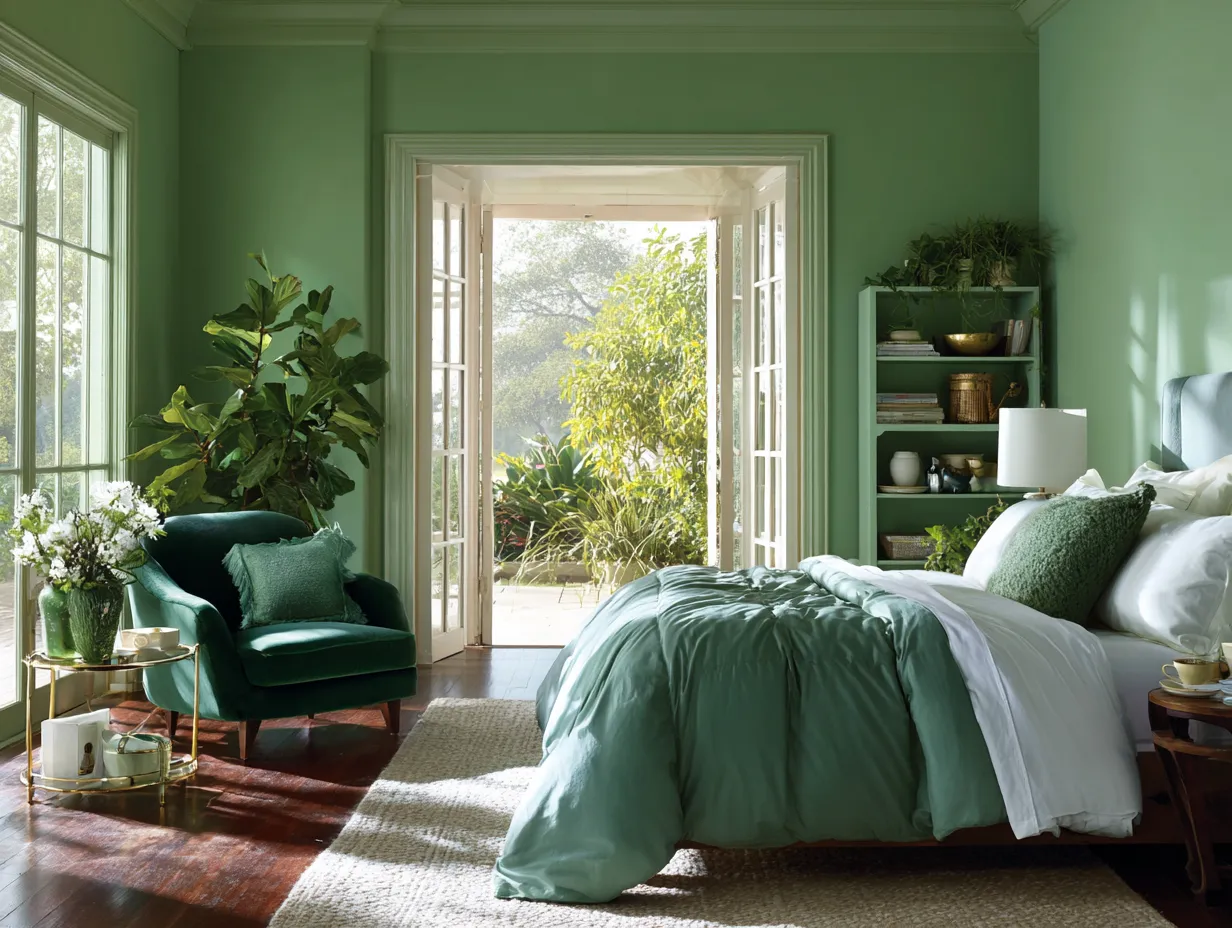
Mint green — Best for: bright, sun-filled rooms. Pairs with white furniture, coral accents, natural wood. Try Sherwin-Williams Breaktime.
Budget tip: Always buy two $8 sample pots before a full gallon. Test on the actual wall in both morning and evening light.
| Feature | Sage Green | Emerald Green | Mint Green |
|---|---|---|---|
| Best Use | All four walls | One accent wall | All four walls |
| Mood | Calm, earthy | Bold, luxurious | Fresh, airy |
| Best Room Facing | South or west | Any direction | South or east |
| Top Paint Pick | SW Evergreen Fog | BM Forest Green | SW Breaktime |
| Best Trim Color | Off-white (White Dove) | Warm white (Chantilly Lace) | Bright white |
| Hardware Finish | Brass | Gold or brass | Chrome or brushed nickel |
| Common Mistake | Turns blue in north light | Painting all four walls | Goes gray in dark rooms |
| Price per Gallon | ~$75 | ~$80 | ~$75 |
Sage Green Bedroom Walls — Soft, Muted, and Easy to Mess Up
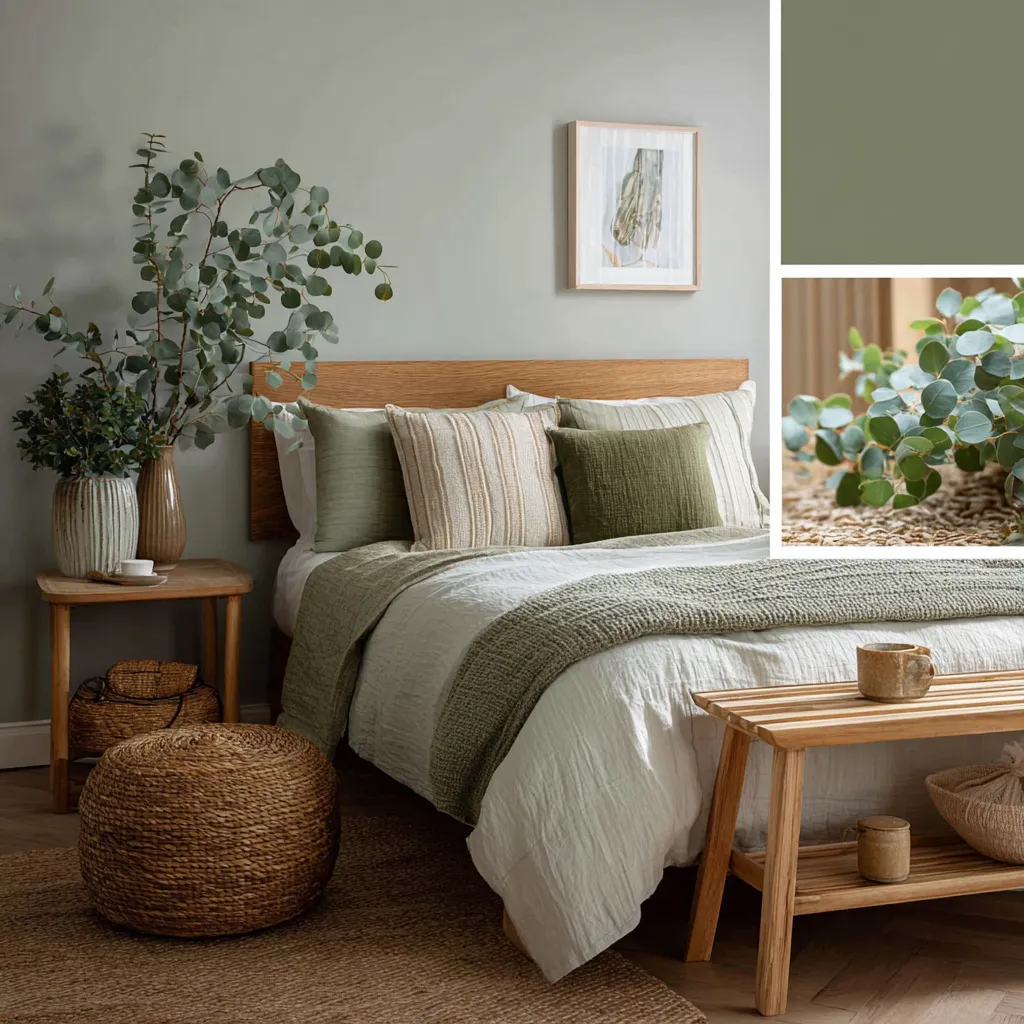
Sherwin-Williams Evergreen Fog (SW 9130) runs about $75 per gallon and sat as their 2022 Color of the Year. Still popular. Benjamin Moore October Mist (1495) hits a similar note — sage with enough gray to keep it from looking minty. Both work in south-facing and west-facing rooms without turning weird.
My biggest sage fail was painting a north-facing guest room with a no-name sage from Home Depot. It looked like hospital scrubs. No warmth, no personality. Returned it. The gray undertone in quality sage greens is what saves them from reading flat. Don’t skip it.
Pair sage walls with off-white trim, not bright white. Benjamin Moore White Dove is my go-to here. Bright white makes sage look dirty by comparison — learned that one the expensive way. Light oak furniture or walnut nightstands both land well. Brass hardware over chrome, every time. Chrome next to sage reads cold, like an office break room.
Bedding should stay neutral. Cream linen duvet, maybe a mustard throw pillow as your one pop. Coral works too. Navy blue gets mentioned a lot but it fights sage more than it helps — you end up with a patriotic bedroom nobody asked for.
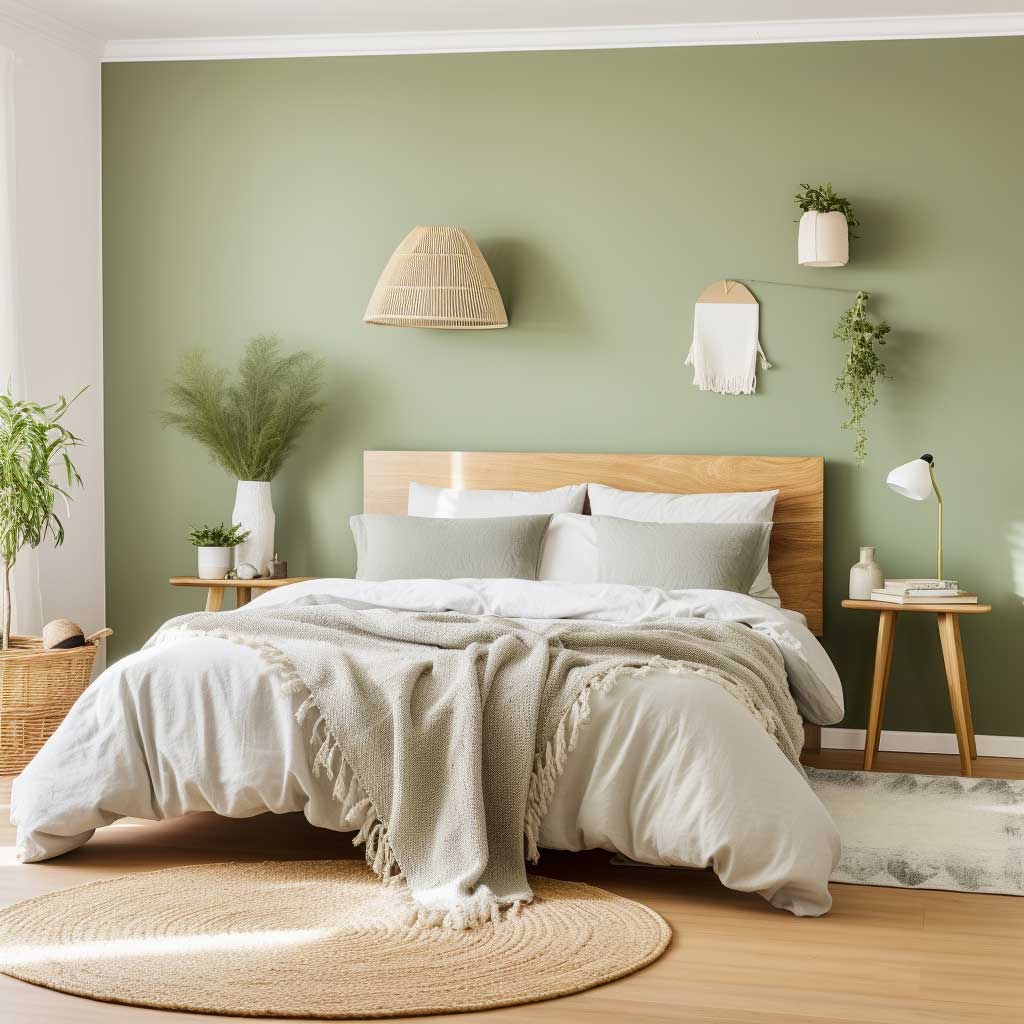
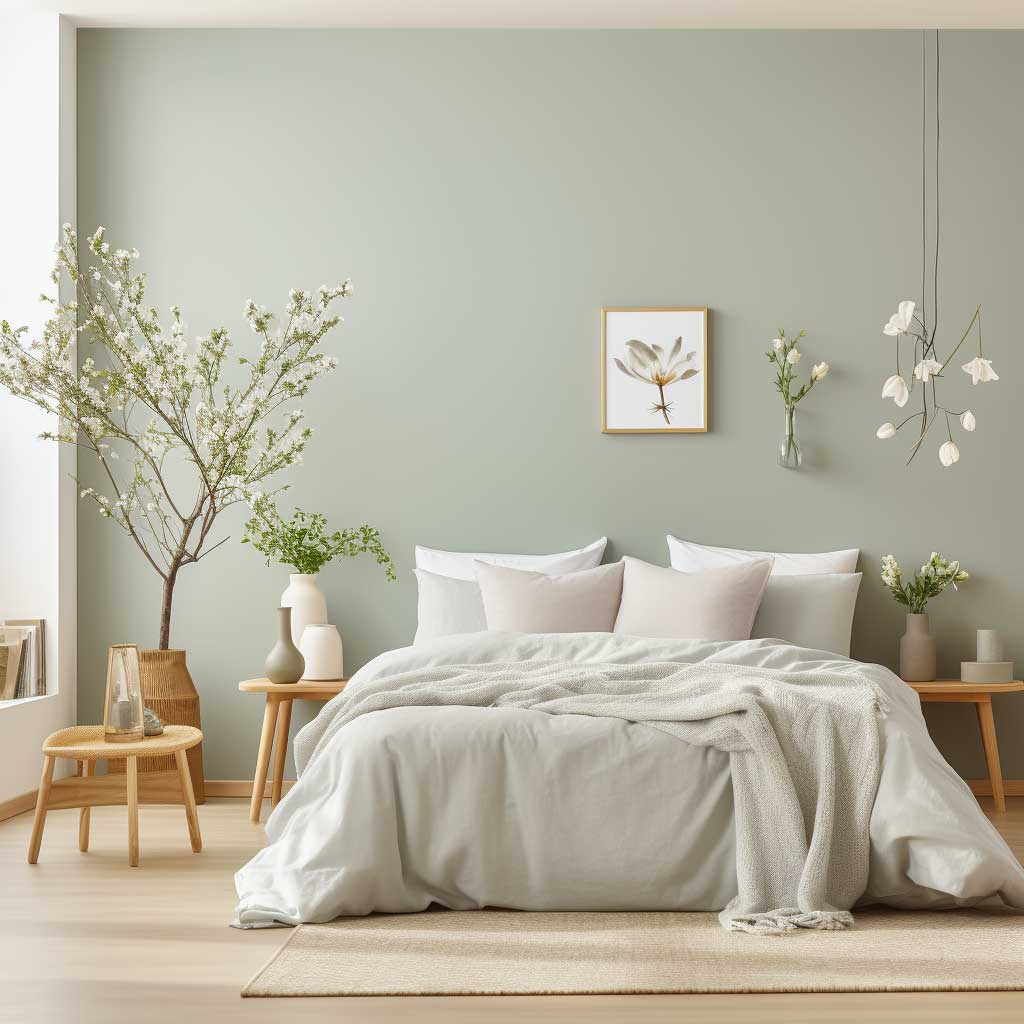
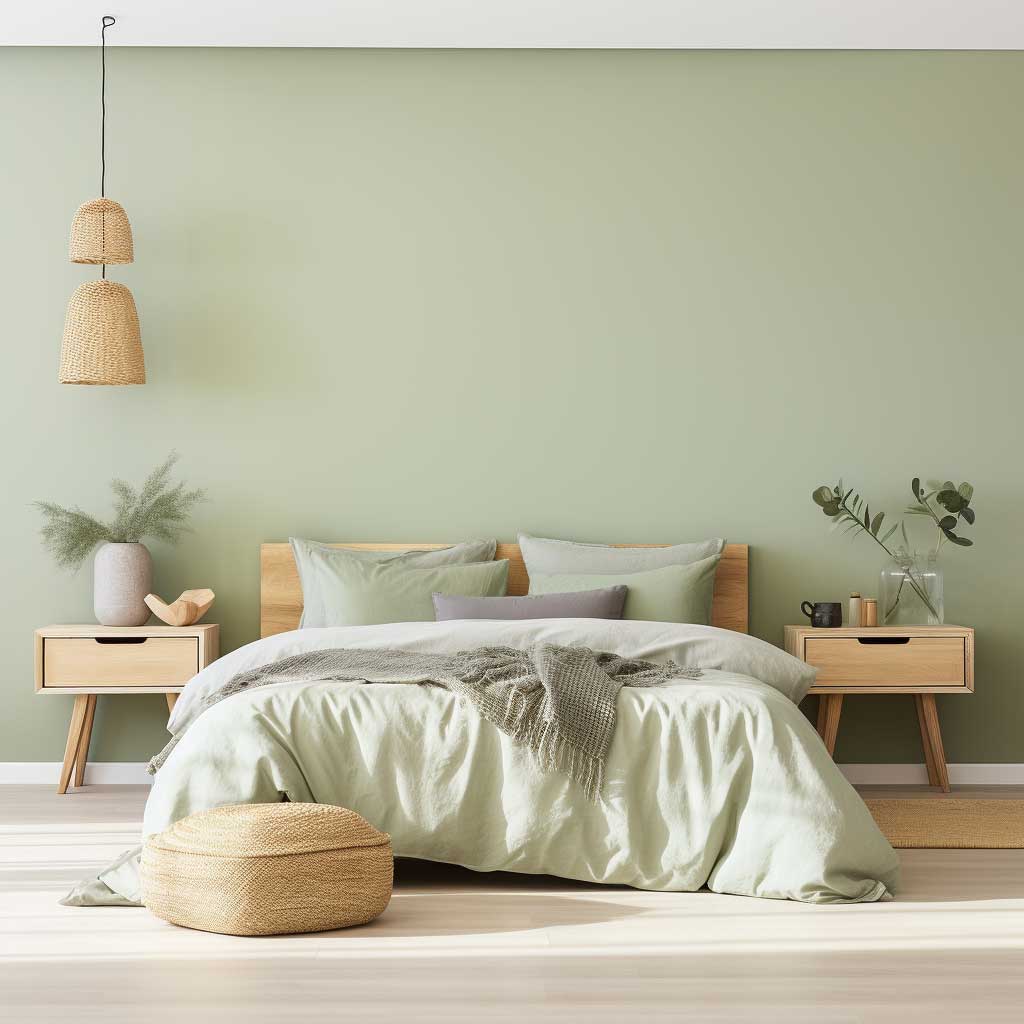
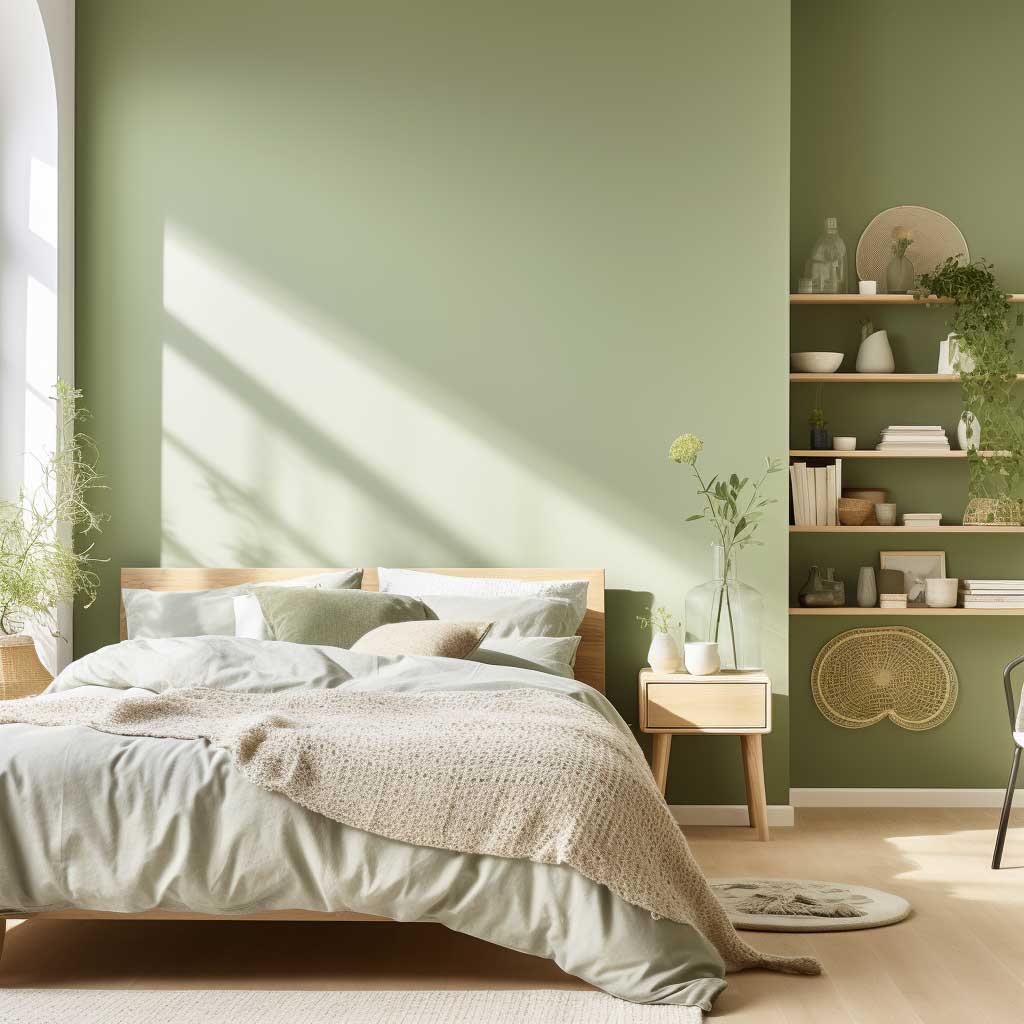
The bedroom is supposed to be a place of rest and relaxation, primarily after a long day’s work. One should thus create a calming environment to bring forth tranquility and wellness. This can be achieved by choosing the right paint color. Green is the color of nature, and it is associated with tranquility and wellness. It is no doubt a great color to bring calming energy to the bedroom. Here are a few sage green paint ideas for the bedroom:
Sage green is soft, and it is muted—a grayish undertone to the color green. This is a versatile color that can be paired with most design styles, from classical to modern. Sage green is soft, offering a person a feeling of a serene environment ideal for relaxation and resting. Sherwin-Williams recommends green tones as ideal for creating a restful bedroom retreat. Timeless color in terms of the sage green color.
A myriad of things crosses your mind when one says designing the bedroom with sage green. To begin with, there is the shade of sage green you would prefer. There is availability of the light and dark shades of sage green, so get to choose which one you feel fits right with your taste and preference as well as the amount of natural light your room receives. Lighter shades will make a small room feel much larger and more airy, while darker shades will create a cozy and intimate atmosphere. Think about the other colors and materials used while applying sage green in the bedroom. Sage green is great with lots of colors and materials. It works beautifully with white, beige, or light wood tones. These colors and materials, in turn, suit with the soft, muted tones of sage green, giving it harmony and unity. You can also add color with accessories like throw pillows, artwork, and rugs. Mustard yellow, coral, and navy blue are some of the best colors that work with sage green and at the same time could add interest and personality in your space.
Another important design element that could be included is the furniture and décor. Select those that will interplay with the color sage green and finally have a harmonious outlook. For example, light wood or white furniture will assist in the creation of an edgy and airy ambiance. Introduce natural elements through plants and textures, such as in woven finishes, to accentuate calm and tranquility in the room.
Generally, this would be highly magnificent in representing a restful and calm bedroom ambiance that sage green can create. The pale and muted tones make the ambiance tranquil and peaceful, allowing rest. Furthermore, sage green is a very versatile and timeless color that will combine with a lot of design styles and a great number of color schemes. In this regard, considering the sage green, other used colors, materials, as well as furniture and decoration, you will see that you will have a bedroom harmonious and coherent in sage green.
How to Paint Your Bedroom Green
A step-by-step process for choosing and applying green paint in your bedroom — from picking the right shade to the final coat.
Tools & Materials
- Paint roller and tray
- Angled brush for cutting in
- Painter’s tape
- Drop cloths
- Two sample pots of green paint
- Tinted primer (for dark greens)
- One gallon of chosen green paint
Pick your green direction
Decide between sage (full room), emerald (accent wall), or mint (bright rooms). Buy two sample pots from Sherwin-Williams or Benjamin Moore. Paint 12×12 inch squares on the actual wall — not cardboard.
Test through a full day-night cycle
Live with the samples for 48 hours. Check them in morning sunlight, afternoon shade, and under your bedroom’s evening lighting. Green shifts dramatically between natural and artificial light.
Prep the room
Move furniture to the center. Lay drop cloths. Tape off trim, ceiling edges, and outlet plates. Clean walls with a damp cloth to remove dust. For dark greens like emerald, apply tinted primer first.
Cut in edges, then roll
Use an angled brush to cut in around trim and corners first. Then roll the main wall areas with even, overlapping strokes. Work in W-shaped patterns to avoid roller lines. Let dry 2–4 hours between coats.
Apply second coat and finish
Two coats for sage and mint. Three for emerald. Remove painter’s tape while the final coat is still slightly tacky for the cleanest lines. Wait 24 hours before moving furniture back against the walls.
Emerald Green Accent Wall — Bold Without Wrecking the Room
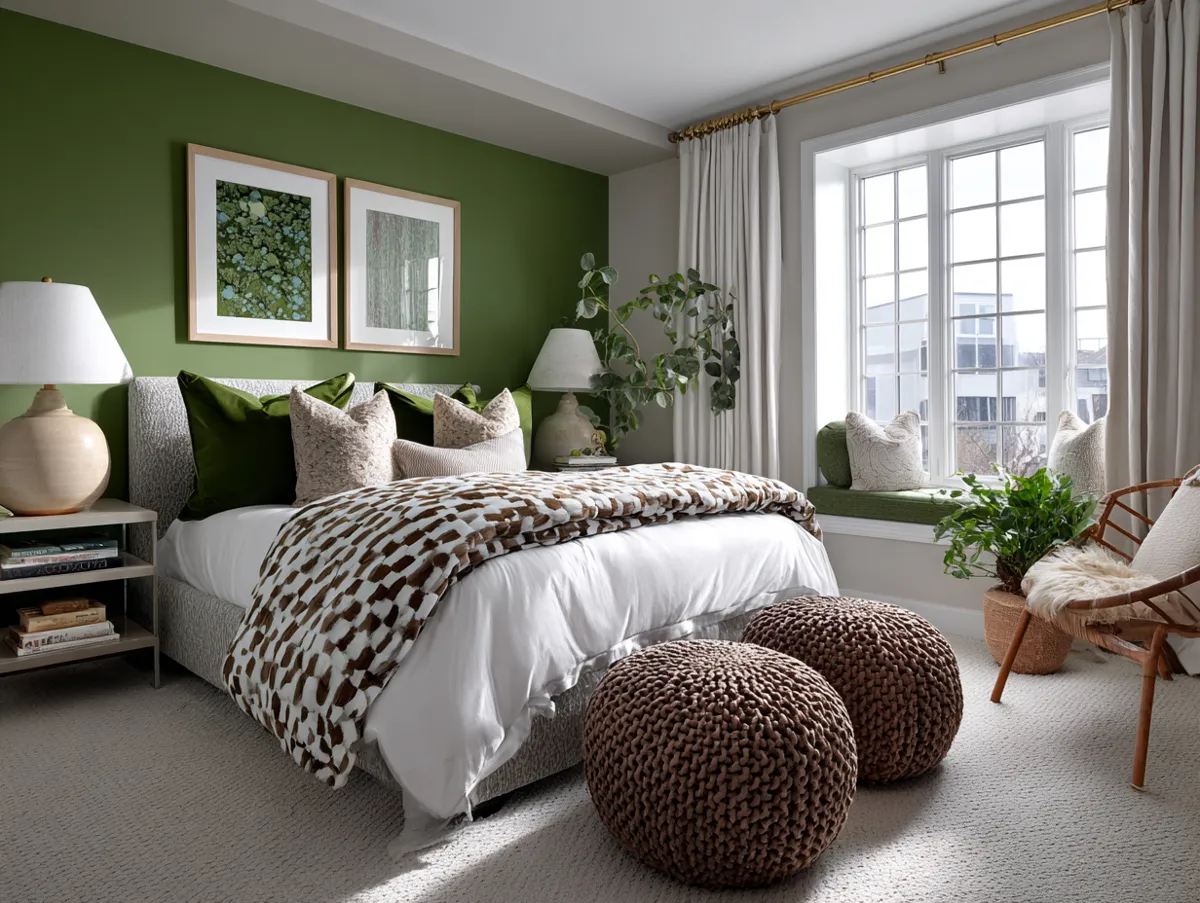
Benjamin Moore Forest Green (2047-10) is the classic emerald pick. Costs around $80 a gallon. Sherwin-Williams Evergreens (SW 6447) is darker, almost black-green in low light. Sample both. Slap them on the wall behind your bed and live with them for 48 hours before committing. Paint swatches lie.
Paint only one wall. Painting all four walls emerald is how you end up living inside a pool table. The wall behind the headboard works best because it anchors the room without swallowing it. Keep the other three walls in a warm white or soft gray. Benjamin Moore Chantilly Lace for the white, Repose Gray from Sherwin-Williams for the gray.
Gold and brass accents next to emerald look like money. That’s not an accident. A $35 brass table lamp from Target does more for an emerald wall than a $200 chrome fixture ever could. Same with picture frames — gold or warm wood only. Silver disappears.
The biggest mistake with emerald accent walls is cheap paint. Flat finish shows every roller mark on dark colors. Go eggshell or satin. Two coats minimum, three if you’re covering beige. Tinted primer saves a coat and about four hours of your weekend.
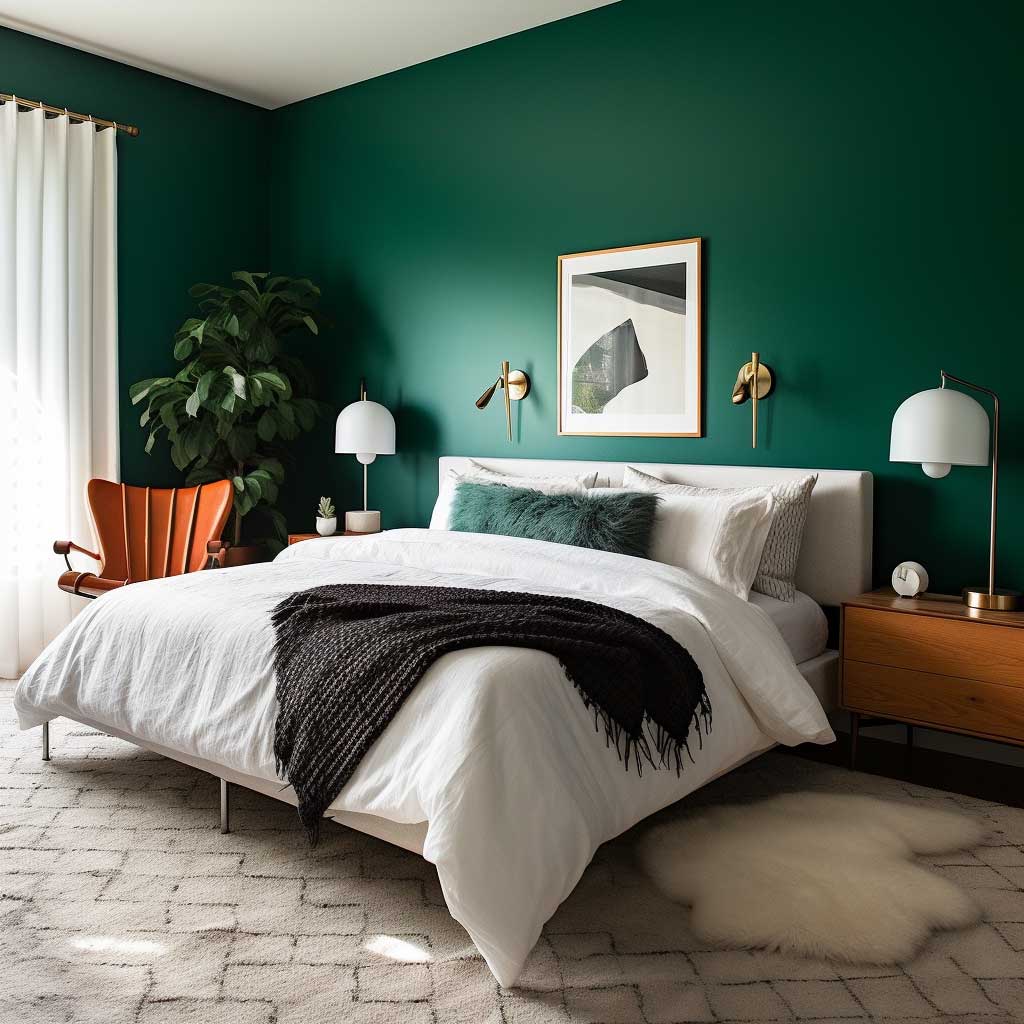

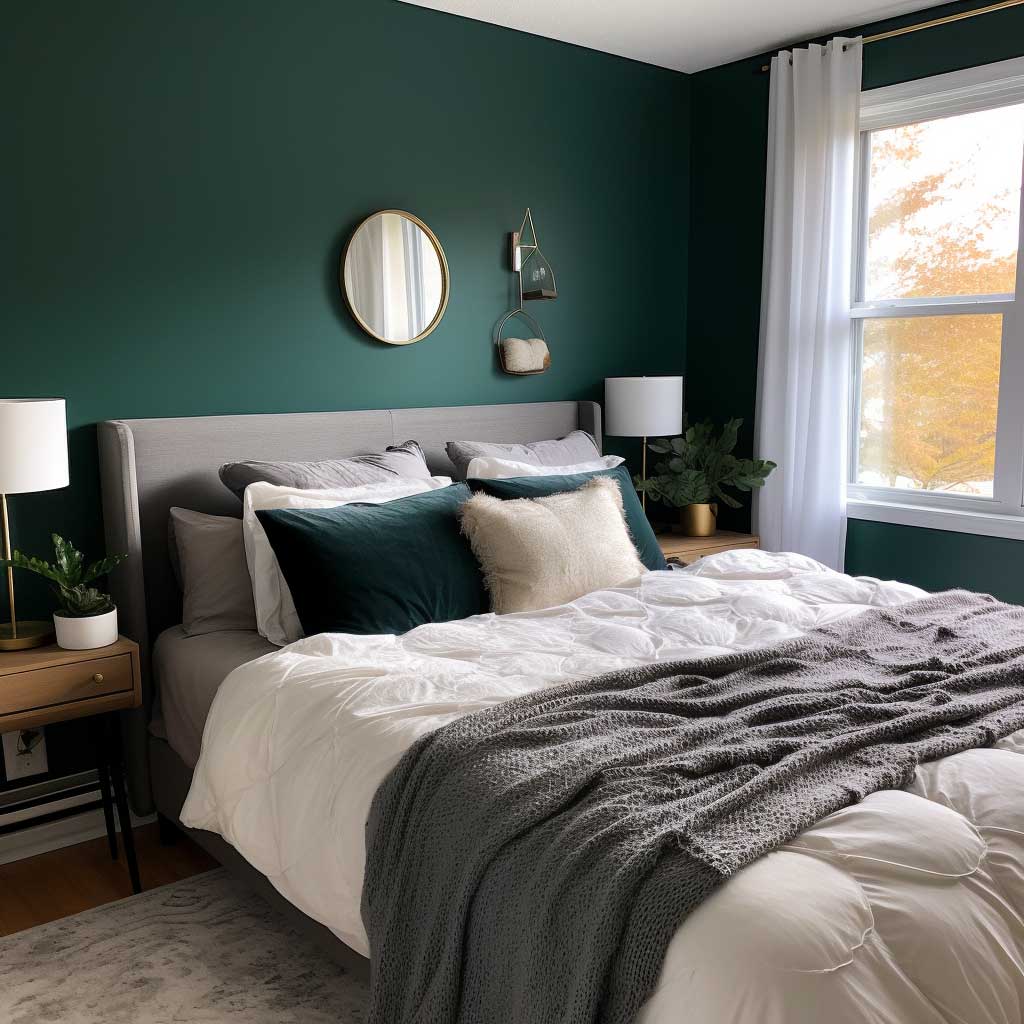
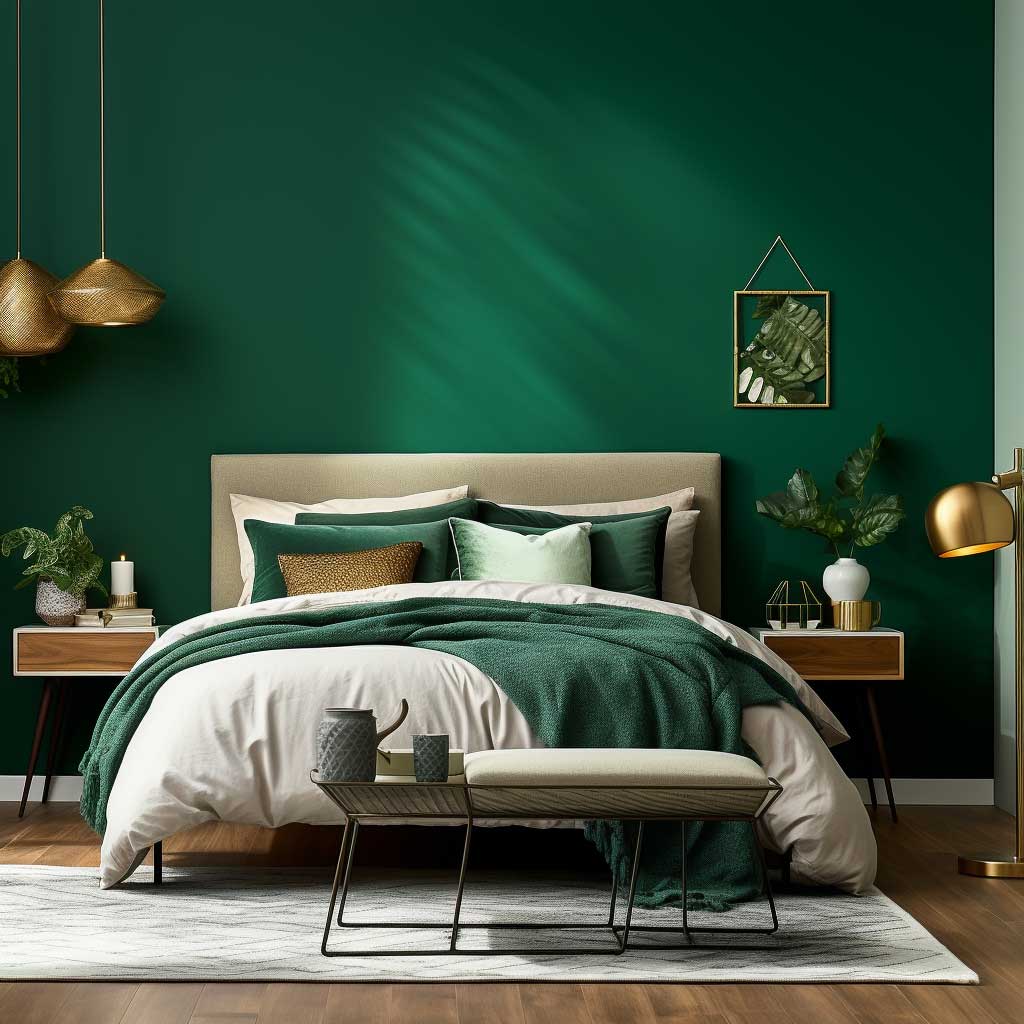
For quality sleep and relaxation, your bedroom must have a relaxing and restful ambiance. It doesn’t necessarily mean you have very plain or down-to-earth color schemes in your room. A pop of color can really bring out character and interest in your space yet can also be very relaxing. If you want more ideas on how bold wall color can transform a bedroom, check out these painting ideas for bedroom walls. One of the great green paint bedroom ideas for those who want to make a bold statement yet maintain a soothing atmosphere is to create an emerald green accent wall.
This is the deep shade of green, very classy and posh. Strong and rich, it is a color that can inject a bit of drama and sophistication into your bedroom. An emerald green accent wall can actually be that center of attraction in your bedroom, bringing about a visual perception of more space and depth in the room. Emerald green is also easily adaptable to numerous colors and materials, which assures versatility in your bedroom.
Design considerations for making an emerald green accent wall: To get started, you should consider the wall you’ll be painting emerald green. Ideally, your room’s focal point, such as the wall behind your bed. This creates a sense of balance and harmony in your space. Think also of the rest of the bedroom colors and materials you’ll use. Some of the colors that work nicely with emerald green are white, beige, and gray; they will offer an equalized and harmonious look, thus letting the emerald green accent wall become the focal point. Also, think about incorporating some metallic touches such as gold or brass for a touch of glam.
Next is the furniture and decorations. Now that the emerald green accent wall has been established, select furnishings and decorations that coordinate or support the emerald green wall to bring the room into unity and harmony. Choose natural furniture of neutral tones and add a popping color of accessory with decorative items, such as throw pillows, artwork, and rugs. You can also add in more calming, tranquilizing elements like plants or woven textures. In summary, the emerald green accent wall gives a modern, classic, and dramatic touch of elegance to your bedroom while it has the ability to maintain a soothing and restful ambiance in your room. Deep shades of emerald green create a classy and luxurious look while neutral colors and natural elements make that look balanced and harmonious. By considering what wall you will paint, the other colors you will use in your material, the furniture, and the decor, then you can have that beautiful and coherent emerald green accent wall that can totally change your bedroom into that dreamy refuge.
Mint Green Bedroom — Airy, Cool, and Tricky to Pull Off
Sherwin-Williams Breaktime (SW 6463) is a clean mint without the toothpaste-commercial vibe. Around $75 per gallon. Benjamin Moore Spring Mint (2040-70) goes lighter, almost like mint ice cream melted onto the wall. Both read fresh in rooms with good natural light.
Mint turns gray in dark rooms. No exception. If your bedroom faces north or has one small window, skip mint entirely or push toward a slightly more saturated shade. A room that gets zero afternoon sun will make mint look like faded wallpaper from 1987.
White furniture is the safe bet with mint walls. Makes the room feel like a spa. But all-white gets boring fast. Throw in one piece of light natural wood — a rattan headboard, a bamboo mirror — and suddenly the room has a pulse. Coral pink accessories work here better than anywhere else. A $12 coral throw from H&M Home on a white bed against mint walls? Looks like a magazine shoot.
Avoid gray furniture with mint walls. I tried it once and the whole room looked like a waiting area at a dental office. Gray kills mint’s energy. If you need a neutral, go cream or warm beige, not cool gray.

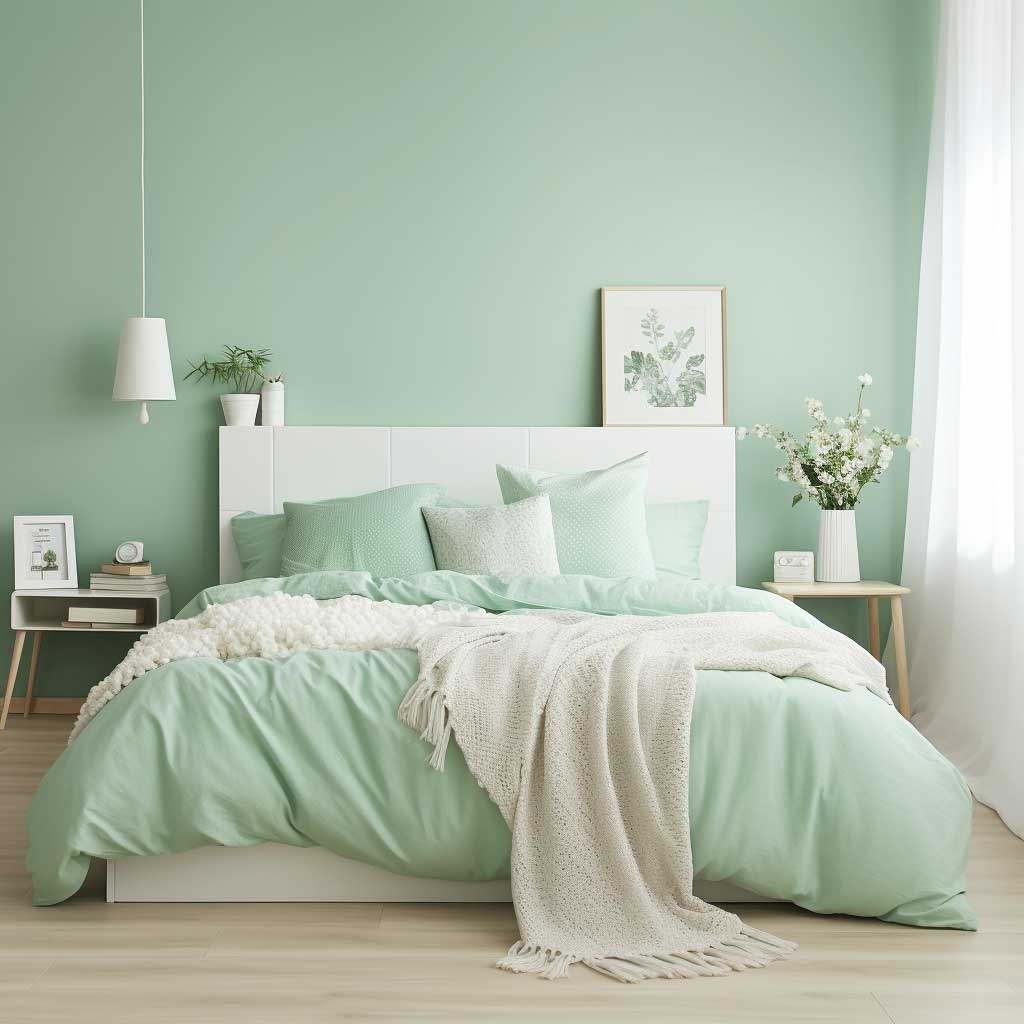
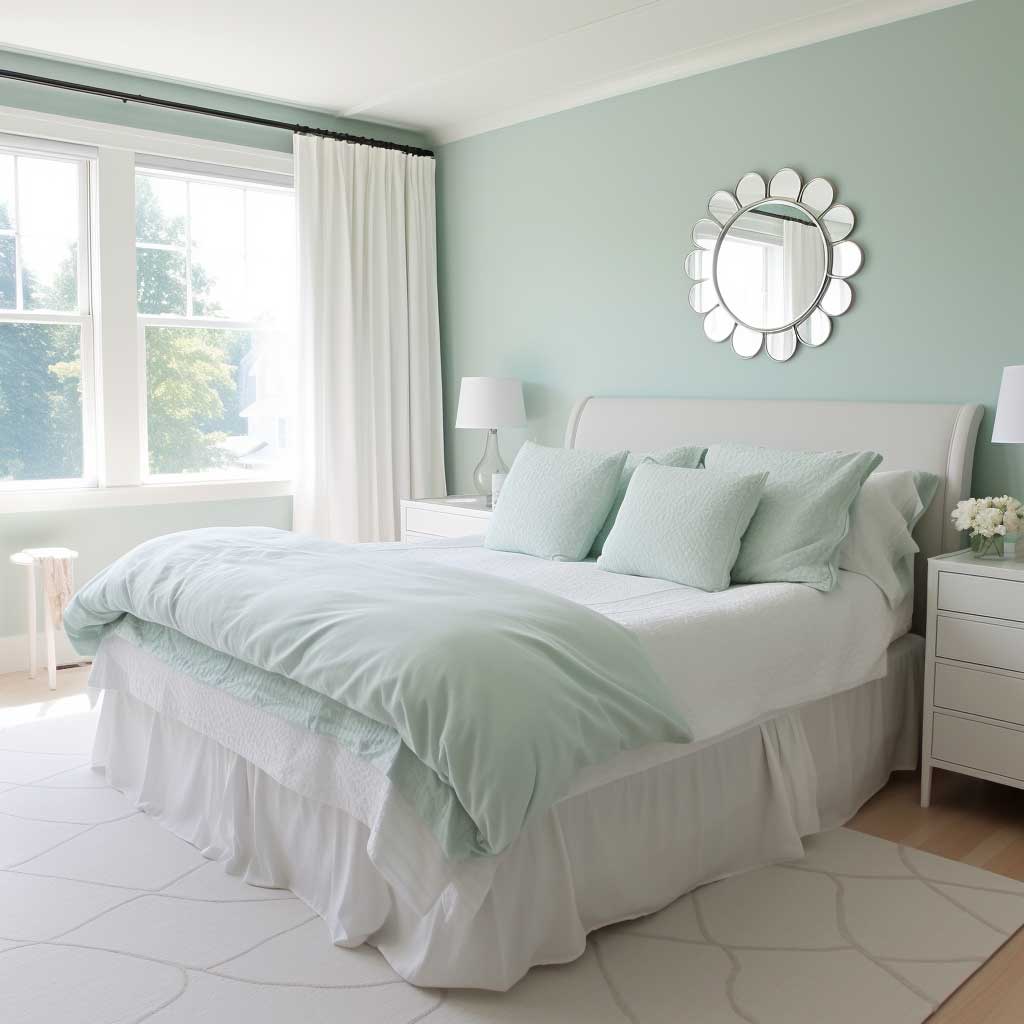
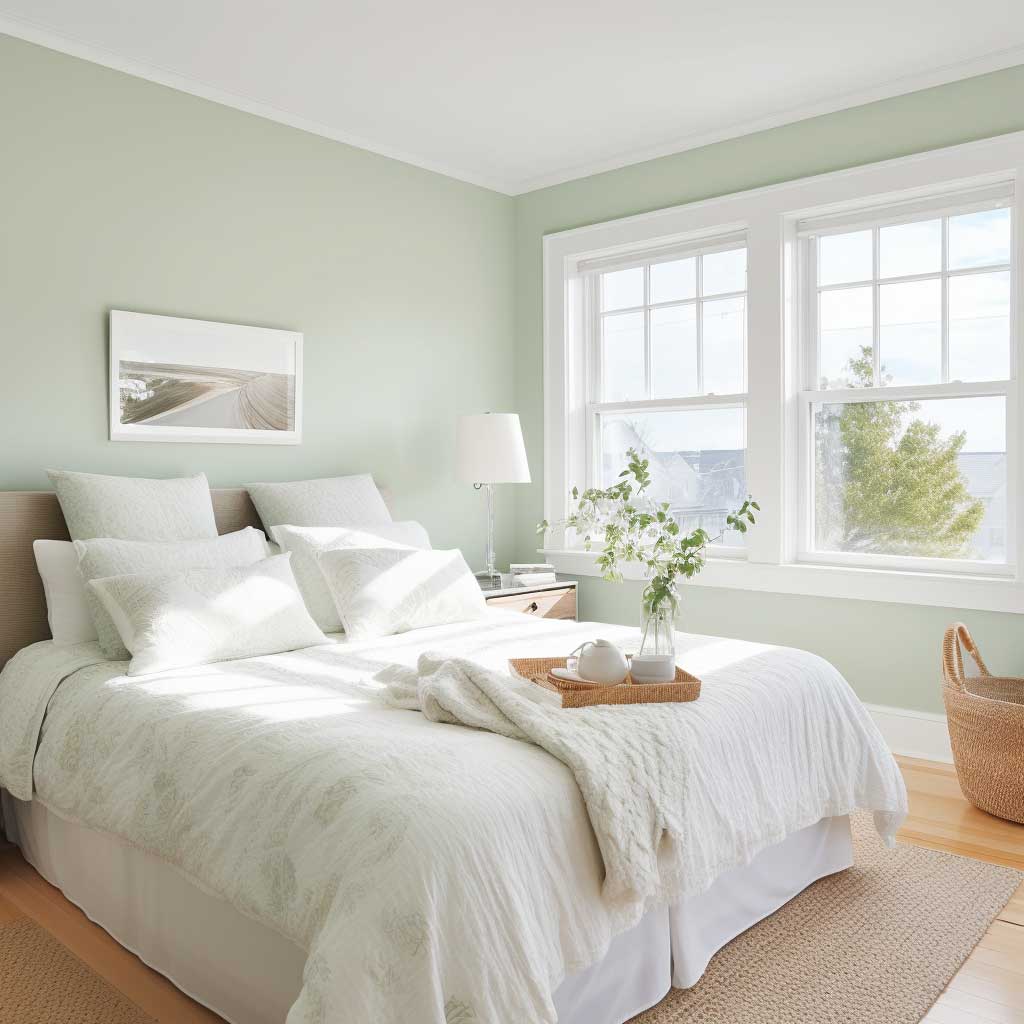
A bedroom is a room where one goes to rest and relax. Thus, the atmosphere should bring peace and well-being. The right color to create such an atmosphere is light mint green. This essay will go in depth about the reasons light mint green is a wise decision and ways it can be incorporated into one’s bedroom to create a light mint green oasis.
Light mint green is a pale, airy shade of green, with a bit of blue. This color is related to nature, calmness, and well-being, with allusions to something fresh and invigorating. The last is also versatile and marries easily with other colors and different materials. For instance, it will definitely look just perfect with white, beige, or light-colored wood. If you love this fresh palette, see how mint green and light yellow work together in bedrooms. Other such colors and materials balance the pale, airy tones of light mint green, making them a part of a harmonious, coherent look.
Here are a few design features you must consider when incorporating light mint green in your bedroom. First, determine the shade of light mint green. There are light, lighter, and dark mint green colors; choose the one that will befit your taste and style according to the amount of natural light of the room. Lighter light mint greens will give the room a bigger and more open feel; darker light mint greens will have an opposite effect. Next, consider the other colors and materials being used in the bedroom. Light mint green looks quite pretty with all colors and materials: white, beige, and light wood tones. These colors and materials will give a tender, light feel to light mint green, giving off a balanced and homogenized look. Maybe you’d like to add some color pops with accessories like throw pillows, artwork, and rugs. Coral, navy blue, and mustard yellow are great color choices for light mint green; they really bring some vibrancy and fun into the space.
Another very important design element is the furniture and decoration. Pick the type of furniture and decor that is able to bring out this color of light mint green; provide a coherent and harmonious appearance. For instance, white or light wood tones may help freshen the space up and make it airy. You may also want to add other natural details, such as plants and woven textures, to make the space more calming and tranquil.
The conclusion is that this light mint green is very appropriate for a cool and fresh atmosphere inside a bedroom. Light mint green evokes thoughts of restful peace with its pale, airy tones; the other colors and materials take on a harmonious, coherent look. Through the choosing of the tone of light mint green, choosing other colors, other materials, and taking into consideration furnishings and decoration, you will be able to create a light mint green oasis you will love in years.
Choosing Your Green — Quick Reality Check
Sage works in almost any room but hates bright white trim. Emerald looks expensive on one wall and overwhelming on four. Mint needs sunlight or it dies on the wall like a houseplant in a closet.
Buy two sample pots before committing. Paint them on the actual wall, not on cardboard. Live with them through morning and evening light. The $8 you spend on samples saves you $80 on a gallon you’ll return.
Stick with Sherwin-Williams or Benjamin Moore for consistency. Big-box store paints are fine for closets. Your bedroom walls deserve better.
Related Topics
FAQ
How many coats of green paint do I need for bedroom walls?
Does green paint make a bedroom look smaller?
What color bedding goes best with green bedroom walls?
Can I use green paint in a bedroom with no natural light?
Is sage green a trendy color that will look dated?
Complete guide
Bedroom Design Ideas That Actually Change How You Sleep, Feel and Live
Styles, colors, furniture, walls, layouts — 300+ ideas in one place
Complete guide
Green Home Color Ideas for Every Room and Every Shade
Sage, emerald, olive, mint — interiors, exteriors, gardens — all in one place