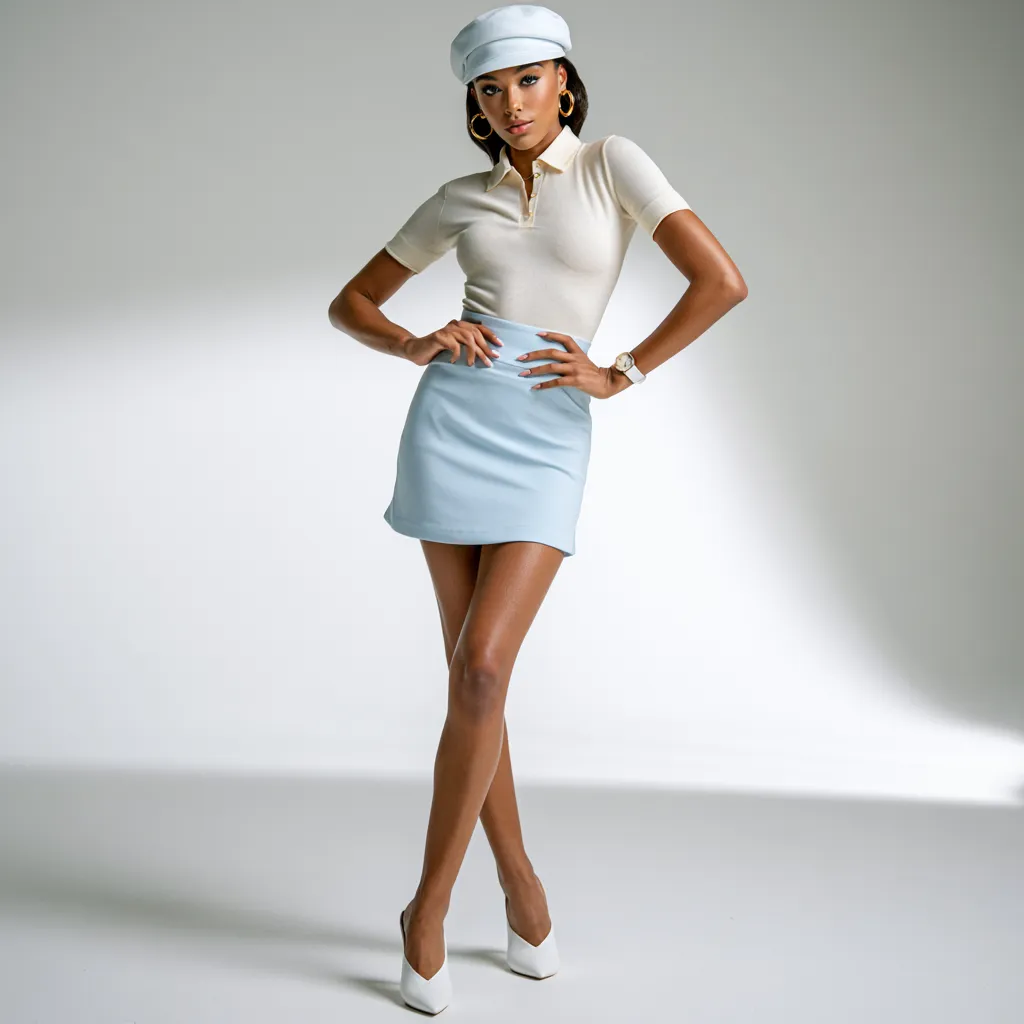
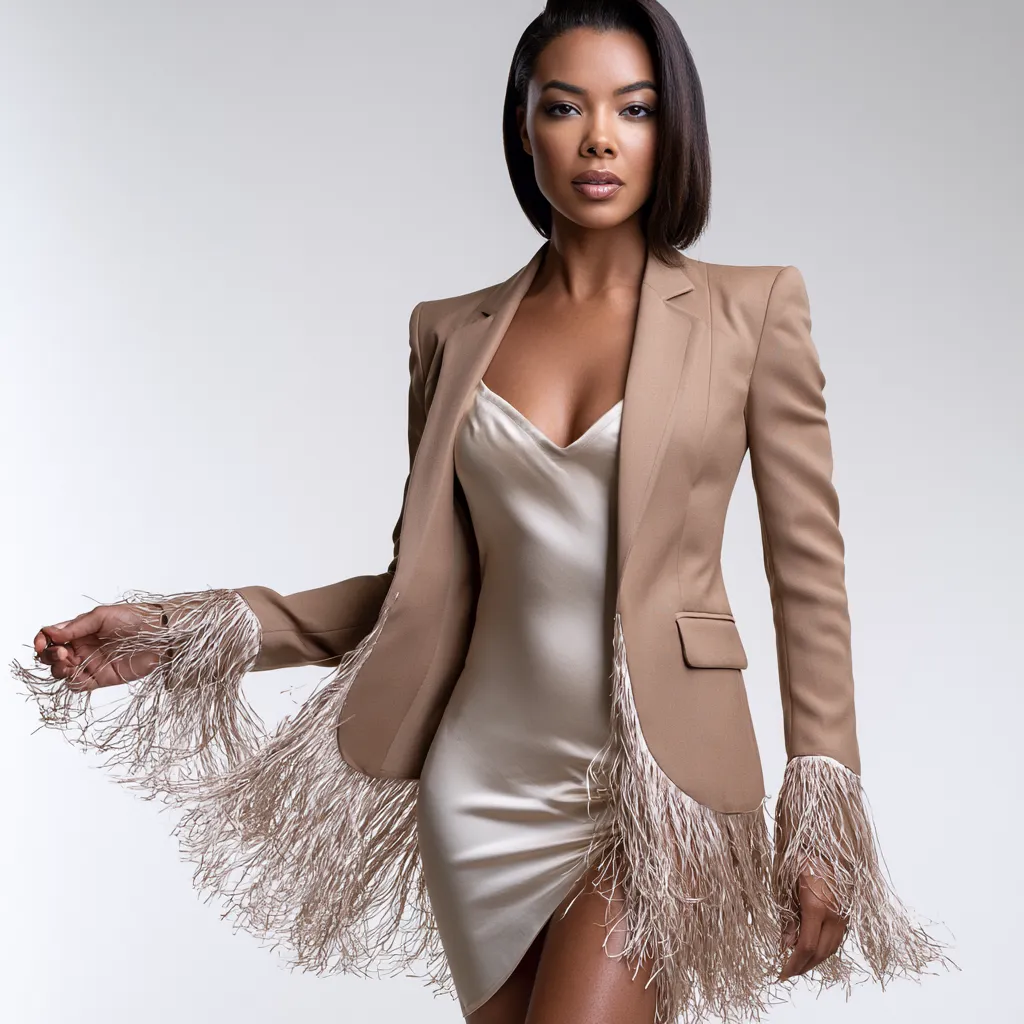
1920s outfit ideas keep resurfacing every few years for a reason. The silhouette is doing something the rest of fashion history hasn’t quite replicated — flat front, dropped waist, no structure fighting your body. It looks effortless because it actually is.
The problem is most people approach 1920s outfits like a Halloween decision. They grab a fringe dress, slap on a headband, and call it Gatsby. That reads as costume. The versions that actually photograph well — and get saved on Pinterest — are the ones where one or two era-specific pieces land against something modern.
I’ve tested both directions. A sequined flapper dress with modern pointed-toe mules? Works. That same dress with period-accurate T-strap shoes and a feathered headband? You look like you’re about to perform in a school play. Restraint is the whole trick.
This isn’t a history lesson. It’s 35+ 1920s outfit ideas sorted by how you’d actually wear them — to work, to a themed event, or just because drop-waist dresses are flattering and nobody talks about that enough.
Quick Scan
3 Rules for 1920s Outfit Ideas That Don’t Read as Costume
- One era piece maximum per outfit. Flapper dress OR pearl rope OR cloche hat — not all three at once.
- Modern shoes change everything. Pointed-toe heels instead of T-straps cut the theatrical read by half.
- Accessories carry the era better than the dress does. Art deco jewelry on a plain slip dress outperforms a full costume every time.
Scroll down for 35+ looks sorted by occasion — themed event, everyday, and office-adjacent.
The Tailored 1920s Look Men Still Can’t Get Wrong
A slim-fit pinstripe suit is the entry point. Not a zoot suit, not a wide-lapel gangster situation — just a modern slim cut in a fabric that has some weight to it. Wool-blend works. Polyester will photograph cheap no matter what the lighting does.
The fedora is where most people lose the plot. It either looks right or it makes you look like a film student. Buy one with a shorter brim — under 2.5 inches — and wear it slightly back. J.Crew has had a decent version around $68 for a few seasons. That’s the ceiling I’d set for a hat you’ll wear four times a year.
Leather brogues are non-negotiable in this look. Skip anything with a rubber lug sole. The whole visual argument of 1920s menswear is precision — the shoe has to match that energy. Allen Edmonds Park Avenue in cognac runs about $395, but their factory seconds are routinely $180 and identical.
Don’t layer the pocket square, the tie bar, and the lapel pin simultaneously. Pick one. The era was deliberate about detail, not maximalist about it — that’s a Peaky Blinders costume department choice, not a 1920s fashion one.


Don’t Do This
The 1920s Outfit Mistakes That Make You Look Like a Theater Major
- Stacking period accessories. Feathered headband + pearl rope + T-strap shoes + beaded clutch = Halloween. Pick two details and stop there.
- Wide-brim fedora on a 1920s men’s look. The silhouette reads cowboy, not Jazz Age. Keep the brim under 2.5 inches.
- Floor-length flapper dress. The drop waist only reads correctly at knee length. Below that it loses the proportions entirely.
- Beret instead of cloche. It moves the reference about 30 years forward and 3,000 miles east. Not the same era at all.
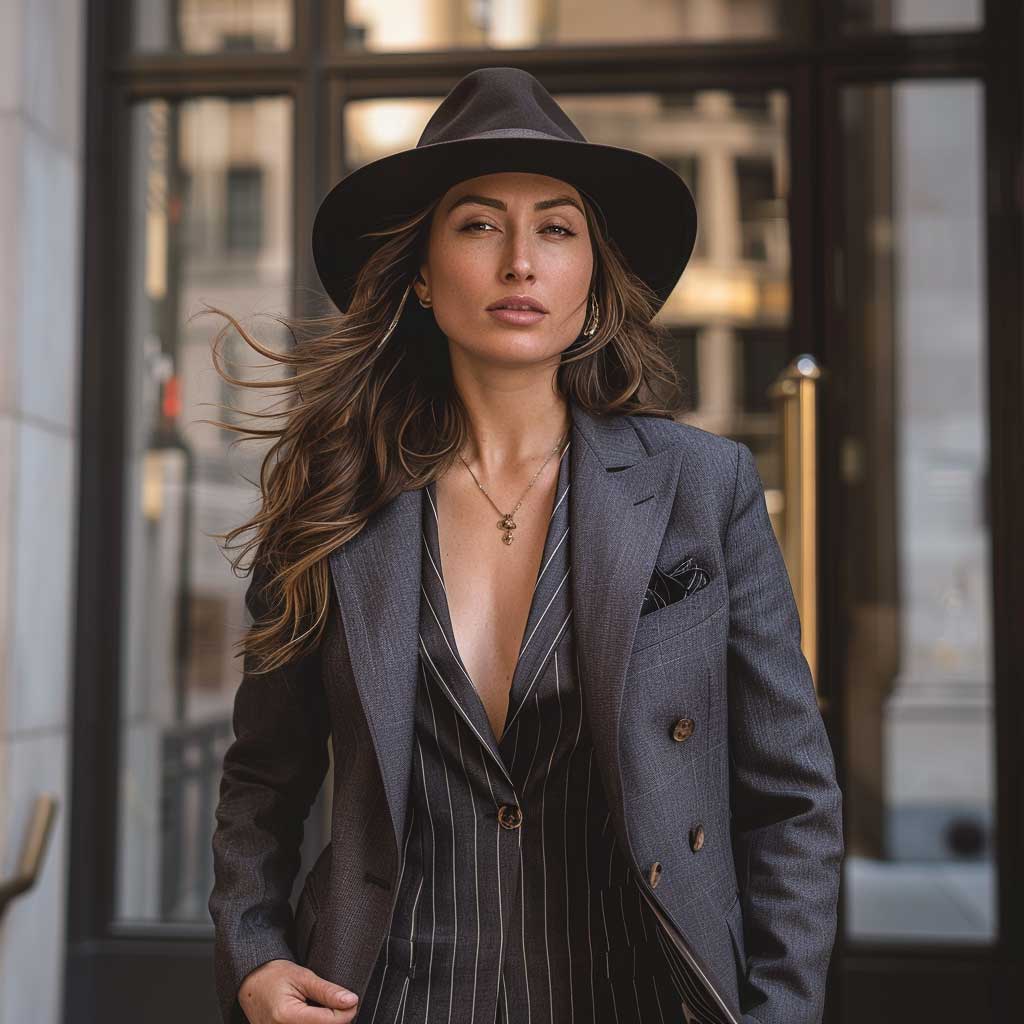

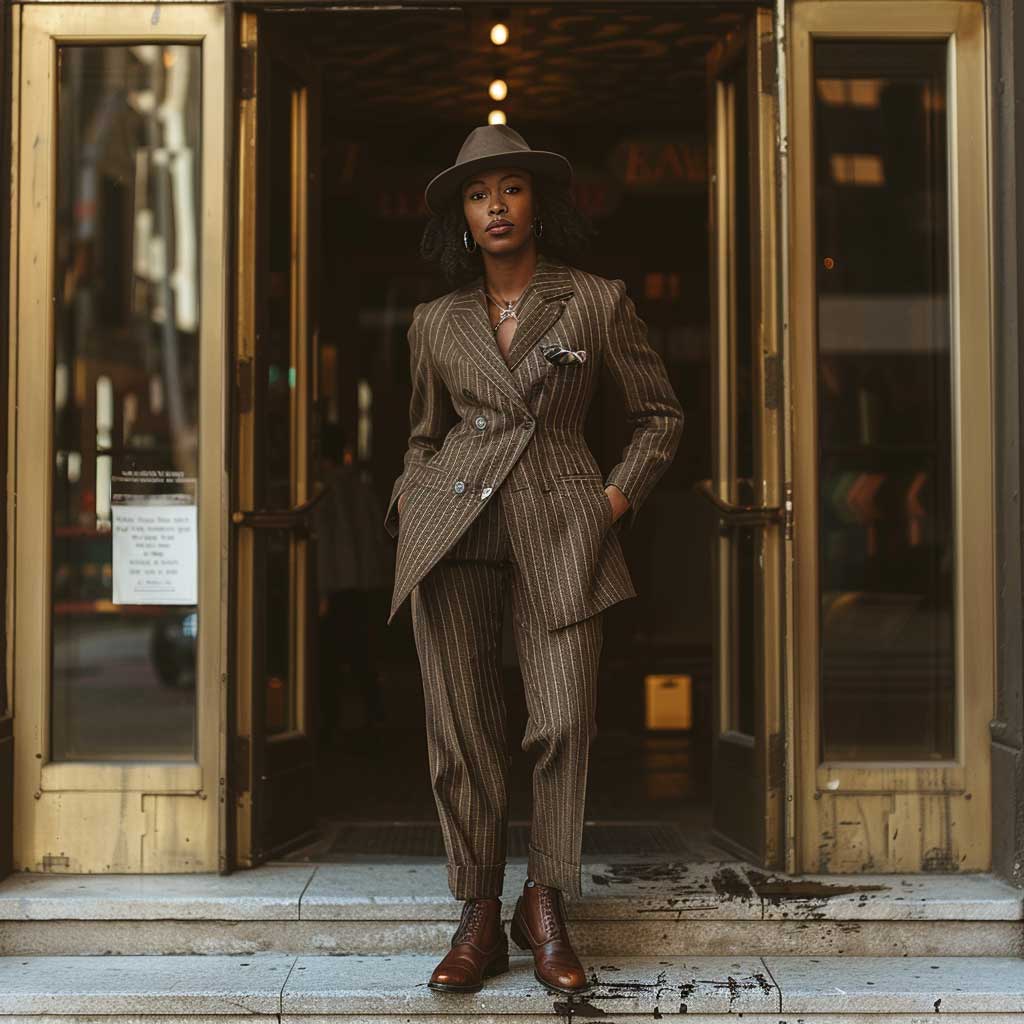

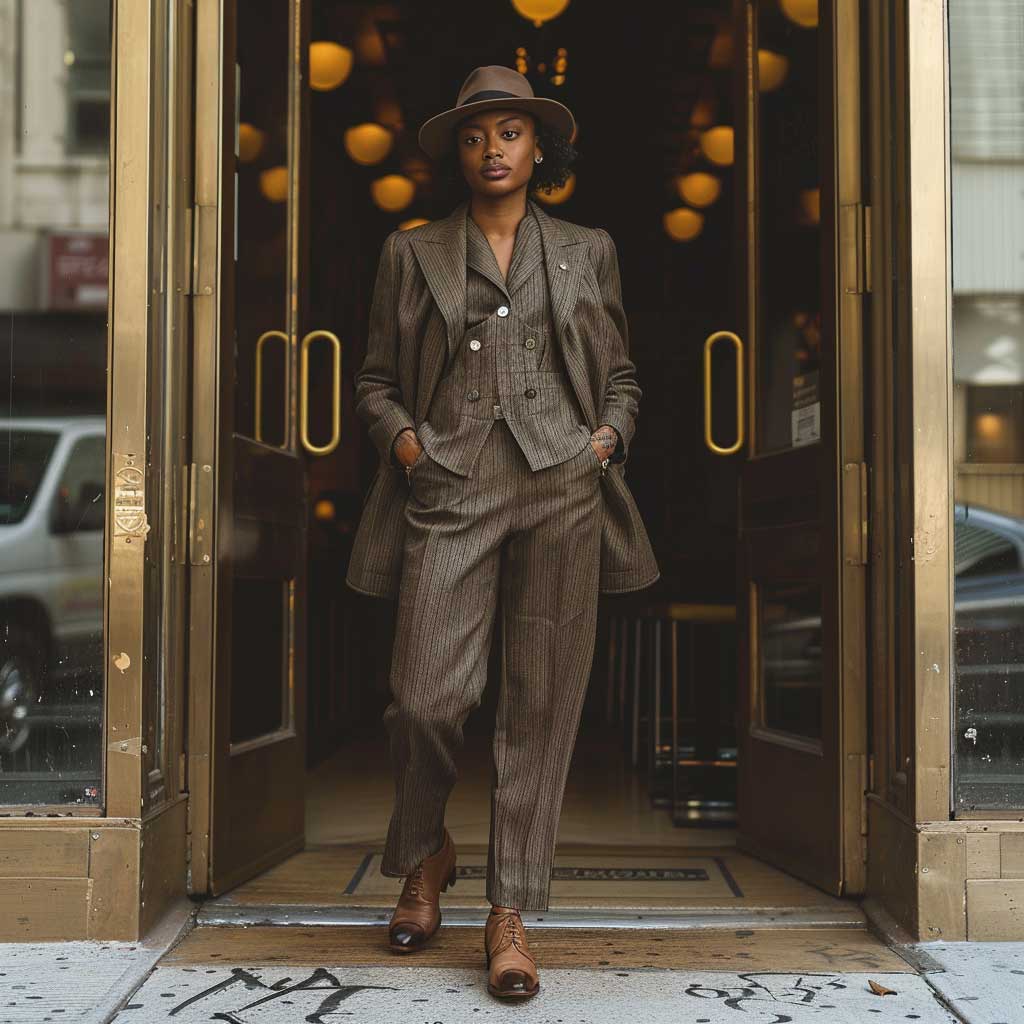
As the day transitions from the formality of the corporate world to the relaxed ambiance of evening leisure, there emerges an opportunity to traverse time through fashion. This transition is captured in a visual narrative that showcases the versatility of 1920s outfit ideas, adeptly adapted for the man who moves from the boardroom to a speakeasy with effortless elegance. The scene is set against the backdrop of a modern metropolis, where the echoes of the past find harmony with the rhythm of present-day life.
The central figure in this narrative is clad in a tailored suit that whispers of the 1920s—its sharp lines and subtle pinstripes a nod to the era’s sartorial excellence, yet updated with a slim fit that speaks to contemporary tastes. This deliberate blend of eras is not merely a fashion statement but a homage to the timelessness of good style. The fedora hat, once a quintessential element of menswear, now serves as a bridge between decades, its silhouette as striking now as it was then.
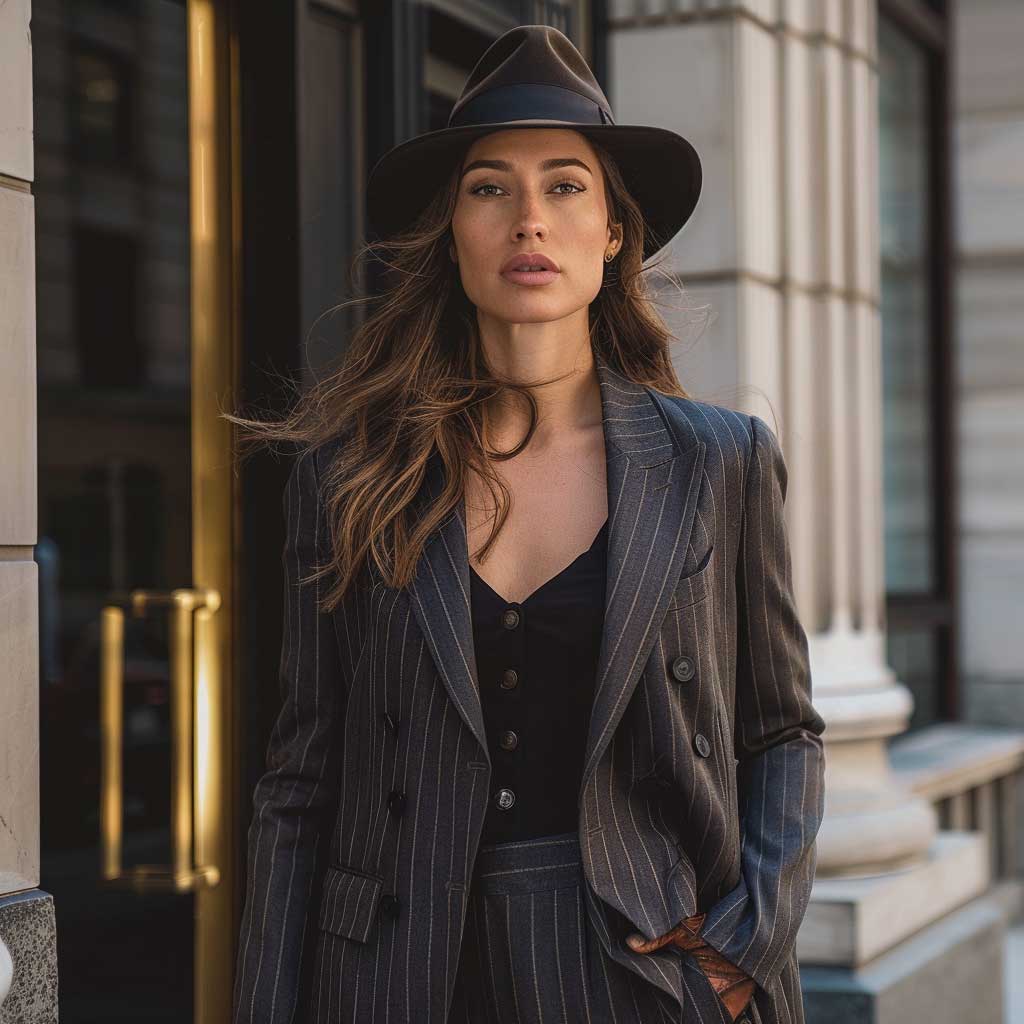


Leather brogues, polished to perfection, carry the wearer through his day, their design rooted in history yet perfectly suited for the modern urban jungle. This ensemble is more than an outfit — it’s a case study in how vintage pieces work hardest when worn with restraint. One period element at a time. That’s the rule that makes the whole look land.
The Flapper Dress Works in 2025 Only If You Drop One Accessory
A knee-length sequined flapper dress is the piece that photographs best in this category. Not midi, not floor-length — knee. The drop waist hits differently at that hem length. Free People’s “Shiny Fringe Mini” ran around $148 last season and had the right proportions. ASOS has a beaded version for $65 that holds up better in photos than in person.
The cloche hat is optional. The feathered headband is not — choose one or the other, never both. I wore both to a Great Gatsby event and looked like a prop. The headband alone reads modern enough to avoid the costume trap.
Art deco jewelry is what actually sells the era. Long pendant earrings in geometric shapes, a single statement bracelet. Baublebar makes affordable versions in the $30–$45 range that photograph exactly like the expensive stuff. The pearl rope necklace? Keep it long — waist-length, not collarbone. That’s the 1920s proportion.
Modern pointed-toe heels instead of T-straps cut the period-costume feeling in half. That one swap is the difference between a 1920s inspired outfit and a 1920s outfit. Wear the T-straps if you’re going full-commitment to a themed event. Otherwise, let the dress carry the era and let your shoes stay current.


| 1920s Accessory | Costume Read | Modern Pairing | Price Range |
|---|---|---|---|
| Feathered headband | High — wear alone only | Plain slip dress + modern heels | $15–$40 |
| Pearl rope necklace (36″) | Low — reads current | High-waisted trousers + silk blouse | $28–$65 (Madewell, Baublebar) |
| Cloche hat | Medium — context-dependent | Midi skirt + minimal jewelry | $35–$90 |
| T-strap heels | High with full flapper dress | Swap for pointed-toe mules | $45–$130 |
| Art deco geometric earrings | Very low — works anywhere | Any outfit, any occasion | $30–$45 (Baublebar) |
| Beaded clutch | Medium — pair with modern coat | Leather jacket over flapper dress | $25–$80 |


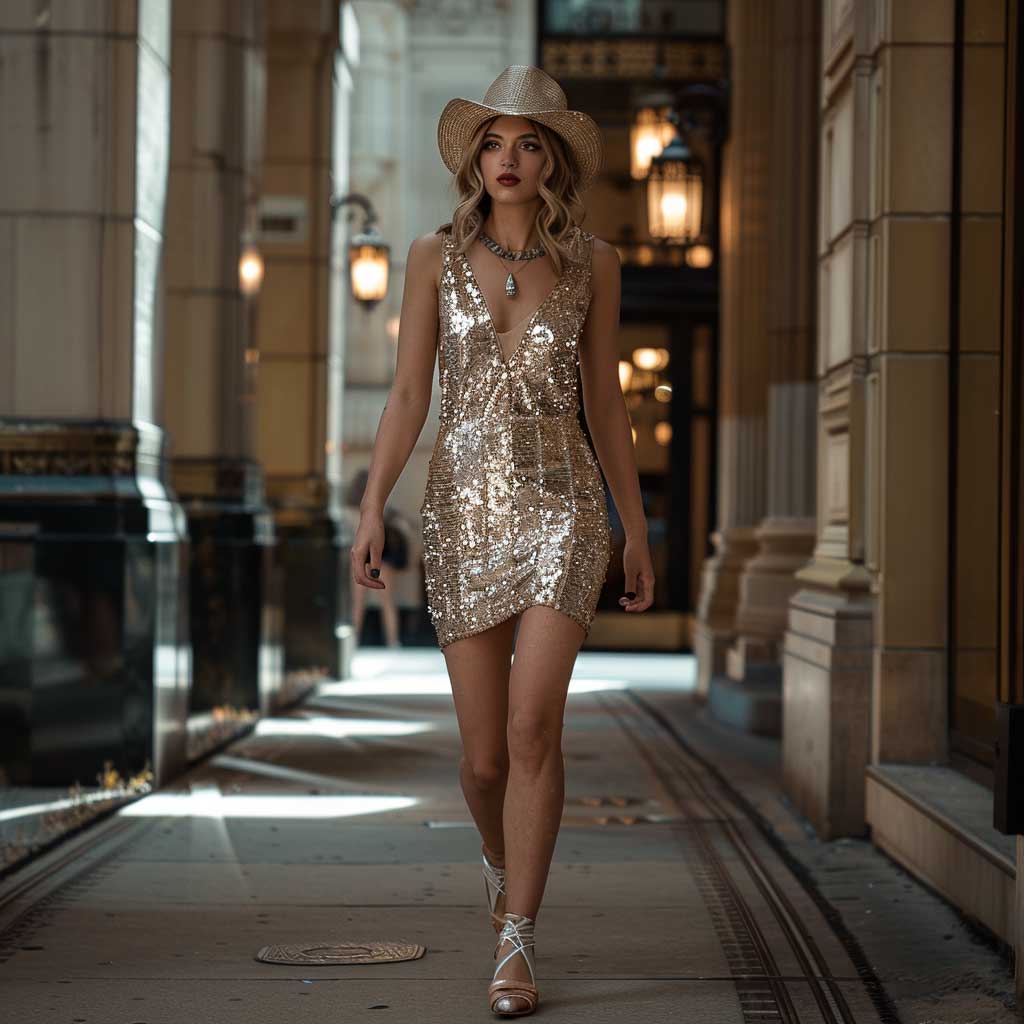

In the heart of the bustling city, where the modern pulse beats in sync with the timeless rhythm of fashion’s past, there emerges a figure emblematic of a unique blend of history and contemporaneity. This visual narrative brings to life the essence of 1920s outfit ideas, reimagined for the woman of today who strides with confidence and grace. The image is not merely a photograph; it’s a gateway to a world where the flapper’s rebellion against conventional norms dances harmoniously with the comfort demanded by the modern lifestyle.
The flapper dress, once a symbol of liberation and audacity, has been transformed. No longer constrained to the smoky jazz clubs of the Roaring Twenties, it now flows effortlessly down city streets, its sequins catching the sunlight in a subtle nod to its illustrious past. This adaptation speaks volumes of the versatility of 1920s outfit ideas, proving that they are not relics but rather sources of endless inspiration. The modern iteration prioritizes comfort without sacrificing the distinctive drop waist and intricate beading that define the era’s aesthetic.


Accessories, too, have evolved. The cloche hat, once a staple of the flapper’s wardrobe, now serves as a stylish shield against the urban sun, while art deco jewelry bridges the gap between past opulence and today’s minimalism. T-strap heels click on the pavement, a sound that echoes through time — the flapper was, as Smithsonian Magazine documents, a figure defined first by her accessories and attitude, well before the dress became the icon.
This fusion of flapper elegance and modern comfort is not an attempt to replicate the past but an homage to its enduring influence. It’s a reminder that fashion is cyclical, and the boldness of the 1920s continues to resonate. Through this lens, the photograph is more than a moment captured in time; it’s a statement of how history can inform and enhance contemporary style.
High-Waisted Trousers and a Pearl Necklace Walk Into a Jazz Age Mood Board
High-waisted wide-leg trousers are doing heavy lifting in 1920s-adjacent dressing right now. Pair them with a loose silk blouse — untucked, slightly oversized — and you’re referencing the era without committing to it. The silhouette reads vintage. The individual pieces read 2025.
Pearl necklaces in this context should be long. Collar-length pearls look more 1950s than 1920s. You want a 36-inch strand you can double or let hang. The faux option is fine — Madewell’s freshwater pearl necklace at $48 reads the same in photos as anything three times the price.
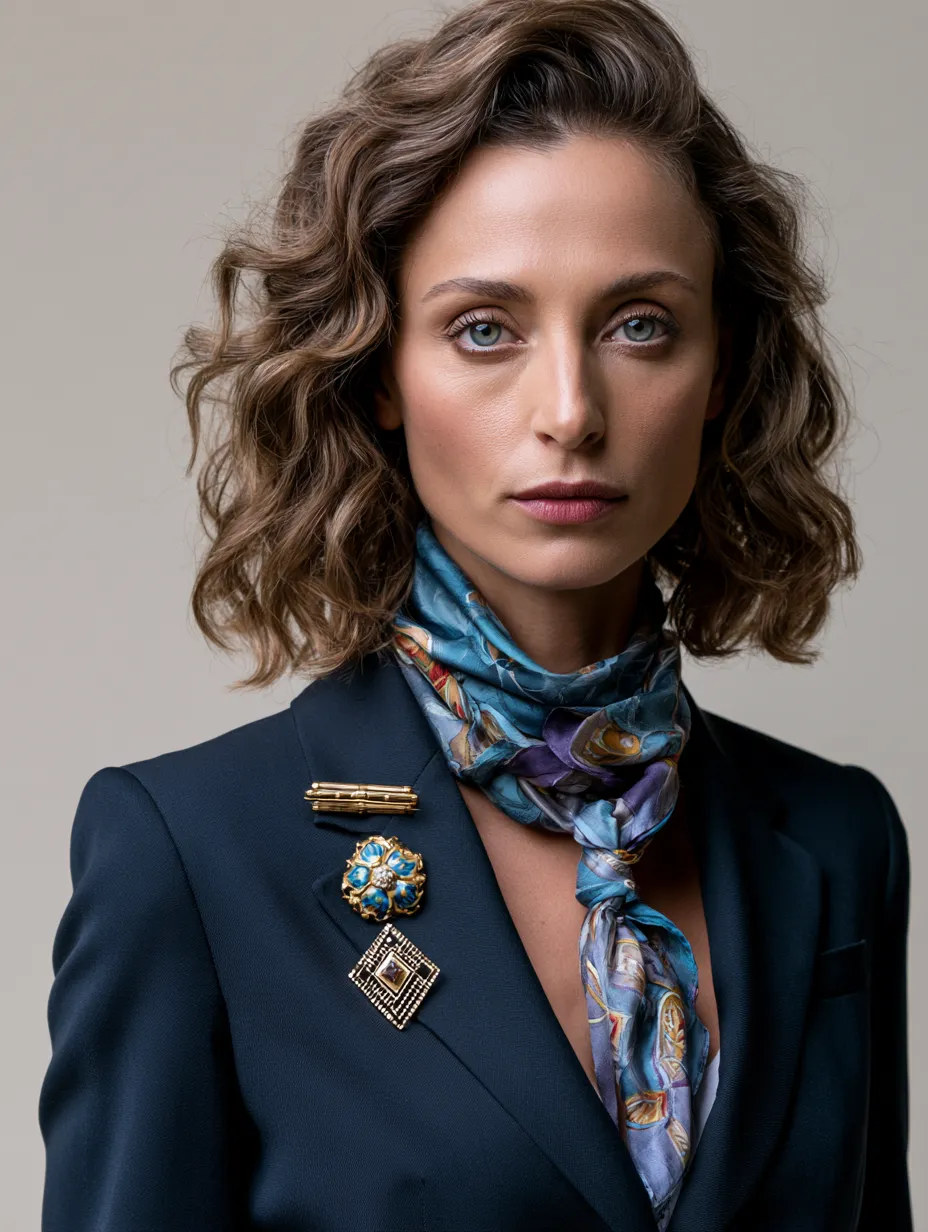
The lightweight patterned scarf is the detail most people skip and shouldn’t. Tied loosely around the neck or draped over one shoulder, it adds the texture and pattern that a simple blouse-and-trouser combination lacks. Vintage stores are the right place to find these. Budget $15–$25 at a thrift shop rather than $90 for a new reproduction.
One thing that doesn’t work: adding a beret. I know it feels period-appropriate, but the beret lands more French New Wave than Jazz Age American. The cloche hat is the correct choice if you want headwear in this look. Or nothing. Both are better than a beret.


Amidst the tranquility of a room adorned with relics of bygone eras, a narrative unfolds—a narrative of integration and adaptation, where the essence of the 1920s is woven into the fabric of today’s fashion. This setting, illuminated by soft sunlight, serves as the perfect backdrop for a display of how 1920s outfit ideas can be seamlessly incorporated into the modern wardrobe, creating a dialogue between the past and the present.
The protagonist of this story dons an ensemble that marries functionality with the unmistakable charm of the Jazz Age. High-waisted trousers, a staple of modern attire, are paired with a crisp, white blouse, their simplicity offset by the timeless elegance of a pearl necklace. This juxtaposition of elements highlights the adaptability of 1920s fashion, demonstrating its capacity to enhance contemporary looks with a touch of vintage sophistication.


The choice of accessories further enriches this narrative. A patterned scarf, light enough to flutter in the gentle breeze of a spring morning, adds texture and color, echoing the era’s penchant for detail. This is exactly the logic behind styling a silk scarf as a transformative layer — one piece shifts the entire register of an otherwise simple outfit. The 1920s understood that better than most decades did.
FAQ
What makes a 1920s outfit look intentional rather than like a costume?
The rule is one era-specific piece per outfit. A sequined flapper dress works when everything else — shoes, bag, jewelry — is current. Stack a headband, T-strap shoes, and a pearl rope on top of it and the whole look tips into theatrical. Restraint is the formula that actually photographs well.
What are the key accessories for a 1920s inspired outfit?
A long pearl necklace (36-inch, worn doubled or hanging), art deco geometric earrings, and a cloche hat or feathered headband — never both simultaneously. Baublebar makes reliable art deco pieces in the $30–$45 range that read the same as expensive versions in photos. Skip the beret; it references a different decade entirely.
How do you wear 1920s outfits to a themed event without overdoing it?
Start with a knee-length sequined flapper dress — not floor-length, the proportions stop working below the knee. Add one period accessory (headband or pearl rope) and swap period shoes for modern pointed-toe heels. That one shoe swap is the single biggest difference between a costume and an actual 1920s inspired outfit worth wearing again.
What did men wear in the 1920s and how do you modernize it?
The 1920s men’s look is built on a slim pinstripe suit, a short-brim fedora (under 2.5 inches), and leather brogues. The modernization is in the slim fit — ditch the wide lapels and pleated trousers that read as Gatsby costume. Allen Edmonds brogues in cognac, J.Crew fedora, and a modern slim-cut suit in wool blend gets you there without looking like you’re in a period film.
Can 1920s outfit ideas work for everyday wear?
Yes — high-waisted wide-leg trousers with a loose silk blouse and a long pearl necklace is a completely wearable everyday outfit. The silhouette references the era without committing to it. Add a patterned scarf from a thrift shop ($15–$25) and you have more texture than most modern outfits. The cloche hat pushes it from everyday to intentional vintage — your call on how far you want to go.
What is the correct hemline for a 1920s flapper dress?
Knee-length. The drop waist silhouette reads correctly at the knee — the proportions are doing specific visual work there. A midi or floor-length version loses the whole argument. Free People and ASOS both carry versions in the right length; the ASOS beaded option at $65 photographs better than it feels in person, which is fine for a themed event.
The Takeaway
1920s Outfit Ideas Work Best When You Let One Piece Do the Talking
The cloche hat on a modern outfit. The pearl rope over a linen blazer. The sequined flapper dress with nothing else from the era. That’s the formula that photographs well, doesn’t read as dress-up, and actually gets worn more than once.
Accessories are carrying the whole argument here. A geometric art deco bracelet from Baublebar at $32 does more for a 1920s inspired outfit than a $200 reproduction dress from Etsy. That’s not a budget tip — that’s just how the visual logic of this era works in 2025.
You found something worth keeping. Save this post.