Grand doorways built around the right wooden front door design stop people in their tracks — and the ones that fail usually get one thing wrong: they pick a style without matching it to the facade material or the roofline. I’ve photographed entrances across three states and the pattern is consistent. A mahogany panel with carved detailing on a brick Colonial reads like a magazine cover. That same door on a stucco contemporary looks like someone moved it from another house. Wood front door designs work because they telegraph permanence, craft, and intention. Get the match wrong and none of those signals land.
You’ll find 18 styles below, organized by the logic behind each one, not just how they photograph. Prices, wood species, and the anti-advice that most door roundups leave out.
✔ 18 wooden entrance door designs across 12 style categories
✔ Wood species that actually hold up outdoors — and two that don’t
✔ Hardware pairings, approximate prices ($500–$5,000+), and finish tips
✔ Which styles photograph well and which ones look better in person
✔ The single most common mistake with grand doorway proportions
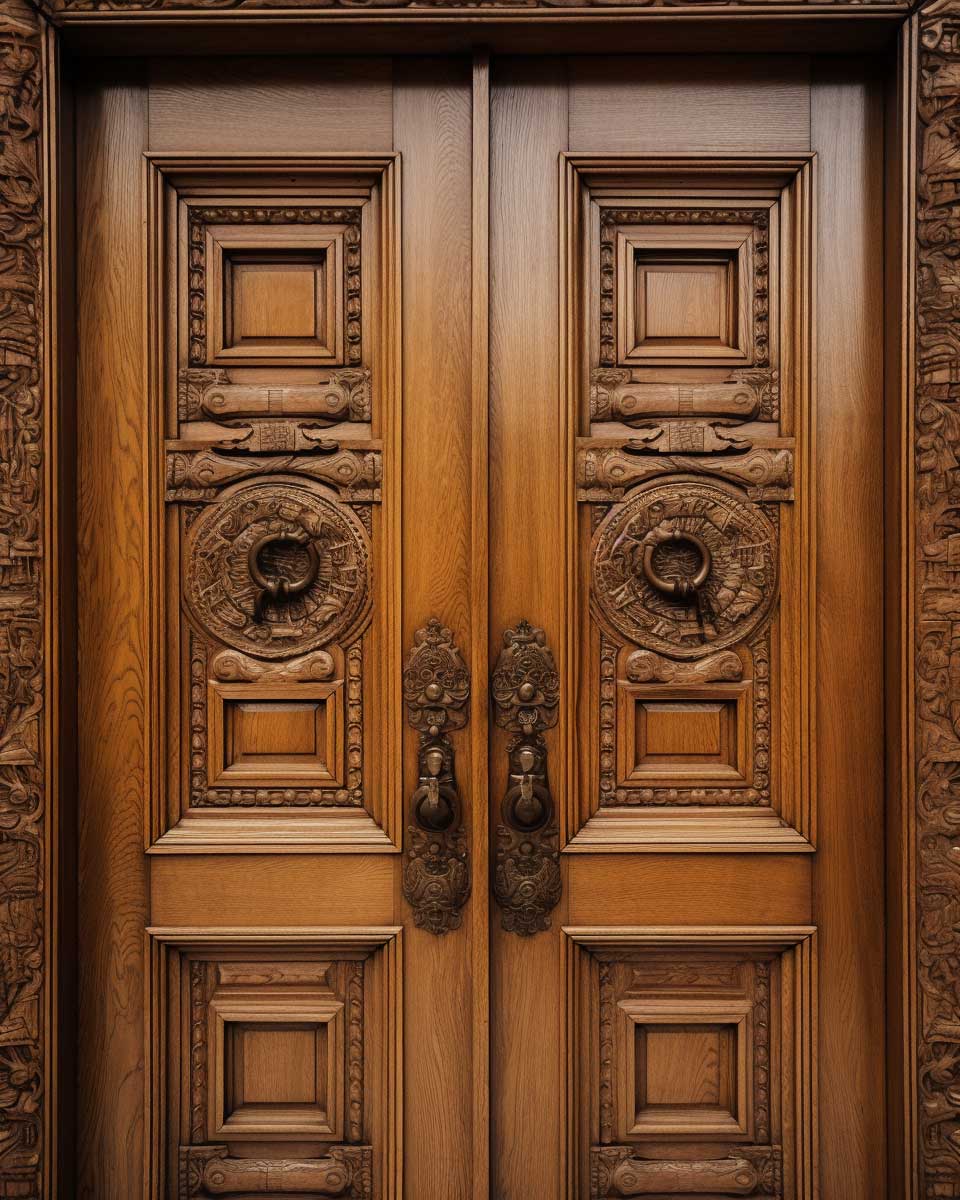
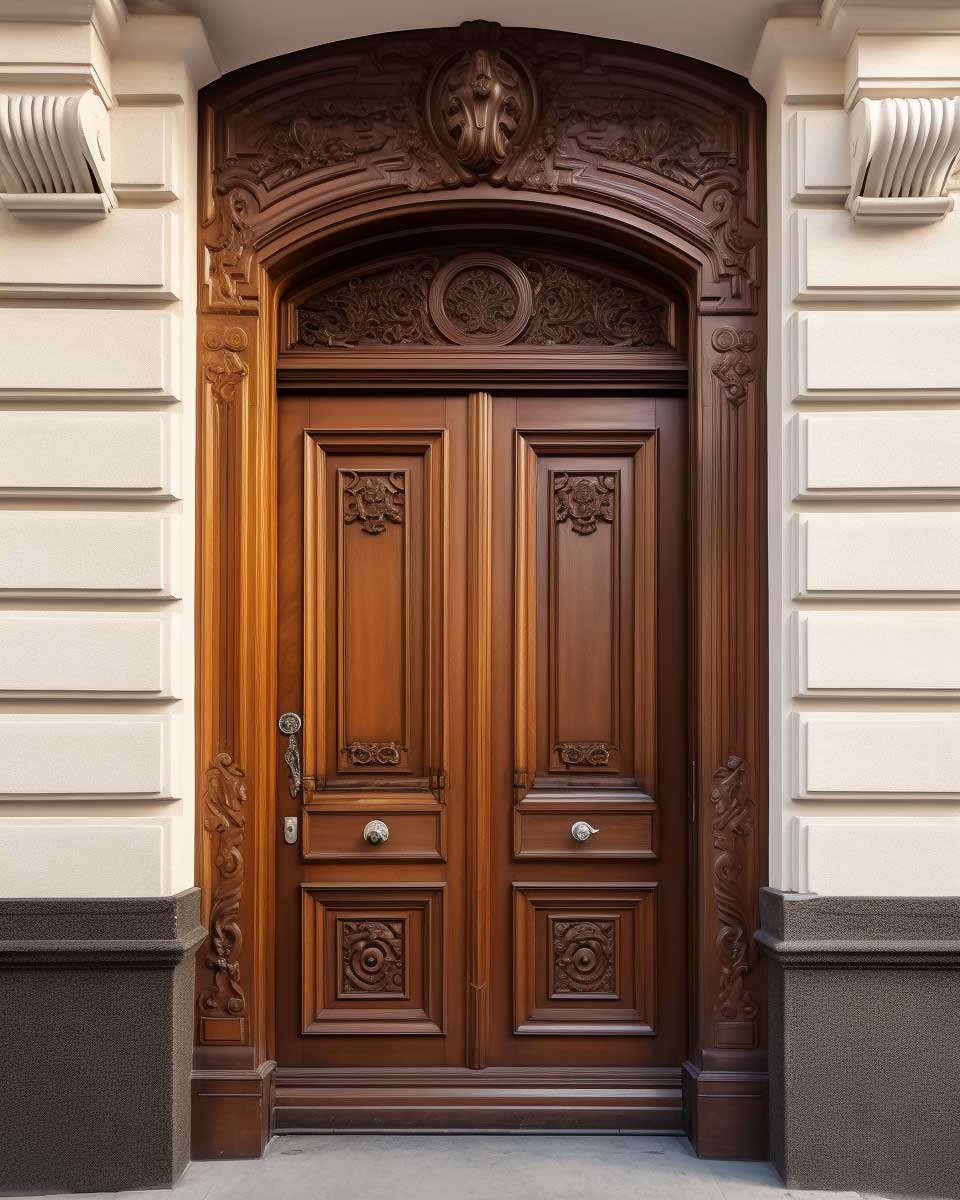
Old World Carvings Pull Double Duty on Ornate Facades
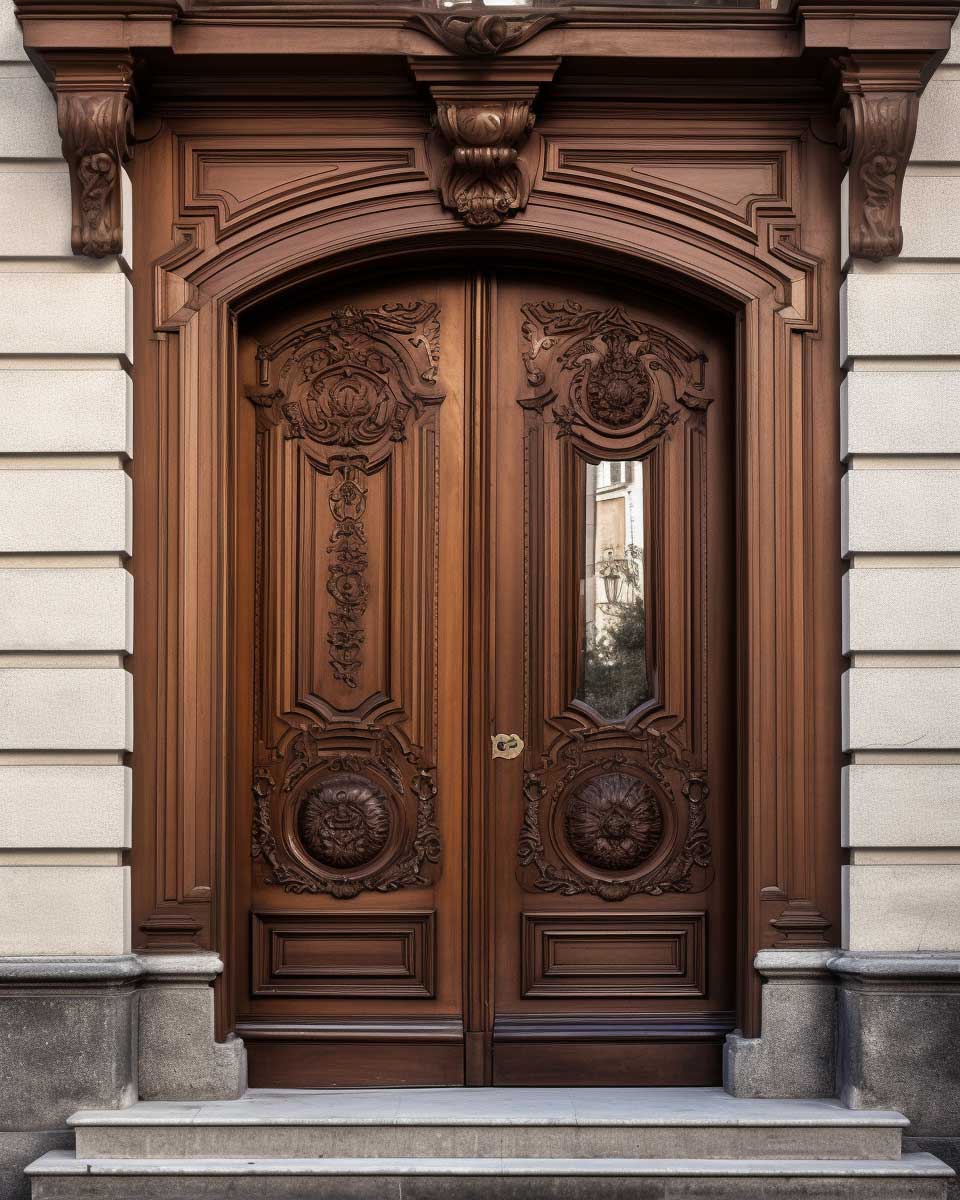
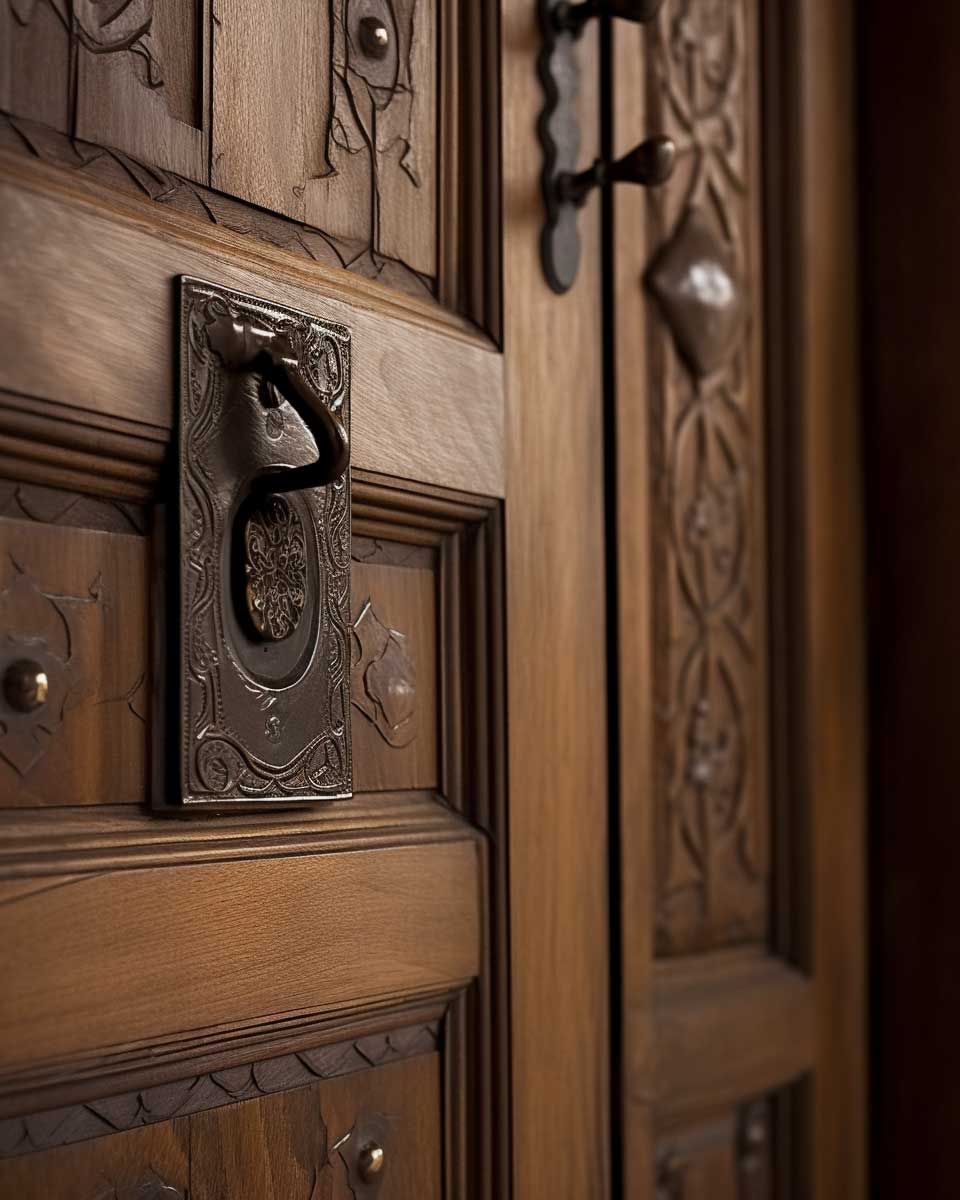
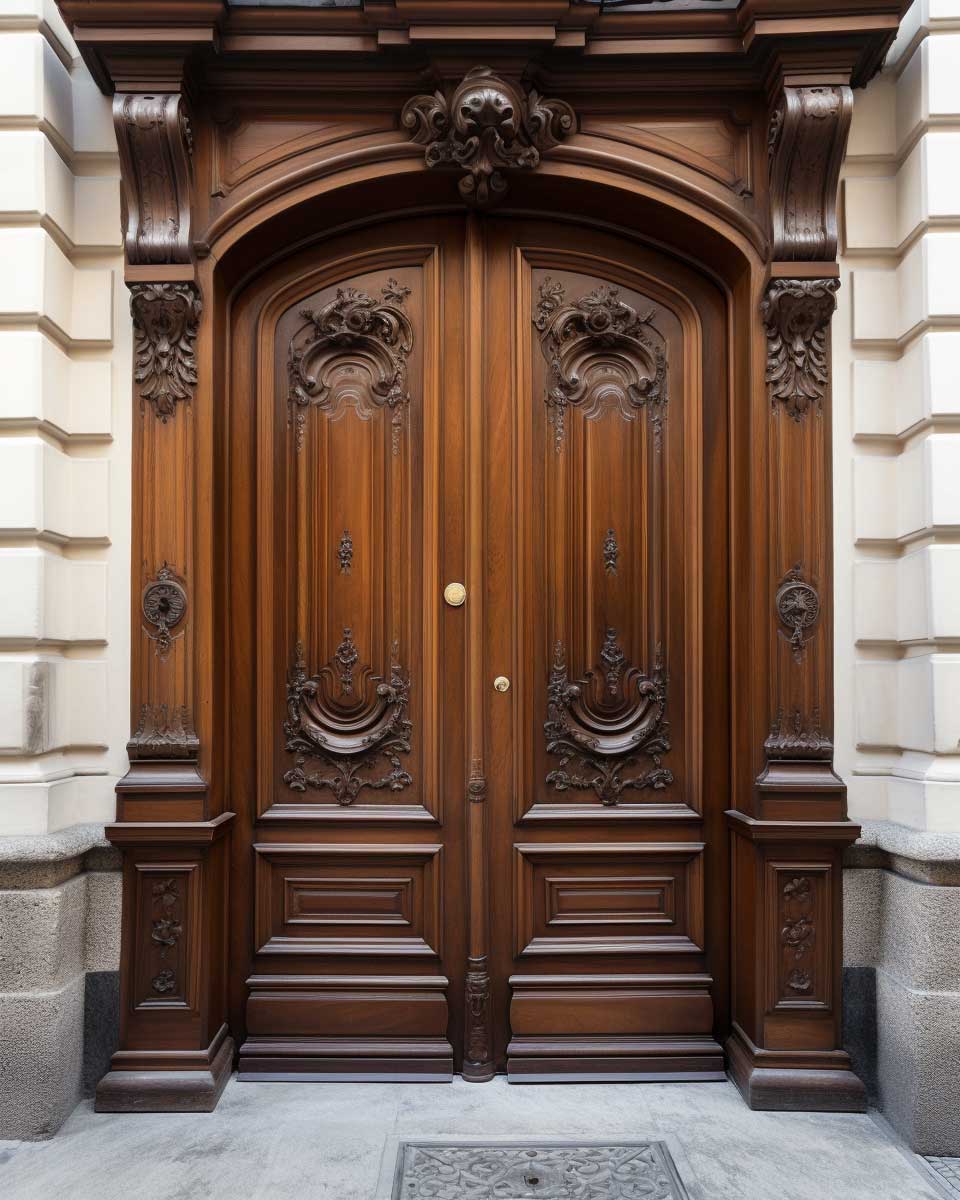
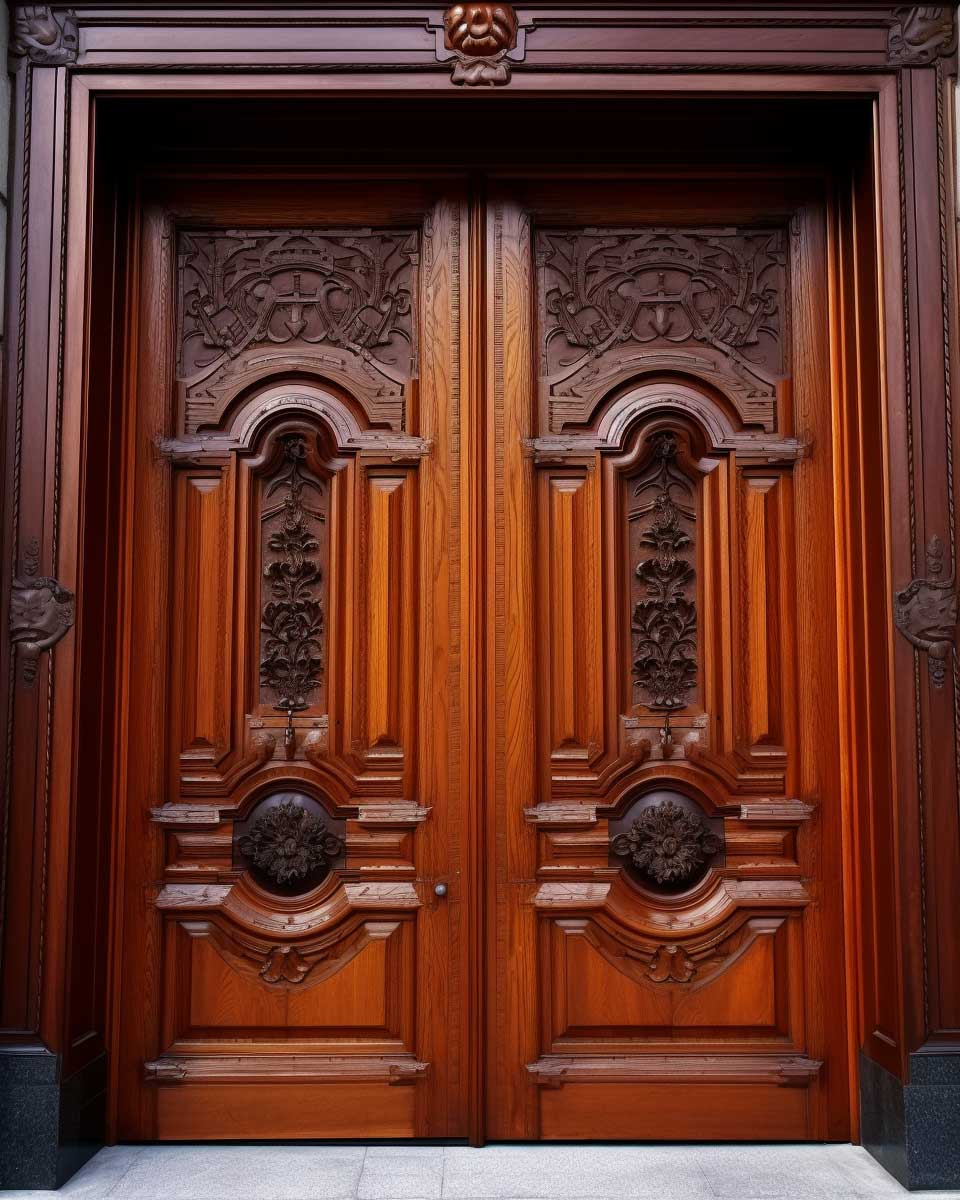
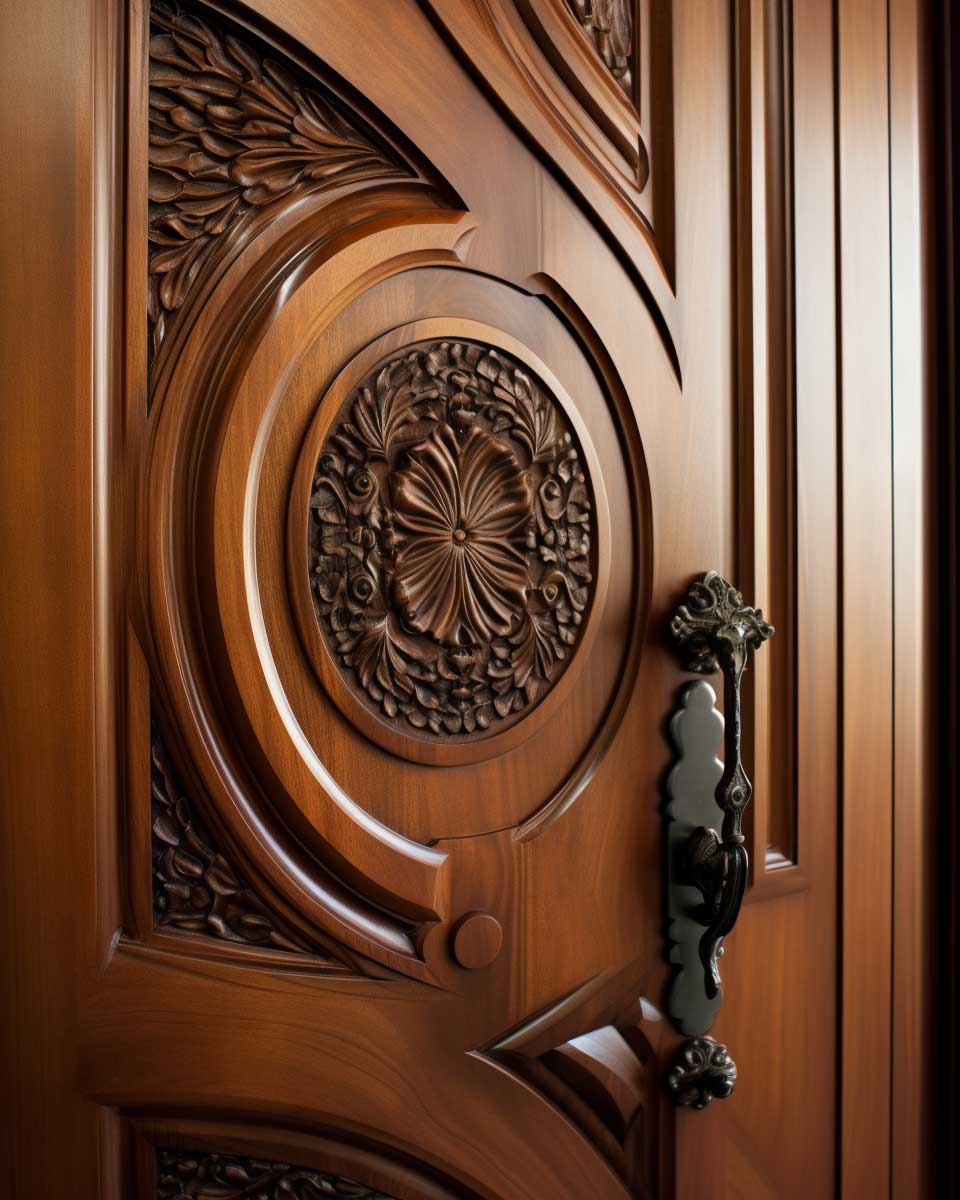
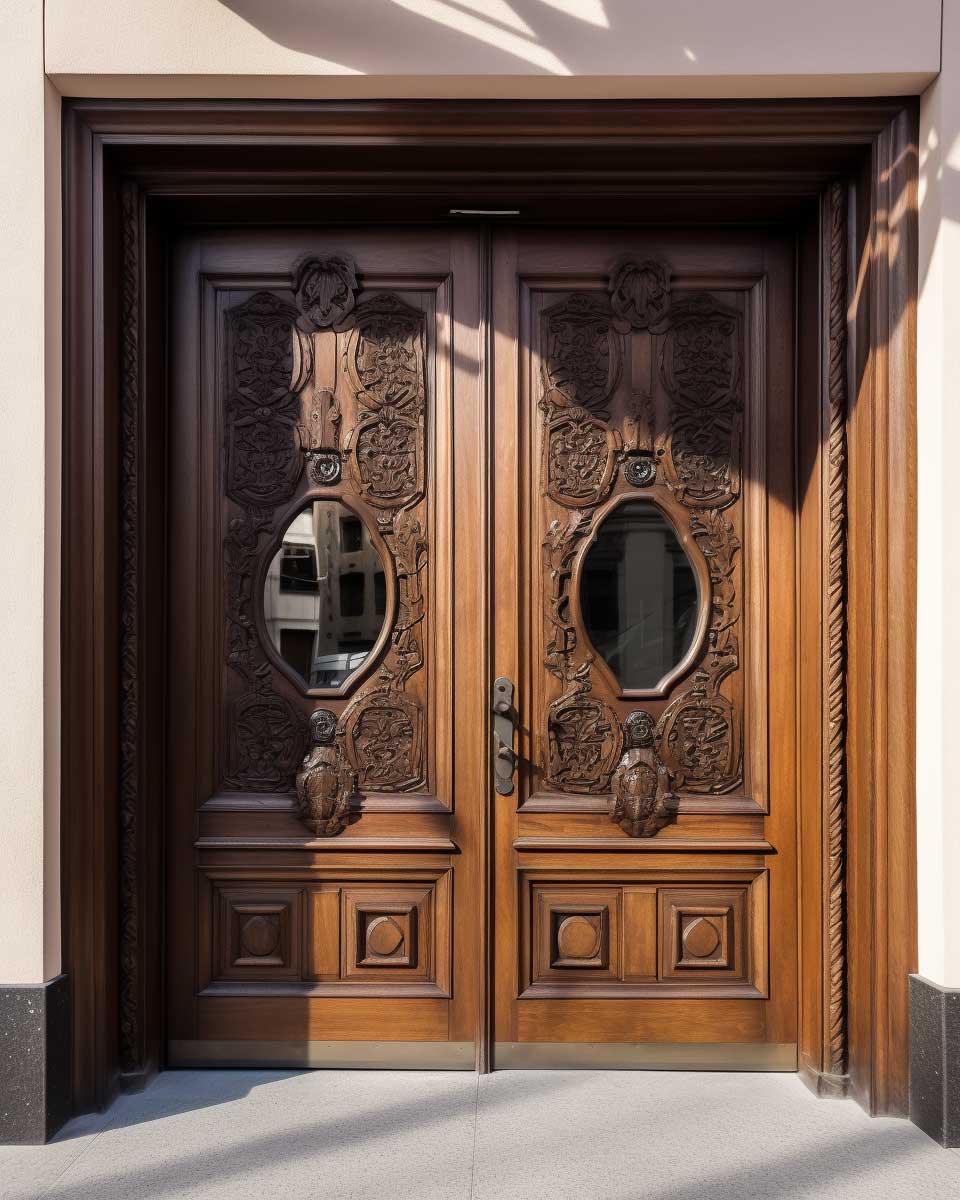
Ornate carved entrance doors work because the detailing gives guests something to look at from the driveway, the path, and right up close — three separate visual moments. I’ve seen homeowners spend $4,000 on a mahogany door with hand-carved medallions and zero on landscaping, and the entrance still read as intentional because the door carried all the weight. Think antique ebony stain, raised panel frames, and iron ring pulls rather than lever handles. Ring pulls are the right hardware choice here — a lever on a carved door is like wearing sneakers with a tailored suit.
What doesn’t work: trying to achieve this look with pine or engineered softwood. The carving detail turns mushy at the edges within two seasons of humidity cycling. Mahogany, sapele, or solid white oak are the minimum for carved work. Simpson Door Company’s hand-carved mahogany series starts around $2,800 before finishing, and you’ll need professional staining to get the depth right — DIY stain jobs on carved wood always look flat in photographs.
Wood and Metal Together Require a Specific Ratio
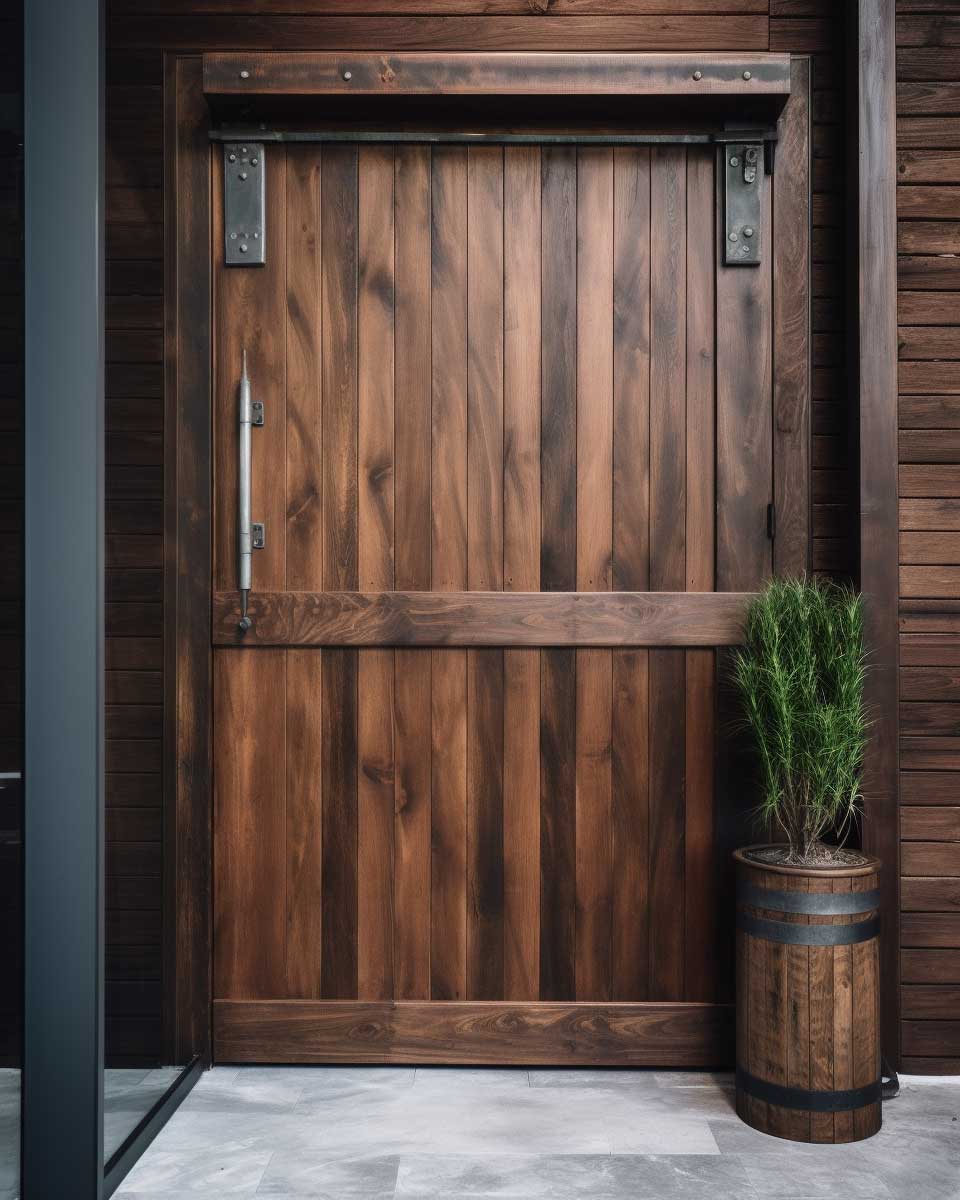
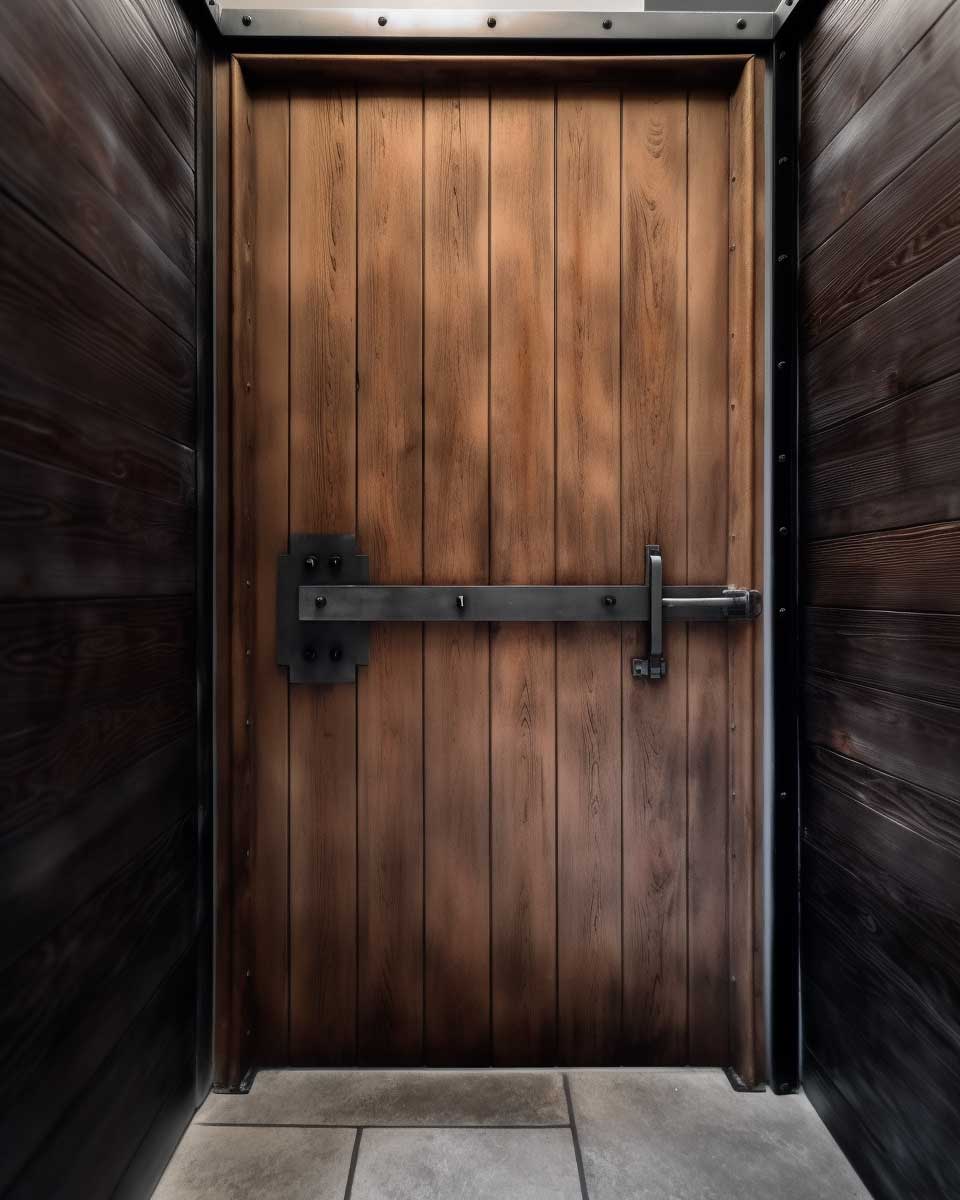
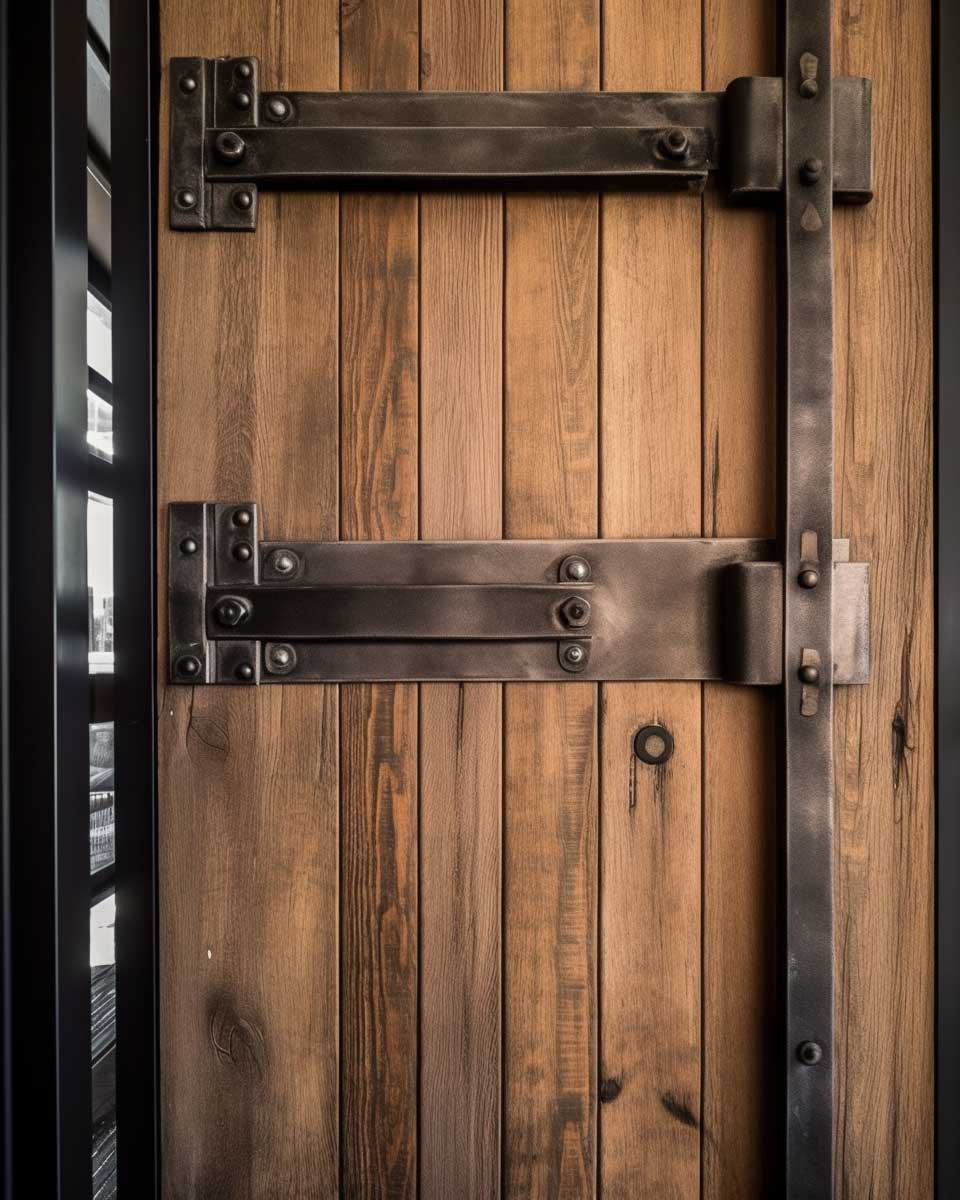
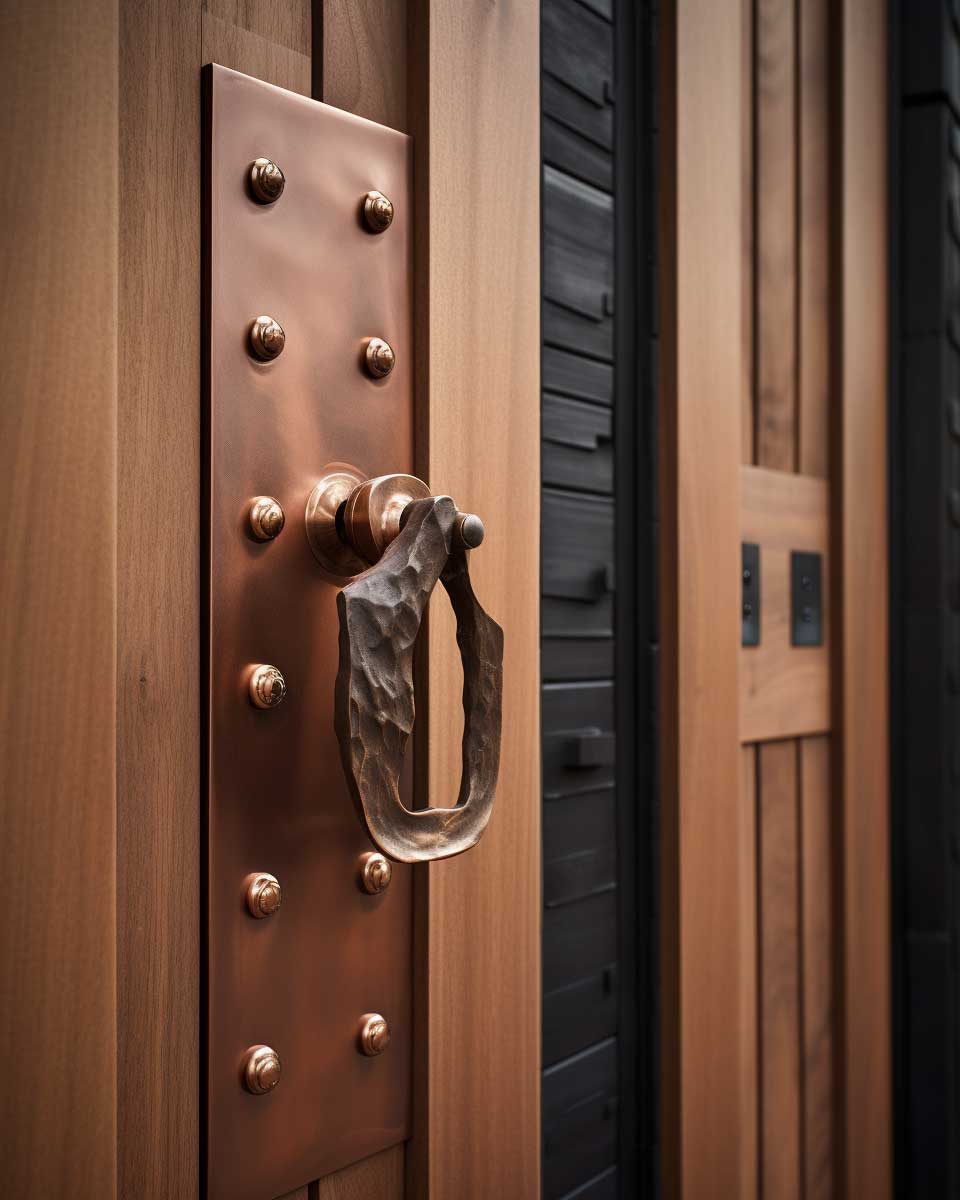
Industrial-style wooden front door designs combine exposed steel frames with raw or weathered wood panels — and the ratio matters more than the materials. The mistake I keep seeing: homeowners go 50/50 on wood and metal surface area, and the door ends up looking indecisive. My go-to rule is 70% wood to 30% metal. That gives you the warmth of grain-forward wood with enough steel to signal contemporary edge. Corten steel frames with knotty alder panels are a combination that ages together visually — both develop a patina that deepens over years rather than looking worn.
Exposed rivets are decorative, not structural, on most residential doors. Don’t pay a premium for “hand-set” rivets unless the vendor can show you the actual setting process. You’ll notice the visual difference between machine-punched and hand-set is subtle in person and invisible in photographs — save that $300 for a better finish on the wood panels instead.

Asian-Influenced Patterns Hold Their Detail Longer Than Painted Motifs
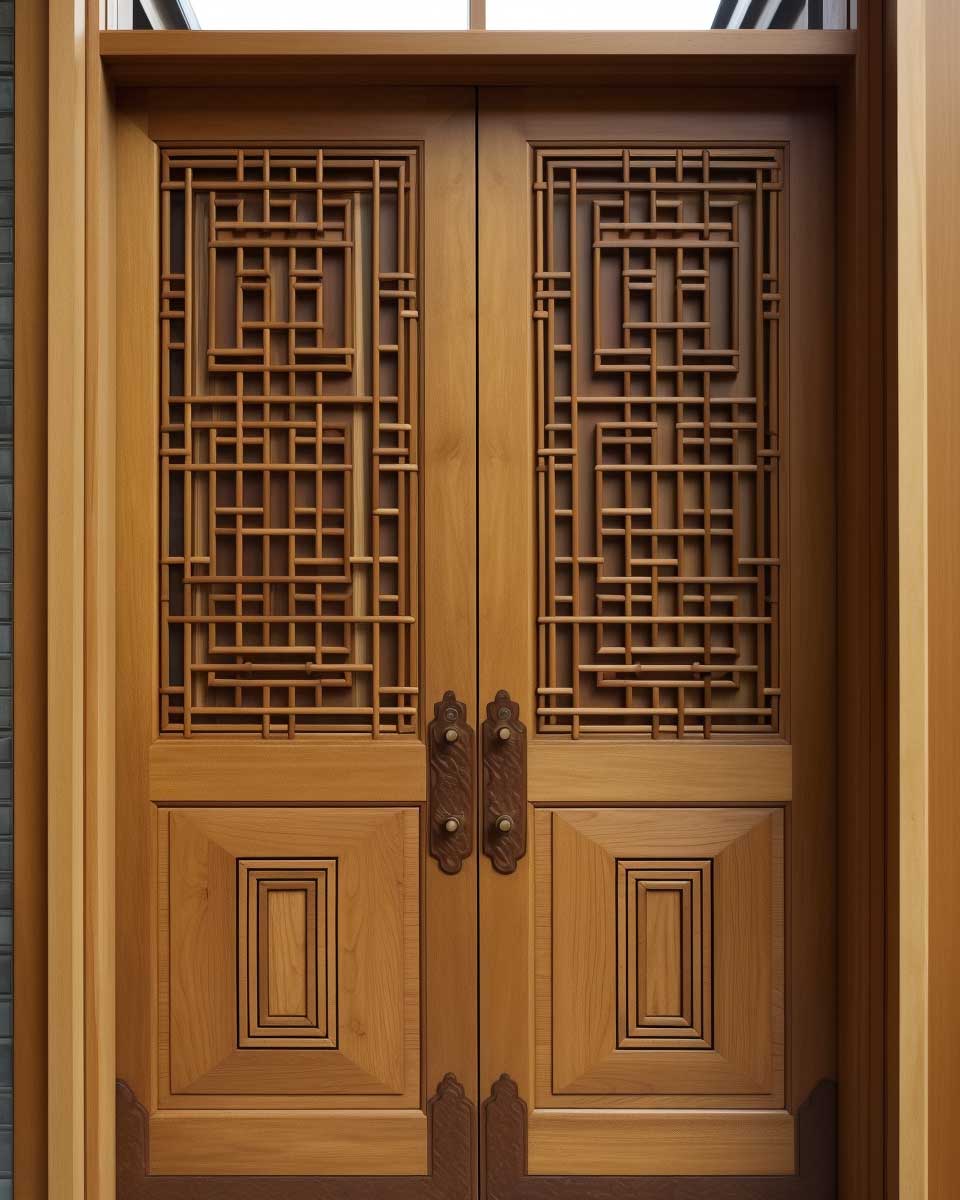
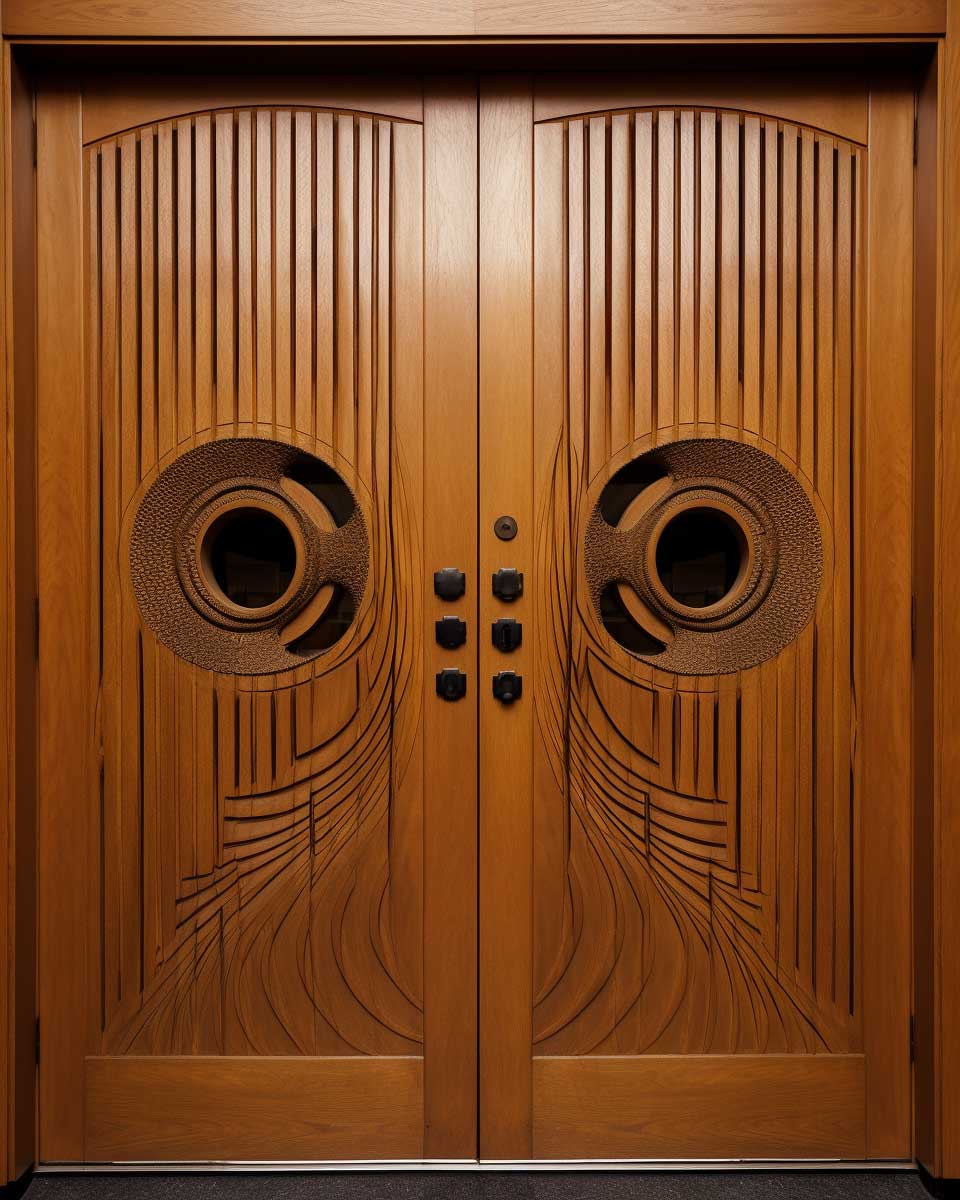
Shoji-panel construction and lattice-cut wood inserts are the most durable way to reference East Asian door traditions on a residential entrance. Painted cherry blossom or dragon motifs look sharp on installation day — I’ve seen them on maybe eight different doors at this point — and every single one had faded or chipped by year three in direct sun. Cut panels with geometric lattice or diagonal-grid inlays don’t fade because the pattern is structural, not applied. That’s the difference between a motif and a design system.
Bold lacquered color on a wooden front door design works in this tradition: deep oxblood red, lacquered black, or forest green over teak. Avoid unpainted natural teak for this style — the color drifts silver-grey outdoors and loses the intentional cultural register within one rainy season. You need the color to hold the visual commitment.



Symmetry Reads Grand Only When the Sidelights Match the Door Panels
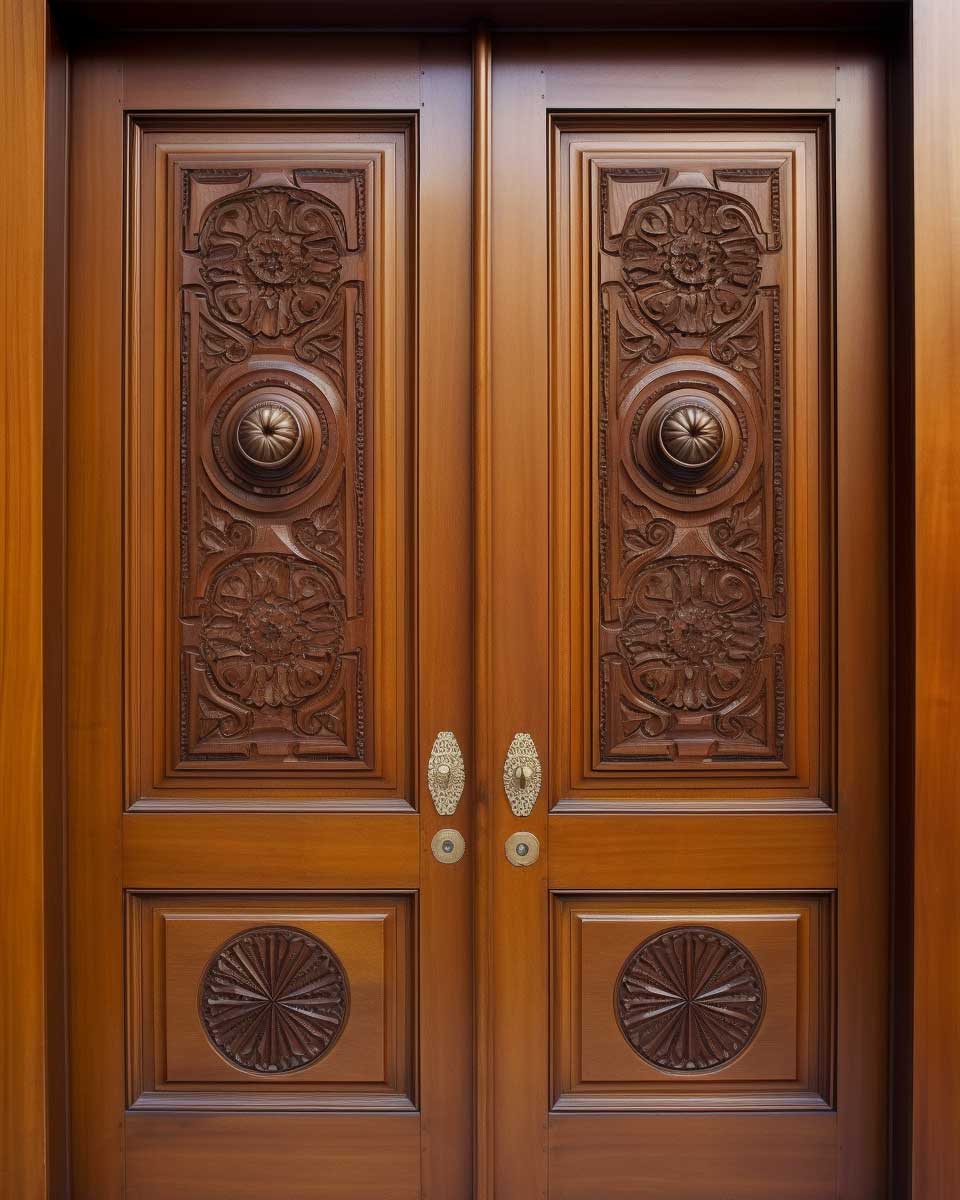
Symmetrical entrance designs — matched sidelights, equal panel divisions, coordinated hardware — create what I’d describe as the handshake effect: balanced, confident, immediately legible. What kills the effect is mixing panel styles between the door and the sidelights. I’ve seen a beautiful six-panel mahogany door flanked by completely flat sidelights, and the whole ensemble looked unfinished. Your sidelight panels should mirror the door’s raised or recessed panel profile exactly, not approximate it.
Hardware placement on symmetrical wood front doors matters as much as style. Center the knocker at eye level on a single door. On a double symmetrical setup, matching escutcheons on both panels — even the inactive leaf — complete the visual balance. Schlage’s Plymouth collection in aged bronze gives you that balance at around $180 per set, which is about as far as I’d go budget-wise before the finish starts looking thin at close range. For a deeper look at how modern versus traditional door design logic differs, this comparison of 24 main entrance door styles breaks down the material and proportion rules behind each approach.


Custom Woodwork Starts with Grain Direction, Not the Shape
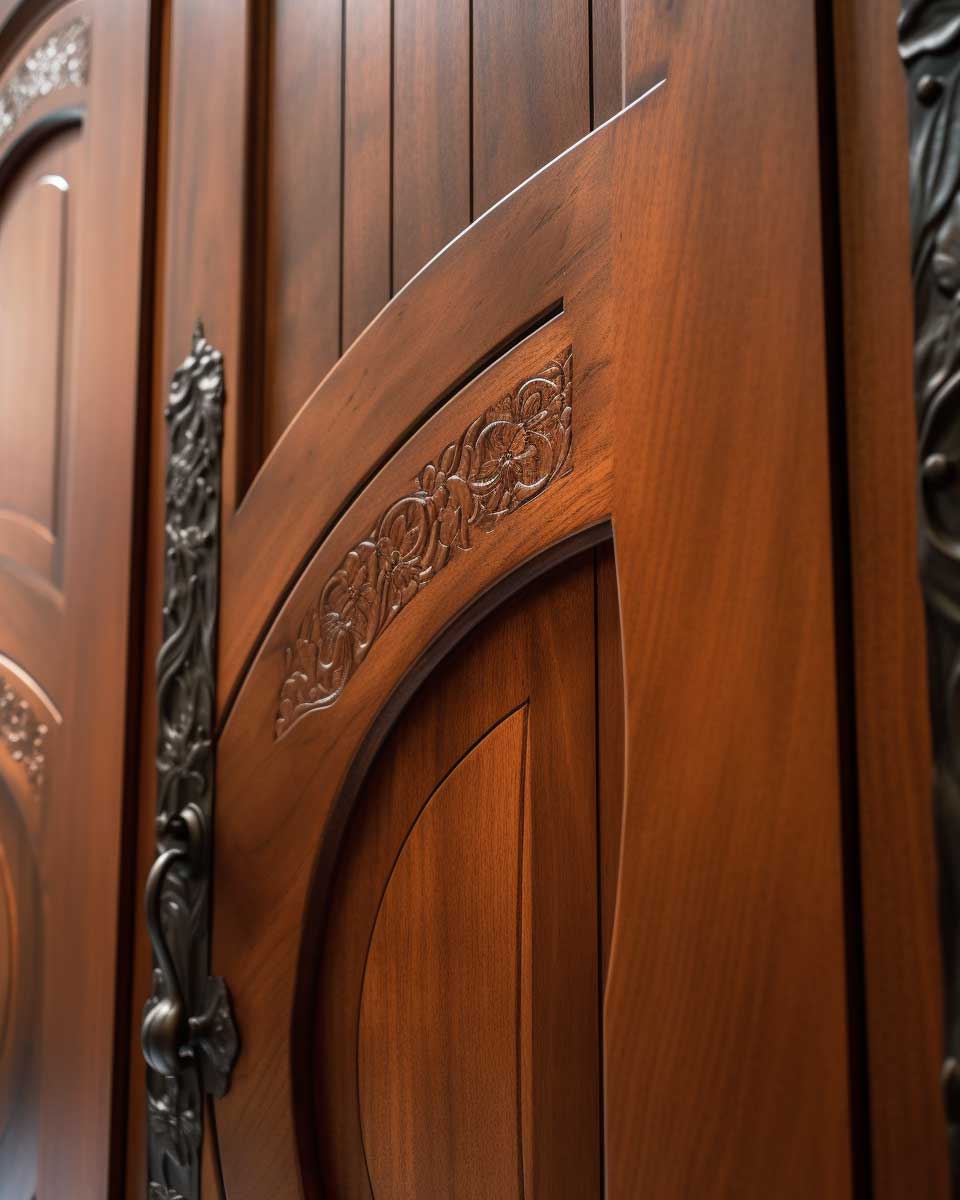
Commissioning a custom wooden entrance door is the only scenario where you control every variable — wood species, grain orientation, hardware inset placement, and finish sheen level. Most people start the conversation with a shape or a style reference photo. I’d start with the grain. Vertical grain on a tall door face creates a visual line that makes the entrance read taller. Flat-sawn grain with visible cathedral patterns reads warmer and more rustic. Tell the artisan which one before you discuss anything else, because grain direction changes everything downstream.
RealCraft in Idaho and Urban Front in the UK both build true custom wood doors with documented lead times of 8–14 weeks. Budget $3,500–$8,000 for a single custom slab before hardware. What you should never do: describe your vision verbally and expect the craftsman to interpret it correctly. Bring a physical wood sample, a hardware finish chip, and a photo of your facade. Three physical references prevent $2,000 worth of miscommunication.
Traditional Panel Doors Age Out of Every Trend and Into Every Decade
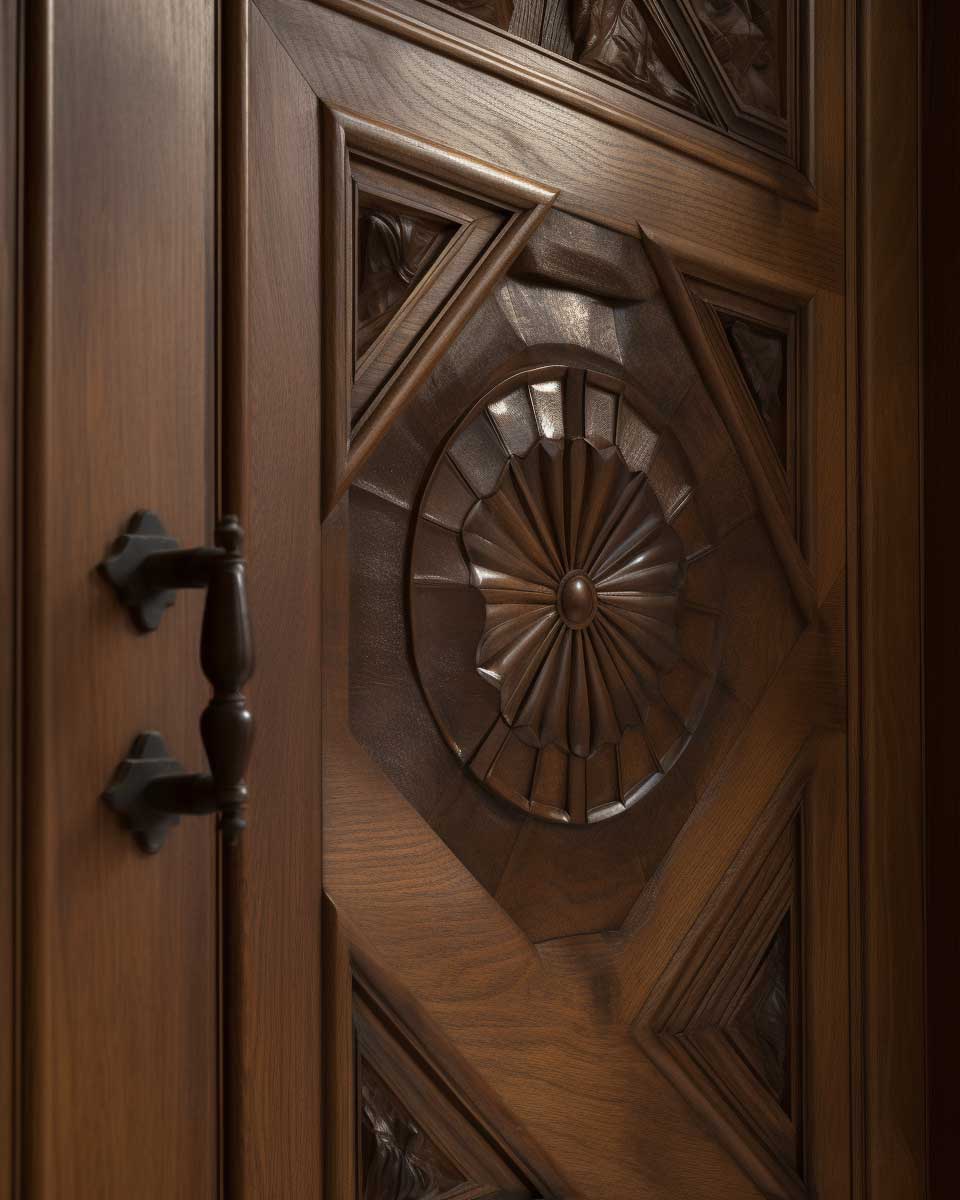
Traditional six-panel wood doors are the residential design equivalent of a well-cut navy blazer: they don’t belong to a particular era and they don’t announce a trend. I own one — a white oak six-panel with oil-rubbed bronze hardware — and I’ve had three different people in three different years tell me it looked “newly installed.” It wasn’t. It’s been there for eleven years, refinished twice. According to This Old House’s wood entry door resource, wood doors in species like mahogany and white oak range from $500 to $5,000 and can be refinished multiple times — which extends their visual life well beyond any other material at a comparable price point.
The traditional style fails when the finish is wrong, not the form. Cheap polyurethane over walnut stain turns orange within two years of UV exposure. Use a marine-grade spar varnish with UV blockers, reapply every 18–24 months, and the door keeps its amber-brown depth indefinitely. Don’t use latex paint on a traditional carved wood door — it fills the shadow lines in the raised panels and flattens the whole visual effect to nothing.


Flat Panel Wood Doors Fail Without the Right Hardware Contrast
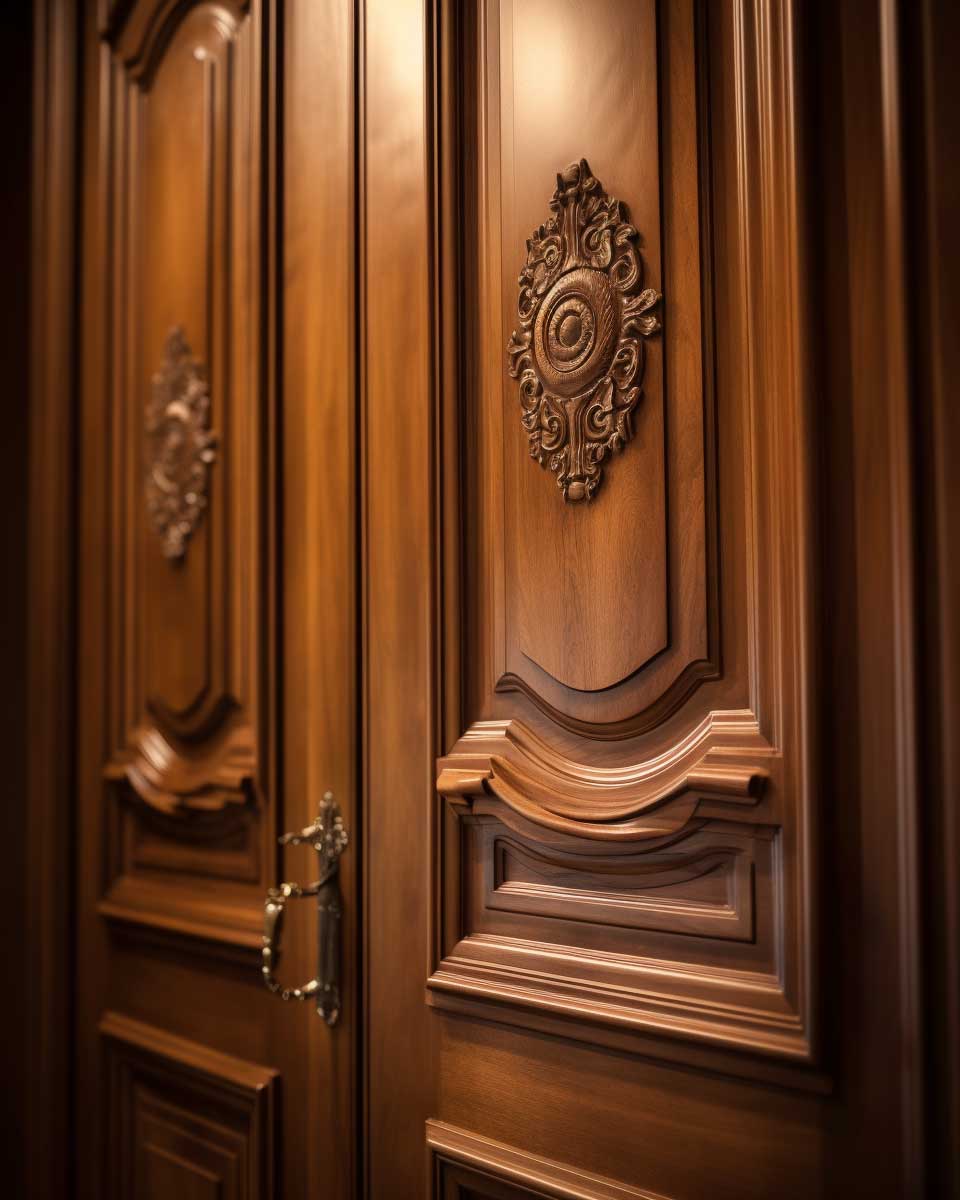
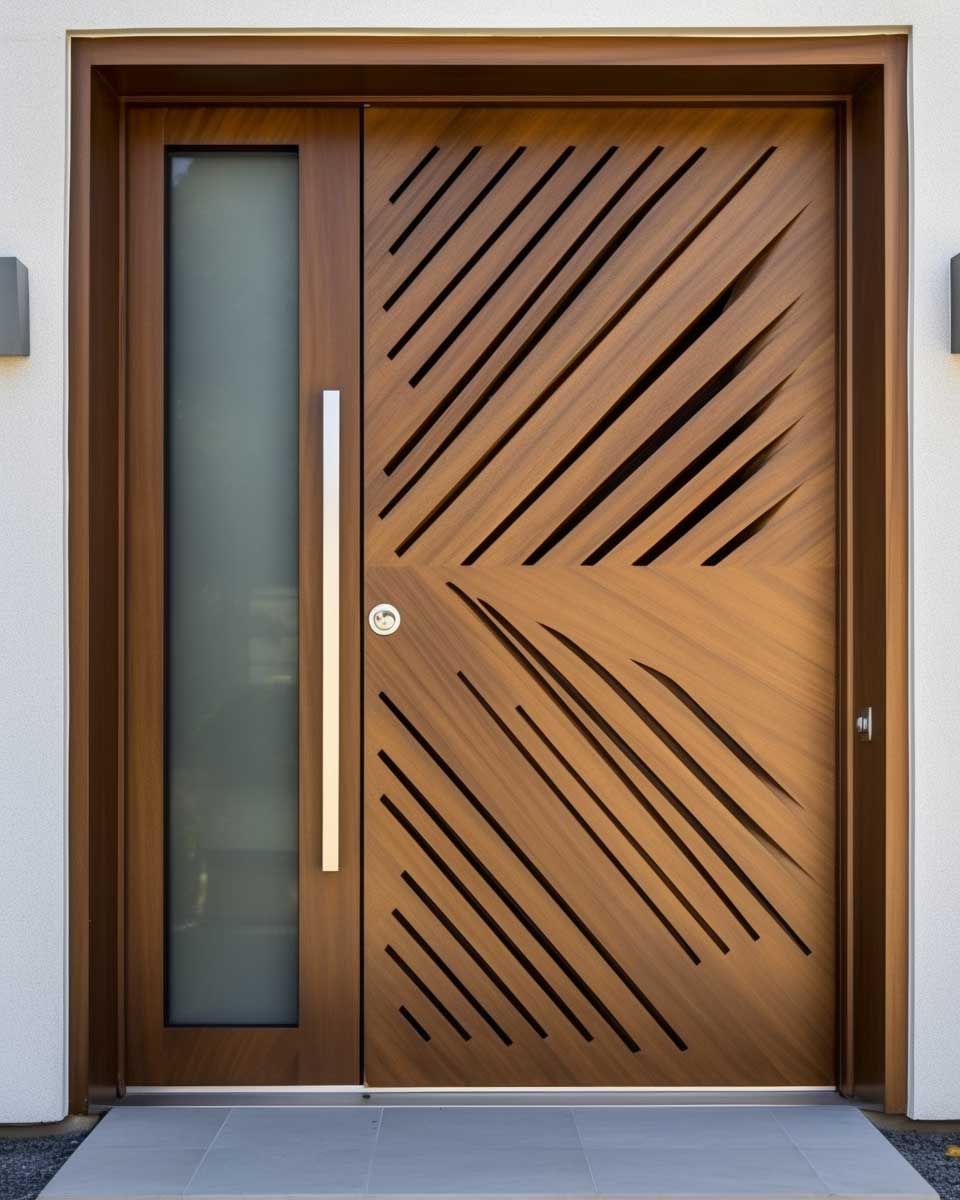
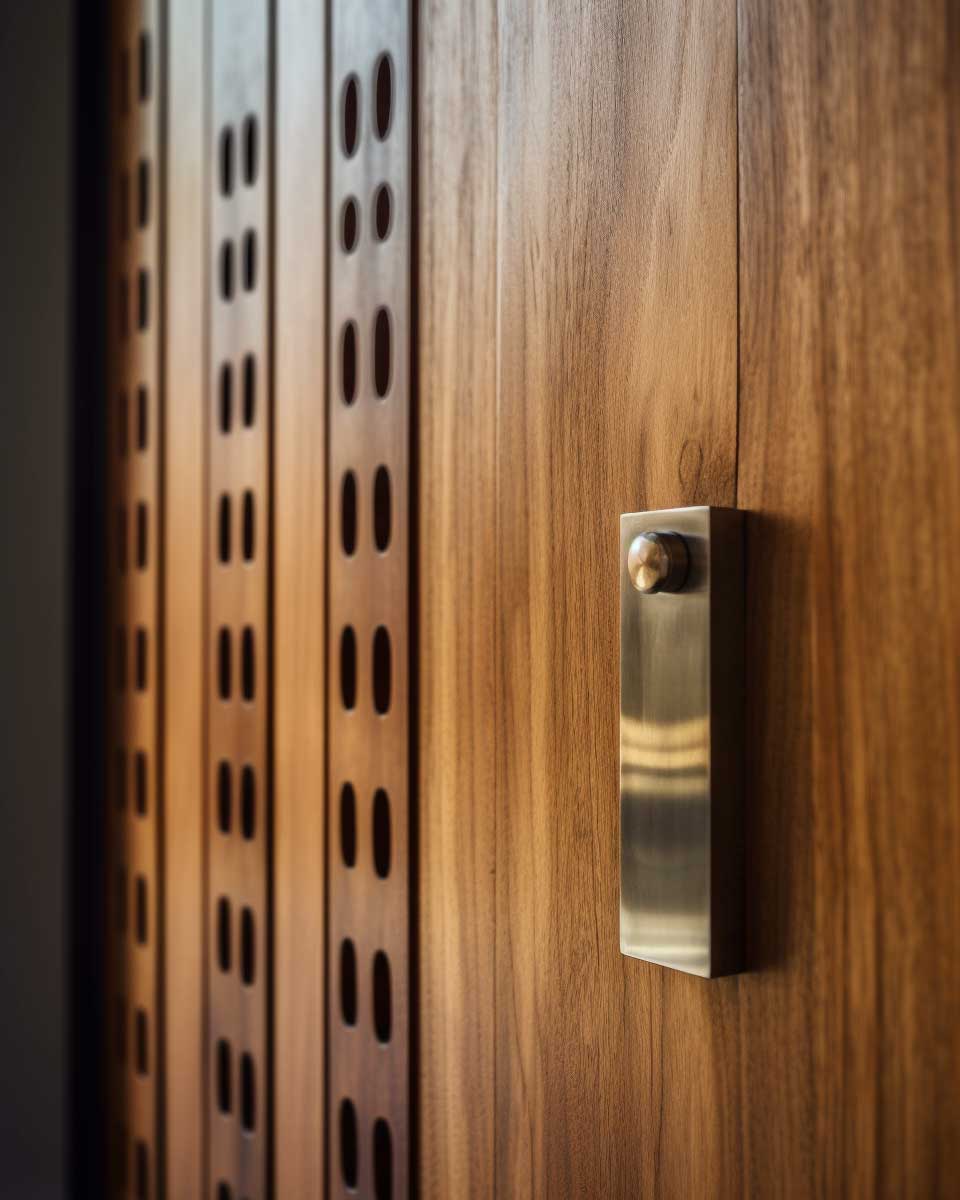
Minimalist flat-panel wooden front door designs are harder to pull off than they look. A flat wood slab with no molding detail, no raised panels, no texture variation — you’ve bet everything on the grain and the hardware. Get one wrong and the door looks like a temporary panel. I’ve tested this: a flush-panel Douglas fir door with satin nickel bar handles looked like a construction placeholder for six months. Swapped to a Emtek solid brass D-pull in oil-rubbed bronze and the exact same door suddenly registered as intentional. Hardware is the punctuation mark on a minimalist sentence.
Glass integration into flat wood panels adds light without breaking the flush aesthetic — you need a wood front door with window design that places the glass opening as a deliberate geometry, not an afterthought. A single vertical lite offset to one side of the panel face reads architectural. Symmetrically centered lites read builder-grade. Spend the extra $150–$300 on the asymmetric option every time.

Reclaimed and Distressed Wood Entrances Need Structural Vetting First
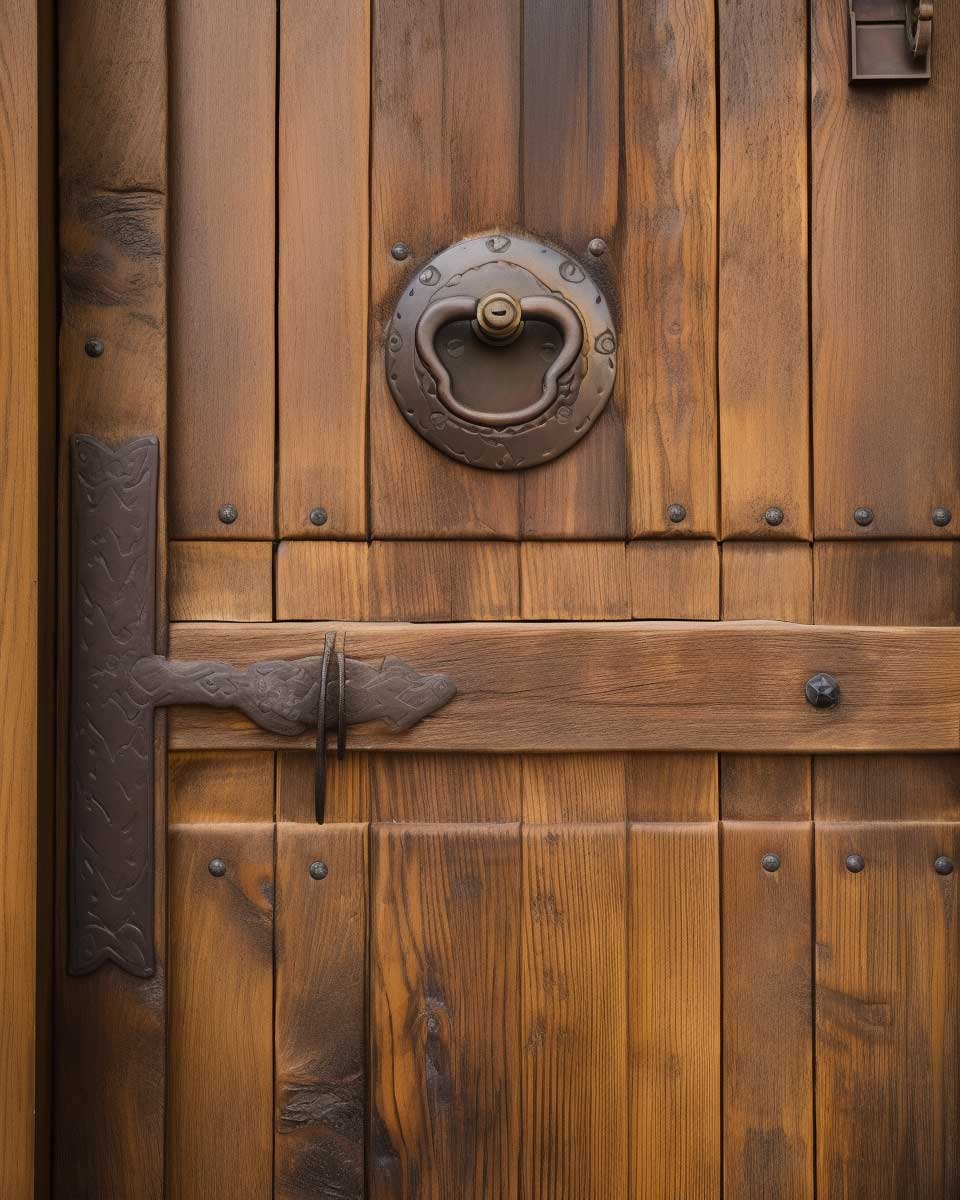
Rustic wooden entrance door designs with reclaimed wood panels or distressed finishes photograph beautifully and age visually in a way that new lumber simply can’t replicate. But here’s what the style accounts never mention: not all reclaimed wood is structurally sound for an exterior door. I stole this warning from a door builder in Vermont who refused a client’s request to use barn oak because the moisture content tested above 19%. Anything above 12% will continue to move and check after installation. Test the wood, not just the look.
Iron hardware is the right pairing for rustic wood door design — specifically strap hinges, clavos, and ring pulls in a hand-forged or hammered finish. Rustic Hammered’s “Old World” strap hinge set runs about $95 and comes in flat black or oil-rubbed bronze. Avoid brushed nickel or satin chrome in this context; the contrast is visually incoherent, like pairing a raw linen blazer with running shoes. Also: don’t fake the distress with a hand sander and grey stain. Real weathered wood has density variation and micro-checking that sanded faux-distress lacks at close range.


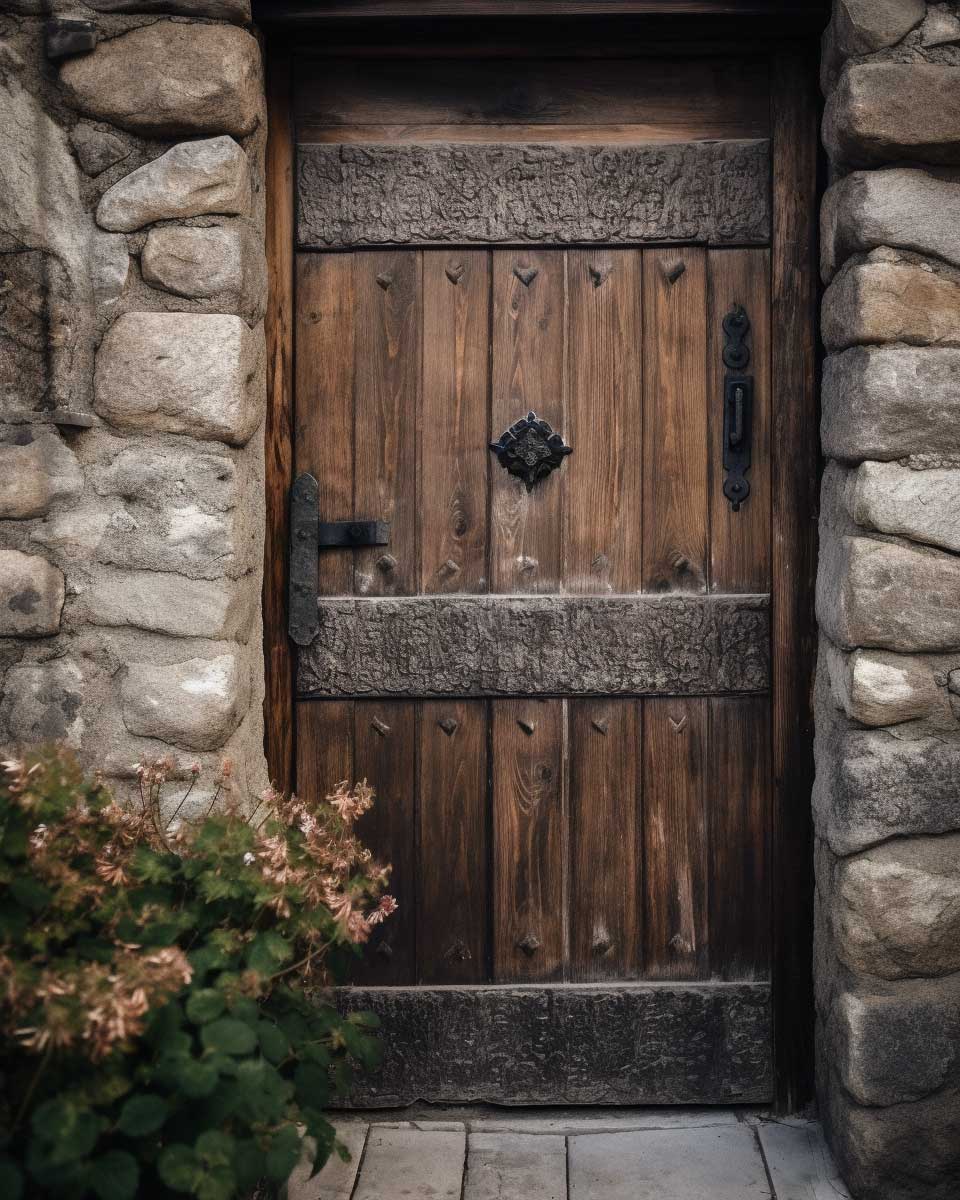
✘ Don’t use pine or poplar for an exterior wooden door — both absorb moisture and swell shut after one humid summer. Mahogany, sapele, white oak, or Douglas fir are the floor, not the ceiling.
✘ Don’t install a wood front door with glass panels on a south-facing entrance without low-E coating. UV bleaches wood finishes and flooring within one season. Add $40–$70 per lite for low-E glass.
✘ Don’t fake a rustic distressed finish with sandpaper and grey stain. The density variation and micro-checking of real weathered wood is visible at close range. Use genuine reclaimed wood or let new wood age naturally.
✘ Don’t choose latex paint over carved or raised-panel wood. It fills the shadow lines in panel reveals and flattens the entire visual effect.
✘ Don’t mount iron grilles or strap hardware with standard wood screws — they loosen within two years. Use stainless steel through-bolts with decorative caps.
Color on a Wood Door Works When the Surrounding Facade Is Neutral
A bold painted wood entrance door — oxblood red, forest green, lacquered cobalt — functions like an accent wall in architecture: it works precisely because everything around it refuses to compete. Brick facades, white-rendered stucco, and grey board-and-batten siding are all good canvases for a chromatic door. Where it goes wrong is on a facade that already has competing color or material variation. Painted wood doors on a variegated stone facade just create visual noise.
Farrow and Ball’s “Hague Blue” and “Railings” are the two colors I’ve seen applied successfully to wooden front door designs more than any others — both read as dark neutrals at a distance and reveal their true color up close. Both also photograph warmer than they look in person. The door needs two coats of exterior alkyd primer and two topcoats of oil-based paint for the color to hold its depth for five-plus years without chalking. Water-based exterior paint on a wood door lasts about two years before it starts looking chalky in photographs.


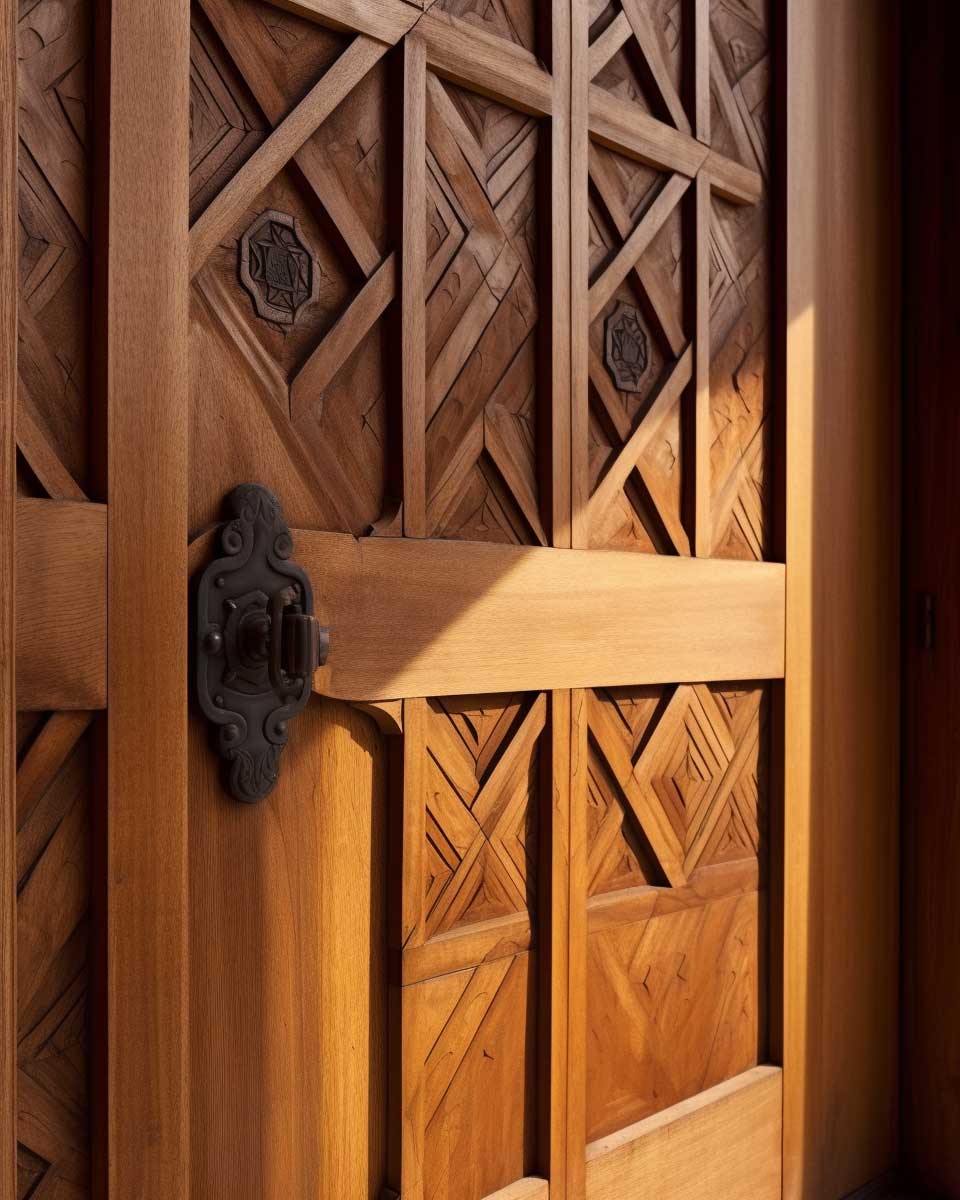
Glass Panels in Wooden Doors Bring Light or Kill Privacy — Pick One
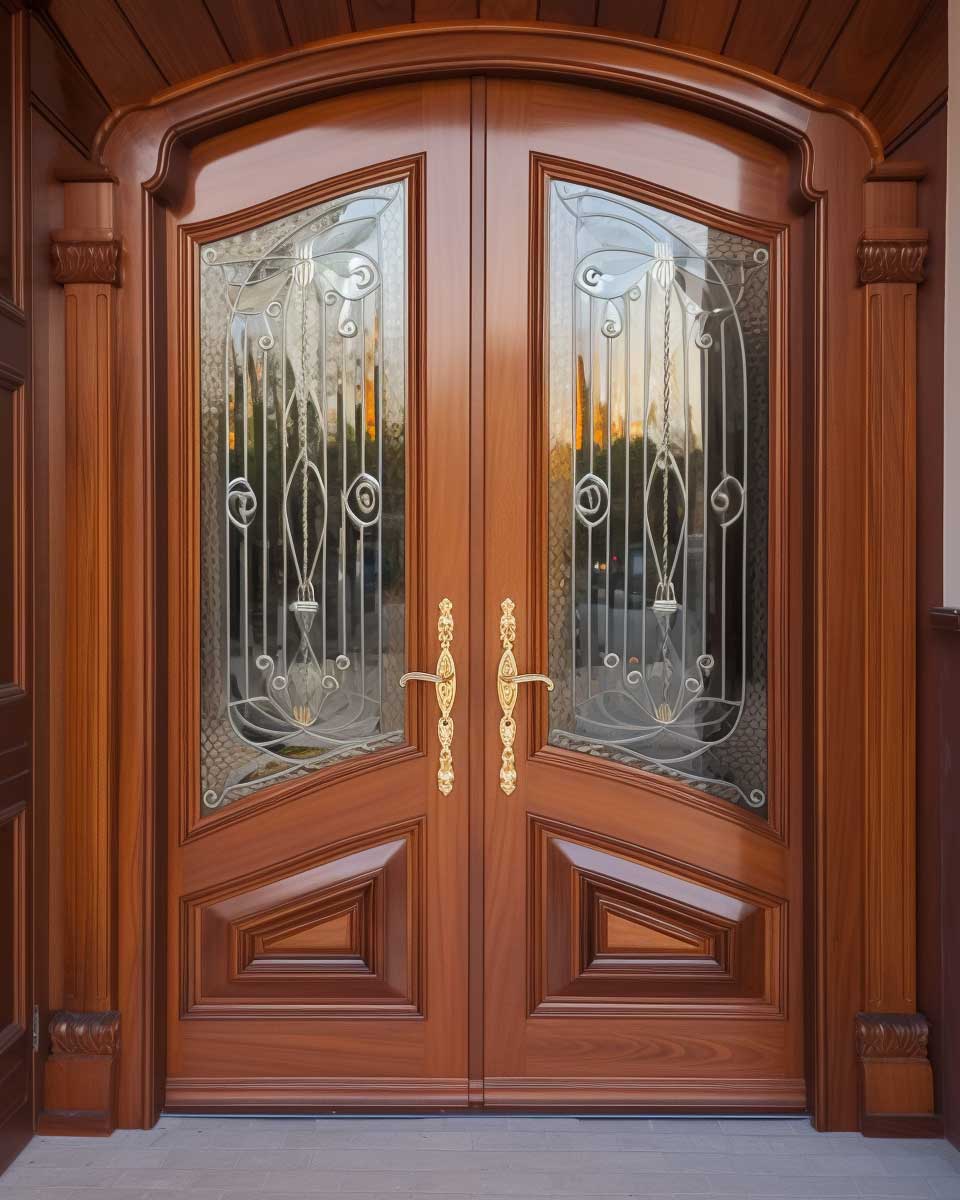
Stained glass, frosted panels, and clear tempered lites in wooden entrance doors all solve different problems, and the mistake is treating them as interchangeable options. Clear glass with a transom above the door floods the foyer with natural light — and gives anyone on the front path a complete view of your hallway. Frosted glass diffuses both. Seeded or rain glass distorts the view while transmitting near-full light levels — that’s the one I’d choose for any door facing a public sidewalk. Stained glass is its own conversation: the color tints your foyer every morning and the lead caming starts looking dated on any house built after 1960.
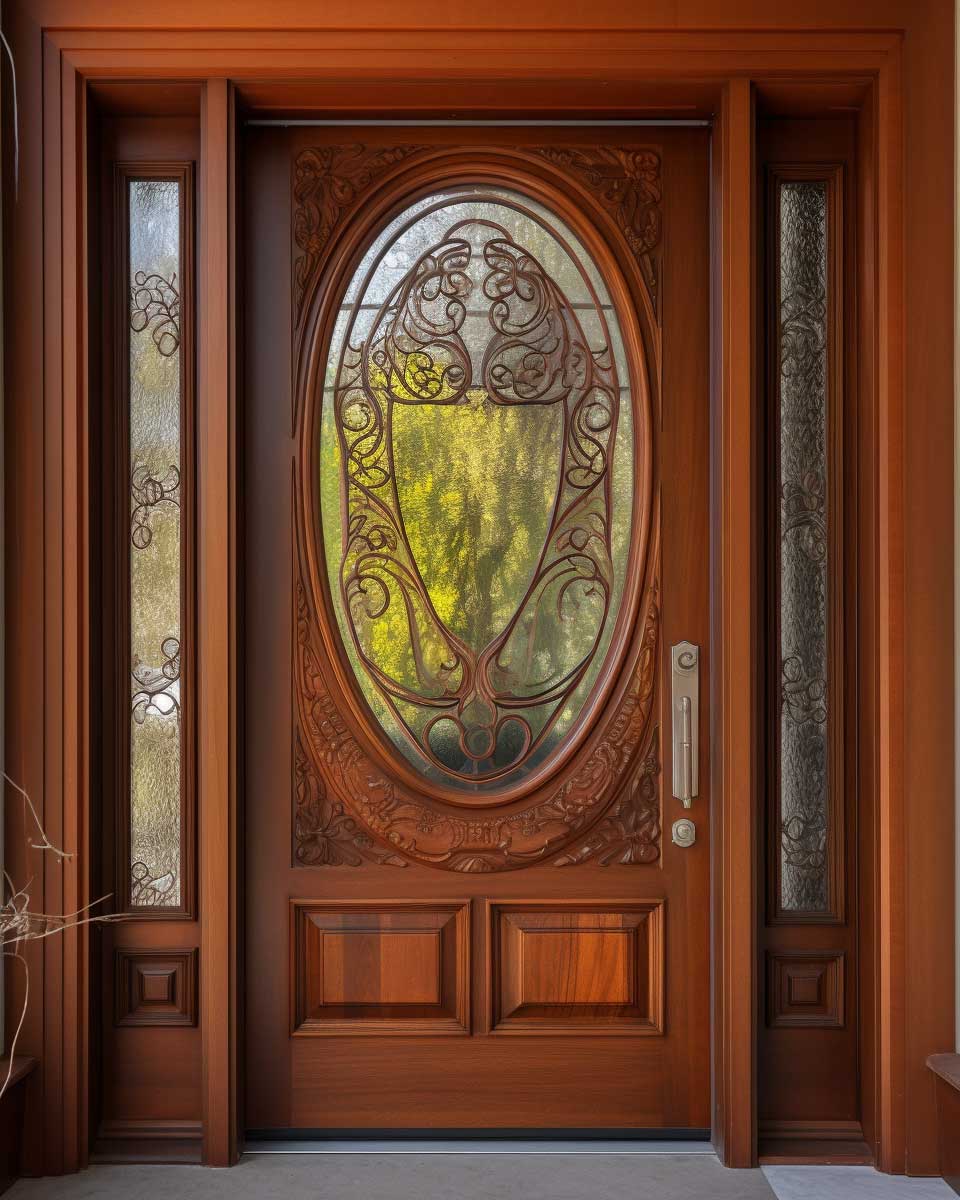
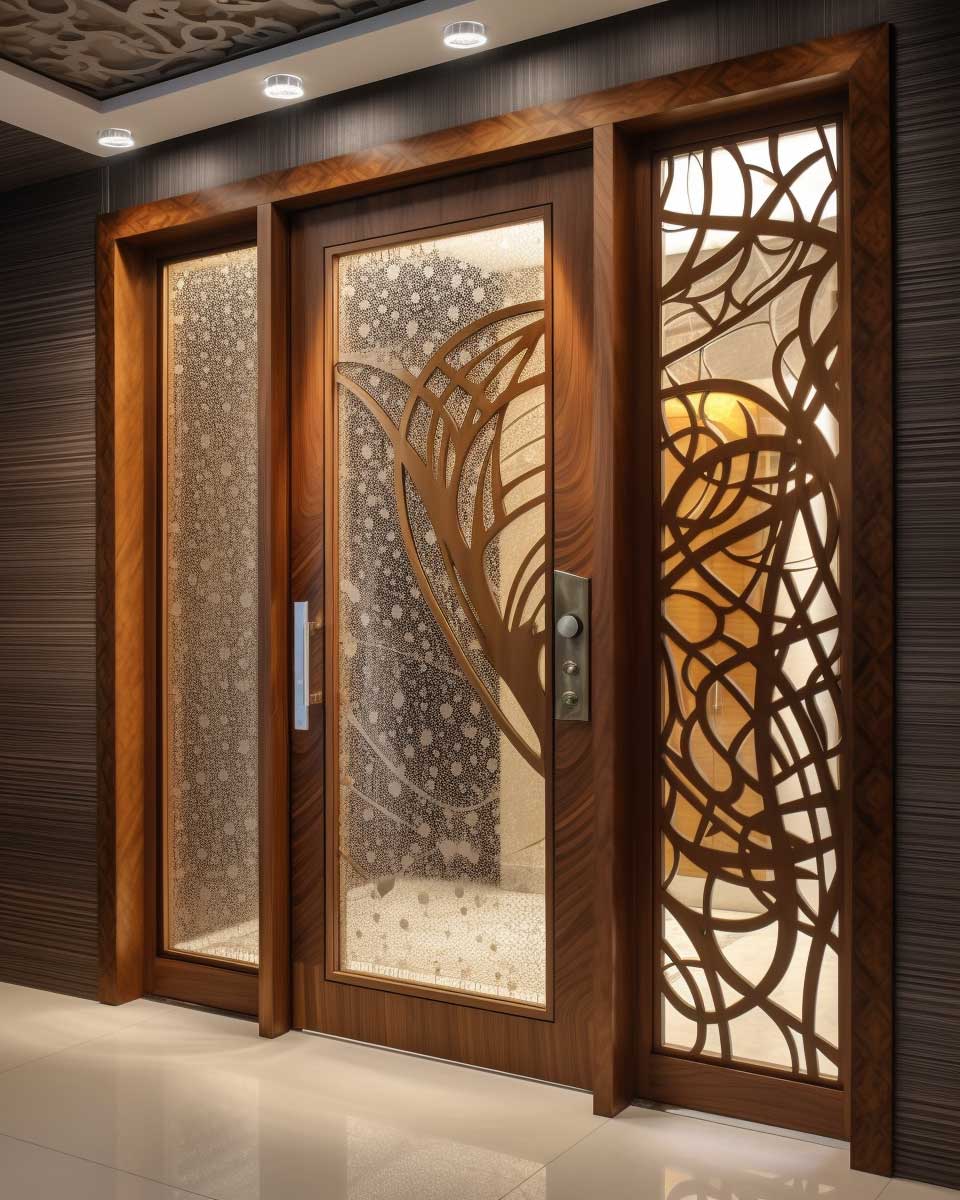
Placement matters more than glass type. A sidelight panel at eye level next to a solid wood door solves the light problem without turning the door itself into a window. You keep the door as a solid visual anchor — wood grain, hardware, finish depth — and add light via the sidelight. That arrangement also gives you privacy control through a simple interior shade or sheer panel on the sidelight without blocking your door’s hardware.
Carved Leaf and Branch Motifs Anchor the Door to Its Landscape
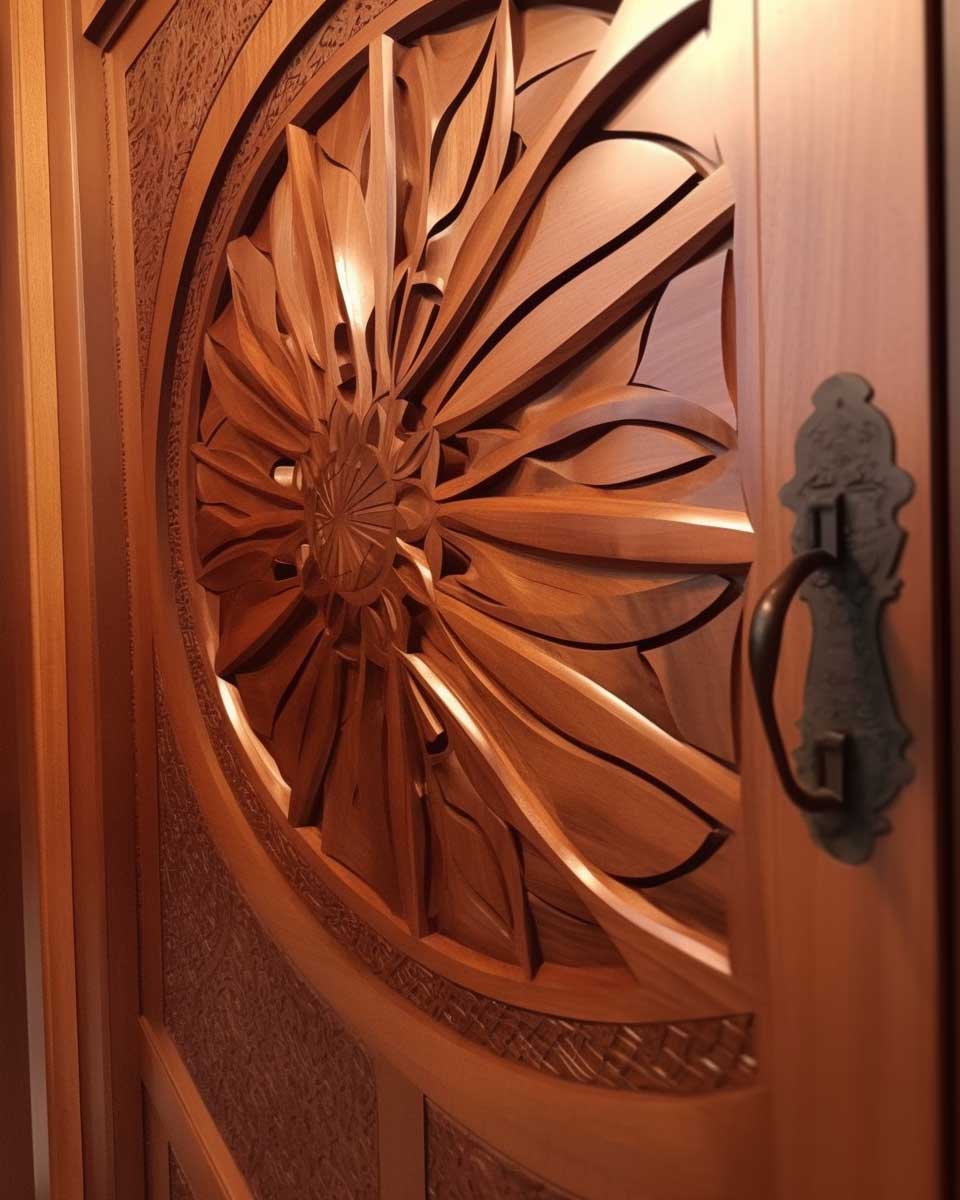
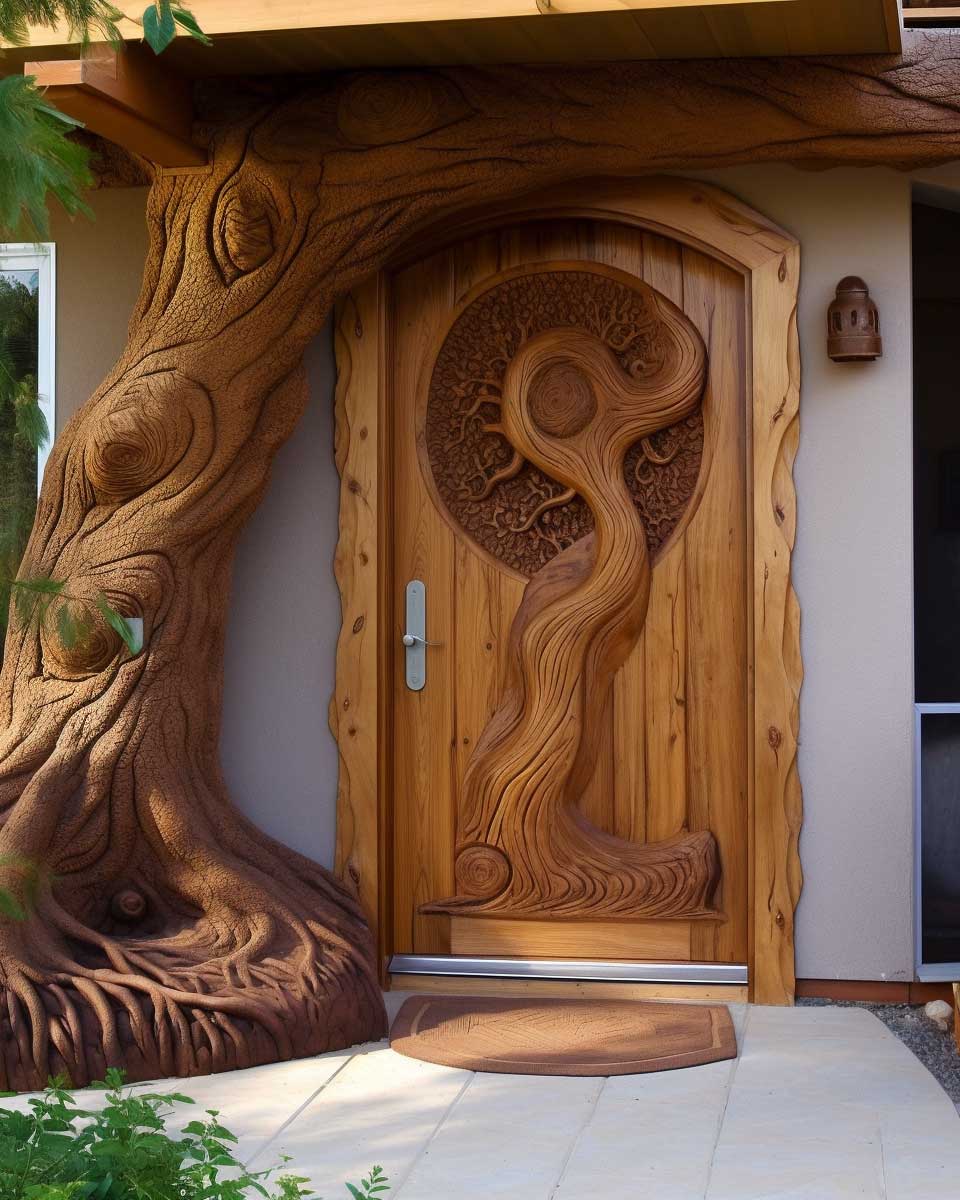
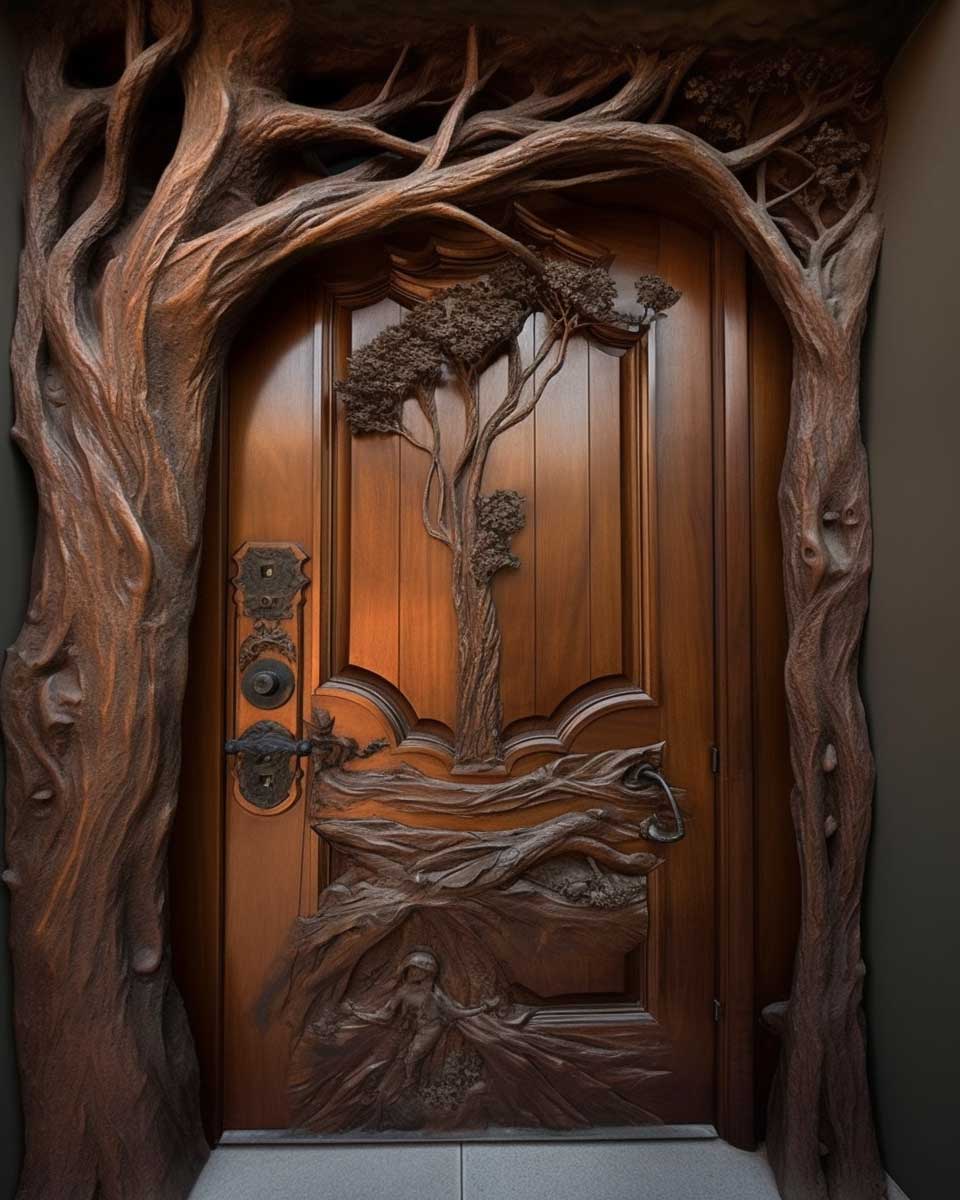
Nature-referenced wooden door designs — carved leaf motifs, branch-pattern inlays, grain-forward natural wood in deep green or earthy brown — work as a design system because they connect the architecture to its site. A house surrounded by mature trees with a carved oak-leaf panel door reads cohesive in a way that no other style achieves. The door and the landscape are having the same conversation. I’ve watched this effect work even on modest houses: a $700 fir door with a carved fern motif on a cottage with mature plantings photographed like a $4,000 custom piece.
What doesn’t work: nature-referenced carvings on a door in an urban or paved-frontage context. Without actual greenery nearby, the motif reads decorative rather than connected. It becomes a costume. Pair a nature-patterned wooden entrance door design with actual living plants — flanking topiaries, a climbing vine on the facade, visible window boxes — to let the door’s design logic make sense at the scale of the whole entrance.

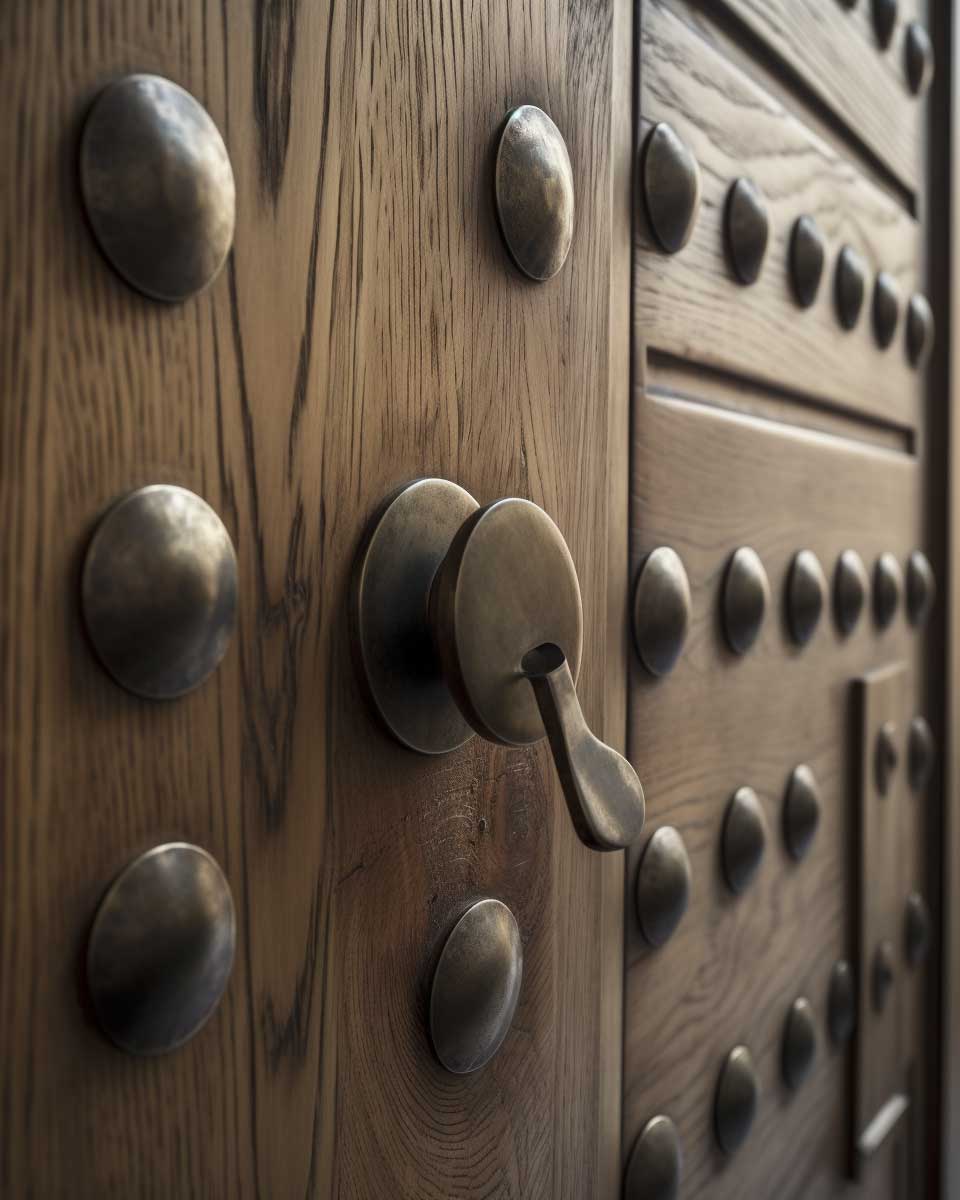
Hardware Speaks First at Three Feet — Match Its Language to the Door
Hardware on a wooden front door is the detail you register before your hand reaches the handle. Door knockers, lever sets, pulls, and escutcheons operate at a scale that makes them the most visible surface detail on most doors from about three feet away — closer than any photograph captures. I own two sets of Emtek hardware in different finishes from two different periods and the oil-rubbed bronze held its color for nine years. The polished nickel started looking blotchy at year four in direct weather. Finish choice isn’t aesthetic preference when it comes to exterior hardware; it’s a maintenance decision.
Ornate knockers on a flat-panel door create dissonance — the hardware is making a visual argument the door refuses to support. Match hardware complexity to door complexity: carved doors take ring pulls and box hinges, flat doors take bar pulls and concealed hinges, rustic doors take strap hinges and clavos. Mixing categories is a reliable way to produce an entrance that reads as “not quite finished” to everyone who sees it, even if they can’t articulate why.

Double Wooden Doors Signal Scale — and Punish Proportion Errors
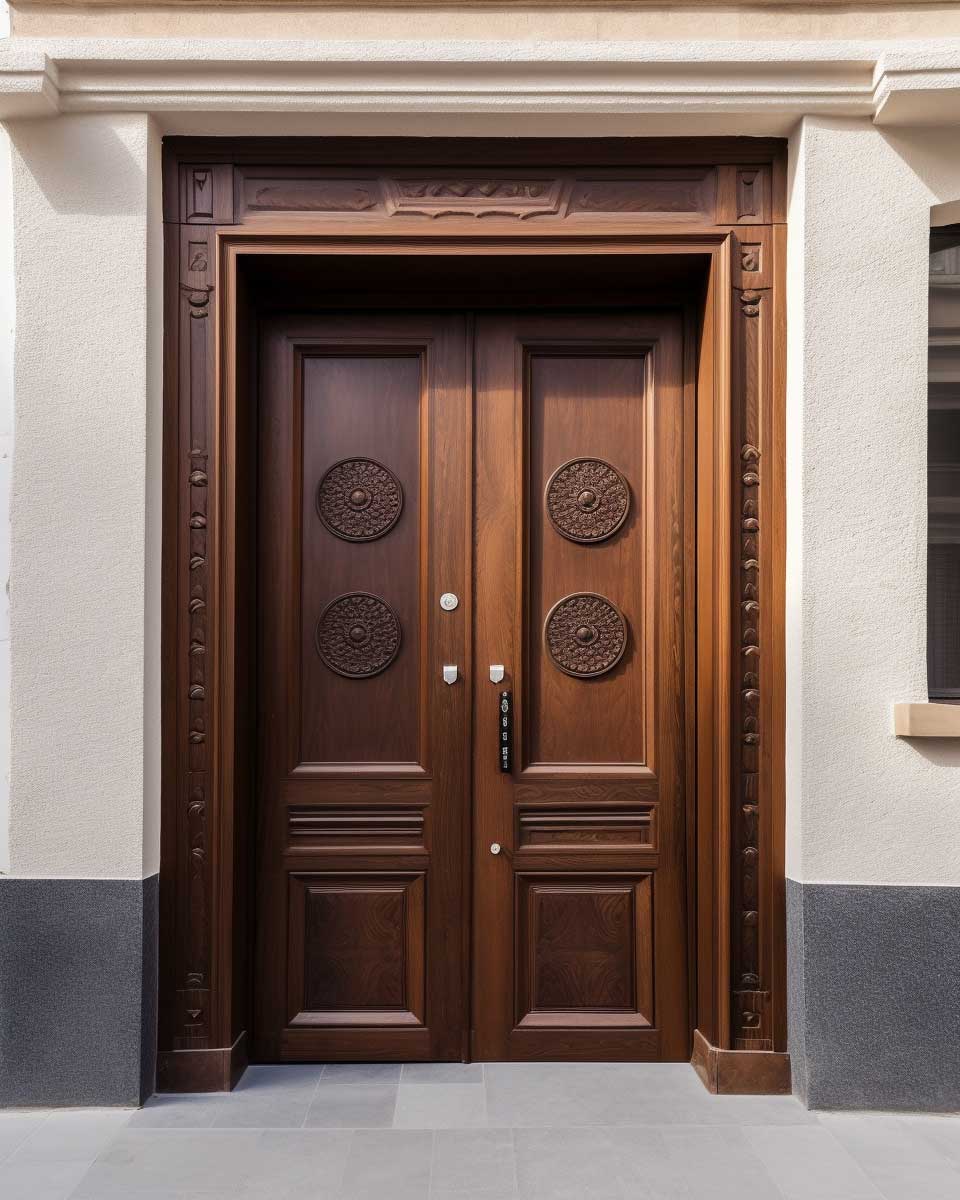
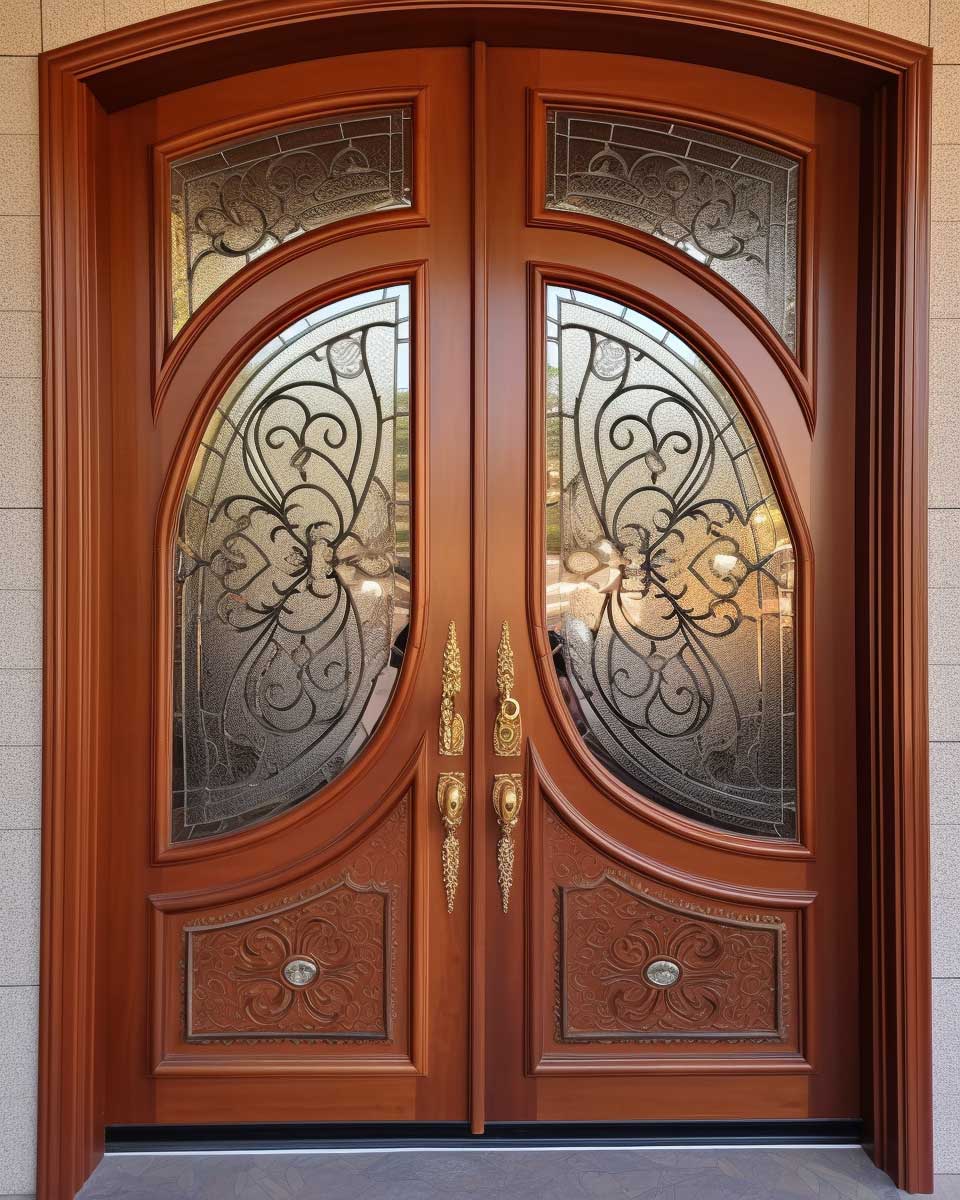
Double wooden entrance doors create an immediate sense of scale — they read as grander than any single door at the same total width because the visual rhythm of two panels signals ceremony. The problem is that double wood doors amplify proportion errors the same way they amplify grandeur. A double door that’s undersized for the opening creates a visual vacuum around the frame. The standard rule: double doors should fill at least 60% of the facade width between columns or pilasters. Below that threshold, the entrance looks apologetic rather than grand.
Matching versus contrasting panel designs on double doors is a real design choice with real consequences. Identical panels read formal and controlled — correct for traditional and classical facades. Contrasting panels (different grain orientation, different panel count per leaf) read contemporary and intentional — correct for modern architecture. The mistake is treating it as arbitrary. Pick one design logic and commit. Mismatched panels that don’t reference any design intention just look like someone installed two different doors.



WOODEN DOOR DESIGN
The Door Material Doesn’t Save a Bad Proportion. Wood Just Makes Good Proportions More Visible.
Match your door style to the facade material first, hardware second, finish last. Invert that order and you’re decorating, not designing.
A $900 Douglas fir door with the right proportions, correct hardware for its style, and a marine-grade finish beats a $4,000 carved mahogany slab installed at the wrong scale every time.
Save this post — come back to it when you’re standing in the showroom holding samples.
Related Topics
FAQ
What wood is best for a wooden front door design that faces direct weather?
How much does a fancy wooden door cost for a grand entrance?
What is the difference between a wood entrance door design and a front door design in wood on a budget?
Do wooden entrance door designs with glass panels reduce energy efficiency?
What hardware finish lasts longest on a wooden front door design outdoors?
How do unique wooden front door designs for home affect resale value?
Complete guide
Door Design Ideas That Transform Every Entrance, Room and Style
Front doors, double doors, interior, garage, glass, wood, trim — all in one place
Complete guide
Wood in Every Room — Floors, Walls, Facades and Furniture
Paneling, ceilings, kitchens, facades, plywood, timber houses — all in one place