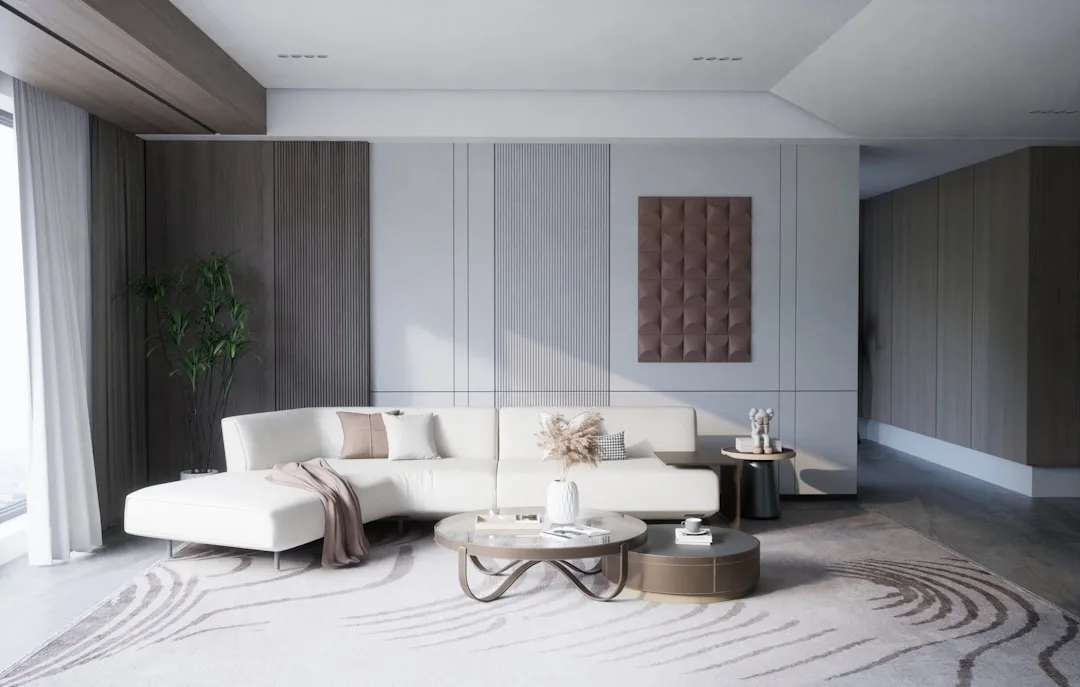
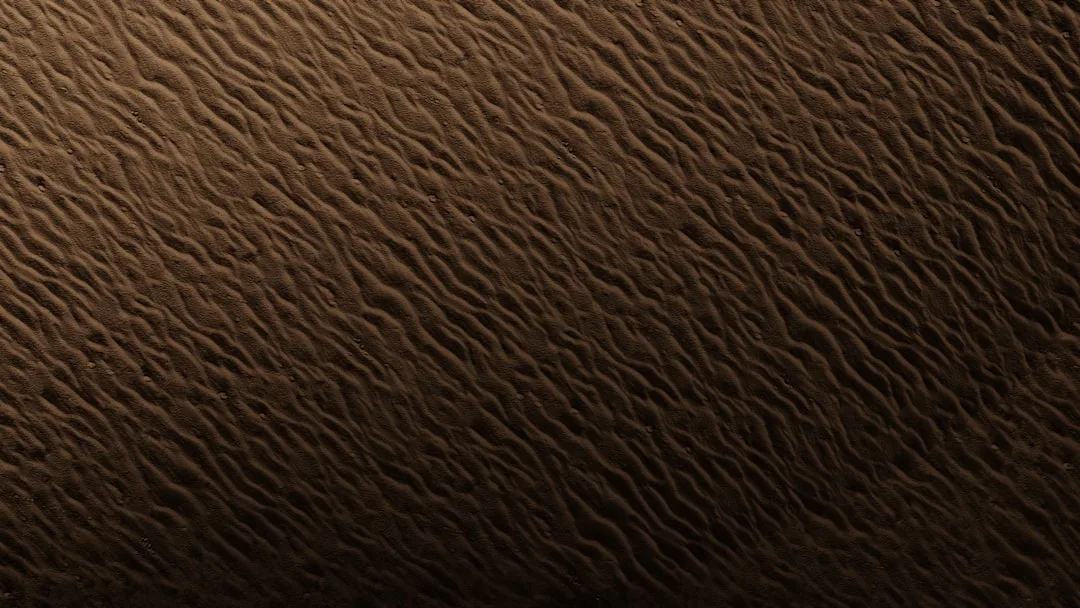
MDF wall design gives a living room or bedroom the look of custom joinery at a fraction of solid timber cost, and it works best on dry interior walls with the right board grade. Typical installed prices for a basic MDF panelling job run about $6.50–$12.50 per square foot, so a 200 sq ft wall lands near $1,300–$2,500. UK price guides put the raw board at roughly £10–£20 per square metre, against £40–£70 for solid wood. Start by measuring the one wall you want to change, because a single feature wall delivers most of the visual payoff.
Three design directions do the heavy lifting today: panels with built-in LED light, MDF paired with stone or wood, and CNC-milled geometric relief. Each one starts from the same 4 × 8 ft sheet, which costs about $60–$140 at 3/4 inch thick and $35–$75 at 1/2 inch. Does MDF hold up as a permanent wall finish? Yes, as long as it stays out of wet zones or you buy a moisture-resistant grade. Treat the board as a canvas and the finish, light and pattern as the actual design.
The sections below break each style down by price, weight and upkeep, then compare them side by side in one table. Every option carries typical figures from manufacturer data sheets and current cost guides. Read the board-grade section before ordering anything, since the cheapest sheet is rarely the cheapest wall.
Quick Scan
- Basic MDF panelling costs about $6.50–$12.50 per sq ft installed; 200 sq ft runs $1,300–$2,500.
- MDF board is roughly a quarter of the price of solid wood: £10–£20 vs £40–£70 per m².
- LED strips cost $0.50–$3 per ft; an aluminum channel with diffuser adds $2–$12 per ft.
- Manufactured stone veneer ($5–$8 per sq ft) costs about half as much as natural veneer ($11–$18).
- A milled 3D MDF panel of 2440 × 1220 mm weighs around 25 kg and covers about 3 m².
- Moisture-resistant MDF swells far less in water tests than standard board of the same thickness.
- US-sold MDF must carry a TSCA Title VI label, with a formaldehyde limit of 0.11 ppm.
Backlit MDF Wall Panels Turn the Living Room Into a Light Source
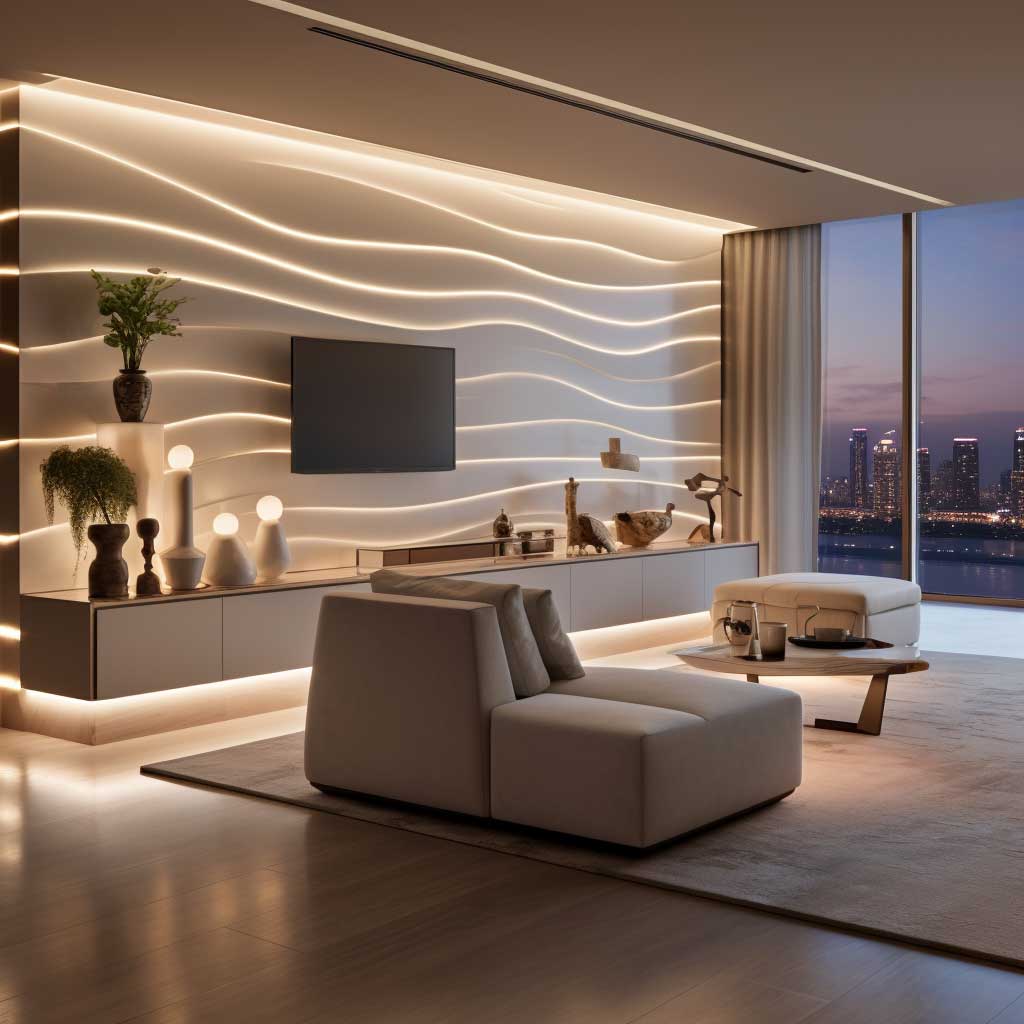
Modern MDF wall design for a living room increasingly hides the light inside the wall instead of hanging it in front. LED strips sit in routed grooves or along panel edges, and typical strip prices run $0.50–$3 per foot, with an aluminum channel and diffuser adding $2–$12 per foot. A 20 ft run therefore costs roughly $50–$300 in parts before the power supply. Budget for the channel, not just the strip, because bare tape on raw board shows every diode as a separate dot.
Grooved lines vs a soft halo is the first choice to make. Grooves read like runway markings and suit a minimalist room, while light washed from behind a raised panel blurs the edges and calms the wall. A common recessed profile measures about 23.2 × 8 mm and takes strips up to 12 mm wide, so 3/4 inch board still leaves around 10 mm of material behind the channel. Avoid routing channels into 1/4 inch sheet, which has nothing left to hold the profile.

Will the LEDs overheat the board? Not with an aluminum profile, which works as a heat sink and keeps the strip off the wood fibers. Drivers rated 18–60 W typically power runs of 5–12 m and cost about $12–$60. Never seal the driver behind a glued panel, because a hidden power supply is like a fuse box bricked into the wall. Leave a removable access panel near the floor or inside a cabinet.
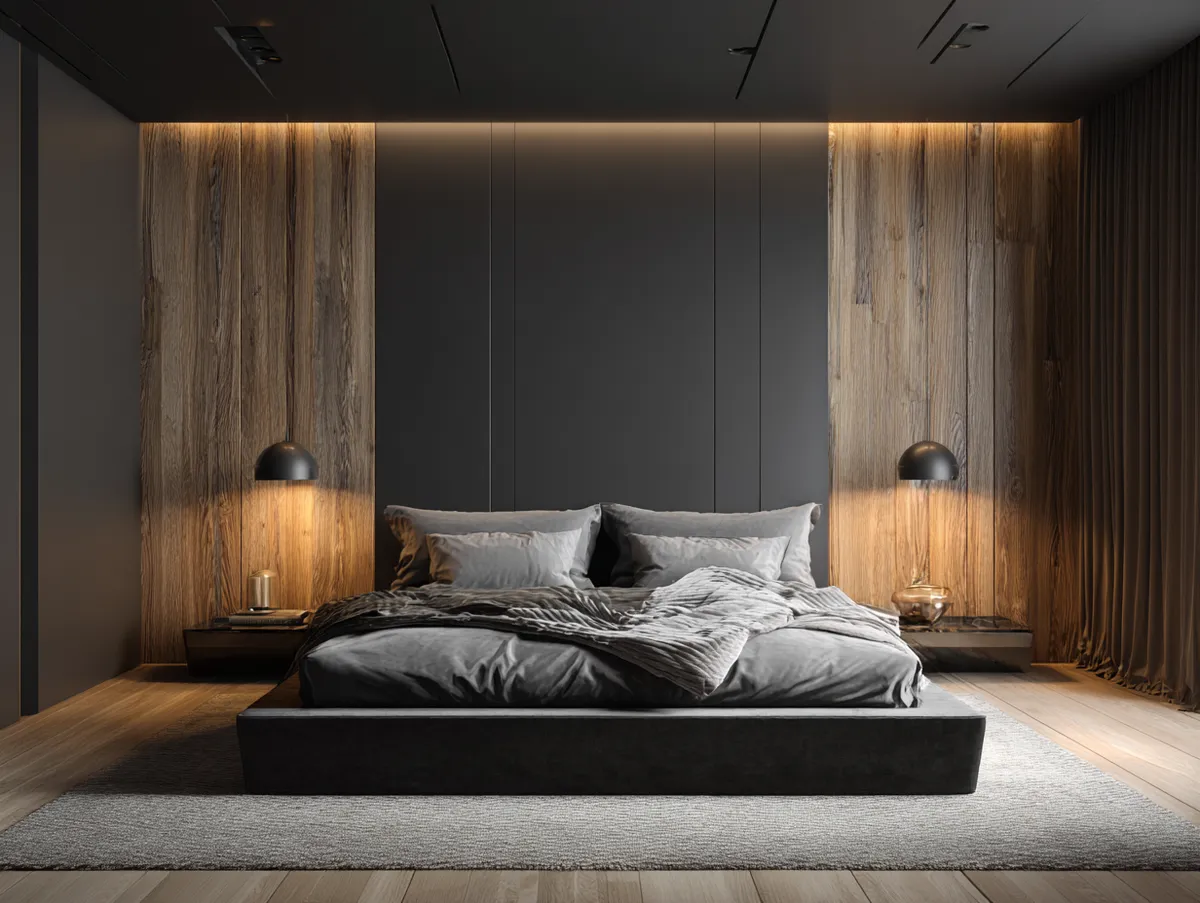
The same trick works behind a bed, where a dimmable 3000K strip gives a low, warm glow instead of a bright overhead light. A lit headboard wall concentrates drama on one surface, which is the core difference explained in this comparison of accent wall versus colour drenching in a modern bedroom. One lit wall vs four painted ones also keeps wiring to a single circuit run. Keep the strip below eye level when lying down so the light washes the panel rather than your face.

Stone and Wood Give MDF Wall Panelling a Grounded Feel
MDF wall panelling ideas that mix in stone or timber fix the board’s one weakness: a flat, uniform face with no grain of its own. Manufactured stone veneer runs about $5–$8 per square foot and natural veneer $11–$18, with installation adding roughly $2–$4 more. Painted MDF around a single stone inset keeps the expensive material in one zone. Frame the stone with MDF rather than the other way round, since the board is far cheaper to trim on site.
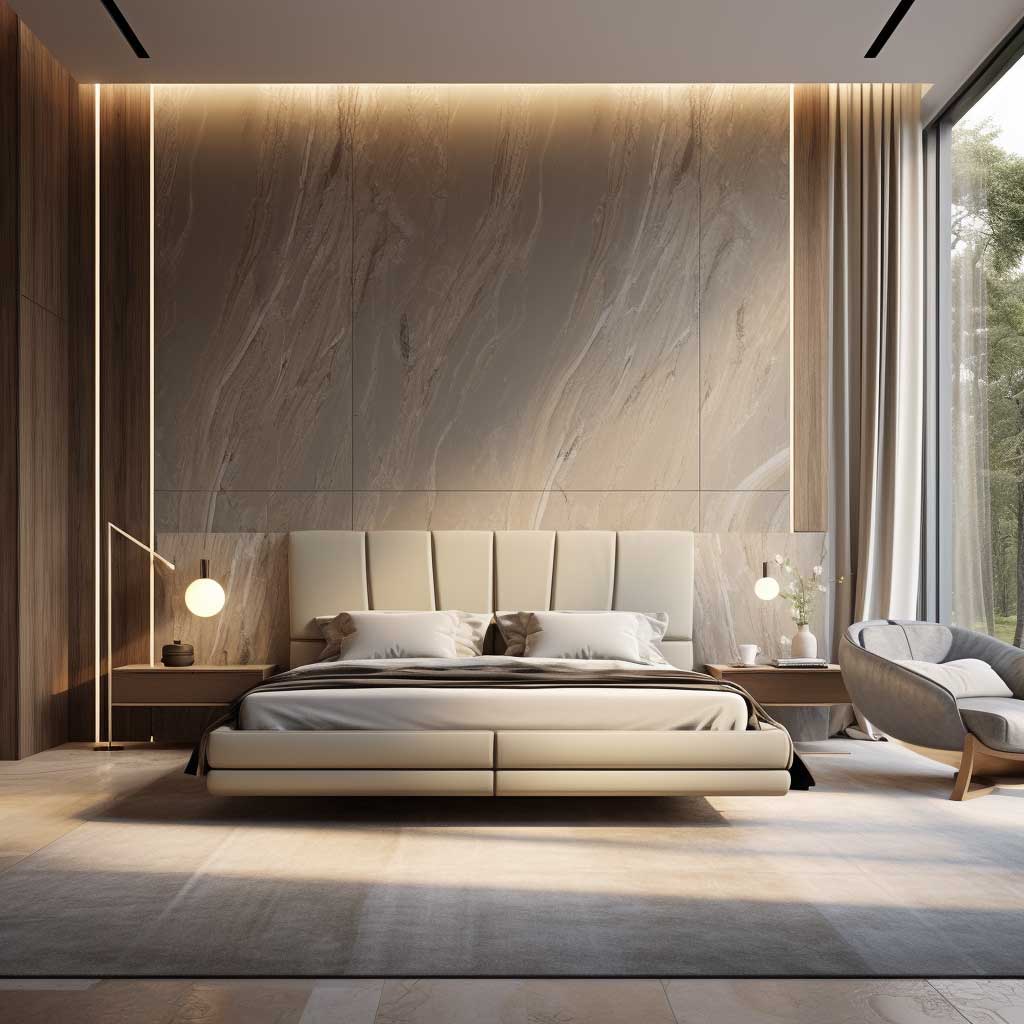
Weight is the hidden difference between the two materials. Thin stone veneer can reach 15 lb per square foot, while 3/4 inch MDF at roughly 750 kg/m³ weighs under 3 lb per square foot, about a fifth as much. Can the stone go straight onto an MDF panel? Better not, because gluing veneer to board is like hanging a framed mirror on a corkboard. Mount the stone on the wall structure, using wire lath on heavy sections, and butt the MDF up to it.
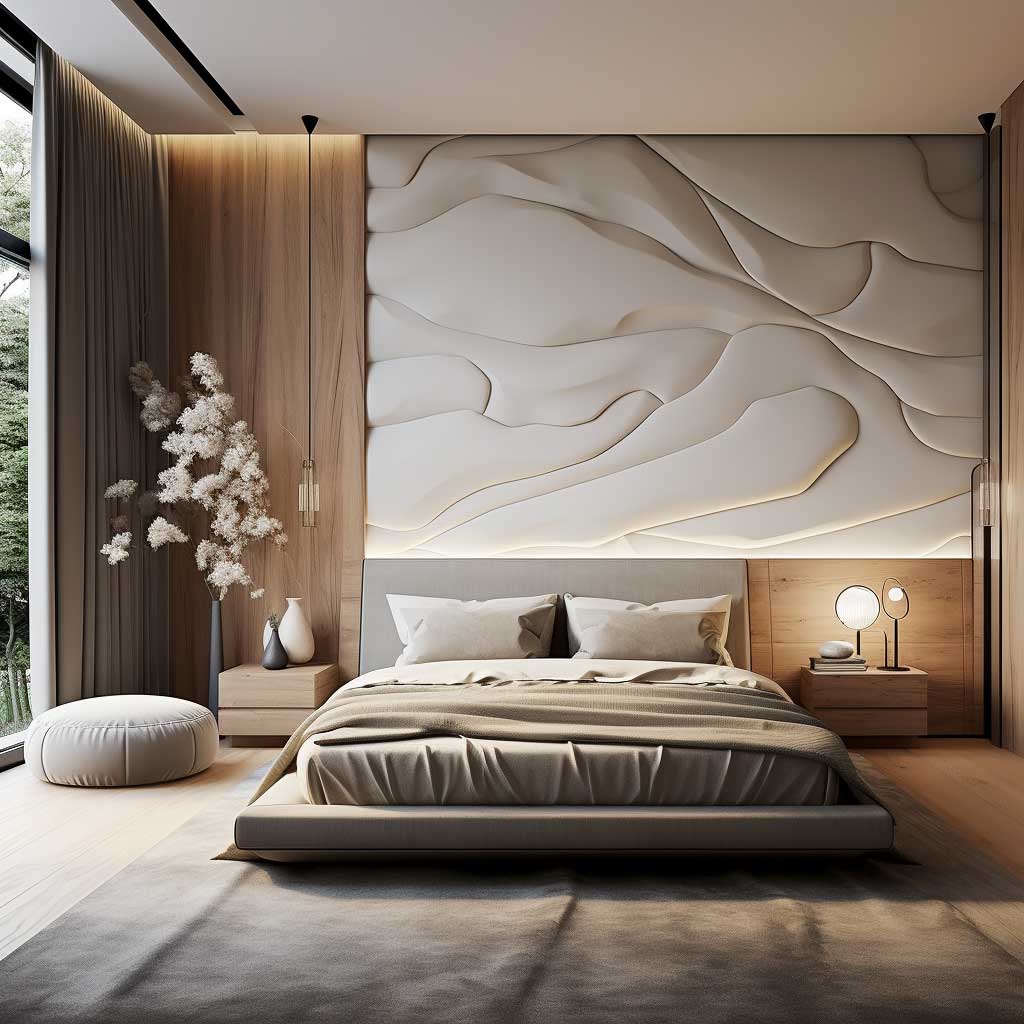
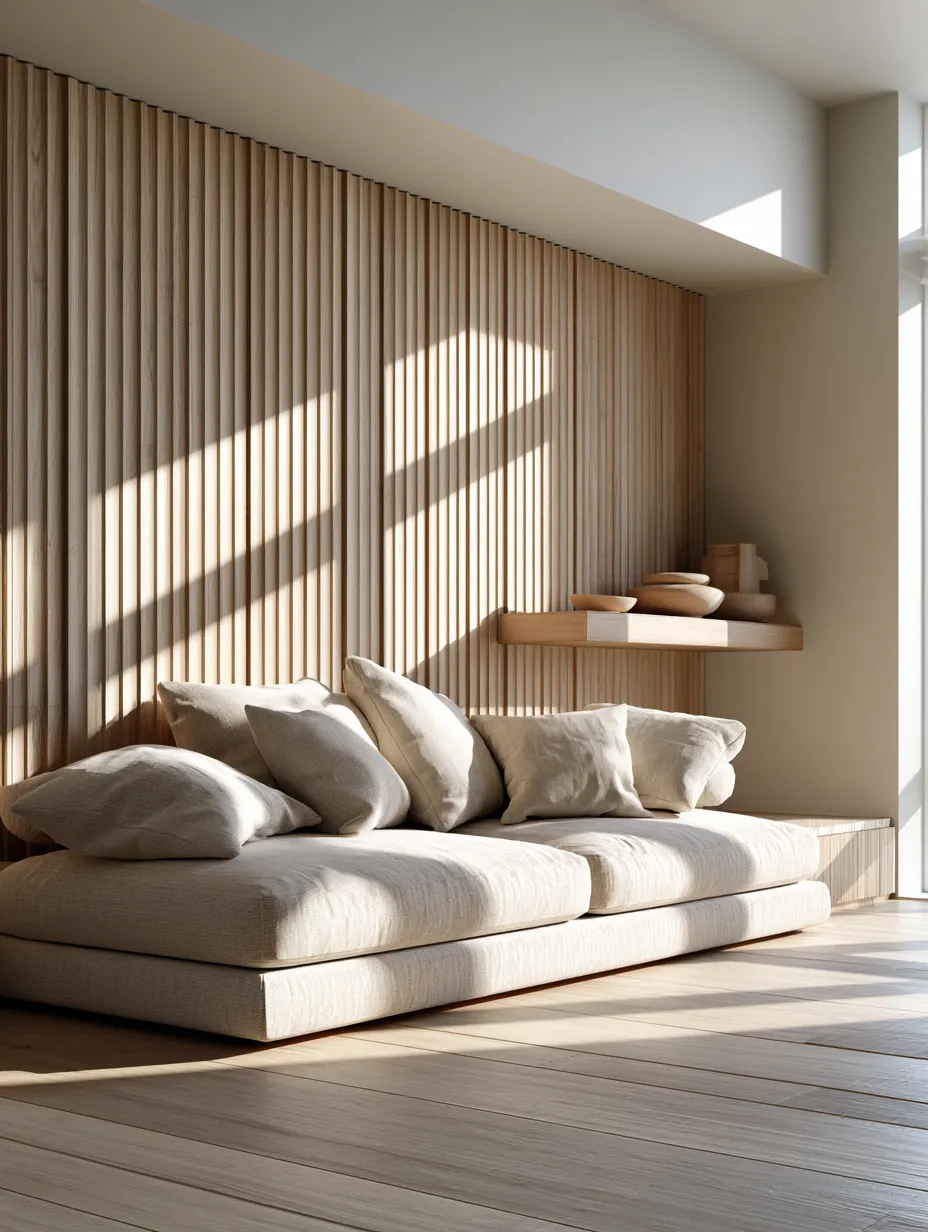
Wood is the easier partner, because it shares MDF’s light weight and fixing methods. Tongue and groove boards typically run $4–$10 per square foot installed, a figure that matches the ranges in this breakdown of rustic wood ceilings with real per-square-foot costs. Smooth painted MDF vs open grain creates a contrast the eye reads as deliberate. Run timber vertically on one section and keep the MDF horizontal or plain, so the two surfaces never look like a mismatch.

Is the mix greener than solid stone or timber? Partly, since MDF is made from wood fibers that sawmills would otherwise discard, and a single stone inset uses far less quarried material than a full stone wall. In cafés and shops the same pairing signals a natural brand at a moderate budget. Skip plastic faux-stone sheets next to real wood, because the fake surface looks flatter the closer it sits to genuine grain.
Geometric Patterns Push MDF Wall Design Into Three Dimensions
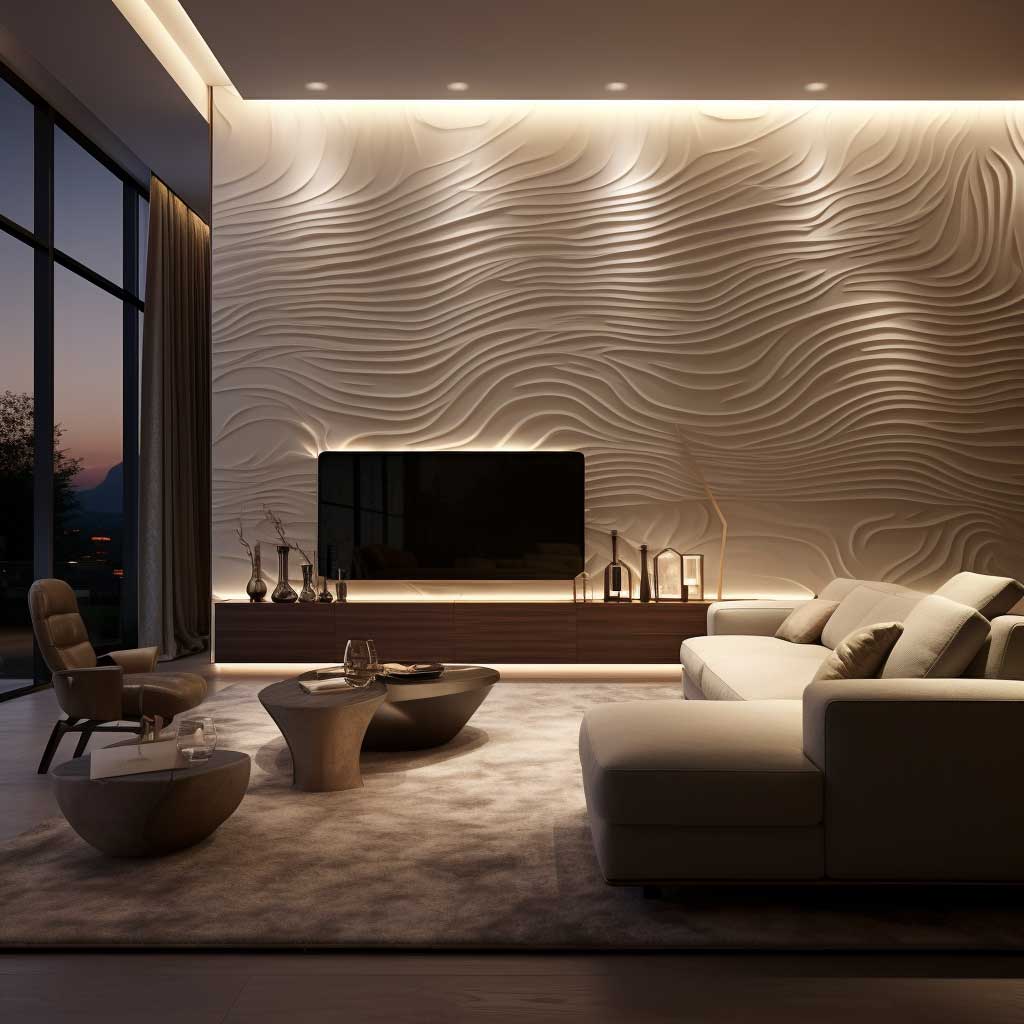
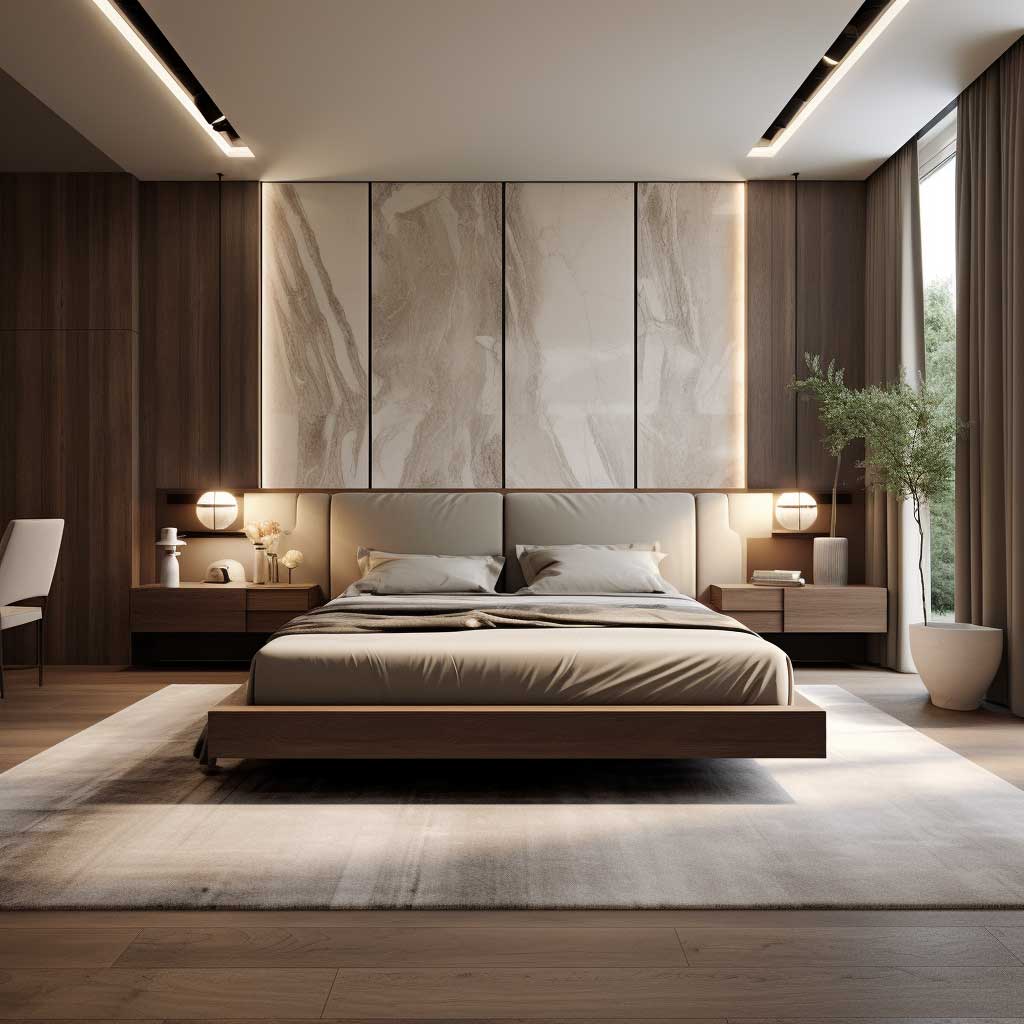
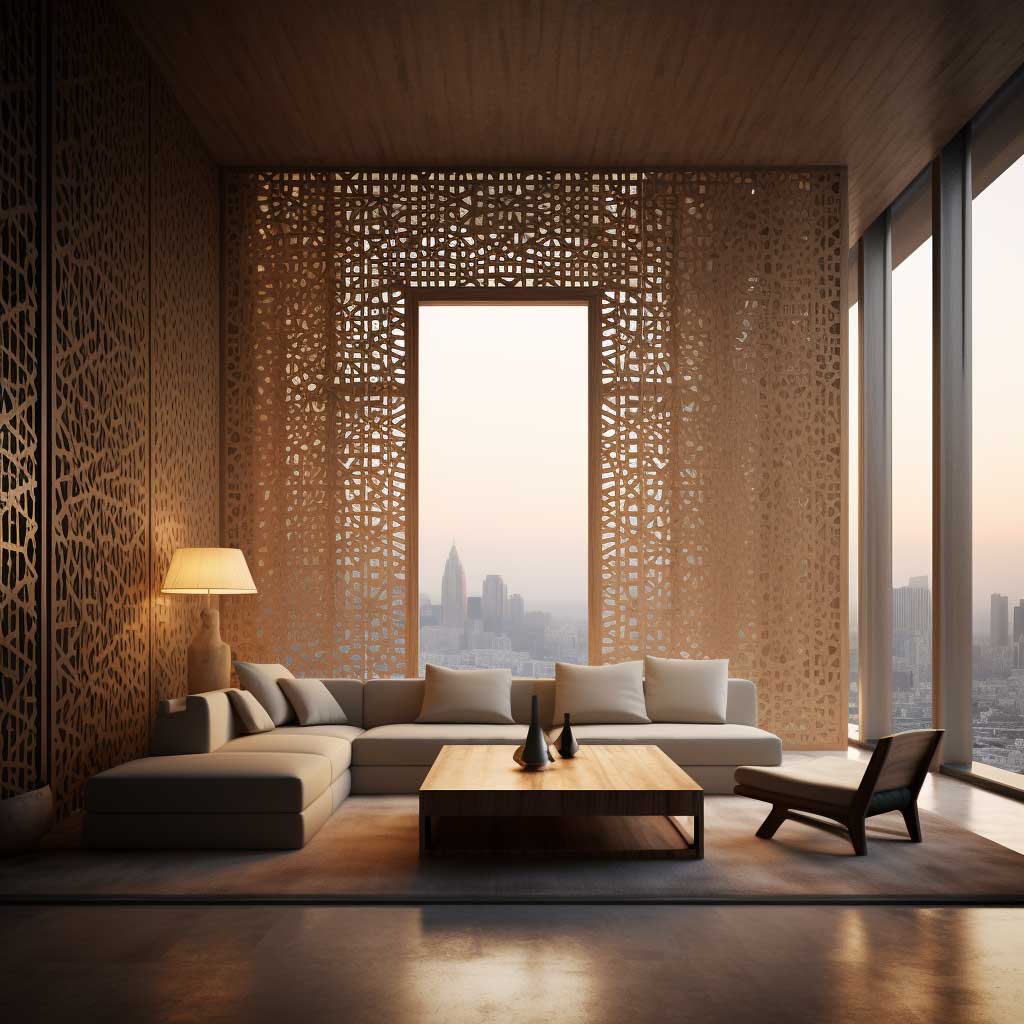
Geometric MDF panel designs rely on a CNC router cutting waves, grooves or facets into the board face. One European maker’s milled 3D panels come in a standard 2440 × 1220 mm sheet, 15 mm thick, at about 25 kg each, with 11 patterns that continue across joints. Delivery in 1–2 weeks keeps them realistic even mid-renovation. Order every panel for one wall in a single batch so primer tone and milling depth match.
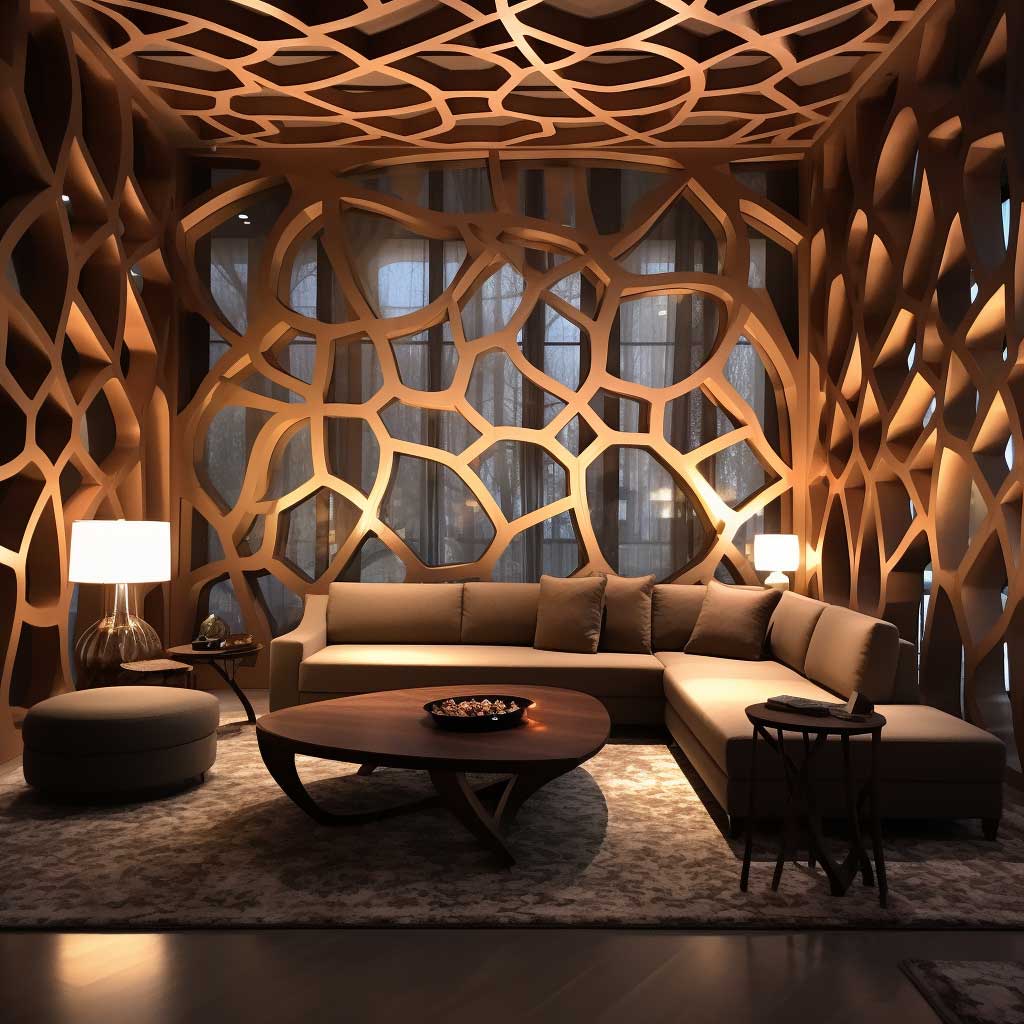
Carving changes the price more than any other choice. In Indian supplier listings, CNC 3D work runs roughly ₹300–₹1,200 per square foot, against about ₹120–₹250 for plain MDF panelling with labour, so pattern can multiply cost two to five times. Does a carved wall need special lighting? Yes, because relief behaves like a contour map: flat at noon from overhead, full of ridges at sunset. Light it from one side with a wall washer instead of a central ceiling fixture.

Pattern scale should follow wall size. A 4 m wide wall at 2.4 m high covers 9.6 m², so it needs four of those 3 m² panels, with the last one trimmed. Large waves suit a long living room wall, while tight facets suit a narrow niche or bar front. Avoid fine grooves in hallways where shoulders and bags brush past, since every channel turns into a dust trap.

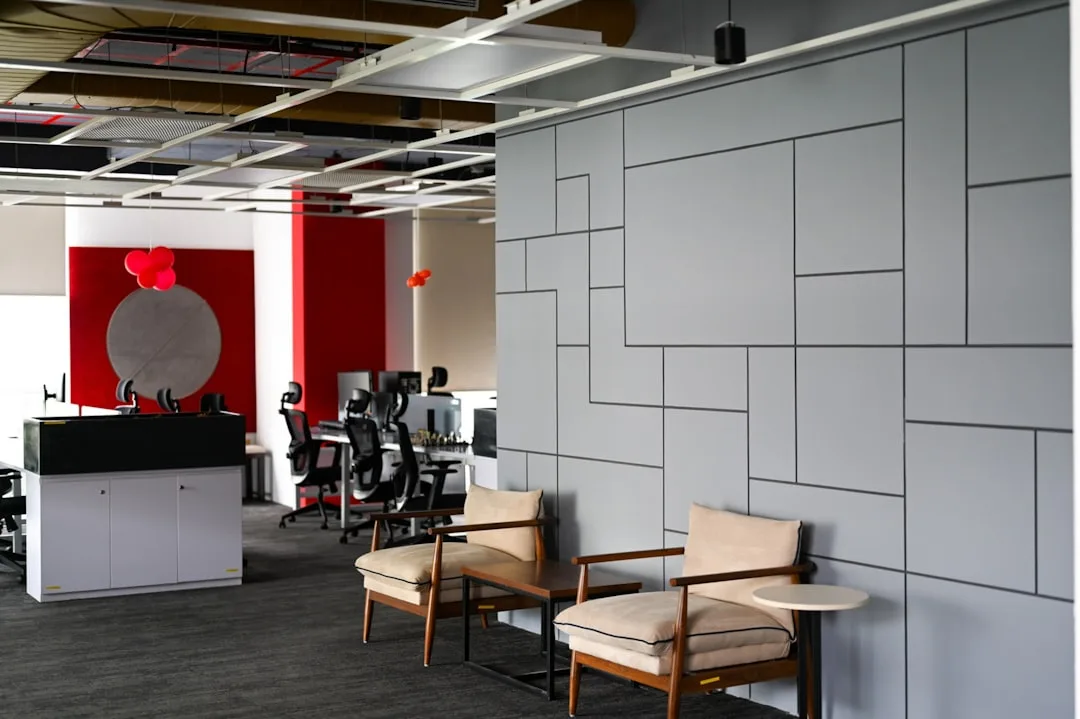
Offices, hotels and restaurants use geometric MDF for the same reason homes do: one wall carries the identity of the whole space. Installers typically need 1–2 days for 200–400 sq ft of panelling, with local labour at about $40–$60 per hour. A patterned boardroom wall vs plain paint costs more upfront but removes the need for art. Ask the installer to dry-lay panels on the floor first, so pattern breaks are fixed before any glue goes on.
Board Grade Decides How Long an MDF Wall Design Lasts
Good MDF interior design starts with the board spec, not the pattern. Standard MDF sits around 700–860 kg/m³, while light grades drop to about 600 kg/m³, which makes them easier to lift but softer under a router. A 4 × 8 ft sheet costs about $20–$40 at 1/4 inch, $35–$75 at 1/2 inch and $60–$140 at 3/4 inch. Choose 1/2 inch for flat painted panelling and save 3/4 inch for routed grooves and LED channels.
Moisture is where cheap board fails first. Manufacturer data sheets rate thin standard MDF for up to 30% thickness swelling after 24 hours in water, while moisture-resistant MDF.H grades are rated at roughly 6–11%. Is moisture-resistant board worth it in a living room? Usually not, but it is in a kitchen, a utility room or any wall shared with a bathroom. Think of the grade stamp as a nutrition label and read it before the price tag.
Formaldehyde limits matter on a large indoor surface. Under CARB Phase 2 rules, MDF may not exceed 0.11 ppm and thin MDF 0.13 ppm, and the identical US limits are enforced through the EPA formaldehyde standards for composite wood products. Since March 22, 2019, MDF sold in the United States must be labelled TSCA Title VI compliant. Look for that label on the sheet or packaging before the board comes indoors.
- Flat painted panelling: 1/2 inch standard MDF, primed on all faces.
- Routed grooves or LED channels: 3/4 inch board, around 750 kg/m³.
- Kitchens and walls next to showers: moisture-resistant MDF.H grade.
- Every sheet: TSCA Title VI or CARB Phase 2 label visible.
Fire behaviour is the last check. Under EN 13986, MDF of at least 9 mm and 600 kg/m³ is classed D-s2, d0, which means combustible board with limited smoke and no flaming droplets. That rating suits ordinary living spaces, not the area directly around a fireplace or stove. Keep the panelling at least a full panel width away from a firebox and finish that zone in stone or tile.
Don’t Do This
- Don’t route LED channels into 1/4 inch sheet: 3/4 inch board leaves about 10 mm behind a 23.2 × 8 mm profile.
- Don’t use standard MDF beside a shower: thin boards can swell up to 30% vs roughly 6–11% for MDF.H.
- Don’t glue stone veneer to MDF: up to 15 lb per sq ft vs under 3 lb for the board itself.
- Don’t seal an LED driver behind a glued panel: an 18–60 W unit needs an access hatch.
MDF Panel Designs Compared by Cost, Weight and Upkeep
MDF panel designs only make sense once price, weight and maintenance sit in one view. Plain painted panelling at $6.50–$12.50 per square foot is the baseline, while stone inserts and CNC carving sit at the top of the range. Lighting adds the smallest cost per foot but the most planning. Read a full row before choosing, because the cheapest material per foot is not always the cheapest finished wall.
| Design option | Typical cost | Weight or thickness | Install effort | Upkeep |
|---|---|---|---|---|
| Plain painted MDF panelling | $6.50–$12.50 per sq ft installed | 1/2 inch sheet, about 750 kg/m³ | 1–2 days per 200–400 sq ft | Repaint every few years |
| MDF with integrated LED | Panel cost + $2.50–$15 per ft for strip and channel | 3/4 inch board for routing | Adds wiring and an 18–60 W driver | Access hatch for driver |
| MDF with stone veneer inset | $5–$8 (manufactured) or $11–$18 (natural) per sq ft + $2–$4 install | Stone up to 15 lb per sq ft | Mason for stone, carpenter for MDF | Occasional sealing of stone |
| MDF with wood boards | $4–$10 per sq ft for tongue and groove | Light, nailed to battens | Similar to plain panelling | Dusting, periodic oiling |
| CNC geometric 3D MDF | About 2–5 times plain MDF panelling | 15 mm, about 25 kg per 2440 × 1220 mm panel | 1–2 week lead time, dry-lay first | Dust grooves regularly |
Two patterns stand out from the table. Wood and plain MDF cost about the same to install, so mixing them adds texture without a big jump in budget. Stone and carving are the two premium routes, and combining both on one wall rarely looks better than choosing one. Pick a single hero material per wall and let MDF play the supporting role.
Where the Money Should Go
MDF wall design pays off most on one well-chosen living room or bedroom wall, where $1,300–$2,500 for 200 sq ft of basic panelling changes the room more than new furniture would. It costs roughly a quarter of solid wood per square metre and takes paint, light and carving equally well.
For the strongest effect per dollar, add LED channels at $2.50–$15 per foot to 3/4 inch board. Light does the work that carving or stone would otherwise do, and it can be dimmed for evening use.
Stone and wood suit rooms that need warmth, with manufactured stone at $5–$8 per square foot offering most of the look of natural veneer at about half the cost. Keep the stone on the wall structure and the MDF around it.
Geometric panels belong on large, side-lit walls, where a 3 m² sheet shows its full relief. Before ordering any design, confirm the TSCA Title VI label, choose moisture-resistant board for wet rooms and collect at least three installer quotes.