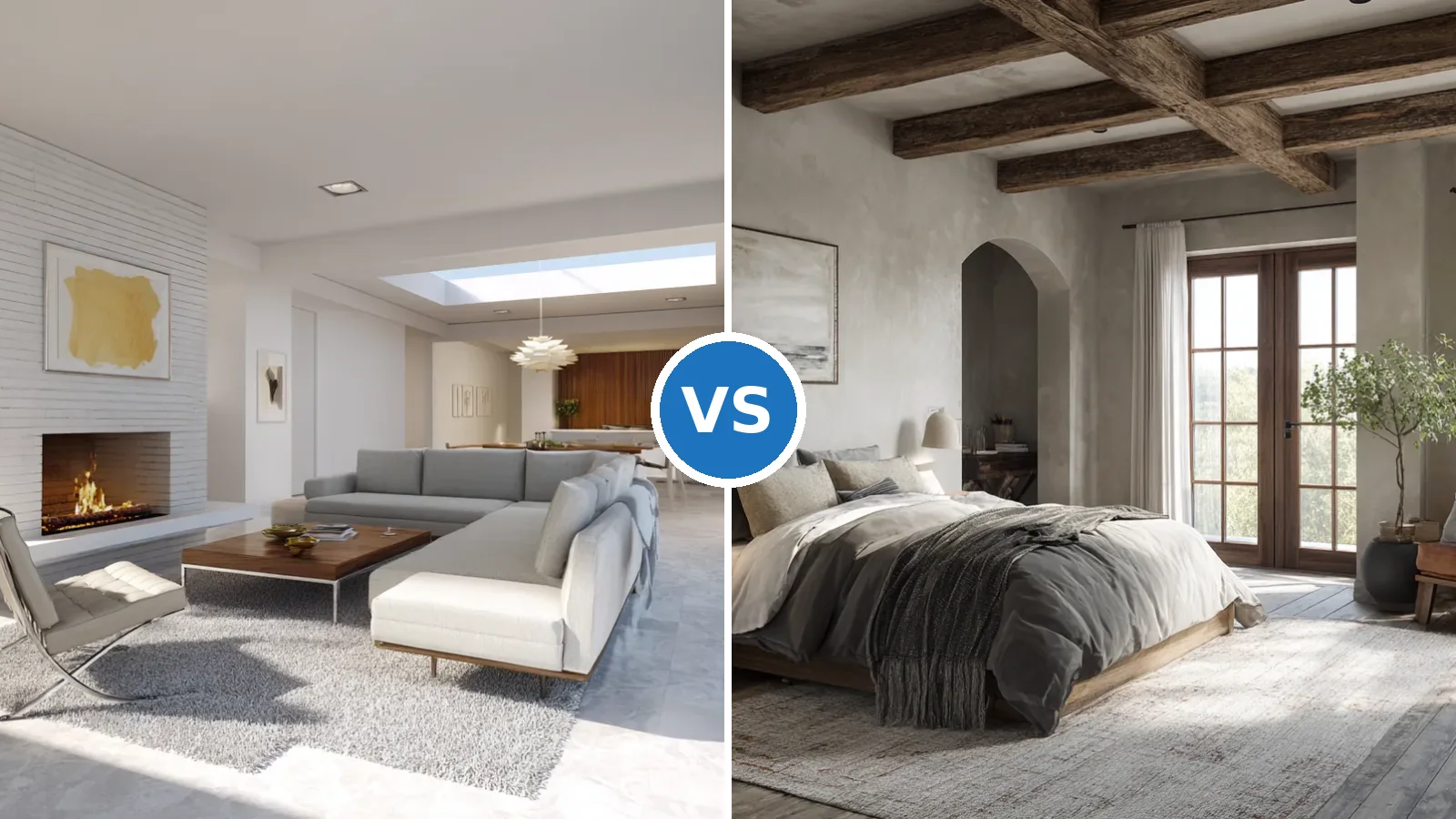
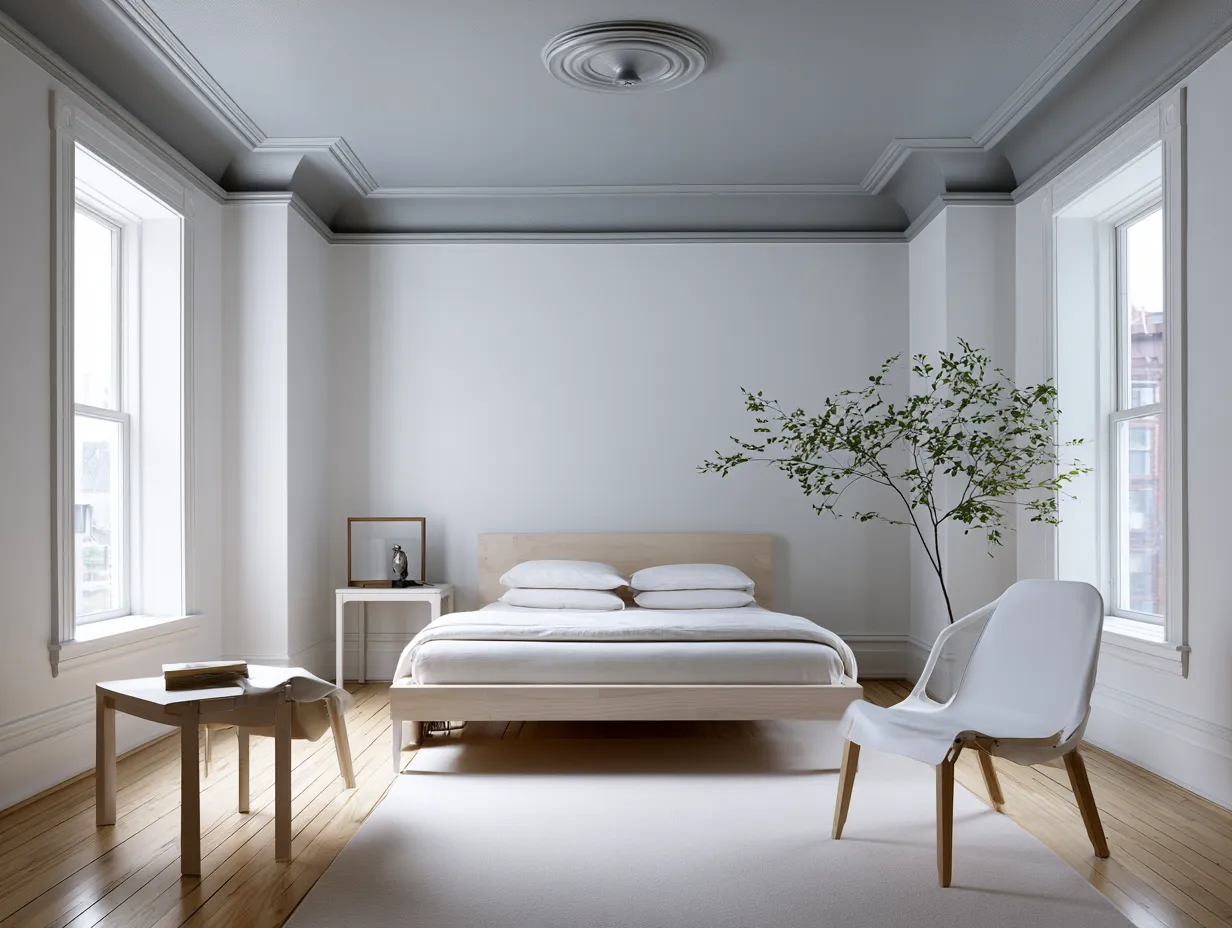
A warm minimalist living room works because of subtraction, not addition — and the rooms that actually feel warm share three decisions: a beige-to-oatmeal palette, at least four different material textures in the same space, and lighting that stays under 2700K after 6 p.m. I’ve pulled apart dozens of warm minimalist living room references to figure out why some rooms look calm and inviting while others look like staged showrooms, and the gap almost always comes down to those same three levers. Get them right and the space runs itself.
Warm minimalism isn’t a trend you need to buy into. It’s a logic: strip the room to its load-bearing elements, then add heat through materials instead of colour. Beige linen, matte oak, raw wool — those are the palette. What you don’t add is just as important as what you keep.
Quick Scan
- Palette rule: Warm white base (Benjamin Moore White Dove, ~$65/gallon), sand secondary, one earthy accent on textiles only — never more than three tones total.
- Texture minimum: Four different surface finishes in the room simultaneously — matte wall, raw wood, woven textile, soft pile rug.
- Light temperature: All bulbs under 2700K for evening; overhead ceiling light off after 6 p.m., replaced by two or three lower-level sources.
- Furniture count: Sofa + coffee table + one side surface + one occasional chair (only if room exceeds 200 sq ft). Every addition after that needs justification.
- One mistake to skip: Matching sofa fabric, curtains, and rug in the same material finish — it reads as flat, not minimal.
Warm Minimalist Living Room Colour — Beige Works Because Soil Is Already a Neutral
Beige, taupe, and off-white aren’t safe choices — they’re structural ones. In a warm minimalist living room, the colour palette functions like a volume dial: it sets the emotional temperature before any furniture walks in. My go-to formula is a 60-30-10 split: 60% warm white (walls and ceiling), 30% sand or greige (sofa and larger textiles), 10% earthy accent in muted terracotta or dusty olive (cushions only, never paint). You’ll notice that reversing this ratio — putting the accent on the walls and the neutral on the textiles — makes the room feel cluttered even when nothing extra has been added.
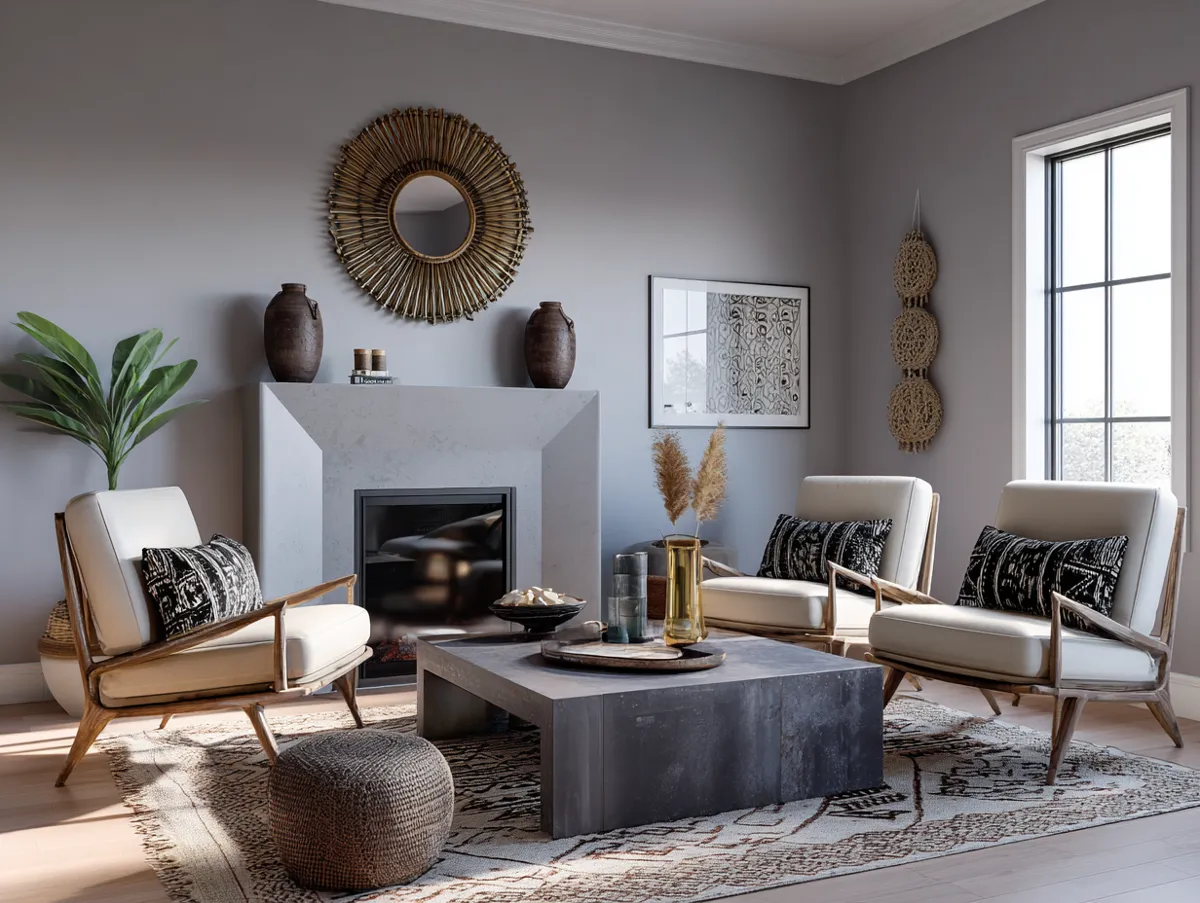
Cool greys are the enemy here. I painted a room in Farrow & Ball Purbeck Stone once and spent six months wondering why the warm-toned furniture looked sad. Stone grey pulls blue at every light change; it fights your warm oak floor constantly. Switch to Benjamin Moore Pale Oak (OC-20) and the same furniture reads completely differently by afternoon. That one swap costs $65 and saves you from rebuying furniture that was never the problem.
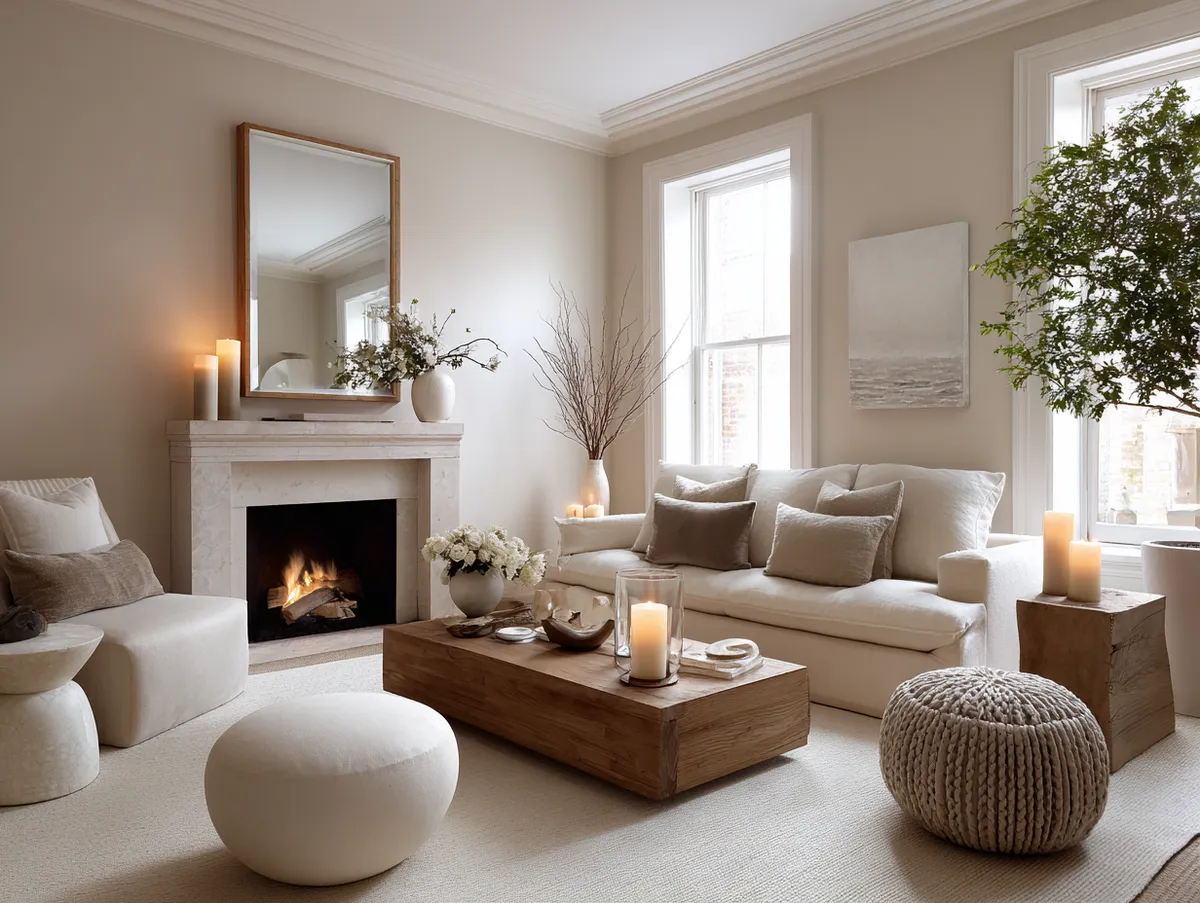
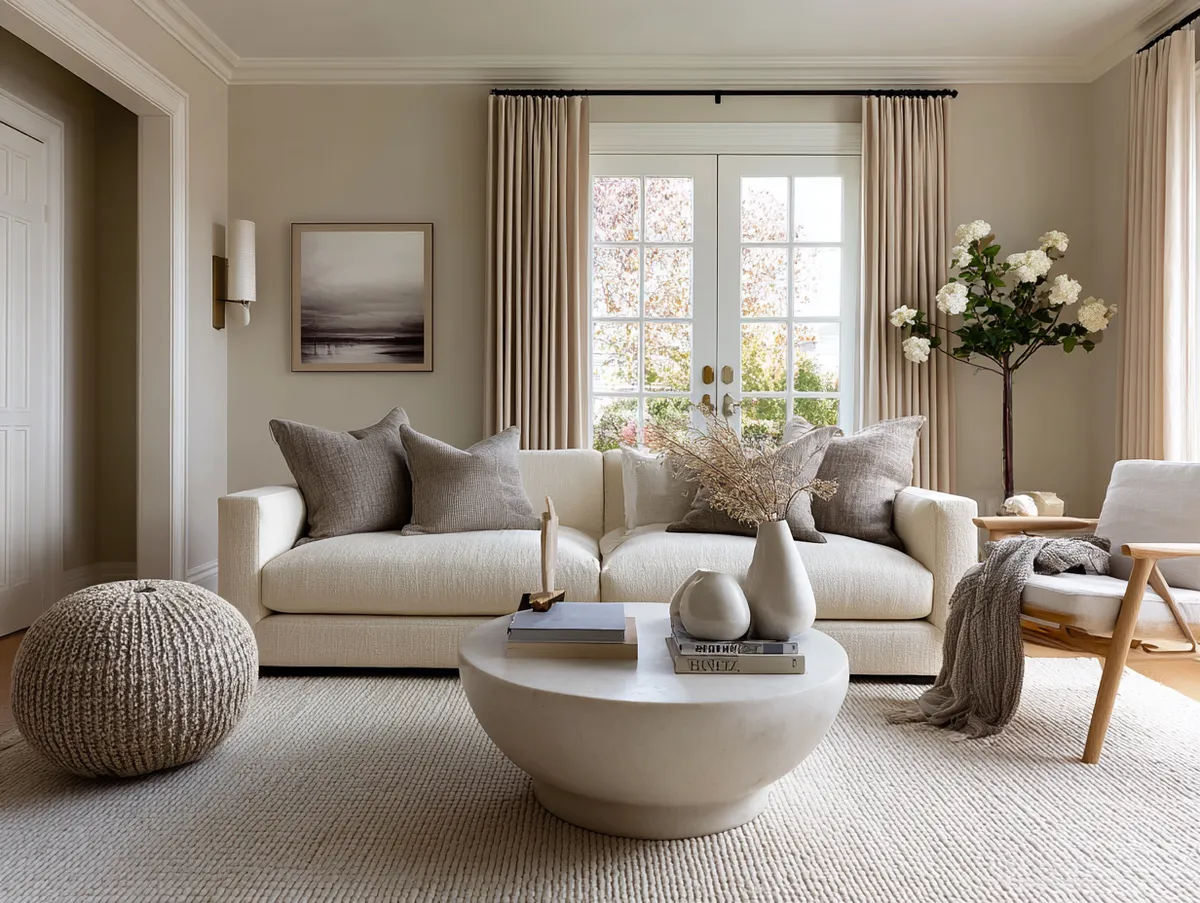
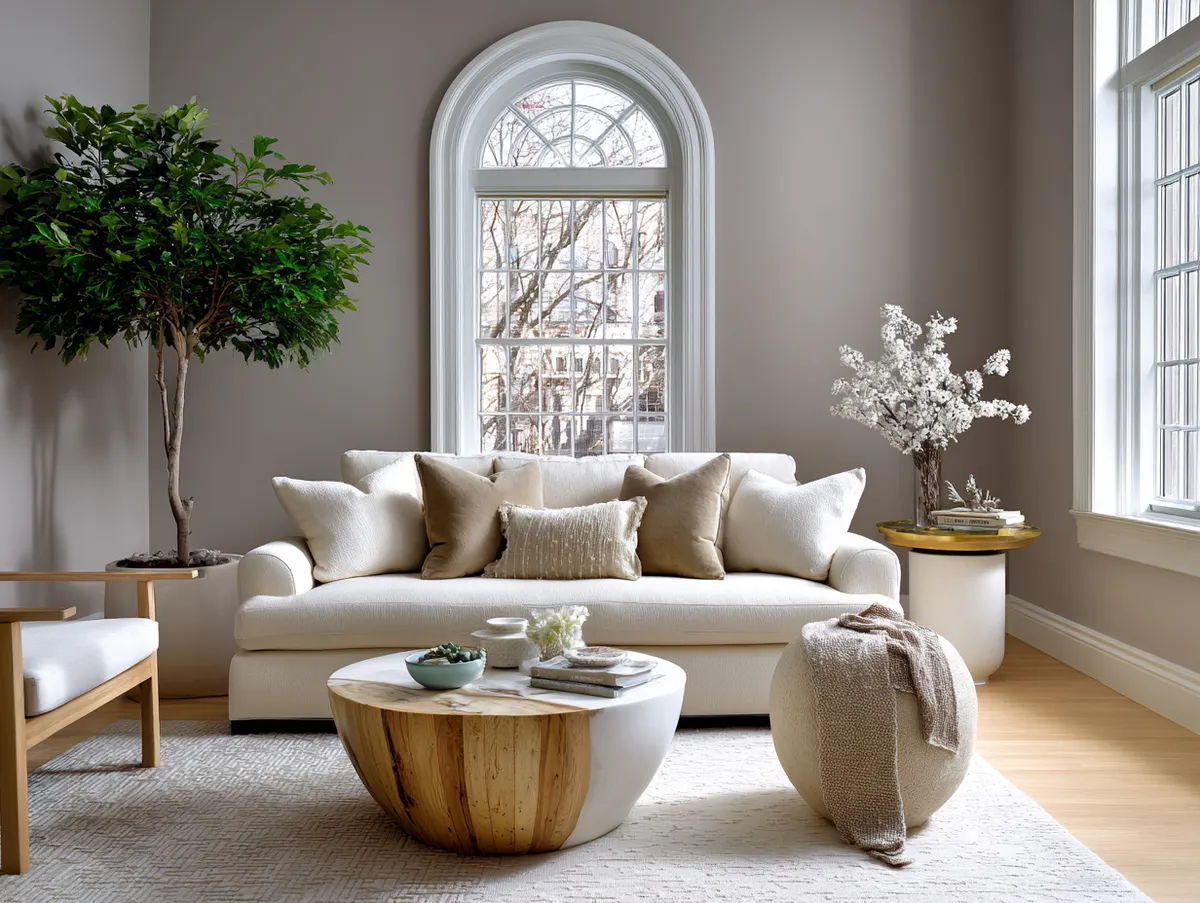
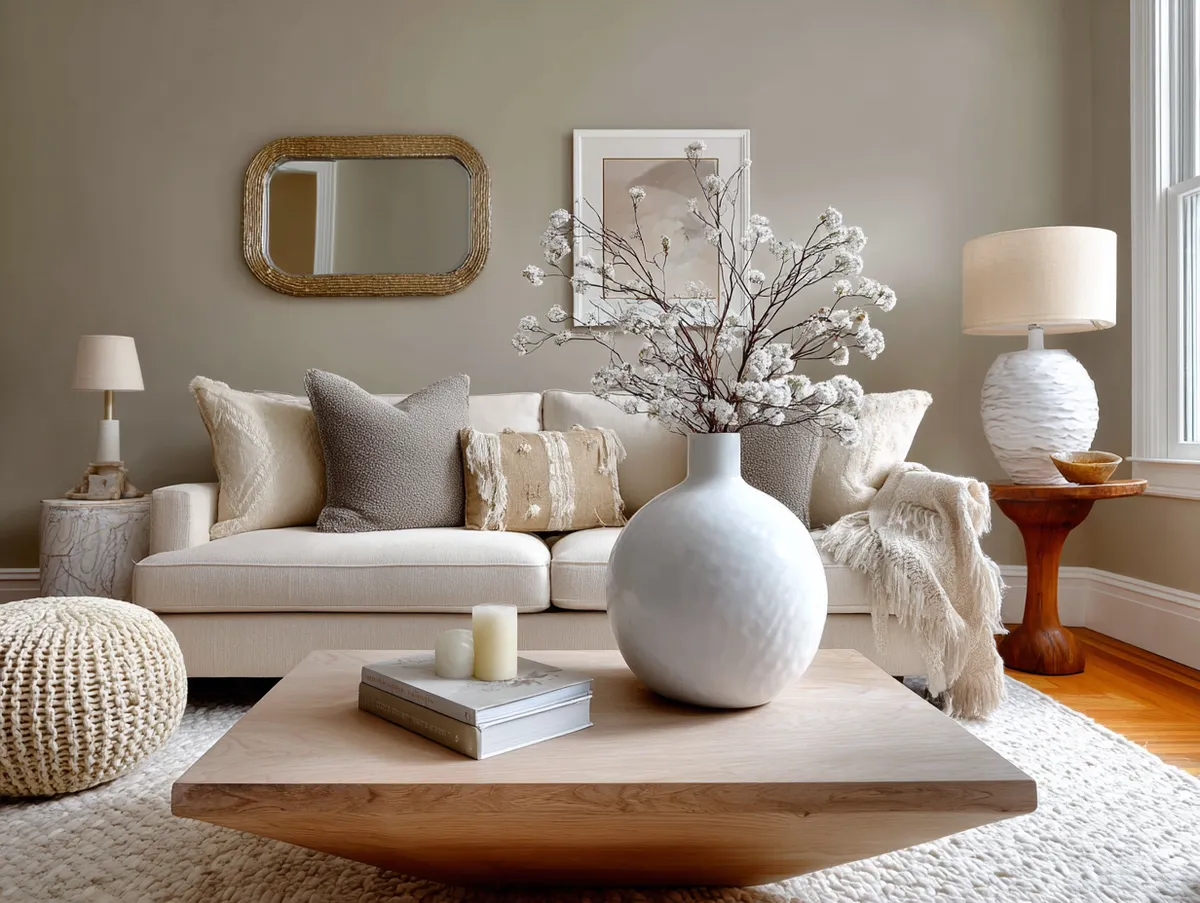
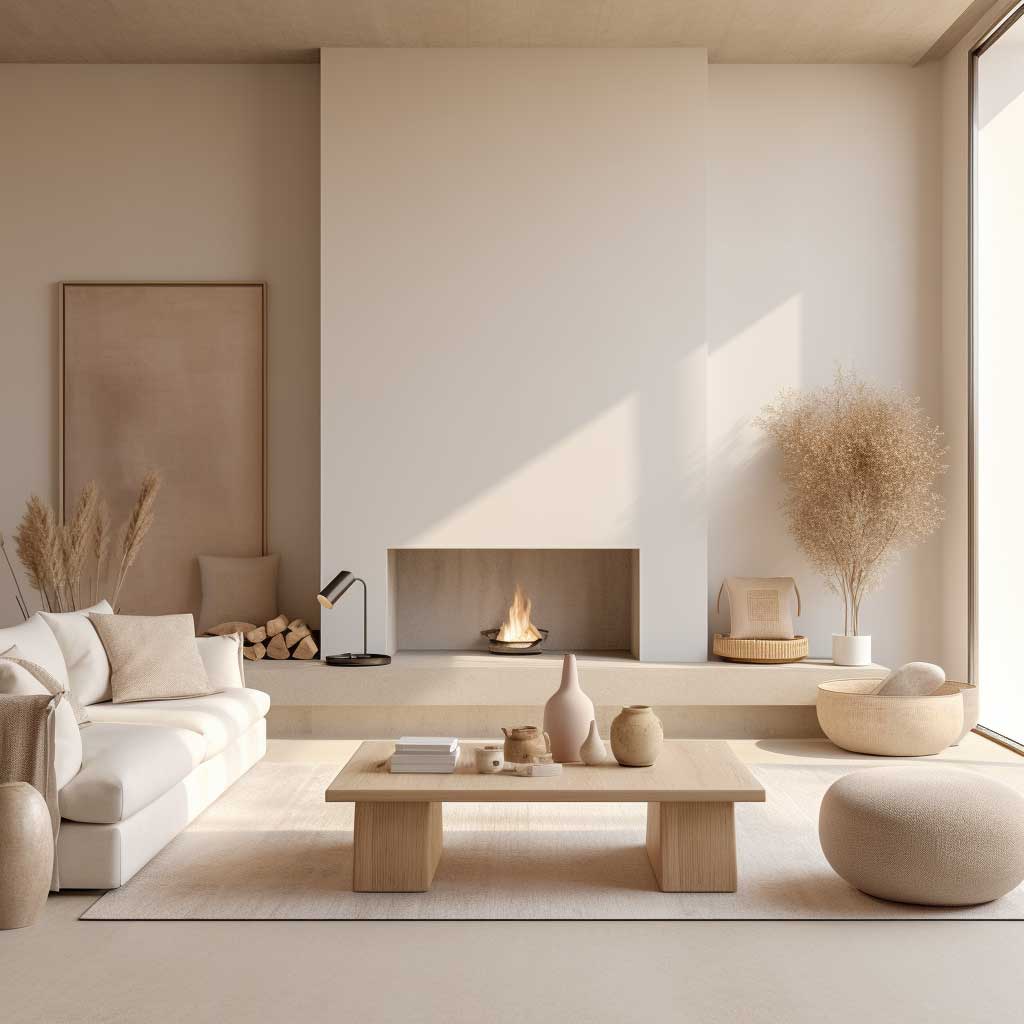
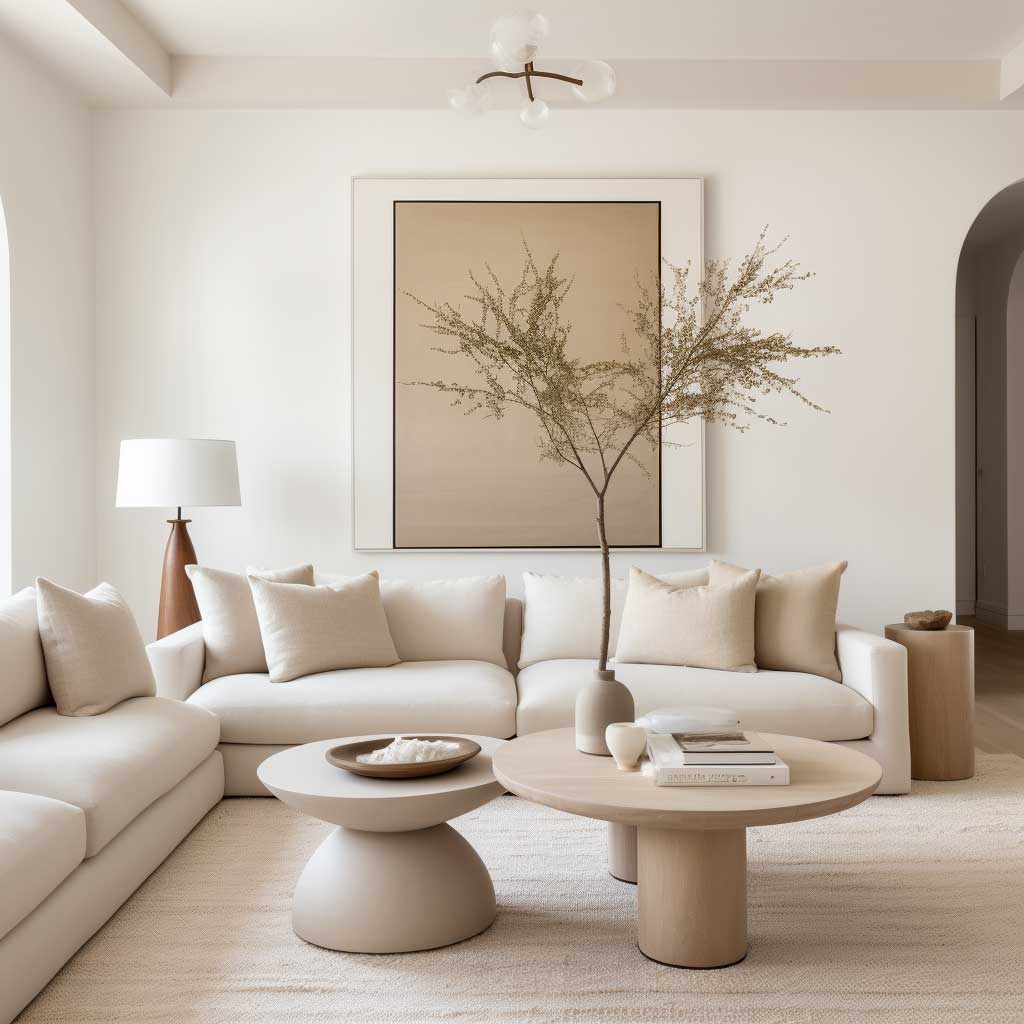
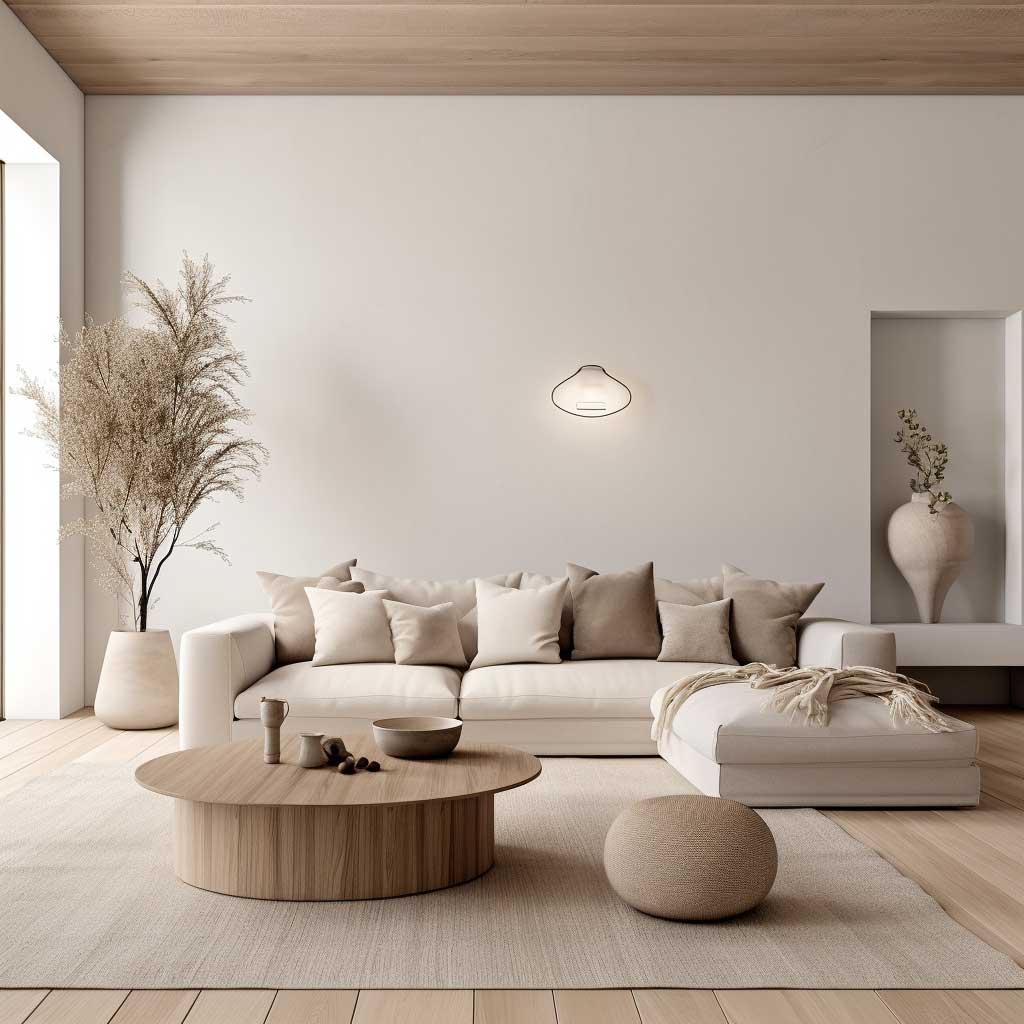
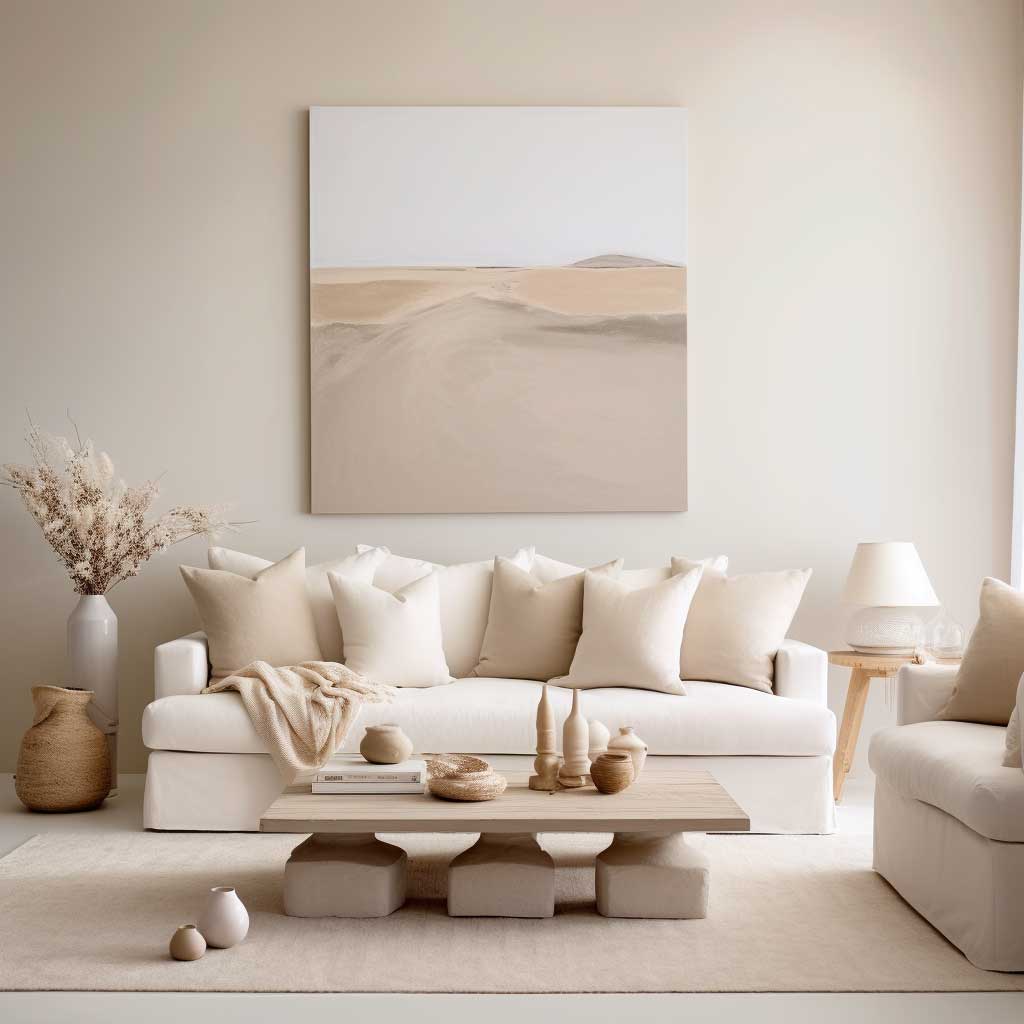
Earthy accents belong on textiles first, surfaces second, walls never. A $35 dusty terracotta cushion from Zara Home shifts the whole room’s temperature without any commitment. The wall stays neutral — that’s the thing that lets the accent actually pop. Keep the accent in one plane (horizontal textiles or a single object on the coffee table) and the room stays coherent. Spread it across every surface and you’ve got a colour scheme, not a warm minimalist living room.
For connected reading on how these same neutral rules apply when you’re pairing your warm base with wood tones specifically, warm living room decor strategies cover the earthy palette decisions in more depth. The LRV point spread matters more than most people realise — stay within 10 LRV points between your wall and secondary tone and the room reads as one continuous breath of space.
Warm Minimalist Decor Furniture — Low Profiles and Honest Materials, Not Matching Sets
Sleek furniture in a warm minimalist living room isn’t about expense — it’s about silhouette and material honesty. Low-profile sofas (seat height 16–18 inches versus the standard 20–22 inches) keep sightlines open and make the ceiling read higher without touching a single wall. IKEA’s Söderhamn at around $700 sits at 16.5 inches and has held its ground in minimalist interiors for a decade precisely because the proportions are right. Pair it with a raw oak coffee table — IKEA Sinnerlig at $150 works — and you have a setup that photographs like a $4,000 room.
Material mix is the part people get wrong. Matching your sofa, curtain, and rug in the same linen finish sounds cohesive and lands as flat. You need contrast between surfaces: one smooth, one woven, one soft pile, one hard. A velvet cushion against a linen sofa against a jute rug against a matte plaster wall — that stack generates warmth. No single piece creates it. The boucle chair from H&M Home at around $200 is genuinely worth it if you’re working in a space under 250 sq ft because boucle reads warm at every light level without taking up visual weight.
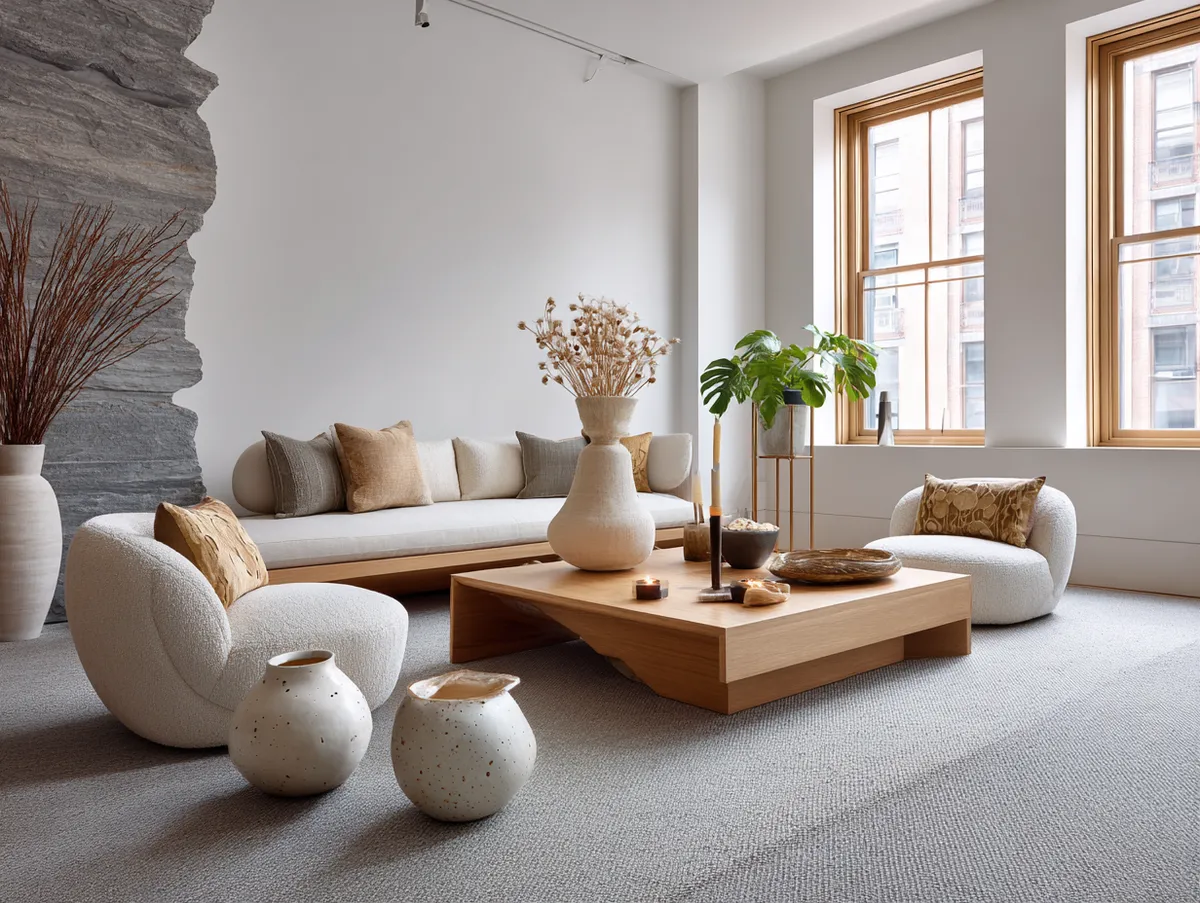
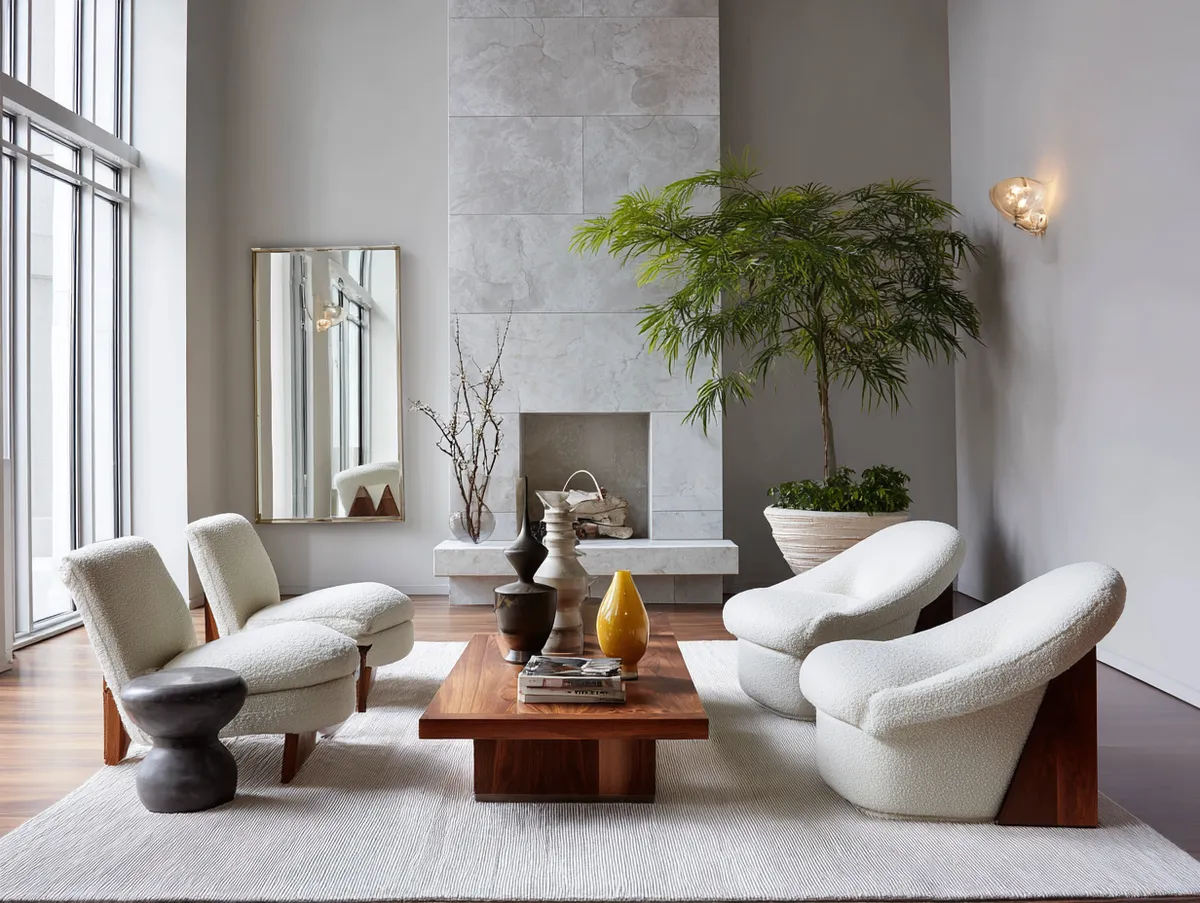
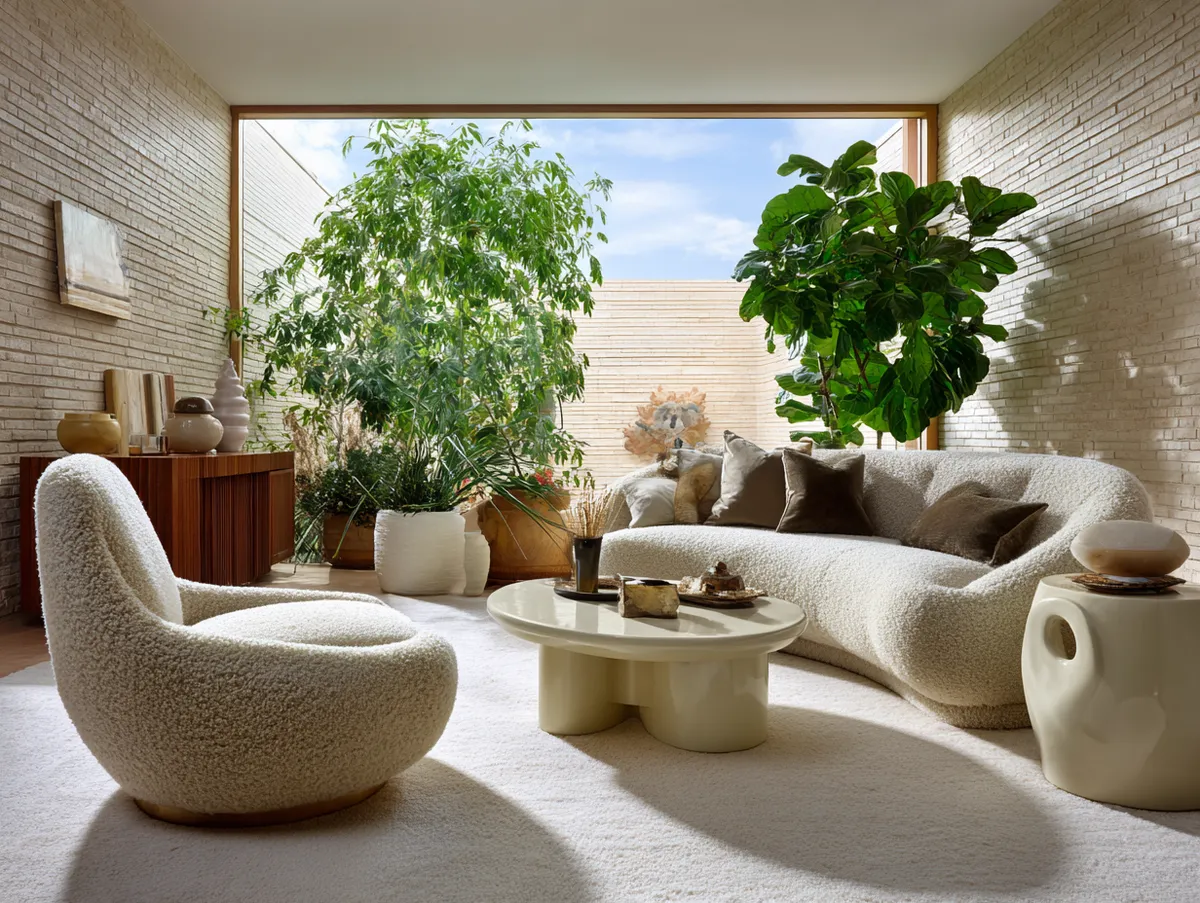
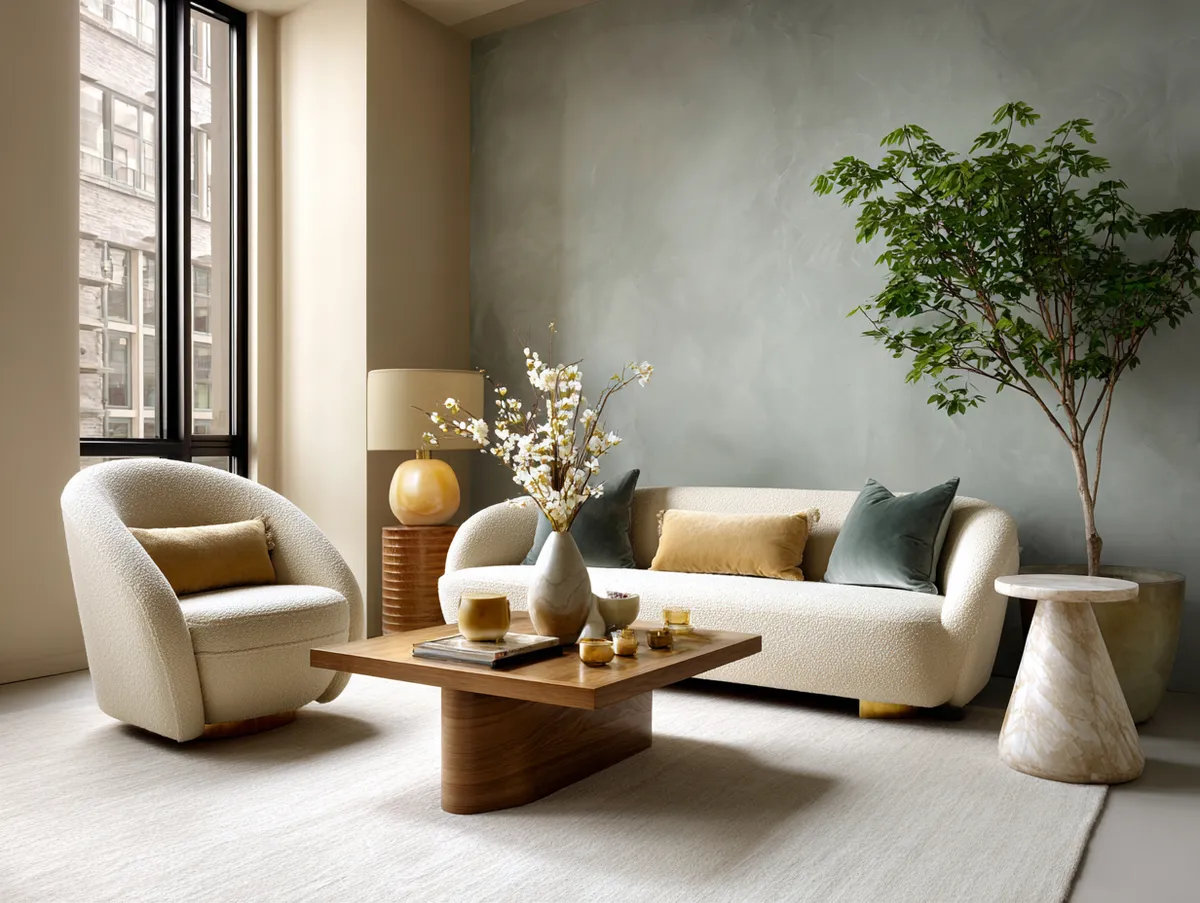
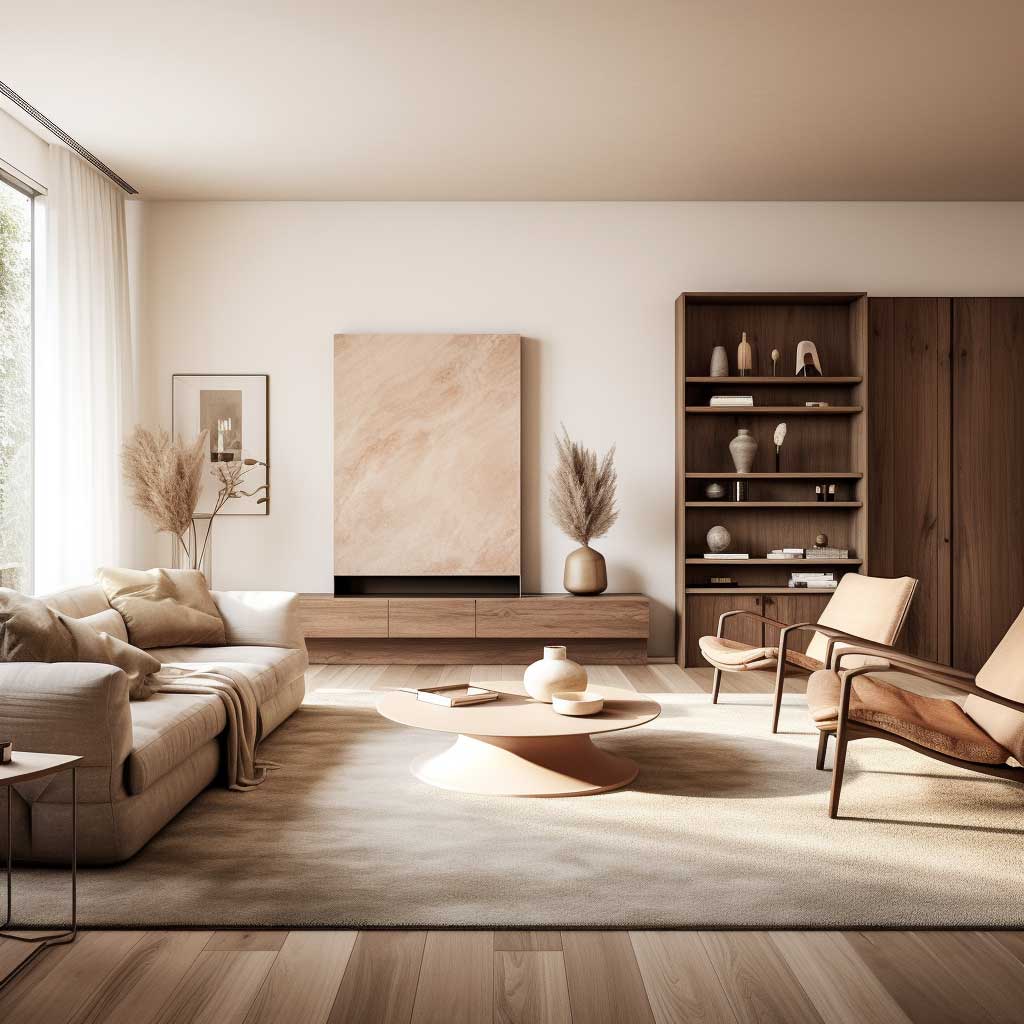

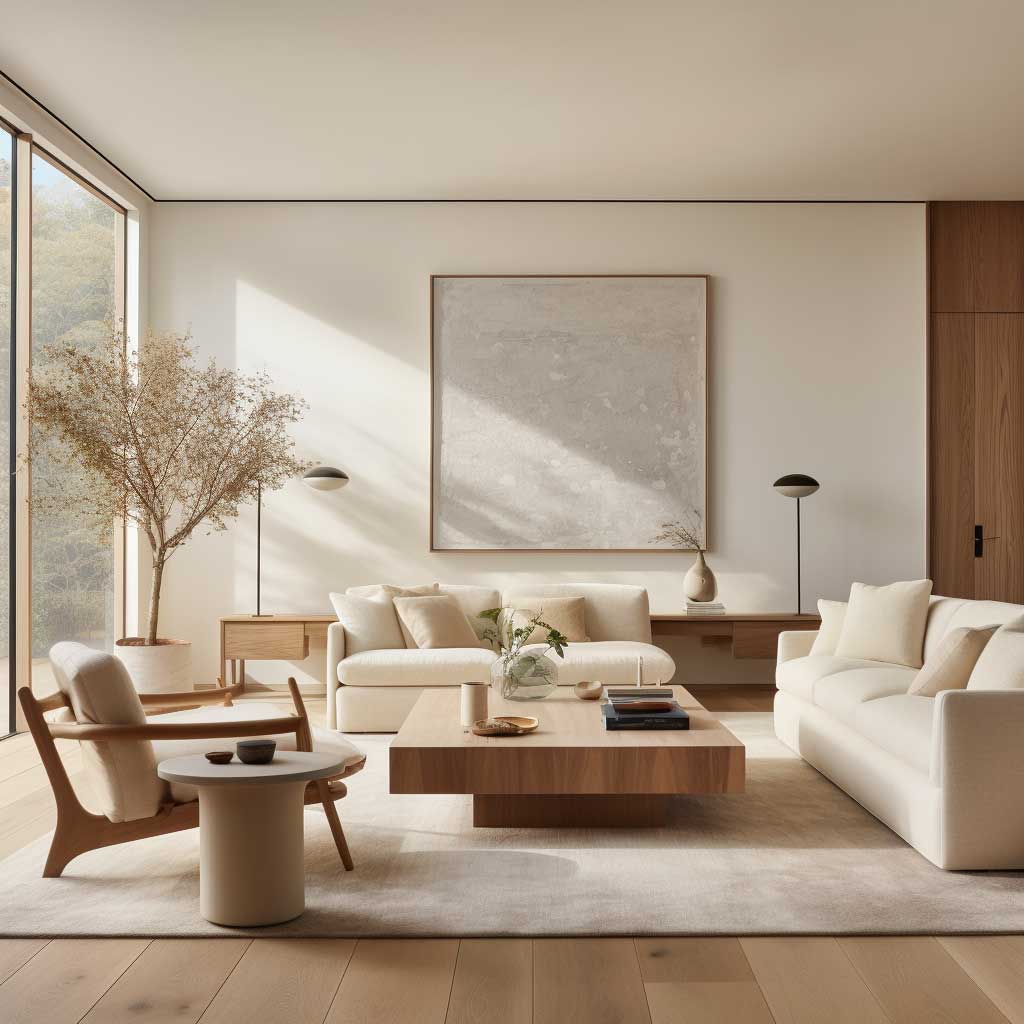
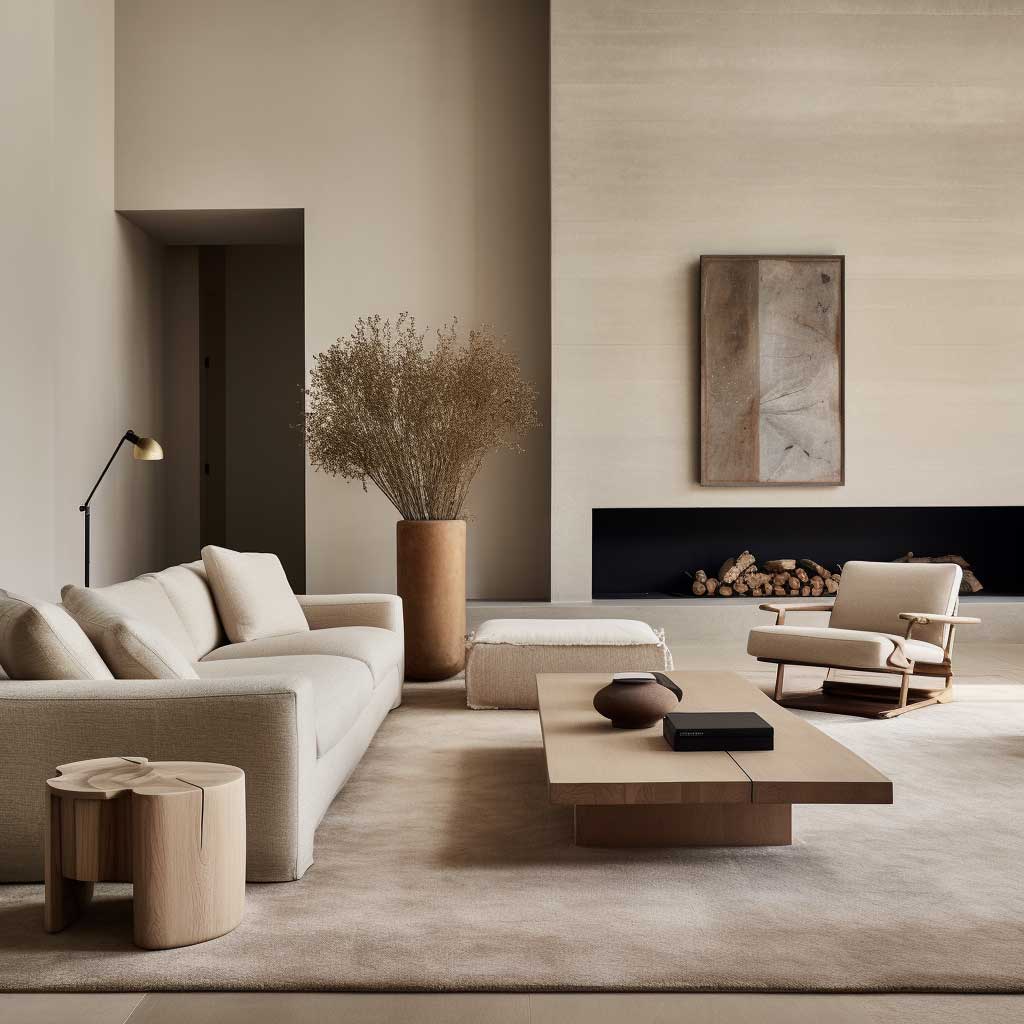
Float everything four to six inches from the wall. Pushed-flush furniture makes a room feel occupied in the wrong way — cluttered even when it isn’t. That small gap between the sofa back and the wall creates negative space that reads as square footage. I use this in every space I consult on. It feels counterintuitive in smaller rooms, then immediately right once it’s done.
Don’t Do This
Don’t buy a matching furniture set. Sofa, armchair, and ottoman from the same collection in the same fabric finish — it looks coordinated in the catalogue and flat in real life. The room needs contrast between pieces to generate visual warmth. Buy the sofa from one brand, the occasional chair from another, the rug from a third. The differences in texture and scale between non-matching pieces is exactly what makes a warm minimalist room feel collected rather than purchased.
Also skip the oversized sectional if your room is under 300 sq ft. A sectional fills the floor plan and eliminates the negative space that makes warm minimalism work. Two separate pieces — a sofa and a single chair — give you more layout flexibility and dramatically more visual breathing room.
Natural Light in a Warm Minimalist Living Room — Sheer Curtains Over Blackout Every Time
Natural light in a warm minimalist living room does something that no lamp can replicate: it shifts the entire room’s emotional register over the course of a day. Morning light through east-facing sheers gives the neutral palette a cool, calm quality. Afternoon sun from the west turns those same beige walls amber. That transformation — the room becoming more itself as the day progresses — is something designed-in artificial lighting can only approximate. Sheer linen curtains (IKEA Lill at $9, or Pottery Barn Emery in white linen at around $80 for a more polished version) let that light behaviour happen without blocking it.

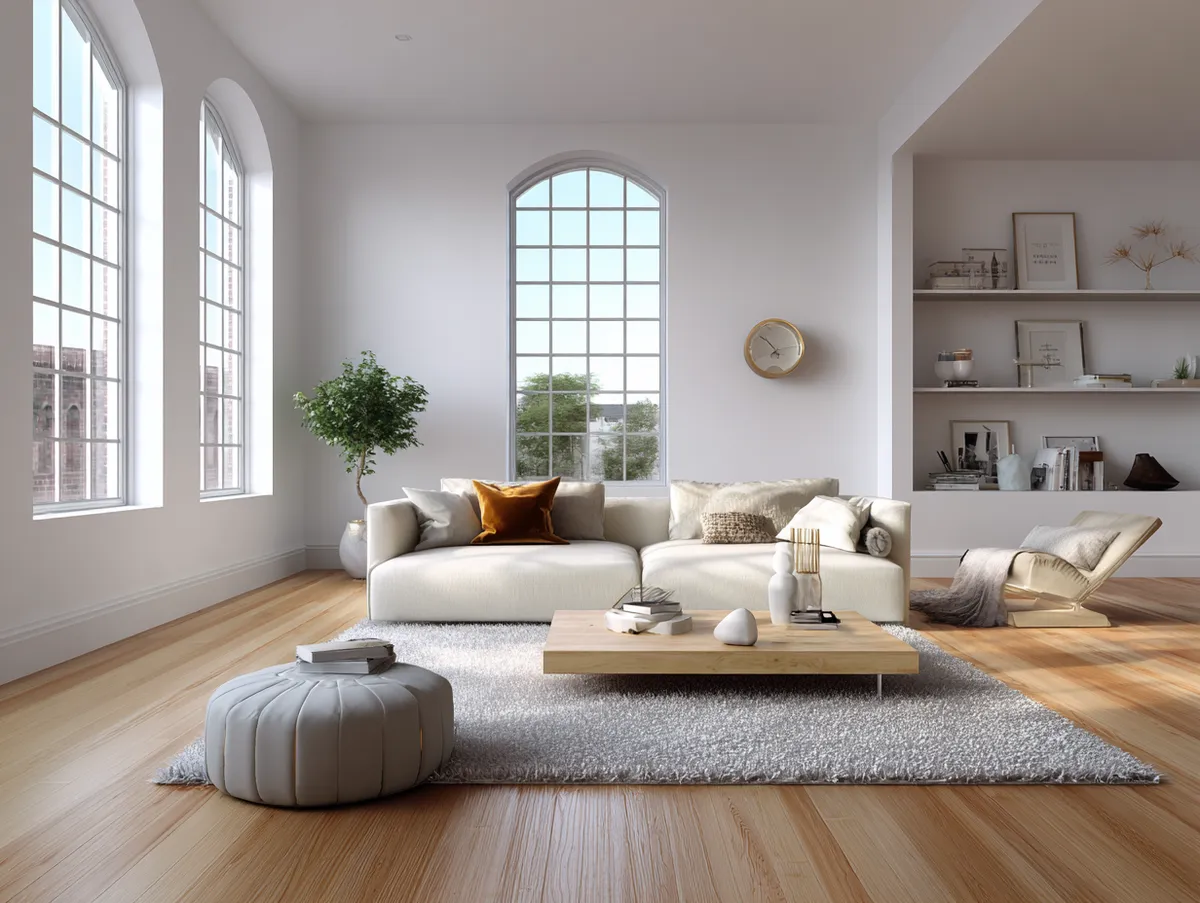
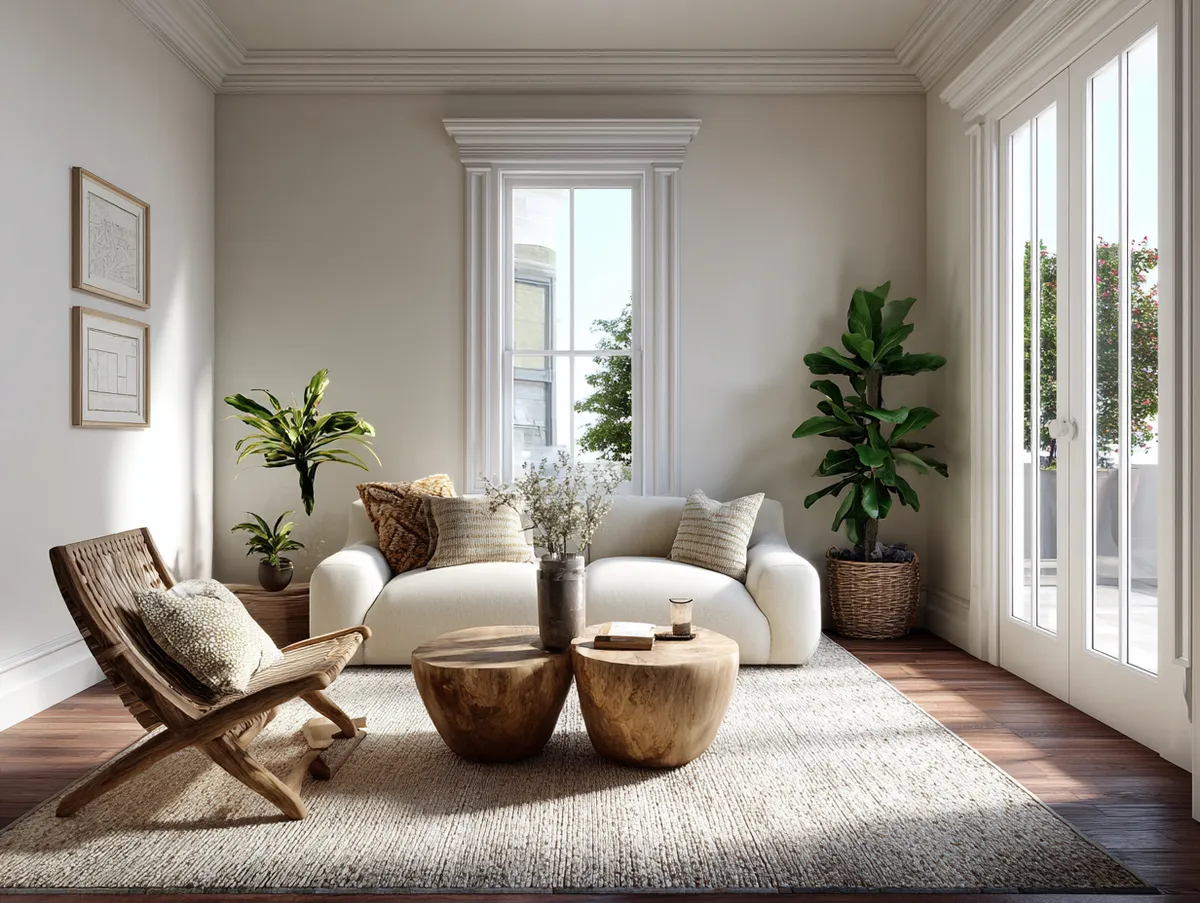
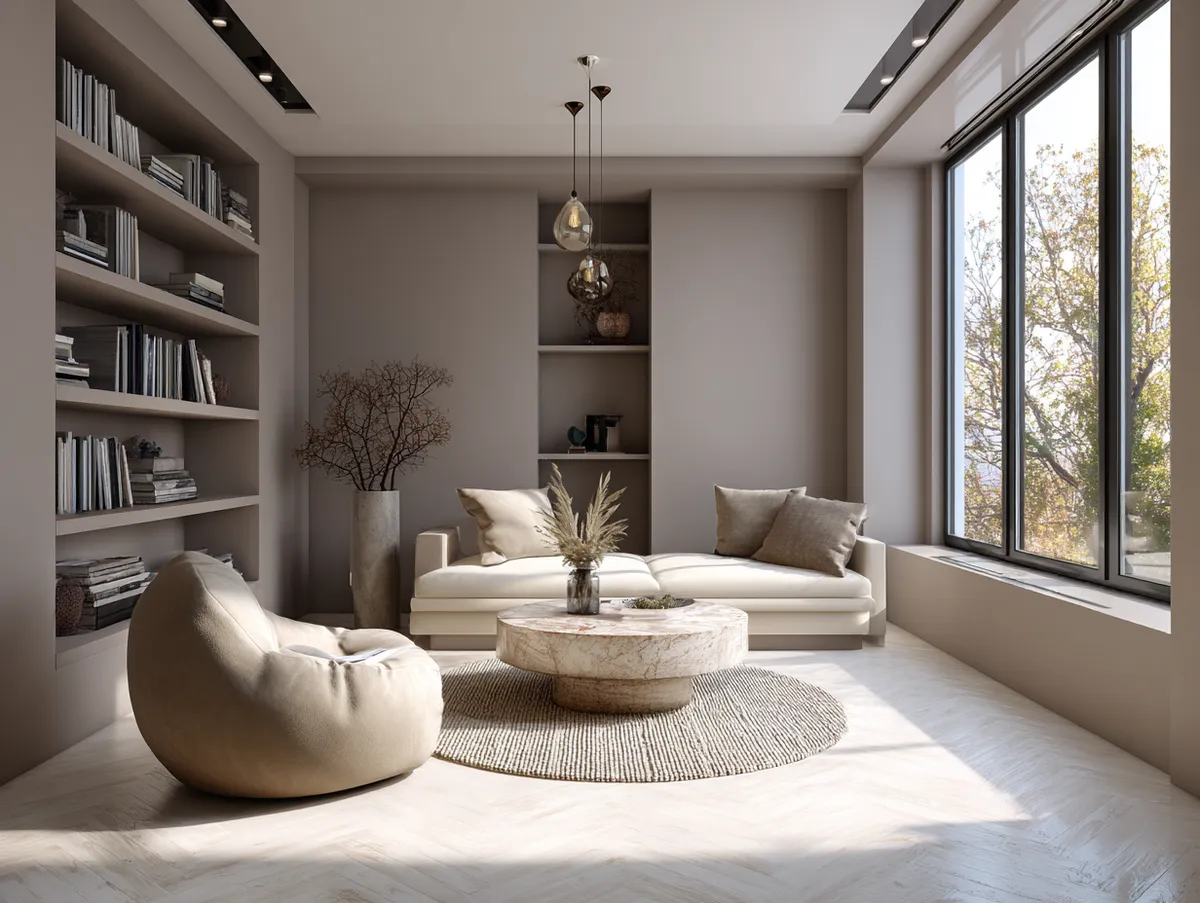
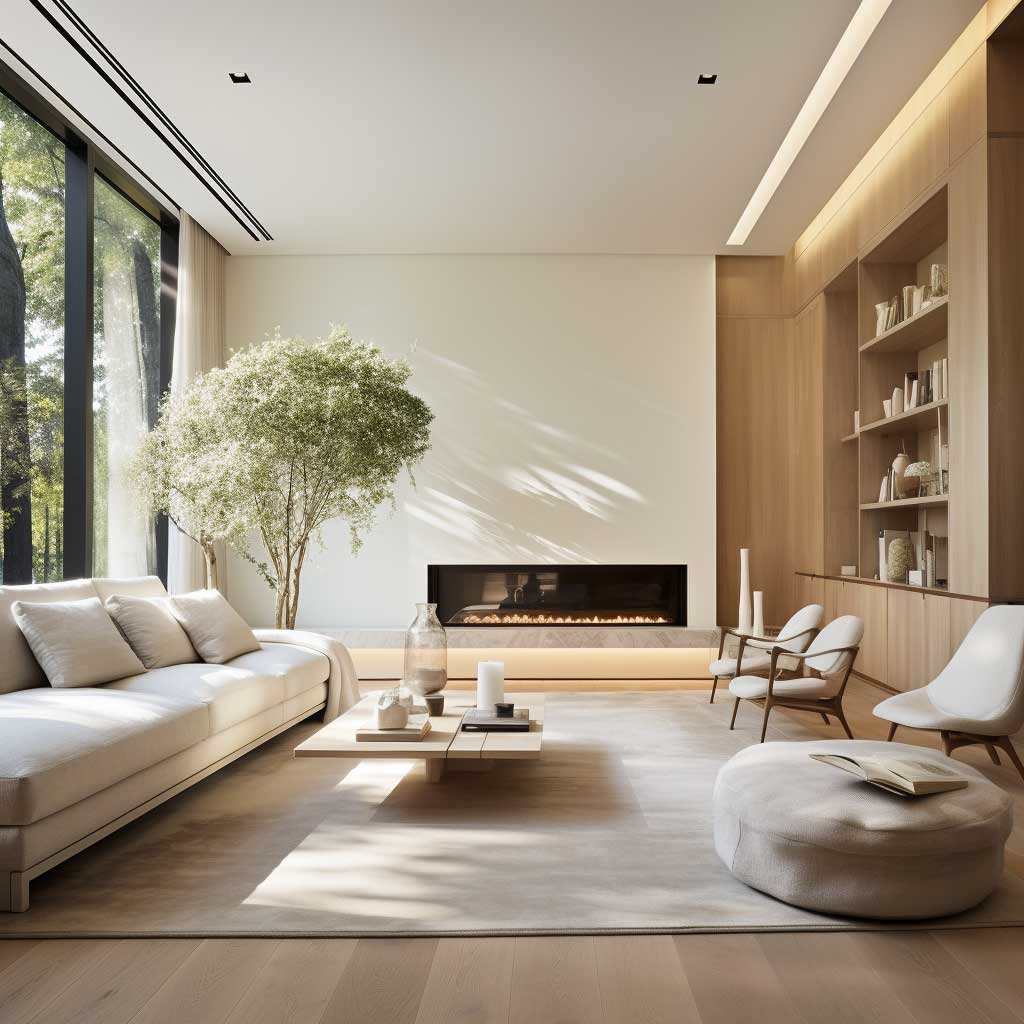
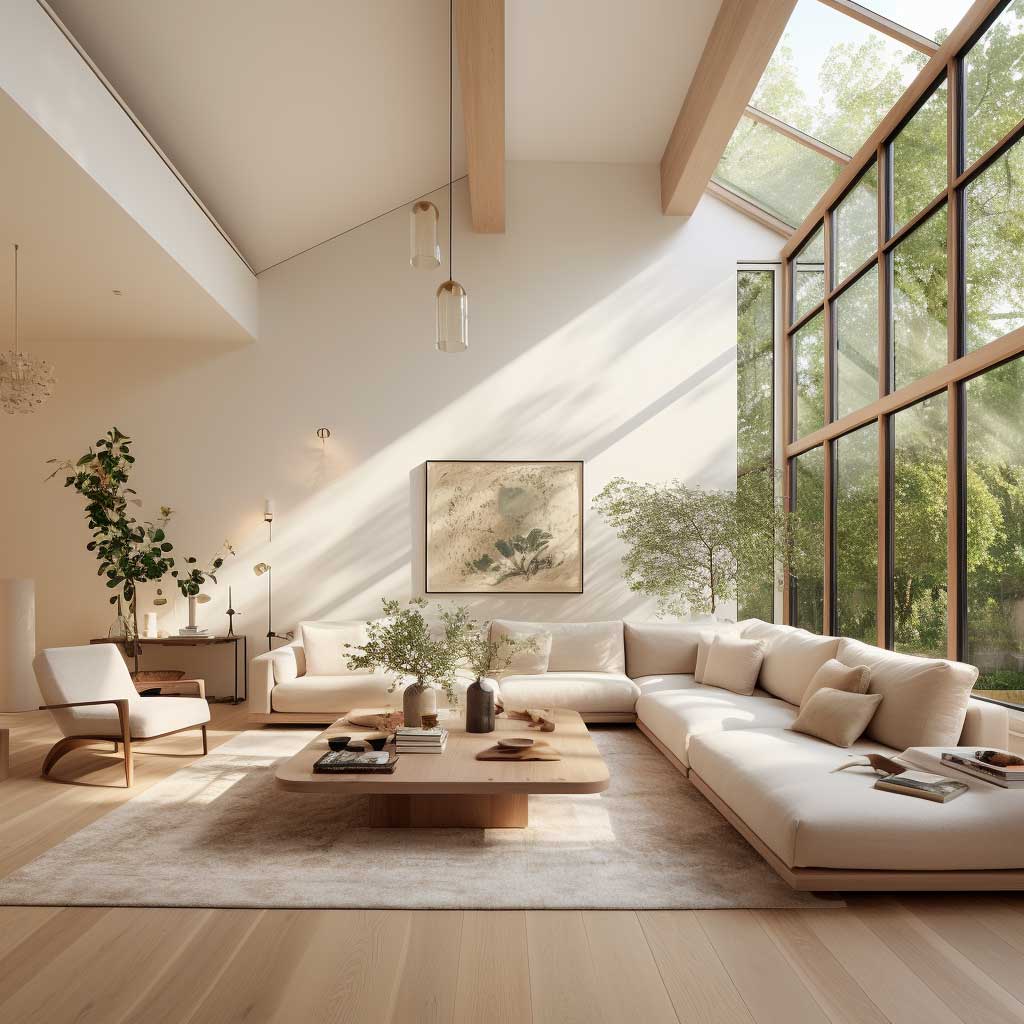
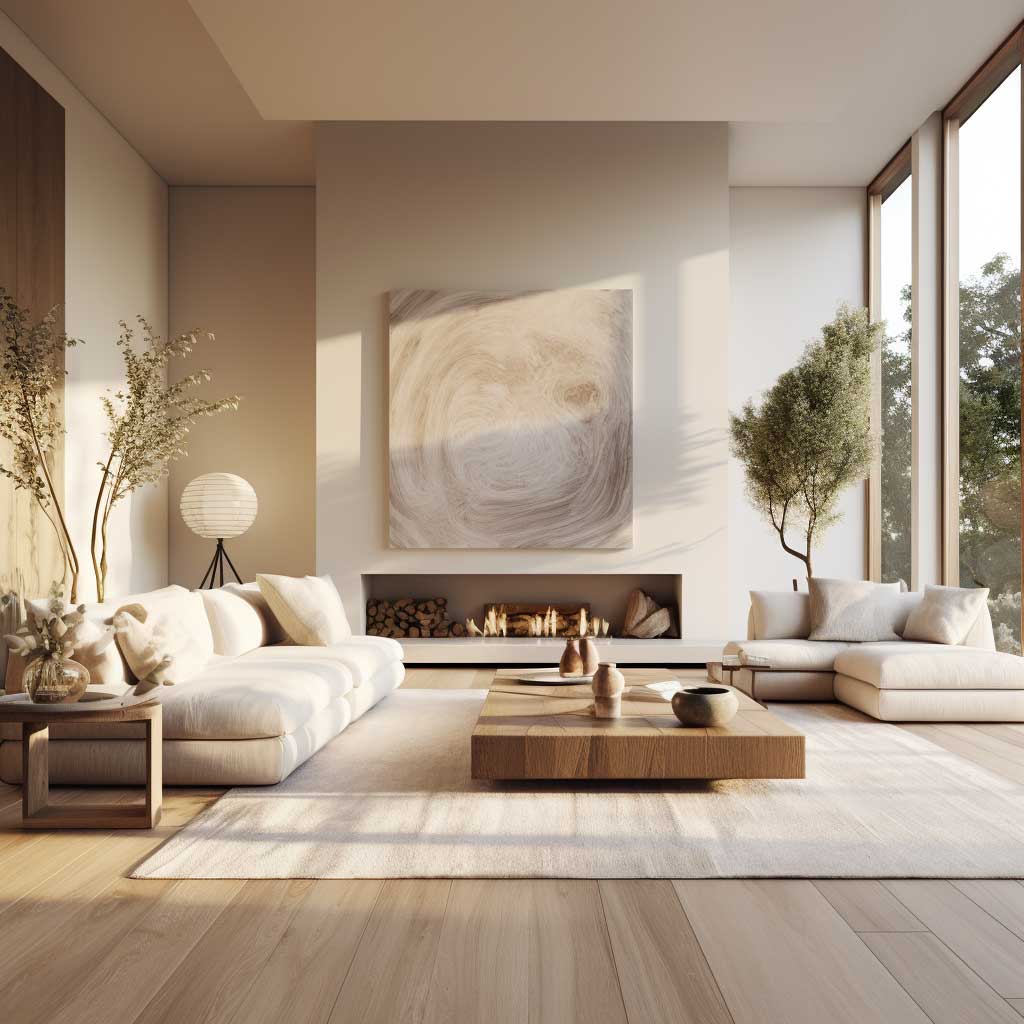
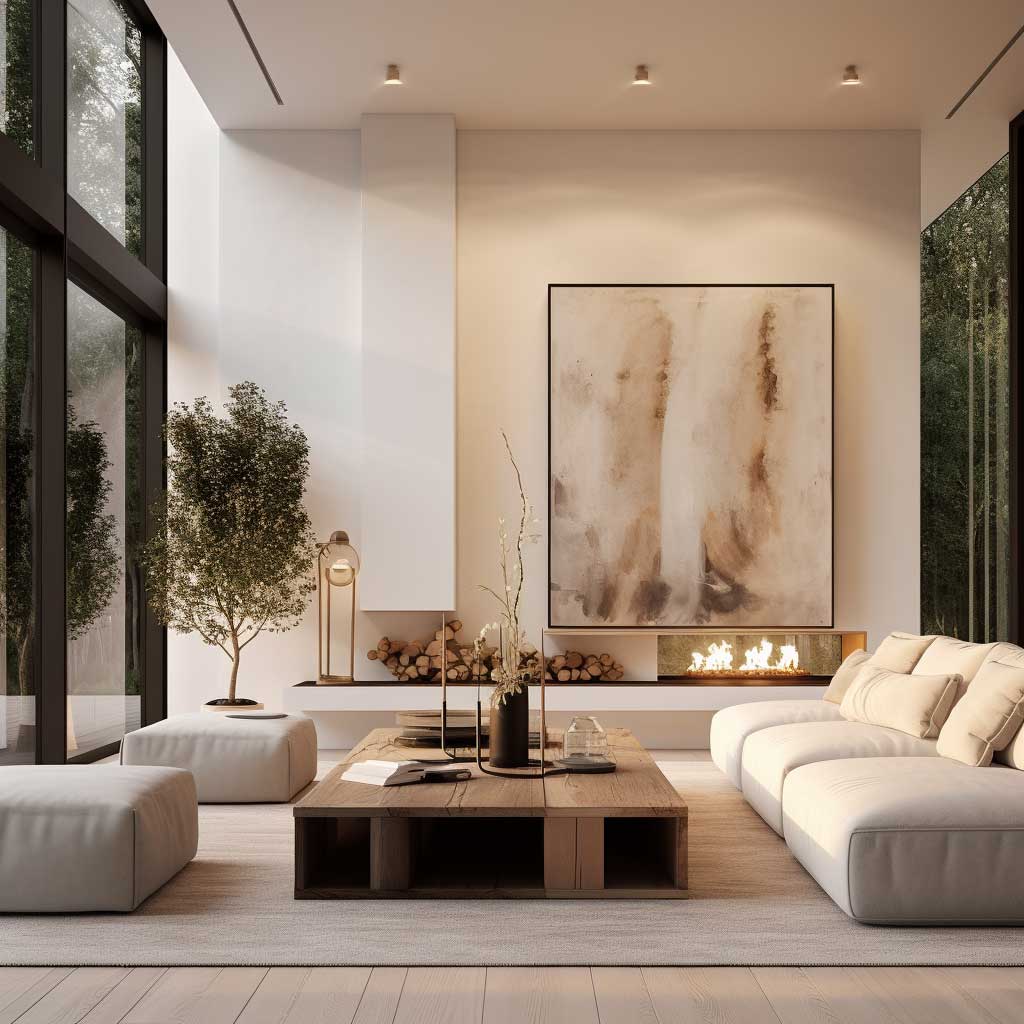
After dark, the overhead light goes off — full stop. Ceiling light at full brightness is the single fastest way to kill the warm minimalist atmosphere you’ve built. Replace it with three lower-level sources: a corner floor lamp (HAY Set Shade Floor at ~$320, or IKEA Ranarp at $60 for a budget version), a table lamp on a side surface, and optionally candles on the coffee table. Philips Hue White Ambiance bulbs (~$20 each) let you dial from 4000K work-mode to 2200K amber at dinner with one tap. That flexibility is the entire evening strategy.
Bulb temperature is not a minor detail. Stay under 2700K for all evening use — anything higher reads as clinical and erases the warmth the neutral palette spent all day building. I replaced the standard 3000K bulbs in my floor lamp last winter and the room immediately felt like a different space. Same furniture, same rug, different light colour. The warm minimalist living room you’re chasing might already be three $20 bulbs away. According to The Decorholic’s warm minimalism guide, light temperature is the single element most people adjust last, when it should be addressed first.
Warm Minimalist Design Elements — What Each of the Seven Actually Does
The original “seven elements” framing is useful as a checklist, so here’s what each one actually contributes rather than just what it is. Neutral tones set emotional temperature. Natural materials (oak, linen, wool, jute) add tactile warmth — they feel different underfoot and underhand, which changes how the room registers when you’re actually in it rather than looking at a photo of it. Intentional furniture placement (floating off walls, low-profile, four-to-six piece maximum) controls the floor plan and keeps negative space intact.
Natural light and layered artificial light are two separate elements with separate jobs: daylight shifts the room’s mood across hours, artificial light holds the room’s warmth after dark. Textural contrast — the rough-smooth-soft-hard interplay — is the thing that makes neutral rooms feel rich instead of blank. Organic decor (one plant, one ceramic object, one piece of art large enough to hold its own) introduces the human scale and personal reference that keeps the room from feeling like an Airbnb. And clean sightlines — unobstructed floor space, no clutter on horizontal surfaces — are what make all the other six elements visible.
What doesn’t make the list: gallery walls, collections of small objects, matching decorative trays, or anything bought specifically to fill a gap. A gap in a warm minimalist living room isn’t a problem to solve. It’s a feature. The rooms that look best in this style are the ones where someone had the discipline to stop adding things before the space felt complete — because the incompleteness is actually the point.
For a deeper read on how the cozy and minimal overlap practically, cozy minimalist living room interior strategies cover the specific furniture and lighting decisions that separate a room that photographs well from one that actually feels good to sit in for three hours.
Warm Minimalism
Neutral Walls and Three Textures. That Is the Whole Formula.
The warm minimalist living room rooms that hold up over time share one thing: they were edited hard, then left alone. No impulse buys on the coffee table. No throw pillows that arrived in a set of six.
Pick your four textures, fix your lighting temperature, stop at four pieces of furniture. The rest is patience.
Save this post so you can come back when you’re ready to make the next edit.