Decorating with black and brown in a living room trips up more people than almost any other color pairing — not because it’s difficult, but because most rooms get the proportions wrong. The combination works when one color anchors the space and the other plays accent, not when they compete at equal volume. Get that ratio right, and the result reads warm, deliberate, and genuinely livable.
Black and brown living room decor succeeds because both colors share the same underlying logic: they’re neutrals that respond to texture rather than shout on their own. Leather absorbs light differently than matte paint. Woven rugs read differently than smooth wall panels. The material is where the interest lives, and that gives you far more control than you’d have with a saturated color.
Stylists consistently recommend treating brown as the warm backbone and black as the punctuation. Think of it like a well-worn saddle next to a clean iron rail — the contrast is what makes each material legible. The sections below cover the three main ways this pairing shows up in real rooms, with the specific moves that make each one work.
– Brown leather sofas pair with black throw pillows, vases, and wall art — not with black upholstered seating in the same room
– Black wall panels cost $7–$25 per square foot installed (Angi 2026); budget the full accent wall before committing to the look
– An 8×10 brown-and-black area rug (from ~$150 at Living Spaces) is the lowest-risk way to test the color combination before buying furniture
– Mixing brown and black furniture works when the brown piece is the largest — sofa or armchair — and black stays in smaller items
– Avoid matching both colors at equal scale on the same surface: two-tone leather sofas split down the middle look dated within a season
What Happens When a Brown Leather Sofa Meets Black Accents
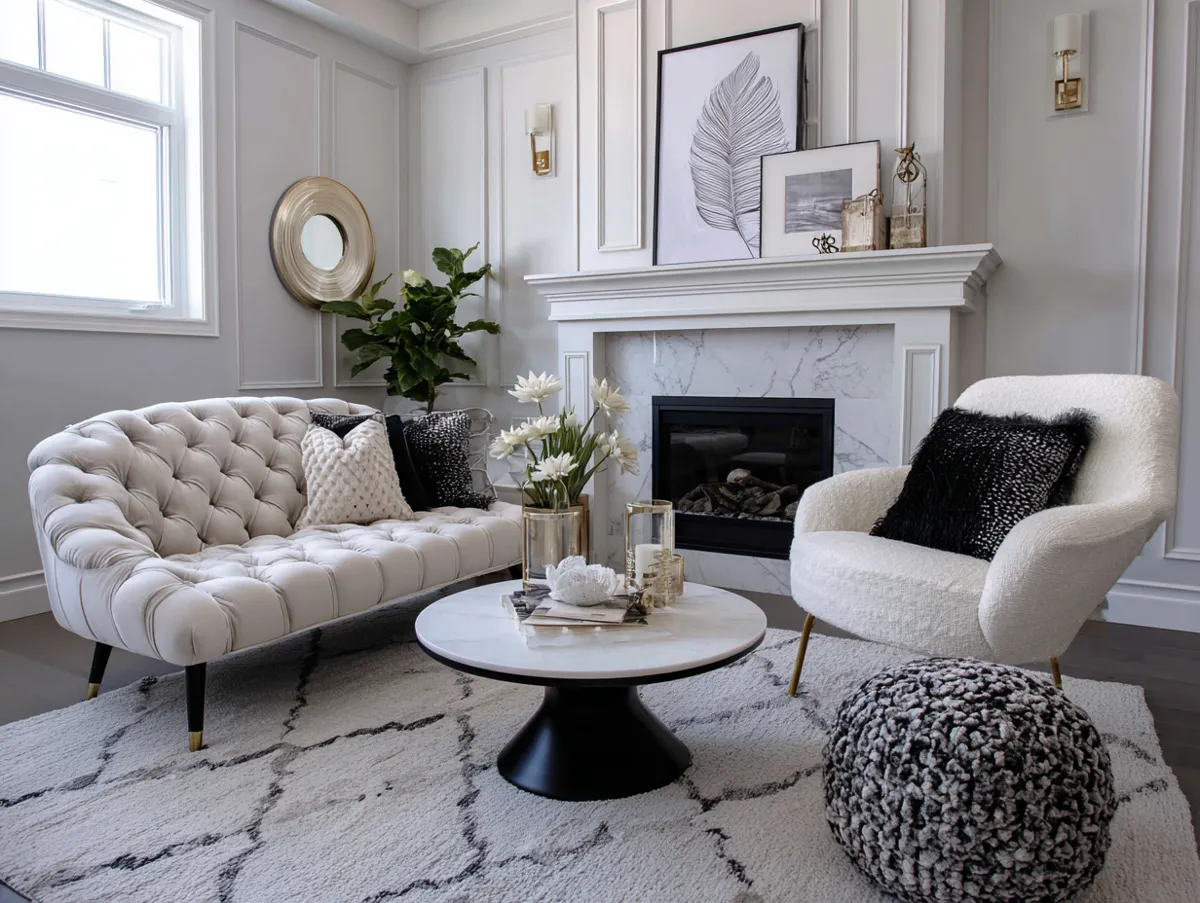
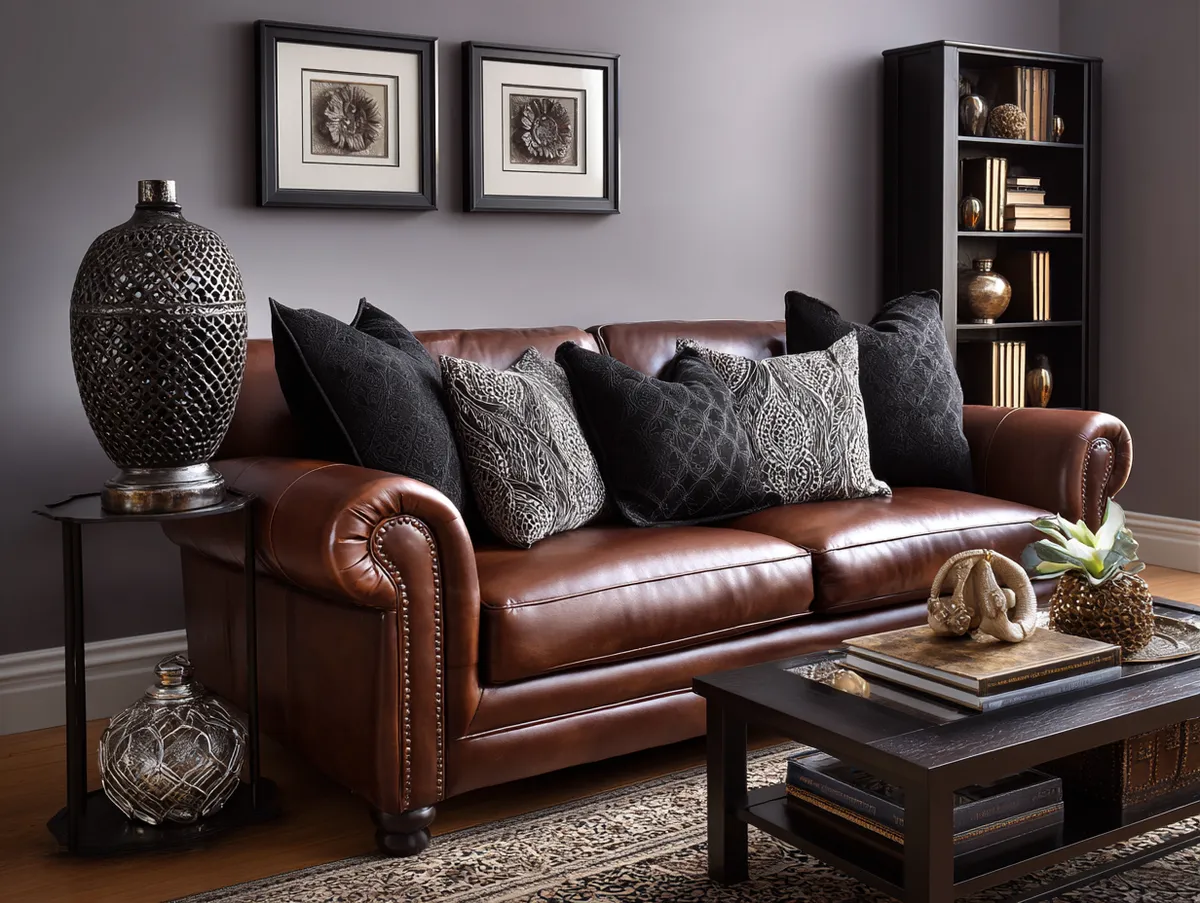
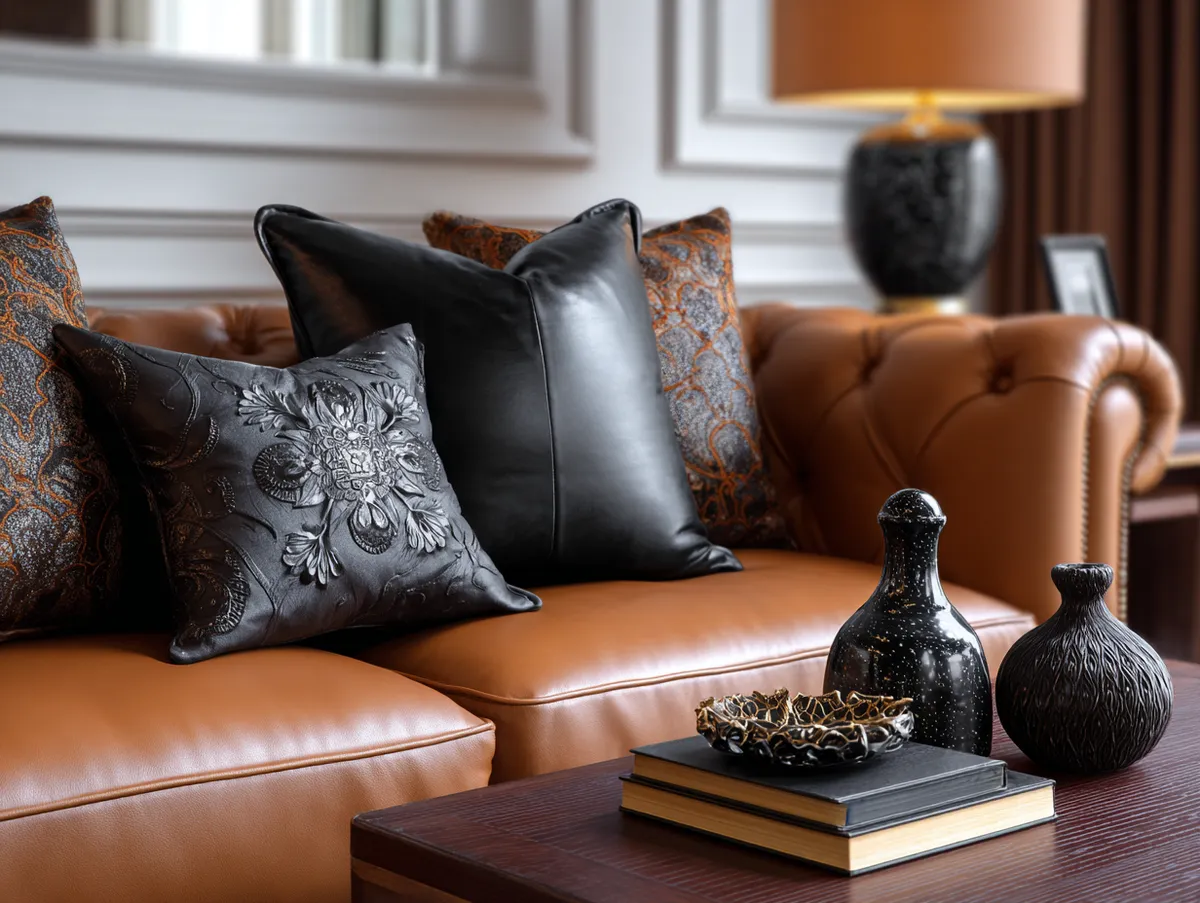
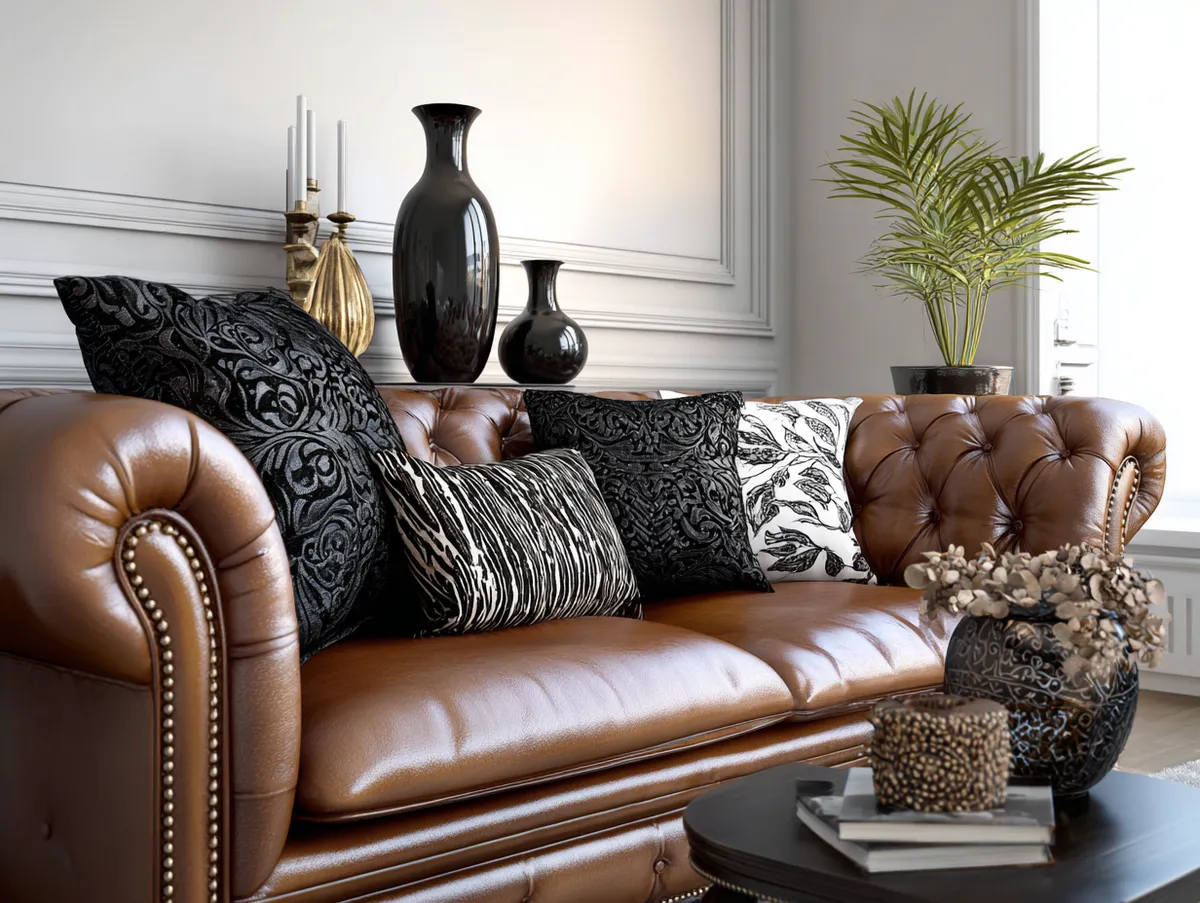
Mixing black and brown furniture in a living room starts with understanding which piece carries the room’s visual weight. A brown leather sofa — the kind that runs $800 to $2,200 at most major retailers — works as the anchor because its warm undertones hold the floor. Black accents then do what punctuation does in a sentence: they define, without overwhelming. A pair of matte black ceramic vases on the coffee table, a black linen throw pillow, a single black-framed art piece above the sofa — each one sharpens the warmth of the leather rather than fighting it.
The trick here is surface variety. Brown leather already has a high-tactile finish, so the black accents that read best against it are smooth and minimal: lacquered trays, powder-coated metal legs on a side table, a slim black pendant light. Avoid layering a black shag rug directly under a leather sofa — the two textures are both dominant, and the floor looks like a collision rather than a composition. A jute rug or a flatweave in camel with black geometric detail gives the pairing room to breathe.
What doesn’t work: black upholstered armchairs flanking a brown leather sofa. It reads as two separate rooms sharing the same floor. If you want seating variety, stay in the brown family — a cognac armchair next to a chocolate leather sofa creates depth without the palette split. Reserve black for objects that don’t have cushions.
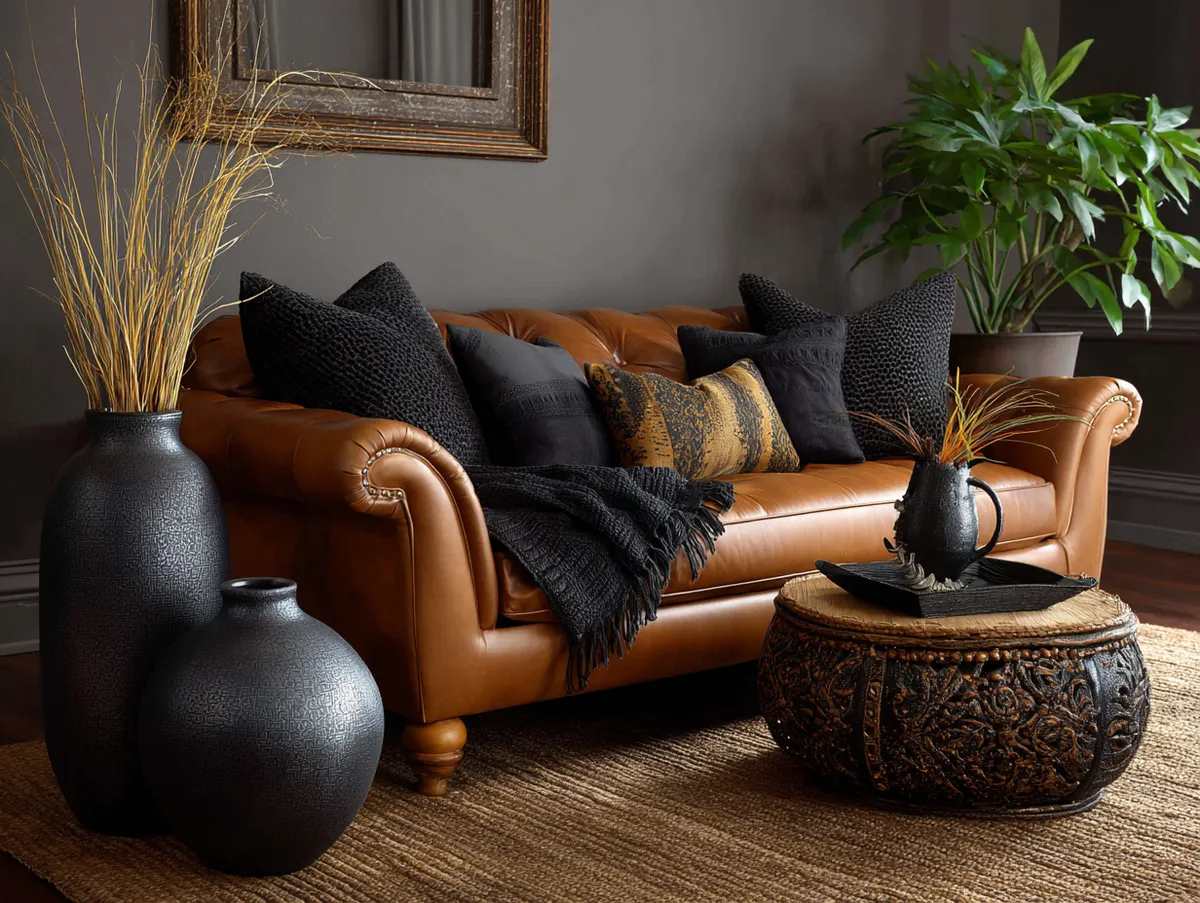
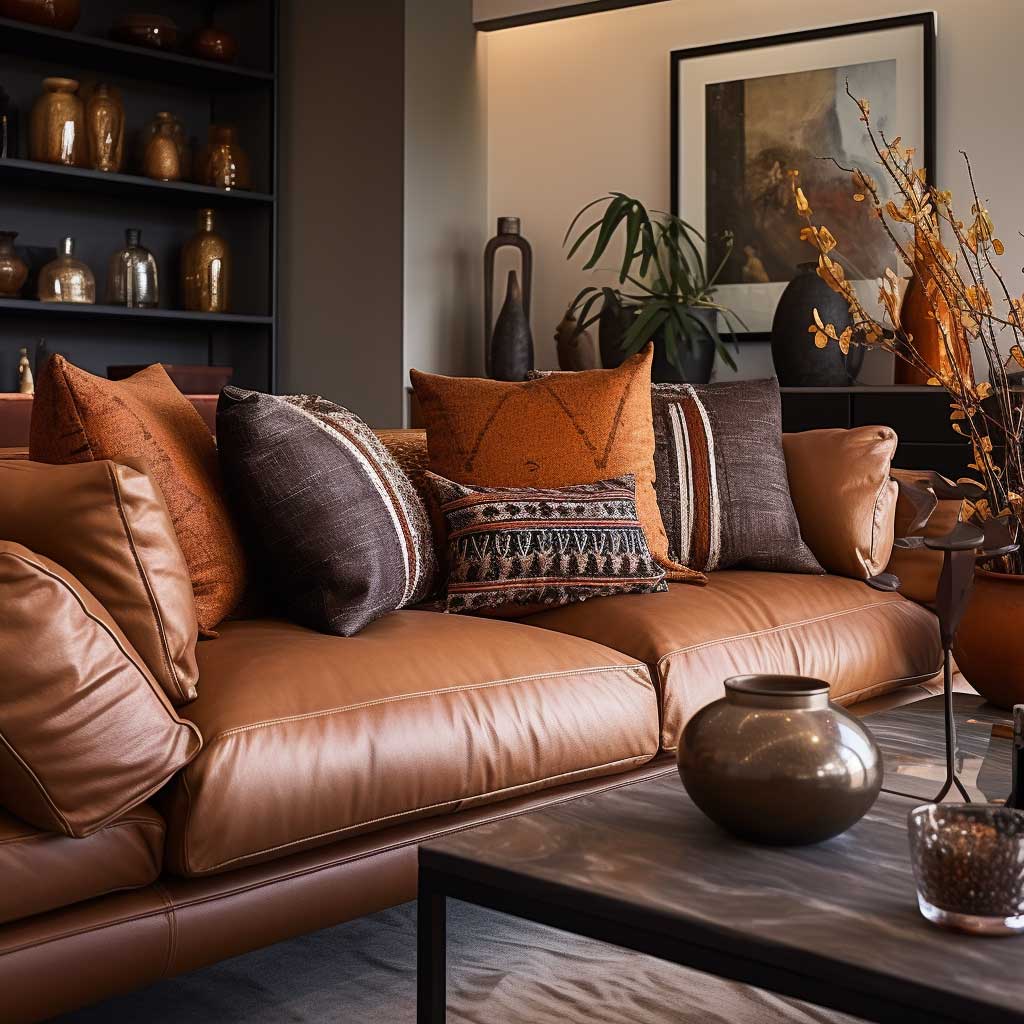
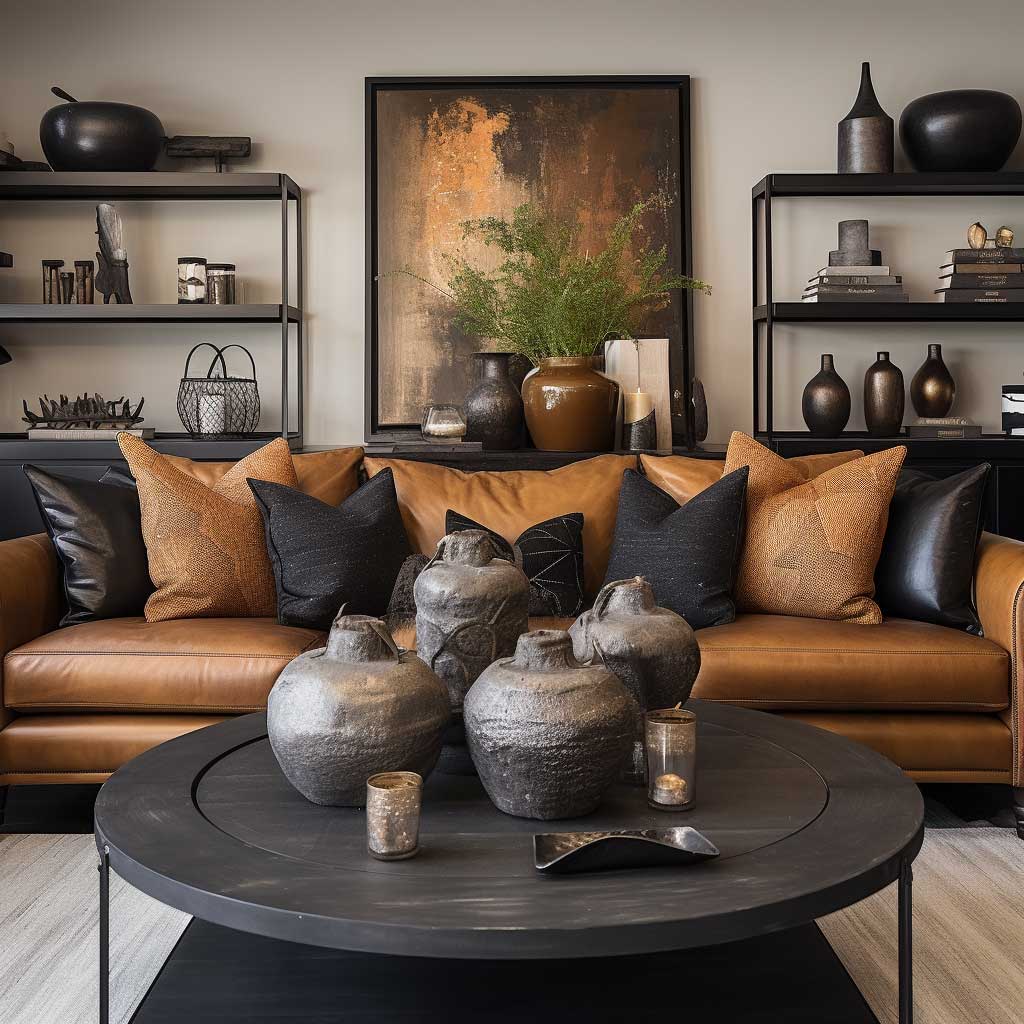
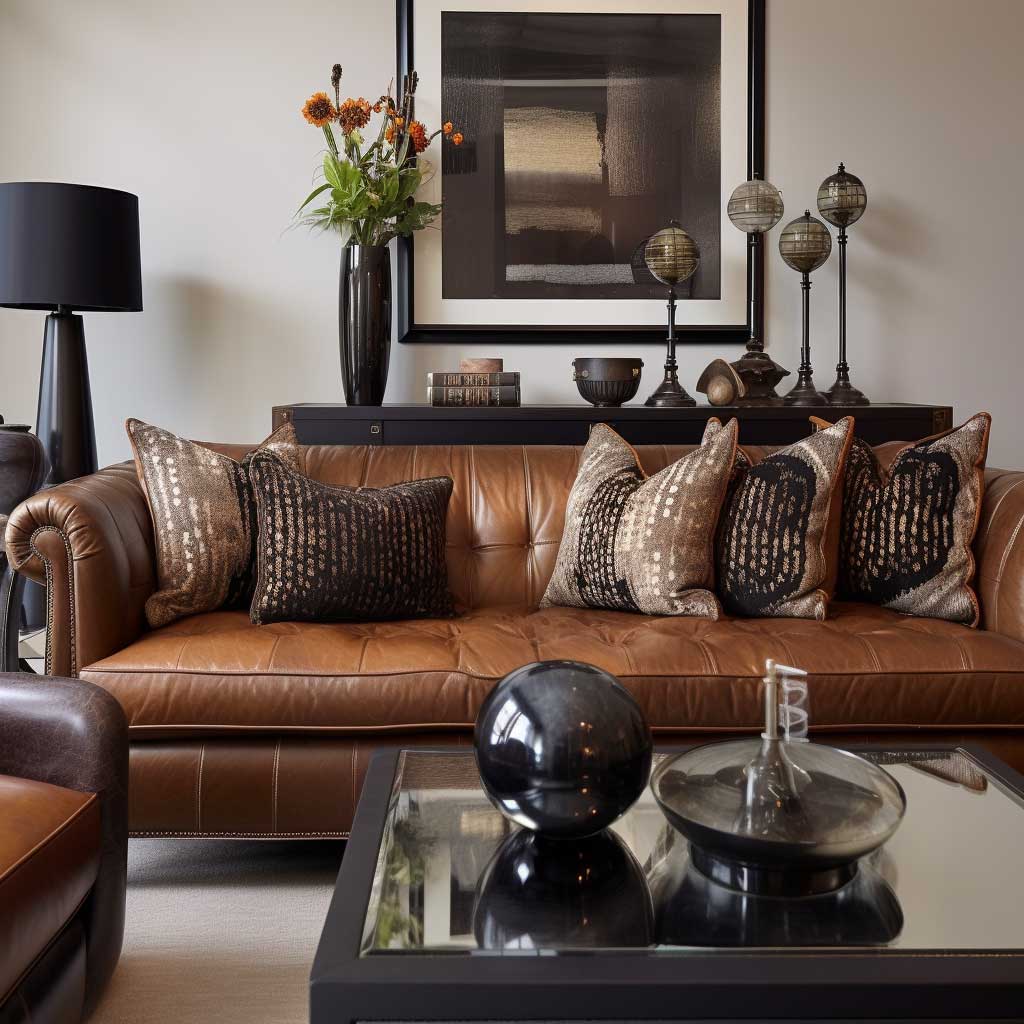
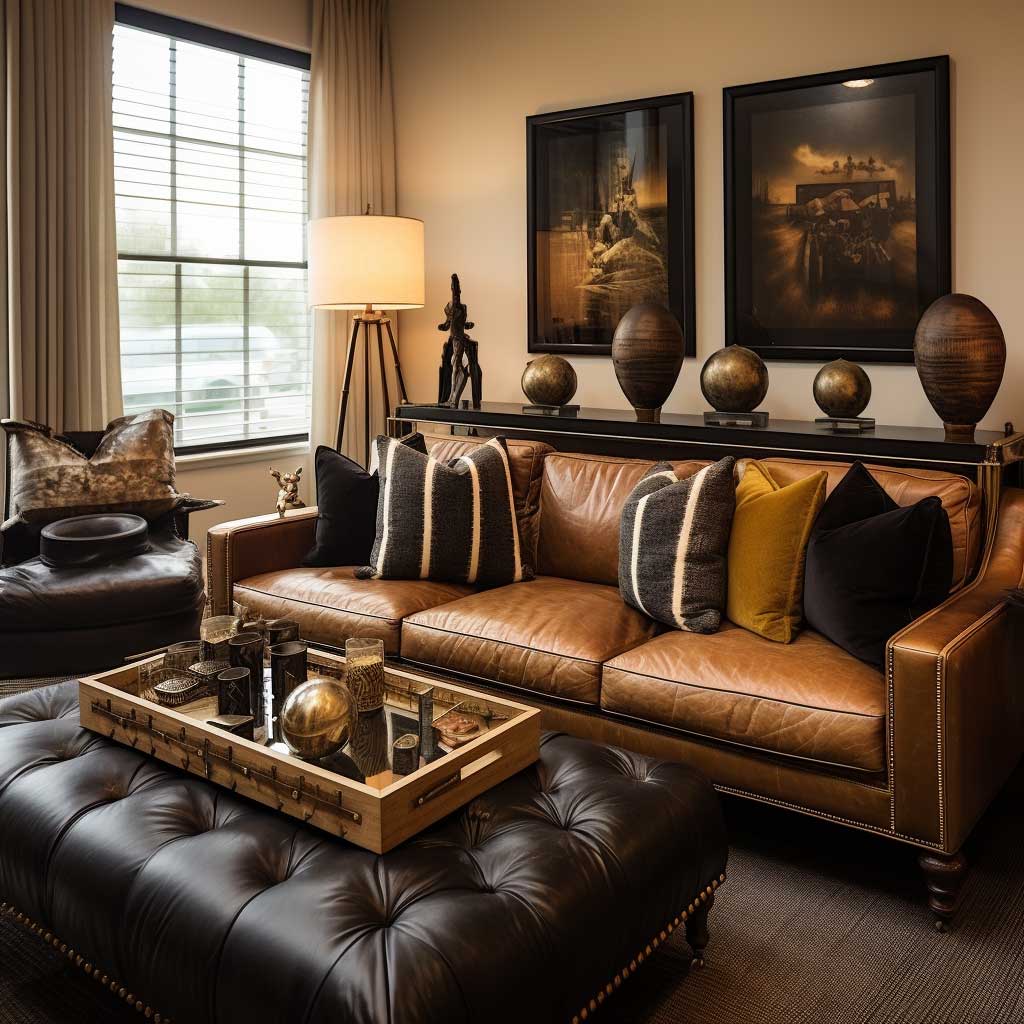
One question that comes up constantly: can you mix black and brown furniture if the pieces aren’t the same style? Yes — in fact, a slight style mismatch often helps. A mid-century brown walnut credenza next to a contemporary black coffee table reads intentional rather than mismatched, because the color family ties them together while the silhouette difference keeps the eye moving. The pairing fails when both pieces share the same era and finish but happen to be different colors — then it just looks like a mistake.
For more on working with warm-toned neutrals in a living room, modern brown living room ideas covers the layering logic in depth — including which brown shades hold under artificial light and which go flat by evening.
Black Wall Panels Pull Brown Furnishings into Focus
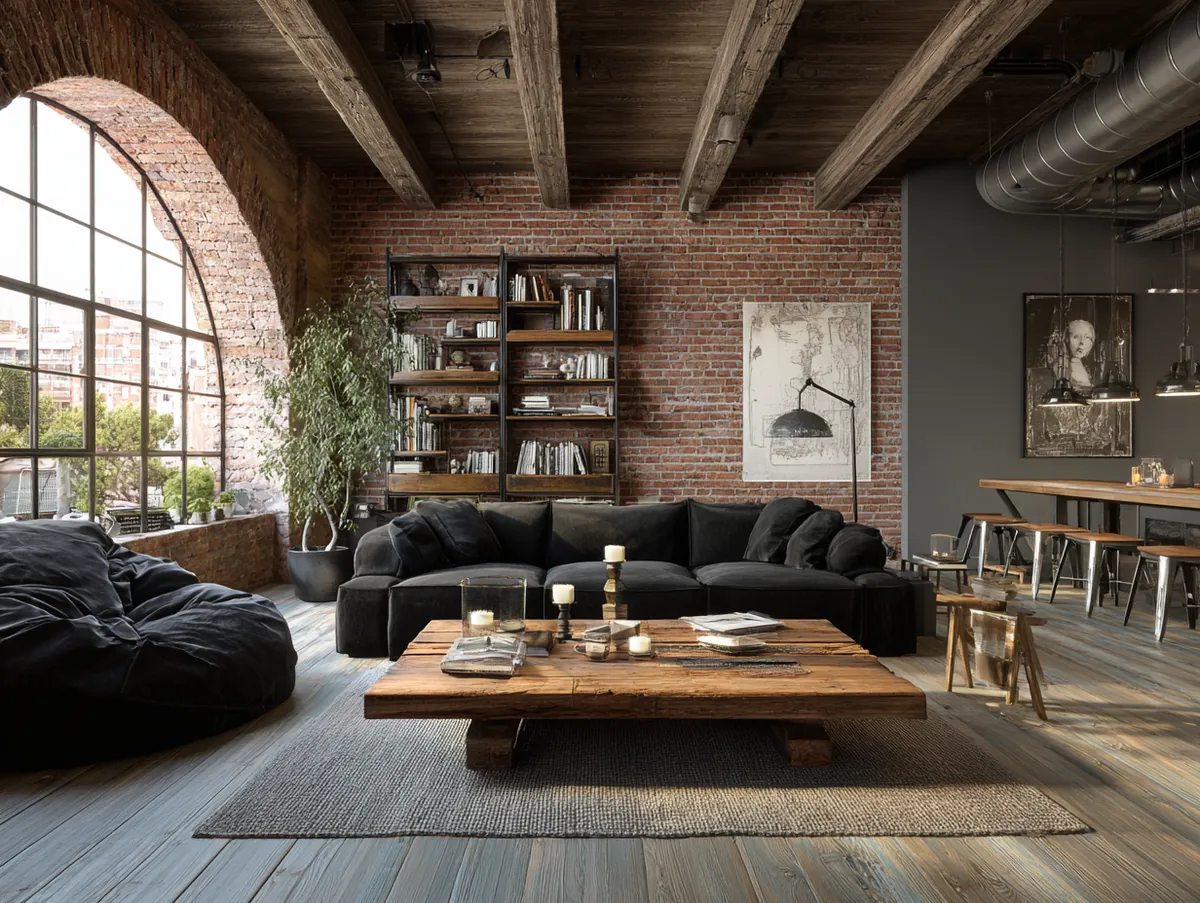
Black wall panels in a living room work on the same principle as a dark backdrop in photography: they make everything in front of them read more clearly. Brown furnishings — a walnut coffee table, a caramel armchair, a warm oak console — gain about thirty percent more visual presence against a black-paneled wall than they’d have against white or beige. That’s not a metaphor; it’s the mechanics of simultaneous contrast, where adjacent colors amplify each other’s perceived saturation.
The cost reality: professional wall paneling installation runs $7 to $25 per square foot depending on material and labor, with a national average project cost of about $2,800 (Angi, 2026). That puts a typical living room accent wall at $500–$1,000 for an 8×10 surface. PVC slat panels in matte black — like the Art3d Wave panels at Home Depot at $2.39 per square foot for material alone — are the budget entry point. Real wood veneer slat panels read more expensive but also absorb light differently: deeper, less uniform, more interesting as a backdrop.
The anti-advice here matters more than the advice: don’t panel all four walls black in a standard-size living room. One accent wall behind the sofa or the media unit is enough. Four walls at this depth creates a room that feels smaller every hour as the day’s light changes, and no amount of warm-toned furniture rescues it. The brown furnishings need a pale ceiling and at least two neutral walls to stay readable against the black.

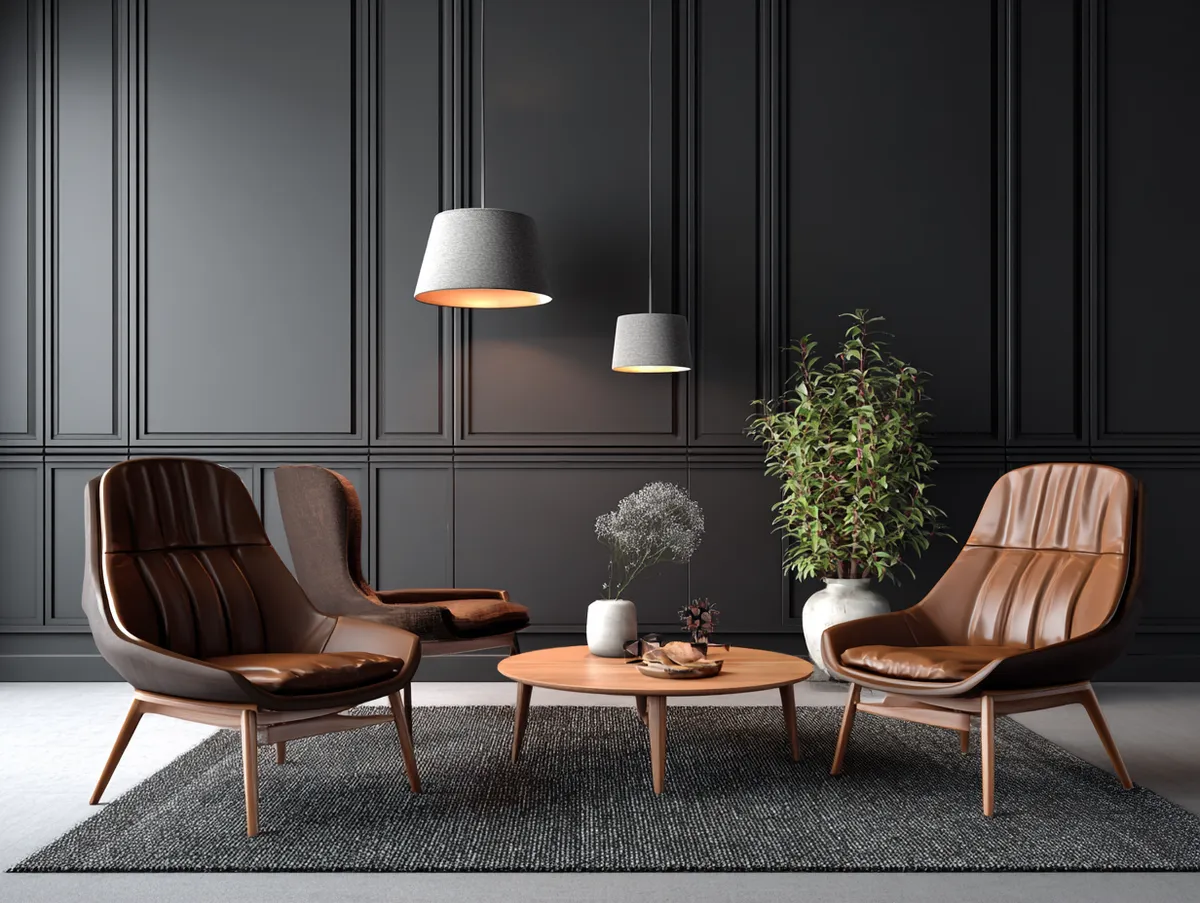

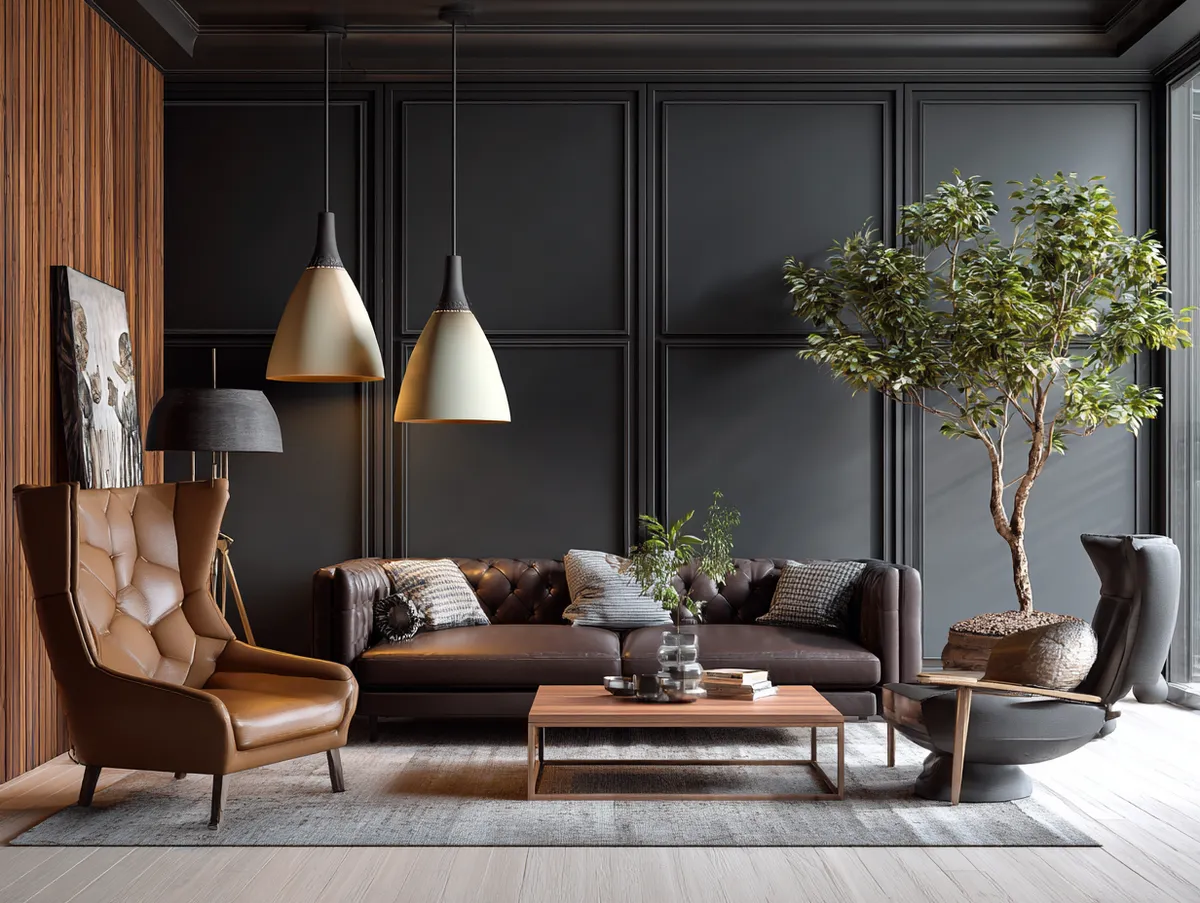
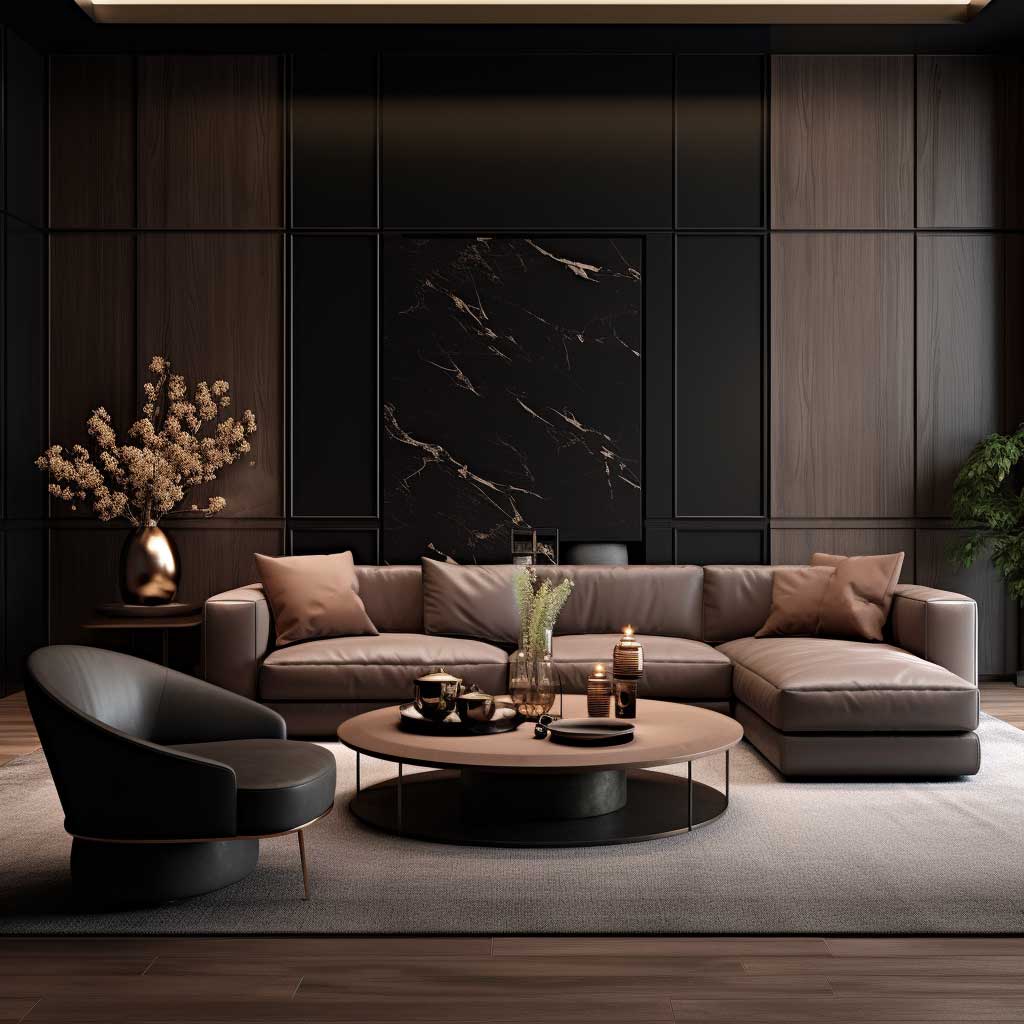
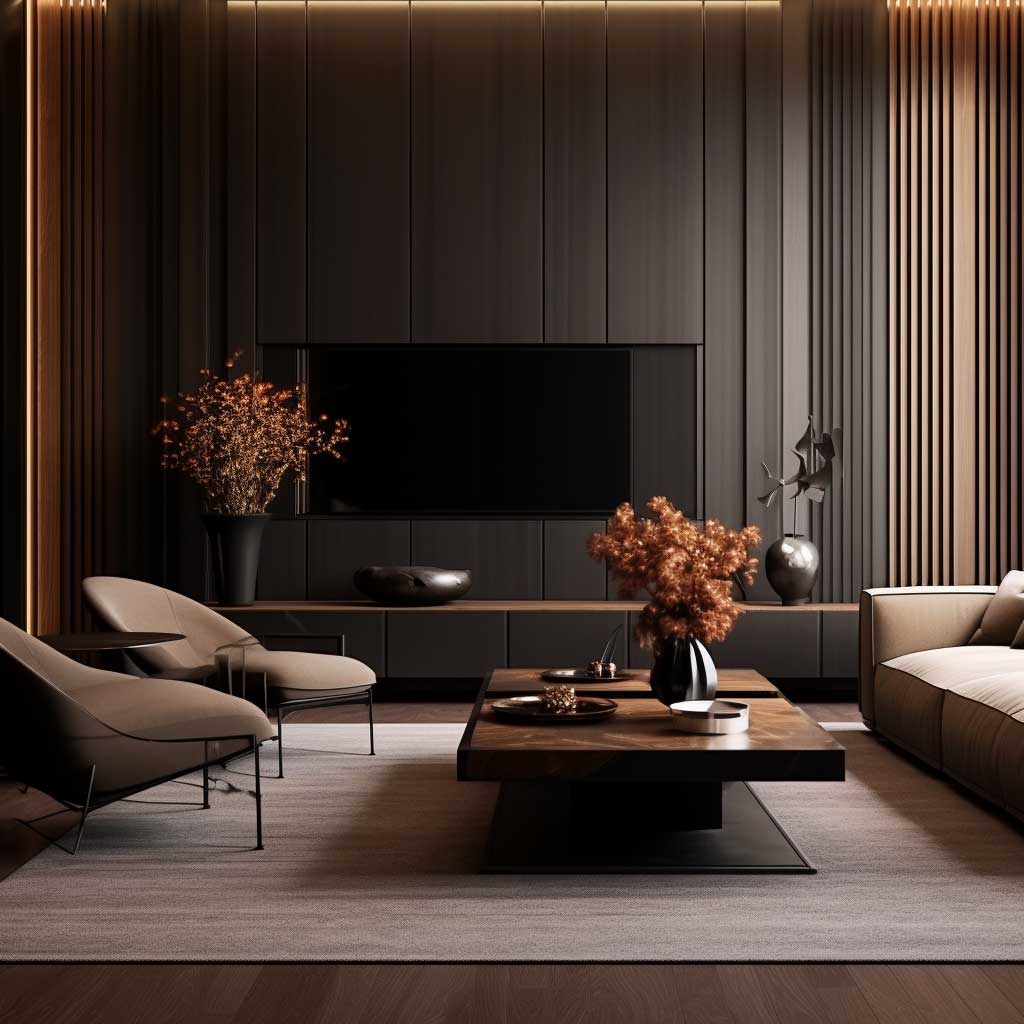
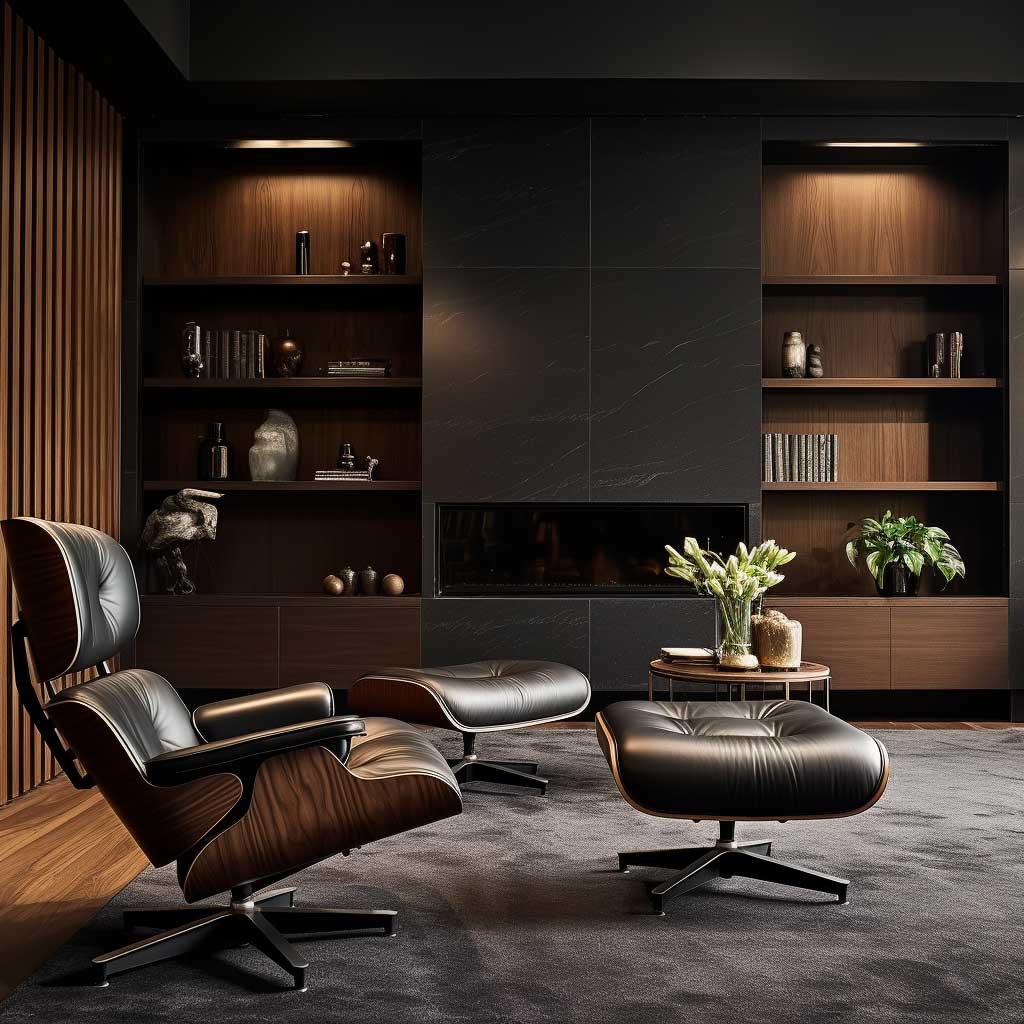
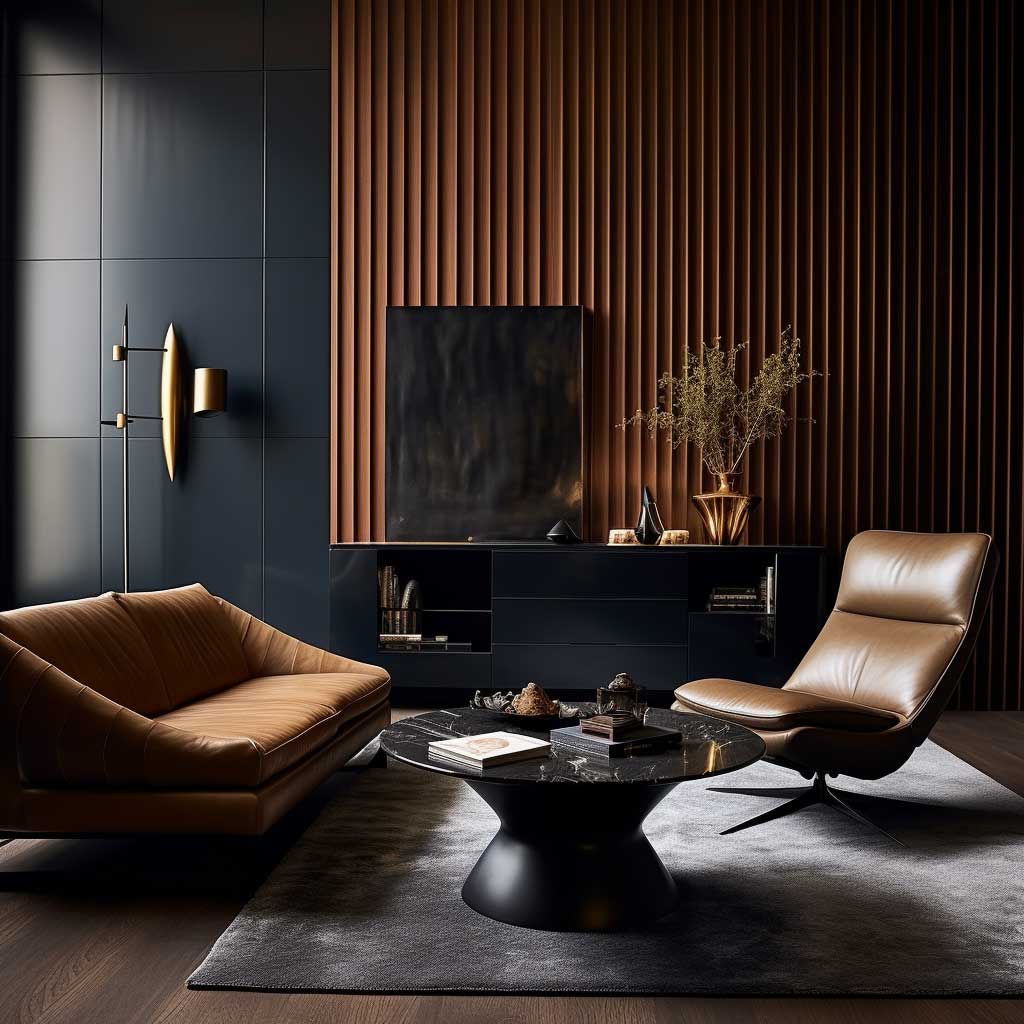
Lighting choice is decisive with black panels. Warm-white bulbs at 2700K prevent the wall from reading cold or cave-like. Cool LED bulbs above 3500K turn a matte black surface into something that looks like a commercial fit-out — competent but not cozy. The brown furnishings need the warmth of those bulbs to stay amber rather than going greenish. Install a dimmer on any overhead fixture in a room with a black accent wall; the ability to drop the light by 40% at night completely changes how the space feels. See black and grey living room ambiance secrets for the full breakdown on lighting dark-palette rooms without losing warmth.
Mixing brown and black at equal proportion. When the brown sofa and the black coffee table are the same visual size and the black rug and brown curtains compete at the same scale, neither color wins. The room reads muddy, not layered. Choose a dominant (brown) and a supporting player (black), then hold to that ratio in every decision.
Going espresso-brown on the sofa and flat-black on the walls in a room under 200 sq ft. Both colors absorb light, and in a small space there’s not enough natural light to keep the room from collapsing by mid-afternoon. Save the all-dark approach for rooms with at least two exterior windows or a south-facing exposure.
Matching brown leather undertones to the wrong wall color. Warm red-brown leather next to a cool-grey wall looks like two rooms accidentally merged. Check whether your leather pulls red or yellow, then match the wall to the same temperature. Even a white wall needs to be warm white (Benjamin Moore White Dove, not Chantilly Lace) or it casts a cool shadow on the brown.
Brown and Black Living Room Rugs as the Room’s Foundation
A brown and black living room rug solves a problem that furniture alone can’t: it connects pieces that otherwise float. An 8×10 area rug in a brown-and-black pattern — available from Living Spaces starting at $150 for synthetic options — sits under the front legs of the sofa and both sides of the coffee table, creating a defined zone. Everything inside that zone reads as a deliberate composition; everything outside reads as background. Without the rug, the same furniture arrangement looks like items placed in a room rather than a room that was designed.
Pattern structure matters here more than most people realize. A rug with a large-scale geometric pattern in black and caramel brown will sharpen the overall palette — it reads more modern, more deliberate. A rug with a traditional medallion in espresso and tobacco reads warmer and more traditional. Neither is wrong, but a traditional-pattern rug under contemporary furniture, or vice versa, usually produces a room that feels like it hasn’t decided what it is. You want the rug to confirm the decision the furniture already made.
Size is where most people go wrong. A 5×7 rug under a three-seat sofa and two armchairs looks like a hand towel on a king bed. The standard recommendation from interior design practitioners is that all seating front legs should sit on the rug simultaneously — which in most living rooms means the 8×10 is the minimum, and a 9×12 often reads better. Too small a rug makes the seating group look accidental and makes the room feel smaller, not larger, which is the opposite of the intended effect.
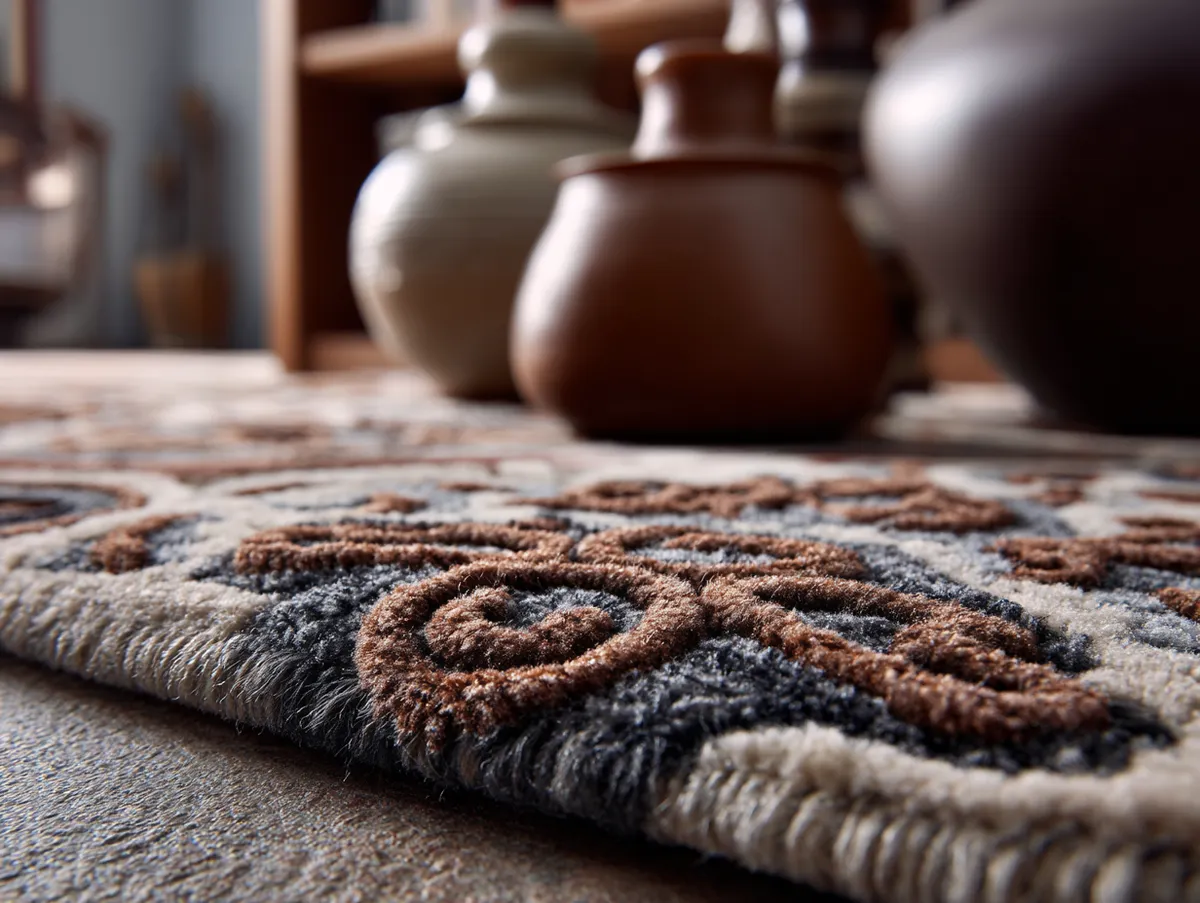
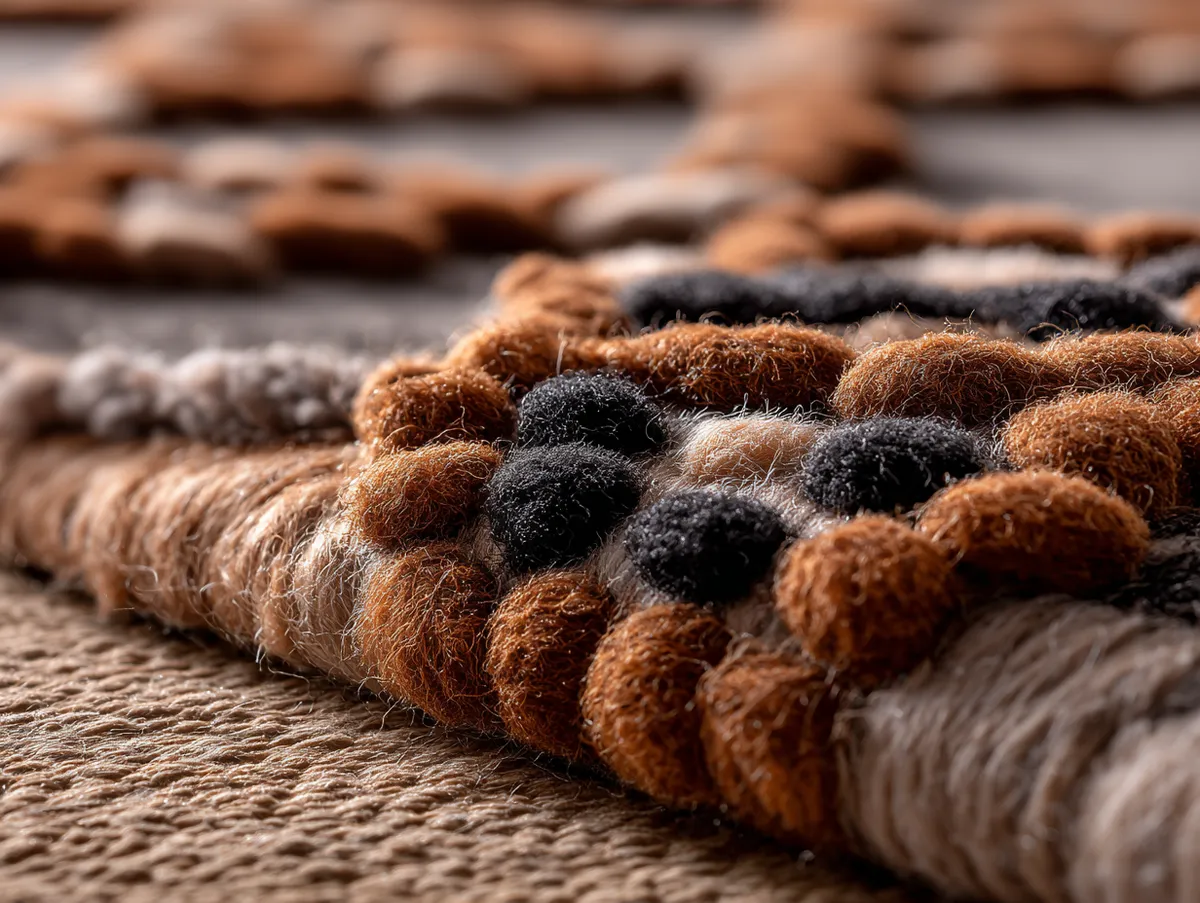
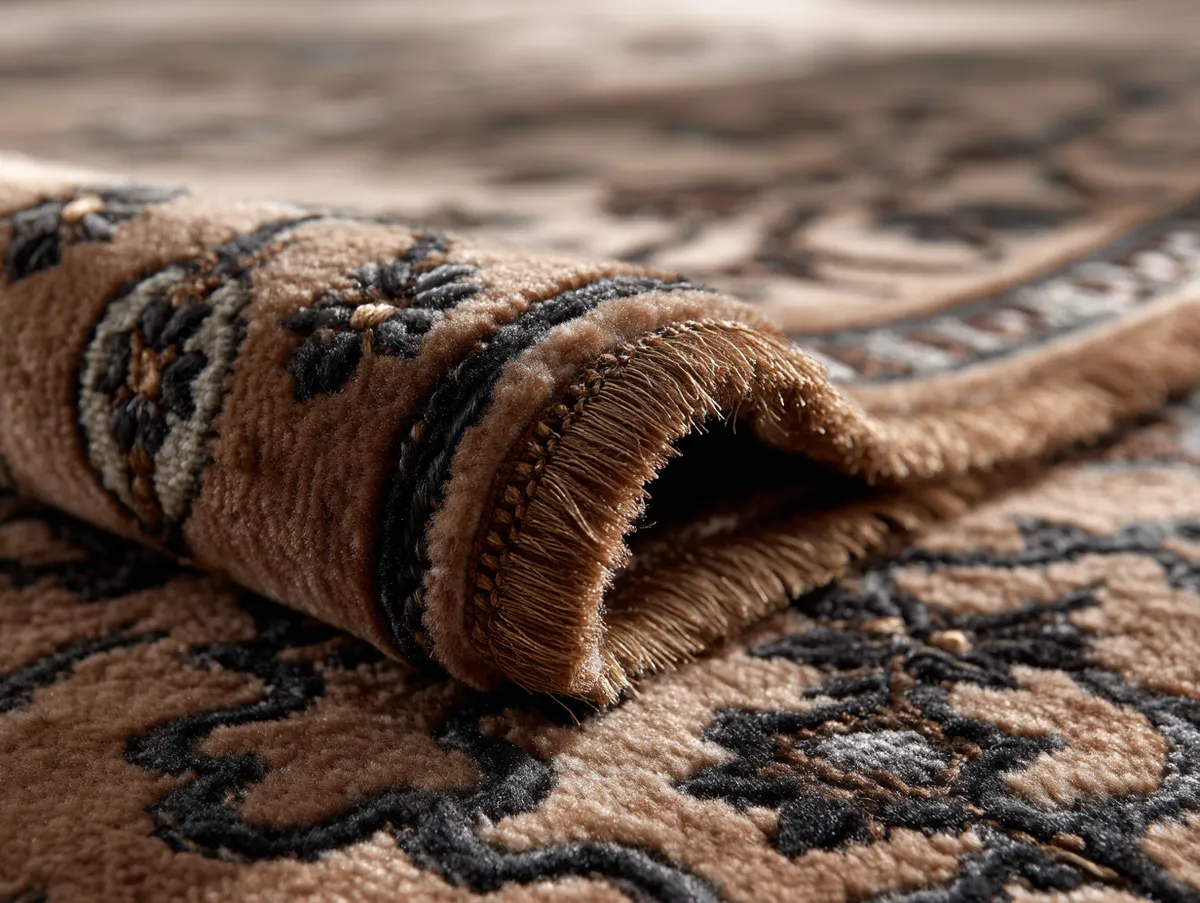
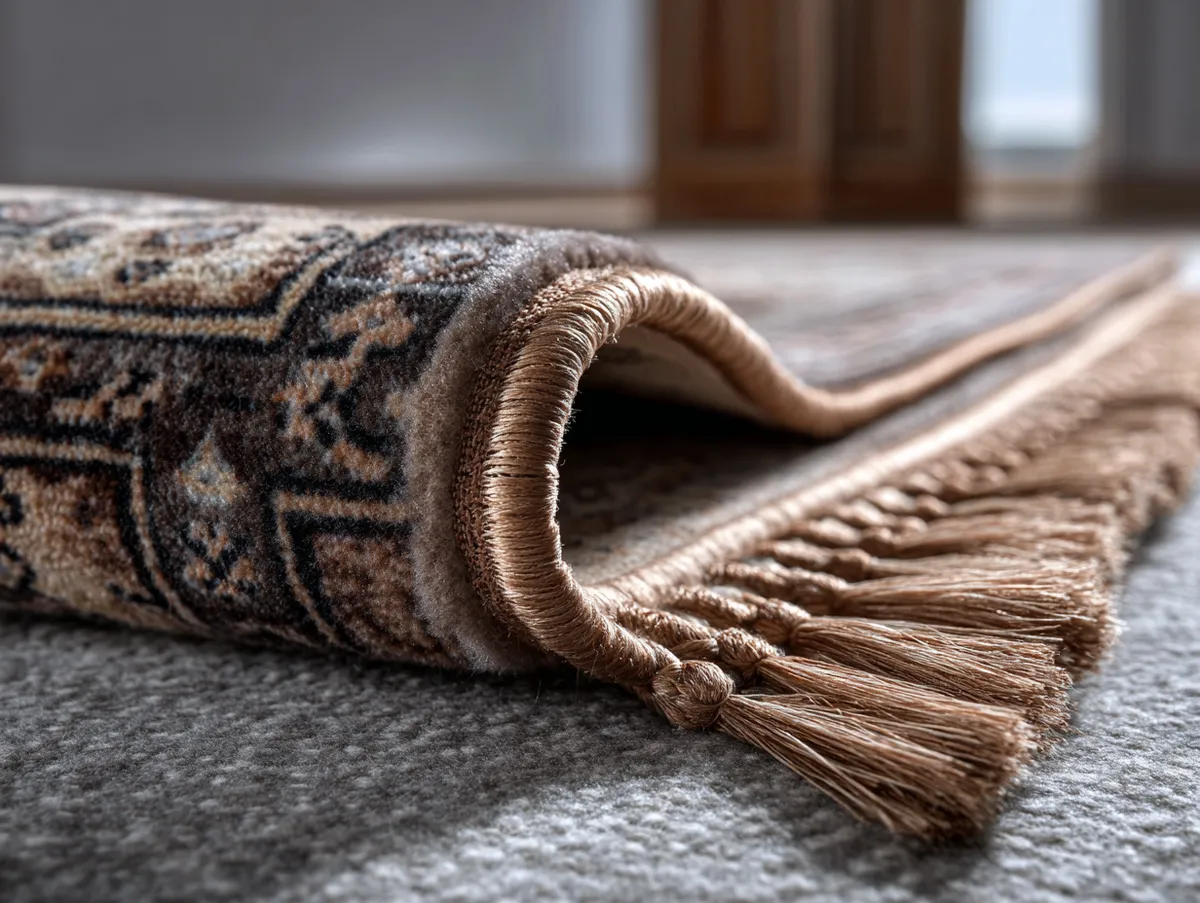
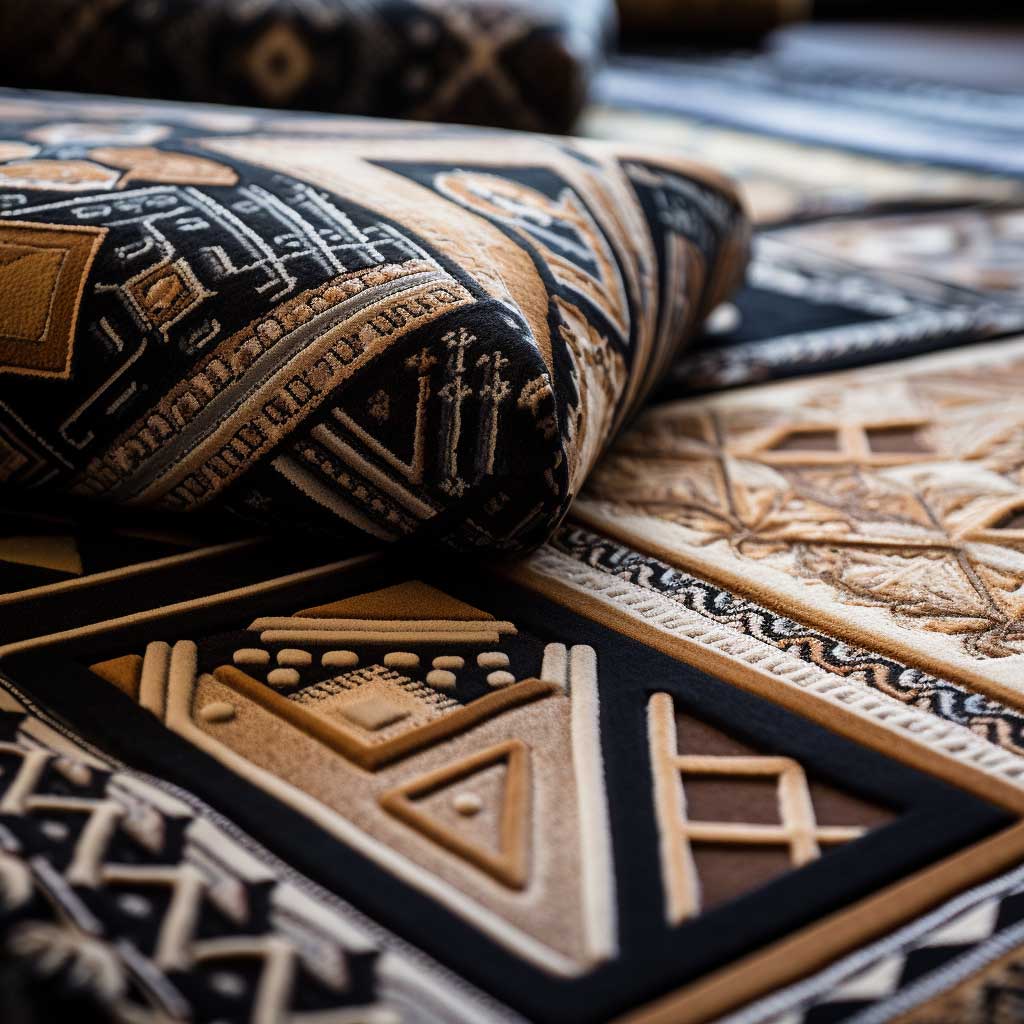
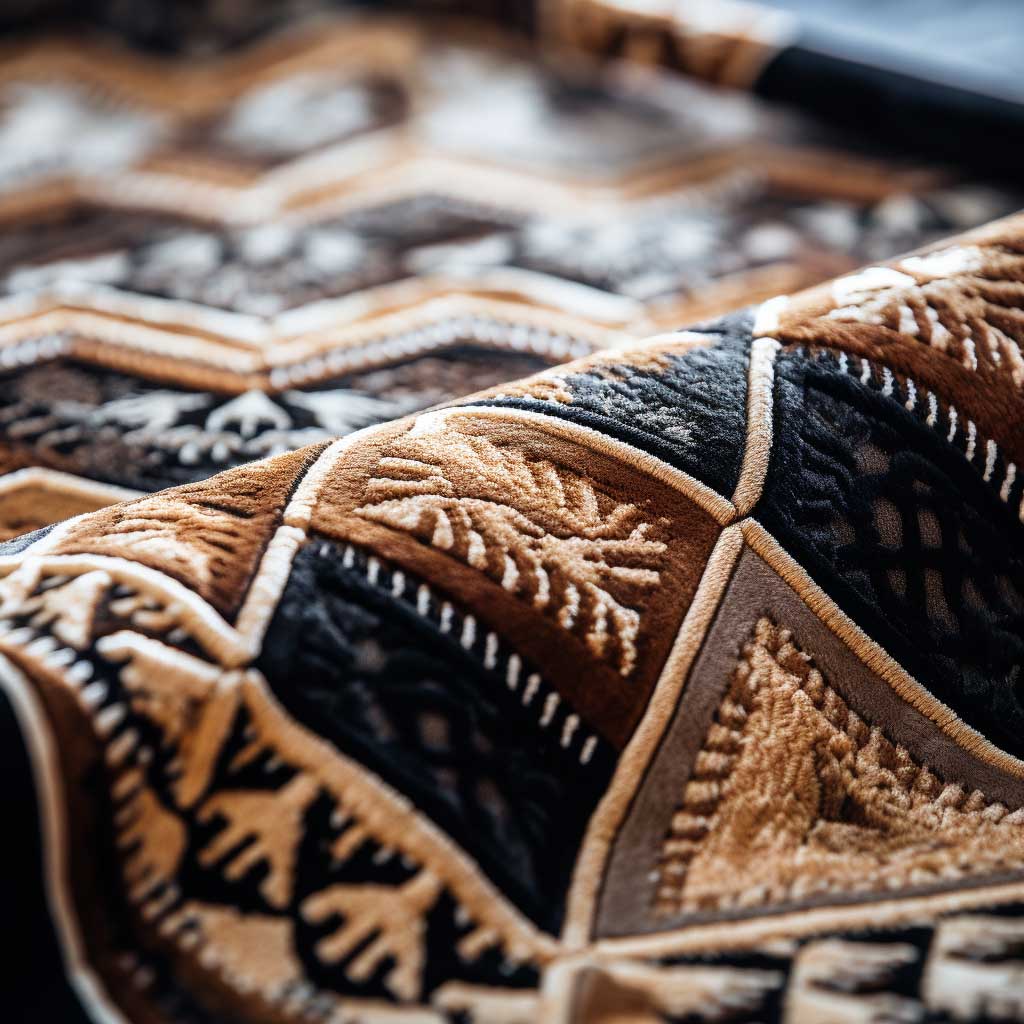
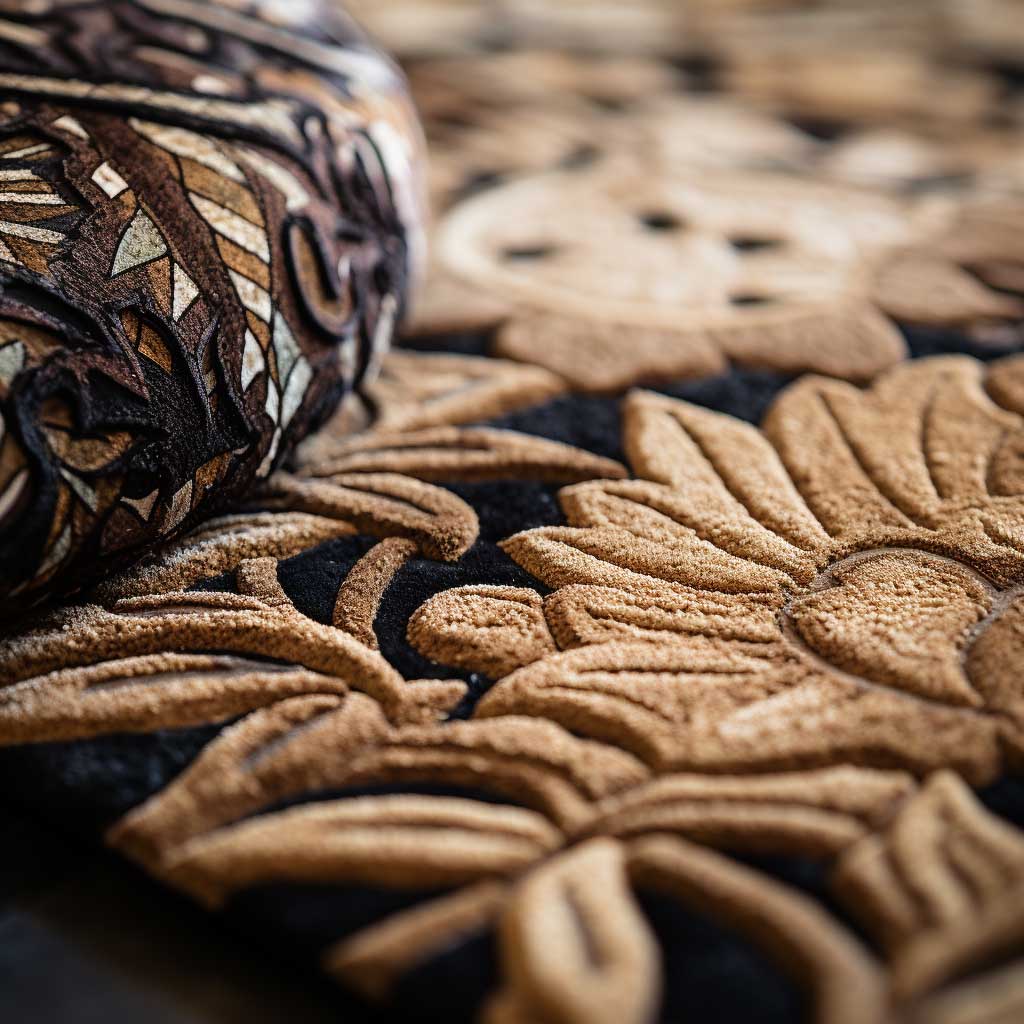
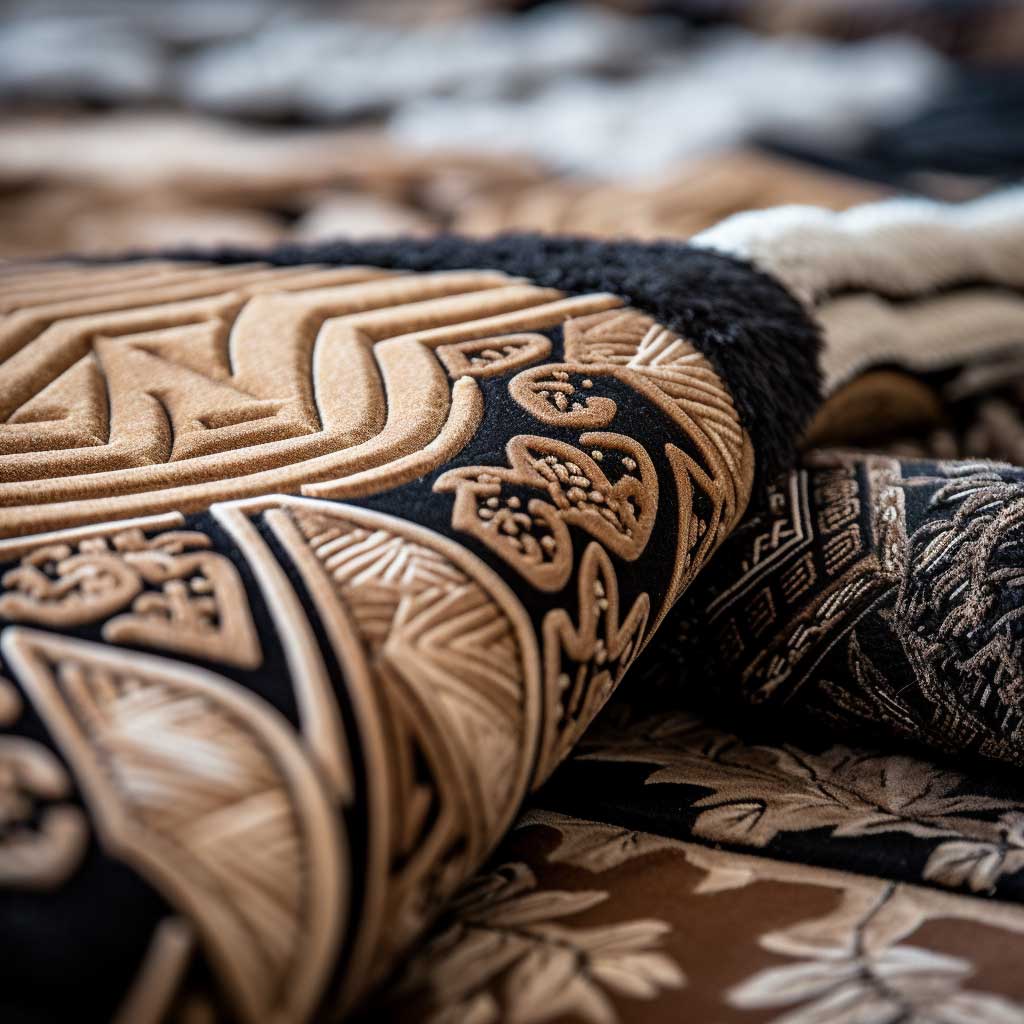
The material question: wool rugs in this palette hold their color better over three to five years of real use than synthetic alternatives. Polypropylene fades — the black often goes first, leaving a muddy brown that makes the whole room look exhausted. If the budget is tight, a flatweave cotton-poly blend fades more evenly than a plush pile synthetic. A hand-knotted or hand-tufted wool piece in the $400–$900 range for an 8×10 will outlast three rounds of budget replacements. What doesn’t age well in this palette: high-pile shag rugs in dark tones trap dust and lose their contrast between the black and brown fibers within about eighteen months.
An underrated move: use the rug to introduce the third color that black-and-brown rooms often need. A brown-and-black geometric rug with a narrow terracotta or rust accent stripe introduces warmth without requiring any additional furniture purchase. The stripe reads as part of the rug’s pattern rather than as a new color commitment, and it prevents the palette from reading too serious. The single best-kept trick in designing a brown-and-black room is letting one small warmth element keep the whole scheme from feeling like a study rather than a living room.
| Setup | Rug Style | Best Fit | Avoid |
|---|---|---|---|
| Brown leather sofa + black accents | Jute or caramel flatweave | Contemporary, Scandi | Dark shag, heavy traditional |
| Black wall panels + brown wood furniture | Black-and-caramel geometric | Modern, minimalist | Ornate medallion, cool-grey tone |
| Mixed brown + black furniture | Espresso and tobacco traditional | Transitional, classic | Plaid, oversized abstract |
For a broader look at wall paneling costs and material options — useful if you’re planning black panels alongside a rug investment in the same renovation — Angi’s 2026 wall paneling cost breakdown covers everything from PVC to real wood veneer with current labor rates by region.
The Bottom Line
Brown and black don’t need a mediator — they need the right ratio
Let brown carry the room’s weight — the sofa, the rug, the wall material. Let black finish it: the vase, the frame, the lamp base. That’s the proportion that makes a black and brown living room feel resolved rather than restless.
Rugs are the safest entry point. A $150–$400 area rug in this palette lets you test the combination before committing four figures to furniture. If the rug reads right in your actual light conditions, the rest of the choices will follow.
Black wall panels are the highest-impact upgrade, but also the most committed. At $7–$25 per square foot installed, a single accent wall pays off when the furniture and rug are already in place — not as the first move. Save this post.
FAQ
Can you mix black and brown furniture in a living room?
Does black and brown go together in a living room?
What colors go with brown and black in a living room?
What rug size works best under a black and brown living room seating group?
How do you decorate with black and brown without it looking dark?
Can you mix black and brown leather furniture specifically?
Complete guide
Furniture Decor Ideas for Every Room in Your Home
Living room, bedroom, dining, kitchen, outdoor — all in one place
Complete guide
The Living Room Design Ideas Vault Every Home Needs Right Now
Color, walls, furniture, layouts, styles, smart tech — 300+ ideas in one place
Complete guide
Black Home Color Ideas for Every Room and Every Mood
Living rooms, bedrooms, kitchens, bathrooms, exteriors — all in one place