Farmhouse fireplace ideas work when the hearth feels like part of the architecture rather than a decorative object added afterward. The strongest designs combine one dominant material, a clear mantel or surround, and a few restrained accents so the fireplace anchors the living room without taking over. For a quick transformation, start with the surround and mantel before choosing smaller decor pieces.
A farmhouse fireplace can be rustic, modern, industrial, or quietly traditional, and it does not need an oversized chimney to read correctly. What makes the difference? Texture, proportion, and a material palette that repeats elsewhere in the room. Treat the fireplace like the visual hearth of the house, then build the seating, textiles, and lighting around that center.
Quick Scan
- Reclaimed wood adds age and warmth without requiring a heavily decorated mantel.
- Shiplap creates a clean farmhouse backdrop, especially with a restrained neutral finish.
- Brick and stone bring stronger texture and work well with black metal accents.
- Modern farmhouse fireplaces benefit from simple geometry and fewer decorative layers.
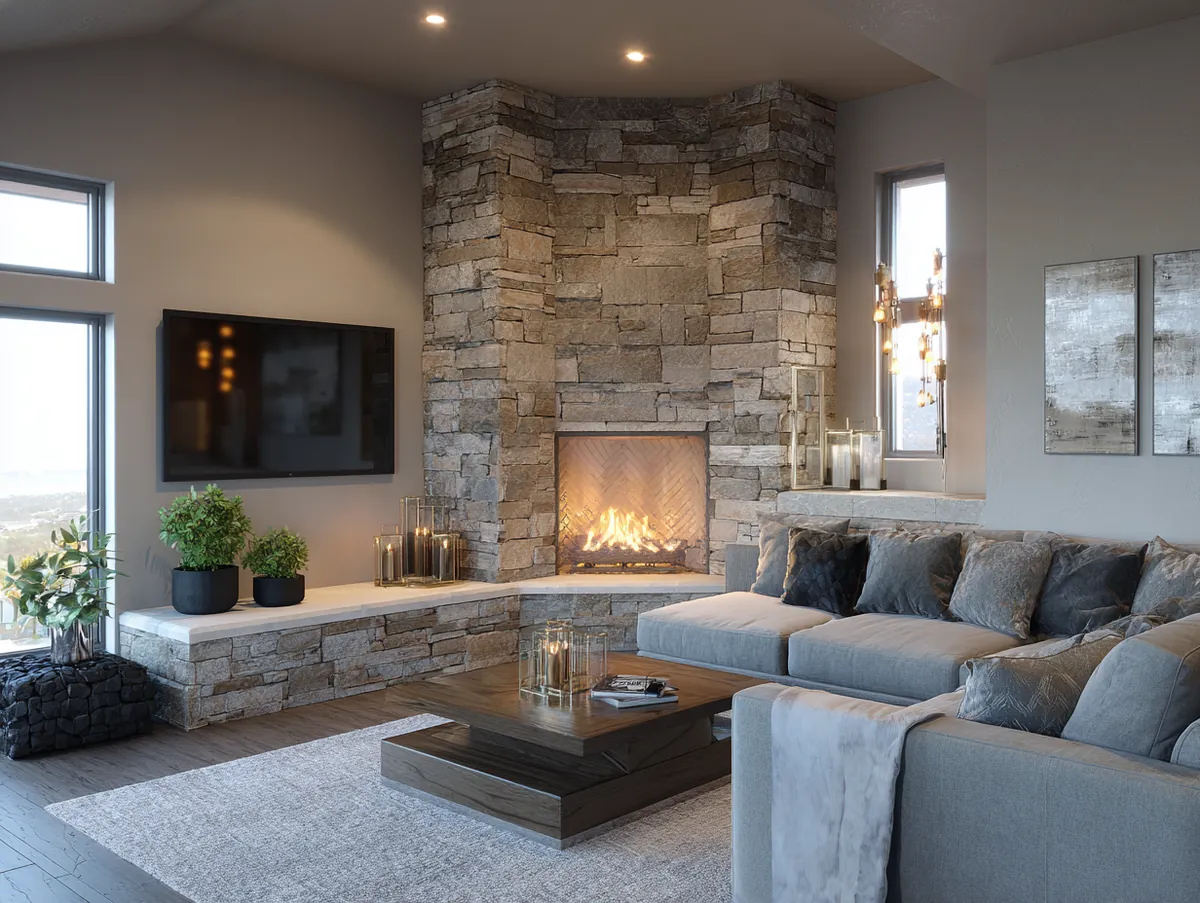
- Corner fireplaces can preserve floor area while still becoming a visual anchor.
- Safety clearances should be settled before combustible wood, textiles, or decorative trim are installed.
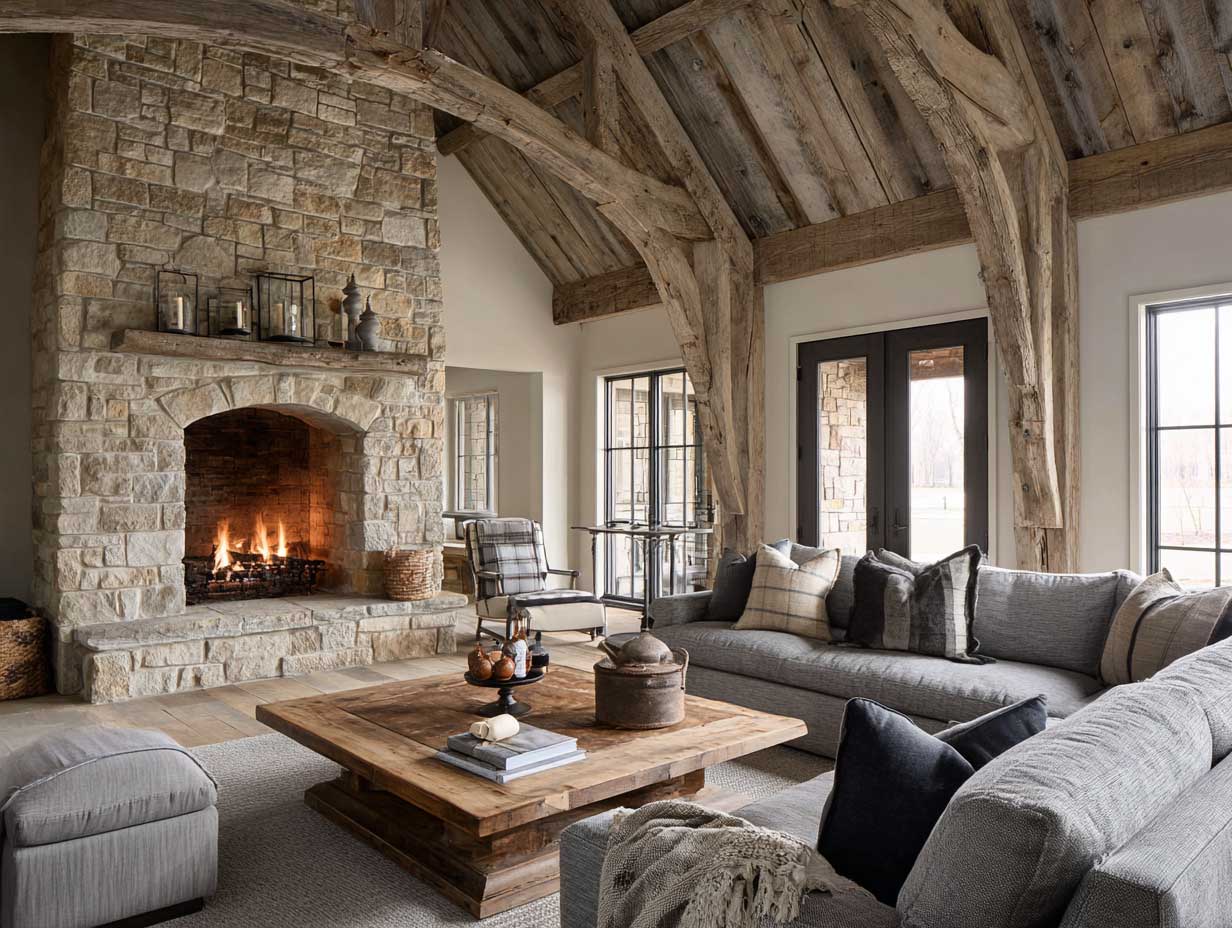
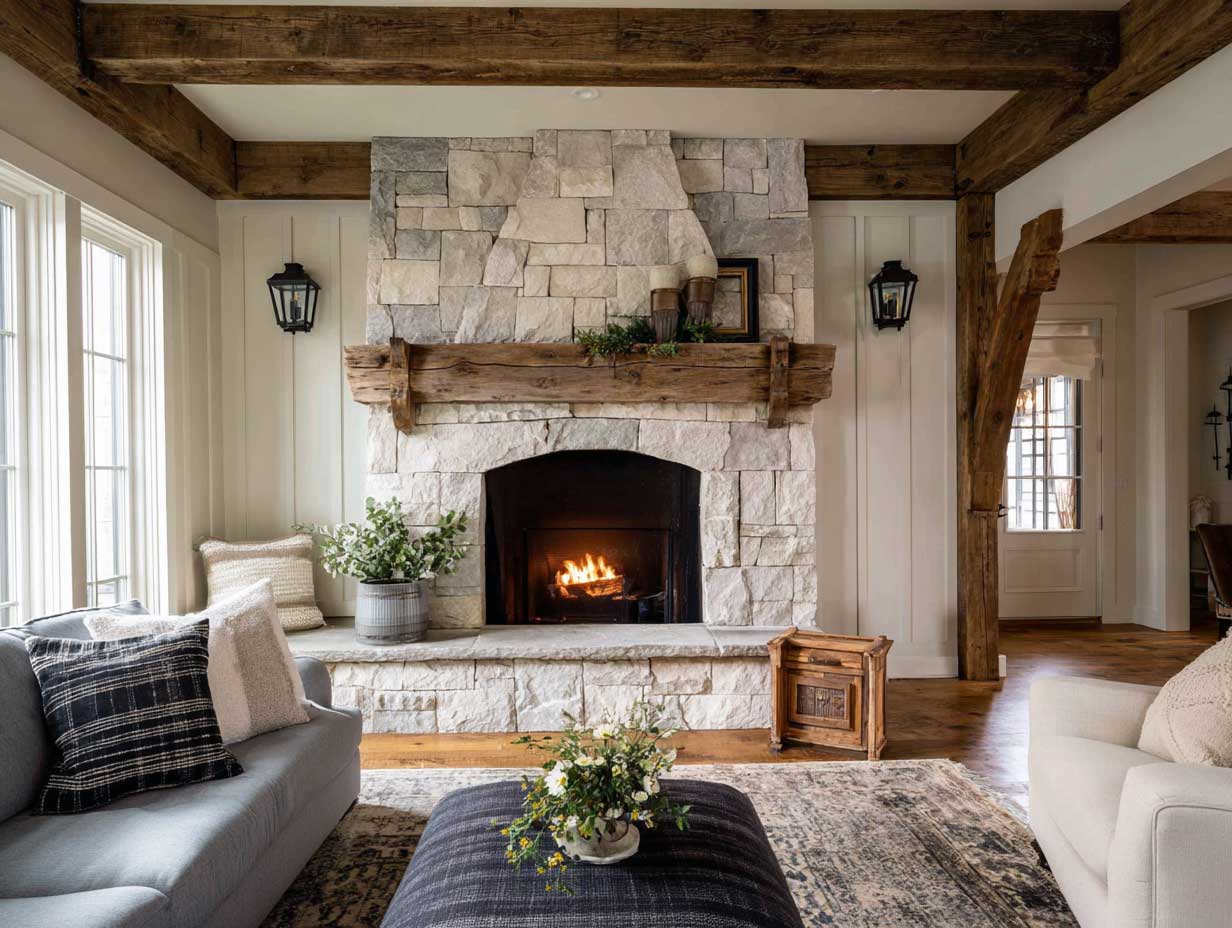
Reclaimed wood gives farmhouse fireplace ideas their strongest rustic cue
Reclaimed wood is one of the clearest ways to give a farmhouse fireplace a sense of age and texture. A thick mantel can contrast with painted walls while preserving the irregular grain that makes old timber feel authentic. What keeps the look controlled? Use two main wood tones at most, then let the grain provide the visual movement.
A mantel supported by simple brackets or corbels can create a strong horizontal line, much like a beam visually tying a room together. Two or three carefully chosen objects are usually enough above it, especially when the wood already has knots, cracks, or tonal variation. Do not cover every inch of the shelf with signs and small accessories; leave some timber visible so the material remains the feature.
For a living room renovation, coordinate the mantel with another wood element such as a coffee table, ceiling beam, or cabinet. The result feels less like a themed installation and more like one continuous interior language. Before fixing a combustible timber mantel in place, confirm the required clearance for the specific fireplace and its installation instructions.
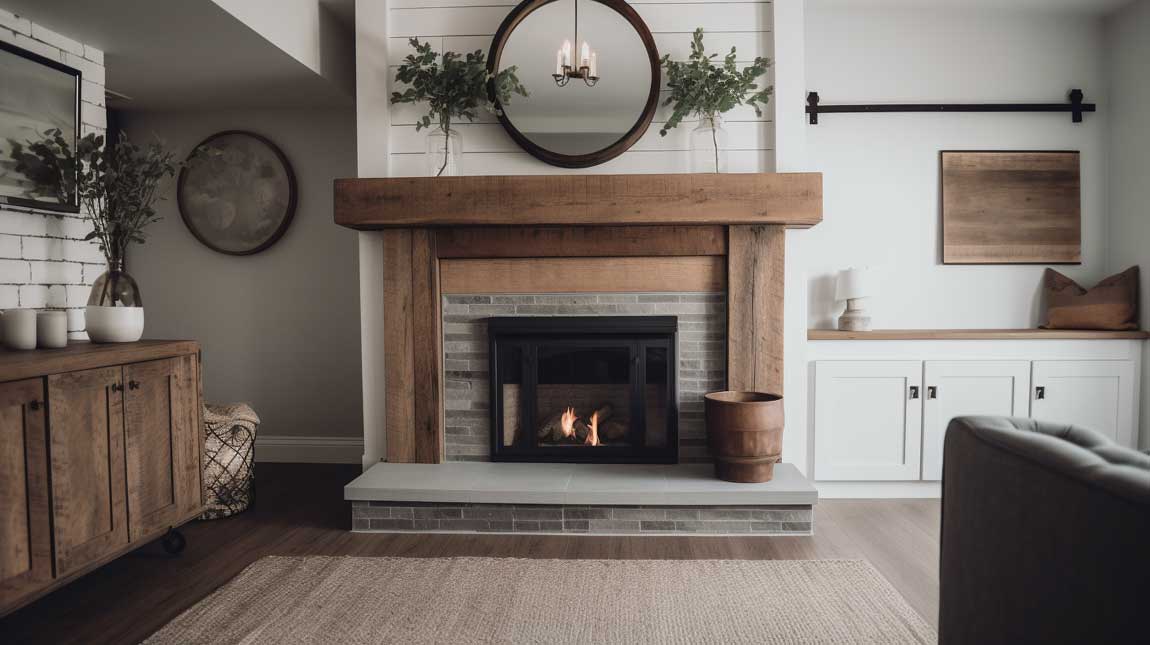
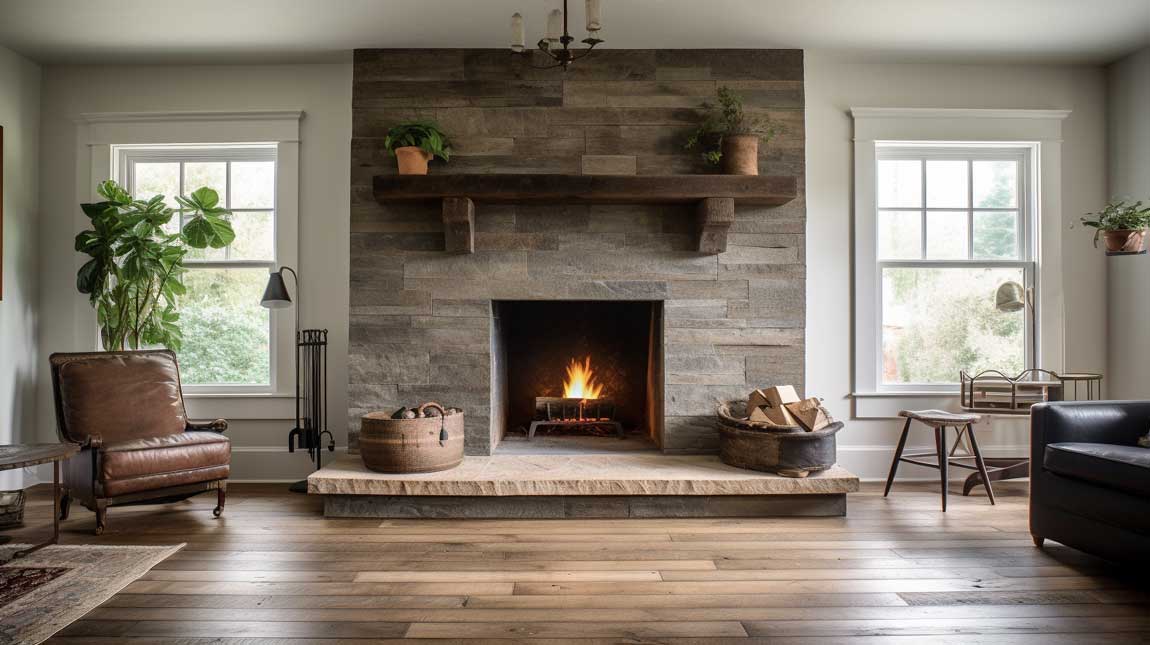
For a broader farmhouse room palette, pair the fireplace with the material logic used in farmhouse exterior design ideas with rustic materials. Repeating one wood finish or stone tone elsewhere prevents the hearth from looking isolated. Keep the surrounding palette quiet when the reclaimed timber has especially strong character.
Vintage details make a farmhouse fireplace feel collected
Vintage farmhouse fireplace design depends on restraint rather than filling the room with antiques. A cast-iron insert, aged metal screen, or weathered surround can provide the historical note while the rest of the room stays simple. Think of the hearth as an old photograph in a modern frame: one convincing period detail can carry the story.
What should sit on the mantel? Start with one larger object, add a second material such as brass or ceramic, and leave enough negative space for the composition to breathe. Two or three related pieces usually create a clearer focal point than a shelf packed from end to end. Avoid mixing too many eras, because the fireplace can quickly lose its farmhouse character and start looking like a general antique display.
Old-looking does not have to mean fragile or impractical. A reproduction screen or newly manufactured tool set can provide the same visual language while being easier to maintain. Check the actual fireplace requirements first, because decorative metalwork still needs to respect the appliance manufacturer’s clearances.

Shiplap surround keeps farmhouse fireplace ideas crisp and bright
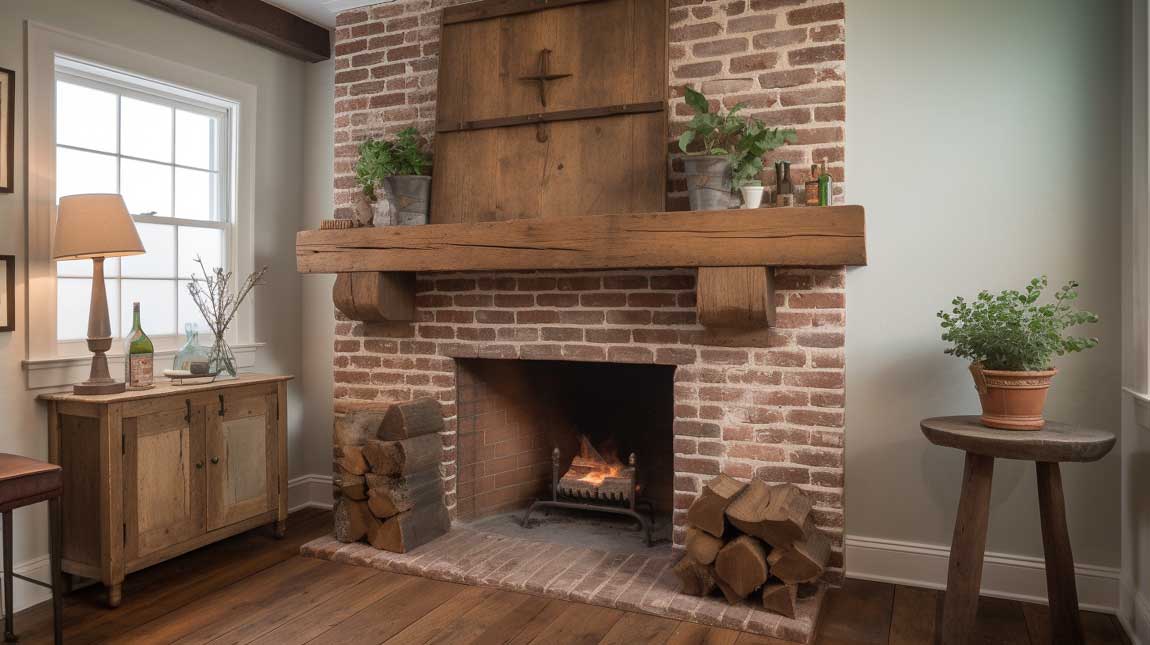
A shiplap fireplace surround gives farmhouse interiors a clean vertical or horizontal rhythm without removing the warmth associated with the style. The boards act like ruled lines on a page, giving the wall structure while allowing the mantel and firebox to remain visually dominant. For a balanced composition, combine the shiplap with two contrasting textures such as aged timber and matte metal.
White and pale gray finishes make a shiplap surround especially useful in smaller living rooms because the wall remains visually light. What prevents it from looking flat? A shadow line between boards, a substantial mantel, or a contrasting hearth can introduce enough depth. Do not extend combustible shiplap into areas where the fireplace manufacturer or local code requires noncombustible construction.
A reclaimed beam above the shiplap can shift the composition toward a more traditional farmhouse look, while a thin painted mantel keeps it contemporary. Use one dominant finish and repeat it elsewhere rather than introducing several competing whites. When planning a real installation, clearance comes before styling; the 2024 model residential code example allows combustible mantel or trim near a masonry fireplace only under specified dimensional conditions.


Brick and black metal sharpen rustic farmhouse fireplace design
Brick gives farmhouse fireplace design a heavier, more architectural presence, especially when the surface remains visibly irregular. Red brick can push the room toward traditional country style, while softened or limewashed brick creates a quieter backdrop for modern farmhouse furniture. Think of the masonry as the fireplace’s foundation layer: everything above it should support rather than compete with its texture.
Black metal is a useful counterweight to warm brick because its thin lines add definition without another large block of color. A screen, tool set, or simple frame can introduce this contrast in one or two places. What should be avoided? Too many industrial accessories, which can make a farmhouse living room feel closer to a workshop than a home.
For an authentic old-house effect, combine two dominant materials and one smaller accent material rather than stacking every rustic finish together. A brick surround, timber mantel, and iron detail already form a complete composition. If the fireplace is being altered structurally, treat the decorative finish as the final layer after the firebox, hearth, chimney, and clearances have been professionally resolved.


Making farmhouse fireplace ideas work in modern rooms
Modern farmhouse fireplace ideas become convincing when traditional warmth meets simpler geometry. A smooth plaster, concrete-look, or restrained stone surround can make the firebox feel architectural without relying on ornate trim. The trick is to keep the fireplace visually quiet while allowing one natural material, such as wood, to bring the farmhouse note back into the room.
What makes the modern version different? It usually depends on fewer decorative layers and stronger proportions. A single large mirror or artwork can replace a collection of small objects, while a woven basket or timber element restores the softer country texture. Do not add rustic accessories simply because the fireplace itself is minimal; one deliberate contrast is more effective than five unrelated ones.
A modern farmhouse living room also benefits from a limited palette of roughly three dominant neutrals plus natural wood or metal. The fireplace then becomes an anchor rather than a separate theme. For another room-level reference, see grey modern farmhouse living room design ideas and look at how restrained finishes can frame a statement fireplace.

Corner fireplaces solve awkward farmhouse living room layouts
Corner farmhouse fireplaces can turn a difficult wall into a useful focal point while preserving more open floor area. This approach works like placing a piece of furniture into the corner of a room: the fire becomes the anchor, while seating can face it without blocking the main circulation route. A compact stove or insert can suit this arrangement when its installation requirements allow it.
How should the seating respond? Two chairs or a compact sofa can create a conversation zone without forcing every piece of furniture to point directly at the fire. Keep at least one clear route through the room and use a rug to visually connect the seating with the hearth. Avoid pushing oversized furniture into the corner simply because the fireplace is there; the room needs breathing space around its strongest feature.
For small rooms, three deliberate elements can be enough: the fireplace, a compact seating group, and one substantial textile or rug. The composition becomes a small stage, with the fire as the backdrop. Measure the actual hearth and opening before ordering furniture, because code requirements can affect the usable floor area in front of the fireplace.
Stone surrounds bring outdoor texture indoors
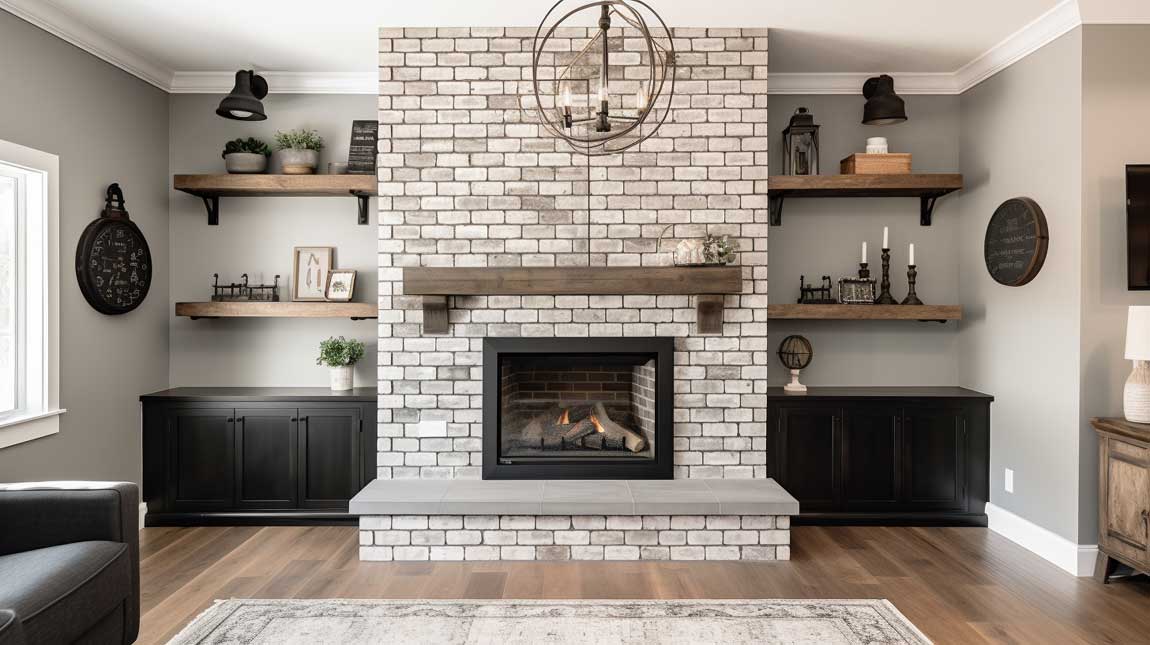
Natural stone makes farmhouse fireplaces feel connected to the landscape, especially when the room already contains timber, linen, or other organic finishes. Fieldstone creates an irregular country character, while more uniform stone can support a cleaner modern farmhouse direction. Think of the surround as a piece of landscape architecture brought inside: its texture should establish the mood for everything around it.
A substantial wood mantel can soften a heavy stone surround and provide a practical horizontal line for decor. Two natural materials are usually enough to establish the rustic foundation, while a third accent such as iron can sharpen the composition. Do not combine several strongly patterned stones with busy flooring and patterned upholstery; the fireplace needs visual authority without visual noise.
Stone is also useful when the fireplace needs to feel substantial in a large farmhouse living room. A full-height surround can visually connect the firebox to the ceiling, while a lower hearth creates a more furniture-like appearance. If a masonry hearth is being built or modified, the applicable code may specify dimensions such as a minimum 16-inch projection in front for certain fireplace openings, so confirm local requirements before construction.

Textiles soften farmhouse fireplace decor without clutter
Farmhouse fireplace decor becomes more comfortable when hard surfaces are balanced with textiles. A wool-look rug, cotton throw, linen cushions, or woven basket can soften brick, stone, plaster, and metal without changing the architecture. Think of these pieces as the upholstery of the fireplace zone: they make the hard construction feel ready for everyday living.
A simple arrangement can use two textile textures and one natural fiber accent to create enough depth. What should the colors do? They should echo the room’s existing neutrals rather than introduce a separate palette around the hearth. Avoid placing loose blankets, baskets, or rugs too close to a working fire; decorative comfort should never override the manufacturer’s required clearances.
The easiest visual improvement is often a properly scaled rug that connects the fireplace with the seating area. Add one throw or cushion in a related texture, then stop before the zone becomes crowded. A farmhouse fireplace works best when the eye can still read the firebox, mantel, and surround as three distinct layers.

Gas, wood, and electric options change the design brief
Farmhouse fireplace design does not depend on one fuel type, but the appliance changes what the surrounding architecture needs to accomplish. A traditional open wood fireplace emphasizes atmosphere, while an insert, gas unit, or electric model can shift more attention toward predictable operation and visual styling. The right choice depends on whether the fireplace is primarily decorative, supplemental heat, or part of the home’s heating strategy.
| Option | Design character | Planning focus |
|---|---|---|
| Open wood fireplace | Traditional and architectural | Hearth, chimney, clearances |
| Gas fireplace | Clean and controlled | Ventilation and appliance specifications |
| Electric fireplace | Flexible and contemporary | Wall construction and electrical planning |
For wood-burning appliances, efficiency can differ dramatically by technology. EPA information notes that certified catalytic wood stoves average about 78% efficiency, while non-catalytic models average about 71%; conventional open fireplaces are generally much less efficient. The useful question is therefore not simply “Which looks most farmhouse?” but “Which appliance matches the way the room will actually be used?”
Do not design the surround first and choose the appliance afterward. The firebox dimensions, venting method, clearances, and manufacturer’s installation instructions can determine which materials are permitted around the unit. For technical guidance on wood-burning appliance efficiency and installation considerations, consult the U.S. EPA guidance on wood-burning appliance efficiency.
DON’T DO THIS
Do not copy a fireplace surround from a photograph without checking the appliance manual, required clearances, hearth dimensions, and local rules. A beautiful farmhouse composition can still be unsuitable if combustible wood, shiplap, textiles, or mantel projections are placed too close to the heat source. Design the safe construction first, then refine the rustic details.
Farmhouse fireplace decor works when every layer has a job
Farmhouse fireplace decor becomes personal when the final layer reflects the room rather than following a fixed checklist. Hand-finished tile, a simple iron detail, family objects, or seasonal greenery can give the hearth a distinct identity without changing its architectural base. Think of personalization as seasoning: two or three deliberate notes are usually more effective than covering every surface.
What should be displayed? Choose objects that repeat a material, color, or shape already present in the room. One large artwork can provide more visual structure than several small frames, while a single vintage object can introduce history without turning the mantel into a collection shelf. Avoid changing the display every few weeks simply to keep the fireplace looking decorated; a strong permanent composition needs little intervention.
Seasonal accents can then change one layer while the architecture stays consistent. A wreath, branches, or a restrained arrangement can shift the atmosphere without requiring a new mantel, surround, or paint color. Keep the firebox and required safety zones clear, and let the materials do most of the visual work.
The most convincing farmhouse fireplace is not the one with the most rustic objects; it is the one where wood, masonry, metal, textiles, and light appear to belong to the same room. Start with one strong material, add two supporting textures, and edit anything that competes with the hearth. That approach keeps the fireplace useful as a focal point while leaving the rest of the living room comfortable and livable.
FARMHOUSE FIREPLACE TAKEAWAY
Make the hearth feel architectural first and decorative second.
Reclaimed wood, brick, shiplap, stone, and restrained textiles each create a different version of farmhouse character. Choose the material direction that fits the room, verify the fireplace requirements before installation, and use a small number of repeated textures to tie the composition together.
For 2026, the most useful farmhouse fireplace approach is still simple: let the surround establish the character, let the mantel frame it, and let the decor support rather than compete with the fire.