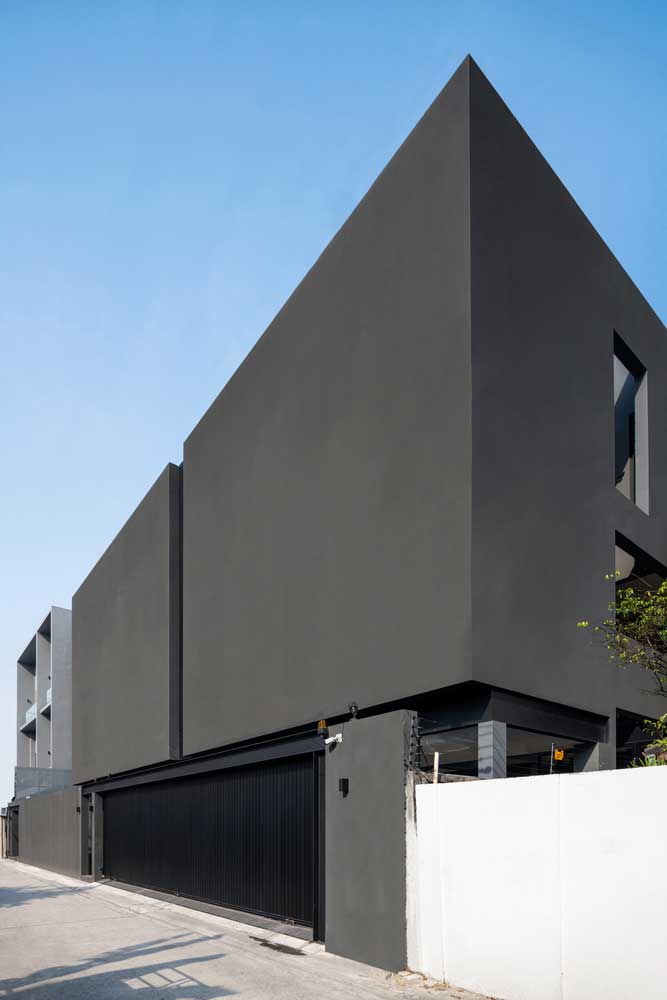
A black facade looks sharp rather than gloomy when it wraps simple volumes, frames wide glazing and opens onto a light interior, and that is exactly what the six homes below have in common. Does the color hold up outdoors? It does when the material carries it: charred wood siding typically lasts 30–50 years with care, and factory-finished metal siding runs 40–70 years. Paint is the weak link, because black reflects only about 0–5% of light compared with up to 95% for white. Pick a material that is dark by nature before you reach for a can of black paint.
Heat is the trade-off most owners underestimate. Laboratory measurements on dark roofs show surfaces climbing as much as 90°F above air temperature, while reflective surfaces stay about 20°F above it. A dark wall behaves like a parked car in July, harmless in the shade and scorching on the sunny side. Plan shade, ventilated cladding and heat-reflective coatings before the first board goes up.
The projects run from a San Diego hillside to the woods of Colorado and cover granite, burnt timber, cast concrete and corrugated steel. Each section notes typical prices per square foot, lifespans and one mistake to skip. Use the comparison table near the end to shortlist two materials before you request quotes.
- Black paint reflects about 0–5% of light vs up to 95% for white, so dark walls run much hotter in sun.
- Dark surfaces can sit up to 90°F above air temperature vs about 20°F for reflective finishes.
- Charred wood siding costs about $7–$15 per sq ft installed and lasts 30–50 years with care.
- Corrugated metal siding runs $7–$12 per sq ft installed vs $10–$16 for standing seam, both lasting 40–70 years.
- Granite siding costs $20–$28 per sq ft, and solid stone can pass 100 years with almost no upkeep.
- Some PVC trim makers require paint with an LRV of 55 or higher, so check warranties before going black.
- Large glazing and a pale interior keep a dark exterior from feeling heavy.
San Diego Prisms Show What a Black Facade Does Best
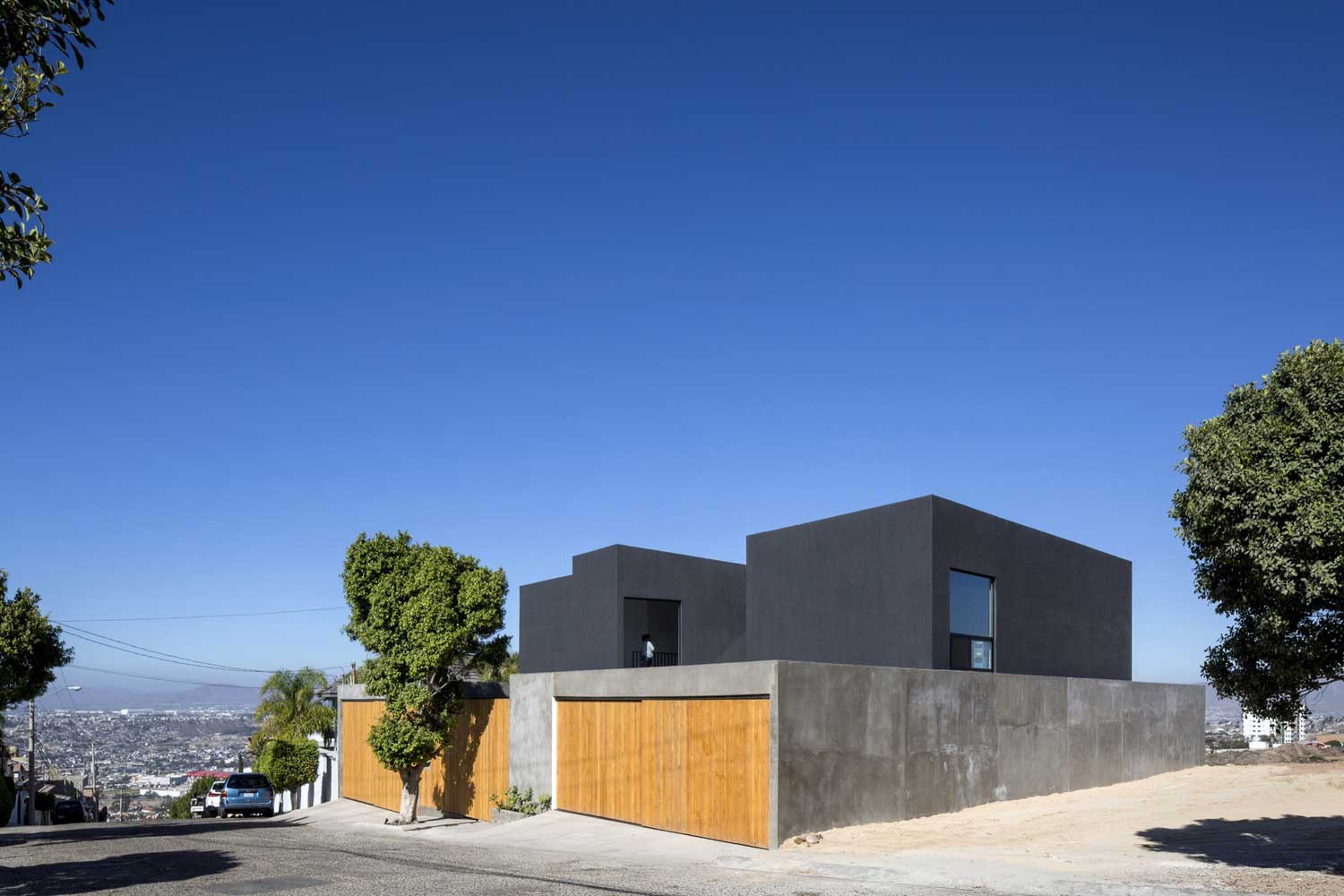


A black facade does its best work on a house with clean geometry, and the T38 Studio complex on a San Diego hill proves it with three two-storey trapezoidal prisms set in a single row. Lining them up squeezes the most living space out of a small plot, much like books packed spine to spine on a short shelf. The dark skin erases fussy details and leaves only edges, openings and shadows to read from the street. Keep the massing simple if you want black to look intentional.
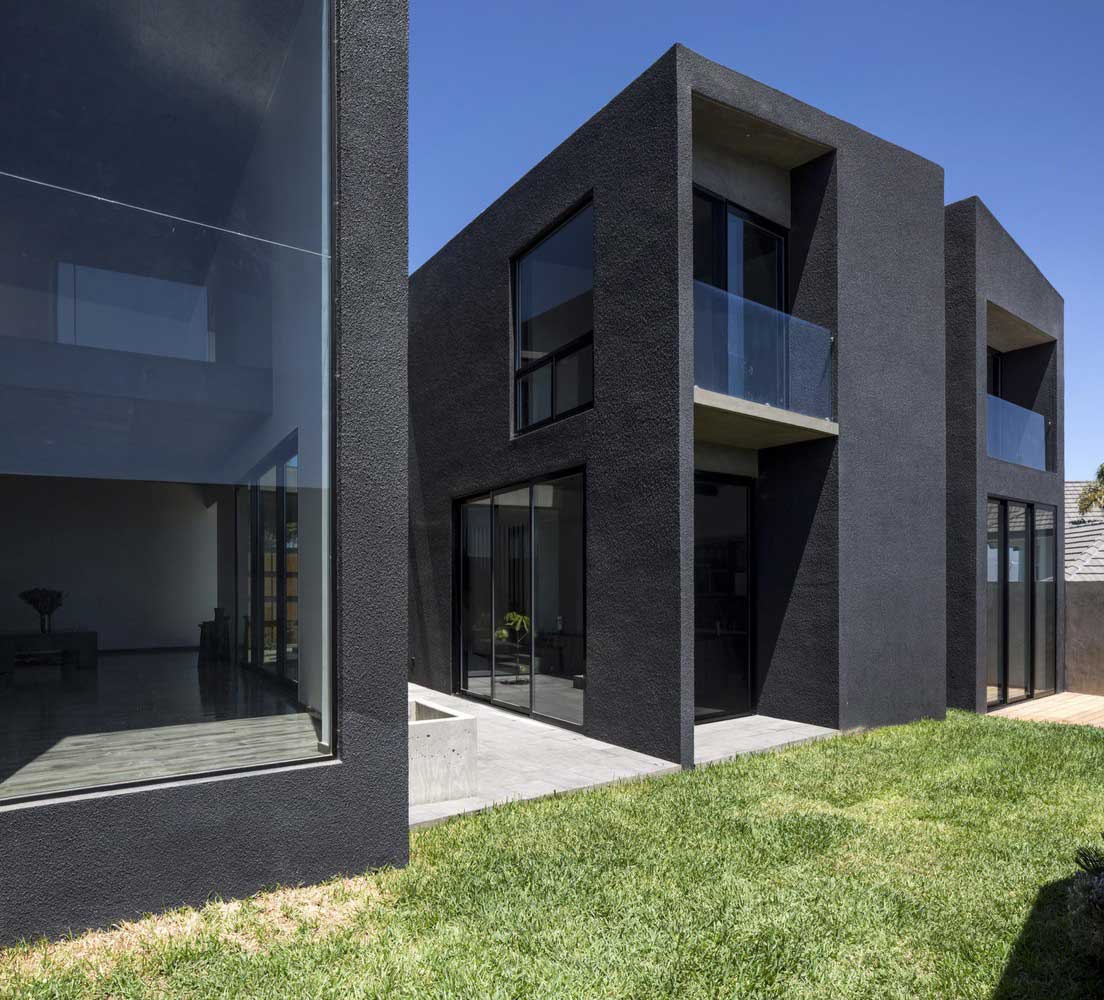
Why does a dark house exterior suit minimalism so well? Black works like a theater backdrop, pushing attention onto whatever the architect frames or lights. On this project that means panoramic glass, which stands out far more against black cladding than it would against white siding. Don’t add contrasting trim, shutters and bright gutters to the same elevation, because each extra accent dilutes the effect. Match gutters, flashing and window frames to the wall color.

True black almost never appears on a real wall. Most exterior blacks reflect between 0% and 5% of light, and sun, dust and texture tint them toward gray, blue or brown. Test a large sample board on both the sunniest and the shadiest side before ordering paint for the whole house.

The continuous glazing on the prisms opens to the landscape and slides back for cross ventilation, which keeps a dark shell comfortable on warm evenings. Black paint also fades faster than pale colors, and the sunniest elevation usually loses depth first, leaving the house two-toned. Typical exterior repaint cycles run 5–10 years, and painted wood often needs attention every 3–7 years, so black on timber lands at the short end. Budget touch-ups for the sunny side before the shaded one.

Glass bridges tie the three volumes together and solve two problems at once, connecting detached blocks and balancing openness against privacy. Think of them as zippers between three dark coats, light where they meet and solid everywhere else. Some second-floor rooms have no windows at all, yet they borrow daylight and air from the panoramic rooms and the glazed passage next door. Place windowless rooms such as storage or media spaces beside a glass link rather than against an outer wall.

The upper bridge opens onto a terrace paved in polished gray stone, a mid-tone that softens the jump between black walls and pale sky. Gray paving works like a gray mat inside a black picture frame, giving the eye a step instead of a cliff. Don’t pair a black exterior with jet-black paving, because heat and glare both build up underfoot. Pick a stone a few shades lighter than the facade.

Indoors the mood flips, with white walls, pale ceilings and long sightlines making every room feel larger than the dark shell suggests. Bright whites send back up to about 95% of light vs roughly 5% or less for black, so the same daylight works far harder inside than on the facade. The contrast feels like stepping from a dim cinema lobby into a sunlit courtyard. Keep interior walls white or warm off-white to get that release.

A dark floor and gray ceilings carry the exterior palette through the middle of the house, so the interior never feels cut off from its shell. The black, gray and white scheme stays calm because it uses three values instead of five or six. Is that too strict for family life? Natural wood and stone add warmth without breaking the palette. Limit any accent color to objects you can swap in an afternoon.

Natural finishes do the final balancing act by placing texture where color is missing. Stone, oak and linen keep a monochrome home from feeling clinical, the way a crust makes a plain loaf interesting. A dark outside and soft materials inside is the formula behind most successful black homes. Choose at least one warm material for every room.
| Design studio | T38 Studio |
| Photography | Fran Parente |
Dark Facade in Granite Ages Slower Than Paint

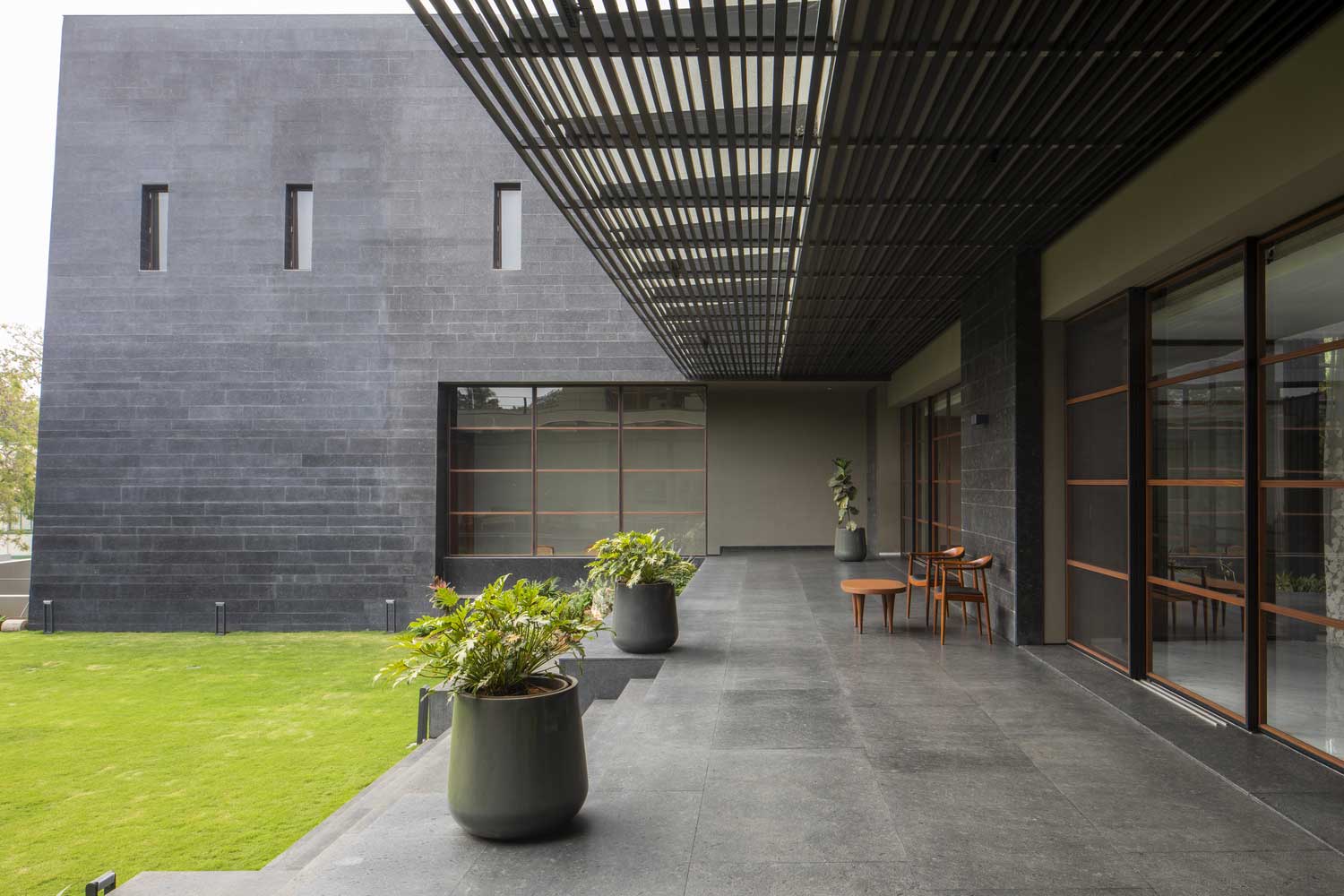
A dark facade in natural stone sidesteps the fading problem of black paint, because the color sits in the minerals rather than in a coating. This Spasm Design home wraps two volumes in local dark granite and links them with a glass pavilion that shelters a private courtyard. Granite siding typically costs $20–$28 per square foot, several times the price of paint, yet solid stone can pass 100 years with almost no upkeep. Spend that budget on the walls people see and touch most.

Why local granite pays off on a black exterior
Clear horizontal lines stand out on the single-storey building because dark stone swallows small details and leaves only the edges. A local quarry cut transport costs and gave the walls a heavy, heat-tolerant mass that stays stable in strong sun. Manufactured stone can show color shift after 10–15 years, while real granite keeps its tone because nothing is painted on. Ask for samples from the same quarry batch to avoid patchy walls.

Does a stone wall need maintenance? Very little, which is why it suits owners who never want to hire painters again. Thin natural stone cladding runs about $9–$15 per square foot in materials, far less than full-bed blocks, and adhered veneer is usually limited by code to 15 pounds per square foot. Think of veneer as a stone jacket and full-bed stone as a stone skeleton. Don’t hang heavy slabs on a wall that was never designed to carry them.

Granite comes in shades from light gray to near-black, and the architects mixed them so long walls never look flat. The same stone continues into walkways, steps and the driveway, turning house and ground into one surface, like a carpet that runs up the stairs. For a wider look at how stone stacks up against vinyl, fiber cement and wood, see these exterior house finishes for a modern home with real costs per square foot. Keep the darkest tone on the walls and a lighter one underfoot to cut glare.


A dark exterior fits styles built on clean lines. Minimalism, high-tech and gothic revival handle black far better than ornate cottage styles do. Plan the garden together with the facade, because a black wall needs green planting and lighter paving around it to look deliberate rather than heavy.
Black and white house design with a bright stone interior

With the sliding doors open, only the change in stone tone tells you whether you stand in the yard or the living room. The interior keeps the same restraint as the shell, swapping dark granite for pale stone in every room. Is the switch jarring? No, because the materials stay in one family and only the value changes, like a song moving from a minor key to a major one. Keep floors continuous from patio to living room so the transition feels planned.

Every window is custom-made from steel profile painted black, a tone that sharpens the shine of the glass and the polish of the stone. Black frames read thinner than white frames of the same width, so the glazing looks larger from outside. Original light fittings and a few bright accessories add personality without breaking the palette. Don’t choose white frames on a dark facade unless you want them to dominate every elevation.


White Indian marble inside answers the dark granite outside, while wooden decking on walkways and stairs softens all that stone. Custom brass hardware on polished wood doors adds a warm metallic glint. The result feels formal at the front door and relaxed by the pool. Use wood on anything bare feet touch, since stone in full sun gets uncomfortably hot.
| Design studio | Spasm Design |
Graphite Farmhouse Wrapped in One Color From Roof to Plinth
A black farmhouse exterior gets its punch here from a single graphite tone that covers walls and roof alike, so the house reads as a silhouette against the fields. Most traditional houses go the other way, with a roof and base noticeably darker than the walls between them. Wrapping every surface in one shade is like wearing a single-color suit, where the outline matters more than any detail. Use one exact paint or stain code for every exterior surface, flashing included.
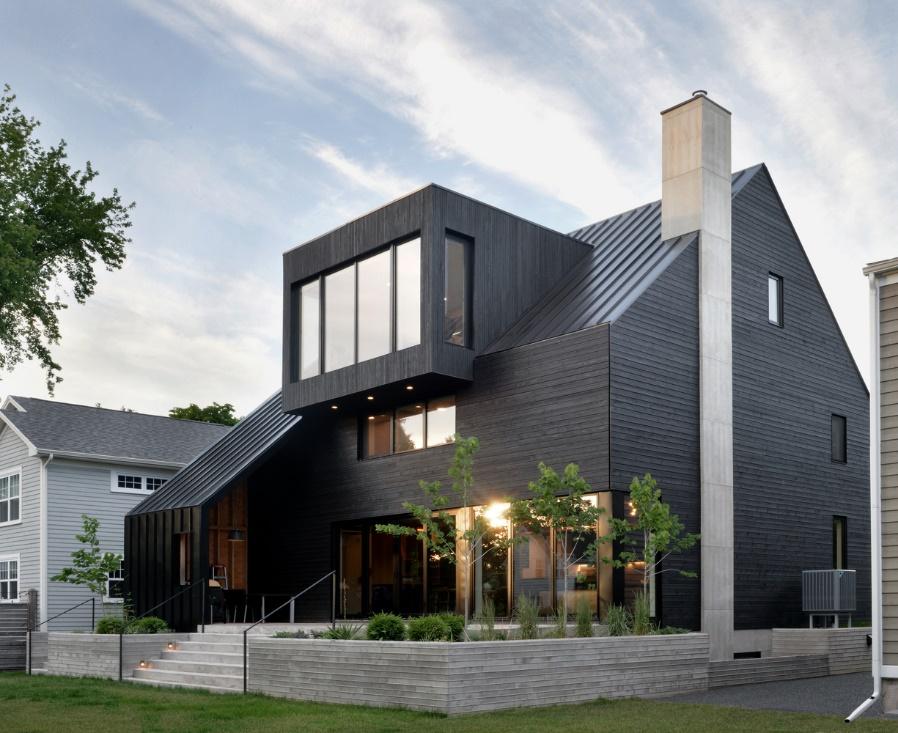
Is a dark roof a problem in summer? It can be, since dark roofing absorbs 90% or more of incoming sunlight and can pass 150°F on a warm afternoon. In a Lawrence Berkeley National Laboratory study on cool roofs, white roofs cut air-conditioning loads by 10–50% compared with dark ones, depending on insulation. Thick roof insulation and a ventilated batten gap close much of that difference on a graphite house. Ask the builder for a ventilated roof build-up before approving a black roof.

How a black wood facade modernizes a gable house
The building starts as a classic gable house, then adds a rectangular volume at attic level that nods to minimalism and high-tech. The roof meets the walls without eaves or cornices, a detail that turns a familiar shape into something sharper, like a pencil sketch inked over. Wide panoramic windows lighten the black timber and make the house look open and welcoming. Skip cornices if you want a modern gable, but add proper drip edges to protect the cladding.
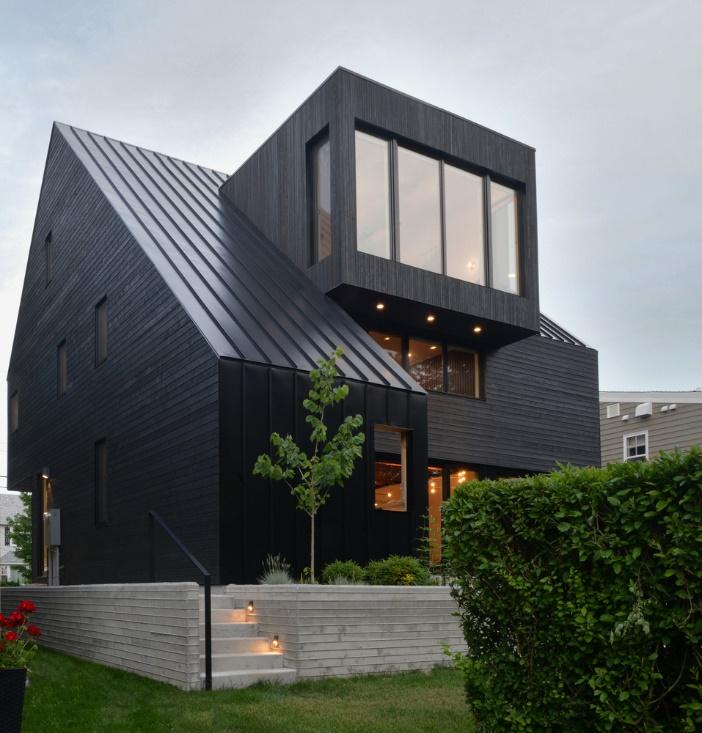
Large glazing is why the graphite house never looks gloomy. Black timber absorbs light while glass reflects sky and greenery, so the two balance each other like ink and paper. Dark-painted wood usually needs fresh coats every 3–7 years, and the sunniest side fades first, so the glass also reduces the area that needs repainting. Plan the glazing first and the color second.

A pale chimney breaks the dark mass and gives the eye a vertical marker. Light terrace boards and outbuildings in softer tones do the same job at ground level. Does one light element really change the mood? It does, much like a white pocket square on a black suit. Add at least one pale vertical element to any all-black elevation.
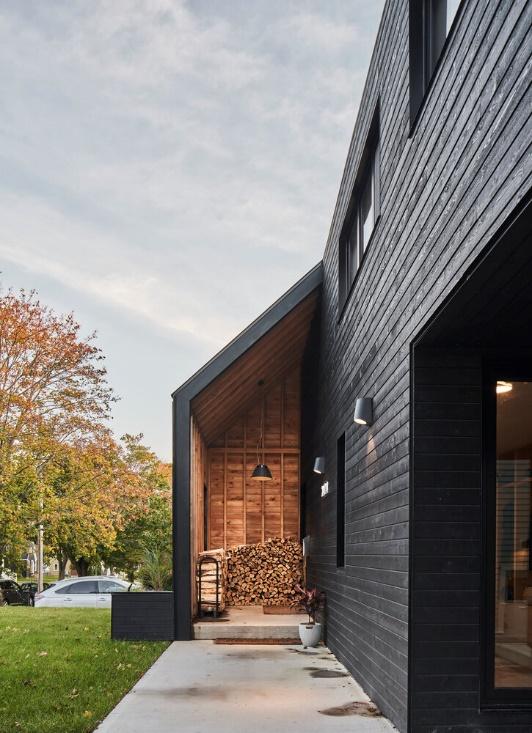
Contrast and accents around a dark exterior
Pale gravel, light lawns and bleached paths make the dark building the clear focal point of the plot. Without them, the house would sink into its surroundings at dusk like a coat dropped on a dark floor. Don’t plant dark-leaved shrubs right against black walls, because both disappear into one shadow. Choose silver, lime or variegated foliage for beds next to the cladding.
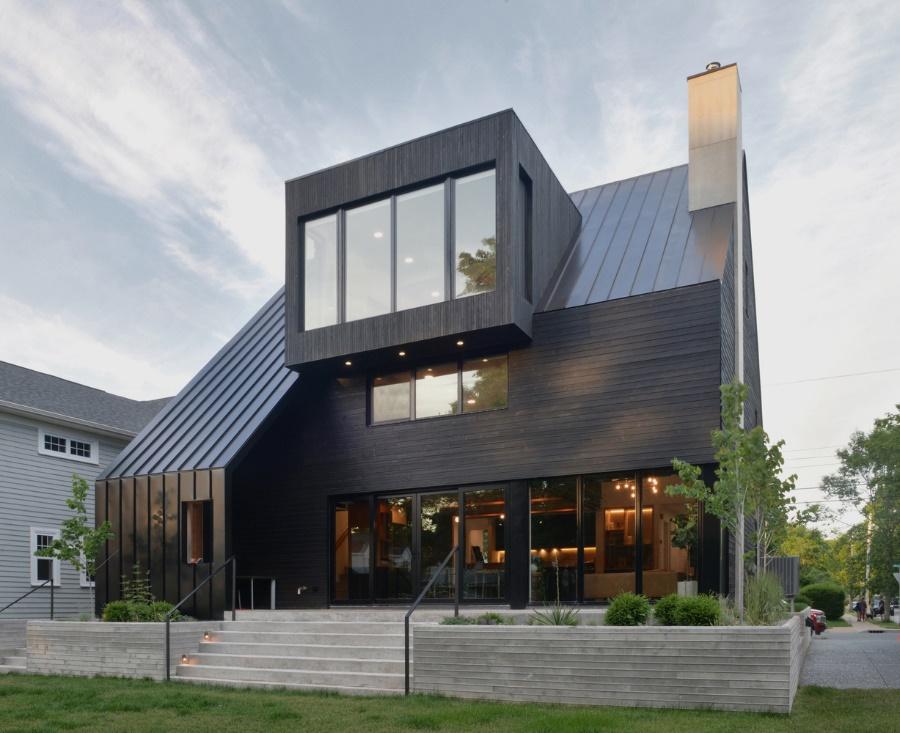
Color does most of the decorating inside as well, with dark and light zones crossing to mark kitchen, dining and living areas. Black cabinetry against white walls defines each function the way painted lines define a sports field. The trick is proportion, not palette. Keep the dark share of each room smaller than the light share so the space still feels open.
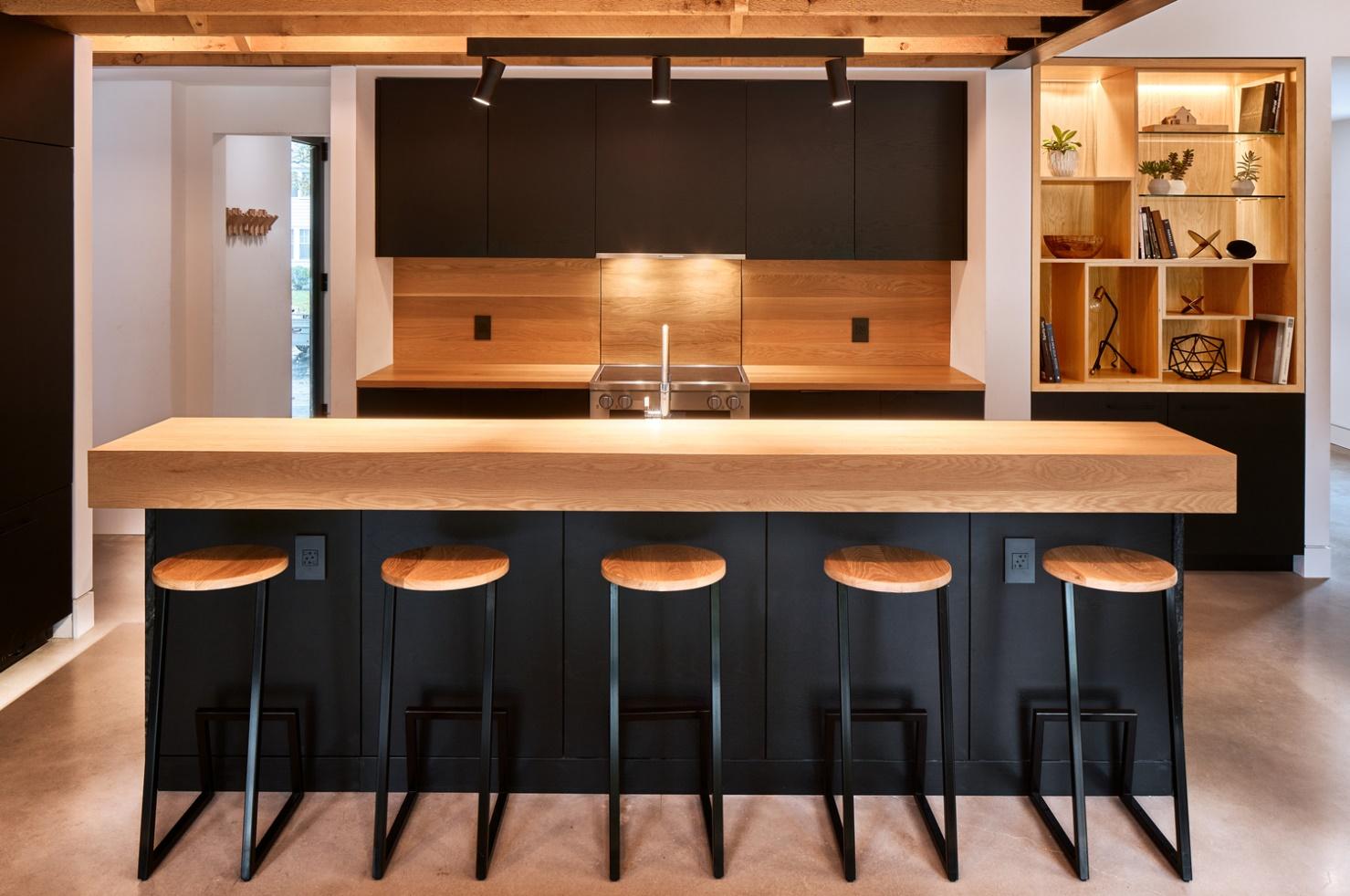
Green lawns and flower beds planted right at the walls look richer against black, because a dark background intensifies saturated color. Facade lighting keeps the house readable after sunset and on gray days. Without it, a black elevation turns into a blank shape at night. Aim wall washers at the cladding texture rather than at the windows.
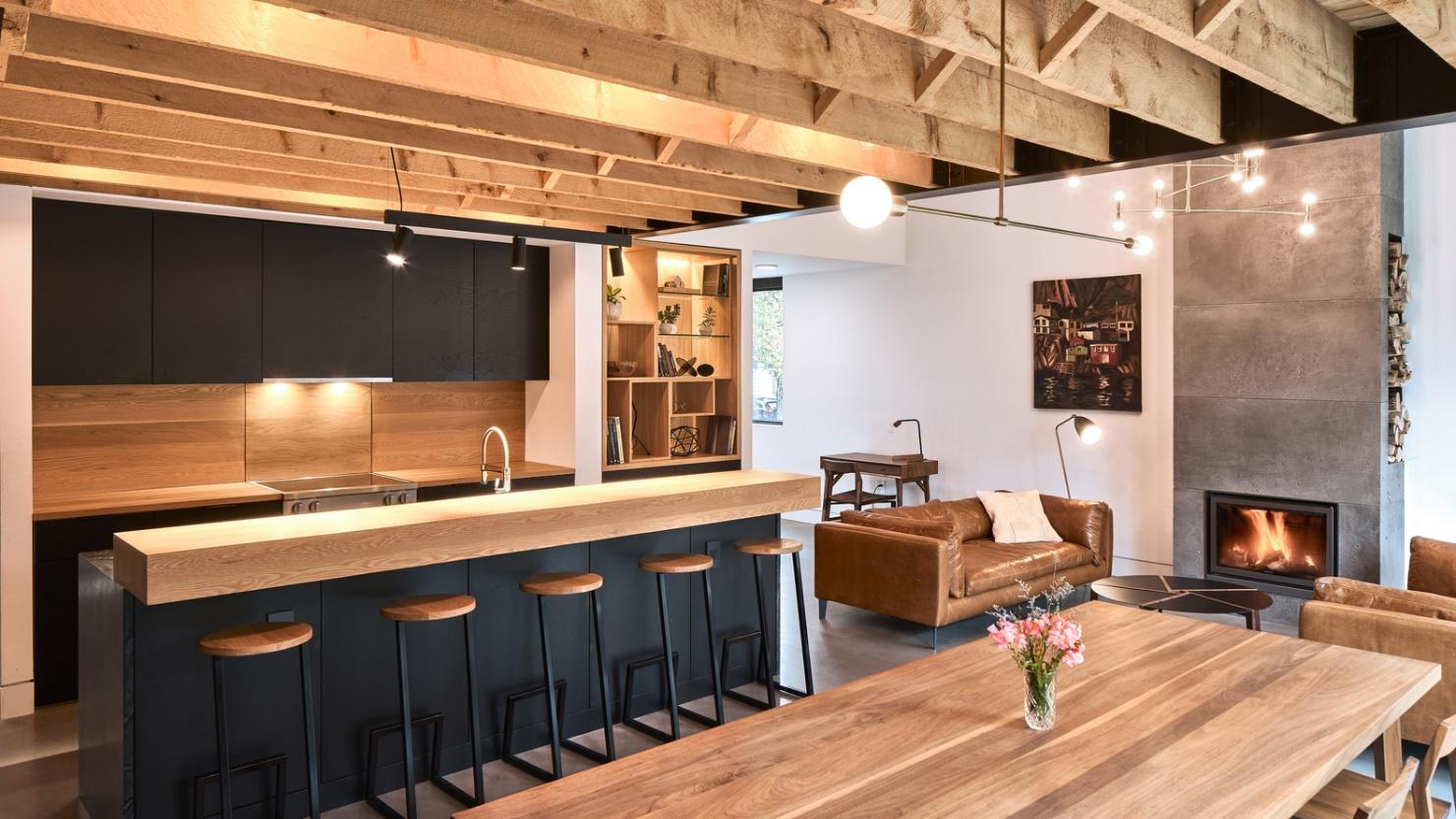
The style mixes folk tradition with modern needs, combining natural materials, simple forms and touches of minimalism, eco and industrial detail. It works because every trend uses the same restrained palette, so nothing fights for attention. Is it farmhouse or modern? Both, which is why it fits a rural site without copying the barn next door. Borrow one traditional form and modernize everything else.

| Design studio | Peter Braithwaite Studio |
| Photography | Peter Braithwaite Julian Parkinson |
Charred Timber Barn Turns a Black House Facade Into Armor
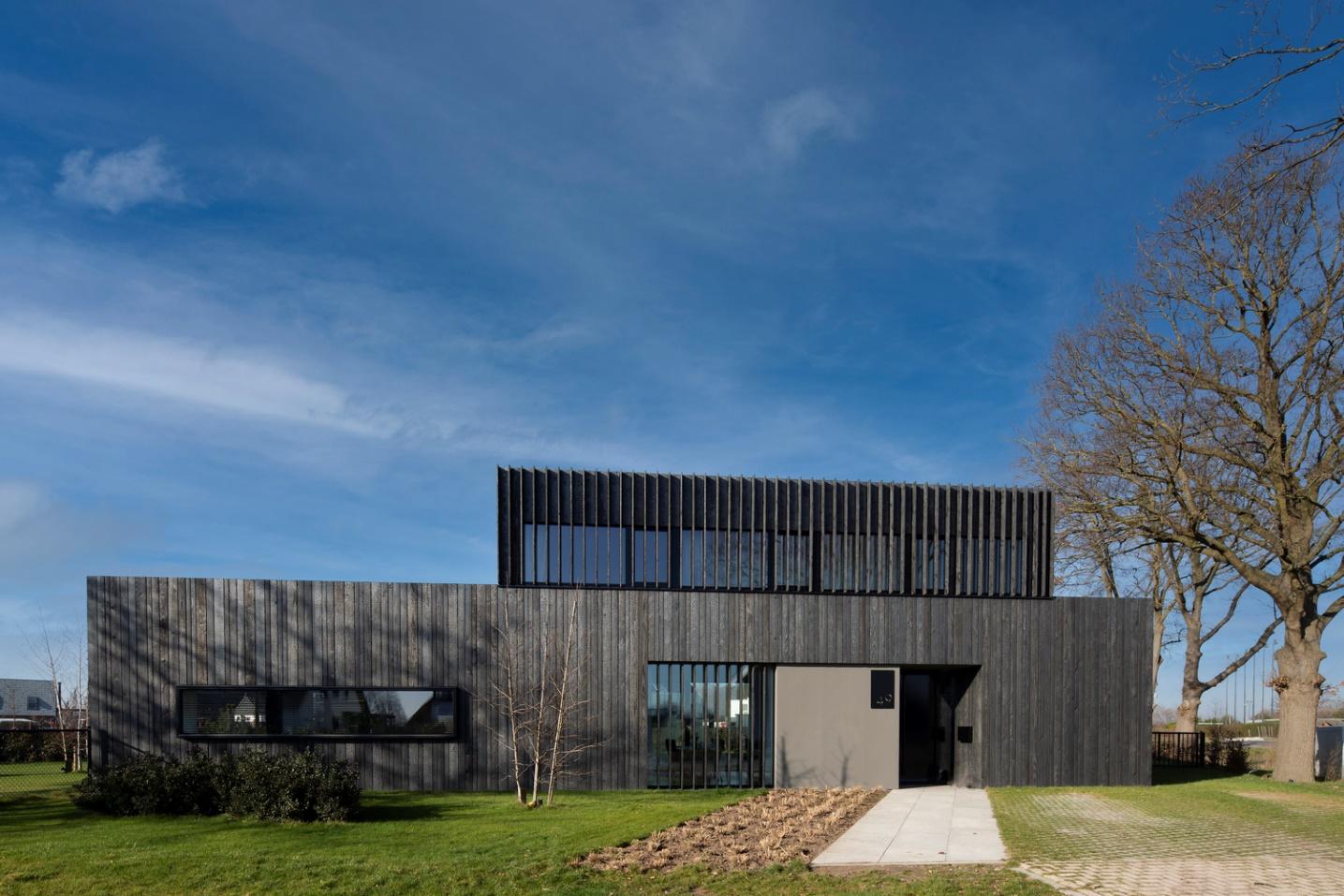
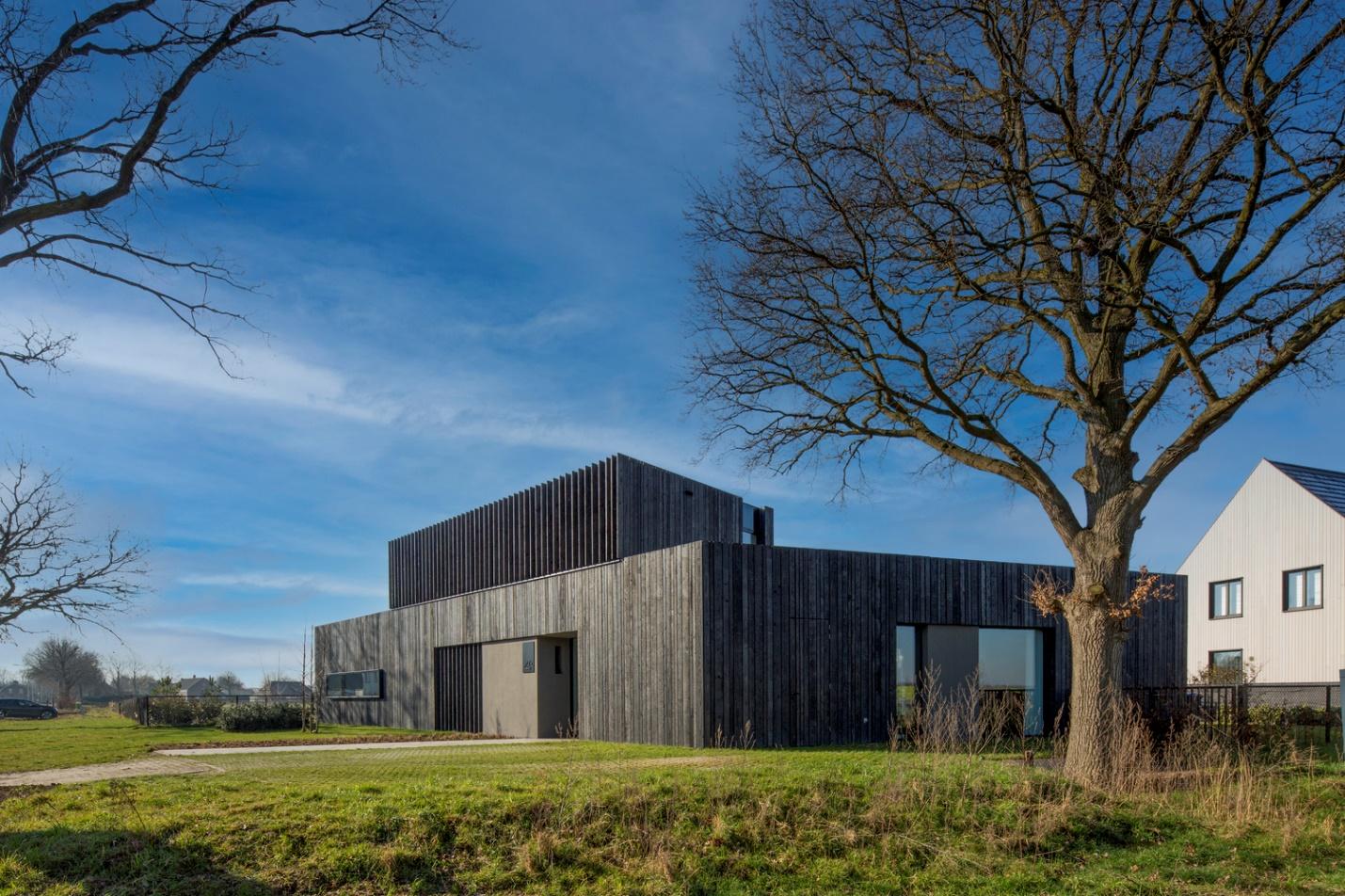
This black house facade rises from a green meadow in deep graphite, clad in burnt wood that sets it apart from the pale farm buildings around it. Charred wood siding usually runs about $7–$15 per square foot installed, while premium pre-charred boards can cost $11–$25 per square foot for materials alone. The black layer works like the crust on a loaf, protecting the softer wood underneath. Price both site-charred and factory-charred options before choosing.

The forms follow the barn tradition, reworked into a strict contemporary volume. Look closely and you see the profile of a classic agricultural shed, stripped of eaves and decoration. Is the barn look a cliché by now? Not when proportions stay honest and the cladding is real wood rather than printed panels. Keep roof pitch and ridge height close to nearby farm buildings so the house fits its setting.
What charring does to black wooden cladding
The cladding uses lamellas prepared with the Japanese technique known as shou sugi ban or yakisugi. Firing the surface makes the boards less appealing to fungus, mold and insects and helps them shed water. With regular care, charred siding typically lasts 30–50 years, and oiled boards may need a fresh coat only about every 15 years compared with roughly every 5 years for ordinary stained wood. Don’t believe a zero-maintenance promise, and set an inspection and oiling schedule from day one.
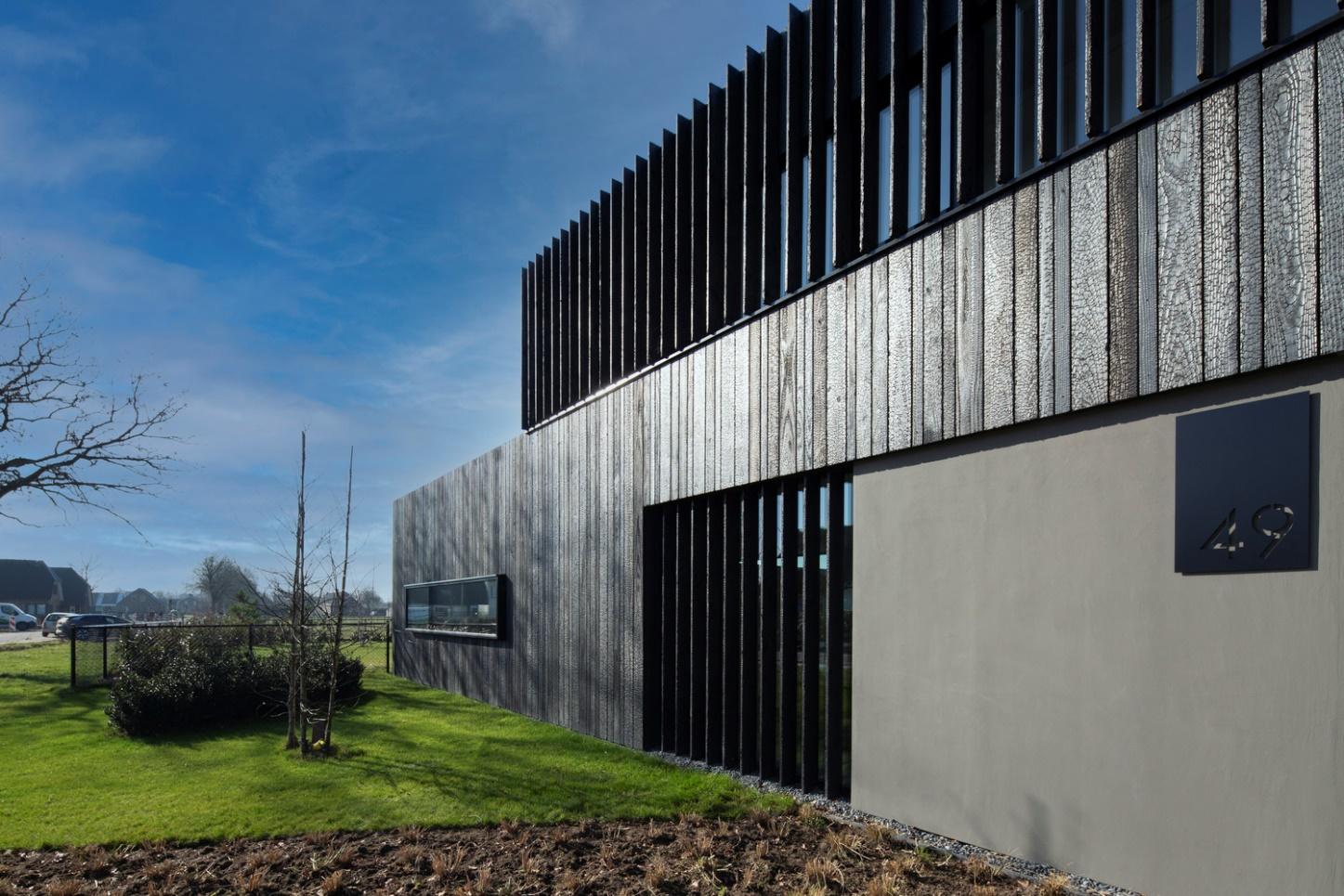
The house is built for year-round use, and the timber shell helps keep the interior steady through frost and heat. A ventilated cladding lets air move behind the boards, the way a vented rain jacket stays drier than a plastic poncho. Charring is slow work too, since one owner-builder reported about 80 hours to char the siding for a 1,700-square-foot house. Install charred boards over a rainscreen gap to get the longest life.
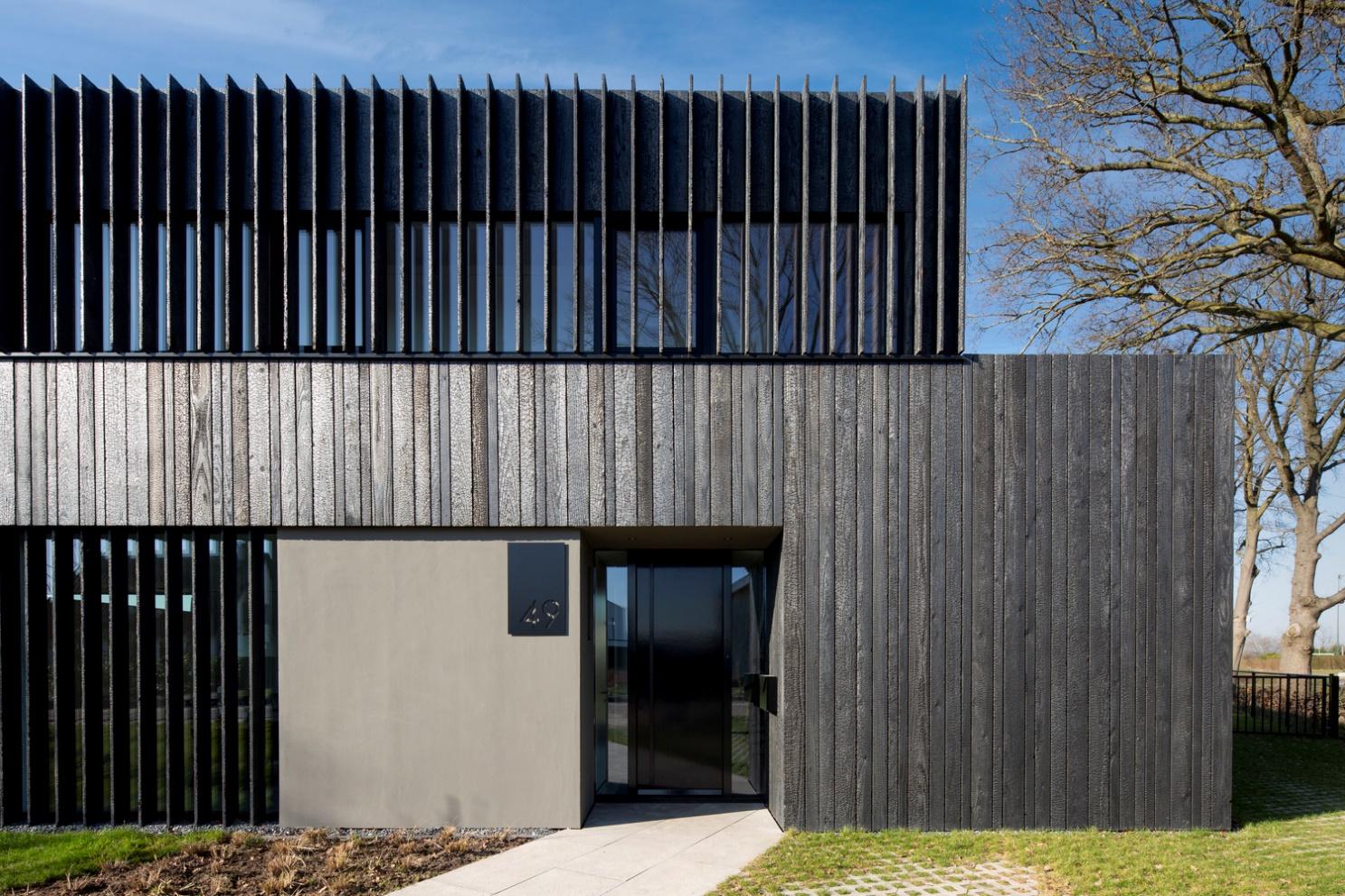
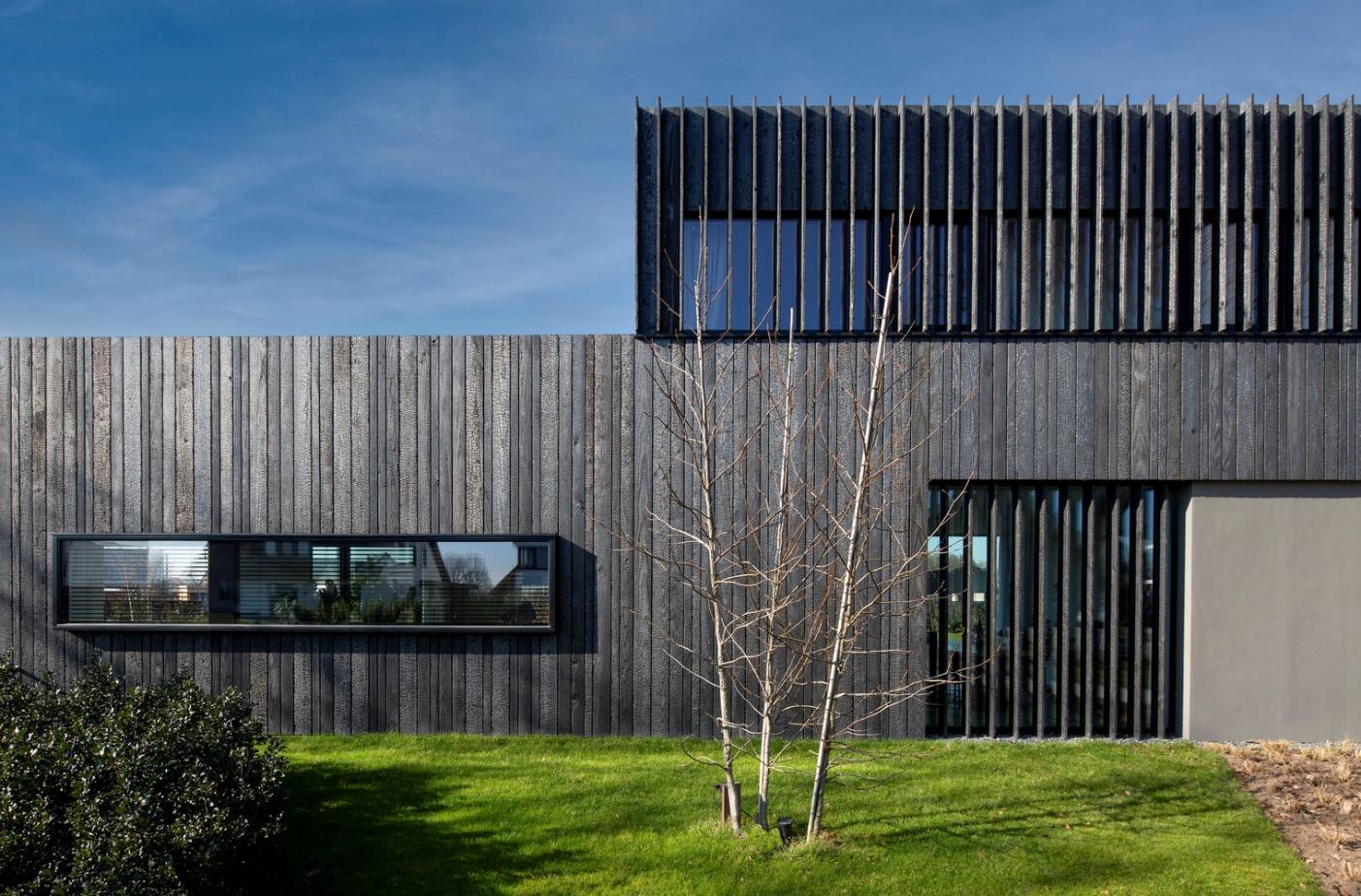
Boards in shades from black to dark gray keep the volume from merging into one flat block. Ribbed and perforated screens add depth and shield the rooms behind them from view. Brushed and unbrushed char finishes show different textures, so one color can still carry two or three surface effects. Mix two char levels on large walls instead of adding a second color.

Glass, frames and light inside an all-black exterior
Mirror-tinted glazing gives the cottage weight and privacy, because rooms are harder to see from outside during the day. Window frames one tone darker than the cladding sharpen every opening. Do darker frames make the house harsher? They make it crisper, the way eyeliner defines eyes without changing their color. Check tinted glass at night as well, since interior lights turn it transparent after dark.
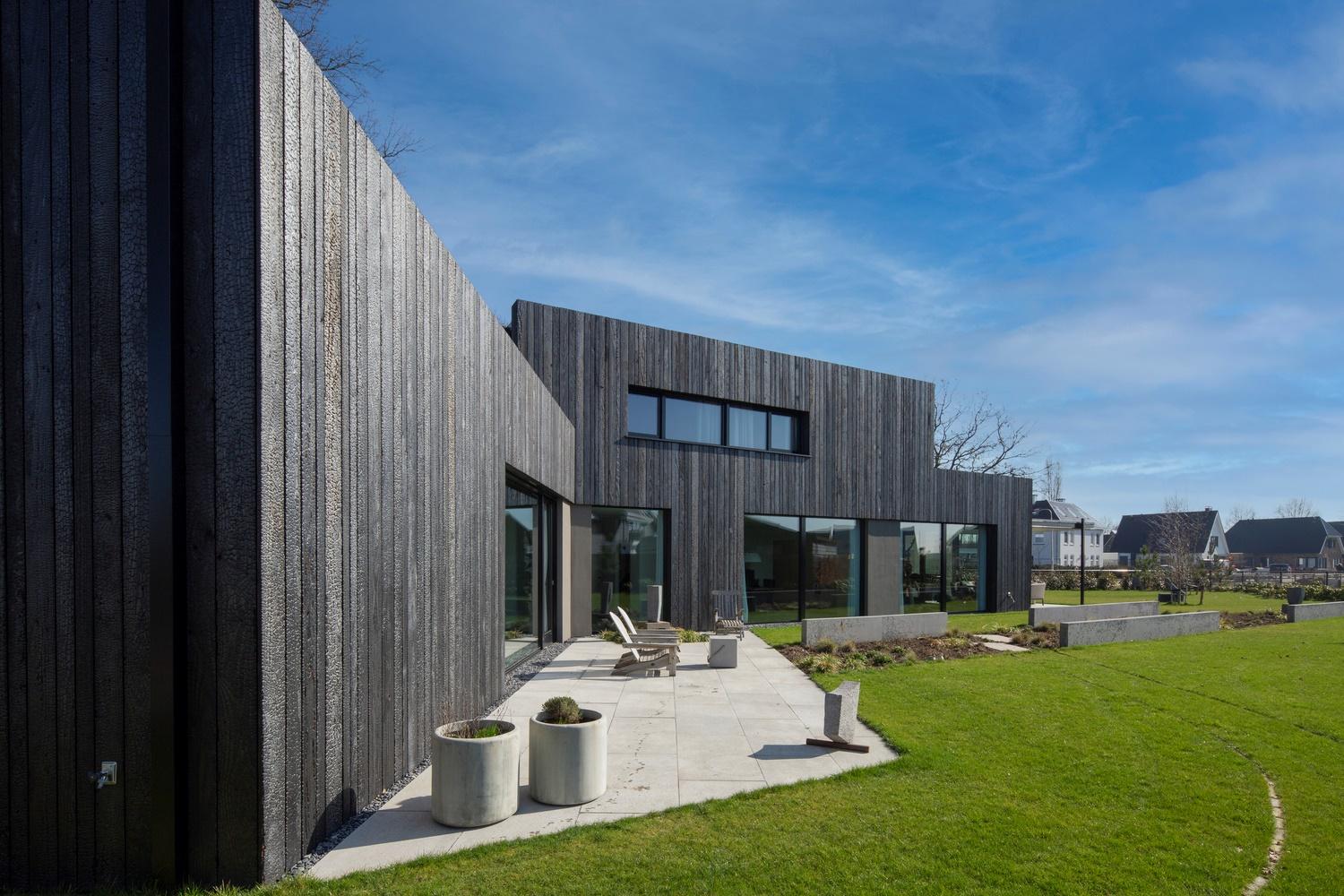
Large rectangular windows, bright terraces and a light interior stop the dark shell from feeling heavy. From inside, the house reads airy and calm because white walls bounce daylight deep into each room. Don’t let the dark palette creep indoors beyond accents when the plan is deep. Keep the interior mostly light whenever the facade is fully black.

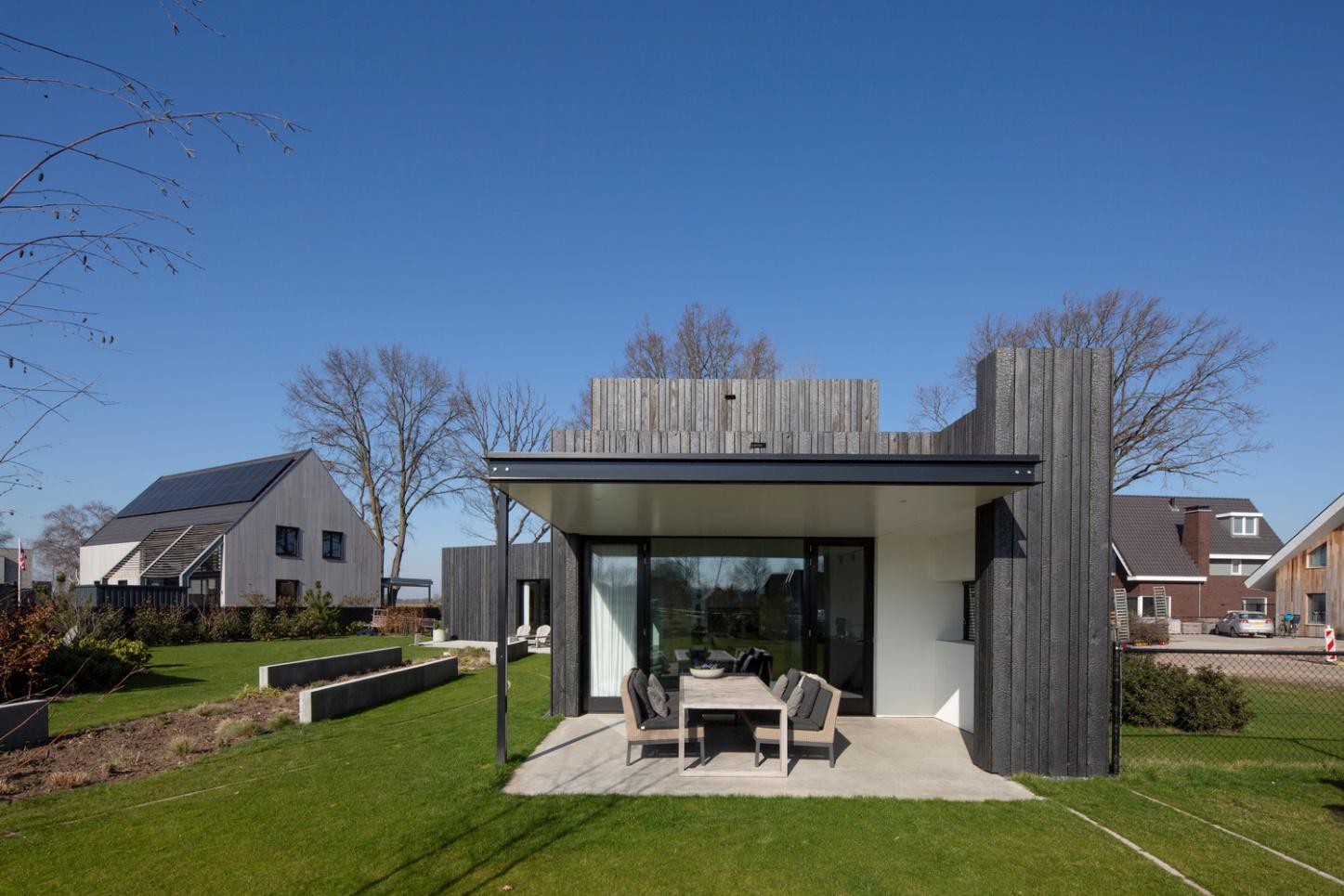
Rooms are planned as openly as possible and take in sun and air through the whole day. Graphite elements inside, such as a kitchen island or a stair, echo the exterior in small doses. A few dark pieces act like punctuation in a light sentence. Place any indoor black where it can be seen from the main windows so the link to the facade stays obvious.
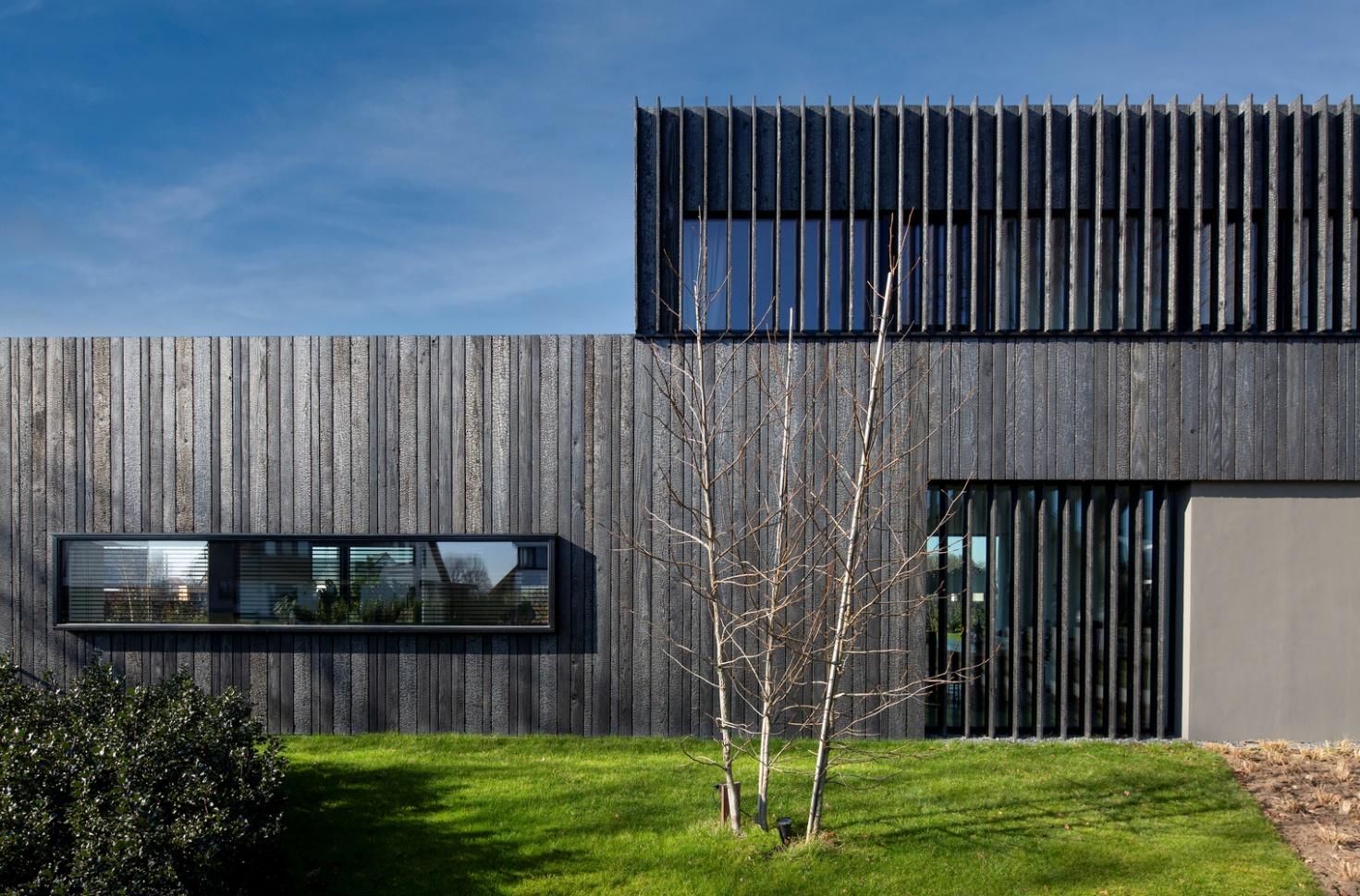
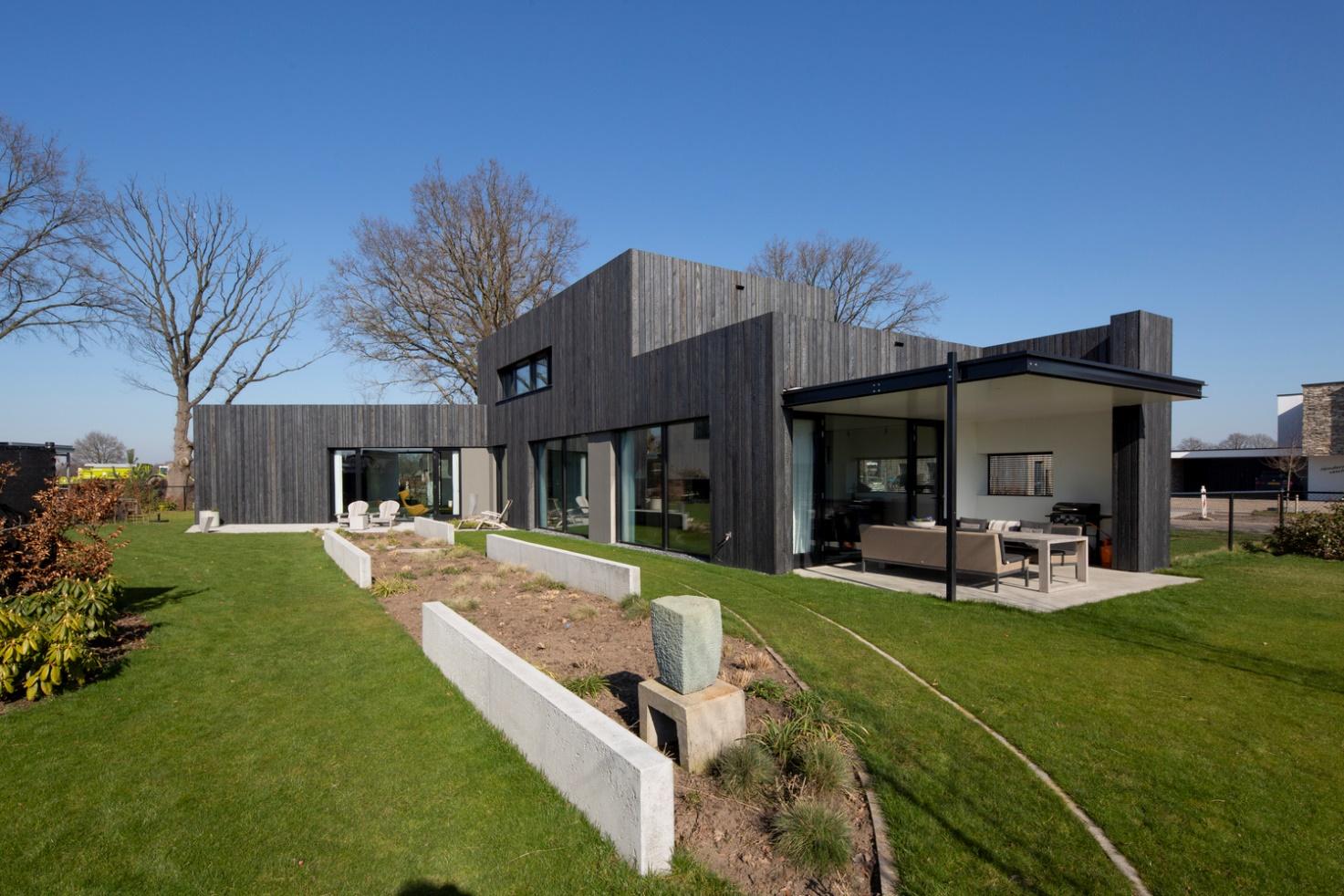
The barn dominates the landscape yet follows its rules, using natural materials, a familiar rural silhouette and a single dark tone that ages with the weather. A black exterior earns its place on a rural plot when its shape belongs there, even if its color stands out.

| Design studio | Joris Verhoeven Architectuur |
| Photography | John van Groenedaal |
Don’t Do This
- Don’t paint PVC or vinyl trim black without checking the maker’s rules, since some require paint with an LRV of 55 or higher.
- Don’t use standard black paint on a sun-facing wall in a hot climate, where dark surfaces can run up to 90°F above air temperature.
- Don’t expect painted black timber to last like charred boards, since paint often needs work every 3–7 years vs 30–50 years of service for charred siding with care.
- Don’t pay $20–$28 per square foot for granite on walls nobody sees, and use veneer or metal there instead.
- Don’t combine black walls, black paving and black planting, because one light layer keeps the house from sinking into shadow.
Concrete Cabin Proves a Black Facade Can Hide a Warm Core
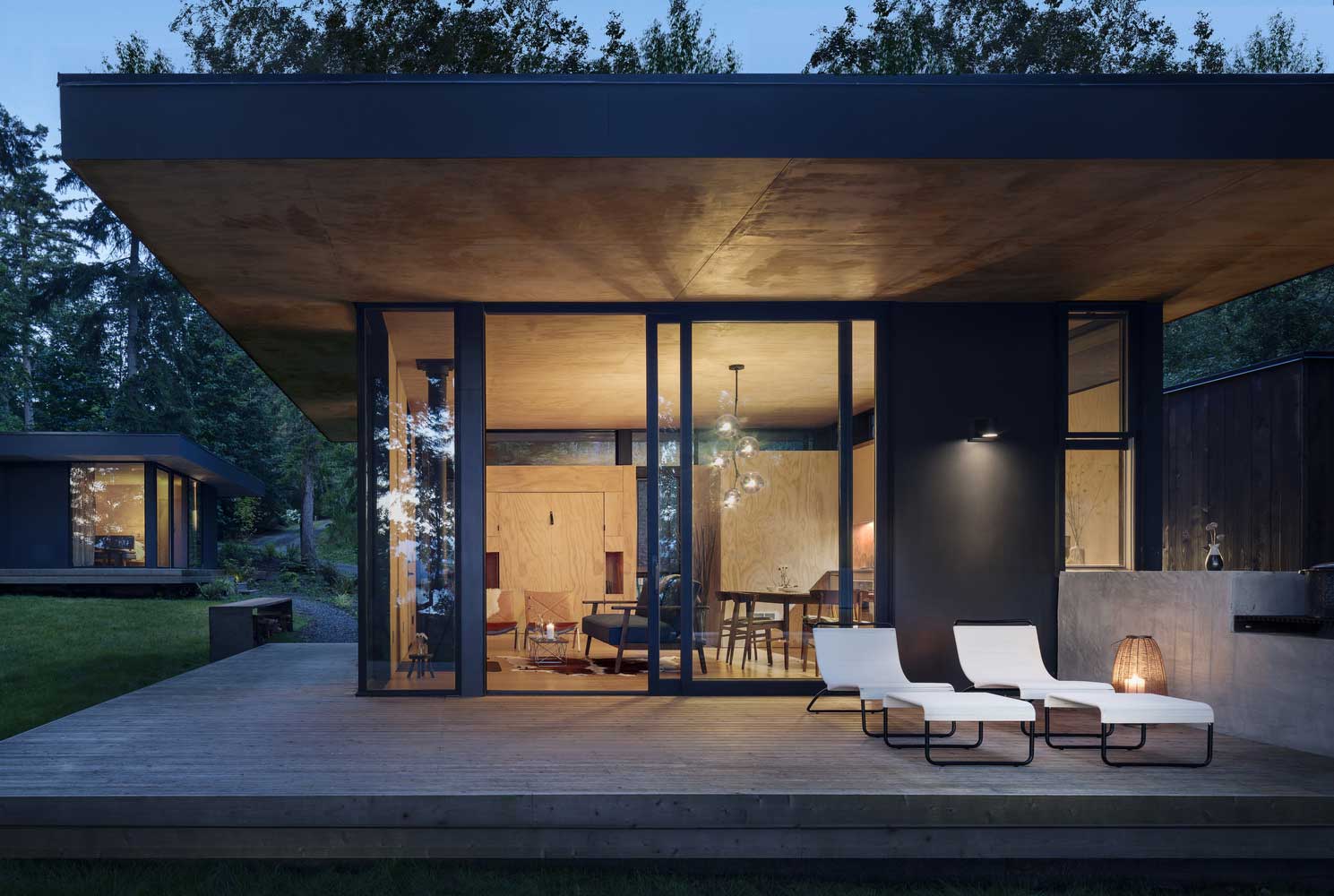
Most owners still choose pale exteriors, and a black facade can feel like a gamble until you see a forest retreat like this one above the Hood Canal. Light colors dominate because they hide dust and stay cooler, while black still carries old associations with night and mystery. Charcoal grays usually sit below an LRV of 10, close to the 0–5 range of true black, so they give nearly the same look with a little more tolerance for sun. Ask for charcoal samples next to pure black before you commit.
What makes this dark house exterior work


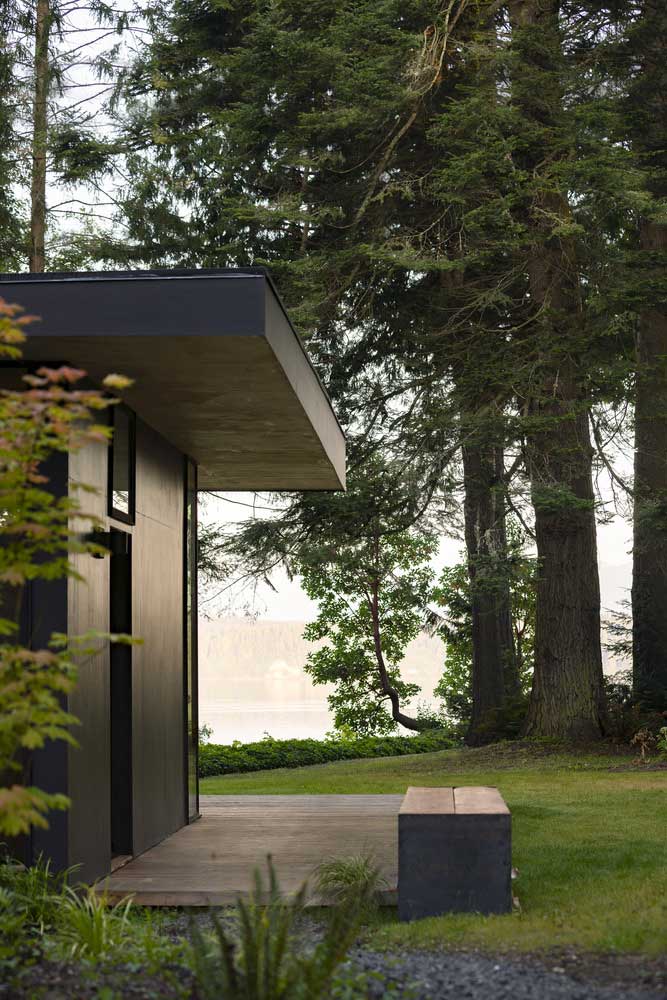
Set deep in the woods, the retreat keeps simple forms and a short material list, which makes it easy for a large family to live in. Black cast concrete blends with the shaded trees the way a heron’s dark feathers blend with a shoreline. Pigment mixed into concrete colors the whole wall rather than a surface film, so there is nothing to peel. Choose integral pigment over paint wherever concrete forms the facade.

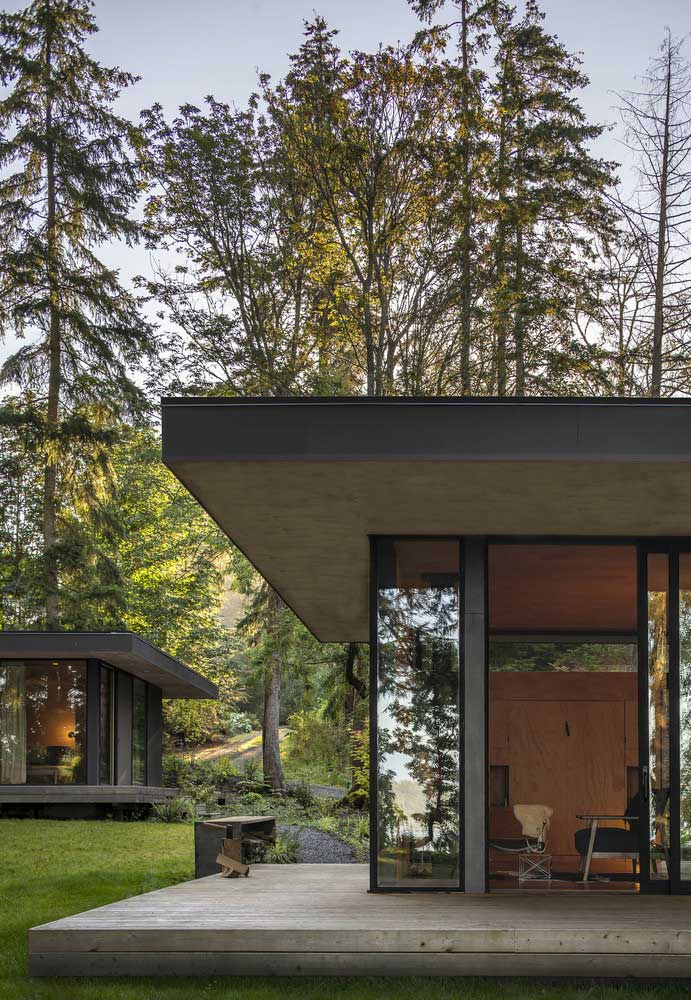
The home splits into three separate buildings joined by glazed links. Sliding doors and panoramic windows take up most of the wall area, which keeps a monochrome exterior from feeling closed. How much glass is enough? Enough that you can see through at least one volume from the approach. Put the largest glazing on the side facing the view, not the road.

Black houses are often called shapeshifters, showing a dark shell to the street and hiding a warm lining of natural wood that few visitors expect.

Yin and yang behind the black design house
The laconic concrete shell gives way to a natural interior lined with cedar plywood. Outdoor minimalism and indoor warmth meet like a dark coat with a wool lining. Light and shadow move through every room as the sun reaches each corner during the day. Run one wood species through all rooms so the lining feels continuous.
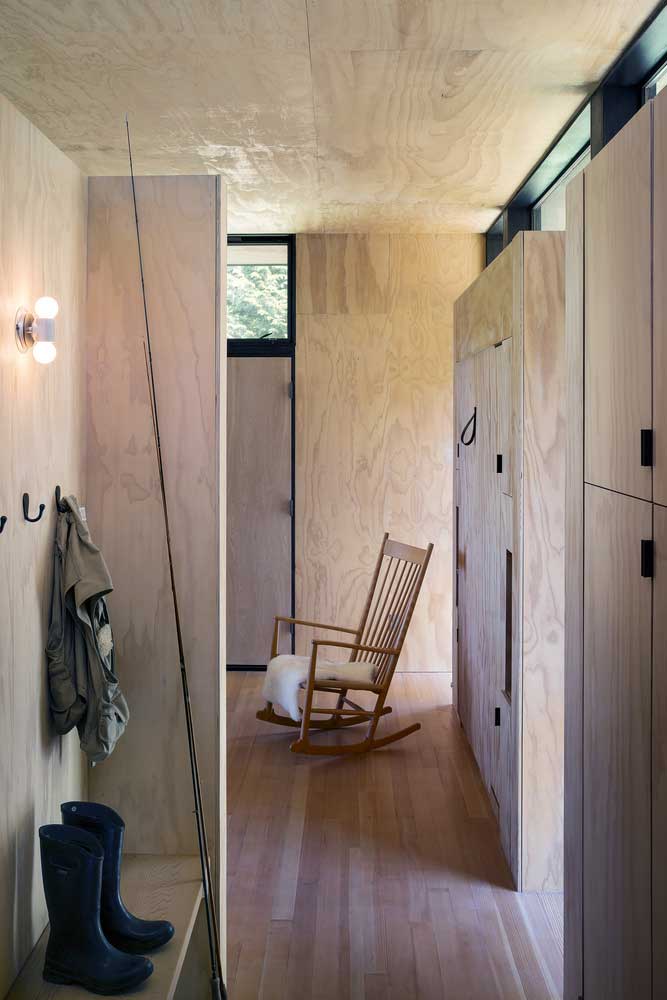
Plywood-lined rooms read as one continuous space that never quite leaves the forest. The kitchen, bedroom and bathroom each get full glazing toward the water. Is a glazed bathroom practical? It is when the site is private, as this one is behind dense trees. Check sightlines from neighbors and passing boats before glazing a wet room.

A custom transforming bed folds into what looks like an ordinary wardrobe, freeing the bedroom by day. Every element uses natural materials in the same narrow color range. Don’t introduce a second wood tone in a small room, because two species side by side look like a mismatch rather than a choice. Repeat the wall material on built-ins to make a compact room feel larger.
Three finishes under one black shell

Sustainability and restraint guided the whole build, and the unusual exterior became the starting point for everything else. The architects kept the facade from turning gloomy by giving each block its own surface, using cedar siding, cement panels and monolithic concrete. Fiber cement handles dark colors far better than stucco, which carries a high failure risk under black paint. Use texture changes, not color changes, to break up a long dark wall.

Working with one dark tone across a big facade calls for care, since the line between calm and gloomy is thin. Black reads differently on rough cedar, smooth panels and cast concrete, so one color shifts with every material and every hour of light. Paints with infrared-reflective pigments keep dark surfaces cooler, and colorfast lines such as Dulux ColourGuard claim up to twice the life of standard exterior paint. Specify a fade-resistant product for any painted section.

Generous openings keep the play of color alive and put the forest one step away. A white facade on this plot would have looked loud against the trees, like a white shirt at a campfire. Would white have been safer for resale? Possibly, but it would have fought the landscape instead of settling into it. Choose black when you want a house to step back rather than stand out.
| Design studio | Wittman Estes Architecture + Landscape |
| Photography | Andrew Pogue |
Corrugated Steel Shell Keeps a Colorado Hillside House Private
Rowland + Broughton Architecture wrapped this two-storey house on a wooded Colorado hill in black corrugated metal that contrasts sharply with the greenery around it. Corrugated siding usually costs about $7–$12 per square foot installed, compared with $10–$16 for standing seam, and metal cladding typically lasts 40–70 years. That makes it one of the cheapest routes to a dark exterior that never needs repainting. Ask for a factory finish rather than paint applied on site.

Industrial cladding drops a piece of modern life into the wild, creating a family shelter far from street noise. Ribs in the steel cast thin shadow lines that keep a black wall from looking flat, like corduroy compared with plain cotton. Don’t choose smooth high-gloss panels for a forest site, since they mirror the trees and read as a reflective box. Pick a matte or low-sheen coating.
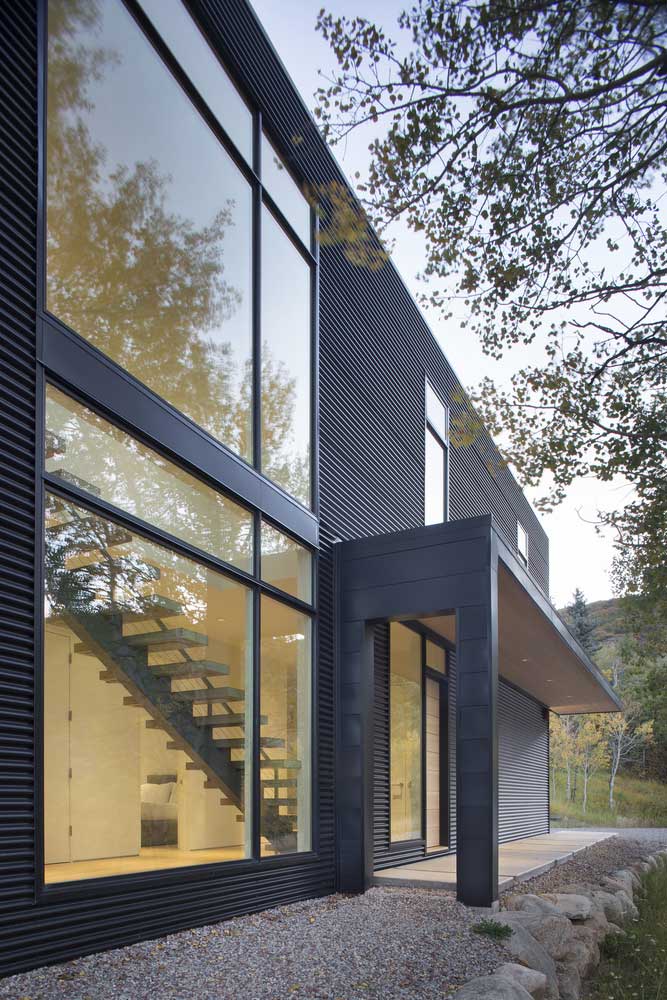
The house sits high on the slope, so its windows frame views that feel like a penthouse, only surrounded by forest instead of towers. Is a dark metal shell a problem at altitude? Strong mountain sun heats it quickly, so a ventilated gap behind the panels matters. Exposed fasteners on corrugated panels often need checking every 10–15 years because their rubber washers break down under UV. Add a fastener inspection to the maintenance calendar.
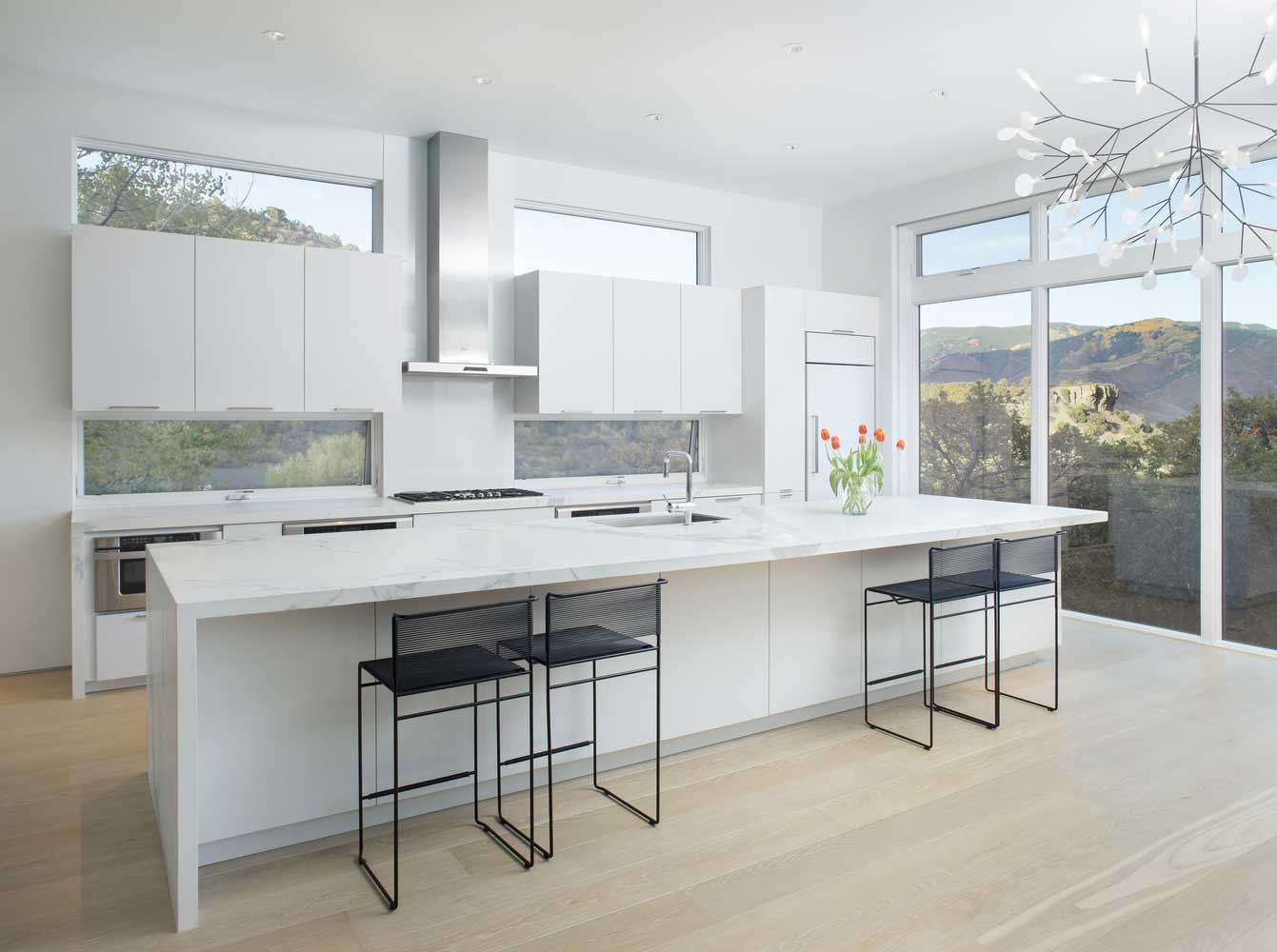
Social rooms get floor-height glazing, so diners at the table feel surrounded by trees. The visual line between inside and outside almost disappears. Dark vinyl siding would have cost less upfront, but vinyl typically lasts 15–25 years and can warp under heat, while steel keeps going for decades. Spend on metal where sun and snow hit hardest.
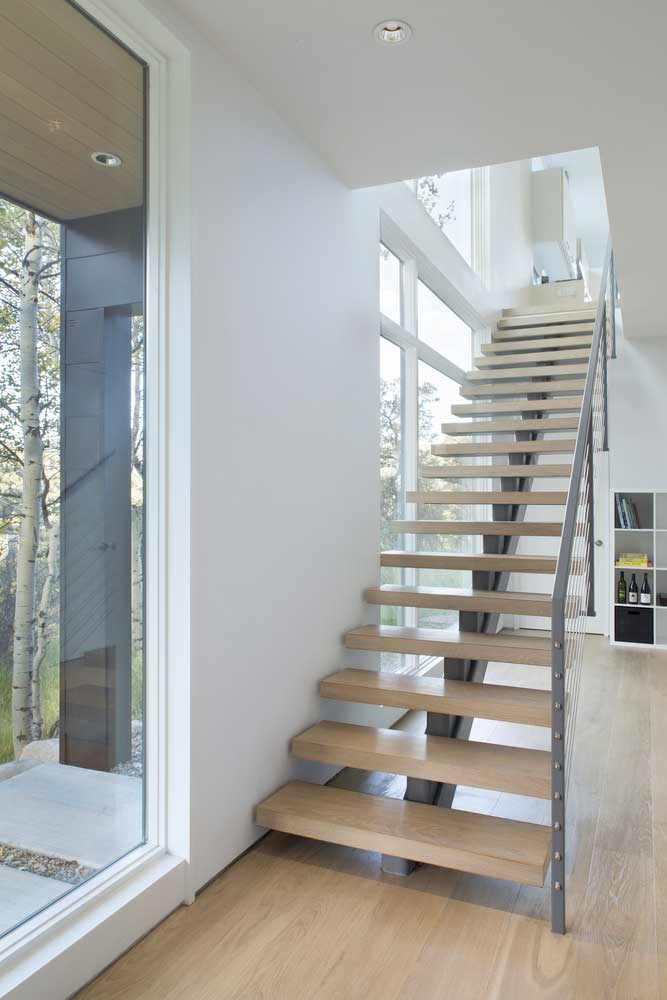
The plan lets residents tuck themselves away without shutting out the landscape. Privacy and openness balance like curtains drawn halfway. Don’t glaze every wall equally, because full exposure on all sides makes a home feel like a display case. Reserve full-height glass for the rooms where people actually gather.
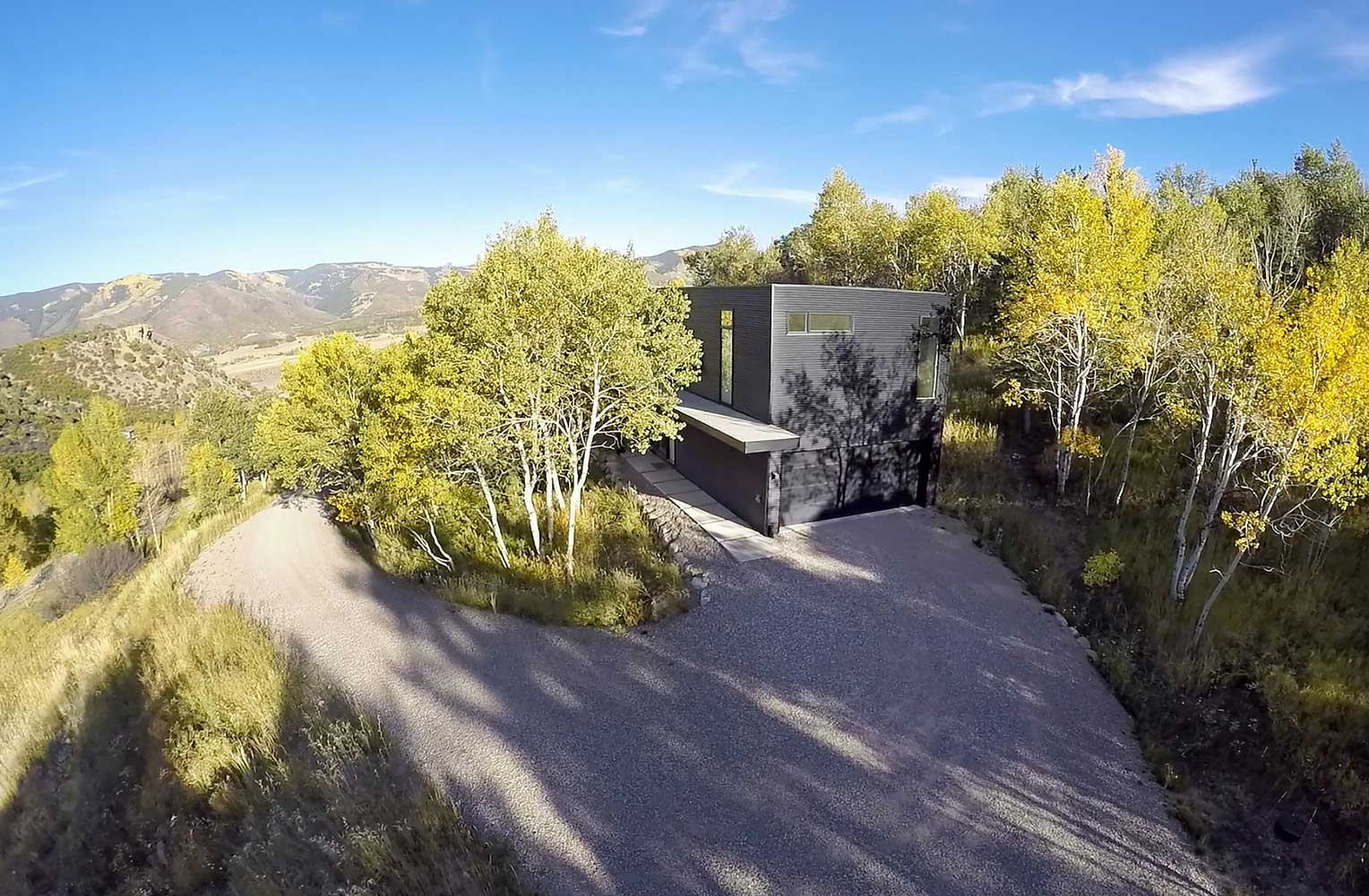
Trees hide the house from nearby lots and roads, and the black metal deepens that disappearing act. The building drops grandeur in favor of rationality, safety and durability. For a closer look at how coated steel compares with a patinating alternative, see this guide to zinc roof versus metal roof cladding on a rural home. Pick the metal by how you want it to age, not by the sample on day one.

Residents enjoy forest and mountain views from shared rooms and private ones alike. A large second-floor terrace and an atrium bring the outdoors even closer. Does a black exterior make a terrace too hot? Light decking and a deep overhang keep it usable through summer. Choose pale deck boards next to dark cladding.

An open-air room sits almost inside the forest, separated from the living space by sliding panoramic glass and continuing the dining area and kitchen. The minimal interior keeps attention on the view rather than on objects. Smells, sounds and changing light do the decorating, much like the view from a window seat on a train. Keep furniture low so it never blocks the glass.

The result is a calm, private family home that sits quietly in its landscape and draws no unwanted attention. A black corrugated shell, big windows and a spare interior add up to a house that is hard to spot and easy to live in. If privacy tops the brief, dark metal on a wooded site outperforms bright render in blending in. Pair it with dense native planting to finish the effect.
| Design studio | Rowland+Broughton Architecture |
| Photography | Brent Moss |
Black Facade Materials Compared on Cost and Lifespan
The materials above differ far more in upkeep than in look, which makes the maintenance column the one to read first. A black facade in metal or stone barely changes for decades, while painted wood starts fading within a few seasons on its sunniest side. Prices are typical U.S. ranges per square foot and vary with region and access. Shortlist two rows, then ask for itemized quotes on both.
| Material | Typical cost per sq ft | Typical lifespan | Upkeep cycle | Watch out for |
|---|---|---|---|---|
| Charred wood (shou sugi ban) | $7–$15 installed | 30–50 years with care | Oil about every 15 years | Soot during install, needs a rainscreen gap |
| Corrugated metal | $7–$12 installed | 40–70 years | Fastener check every 10–15 years | Heat on sunny walls, exposed screws |
| Standing seam metal | $10–$16 installed | 40–70 years | Rinse once a year | Higher upfront cost than corrugated |
| Granite siding | $20–$28 | 100+ years as solid stone | Almost none | Weight on the structure |
| Stone veneer | $13–$22 installed | 25–75 years | Clean and seal as required | Manufactured stone color shift after 10–15 years |
| Painted wood in black | Lowest upfront | Depends on repainting | Repaint every 3–7 years | Uneven fading, heat movement |
| Vinyl in a dark shade | Low upfront | 15–25 years | Rinse once a year | Warping in strong sun |
Where Black Pays Off
A black facade pays off when the color lives in the material rather than in a coat of paint. Charred wood at 30–50 years, metal at 40–70 and solid granite past 100 all outlast black paint that may need work every 3–7 years. Start the design with the cladding and let the shade follow.
Heat is the price of the look. Dark surfaces can run up to 90°F above the surrounding air, compared with about 20°F for reflective ones. Pair black walls with ventilated cladding, shade on the sunniest side and infrared-reflective coatings wherever paint cannot be avoided.
Budget decides the shortlist. Corrugated metal at $7–$12 per square foot is the cheapest durable route, charred wood at $7–$15 adds warmth, and granite at $20–$28 belongs on the walls visitors see first. Mixing two of them often gives the best balance of cost and character.
Light does the rest of the work. Every house here pairs its dark shell with large glazing and a pale interior, and that contrast, not black alone, makes them feel generous instead of gloomy. Plan at least one wall of big windows per main room before choosing the final color.