Dusty rose house exterior paint sits at the intersection of two things most colors can’t manage at once: bold enough to stand out from a block of greige, subdued enough to look intentional rather than accidental. The color reads warmer than blush, quieter than coral, and carries a weathered quality that makes even a freshly painted facade feel like it’s been there for decades. On Victorian, Colonial Revival, and cottage-style homes especially, it does more visual work per square foot than almost any other muted tone.
The catch is that dusty rose behaves differently outdoors than it does on a paint chip under store lighting. Direct afternoon sun pulls the pink out; heavy overcast pushes it toward mauve. What you choose matters less than where and how you test it. Tape a 2×2-foot sample to your north-facing wall and your south-facing wall, then check them at 8 AM, noon, and 4 PM over two days before committing to full gallons.
Sherwin-Williams SW 6303 Rose Colored — a soft muted rose rated for both interior and exterior use — is one of the few dusty rose options that holds its character under UV exposure without fading toward orange. At an average of $53–$57 per gallon for quality exterior paint, this isn’t the place to cut costs: the color and sheen only hold if the formula has the binders to keep up with sun, rain, and temperature swings.
- Dusty rose exterior paint holds a muted, weathered quality that blush pink and coral don’t — it reads vintage without looking tired.
- Sherwin-Williams SW 6303 Rose Colored is rated for exterior use and stays readable as dusty rose rather than peach under UV exposure.
- White, cream, and soft gray are the strongest trim pairings — bright white can tip the palette toward candy-shop; go off-white if in doubt.
- Wood siding in this palette needs repainting every 3–7 years; fiber cement and stucco last 10–15 years with proper prep.
- A pale pink front door (not the whole facade) can reduce offers by an estimated $6,516 — the key is keeping saturation low and trim crisp.
How a Dusty Rose Exterior House Color Reads at Street Level


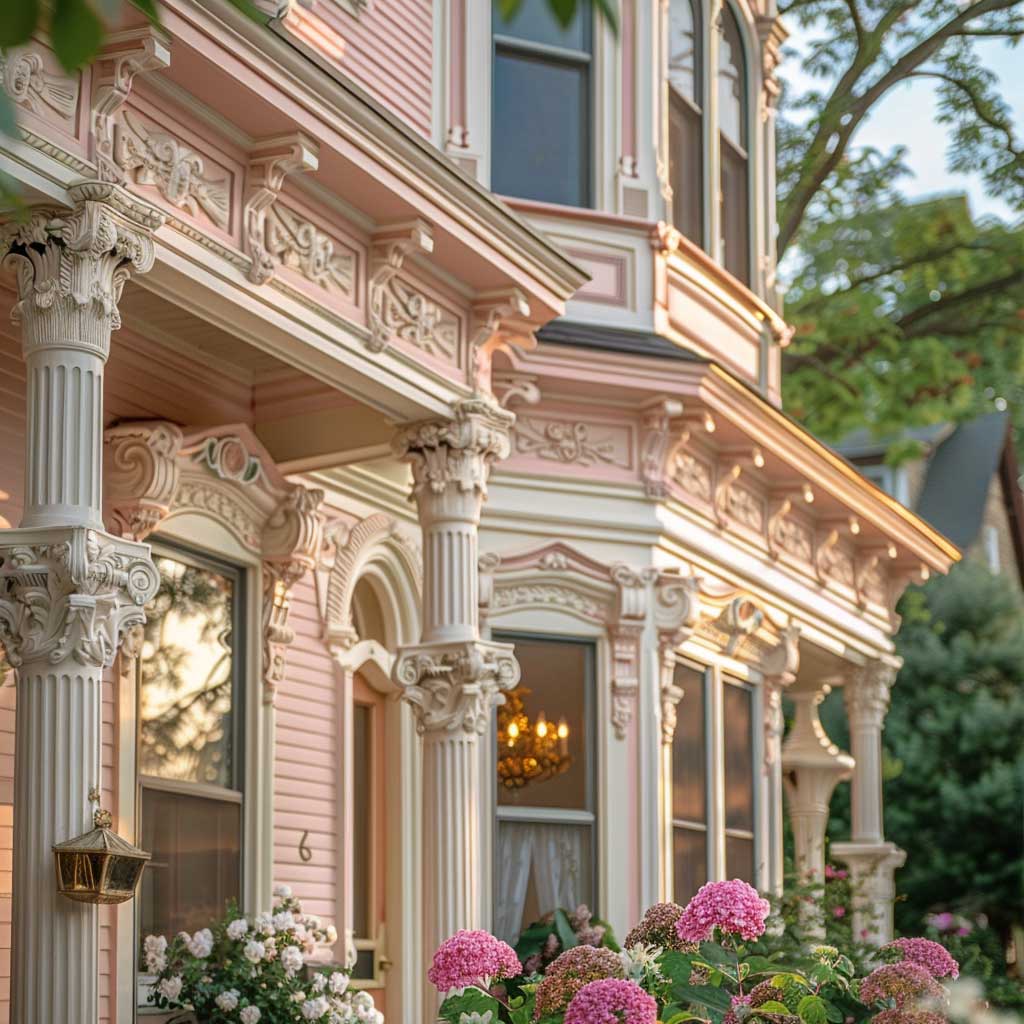
At street level, dusty rose exterior house color does something counterintuitive — it recedes in morning light and advances in afternoon gold, which means the facade shifts character across the day without ever looking garish. This is the grey-pink undertone doing its job: enough red to stay warm, enough grey to stay quiet. Paint stylists describe it as a color that photographs differently in every hour of the day, which is exactly why it performs so well on Pinterest and on the actual street.
Architectural details respond particularly well to dusty rose. Moldings, corner boards, window casings — all of them catch shadow differently against a muted pink body than they do against white or grey. The effect is that a home with even modest decorative detail suddenly reads as more intentional and crafted. Think of it like wearing a warm-toned background that makes the jewelry pop without any extra effort. The molding is the jewelry; the paint is doing the staging.

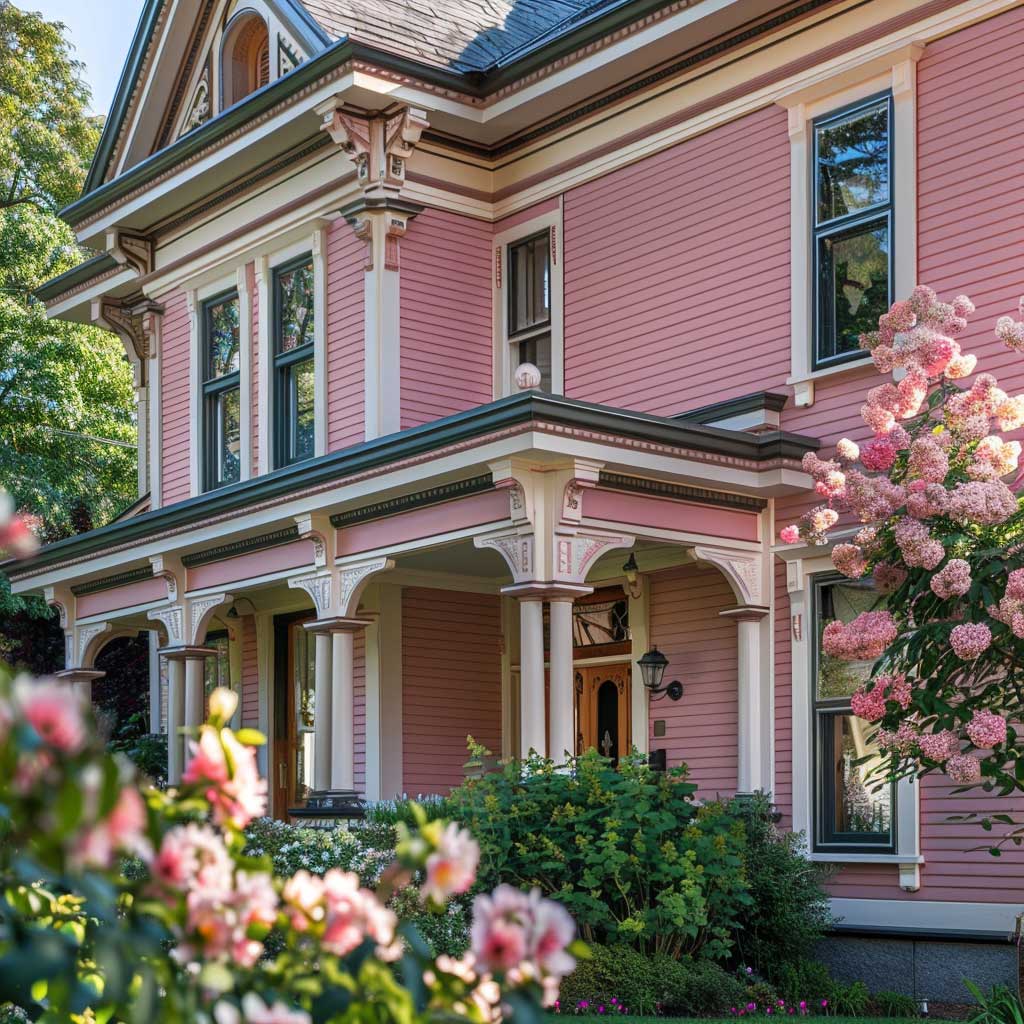

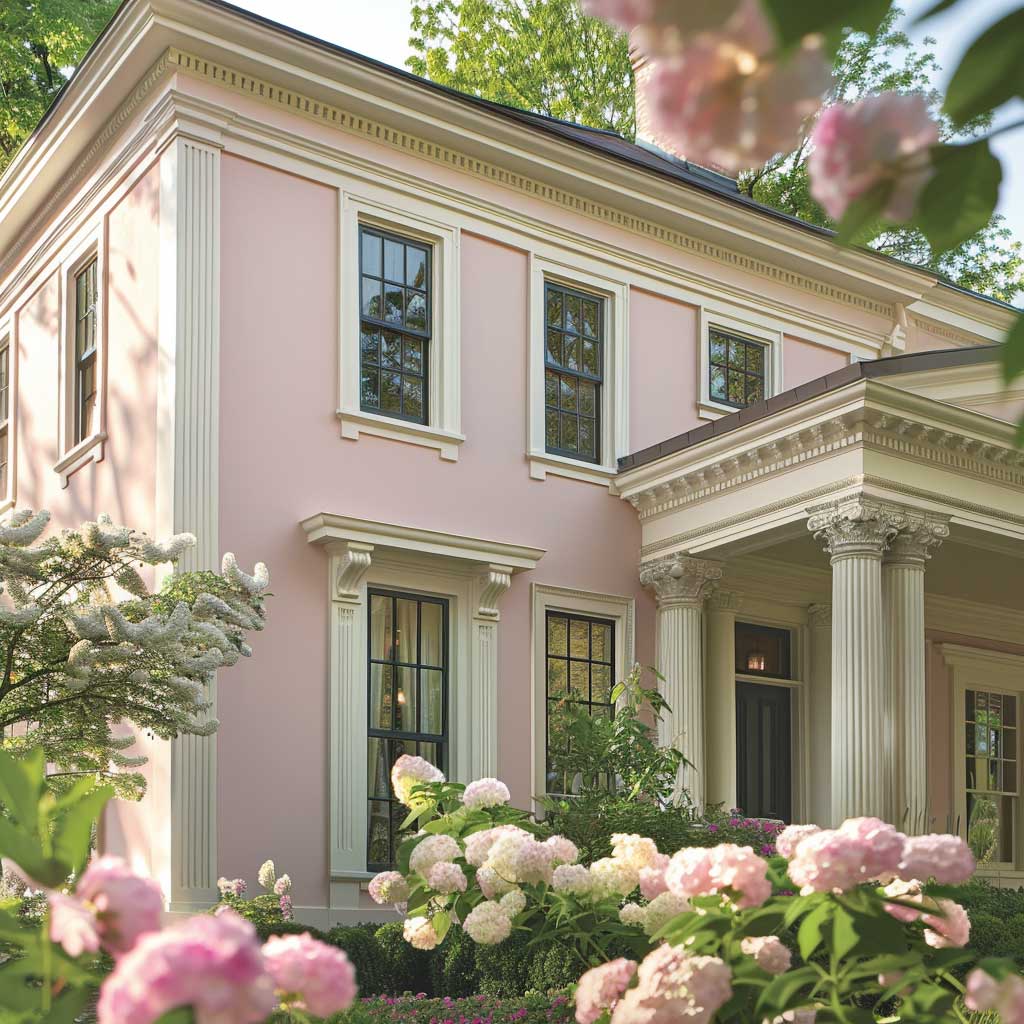
The surrounding landscape either amplifies or kills this color, and the effect is non-obvious. Green foliage against dusty rose reads more saturated and lush — the warm pink body makes the green next to it look deeper, the same way a warm gallery wall makes cool-toned paintings pop. Homeowners who plant flowering borders in cream, apricot, or soft white get the most out of this pairing; hot-pink or red blooms directly against a dusty rose facade create a muddy overlap rather than contrast. What does not work at all is pairing this color with a warm red brick hardscape or terracotta roof tiles — both pull toward orange and the facade loses its refined quality entirely.
Exterior paint on a dusty rose facade lasts 5–10 years on most siding, with wood needing a fresh coat every 3–7 years depending on sun exposure and climate. South- and west-facing walls fade first due to prolonged UV contact — that’s worth planning around when scheduling touch-up work. Lighter colors like dusty rose also hold up longer than saturated shades; research cited by painting contractors notes that lighter exterior colors can add up to five years to paint lifespan compared to dark shades, because they absorb less UV energy per square foot. What’s the practical upside? Less frequent repainting cycles and lower long-term maintenance cost relative to a deep navy or forest green exterior.
Don’t apply dusty rose paint directly to unprepared stucco or bare wood. Porous surfaces absorb the first coat unevenly, and the resulting color will dry at least one shade lighter and patchier than your sample — the pink undertone disappears into the surface rather than sitting on top of it. A tinted primer matched to your dusty rose saves an entire extra topcoat and keeps the color consistent across the facade. Also: don’t try to match dusty rose across two different paint brands. The grey-pink undertone is delicate enough that a body from one manufacturer next to trim from another will show unexpected undertone conflicts once both dry — stick to one brand family for body and trim.
Pink Exterior Color Combinations That Hold the Right Balance


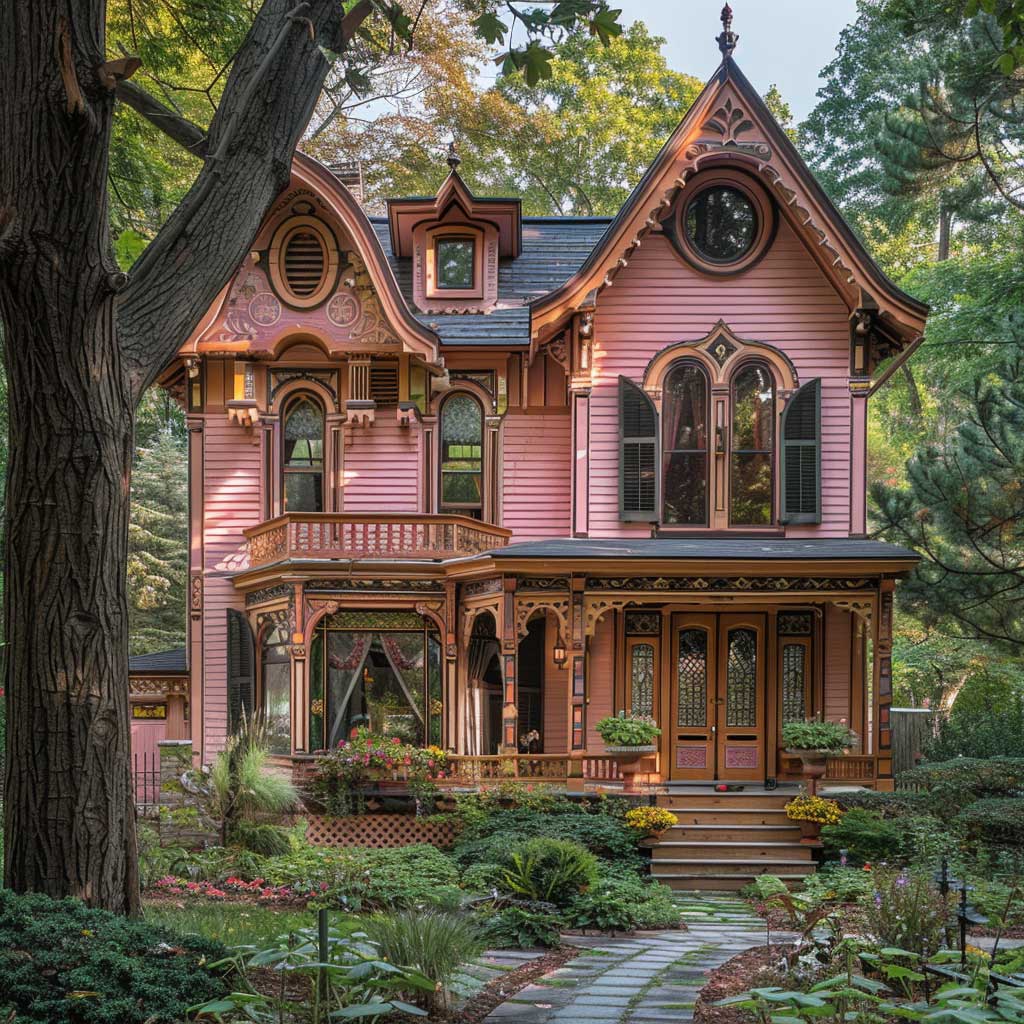
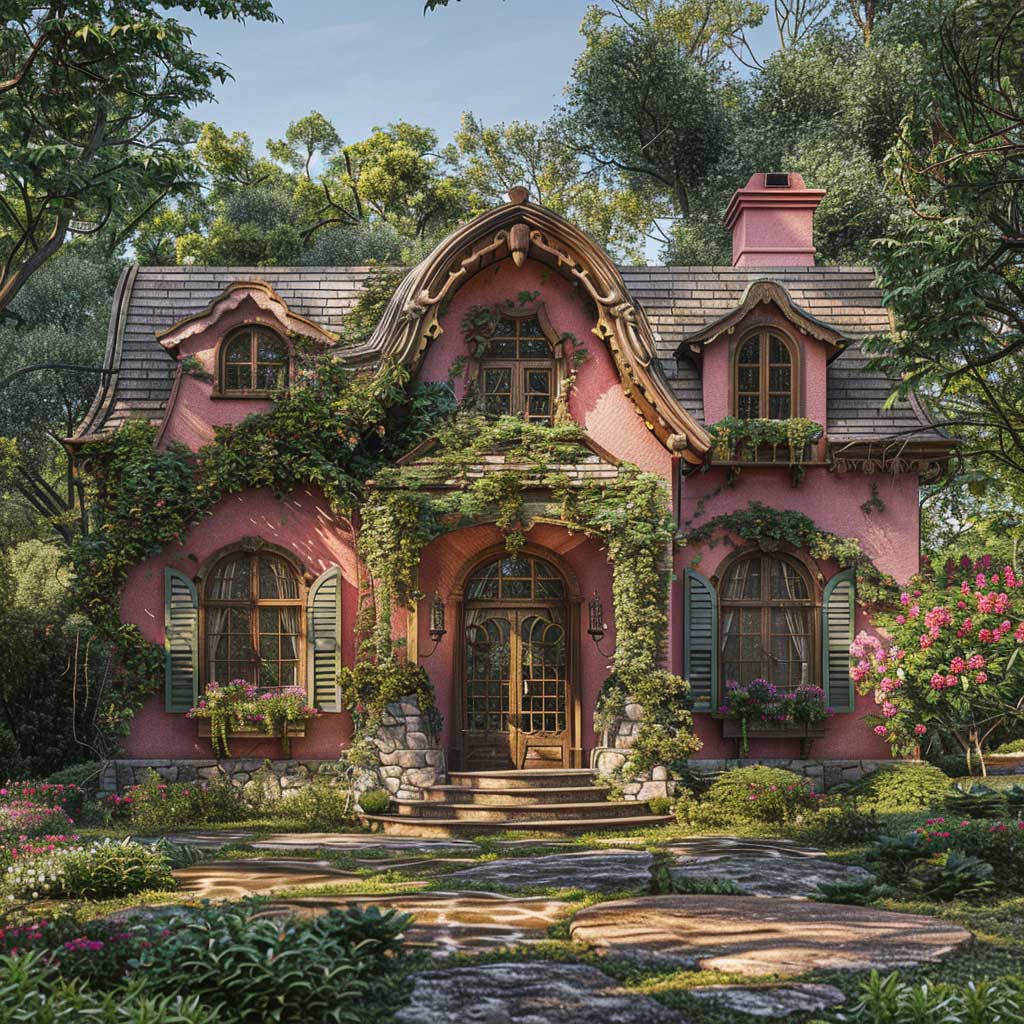
Pink exterior color combinations for outside walls live or die by the trim decision — and the most common mistake is reaching for bright white when off-white or soft gray would do the structural work without the candy-shop effect. Crisp white next to dusty rose creates a contrast that reads cheerful rather than architectural, especially on smaller homes where the scale magnifies every color interaction. Cream or warm white tones soften the boundary while still defining it; soft dove gray pushes the facade toward something that reads more editorial, closer to a European painted plaster wall than a Victorian dollhouse.
What makes this palette work on a semi-detached house or any narrow facade? The answer is vertical accent placement. Running a slightly deeper tone on shutters and window frames — think a dusty mauve two shades darker than the body, or a muted sage green — draws the eye up rather than across, making the structure read taller and more proportional. You’re creating an optical illusion with trim, not spending money on structural changes. The same logic applies to the front door: a deep charcoal or hunter green door on a dusty rose facade stops the eye at exactly the right place and keeps the palette from feeling one-dimensional. For more structured approaches to pairing pink and gray on a facade, coral pink and dove gray exterior paint combinations covers the body-to-trim ratio logic in detail.


A 2022 Zillow study found that pale pink front doors are associated with an estimated $6,516 reduction in sale price relative to comparable homes — but that data point applies to saturated, bright pink, not to a muted dusty rose that reads closer to a warm neutral. The distinction matters: a well-chosen dusty rose facade with cream trim and a dark green door is not the same category of risk as a Pepto-pink bungalow. The color decision that hurts resale is bold, polarizing pink. The one that holds its value is a desaturated, grey-leaning rose that most passersby would describe as a warm neutral if asked without a color vocabulary. When in doubt, choose the version that reads “warm” before it reads “pink.” For more on pairing strategies across different home styles, house exterior paint colour combinations breaks down the structural logic behind tested palettes.
Sheen selection is the detail most homeowners skip when planning a pink exterior. Satin finish on the body is the standard recommendation from exterior contractors — it sheds water, stays cleanable across seasons, and doesn’t amplify the color the way semi-gloss or gloss would. Trim in semi-gloss and a high-gloss front door creates a three-sheen hierarchy that reads polished from the street: body recedes, trim sharpens, door pops. Apply the same finish to every surface and the facade looks flat, like the painting wasn’t finished. The sheen system does more for the overall look than most accent colors ever could.
Vintage Pink Color and the Dusty Rose Exterior Tradition
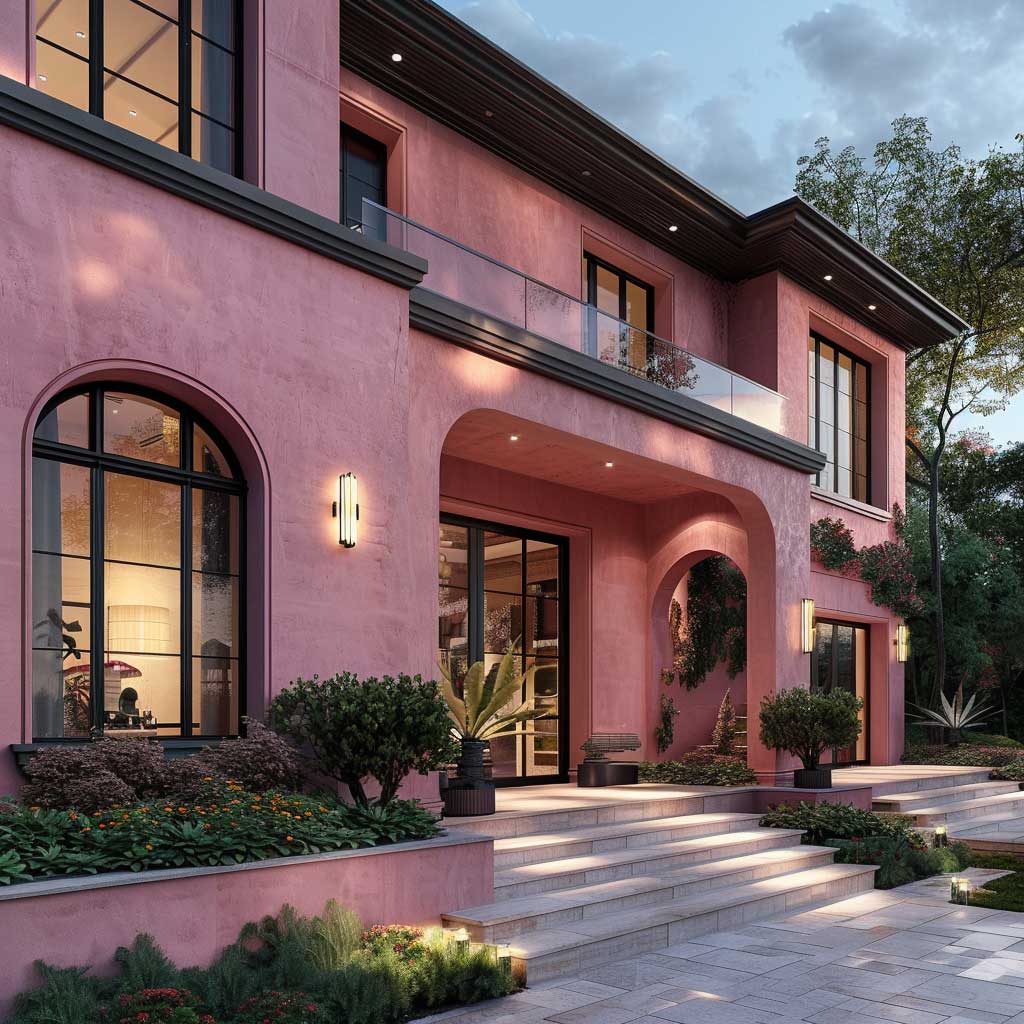


Vintage pink as an exterior color has a historical precedent that most homeowners don’t think about: muted rose and dusty mauve were standard in Victorian and Edwardian paint palettes long before they became Pinterest categories. The grey-pink undertone we now call “dusty rose” was originally achieved through iron oxide pigments that aged into exactly this weathered quality — which is why homes built in the late 1800s that retained or replicated this palette look so settled into their lots, as if the color belongs to the architecture rather than being applied to it. It reads as earned rather than chosen.
What gives vintage pink its staying power where other period-revival colors don’t? The desaturation. Most colors that try to evoke a historical period overcorrect toward richness — deep burgundies, saturated mustards, high-chroma greens — and end up reading as costume rather than architecture. Dusty rose gets the balance right because its natural greying already does the aging work. You don’t have to try to make it look old; the color does it for you. Sherwin-Williams SW 6303 Rose Colored, with its warm rose-beige that stays readable as pink without being bright, sits in this category — see it on the Sherwin-Williams color page to visualize how it coordinates with trim options before ordering samples.


The architectural elements that dusty rose flatters most are the ones that defined Victorian-era homes: ornate wooden doorways, turned porch posts, fish-scale shingles in gable ends, bracketed eaves. Against a dusty rose body, all of these elements gain visibility because the warm undertone of the paint creates shadow contrast without the harshness that a cool gray body would produce. Think of it as a backdrop that works with natural light rather than against it — north-facing walls stay readable; south-facing walls glow in afternoon sun without washing out. That’s a technical quality built into the color’s undertone, not just an aesthetic preference.
Farrow & Ball’s Pink Ground No. 202 is the European reference point for this kind of sophisticated dusty pink — at roughly $110 per gallon, it’s the premium benchmark. The same visual effect is achievable at the $53–$57 per gallon range with a quality domestic exterior formula, provided the prep work is done correctly. Skipping thorough surface prep — cleaning, sanding, caulking, priming — on a dusty rose exterior is a specific error, because the grey-pink undertone shows every surface imperfection more readily than a forgiving neutral would. The paint reveals what’s underneath it rather than hiding it. That makes prep non-negotiable on this color, regardless of budget.
| Variant | Best For | Trim Pairing | Key Risk |
|---|---|---|---|
| Dusty Rose (grey-pink undertone) | Victorian, Colonial Revival, Cottage | Cream or soft dove gray | Reads mauve on north-facing walls in cool light |
| Blush Pink (warm-pink, lower saturation) | Mediterranean, Stucco, Ranch | White or warm beige | Fades toward peachy beige in direct sun |
| Pale Pink (soft pink, high LRV) | Cape Cod, Coastal, Craftsman | Bright white or navy accent | Reads as faded white on overcast days |
The Bottom Line
Dusty Rose Works When the Grey Does the Heavy Lifting
Dusty rose exterior house paint holds its character across changing light, aging seasons, and different architectural styles — but only when the grey undertone is present and the prep work is thorough. A warm muted rose on a neglected surface will look tired; the same color on a properly primed, two-coat exterior looks like a deliberate design decision.
Trim in cream or soft dove gray, a dark accent door, and a satin body finish are the three decisions that separate a dusty rose exterior that photographs well from one that reads as “we tried pink.” Exterior paint on wood siding in this palette needs refreshing every 3–7 years; keep a quart of your exact body color for touch-ups so you’re not remixing from scratch when a panel gets dinged.
Save this post.
Related Topics
FAQ
What is the difference between dusty rose and dusky rose paint for exteriors?
What is the best pink color combination for an exterior wall?
What is vintage pink color in home exteriors?
What color is palo de rosa for house exteriors?
Does a dusty rose exterior house affect resale value?
How often does a dusty rose exterior house need repainting?
Complete guide
Pink Home Color Ideas for Every Room and Every Shade
Blush, coral, dusty rose, fuchsia — interiors, exteriors, kitchens, bedrooms — all in one place