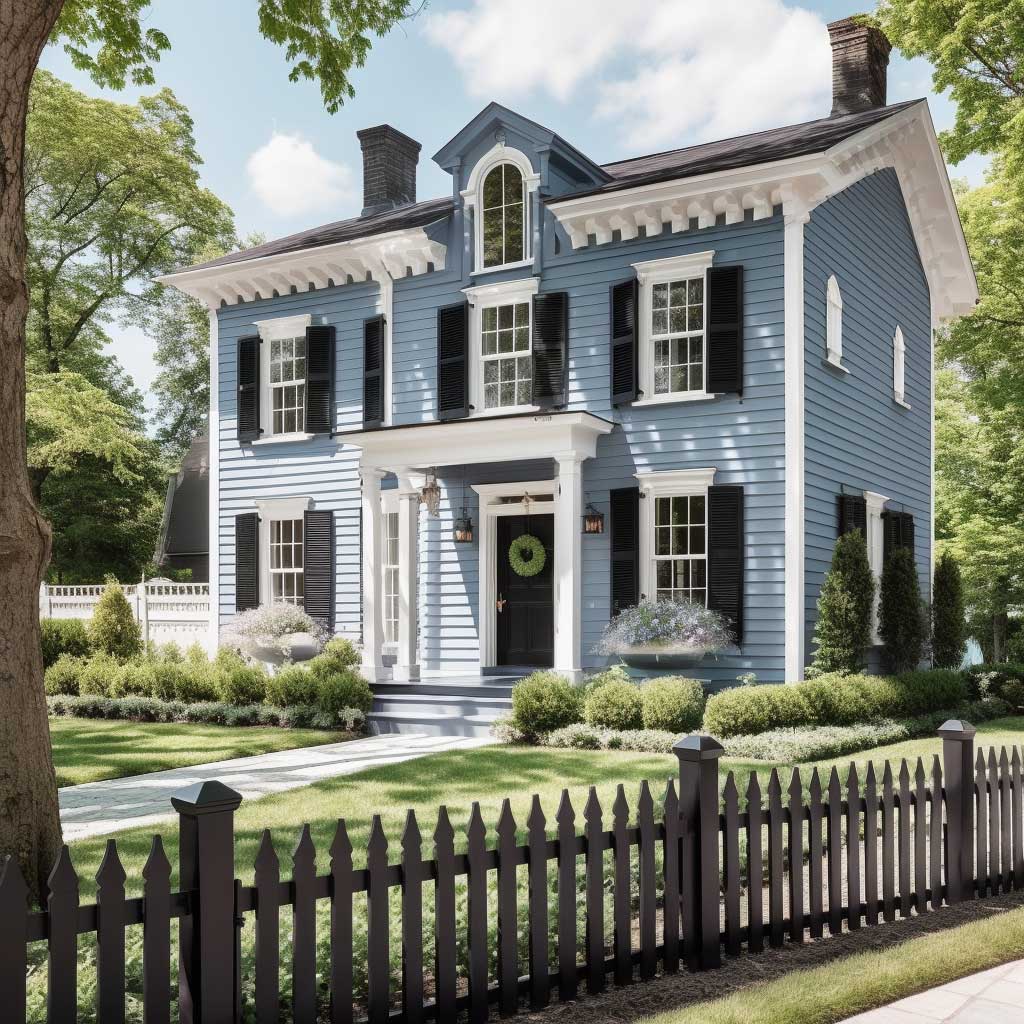
Coral pink exterior paint pulls off something most bold colors can’t — it reads warm and welcoming at 7 AM in overcast light and still holds its character at 4 PM when the sun hits the facade directly. Pairing coral pink with dove gray is one of those combinations that photographers chase and homeowners rarely commit to, which is exactly why it photographs so well in every neighborhood where someone finally does it.
The balance between the two colors hinges on ratio. Dove gray does the structural work — body, trim, window casings — and coral pink delivers the personality, usually on the door, an accent wall, or shutters. Flip the ratio and the facade can feel overwhelming before you’ve even opened the gate. Sherwin-Williams Duration exterior paint runs $60–$93 per gallon and covers roughly 300 square feet per gallon on standard siding; plan two coats and budget accordingly before committing to either color.
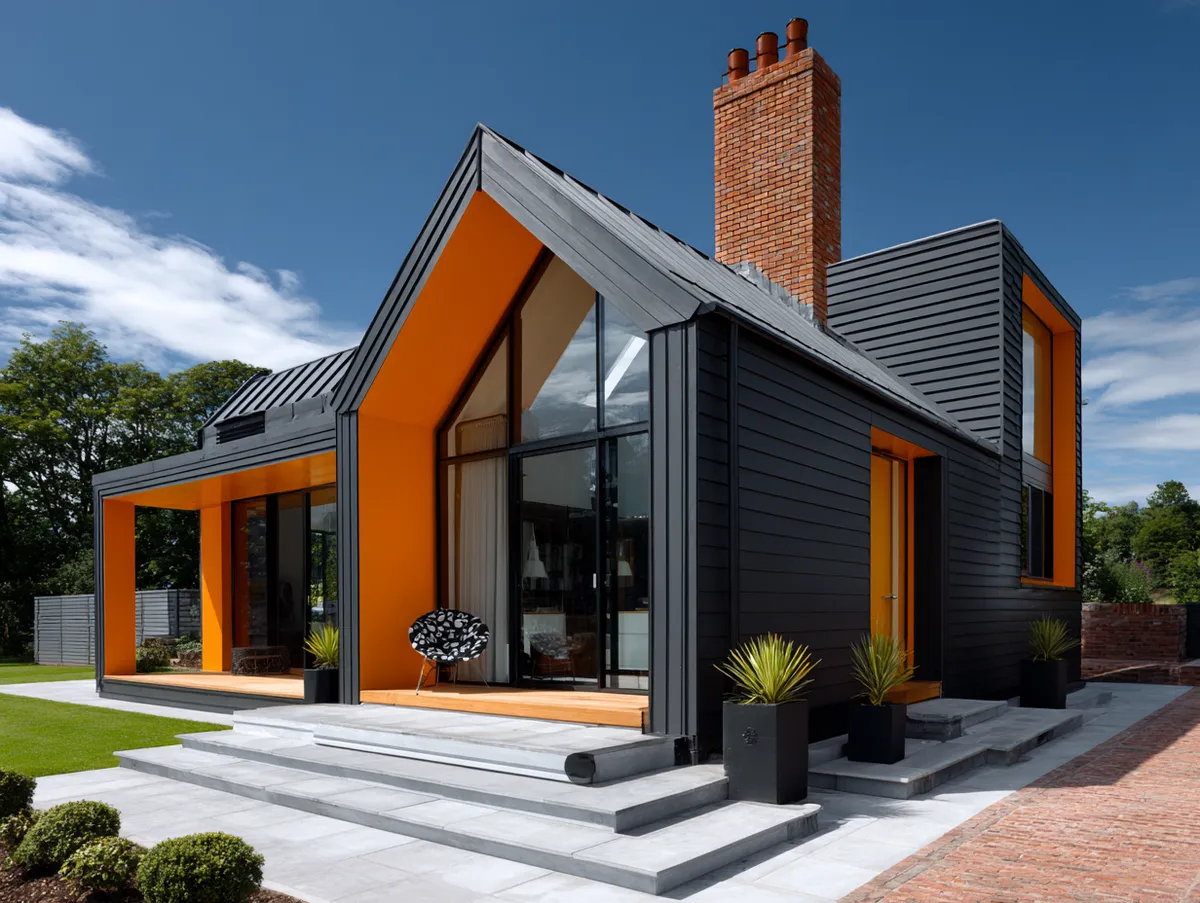
Most exterior paint jobs in this palette last 5–10 years, with wood siding requiring a fresh coat closer to the 3–7 year mark depending on sun exposure and climate. The combination suits classic, Mediterranean, and cottage-style facades best. On ultra-modern homes with flat rooflines and aluminum cladding, the warmth of coral reads out of place — that’s worth knowing before buying your first sample pot.
- Coral pink and dove gray work because one is warm and one is cool — the contrast is built in.
- Dove gray on the body with coral pink on the door is the most forgiving ratio for classic facades.
- Sherwin-Williams Coral Island (SW 6332) is formulated for both interior and exterior use.
- Exterior paint on wood siding needs refreshing every 3–7 years; masonry and stucco last longer.
- A coral pink front door against a dove gray facade turns the entryway into the only focal point the house needs.
Dove Gray Facades Reveal What Other Colors Hide


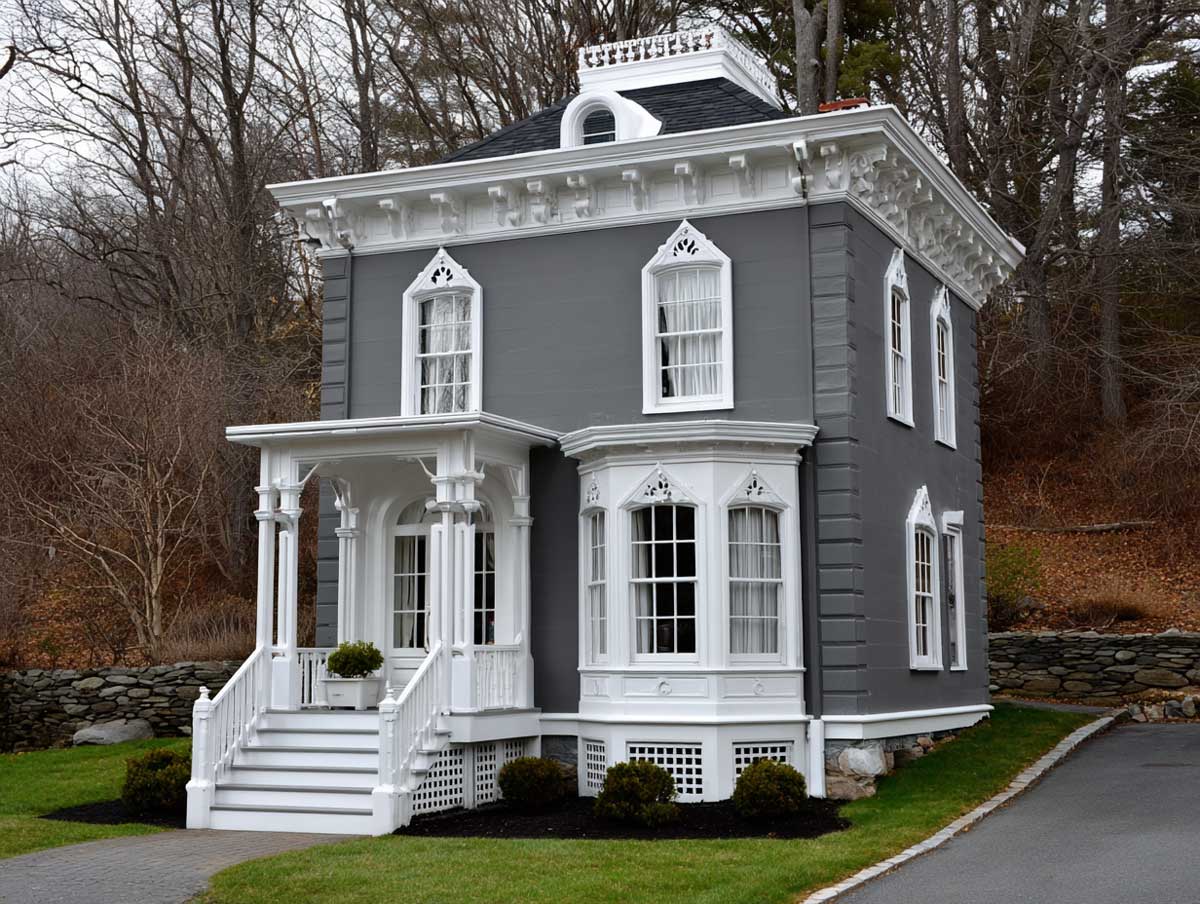
Dove gray on a house exterior does something counterintuitive — it makes architectural details more visible, not less. The cool, neutral base acts like a stage set: every window frame, cornice, and corner board reads sharply against it in a way that gets lost under warmer, busier colors. Paint stylists note that homes with strong molding profiles benefit most from low-saturation grays because the shadow play between the gray body and the white trim does the decorating for you. You end up spending less on accent features because the paint itself is already creating depth.
What shade of dove gray matters more than most people expect. Warm dove grays — those with subtle beige or taupe undertones — read softer on south-facing facades, where direct afternoon sun tends to wash cooler grays toward lavender or even faintly blue. Sherwin-Williams Duration exterior line gives you the color precision needed for this pairing; a gallon in their standard exterior formula runs $60–$93 depending on sheen, and their satin finish is the standard recommendation for body color on most siding materials because it sheds water and stays cleanable across all four seasons.
The mistake is choosing dove gray on impulse from a phone screen. Every paint brand’s swatch photographer uses controlled studio lighting that has nothing in common with the direct afternoon sun hitting your west-facing wall in August. Order $8 peel-and-stick samples, tape two to your siding on opposite-facing walls, and check them at 8 AM and 4 PM for three days. The color that still reads like what you chose — that’s your dove gray. Skipping this step is the reason painting contractors get repeat business from disappointed homeowners.
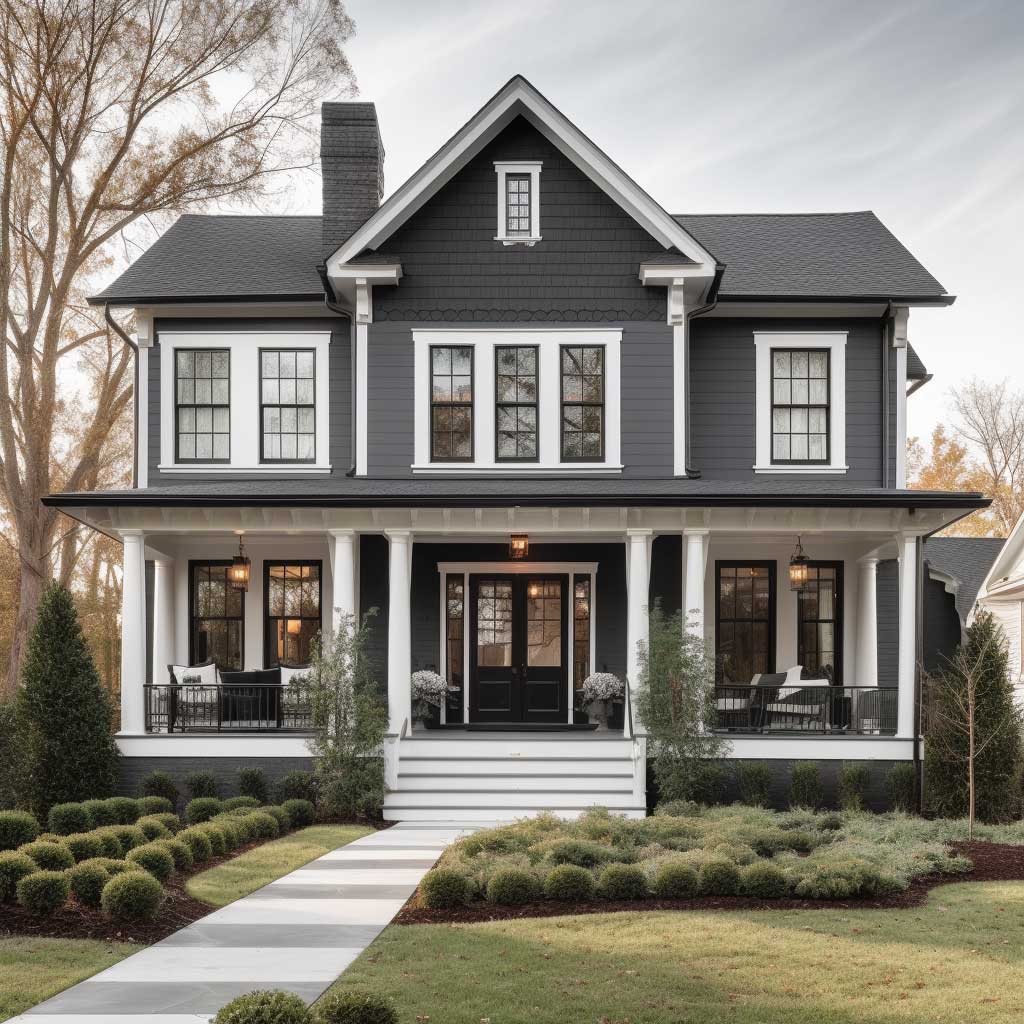
One more thing worth knowing: dove gray doesn’t compete with landscaping, it frames it. Against a well-kept lawn or a planted border, the cool gray makes the green look more saturated without any effort on your part. Think of it as a neutral wall in an art gallery — everything placed against it becomes the exhibit. That effect disappears entirely if you go too dark; anything below an LRV of about 40 stops reading as gray and starts reading as charcoal, which is a different look entirely and works best with high-contrast accents rather than the soft pairing with coral pink.


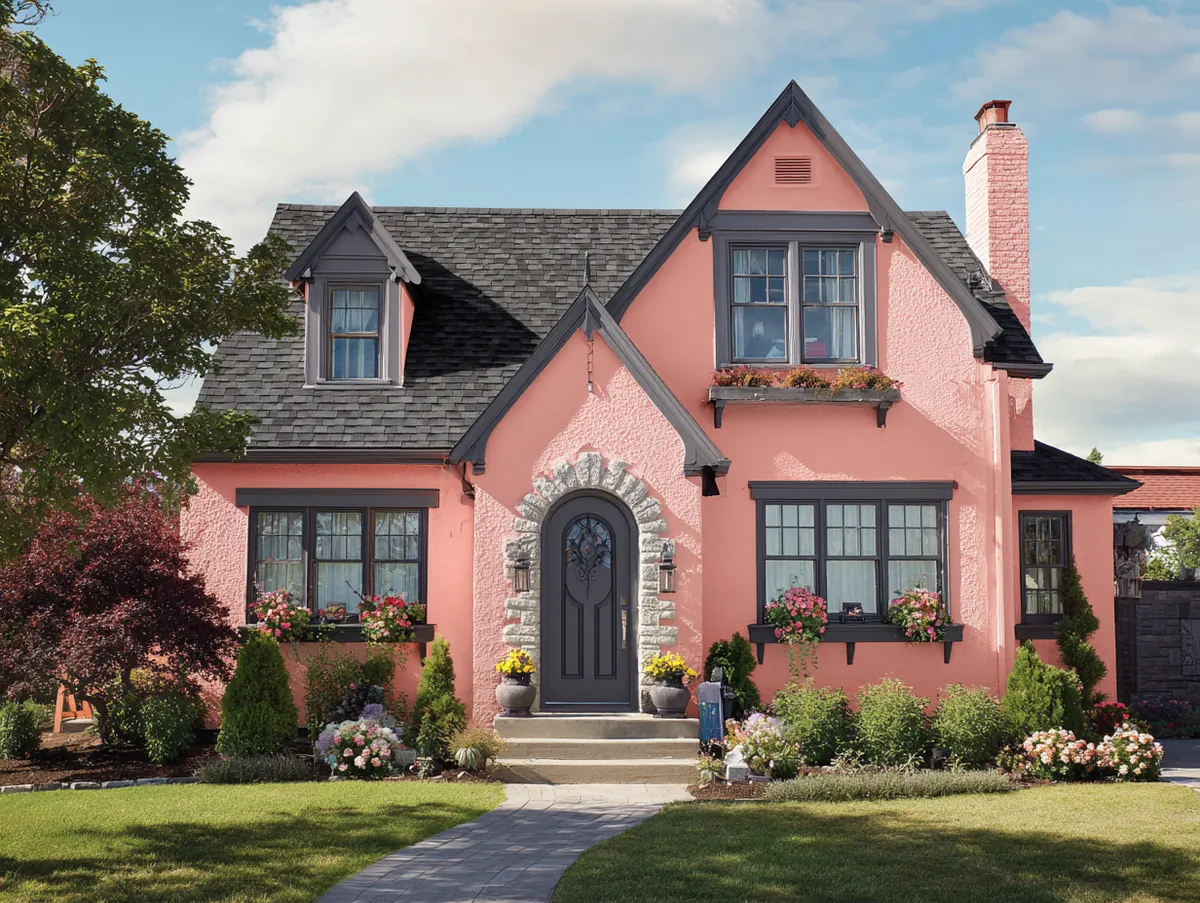
Coral Pink Walls with Dove Gray Accents in Classic Exterior Combinations


Coral pink as the primary body color on a classic home is a commitment — and the houses that pull it off share one trait: the dove gray accents are doing serious structural work. Those gray window casings, shutters, and porch columns aren’t decorative; they’re the visual anchors that keep the warmth of coral from tipping into a color that reads better on a beach rental than a residential neighborhood. Sherwin-Williams Coral Island (SW 6332) is rated for exterior use and sits in the soft coral-pink range with enough pink undertone to stay readable as “pink house” rather than “peach house,” which is a distinction that matters in practice more than it sounds.
The combination works because of opposing color temperatures — coral pink is warm-spectrum, dove gray is cool-neutral, and the two push against each other in a way that makes both look more intentional. Color theory aside, there’s a practical reason this pairing appears on so many classic facades: dove gray trim reads clean year-round against a colored body, without requiring the contrast that bright white trim demands. Bright white next to coral pink can feel ice-cream-parlor cheerful rather than residential; dove gray keeps the palette grounded. If you’re reviewing house exterior paint colour combinations before committing, that article breaks down the structural logic behind body-to-trim ratios in more detail.
Garden landscaping against a coral pink facade has a compounding effect that’s easy to miss when you’re looking at paint chips indoors. The warm pink body makes green foliage look deeper and more saturated, which means you don’t have to spend more on plants to achieve a lush-looking front garden — the facade is doing half the work. Roses in apricot or cream tones against coral pink walls are the cliché version of this, but any dense green hedge achieves the same effect without the maintenance burden of a flowering garden.
Don’t use coral pink on a home surrounded by red brick hardscaping or a red tile roof. The two warm hues collide rather than harmonize, and the facade ends up reading muddier than either element would alone. The sweet spot for coral pink as a body color is a neutral or cool-toned roof — slate gray, charcoal shingles, or dark brown — with dove gray on every architectural detail, and perhaps one green element (shutters or a front door) to cool the palette further. That three-color combination rarely fails on a traditional home with symmetrical windows.


Don’t apply coral pink on stucco without a primer specifically formulated for stucco surfaces. Stucco is porous enough that it can absorb the first coat almost entirely, and the resulting color will be at least one shade lighter and patchier than your sample. A tinted primer matched to your coral picks up the slack and gives the topcoat something consistent to adhere to — saving you an extra gallon of topcoat and a second full drying day. Don’t mix brand families when pairing coral pink body with dove gray trim. The LRV values differ between manufacturers, and a dove gray from one brand next to a coral from another can create unexpected undertone conflicts you won’t catch until the paint dries.
Coral Pink Front Door Against Dove Gray Trim — Entryway Logic


A coral pink front door on a dove gray facade works as a focal point the same way a single painting works on a white gallery wall — the contrast is doing all the composition. The door becomes the only thing the eye needs to navigate toward, which means the rest of the facade can stay calm and let the architecture speak. Painters who specialize in classic residential exteriors often recommend reserving high-gloss sheen for the front door specifically: the sheen amplifies the color under direct light and makes the door read even warmer and more saturated than the same color in satin would.
Why does a coral pink door feel more resolved than a red one on most classic homes? Red creates a sharp, high-contrast statement that can feel confrontational up close. Coral stays warm but softens the edges — it reads as intentional and confident rather than aggressive. That’s the difference between a color choice that looks architectural and one that looks like someone grabbed whatever was bold at the paint counter. Sherwin-Williams Coral Island (SW 6332) is listed as interior/exterior and works well on doors because it has enough red in the undertone to hold its character under UV exposure without fading quickly toward orange. For more contrast-driven pairings at different scales, dark green exterior house color ideas explore how a different bold body color handles trim and accent logic on classic homes.
The dove gray trim around a coral pink door has a specific job: to sharpen the boundary between the door and the wall, making the door look like a precision decision rather than a paint experiment. Crisp trim requires semi-gloss minimum — flat and eggshell trim next to a high-gloss door will make the trim look underfinished and dull by comparison. The standard recommendation from exterior contractors is to use satin on the body, semi-gloss on trim, and high-gloss on the door itself. That three-sheen system creates a hierarchy that reads as polished from the street.
One detail that consistently gets overlooked: the hardware. Brushed brass and unlacquered bronze read warm against coral pink and gray, reinforcing the palette’s warmth without clashing. Polished chrome or brushed nickel pulls cool, which can work if you want the entry to feel more modern, but risks making the door look colder than it actually is in photographs — particularly in the morning when the light is already cool. On a coral pink door, the hardware is the final color decision, and most people make it after the paint dries without ever testing whether the two work together first.


| Application | Best Color Role | Sheen | Key Risk |
|---|---|---|---|
| Dove gray body | Primary wall color | Satin | Goes lavender in cool north light |
| Coral pink door | Focal accent | High-gloss | Fades toward orange after 3–5 years in direct sun |
| Dove gray trim | Architectural frame | Semi-gloss | Disappears if too close to body shade |
| Coral pink body | Bold statement color | Satin | Reads pink-orange on stucco without primer |
Exterior paint on a front door takes more punishment per square foot than any other painted surface on the facade — direct sun, physical contact, and temperature swings that no wall endures. A quality exterior formula like Sherwin-Williams Duration, at $60–$93 per gallon, is worth the premium specifically on doors, where a bargain paint will fade or chip within two seasons. One gallon is more than enough for a standard door: a single exterior door covers approximately 20 square feet per face, meaning one gallon yields eight full-coverage paint jobs at 300 sq ft/gallon coverage — buy a quart and have it mixed fresh for the job rather than using leftover wall paint. Sherwin-Williams Coral Island SW 6332 allows you to visualize and coordinate the color with dove gray options directly on their site before ordering a sample.
The Bottom Line
Coral Pink and Dove Gray Reward the Homeowners Who Commit
The combination works because the colors aren’t fighting each other — coral pink brings warmth, dove gray holds the structure, and together they make a facade feel considered rather than painted. The ratio matters: gray does the heavy lifting on surface area, coral does the personality work on the focal points.
Sherwin-Williams Duration exterior runs $60–$93 per gallon; plan two coats at 300 sq ft/gallon coverage. Test physical samples outdoors for at least 48 hours before buying full gallons — every shade shifts between morning and afternoon light more than any screen will show you.
Wood siding in this palette typically needs refreshing every 5–7 years. Keep one quart of each color for touch-ups so you’re not remixing from scratch when a panel gets dinged. Save this post.